


Product Monograph - Mar-Ranolazine XR
Recent Major Label Changes
Not Applicable
Table of Contents
Certain sections or subsections that are not applicable at the time of the preparation of the most recent authorized product monograph are not listed.
Recent Major Label Changes ...................................................................................................... 2
Table of Contents....................................................................................................................... 2
Part 1: Health Professional Information ...................................................................................... 4
- 1.
Indications ...................................................................................................................... 4
1.1. Pediatrics .................................................................................................................... 4
1.2. Geriatrics..................................................................................................................... 4
- 2. Contraindications............................................................................................................ 4
- 3. Serious Warnings and Precautions Box ............................................................................ 4
- 4.
Dosage and Administration ............................................................................................. 5
4.1. Dosing Considerations ................................................................................................ 5
4.2. Recommended Dose and Dosage Adjustment ........................................................... 5
4.4. Administration ............................................................................................................ 5
4.5. Missed Dose ................................................................................................................ 5
- 5. Overdose ....................................................................................................................... 5
- 6. Dosage Forms, Strengths, Composition and Packaging ..................................................... 6
- 7.
Warnings and Precautions .............................................................................................. 6
General .................................................................................................................................... 6
Cardiovascular .......................................................................................................................... 6
Driving and Operating Machinery ............................................................................................ 7
Endocrine and Metabolism ...................................................................................................... 7
Hepatic/Biliary/Pancreatic ....................................................................................................... 7
Monitoring and Laboratory Tests ............................................................................................. 8
Renal .................................................................................................................................... 8
7.1. Special Populations ..................................................................................................... 8
7.1.1. Pregnancy ................................................................................................................... 8
7.1.2. Breastfeeding .............................................................................................................. 9
7.1.3. Pediatrics .................................................................................................................... 9
7.1.4. Geriatrics..................................................................................................................... 9
- 8.
Adverse Reactions .......................................................................................................... 9
8.1. Adverse Reaction Overview ....................................................................................... 9
8.2. Clinical Trial Adverse Reactions .................................................................................. 9
8.3. Less Common Clinical Trial Adverse Reactions ........................................................ 11
8.4. Abnormal Laboratory Findings: Hematologic, Clinical Chemistry and Other Quantitative Data ..................................................................................................... 12
8.5. Post-Market Adverse Reactions................................................................................ 12
- 9.
Drug Interactions ......................................................................................................... 13
9.1. Serious Drug Interactions ......................................................................................... 13
9.2. Drug Interactions Overview ..................................................................................... 13
9.3. Drug-Behaviour Interactions .................................................................................... 14
9.4. Drug-Drug Interactions ............................................................................................. 14
9.5. Drug-Food Interactions ............................................................................................ 18
9.6. Drug-Herb Interactions ............................................................................................ 18
9.7. Drug-Laboratory Test Interactions ........................................................................... 19
- 10.
Clinical Pharmacology .................................................................................................. 19
10.1. Mechanism of Action ................................................................................................ 19
10.2. Pharmacodynamics ................................................................................................... 19
10.3. Pharmacokinetics ...................................................................................................... 20
- 11. Storage, Stability and Disposal ...................................................................................... 20
Part 2: Scientific Information .................................................................................................... 21
- 13. Pharmaceutical Information .......................................................................................... 21
- 14.
Clinical Trials ................................................................................................................ 22
14.1. Clinical Trials by Indication ....................................................................................... 22
14.2. Comparative Bioavailability Studies ......................................................................... 25
- 16. Non-Clinical Toxicology ................................................................................................. 27
- 17. Supporting Product Monograph .................................................................................... 27
Patient Medication Information .............................................................................................. 28
Part 1: Health Professional Information
1. Indications
MAR-RANOLAZINE XR (ranolazine extended-release tablets) is indicated as add-on therapy, for symptomatic treatment of adult patients with stable angina pectoris who are inadequately controlled or intolerant to first-line antianginal therapies, including beta-blockers and calcium channel blockers.
1.1. Pediatrics
Pediatrics (<18 years): No data are available to Health Canada; therefore, Health Canada has not authorized an indication for pediatric use.
1.2. Geriatrics
Geriatrics (≥75 years): Evidence from clinical studies suggests that use of ranolazine in patients 75 years of age or older is associated with an increased incidence of adverse events (see 7.1.4 Geriatrics and 8.5 Post-Market Adverse Reactions).
2. Contraindications
MAR-RANOLAZINE XR is contraindicated in patients:
- taking strong inhibitors of CYP 3A4, e.g., ketoconazole, clarithromycin, protease inhibitors such as nelfinavir, grapefruit juice (see 9 Drug Interactions)
- patients taking Class IA antiarrhythmics (e.g., quinidine, procainamide, disopyramide) or Class III antiarrhythmics (e.g., sotalol, ibutilide, amiodarone, dronedarone)
- patients taking inducers of CYP 3A4, e.g., rifampicin, phenobarbital, carbamazepine, St. John’s wort (see 9 Drug Interactions)
- patients with severe renal impairment, i.e., eGFR ≤30 mL/min/1.73m2
- patients with moderate or severe hepatic impairment (see 7 Warnings and Precautions, Hepatic/ Biliary/ Pancreatic)
- patients with a hypersensitivity to ranolazine or any of the excipients (see 6 Dosage Forms, Strengths, Composition, and Packaging)
3. Serious Warnings and Precautions Box
*MAR-RANOLAZINE XR is only available as a 500 mg extended-release tablet.
- MAR RANOLAZINE XR has been shown to prolong the QT interval (see 2. Contraindications; 7. Warnings and Precautions, Cardiovascular, QT Interval Prolongation; 8.5. Post- Market Adverse Reactions; 9. Drugs Interactions; 10.2. Pharmacodynamics, Electrocardiographic Effects)
- Doses of 1000 mg twice daily of ranolazine extended-release tablets should not be exceeded*.
4. Dosage and Administration
4.1. Dosing Considerations
- Limit the maximum dose of MAR-RANOLAZINE XR to 500 mg twice daily in patients taking moderate CYP 3A4 inhibitors
- Use of P-gp inhibitors may increase exposure to MAR-RANOLAZINE XR.
4.2. Recommended Dose and Dosage Adjustment
*MAR-RANOLAZINE XR is only available as a 500 mg extended-release tablet.
- Initiate Ranolazine Extended Release Tablets dosing at 375 mg* or 500 mg twice daily and increase to 1000* mg twice daily, as needed, based on clinical symptoms.
- The maximum recommended daily dose of Ranolazine extended-release tablet is 1000 mg* twice daily.
- Dose adjustments may be needed when MAR-RANOLAZINE XR is taken in combination with certain other drugs (see 9.4. Drug-Drug Interaction).
- Limit the maximum dose of MAR-RANOLAZINE XR to 500 mg twice daily in patients taking moderate CYP 3A4 inhibitors such as diltiazem and verapamil.
- Use of MAR-RANOLAZINE XR with strong CYP 3A4 inhibitors is contraindicated. (see 2. Contraindications)
- Use of P-gp inhibitors, such as cyclosporine, may increase exposure to MAR-RANOLAZINE XR ( 9.4. Drug- Drug Interactions).
4.4. Administration
Take MAR-RANOLAZINE XR with or without meals. Swallow MAR-RANOLAZINE XR tablets whole; do not crush, break, or chew. Titrate MAR-RANOLAZINE XR based on clinical response.
4.5. Missed Dose
If a dose of MAR-RANOLAZINE XR is missed, take the prescribed dose at the next scheduled time; do not double the next dose.
5. Overdose
Hypotension, QT prolongation, bradycardia, myoclonic activity, severe tremor, unsteady gait/incoordination, dizziness, nausea, vomiting, dysphasia, and hallucinations have been seen in cases of oral overdose of ranolazine. In cases of extreme overdose of Ranolazine Extended-Release Tablets , fatal outcomes have been reported. In clinical studies, high intravenous exposure resulted in diplopia, paresthesia, confusion, and syncope.
In addition to general supportive measures, continuous ECG monitoring may be warranted in the event of overdose.
Since ranolazine is about 62% bound to plasma proteins, hemodialysis is unlikely to be effective in clearing ranolazine.
6. Dosage Forms, Strengths, Composition and Packaging
Table 1 – Dosage Forms, Strengths and Composition
| Route of Administration | Dosage Form / Strength/Composition | Non-medicinal Ingredients |
|---|---|---|
| Oral | Extended-release Tablets, 500 mg | Ethylacrylate colpolymer, Hydroxy propyl methyl cellulose, Microcrystalline Cellulose, Methacrylic acid, Magnesium stearate, Purified water, Sodium Hydroxide, Opadry® II beige (85F570087) Composition of Opadry® II beige (85F570087): Iron oxide red, Iron oxide yellow, Macrogel/PEG, Polyvinyl alcohol-part hydrolyzed, Titanium dioxide, Talc |
Description
MAR-RANOLAZINE XR 500 mg tablets are beige colored, oval shaped, film-coated tablets debossed with ‘V’ on the one side and ‘08’ on the other side available in bottles of 60.
7. Warnings and Precautions
General
CYP 3A4, CYP 2D6, and P-glycoprotein (P-gp) System Inhibitors.
Limit the dose of Ranolazine to 500 mg twice daily in patients taking moderate inhibitors of CYP 3A4 (e.g., diltiazem, verapamil, erythromycin, fluconazole). Careful dose titration of ranolazine is required in patients treated with P-gp inhibitors (e.g., cyclosporine, verapamil) and CYP 2D6 inhibitors (e.g., digoxin) (see 9. Drug Interactions). Higher plasma levels of ranolazine may also occur in patients who are poor metabolisers of CYP 2D6.
Concomitant use of strong CYP 3A4 inhibitors is contraindicated (see 2. Contraindications).
Cardiovascular
QT Interval Prolongation
Ranolazine blocks IKr and prolongs the QTc interval in a dose-related manner (see 10.2.
For the most recent information in the management of a suspected drug overdose, contact your regional poison control centre or Health Canada’s toll-free number, 1-844 POISON-X (1-844-764-7669).
Pharmacodynamics, Electrocardiographic Effects).
Although overall experience in large clinical trials that evaluated ranolazine following acute coronary syndrome did not show an increased risk of symptomatic documented arrhythmias, including ventricular tachycardia or sudden death, rare events of Torsade de Pointes and ventricular fibrillation have been reported during post-market use (see 8.5. Post-Market Adverse Reactions). Ranolazine extended-release tablets should not be used at doses above 1000 mg twice daily. MAR-RANOLAZINE XR is contraindicated with Class IA and Class III antiarrhythmics and strong inhibitors of CYP 3A4 (see 2. Contraindications and 9. Drug Interactions). Use of MAR-RANOLAZINE XR should be avoided in patients with QT prolongation, acquired long QT syndrome and most forms of congenital long QT syndrome as well as those patients on QT prolonging drugs.
QTc prolongation can lead to an increased risk of Torsade de Pointes, a polymorphic ventricular tachyarrhythmia that may be asymptomatic or experienced by the patient as dizziness, palpitations, syncope, or seizures. If sustained, Torsade de Pointes can progress to ventricular fibrillation and sudden cardiac death.
Particular care should be exercised if administering MAR-RANOLAZINE XR to patients who are suspected to be at an increased risk of experiencing Torsade de Pointes during treatment with a QTc- prolonging drug. Risk factors for Torsade de Pointes in the general population include, but are not limited to, the following: female gender; age ≥65 years; baseline prolongation of the QT/QTc interval; presence of genetic variants affecting cardiac ion channels or regulatory proteins, especially congenital long QT syndromes; concomitant use of drugs known to prolong QT interval; history of arrhythmias; electrolyte disturbances (e.g., hypokalemia, hypomagnesemia, hypocalcemia) or conditions leading to electrolyte disturbances (e.g., persistent vomiting, eating disorders); bradycardia; and acute neurological events.
Heart Failure
Heart failure (NYHA Class I to IV) had no significant effect on ranolazine pharmacokinetics. Ranolazine had minimal effects on heart rate and blood pressure in patients with angina and heart failure NYHA Class I to IV. No general dose adjustment of ranolazine Extended-Release Tablets is required in patients with heart failure, although dosing should be carried out with caution.
Driving and Operating Machinery
Ranolazine may cause dizziness, blurred vision, confusional state, abnormal coordination and hallucinations, which may affect the ability to drive and use machinery.
While taking MAR-RANOLAZINE XR, patients should be cautioned not to drive, operate dangerous machinery or engage in activities that require alertness or physical coordination if they are experiencing any of these effects.
Endocrine and Metabolism
Diabetes Mellitus
A population pharmacokinetic evaluation of data from angina patients and healthy subjects showed no effect of diabetes on ranolazine pharmacokinetics. No dose adjustment is required in patients with diabetes.
Hepatic/Biliary/Pancreatic
MAR-RANOLAZINE XR is contraindicated in patients with moderate to severe liver impairment (see 2. Contraindications). In a study of patients with cirrhosis, the Cmax of ranolazine was increased 30% in patients with mild (Child-Pugh Class A) hepatic impairment, but increased 80% in patients with moderate (Child-Pugh Class B) hepatic impairment, when compared to patients without hepatic impairment. This increase was not enough to account for the 3-fold increase in QT prolongation seen in these patients with cirrhosis having mild to moderate hepatic impairment (see 10.2.Pharmacodynamics). Careful dose titration is recommended in patients with mild hepatic impairment.
Monitoring and Laboratory Tests
ECG evaluations should be performed at baseline prior to initiating therapy with MAR-RANOLAZINE XR and repeated periodically during treatment with MAR-RANOLAZINE XR to monitor for QTc prolongation (see 10.2.Pharmacodynamics, Electrocardiographic Effects). Electrolyte levels (potassium, calcium, and magnesium) should be assessed at baseline and monitored periodically during treatment with MAR-RANOLAZINE XR . Hypokalemia, hypocalcemia, and hypomagnesemia should be corrected prior to initiating or continuing MAR-RANOLAZINE XR treatment.
Renal
A pharmacokinetic study of ranolazine in subjects with severe renal impairment (CrCL <30 mL/min) was stopped when 2 of 4 subjects developed acute renal failure after receiving Ranolazine Extended-Release Tablets 500 mg twice daily for 5 days in the lead-in phase followed by 1000 mg twice a day (1 dose in one subject and 11 doses in the other). Increases in creatinine, BUN, and potassium were observed in 3 subjects during the 500 mg lead-in phase. One subject required hemodialysis, while the other 2 subjects improved upon drug discontinuation.
MAR-RANOLAZINE XR is contraindicated in severe renal impairment (see 2. Contraindications). Monitor renal function prior to initiation and periodically in patients treated with MAR-RANOLAZINE XR. Discontinue MAR-RANOLAZINE XR if acute renal failure develops.
In a separate study, Cmax was increased between 40% and 50% in patients with mild or moderate renal impairment, compared to patients with no renal impairment, suggesting a similar increase in exposure in these two patient populations with pre-existing renal failure. Careful dose titration is recommended in patients with mild to moderate renal impairment. The pharmacokinetics of ranolazine have not been assessed in patients on dialysis.
Acute renal failure has been observed in some patients with severe renal impairment (creatinine clearance [CrCL] <30 mL/min) while taking ranolazine. If acute renal failure develops (e.g., marked increase in serum creatinine associated with an increase in blood urea nitrogen [BUN]), discontinue MAR-RANOLAZINE XR and treat appropriately
Monitor renal function after initiation and periodically in patients with renal impairment (CrCL
<60 mL/min) (see 2. Contraindications).
7.1. Special Populations
7.1.1. Pregnancy
There are no adequate well-controlled studies in pregnant women. In animal studies, ranolazine at exposures 1.5- (rabbit) to 2- (rat) times the usual human exposure caused maternal toxicity, misshapen sternebra, and reduced ossification in offspring. These doses in rats and rabbits were associated with increased maternal mortality.
MAR-RANOLAZINE XR should be used during pregnancy only when the potential benefit to the patient justifies the potential risk to the fetus.
7.1.2. Breastfeeding
It is not known whether ranolazine is excreted in human milk. Because many drugs are excreted in human milk and because of the potential for serious adverse reactions from ranolazine in nursing infants, a decision should be made whether to forego breastfeeding in patients taking MAR-RANOLAZINE XR or to discontinue MAR-RANOLAZINE XR treatment.
7.1.3. Pediatrics
No data are available to Health Canada; therefore, Health Canada has not authorized an indication for pediatric use.
7.1.4. Geriatrics
No overall differences in efficacy were observed between older and younger patients. However, patients ≥75 years of age who were treated with ranolazine had a higher incidence of adverse events, serious adverse events (see .3. Less Common Clinical Trial Adverse Reactions), and drug discontinuations due to adverse events. In general, dose selection for these patients should be carried out with caution, given the greater frequency of impairment of hepatic, renal, and cardiac function, or various comorbidities and/or concomitant drug use that may be present.
8. Adverse Reactions
8.1. Adverse Reaction Overview
In controlled clinical trials of angina patients, the most frequently reported treatment-emergent adverse reactions (>4% and more common on ranolazine than on placebo) were dizziness (6.2%), headache (5.5%), constipation (4.5%), and nausea (4.4%). About 6% of patients discontinued treatment with ranolazine because of an adverse event in controlled studies in angina patients, compared to about 3% on placebo.
8.2. Clinical Trial Adverse Reactions
Clinical trials are conducted under very specific conditions. Therefore, the frequencies of adverse reactions observed in the clinical trials may not reflect frequencies observed in clinical practice and should not be compared to frequencies reported in clinical trials of another drug.
Of the patients with chronic stable angina pectoris treated with ranolazine, 1026 were enrolled in three double-blind, placebo-controlled, randomized studies (CARISA, ERICA, MARISA) of up to 12 weeks’ duration. Twelve hundred and fifty-one (1251) patients received treatment with ranolazine in open-label, long-term studies, of which, 1227 patients were exposed to ranolazine for more than 1 year, 613 patients for more than 2 years, 531 patients for more than 3 years, and 326 patients for more than 4 years.
At recommended doses, about 6% of patients discontinued treatment with ranolazine because of an adverse event in controlled studies in angina patients, compared to about 3% on placebo. The most common adverse events that led to discontinuation more frequently in ranolazine- treated patients than placebo-treated patients were dizziness (1.3% versus 0.1%), nausea (1% versus 0%), and asthenia, constipation, headache (each about 0.5% versus 0%). Doses above 1000 mg twice daily were poorly tolerated and are not recommended.
In controlled clinical trials of angina patients, the most frequently reported treatment-emergent adverse reactions (>4% and more common on ranolazine than on placebo) were dizziness (6.2%), headache (5.5%), constipation (4.5%), and nausea (4.4%). Dizziness and constipation appeared to be dose-related. In open-label, long-term treatment studies, a similar adverse reaction profile was observed.
Table 2 - Summary of Treatment Emergent Adverse Events Reported by ≥ 3% of Subjects in the MARISA Trial*
| System organ class/preferred term | Ranolazine n = 191 (%) | Placebo n = 191 (%) | ||||||||||
|---|---|---|---|---|---|---|---|---|---|---|---|---|
| 500 mg | 1000 mg | 1500 mg | ||||||||||
| Gastrointestinal disorders | ||||||||||||
| Constipation | 0 | 1.7 | 4.3 | 0 | ||||||||
| Nausea | < 1 | 1.1 | 8.6 | 0 | ||||||||
| General and other disorders | ||||||||||||
| Dizziness | 1.1 | 5.0 | 12.3 | 1.1 | ||||||||
| Headache | < 1 | 1.1 | 2.7 | 2.2 | ||||||||
| Asthenia | 0 | 1.7 | 6.4 | 2.2 | ||||||||
| Sweating | 0 | 0 | 2.7 | 0 | ||||||||
*The MARISA (Monotherapy Assessment of Ranolazine in Stable Angina) Trial involved 191 patients with effort angina who were randomized in a double-blind, four-period crossover study of sustained- release ranolazine or placebo received b.i.d.
Table 3 – Summary of Treatment Emergent Adverse Events Reported by ≥ 1% of Subjects in the ERICA Trial#
| System organ class/preferred term | Ranolazine n = 281 (%) | Placebo n = 284 (%) | ||
|---|---|---|---|---|
| Cardiovascular disorders | ||||
| Peripheral edema | 5.7 | 2.8 | ||
| Tachycardia | 1.1 | 0.4 | ||
| Gastrointestinal disorders | ||||
| Constipation | 8.9 | 1.8 | ||
| Nausea | 2.8 | 0.7 | ||
| General and other disorders | ||||
| Dizziness | 3.9 | 2.5 | ||
| Headache | 2.8 | 2.5 | ||
# The ERICA (Efficacy of Ranolazine in Chronic Angina) Trial was a double-blind placebo-controlled study in 565 patients with coronary disease and ≥ 3 anginal attacks/ week who were randomized to 1,000 mg ranolazine or placebo twice a day for 6 weeks.
8.3. Less Common Clinical Trial Adverse Reactions
The following additional adverse reactions occurred at an incidence of 0.5% to 4.0% in patients treated with ranolazine and were more frequent than the incidence observed in placebo-treated patients:
Cardiac Disorders: bradycardia, palpitations
Ear and Labyrinth Disorders: tinnitus, vertigo
Eye Disorders: blurred vision
Gastrointestinal Disorders: abdominal pain, dry mouth, vomiting, dyspepsia
General Disorders and Administrative Site Adverse Events: asthenia, peripheral edema
Metabolism and Nutrition Disorders: anorexia, hyponatremia
Nervous System Disorders: syncope
Psychiatric Disorders: anxiety, confusional state Renal and Urinary Disorders: hematuria
Respiratory, Thoracic, and Mediastinal Disorders: dyspnea
Skin and Subcutaneous Tissue Disorders: hyperhidrosis, pruritus, urticaria
Vascular Disorders: hypotension, orthostatic hypotension
Less common (<0.5%) but potentially important adverse reactions that were observed more frequently with ranolazine than placebo treatment in controlled studies included: angioedema, renal failure, eosinophilia, hypoesthesia, paresthesia, tremor, pulmonary fibrosis, thrombocytopenia, leukopenia, and pancytopenia.
Increases of serum creatinine and hepatic enzymes have been seen on occasion.
In a large clinical trial in patients treated after acute coronary syndrome that was unsuccessful in demonstrating clinical outcome benefit for ranolazine, neither were there apparent proarrhythmic effects nor adverse cardiac outcomes observed overall in these high-risk patients. In another large clinical trial that assessed patients with chronic stable angina and incomplete revascularisation following percutaneous coronary intervention (PCI), the overall incidence of major adverse cardiovascular events, which consisted of all-cause mortality, stroke and heart failure hospitalisations, did not differ between patients treated with ranolazine and placebo.
However, in patients ≥75 years of age in this study, this composite of major adverse cardiovascular events was increased over placebo (HR 1.79; 95% C.I. 1.06-3.06), p=0.03 (see 7.1.4. Geriatrics ).
8.4. Abnormal Laboratory Findings: Hematologic, Clinical Chemistry and Other Quantitative Data
Clinical Trial Findings
Ranolazine treatment produces elevations of serum creatinine by about 0.1 mg/dL in patients with preserved renal function, likely because of inhibition of creatinine’s tubular secretion. In general, the elevation has a rapid onset, shows no signs of progression during long-term therapy, is reversible after discontinuation of ranolazine, and is not accompanied by changes in BUN. In healthy volunteers, ranolazine 1000 mg twice daily had no effect upon the glomerular filtration rate. More marked and progressive increases in serum creatinine, associated with increases in BUN or potassium, indicating acute renal failure, have been reported after initiation of ranolazine in patients with severe renal impairment (see 2. Contraindications).
8.5. Post-Market Adverse Reactions
The following adverse reactions have been identified during post-approval use of ranolazine. Because these reactions are reported voluntarily from a population of uncertain size, it is not always possible to reliably establish a causal relationship to drug exposure:
Cardiovascular Disorders – QT interval prolongation, Torsade de Pointes, ventricular fibrillation
Nervous System Disorders – Abnormal coordination, diplopia, gait disturbance, myoclonus, paresthesia, tremor, and other serious neurologic adverse events have been reported to occur in patients taking ranolazine. The onset of events was often associated with an increase in ranolazine dose or exposure. Many patients reported symptom resolution following drug discontinuation or dose decrease.
Metabolism and Nutrition Disorders – Cases of hypoglycemia have been reported in diabetic patients taking antidiabetic medication.
Musculoskeletal Disorders - Rhabdomyolysis has been observed in patients receiving ranolazine concomitantly with simvastatin.
Psychiatric Disorders – hallucination
Renal and Urinary Disorders – dysuria, urinary retention
Skin and Subcutaneous Tissue Disorders – angioedema, pruritus, rash
9. Drug Interactions
9.1. Serious Drug Interactions
9.2. Drug Interactions Overview
The concomitant administration of MAR-RANOLAZINE XR with other drugs known to prolong the QT interval or induce Torsade de Pointes should be avoided.
Drugs that can decrease serum electrolyte levels should be used with caution with MAR-RANOLAZINE XR
In vitro studies indicate that ranolazine and its O-demethylated metabolite are weak inhibitors of CYP 3A4 and may increase plasma concentrations of other CYP 3A4 substrates. Ranolazine and this metabolite are moderate inhibitors of CYP 2D6, as well as moderate inhibitors of P-gp. In vitro, ranolazine has also been shown to be an inhibitor of OCT2. The potential for dose-related adverse events (e.g. nausea, dizziness) may be increased with higher plasma concentrations of ranolazine. Limit the dose of MAR-RANOLAZINE XR to 500 mg twice daily in patients taking moderate CYP 3A4 inhibitors. Careful dose titration of ranolazine is required in patients treated with P-gp inhibitors and CYP 2D6 inhibitors.
CYP 3A4 Substrates
The weak CYP 3A4 inhibitors simvastatin (20 mg once daily) and cimetidine (400 mg three times daily) do not increase the exposure to ranolazine in healthy volunteers. The plasma levels of simvastatin and its active metabolite are increased 2-fold in healthy volunteers receiving simvastatin 80 mg once daily, along with ranolazine 1000 mg twice daily (see 9.4. Drug-Drug Interactions). Mean exposure to atorvastatin 80 mg once daily is increased by about 40% following co-administration with ranolazine 1000 mg twice daily in healthy volunteers. However, in a single subject the exposure to atorvastatin and metabolites was increased by ~400% in the presence of ranolazine.
Diltiazem
The pharmacokinetics of diltiazem are not affected by ranolazine in healthy volunteers receiving diltiazem 60 mg three times daily and ranolazine 1000 mg twice daily.
CYP 2D6 Substrates
- Concomitant use of MAR-RANOLAZINE XR with strong CYP 3A4 inhibitors, CYP 3A4 inducers and Class IA and Class III antiarrhythmics is contraindicated (see 2. Contraindications).
Ranolazine is a moderate inhibitor of CYP 2D6. Ranolazine 750 mg twice daily increased plasma concentrations of metoprolol by 1.8-fold. Therefore, the exposure to metoprolol or other CYP 2D6 substrates (e.g., propafenone and flecainide or, to a lesser extent, tricyclic antidepressants and antipsychotics) may be increased during co-administration with MAR-RANOLAZINE XR, and dose adjustment of these medicinal products may be required. In extensive metabolizers of dextromethorphan, a substrate of CYP 2D6, ranolazine inhibits partially the formation of the main metabolite dextrorphan.
Ranolazine and its various metabolites are not known to inhibit the metabolism of CYP 1A2, 2C8, 2C9, 2C19, or 2E1 in human liver microsomes.
9.3. Drug-Behaviour Interactions
The interaction of ranolazine extended-release tablets with individual behavioural risks (e.g. cigarette smoking, cannabis use, and/or alcohol consumption) has not been studied.
9.4. Drug-Drug Interactions
The drugs listed in this table are based on either drug interaction case reports or studies, or potential interactions due to the expected magnitude and seriousness of the interaction (i.e., those identified as contraindicated).
Table 4 – Established or Potential Drug-Drug Interactions
| Non-proprietary name(s) of the drug product(s) | Source of evidence | Effect | Clinical comment |
|---|---|---|---|
| Non-proprietary name(s) of the drug product(s) | Source of evidence | Effect | Clinical comment |
| Non-proprietary name(s) of the drug product(s) | Source of evidence | Effect | Clinical comment |
| Non-proprietary name(s) of the drug product(s) | Source of evidence | Effect | Clinical comment |
| Non-proprietary name(s) of the drug product(s) | Source of evidence | Effect | Clinical comment |
| Strong CYP 3A4 Inhibitors (e.g. ketoconazole, itraconazole, voriconazole, posaconazole, HIV protease inhibitors, clarithromycin, telithromycin, nelfinavir, ritonavir, indinavir, saquinavir and grapefruit juice) | CT | Ranolazine is a substrate of cytochrome CYP3A4. Inhibitors of CYP3A4 increase plasma concentrations of ranolazine. The potential for dose-related adverse events (e.g., nausea, dizziness) may also increase with increased plasma concentrations. Concomitant treatment with ketoconazole 200 mg twice daily increased the AUC of ranolazine by 3.0- to 3.9-fold during ranolazine treatment. | Strong CYP 3A4 inhibitors are contraindicated (see 2. Contraindications and 10.3. Pharmacokinetics). |
| Moderate CYP 3A4 Inhibitors (e.g., including, but not limited to, diltiazem, verapamil, aprepitant, erythromycin, and fluconazole | CT | Causes dose-dependent increases in average ranolazine steady-state concentrations of 1.5- to 2.4- fold. Diltiazem (180–360 mg daily) and verapamil (120 mg three times daily) increase ranolazine steady-state plasma concentrations about 2-fold. | Careful dose titration of ranolazine is recommended in patients treated with diltiazem and other moderately potent CYP3A4 inhibitors. Limit the dose of MAR-RANOLAZINE XR to 500 mg twice daily in patients taking moderate CYP 3A4 inhibitors, and down titration of MAR-RANOLAZINE XR may be required (see
10.3 Pharmacokinetics). |
| P-gp Inhibitors (e.g., Cyclosporine, Verapamil, Digoxin) | CT | Increase plasma levels of ranolazine. Verapamil (120 mg three times daily) increases ranolazine steady- state concentrations 2.2-fold. Plasma concentrations of ranolazine are not significantly altered by concomitant use | Concomitant use of MAR-RANOLAZINE XR with P-gp inhibitors may increase ranolazine concentrations. Use MAR-RANOLAZINE XR with caution in these patients, limiting dose increases. Careful dose titration of MAR-RANOLAZINE XR is recommended in patients treated with P-gp inhibitors Down-titration of MAR-RANOLAZINE XR may be required if initiating these therapies. (see
General, CYP3A4, CYP2D6, and P-gp system inhibitors; 10.3 Pharmacokinetics). |
| CYP 3A4 Inducers (e.g., rifampin, rifabutin, rifapentine, phenobarbital, phenytoin, carbamazepine, and St. John’s wort) | CT | Rifampicin (600 mg once daily) decreases ranolazine steady-state concentrations (1000 mg twice daily) | Concomitant use of MAR-RANOLAZINE XR CYP 3A4 Inducers is contraindicated (see 2. Contraindications and 10.3. Pharmacokinetics). |
| Anti-arrhythmic Medicines and Other Medicinal Products that may Prolong the QT interval | CT | Ranolazine causes QTc prolongation, concomitant use with anti-arrhythmic medicines may prolong the QT interval. | (see 7. Warnings and Precautions, Cardiovascular and 10.2. Pharmacodynamics, Electrocardiographic Effects). The concomitant administration of Ranolazine with other drugs known to prolong the QT interval or induce Torsade de Pointes should be avoided. Current information sources should be consulted for lists of drugs that prolong the QTc interval. While the patient is using MAR-RANOLAZINE XR, other QTc prolonging drugs should be discontinued and alternative concomitant drugs that do not prolong the QTc interval should be chosen instead. |
| Class IA (e.g. procainamide, disopyramide) and Class III (e.g.: sotalol, ibutilide, amiodarone, dronedarone) Antiarrhythmics | C | Ranolazine causes QTc prolongation, concomitant use with anti-arrhythmic medicines may prolong the QT interval. | Concomitant use with Class I antiarrhythmics and Class III antiarrhythmics is contraindicated (see 2. Contraindications). |
Drugs that Affect Electrolyte Levels Thiazide and related diuretics (e.g. Laxatives and enemas; Amphotericin B; High-dose corticosteroids; Proton Pump inhibitors) | CT | Electrolyte disturbances may increase the risk of QT interval prolongation in patients prone to this condition. | Drugs that can decrease serum electrolyte levels should be used with caution with MAR-RANOLAZINE XR (see 7. Warnings and Precautions, Cardiovascular, QT Interval Prolongation). |
Drugs Metabolized by CYP 3A4 CYP 3A4 substrates e.g.: (Lovastatin; Atorvastatin) CYP 3A4 substrates with narrow therapeutic range: (e.g. Cyclosporine; Tacrolimus Sirolimus; Everolimus) | CT | Increased plasma concentrations of tacrolimus, a CYP3A4 substrate, have been observed in patients after ranolazine administration. It is recommended that tacrolimus blood levels are monitored when co- administering ranolazine extended release tablets and tacrolimus and that tacrolimus dosage is adjusted accordingly. This is also recommended for other CYP3A4 substrates with a narrow therapeutic range (e.g., cyclosporine, sirolimus, everolimus). | Limit the dose of simvastatin in patients on any dose of MAR-RANOLAZINE XR to 20 mg once daily, when ranolazine is co- administered. Dose adjustment of other sensitive CYP3A4 substrates (e.g. lovastatin, atorvastatin) and CYP3A4 substrates with a narrow therapeutic range may be required as ranolazine may increase plasma concentrations of these drugs (see 10.3. Pharmacokinetics) |
| Drugs Transported by P-gp (e.g., Digoxin) | CT | An increase in plasma digoxin concentrations by an average of 1.5-fold has been reported when ranolazine and digoxin are co-administered. Therefore, digoxin levels should be monitored following initiation and termination of ranolazine therapy. | Careful dose titration of ranolazine is recommended in patients treated with P-gp inhibitors. Down-titration of MAR-RANOLAZINE XR may also be required. The dose of digoxin may be adjusted (see 10.3. Pharmacokinetics) |
Drugs Metabolized by CYP 2D6 (e.g., Tricyclic antidepressants, antipsychotics) | CT | Ranolazine extended release tablets are partially metabolised by CYP2D6; therefore, inhibitors of this enzyme may increase plasma concentrations of ranolazine. The potent CYP2D6 inhibitor paroxetine, at a dose of 20 mg once daily, increased steady- state plasma concentrations of ranolazine 1000 mg twice daily by an average of 1.2- fold. No dose adjustment is required. At the dose level 500 mg twice daily, co- administration of a potent inhibitor of CYP2D6 could result in an increase in ranolazine AUC of about 62%. | Since the exposure to CYP2D6 substrates, such as tricyclic antidepressants and antipsychotics may be increased during co- administration with MAR-RANOLAZINE XR, lower doses of these drugs may be required (see 10.3. Pharmacokinetics). |
| Drugs Transported by OCT2 (e.g.: Metformin, pindolol and varenicline) | CT | Plasma exposure of metformin (1000 mg twice daily) increased 1.4- and 1.8- fold in subjects with type 2 diabetes mellitus when co- administered with ranolazine extended-release tablet. Metformin exposure was not significantly increased when given with ranolazine extended release tablets 500 mg twice daily (see 10.3. Pharmacokinetics) | When ranolazine extended-release tablet 1000 mg twice daily is co-administered with metformin, metformin dose should not exceed 1700 mg/day. Monitor blood glucose levels and risks associated with high exposures of metformin. |
Legend: C = Case Study; CT = Clinical Trial; T = Theoretical
9.5. Drug-Food Interactions
Grapefruit, grapefruit juice, and grapefruit-containing products should not be ingested while receiving MAR-RANOLAZINE XR (see 2. Contraindications). These foods inhibit CYP 3A4 and increase plasma concentrations of ranolazine.
9.6. Drug-Herb Interactions
Concomitant use of MAR-RANOLAZINE XR with CYP 3A4 inducers St. John’s wort is contraindicated. Interactions with other herbal products have not been established (see 9.4 Drug-Drug Interactions, Table 4)
9.7. Drug-Laboratory Test Interactions
Interactions with laboratory tests have not been established.
10. Clinical Pharmacology
10.1. Mechanism of Action
The mechanism of action of ranolazine’s antianginal effects has not been determined, but these effects do not depend on reductions in heart rate or blood pressure. Treatment with ranolazine does not affect the rate-pressure product, a measure of myocardial work, at maximal exercise. At therapeutic concentrations, ranolazine inhibits the cardiac late sodium current (INa). However, the relationship of this inhibition to treatment effects of anginal symptoms is not certain.
The QT prolongation effect of ranolazine appears to be due, at least in part, to its inhibition of IKr, which prolongs the ventricular action potential.
10.2. Pharmacodynamics
Hemodynamic Effects
In controlled clinical trials, patients with chronic stable angina treated with ranolazine, either alone, or in combination with other anti-anginal medications, had minimal changes in mean heart rate (<2 bpm) and systolic blood pressure (<3 mm Hg). Similar results were observed in subgroups of patients with NYHA Class I or II heart failure, diabetes, reactive airway disease, and in elderly patients.
Electrocardiographic Effects
Ranolazine causes a concentration-dependent prolongation of the QTc interval (see 2. Contraindications, 7 Warnings and Precautions, Cardiovascular, QT Interval Prolongation, 9 Drug Interactions). In a double-blind, randomized, placebo-controlled, parallel-design ECG assessment study, healthy subjects (N=10/group) were treated with a supratherapeutic dose of ranolazine at 1500 mg BID or placebo for three days. On the basis of a pharmacokinetic-pharmacodynamic model of the relationship between ranolazine concentrations and the placebo- and baseline-adjusted QTcF interval, the magnitude of the QTcF prolongation at maximal plasma concentrations obtained following recommended therapeutic doses of Ranolazine Extended-Release Tablets500 mg BID and 1000 mg BID was predicted to be 16.3 msec (90% CI 10.1, 22.6) and 33.4 msec (90% CI 22.7, 44.6), respectively, using geometric mean steady-state Cmax values of ranolazine 1450 ng/mL obtained for the 500 mg BID dose, and 3590 ng/mL for the 1000 mg BID dose, from another trial of 14 healthy subjects that used a crossover study design.
Pharmacodynamic Interactions
Concomitant treatment of ranolazine with other drugs known to prolong the QTc interval may give rise to a pharmacodynamic interaction and increase the possible risk of ventricular arrhythmias. Examples of such drugs include, but are not limited to, certain antiarrhythmics (e.g., quinidine, disopyramide, procainamide), erythromycin, and tricyclic antidepressants (e.g., imipramine, doxepin, amitriptyline).
10.3. Pharmacokinetics
Ranolazine is extensively metabolized in the gut and liver and its absorption is highly variable. For example, at a dose of 1000 mg twice daily, the mean steady-state Cmax was 2600 ng/mL with 95% confidence limits of 400 and 6100 ng/mL. The pharmacokinetics of the (+) R- and (-) S-enantiomers of ranolazine are similar in healthy volunteers. The apparent terminal half-life of ranolazine is 7 hours. Steady-state is generally achieved within 3 days of twice-daily dosing with ranolazine. At steady-state over the dose range of 500 to 1000 mg twice daily, the Cmax and AUC0-τ increase slightly more than proportionally to dose, at 2.2- and 2.4-fold, respectively. With twice daily dosing, the trough:peak ratio of the ranolazine plasma concentration is 0.3 to 0.6. The pharmacokinetics of ranolazine are unaffected by age, gender, or food.
Absorption
After oral administration of extended-release ranolazine, peak plasma concentrations are reached between 2 and 5 hours. After oral administration of 14C-ranolazine as a solution, 73% of the dose is systemically available as ranolazine or metabolites. The bioavailability of ranolazine tablets relative to that from a solution of ranolazine is 76%. Because ranolazine is a substrate of P-gp, inhibitors of P-gp may increase the absorption of ranolazine (see 9. Drug Interactions).
Food (high-fat breakfast) has no important effect on the Cmax and AUC of ranolazine. Therefore, food does not affect the rate and extent of absorption of Ranolazine Extended-Release Tablets.
Distribution
Over the concentration range of 0.25 to 10 µg/mL, ranolazine is approximately 62% bound to human plasma proteins, mainly to α-1 acid glycoprotein, and weakly to albumin.
Metabolism
Ranolazine is metabolized mainly by CYP 3A4 and, to a lesser extent, by CYP 2D6. Ranolazine is metabolized rapidly and extensively in the liver and intestine; less than 5% is excreted unchanged in urine and feces. The pharmacologic activity of the metabolites has not been well characterized. After dosing to steady-state with 500 mg to 1500 mg twice daily, the four most abundant metabolites in plasma have AUC values ranging from about 5 to 33% that of ranolazine, and display apparent half-lives ranging from 6 to 22 hours.
Elimination
Following a single oral dose of ranolazine solution, approximately 75% of the dose is excreted in urine and 25% in feces.
11. Storage, Stability and Disposal
Store MAR-RANOLAZINE XR between 15°C to 30°C.
Any unused product or waste material should be disposed of as biohazardous waste.
Part 2: Scientific Information
13. Pharmaceutical Information
Drug Substance
Non-proprietary name of the drug substance(s): Ranolazine
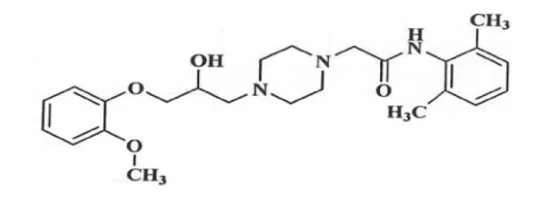
Chemical name: 1-piperazineacetamide, N-(2,6-dimethylphenyl)-4-[2-hydroxy-3-(2- methoxyphenoxy)propyl]-, (±)-
Molecular formula and molecular mass: C24H33N3O4; 427.54 g/mole
Structural formula:
Physicochemical properties:
Ranolazine is a white to off-white crystalline solid powder. Ranolazine is soluble in dichloromethane and methanol;
Qualitative solubility profile in different pH buffer solutions:
| Medium | Solubility (mg/mL) |
|---|---|
| Buffer solution pH 1.20 | 31.3 |
| Buffer solution pH 4.01 | 10.0 |
| Buffer solution pH 6.86 | 4.9 |
| Buffer solution pH 9.18 | 0.2 |
Ranolazine exhibits polymorphic Ranolazine Form I.
14. Clinical Trials
14.1. Clinical Trials by Indication
As an add on to first-line antianginal therapies.
Table 5 - Summary of Patient Demographics for Clinical Trials with Ranolazine, when used as add-on to first-line antianginal therapies
| Study # | Study design | Dosage, route of administration and duration | Study subjects (n) | Mean age Age (SD) | Sex |
|---|---|---|---|---|---|
| CARISA* | Randomized, Double blind, placebo-controlled |
| 823 patients with symptomatic chronic angina | 64 yrs(9.3) | 638 M 185 F |
| ERICA# | Randomized, Double blind, placebo-controlled | Ranolazine 1000 mg bid or placebo for 6 weeks | 565 patients with coronary disease and ≥ 3 anginal attacks/week | 62 yrs (8.7) | 409 M 155 F |
| MARISA£ | Randomized, Double blind, placebo controlled four period crossover | Ranolazine 500 mg, 1000 mg or 1500 mg bid or placebo for 1 week | 191 patients with effort angina | 64 yrs (9.4) | 140 M 51 F |
*CARISA (Combination Assessment of Ranolazine In Stable Angina) was a study in 823 chronic angina patients randomized to receive 12 weeks of treatment with twice-daily extended-release ranolazine 750 mg, 1000 mg, or placebo, who also continued on fixed daily doses of atenolol 50 mg, amlodipine 5 mg, or diltiazem CD 180 mg. Sublingual nitrates were used in this study as needed.
#In the ERICA (Efficacy of Ranolazine in Chronic Angina) trial, 565 patients were randomized to receive an initial dose of extended-release ranolazine 500 mg twice daily or placebo for 1 week, followed by 6 weeks of treatment with extended-release ranolazine 1000 mg twice daily or placebo, in addition to concomitant treatment with amlodipine at a dose of 10 mg once daily. In addition, 45% of the study population also received long-acting nitrates. Sublingual nitrates were used as needed to treat angina episodes.
£In the MARISA trial provides limited data with ranolazine assessed as a monotherapy. One- hundred and ninety-one patients were randomised to treatment with ranolazine 500 mg twice daily, 1000 mg twice daily, 1500 mg twice daily, and matching placebo, each for 1 week in a crossover design.
Ranolazine was significantly superior to placebo in prolonging exercise time, time to angina, and time to 1 mm ST segment depression at all doses studied with an observed dose-response relationship.
Improvement of exercise duration was statistically significant compared to placebo for all three doses of ranolazine from 24 seconds at 500 mg twice daily to 46 seconds at 1500 mg twice daily, showing a dose- related response.
Study Results
In the CARISA trial, statistically significant (p <0.05) increases in modified Bruce treadmill exercise duration and time to angina were observed at Week 12 for each ranolazine dose versus placebo, at both trough (12 hours after dosing), p <0.05, and peak (4 hours after dosing), p <0.005, with minimal effects on blood pressure and heart rate. At trough, mean exercise duration was 416 seconds at baseline in this study, while mean time to onset of angina at baseline was 326 seconds, and mean time to ECG ischemia at baseline was 303 seconds. At peak, mean exercise duration was 467 seconds at baseline in this study, while mean time to onset of angina at baseline was 387 seconds, and mean time to ECG ischemia at baseline was 405 seconds.
The changes versus placebo in exercise parameters are presented in Table 6, below.
Table 6 - Exercise Treadmill Results at Week 12 in the CARISA Trial
| CARISA Trial | ||||||||||||||||
|---|---|---|---|---|---|---|---|---|---|---|---|---|---|---|---|---|
| Ranolazine | Placebo (N =258) | Meana treatment difference (SE) | ||||||||||||||
| 750 mg (N =2 72) | 1000 mg (N = 261) | 750 mg | 1000 mg | |||||||||||||
| Primary endpoint | ||||||||||||||||
| Exercise Duration, mean change from baseline, seconds | 24b(11.0) 24 b (11.0) | |||||||||||||||
| Trough | 115.4 | 115.8 | 91.7 | 23.7b (10.9) | ||||||||||||
| Peak | 99.4 | 91.5 | 65.4 | 34 c (10.7) | 26.1c(10.8) | |||||||||||
| Key secondary endpoints | ||||||||||||||||
| Time to Angina, mean change from baseline, seconds | ||||||||||||||||
| Trough | 145.1 | 146.2 | 114.3 | 29.7 b (12.1) | 26.0 b (12.2) | |||||||||||
| Peak | 126.9 | 126.8 | 88.9 | 38.0c (12.4) | 37.9c (12.6) | |||||||||||
Time to 1 mm ST-Segment Depression, mean change from baseline, seconds | ||||||||||||||||
| Trough | 145.1 | 146.2 | 125.1 | 19.9(12.2) | 21.1 (12.4) | |||||||||||
| Peak | 100.0 | 93.8 | 59.2 | 40.8c (11.8) | 34.5c (11.9) | |||||||||||
a. Mean difference from placebo based on analysis of variance model, including effects for baseline, pooled site, background therapy, and treatment, adjusted for randomization stratification factors b. Statistically significant under multiplicity control for ranolazine vs placebo (p < 0.05) c. Statistically significant under multiplicity control for ranolazine vs placebo (p ≤ 0.005) | ||||||||||||||||
The effects of ranolazine on angina frequency and nitroglycerin use are shown in Table 7. A baseline frequency of 4.5 anginal episodes per week were observed in all treatment groups.
Table 7 - Angina Frequency and Nitroglycerin Use in the CARISA Trial
| Placebo | Ranolazine 750 mga | Ranolazine 1000 mga | ||||||||
|---|---|---|---|---|---|---|---|---|---|---|
| Angina Frequency (attacks/week) | N | 258 | 272 | 261 | ||||||
| Mean | 3.3 | 2.5 | 2.1 | |||||||
| P-value vs placebo | – | 0.006 | <0.001 | |||||||
| Nitroglycerin Use (doses/week) | N | 252 | 262 | 244 | ||||||
| Mean | 3.1 | 2.1 | 1.8 | |||||||
| P-value vs placebo | – | 0.016 | <0.001 | |||||||
a Twice daily
Tolerance to ranolazine did not develop after 12 weeks of therapy. Rebound increases in angina, as measured by exercise duration, have not been observed following abrupt discontinuation of ranolazine.
In the ERICA trial, ranolazine has been evaluated in patients with chronic angina who remained symptomatic despite treatment with the maximum dose of an antianginal agent. Results from this trial are shown in Table 8, below. Statistically significant decreases in trimmed mean weekly anginal episodes were observed at 2.9 and 3.3 (p=0.03), for ranolazine and placebo, respectively. Trimmed mean weekly consumption of rescue (short-acting) nitroglycerin use was also significantly reduced, at 2.0 and 2.7 (p=0.01), respectively. Trimmed mean values excluded individual patient values in the top and bottom 2% of values measured. These treatment effects appeared consistent across age and use of long-acting nitrates.
Table 8 - Results of Key Endpoints at 6-week Duration in Subjects with Stable Coronary Disease in Angina Frequency and Nitroglycerin Use in the ERICA Trial
| ERICA Trial | ||||||||||
|---|---|---|---|---|---|---|---|---|---|---|
Ranolazinea (N = 277) | Placebo (N = 281) | p-valueb | ||||||||
| Primary endpoint | ||||||||||
| Weekly angina frequency (attacks/ week) | ||||||||||
| Trimmed mean ± SE | 2.88 ± 0.19 | 3.31 ± 0.22 | 0.028 | |||||||
| Median | 2.18 | 2.43 | -- | |||||||
| Secondary endpoint | ||||||||||
| Weekly nitroglycerin consumption (doses/ week) | ||||||||||
| Trimmed mean ± SE | 2.03 ± 0.20 | 2.68 ± 0.22 | 0.014 | |||||||
| Median | 1.34 | 1.67 | -- | |||||||
SE = Standard error | ||||||||||
Gender
Overall, effects on angina frequency and exercise tolerance were considerably smaller in women than in men. In the CARISA trial, the improvement in Exercise Tolerance Test (ETT) in females was about 33% of that in males at the 1000 mg twice-daily dose level. In the ERICA trial, where the primary endpoint was angina attack frequency, the mean reduction in weekly angina attacks was 0.3 for females and 1.3 for males.
Race
There were insufficient numbers of non-Caucasian patients to allow for analyses of efficacy or safety by racial subgroups.
14.2. Comparative Bioavailability Studies
Fasting Conditions:
A double-blind, randomized, two-treatment, two-sequence, four-period, full replicate single dose (1 x 500) crossover oral bioequivalence study comparing MAR-RANOLAZINE XR (Marcan Pharmaceuticals Inc.) with PrCORZYNATM (KYE Pharmaceuticals Inc., Canada) was conducted in 48 healthy adult human male subjects under fasting conditions. A summary of the comparative bioavailability data from the 47 subjects that were included in the pharmacokinetic and statistical analyses is presented in the following table:
SUMMARY TABLE OF THE COMPARATIVE BIOAVAILABILITY DATA
Ranolazine (1 x 500 mg) Geometric Mean Arithmetic Mean (CV %) | ||||
| Parameter | Test1 | Reference2 | % Ratio of Geometric Means | 90% Confidence Interval |
AUCT (ng.h/mL) | 8758.69 9693.94 (52.84) | 9537.26 10856.51 (52.76) | 91.8 | 84.8 - 99.4 |
AUCI (ng.h/mL) | 9287.59 10248.09 (49.86) | 10035.86 11399.11 (49.70) | 92.5 | 85.7 - 99.9 |
Cmax (ng/mL) | 873.54 947.34 (44.80) | 876.36 945.41 (40.15) | 99.7 | 92.6 - 107.3 |
Tmax (h)3 | 4.50 (1.00-16.00) | 4.50 (1.50-12.12) | ||
T½ (h)4 | 5.33 (41.37) | 5.44 (38.65) | ||
1 MAR-RANOLAZINE XR (ranolazine) extended-release tablets, 500 mg (Marcan Pharmaceuticals Inc.).
2 PrCORZYNATM (ranolazine) extended-release tablets, 500mg (KYE Pharmaceuticals Inc., Canada).
3 Expressed as the median (range) only.
4 Expressed as the arithmetic mean (CV %) only.
Fed Conditions:
A double-blind, balanced, randomized, two-treatment, two-sequence, two-period, single-dose (1 x 500 mg) crossover oral bioequivalence study comparing MAR-RANOLAZINE XR (Marcan Pharmaceuticals Inc.) with PrCORZYNATM (KYE Pharmaceuticals Inc., Canada) was conducted in 48 healthy adult human male subjects under fed conditions. A summary of the comparative bioavailability data from the 43 subjects that were included in the pharmacokinetic and statistical analyses is presented in the following table:
SUMMARY TABLE OF THE COMPARATIVE BIOAVAILABILITY DATA
Ranolazine (1 x 500 mg) Geometric Mean Arithmetic Mean (CV %) | ||||
|---|---|---|---|---|
| Parameter | Test1 | Reference2 | % Ratio of Geometric Means | 90% Confidence Interval |
AUCT (ng.h/mL) | 9711.94 10701.43 (45.86) | 9495.71 10678.63 (52.38) | 102.3 | 95.9 - 109.1 |
AUCI (ng.h/mL) | 10604.04 11421.78 (42.60) | 10238.63 11131.81 (50.53) | 103.6 | 96.4 - 111.3 |
Cmax (ng/mL) | 746.03 791.31 (35.56) | 776.03 842.71 (43.09) | 96.1 | 90.1 - 102.5 |
Tmax (h)3 | 6.00 (4.00-24.00) | 5.00 (4.50-24.00) | ||
T½ (h)4 | 5.12 5.49 (42.55) | 4.71 4.96 (38.38) | ||
1 MAR-RANOLAZINE XR (ranolazine) extended-release tablets, 500 mg (Marcan Pharmaceuticals Inc.).
2 PrCORZYNATM (ranolazine) extended-release tablets, 500mg (KYE Pharmaceuticals Inc.).
3 Expressed as the median (range) only.
4Expressed as the arithmetic mean (CV %) only.
16. Non-Clinical Toxicology
Genotoxicity Ranolazine tested negative for genotoxic potential in the following assays: Ames bacterial mutation assay, Saccharomyces assay for mitotic gene conversion, chromosomal aberrations assay in Chinese hamster ovary (CHO) cells, mammalian CHO/HGPRT gene mutation assay, and mouse and rat bone marrow micronucleus assays.
Carcinogenicity There was no evidence of carcinogenic potential in mice or rats. The highest oral doses used in the carcinogenicity studies were 150 mg/kg/day for 21 months in rats (900 mg/m2/day) and 50 mg/kg/day for 24 months in mice (150 mg/m2/day). These maximally tolerated doses are 0.8 and 0.1 times, respectively, the daily maximum recommended human dose (MRHD) of 2000 mg on a surface area basis. A published study reported that ranolazine promoted tumor formation and progression to malignancy when given to transgenic APC (min/+) mice at a dose of 30 mg/kg twice daily. The clinical significance of this finding is unclear.
Reproductive and developmental toxicology
Impairment of fertility
In male and female rats, oral administration of ranolazine that produced exposures (AUC) approximately 3-fold or 5-fold higher, respectively, than the MRHD had no effect on fertility.
- 17.
Supporting Product Monograph
PrCORZYNA® (extended release tablets, 375mg, 500 mg, 750mg and 1000 mg), control 264421, Product Monograph, KYE Pharmaceuticals Canada Inc. (2025-06-30)