


Product Monograph - Lancora
Recent Major Label Changes
| None at time of the most recent authorization |
|---|
Table of Contents
Certain sections or subsections that are not applicable at the time of the preparation of the most recent authorized product monograph are not listed.
Recent Major Label Changes .................................................................................................. 2
Table of Contents................................................................................................................... 2
Part 1: Healthcare Professional Information........................................................................... 4
- 1.
Indications ...................................................................................................................... 4
1.1. Pediatrics ............................................................................................................ 4
1.2. Geriatrics............................................................................................................. 4
- 2. Contraindications ............................................................................................................ 4
- 4.
Dosage and Administration ............................................................................................. 5
4.1. Dosing Considerations ......................................................................................... 5
4.2. Recommended Dose and Dosage Adjustment....................................................... 6
4.4. Administration..................................................................................................... 6
4.5. Missed Dose ........................................................................................................ 6
- 5. Overdose ........................................................................................................................ 7
- 6. Dosage Forms, Strengths, Composition, and Packaging ................................................... 7
- 7.
Warnings and Precautions............................................................................................... 8
General ........................................................................................................................... 8
Cardiovascular................................................................................................................. 8
Driving and Operating Machinery................................................................................... 11
Monitoring and Laboratory Tests ................................................................................... 11
Neurologic..................................................................................................................... 11
Ophthalmologic ............................................................................................................. 11
Reproductive Health ...................................................................................................... 11
7.1. Special Populations ............................................................................................ 11
7.1.1. Pregnancy .................................................................................................. 11
7.1.2. Breastfeeding............................................................................................. 12
7.1.3. Pediatrics (< 18 years of age) ...................................................................... 12
7.1.4. Geriatrics (≥ 75 years of age) ...................................................................... 12
7.1.5. Hepatic impairment ................................................................................... 12
7.1.6. Renal impairment....................................................................................... 12
- 8.
Adverse Reactions......................................................................................................... 12
8.1. Adverse Reaction Overview................................................................................ 12
8.2. Clinical Trial Adverse Reactions .......................................................................... 13
8.2.1. Clinical Trial Adverse Reactions – Pediatrics ................................................ 14
8.3. Less Common Clinical Trial Adverse Reactions .................................................... 14
8.3.1. Less Common Clinical Trial Adverse Reactions – Pediatrics .......................... 15
8.4. Abnormal Laboratory Findings: Hematologic, Clinical Chemistry, and Other Quantitative Data .......................................................................................................... 15
8.5. Post-Market Adverse Reactions.......................................................................... 15
- 9.
Drug Interactions .......................................................................................................... 16
9.2. Drug Interactions Overview................................................................................ 16
9.3. Drug-Behaviour Interactions .............................................................................. 17
9.4. Drug-Drug Interactions ...................................................................................... 17
9.5. Drug-Food Interactions ...................................................................................... 19
9.6. Drug-Herb Interactions ...................................................................................... 20
9.7. Drug-Laboratory Test Interactions ...................................................................... 20
- 10.
Clinical Pharmacology ................................................................................................... 20
10.1. Mechanism of Action ......................................................................................... 20
10.2. Pharmacodynamics............................................................................................ 20
10.3. Pharmacokinetics .............................................................................................. 21
- 11. Storage, Stability, and Disposal ..................................................................................... 23
Part 2: Scientific Information ............................................................................................... 24
- 13. Pharmaceutical Information.......................................................................................... 24
- 14.
Clinical Trials ................................................................................................................. 25
14.1. Clinical Trials by Indication ................................................................................. 25
- 16. Non-Clinical Toxicology ................................................................................................. 32
Patient Medication Information........................................................................................... 34
Part 1: Healthcare Professional Information
1. Indications
LANCORA® (ivabradine tablets) is indicated for:
the treatment of stable chronic heart failure with reduced left ventricular ejection fraction (≤ 35%) in adult patients with NYHA Classes II or III who are in sinus rhythm with a resting heart rate ≥ 77 beats per minute, to reduce the incidence of cardiovascular mortality and hospitalisations for worsening heart failure. LANCORA® should be administered in combination with standard chronic heart failure therapies (see 14 CLINICAL TRIALS).
LANCORA® should be initiated and up-titrated under the supervision of a physician who is experienced with the treatment of patients with heart failure (see 4 DOSAGE AND ADMINISTRATION).
1.1. Pediatrics
Pediatrics (<18 years of age): Based on the data submitted and reviewed by Health Canada, the safety and efficacy of LANCORA® in pediatric patients aged below 18 years has not been established; therefore, Health Canada has not authorized an indication for pediatric use (see 7 WARNINGS AND PRECAUTIONS, 4 DOSAGE AND ADMINISTRATION and 10 CLINICAL PHARMACOLOGY).
1.2. Geriatrics
Geriatrics (≥ 75 years of age): Evidence from clinical studies and experience suggests that use in the geriatric population is associated with differences in safety (see 7 WARNINGS AND PRECAUTIONS, 4 DOSAGE AND ADMINISTRATION and 14 CLINICAL TRIALS).
2. Contraindications
- Patients who are hypersensitive to this drug or to any ingredient in the formulation or component of the container. For a complete listing, see the Dosage Forms, Composition and Packaging section of the product monograph
- Resting heart rate below 70 beats per minute prior to treatment
- Unstable or acute heart failure (see 7 WARNINGS AND PRECAUTIONS)
- Patients with existing prolonged QT interval (e.g. congenital long QT syndrome)
- Cardiogenic shock
- Acute myocardial infarction
- Severe hypotension (<90/50 mmHg) (see 7 WARNINGS AND PRECAUTIONS)
- Severe hepatic impairment
- Sick sinus syndrome
- Sino-atrial block
- Third degree atrioventricular block
- Pacemaker dependence (heart rate imposed exclusively by the pacemaker) (see 7 WARNINGS AND PRECAUTIONS)
- Concomitant use of strong cytochrome P450 3A4 (CYP 3A4) inhibitors (see 9 DRUG INTERACTIONS)
Concomitant use of verapamil or diltiazem which are moderate CYP3A4 inhibitors with heart rate
- reducing properties (see 9 DRUG INTERACTIONS)
- Pregnancy, lactation and women of child-bearing potential not using appropriate contraceptive measures (see 7 WARNINGS AND PRECAUTIONS, Special Populations)
- Patients with hereditary problems of galactose intolerance, glucose-galactose malabsorption, or the Lapp lactase deficiency as LANCORA® contains lactose.
4. Dosage and Administration
4.1. Dosing Considerations
Situations where adjustment in LANCORA® dosing is recommended:
- Concomitant use with drugs inhibiting or inducing the CYP3A4 enzyme
- Patients with arrhythmias
- Geriatric patients aged 75 years or above
LANCORA® should be initiated and up- or down- titrated under the supervision of a physician who is experienced with the treatment of patients with chronic heart failure. As LANCORA® treatment decisions are based on resting heart rate, an accurate measure of the resting heart rate based on serial heart rate measurements, electrocardiograms or ambulatory 24-hour monitoring, conducted on at least three separate visits, should be obtained prior to initiating or modifying treatment with LANCORA®.
Dosing Considerations in Special Populations
Concomitant use of moderate CYP3A4 inhibitors: A lower starting dose of 2.5 mg of LANCORA® twice daily is recommended in conjunction with heart rate monitoring. LANCORA® is not recommended with grapefruit products as they are known to inhibit CYP3A4. Concomitant use with diltiazem or verapamil is contraindicated (see 9 DRUG INTERACTIONS and 2 CONTRAINDICATIONS).
Concomitant use of CYP3A4 inducers: LANCORA® use may be initiated at the usual recommended dose of 5 mg twice daily and may be titrated upward to a maximum dose of 7.5 mg twice daily (Table 1). Caution should be exercised if treatment with a CYP3A4 inducer needs to be interrupted after LANCORA® had been titrated. Close heart rate monitoring is recommended and LANCORA® dosing may need to be reduced. Concomitant use of St John’s Wort, which is known to induce CYP3A4, should be avoided (see 7 WARNINGS AND PRECAUTIONS and 9 DRUG INTERACTIONS).
Patients with arrhythmias: In patients with a history of conduction defects, or other patients in whom bradycardia could lead to hemodynamic compromise, initiate therapy at 2.5 mg of LANCORA® twice daily before increasing the dose based on heart rate (Table 1) (see 7 WARNINGS AND PRECAUTIONS).
Hepatic impairment: No dose adjustment is required in patients with mild to moderate hepatic impairment. Use of LANCORA® in patients with severe hepatic impairment is contraindicated (see
2 CONTRAINDICATIONS, 7 WARNINGS AND PRECAUTIONS and 10 CLINICAL PHARMACOLOGY).
Renal impairment: No dose adjustment is required in patients with renal impairment (see 7 WARNINGS AND PRECAUTIONS and 10 CLINICAL PHARMACOLOGY).
Geriatrics (≥ 75 years of age): In patients aged 75 years and older, a lower starting dose of 2.5 mg of LANCORA® twice daily is recommended (i.e. one half 5 mg tablet twice daily) (see 7 WARNINGS AND
PRECAUTIONS). Up-titration may follow depending on the therapeutic response (Table 1).
Pediatrics (< 18 years of age): Health Canada has not authorized an indication for pediatric use (see 7 WARNINGS AND PRECAUTIONS and 10 CLINICAL PHARMACOLOGY).
4.2. Recommended Dose and Dosage Adjustment
LANCORA® 5 mg twice daily is the recommended starting dose for patients with stable chronic heart failure who are in sinus rhythm with a resting heart rate at or above 77 beats per minute.
After two weeks of treatment, assess the patient and adjust the dose based on the patient resting heart rate according to the instructions provided in Table 1. At any time during treatment, the dose may be adjusted as needed depending on the heart rate and tolerability of the patient (Table 1). The maximum dose of LANCORA® is 7.5 mg twice daily.
| Table 1 - | Dose titration according to resting heart rate achieved after initiation of treatment | ||
|---|---|---|---|
| Serial Heart Rate Measurements | Dose Adjustment | ||
| > 60 bpm | Increase dose by 2.5 mg twice daily (maximum dose 7.5 mg BID) | ||
| 50-60 bpm | Maintain dose | ||
< 50 bpm or signs and symptoms of bradycardia** | Decrease dose by 2.5 mg twice daily; if current dose is 2.5 mg twice daily, discontinue therapy | ||
| **Such as dizziness, fatigue or hypotension; bpm: beats per minute | |||
Treatment must be discontinued if the patient, despite receiving the lowest LANCORA® dose (2.5 mg BID), has a resting heart rate below 50 bpm or experiences signs or symptoms of bradycardia (see
7 WARNINGS AND PRECAUTIONS).
Discontinuation of treatment should be considered if despite use of the highest dose of LANCORA® (7.5 mg twice daily) for several months, there has been no clear decrease in the patient’s resting heart rate. The physician should weigh the benefit of continuing treatment with LANCORA® against the risks.
4.4. Administration
Tablets must be taken orally twice daily at approximately 12-hour intervals, i.e. once in the morning and once in the evening during meals (see 10.3 Pharmacokinetics section).
4.5. Missed Dose
If a dose is missed, the next scheduled dose should be taken at the usual time. Doses should not be doubled to make up for the missed dose.
5. Overdose
Overdose may lead to severe and prolonged bradycardia. Severe bradycardia should be treated symptomatically in a specialised environment. In the event of bradycardia with poor hemodynamic tolerance, symptomatic treatment including intravenous beta-stimulating agents may be considered. Temporary cardiac electrical pacing may be instituted if required.
The human lethal dose of ivabradine is unknown. The maximum dose reported with recovery is 750 mg (150 tablets of 5 mg). The patient was a 39-year-old female with a medical history of chronic obstructive pulmonary disease, tachycardia, myocardial ischemia and angina pectoris. Her heart rate decreased as low as 30 bpm and an ECG showed bradycardia with sinus pauses superior to 5 seconds and up to 10 seconds. Urinary toxicology was positive for benzodiazepine and therefore, extreme bradycardia by sinusal dysfunction was considered resulting from intentional drug intoxication with ivabradine and benzodiazepines. The patient was treated with atropine and isuprel (ineffective), then with external electro stimulation. The evolution was favorable with regain of regular sinus rhythm and the patient recovered.
| For the most recent information in the management of a suspected drug overdose, contact your regional poison control centre or Health Canada’s toll-free number, 1-844 POISON-X (1-844-764-7669). |
|---|
- 6. Dosage Forms, Strengths, Composition, and Packaging
Table 2 – Dosage Forms, Strengths, and Composition
Description
LANCORA® 5 mg: salmon-coloured, rod-shaped, film-coated tablet scored on both edges, engraved with “5” on one face and on the other face. The tablet is breakable and it can be divided into equal halves.

LANCORA® 7.5 mg: salmon-coloured, triangular, film-coated tablet engraved with “7.5” on one face and on the other face.
| Route of Administration | Dosage Form/ Strength/Composition | Non-Medicinal Ingredients |
| oral | Film-coated tablet 5 mg, 7.5 mg | Core Tablet colloidal anhydrous silica, lactose monohydrate, magnesium stearate, maize starch, maltodextrin, Film-coating glycerol, hypromellose, macrogol 6000, magnesium stearate, red iron oxide (E 172), titanium dioxide (E 171), yellow iron oxide (E 172) |
Boxes containing blister packs of 14, 28, 56, 84, 98 or 112 tablets.
Bottles of 100 tablets.
7. Warnings and Precautions
General
Lack of Benefit in Stable Coronary Artery Disease
LANCORA® is not indicated for treatment of patients with stable coronary artery disease because clinical trials failed to show clinical outcome benefit in these patients (See 10 CLINICAL PHARMACOLOGY).
Background Beta-Blocker Regimen
The treating physician should make every effort to achieve the guideline-recommended target doses of the beta-blockers prior to initiating treatment with LANCORA® If the resting heart rate remains high (i.e. ≥ 77 bpm), then treatment with LANCORA® may be considered.
Cytochrome P450 3A4 Inhibitors
LANCORA® (ivabradine) is primarily metabolized by CYP3A4. Concomitant use of LANCORA® with strong CYP3A4 inhibitors (e.g. ketoconazole, itraconazole, josamycin, clarithromycin, nefazodone, ritonavir, atazanavir and nelfinavir) is contraindicated because of substantial increases in ivabradine exposure and risks of excessive bradycardia (see 2 CONTRAINDICATIONS and 9 DRUG INTERACTIONS).
Concomitant use of LANCORA® with moderate CYP3A4 inhibitors with their own heart rate reducing properties (i.e. diltiazem or verapamil) is also contraindicated because of increased ivabradine exposure and additive effects on heart rate (see 2 CONTRAINDICATIONS and 9 DRUG INTERACTIONS).
Cytochrome P450 3A4 Inducers
Concomitant use with a CYP3A4 inducer may decrease ivabradine exposure. Patients concomitantly treated with LANCORA® and a CYP3A4 inducer (e.g. rifampicin, barbiturates and phenytoin) may be initiated and titrated with the usual recommended doses of LANCORA®. In case of interruption of treatment with the CYP3A4 inducer, close heart rate monitoring is recommended because the exposure to LANCORA® may increase. LANCORA® dosing may need to be reduced (see 9 DRUG INTERACTIONS and 4 DOSAGE AND ADMINISTRATION).
Cardiovascular
Measurement of Heart Rate
Given that the heart rate fluctuates considerably over time, serial heart rate measurements, electrocardiogram (ECG) or ambulatory 24-hour monitoring should be conducted on at least three separate visits to obtain an accurate measure of the patient resting heart rate prior to initiating treatment with LANCORA® or modifying the dose (see 4 DOSAGE AND ADMINISTRATION).
Aortic Stenosis
Experience with the use of LANCORA® in patients with aortic stenosis is insufficient to assess the benefit-risk ratio. Given the lack of data, use in this patient population is not recommended.
Patients with Cardiac Arrhythmias
LANCORA® is not effective in the treatment or prevention of cardiac arrhythmias and likely loses its efficacy when a tachyarrhythmia occurs (e.g. ventricular or supraventricular tachycardia). LANCORA® is not recommended in patients with atrial fibrillation and is contraindicated in patients with other cardiac arrhythmias that interfere with sinus node function (see 2 CONTRAINDICATIONS).
In patients with a history of conduction defects, or other patients in whom bradycardia could lead to hemodynamic compromise, a lower starting dose LANCORA® is recommended (see 4 DOSAGE AND ADMNISTRATION). Use of LANCORA® in patients with second degree atrioventricular (AV) block has not been studied. Therefore, in the absence of data, use of LANCORA® in these patients should be avoided.
Atrial Fibrillation
In patients treated with LANCORA® the risk of developing atrial fibrillation is increased (see 8 ADVERSE REACTIONS). It is recommended to regularly monitor patients for the occurrence of atrial fibrillation, which should include ECG monitoring if clinically indicated. Patients should be informed of signs and symptoms of atrial fibrillation and be advised to contact their physician if these occur. Discontinue treatment with LANCORA® if atrial fibrillation occurs.
Atrial fibrillation appears more common in ivabradine-treated patients concomitantly treated with amiodarone, although the mechanism involved remains unclear. Concomitant use of LANCORA® and amiodarone should be avoided. If the combination is deemed necessary, close cardiac monitoring is required (see 9 DRUG INTERACTIONS).
Sinus Node Dysfunction
The rate of sinus node dysfunction, including sick sinus syndrome, was 0.4% with ivabradine compared to 0.03% with placebo (see 8 ADVERSE REACTIONS). Discontinue treatment with LANCORA® if sinus node dysfunction occurs. Use of LANCORA® is contraindicated in patients with sick sinus syndrome or sinoatrial block (see 2 CONTRAINDICATIONS).
Conduction Disturbances
LANCORA® slows conduction through the AV node. The incidence of third degree atrioventricular (AV) block, although uncommon in the SHIFT trial, was higher with LANCORA® than with placebo (see
8 ADVERSE REACTIONS). Medical history of intraventricular block was identified as a risk factor. Hence, patients with intraventricular conduction defects (bundle branch block left, bundle branch block right) and ventricular dyssynchrony should be closely monitored. Discontinue treatment with LANCORA® if third degree AV block occurs.
Bradycardia
The incidence of bradycardia was 10.2% in patients treated with LANCORA® (4.6% symptomatic; 5.6% asymptomatic) and 2.3% in patients treated with placebo. If during treatment the resting heart rate drops below 50 beats per minute or the patient experiences symptoms related to bradycardia (e.g. dizziness, fatigue or hypotension), the dose must be titrated downward or treatment must be discontinued (see 4 DOSAGE AND ADMINISTRATION). Patients should be informed of signs and symptoms of bradycardia and be advised to contact their physician if these occur.
Concomitant use of LANCORA® with other heart rate lowering drugs may cause excessive bradycardia due to additive effect. Therefore, caution should be exercised and heart rate monitoring is recommended (see 9 DRUG INTERACTIONS).
Hypokalemia can increase the risk of arrhythmia. As LANCORA® causes bradycardia, the resulting combination of hypokalemia and bradycardia is a predisposing factor to the onset of severe arrhythmias. Caution should be exercised and close cardiac monitoring is recommended (see 9 DRUG INTERACTIONS).
Patients at Risk of QT Interval Prolongation
LANCORA® decreases heart rate which may exacerbate existing QT interval prolongation and give rise to severe arrhythmias, including torsade de pointes and ventricular fibrillation. Use of LANCORA® in patients with existing prolonged QT interval is therefore contraindicated (see 2 CONTRAINDICATIONS).
Use of LANCORA® in patients at risk of QT prolongation should be avoided (e.g. familial history of QT prolongation or concomitant treatment with QT prolonging therapies). If concomitant use with QT prolonging therapies is deemed necessary, close cardiac monitoring (12-lead ECG) is required. Depending on the 12-lead ECG results, LANCORA® dosing may need to be decreased or stopped (see 9 DRUG INTERACTIONS).
In the SHIFT trial, cases of severe cardiac arrhythmias including torsade de pointes (0.06% LANCORA® versus 0% placebo) and ventricular fibrillation (0.74% LANCORA® versus 0.37% placebo) were more frequently reported with LANCORA® than with placebo (see 8 ADVERSE REACTIONS). If such events occur, LANCORA® should be discontinued.
In the SHIFT trial, ventricular tachycardia was reported as a common adverse event with an incidence of 1.86% in the LANCORA® group as compared to 2.15% in the placebo group.
Cardiac Devices
There is limited data in patients with implantable cardioverter defibrillator (ICD) or cardiac resynchronization therapy (CRT) taking LANCORA®. If LANCORA® treatment is deemed necessary for these patients, caution and close cardiac monitoring is recommended (see 14 CLINICAL TRIALS).
The SHIFT trial excluded any patients with pacemaker with atrial or ventricular pacing (except bi-ventricular pacing) > 40% of the time, or with a stimulation threshold at the atrial or ventricular level ≥ 60 bpm. Use of LANCORA® in these patients is not recommended due to the absence of efficacy and safety data. LANCORA® is contraindicated in pacemaker-dependent patients (see
2 CONTRAINDICATIONS).
Chronic Heart Failure
Heart failure must be stable, in terms of clinical conditions and medications, before treatment with LANCORA® is considered (see 2 CONTRAINDICATIONS).
Patients with Hypotension
Limited data are available in patients with hypotension and therefore, LANCORA® should be used with caution in these patients. LANCORA® is contraindicated in patients with severe hypotension (blood pressure below 90/50 mmHg) (see 2 CONTRAINDICATIONS).
Use in Hypertensive Patients
Events of blood pressure inadequately controlled were more frequently reported with ivabradine than with placebo (LANCORA® 7.1% versus placebo 6.1%) (see 8 ADVERSE REACTIONS). In hypertensive patients requiring LANCORA® treatment, performance of regular blood pressure monitoring and reassessment of anti-hypertensive treatments is recommended.
Driving and Operating Machinery
A specific study to assess the possible influence of LANCORA® -induced visual symptoms on driving performance in healthy volunteers showed no deterioration of their driving performance. However, in post-marketing experience, cases of impaired driving ability due to visual disturbances have been reported. LANCORA® may cause transient luminous phenomena consisting mainly of phosphenes (see 8 ADVERSE REACTIONS). The possible occurrence of such luminous phenomena should be taken into account when driving or using machines in situations where sudden variations in light intensity may occur, especially when driving at night. Events of dizziness, asthenia and fatigue have also been reported in patients treated with LANCORA® (see 8 ADVERSE REACTIONS and 10 CLINICAL PHARMACOLOGY).
Monitoring and Laboratory Tests
Regular monitoring of the QT/QTc and PR intervals is recommended during treatment with LANCORA®.
Neurologic
Stroke
The use of LANCORA® is not recommended immediately after stroke or transient ischemic attack since no data is available in this patient population.
Ophthalmologic
Visual Effects
LANCORA® influences retinal function. Visual disorders such as phosphenes and blurred vision were commonly reported in patients treated with LANCORA® These events were found to be dose dependent and related to the pharmacological mechanism of action of LANCORA® (see 8 ADVERSE REACTIONS and 10 CLINICAL PHARMACOLOGY). To date, there is no evidence of a toxic effect of LANCORA® on the retina. Cessation of treatment should be considered if any unexpected deterioration in visual function occurs. Caution should be exercised in patients with retinitis pigmentosa.
Reproductive Health
LANCORA® is contraindicated in women of child-bearing potential unless they use appropriate contraceptive measures during treatment (see 2 CONTRAINDICATIONS).
7.1. Special Populations
7.1.1. Pregnancy
There are no sufficient data concerning the use of LANCORA® in pregnant women. Animal reproduction studies have shown embryo-fetal toxicity and teratogenicity in pregnant rats (i.e. increased intrauterine and post-natal mortality, higher incidence of fetuses with cardiac defects) and rabbits (i.e. increased post-implantation loss and a small number of fetuses with ectrodactylia) at exposure levels comparable to the clinical exposure (based on AUC). The potential risk for humans is unknown. Therefore, LANCORA® is contraindicated during pregnancy (see 2 CONTRAINDICATIONS).
7.1.2. Breastfeeding
Animal studies indicate that LANCORA® is excreted in milk. Therefore, LANCORA® is contraindicated in breast-feeding women (see 2 CONTRAINDICATIONS). Women who need treatment with LANCORA® should stop breastfeeding and choose an alternative way to feed their child.
7.1.3.Pediatrics (< 18 years of age)
Based on the data submitted and reviewed by Health Canada, the safety and efficacy of LANCORA® in pediatric patients has not been established; therefore, Health Canada has not authorized an indication for pediatric use (see 1 INDICATIONS, 4 DOSAGE AND ADMINISTRATION and 10 CLINICAL PHARMACOLOGY).
7.1.4. Geriatrics (≥ 75 years of age)
LANCORA® has only been studied in a limited number of patients 75 years of age and older. The SHIFT trial showed a higher risk of bradycardia among patients aged ≥ 75 years treated with LANCORA®, at a starting dose of 5 mg bid. The incidence of bradycardia in patients aged ≥ 75 years was 7.4% in the ivabradine group and 1.1% in the placebo group, in comparison to 4.6% in the ivabradine group and 0.9% in the placebo group for the overall study population. A lower starting dose is therefore recommended in these patients (see 14 CLINICAL TRIALS and 4 DOSAGE AND ADMINISTRATION).
7.1.5. Hepatic impairment
Caution should be exercised when using LANCORA® in patients with moderate hepatic impairment. The use of LANCORA® in patients with severe hepatic impairment is contraindicated since it has not been studied in this population and a large increase in systemic exposure is expected (see 2 CONTRAINDICATIONS and 10 CLINICAL PHARMACOLOGY).
7.1.6. Renal impairment
Caution should be exercised when using LANCORA® in patients with severe renal impairment (creatinine clearance < 15 ml/min) since there is no data available in these patients. No dosage adjustment is needed in patients with a creatinine clearance of 15 to 60 ml/min (see 4 DOSAGE AND ADMINISTRATION).
8. Adverse Reactions
8.1. Adverse Reaction Overview
In the SHIFT trial conducted in patients with chronic heart failure, the most common adverse events reported at higher rates with LANCORA® than with placebo were atrial fibrillation, blood pressure inadequately controlled, bradycardia (symptomatic or not), ventricular extrasystoles and visual effects (phosphenes and blurred vision). Conduction disturbances (e.g. atrioventricular block and bundle branch block) were also commonly reported in patients treated with LANCORA®.
The proportion of patients who had serious adverse events was similar across the treatment groups (42.4% for LANCORA® and 45.4% for placebo). The most common serious adverse events more frequently reported with LANCORA® than with placebo were atrial fibrillation, sudden cardiac death, pneumonia and myocardial infarction (including acute MI). Cases of sick sinus syndrome, sinoatrial block and torsade de pointes have only been reported in patients treated with LANCORA® during the trial.
The main causes of discontinuation or interruption of treatment without restart during the SHIFT trial were atrial fibrillation, cardiac failure, heart rate decreased and bradycardia.
8.2. Clinical Trial Adverse Reactions
Clinical trials are conducted under very specific conditions. Therefore, the frequencies of adverse reactions observed in the clinical trials may not reflect frequencies observed in clinical practice and should not be compared to frequencies reported in clinical trials of another drug.
The safety profile of LANCORA® in patient with chronic stable heart failure has been evaluated in a morbidity-mortality event-driven trial (SHIFT trial) which compared treatment with LANCORA® (N=3,232) to placebo (N=3,260). Median LANCORA® treatment duration in the trial was 21.6 months (see 14 CLINICAL TRIALS).
Table 3 – Adverse events by body system (SOC) reported for ≥ 1% of patients and with a greater incidence reported with LANCORA® than with placebo (SHIFT trial)
| System organ class/preferred term | LANCORA® (N* = 3,232) n (%) | Placebo (N* = 3,260) n (%) | ||
|---|---|---|---|---|
| Cardiovascular | ||||
| Atrial fibrillation | 267 (8.3) | 217 (6.7) | ||
| Bradycardia (including sinus bradycardia) | 148 (4.6) | 28 (0.9) | ||
| Ventricular extrasystoles | 144 (4.5) | 138 (4.2) | ||
| Acute myocardial infarction/myocardial infarction | 115 (3.6) | 104 (3.2) | ||
| Atrial flutter | 37 (1.1) | 34 (1.1) | ||
| Atrioventricular block (second and third degree) | 32 (1.0) | 18 (0.6) | ||
| Bundle branch block (left, right, bilateral) | 38 (1.2) | 35 (1.1) | ||
| Ear and labyrinth disorders | ||||
| Inner ear signs and symptoms (vertigo, vertigo positional or tinnitus) | 33 (1.0) | 14 (0.4) | ||
| Eye disorders | ||||
| Phosphenes | 89 (2.8) | 16 (0.5) | ||
| Investigations | ||||
| Heart rate decreased | 181 (5.6) | 45 (1.4) | ||
| (asymptomatic bradycardia) | ||||
| Blood creatinine increased | 55 (1.7) | 47 (1.4) | ||
| General disorders and administration site conditions | ||||
| Sudden cardiac death | 73 (2.3) | 68 (2.1) | ||
| Asthenic conditions (fatigue, asthenia, malaise) | 57 (1.8) | 37 (1.1) | ||
| Metabolism and nutrition disorders | ||||
| Hypokalemia | 33 (1.0) | 26 (0.8) | ||
| Nervous system disorders | ||||
| Dizziness | 55 (1.7) | 47 (1.4) | ||
| Vascular Disorders | ||||
| Blood pressure inadequately controlled | 228 (7.1) | 198 (6.1) | ||
*Safety set
Visual symptoms
The luminous phenomena (phosphenes) reported with LANCORA® are described as a transiently enhanced brightness in a limited area of the visual field, halos, image decomposition (stroboscopic or kaleidoscopic effects), colored bright lights, or multiple images (retinal persistency). Phosphenes are generally reported within the first 2 months of treatment and are described as intermittent events triggered by sudden variations in light intensity. They result from an effect of LANCORA® on retinal photoreceptors (see 10 CLINICAL PHARMACOLOGY). In most cases, the events are of mild to moderate intensity and resolve spontaneously during treatment or are reversible after treatment discontinuation.
8.2.1. Clinical Trial Adverse Reactions – Pediatrics
Not applicable
8.3. Less Common Clinical Trial Adverse Reactions
The less common adverse events listed below were reported at a greater incidence with LANCORA® than with placebo in the SHIFT trial.
| Cardiac disorders : | Ventricular fibrillation; Disorders of sinus node function (e.g. sick sinus syndrome; sinoatrial block); Cardiac valve incompetency; Torsade de pointes |
|---|---|
| Eye disorders : | Vision blurred; Visual disturbance; Photophobia; Visual color distortions |
| Investigations: | Electrocardiogram QT prolonged |
| Nervous system disorders : | Transient ischemic attack |
| Gastrointestinal disorders: | Nausea |
| General disorders and administration site conditions : | Peripheral coldness |
| Musculoskeletal and connective tissue disorders: | Arthralgia |
| Vascular disorders : | Orthostatic hypotension; Intermittent claudication |
8.3.1. Less Common Clinical Trial Adverse Reactions – Pediatrics
Not applicable
8.4. Abnormal Laboratory Findings: Hematologic, Clinical Chemistry, and Other Quantitative Data
Clinical Trial Findings
No clinically significant changes were observed in biochemical and hematological parameters of patients treated with LANCORA® during the SHIFT trial.
8.5. Post-Market Adverse Reactions
The hereafter listed Adverse Drug Reactions are coming from all reporting sources.
| Blood and lymphatic system disorders : | Eosinophilia |
| Metabolism and nutrition disorders : | Hyperuricemia |
| Nervous system disorders : | Headache, generally during the first month of treatment, Syncope |
| Eye disorders : | Diplopia, Visual impairment |
| Cardiac disorders : | Atrioventricular first degree block (ECG prolonged PQ interval), Palpitations, Supraventricular extrasystoles, Ventricular tachycardia |
| Vascular disorders : | Hypotension, possibly related to bradycardia |
| Respiratory, thoracic and mediastinal disorders : | Dyspnea |
| Gastrointestinal disorders : | Constipation, Diarrhea, Abdominal pain |
| Skin and subcutaneous tissue disorders : | Angioedema, Rash, Erythema, Pruritus, Urticaria |
| Musculoskeletal and connective tissue disorders : | Muscle spasms |
9. Drug Interactions
9.2. Drug Interactions Overview
LANCORA® (ivabradine) is exclusively metabolised by cytochrome P450 3A4 (CYP3A4) and is a very weak inhibitor of this enzyme. Drug-drug interaction studies have established that CYP3A4 inhibitors increase LANCORA® plasma concentrations and CYP3A4 inducers decrease them. Increased ivabradine exposure may exacerbate bradycardia and conduction disturbances (see 7 WARNING AND PRECAUTIONS).
Concomitant use of LANCORA® with strong CYP3A4 inhibitors or with moderate CYP3A4 inhibitors that also reduce heart rate by themselves (i.e. diltiazem and verapamil) is contraindicated (see
2 CONTRAINDICATIONS). Caution should be exercised when LANCORA® is concomitantly used with other moderate CYP3A4 inhibitors without heart rate lowering effect because LANCORA® plasma concentrations will be increased. Use a lower starting dose of LANCORA® and monitor the patient’s heart rate.
Caution should be exercised when LANCORA® is co-administered with CYP3A4 inducers (Table 4) (see
7 WARNINGS AND PRECAUTIONS and 4 DOSAGE AND ADMINISTRATION).
LANCORA® was shown not to influence the metabolism and plasma concentrations of other CYP3A4 substrates, with the exception of simvastatin.
The concomitant use of LANCORA® with QT prolonging medicinal products should be avoided because the heart rate lowering effect of LANCORA® may exacerbate QT prolongation. If the combination is deemed necessary, close cardiac monitoring (12-lead ECG) is required (see 7 WARNINGS AND PRECAUTIONS).
9.3. Drug-Behaviour Interactions
No drug-behavior interaction studies have been conducted with LANCORA®.
9.4. Drug-Drug Interactions
Table 4 – Established or Potential Drug-Drug Interactions
Proper/ Common name | Source of Evidence | Effect | Clinical comment | ||||
Proper/ Common name | Source of Evidence | Effect | Clinical comment | ||||
Proper/ Common name | Source of Evidence | Effect | Clinical comment | ||||
Strong CYP3A4 inhibitors Ketoconazole Josamycin | CT CT | Co-administration of ketoconazole 200 mg o.d. with a single 10 mg dose of ivabradine increased the ivabradine plasma AUC and Cmax by 7- to 8- fold and 3- to 4- fold, respectively. Co-administration of josamycin 1000 mg b.i.d. with ivabradine increased the ivabradine plasma AUC by 7- to 9- fold | Other strong inhibitors of CYP3A4 (e.g. itraconazole, clarithromycin, nefazodone, ritonavir, atazanavir and nelfinavir) would be expected to have similar effects. Concomitant use of LANCORA® with strong CYP3A4 inhibitors is contraindicated (see 2 CONTRAINDICATIONS). | ||||
| Moderate CYP3A4 inhibitors with heart rate reducing properties (e.g. diltiazem and verapamil) | CT | Co-administration of diltiazem (120 mg b.i.d.) and verapamil (120 mg b.i.d.) with ivabradine increased the ivabradine plasma AUC by 2- to 3- fold with an additive heart rate reduction of 5 bpm. | The concomitant use of LANCORA® with moderate CYP3A4 inhibitors with heart rate reducing properties (i.e. diltiazem or verapamil) is contraindicated (see 2 CONTRAINDICATIONS). | ||||
| Moderate CYP3A4 inhibitors (e.g. fluconazole) | T | A drug-drug interaction study with fluconazole has not been performed. Clinically relevant increases in ivabradine exposure are expected. | In case of concomitant use of LANCORA® with moderate CYP3A4 inhibitors (e.g. fluconazole), a lower starting dose of LANCORA® (2.5 mg twice daily) is recommended with heart rate monitoring (see 4 DOSAGE AND ADMINISTRATION). | ||||
| CYP3A4 inducers (e.g. rifampicin, barbiturates and phenytoin) | T | Drug-drug interaction studies with CYP3A4 inducers have not been performed. Clinically relevant decreases in | LANCORA® may be initiated and titrated with the usual recommended doses. Close heart rate monitoring is recommended if treatment with the CYP3A4 inducer needs to be interrupted, LANCORA® | ||||
| ivabradine plasma exposure are expected. | dosing may need to be reduced (see 7 WARNINGS AND PRECAUTIONS and 4 DOSAGE AND ADMINISTRATION). | ||||||
| QT prolonging agents (e.g. antiarrhythmics, antipsychotics, antidepressants, opiods, antibiotics, antimalarials, antifungals, 5-HT3 receptor antagonists, tyrosine kinase inhibitors, histone deacetylase inhibitors, beta-2 adrenoreceptor agonists and drugs such as domperidone, pentamidine ) | CT, T | The mechanism of action of ivabradine is to decrease the heart rate. This effect may exacerbate QT prolongation induced by other drugs and may give rise to severe arrhythmias | Use of LANCORA® with any QT prolonging medicinal products should be avoided. If the combination is deemed necessary, close cardiac monitoring (12-lead ECG) is required. Depending on the 12-lead ECG results, LANCORA® dosing may need to be decreased or stopped. | ||||
| Imipramine | CT | In a specific study, the concomitant use of LANCORA® with imipramine did not lead to clinically relevant QTc prolongation | The evidence provided in this study is limited and cannot be extrapolated to all antipsychotics. For antipsychotics known to cause QT prolongation, the recommendation is the same as for any other QT prolonging drugs. Concomitant use with LANCORA® should be avoided. If the combination is deemed necessary, close cardiac monitoring (12-lead ECG) is required. | ||||
| Potassium-depleting diuretics (e.g. thiazide and loop diuretics) | T | Hypokalemia can increase the risk of arrhythmia. As LANCORA® causes bradycardia, the resulting combination of hypokalemia and bradycardia is a predisposing factor to the onset of severe arrhythmias, especially in patients with long QT syndrome, whether congenital or substance-induced. | Caution should be exercised and close cardiac monitoring is recommended (see 7 WARNINGS AND PRECAUTIONS). | ||||
| Heart rate lowering agents | T | Concomitant use of LANCORA® with other heart rate lowering drugs may cause excessive bradycardia due to additive effect. | Caution should be exercised and heart rate monitoring is recommended | ||||
| Amiodarone | CT, T | Concomitant use of LANCORA® with amiodarone may result in increased risk of QT prolongation, atrial fibrillation and excessive bradycardia. No pharmacokinetic interaction was observed in a study conducted in 12 patients with coronary artery disease receiving LANCORA® (10 mg twice daily) and amiodarone (200 mg once daily). | Concomitant use of LANCORA® and amiodarone should be avoided. If the combination is deemed necessary, close cardiac monitoring is required. | ||||
| Simvastatin | CT | Co-administration of ivabradine and simvastatin did not affect the ivabradine exposure, but simvastatin exposure was decreased up to 50%. | Caution should be exercised | ||||
Legend: C = Case Study; CT = Clinical Trial; T = Theoretical
9.5. Drug-Food Interactions
LANCORA® exposure was increased > 2-fold following the co-administration with grapefruit juice
(moderate CYP3A4 inhibitor). Therefore, grapefruit juice should be avoided during treatment with LANCORA®.
Following the administration of ivabradine hydrochloride with a high-fat, high-calorie meal, the absorption of ivabradine was delayed by approximately 0.5 hour, and the rate and extent of absorption of ivabradine was increased by approximately 45% and 42%, respectively, when compared to administration under fasting conditions; as a result, it is recommended that LANCORA® be taken with food.
9.6. Drug-Herb Interactions
The combination of LANCORA® 10 mg twice daily with St John’s Wort (Hypericum perforatum, CYP3A4 inducer) was shown to reduce LANCORA® AUC by half. The intake of St John’s Wort should be avoided during LANCORA® treatment.
9.7. Drug-Laboratory Test Interactions
Interactions with laboratory tests have not been established.
10. Clinical Pharmacology
10.1. Mechanism of Action
LANCORA® is a heart rate lowering agent which blocks the hyperpolarisation-activated cyclic nucleotide-gated (HCN) channel responsible for the cardiac pacemaker If current, which regulates heart rate. In clinical electrophysiology studies, prolongation of the atrial-His (AH) interval and PR interval have also been demonstrated which highlights an effect of ivabradine on conduction trough the atrioventricular node.
LANCORA® can also inhibit the retinal Ih current. This Ih current, closely resembling the cardiac If current, is involved in temporally inhibiting retinal responses to bright light stimuli. Under triggering circumstances (e.g., rapid changes in luminosity) partial blockade of Ih by LANCORA® may underlie the luminous phenomena experienced by patients. Luminous phenomena (phosphenes) are described as a transient enhanced brightness in a limited area of the visual field (see 7 WARNINGS AND PRECAUTIONS and 8 ADVERSE REACTIONS).
10.2. Pharmacodynamics
LANCORA® causes a dose-dependent reduction in heart rate (HR). The size of this HR reduction is related to the baseline HR, i.e., the higher the baseline HR, the greater the HR reduction. Analysis of HR reduction vs. dose indicates a plateau effect at doses > 20 mg twice daily.
In a clinical ECG study performed in patients with pre-existing conduction system disease (first- or second-degree atrioventricular block or left or right bundle branch block), a single intravenous administration of ivabradine (0.20 mg/kg) was shown to slow the overall heart rate by approximately 15 bpm one hour after treatment with ivabradine and to prolong the mean duration of the atrial-His (AH) interval (by 27 ms) and PR interval (by 29 ms).
LANCORA® does not have negative inotropic effects. Ivabradine was also shown to dose-dependently increase the uncorrected QT interval with heart rate slowing.
10.3. Pharmacokinetics
Table 5 – Summary of ivabradine’s pharmacokinetic parameters in patients# following repeated oral administration of 5 mg twice daily
| Cmax (ng/mL) | Tmax | t½ (h) | AUC τ (ng.h/mL) | CL CLτ CLR (L/h) | Vd (L)* | |
| Ivabradine hydrochloride | 22 ± 6.3 | - | 2.1 ± 0.31 | 123 ± 46 | 23 ± 4.4 4.2 ± 0.9 | 108 ± 21 |
#, patients with coronary artery disease; *, single IV administration
Absorption
After oral administration in fasting conditions, LANCORA® reaches peak plasma levels in approximately 1 hour. The absolute oral bioavailability of ivabradine is approximately 40%, due to first-pass elimination in the gut and liver.
Following the administration of ivabradine hydrochloride with a high-fat, high-calorie meal, the absorption of ivabradine was delayed by approximately 0.5 hour, and the rate and extent of absorption of ivabradine was increased by approximately 45% and 42%, respectively, when compared to administration under fasting conditions; as a result, it is recommended that LANCORA® be taken with food (see 4 DOSAGE AND ADMINISTRATION).
Distribution
LANCORA® is approximately 70% plasma protein-bound, and the volume of distribution is approximately 100 L.
Metabolism
LANCORA® is extensively metabolised by the liver and the gut by oxidation through cytochrome CYP3A4 only. The major active metabolite is the N-desmethylated derivative (S 18982), and its exposure is about 40% of that of the parent compound with similar pharmacokinetic and equipotent pharmacodynamic properties. The metabolism of this active metabolite also involves CYP3A4. Ivabradine has low affinity for CYP3A4, shows no sign of enzyme induction or inhibition, and is therefore unlikely to modify CYP3A4 substrate metabolism or plasma concentrations. Inversely, inducers and strong inhibitors may affect ivabradine plasma concentrations (see 9 DRUG INTERACTIONS and 7 WARNINGS AND PRECAUTIONS).
Elimination
LANCORA® is eliminated with a main half-life of 2 hours and an effective half-life of approximately 6-10 hours. The total clearance is about 24L/hr and the renal clearance is about 4.2 L/hr. The excretion of metabolites and small amounts of unchanged compound occur to a similar extent via feces and urine. About 4% of an oral dose is excreted unchanged in urine.
Linearity/non linearity: The kinetics of ivabradine are approximately linear over an oral dose range of 4 to 32 mg.
Pharmacokinetic/pharmacodynamic relationship: Analysis has shown that heart rate decreases almost linearly with increasing ivabradine plasma concentrations and those of its active metabolite, S 18982, for oral ivabradine doses up to 20 mg twice daily, above which the dose-heart rate relationship reaches a plateau. Increased exposure to ivabradine following co-administration of ivabradine with strong CYP3A4 inhibitors may result in an excessive decrease in heart rate, and is therefore contraindicated. Similarly, co-administration with moderate CYP3A4 inhibitors are expected to lead to clinically relevant increases in ivabradine exposure and therefore, a lower starting dose of ivabradine is recommended with heart rate monitoring (see 2 CONTRAINDICATIONS, 7 WARNINGS AND PRECAUTIONS, 9 DRUG-DRUG INTERACTIONS and 4 DOSAGE AND ADMINISTRATION).
Special populations and conditions
- Pediatrics The pharmacokinetics of LANCORA® have not been investigated in patients <18 years of age. Based on the data submitted and reviewed by Health Canada, the safety and efficacy of LANCORA® in pediatric patients has not been established; therefore, Health Canada has not authorized an indication for pediatric use (see 1 INDICATIONS, 7 WARNINGS AND PRECAUTIONS and 4 DOSAGE AND ADMINISTRATION).
Pediatric study A randomised (2 ivabradine : 1 placebo), double-blind, placebo-controlled phase II/III dose-finding study was performed in 116 pediatric patients with dilated cardiomyopathy and symptomatic chronic heart failure, in sinus rhythm and with LVEF ≤ 45%. These patients were aged from 6 months to less than 18 years, were receiving standard heart failure therapies (e.g. diuretics, anti-aldosterone agents, ACE inhibitors, beta-blockers, digoxin) and had been stable on their treatment regimen for at least 4 weeks. The study included 17 patients aged [6-12[months, 36 patients aged [1-3[ years and 63 patients aged [3-18[ years. The starting dose was 0.02 mg/kg bid in age-subset [6-12[months; 0.05 mg/kg bid in age-subsets [1-3[ years and [3-18[ years < 40 kg; and 2.5 mg bid in age-subset [3-18[ years ≥ 40 kg. The dose was titrated depending on the therapeutic response to a maximum dose of 0.2 mg/kg bid, 0.3 mg/kg bid and 15 mg bid, respectively. In this study, ivabradine was administered as oral liquid formulation (<40 kg) or tablet (≥ 40 kg) twice daily. A 20% heart rate reduction, without bradycardia (predefined heart rate threshold by age subset), was achieved by 69.9% of patients in the ivabradine group versus 12.2% in the placebo group during the titration period of 2 to 8 weeks (Odds Ratio: E = 17.24, 95% CI [5.91 ; 50.30]). Mean LVEF increased from 31.9% to 47.1% after 12 months in the ivabradine group versus 35.0% at baseline to 44.5% after 12 months in the placebo group. There was an improvement in NYHA class / ROSS class in 37.7% of ivabradine patients versus 25.0% of placebo patients. These improvements were not statistically significant.
The safety profile, over one year, appeared similar to that described in adult CHF patients, although the small number of pediatric patients included in this trial limited data interpretation. More patients in the ivabradine group reported corrected QT interval prolongation (Fridericia correction) >450 ms and/or a change from baseline > 30ms than in the placebo group.This study included only a limited number of patients in each age subset which limits our capacity to draw conclusions. This study is therefore deemed insufficient to support an indication in the pediatric population. The long-term effects of ivabradine on development, growth, and/or maturation of organ/system function, as well as the long-term efficacy of treatment with ivabradine in childhood to reduce cardiovascular morbidity and mortality, are yet to be studied.
Geriatrics No differences in pharmacokinetic parameters (AUC, Cmax) have been found between elderly (≥ 65 years) or very elderly (≥ 75 years) patients and the overall patient
- population.
- Sex There was no evidence of clinically significant differences in pharmacokinetic parameters between male and female patients.
- Ethnic origin No difference was observed in the pharmacodynamic activity of ivabradine in Asian as compared to Caucasian patients. No other ethnic or racial groups were studied.
Hepatic Insufficiency The pharmacokinetics of ivabradine was assessed in patients with Child-Pugh score up to B7 and showed practically no differences compared to patients with normal hepatic function. No data are available in patients with severe hepatic impairment (see
2 CONTRAINDICATIONS, 7 WARNINGS AND PRECAUTIONS and 4 DOSAGE AND ADMINISTRATION).
Renal Insufficiency Mild to moderate renal impairment (creatinine clearance between 15 and 60 ml/min) has minimal effect on the pharmacokinetics of LANCORA®. No data are available in patients with severe renal impairment (creatinine clearance below 15 ml/min) (see
7 WARNINGS AND PRECAUTIONS and 4 DOSAGE AND ADMINISTRATION).
BEAUTIFUL and SIGNIFY trials: No benefit in patients with stable coronary artery disease with or without stable heart failure
The BEAUTIFUL trial was a randomised, double-blind, placebo-controlled, multi-centre, international, event-driven Phase 3 study. The study included 10,917 adult patients with documented history of coronary artery disease, associated with left ventricular ejection fraction <40%, who were in sinus rhythm with resting heart rate ≥ 60 bpm. Most patients were NYHA class II (61.4%) or class III (23.2%) ─ none were class IV. Patients were randomized 1:1 to ivabradine or placebo at an initial dose of 5 mg bid that could be up-titrated to 7.5 mg twice daily depending on resting heart rate and tolerability. The mean ivabradine treatment duration was 15.8 ± 8.6 months (median = 18 months). The primary endpoint was a composite of first event of cardiovascular death, hospitalisation for acute myocardial infarction or hospitalisation for new onset or worsening heart failure. Ivabradine was shown not to provide any benefit over placebo for the incidence of the primary endpoint in this patient population. The estimate of treatment effect (i.e. hazard ratio [95% CI]) was 1.00 [0.91; 1.10], p=0.945.
The SIGNIFY trial was a randomised, double-blind, placebo-controlled, multicentre, international, event-driven, Phase 3 study. The study included 19,102 patients with stable and documented coronary artery disease without clinical evidence of heart failure, who were in sinus rhythm with resting heart rate ≥ 70 bpm. Ivabradine was initiated at a dose of 7.5 mg bid and could be up-titrated up to 10 mg bid depending on resting heart rate and tolerability. The mean ivabradine treatment duration was 24.5 ± 11.0 months (median = 24.1 months). The primary endpoint was a composite of first event of cardiovascular death or non-fatal myocardial infarction. Ivabradine was shown not to provide any benefit over placebo for the incidence of the primary endpoint in this patient population. The estimate of treatment effect (i.e. hazard ratio [95% CI]) was 1.08 [0.96; 1.20], p=0.1969. The incidence of both components of the primary endpoint was numerically higher with ivabradine than with placebo.
- 11. Storage, Stability, and Disposal
LANCORA® should be stored at room temperature (15°C to 30°C).
Part 2: Scientific Information
13. Pharmaceutical Information
Drug Substance
Proper name: Ivabradine (INN), Ivabradine hydrochloride (INNM)
Chemical name: 3-(3-{[((7S)-3,4-Dimethoxybicyclo[4.2.0]octa-1,3,5-trien-7-yl)methyl] methyl amino} propyl)-1,3,4,5-tetrahydro-7,8-dimethoxy-2H-3-benzazepin-2-one, hydrochloride.
Molecular formula and molecular mass: C27H36N2O5, HCl, 505.1 (468.593 + 36.461)
Structural formula:
N CH3 OCH3 OCH3 N H3CO H3CO O , HCl
Physicochemical properties: Ivabradine hydrochloride is a white to slightly yellow powder.
It is freely soluble in water, dimethylsulfoxide, methanol and methylene chloride, it is soluble in ethanol and slightly soluble in acetone. Ivabradine hydrochloride is optically active and corresponds to the S isomer.
14. Clinical Trials
14.1. Clinical Trials by Indication
Table 6 – Summary of patient demographics in the SHIFTTM study supporting the indication for chronic heart failure
| Study # | Study design | Dosage, route of administration and duration | Study subjects (n) | Age (range) | Sex |
| CL3-063 | Phase 3, international, multicenter, randomised, double-blind, parallel-group, placebo-controlled (on background standard of care therapy), event-driven, morbidity-mortality study | 2.5 mg, 5 mg, 7.5 mg LANCORA® or placebo tablets twice daily. Administration: Oral Study duration: 3.5 years Treatment duration [Mean (median)]: 20.1 (21.6) months Duration of follow-up [Mean (median)]: 21.9 (22.9) months | N = 6,505 LANCORA® n=3,241 Placebo n=3,264 | N = 6,505 LANCORA® n=3,241 Placebo n=3,264 | Male: 76% Female: 24% |
SHIFT (Systolic Heart failure treatment with the If inhibitor ivabradine Trial) was a study conducted in adult patients with stable chronic NYHA class II, III or IV heart failure, with left ventricular ejection fraction (LVEF) ≤ 35% and in sinus rhythm, with a baseline resting heart rate of 70 bpm or above, documented by standard 12-lead ECG. Patients had been hospitalized for worsening HF within 12 months prior to selection, and had been stable in terms of clinical conditions and chronic heart failure medications for at least 4 weeks.
Patients were ineligible for study inclusion if they had had: myocardial infarction or coronary revascularisation (< 2 months); stroke or cerebral transient ischemic attack (< 4 weeks); cardiac resynchronisation therapy (< 6 months); cardioverter defibrillator shock (< 6 months); pacemaker with atrial or ventricular pacing for ≥40% of the time or a stimulation threshold ≥60 bpm; congenital heart disease; severe valvular disease (i.e. stenosis or regurgitation); permanent atrial fibrillation or flutter, sick sinus syndrome; second and third degree atrioventricular block; familial history or congenital long QT syndrome; anemia (blood hemoglobin <110 g/L); severe or uncontrolled hypertension; sitting systolic blood pressure <85 mmHg or symptomatic hypotension.
The SHIFT trial baseline characteristics of the patient population included a mean (median) duration of heart failure of 3.5 years (2.0 years); a mean left ventricular ejection fraction of 29%; and a mean resting heart rate of 80 beats per minute (median = 77 beats per minute). Additional baseline characteristics are presented in Table 7. Few patients had an implantable cardioverter-defibrillator (ICD) (3.2%) or a cardiac resynchronization therapy (CRT) device (1.1%).
Table 7 – Baseline characteristics of the overall SHIFT population (randomised set: baseline resting heart rate ≥ 70 bpm)
| Randomised Set (%) | |
|---|---|
| Ethnic Origins | |
| Caucasian | 88.7% |
| Asian | 8.2% |
| 1.2% | |
| Other | 2.0% |
| Heart failure NYHA Classes | |
| II | 48.7% |
| III | 49.5% |
| IV | 1.7% |
| Heart failure of ischemic etiology | 67.9 % |
| Medical History | |
| Diabetes | 30.4 % |
| Hypertension | 66.3 % |
At randomisation, patients were treated with standard chronic heart failure therapies which included beta-blockers (89.5%); ACE inhibitors and/or ARBs (91%); diuretics (83%); anti-aldosterone antagonists (60%); and digoxin (22%). Eleven percent of the study patients reported not being treated with any beta-blocker because of contra-indications mainly due to chronic obstructive pulmonary disease, hypotension, asthma and cardiac decompensation. Those able to tolerate beta-blockers were required to be on a maximally tolerated daily beta-blocker dose at randomisation as part of the study protocol. Twenty-six percent of the study population (i.e. 1,488 patients) treated with beta-blockers received guideline-recommended target doses. The main documented reasons for not being at target dose were hypotension, fatigue, dyspnea, dizziness, history of cardiac decompensation and bradycardia.
All subjects received LANCORA® 5 mg (or matching placebo) twice daily as a starting dose. The dose was adjusted 14 days later based on the resting heart rate and tolerability of the patient, according the scheme presented below. At Day 28 and all subsequent visits, the dose was re-assessed applying the same methodology. At Day 28, 65.5%, 26.0% and 8.5% of LANCORA® -treated patients were taking 7.5 mg, 5 mg, and 2.5 mg twice daily, respectively. Three percent had withdrawn from the drug, primarily due to bradycardia.
Table 8 – Dosing recommendations according to heart rate
| D014 | ||
|---|---|---|
| Dose received | Condition | Dose to be prescribed |
| 5mg bid | HR > 60 bpm | 7.5 mg bid |
| 5mg bid | 50 bpm ≤ HR ≤ 60 bpm | 5mg bid |
| 5mg bid | HR < 50 bpm or B* | 2.5 mg bid |
B*: signs or symptoms considered as related to bradycardia.
In the SHIFT study, 2,548 patients (79%) were exposed to LANCORA® for at least 12 months; 1,141 patients (35%) for at least 24 months; and 15 patients (0.5%) for at least 36 months. Patients were followed to study termination, irrespective of whether study drug had been discontinued (mean follow-up: 22.1 months).
Study Results
The primary objective of the SHIFT study was to determine whether LANCORA® (ivabradine) would be superior to placebo, when used on top of standard chronic HF therapies, in reducing the risk of the primary composite endpoint events: cardiovascular (CV) death or hospitalisation for worsening heart failure.
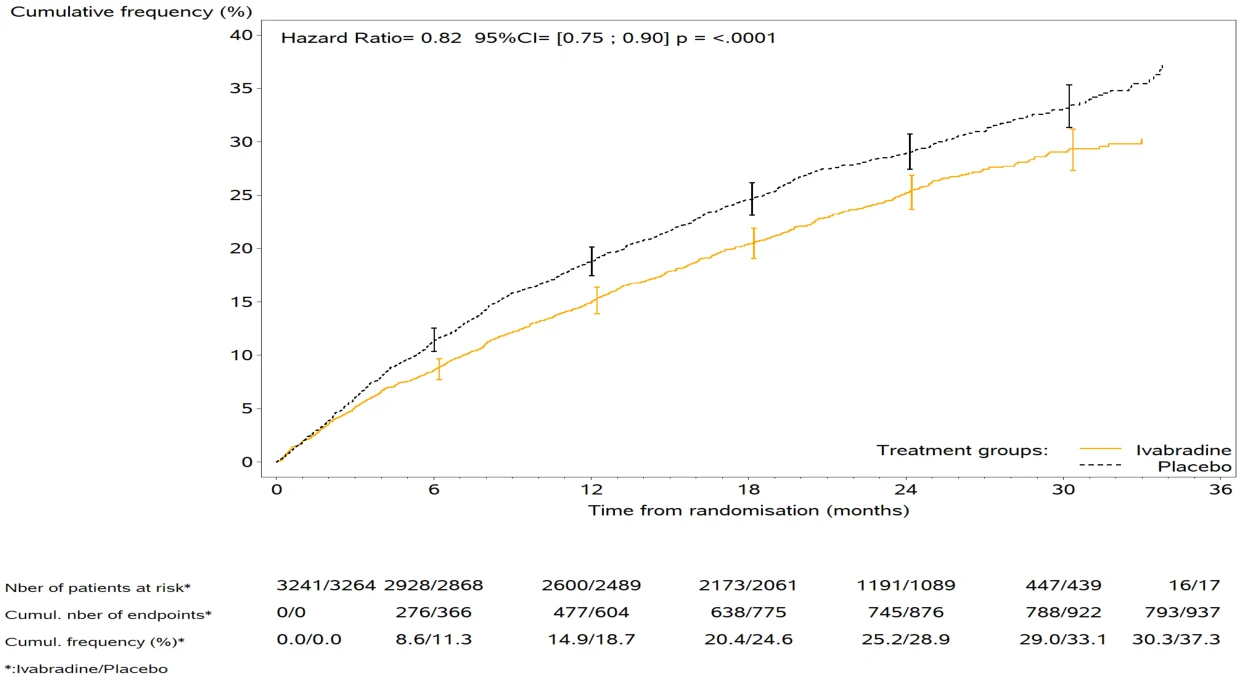
The SHIFT study demonstrated that in the randomised set, LANCORA® was superior to placebo yielding a relative risk reduction of 18% and an absolute risk reduction of 4.2% for the combined incidence of the primary composite endpoint; first event of CV death or hospitalization for worsening HF (hazard ratio [95% CI]: 0.82 [0.75; 0.90]; p<0.0001) (Table 9). The treatment effect reflected a reduction in the risk of hospitalization for worsening heart failure; there was no favorable effect on the CV death component of the primary endpoint (Table 9). In the overall study population, LANCORA® provided no statistically significant benefit on CV death.
Table 9 – Primary and secondary endpoints results for the SHIFT randomised set
| Endpoint | LANCORA® (N=3,241) | Placebo (N=3,264) | |||||||
|---|---|---|---|---|---|---|---|---|---|
| n | % | %PY | n | % | %PY | Hazard Ratio | [95%CI] | p-value | |
| Primary composite endpoint: Time to first event of hospitalisation for worsening heart failure or cardiovascular deatha | 793 | 24.5 | 14.5 | 937 | 28.7 | 17.7 | 0.82 | [0.75; 0.90] | <0.0001 |
Hospitalisation for worsening heart failure | 505 | 15.6 | 9.2 | 660 | 20.2 | 12.5 | |||
Cardiovascular death as first event | 288 | 8.9 | 4.8 | 277 | 8.5 | 4.7 | |||
| Subjects with events at any time: | |||||||||
Hospitalisation for worsening heart failure b | 514 | 15.9 | 9.4 | 672 | 20.6 | 12.7 | 0.74 | [0.66; 0.83] | <0.0001 |
| Cardiovascular death b | 449 | 13.9 | 7.5 | 491 | 15.0 | 8.3 | 0.91 | [0.80; 1.03] | 0.128 |
| Other secondary endpoints: | |||||||||
| All-cause death | 503 | 15.52 | 8.5 | 552 | 16.91 | 16.9 | 0.90 | [0.80; 1.02] | |
| Death from heart failure | 113 | 3.49 | 1.9 | 151 | 4.63 | 4.6 | 0.74 | [0.58; 0.94] | |
| Hospitalization for any cause | 1231 | 37.98 | 26.5 | 1356 | 41.54 | 30.0 | 0.89 | [0.82; 0.96] | |
| Hospitalization for CV reason | 977 | 30.15 | 19.8 | 1122 | 34.38 | 23.5 | 0.85 | [0.78; 0.92] | |
a Subjects who died on the same calendar day as their first hospitalization for worsening heart failure are counted under cardiovascular death.
b Analyses of the secondary endpoints were not prospectively planned to be adjusted for multiplicity.
N: number of patients at risk; n: number of patients having experienced the endpoint; %: incidence rate = (n/N) x 100; % PY: annual incidence rate = (n/number of patient-years) x 100; CI: confidence interval; CV: cardiovascular. The hazard ratio between treatment groups (ivabradine /placebo) was estimated based on an adjusted Cox proportional hazards model with beta-blocker intake at randomization (yes/no) as a covariate; p-value: Wald test
The Kaplan-Meier plot for the analysis of the primary composite endpoint shows that the treatment curves started to diverge three months after initiation of treatment (Figure 1). There are limited data on the efficacy and safety of LANCORA® beyond 30 months of treatment.
Figure 1: Kaplan-Meier Plots for the analysis of time to first event of primary composite endpoint (CV death or hospitalization for worsening heart failure) in the randomised set.
The maximal LANCORA® effect on heart rate was reported after 28 days of treatment and corresponded to an average decrease from baseline of 15 beats per minute compared to a decrease of 5 beats per minute in the placebo group. Improvement from baseline to last post-randomisation visit in heart failure NYHA classification was reported in 887 patients (27.6%) on LANCORA® compared to 776 patients (24.0%) on placebo.
Analysis of patient subgroups
The treatment effect of LANCORA® versus placebo across different patient subgroups is presented in Figure 2. The treatment effect of LANCORA® generally appears consistent among the different patient subgroups although the benefit tended to be less marked in some particular subgroups, namely patients aged ≥ 65 years; and patients receiving doses of beta-blocker approaching guidelines-recommended targets. The interaction tests were however not statistically significant. The treatment effect in patients with baseline heart rate ≥ 77 bpm (n=3,357) was statistically significantly greater than in patients with baseline heart rate < 77 bpm (n=3,144) (interaction test p value 0.0288).
Figure 2: Effect of treatment on primary composite endpoint in subgroups of the SHIFT trial.
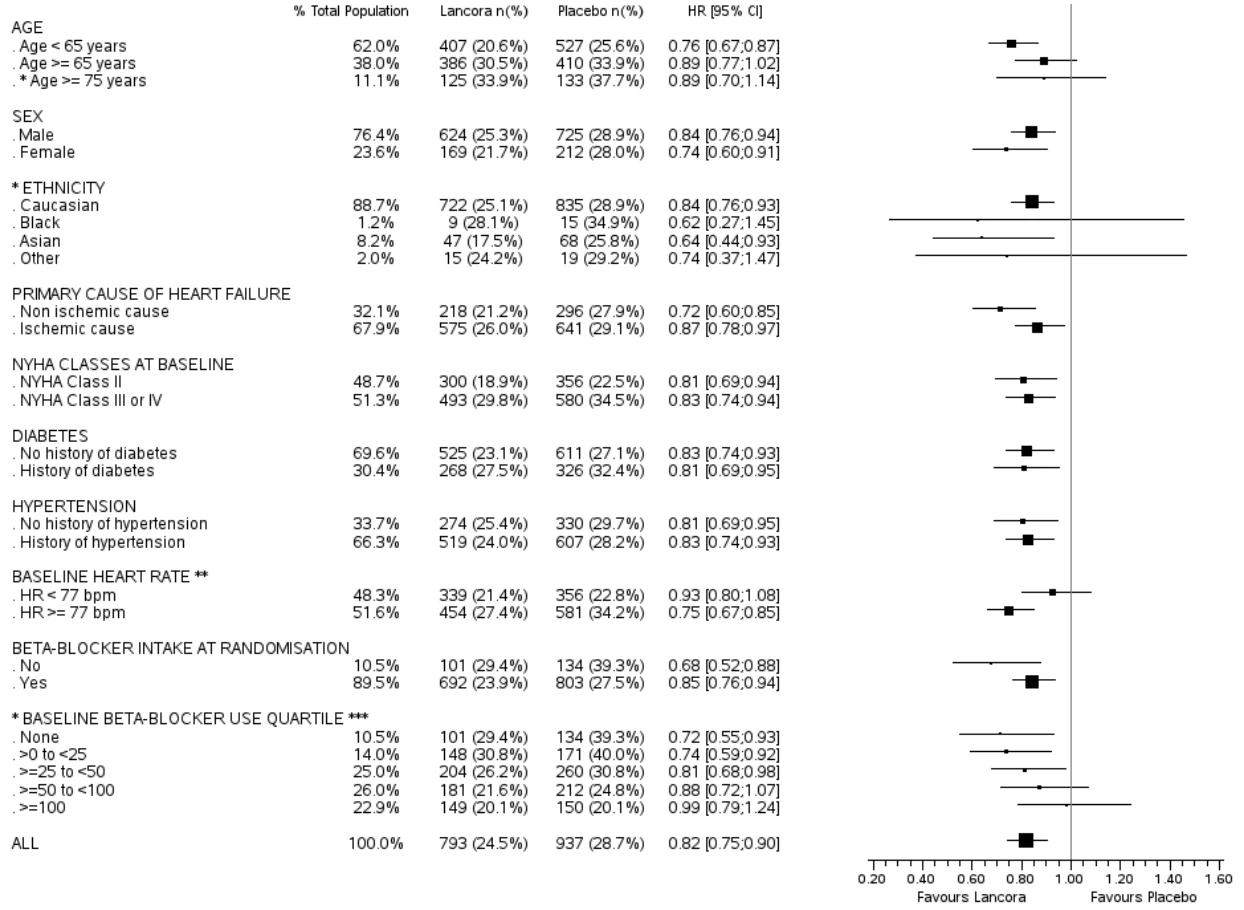
*: these subgroup analyses were not pre-specified; **77 bpm corresponds to the SHIFT study median heart rate;*** beta-blocker use refers to the dose received by the patient at baseline expressed as percentage of the guidelines-recommended target.
NOTE: The figure above presents effects in various subgroups, all of which are baseline characteristics. The 95% confidence limits that are shown do not take into account the number of comparisons made, and may not reflect the effect of a particular factor after adjustment for all other factors. Apparent homogeneity or heterogeneity among groups should not be over-interpreted.
Treatment Effect in Patients with Baseline Resting Heart Rate of 77 bpm or above
The SHIFT study protocol pre-specified a subgroup analysis based on the study median baseline resting heart rate (i.e. 77 beats per minute). The subgroup of patients with baseline resting heart rate of 77 bpm and above is the patient population LANCORA® is indicated for (see 1 INDICATIONS ).
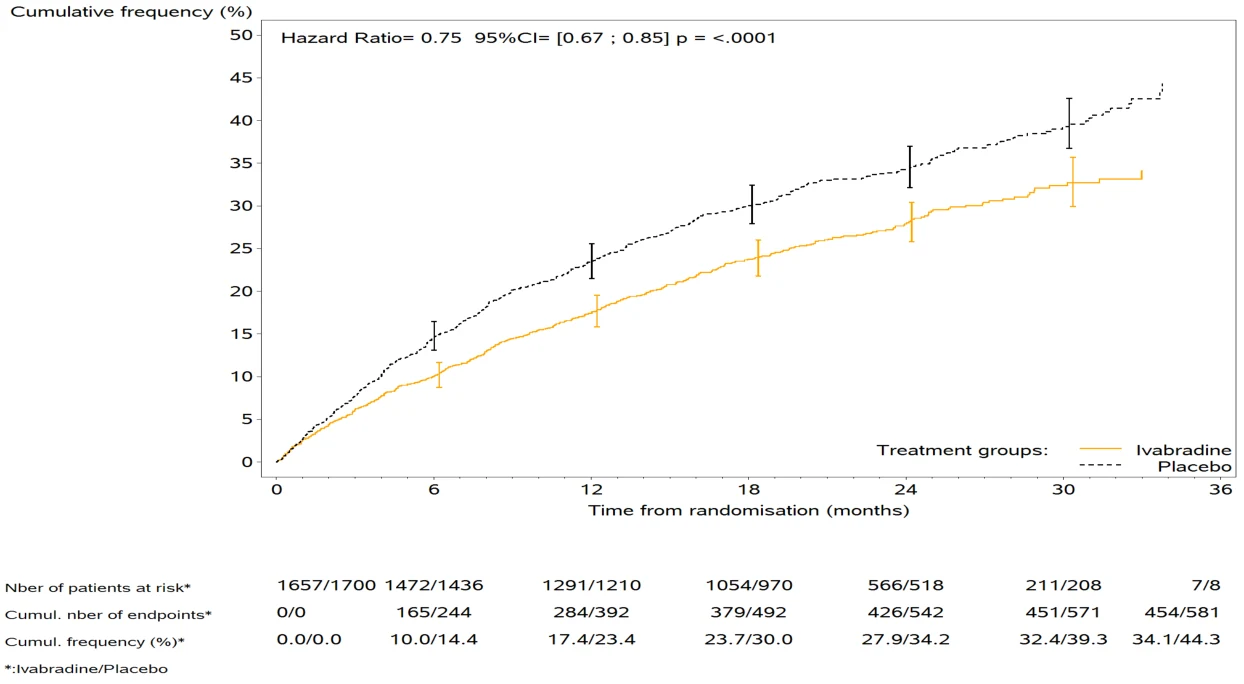
In the subgroup of patients with a baseline heart rate of ≥ 77 bpm (n=3,357), treatment with LANCORA® compared to placebo yielded a relative risk reduction of 25% (hazard ratio [95% CI]: 0.75 [0.67, 0.85]) and an absolute risk reduction of 6.8% for the combined incidence of CV death or hospitalisation for worsening heart failure (Table 10). Both components were shown to contribute to the beneficial effect observed in this subgroup, although the hospitalisation for worsening heart failure remains the main driving component. The safety profile of LANCORA® in this subgroup was in line with that of the overall study population.
Table 10 – Primary and secondary endpoints results in the patient subgroup with baseline heart rate ≥ 77 bpm.
| Endpoint | LANCORA® (N=1,657) | Placebo (N=1,700) | |||||||
|---|---|---|---|---|---|---|---|---|---|
| n | % | %PY | n | % | %PY | Hazard Ratio | [95%CI] | p-value | |
| Primary composite endpoint: Time to first event of hospitalisation for worsening heart failure or cardiovascular deatha | 454 | 27.4 | 16.8 | 581 | 34.2 | 22.3 | 0.75 | [0.67; 0.85] | <0.0001 |
Hospitalisation for worsening heart failure | 295 | 17.8 | 10.9 | 409 | 24.1 | 15.7 | |||
Cardiovascular death as first event | 159 | 9.6 | 5.3 | 172 | 10.1 | 5.8 | |||
| Subjects with events at any time | |||||||||
Hospitalisation for worsening heart failureb | 298 | 18.0 | 11.0 | 418 | 24.6 | 16.1 | 0.69 | [0.59;0.80] | <0.0001 |
| Cardiovascular death b | 255 | 15.4 | 8.5 | 312 | 18.4 | 10.5 | 0.81 | [0.69; 0.96] | 0.0137 |
| Other secondary endpoints: | |||||||||
| All cause death | 285 | 17.2 0 | 9.55 | 350 | 20.5 9 | 11.73 | 0.81 | [0.69; 0.94] | |
| Death from heart failure | 67 | 4.04 | 2.25 | 107 | 6.29 | 3.59 | 0.61 | [0.45; 0.83] | |
| Hospitalization for any cause | 667 | 40.2 5 | 29.0 | 778 | 45.7 6 | 35.38 | 0.82 | [0.74; 0.91] | |
| Hospitalization for CV reason | 534 | 32.2 | 21.82 | 647 | 38.1 | 27.62 | 0.79 | [0.71; 0.89] | |
a Subjects who died on the same calendar day as their first hospitalization for worsening heart failure are counted under cardiovascular death.
b Analyses of the secondary endpoints were not prospectively planned to be adjusted for multiplicity.
N: number of patients at risk; n: number of patients having experienced the endpoint; %: incidence rate = (n/N) x 100; % PY: annual incidence rate = (n/number of patient-years) x 100; CI: confidence interval CV: cardiovascular The hazard ratio between treatment groups (ivabradine /placebo) was estimated based on an adjusted Cox proportional hazards model with beta-blocker intake at randomization (yes/no) as a covariate; p-value: Wald test
The Kaplan-Meier plots of the time to first event analysis of the primary composite endpoint in the subgroup of patients with resting heart rate at baseline of 77 bpm and above are presented in Figure 3. The curves started to diverge after 1 month of treatment.
Figure 3: Kaplan-Meier analysis of time to first event of primary composite endpoint (CV death and hospitalization for worsening heart failure) in patients with baseline resting heart rate ≥77 bpm (N=3,357)
In ivabradine-treated patients with a baseline heart rate < 77 bpm, the relative risk reduction in the incidence of the primary composite endpoint was 7% (hazard ratio [95%CI]: 0.93 [0.80; 1.08]) which did not reach statistical significance compared to patients on placebo. The components of the primary composite endpoint: cardiovascular death (1.07 [0.87; 1.31]) and hospitalisation for worsening heart failure (0.83, [0.69; 1.00]) also did not differ statistically from placebo.
16. Non-Clinical Toxicology
General Toxicology
Repeated dose toxicity studies were carried out over two weeks to one year in rats and dogs.
Heart
The heart was the main target organ in both species.
In rodents, there was an increase in the incidence and severity of focal myocardial lesions over and above control levels with the NOAEL associated with plasma exposures of about 2 times the exposure in human at 7.5 mg twice daily (based on AUC). In the 1-year rat study, no NOAEL could be established, since effects were already visible at the lowest dose corresponding to 4 times the human exposure at
7.5 mg twice daily (based on AUC). Cardiac pathology was the main cause of ivabradine-related deaths in the 1-year rat study and 2-year mouse carcinogenicity study.
In dogs, there were ECG changes including sinus bradycardia, sinoatrial block or arrest, and first- or second-degree atrioventricular block. The NOAEL for these effects in the 1-year study was similar to the human exposure at 7.5 mg twice daily. In the 1-year dog study, increased incidence of calcium mineralization, inflammatory and fibrotic foci was observed in the heart at 83 times human exposure at 7.5 mg twice daily (based on AUC).
Eyes
Electroretinography (ERG) examinations included in the 1-year repeat-dose study in dogs showed ERG changes in the cone system at exposures similar to the human exposure (based on AUC) that reversed at one week after treatment cessation and at the following treatment-free periods (up to 11 weeks). There was a consistent absence of toxic damage in any ocular structure in association with ivabradine throughout the animal safety programme. These data are consistent with the pharmacological effect of ivabradine related to its interaction with hyperpolarization-activated Ih currents in the retina, which share homology with the cardiac pacemaker If current.
Carcinogenicity
Ivabradine tested negative in the following assays: bacterial reverse mutation (Ames) assay, in vivo bone marrow micronucleus assay in both mouse and rat, in vivo chromosomal aberration assay in rats, and in vivo unscheduled DNA synthesis assay in rats. Results of the in vitro chromosomal aberration assay were equivocal at concentrations approximately 1,500 times the human Cmax at 7.5 mg twice daily. Ivabradine tested positive in the mouse lymphoma assays and in vitro unscheduled DNA synthesis assay in rat hepatocytes at concentrations greater than 1,500 times the human Cmax at 7.5 mg twice daily.
There was no evidence of ivabradine-related carcinogenic effects in the 2-year carcinogenicity studies in mice and rats at up to 41- and 37 times the human exposure at 7.5 mg twice daily, respectively (based on AUC).
Reproductive and developmental toxicology
There was no effect on fertility in male and female rats up to 133 times the human exposure at 7.5 mg twice daily (based on body surface area).