


Product Monograph - Cinqair
SUMMARY PRODUCT INFORMATION
| Route of Administration | Dosage Form / Strength | Clinically Relevant Nonmedicinal Ingredients |
| Intravenous infusion | Concentrate for solution for intravenous infusion 100 mg in 10 mL vial | Sodium, sucrose, For a complete listing, see Dosage Forms, Composition, and Packaging section. |
DESCRIPTION
CINQAIR™ (reslizumab) is a humanized IgG4κ monoclonal antibody that binds to human interleukin-5 (IL-5). Reslizumab has a molecular weight of approximately 147 kDa. Reslizumab is produced by recombinant DNA technology in a mammalian cell expression system.
INDICATIONS AND CLINICAL USE
CINQAIR™ (reslizumab) is indicated as an add-on maintenance treatment of adult patients with severe eosinophilic asthma who:
- are inadequately controlled with medium-to-high-dose inhaled corticosteroids and an additional asthma controller(s) (eg, LABA) and
- have a blood eosinophil count of ≥400 cells/µL at initiation of the treatment.
CINQAIR™ is not indicated for other eosinophilic conditions or for relief of acute bronchospasm or status asthmaticus (see WARNINGS AND PRECAUTIONS).
CINQAIR™ should be administered by a qualified healthcare professional who is experienced in the monitoring of signs and symptoms of hypersensitivity after administration of biologic agents and prepared to manage anaphylaxis that can be life-threatening (see WARNINGS AND PRECAUTIONS, Serious Warnings and Precautions Box, Anaphylaxis, and DOSAGE AND ADMINISTRATION).
Pediatrics (˂18 years of age)
CINQAIR™ is not indicated in patients less than 18 years of age (see WARNINGS AND PRECAUTIONS, Special Populations, Pediatrics).
Geriatrics (>65 years of age)
There are limited data available on the use of CINQAIR™ in patients older than 65 years old (see WARNINGS AND PRECAUTIONS, Special Populations, Geriatrics; Pharmacokinetics, Special Populations).
CONTRAINDICATIONS
CINQAIR™ (reslizumab) is contraindicated in patients with known hypersensitivity to reslizumab or any component of the formulation (see DOSAGE FORMS, COMPOSITION, AND PACKAGING).
WARNINGS AND PRECAUTIONS
Serious Warnings and Precautions
Anaphylaxis has occurred with CINQAIR™ infusion in asthma controlled studies. Anaphylaxis has occurred as early as the second dose of CINQAIR™ (see WARNINGS AND PRECAUTIONS, Anaphylaxis, and ADVERSE REACTIONS).
Patients should be observed for an appropriate period of time during and after CINQAIR™ infusion; healthcare professionals should be prepared to manage anaphylaxis that can be life-threatening. Discontinue CINQAIR™ immediately if the patient experiences signs and symptoms of anaphylaxis (see WARNINGS AND PRECAUTIONS and DOSAGE AND ADMINISTRATION).
General
CINQAIR™ (reslizumab) should not be used for the treatment of acute bronchospasm or status asthmaticus. Patients should seek medical advice if their asthma remains uncontrolled or worsens after initiation of treatment with CINQAIR™.
Anaphylaxis
Anaphylaxis to CINQAIR™ was reported in 0.19% (3/1611) of asthma patients (see ADVERSE REACTIONS). These events were observed during or within 20 minutes after completion of CINQAIR™ infusion and as early as the second dose of CINQAIR™. Manifestations included dyspnea, decreased oxygen saturation, wheezing, vomiting, and skin and mucosal involvement, including urticaria. In all 3 cases, treatment was discontinued.
Anaphylaxis can be life-threatening. CINQAIR™ should be administered by healthcare professionals prepared to manage anaphylaxis. Patients should be monitored during and for an appropriate time after administration of CINQAIR™. If anaphylaxis occurs, stop administration of CINQAIR™ immediately and provide appropriate medical treatment.
CINQAIR™ should be discontinued in patients who experience a serious hypersensitivity reaction to reslizumab or to any of the excipients (see CONTRAINDICATIONS).
The Teva Support Solutions™ program has been established to facilitate the administration of CINQAIR™. Teva Support Solutions™ program is staffed by qualified healthcare professionals specially trained in the administration of CINQAIR™ infusions and are available across Canada. Information about the program can be obtained by calling Teva Canada Innovation at 1-855-514-8382.
Corticosteroid Reduction
No clinical studies have been conducted to assess reduction of maintenance corticosteroid dosages following administration of CINQAIR™. Do not discontinue systemic or inhaled corticosteroids abruptly upon initiation of therapy with CINQAIR™. Reductions in corticosteroid doses, if appropriate, should be gradual and performed under the supervision of a physician. Reduction in a corticosteroid dose may be associated with systemic withdrawal symptoms and/or unmask conditions previously suppressed by systemic corticosteroid therapy.
Parasitic (Helminth) Infection
Eosinophils may be involved in the immunological response to some helminth infections. Patients with known parasitic infections were excluded from participation in clinical studies. It is unknown if CINQAIR™ will influence the immune response against parasitic infections. Treat patients with pre-existing helminth infections before initiating CINQAIR™. If patients become infected while receiving treatment with CINQAIR™ and do not respond to anti-helminth treatment, discontinue treatment with CINQAIR™ until infection resolves.
Special Populations
Pregnant Women
No studies have been conducted with CINQAIR™ in pregnant women (see TOXICOLOGY). Monoclonal antibodies are transported across the placenta in a linear fashion as pregnancy progresses; therefore, any potential effect on the fetus is likely to be greater during the second and third trimester of pregnancy.
CINQAIR™ should be used during pregnancy only if the potential benefit to the mother justifies the potential risk to the fetus. Women should be advised to contact their physicians if they are planning to or become pregnant while receiving CINQAIR™ and up to 5 months after treatment is stopped.
Nursing Women
It is not known whether reslizumab is present in human milk, and the effects of reslizumab on breastfed infant and on milk production are not known (see TOXICOLOGY). The developmental and health benefits of breastfeeding should be considered along with the mother’s clinical need for CINQAIR™ and any potential adverse effects on the breastfed child from CINQAIR™ or on the underlying maternal condition (see TOXICOLOGY).
Fertility
There are no fertility data in humans. Nonclinical data do not suggest an effect on fertility with reslizumab treatment (see TOXICOLOGY).
Pediatrics (˂18 years of age)
CINQAIR™ is not indicated in patients less than 18 years of age. There are limited clinical data in pediatric asthma patients 12 to less than 18 years of age, as 39 patients aged 12 to less than 18 years old were enrolled in the asthma controlled trials with CINQAIR™.
The safety and efficacy of CINQAIR™ have not been studied in children less than 12 years of age.
Geriatrics (>65 years of age)
CINQAIR™ was evaluated in 122 patients aged 65 years and older with asthma in two 52-week exacerbation studies and two 16-week lung function studies. Based on available data, no dose adjustment of CINQAIR™ in geriatric patients is necessary (see ACTION AND CLINICAL PHARMACOLOGY, Pharmacokinetics, Special Populations, Age, Gender, and Race/Ethnicity).
Hepatic Impairment
CINQAIR™ has not been studied in patients with hepatic impairment (see DOSAGE AND ADMINISTRATION and ACTION AND CLINICAL PHARMACOLOGY).
Renal Impairment
CINQAIR™ has not been studied adequately in patients with severe renal impairment or end stage renal disease (see DOSAGE AND ADMINISTRATION and ACTION AND CLINICAL PHARMACOLOGY).
ADVERSE REACTIONS
Adverse Drug Reaction Overview
Overall, 2195 subjects received at least1 dose of CINQAIR™. The data described below reflect exposure to CINQAIR™ in 1611 patients with asthma, including 1120 exposed for up to 16 weeks, 1006 exposed for at least 6 months, 759 exposed for at least 1 year, and 237 exposed for longer than 2 years.
The above referenced safety exposure for CINQAIR™ is derived from placebo-controlled asthma trials ranging from 15 to 52 weeks in duration (n=1131) and a single open-label safety trial including 480 new exposures in patients who were previously on placebo. Of the 1611 patients, 1596 received the 3 mg/kg dose, 1028 of whom were in the placebo-controlled trials. In the placebo-controlled asthma studies, the population studied was 12 to <76 years of age, 62% female, and 73% White.
The proportion of patients who discontinued due to any adverse event during the controlled clinical trials were 5% for both the 3 mg/kg CINQAIR™ and placebo groups. Anaphylactic reaction (3/1028 [<1%]) was the most common adverse reaction resulting in discontinuation in the 3 mg/kg CINQAIR™ group.
There were no adverse drug reactions with an incidence higher than 1%. Adverse drug reactions with an incidence <1% were anaphylaxis and myalgia (see Less Common Clinical Trial Adverse Drug Reactions (<1%)).
Clinical Trial Adverse Drug Reactions
Because clinical trials are conducted under very specific conditions, the adverse reaction rates observed in the clinical trials may not reflect the rates observed in practice and should not be compared to the rates in the clinical trials of another drug. Adverse drug reaction information from clinical trials is useful for identifying drug-related adverse events and for approximating rates.
Less Common Clinical Trial Adverse Drug Reactions (<1%)
The serious adverse reaction of anaphylactic reaction was reported and considered related to CINQAIR™ in 0.19% (3/1611) of asthma patients. All cases were reported during controlled asthma trials up to 52 weeks. These reactions were observed during or shortly after the completion of the second and twelfth infusion of CINQAIR™ and were fully resolved with treatment with no residual effect. Manifestations included dyspnea, decreased oxygen saturation, wheezing, vomiting, and skin and mucosal involvement, including urticaria. None of these patients had a positive anti-reslizumab antibody response. Due to overlap in signs and symptoms, it was not possible to distinguish between anaphylaxis, other hypersensitivity reactions, or an infusion reaction in all cases (see WARNINGS AND PRECAUTIONS).
Myalgia was reported in less than 1% (10/1028) of patients in the 3 mg/kg CINQAIR™ group compared to less than 1% (4/730) of patients in the placebo group.
Adverse Events in Clinical Trials Regardless of Causality
Table 1 summarizes the system organ classes of events that occurred in asthma patients receiving 3 mg/kg CINQAIR™ every 4 weeks from controlled clinical trials, regardless of causality.
Table 1 - Adverse Events by System Organ Class and Treatment Group Regardless of Causality in Placebo-Controlled Asthma Studies
| MedDRA System Organ Class | Number (%) of Patients | |||||
|---|---|---|---|---|---|---|
| Placebo (N=730) | CINQAIR™ 3 mg/kg (N=1028) | |||||
| Number of patients with at least 1 adverse event | 589 (81) | 690 (67) | ||||
| Blood and lymphatic system disorders | 17 (2) | 14 (1) | ||||
| Cardiac disorders | 37 (5) | 18 (2) | ||||
| Congenital, familial, and genetic disorders | 1 (<1) | 1 (<1) | ||||
| Ear and labyrinth disorders | 11 (2) | 16 (2) | ||||
| Endocrine disorders | 2 (<1) | 3 (<1) | ||||
| Eye disorders | 25 (3) | 19 (2) | ||||
| Gastrointestinal disorders | 108 (15) | 109 (11) | ||||
| General disorders and administration site conditions | 80 (11) | 77 (7) | ||||
| Hepatobiliary disorders | 5 (<1) | 5 (<1) | ||||
| Immune system disorders | 16 (2) | 17 (2) | ||||
| Infections and infestations | 386 (53) | 420 (41) | ||||
| Injury, poisoning, and procedural complications | 62 (8) | 69 (7) | ||||
| Investigations | 59 (8) | 73 (7) | ||||
| Metabolism and nutrition disorders | 33 (5) | 37 (4) | ||||
| Musculoskeletal and connective tissue disorders | 83 (11) | 106 (10) | ||||
| Neoplasms benign, malignant, and unspecified (including cysts and polyps) | 4 (<1) | 13 (1) | ||||
| Nervous system disorders | 113 (15) | 123 (12) | ||||
| Psychiatric disorders | 21 (3) | 21 (2) | ||||
| Renal and urinary disorders | 13 (2) | 12 (1) | ||||
| Reproductive system and breast disorders | 12 (2) | 7 (<1) | ||||
| Respiratory, thoracic, and mediastinal disorders | 352 (48) | 320 (31) | ||||
| Skin and subcutaneous tissue disorders | 70 (10) | 71 (7) | ||||
| Vascular disorders | 19 (3) | 32 (3) | ||||
MedDRA=Medical Dictionary for Regulatory Activities
The most common adverse events (>5%) in all of the sponsor’s clinical studies (N=2187, including non-asthma studies and uncontrolled studies) were asthma, back pain, bronchitis, cough, headache, influenza, nasopharyngitis, oropharyngeal pain, rhinitis allergic, sinusitis, and upper respiratory tract infection.
The incidence of the above adverse events in the placebo-controlled asthma studies was lower than or similar to that in CINQAIR™-treated patients compared to placebo-treated patients.
Malignancies
In placebo-controlled trials, 6/1028 (<1%) patients receiving 3 mg/kg CINQAIR™ had at least 1 malignant neoplasm reported compared to 2/730 (<1%) patients in the placebo group. In the long-term, open-label study, 15/1051 (1%) patients receiving 3 mg/kg CINQAIR™ had at least 1 malignant neoplasm reported. Overall, data did not demonstrate an association between CINQAIR™ and the risk of malignancy.
Immunogenicity
In Phase 3 placebo-controlled trials with a duration of 16 to 52 weeks, low-titer, frequently transient anti-reslizumab antibodies were detected in 53/983 (5%) asthma patients receiving CINQAIR™ at 3 mg/kg (see Clinical Pharmacology). In an open-label Phase 3 extension study, low-titer, frequently transient anti-reslizumab antibodies were detected in 49/1014 (5%) asthma patients that received 3 mg/kg CINQAIR™ for up to 36 months. Systemic exposure to reslizumab appears to be unaffected by anti-reslizumab antibodies. There was no impact of the antibodies on clinical pharmacodynamics, efficacy, or safety.
The data reflect the percentage of patients whose test results were positive for antibodies to reslizumab in specific assays. The observed incidence of antibody positivity in an assay is highly dependent on several factors, including assay sensitivity and specificity, assay methodology, sample handling, timing of sample collection, concomitant medication, and underlying disease. For these reasons, comparison of the incidence of antibodies to reslizumab with the incidence of antibodies to other products may not be meaningful and may be misleading.
DRUG INTERACTIONS
Formal drug interaction studies have not been performed with CINQAIR™ (reslizumab) (see ACTION AND CLINICAL PHARMACOLOGY).
CINQAIR™ has not been studied in patients receiving live vaccines. Avoid use of live vaccines in patients receiving CINQAIR™.
DOSAGE AND ADMINISTRATION
Dosing Considerations
CINQAIR™ (reslizumab) is for intravenous infusion only. Do not administer as an intravenous push or bolus.
General
CINQAIR™ should be administered by a qualified healthcare professional who is experienced in the monitoring of signs and symptoms of hypersensitivity after administration of biologic agents and prepared to manage anaphylaxis that can be life-threatening (see WARNING AND PRECAUTIONS).
Recommended Dose and Dosage Adjustment
The recommended dosage regimen is 3 mg/kg every 4 weeks. CINQAIR™ should be administered as a 20 to 50 minute intravenous infusion. The infusion must be discontinued immediately if the patient experiences a serious hypersensitivity reaction (see CONTRAINDICATIONS and WARNINGS AND PRECAUTIONS).
Pediatrics (<18 years of age)
CINQAIR™ is not indicated in patients under 18 years of age.
Geriatrics (>65 years of age)
No dosage adjustment is required for elderly patients (see ACTION AND CLINICAL PHARMACOLOGY, Pharmacokinetics, Special Populations).
Hepatic Impairment
CINQAIR™ has not been studied in patients with hepatic impairment. Therefore, no dose recommendations can be made (see ACTION AND CLINICAL PHARMACOLOGY).
Renal Impairment
No dose adjustment is required in patients with mild or moderate renal impairment.
CINQAIR™ has not been adequately studied in patients with severe renal impairment or end stage renal disease. Therefore, no dose recommendations can be made for these patients (see ACTION AND CLINICAL PHARMACOLOGY).
Missed Dose
If CINQAIR™ infusion is missed on the planned date, dosing should resume as soon as possible, at the indicated dose and regimen. A double dose must not be administered to make up for a missed dose.
Administration
Preparation of intravenous infusion
- 1. Remove CINQAIR™ from the refrigerator. To minimize foaming, do not shake.
- 2. Parenteral drug products should be inspected visually for particulate matter and discoloration prior to administration. CINQAIR™ solution is a clear to slightly hazy/opalescent, colorless to slightly yellow/yellow liquid. Since CINQAIR™ is a protein, proteinaceous particles may be present in the solution that appear as translucent to white, amorphous particulates, some of which may have a fibrous nature. This is not unusual for proteinaceous solutions. Do not administer any solution if discolored or if foreign particulate matter is present.
- 3. Withdraw the proper volume of CINQAIR™ from the vial(s), based on the recommended weight based dosage. CINQAIR™ does not contain any preservatives. Any unused solution in the vial(s) must be discarded.
- 4. Dispense syringe contents slowly into an infusion bag containing 50 mL Sterile 0.9% normal saline solution. Slow dispensing is important to minimize foaming of CINQAIR™. Gently invert the bag to mix the solution. Do not mix or dilute with other drugs.
- 5. It is recommended that the solution be administered immediately after preparation. If not used immediately, store diluted solutions of CINQAIR™ refrigerated at 2° to 8°C or at room temperature up to 25ºC, protected from light for up to 16 hours. The time between the preparation of CINQAIR™ and its administration should not exceed 16 hours.
- 6. CINQAIR™ is compatible with polyvinylchloride (PVC) or polyolefin infusion bags.
Administration instructions
- 1. If refrigerated prior to administration, allow the diluted CINQAIR™ solution to reach room temperature.
- 2. The diluted solution of CINQAIR™ should be infused intravenously, over a 20 to 50 minute period. Infusion time may vary depending on the total volume to be infused as based upon patient weight. Use an infusion set with an in-line, sterile, non-pyrogenic, low-protein-binding filter (pore size of 0.22 µm).
- 3. CINQAIR™ should be administered by a healthcare professional prepared to manage anaphylaxis (see WARNINGS AND PRECAUTIONS). Patients should be instructed to recognize symptoms of serious allergic reactions.
- 4. CINQAIR™ should not be infused concomitantly in the same intravenous line with other agents. No physical or biochemical compatibility studies have been conducted to evaluate the co-administration of CINQAIR™ with other agents.
- 5. Observe the patient over the duration of the infusion and for an appropriate period of time following infusion.
- 6. Upon completion of the infusion, flush the intravenous (IV) administration set with Sterile 0.9% normal saline solution to ensure that all CINQAIR™ has been administered.
- 7. CINQAIR™ is compatible with polyethersulfone (PES), polyvinylidene fluoride (PVDF), nylon, cellulose acetate, low-protein-binding, in-line infusion filters.
OVERDOSAGE
The highest dose of CINQAIR™ studied in clinical trials was 3 mg/kg. The maximum tolerated dose of CINQAIR™ has not been determined. The highest single dose administered intravenously was reported at 12.1 mg/kg and did not reveal any safety concern. In case of overdosage, it is recommended that the patient be monitored for any signs or symptoms of adverse effects and given appropriate symptomatic treatment.
| For management of a suspected drug overdose, contact your regional Poison Control Centre. |
ACTION AND CLINICAL PHARMACOLOGY
Mechanism of Action
Reslizumab is an interleukin-5 (IL-5) antagonist (IgG4, kappa) that binds to IL-5 (with a dissociation constant of 81 pM), preventing IL-5 from binding to the alpha chain of the IL-5 receptor complex expressed on the eosinophil cell surface, thereby reducing the production and survival of eosinophils. Inflammation, which involves multiple cell types (eg, mast cells, eosinophils, neutrophils, macrophages, lymphocytes) and mediators (eg, histamine, eicosanoids, leukotrienes, cytokines), is believed to be an important component in the pathogenesis of asthma. The reduction of eosinophilic inflammation may play an important role in the therapeutic effect in severe eosinophilic asthma; however, the precise mechanism of reslizumab action in asthma has not been definitively established.
Pharmacodynamics
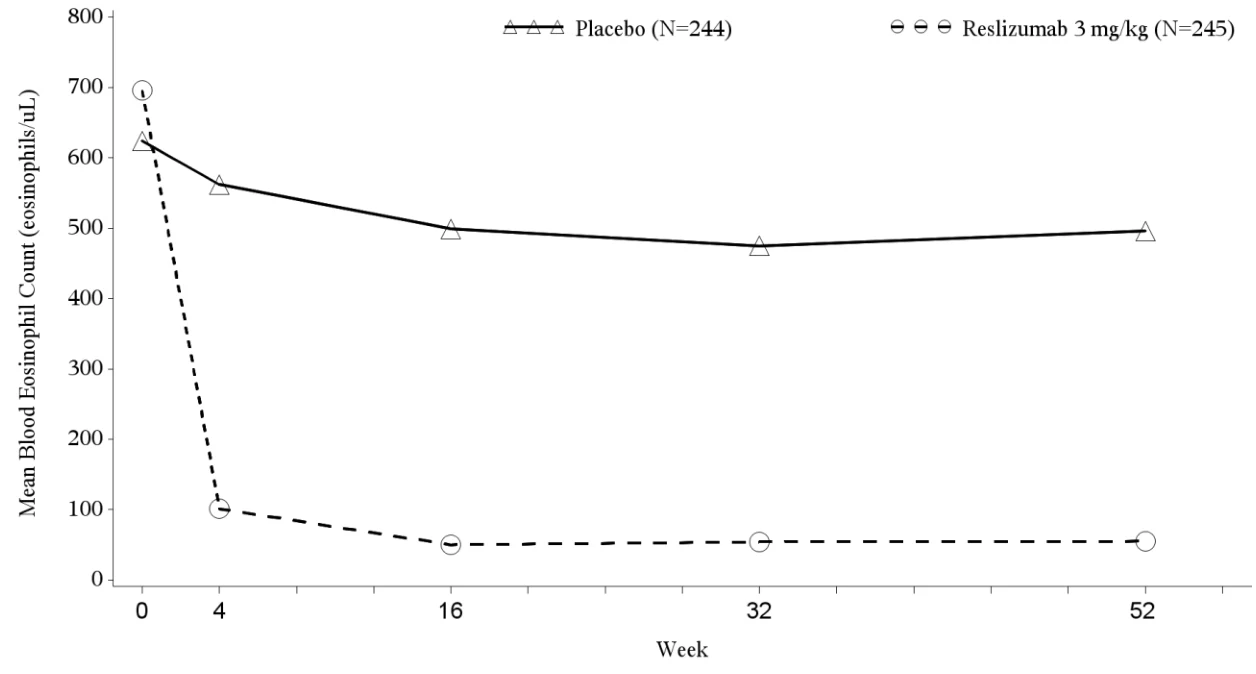
In clinical studies with CINQAIR™ 3 mg/kg, decreases in blood eosinophil counts were seen following the first dose and maintained through 52 weeks of treatment with no signs of tachyphylaxis. Figure 1 from Study I depicts the treatment effect of reslizumab 3 mg/kg in asthma patients. Mean blood eosinophil counts were 624/µL (n=244) and 696/µL (n=245) for the placebo and reslizumab treatment groups at baseline, respectively, and were 496/µL (21% reduction, n=211) and 55/µL (92% reduction, n=212) at the week 52 visit for the placebo and the CINQAIR™ treatment groups, respectively. Eosinophils began to return towards baseline in CINQAIR™-treated patients who completed a 90-day follow-up assessment (n=35, 480/µL).
Blood eosinophil reductions were related to reslizumab serum levels, that is, the higher the reslizumab serum concentrations, the greater the reduction of blood eosinophils.
The reduction in blood eosinophil counts of reslizumab was not affected by treatment-emergent anti-reslizumab antibody (see ADVERSE REACTIONS – immunogenicity).
Figure 1 – Mean Blood Eosinophil Count by Treatment Group
Pharmacokinetics
The pharmacokinetics of reslizumab were characterized in healthy adults (n=130), in adults with asthma (n=438), and in other patient populations (n=206). The pharmacokinetic characteristics of reslizumab were similar across these populations. Inter-individual variability in peak and overall exposure was approximately 20% to 30%.
Peak serum concentrations were typically observed at the end of the infusion. Serum reslizumab concentrations generally declined from peak in a biphasic manner. Following multiple doses, serum concentrations of reslizumab accumulated approximately 1.5- to 1.9-fold.
Systemic exposure to reslizumab appeared to be unaffected by the presence of treatment-emergent anti-reslizumab antibodies.
Distribution
Reslizumab has a volume of distribution of approximately 5 L, suggesting minimal distribution to the extravascular tissues.
Metabolism
Similar to other monoclonal antibodies, reslizumab is believed to be degraded by enzymatic proteolysis into small peptides and amino acids. As reslizumab binds to a soluble target, linear non-target-mediated clearance is expected.
Elimination
Reslizumab clearance is approximately 7 mL/h. Reslizumab has a half-life of about 24 days.
Special Populations
No specific studies were performed to assess the impact of age, gender, race, weight, renal impairment, or hepatic impairment on the pharmacokinetics of reslizumab. The impact of these factors was assessed as part of the population pharmacokinetic analyses.
Age, Gender, and Race/Ethnicity
Population pharmacokinetic analyses indicated that there was no significant effect of age, gender, or race on the pharmacokinetics of reslizumab.
Hepatic Impairment
CINQAIR™ has not been studied in patients with hepatic impairment. Most patients in the population pharmacokinetic analysis had normal liver function tests (n=766, approximately 95%) or mildly increased liver function tests (total bilirubin is above the upper limit of normal [ULN] and less than or equal to 1.5 times the ULN OR AST is greater than ULN and total bilirubin is less than or equal to the ULN; n=35, approximately 4%). No significant difference in the pharmacokinetics of reslizumab was observed across these groups.
Renal Impairment
CINQAIR™ has not been adequately studied in patients with severe renal impairment or end stage renal disease. Population pharmacokinetic analysis indicated no significant differences in the pharmacokinetics of reslizumab between patients with normal renal function (estimated glomerular filtration rate [eGFR] greater than or equal to 90 mL/min/1.73 m2; n=294, approximately 37%), mild renal impairment (eGFR of 60 to 89 mL/min/1.73 m2; n=446, approximately 56%), or moderate renal impairment (eGFR of 30 to 59 mL/min/1.73 m2; n=63, approximately 8%).
Drug Interactions
No formal clinical studies on drug interaction with reslizumab have been conducted. Population pharmacokinetic analyses indicate that concomitant use of either leukotriene antagonist (Montelukast) or corticosteroids does not affect the pharmacokinetics of reslizumab.
STORAGE AND STABILITY
CINQAIR™ must be refrigerated at 2°C to 8°C. Do not freeze. Protect the vials from light by storage in the original package until time of use. Do not use beyond expiration date on the container.
Diluted medicinal product
The time between the dilution of CINQAIR™ with Sterile 0.9% normal saline solution (at 2°C to 8°C or 25°C) and the start of IV administration should not exceed 16 hours. Use of an in-line filter in the infusion set is recommended during administration.
SPECIAL HANDLING INSTRUCTIONS
CINQAIR™ (reslizumab) is supplied in single-use vials as a preservative-free, sterile (10 mg/mL) solution for intravenous infusion.
DOSAGE FORMS, COMPOSITION, AND PACKAGING
CINQAIR™ (reslizumab) is a preservative-free, sterile aqueous solution presented as 100 mg in a single-use 10 mL glass vial. The drug product is formulated as 10 mg/mL reslizumab in 20 mM sodium acetate, 7% sucrose, pH 5.5, and is diluted in Sterile 0.9% normal saline solution prior to infusion.
PART II: SCIENTIFIC INFORMATION
PHARMACEUTICAL INFORMATION
Drug Substance
Proper name: Reslizumab
Chemical name: Immunoglobulin G4, anti-(human interleukin 5) (human-rat monoclonal SCH 55700 γ4-chain), disulfide with human-rat monoclonal SCH 55700 κ light chain, dimer
Molecular formula and molecular mass:
Reslizumab has a theoretical molecular mass of 146,776 Da with two C-terminally clipped lysine residues and two G1F glycans.
Structural formula:
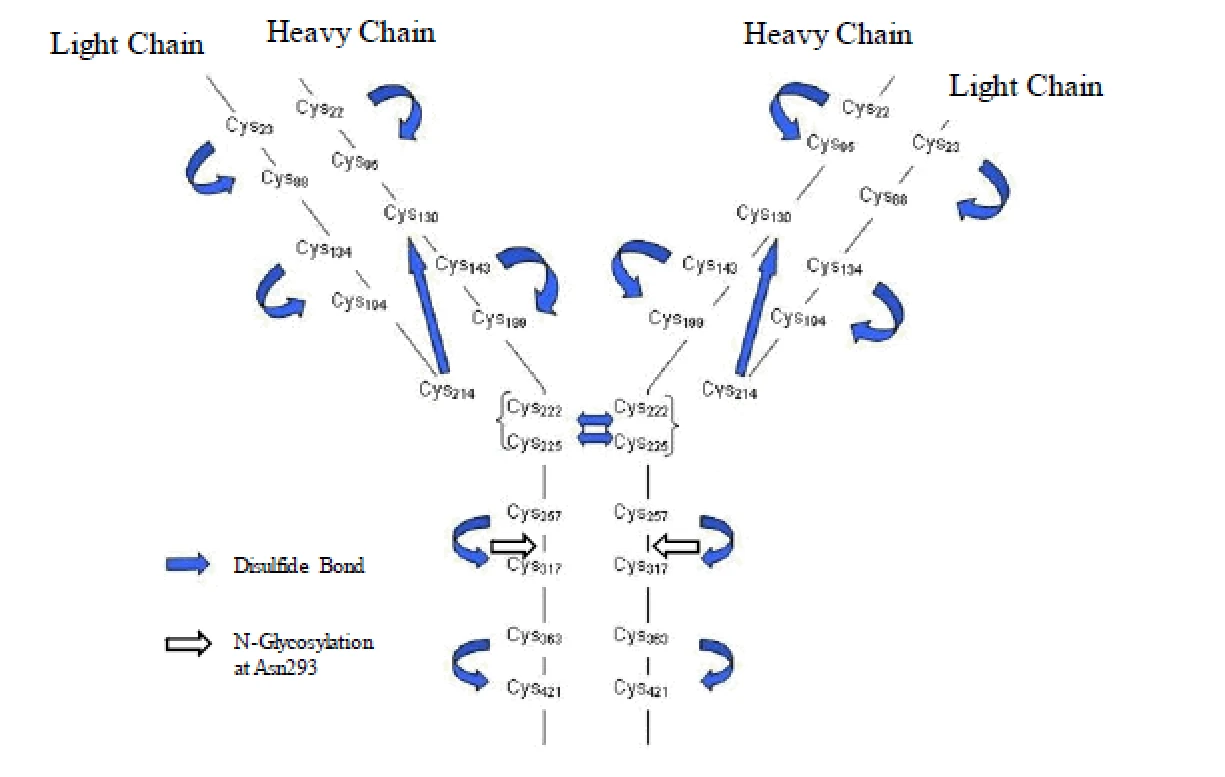
Reslizumab has a characteristic IgG4 structure including two identical heavy chains and two identical light chains linked by 16 disulfide bonds (4 inter-chain disulfide bonds and 12 intra-chain disulfide bonds). Figure 2 shows the general structure with the confirmed disulfide bond linkage.
Figure 2 - Structural Representation of Reslizumab Disulfide Bond Linkage
Physicochemical properties:
Reslizumab drug substance is a clear to slightly hazy/opalescent solution with a protein concentration of 10.8 – 14.0 mg/mL, and an osmolality of 230 – 290 mOsm/kg in a formulation buffer pH 5.5 ± 0.4.
Product Characteristics
CINQAIR™ (reslizumab) is a humanized IgG4κ monoclonal antibody that binds to human interleukin-5. Reslizumab has a molecular weight of approximately 147 kDa. CINQAIR™ is produced by recombinant DNA technology in a mammalian cell expression system.
CINQAIR™ is supplied as a refrigerated, sterile, single-use, preservative-free solution for intravenous infusion. CINQAIR™ is a clear to slightly hazy/opalescent, colorless to slightly yellow/yellow liquid. Since CINQAIR™ is a protein, proteinaceous particles may be present in the solution that appear as translucent to white, amorphous particulates, some of which may have a fibrous nature. CINQAIR™ is supplied as 100 mg in a 10 mL glass vial. Each single-use vial of CINQAIR™ is formulated as 10 mg/mL reslizumab in an aqueous solution containing 2.45 mg/mL sodium acetate trihydrate, 0.12 mg/mL glacial acetic acid, and 70 mg/mL sucrose, with a pH of 5.5.
CLINICAL TRIALS
The safety and efficacy of CINQAIR™ (reslizumab) in severe eosinophilic asthma is based on the results from two, randomized, double-blind, placebo-controlled studies (Studies I and II) of 52 weeks’ duration involving 953 patients 12 years of age and older (see Table 2). While patients aged 12 to 17 years were included in these trials, CINQAIR™ is not approved for use in this group (see Indication, Special population, Pediatrics).
Pivotal asthma exacerbation studies (Studies I and II) were designed to evaluate efficacy and safety of reslizumab administered intravenously 3 mg/kg once every 4 weeks in patients with moderate to severe asthma who were inadequately controlled on medium to high dose inhaled corticosteroids with or without another controller; prior stable allergen immunotherapy was allowed.
Table 2 - Summary of Trial Design for Phase III Clinical Trials in Asthma
| Study # | Trial Design | Dosage, Route of Administration and Duration | Study Subjects (n = number) | Mean Age (Range) (years) | Gender n (%) |
|---|---|---|---|---|---|
| Study I (3082) | Phase 3, multicenter randomized, double blind placebo-controlled, parallel-group study in patients 12 years of age and older with asthma and eosinophil ≥400µL | CINQAIR™ Placebo 3 mg/kg IV every 4 weeks 52 weeks | n=245 n=244 | 46.6 (12-76) | Female: 303 (62) Male: 186 (38) |
Study II (3083) | Phase 3, multicenter randomized, double-blind placebo-controlled, parallel-group study in patients 12 years of age and older with asthma and eosinophil ≥400µL | CINQAIR™ Placebo 3 mg/kg IV every 4 weeks 52 weeks | n=232 n=232 | 46.7 (12-74) | Female: 294 (63) Male: 170 (37) |
Note: 25 patients aged 12 to 17 years were enrolled in the pivotal clinical trials with reslizumab.
IV=intravenous
Study Design
Studies I and II were 52-week, randomized, placebo-controlled studies in 953 patients with uncontrolled asthma who had a blood eosinophil count of at least 400/μL at screening and at least one asthma exacerbation requiring systemic corticosteroid use over the past twelve months. Maintenance oral corticosteroids (OCS) (up to 10 mg per day prednisone equivalent) and allergen immunotherapy were allowed. CINQAIR™ 3 mg/kg administered once every 4 weeks for a total of 13 doses was evaluated compared to placebo.
The primary efficacy measure for Studies I and II was the frequency of asthma exacerbations for each patient during the 52-week treatment period. An asthma exacerbation was defined as a worsening of asthma that required the following medical intervention: 1) use of systemic, or an increase in the use of inhaled, corticosteroid treatment for 3 or more days and/or 2) asthma-related emergency treatment including at least one of the following: an unscheduled visit to their healthcare professional for nebulizer treatment or other urgent treatment to prevent worsening of asthma symptoms, a visit to the emergency room for asthma-related treatment, or an asthma-related hospitalization. The medical intervention had to be corroborated with at least one of the following: 1) a decrease in forced expiratory volume in 1 second (FEV1) by 20% or more from baseline, 2) a decrease in peak expiratory flow rate (PEFR) by 30% or more from baseline on 2 consecutive days, or 3) worsening of symptoms or other clinical signs per physician evaluation of the event.
During these studies, the percentage of patients who discontinued treatment in the CINQAIR™ 3 mg/kg group and placebo group was 11% and 12%, respectively, in Study I and 13% and 14%, respectively, in Study II. The most common reason for discontinuation of treatment was patients’ withdrawal of consent (5% overall).
Patient Demographics and Baseline Characteristics
Demographics and baseline characteristics were balanced between treatment groups (see Table 3).
The majority of patients in Studies I and II in the placebo and 3 mg/kg CINQAIR™ groups were on medium-to-high dose inhaled corticosteroids (ICS) plus a long-acting beta agonist (LABA) at baseline (see Table 3). Oral corticosteroids at baseline were allowed. All patients continued their background asthma therapy throughout the duration of the studies.
Table 3 - Summary of Patient Demographics and Baseline Characteristics
| Patient Characteristic | Study I (3082) N=489 | Study II (3083) N=464 | |||||||
| Group | Placebo n=244 | CINQAIR™a n=245 | Placebo n=232 | CINQAIR™a n=232 | |||||
| Mean age (range) (years) | 46.7 (12-75) | 46.6 (12-76) | 47.5 (12-75) | 46.4 (12-74) | |||||
| Female (n [%]) | 161 (66) | 142 (58) | 150 (65) | 144 (62) | |||||
| Race (% White) | 182 (75) | 173 (71) | 169 (73) | 168 (72) | |||||
| Long-acting beta agonist use (n [%]) | 207 (85) | 214 (87) | 192 (83) | 190 (82) | |||||
| OCS at baseline | 40 (16) | 24 (10) | 18 (8) | 24 (10) | |||||
aCINQAIR™ dose 3 mg/kg (intravenously) every 4 weeks for 52 weeks.
OCS=oral corticosteroid
Study Results
The reduction in the rate of the clinically significant exacerbations of asthma was statistically significant (p<0.0001) for CINQAIR™ compared to placebo (see Table 4).
Table 4 - Frequency of Asthma Exacerbations during the 52-Week Treatment Period (Randomized Set) – Studies I and II
Treatment Arms (n) | Asthma Exacerbation Rate Per Year | % Reduction vs. Placebo | Rate Ratio (95% CI) | p-value | ||||||
| All exacerbations | ||||||||||
| Study I | CINQAIR™ 3 mg/kg (n=245) | 0.90 | 50% | 0.5 (0.37, 0.67) | (p<0.0001) | |||||
Placebo (n=244) | 1.80 | |||||||||
| Study II | CINQAIR™ 3 mg/kg (n=232) | 0.86 | 59% | 0.41 (0.28, 0.59) | (p<0.0001) | |||||
Placebo (n=232) | 2.11 | |||||||||
| Exacerbations requiring systemic corticosteroid treatment | ||||||||||
| Study I | CINQAIR™ 3 mg/kg (n=245) | 0.72 | 55 | 0.45 (0.33, 0.62) | (p<0.0001) | |||||
Placebo (n=244) | 1.60 | |||||||||
| Study II | CINQAIR™ 3 mg/kg (n=232) | 0.65 | 61 | 0.39 (0.27, 0.58) | (p<0.0001) | |||||
Placebo (n=232) | 1.66 | |||||||||
Notes: The randomized set of patients included all patients who were randomly assigned to a treatment at enrollment, regardless of whether or not a patient took any study drug.
Adjusted asthma exacerbation rates and confidence intervals, asthma exacerbations rate ratio, and confidence interval and p-value are based on Negative Binomial regression model adjusted for stratification factors (baseline usage of oral corticosteroid [yes or no] and geographical region [US or other]).
CI=confidence interval
Few patients required an emergency room visit and/or hospitalization due to an asthma exacerbation during the study. The adjusted asthma exacerbation rate ratios for asthma exacerbations requiring these medical interventions indicated a lower rate in the reslizumab group compared to placebo (0.66 and 0.69 for Study I and Study II, respectively), but this difference was not statistically significant.
The effect of CINQAIR™ 3 mg/kg administered once every 4 weeks on lung function (FEV1) further supports the efficacy of CINQAIR™ 3 mg/kg compared to placebo (see Table 5).
Table 5 - FEV1 at Baseline, Week 16, and Week 52 by Treatment Group – Studies I and II
| Study I | Study II | ||
|---|---|---|---|
| FEV1 (L) over 16 weeks | |||
| Placebo | Baseline mean | 1.928 | 2.004 |
| Week 16 mean | 2.053 | 2.140 | |
| LS mean change | 0.110 | 0.094 | |
| Reslizumab | Baseline mean | 1.894 | 2.129 |
| Week 16 mean | 2.117 | 2.364 | |
| LS mean change | 0.248 | 0.187 | |
| Difference | LS mean change difference | 0.137 | 0.093 |
| 95% CI | 0.076, 0.198 | 0.030, 0.155 | |
| p-value | <0.0001 | 0.0037 | |
| FEV1 (L) over 52 weeks | |||
| Placebo | Baseline mean | 1.928 | 2.004 |
| Week 52 mean | 2.016 | 2.104 | |
| LS mean change | 0.109 | 0.111 | |
| Reslizumab | Baseline mean | 1.894 | 2.129 |
| Week 52 mean | 2.131 | 2.359 | |
| LS mean change | 0.235 | 0.201 | |
| Difference | LS mean change difference | 0.126 | 0.090 |
| 95% CI | 0.064, 0.188 | 0.026, 0.153 | |
| p-value | <0.0001 | 0.0057 | |
Notes: For overall change, inferential statistics are from mixed model repeated measures with treatment, visit, treatment by visit interaction, region, oral corticosteroids use at enrollment and sex as fixed factors, and covariates for height and baseline value and patient as a random effect. A predetermined, fixed sequence statistical testing procedure was applied to the primary and secondary variables so that the Type I error rate was controlled for multiple testing. Change over 16 weeks was included in secondary endpoints. Change over 52 weeks was not.
CI=confidence interval; FEV1=forced expiratory volume in 1 second; LS=least squares
DETAILED PHARMACOLOGY
Reslizumab binds with similar affinity to human, monkey, and mouse IL-5 (KD values of 24, 20, and 31 pM, respectively) as determined by surface plasmon resonance (BIAcore) analysis.
Nonclinical pharmacology studies demonstrate that reslizumab is active at preventing allergen induced pulmonary lung eosinophilia in mice, rabbits, guinea pigs, and cynomolgus monkeys following single-dose administration. Reslizumab demonstrated inhibition of pulmonary eosinophilia following multiple routes of administration. The inhibitory activity of reslizumab was observed across species at doses ranging from 0.03 to 10 mg/kg.
Safety pharmacology data indicate that intravenous reslizumab given at dose levels of 25 mg/kg in cynomolgus monkeys does not elicit effects on parameters related to organ functions (cardiovascular (ECG), respiratory, neurological, ophthalmic, renal, and gastrointestinal).
TOXICOLOGY
No significant adverse effects were observed in CD-1 mice and cynomolgus monkeys administered reslizumab intravenously up to dose levels of 25 mg/kg QM for 6 months.
Carcinogenesis, Mutagenesis, and Impairment of Fertility and Reproduction
No carcinogenicity was observed in RasH2 hemizygous transgenic mice administered reslizumab intravenously up to dose levels of 516 mg/kg every 2 weeks for 6 months. Reslizumab was non-mutagenic in the Salmonella/Escherichia coli in vitro assay and did not cause chromosomal aberrations in human peripheral blood lymphocytes in vitro with and without metabolic activation.
No effects on embryo-fetal (CD-1 mice and rabbits) development and pre- and postnatal development (CD-1 mice) were observed when pregnant animals were administered a single dose of reslizumab during organogenesis on gestational days 6 and 18 and on postnatal day 14 up to dose levels of 50 mg/kg. Reslizumab was shown to cross the placenta and was also present in the milk of lactating mice following dosing during pregnancy. Levels of reslizumab were approximately 6% to 8% and 5% to 7% of maternal serum concentrations in the serum of treated offspring (postnatal day 14) and breast milk, respectively.
Fertility and mating outcomes were not affected when parental CD-1 mice were administered reslizumab intravenously on days 28 and 14 prior to mating, on the first day of mating, and 14 days post mating up to dose levels of 50 mg/kg Q2W.
REFERENCES
1 BJERMER, L., LEMIERE, C., MASPERO, J., CIESIELSKA, M., O'BRIEN, C. and ZANGRILLI, J. A randomized phase 3 study of the efficacy and safety of reslizumab in subjects with asthma with elevated eosinophils. European Respiratory Journal, 2014;44(Suppl 58), p. 299.
2 CASTRO, M., MATHUR, S., HARGREAVE, F., BOULET, L.P., XIE, F., YOUNG, J., WILKINS, H.J., HENKEL, T. and NAIR, P., 2011. Reslizumab for Poorly Controlled, Eosinophilic Asthma. A Randomized, Placebo-controlled Study. American journal of respiratory and critical care medicine 2011;184(10), pp. 1125-1132.
3 CASTRO, M., ZANGRILLI, J., WECHSLER, M.E., BATEMAN, E.D., BRUSSELLE, G.G., BARDIN, P., MURPHY, K., MASPERO, J.F., O'BRIEN, C. and KORN, S. Reslizumab for inadequately controlled asthma with elevated blood eosinophil counts: results from two multicentre, parallel, double-blind, randomised, placebo-controlled, phase 3 trials. The Lancet Respiratory Medicine; 2015.
4 CORREN, J., WEINSTEIN, S., JANKA, L., O'BRIEN, C. and ZANGRILLI, J. A randomized phase 3 study of reslizumab efficacy in relation to blood eosinophil levels in patients with moderate to severe asthma. European Respiratory Journal, 2014; 44(Suppl 58), pp. 4673.
5 KIPS, J.C., O'CONNOR, B.J., LANGLEY, S.J., WOODCOCK, A., KERSTJENS, H.A., POSTMA, D.S., DANZIG, M., CUSS, F. and PAUWELS, R.A. Effect of SCH55700, a humanized anti-human interleukin-5 antibody, in severe persistent asthma: a pilot study. American journal of respiratory and critical care medicine, 2003;167(12), pp. 1655-1659.
6 KIM YJ, PRUSSIN C., MARTIN B., LAW A. M. et al: Rebound eosinophilia after treatment of hypereosinophilic syndrome and eosinophilic gastroenteritis with monoclonal anti–IL-5 antibody SCH55700. J Allergy Clin Immunol 2004;114:pp.1449-55.
7 KLION D.A., LAW A.M., NOEL P., KIM YJ, et al. Safety and efficacy of the monoclonal anti–interleukin-5 antibody SCH55700 in the treatment of patients with hypereosinophilic syndrome. The American Society of Hematology 2004;103:pp.2939-2941
8 GARLISI C. G., KUNG T. T., WANG P, et al. Effects of chronic anti-interleukin-5 monoclonal antibody treatment in a murine model of pulmonary inflammation. Am J Respir Cell Mol Biol 1999;20(2):248-255.
9 ZHANG J., KUVELKAR R., MURGOLO J. N., et al. Mapping and characterization of the epitope(s) of Sch 55700, a humanized mAb, that inhibits human IL-5. International Immunology 1999;11(12):pp.1935-1943.
10 GREENFEDER S., UMLAND P. S., CUSS S. F., et al: Th2 cytokines and asthma. The role of interleukin-5 in allergic eosinophilic disease. Respiratory Research 2001; 2:pp. 71-79
11 EGAN W.R., ATHWAL D., BODMER W.M., CARTER M. J., et al. Effect of Sch 55700, a humanized monoclonal antibody to human interleukin-5, on eosinophilic responses and bronchial hyerreactivity. Arzneim.-Forsch./Drug Res.1999; 49(II):pp.779-790.