


Product Monograph - Exdensur
Recent Major Label Changes
Not applicable
Table of Contents
Certain sections or subsections that are not applicable at the time of the preparation of the most recent authorized product monograph are not listed.
Recent Major Label Changes ................................................................................................... 2
Table of Contents ................................................................................................................... 2
Part 1: Healthcare Professional Information ........................................................................... 4
- 1.
Indications ....................................................................................................................... 4
1.1. Pediatrics .................................................................................................................... 4
1.2. Geriatrics .................................................................................................................... 4
- 2. Contraindications ............................................................................................................ 4
- 4.
Dosage and Administration ............................................................................................. 5
4.1. Dosing Considerations ................................................................................................ 5
4.2. Recommended Dose and Dosage Adjustment ............................................................ 5
4.4. Administration ............................................................................................................ 5
4.5. Missed Dose ................................................................................................................ 6
- 5. Overdose ......................................................................................................................... 6
- 6. Dosage Forms, Strengths, Composition, and Packaging ................................................... 6
- 7.
Warnings and Precautions ............................................................................................... 7
General ................................................................................................................................... 7
Hepatic/Biliary/Pancreatic ...................................................................................................... 7
Immune .................................................................................................................................. 7
Reproductive Health ............................................................................................................... 8
7.1. Special Populations ..................................................................................................... 8
7.1.1. Pregnancy ........................................................................................................ 8
7.1.2. Breastfeeding .................................................................................................. 8
7.1.3. Pediatrics ......................................................................................................... 8
7.1.4. Geriatrics ......................................................................................................... 8
- 8.
Adverse Reactions ........................................................................................................... 9
8.1. Adverse Reaction Overview ........................................................................................ 9
8.2. Clinical Trial Adverse Reactions ................................................................................... 9
8.2.1. Clinical Trial Adverse Reactions – Pediatrics .................................................. 11
8.3. Less Common Clinical Trial Adverse Reactions .......................................................... 11
- 9.
Drug Interactions ........................................................................................................... 11
9.2. Drug Interactions Overview ...................................................................................... 11
9.3. Drug-Behaviour Interactions ..................................................................................... 11
9.4. Drug-Drug Interactions ............................................................................................. 12
9.5. Drug-Food Interactions ............................................................................................. 12
9.6. Drug-Herb Interactions ............................................................................................. 12
9.7. Drug-Laboratory Test Interactions ............................................................................. 12
- 10.
Clinical Pharmacology ................................................................................................... 12
10.1. Mechanism of Action ................................................................................................ 12
10.2. Pharmacodynamics ................................................................................................... 12
10.3. Pharmacokinetics ...................................................................................................... 13
10.4. Immunogenicity ........................................................................................................ 15
- 11. Storage, Stability, and Disposal ...................................................................................... 15
- 12. Special Handling Instructions ......................................................................................... 15
Part 2: Scientific Information ................................................................................................ 16
- 13. Pharmaceutical Information .......................................................................................... 16
- 14.
Clinical Trials .................................................................................................................. 16
14.1. Clinical Trials by Indication ........................................................................................ 16
14.1.1. Asthma .......................................................................................................... 16
14.1.2. Chronic Rhinosinusitis with Nasal Polyps ...................................................... 21
- 16. Non-Clinical Toxicology .................................................................................................. 26
Patient Medication Information ........................................................................................... 28
Instructions For Use – Pre-Filled Pen .................................................................................... 33
Instructions For Use – Pre-Filled Syringe ............................................................................... 40
Part 1: Healthcare Professional Information
1. Indications
Asthma
EXDENSUR (depemokimab injection) is indicated as an add-on maintenance treatment in adults and adolescents 12 years and older with severe asthma characterized by an eosinophilic phenotype and inadequately controlled by medium- to high-dose inhaled corticosteroids (ICS) plus another asthma controller.
EXDENSUR is not indicated for the relief of acute bronchospasm or status asthmaticus (See 7 Warnings and Precautions).
Chronic rhinosinusitis with nasal polyps
EXDENSUR is indicated as an add-on maintenance treatment with intranasal corticosteroids in adults with severe chronic rhinosinusitis with nasal polyps (CRSwNP) inadequately controlled by systemic corticosteroids and/or surgery.
1.1. Pediatrics
Asthma
Pediatrics (≥ 12 and < 18 years of age): Of the 502 subjects with asthma treated with EXDENSUR in the main clinical studies, a total of 15 subjects were 12 to less than 18 years of age. In general, the efficacy and safety in this age group were consistent with the overall study population.
Pediatrics (<12 years of age): No data are available to Health Canada; therefore, the efficacy and safety of EXDENSUR in patients younger than 12 years of age with asthma have not been established.
Chronic Rhinosinusitis with Nasal Polyps
Pediatrics (<18 years of age): No data are available to Health Canada; therefore, the efficacy and safety of EXDENSUR in patients younger than 18 years of age with CRSwNP have not been established.
1.2. Geriatrics
Asthma
Geriatrics (≥65 years of age): Of the 502 subjects with asthma treated with EXDENSUR in the main clinical studies, a total of 133 subjects were 65 years of age and older. In general, the efficacy and safety in this age group were consistent with the overall study population.
Chronic Rhinosinusitis with Nasal Polyps
Geriatrics (≥65 years of age): Of the 272 subjects with CRSwNP treated with EXDENSUR in the main clinical studies, a total of 49 subjects were 65 years of age and older. In general, the efficacy and safety in this age group were consistent with the overall study population.
2. Contraindications
EXDENSUR is contraindicated in patients who are hypersensitive to this drug or to any ingredient in the formulation, including any non-medicinal ingredient, or component of the container. For a complete listing, see 6 Dosage Forms, Strengths, Composition, and Packaging.
4. Dosage and Administration
4.1. Dosing Considerations
EXDENSUR must only be administered as a subcutaneous injection.
4.2. Recommended Dose and Dosage Adjustment
Asthma
Adults and Adolescents (≥12 years and older)
The recommended dose of EXDENSUR is 100 mg administered by subcutaneous (SC) injection once every 6 months.
Chronic Rhinosinusitis with Nasal Polyps
Adults
The recommended dose of EXDENSUR is 100 mg administered by subcutaneous (SC) injection once every 6 months.
Geriatrics
No dose adjustment is recommended in patients 65 years or older (see 10.3 Pharmacokinetics).
Hepatic Insufficiency
No dose adjustment is recommended in patients with hepatic impairment (see 10.3 Pharmacokinetics).
Renal Insufficiency
No dose adjustment is recommended in patients with renal impairment (see 10.3 Pharmacokinetics).
4.4. Administration
EXDENSUR may be self-administered by adult or adolescent patients or administered by a caregiver using the pre-filled pen or pre-filled syringe if their healthcare professional determines that it is appropriate, and the patient or caregiver are trained in injection techniques.
Instructions for administration:
- 1. Remove the pre-filled pen or pre-filled syringe from the refrigerator and allow it to sit at room temperature (≤ 30°C) for 30 minutes prior to injection. Do not warm EXDENSUR in any other way. Do not remove the needle cap until you are ready to inject.
- 2. Prior to administration, visually inspect the window of the pre-filled pen or the pre-filled syringe for particulate matter. EXDENSUR injection should be colourless to yellow to brown, clear to opalescent in color. Do not use EXDENSUR injection if the product exhibits cloudiness or particulate matter. Do not use the EXDENSUR pre-filled pen or pre-filled syringe if dropped on a hard surface or has been left out of the carton for more than 8 hours.
- 3. Administer the subcutaneous injection into the upper arm, thigh, or abdomen, avoiding the 5 cm (approximately 2 inches) around the navel.
- 4. Never give injections into areas where the skin is tender, bruised, red, or hard.
- 5. Immediately dispose of the pre-filled pen or pre-filled syringe and needle cap in the nearest sharps container.
Refer to the INSTRUCTIONS FOR USE for complete administration instructions of EXDENSUR injection prior to use.
4.5. Missed Dose
If a dose is missed, administer as soon as possible. If the missed dose is taken 1 month or longer after the scheduled dose, resume the 6 monthly (every 26 weeks) injection schedule from the date of when the missed dose was given.
5. Overdose
There is no clinical experience with an overdose of EXDENSUR.
There is no specific treatment for an overdose with EXDENSUR. If an overdose occurs, the patient should be treated supportively with appropriate monitoring as necessary.
Further management should be as clinically indicated or as recommended by a poison control centre, where applicable.
For the most recent information in the management of a suspected drug overdose, contact your regional poison control centre or Health Canada’s toll-free number, 1-844 POISON-X (1-844-764-7669).
- 6. Dosage Forms, Strengths, Composition, and Packaging
To help ensure the traceability of biologic products, healthcare professionals should record both the brand name and the non-proprietary (active ingredient) name as well as other product-specific identifiers such as the Drug Identification Number (DIN) and the batch/lot number of the product supplied.
Table 1 - Dosage Forms, Strengths, and Composition
EXDENSUR is available as a sterile, preservative-free, colourless, yellow to brown, clear to opalescent solution for subcutaneous use. It is supplied in the following formats:
- A single-dose, 1-mL, pre-filled pen (autoinjector) with a fixed 29 gauge, half-inch needle;
- A single-dose, 1-mL, pre-filled syringe with a fixed 29 gauge, half-inch needle with a needle guard.
Each pre-filled pen or pre-filled syringe delivers 100 mg depemokimab in 1 mL (100 mg/mL).
| Route of Administration | Dosage Form / Strength/Composition | Non-Medicinal Ingredients |
Subcutaneous injection | Solution for subcutaneous injection. Each single-use pre-filled pen contains 100 mg/mL depemokimab. Each single-use pre-filled syringe contains 100 mg/mL depemokimab. | L-arginine hydrochloride, disodium edetate dihydrate, L-histidine, L-histidine hydrochloride monohydrate, polysorbate 80, trehalose dihydrate, water for injections. |
Description
EXDENSUR (depemokimab injection) is a humanized monoclonal antibody (IgG1, kappa) that inhibits human interleukin-5 (IL-5) binding to its cognate receptor. Depemokimab is produced by recombinant DNA technology in Chinese hamster ovary cells. The estimated molecular weight of depemokimab is 149 kDa.
7. Warnings and Precautions
General
Acute asthma symptoms or deteriorating disease
EXDENSUR must not be used to treat acute asthma symptoms or acute exacerbations.
Asthma-related adverse events or exacerbations may occur during treatment with EXDENSUR. It is recommended that patients be instructed to seek medical advice if their asthma remains uncontrolled or worsens after initiation of treatment with EXDENSUR.
Reduction of background medications for asthma
Abrupt discontinuation of background medications (including systemic and inhaled corticosteroids) after initiation of EXDENSUR therapy is not recommended. Reductions in the dosages of background medications, if appropriate, must be gradual and performed under the supervision of a healthcare professional.
Hepatic/Biliary/Pancreatic
Cases of elevated liver enzymes, some with features of autoimmune hepatitis, have occurred following administration of EXDENSUR, although a causal relationship between EXDENSUR and these events has not been established (see 8.2 Clinical Trial Adverse Reactions and 8.3 Less Common Clinical Trial Adverse Reactions).
Immune
Hypersensitivity and administration-related reactions
Hypersensitivity reactions, such as anaphylaxis, have been reported with other monoclonal antibodies that target IL-5 or its receptor and therefore, similar reactions may occur with EXDENSUR.
Administration related systemic non-allergic reactions may occur following the administration of EXDENSUR. These reactions are usually nonserious and generally occur within hours of administration, but some may have a delayed onset (i.e., days).
In the event of a hypersensitivity or other reaction, clinical judgement must be used regarding re-administration of EXDENSUR (see 8.2 Clinical Trial Adverse Reactions).
Parasitic (helminth) infections
Eosinophils may be involved in the immunological response to some helminth infections. Patients with pre-existing helminth infections were excluded from participation in the clinical programme. Patients with pre-existing helminth infections should be treated for their infection prior to EXDENSUR therapy. If patients become infected while receiving treatment with EXDENSUR and do not respond to anti-helminth treatment, consider delaying administration of the next EXDENSUR dose until the infection resolves.
Reproductive Health
- Fertility
There are no data from human studies to inform on the potential effects of EXDENSUR on fertility.
7.1. Special Populations
7.1.1. Pregnancy
There are limited data from the use of EXDENSUR in pregnant women. No reproductive or developmental toxicology studies have been conducted in animals to evaluate the potential effects of depemokimab on pregnancy.
Monoclonal antibodies, such as depemokimab, are expected to be transported across the placenta in a linear fashion as pregnancy progresses. The higher affinity of depemokimab to the neonatal Fc receptor (see 10.1 Mechanism of Action and 16 Non-Clinical Toxicology) may lead to increased transfer across the placenta, resulting in prolonged and increased exposure of the infant. The potential risk associated with EXDENSUR transmission to the fetus is unknown.
EXDENSUR should not be used by pregnant women, unless the expected benefit to the mother justifies the potential risk to the fetus. Women should be advised to contact their healthcare professional if they become pregnant while receiving EXDENSUR, or during the 8 months after the treatment is stopped.
7.1.2. Breastfeeding
There are no data regarding the excretion of depemokimab in human or animal milk. However, depemokimab is a humanized monoclonal antibody (immunoglobulin G1 [IgG1] kappa), and immunoglobulin G (IgG) is present in human milk in small amounts.
A decision should be made whether to discontinue breastfeeding or discontinue EXDENSUR, taking into account the importance of breastfeeding to the infant and the importance of the drug to the mother.
7.1.3. Pediatrics
Asthma
Pediatrics (≥ 12 and < 18 years of age): A total of 30 pediatric patients aged 12 to 17 years with asthma were enrolled in the SWIFT trials, of which 15 were randomized to EXDENSUR.
Pediatrics (<12 years of age): The safety and effectiveness of EXDENSUR in patients younger than 12 years with asthma have not been established.
Chronic Rhinosinusitis with Nasal Polyps
Pediatrics (<18 years of age): The safety and effectiveness of EXDENSUR in patients aged younger than 18 years with CRSwNP have not been established.
7.1.4. Geriatrics
Geriatrics (≥65 years of age): Of the 773 patients that received EXDENSUR 100 mg, 182 (24%) were 65 years of age and older and 33 (4%) were 75 years of age and older. No overall differences in safety or efficacy were observed between these subjects and younger subjects.
8. Adverse Reactions
8.1. Adverse Reaction Overview
In clinical studies of adult and adolescent patients with severe asthma characterized by an eosinophilic phenotype, the most common adverse events considered to be possibly related to treatment with depemokimab were pruritus (<1%), administration-related systemic reactions (2%) and injection site reactions (1%).
In clinical studies of adult patients with CRSwNP, the most common adverse events considered to be possibly related to treatment with depemokimab were pruritus (1%), administration-related systemic reactions (<1%), and injection site reactions (1%).
8.2. Clinical Trial Adverse Reactions
Clinical trials are conducted under very specific conditions. Therefore, the frequencies of adverse reactions observed in the clinical trials may not reflect frequencies observed in clinical practice and should not be compared to frequencies reported in clinical trials of another drug.
Asthma
The safety of EXDENSUR in pediatric (age ≥ 12 years) and adult patients with severe asthma characterized by an eosinophilic phenotype has been studied in two 52-week, randomized, placebo-controlled, multicentre trials (SWIFT-1 and SWIFT-2). In SWIFT-1 and SWIFT-2, patients received either EXDENSUR 100 mg or placebo SC once every 6 months in addition to their existing background medications (see 14 Clinical Trials). A total of 501 patients received at least 1 dose of EXDENSUR in these trials. Less than 1% of the patients who received either EXDENSUR or placebo discontinued treatment due to adverse events.
Adverse events that occurred more commonly in EXDENSUR-exposed versus placebo-exposed patients are shown in Table 2.
Other phase 3 clinical trials include an ongoing open-label 52-week extension study (AGILE) involving asthma patients who had previously completed either of SWIFT-1 or SWIFT-2. This study has enrolled 629 patients (419 previously exposed to EXDENSUR, 210 previously exposed to placebo in the SWIFT studies). Based on the interim analysis, the safety profile of EXDENSUR was consistent with that observed in the placebo-controlled studies.
Table 2 – On- and post-treatment adverse events with ≥1% incidence in EXDENSUR and ≥1% more common with EXDENSUR than placebo in adult and pediatric (age ≥ 12 years) patients with severe asthma characterized by an eosinophilic phenotype from placebo-controlled studies (SWIFT-1 and SWIFT-2), regardless of causality
System organ class/ preferred term | EXDENSUR 100 mg SC (N=501) n (%) | Placebo (N=261) n (%) | ||||
|---|---|---|---|---|---|---|
| Infections and infestations | ||||||
| Upper respiratory tract infection | 47 (9%) | 20 (8%) | ||||
| Pharyngitis | 18 (4%) | 3 (1%) | ||||
| Respiratory, thoracic and mediastinal disorders | ||||||
| Rhinitis allergic | 30 (6%) | 7 (3%) | ||||
| Nervous system disorders | ||||||
| Dizziness | 10 (2%) | 2 (1%) | ||||
| General disorders and administration site conditions | ||||||
| Influenza like illness | 9 (2%) | 1 (< 1%) | ||||
| Musculoskeletal and connective tissue disorders | ||||||
| Pain in extremity | 9 (2%) | 1 (< 1%) | ||||
| Injury, poisoning and procedural complications | ||||||
| Ligament sprain | 6 (1%) | 0 | ||||
Chronic Rhinosinusitis with Nasal Polyps (CRSwNP)
The safety of EXDENSUR in adult patients with CRSwNP has been studied in two 52-week, randomized, placebo-controlled, multicenter trials (ANCHOR-1 and ANCHOR-2). In ANCHOR-1 and ANCHOR-2, patients received either EXDENSUR 100 mg or placebo SC once every 6 months in addition to their existing background medications (see 14 Clinical Trials). A total of 272 patients received at least 1 dose of EXDENSUR in these trials. Less than 1% of the patients who received EXDENSUR discontinued treatment due to adverse events compared with 1% of patients receiving placebo.
Adverse events that occurred more commonly in EXDENSUR-exposed versus placebo-exposed patients are shown in Table 3.
Table 3 – On- and post-treatment adverse events with ≥1% Incidence in EXDENSUR and ≥1% more common with EXDENSUR than placebo in adult subjects with CRSwNP from placebo-controlled studies (ANCHOR-1 and ANCHOR-2), regardless of causality
System organ class/ preferred term | EXDENSUR 100 mg SC (N=272) n (%) | Placebo (N=256) n (%) | |||||
|---|---|---|---|---|---|---|---|
System organ class/ preferred term | EXDENSUR 100 mg SC (N=272) n (%) | Placebo (N=256) n (%) | |||||
| Infections and infestations | |||||||
| Nasopharyngitis | 49 (18%) | 39 (15%) | |||||
| Respiratory, thoracic and mediastinal disorders | |||||||
| Epistaxis | 13 (5%) | 5 (2%) | |||||
| Catarrh | 4 (1%) | 1 (< 1%) | |||||
| Gastrointestinal disorders | |||||||
| Diarrhoea | 8 (3%) | 3 (1%) | |||||
| Abdominal pain upper | 4 (1%) | 1 (< 1%) | |||||
| Skin and subcutaneous tissue | |||||||
| Eczema | 4 (1%) | 0 | |||||
| Pruritus | 4 (1%) | 0 | |||||
Hepatic/Biliary/Pancreatic
In the placebo-controlled asthma and CRSwNP populations (SWIFT and ANCHOR studies), liver-related adverse events and/or abnormal liver tests requiring treatment discontinuation or increased laboratory monitoring were reported in 2% of patients receiving depemokimab compared to 1% of patients who received placebo.
Administration-related reactions
In the placebo-controlled asthma and CRSwNP populations (SWIFT and ANCHOR studies), acute and delayed systemic non-allergic reactions (e.g., headache, fatigue, rash) were reported in 1% of patients receiving depemokimab compared to < 1% of patients who received placebo. All of these events were nonserious and from their onset, 85% resolved in ≤ 7 days and 57% in ≤ 2 days.
Local injection site reactions
In the placebo-controlled asthma and CRSwNP populations (SWIFT and ANCHOR studies), local injection site reactions (e.g., pain, erythema, swelling, itching) were reported in 1% of patients receiving depemokimab compared to < 1% of patients who received placebo. The reactions reported with depemokimab were mild in intensity and were transient (67% resolved in ≤ 7 days, with 50% resolving in ≤ 2 days from their onset).
8.2.1. Clinical Trial Adverse Reactions – Pediatrics
Fifteen adolescents (aged 12-17) received EXDENSUR in two placebo-controlled studies for asthma (SWIFT-1 and SWIFT-2) of 52 weeks duration. The safety profile was generally similar to that seen in adults. No additional adverse reactions were identified.
8.3. Less Common Clinical Trial Adverse Reactions
Hepatobiliary disorders: autoimmune hepatitis (see 7 Warnings and Precautions).
9. Drug Interactions
9.2. Drug Interactions Overview
EXDENSUR has a low potential for drug-drug interactions, based on its route of metabolism and mechanism of action.
9.3. Drug-Behaviour Interactions
Drug-behavioural interactions have not been established.
9.4. Drug-Drug Interactions
Interactions with other drugs have not been established.
9.5. Drug-Food Interactions
Interactions with food have not been established.
9.6. Drug-Herb Interactions
Interactions with herbal products have not been established.
9.7. Drug-Laboratory Test Interactions
Interactions with laboratory tests have not been established.
10. Clinical Pharmacology
10.1. Mechanism of Action
Depemokimab is a long-acting monoclonal antibody that targets human IL-5 with high binding affinity and specificity. Depemokimab contains a triple amino acid substitution (YTE) in the fragment crystallisable (Fc) region which increases binding to the neonatal Fc receptor (FcRn) and thereby extends the elimination half-life. These modifications allow for dosing every 6 months.
IL-5 is a key cytokine involved in eosinophilic inflammation and is responsible for the growth, differentiation, recruitment, activation, and survival of eosinophils. Depemokimab may exert its therapeutic effect in the treatment of asthma and CRSwNP by blocking IL-5 signaling to reduce the production and survival of eosinophils; however, the exact mechanism of action in these diseases has not been definitively established.
10.2. Pharmacodynamics
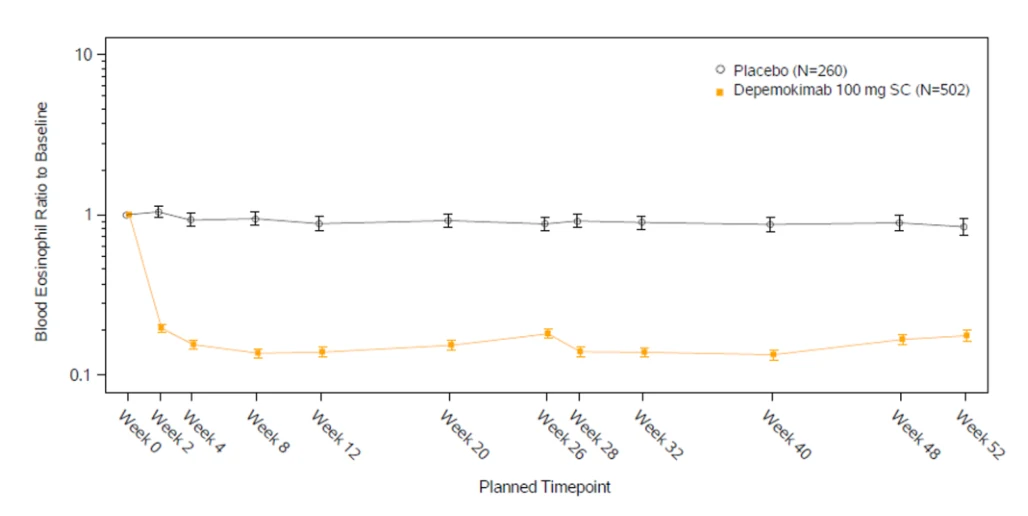
In placebo-controlled studies involving adult and adolescent patients aged 12 years and older with asthma, a 100 mg dose of depemokimab administered SC every 6 months for 52 weeks reduced blood eosinophils to a geometric mean count of 57 cells/mcL at Week 52 corresponding to a geometric mean reduction of 79% (95% CI: 75.8, 81.8) compared to placebo. This magnitude of blood eosinophil reduction was observed within 2 weeks of treatment (at the first assessment) and was maintained throughout the treatment period (Figure 1).
Figure 1 - Reduction in blood eosinophils from baseline over 52 weeks (SWIFT-1 and SWIFT-2 Pooled FAS Population)
FAS = Full Analysis Set
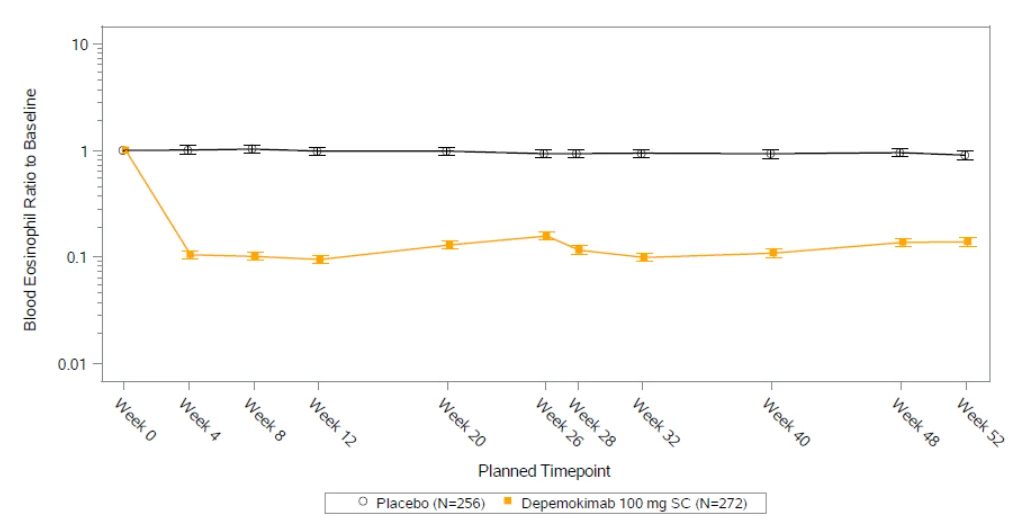
In placebo-controlled studies involving adult patients with CRSwNP a 100 mg dose of depemokimab administered SC every 6 months for 52 weeks reduced blood eosinophils to a geometric mean count of 48 cells/mcL at Week 52, corresponding to a geometric mean reduction of 85% (95% CI: 82.4, 86.7) compared to placebo. This magnitude of blood eosinophil reduction was observed within 4 weeks of treatment (at the first assessment) and was maintained throughout the treatment period Figure 2.
Figure 2 - Reduction in blood eosinophils from baseline over 52 weeks (ANCHOR-1 and ANCHOR-2 Pooled FAS Population)
FAS = Full Analysis Set
10.3. Pharmacokinetics
Depemokimab exhibited approximately dose-proportional pharmacokinetics over a dose range of 10 to 300 mg in patients with asthma following SC administration. Depemokimab pharmacokinetics were similar in patients with asthma and CRSwNP after SC administration of 100 mg depemokimab every 6 months.
Absorption
Following single SC administration (doses ranging from 2 to 300 mg), maximum observed plasma concentrations (Cmax) were achieved at a median time ranging from 8 to 14 days. There was no accumulation following repeat SC administration once every 6 months.
Distribution
Following single SC administration of depemokimab, the volume of distribution was estimated to be 6.3 L based on population pharmacokinetic analysis.
Metabolism
Depemokimab is a monoclonal antibody which is catabolized into small peptides and amino acids by ubiquitous proteolytic enzymes not restricted to hepatic tissue.
Elimination
Following single SC administration of depemokimab, the estimated apparent clearance (CL/F) was 0.092 L/day, based on population pharmacokinetic analysis. The estimated terminal elimination half-life was 48 days.
Special populations and conditions
Population pharmacokinetic analyses did not suggest clinically relevant effect of age, race or gender on depemokimab pharmacokinetics.
- Pediatrics: There are limited pharmacokinetic data available in the pediatric population (N = 15). The pharmacokinetics of depemokimab in adolescents aged 12 to 17 years were consistent with adults. The pharmacokinetics of depemokimab have not been studied in pediatric patients aged less than 12 years.
- Geriatrics: There are limited pharmacokinetic data available in elderly patients (≥65 years old) across all clinical studies (N = 175). The pharmacokinetics of depemokimab in patients aged 65 to 93 years were consistent with adults.
Hepatic Insufficiency: No formal studies have been conducted to investigate the effect of hepatic impairment on the pharmacokinetics of depemokimab. Based on population pharmacokinetic analyses, baseline hepatic function biomarkers (alanine aminotransferase [ALT: 5 to 153 IU/L], aspartate aminotransferase [AST: 9 to 115 IU/L], and bilirubin (1.7 to 42 micromol/L) had no clinically relevant effect on depemokimab apparent clearance.
Hepatic impairment is not expected to have significant impact on metabolism as depemokimab metabolism is not restricted to proteolytic enzymes in hepatic tissue.
Renal Insufficiency: No formal studies have been conducted to investigate the effect of renal impairment on the pharmacokinetics of depemokimab. Based on population pharmacokinetic analyses, patients with an estimated glomerular filtration rate [eGFR] <60 mL/min/1.73m2 had no clinically relevant effect on depemokimab apparent clearance.
Renal impairment is not expected to have a significant impact on clearance as depemokimab is not cleared renally.
10.4. Immunogenicity
The observed incidence of anti-drug antibodies (ADA) is highly dependent on the sensitivity and specificity of the assay. Differences in assay methods preclude meaningful comparisons of the incidence of ADA in the studies described below with the incidence of ADA in other studies.
In patients who received at least one 100 mg dose of depemokimab administered SC every 6 months, 9% (44/499) of patients with asthma (SWIFT-1 and SWIFT-2) and 8% (21/272) of patients with CRSwNP (ANCHOR-1 and ANCHOR-2) were positive for anti-depemokimab antibodies during the 52-week studies.
The percentage of patients who were positive for ADA was 7% (43/588) in an ongoing 52-week open-label extension asthma study (AGILE; n = 214 with data collected for 104 weeks). Among ADA-positive patients during the placebo-controlled studies for asthma and CRSwNP indications, 8% (5/65) of the patients were positive for neutralizing antibodies.
There was no identified clinically significant effect of ADA on the pharmacokinetics, pharmacodynamics, efficacy, or safety of EXDENSUR.
- 11. Storage, Stability, and Disposal
The recommended storage condition is 2°C to 8°C, protected from light.
Do not freeze.
The pre-filled pen and pre-filled syringe can be removed from the refrigerator and kept in the unopened carton for up to 7 days at room temperature (up to 30°C), when protected from light. Discard if left out of the refrigerator for more than 7 days.
The pre-filled pen or pre-filled syringe must be administered within 8 hours once the carton is opened. Discard if not administered within 8 hours.
12. Special Handling Instructions
Any unused medicinal product or waste material must be disposed of in accordance with local requirements.
Part 2: Scientific Information
13. Pharmaceutical Information
Drug Substance
Non-proprietary name of the drug substance: depemokimab
Chemical name: Not applicable. Depemokimab is not a chemical. It is an immunoglobulin (recombinant humanized (IgG1, kappa) monoclonal antibody).
Molecular formula and molecular mass: The estimated molecular weight of depemokimab is 149 kDa.
Structural formula: Depemokimab is a recombinant fucosylated humanized IgG1κ monoclonal antibody that consists of two kappa light chains and two IgG1 heavy chains. The light chain is attached to a heavy chain by a single interchain disulfide bond. The heavy chains are also covalently linked to each other by disulfide bonds. Depemokimab is N-linked glycosylated on each heavy chain with fucosylated complex bi-antennary oligosaccharides. The antibody molecular mass is 146 kDa and the carbohydrate molecular mass is approximately 3 kDa resulting in a total estimated molecular mass of 149 kDa for depemokimab.
Physicochemical properties: Depemokimab is a colourless, yellow to brown, clear to opalescent solution.
Product Characteristics:
Depemokimab is a recombinant humanized (IgG1, kappa) monoclonal antibody specific for human interleukin-5 (IL-5) produced in Chinese hamster ovary cells by recombinant DNA technology.
14. Clinical Trials
14.1. Clinical Trials by Indication
14.1.1. Asthma
Trial Design and Study Demographics
The efficacy and safety of EXDENSUR for the add-on maintenance treatment of severe asthma characterized by an eosinophilic phenotype was evaluated in two replicate, randomized, double-blind, placebo-controlled, parallel-group, multicentre, phase 3 clinical studies of 52 weeks treatment duration (SWIFT-1 and SWIFT-2) in adult and adolescent subjects (Table 4).
The Full Analysis set (FAS) population in studies SWIFT-1 and SWIFT-2 consisted of a total of 382 and 380 subjects, respectively, randomized 2:1 to receive either 100 mg EXDENSUR administered by subcutaneous injection (SC) plus standard of care (SoC) or placebo SC plus SoC once every 26 weeks (Q26W). SoC treatment included medium- to high-dose inhaled corticosteroids (ICS) (Medium ICS dose = 500 mcg Fluticasone Propionate (FP) daily metered dose or equivalent; High ICS dose >500 mcg Fluticasone Propionate (FP) daily metered dose or equivalent) plus at least one additional controller, excluding biologics. Randomization was stratified by baseline ICS dose (medium-dose; high-dose) with the aim of randomizing approximately 50% of subjects per dose. Subjects were to remain on their existing stable maintenance asthma therapy throughout the study.
Subjects were required to have a confirmed history of ≥2 asthma exacerbations that required treatment with systemic CS (i.e., intramuscular, intravenous, or oral) in the 12 months prior to screening, despite the use of medium- to high-dose ICS and/or required a two-fold increase in oral CS dose if receiving maintenance oral CS; elevated peripheral blood eosinophil counts of ≥150 cells/mcL at screening or ≥300 cells/mcL in the 12 months prior to screening; a pre-bronchodilator forced expiratory volume in 1 sec (FEV1) <80% predicted at screening (subjects ≥18 years of age) or <90% predicted at screening or an FEV1: Forced vital capacity (FVC) ratio <0.8 (subjects ≥12 to <18 years of age) at screening, with evidence of airway reversibility (FEV1≥12% and 200 ml); and received medium- to high-dose ICS in the 12 months prior to screening and currently receiving treatment with at least one controller medication in addition to inhaled CS for at least 3 months.
In both studies, the primary efficacy endpoint was the annualized rate of clinically significant exacerbations over 52 weeks. A clinically significant exacerbation was defined as a worsening of asthma that led to: 1) use of systemic CS or a temporary increase in the systemic CS dose for at least 3 days to treat the symptoms; 2) an emergency department/urgent care visit resulting from asthma that led to treatment with a systemic CS in addition to their regular maintenance medications; or 3) an inpatient hospitalization due to asthma.
Key secondary efficacy endpoints included the change from baseline at Week 52 in: 1) the St. George's Respiratory Questionnaire (SGRQ) total score; 2) the Asthma Control Questionnaire-5 (ACQ-5) score; and 3) pre-bronchodilator forced expiratory volume in one second (FEV1).
The SGRQ is a patient-reported tool that assesses the health-related quality of life of individuals with airway obstruction, including asthma. It contains 50 items comprising three domains of symptoms, activity, and impacts that are graded on various scales and is scored out of 100. The ACQ-5 assesses asthma control based on recall of the previous 7 days of breathlessness, nocturnal waking, symptoms on waking, activity limitations, wheeze, and frequency of short-acting beta agonists use. All items are assessed on a 7-point scale (0=no impairment, through 6=maximum impairment for symptoms and rescue use).
Table 4 - Summary of Trial Design for Clinical Trials in Asthma
| Study # | Study design | Dosage, route of administration and duration | Study subjects | Mean age (min, max) | Sex n (%) |
|---|---|---|---|---|---|
206713 (SWIFT-1) | Phase 3, multicentre, randomized, double-blind, placebo-controlled, parallel-group | EXDENSUR 100 mg SC at week 0 and week 26 Placebo at week 0 and week 26 Duration: 52 weeks | N=250 N=132 Total: 382a | 54 years (14, 78) | Female: 223 (58%) Male: 159 (42%) |
213744 (SWIFT-2) | Phase 3, multicentre, randomized, double-blind, placebo-controlled, parallel-group | EXDENSUR 100 mg SC at week 0 and week 26 Placebo at week 0 and week 26 Duration: 52 weeks | N=252 N=128 Total: 380a | 53 years (12, 82) | Female: 241 (63%) Male: 139 (37%) |
a Full Analysis Set (FAS) population who were randomized and received at least 1 dose of EXDENSUR or placebo.
SC = subcutaneous.
The demographics and baseline disease characteristics of the subjects in SWIFT-1 and SWIFT-2 are generally consistent between groups (Table 5).
Table 5 - Demographics and Baseline Disease Characteristics (FAS Population) of Subjects in SWIFT-1 and SWIFT-2
| Parameter | SWIFT-1 N = 382 | SWIFT-2 N = 380 |
|---|---|---|
| Age (years) of subjects, mean (SD) | 54 (14.2) | 53 (16.2) |
| Female, n (%) | 223 (58) | 241 (63) |
| White, n (%) | 316 (83) | 272 (72) |
| Body Mass Index (kg/m2), mean (SD) | 28.03 (5.930) | 28.73 (6.310) |
| Never smoked, n (%) | 288 (75) | 294 (77) |
| Duration of asthma, years, mean (SD) | 22 (16.2) | 25 (18.5) |
| Pre-bronchodilator % predicted FEV1, mean (SD) | 62 (15.2) | 62 (15.9) |
| % reversibility, mean (SD) | 17 (15.3) | 18 (17.4) |
| Eosinophil count, cells/mcL, median (min, max) | 310 (20, 2360) | 340 (10, 4440) |
| Total IgE, U/mcL, median (min, max) | 185 (1.9, 12142) | 180 (2.2, 16198) |
| Number of exacerbations in previous year, mean (SD) | 2.2 (0.69) | 2.7 (1.92) |
| SGRQ total score, mean (SD) | 44.3 (20.70) | 44.5 (18.69) |
| Subjects with ACQ-5 ≥1.5 at baseline (%) | 280 (75) | 279 (75) |
| High-dose ICS use (%)a | 203 (53) | 226 (59) |
| ICS + LABA + LAMA use (%) | 95 (25) | 127 (33) |
| Maintenance OCS use (%) | 21 (5) | 19 (5) |
ACQ-5 = Asthma Control Questionnaire, FEV1 = forced expiratory volume in 1 second, OCS = Oral corticosteroid; IgE = immunoglobulin E; ICS = inhaled corticosteroid; LABA =Long acting β-agonist; LAMA =Long-acting muscarinic antagonist; OCS = Oral corticosteroid; SD = Standard deviation; SGRQ = St. George’s Respiratory Questionnaire.
a High ICS dose >500 mcg Fluticasone Propionate (FP) daily metered dose or equivalent.
Study Results
The key efficacy results of the SWIFT-1 and SWIFT-2 studies evaluating the efficacy of EXDENSUR at Week 52 in subjects with severe asthma are presented in Table 6.
Table 6 - Results of Primary Efficacy Endpoint in Subjects with Severe Asthma over 52 Weeks in SWIFT-1 and SWIFT-2 (FAS Population)
| SWIFT-1 | SWIFT-2 | |||||||||||
|---|---|---|---|---|---|---|---|---|---|---|---|---|
| EXDENSUR N = 250 | Placebo N = 132 | EXDENSUR N = 252 | Placebo N = 128 | |||||||||
| Annualized Asthma Exacerbation Ratea | 0.46 | 1.11 | 0.56 | 1.08 | ||||||||
| Rate ratio (95% CI) | 0.42* (0.30, 0.59) | 0.52* (0.36, 0.73) | ||||||||||
FAS = Full Analysis Set, CI = Confidence Interval
a Results obtained from a negative binomial model with an offset term to adjust for different follow-up durations and fixed effects for treatment group, asthma exacerbation history, baseline ICS dose, geographical region, and baseline pre-bronchodilator % predicted FEV1.
* Statistically significant at the prespecified level of 5%.
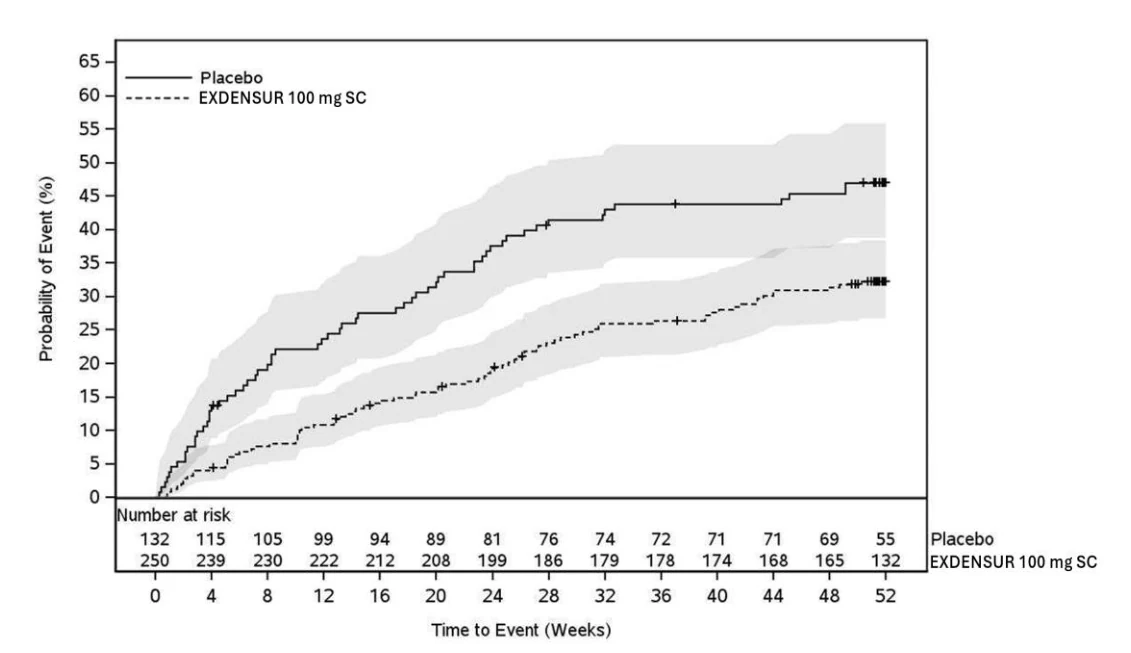
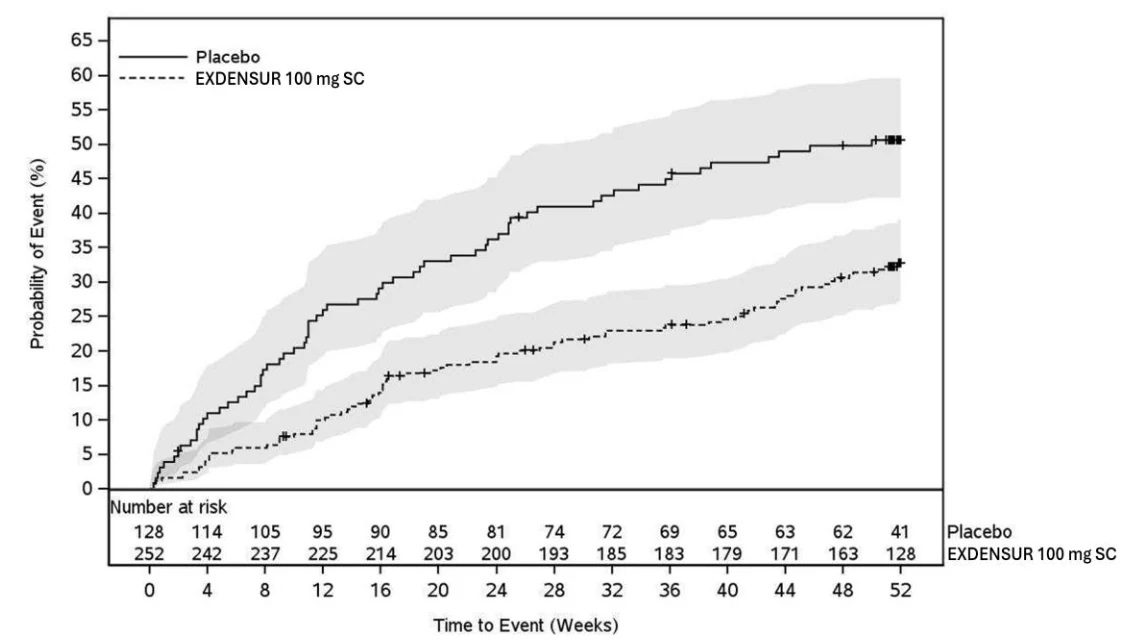
In SWIFT-1 and SWIFT-2, the percentage of subjects experiencing a clinically significant exacerbation during the 52-week treatment period was 32% and 32%, respectively for EXDENSUR and 46% and 50%, respectively for placebo.
In SWIFT-1 and SWIFT-2, the percentage of subjects with exacerbations requiring hospitalization and/or Emergency Department visit was 1% and 4%, respectively for EXDENSUR and 8% and 10%, respectively for placebo.
In SWIFT-1 and SWIFT-2, the time to first clinically significant exacerbation was numerically longer for EXDENSUR than placebo (hazard ratio [HR]: 0.56 (95% CI; 0.40, 0.79); and 0.53 (95% CI; 0.38, 0.74), respectively) (Figure 3A and Figure 3B).
Figure 3A - Kaplan Meier Curve for Time to First Clinically Significant Exacerbation in Subjects with Severe Asthma in SWIFT-1 (FAS Population)
FAS = Full Analysis Set, SC = Subcutaneous
Figure 3B: Kaplan Meier Curve for Time to First Clinically Significant Exacerbation in Subjects with Severe Asthma in SWIFT-2 (FAS Population)
FAS = Full Analysis Set, SC = Subcutaneous
In SWIFT-1 and SWIFT-2, the LS mean change from baseline in SGRQ Total score at Week 52 was -13.0 and -14.8, respectively for EXDENSUR and -9.7 and -12.5, respectively for placebo (Adjusted difference:
-3.4 (95%CI; -7.1, 0.4) and -2.3 (95% CI; -5.8, 1.2)). The percentage of subjects achieving a ≥4-point decrease (improvement) from baseline in SGRQ at Week 52 was 63% and 66%, respectively for EXDENSUR and 57% and 65%, respectively for placebo.
In SWIFT-1 and SWIFT-2, the LS mean change from baseline in ACQ-5 total score at Week 52 was -0.82 and -0.81, respectively for EXDENSUR and -0.77 and -0.70, respectively for placebo (Adjusted difference: -0.04 (95%CI; -0.27, 0.18) and -0.11 (95% CI; -0.33, 0.11)). The percentage of subjects achieving a ≥0.5-point decrease (improvement) from baseline in ACQ-5 at Week 52 was 54% and 54%, respectively for EXDENSUR and 55% and 53%, respectively for placebo.
In SWIFT-1 and SWIFT-2, the LS mean change from baseline in pre-bronchodilator FEV1 at Week 52 was 0.160 L and 0.240 L, respectively for EXDENSUR and 0.160 L and 0.184 L, respectively for placebo (Adjusted difference: -0.001 (95%CI; -0.089, 0.088) and 0.056 (95% CI; -0.043, 0.154)).
14.1.2. Chronic Rhinosinusitis with Nasal Polyps
Trial Design and Study Demographics
The efficacy and safety of EXDENSUR was evaluated in two replicate, randomized, double-blind, placebo-controlled, parallel-group, multicentre phase 3 clinical studies of 52 weeks treatment duration (ANCHOR-1 and ANCHOR-2) in adult subjects with severe chronic rhinosinusitis with nasal polyps (CRSwNP) (Table 7).
The Full Analysis Set (FAS) population in studies ANCHOR-1 and ANCHOR-2 consisted of a total of 271 and 257 subjects, respectively randomized 1:1 to receive either 100 mg depemokimab administered by subcutaneous injection (SC) once every 26 weeks (Q26W) plus standard of care (SoC) or placebo SC + SoC. SoC treatment included intranasal corticosteroids (CS), saline nasal douching, inhaled corticosteroids exhalation through nose (ICS/ETN), occasional short courses of systemic CS (except during the run-in period), and/or antibiotics; short courses of systemic CS for treatment of CRSwNP were allowed as rescue medication. Subjects were to remain on their existing stable SoC therapy throughout the study.
Subjects were required to have a bilateral endoscopic nasal polyp (NP) score of at least 5 (with a minimum score of 2 in each nasal cavity); a history of nasal surgery for the removal of NP and/or uses of systemic CS for the treatment of NP for at least 3 consecutive days in the previous 2 years (or were unsuitable/intolerant to systemic CS); presence of moderate-to-severe intensity symptoms of CRS characterized by either nasal blockage/obstruction/congestion or nasal discharge (i.e., anterior/posterior nasal drip) and facial pain/pressure or reduction/loss of smell; and been receiving daily intranasal CS for at least 8 weeks immediately prior to screening At randomization, subjects were required to have had a nasal obstruction verbal response scale (VRS) mean score of 2 or greater over the previous 7 days.
In both studies, the co-primary efficacy endpoints were 1) a change from baseline in bilateral endoscopic NP score at Week 52 (centrally read); and 2) a change from baseline in nasal obstruction VRS mean score over Weeks 49 to 52. Key secondary efficacy endpoints included 1) a change from baseline in rhinorrhea VRS mean score over Weeks 49 to 52; 2) a change from baseline in loss of smell VRS score over Weeks 49 to 52; 3) a change from baseline in Lund-Mackay computed tomography (LMK CT) score at Week 52; and 4) a change from baseline in sino-nasal outcome test total score (SNOT-22) at Week 52.
The NP score is the sum of scores from both nostrils where each nostril was graded on a 4-point categorical scale (0 = no polyps through 4 = large polyps causing almost complete congestion/obstruction of the inferior meatus). The VRS score graded daily symptoms on a 4-point categorical scale (0 = no symptoms through 3 = severe symptoms). The LMK sinus CT scan score evaluated the opacification of each sinus using a 3-point categorical scale (0 = normal; 1 = partial opacification; 2 = total opacification) with a possible overall maximum score of 24. SNOT-22 assessed the symptoms and symptom impact associated with CRSwNP based on 22 items with each item scored on a 6-point categorical scale (0 = not present/no problem through 5 = problem as “bad as it can be”) with a possible overall maximum score of 110; SNOT-22 had a 2 week recall period.
Table 7 - Summary of Trial Design for Clinical Trials in Chronic Rhinosinusitis with Nasal Polyps
| Study # | Study design | Dosage, route of administration and duration | Study subjects | Mean age (min, max) | Sex n (%) |
|---|---|---|---|---|---|
| 217095 (ANCHOR-1) | Phase 3, multicentre, randomized, double-blind, placebo-controlled, parallel-group | EXDENSUR 100 mg SC at week 0 and week 26 Placebo at week 0 and week 26 Duration: 52 weeks | N=143 N=128 Total: 271a | 54 years (19, 93) | Female: 83 (31%) Male: 188 (69%) |
| 210879 (ANCHOR-2) | Phase 3, multicentre, randomized, double-blind, placebo-controlled, parallel-group | EXDENSUR 100 mg SC at week 0 and week 26 Placebo at week 0 and week 26 Duration: 52 weeks | N=129 N=128 Total: 257a | 50 years (20, 82) | Female: 80 (31%) Male: 177 (69%) |
a Full Analysis Set (FAS) population who were randomized and received at least 1 dose of EXDENSUR or placebo
The demographics and baseline disease characteristics of subjects in ANCHOR-1 and ANCHOR-2 are generally consistent between groups (Table 8).
Table 8 - Demographics and Baseline Disease Characteristics (FAS Population) of Subjects in
ANCHOR-1 and ANCHOR-2
| Parameter | ANCHOR-1 (N = 271) | ANCHOR-2 (N = 257) |
|---|---|---|
| Age (years) of subjects, mean (SD) | 54 (13.4) | 50 (12.9) |
| Male, n (%) | 188 (69) | 177 (69) |
| White, n (%) | 185 (70) | 197 (77) |
| Asian/Other, n (%) | 72 (27) | 55 (21) |
| Body Mass Index (kg/m2), mean (SD) | 26.91 (4.667) | 26.79 (4.726) |
| Duration (years) of CRSwNP, mean (SD) | 13 (11.2) | 11 (8.7) |
| Subjects with ≥1 previous NP surgery, n (%) | 171 (63) | 162 (63) |
| Systemic CS use for NP in past 12 months, n (%) | 190 (70) | 172 (67) |
| Asthma, n (%) | 161 (59) | 131 (51) |
| AERD, n (%) | 43 (16) | 42 (16) |
| Blood eosinophil count, cells/mcL, median (min, max) | 360 (10, 10,550) | 360 (30, 1,670) |
| Bilateral endoscopic NP scorea, b, c, mean (SD) | 6.0 (1.35) | 5.9 (1.29) |
| Nasal obstruction VRS mean scorea, d, mean (SD) | 2.5 (0.48) | 2.6 (0.42) |
| Rhinorrhoea VRS mean scorea, d, mean (SD) | 2.2 (0.70) | 2.3 (0.67) |
| Loss of smell VRS mean scorea, d, mean (SD) | 2.7 (0.55) | 2.8 (0.41) |
| LMK CT scorea, b, mean (SD) | 18.7 (4.08) | 18.9 (4.19) |
| SNOT-22 total scorea, e, mean (SD) | 57.4 (22.15) | 60.1 (19.95) |
| Subjects with SNOT-22 total score ≥40, n (%) | 204 (75) | 207 (81) |
AERD = aspirin-exacerbated respiratory disease; CRSwNP = chronic rhinosinusitis with nasal polyps, FAS = full analysis set, LMK CT = Lund-MacKay Computed Tomography, NP = nasal polyps, CS = corticosteroid, SNOT-22 = Sino-Nasal Outcome Test, VRS = verbal response scale.
a Higher scores indicate greater disease severity.
b As graded by independent blinded assessors.
c NP score is the sum of scores from both nostrils where each nostril was graded on 4-point categorical scale (0 = no polyps; 1 = small polyps in the middle meatus not reaching below the inferior border of the middle concha; 2 = polyps reaching below the lower border of the middle turbinate; 3 = large polyps reaching the lower border of the inferior turbinate or polyps medial to the middle concha; 4 = large polyps causing almost complete congestion/obstruction of the inferior meatus).
d Collected daily by subjects on a 4-point categorical scale (0 = no symptoms, 1 = mild symptoms, 2 = moderate symptoms, 3 = severe symptoms).
e SNOT-22 is a health-related quality of life assessment tool and includes 22-items in 6 domains of symptoms and impact associated with CRSwNP (nasal, non-nasal, ear/facial, sleep, fatigue, emotional consequences). These symptoms are rated via a 6-point scale (0 = not present/no problem; 1 = very mild problem; 2 = mild or slight problem; 3 = moderate problem; 4 = severe problem; 5 = problem as “bad as it can be”). The maximum score is 110.
Study Results
The key efficacy results from ANCHOR-1 and ANCHOR-2 evaluating the efficacy of EXDENSUR at Week 52 in subjects with severe CRSwNP are presented in Table 9 and Figure 4 and Figure 5.
Table 9 - Results of Co-Primary Efficacy Endpoints in Subjects with Severe CRSwNP at Week 52 in ANCHOR-1 and ANCHOR-2 (FAS Population)
| ANCHOR-1 | ANCHOR-2 | |||||||||||||||
|---|---|---|---|---|---|---|---|---|---|---|---|---|---|---|---|---|
EXDENSUR N = 143 | Placebo N = 128 | EXDENSUR N = 129 | Placebo N = 128 | |||||||||||||
| Total Endoscopic NP Score at Week 52a, b | ||||||||||||||||
| nc | 128 | 120 | 120 | 115 | ||||||||||||
| LS Mean (SE) | 5.4 (0.14) | 6.2 (0.15) | 5.4 (0.14) | 6.0 (0.15) | ||||||||||||
| LS Mean change from baseline (SE) | -0.6 (0.14) | 0.2 (0.15) | -0.5 (0.14) | 0.1 (0.15) | ||||||||||||
| Adjusted difference (95% CI) | -0.7 (-1.1, -0.3) * | -0.6 (-1.0, -0.2) * | ||||||||||||||
| Nasal Obstruction VRS Mean Score over Weeks 49 to 52a, b | ||||||||||||||||
| nc | 125 | 116 | 119 | 111 | ||||||||||||
| LS Mean (SE) | 1.77 (0.079) | 2.00 (0.083) | 1.83 (0.076) | 2.07 (0.078) | ||||||||||||
| LS Mean change from baseline (SE) | -0.76 (0.079) | -0.53 (0.083) | -0.77 (0.076) | -0.53 (0.078) | ||||||||||||
| Adjusted difference (95% CI) | -0.23 (-0.46, 0.00)* | -0.25 (-0.46, -0.03)* | ||||||||||||||
FAS = Full Analysis Set; LS = Least Squares, NP = Nasal Polyps; VRS = Verbal Response Scale.
a Subjects who had nasal surgery or used disease-modulating medication for CRSwNP prior to the timepoint of interest were assigned the worst possible value of the relevant score for all assessments following surgery or initiation of disease-modulating medication.
b Based on Mixed Model Repeat Measures (MMRM) analyses with covariates of treatment, baseline score, log(e) baseline blood eosinophil count, region, previous surgery for nasal polyps, and visit, with interaction terms for visit by baseline and visit by treatment.
c Number of subjects with analysable data at the given timepoint.
* Statistically significant at the prespecified level of 5%.
Figure 4 – LS Mean Change from Baseline in Total Endoscopic NP Score (ANCHOR-1 and ANCHOR-2)
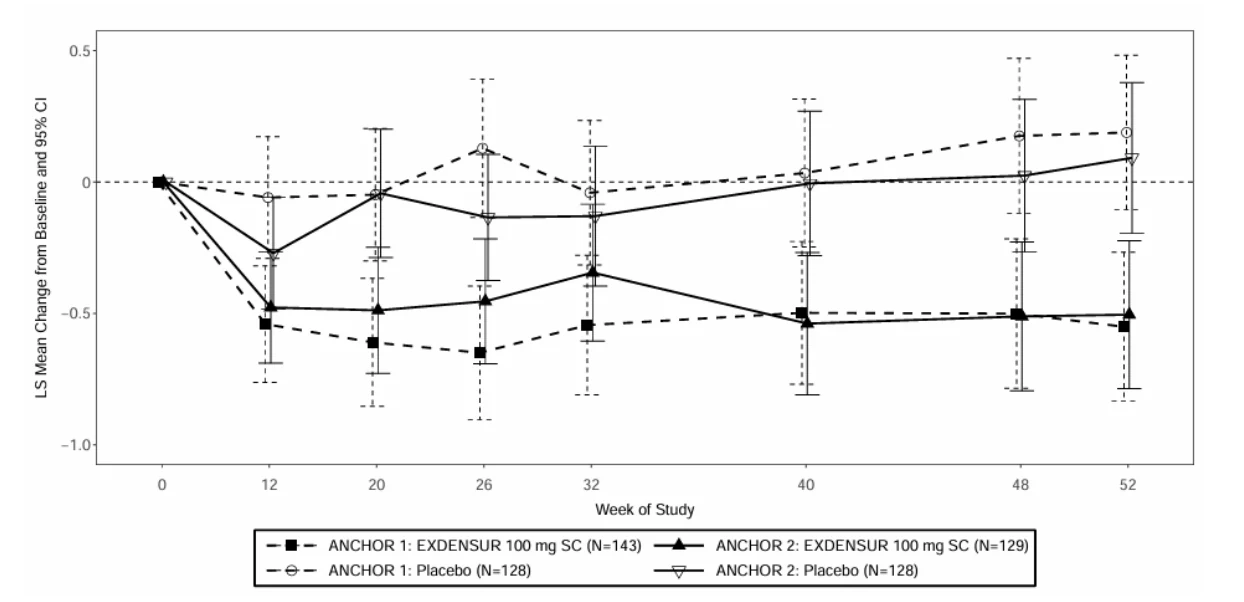
LS= Least Squares; NP= nasal polyp; FAS= Full Analysis Set
Figure 5 – LS Mean Change from Baseline in Mean Nasal Obstruction VRS Score (ANCHOR-1 and ANCHOR-2)
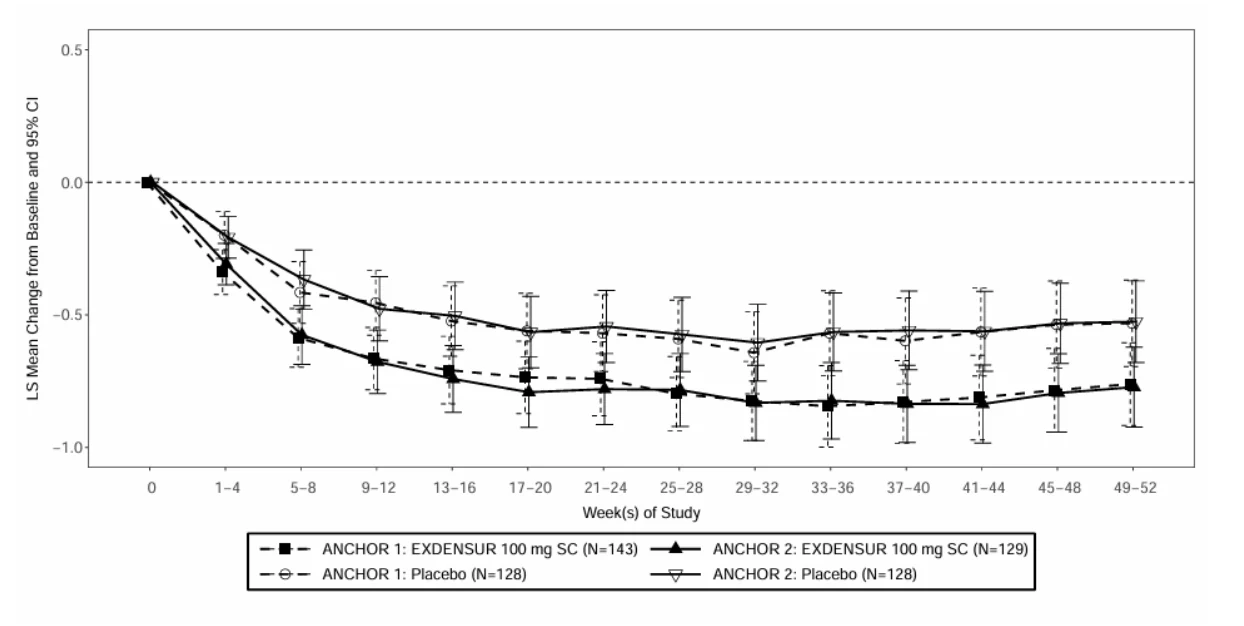
LS= Least Squares; VRS= Verbal Response Scale; FAS= Full Analysis Set
In ANCHOR-1 and ANCHOR-2, the percentage of subjects achieving a ≥1-point decrease from baseline in total endoscopic bilateral NP score at Week 52 was 44% and 41%, respectively for EXDENSUR and 24% and 24%, respectively for placebo. Additionally, the percentage of subjects achieving a ≥1-point decrease from baseline in nasal obstruction VRS mean score over Weeks 49 to 52 was 36% and 46%, respectively for EXDENSUR and 30% and 29%, respectively for placebo.
In ANCHOR-1 and ANCHOR-2, the LS mean change from baseline in rhinorrhoea VRS mean score over Weeks 49 to 52 was -0.71 and -0.72, respectively for EXDENSUR and -0.49 and -0.54, respectively for placebo (Adjusted difference: -0.22 (95%CI; -0.46, 0.02) and -0.18 (95% CI; -0.40, 0.05)). In ANCHOR-1 and ANCHOR-2, the LS mean change from baseline in loss of smell VRS mean score over Weeks 49 to 52 was -0.48 and -0.56, respectively for EXDENSUR and -0.29 and -0.30, respectively for placebo (Adjusted difference: -0.19 (95%CI; -0.39, 0.00) and -0.26 (95% CI; -0.45, -0.07)).
In ANCHOR-1 and ANCHOR-2, the LS mean change from baseline in LMK CT score at Week 52 was -2.8 and -3.5, respectively for EXDENSUR and -0.8 and -0.3, respectively for placebo (Adjusted difference: -2.0 (95%CI; -3.3, -0.8) and -3.2 (95% CI; -4.4, -2.0)). In ANCHOR-1 and ANCHOR-2, the LS mean change from baseline in SNOT-22 Total score at Week 52 was -13.3 and -15.9, respectively for EXDENSUR and -6.5 and -6.0, respectively for placebo (Adjusted difference: -6.8 (95%CI; -15.2, 1.6) and -9.9 (95% CI; -17.9, -2.0)).
In a pre-specified pooled analysis of ANCHOR-1 and ANCHOR-2, the percentage of subjects that required systemic corticosteroids or sino-nasal surgery (actual) or disease-modulating medications for CRSwNP, up to Week 52 was 26% (72/272) for EXDENSUR and 36% (92/256) for placebo.
In the subgroup of subjects with CRSwNP and comorbid asthma enrolled in ANCHOR-1 and ANCHOR-2 (n=292), changes in total endoscopic nasal polyp score and nasal obstruction VRS score favoured EXDENSUR, consistent with the overall study population.
16. Non-Clinical Toxicology
General Toxicology:
In monkeys administered depemokimab as a single subcutaneous dose of 10 or 100 mg/kg (equal to 2- or 21-times the exposure in asthma patients given the recommended human dose [100 mg SC every 6 months] based on AUC) and observed for 4 weeks, adverse vascular inflammation within the kidney, heart, pancreas, spleen, liver and/or lung was present in one low-dose and one high-dose monkey given. A NOAEL was not determined due to the vasculitis observed at both doses. The relationship between depemokimab administration and vasculitis is unclear.
In the 26-week repeat-dose (10 and 100 mg/kg administered by subcutaneous injection on Day 1 and Week 14) toxicity study, with a 30 week off-dose period, high-dose monkeys developed reversible (within the 24 hour recording period) increases in QTc following the Week 14 dose (18 milliseconds or 7% of mean absolute vehicle control or baseline values). The toxicological significance of this finding is unclear. The NOAEL was determined to be 10 mg/kg (8-times the exposure in asthma patients given the recommended human dose based on AUC).
Genotoxicity: No genotoxicity studies have been conducted with depemokimab.
Carcinogenicity: No carcinogenicity studies have been conducted with depemokimab.
Reproductive and developmental toxicology:
No reproductive or developmental toxicology studies have been conducted with depemokimab. However, there were no adverse histopathological findings in the reproductive organs from sexually mature cynomolgus monkeys receiving SC dosages up to 100 mg/kg depemokimab for 6 months.
Data from pregnant monkeys demonstrate that mepolizumab, a related biologic product without the YTE modification, crosses the placenta. Concentrations of mepolizumab were approximately 2.4-times higher in infants than in maternal monkeys for several months post-partum. Mepolizumab was excreted into the milk of cynomolgus monkeys at concentrations that were less than 0.5% of those detected in maternal plasma. Depemokimab has greater binding affinity for FcRn and may be transferred to fetal blood at concentrations that exceed those of mepolizumab. In silico analysis estimates that concentrations of depemokimab will be 3.2-times higher in infants than in maternal monkeys. A more prolonged exposure in the infant is expected due to the extended elimination half-life of depemokimab when compared to mepolizumab.
Juvenile Toxicity: No juvenile toxicity studies have been conducted with depemokimab.