


Product Monograph - Cipro XL
1 INDICATIONS
CIPRO XL (ciprofloxacin hydrochloride and ciprofloxacin extended release tablets) is indicated solely for the treatment of urinary tract infections, caused by susceptible strains of the designated microorganisms as listed below. CIPRO XL AND CIPRO (CIPROFLOXACIN TABLETS, IMMEDIATE RELEASE FORMULATION) ARE NOT INTERCHANGEABLE (see 4 DOSAGE AND ADMINISTRATION for specific recommendations).
Uncomplicated Urinary Tract Infections (Acute Cystitis) in Females caused by:
Escherichia coli
Enterococcus faecalis
Proteus mirabilis
Staphylococcus saprophyticus
In cases of uncomplicated acute bacterial cystitis, limit the use of CIPRO XL to circumstances where no other treatment options are available. A urine culture should be obtained prior to treatment to ensure ciprofloxacin susceptibility.
Complicated Urinary Tract Infections caused by:
Escherichia coli
Klebsiella pneumoniae
Enterococcus faecalis
Proteus mirabilis
Pseudomonas aeruginosa
Acute Uncomplicated Pyelonephritis caused by:
Escherichia coli
THE SAFETY AND EFFICACY OF CIPRO XL IN TREATING INFECTIONS OTHER THAN URINARY TRACT INFECTIONS HAS NOT BEEN DEMONSTRATED.
To reduce the development of drug-resistant bacteria and maintain the effectiveness of CIPRO XL and other antibacterial drugs, CIPRO XL should be used only to treat infections that are proven or strongly suspected to be caused by susceptible bacteria. When culture and susceptibility information are available, they should be considered in selecting or modifying antibacterial therapy. In the absence of such data, local epidemiology and susceptibility patterns may contribute to the empiric selection of therapy.
Appropriate culture and susceptibility tests should be performed before treatment in order to isolate and identify organisms causing infection and to determine their susceptibility to ciprofloxacin. Therapy with CIPRO XL may be initiated before results of these tests are known; once results become available, appropriate therapy should be continued.
1.1 Pediatrics
The safety and efficacy of CIPRO XL in individuals less than 18 years of age has not been established. CIPRO XL is not recommended for children under the age of 18 years (see 7 WARNINGS AND PRECAUTIONS, 7.1 Special Populations, 7.1.3 Pediatrics).
1.2 Geriatrics
Elderly patients should receive a dose dependant on the severity of their illness and the creatinine clearance (see 4 DOSAGE AND ADMINISTRATION, Special Populations: Renal Impairment for dose modification based on the creatinine clearance or serum creatinine).
2 CONTRAINDICATIONS
- CIPRO XL (ciprofloxacin hydrochloride and ciprofloxacin extended release tablets) are contraindicated in patients with a history of hypersensitivity to ciprofloxacin, or any member of the quinolone class of antibacterial agents or any of the excipients. For a complete listing, see the 4 DOSAGE AND ADMINISTRATION section.
- Concurrent administration of ciprofloxacin and agomelatinea is contraindicated since it may result in an undesirable increase in agomelatine exposure (see 9 DRUG INTERACTIONS).
- Concurrent administration of ciprofloxacin and tizanidine is contraindicated since it may result in an undesirable increase in serum tizanidine concentrations. This can be associated with clinically relevant tizanidine-induced side effects (hypotension, somnolence, drowsiness) (see 9 DRUG INTERACTIONS).
a Currently not marketed in Canada
3 SERIOUS WARNINGS AND PRECAUTIONS BOX
Serious Warnings and Precautions
|
4 DOSAGE AND ADMINISTRATION
4.1 Dosing Considerations
CIPRO XL AND CIPRO (CIPROFLOXACIN TABLETS, IMMEDIATE RELEASE FORMULATION) ARE NOT INTERCHANGEABLE. CIPRO XL should be administered once daily as described in the table below.
4.2 Recommended Dose and Dosage Adjustment
Table 1: Recommended Dosage
| Indication | Unit Dose CIPRO XL | Frequency | Recommended Duration |
|---|---|---|---|
Uncomplicated Urinary Tract Infection (Acute Cystitis) in Females | 500 mg | q 24 h | 3 Days |
| Complicated Urinary Tract Infection | 1000 mga | q 24 h | 7-14 Days |
| Acute Uncomplicated Pyelonephritis | 1000 mga | q 24 h | 7-14 Days |
- a For severely renally impaired patients see 4 DOSAGE AND ADMINISTRATION, Special Populations:, Renal Impairment below.
Special Populations:
Renal Impairment
CIPRO XL 500 mg
Based on pharmacokinetic data, no dosage adjustment is required with CIPRO XL 500 mg (see 10 CLINICAL PHARMACOLOGY, Detailed Human Pharmacology, Special Populations: Renal Impairment).
CIPRO XL 1000 mg
For complicated urinary tract infections or acute uncomplicated pyelonephritis, where 1000 mg is the appropriate dose, the dosage of CIPRO XL should be reduced to 500 mg CIPRO XL once daily in patients with creatinine clearance below 30 mL/min. This recommendation is based on pharmacokinetic modeling. Clinical studies with CIPRO XL have not been performed in patients with impaired renal function. For patients on hemodialysis or peritoneal dialysis, administer CIPRO XL after the dialysis procedure is completed (see 10 CLINICAL PHARMACOLOGY, Detailed Human Pharmacology, Special Populations: Renal Impairment).
Hepatic Impairment
Based on pharmacokinetic data, no dosage adjustment is required with CIPRO XL in patients with stable chronic cirrhosis (with mild to moderate hepatic impairment). The kinetics of ciprofloxacin in patients with acute hepatic insufficiency and stable chronic cirrhosis (with severe hepatic impairment), however, have not been elucidated (see 10 CLINICAL PHARMACOLOGY, Detailed Human Pharmacology, Special Populations: Renal Impairment).
Geriatrics
No dosage adjustment based on age alone is necessary in elderly patients. Since ciprofloxacin is substantially excreted by the kidney, the risk of adverse reactions may be greater in patients with impaired renal function. No significant accumulation of ciprofloxacin is anticipated in elderly subjects with renal impairment who take CIPRO XL 500 mg, therefore, no reductions in dosage are required.
However, in patients with renal impairment, where CIPRO XL 1000 mg once daily is the appropriate dose, dosage may need to be reduced to CIPRO XL 500 mg once daily (see 10
CLINICAL PHARMACOLOGY, Detailed Human Pharmacology, Special Populations: Renal Impairment).
4.4 Administration
CIPRO XL should be administered at least 2 hours before or 6 hours after antacids, and mineral supplements containing magnesium or aluminum, as well as sucralfate, VIDEX® (didanosine) chewable/buffered tablets or pediatric powder, metal cations such as iron, and multivitamin preparations with zinc (see 9 DRUG INTERACTIONS).
Although CIPRO XL may be taken with meals that include milk, simultaneous administration with dairy products alone, or with calcium-fortified products should be avoided, since decreased absorption is possible. It is recommended that CIPRO XL be administered at least 2 hours before or 6 hours after substantial calcium intake (>800 mg). CIPRO XL should be swallowed whole. Tablets should not be split, crushed or chewed (see 9 DRUG INTERACTIONS).
4.5 Missed Dose
If a dose is missed, it should be taken anytime but not later than 8 hours prior to the next scheduled dose. If less than 8 hours remain before the next dose, the missed dose should not be taken and treatment should be continued as prescribed with the next scheduled dose. Double doses should not be taken to compensate for a missed dose.
5 OVERDOSAGE
In the event of acute, excessive oral overdosage, reversible renal toxicity, arthralgia, myalgia and CNS symptoms have been reported. Therefore, apart from routine emergency measures, it is recommended to monitor renal function and to administer magnesium- or calcium-containing antacids which reduce the absorption of ciprofloxacin and to maintain adequate hydration. Based on information obtained from subjects with chronic renal failure, only a small amount of ciprofloxacin (< 10%) is removed from the body after hemodialysis or peritoneal dialysis.
The administration of activated charcoal as soon as possible after oral overdose may prevent excessive increase of systemic ciprofloxacin exposure.
| For management of a suspected drug overdose, contact your regional poison control centre. |
6 DOSAGE FORMS, STRENGTHS, COMPOSITION AND PACKAGING
CIPRO XL (ciprofloxacin hydrochloride and ciprofloxacin extended release tablets) is available as nearly white to slightly yellowish, film-coated, oblong-shaped tablets containing either 500 mg or 1000 mg of ciprofloxacin. The 500 mg tablet is coded with the word “BAYER” on one side and “C500 QD” on the reverse side. The 1000 mg tablet is coded with the word “BAYER” on one side and “C1000 QD” on the reverse side. CIPRO XL 500 mg tablets are supplied in bottles of 50. CIPRO XL 1000 mg tablets are supplied in bottles of 50.
Composition
Table 2: Dosage Forms, Strengths, Composition and Packaging
| Route of Administration | Dosage Form / Strength/Composition | Non-medicinal Ingredients |
| oral | tablet 500 mg, 1000 mg | crospovidone, hypromellose, magnesium stearate, polyethylene glycol, silica colloidal anhydrous, succinic acid, and titanium dioxide. |
Each CIPRO XL (ciprofloxacin hydrochloride and ciprofloxacin extended release tablets) 500 mg, contains 500 mg of ciprofloxacin as ciprofloxacin hydrochloride (287.5 mg, calculated as ciprofloxacin on the dried basis) and ciprofloxacin (212.6 mg, calculated on the dried basis).
Each CIPRO XL (ciprofloxacin hydrochloride and ciprofloxacin extended release tablets) 1000 mg, contains 1000 mg of ciprofloxacin as ciprofloxacin hydrochloride (574.9 mg, calculated as ciprofloxacin on the dried basis) and ciprofloxacin (425.2 mg, calculated on the dried basis).
7 WARNINGS AND PRECAUTIONS
Please see 3 SERIOUS WARNINGS AND PRECAUTIONS BOX.
General
The use of ciprofloxacin with other drugs may lead to drug-drug interactions. For established or potential drug interactions, see 9 DRUG INTERACTIONS.
Prolonged use of ciprofloxacin may result in the overgrowth of nonsusceptible organisms. Careful observation of the patient is therefore essential, and if superinfection should occur during therapy, appropriate measures should be taken.
Cardiovascular
CIPRO XL (ciprofloxacin hydrochloride and ciprofloxacin extended release tablets) has been shown to prolong the QT interval of the electrocardiogram in some patients. In general, elderly patients may be more susceptible to drug-associated effects on the QT interval. Precaution should be taken when using ciprofloxacin with concomitant drugs that can result in prolongation of the QT interval (eg, class IA or III antiarrhythmics) or in patients with risk factors for torsade de pointes (eg, known QT prolongation, uncorrected hypokalemia) (see 9 DRUG INTERACTIONS and 8 ADVERSE REACTIONS).
Aortic Aneurysm and Aortic Dissection
Epidemiologic studies report an increased risk of aortic aneurysm and aortic dissection after intake of fluoroquinolones, particularly in the older population.
Therefore, fluoroquinolones should only be used after careful benefit-risk assessment and after consideration of other therapeutic options in patients with positive family history of aneurysm disease, or in patients diagnosed with pre-existing aortic aneurysm and/or aortic dissection, or in presence of other risk factors for aortic aneurysm and aortic dissection (e.g.,
Marfan syndrome, vascular Ehlers-Danlos syndrome, Takayasu arteritis, giant cell arteritis, Behcet’s disease, hypertension, atherosclerosis).
In case of sudden severe abdominal, chest or back pain, patients should be advised to immediately consult a physician in an emergency department.
Endocrine and Metabolism
Blood Glucose Disturbances
Fluoroquinolones, including CIPRO XL, have been associated with disturbances of blood glucose, including symptomatic hyperglycemia and hypoglycemia, usually in diabetic patients receiving concomitant treatment with an oral hypoglycemic agent (e.g., glyburide) or with insulin. In these patients, careful monitoring of blood glucose is recommended. SEVERE CASES OF HYPOGLYCEMIA RESULTING IN COMA OR DEATH HAVE BEEN REPORTED. If a hypoglycemic reaction occurs, discontinue CIPRO XL immediately and initiate appropriate therapy (see 8 ADVERSE REACTIONS and 9 DRUG INTERACTIONS, 9.4 Drug-Drug Interactions).
Gastrointestinal
Clostridium Difficile-Associated Disease
Clostridium difficile-associated disease (CDAD) has been reported with the use of many antibacterial agents, including CIPRO XL. CDAD may range in severity from mild diarrhea to fatal colitis. It is important to consider this diagnosis in patients who present with diarrhea or symptoms of colitis, pseudomembranous colitis, toxic megacolon, or perforation of the colon subsequent to the administration of any antibacterial agent. CDAD has been reported to occur over 2 months after the administration of antibacterial agents.
Treatment with antibacterial agents may alter the normal flora of the colon and many permit overgrowth of Clostridium difficile. C. difficile produces toxins A and B, which contribute to the development of CDAD. CDAD may cause significant morbidity and mortality. CDAD can be refractory to antimicrobial therapy.
If the diagnosis of CDAD is suspected or confirmed, appropriate therapeutic measures should be initiated. Mild cases of CDAD usually respond to discontinuation of antibacterial agents not directed against C. difficile. In moderate to severe cases, consideration should be given to management with fluids and electrolytes, protein supplementation, and treatment with an antibacterial agent clinically effective against C. difficile. Drugs that inhibit peristalsis may delay clearance of C. difficile and its toxins, and therefore should not be used in the treatment of CDAD. Surgical evaluation should be instituted as clinically indicated since surgical intervention may be required in certain severe cases (see 8 ADVERSE REACTIONS).
Hepatic/Biliary/Pancreatic
Cases of hepatic necrosis and life-threatening hepatic failure have been reported with CIPRO XL. In the event of any signs and symptoms of hepatic disease (such as anorexia, jaundice, dark urine, pruritus, or tender abdomen), treatment should be discontinued (see 8 ADVERSE REACTIONS).
There can be an increase in transaminases, alkaline phosphatase, or cholestatic jaundice, especially in patients with previous liver damage, who are treated with CIPRO XL (see 8 ADVERSE REACTIONS).
Immune
Serious hypersensitivity and/or anaphylactic reactions have been reported in patients receiving fluoroquinolone therapy, including CIPRO XL (see 8 ADVERSE REACTIONS). These reactions may occur following the first dose. Some reactions have been accompanied by cardiovascular collapse, hypotension/shock, seizure, loss of consciousness, tingling, angioedema (including tongue, laryngeal, throat or facial edema/swelling), airway obstruction (including bronchospasm, shortness of breath and acute respiratory distress), dyspnea, urticaria, itching and other serious skin reactions.
CIPRO XL should be discontinued at the first appearance of a skin rash or any other sign of hypersensitivity. Serious acute hypersensitivity reactions may require treatment with epinephrine and other resuscitative measures, including oxygen, intravenous fluids, antihistamines, corticosteroids, pressor amines and airway management, as clinically indicated.
Serious and sometimes fatal events, some due to hypersensitivity and some due to uncertain etiology, have been reported in patients receiving therapy with all antibiotics. These events may be severe and generally occur following the administration of multiple doses. Clinical manifestations may include one or more of the following: fever, rash or severe dermatologic reactions (eg, toxic epidermal necrolysis, Stevens-Johnson Syndrome), vasculitis, arthralgia, myalgia, serum sickness, allergic pneumonitis, interstitial nephritis, acute renal insufficiency or failure, hepatitis, jaundice, acute hepatic necrosis or failure, hepatic necrosis with fatal outcome, anemia including hemolytic and aplastic, thrombocytopenia including thrombotic thrombocytopenic purpura, leukopenia, agranulocytosis, pancytopenia, and/or other hematologic abnormalities (see 2 CONTRAINDICATIONS).
Monitoring and Laboratory Tests
Ciprofloxacin in vitro potency may interfere with the Mycobacterium spp. culture test by suppression of mycobacterial growth, causing false negative results in specimens from patients currently taking ciprofloxacin.
Musculoskeletal
Myasthenia Gravis
Fluoroquinolones, including CIPRO XL, have neuromuscular blocking activity and may exacerbate muscle weakness in persons with myasthenia gravis. Postmarketing serious adverse events, including deaths and requirement for ventilatory support, have been associated with fluoroquinolone use in persons with myasthenia gravis. Avoid CIPRO XL in patients with a known history of myasthenia gravis (see 8 ADVERSE REACTIONS).
Tendinitis and Tendon Rupture
Tendinitis and tendon rupture (predominantly Achilles tendon), sometimes bilateral, may occur with CIPRO XL, even within the first 48 hours of treatment. Rupture of the shoulder, hand and Achilles tendons that required surgical repair or resulted in prolonged disability have been reported in patients receiving fluoroquinolones, including CIPRO XL (see 8 ADVERSE REACTIONS). CIPRO XL should be discontinued if the patient experiences pain, inflammation, or rupture of a tendon. Patients should rest and refrain from exercise until the diagnosis of tendinitis or tendon rupture has been confidently excluded. The risk of developing fluoroquinolone-associated tendinitis and tendon rupture is further increased in older patients usually over 60 years of age, in patients taking corticosteroid drugs, and in patients with kidney, heart, or lung transplants. Factors, in addition to age and corticosteroid use, that may independently increase the risk of tendon rupture include strenuous physical activity, renal failure, and previous tendon disorders such as rheumatoid arthritis. Tendinitis and tendon rupture have also occurred in patients taking fluoroquinolones who do not have the above risk factors. Tendon rupture can occur during or after completion of therapy; cases occurring up to several months after completion of therapy have been reported. CIPRO XL should be discontinued if the patient experiences pain, swelling, inflammation, or rupture of a tendon. Patients should be advised to rest at the first sign of tendinitis or tendon rupture, and to contact their healthcare provider regarding changing to a non-quinolone antimicrobial drug.
CIPRO XL should not be used in patients with a history of tendon disease/disorder related to previous fluoroquinolone treatment.
Neurologic
Psychiatric Adverse Reactions
Fluoroquinolones, including CIPRO XL, have been associated with an increased risk of psychiatric adverse reactions, including: toxic psychoses, hallucinations, or paranoia; depression, or suicidal thoughts; anxiety, agitation, restlessness, or nervousness; confusion, delirium, disorientation, or disturbances in attention; insomnia or nightmares; and memory impairment. Cases of attempted or completed suicide have been reported, especially in patients with a medical history of depression, or an underlying risk factor for depression. These reactions may occur following the first dose. If these reactions occur in patients receiving CIPRO XL, discontinue CIPRO XL and institute appropriate measures (see 8 ADVERSE REACTIONS).
Central Nervous System Adverse Reactions
Fluoroquinolones, including CIPRO XL, have been associated with an increased risk of seizures (convulsions), increased intracranial pressure (including pseudotumor cerebri), tremors, and light-headedness. Cases of status epilepticus have also been reported. As with other fluoroquinolones, CIPRO XL should be used with caution in patients with a known or suspected central nervous system (CNS) disorder that may predispose them to seizures or lower the seizure threshold (e.g., severe cerebral arteriosclerosis, epilepsy) or in the presence of other risk factors that may predispose them to seizures or lower the seizure threshold (e.g., certain drug therapy, renal dysfunction). If these reactions occur in patients receiving CIPRO XL, discontinue CIPRO XL immediately and institute appropriate measures (see 8 ADVERSE REACTIONS).
Peripheral Neuropathy
Cases of sensory or sensorimotor axonal polyneuropathy affecting small and/or large axons resulting in paresthesias, hypoesthesias, dysesthesias and/or weakness have been reported in patients receiving fluoroquinolones, including CIPRO XL (see 8 ADVERSE REACTIONS).
Ciprofloxacin should be discontinued if the patient experiences symptoms of neuropathy including pain, burning, tingling, numbness, and/or weakness, or is found to have deficits in light touch, pain, temperature, position sense, vibratory sensation, and/or motor strength in order to prevent the development of an irreversible condition (see 8 ADVERSE REACTIONS).
Ophthalmologic
If vision disorder occurs in association with the use of CIPRO XL, consult an eye specialist immediately.
Renal
Crystalluria related to ciprofloxacin has been reported only rarely in man because human urine is usually acidic. Crystals have been observed in the urine of laboratory animals, usually from alkaline urine. Patients receiving ciprofloxacin should be well hydrated and alkalinity of the urine should be avoided. The recommended daily dose should not be exceeded.
In patients with reduced renal function, the half-life of ciprofloxacin is slightly prolonged. Since the total drug exposure attained with 500 mg CIPRO XL (ciprofloxacin hydrochloride and ciprofloxacin extended release tablets) does not exceed that achieved with 500 mg CIPRO (ciprofloxacin tablets, immediate release formulation), which is approved as a total daily dose for use in renally impaired patients, no dosage adjustment for renal disease is required with 500 mg CIPRO XL (see 10 CLINICAL PHARMACOLOGY, Detailed Human Pharmacology).
For complicated urinary tract infections or acute uncomplicated pyelonephritis, where 1000 mg is the appropriate dose, the dosage of CIPRO XL should be reduced to 500 mg CIPRO XL once daily in patients with creatinine clearance below 30 mL/min.
Sensitivity/Resistance
Development of Drug-Resistant bacteria
Prescribing CIPRO XL in the absence of a proven or strongly suspected bacterial infection is unlikely to provide benefit to the patient and risks the development of drug-resistant bacteria.
Skin
Phototoxicity
Ciprofloxacin has been shown to produce photosensitivity reactions. Moderate to severe phototoxicity reactions have been observed in patients exposed to direct sunlight or ultraviolet light while receiving drugs in this class. Excessive exposure to sunlight or ultraviolet light should be avoided. Therapy should be discontinued if phototoxicity occurs (ie, sunburn-like skin reactions).
7.1 Special Populations
7.1.1 Pregnant Women
The safety of CIPRO XL in pregnancy has not yet been established. CIPRO XL should not be used in pregnant women unless the potential benefits outweigh the potential risk to the fetus.
7.1.2 Breast-feeding
The safety of CIPRO XL in nursing women has not yet been established. Ciprofloxacin is excreted in human milk. Because of the potential for serious adverse reactions in infants nursing from women taking ciprofloxacin, a decision should be made whether to discontinue the drug, taking into account the importance of the drug to the mother and possible risk to the infant.
7.1.3 Pediatrics
The safety and efficacy of ciprofloxacin in the pediatric population less than 18 years of age have not been established. Fluoroquinolones, including ciprofloxacin, cause arthropathy and osteochondrosis in juvenile animals of several species. Damage to juvenile weight-bearing joints and lameness were observed both in rat and dog studies but not in weaned piglets (see 16 NON-CLINICAL TOXICOLOGY). Histopathological examination of the weight-bearing joints in immature dogs revealed permanent lesions of the cartilage. CIPRO XL is not recommended in pediatric patients and adolescents.
7.1.4 Geriatrics
No dosage adjustment based on age alone is necessary for elderly patients. Since ciprofloxacin is substantially excreted by the kidney, the risk of adverse reactions may be greater in patients with impaired renal function. No significant accumulation of ciprofloxacin is anticipated in elderly subjects with renal impairment who take CIPRO XL 500 mg, therefore, no reductions in dosage are required.
However, in patients with renal impairment, where CIPRO XL 1000 mg once daily is the appropriate dose, dosage may need to be reduced to CIPRO XL 500 mg once daily (see 4 DOSAGE AND ADMINISTRATION, Special Populations: Renal Impairment).
8 ADVERSE REACTIONS
8.1 Adverse Reaction Overview
The following sections summarize the safety information derived from clinical trials and postmarket use of CIPRO XL.
8.2 Clinical Trial Adverse Reactions
Clinical trials are conducted under very specific conditions. The adverse reaction rates observed in the clinical trials; therefore, may not reflect the rates observed in practice and should not be compared to the rates in the clinical trials of another drug. Adverse reaction information from clinical trials may be useful in identifying and approximating rates of adverse drug reactions in real-world use.
8.3 Less Common Clinical Trial Adverse Reactions
CIPRO XL 500 mg
In a phase III clinical trial involving 444 patients, the incidence of adverse drug reactions in patients treated with 500 mg CIPRO XL (ciprofloxacin hydrochloride and ciprofloxacin extended release tablets) was 10%. Most adverse events reported in the trial were described as mild to moderate in severity and required no treatment. CIPRO XL 500 mg was discontinued due to adverse reactions thought to be drug-related in 0.2% of patients.
Adverse reactions, judged by investigators to be at least possibly drug-related, occurring in greater than or equal to 1% of CIPRO XL 500 mg treated patients were nausea (3%) and headache (2%).
Additional uncommon adverse reactions, judged by investigators to be at least possibly drug related, that occurred in less than 1% of CIPRO XL 500 mg treated patients were:
Body as a Whole: abdominal pain, photosensitivity reaction
Cardiovascular: migraine
Digestive: constipation, decreased appetite and food intake, diarrhea, dyspepsia, flatulence, thirst, vomiting
Metabolic: hyperglycemia, hypoglycemia (see 7 WARNINGS AND PRECAUTIONS, Endocrine and Metabolism)
Skin/Appendages: maculopapular rash, pruritus, rash, skin disorder, vesiculobullous rash
Special Senses: taste perversion
Urogenital: dysmenorrhea, vaginal candidiasis, vaginitis
CIPRO XL 1000 mg
In a phase III clinical trial involving 517 patients, the incidence of adverse drug reactions in patients treated with 1000 mg CIPRO XL (ciprofloxacin hydrochloride and ciprofloxacin extended release tablets) was 13.2%. Most adverse events reported in the trial were described as mild to moderate in severity and required no treatment. CIPRO XL 1000 mg was discontinued due to adverse reactions thought to be drug-related in 3.1% of patients.
Adverse reactions, judged by investigators to be at least possibly drug-related, occurring in greater than or equal to 1% of CIPRO XL 1000 mg treated patients, were nausea (3%), diarrhea (2%), headache (1%), dizziness (1%), dyspepsia (1%), and vaginal moniliasis (1%).
Additional uncommon adverse reactions, judged by investigators to be at least possibly drug-related, that occurred in less than 1% of CIPRO XL 1000 mg treated patients were:
Body as a Whole: abdominal pain, asthenia, malaise, moniliasis, photosensitivity reaction
Cardiovascular: bradycardia, migraine, syncope
Digestive: constipation, decreased appetite and food intake, dry mouth, flatulence, liver function tests abnormal, thirst, vomiting
Hemic/Lymphatic: prothrombin/international normalized ratio (INR) decreased
Nervous: abnormal dreams, depersonalization, depression, hypertonia, incoordination, insomnia, somnolence, tremor, vertigo
Metabolic: hyperglycemia, hypoglycemia (see 7 WARNINGS AND PRECAUTIONS, Endocrine and Metabolism)
Skin/Appendages: dry skin, maculopapular rash, pruritus, rash, skin disorder, urticaria, vesiculobullous rash
Special Senses: diplopia, taste perversion
Urogenital: dysmenorrhea, hematuria, kidney function abnormal, vaginitis
Ciprofloxacin - Other Formulations
The following adverse drug reactions have been reported during clinical trials and subsequent postmarketing surveillance with other formulations of ciprofloxacin.
In patients treated orally with CIPRO (tablet and suspension), the most frequently reported events, possibly, probably drug-related were: nausea (1.3%), and diarrhea (1.0%). Comparatively, in patients treated with intravenous ciprofloxacin, the most frequently reported events, possibly, probably drug-related were: rash (1.8%), diarrhea (1.0%), and injection site pain (l.0%).
Events possibly or probably drug-related occurring at a frequency of less than 1% with CIPRO (ciprofloxacin tablets, immediate release formulation) oral and CIPRO I.V. treatment during clinical trials and subsequent postmarketing surveillance are as follows:
Body as a Whole: back pain, chest pain, pain, pain in extremities, moniliasis
Cardiovascular: palpitation, phlebitis, tachycardia, thrombophlebitis. The following have been reported very rarely (< 0.01%): angina pectoris, atrial fibrillation, cardiac arrest, cerebrovascular disorder, electrocardiogram abnormality, hot flashes, hypertension, hypotension, kidney vasculitis, myocardial infarct, pericarditis, pulmonary embolus, substernal chest pain, syncope (fainting), vasodilation (hot flashes).
Digestive: abdominal pain, decreased appetite and food intake, dry mouth, dyspepsia, dysphagia, enlarged abdomen, flatulence, gastrointestinal moniliasis, jaundice, stomatitis, vomiting, abnormal liver function test. The following have been reported rarely (> 0.01% - < 0.1%): moniliasis (oral), cholestatic jaundice, pseudomembranous colitis. The following have been reported very rarely: constipation, esophagitis, gastrointestinal hemorrhage, glossitis, hepatomegaly, ileus, increased appetite, intestinal perforation, life-threatening pseudomembranous colitis with possible fatal outcome, liver damage, melena, pancreatitis, tenesmus, tooth discoloration, toxic megacolon, ulcerative stomatitis.
Hemic and Lymphatic: agranulocytosis, anaemia, eosinophilia, leukopenia (granulocytopenia), leukocytopenia, leukocytosis, pancytopenia. The following have been reported rarely: abnormal prothrombin level/INR, thrombocytopenia, thrombocytemia (thrombocytosis). The following have been reported very rarely: hemolytic anaemia, bone marrow depression (life-threatening), pancytopenia (life-threatening).
Hypersensitivity: rash. The following have been reported rarely: allergic reaction, anaphylactic/anaphylactoid reactions including facial, vascular and laryngeal edema, drug fever, vasculitis (petechia, haemorrhagic bullae, papules, crust formation), hepatitis, interstitial nephritis, petechia (punctuate skin hemorrhages), pruritus, serum sickness-like reaction, Stevens-Johnson syndrome (potentially life-threatening) (see 7 WARNINGS AND PRECAUTIONS, Immune). The following have been reported very rarely: shock (anaphylactic; life-threatening), pruritic rash, erythema multiforme (minor), erythema nodosum, major liver disorders including hepatic necrosis (very rarely progressing to life threatening hepatic failure), toxic epidermal necrolysis (Lyell Syndrome, potentially life-threatening).
I.V. Infusion Site: thrombophlebitis, injection site reaction. The following have been reported very rarely: burning, erythema, pain, paresthesia, and swelling.
Metabolic and Nutritional Disorder: creatinine increased. The following have been reported rarely: edema (face), hyperglycemia, hypoglycemia (see 7 WARNINGS AND PRECAUTIONS, Endocrine and Metabolism).
Musculoskeletal: the following have been reported rarely in patients of all ages: achiness, arthralgia (joint pain), joint disorder (joint swelling), pain in the extremities, partial or completed tendon rupture (shoulder, hand, or Achilles tendon), tendinitis (predominantly achillotendinitis), myalgia (muscular pain). The following has been reported very rarely: myasthenia (exacerbation of symptoms of myasthenia gravis) (see 7 WARNINGS AND PRECAUTIONS, Musculoskeletal).
Nervous System: agitation, confusion, convulsion, dizziness, hallucinations, headache, hypesthesia, increased sweating, insomnia, somnolence, tremor (trembling). The following have been reported rarely: paresthesia (peripheral paralgesia), abnormal dreams (nightmares), anxiety, seizures (including status epilepticus) , depression (potentially culminating in self-injurious behavior, such as suicidal ideations/thoughts and attempted or completed suicide) (see 7 WARNINGS AND PRECAUTIONS, Neurologic).
The following have been reported very rarely: apathy, ataxia, depersonalization, diplopia, hemiplegia, hyperesthesia, hypertonia, increase of intracranial pressure, meningism, migraine, nervousness, neuritis, polyneuritis, sleep disorder, twitching, grand mal convulsion, abnormal (unsteady) gait, psychotic reactions (potentially culminating in self-injurious behavior, such as suicidal ideations / thoughts and attempted or completed suicide), intracranial hypertension (including pseudotumor cerebri). In some instances, these reactions occurred after the first administration of ciprofloxacin. In these instances, ciprofloxacin is to be discontinued and the doctor should be informed immediately.
Other: The following have been reported rarely, asthenia (general feeling of weakness, tiredness), death.
Respiratory: dyspnea: The following have been reported very rarely: hiccup, hyperventilation, increased cough, larynx edema, lung edema, lung hemorrhage, pharyngitis, stridor, voice alteration.
Skin and Appendages: pruritus, urticaria, rash, maculopapular rash. The following have been reported rarely: photosensitivity reaction, blistering. The following have been reported very rarely: alopecia, angioedema, fixed eruption, photosensitive dermatitis, petechia.
Special Senses: abnormal vision (visual disturbances), taste perversion, tinnitus. The following have been reported rarely: transitory deafness (especially at higher frequencies), taste loss (impaired taste). The following have been reported very rarely: chromatopsia, colour blindness, conjunctivitis, corneal opacity, diplopia, ear pain, eye pain, parosmia (impaired smell), anosmia (usually reversible on discontinuation).
Urogenital: albuminuria, hematuria. The following have been reported rarely: abnormal kidney function, acute kidney failure, dysuria, leukorrhea, nephritis interstitial, urinary retention, vaginitis, vaginal moniliasis.
8.4 Abnormal Laboratory Findings: Hematologic, Clinical Chemistry and Other Quantitative Data
Clinical Trial Findings
Laboratory Values: albuminuria, alkaline phosphatase increased, ALT increased, AST increased, bilirubinemia, BUN (urea) increased, cholestatic parameters increased, decreased creatinine clearance, gamma-GT increased, hypercholesteremia, hyperuricemia, increased sedimentation rate, lactic dehydrogenase increased, NPN increased, transaminases increased. The following have been reported rarely: acidosis, amylase increased, crystalluria, electrolyte abnormality, haematuria, hypercalcemia, hypocalcemia and lipase increased.
8.5 Post-Market Adverse Reactions
The following additional adverse events, in alphabetical order, regardless of incidence or relationship to drug, have been reported during clinical trials and/or from worldwide postmarketing experience in patients given ciprofloxacin (includes all formulations, all dosages, all drug-therapy durations, and in all indications): acute generalized exanthematous pustulosis (AGEP), arrhythmia, atrial flutter, bleeding diathesis, bronchospasm, C. difficile associated diarrhea, candiduria, cardiac murmur, cardiopulmonary arrest, cardiovascular collapse, cerebral thrombosis, chills, delirium, drowsiness, dysphasia, edema (conjunctivae, hands, lips, lower extremities, neck), epistaxis, exfoliative dermatitis, fever, gastrointestinal bleeding, gout (flare up), gynecomastia, hearing loss, hemoptysis, hemorrhagic cystitis, hyperpigmentation, joint stiffness, lightheadedness, lymphadenopathy, manic reaction, myoclonus, nystagmus, pain (arm, breast, epigastric, foot, jaw, neck, oral mucosa), paranoia, peripheral neuropathy, phobia, pleural effusion, polyneuropathy, polyuria, postural hypotension, pulmonary embolism, purpura, QT prolongation, renal calculi, respiratory arrest, respiratory distress, restlessness, rhabdomyolysis, torsades de pointes, toxic psychosis, unresponsiveness, urethral bleeding, urination (frequent), ventricular ectopy, ventricular fibrillation, ventricular tachycardia, vesicles, visual acuity (decreased) and visual disturbances (flashing lights, change in color perception, overbrightness of lights).
The following has been reported at an unknown frequency: international normalized ratio (INR) increased (in patients treated with Vitamin K antagonists).
In isolated instances, some serious adverse drug reactions may be long-lasting (> 30 days) and disabling; such as tendinitis, tendon rupture, musculoskeletal disorders, and other reactions affecting the nervous system including psychiatric disorders and disturbance of senses.
9 DRUG INTERACTIONS
9.2 Drug Interactions Overview
SERIOUS AND FATAL REACTIONS HAVE BEEN REPORTED IN PATIENTS RECEIVING CONCURRENT ADMINISTRATION OF CIPROFLOXACIN AND THEOPHYLLINE. These reactions have included cardiac arrest, seizure, status epilepticus and respiratory failure. Similar serious adverse events have been reported in patients receiving theophylline alone; the possibility that ciprofloxacin may potentiate these reactions cannot be eliminated. If concomitant use cannot be avoided, serum levels of theophylline should be monitored and dosage adjustments made as appropriate.
Cytochrome P450
Ciprofloxacin is contraindicated in patients receiving concomitant treatment with agomelatinea or tizanidine as this may lead to an undesirable increase in exposure to these drugs.
Ciprofloxacin is known to be an inhibitor of the CYP450 1A2 enzymes. Care should be taken when other drugs are administered concomitantly which are metabolized via the same enzymatic pathway (eg, theophylline, methylxanthines, caffeine, duloxetine, clozapine, zolpidem). Increased plasma concentrations associated with drug specific side effects may be observed due to inhibition of their metabolic clearance by ciprofloxacin.
a Currently not marketed in Canada
9.3 Drug-Behavioural Interactions
Ability to Drive and Operate Machinery
Fluoroquinolones including ciprofloxacin may result in an impairment of the patient's ability to drive or operate machinery due to CNS reactions. This applies particularly in combination with alcohol (see 8 ADVERSE REACTIONS).
9.4 Drug-Drug Interactions
The drugs listed in this table are based on either drug interaction case reports or studies, or potential interactions due to the expected magnitude and seriousness of the interaction (ie, those identified as contraindicated).
Table 3: Established or Potential Drug-drug Interactions
| Proper Name | Source of Evidence | Effect | Clinical Comment |
|---|---|---|---|
| Agomelatinea | T | No clinical data are available for interaction with ciprofloxacin. Fluvoxamine, a CYP 1A2 inhibitor, markedly inhibits the metabolism of agomelatine resulting in a 60-fold (range 12 to 412) increase of agomelatine exposure (AUC). Similar effects can be expected upon concurrent ciprofloxacin administration. | Agomelatine must not be administered concurrently with ciprofloxacin since it may result in an undesirable increase in agomelatine exposure and associated risk of hepatotoxicity (see 2 CONTRAINDICATIONS) |
| Antidiabetic Agents | C | Disturbances of blood glucose, including symptomatic hyperglycemia and hypoglycemia, have been reported with fluoroquinolones, including ciprofloxacin, usually in diabetic patients receiving concomitant treatment with an oral antidiabetic agent (mainly sulfonylureas such as glyburide/glibenclamide, glimepiride) or with insulin. | In diabetic patients, careful monitoring of blood glucose is recommended. If a hypoglycemic reaction occurs in a patient receiving ciprofloxacin, discontinue the drug immediately and an appropriate therapy should be instituted (see 8 ADVERSE REACTIONS). |
| Caffeine and Other Xanthine Derivatives | CT | Ciprofloxacin has been shown to interfere with the metabolism of caffeine. This may lead to reduced clearance of caffeine and a prolongation of its serum half-life Upon concurrent administration of ciprofloxacin and pentoxifylline (oxpentifylline)-containing products, raised serum concentrations of this xanthine derivative were reported. | Caution and careful monitoring of patients on concomitant therapy of ciprofloxacin and caffeine or pentoxifylline (oxpentifylline) containing products is recommended. |
| Class IA or III Antiarrhythmics | C | Ciprofloxacin may have an additive effect on the QT interval (see 7 WARNINGS AND PRECAUTIONS – Cardiovascular). | Like other fluoroquinolones, precaution should be taken when using ciprofloxacin together with class IA (eg, quinidine, procainamide) or III (eg, amiodarone, sotalol) antiarrhythmics. |
| Clozapine | C | Following concomitant administration of 250 mg ciprofloxacin for 7 days, serum concentrations of clozapine and n-desmethylclozapine were increased by 29% and 31%, respectively (see 7 WARNINGS AND PRECAUTIONS). | Clinical surveillance and appropriate adjustment of clozapine dosage during and shortly after co-administration with ciprofloxacin is advised. |
| Proper Name | Source of Evidence | Effect | Clinical Comment |
|---|---|---|---|
| Cyclosporine | CT | Some fluoroquinolones, including ciprofloxacin, have been associated with transient elevations in serum creatinine levels in patients who are concomitantly receiving cyclosporine. | It is necessary to monitor the serum creatinine concentrations in these patients (twice a week). |
| Duloxetine | C | In clinical studies, it was demonstrated that concomitant use of duloxetine with inhibitors of the CYP450 1A2 isozyme such as fluvoxamine, may result in an increase of AUC and Cmax of duloxetine. Although no clinical data are available on a possible interaction with ciprofloxacin, similar effects can be expected upon concomitant administration. | Caution and careful monitoring of patients on concomitant therapy is recommended. |
| Ferrous Sulfate | CT | Oral ferrous sulfate at therapeutic doses decreases the bioavailability of oral ciprofloxacin. | Ciprofloxacin should be administered at least 2 hours before or 6 hours after this preparation. |
| Calcium-Fortified Products (including Food and Dairy Products) | CT | Although, CIPRO XL may be taken with meals that include milk, simultaneous administration with dairy products alone, or with calcium-fortified products should be avoided, since decreased absorption is possible. | It is recommended that CIPRO XL be administered at least 2 hours before or 6 hours after substantial calcium intake (>800 mg) (see 4 DOSAGE AND ADMINISTRATION). |
| Histamine H2-receptor Antagonists | CT | Histamine H2-receptor antagonists appear to have no significant effect on the bioavailability of ciprofloxacin. | No dosage adjustment is required. |
| Lidocaine | CT | It was demonstrated in healthy subjects that concomitant use of lidocaine with ciprofloxacin, an inhibitor of CYP450 1A2 isozyme, reduces clearance of intravenous lidocaine by 22%. Ciprofloxacin may increase the systemic toxicity of lidocaine. | Caution and careful monitoring of patients on concomitant therapy is recommended. |
| Methotrexate | C | Renal tubular transport of methotrexate may be inhibited by concomitant administration of ciprofloxacin, potentially leading to increased plasma levels of methotrexate. This might increase the risk of methotrexate-associated toxic reactions. | Patients under methotrexate therapy should be carefully monitored when concomitant ciprofloxacin therapy is indicated. |
| Proper Name | Source of Evidence | Effect | Clinical Comment |
|---|---|---|---|
| Metoclopramide | CT | Metoclopramide accelerates the absorption of ciprofloxacin (oral), resulting in a shorter time to reach maximum plasma concentrations. No effect was seen on the bioavailability of ciprofloxacin. | No dosage adjustment required. |
| Multivalent Cations | CT | Concurrent administration of a fluoroquinolone, including ciprofloxacin, with multivalent cation-containing products such as magnesium/aluminum antacids, polymeric phosphate binders such as sevelamer, lanthanum carbonate, sucralfate, VIDEX® (didanosine) chewable/buffered tablets or pediatric powder, mineral supplements or products containing calcium, iron, or zinc may substantially interfere with the absorption of the fluoroquinolone, resulting in serum and urine levels considerably lower than desired. When CIPRO XL, given as a single 1000 mg dose, was administered 2 hours before or 4 hours after a magnesium/aluminum-containing antacid (900 mg aluminum hydroxide and 600 mg magnesium hydroxide as a single oral dose) to 18 healthy volunteers, there was a 4% and 19% reduction, respectively, in the mean Cmax of ciprofloxacin. The reduction in the mean AUC was 24% and 26%, respectively Absorption of ciprofloxacin is significantly reduced by concomitant administration of multivalent cation-containing products. Although CIPRO XL may be taken with meals that include milk, concomitant administration with dairy products or with calcium-fortified juices alone should be avoided, since decreased absorption is possible. (see 9 DRUG INTERACTIONS), Calcium-Fortified Products (including Food and Dairy Products) | CIPRO XL should be administered at least 2 hours before or 6 hours after antacids containing magnesium or aluminum, as well as sucralfate, VIDEX® (didanosine) chewable/buffered tablets or pediatric powder, metal cations such as iron, and multivitamin preparations with zinc. (see 4 DOSAGE AND ADMINISTRATION) |
| Proper Name | Source of Evidence | Effect | Clinical Comment |
|---|---|---|---|
| Nonsteroidal Anti-Inflammatory Drugs (NSAIDs) | CT | Concomitant administration of a nonsteroidal anti-inflammatory drug (fenbufen) with a fluoroquinolone (enoxacin) has been reported to increase the risk of CNS stimulation and convulsive seizures. | Caution and careful monitoring of patients on concomitant therapy is recommended. |
| Omeprazole | CT | Absorption of the CIPRO XL tablet was slightly diminished (20%) when given concomitantly with omeprazole. When CIPRO XL, given as a single 1000 mg dose, was administered concomitantly with omeprazole (40 mg once daily for three days) to 18 healthy volunteers, the mean AUC and Cmax of ciprofloxacin were reduced by 20% and 23%, respectively. These differences are not considered clinically significant. | No dosage adjustment needed |
| Oral Anticoagulants | CT | Simultaneous administration of ciprofloxacin with an oral anticoagulant (eg, vitamin K antagonist) may augment its anticoagulant effects. There have been many reports of increases in oral anticoagulant activity in patients receiving antibacterial agents, including fluoroquinolones. The risk may vary with the underlying infection, age, and general status of the patient so that the contribution of ciprofloxacin to the increase in INR (international normalized ratio) is difficult to assess. | INR and/or prothrombin time should be monitored frequently during and shortly after co-administration of ciprofloxacin with an oral anticoagulant (eg, warfarin, acenocoumarol). |
| Phenytoin | CT | Altered (decreased or increased) serum levels of phenytoin were observed in patients receiving ciprofloxacin and phenytoin simultaneously. | Monitoring of phenytoin therapy is recommended, including phenytoin serum concentration measurements, during and shortly after co-administration of ciprofloxacin with phenytoin to avoid the loss of seizure control associated with decreased phenytoin levels and to prevent phenytoin overdose-related undesirable effects. |
| Proper Name | Source of Evidence | Effect | Clinical Comment |
|---|---|---|---|
| Probenecid | CT | Probenecid blocks renal tubular secretion of ciprofloxacin and has been shown to produce an increase in the level of ciprofloxacin in the serum. | Caution and careful monitoring of patients on concomitant therapy is recommended. |
| Ropinirole | CT | In a clinical study it was shown that concomitant use of ropinirole with ciprofloxacin, an inhibitor of the CYP450 1A2 isozyme, resulted in increases in the Cmax and AUC of ropinirole of 60% and 84%, respectively. Ciprofloxacin may increase the systemic toxicity of ropinirole. | Monitoring ropinirole-related undesirable effects, dose adjustment as appropriate is recommended during and shortly after co-administration with ciprofloxacin. |
| Sildenafil | CT | Cmax and AUC of sildenafil were increased approximately two-fold in healthy subjects after an oral dose of 50 mg was given concomitantly with 500 mg ciprofloxacin. | Caution should be used when prescribing ciprofloxacin concomitantly with sildenafil, taking into consideration the risks and the benefits. |
| Theophylline | CT | Concurrent administration of ciprofloxacin with theophylline may lead to elevated serum concentrations of theophylline and prolongation of its elimination half-life. This may result in increased risk of theophylline-related adverse reactions. Previous studies with immediate release ciprofloxacin have shown that concomitant administration of ciprofloxacin with theophylline decreases the clearance of theophylline resulting in elevated serum theophylline levels and increased risk of a patient developing CNS or other adverse reactions. | If concomitant use cannot be avoided, serum levels of theophylline should be monitored and dosage adjustments made as appropriate. |
| Tizanidine | CT | In a clinical study in healthy subjects there was an increase in tizanidine serum concentrations (Cmax increase: 7-fold, range: 4- to 21-fold; AUC increase: 10-fold, range: 6- to 24-fold) when given concomitantly with ciprofloxacin. Associated with the increased serum concentrations was a potentiated hypotensive and sedative effect. | Tizanidine must not be administered together with ciprofloxacin (see 2 CONTRAINDICATIONS). |
| Proper Name | Source of Evidence | Effect | Clinical Comment |
|---|---|---|---|
| Zolpidem | CT | Zolpidem exposure (AUC) increased by 46% after a single 5mg dose when administered together with a 500mg oral ciprofloxacin dose to healthy volunteers pretreated with ciprofloxacin (300.2 ± 115.5 vs. 438.1 ± 142.6 ng h/ml) | Concurrent use with ciprofloxacin is not recommended. |
Legend: C=Case Study; CT=Clinical Trial; T=Theoretical
- a Currently not marketed in Canada
Serum Protein Binding
The binding of ciprofloxacin to serum proteins is 20% to 40%, which is not likely to be high enough to cause significant protein binding interactions with other drugs.
9.5 Drug-Food Interactions
Although ciprofloxacin may be taken with meals that include milk, simultaneous administration with dairy products alone (calcium intake >800 mg), with calcium-fortified products, or mineral-fortified drinks, should be avoided since decreased absorption is possible. It is recommended that ciprofloxacin be administered at least 2 hours before or 6 hours after these preparations (see 9 DRUG INTERACTIONS - 9.4 Drug-Drug Interactions and 4 DOSAGE AND ADMINISTRATION - 4.1 Dosing Considerations).
9.6 Drug-Herb Interactions
Interactions with herbal products have not been established.
9.7 Drug-Laboratory Test Interactions
Ciprofloxacin in vitro potency may interfere with the Mycobacterium spp. culture test by suppression of mycobacterial growth, causing false negative results in specimens from patients currently taking CIPRO XL.
10 CLINICAL PHARMACOLOGY
10.1 Mechanism of Action
CIPRO XL (ciprofloxacin hydrochloride and ciprofloxacin extended release tablets) contain ciprofloxacin, a synthetic broad-spectrum antimicrobial agent for oral administration. CIPRO XL tablets are coated, bi-layer tablets consisting of an immediate release layer and an erosion matrix type controlled-release layer. The tablets contain a combination of two types of ciprofloxacin drug substance, ciprofloxacin hydrochloride and ciprofloxacin (base).
Ciprofloxacin, a synthetic fluoroquinolone, has in vitro activity against a wide range of gram negative and gram-positive microorganisms. Its bactericidal action is achieved through inhibition of topoisomerase II (DNA gyrase) and topoisomerase IV (both Type II topoisomerases), which are required for bacterial DNA replication, transcription, repair, and recombination.
Ciprofloxacin retained some of its bactericidal activity after inhibition of RNA and protein synthesis by rifampin and chloramphenicol, respectively. These observations suggest ciprofloxacin may possess two bactericidal mechanisms, one mechanism resulting from the inhibition of DNA gyrase and a second mechanism which may be independent of RNA and protein synthesis.
The mechanism of action of fluoroquinolones, including ciprofloxacin, is different from that of penicillins, cephalosporins, aminoglycosides, macrolides, and tetracyclines. Therefore, microorganisms resistant to these classes of drugs may be susceptible to ciprofloxacin. Conversely, microorganisms resistant to fluoroquinolones may be susceptible to these other classes of antimicrobial agents (see PART II: SCIENTIFIC INFORMATION, 15 MICROBIOLOGY). There is no cross-resistance between ciprofloxacin and the mentioned classes of antibiotics.
10.3 Pharmacokinetics
Clinical pharmacology studies have compared the pharmacokinetics of CIPRO XL to CIPRO (ciprofloxacin tablets, immediate release formulation) (CIPRO XL 500 mg vs CIPRO 250 mg bid and CIPRO XL 1000 mg vs CIPRO 500 mg bid, respectively), examined the effects of various meals on the pharmacokinetics of CIPRO XL, and investigated possible drug interactions.
Since the mean peak plasma concentration (Cmax) of CIPRO XL 500 mg tablets (1.59 mg/L) does not exceed that of CIPRO 500 mg tablets (2.36 mg/L), the effect of CIPRO XL 500 mg with respect to special populations (elderly, renal impairment, hepatic impairment) (see 10 CLINICAL PHARMACOLOGY, Special Populations) and drug-drug interactions is expected to be similar to that of CIPRO 500 mg tablets, which has been extensively studied.
Since the CIPRO XL formulation entails only a slight modification of drug release, the overall performance of the CIPRO XL 1000 mg formulation with respect to special populations and drug-drug and drug-disease interactions is expected to be similar to that of CIPRO, which has been extensively studied.
Absorption:
CIPRO XL tablets are formulated to release drug at a slower rate compared to CIPRO tablets, which are immediate release. Approximately 35% of the ciprofloxacin dose in the CIPRO XL tablet is contained within an immediate release component, while the remaining 65% is contained in a slow-release matrix.
CIPRO XL 500 mg
The Cmax of once daily treatment with 500 mg CIPRO XL is 1.59 mg/L, which is 40% higher than the Cmax of 250 mg CIPRO (ciprofloxacin tablets, immediate release formulation) (1.14 mg/L). The mean area under the plasma-concentration time curve (AUC) over 24 hours at steady state following CIPRO XL 500 mg once daily is 7.97 mg*h/L, which is equivalent to the AUC of CIPRO 250 mg tablets bid (8.25 mg*h/L). Maximum plasma concentrations are attained between 1 and 2.5 hours after dosing of CIPRO XL 500 mg (median tmax = 1.5 h).
The following table (Table 4) compares the pharmacokinetic parameters obtained at steady state for CIPRO XL 500 mg tablets and CIPRO 250 mg tablets bid.
Table 4: Ciprofloxacin Pharmacokinetics (Mean ± SD) Following CIPRO 250 mg (Ciprofloxacin Tablets Immediate Release Formulation) BID and CIPRO XL 500 mg (Ciprofloxacin Hydrochloride and Ciprofloxacin Extended Release Tablets) Administration
| Cmax (mg/L) | AUC0-24h (mg* h/L) | t1/2 (h) | tmax (h)a | |
|---|---|---|---|---|
| CIPRO XL (ciprofloxacin hydrochloride and ciprofloxacin extended release tablets) 500 mg | 1.59 ± 0.43 | 7.97 ± 1.87 | 6.6 ± 1.4 | 1.5 (1.0-2.5) |
| CIPRO (ciprofloxacin tablets, immediate release formulation) 250 mg tablets bid | 1.14 ± 0.23 | 8.25 ± 2.15 | 4.8 ± 0.6 | 1.0 (0.5-2.5) |
- a Median (range)
CIPRO XL 1000 mg
The Cmax of once daily treatment with 1000 mg CIPRO XL is 3.11 mg/L, which is 51% higher than the Cmax of CIPRO 500 mg (ciprofloxacin tablets, immediate release formulation) (2.06 ± 0.41 mg/L). The mean area under the plasma-concentration time curve (AUC) over 24 hours at steady state following CIPRO XL 1000 mg once daily is 16.83 mg*h/L, which is equivalent to the AUC of 500 mg CIPRO tablets bid (17.04 mg* h/L). Maximum plasma concentrations are attained between 1 and 4 hours after dosing (median tmax = 2.0 h).
The following table (Table 5) compares the pharmacokinetic parameters obtained at steady state for 1000 mg CIPRO XL and 500 mg CIPRO bid.
Table 5: Ciprofloxacin Pharmacokinetics (Mean ± SD) Following CIPRO 500 mg (Ciprofloxacin Tablets Immediate Release Formulation) BID and 1000 mg CIPRO XL (Ciprofloxacin Hydrochloride and Ciprofloxacin Extended Release Tablets) Administration
| Cmax (mg/L) | AUC0-24h (mg* h/L) | t1/2 (h) | tmax (h)a | |
| CIPRO XL (ciprofloxacin hydrochloride and ciprofloxacin extended release tablets) 1000 mg | 3.11 ± 1.08 | 16.83 ± 5.65 | 6.31 ± 0.72 | 2.0 (1 - 4) |
| CIPRO (ciprofloxacin tablets, immediate release formulation) 500 mg, bid | 2.06 ± 0.41 | 17.04 ± 4.79 | 5.66 ± 0.89 | 2.0 (0.5 - 3.5) |
- a Median (range)
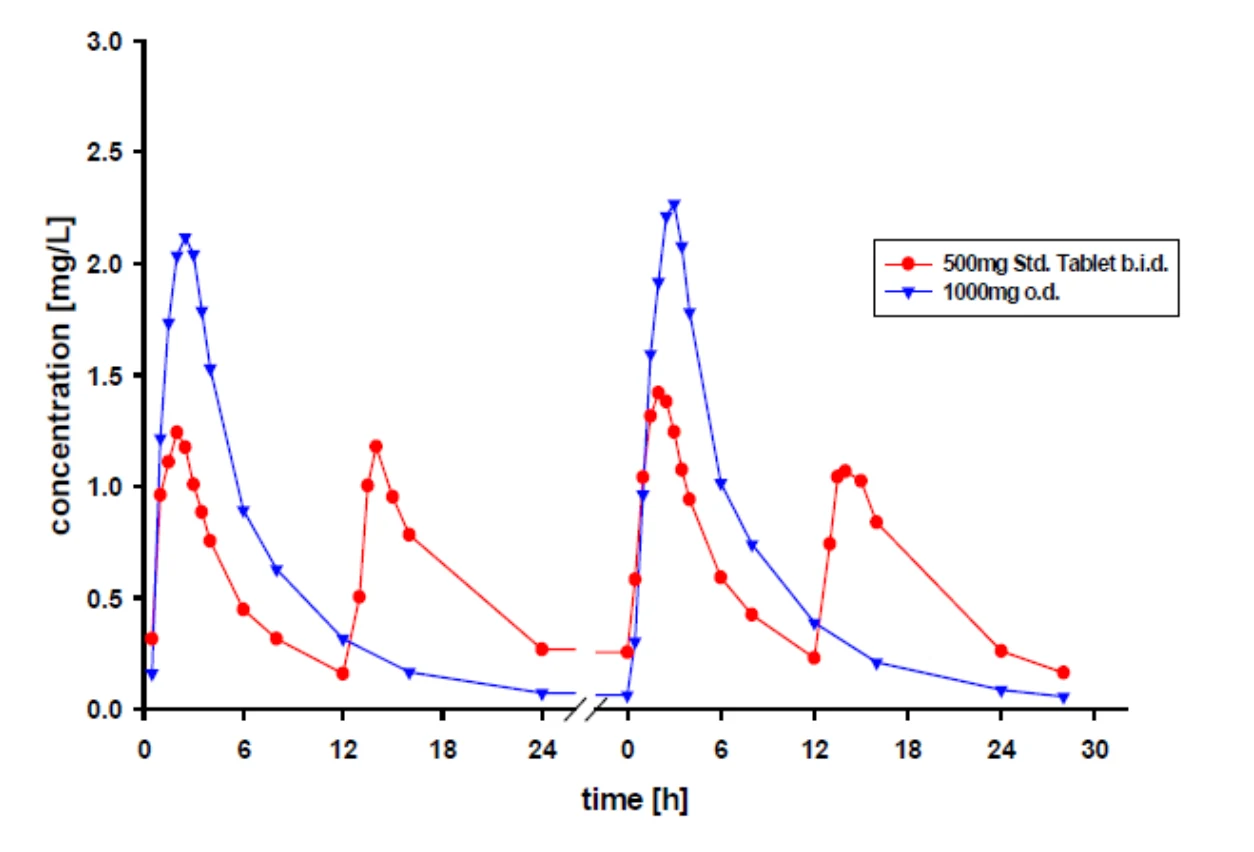
The relative bioavailability of CIPRO XL 1000 mg compared to CIPRO 500 mg tablet bid was examined in a crossover study of 20 healthy male volunteers under fasted conditions. Mean concentrations for Day 1 are shown in Figure 1.
Figure 1: Relative Bioavailability of CIPRO XL 1000 mg vs. CIPRO 500 mg BID
The pharmacokinetics of CIPRO XL are not altered by coadministration with food. AUC values were comparable following administration of CIPRO XL with a high-fat meal, a low fat meal, or under fasted conditions (see 10 CLINICAL PHARMACOLOGY, Detailed Human Pharmacology) (see Table 6).
Table 6: Pharmacokinetics of CIPRO XL 500 mg (Ciprofloxacin Hydrochloride and Ciprofloxacin Extended Release Tablets) Under Fed and Fasted Conditions
| Parameter | Fed | Fasted | Ratio (Fed/Fasted) | 90% CI |
| AUC (mg*h/L)a | 7.12 (21%) | 7.05 (36%) | 1.01 | 0.89 - 1.15 |
| Cmax (mg/L) a | 1.30 (26%) | 1.34 (42%) | 0.97 | 0.79 - 1.18 |
| tmax (h)b | 3.5 (1.5 - 4.0) | 1.5 (0.5 - 3.5) | Not evaluated | |
- a Geometric mean (% CV)
- b Median (range)
Distribution:
In one study, the apparent volume of distribution (Vdarea) of CIPRO was estimated from kinetic data recorded after oral doses and found to be approximately 3.5 L/kg. Studies with the oral and intravenous forms of ciprofloxacin have demonstrated penetration of ciprofloxacin into a variety of tissues. A single dose study in healthy subjects has demonstrated penetration of ciprofloxacin into prostate tissue following administration of CIPRO XL 1000 mg. One and three hours after dosing, mean ciprofloxacin concentrations were
 |
greater than 4 μg/g. The binding of ciprofloxacin to serum proteins is 20% to 40%, which is not likely to be high enough to cause significant protein binding interactions with other drugs. Following administration of a single dose of CIPRO XL (500 mg or 1000 mg), ciprofloxacin concentrations in urine, collected up to 4 hours after dosing, averaged over 300 mg/L and over 500 mg/L, respectively; in urine excreted from 12 to 24 hours after dosing, ciprofloxacin concentration averaged 27 mg/L for CIPRO XL 500 mg and 58 mg/L for CIPRO XL 1000 mg (see 10 CLINICAL PHARMACOLOGY, Detailed Human Pharmacology).
Metabolism:
Four metabolites of ciprofloxacin were identified in human urine. The primary metabolites are oxociprofloxacin (M3) and sulfociprofloxacin (M2), each accounting for roughly 3% to 8% of the total dose. Other minor metabolites are desethylene ciprofloxacin (M1) and formylciprofloxacin (M4). The relative proportion of drug and metabolite in serum corresponds to the composition found in urine. Excretion of these metabolites was essentially complete by 24 hours after dosing (see 10 CLINICAL PHARMACOLOGY, Detailed Human Pharmacology).
Elimination:
The elimination kinetics of ciprofloxacin are similar for CIPRO XL and CIPRO (immediate release formulation). The mean serum elimination half-life (t1/2) of CIPRO XL (ciprofloxacin hydrochloride and ciprofloxacin extended release tablets) is 6.6 (± 1.4) hours and 6.3 (± 0.7) hours, for the 500 mg and 1000 mg tablets, respectively (see 10 CLINICAL PHARMACOLOGY, Detailed Human Pharmacology). The major route of elimination of ciprofloxacin in humans is as unchanged drug in urine.
Special Populations and Conditions
Geriatrics
No dosage adjustment based on age alone is necessary for elderly patients. Pharmacokinetic studies of the immediate-release oral tablet (single dose) and intravenous (single and multiple dose) forms of ciprofloxacin indicate that plasma concentrations of ciprofloxacin are higher in elderly subjects (>65 years) as compared to young adults. Cmax is increased 16% to 40%, and mean AUC is increased approximately 30%, which can be at least partially attributed to decreased renal clearance in the elderly. Elimination half-life is only slightly (~20%) prolonged in the elderly (see 10 CLINICAL PHARMACOLOGY, Detailed Human Pharmacology).
Since ciprofloxacin is substantially excreted by the kidney, the risk of adverse reactions may be greater in patients with impaired renal function. No significant accumulation of ciprofloxacin is anticipated in elderly subjects with renal impairment who take CIPRO XL 500 mg, therefore, no reductions in dosage are required.
However, in patients with renal impairment where CIPRO XL 1000 mg once daily is the appropriate dose, dosage may need to be reduced to CIPRO XL 500 mg once daily (see 4 DOSAGE AND ADMINISTRATION, Special Populations: Renal Impairment).
Hepatic Insufficiency
In preliminary studies in patients with stable chronic liver cirrhosis (with mild to moderate hepatic impairment), no significant changes in ciprofloxacin pharmacokinetics were observed. The kinetics of ciprofloxacin in patients with acute hepatic insufficiency and stable chronic cirrhosis (with severe hepatic impairment), however, have not been elucidated. An increased incidence nausea, vomiting, headache and diarrhea were observed in this patient population (see 10 CLINICAL PHARMACOLOGY, Detailed Human Pharmacology).
In a study of 7 cirrhotic patients and healthy volunteers given CIPRO 750 mg every 12 hours for a total of nine doses followed by a 1-week washout and then a 30-minute infusion of CIPRO I.V. 200 mg, there was no difference in pharmacokinetics between patients with stable chronic cirrhosis (with mild to moderate hepatic impairment) and healthy volunteers.
Renal Insufficiency
In patients with reduced renal function, the half-life of ciprofloxacin is slightly prolonged. Since the total drug exposure attained with CIPRO XL 500 mg does not exceed that achieved with CIPRO 500 mg tablets (immediate release formulation), which is approved as a total daily dose for use in renally impaired patients, no dosage adjustment for renal disease is required with CIPRO XL 500 mg.
For complicated urinary tract infections or acute uncomplicated pyelonephritis, where 1000 mg is the appropriate dose, the dosage of CIPRO XL should be reduced to 500 mg CIPRO XL once daily in patients with creatinine clearance below 30 mL/min (see 4 DOSAGE AND ADMINISTRATION, Special Populations: Renal Impairment).
Detailed Human Pharmacology
Pharmacokinetics
Absorption
CIPRO XL (ciprofloxacin hydrochloride and ciprofloxacin extended release tablets) are formulated to release drug at a slower rate compared to CIPRO, which are immediate release tablets. Approximately 35% of the ciprofloxacin dose in CIPRO XL is contained within an immediate release component, while the remaining 65% is contained in a slow-release matrix.
The relative bioavailability of CIPRO XL as compared to CIPRO, and also the effect of food on the pharmacokinetics of CIPRO XL, have been discussed under Action and Clinical Pharmacology (see 10 CLINICAL PHARMACOLOGY, 10.3 Pharmacokinetics, Absorption:).
Distribution
In one study, the apparent volume of distribution (Vdarea) of CIPRO was estimated from kinetic data recorded after oral doses and found to be approximately 3.5 L/kg. Studies with the oral and intravenous forms of CIPRO have demonstrated penetration of ciprofloxacin into a variety of tissues. A single dose study in healthy subjects has demonstrated penetration of ciprofloxacin into prostate tissue following administration of CIPRO XL 1000 mg. One and three hours after dosing, mean ciprofloxacin concentrations in the prostate were 4.75 ± 1.3 μg/g and 4.29 ± 1.61 μg/g, respectively. The binding of ciprofloxacin to serum proteins is 20% to 40%, which is not likely to be high enough to cause significant protein binding interactions with other drugs. Following administration of a single dose of CIPRO XL (500 mg or 1000 mg), ciprofloxacin concentrations in urine, collected up to 4 hours after dosing, averaged over 300 mg/L and over 500 mg/L, respectively; in urine excreted from 12 to 24 hours after dosing, ciprofloxacin concentration averaged 27 mg/L for CIPRO XL 500 mg and 58 mg/L for CIPRO XL1000 mg.
The following table (Table 7) compares the mean concentrations in urine at steady state during different collection intervals for CIPRO XL and CIPRO bid.
Table 7: Concentration of Ciprofloxacin in Urine at Steady State
| Mean Concentration (Range) (mg/L) | ||||||
|---|---|---|---|---|---|---|
| Collection Interval | CIPRO XL 500 mg | CIPRO bid 250 mg | ||||
| 0 - 4 h | 368 (73 - 968) | 196 (49 - 371) | ||||
| 4 - 8 h | 166 (30 - 298) | 82 (19 - 231) | ||||
| 8 - 12 h | 53 (15 - 143) | 31 (6 - 77) | ||||
| 12 - 24 h | 30 (8 - 71) | 128 (43 - 231) | ||||
| Collection Interval | CIPRO XL 1000 mg | CIPRO bid 500 mg | ||||
| 0 - 4 h | 589 (108 - 3030) | 272 (98 - 762) | ||||
| 4 - 8 h | 359 (26 - 1991) | 136 (34 - 288) | ||||
| 8 - 12 h | 160 (36 - 843) | 59 (20 - 151) | ||||
| 12 - 24 h | 65 (5 - 204) | 231 (80 - 864) | ||||
Metabolism
Four metabolites of ciprofloxacin were identified in human urine. The primary metabolites are oxociprofloxacin (M3) and sulfociprofloxacin (M2), each accounting for roughly 3% to 8% of the total dose. Other minor metabolites are desethylene ciprofloxacin (M1), and formylciprofloxacin (M4). The relative proportion of drug and metabolite in serum corresponds to the composition found in urine. Excretion of these metabolites was essentially complete by 24 hours after dosing.
Following the oral administration of a single 259 mg dose of 14C-labeled ciprofloxacin to six healthy male volunteers (age: 25.0 ± 1.46 years; weight: 70.0 ± 3.39 kg), approximately 94% of the dose was recovered in the urine and feces over five days. Most of the radioactivity was recovered in the urine (55.4%). Unchanged ciprofloxacin was the major radioactive moiety identified in both urine and feces, accounting for 45% and 25% of the dose, respectively. Total (urine and feces) excretion of all metabolites was 18.8%.
Elimination
The elimination kinetics of ciprofloxacin are similar for CIPRO XL and CIPRO (immediate release formulation). The mean serum elimination half-life (t1/2) of CIPRO XL (ciprofloxacin hydrochloride and ciprofloxacin extended release tablets) is 6.6 (± 1.4) hours, and 6.3 (± 0.7) hours for the 500 mg and 1000 mg tablets, respectively. The major route of elimination of ciprofloxacin in humans is as unchanged drug in urine.
In studies comparing the CIPRO XL and CIPRO bid regimens (CIPRO XL 500 mg vs CIPRO 250 mg bid and CIPRO XL 1000 mg vs CIPRO 500 mg bid), approximately 35% of an orally administered dose was excreted in the urine as unchanged drug for both formulations. The urinary excretion of ciprofloxacin is virtually complete within 24 hours after dosing. The renal clearance of ciprofloxacin, which is approximately 300 mL/minute, exceeds the normal glomerular filtration rate of 120 mL/minute. Thus, active tubular secretion would seem to play a significant role in its elimination. Co-administration of probenecid with immediate release ciprofloxacin results in about a 50% reduction in the ciprofloxacin renal clearance and a 50% increase its concentration in the systemic circulation.
Although bile concentrations of ciprofloxacin are several folds higher than serum concentrations after oral dosing with the immediate release tablet, only a small amount of the dose administered is recovered from the bile as unchanged drug. An additional 1% to 2% of the dose is recovered from the bile in the form of metabolites. Approximately 20% to 35% of an oral dose of immediate release ciprofloxacin is recovered from the feces within 5 days after dosing. This may arise from either biliary clearance or transintestinal elimination.
Special Populations
Renal Impairment
Ciprofloxacin is eliminated primarily by renal excretion; however, the drug is also metabolized and partially cleared through the biliary system of the liver and through the intestine. These alternate pathways of drug elimination appear to compensate for the reduced renal excretion in patients with renal impairment. In patients with reduced renal function, the half-life of ciprofloxacin is slightly prolonged. Since the total drug exposure attained with CIPRO XL 500 mg does not exceed that achieved with CIPRO 500 mg (immediate release formulation) which is approved as a total daily dose for use in renally impaired patients, no dosage adjustment for renal disease is required for CIPRO XL 500 mg.
For complicated urinary tract infections or acute uncomplicated pyelonephritis, where 1000 mg is the appropriate dose, the dosage of CIPRO XL should be reduced to 500 mg CIPRO XL once daily in patients with creatinine clearance below 30 mL/min.
Since ciprofloxacin is eliminated primarily by the kidney, a change in pharmacokinetics is to be expected depending on the degree of impairment of renal function.
The pharmacokinetics of ciprofloxacin following a single oral dose of 250 mg in 6 patients (5 male, 1 female, age: 51 ± 9 years) with normal renal function (see Group I, Table 8) were compared to 6 patients (3 male, 3 female, age: 63 ± 6 years) with renal impairment (see Group II, Table 8) and to 5 patients (2 male, 3 female, age: 63 ± 6 years) with end-stage renal failure, treated by haemodialysis (see Group III, Table 8). Patients with renal insufficiency had significantly increased AUCs, prolonged (about 2-fold) elimination half-lives, and decreased renal clearances.
Haemodialysis resulted in a minimal decrease in plasma levels. From the dialysate concentrations, it can be estimated that no more than 2% of the dose was removed by dialysis over 4 hours, which was less than the amount lost in the urine over 24 hours in patients of Group II (see Table 11).
Table 8: Mean Pharmacokinetic Parameters for CIPRO Following a Single 250 mg Oral Dose in Healthy Volunteers and in Patients With Renal Insufficiency
| Group | Creatinine Clearance (mL/min/1.73 m²) | Parameter | ||||||
|---|---|---|---|---|---|---|---|---|
| Cmax (mg/L) | tmax (h) | Half-life (h) | Total AUC (mg*h/mL) | Renal Clearance (mL/min) | % Dose Urinary Recovery 0-24 h | |||
| I | > 60 | 1.52 (± 0.21) | 1.0 (± 0.0) | 4.4 (±0.2) | 6.94 (± 0.97) | 232.9 (± 44.8) | 37.0 (± 3.7) | |
| II | < 20 | 1.70 (± 0.41) | 1.7 (± 0.5) | 8.7 (±0.9) | 14.36 (± 3.5) | 18.3 (± 3.5) | 5.3 (± 1.7) | |
| III | End-Stage Renal Failure Treated by Hemodialysis | 2.07 (± 0.23) | 1.6 (± 0.2) | 5.8 (± 0.9) | 15.87 (± 2.0) | |||
Hepatic Impairment
In preliminary studies in patients with stable chronic liver cirrhosis (with mild to moderate hepatic impairment), no significant changes in ciprofloxacin pharmacokinetics have been observed. No dosage adjustment is required with CIPRO XL in patients with stable chronic cirrhosis (with mild to moderate hepatic impairment). The kinetics of ciprofloxacin in patients with acute hepatic insufficiency and stable chronic cirrhosis (with severe hepatic impairment), however, have not been elucidated.
In a study of 7 cirrhotic patients and healthy volunteers given CIPRO 750 mg every 12 hours for a total of nine doses followed by a 1-week washout and then a 30-minute infusion of CIPRO I.V. 200 mg, there was no difference in pharmacokinetics between patients with stable chronic cirrhosis (with mild to moderate hepatic impairment) and healthy volunteers.
Elderly
No dosage adjustment based on age alone is necessary for elderly patients. Pharmacokinetic studies of immediate release oral tablet (single dose) and intravenous (single and multiple dose) forms of ciprofloxacin indicate that plasma concentrations of ciprofloxacin are higher in elderly subjects (> 65 years) as compared to young adults. Cmax is increased 16% to 40% and mean AUC is increased approximately 30%, which can be at least partially attributed to decreased renal clearance in the elderly. Elimination half-life is only slightly (-20%) prolonged in the elderly.
Ciprofloxacin is substantially excreted by the kidney and the risk of adverse reactions may be greater in patients with impaired renal function. No significant accumulation of ciprofloxacin is anticipated in elderly subjects with renal impairment who take CIPRO XL 500 mg, therefore, no reductions in dosage are required.
However, in patients with renal impairment, where CIPRO XL 1000 mg once daily is the appropriate dose, dosage may need to be reduced to CIPRO XL 500 mg once daily (see PART I: HEALTH PROFESSIONAL INFORMATION, 4 DOSAGE AND ADMINISTRATION, Special Populations: Renal Impairment).
In 4 females and 6 males, (age: 67 ± 4 years, weight: 65 ± 6 kg) with normal renal function for their age, given a single oral dose of CIPRO 250 mg, maximum ciprofloxacin serum concentrations and areas under the serum concentration time curves were significantly higher than in 10 younger male volunteers (age: 24 ± 3 years, weight: 72 ± 9 kg). The time to peak serum concentrations, overall elimination half-life and urinary recovery of ciprofloxacin were similar in both age groups (see Table 9).
Table 9: Comparison of Pharmacokinetic Parameters Between Healthy Elderly and Healthy Younger Volunteers With CIPRO 250 mg
| Parameter | Elderly Volunteers (Mean ± SD) | Younger Volunteers (Mean ± SD) |
|---|---|---|
| Cmax (mg/L) | 1.8 ± 0.5 | 1.3 ± 0.4 |
| tmax (h) | 1.2 ± 0.3 | 1.2 ± 0.1 |
| t½ (h) | 3.7 ± 0.9 | 3.3 ± 0.6 |
| Total AUC (mg•h/L) | 7.25 ± 2.45 | 5.29 ± 1.21 |
| % Dose Urinary Recovery after 24 hours | 43 | 43 |
Serum Protein Binding
Serum protein binding of ciprofloxacin is between 20% to 40%.
Tissue Concentrations
In one study, the apparent volume of distribution (Vdarea) of ciprofloxacin was estimated from the kinetic data recorded after oral doses and found to be approximately 3.5 L/kg, which suggests substantial tissue penetration.
11 STORAGE, STABILITY AND DISPOSAL
Store at 15°C to 30°C (56-86°F).
12 SPECIAL HANDLING INSTRUCTIONS
There are no special handling requirements for this product.
PART II: SCIENTIFIC INFORMATION
13 PHARMACEUTICAL INFORMATION
Drug Substance
| Proper name: | Ciprofloxacin hydrochloride (USP) |
| Chemical name: | 1-cyclopropyl-6-fluoro-1, 4-dihydro-4-oxo-7-(1-piperazinyl)-3-quinolinecarboxylic acid hydrochloride monohydrate |
| Molecular formula: | C17H18FN3O3 • HCl • H2O, 385.8 |
| Structural formula: | 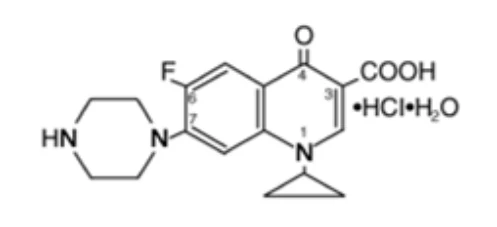 |
| Physicochemical properties: | Ciprofloxacin hydrochloride is a pale yellow crystalline powder. It is soluble in water. Its solubility in an aqueous buffer of pH 7.4 at 21°C is 0.19 g/L, while the solubility is considerably higher at slightly acidic or slightly alkaline pH. At 140°C water of crystallization is lost. At 307°C decomposition takes place. The pH of ciprofloxacin hydrochloride is between 3 and 4.5 in a solution (1 in 40). The pKa1 is 6.5 and pKa2 is 8.9 determined using a 3 x 10⁻⁴ M solution of 25°C. |
| Proper name: | Ciprofloxacin (Bayer standard) |
| Chemical name: | 1-cyclopropyl-6-fluoro-1,4-dihydro-4-oxo-7-(piperazinyl)-3-quinolinecarboxylic acid |
| Molecular formula and molecular mass: | C17H18FN3O3, 331.4 |
| Structural formula: | |
| Physicochemical properties: | Ciprofloxacin is a pale yellow to white crystalline powder which is soluble in dilute (0.1 N) hydrochloric acid and is practically insoluble in water and ethanol. Decomposition occurs between 261°C - 265°C. pH of ciprofloxacin is 7.6 at 0.1 g/L water at 20°C. It has a pKa1 of 6.5 and pKa2 of 8.9 determined using a 3 x 10⁻⁴M solution at 25°C. |
14 CLINICAL TRIALS
Uncomplicated Urinary Tract Infections (acute cystitis)
CIPRO XL was evaluated for the treatment of uncomplicated urinary tract infections (acute cystitis) in females in a prospective, randomized, double-blind, multicentre, clinical trial. This study compared CIPRO XL (500 mg once daily for three days) with CIPRO (250 mg bid for three days). Of the 905 patients enrolled, 452 were randomly assigned to the CIPRO XL treatment group and 453 were randomly assigned to the control group. The primary efficacy variable was bacteriologic eradication at Test of Cure (TOC; Day 4-11 Post Therapy).
The bacteriologic eradication and clinical success rates were similar between CIPRO XL and the control group. The eradication and clinical success rates and their corresponding 95% confidence intervals for the differences between rates (CIPRO XL minus control CIPRO group) are given in Table 10 below:
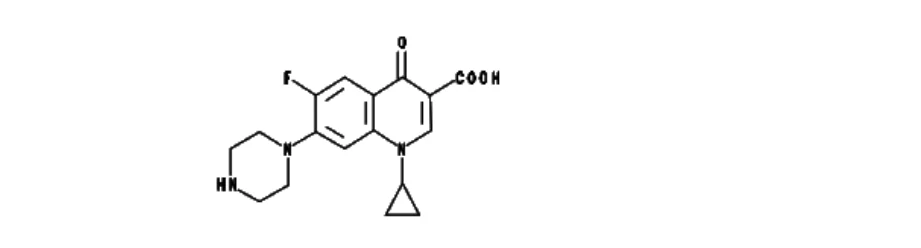 |
Table 10: Clinical and Bacteriologic Response at Test of Cure
CIPRO XL 500 mg Once Daily x 3 Days | CIPRO 250 mg bid x 3 Days | |||
|---|---|---|---|---|
| Randomized Patients | 452 | 453 | ||
| Per Protocol Patientsa | 199 | 223 | ||
| Clinical Success at TOC (n/N)b | 189/199 (95.0%) | 204/ 223 (91.5%) | ||
| CI [-1.6%, 7.1%] | ||||
| Bacteriologic Eradication at TOC (n/N) b | 188/199 (94.5%) | 209/223 (93.7%) | ||
| CI [-3.5%, 5.1%] | ||||
| Bacteriologic Eradication (by organism) at TOC (n/N) b | ||||
| E coli | 156/160 (97.5%) | 176/181 (97.2%) | ||
| E faecalis | 10/11 (90.9%) | 17/21 (81.0%) | ||
| P mirabilis | 11/12 (91.7%) | 7/7 (100%) | ||
| S saprophyticus | 5/6 (83.3) | 7/7 (100%) | ||
| K pneumoniae | 7/9 (77.8%)c | 11/14 (78.6%)c | ||
- a The presence of a pathogen at a level of ≥105 CFU/mL was required for microbiological evaluability criteria.
- b n/N = patients with pathogen eradicated/total number of patients
- c Eradication rate at Follow-up was 3/6 (50%) for CIPRO XL and 6/10 (60%) for CIPRO. This was due primarily to eradication with recurrence for this organism in both treatment groups.
Complicated Urinary Tract Infections and Acute Uncomplicated Pyelonephritis
CIPRO XL 1000 mg was evaluated for the treatment of complicated urinary tract infections and acute uncomplicated pyelonephritis in a large, randomized, double-blind, controlled clinical trial. This study compared CIPRO XL (1000 mg once daily for 7 to 14 days) with CIPRO (500 mg twice daily for 7 to 14 days). Of the 1,042 patients enrolled, 521 were randomly assigned to the CIPRO XL treatment group and 521 were randomly assigned to the control group. The primary efficacy variable was bacteriological eradication at Test of Cure (TOC; Day 5-11 Post Therapy).
The bacteriological eradication and clinical success rates were similar between CIPRO XL 1000 mg and the control group. The eradication and clinical success rates and their corresponding 95% confidence intervals for the differences between rates (CIPRO XL 1000 mg minus control CIPRO group) are given in Table 11.
Table 11: Clinical and Bacteriologic Response at Test of Cure
CIPRO XL 1000 mg Once Daily x 7-14 Days | CIPRO 500 mg bid x 7-14 Days | ||||||||||
|---|---|---|---|---|---|---|---|---|---|---|---|
| Randomized Patients | 521 | 521 | |||||||||
| Per Protocol Patientsa | 206 | 229 | |||||||||
| Clinical Success at TOC in cUTI and AUP combined (n/N)b | 198/206 (96.1%) | 211/ 229 (92.1%) | |||||||||
| CI [-1.2%, 6.9%] | |||||||||||
| Bacteriologic Eradication at TOC in cUTI and AUP combined (n/N)c | 183/206 (88.8%) | 195/229 (85.2%) | |||||||||
| CI [-2.4%, 10.3%] | |||||||||||
| cUTI | |||||||||||
| Clinical Success in cUTI at TOC (n/N) b | 159/166 (95.8%) | 161/177 (91.0%) | |||||||||
Bacteriologic Eradication (by organism) in cUTI at TOC (n/N)d | |||||||||||
| E coli | 91/94 (96.8%) | 90/92 (97.8%) | |||||||||
| K pneumoniae | 20/21 (95.2%) | 19/23 (82.6%) | |||||||||
| E faecalis | 17/17 (100%) | 14/21 (66.7%) | |||||||||
| P mirabilis | 11/12 (91.6%) | 10/10 (100%) | |||||||||
| P aeroginosa | 3/3 (100%) | 3/3 (100%) | |||||||||
| Bacteriologic Eradication Overall in cUTI at TOCe | 148/166 (89.2%) | 144/177 (81.4%) | |||||||||
| AUP | |||||||||||
| Clinical Success in AUP at TOC (n/N) b | 39/40 (97.5%) | 50/52 (96.2%) | |||||||||
| Bacteriologic Eradication of E coli in AUP at TOC (n/N) d | 35/36 (97.2%) | 41/41 (100%) | |||||||||
- a Patients excluded from the Per Protocol population were primarily those with no causative organism(s) at baseline or no organism present at ≥105 CFU/mL at baseline, inclusion criteria violation, no valid test-of-cure urine culture within the TOC window, an organism resistant to study drug, premature discontinuation due to an adverse event, lost to follow-up, or noncompliance with dosage regimen (among other criteria).
- b n/N - patients with clinical success or pathogen eradicated/total number of patients
- c n/N - patients with bacteriological eradication and no new infection /total number of patients
- d n/N - patients with specified baseline organism eradicated/patients with specified baseline organism
- e n/N - patients with specified baseline organism(s) eradicated and no new infections or superinfections/total number of patients
15 MICROBIOLOGY
Mechanism of Action
The bactericidal action of ciprofloxacin is achieved through inhibition of topoisomerase II (DNA gyrase) and topoisomerase IV (both Type II topoisomerases), which are required for bacterial DNA replication, transcription, repair, and recombination.
Drug Resistance
The mechanism of action of fluoroquinolones, including ciprofloxacin, is different from that of other antimicrobial agents such as beta-lactams, macrolides, tetracyclines, or aminoglycosides; therefore, microorganisms resistant to these classes of drugs may be susceptible to ciprofloxacin. There is no known cross-resistance between ciprofloxacin and other classes of antimicrobials. Resistance to ciprofloxacin in vitro develops slowly (multiple-step mutation).
Resistance to ciprofloxacin due to spontaneous mutations occurs at a general frequency of between <10-9 to 1x10⁻⁶.
Activity in vitro and in vivo
Ciprofloxacin has in vitro activity against a wide range of gram-negative and gram-positive microorganisms.
Ciprofloxacin is slightly less active when tested at acidic pH. The inoculum size has little effect when tested in vitro. The minimal bactericidal concentration (MBC) generally does not exceed the minimal inhibitory concentration (MIC) by more than a factor of 2.
Ciprofloxacin has been shown to be active against most strains of the following microorganisms, both in vitro and in clinical infections (see PART I: HEALTH PROFESSIONAL INFORMATION, 1 INDICATIONS).
| Aerobic gram-positive microorganisms |
| Enterococcus faecalis (Many strains are only moderately susceptible.) |
| Staphylococcus saprophyticus |
| Aerobic gram-negative microorganisms |
| Escherichia coli |
| Klebsiella pneumoniae |
| Proteus mirabilis |
| Pseudomonas aeruginosa |
The following in vitro data are available, but their clinical significance is unknown.
Ciprofloxacin exhibits in vitro minimum inhibitory concentrations (MICs) of 1 μg/mL or less against most (≥90%) strains of the following microorganisms; however, the safety and effectiveness of ciprofloxacin in treating clinical infections due to these microorganisms have not been established in adequate and well-controlled clinical trials.
Aerobic gram-negative microorganisms
Citrobacter koseri
Citrobacter freundii
Edwardsiella tarda
Enterobacter aerogenes
Enterobacter cloacae
Klebsiella oxytoca
Morganella morganii
Proteus vulgaris
Providencia rettgeri
Providencia stuartii
Serratia marcescens
Susceptibility Tests
Dilution Techniques: Quantitative methods are used to determine antimicrobial minimal inhibitory concentrations (MICs). These MICs provide estimates of the susceptibility of bacteria to antimicrobial compounds. The MICs should be determined using a standardized procedure. Standardized procedures are based on a dilution method (1) (broth or agar) or equivalent with standardized inoculum concentrations and standardized concentrations of ciprofloxacin. The MIC values should be interpreted according to the criteria outlined in Table 12.
Diffusion Techniques: Quantitative methods that require measurement of zone diameters also provide reproducible estimates of the susceptibility of bacteria to antimicrobial compounds. One such standardized procedure (2) requires the use of standardized inoculum concentrations. This procedure uses paper disks impregnated with 5 μg ciprofloxacin to test the susceptibility of microorganisms to ciprofloxacin.
Reports from the laboratory providing results of the standard single disk susceptibility test with a 5-μg ciprofloxacin disk should be interpreted according to the criteria outlined in Table 12. Interpretation involves correlation of the diameter obtained in the disk test with the MIC for ciprofloxacin.
Table 12: Susceptibility Interpretive Criteria for Ciprofloxacin
MIC (μg/mL) | Zone Diameter (mm) | |||||||||||
| Species | S | I | R | S | I | R | ||||||
| Enterobacteriacae | ≤1 | 2 | ≥4 | ≥21 | 16-20 | ≤15 | ||||||
| Enterococcus faecalis | ≤1 | 2 | ≥4 | ≥21 | 16-20 | ≤15 | ||||||
| Pseudomonas aeruginosa | ≤1 | 2 | ≥4 | ≥21 | 16-20 | ≤15 | ||||||
| Staphylococcus saprophyticus | ≤1 | 2 | ≥4 | ≥21 | 16-20 | ≤15 | ||||||
Abbreviations: I = Intermediate; MIC = minimal inhibitory concentration; μg = microgram; mL = milliliter; mm = millimeter; R = Resistant; S = Susceptible
A report of “Susceptible” indicates that the pathogen is likely to be inhibited if the antimicrobial compound in the blood reaches the concentrations usually achievable. A report of “Intermediate” indicates that the result should be considered equivocal, and, if the microorganism is not fully susceptible to alternative, clinically feasible drugs, the test should be repeated. This category implies possible clinical applicability in body sites where the drug is physiologically concentrated or in situations where high dosage of drug can be used. This category also provides a buffer zone which prevents small uncontrolled technical factors from causing major discrepancies in interpretation. A report of “Resistant” indicates that the pathogen is not likely to be inhibited if the antimicrobial compound in the blood reaches the concentrations usually achievable; other therapy should be selected.
Quality Control: Standardized susceptibility test procedures require the use of laboratory control microorganisms to control the technical aspects of the laboratory procedures. For dilution technique, standard ciprofloxacin powder should provide the MIC values according to criteria outlined in Table 13. For diffusion technique, the 5 μg ciprofloxacin disk should provide the zone diameters outlined in Table 13.
Table 13: Quality Control for Susceptibility Testing
| Strains | MIC range (μg/mL) | Zone Diameter (mm) |
| Enterococcus faecalis ATCC 29212 | 0.25-2 | - |
| Escherichia coli ATCC 25922 | 0.004-0.015 | 30-40 |
| Pseudomonas aeruginosa ATCC 27853 | 0.25-1.0 | 25-33 |
| Staphylococcus aureus ATCC 29212 | 0.12-0.5 | - |
| Staphylococcus aureus ATCC 25923 | - | 22-30 |
Abbreviations: ATCC = American Type Culture Collection; MIC = minimal inhibitory concentration; μg = microgram; mL = milliliter; mm = millimeter
16 NON-CLINICAL TOXICOLOGY
Acute Toxicity
Table 14: LD50 (mg/kg) across species
| Species | Mode of Administration | LD50 (mg/kg) |
| Mouse | PO | Approx. 5000 |
| Rat | PO | Approx. 5000 |
| Rabbit | PO | Approx. 2500 |
| Mouse | I.V. | Approx. 290 |
| Rat | I.V. | Approx. 145 |
| Rabbit | I.V. | Approx. 125 |
| Dog | I.V. | Approx. 250 |
Chronic Toxicity
Subacute Tolerability Studies Over 4 Weeks
Oral administration: Doses up to and including 100 mg/kg were tolerated without damage by rats. Pseudoallergic reactions due to histamine release were observed in dogs.
Parenteral administration: In the highest-dose group in each case (rats 80 mg/kg and monkeys 30 mg/kg), crystals containing ciprofloxacin were found in the urine sediment. There were also changes in individual renal tubules, with typical foreign-body reactions due to crystal-like precipitates. These changes are considered secondary inflammatory foreign-body reactions due to the precipitation of a crystalline complex in the distal renal tubule system.
Subchronic Tolerability Studies Over 3 Months
Oral administration: All doses up to and including 500 mg/kg were tolerated without damage by rats. In monkeys, crystalluria and changes in the renal tubules were observed in the highest-dose group (135 mg/kg).
Parenteral administration: Although the changes in the renal tubules observed in rats were in some cases very slight, they were present in every dose group. In monkeys they were found only in the highest-dose group (18 mg/kg) and were associated with slightly reduced erythrocyte counts and hemoglobin values.
Chronic Tolerability Studies Over 6 Months
Oral administration: Doses up to and including 500 mg/kg and 30 mg/kg were tolerated without damage by rats and monkeys, respectively. Changes in the distal renal tubules were again observed in some monkeys in the highest-dose group (90 mg/kg).
Parenteral administration: In monkeys slightly elevated urea and creatinine concentrations and changes in the distal renal tubules were recorded in the highest-dose group (20 mg/kg).
Carcinogenicity
In carcinogenicity studies in mice (21 months) and rats (24 months) with doses up to approximately 1000 mg/kg bw/day in mice and 125 mg/kg bw/day in rats (increased to 250 mg/kg bw/day after 22 weeks), there was no evidence of a carcinogenic potential at any dose level.
Reproductive Toxicology
Fertility studies in rats:
Fertility, the intrauterine and postnatal development of the young, and the fertility of F1 generation were not affected by ciprofloxacin.
Embryotoxicity studies:
These yielded no evidence of any embryotoxic or teratogenic action of ciprofloxacin.
Perinatal and postnatal development in rats:
No effects on the perinatal or postnatal development of the animals were detected. At the end of the rearing period histological investigations did not bring to light any sign of articular damage in the young.
Mutagenesis
Eight in vitro mutagenicity tests have been conducted with ciprofloxacin. Test results are listed below:
- Salmonella: Microsome Test (Negative)
- E. coli: DNA Repair Assay (Negative)
- Mouse Lymphoma Cell Forward Mutation Assay (Positive)
- Chinese Hamster V79 Cell HGPRT Test (Negative)
- Syrian Hamster Embryo Cell Transformation Assay (Negative)
- Saccharomyces cerev.: Point Mutation Assay (Negative)
- Mitotic Crossover and Gene Conversion Assay (Negative)
- Rat Hepatocyte Primary Culture DNA Repair Assay (LIDS) (Positive)
Two of the eight tests were positive, but results of the following four in vivo test systems gave negative results:
- Rat Hepatocyte DNA Repair Assay
- Micronucleus Test (Mice)
- Dominant Lethal Test (Mice)
- Chinese Hamster Bone Marrow
Although two of the eight in vitro assays (ie, the Mouse Lymphona Cell Forward Mutation Assay and the Rat Hepatocyte Primary Culture DNA Repair Assay [LIDS]) were positive, all of the in vivo test systems covering all relevant endpoints gave negative results.
Special Tolerability Studies
It is known from comparative studies in animals, both with the older gyrase inhibitors (eg, nalidixic and pipemidic acid) and the more recent ones (eg, norfloxacin and ofloxacin), that this substance class produces a characteristic damage pattern. Kidney damage, cartilage damage in weight-bearing joints of immature animals, and eye damage may be encountered.
Renal tolerability studies
The crystallization observed in the animal studies occurred preferentially under pH conditions that do not apply in man.
Compared to rapid infusion, a slow infusion of ciprofloxacin reduces the danger of crystal precipitation.
The precipitation of crystals in renal tubules does not immediately and automatically lead to kidney damage. In the animal studies, damage occurred only after high doses, with correspondingly high levels of crystalluria. For example, although they always caused crystalluria, even high doses were tolerated over 6 months without damage and without foreign body reactions occurring in individual distal renal tubules.
Damage to the kidneys without the presence of crystalluria has not been observed. The renal damage observed in animal studies must not, therefore, be regarded as a primary toxic action of ciprofloxacin on the kidney tissue, but as typical secondary inflammatory foreign-body reactions due to the precipitation of a crystalline complex of ciprofloxacin, magnesium, and protein.
Articular tolerability studies
As it is also known for other gyrase inhibitors, ciprofloxacin causes damage to the large, weight bearing joints in immature animals.
The extent of the cartilage damage varies according to age, species, and dose; the damage can be reduced by taking the weight off the joints. Studies with mature animals (rat, dog) revealed no evidence of cartilage lesions.
Retina tolerability studies
Ciprofloxacin binds to the melanin containing structures including the retina. Potential effects of ciprofloxacin on the retina were assessed in various pigmented animal species. Ciprofloxacin treatment had no effect on the morphological structures of the retina and on electroretinographic findings.
Detailed Animal Pharmacology
Effects on Histamine Release
Ciprofloxacin was administered intravenously to 9 anaesthetized dogs (initially with thiopental sodium at 25 mg/kg IV, followed by continuous infusion of a mixture of fentanyl 0.04 mg/kg/h and dehydrobenzperidol 0.25 mg/kg/h) at a single dose of 3, 10 or 30 mg/kg. Ciprofloxacin treatment resulted in circulatory changes similar to those caused by histamine release. These were reductions in blood pressure, cardiac output and maximum rate of pressure increase in the left ventricle (dp/dt max), and increase in heart rate. This histamine-liberating effect was counteracted by the simultaneous intravenous administration of 0.01 mg/kg pyrilamine maleate. No signs of histamine liberation were observed on conscious animals.
In vitro experiments on isolated rat mast cells also indicate that ciprofloxacin at concentrations of 0.1 to 100 mg/L has histamine liberating properties.
Bronchodilatory Effects
Ciprofloxacin was tested on isolated guinea-pig trachea at concentrations of 0.0001 to 10 mg/L. It produced a dose-related small but significant relaxation of respiratory airway smooth muscle. It has, however, no effect on leukotriene D4 and histamine-induced contractions at these doses.
Central Nervous System (CNS) Effects
Ciprofloxacin was administered orally to 4 groups of 1 cat each under chloralose-urethane anaesthesia at doses of 0, 10, 20, and 100 mg/kg. No effects were observed on neuromuscular transmission, flexor reflex, or blood pressure.
Gastrointestinal Effects
Ciprofloxacin was administered orally to 4 groups of 20 mice each at doses of 0, 10, 30, and 100 mg/kg, 40 minutes prior to a 15% charcoal suspension. No effect was observed in intestinal charcoal transit time. When given to 3 groups of 20 rats each at doses of 0, 30 or 100 mg/kg, no gastric lesions were observed on sacrificing the animals after 5 hours.
When given intraduodenally to 3 groups of 8 rats each at doses of 0, 10, and 100 mg/kg, no increase in basal gastric acid secretion was observed on perfusion of the stomach.
Effect on Blood Glucose and Serum Triglycerides
Four groups of six fasting rats each were given intravenous injections of 0, 3, 10, and 30 mg/kg respectively. A slight but significant increase in blood glucose concentrations 60 minutes and 240 minutes post dose was observed in the 3 and 10 mg/kg groups but not in the 30 mg/kg group in comparison to controls.
At 60 minutes post dose, the serum triglyceride concentrations were slightly but significantly reduced in all three groups. This effect was not dose-related. At 120 minutes, the concentration was slightly elevated in the 30 mg/kg group.