


Product Monograph - Clotrimazole External Cream
1 INDICATIONS
Clotrimazole Vaginal 6 (clotrimazole) is indicated for the 6-day treatment of vaginal candidiasis.
Clotrimazole Vaginal 3 (clotrimazole) is indicated for the 3-day treatment of vaginal candidiasis.
Clotrimazole External Cream (clotrimazole), Clotrimazole External Antifungal Cream (Clotrimazole), Clotrimazole Extra Strength External Antifungal Cream (clotrimazole) are indicated for topical treatment of external irritation causes by vulvovaginal candidiasis.
1.1 Pediatrics
Pediatrics (>12 years of age): Based on the data submitted and reviewed by Health Canada, the safety and efficacy of Clotrimazole in pediatric patients (>12 years of age) has been established. Therefore, Health Canada has authorized an indication for pediatric (>12 years of age) use.
2 CONTRAINDICATIONS
Clotrimazole is contraindicated in patients who are hypersensitive to this drug or to any ingredient in the formulation, including any on-medicinal ingredient, or component of the container. For a complete listing, see 6 DOSAGE FORMS, COMPOSITION AND PACKAGING.
4 DOSAGE AND ADMINISTRATION
4.1 Dosing Considerations
Vaginal Candidiasis may be accompanied by irritation in the vaginal area. Therefore, concomitant local treatment with Clotrimazole vaginal creams, (or Clotrimazole external creams) applied to the irritated vaginal area and as far as the anal region twice a day is advisable. Clotrimazole external creams (or Clotrimazole vaginal creams) applied on the glans penis may prevent re-infection by the partner.
The cream should be inserted deep intravaginally by means of the applicator (See 7 WARNINGS AND PRECAUTIONS). The plunger should then be depressed slowly.
General hygienic measures such as twice daily tub baths and avoidance of tight underclothing are important in vaginal infections.
4.2 Recommended Dose and Dosage Adjustment
Clotrimazole Vaginal 6
The recommended daily dose is ONE full applicator intravaginally for SIX consecutive days, preferably at bedtime.
Clotrimazole Vaginal 3
The recommended daily dose is ONE full applicator intravaginally for THREE consecutive days, preferably at bedtime.
Clotrimazole External Cream, Clotrimazole External Antifungal Cream, Clotrimazole Extra Strength External Antifungal Cream
The cream should be spread onto the irritated area once or twice daily as needed, for up to seven consecutive days.
5 OVERDOSAGE
| For management of a suspected drug overdose, contact your regional Poison Control Centre. |
|---|
6 DOSAGE FORMS, STRENGTH, COMPOSITION AND PACKAGING
Table – Dosage Forms, Strengths, Composition and Packaging
| Brand name | Route of Administration | Dosage Form/ Strength/Composition | Non-medicinal Ingredients |
|---|---|---|---|
| Clotrimazole Vaginal 6 | Vaginal | Vaginal cream / 1% / clotrimazole | benzyl alcohol, cetyl esters wax, cetostearyl alcohol, 2-octyl dodecanol, sorbitan monostearate, polysorbate 60, water. |
| Clotrimazole vaginal 3 | Vaginal | Vaginal cream / 2% / clotrimazole | benzyl alcohol, cetyl esters wax, cetostearyl alcohol, 2-octyl dodecanol, sorbitan monostearate, polysorbate 60, water. |
Clotrimazole External Cream, Clotrimazole External Antifungal Cream | External | cream / 1% / clotrimazole cream / 2 % / clotrimazole | benzyl alcohol, cetyl esters wax, cetostearyl alcohol, 2-octyl dodecanol, sorbitan monostearate, polysorbate 60, water. |
|---|
Clotrimazole Vaginal 6 is supplied in a 50 g tube of 1% vaginal cream in a carton containing 6 disposable plastic applicators and patient instructions. 50 g of Clotrimazole Vaginal Cream 1% is sufficient for 6 intravaginal applications with additional cream for extravaginal use if required.
Clotrimazole Vaginal 3 is supplied in a 25 g tube of 2% vaginal cream in a carton containing 3 disposable plastic applicators and patient instructions. 25 g of Clotrimazole Vaginal Cream 1% is sufficient for 3 intravaginal applications with additional cream for extravaginal use if required.
Clotrimazole External Cream is supplied in Clotrimazole-Fluconazole Combi-Pack, as a 15 g tube of 1% vaginal cream.
Clotrimazole External Antifungal Cream is supplied in a 15 g tube of 1% vaginal cream in a carton and patient instructions.
Clotrimazole Extra Strength External Antifungal Cream is supplied in a 15 g tube of 2% vaginal cream in a carton and patient instructions.
7 WARNINGS AND PRECAUTIONS
General
Patients should seek medical advice if they have frequent vaginal infections or if their yeast infection returns in less than 2 months.
Treatment during the menstrual period should not be performed. The treatment should be finished before the onset of menstruation.
Immune
Patients should seek medical advice if they have underlying immunodeficiency disease (such as HIV-AIDS).
Ophthalmologic
Clotrimazole vaginal cream and clotrimazole external creams are not for ophthalmic use.
Renal
Patients should seek medical advice if they suffer from diabetes mellitus.
Reproductive Health: Female and Male Potential
Fertility
No human studies of the effects of clotrimazole on fertility have been performed; however, animal studies have not demonstrated any effects of the drug on fertility.
Function
While sexual relations may be had during treatment with clotrimazole topical preparations, most couples wait until treatment has finished as the partner could become infected.
Skin
As with all topical agents, skin sensitization may result. Use of clotrimazole topical preparations should be discontinued should such reactions occur, and appropriate therapy instituted.
7.1 Special Populations
7.1.1 Pregnant Women
There are limited amounts of data from the use of clotrimazole in pregnant women. Animal studies do not indicate direct or indirect harmful effects with respect to reproductive toxicity (see 16 NON-CLINICAL TOXICOLOGY). Although intravaginal application of clotrimazole has shown negligible absorption from both normal and inflamed human vaginal mucosa, Clotrimazole Vaginal Cream should not be used in the first trimester of pregnancy unless the physician considers it essential to the welfare of the patient. The use of applicators may be undesirable in some pregnant patients.
7.1.2 Breast-feeding
Available pharmacodynamics/toxicological studies in animals have shown excretion of clotrimazole/metabolites in milk. Breastfeeding should be discontinued during treatment with clotrimazole.
8 ADVERSE REACTIONS
8.1 Adverse Reaction Overview
Experimental, therapeutic, and large scale clinical studies have shown clotrimazole to be well tolerated after topical application.
For Clotrimazole External Cream, Clotrimazole External Antifungal Cream, and Clotrimazole Extra Strength External Antifungal Cream:
Immune system disorders: anaphylactic reaction, angioedema, hypersensitivity
Vascular disorder: syncope, hypotension
Respiratory, thoracic and mediastinal disorders: dyspnea
Skin and subcutaneous skin disorders: urticarial, blisters, discomfort/pain, edema, erythema, irritation, peeling/exfoliation, pruritis, rash, stinging/burning sensation.
For Clotrimazole Vaginal Cream 6 and Clotrimazole Vaginal 3
Immune system disorders: anaphylactic reaction, angioedema, hypersensitivity
Vascular disorder: syncope, hypotension
Respiratory, thoracic and mediastinal disorders: dyspnea
Reproductive system disorders and breast disorders: vaginal exfoliation vulvovaginal pruritus, vulvovaginal erythema, vulvovaginal burning sensation, blistering, vulvovaginal discomfort, vulvovaginal pain, vaginal hemorrhage, vaginal discharge.
Gastrointestinal disorder: abdominal pain, nausea
Skin and subcutaneous skin disorders: urticaria
General disorders and administration site conditions: pain, edema, application site irritation
8.2 Clinical Trial Adverse Reactions
Clinical trials are conducted under very specific conditions. The adverse reaction rates observed in the clinical trials; therefore, may not reflect the rates observed in practice and should not be compared to the rates in the clinical trials of another drug. Adverse reaction information from clinical trials may be useful in identifying and approximating rates of adverse drug reactions in real-world use.
Two of 419 (0.5%) patients treated with the 1% vaginal cream experienced adverse reactions judged to be possibly drug related. These were intercurrent cystitis and vaginal burning. Neither necessitated discontinuation of treatment. None were of serious consequence and no complications occurred.
In clinical trials, 2/217 patients (0.9%) who received 2% clotrimazole vaginal cream experienced an adverse reaction. Most adverse reactions involved local itching and burning. Only rarely was it necessary to discontinue treatment.
9 DRUG INTERACTIONS
9.4 Drug-Drug Interactions
Concomitant medication with vaginal clotrimazole and oral tacrolimus/sirolimus (immunosuppressants) might lead to increased tacrolimus/sirolimus plasma levels. Patients should thus be thoroughly monitored for symptoms of tacrolimus/sirolimus overdosage.
10 CLINICAL PHARMACOLOGY
10.1 Mechanism of Action
Clotrimazole acts primarily by damaging the permeability barrier in the cell membrane of fungi. Clotrimazole brings about inhibition of ergosterol biosynthesis, an essential constituent of fungal cell membranes. If ergosterol synthesis is completely or partially inhibited, the cell is no longer able to construct an intact cell membrane. This leads to death of the fungus.
Exposure of Candida albicans to clotrimazole causes leakage of intracellular phosphorus compounds into the ambient medium with a concomitant breakdown of cellular nucleic acids and potassium eflux. The onset of these events is rapid and extensive after exposure of the organism to the drug, and causes a time-dependent and concentration-dependent inhibition of fungal growth.
10.2 Pharmacokinetics
Pharmacokinetic investigations after vaginal application have shown that only a small amount of clotrimazole (3-10%) is absorbed. Due to the rapid hepatic metabolization of absorbed clotrimazole into pharmacologically active metabolites, the resulting peak plasma concentrations of clotrimazole after vaginal application of a 500 mg dose were less than 10 ng/mL, suggesting that clotrimazole applied intravaginally is unlikely to lead to measurable systemic effects or side effects.
Metabolism studies performed after oral or intravenous administration have shown that in most species studied, levels of clotrimazole in tissue and serum are low. The majority of the drug is excreted as metabolites in the feces, with small amounts excreted in the urine. Human studies indicate slow excretion following oral administration of 14C-labelled clotrimazole (greater than 6 days). After intraperitoneal and subcutaneous administration, very low levels have been observed in the urine. The absorption and organ distribution of the drug is very poor when administered parenterally.
The pharmacokinetics of topically applied clotrimazole in human subjects have been evaluated by Duhm et al. who reported on the penetration of radioactive clotrimazole 1% cream and 1% solution into intact and acutely inflamed skin. Six hours after application of the drug, the concentration of clotrimazole found in skin layers varied from 100 μg/cm3in the stratum corneum to 0.5 to 1.0 μg/cm3in the stratum reticulare and <0.1 μg/cm3 in the subcutis. No measurable amount of radioactivity (0.001 μg/cm3/mL) was found in the serum within 48 hours after application of 0.5 mL of the solution or 0.8 g of the cream.
Intravaginal application of 14C-labelled clotrimazole vaginal tablets containing 100 mg of active substance in human subjects has shown that the amount absorbed is less than 1/200 of that absorbed after the oral administration of 1.5 g of clotrimazole. The maximum serum concentration values were between 0.016 and 0.05 μg/mL from one to three days after intravaginal application. Intravaginal application in human subjects of 5 mL 14C-labelled clotrimazole vaginal cream containing 50 mg of active substance has shown that the systemic absorption of clotrimazole from the vaginal cream is quantitatively proportional to that from the vaginal tablets.
In animal experiments, clotrimazole exerts an in vitro and in vivo, dose-dependent, stimulating effect on certain microsomal enzyme systems which is approximately equal to that of phenobarbital in its inductive potential. However, this stimulating effect subsides rapidly when treatment is discontinued. The enzyme-inductive effect of clotrimazole has been found to be intact in adrenalectomized animals.
11 STORAGE, STABILITY AND DISPOSAL
Store between 15°C and 30°C.
12 SPECIAL HANDLING INSTRUCTIONS
None.
PART II: SCIENTIFIC INFORMATION
13 PHARMACEUTICAL INFORMATION
Drug Substance
Proper Name: clotrimazole
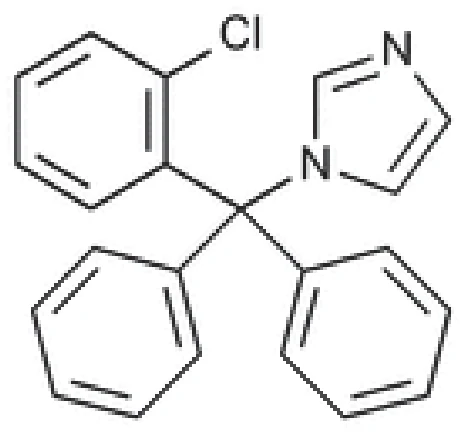
Chemical Name: 1-(o-chloro-αα-diphenylbenzyl) imidazole
Molecular formula and molecular mass: C22H17ClN2; 344.84
Structural Formula:
Physicochemical properties: Clotrimazole is a white to pale yellow, crystalline, weakly alkaline substance, M.P. 145°C, soluble in acetone, chloroform and ethanol, and practically insoluble in water. It forms stable salts with both inorganic and organic acids. It is not photosensitive but slightly hygroscopic and may be hydrolyzed in acid media.
14 CLINICAL TRIALS
In 8 double-blind studies and one single-blind study involving 432 patients using the 1% cream for 7 days, the average mycological cure rate was 72% with a range of 55 - 90%.
Oral contraceptives did not significantly alter mycological cure rates and overall success. In a limited number of pregnant women, both the 1% cream and the 100 mg tablet appeared to be effective, although the cure rates seemed to be somewhat lower.
In clinical trials with clotrimazole 2% vaginal cream, 266/303 patients (88%) had a negative culture for Candida sp. four weeks following treatment.
15 MICROBIOLOGY
Clotrimazole is an antifungal agent with a broad spectrum of activity. In general, the in vitro activity of clotrimazole corresponds to that of tolnaftate, griseofulvin, and pyrrolnitrin against dermatophytes (Trichophyton, Microsporum and Epidermophyton species) and to that of the polyenes, amphotericin B and nystatin, against budding fungi (Candida and Histoplasma species).
In vitro, clotrimazole is fungistatic for most isolates of pathogenic fungi at concentrations of 0.02 to 10 μg/mL. The drug is fungicidal for many isolates of Trichophyton, Microsporum, Epidermophyton and Candida species at concentration of 0.1 to 2 μg/mL
No one-step or multiple-step secondary resistance to clotrimazole has developed during successive passages of C. albicans, C. krusei, C. pseudotropicalis, T. mentagrophytes, T. rubrum, Cryptococcus neoformans, Aspergillus niger, and A. nidulans. Only a few isolates have been designated as having primary resistance to clotrimazole: a single isolate of C. guillermondii, six isolates of C. neoformans, three isolates of Paracoccidioides brasiliensis and two isolates of Blakeslea trispora.
Topical application of clotrimazole has been effective in the treatment of skin infections experimentally induced in the guinea pig with T. mentagrophytes and T. quinckeanum.
Clinical studies conducted as double-blind trials with mycological control have shown that clotrimazole is effective in the treatment of tinea cruris, tinea corporis, tinea pedis, tinea versicolor and cutaneous candidiasis. Mycological examinations have proven its efficacy against Trichophyton rubrum, T. mentagrophytes, Malassezia furfur and Candida albicans. Griseofulvin-resistant dermatophytes show no cross resistance to clotrimazole. It may be assumed, therefore, that the site of action of this drug is different from that of other antimycotics. Consequently, there is no cross resistance between these agents.
Antifungal Activity in Vitro
Minimum inhibitory concentrations (MICs) of clotrimazole were determined in serial dilution in broth or agar and in agar diffusion tests using the punched hole procedure. Conventional culture substrates, incubation times, and incubation temperatures were used. At concentrations less than 2 μg/mL, clotrimazole was fungicidal for many isolates of C. albicans, Trichophyton sp., Microsporum sp., and Epidermophyton sp., tested, and at concentrations less than 5 μg/mL, clotrimazole was fungistatic for other isolates of these species. Addition of bovine serum to the culture media at a final concentration of 30% resulted in somewhat higher MICs of clotrimazole.
The in vitro antifungal activity of clotrimazole was comparable to that of pyrrolnitrin; either compound at 0.78 μg/mL was fungicidal for most strains of Trichophyton sp., Microsporum sp. and Epidermophyton sp., tested.
The type of action of clotrimazole was determined in the Warburg apparatus by measuring the oxygen consumption of proliferating organisms exposed to varying concentrations of the drug. Additional studies were performed using a classical subculture technique with organism counts made after 16, 24 and 48 hours of exposure to the drug. These experiments showed that the primary action of clotrimazole at concentrations up to 20 μg /mL is fungistatic and affects only proliferating organisms. At concentrations greater than 20 μg/mL, clotrimazole was fungicidal for some organisms.
The determinations of MICs of clotrimazole for budding fungi and for biphasic fungi in the yeast phase have been shown to be dependent on the size of the inoculum and the length of incubation time. MICs for several isolates of Candida albicans and Torulopsis glabrata were higher when the inoculum size or incubation time or both were increased.
The effects of inoculum size has been attributed to binding of clotrimazole to the surface of the fungal cells. This was established in a study of turntable cultures of C. albicans. After 24 hours, the amount of clotrimazole in a nutrient substrate was reduced from 1 μg/mL to 0.7 μg/mL by an inoculum of 1 to 5 x 10⁵ cells/mL.
A larger inoculum, 1 x 10⁸ cells/mL, reduced the drug concentration from 1 μg/mL to 0.3 μg/mL. When the cultures were centrifuged and the cell sediment was washed with physiological saline solution, the wash solutions contained clotrimazole in concentrations of 0.2 μg/mL to 0.4 μg/mL.
The effect of incubation time on the determination of MIC values is thought to be related to the mechanism of action of clotrimazole. Initial studies indicated that clotrimazole acted as an antimetabolite upon the amino acid and protein metabolism of the fungi, causing a gradual inhibition of fungal growth.
However, recent studies using C. albicans as the test organism have shown that the primary mode of action of clotrimazole is damage to the permeability of the cell membrane. Exposure of C. albicans to clotrimazole caused leakage of intracellular phosphorus compounds into the ambient medium with a concomitant breakdown of cellular nucleic acids. The onset of these events was rapid and extensive after exposure of C. albicans to the drug and caused a time-dependent and concentration-dependent inhibition of fungal growth.
Resistance Development
Only a few isolates have been designated as having primary resistance to clotrimazole; a single isolate of Candida guillermondii, six isolates of Cryptococcus neoformans, three isolates of Paracoccidioides brasiliensis, and two isolates of Blakeslea trispora. The potential for development of secondary resistance to clotrimazole was determined for several organisms by successive passages in a liquid medium, successive passages on a solid medium, or the Warburg proliferation test. Growth of dermatophytes and yeasts on Szybalski plates was also used as a method for determining the development of secondary resistance.
No change in sensitivity was detected for C. albicans in any of the tests for secondary resistance, and no change in sensitivity was detected for Trichophyton mentagrophytes, T. rubrum, C. krusei, C. pseudotropicalis, C. neoformans, Aspergillus niger, or A. nidulans after successive passages on liquid and solid media. Possible resistance development was noted in successive passages of Torulopsis glabrata and other Torulopsis species. Data obtained from Szybalski plate growth and from other tests indicated that dermatophytes and yeasts do not develop one-step or oligo-step secondary resistance.
16 NON-CLINICAL TOXICOLOGY
General Toxicology:
Non-clinical data reveal no special hazards for humans based on conventional studies of safety pharmacology, genotoxicity and carcinogenic potential. Effects in nonclinical studies, such as the effects on the liver (elevation of transaminases and alkaline phosphatase, liver cell hypertrophy) in the repeat-dose toxicity studies, the effects on the survival of the neonate in a rat fertility study, the species-specific indirect effects on the growth/survival of the fetus in a rat teratology study were observed with oral administration but only at exposures in excess of the maximum human exposure indicating little relevance to clinical use. Given the limited absorption of clotrimazole following a topic application, the potential for toxicity with the occasional use of clotrimazole 1% cream is further limited.
Acute Toxicity
Animal
Carcinogenicity:
Carcinogenicity of clotrimazole was evaluated in a 78-week oral dosing study in rats and the results did not show any carcinogenic effect of clotrimazole.
Genotoxicity:
Clotrimazole has been extensively studied in in vitro and in vivo mutagenicity assays, and no evidence of genotoxic potential was found. In an Ames test, an in vitro biological assay to detect the mutagenicity of chemical compounds, clotrimazole showed no evidence of mutagenic activity. Clotrimazole was found to be non-mutagenic in two additional in vitro studies, a gene mutation test in V79 cell lines and an Unscheduled DNA Synthesis (UDS) in primary rat hepatocytes. Studies evaluating the mutagenicity of clotrimazole in germ cells did not demonstrate mutagenic effects in a spermatogonia test in male hamsters, or in a dominant lethal test in male mice. Additionally, in mice, clotrimazole was not clastogenic in a micronucleus test.
Reproductive and Developmental Toxicology:
At dosages up to 100 mg/kg (oral), clotrimazole was well tolerated by pregnant mice, rats and rabbits, and it had no embryotoxic or teratogenic effect.
When given to pregnant rats at oral doses of 100 mg/kg from day 6 through day 15 of gestation, the number of resorptions was higher and the fetal weights were lower than the controls, but the number of fetal malformations did not differ significantly from that of the control group.
Rats treated with clotrimazole for 10 weeks at dosage up to 50 mg/kg/day did not show any difference from the control group in the duration of estrus, fertility, duration of pregnancy, or in the number of implantations and resorptions. The dose of 50 mg/kg/day impaired the development of the young, and dams receiving this dose level raised fewer offspring.
| Species | LD50 mg/kg | |
|---|---|---|
| Mouse | 761 - 923 | |
| Rat | 708 - 718 | |
| Rabbit | >1000 | |
| Cat | >1000; vomiting from 100 mg/kg | |
| >2000; vomiting from 100 mg/kg |
The intravaginal administration of 100 mg/kg clotrimazole from the sixth to the fifteenth day of gestation was well tolerated by pregnant rats, and there were no harmful effects on the fertilization rate, the resorption rate, the mean fetal weight, and the frequency of stunted forms and of fetuses with slight bone alterations. No malformations were produced by this dose.
Special Toxicology:
Multiple Local Tolerance
- 1. Primary skin irritation (patch test): no detectable reddening on the intact rabbit skin at either 24 or 72 hours with 1% solution or cream of clotrimazole. Very slight erythema formation after 24 hours in the scarified rabbit skin.
- 2. Primary irritation on conjunctival mucosa: clotrimazole solution or cream produced a transient conjunctival irritation in rabbits, consisting in low-grade reddening and a slight increase in secretion. No grossly detectable alterations were present in either the cornea or the iris of any of the treated animals. Both the cream and solution produced a transient, very slight reddening of the conjunctival mucosa. No alterations occurred on the cornea.
- 3. Subacute (up to 13 weeks) dermal tolerance: the application of 1% clotrimazole solution or 1% cream was systemically well tolerated; no edema was seen on the treated skin, although mild erythema was observed sporadically. The animals in all groups with abraded skin manifested a slight healing tendency.
- 4. Subacute (dogs: 14 days; monkeys: 13 weeks) local vaginal tolerance: the repeated application of clotrimazole vaginal tablets showed a satisfactory local and systemic tolerance. There were no detectable adverse effects, and the cytological examination in monkeys indicated variations consistent with normal estrus cycles.
- 5. Subacute (5 dogs: 30 days; 4 monkeys: 13 weeks; 10 healthy human volunteers: 28 days) local vaginal tolerance. The repeated application of vaginal cream showed a satisfactory local and systemic tolerance without adverse effects or abnormalities in vaginal cytology in all species.
Human
In 453 cases under treatment which were evaluated with respect to photosensitivity and phototoxicity, no reactions were encountered.
Twenty normal subjects were tested in a controlled study for sensitivity to ultraviolet radiation. Areas of skin treated with clotrimazole were irradiated for 30 seconds on the first day and for one- half minute longer each time on every second day thereafter. One of the 20 subjects was irradiated once only; 9 subjects three times, and 10 subjects four times. One subject developed papule formation after the first exposure to ultraviolet radiation.
There were undesirable effects in three (0.5%) of 653 patients treated with clotrimazole vaginal cream which were possibly related to treatment. Discontinuation of treatment was necessary in a patient with a sensation of vaginal burning and in another patient with a possible allergic reaction, manifested by vaginal burning, local irritation and erythema. Treatment was, however, continued in a patient with intercurrent cystitis.
17 SUPPORTING PRODUCT MONOGRAPHS
CANESTEN® Cream 1%, 2%, Vaginal, submission control 275801, Product Monograph, Bayer Inc. April 18, 2024
CANESTEN® Cream 1%, 2%, Topical, submission control 275801, Product Monograph, Bayer Inc. April 18, 2024.