


Patient Medication Information: uses, side effects, how to take - Covifenz
What is COVIFENZ used for?
COVIFENZ is a vaccine used to prevent COVID-19 caused by the SARS-CoV-2 virus.
COVIFENZ can be given to people from 18 years of age and older.
How does COVIFENZ work?
COVIFENZ works by helping your body to protect itself against COVID-19 by producing both antibodies and immune cells that recognize the virus, helping to prevent you from getting COVID-19 entirely or limiting how sick you become.
COVIFENZ is made of proteins in the form of Virus-Like Particles (VLP) from plants that produce these particles. The VLP in COVIFENZ looks like the SARS-CoV-2 virus to your immune system. COVIFENZ does not contain the virus that causes COVID-19 so you cannot catch COVID-19 from this vaccine.
As with any vaccine, COVIFENZ may not fully protect all those who receive it. COVID-19 is caused by different strains (variants) of the SARS-CoV-2 virus that change over time. COVIFENZ may be less effective at preventing COVID-19 caused by some strains than others. Even after you have had both doses of the vaccine, continue to follow the recommendations of local public health officials to prevent spread of COVID-19.
What are the ingredients in COVIFENZ?
Medicinal ingredient: Virus-Like Particles (made in plants).
Non-medicinal ingredients:
- Polysorbate 80
- Potassium Phosphate Monobasic Anhydrous
- Sodium Chloride
- Sodium Phosphate Dibasic Anhydrous
- Water for Injection.
May contain trace amounts of polyethylene glycol, kanamycin and carbenicillin.
The AS03 adjuvant used with COVIFENZ makes the immune response stronger and contains naturally occurring molecules (squalene and vitamin E) plus an emulsifier (polysorbate 80) and phosphate buffered saline. The vaccine does not contain any live viruses, egg proteins, preservatives, or human-derived materials.
COVIFENZ comes in the following dosage form:
The mixed vaccine is a whitish to yellowish homogeneous milky liquid emulsion in a multidose vial. Each dose is 0.5 mL and contains 0.25 mL (3.75 mcg) of virus-like particles (VLP) SARS-CoV-2 spike protein, adjuvanted with 0.25 mL of AS03.
You should not receive COVIFENZ if:
- you are allergic to any of the ingredients in this vaccine (see What are the ingredients in COVIFENZ?)
- you had an allergic reaction after a previous dose of this vaccine
- you have any symptoms that could be due to COVID-19. Talk with your healthcare professional about your symptoms and getting a COVID-19 test. Your healthcare professional will advise you when you are able to receive the vaccine.
To help avoid side effects and ensure proper use, talk to your healthcare professional before you receive COVIFENZ. Talk about any health conditions or problems you may have, including if you:
- have had any problems following previous administration of COVIFENZ such as an allergic reaction or breathing problems
- have any other allergies
- have a weakened immune system due to a medical condition or are on a medicine that affects your immune system
- are feeling nervous about the vaccination process or have ever fainted in association with an injection
- have a bleeding problem, bruise easily or use a blood thinning medication
are pregnant, think you may be pregnant, or plan to become pregnant
- are breastfeeding.
Other warnings you should know about:
It may take at least 7 days after the second dose of COVIFENZ to develop an optimal protection against COVID-19. As with any vaccine, COVIFENZ may not fully protect all those who receive it. COVID-19 is caused by different strains (variants) of the SARS-CoV-2 virus that change over time. COVIFENZ may be less effective at preventing COVID-19 caused by some strains than others.
Tell your healthcare professional about all the medicines you take, including any drugs, vitamins, minerals, natural supplements, or alternative medicines.
There is no information on the use of COVIFENZ with other vaccines.
Tell your healthcare professional if you have recently received any other vaccine.
How COVIFENZ is given:
Usual dose:
COVIFENZ is given as an injection of 0.5 mL into a muscle of your upper arm.
You will receive 2 injections, given 21 days apart. It is very important that you return for the second injection, or the vaccine may not work as well. If you have received a first dose of COVIFENZ, you should receive COVIFENZ as a second dose to complete the vaccination series.
If you have any further questions on the use of COVIFENZ, ask your healthcare professional.
Overdose:
| In the event of suspected overdose with COVIFENZ, contact your regional poison control centre. |
|---|
Missed Dose:
If you forget to go back to your healthcare professional at the scheduled time for your next dose, ask your healthcare professional for advice.
What are possible side effects from using COVIFENZ?
Like all vaccines, COVIFENZ may cause side effects, although not everybody gets them.
The following are common or very common side effects. Most of these side effects are mild and do not last long. Tell your doctor if you have side effects that bother you:
Very common (may affect more than 1 in 10 people)
|
|---|
|
|
|
|
|
|
|
Common (may affect more than 1 in 100 people and up to 1 in 10 people)
|
|---|
These are not all the possible side effects that you may have when taking COVIFENZ. If you experience any side effects not listed here, tell your healthcare professional.
Your vaccination provider may ask you to stay at the place where you received your vaccine for at least 15 minutes to 30 minutes for monitoring.
There is a remote chance that COVIFENZ may cause an allergic reaction. Should you develop any serious symptoms or symptoms that could be an allergic reaction, seek medical attention right away. Symptoms of an allergic reaction may include:
- hives (bumps on the skin that are often very itchy)
- swelling of the face, tongue, or throat
- difficulty breathing
- a fast heartbeat
- dizziness and weakness
If you experience a severe allergic reaction, call 9-1-1 or go to the nearest hospital.
Reporting Suspected Side Effects for Vaccines For the general public: Should you experience a side effect following immunization, please report it to your healthcare professional. Should you require information related to the management of the side effect, please contact your healthcare professional. The Public Health Agency of Canada, Health Canada and Medicago Inc. cannot provide medical advice. For healthcare professionals: If a patient experiences a side effect following immunization, please complete the Adverse Events Following Immunization (AEFI) Form appropriate for your province/territory (https://www.canada.ca/en/public-health/services/immunization/reporting-adverse-events-following-immunization/form.html) and send it to your local Health Unit. |
|---|
Storage:
COVIFENZ should be stored, supplied, and administered by a healthcare professional.
Keep out of reach and sight of children.
If you want more information about COVIFENZ:
- Talk to your healthcare professional.
- Find the full product monograph that is prepared for healthcare professionals and includes this Patient Medication Information by visiting the Health Canada website (https://www.canada.ca/en/health-canada/services/drugs-health-products/drug-products/drug-product-database.html), the manufacturer’s website www.COVIDVLP.com, or by calling 1-800-622-6067.
- The Patient Medication Information is also available by scanning the QR code on the label.

Last Revised: March 30, 2023
Instructions for Use
The following information is intended for healthcare professionals only:
Preparation for Administration:
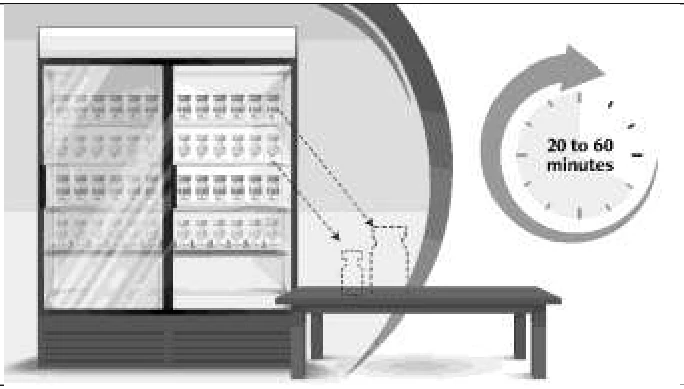
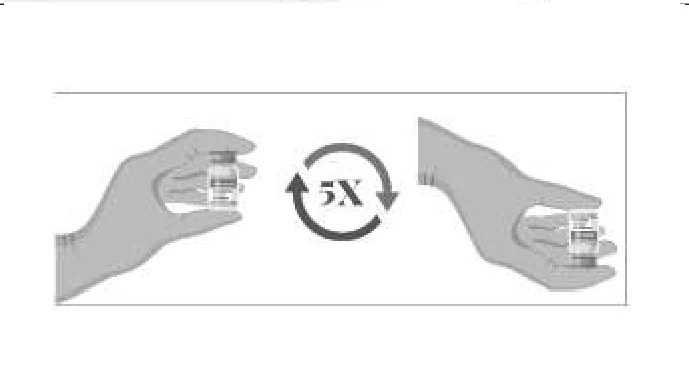
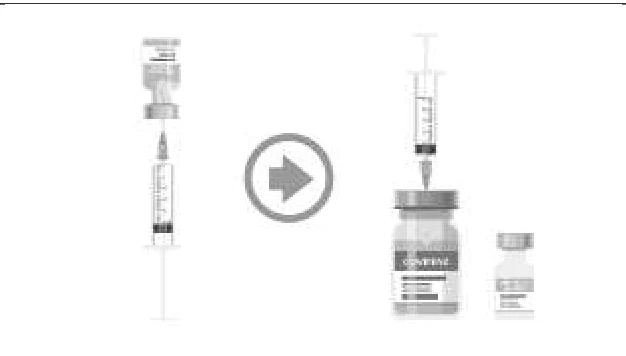
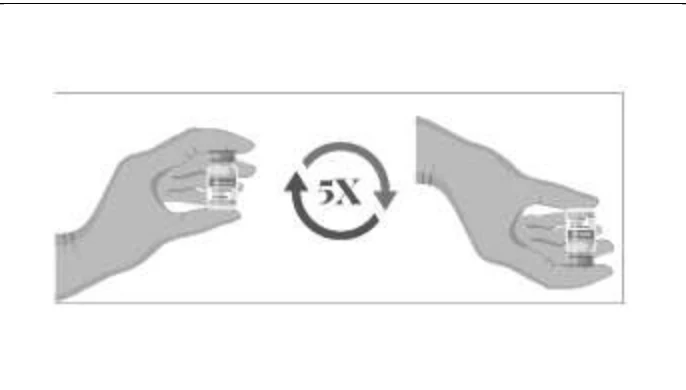
Check the expiry date on the antigen and adjuvant vials. Mixing of the COVIFENZ antigen with the adjuvant is required prior to administration.
| Prior to mixing | |
|---|---|
|  |
|  |
| Mixing | |
|---|---|
|  |
|  |
| 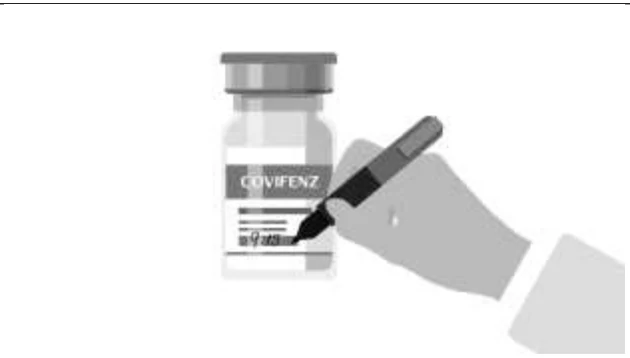 |
|
|---|
Administration
- 1. Before every administration, gently invert the vial until homogeneity is obtained.
- 2. Inspect for foreign matter, change in colour and / or leakage. If any of these conditions exists, the vaccine must not be administered.
- 3. Cleanse the vial stopper with a single-use antiseptic swab, allow to dry.
- 4. Use a syringe with a 23-gauge needle for vaccine withdrawal and injection.
- 5. Choose needle length based on the patient weight. Ensure that the needle is tightly attached to the syringe.
- 6. Withdraw a dose (0.5 mL) and administer into the deltoid muscle.
- 7. Do not inject the vaccine intravascularly, subcutaneously or intradermally.
© 2023 Medicago Inc. All Rights Reserved. COVIFENZ® and Medicago ® are registered trademarks of Medicago Inc.
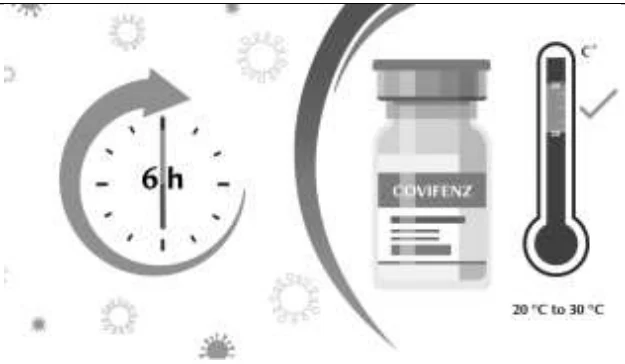 |