


Product Monograph - Crinone
1 INDICATIONS
CRINONE (Progesterone gel) 8% is indicated for:
luteal phase support in induced cycles such as In Vitro Fertilization (IVF) cycles including in oocyte donation recipient.
1.1 Pediatrics
Pediatrics (<18 years of age): No data are available to Health Canada, safety and effectiveness in females before menarche have not been established. As CRINONE is indicated for use in women who are post-menarcheal, pediatric use is not applicable.
1.2 Geriatrics
Geriatrics (≥65 years of age): No data are available to Health Canada; therefore, Health Canada has not authorized an indication for geriatric use.
2 CONTRAINDICATIONS
CRINONE (Progesterone gel) should not be used in individuals with any of the following conditions:
- Undiagnosed vaginal bleeding
- Liver dysfunction or disease
- Known or suspected malignancy of the breast or genital organs
- Known or suspected progesterone-dependent neoplasia,
- Known sensitivity to CRINONE (progesterone or any of the other ingredients)
- Missed abortion
- Thrombophlebitis, thromboembolic disorders, cerebral apoplexy or patients with a history of these conditions
- Acute porphyria
CRINONE is contraindicated in patients who are hypersensitive to this drug or to any ingredient in the formulation, including any non-medicinal ingredient, or component of the container. For a complete listing, see 6 DOSAGE FORMS, STRENGTHS, COMPOSITION AND PACKAGING.
4. DOSAGE AND ADMINISTRATION
4.1 Dosing Considerations
One application of CRINONE 8% (90 mg of progesterone) every day, starting the day of the transfer. In some cases, the dose can be increased to two applications of CRINONE 8% daily. If pregnancy occurs, treatment should be continued for up to 10 to 12 weeks.
4.2 Recommended Dose and Dosage Adjustment
From the day of embryo transfer, one application of 1.125 g CRINONE 8% Vaginal Gel (90 mg progesterone) should be taken intravaginally once or twice daily. Most women will respond to 90 mg once daily. However, some women may need 90 mg twice daily. If pregnancy occurs treatment may continue for up to 10-12 weeks.
4.4 Administration
CRINONE is to be applied directly from the specially designed applicator into the vagina. CRINONE coats the vaginal mucosa to provide long-lasting release of progesterone.
Each applicator contains a slightly larger amount of gel than actually released, as the rest of the product tends to adhere to the inside of the applicator. It is therefore quite normal for a little gel to be left inside the applicator.
Each applicator contains 1.45 g vaginal gel and is designed in such way that with each administration an exactly defined amount of gel (1.125 g) is delivered. Any content of gel remaining in the applicator after use must be discarded.
Each applicator is intended for single use only.
4.5 Missed Dose
If you forget to use CRINONE on a normal dosage day then use it the following day and then continue as before. Do not administer double doses to make up for a forgotten single dose.
5 OVERDOSAGE
There have been no reports of overdosage with CRINONE (Progesterone gel). Acute overdosage is unlikely with this product due to the concentration-dependent, rate-limited absorption of progesterone by the vaginal epithelium and the controlled release characteristics of the formulation. In the case of overdosage, however, discontinue CRINONE, treat the patient symptomatically, and institute supportive measures.
6 DOSAGE FORMS, STRENGTHS, COMPOSITION AND PACKAGING
CRINONE (Progesterone gel) is a bioadhesive vaginal gel containing micronized progesterone in a diluted emulsion system. The carrier vehicle is a oil-in-water emulsion containing the water swellable, but insoluble polymer, polycarbophil. Physically, CRINONE has the appearance of a soft, white to off-white gel packed in single-use applicators designed for vaginal administration
CRINONE (Progesterone gel) is available in the following strength:
90 mg (8% gel) in a single use, one piece, disposable, white polyethylene vaginal applicator with a twist-off top. Each applicator contains 1.45g of gel and delivers 1.125g of gel.
Applicators are packaged in cartons of 6 and 18 per box.
| For management of a suspected drug overdose, contact your regional poison control centre. |
|---|
Table – Dosage Forms, Strengths, Composition and Packaging
7 WARNINGS AND PRECAUTIONS
The physician should be alert to the earliest manifestations of thrombotic disorders (thrombophlebitis, cerebrovascular disorders, pulmonary embolism, and retinal thrombosis). Should any of these occur or be suspected, the drug should be discontinued immediately. Patients who have risk factors for thrombotic disorders should be kept under careful observation.
Treatment should be discontinued if the results of liver function tests become abnormal or if cholestatic jaundice appears.
Progesterone and progestins have been used to prevent miscarriage in women with a history of recurrent spontaneous pregnancy losses. No adequate evidence is available to show that they are effective for this purpose.
As with all prescription drugs, this medicine should be kept out of the reach of children.
General
The pre-treatment physical examination should include special reference to breast and pelvic organs, as well as Papanicolaou smear.
Because progestins may cause some degree of fluid retention, conditions which might be influenced by this factor (e.g., epilepsy, migraine, asthma, cardiac or renal dysfunction) require careful observation.
The pathologist should be advised of progesterone therapy when relevant specimens are submitted.
In cases of breakthrough bleeding, as in all cases of irregular bleeding per vagina, non-functional causes should be considered. In cases of undiagnosed vaginal bleeding, adequate diagnostic measures should be undertaken.
Patients who have a history of psychic depression should be carefully observed and the drug discontinued if the depression recurs to a serious degree.
A decrease in glucose tolerance has been observed in a small number of patients on oestrogen-progestin combination drugs. The mechanism of this decrease is not known. For this reason, diabetic patients should be carefully observed while receiving progestin therapy.
| Route of Administration | Dosage Form / Strength/Composition | Non-medicinal Ingredients |
| vaginal | Progesterone gel 90 mg (8%) | Carbomer 974P, glycerine, hydrogenated palm oil glycerides, light liquid paraffin, polycarbophil, purified water, sodium hydroxide, sorbic acid. |
Reproductive Health: Female and Male Potential
7.1 Special Populations
7.1.1 Pregnant Women
In case of corpus luteum deficiency, CRINONE can be used during the first trimester of pregnancy
CRINONE has been used to successfully support embryo implantation and maintain pregnancies through its use as part of Assisted Reproductive Technology (ART) treatment regimens. In fifty patients receiving donor oocyte transfer procedures, clinical pregnancies occurred in 48% of those receiving CRINONE. One woman had an elective termination of pregnancy at 19 weeks due to congenital malformations. Other deliveries resulted in normal newborns. CRINONE has been used in the luteal phase support of patients undergoing IVF procedures. In a clinical study, 139 patients received CRINONE (90 mg) once daily beginning on the day of embryo transfer and continuing through Day 30 post-transfer. The IVF success rates for pregnancies at Day 90 (26% of those transferred) and deliveries (23% of those transferred) were similar to success rates observed in larger IVF studies. Of the 47 newborns delivered, one suffered from a teratoma associated with a cleft palate and another from respiratory distress syndrome. Forty-four newborns were normal and one was lost to follow-up. The resulting rate of malformations was similar to that reported in the literature for pregnancies following IVF procedures as in normal pregnancies.
7.1.2 Breast-feeding
CRINONE should not be used during lactation. While CRINONE is administered vaginally, detectable amounts of other orally administered progesterone have been identified in the milk of mothers receiving progesterone. The possible effects of progesterone on the nursing infant have not been determined.
7.1.3 Pediatrics
Pediatrics (<18 years of age): No data are available to Health Canada, safety and effectiveness in females before menarche have not been established. As CRINONE is indicated for use in women who are post-menarcheal, pediatric use is not applicable.
7.1.4 Geriatrics
Geriatrics (≥65 years of age): No data are available to Health Canada; therefore, Health Canada has not authorized an indication for geriatric use.
8 ADVERSE REACTIONS
8.1 Adverse Reaction Overview
Crinone is generally well tolerated. In clinical studies, the following adverse events have been reported during Crinone therapy. Most adverse events observed in clinical studies cannot be distinguished from the symptoms common in early pregnancy.
Common Adverse Events (≥ 1/100 to < 1/10):
- Infections and Infestations: genital candidiasis, urinary tract infection
- Immune System Disorders: hypersensitivity
- Nervous System Disorders: headache, migraine, dizziness, somnolence-
- Gastrointestinal Disorders: abdominal pain, constipation, diarrhoea, nausea, vomiting, abdominal distension
- Psychiatric Disorders: depression, memory impairment, aggression, nervousness
- Renal and Urinary Disorders: enuresis, cystitis
- Reproductive System and Breast Disorders: libido decreased, breast tenderness, breast pain, dyspareunia, pruritus genital, vulvovaginal dryness, vaginal discharge
- Musculoskeletal and Connective Tissue Disorders: muscle spasms, arthralgia
- General Disorders and Administration Site Conditions: fatigue, pain
- Skin and Subcutaneous Tissue Disorders: pruritis, rash, skin disorder, urticaria
The adverse effects of Crinone are qualitatively identical to those described in the medical literature for natural progesterone, but their frequency appears to be lower. Most adverse events are mild and transient in nature, frequently resolving during continued exposure to
Crinone.
8.2 Clinical Trial Adverse Reactions
Clinical trials are conducted under very specific conditions. The adverse reaction rates observed in the clinical trials; therefore, may not reflect the rates observed in practice and should not be compared to the rates in the clinical trials of another drug. Adverse reaction information from clinical trials may be useful in identifying and approximating rates of adverse drug reactions in real-world use.
The adverse reactions data presented is based on the safety data that was gathered from 3 clinical trials, COL-1620/F01, COL1620-007US and EMR200113_001. The exposure to progesterone / Crinone® in these 3 studies was 345 subjects.
Reproductive System and Breast Disorders: breast tenderness.
8.5 Post-Market Adverse Reactions
For adverse reactions identified during post-marketing surveillance, the frequency is not known, because it cannot be reliably estimated from the available data.
Immune System Disorders: Hypersensitivity reactions usually manifesting as skin rash
Reproductive System and Breast Disorders: Metrorrhagia (spotting) Vaginal irritation and other mild application site reactions
9 DRUG INTERACTIONS
Although no drug interaction with other drugs have been reported, CRINONE is not recommended for use concurrently with other local vaginal preparations. If other local intravaginal therapy is to be used concurrently, there should be at least a 6 hour period before or after CRINONE administration.
9.4 Drug-Drug Interactions
Interactions with other drugs have not been established
9.5 Drug-Food Interactions
Interactions with food have not been established
9.6 Drug-Herb Interactions
Interactions with herbal products have not been established
9.7 Drug-Laboratory Test Interactions
Interactions with laboratory tests have not been established
10 CLINICAL PHARMACOLOGY
10.1 Mechanism of Action
Progesterone is a naturally occurring steroid that is secreted by the ovary, placenta, and adrenal gland. In the presence of adequate estrogen progesterone transforms a proliferative endometrium into a secretory endometrium. Progesterone is essential for the development of decidual tissue, and the effect of progesterone on the differentiation of glandular epithelia and stroma has been extensively studied. Progesterone is necessary to increase endometrial receptivity for implantation of an embryo. Once an embryo is implanted, progesterone acts to maintain the pregnancy. Normal or near-normal endometrial responses to oral estradiol and intramuscular progesterone have been noted in functionally agonadal women through the sixth decade of life. Progesterone administration decreases the circulatory level of gonadotropins
The release of progesterone from CRINONE 8% has been investigated in vitro.
Results indicate that approximately 65% of the progesterone is released from the gel within 24 hours, 87% is released at 48 hours, and 96% is released by 72 hours.
10.2 Pharmacodynamics
In clinical pharmacodynamic studies, vaginal application of CRINONE containing 45 mg, 90 mg or 180 mg of progesterone every other day for a total of 6 or 7 applications resulted in mean steady state plasma progesterone concentrations of 1-4 ng/mL. CRINONE was administered in these studies from Day 15 through Day 25 of a replacement cycle. Despite the relatively low plasma progesterone concentrations, CRINONE induced a secretory transformation of the endometrium in 35 of the 36 women studied. The apparent discrepancy between the low plasma progesterone concentrations and the pronounced endometrial effects observed in these studies suggest a preferential distribution of transvaginally administered progesterone or a First Uterine-Pass Effect.
10.3 Pharmacokinetics
The pharmacokinetics of CRINONE 90 mg administered twice daily for 12 days were studied in 10 healthy, estrogenized postmenopausal women. The average peak serum concentration achieved was 14.6 ng/mL four hours after administration. The average steady-state concentration was 11.6 ng/mL. Steady state was achieved within the first 24 hours after initialization of treatment. Upon attainment of steady-state, the disposition of progesterone administered by CRINONE suggests zero order release and absorption kinetics.
The bioavailability of progesterone in CRINONE was determined relative to progesterone administered orally and vaginally. In a parallel group study, 18 healthy, estrogenized postmenopausal women received single doses of either 90 mg progesterone vaginally in CRINONE 8%, 100 mg progesterone orally in a capsule, or 100 mg progesterone vaginally in a capsule. After CRINONE 8% administration, the mean area under the plasma concentration curve (AUC) was 157.83 ng≅h/mL indicating a similar relative bioavailability to the vaginal capsule (247.41 ng≅h/mL) and more than 20 times higher than the bioavailability of the oral capsule (6.74 ng≅h/mL). These data suggested that when progesterone is given orally, up to 95% of the dose is eliminated by first-pass metabolism. The mean plasma concentrations following oral progesterone capsules and vaginal CRINONE administration were 1.04 and 3.49 ng/mL at 2 hours postdose (Cmax for oral capsules), and 0 and 8.15 ng/mL at 8 hours (Cmax for CRINONE), respectively. The variability in bioavailability was lower with CRINONE than with the capsule administered vaginally, indicating a more consistent delivery of progesterone.
Absorption
The pharmacokinetics of CRINONE are rate-limited by absorption rather than by elimination. Due to CRINONE’s bioadhesive and sustained release properties, progesterone absorption is prolonged with an absorption half-life of approximately 25-50 hours, and an elimination half-life of 5-20 minutes.
Distribution
There is an apparent preferential distribution of progesterone to the endometrium after vaginal administration. After seven days of vaginal administration of micronized progesterone to women with ovarian failure, the plasma and endometrial tissue levels of progesterone were approximately equivalent. However, after intramuscular administration of progesterone in oil, plasma levels were approximately 50-fold higher than the endometrial tissue levels. No significant differences in endometrial thickness, ultrasound pattern, secretory development, or content of estrogen and progesterone receptors were detected between the two treatment groups
Metabolism
The major urinary metabolite of oral progesterone is 5β-pregnan-3α, 20α-diol glucuronide which is present in plasma in the conjugated form only. Plasma metabolites also include 5β- pregnan-3α-ol-20-one (5β-pregnenolone) and 5β-pregnan-3α-ol-20-one (5α-pregnenolone) which may be associated with sedation and hypnosis. After vaginal administration, the plasma concentrations of these two metabolites were substantially lower than after oral administration.
Elimination
Progesterone undergoes both biliary and renal elimination. Following an injection of labeled progesterone, 50-60% of the excretion of progesterone metabolites occurs via the kidney; approximately 10% occurs via the bile and feces, the second major excretory pathway. Overall recovery of labeled material accounts for 70% of an administered dose, with the remainder of the dose not characterized with respect to elimination. Only a small portion of unchanged progesterone is excreted in the bile.
11 STORAGE, STABILITY AND DISPOSAL
CRINONE gel should be stored at room temperature (15-25°C) and not exposed to extreme heat or cold. As with all medicines, the gel applicators should be kept in a safe place where children cannot reach them.
Do not use CRINONE gel after the expiry date, which is printed on the label.
PART II: SCIENTIFIC INFORMATION
13 PHARMACEUTICAL INFORMATION
Drug Substance: 1,125g vaginal gel containing 90 mg progesterone
Proper Name: Progesterone
Chemical Name: Preg-4-ene-3,20-dione
Structural Formula:
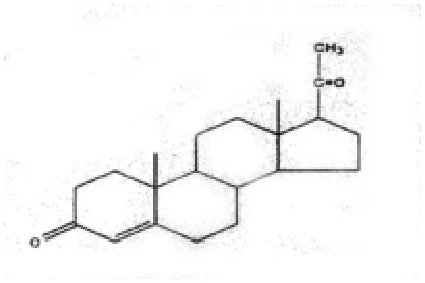
Molecular Formula: C21H30O2
Molecular Weight: 314.47
Physical Characteristics: White to practically white powder
Solubility: Insoluble in water, sparingly soluble in acetone, one gram dissolves in 8mL of ethanol.
Melting range: 126°C - 131°C
14 CLINICAL TRIALS
The registration of CRINONE 8% use for luteal phase support in induced cycles such as IVF and oocyte donor recipient cycles is supported by the results of three company sponsored studies. Of the three studies, two were randomized controlled studies comparing CRINONE 8% once or twice daily to either an intramuscular or orally administered progesterone. The third study was a single arm open label study. All three studies meet their predefined efficacy criteria and showed acceptable safety. Descriptions of the studies are provided below.
In a single-center, open-label study (COL1620-007US), 90 women (aged 28-47 years) with either partial or premature ovarian failure who were candidates to receive a donor oocyte transfer as an ART procedure were randomized to receive either CRINONE 8% twice daily (n = 64) or intramuscular progesterone 100 mg daily (n = 26). The study was divided into three phases (Pilot, Donor Egg and Treatment). The first phase of the study consisted of a test Pilot Cycle to ensure that the administration of estradiol and progesterone would adequately prime the endometrium to receive the donor egg. The second phase was the Donor Egg Cycle. Subjects with partial ovarian function also underwent a Pre-Pilot Cycle and a Pre-Donor Egg Cycle during which time they were administered only leuprolide acetate to suppress remaining ovarian function. The Pre-Pilot Cycle, Pilot Cycle, Pre-Donor Egg Cycle, and Donor Egg Cycle each lasted approximately 34 days. The third phase of the study consisted of a 10-week treatment period.
Fifty-seven women received at least one dose of CRINONE 8%. The Efficacy Population included all subjects who received a donor egg and were administered study drug at the time of embryo transfer (n=50 in the CRINONE arm). A total of 27 women (54%) who received CRINONE 8% at the time of donor egg transfer had positive hCG. Of these, clinical pregnancy, assessed by ultrasound at 10 weeks, occurred in 24 women (48%), and 15 (30%) had ongoing pregnancies past the 24th week of gestation. Of the remaining nine women, seven had spontaneous abortions and two had elective abortions.
In a second study (COL1620-F01), CRINONE 8% was used in luteal phase support of women with tubal or idiopathic infertility due to endometriosis and normal ovulatory cycles, undergoing IVF procedures. All women received a GnRH analog to suppress endogenous progesterone, human menopausal gonadotropins, and human chorionic gonadotropin. In this multi-center, open-label study, 139 women (aged 22-38 years) received CRININE 8% once daily beginning within 24 hours of embryo transfer and continuing through Day 30 post-transfer. Clinical pregnancies assessed at Day 90 post transfer were seen in 37 (27%) women, and 3 women (2%) had spontaneous abortions.
In a third single arm open label study (EMR200113-001) the efficacy and safety of CRINONE 8% vaginal progesterone gel once daily was evaluated for use for luteal phase support (LPS) in IVF and embryo transfer (ET) cycles in Japanese women. A total of 178 women were included in the trial of which 149 received at least one dose of CRINONE 8%, and 121 who completed the trial. Women underwent Controlled Ovarian Stimulation (COS) according to the center's standard practice with a GnRH analogue (agonist or antagonist), in combination with a follicle-stimulating hormone (FSH)-containing preparation. Participants received CRINONE 8% once daily beginning on the day of ovum pick up, and for up to 12 weeks. The clinical pregnancy rate (CPR) per ET was 28.5% in the Intent To Treat (ITT) population and 27.8% in the Per Protocol (PP) population and were non-inferior to the historical control of 24.3%. The biochemical pregnancy rate per ET was 7.3% in the ITT population and 7.8% in the PP population.
15 MICROBIOLOGY
No microbiological information is required for this drug product.
16 NON-CLINICAL TOXICOLOGY
The nonclinical toxicology studies that have been performed include two acute toxicity studies, five local tolerance toxicity studies, and one antigenicity study. Since Progesterone, the active ingredient in CRINONE (Progesterone gel), is a naturally occurring hormone that has been extensively used in women, animal studies to assess the toxicity of progesterone have not been repeated. The toxicity studies for CRINONE focus on relevant toxicity and local tolerance.
Acute (Single-Dose) Oral Toxicity
- CRINONE was administered to CD-1 male and female mice at doses of 500, 2500, 4000, and 5000 mg/kg, and the animals were observed for up to 14 days. The estimated LD50 for both sexes combined was > 5000 mg/kg.
- CRINONE was administered to Sprague-Dawley male and female rats at doses of 500, 2500, and 5000 mg/kg, and the animals were observed for up to 14 days. The estimated LD50 for both sexes combined was > 5000 mg/kg.
Local Tolerance (Single-Dose) Toxicity
- CRINONE (0.1 mL) was instilled into the right eye of male and female New Zealand White Rabbits, and the animals were observed for up to 72 hours. CRINONE was determined to be a Class IV (minimal effects clearing in < 24 hours) eye irritant.
- CRINONE (0.5 mL) was applied to intact skin sites of male and female New Zealand White Rabbits subsequently removed after four hours of exposure. After observing the exposed intact skin sites for up to 72 hours, it was determined that CRINONE was not a dermal irritant.
Vaginal Tolerance (acute and subacute)
In two separate studies, CRINONE (2.0 mL) or 0.9% saline (2.0 mL) was administered twice daily for five consecutive days to the upper half of the vaginal tract of female New Zealand White Rabbits. The animals were sacrificed at 24 hours post-dose, and the vaginas were evaluated for histopathological changes. Severe vaginal damage (ruptured walls and abrasion of the mucosa) was noted in both treatment groups in the first study, but these effects were believed to be mechanical damage resulting from the dosing procedure. In the second study, histopathological examination showed minimal to mild vaginal irritation in animals treated with CRINONE or 0.9% saline. The extent of vaginal irritation was determined to be acceptable under the conditions of the test.
CRINONE (2.0 mL) or 0.9% saline (2.0 mL) was administered twice daily for 14 consecutive days to the upper half of the vaginal tract of female New Zealand White Rabbits. Sham controls were also included in the study. The animals were sacrificed at 48 hours after the last dose of CRINONE or saline, and the vaginas were evaluated for histopathological changes. Minimal irritation was present in five of six sham controls, four of six saline controls, and two of six CRINONE-treated rabbits. The potential of CRINONE to cause vaginal irritation was considered to be acceptable under the conditions of the test.
Antigenic Toxicity
CRINONE, 0.9% saline, or 0.1% 1-chloro-2,4-dinitrobenzene (DCNB) was administered intradermally to male and female Hartley guinea pigs. One week later, the animals were induced again by injecting the three test articles using the same injection sites utilized previously. The animals were then challenged at naive areas 14 days after the last induction period. A rechallenge evaluation with CRINONE was also conducted. CRINONE was not found to cause dermal sensitization.
The above results indicate that CRINONE is safe after acute oral ingestion, does not cause dermal or vaginal irritation and only causes transient minimal eye irritation in laboratory animals. The dose tested in the vaginal irritation studies was equivalent to approximately 80 times a human dose of 90 mg/day.