


Product Monograph - Provera 5mg Tablets
Recent Major Label Changes
| 07/2024 |
|---|---|
| 02/2025 |
| 01/2026 |
Table of Contents
Certain sections or subsections that are not applicable at the time of the preparation of the most recent authorized product monograph are not listed.
Recent Major Label Changes ................................................................................................... 2
Table of Contents ................................................................................................................... 2
Part 1: Healthcare Professional Information ........................................................................... 5
- 1.
Indications ....................................................................................................................... 5
1.1. Pediatrics .................................................................................................................. 5
1.2. Geriatrics .................................................................................................................. 5
- 2. Contraindications ............................................................................................................ 5
- 3. Serious Warnings and Precautions Box ............................................................................ 6
- 4.
Dosage and Administration ............................................................................................. 6
4.1. Dosing Considerations .............................................................................................. 6
4.2. Recommended Dose and Dosage Adjustment ......................................................... 6
4.4. Administration .......................................................................................................... 8
4.5. Missed Dose ............................................................................................................. 8
- 5. Overdose ......................................................................................................................... 8
- 6. Dosage Forms, Strengths, Composition, and Packaging ................................................... 9
- 7.
Warnings and Precautions ............................................................................................... 9
General ................................................................................................................................. 9
Carcinogenesis and Genotoxicity ........................................................................................ 10
Cardiovascular .................................................................................................................... 11
Endocrine and Metabolism ................................................................................................. 12
Genitourinary ..................................................................................................................... 13
Hematologic ....................................................................................................................... 13
Hepatic/Biliary/Pancreatic .................................................................................................. 14
Immune .............................................................................................................................. 14
Monitoring and Laboratory Tests ....................................................................................... 14
Neurologic .......................................................................................................................... 14
Psychiatric ........................................................................................................................... 15
Renal ................................................................................................................................... 16
Reproductive Health ........................................................................................................... 16
7.1. Special Populations ................................................................................................ 16
7.1.1. Pregnancy ...................................................................................................... 16
7.1.2. Breastfeeding ................................................................................................ 16
7.1.3. Pediatrics ....................................................................................................... 16
7.1.4. Geriatrics ....................................................................................................... 16
- 8.
Adverse Reactions ......................................................................................................... 16
8.1. Adverse Reaction Overview .................................................................................... 16
8.5. Post-Market Adverse Reactions ............................................................................. 18
- 9.
Drug Interactions ........................................................................................................... 19
9.2. Drug Interactions Overview .................................................................................... 19
9.4. Drug-Drug Interactions ........................................................................................... 19
9.5. Drug-Food Interactions........................................................................................... 19
9.6. Drug-Herb Interactions ........................................................................................... 19
9.7. Drug-Laboratory Test Interactions ......................................................................... 19
- 10.
Clinical Pharmacology ................................................................................................... 20
10.1. Mechanism of Action .............................................................................................. 20
10.2. Pharmacodynamics ................................................................................................ 20
10.3. Pharmacokinetics ................................................................................................... 21
- 11. Storage, Stability, and Disposal ...................................................................................... 23
- 12. Special Handling Instructions ......................................................................................... 23
Part 2: Scientific Information ................................................................................................ 24
- 13. Pharmaceutical Information .......................................................................................... 24
- 14.
Clinical Trials .................................................................................................................. 24
14.1. Clinical Trials by Indication ..................................................................................... 24
- 15. Microbiology ................................................................................................................. 25
- 16. Non-Clinical Toxicology .................................................................................................. 25
Patient Medication Information ........................................................................................... 28
Part 1: Healthcare Professional Information
1. Indications
PROVERA (Medroxyprogesterone acetate) is indicated for:
- Hormonal replacement therapy, to oppose the effects of estrogen on the endometrium and significantly reduce the risk of hyperplasia and carcinoma;
- Functional menstrual disorders due to hormonal imbalance in non-pregnant women, in the absence of organic pathology;
- Adjunctive and/or palliative treatment of recurrent and/or metastatic endometrial carcinoma;
- Adjunctive and/or palliative treatment of hormonally-dependent, recurrent metastatic breast cancer in postmenopausal women.
For indications not including breast cancer, PROVERA should be prescribed only to women with intact uteri.
1.1. Pediatrics
Pediatrics (<16 years of age): No data are available to Health Canada; therefore, Health Canada has not authorized an indication for pediatric use
1.2. Geriatrics
Geriatrics (> 65 years of age): see 7 WARNINGS AND PRECAUTIONS, 7.1.4 Geriatrics.
2. Contraindications
Estrogens & Estrogen/Progestin combinations are contraindicated in patients with any of the following disorders:
- Liver dysfunction or disease as long as liver function tests have failed to return to normal;
- Known or suspected estrogen-dependent or progestin-dependent malignant neoplasia (e.g. endometrial cancer), unless PROVERA is being used as a treatment for endometrial or breast cancer (see 1 INDICATIONS);
- Known, suspected, or past history of breast cancer, unless PROVERA is being used as a treatment for breast cancer in postmenopausal women (see 1 INDICATIONS);
- Undiagnosed abnormal genital bleeding;
- Known or suspected pregnancy;
- Active or past history of arterial thromboembolic disease (e.g. stroke, myocardial infarction, coronary heart disease);
- Active or past history of confirmed venous thromboembolism (such as deep vein thrombosis or pulmonary embolism) or active thrombophlebitis;
- Partial or complete loss of vision due to ophthalmic vascular disease.
PROVERA (Medroxyprogesterone acetate) is contraindicated in patients who are hypersensitive to this drug or to any ingredient in the formulation, including any non-medicinal ingredient, or component of the container. For a complete listing, see 6 DOSAGE FORMS, STRENGTHS, COMPOSITION AND PACKAGING.
- 3. Serious Warnings and Precautions Box
Serious Warnings and Precautions
The Women’s Health Initiative (WHI) trial examined the health benefits and risks of oral combined estrogen plus progestin therapy (n=16,608) and oral estrogen-alone therapy (n=10,739) in postmenopausal women aged 50 to 79 years.
The estrogen plus progestin arm of the WHI trial (mean age 63.3 years) indicated an increased risk of myocardial infarction (MI), stroke, invasive breast cancer, pulmonary emboli and deep vein thrombosis in postmenopausal women receiving treatment with combined conjugated equine estrogens (CEE, 0.625 mg/day) and medroxyprogesterone acetate (MPA, 2.5 mg/day) for 5.2 years compared to those receiving placebo.
The estrogen-alone arm of the WHI trial (mean age 63.6 years) indicated an increased risk of stroke and deep vein thrombosis in hysterectomized women treated with CEE-alone (0.625 mg/day) for 6.8 years compared to those receiving placebo.
Therefore, the following should be given serious consideration at the time of prescribing:
- Estrogens with or without progestins should not be prescribed for primary or secondary prevention of cardiovascular diseases.
- Estrogens with or without progestins should be prescribed at the lowest effective dose for the approved indication.
- Estrogens with or without progestins should be prescribed for the shortest period possible for the approved indication.
4. Dosage and Administration
4.1. Dosing Considerations
When estrogen is prescribed for a postmenopausal woman with a uterus, a progestin should also be initiated to reduce the risk of endometrial cancer. A woman without a uterus does not need progestin. Use of estrogen, alone or in combination with a progestin, should be with the lowest effective dose and for the shortest duration consistent with treatment goals and risks for the individual woman. Patients should be reevaluated periodically as clinically appropriate (for example, 3-month to 6-month intervals) to determine if treatment is still necessary (see 7 WARNINGS AND PRECAUTIONS). For women with intact uteri, adequate diagnostic measures, such as endometrial sampling, when indicated, should be undertaken to rule out malignancy in cases of undiagnosed persistent or recurring abnormal vaginal bleeding. Patients should be started at the lowest dose. The lowest effective dose of PROVERA has not been determined.
4.2. Recommended Dose and Dosage Adjustment
- 1.
Hormone Replacement Therapy:
(a) Progestin Challenge Test:
The progestin challenge test may be considered for amenorrheic women with intact uteri. PROVERA 10 mg daily should be administered for 10 days.
A negative test is identified by the absence of withdrawal bleeding, and implies the absence of endometrial stimulation due to insufficient estrogen secretion.
A positive test is indicated by the presence of withdrawal bleeding which occurs within 7 days after stopping PROVERA treatment. Withdrawal bleeding implies the presence of sufficient endogenous estrogen to stimulate the endometrium.
(b) Sequential Therapy:
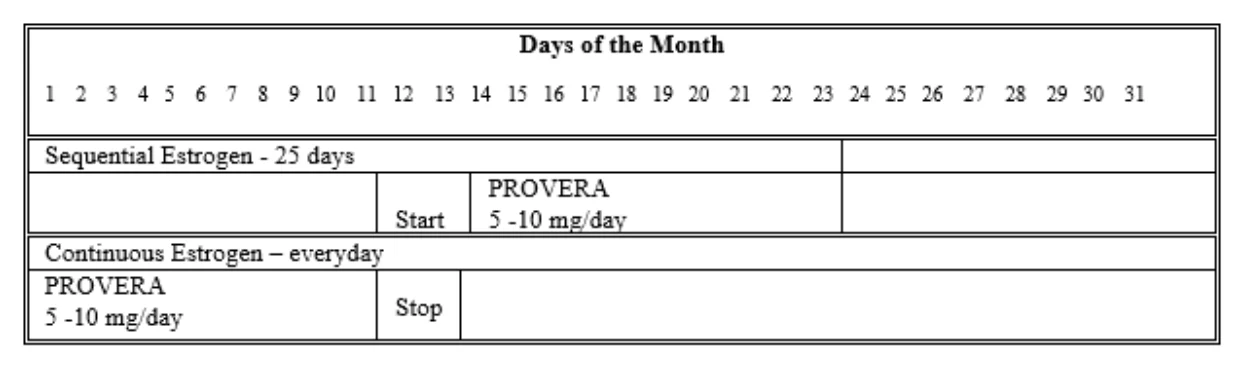
In women with intact uteri receiving estrogen replacement therapy, PROVERA tablets may be given in a dosage of 5 - 10 mg daily for 12 - 14 days. The recommended starting dose for PROVERA should be 10 mg/day, administered for 12 - 14 days. A dose of 5 mg/day PROVERA for 12 - 14 days may be appropriate for some women.
Note: The lowest dose of PROVERA required to protect the endometrium from estrogenic-hyperstimulation should be used. A good indicator is the lowest dose of PROVERA that will consistently result in withdrawal bleeding within 7 days after stopping PROVERA treatment. Bleeding that occurs during the PROVERA treatment indicates a need for a longer duration, or higher dose of PROVERA.
- 2.
Functional Menstrual Disorders:
(a) Secondary Amenorrhea:
After ruling out pregnancy, PROVERA (medroxyprogesterone acetate) may be administered in doses ranging from 5 - 10 mg daily depending upon the degree of progestational effect desired. The dose should be given daily for 12 - 14 days every month.
Note: In patients with poorly developed endometria, conventional estrogen therapy should be given in conjunction with PROVERA.
(b) Dysfunctional Uterine Bleeding:
In dysfunctional uterine bleeding, PROVERA may be given in doses ranging from 5 – 10 mg/day, for 10-14 days, beginning on the assumed or calculated 12 - 16th day of the cycle. This regimen should be repeated for 2 subsequent cycles or longer if necessary.
When bleeding is due to a deficiency of both ovarian hormones, as indicated by a poorly developed proliferative endometrium, conventional estrogen therapy should be given in conjunction with
PROVERA. If bleeding is controlled satisfactorily, at least 2 subsequent cycles of treatment should be given.
If dysfunctional uterine bleeding is not controlled by hormone therapy, appropriate diagnostic measures should be undertaken to rule out uterine pathology.
- 3.
Endometrial Cancer:
200 - 400 mg/day is the usual dose. It is suggested that if neither subjective nor objective improvement is noted within 2 to 3 months, therapy should be discontinued. Where improvement is noted and the disease process appears to be stabilized, it may be possible to maintain this improvement with a 200 mg/day dose.
- 4.
Breast Cancer:
The recommended dose is 400 mg daily, given in divided doses. The patient should be continued on therapy as long as she is responding to treatment. Although doses of up to 2400 mg daily have been reported, controlled studies using 800 mg daily did not demonstrate any appreciable increase in response rates compared to the 400 mg daily dose.
PROVERA is not recommended as primary therapy, but as adjunctive and palliative treatment in advanced, inoperable cases including those with recurrent metastatic disease.
Note: Response to hormonal therapy for endometrial or breast cancer may not be evident until 8 to 10 weeks of therapy. Rapid progression of disease at any time during therapy should result in termination of treatment with PROVERA.
4.4. Administration
PROVERA (Medroxyprogesterone acetate) is administered orally.
4.5. Missed Dose
If a dose of this medication has been missed, it should be taken as soon as possible. However, if it is almost time for the next dose, skip the missed dose and go back to the regular dosing schedule. Do not double doses.
5. Overdose
Symptoms of overdose
Progestin (e.g. norethindrone acetate) overdosage has been characterized by depressed mood, tiredness, acne and hirsutism.
In female patients, overdosage may result in a period of amenorrhea of a variable length and may be followed by irregular menses for several cycles.
No cases of overdosage in male patients have been reported. However, such overdosage, if it were to occur, would not likely result in any particular symptomatology.
Treatment of overdose
There is no known therapy for overdosage of medroxyprogesterone. Doses as high as 1000 mg for the therapy of endometrial carcinoma have been used without adverse effect.
For the most recent information in the management of a suspected drug overdose, contact your regional poison control centre or Health Canada’s toll-free number, 1-844 POISON-X (1-844-764-7669).
- 6. Dosage Forms, Strengths, Composition, and Packaging
Table 1 – Dosage Forms, Strengths, Composition and Packaging
PROVERA (Medroxyprogesterone acetate) is available for oral administration as:
- 2.5 mg circular, orange tablets embossed with "U 64" on one side and scored on the other. Available in bottles of 100
- 5 mg circular, blue tablets embossed with "U 286" on both sides of a break score and on the other surface with “U”. Available in bottles of 100.
- 10 mg circular, white tablets embossed with "Upjohn 50" on one side and scored on the other. Available in bottles of 100.
Non-medicinal ingredients: calcium stearate, corn starch, lactose monohydrate, mineral oil, purified water, sucrose, talc. The 2.5 mg tablet also contains FD&C Yellow No. 6, and the 5 mg tablet also contains FD&C Blue No.2 aluminum oxide hydrate.
7. Warnings and Precautions
Please see 3 SERIOUS WARNINGS AND PRECAUTIONS BOX.
General
Some information presented in the Warnings and Precautions section 7 WARNINGS AND PRECAUTIONS is provided in light of the fact that a progestin medication is often prescribed concomitantly with an estrogen medication. Information in this section pertaining to combined estrogen-progestin therapy may therefore not apply to progestin-only therapy. Physician discretion is advised.
When PROVERA is used for adjunctive and/or palliative treatment of recurrent and/or metastatic endometrial or hormonally-dependent, recurrent metastatic carcinoma of the breast in post-menopausal women, the risks outlined in this WARNINGS AND PRECAUTIONS section 7 WARNINGS AND PRECAUTIONS (including cardiovascular disorders and breast and ovarian cancer), should be weighed against the potential benefits of this treatment to the patient.
| Route of Administration | Dosage Form / Strength/Composition | Non-medicinal Ingredients |
| Oral | Tablets Medroxyprogesterone acetate: 2.5 mg, 5 mg and 10 mg | Calcium stearate, corn starch, FD&C blue No. 2 aluminum oxide hydrate , FD&C yellow No. 6, lactose monohydrate, mineral oil, purified water, sucrose, talc |
Carcinogenesis and Genotoxicity
Breast cancer
Available epidemiological data indicate that the use of combined estrogen plus progestin by postmenopausal women is associated with an increased risk of invasive breast cancer. In the estrogen plus progestin arm of the WHI trial, among 10,000 women over a one-year period, there were:
- 8 more cases of invasive breast cancer (38 on combined HRT versus 30 on placebo).
The WHI study also reported that the invasive breast cancers diagnosed in the estrogen plus progestin group were similar in histology but were larger (mean [SD], 1.7 cm [1.1] vs 1.5 cm [0.9], respectively; P=0.04) and were at a more advanced stage compared with those diagnosed in the placebo group. The percentage of women with abnormal mammograms (recommendations for short-interval follow-up, a suspicious abnormality, or highly suggestive of malignancy) was significantly higher in the estrogen plus progestin group versus the placebo group. This difference appeared at year one and persisted in each year thereafter.
In the estrogen-alone arm of the WHI trial, there was no statistically significant difference in the rate of invasive breast cancer in hysterectomized women treated with conjugated equine estrogens versus women treated with placebo.
Epidemiological data/meta-analysis: A large meta-analysis of prospective cohort studies based on 108, 647 postmenopausal women who developed breast cancer at mean age of 65 years old, also reported an increased risk of developing breast cancer in women treated with estrogen plus progestin therapy or estrogen alone therapy. Not only the risk of breast cancer increases with the duration of use, but also the risk could last up to >10 years after discontinuation of treatment. Observational studies also suggest that the risk of breast cancer was greater, and became apparent earlier, with estrogen plus progestin therapy as compared to estrogen-alone therapy. These studies have not generally found significant variation in the risk of breast cancer among different estrogen plus progestin combinations, doses, or routes of administration.
It is recommended that estrogens with or without progestins not be given to women with existing breast cancer or those with a previous history of the disease (see 2 CONTRAINDICATIONS). There is a need for caution in prescribing estrogens with or without progestins for women with known risk factors associated with the development of breast cancer, such as strong family history of breast cancer (first degree relative) or who present a breast condition with an increased risk (abnormal mammograms and/or atypical hyperplasia at breast biopsy). Other known risk factors for the development of breast cancer such as nulliparity, obesity, early menarche, late age at first full term pregnancy and at menopause should also be evaluated.
It is recommended that women undergo a mammography prior to the start of HRT treatment and at regular intervals during treatment, as deemed appropriate by the treating physician and according to the perceived risks for each patient.
The overall benefits and possible risks of hormone replacement therapy should be fully considered and discussed with patients. It is important that the modest increased risk of being diagnosed with breast cancer after 4 years of treatment with combined estrogen plus progestin HRT (as reported in the results of the WHI trial) be discussed with the patient and weighed against its known benefits.
Instructions for regular self-examination of the breasts should be included in this counselling.
Endometrial hyperplasia & endometrial carcinoma
The incidence of estrogen-associated endometrial hyperplasia was assessed in 2 large, long-term, randomized clinical trials. The first study demonstrated that combining conjugated estrogens with medroxyprogesterone acetate or micronized progesterone protected the endometrium from hyperplastic changes associated with estrogen-only therapy. In the second study, the endometrial hyperplasia incidence was significantly lower in women treated with conjugated estrogen and medroxyprogesterone acetate (P<0.001) than in women treated with conjugated estrogen alone (see 14 CLINICAL TRIALS).
Ovarian cancer
Some recent epidemiologic studies have found that the use of postmenopausal hormone replacement therapy (estrogen alone and estrogen plus progestin therapies) in particular for five or more years has been associated with an increased risk of ovarian cancer.
Cardiovascular
The results of the Heart and Estrogen/progestin Replacement Studies (HERS and HERS II) and the Women’s Health Initiative (WHI) trial indicate that the use of estrogen plus progestin is associated with an increased risk of coronary heart disease (CHD) in postmenopausal women. The results of the WHI trial indicate that the use of estrogen-alone and estrogen plus progestin is associated with an increased risk of stroke in postmenopausal women.
WHI trial findings
In the combined estrogen plus progestin arm of the WHI trial, among 10,000 women over a one-year period, there were:
- 8 more cases of stroke (29 on combined HRT versus 21 on placebo)
- 7 more cases of CHD (37 on combined HRT versus 30 on placebo).
In the estrogen-alone arm of the WHI trial of women with prior hysterectomy, among 10,000 women over a one-year period, there were/was:
- 12 more cases of stroke (44 on estrogen-alone therapy versus 32 on placebo)
- no statistically significant difference in the rate of CHD.
HERS and HERS II findings
In the Heart and Estrogen/progestin Replacement Study (HERS) of postmenopausal women with documented heart disease (n=2763, average age 66.7 years), a randomized placebo-controlled clinical trial of secondary prevention of coronary heart disease (CHD), treatment with 0.625 mg/day oral conjugated equine estrogen (CEE) plus 2.5 mg oral medroxyprogesterone acetate (MPA) demonstrated no cardiovascular benefit. Specifically, during an average follow-up of 4.1 years, treatment with CEE plus MPA did not reduce the overall rate of CHD events in postmenopausal women with established coronary heart disease. There were more CHD events in the hormone treated group than in the placebo group in year 1, but not during the subsequent years.
From the original HERS trial, 2321 women consented to participate in an open label extension of HERS known as HERS II. Average follow-up in HERS II was an additional 2.7 years, for a total of 6.8 years overall. After 6.8 years, hormone therapy did not reduce the risk of cardiovascular events in women with CHD.
Blood pressure
Women using hormone replacement therapy sometimes experience increased blood pressure. Blood pressure should be monitored with HRT use. Elevation of blood pressure in previously normotensive or hypertensive patients should be investigated and HRT may have to be discontinued.
Endocrine and Metabolism
Adrenocortical function
Clinical suppression of adrenocortical function has not been observed at low dose levels. However, the high doses of PROVERA used in the treatment of certain cancers may, in some cases, produce Cushingoid symptoms (eg, "moon" facies, fluid retention, glucose intolerance, and blood pressure elevation).
Glucose and lipid metabolism
A worsening of glucose tolerance and lipid metabolism have been observed in a significant percentage of peri-and post-menopausal patients. Therefore, diabetic patients or those with a predisposition to diabetes should be observed closely to detect any alterations in carbohydrate or lipid metabolism, especially in triglyceride blood levels.
Women with familial hypertriglyceridemia need special surveillance. Lipid-lowering measures are recommended additionally, before treatment is started.
Heme metabolism
Women with porphyria need special surveillance.
Other Conditions
Provera contains lactose. In patients with rare hereditary galactose intolerance, lactase deficiency or glucose-galactose malabsorption, the severity of the condition should be taken into careful consideration before prescribing Provera. The patients should be closely monitored.
Calcium and phosphorus metabolism
Because the prolonged use of estrogens with or without progestins influences the metabolism of calcium and phosphorus, estrogens with or without progestins should be used with caution in patients with metabolic and malignant bone diseases associated with hypercalcemia and in patients with renal insufficiency.
Decrease in bone mineral density
There are no available studies on the effects of orally administered medroxyprogesterone acetate (MPA) as a single agent, on bone mineral density (BMD).
However, it may be suspected that for specific medical conditions, when MPA is administered over a prolonged period of time at a dose that is high enough to suppress endogenous estrogen production (eg. pre-menopausal women), it could result in a decrease in bone mineral density (BMD). In these circumstances, adequate calcium and vitamin D intake should be considered.
Hypothyroidism
Patients who require thyroid hormone replacement therapy and who are also taking estrogen should have their thyroid function monitored regularly to assure that thyroid hormone levels remain in an acceptable range (see 9.7 Drug-Laboratory Test Interactions).
Genitourinary
Vaginal bleeding
Abnormal vaginal bleeding, due to its prolongation, irregularity or heaviness, occurring during therapy should prompt appropriate diagnostic measures to rule out the possibility of uterine malignancy and the treatment should be re-evaluated.
Uterine leiomyomata
Pre-existing uterine leiomyomata may increase in size during estrogen use. Growth, pain or tenderness of uterine leiomyomata requires discontinuation of medication and appropriate investigation.
Endometriosis
Symptoms and physical findings associated with a previous diagnosis of endometriosis may reappear or become aggravated with estrogen use.
Menstrual Bleeding Patterns
Patients should be advised of the menstrual bleeding patterns expected with the sequential regimen (see 4 DOSAGE AND ADMINISTRATION).
Upon sequential administration of PROVERA to women with adequate levels of estrogen (endogenous or exogenous), withdrawal bleeding usually occurs within 7 days after stopping PROVERA. Bleeding that occurs during PROVERA administration period indicates a need for a longer duration, or a higher dose of PROVERA.
Hematologic
Venous thromboembolism
Available epidemiological data indicate that use of estrogen with or without progestin by postmenopausal women is associated with an increased risk of developing venous thromboembolism (VTE).
In the estrogen plus progestin arm of the WHI trial, among 10,000 women on combined HRT over a one-year period, there were 18 more cases of venous thromboembolism, including 8 more cases of pulmonary embolism.
In the estrogen-alone arm of the WHI trial, among 10,000 women on estrogen therapy over a one-year period, there were 7 more cases of venous thromboembolism, although there was no statistically significant difference in the rate of pulmonary embolism.
Generally recognized risk factors for VTE include a personal history, a family history (the occurrence of VTE in a direct relative at a relatively early age may indicate genetic predisposition) and severe obesity (body mass index > 30 kg/m2) and systemic lupus erythematosus. The risk of VTE also increases with age and smoking.
The risk of VTE may be temporarily increased with prolonged immobilization, major surgery or trauma. In women on HRT, attention should be given to prophylactic measures to prevent VTE following surgery. Also, patients with varicose veins should be closely supervised. The physician should be alert to the earliest manifestations of thrombotic disorders (thrombophlebitis, retinal thrombosis, cerebral embolism and pulmonary embolism). If these occur or are suspected, hormone therapy should be discontinued immediately, given the risks of long-term disability or fatality.
If feasible, estrogens with or without progestins should be discontinued at least 4 weeks before major surgery which may be associated with an increased risk of thromboembolism, or during periods of prolonged immobilization.
Hepatic/Biliary/Pancreatic
Gallbladder diseases
A 2- to 4-fold increase in the risk of gallbladder disease requiring surgery in women receiving postmenopausal estrogens has been reported.
Jaundice
Caution is advised in patients with a history of liver and/or biliary disorders. If cholestatic jaundice develops during treatment, the treatment should be discontinued and appropriate investigations carried out.
Liver function tests
Liver function tests should be done periodically in subjects who are suspected of having hepatic disease. For information on endocrine and liver function tests, see section 7 WARNINGS AND PRECAUTIONS, Monitoring and Laboratory Tests.
Immune
Anaphylactic/Anaphylactoid reactions
Anaphylactic and anaphylactoid reactions have occasionally been reported in patients treated with PROVERA.
Monitoring and Laboratory Tests
Before PROVERA is administered, the patient should have a complete physical examination including a blood pressure determination. Breasts and pelvic organs should be appropriately examined and a Papanicolaou smear should be performed. Endometrial biopsy should be done only when indicated. Baseline tests should include mammography, measurements of blood glucose, calcium, triglycerides and cholesterol, and liver function tests.
The first follow-up examination should be done within 3-6 months after initiation of treatment to assess response to treatment. Thereafter, examinations should be made at intervals at least once a year. Appropriate investigations should be arranged at regular intervals as determined by the physician.
The importance of regular self-examination of the breasts should be discussed with the patient.
Neurologic
Cerebrovascular insufficiency
Patients who develop visual disturbances (including sudden partial or complete loss of vision or sudden onset of proptosis, diplopia), classical migraine, transient aphasia, paralysis, or loss of consciousness should discontinue medication.
Patients with a previous history of classical migraine and who develop a recurrence or worsening of migraine symptoms should be reevaluated.
Dementia
Available epidemiological data indicate that the use of combined estrogen plus progestin in women age 65 and over may increase the risk of developing probable dementia.
The Women’s Health Initiative Memory Study (WHIMS), a clinical substudy of the WHI, was designed to assess whether postmenopausal hormone replacement therapy (oral estrogen plus progestin or oral estrogen-alone) reduces the risk of dementia in women aged 65 and over (age range 65-79 years) and free of dementia at baseline.
In the estrogen plus progestin arm of the WHIMS (n=4532), women with intact uteri were treated with daily 0.625 mg conjugated equine estrogens (CEE) plus 2.5 mg medroxyprogesterone acetate (MPA) or placebo for an average of 4.05 years. The results, when extrapolated to 10,000 women treated over a one-year period showed:
- 23 more cases of probable dementia (45 on combined HRT versus 22 on placebo).
In the estrogen-alone arm of the WHIMS (n=2947), women with prior hysterectomy were treated with daily 0.625 mg CEE or placebo for an average of 5.21 years. The results, when extrapolated to 10,000 women treated over a one-year period showed:
- 12 more cases of probable dementia (37 on estrogen-alone versus 25 on placebo), although this difference did not reach statistical significance.
When data from the estrogen plus progestin arm of the WHIMS and the estrogen alone arm of the WHIMS were combined, as per the original WHIMS protocol, in 10,000 women over a one-year period, there were:
- 18 more cases of probable dementia (41 on estrogen plus progestin or estrogen-alone versus 23 on placebo).
In addition, conjugated equine estrogens and medroxyprogesterone acetate (CEE/MPA) therapy did not prevent mild cognitive impairment (MCI) in post-menopausal women 65 years of age or older. Use of hormone therapy to prevent dementia or MCI in women 65 years or older is not recommended.
Epilepsy
Particular caution is indicated in women with epilepsy, as estrogens with or without progestins may cause an exacerbation of this condition.
Meningioma
Meningiomas have been reported following long-term administration of progestins, including medroxyprogesterone acetate (MPA). MPA should be discontinued if a meningioma is diagnosed. Caution is advised when recommending medroxyprogesterone to patients with a history of meningioma.
Psychiatric
Depression
Patients who have a history of mental depression should be carefully monitored while receiving therapy with PROVERA. Some patients may complain of premenstrual like depression while on PROVERA.
Renal
Fluid retention
Estrogens with or without progestins may cause fluid retention. Therefore, particular caution is indicated in cardiac or renal dysfunction or asthma. If, in any of the above-mentioned conditions, a worsening of the underlying disease is diagnosed or suspected during treatment, the benefits and risks of treatment should be reassessed based on the individual case.
Reproductive Health
Menopause
The age of the patient constitutes no absolute limiting factor although treatment with progestins may mask the onset of the climacteric.
7.1. Special Populations
7.1.1. Pregnancy
Usage in pregnancy is not recommended. Progestational agents are also not recommended as a diagnostic test for pregnancy. If the patient is exposed to PROVERA (medroxyprogesterone acetate) during pregnancy or if she becomes pregnant while taking the drug, she should be apprised of the potential risk to the fetus.
7.1.2. Breastfeeding
Detectable amounts of progestin have been identified in the milk of mothers receiving the drug. Infants exposed to medroxyprogesterone via breast milk have been studied for developmental and behavioral effects through puberty. No adverse effects have been noted.
7.1.3. Pediatrics
Pediatrics (<16 years of age): No data are available to Health Canada; therefore, Health Canada has not authorized an indication for pediatric use.
7.1.4. Geriatrics
Geriatrics (> 65 years of age): Of the total number of subjects in the estrogen plus progestin substudy of the Women’s Health Initiative (WHI), 21.5 percent (n = 3,576) were 70 to 79 years old at baseline.
No significant differences in relative risks of stroke and invasive breast cancer were observed between subjects 70 years and over compared to younger subjects. However, there was a higher relative risk of stroke and invasive breast cancer in women 75 and over compared to younger subjects.
8. Adverse Reactions
8.1. Adverse Reaction Overview
See 7 WARNINGS AND PRECAUTIONS regarding potential induction of malignant neoplasms and adverse effects similar to those of oral contraceptives.
Overview of Adverse Drug Reactions with PROVERA use:
The following adverse reactions have been reported with the use of PROVERA (medroxyprogesterone acetate):
Breast - tenderness, galactorrhea;
Reproductive System - breakthrough bleeding, spotting, change in menstrual flow, amenorrhea, changes in cervical erosion and cervical secretions;
Central Nervous System - headache, nervousness, dizziness, depression, insomnia, somnolence, fatigue, premenstrual syndrome-like symptoms;
Thromboembolic phenomena - including thrombophlebitis and pulmonary embolism;
Skin and Mucous Membranes - sensitivity reactions ranging from pruritus, urticaria, angioneurotic edema to generalized rash and anaphylaxis; acne, alopecia, hirsutism;
Gastrointestinal - abdominal discomfort, nausea, bloating;
Miscellaneous - pyrexia, increase in weight, peripheral edema, "moon" facies.
Overview of Adverse Drug Reactions with estrogen/progestin combination use:
The following adverse reactions have been reported with estrogen/progestin combination in general:
Blood and lymphatic systems disorders
Altered coagulation tests (see 9.7 Drug-Laboratory Tests Interactions)
Cardiac disorders
Palpitations; increase in blood pressure (see 7 WARNINGS AND PRECAUTIONS); coronary thrombosis.
Endocrine disorders
Increased blood sugar levels; decreased glucose tolerance.
Eye disorders
Neuro-ocular lesions (e.g. retinal thrombosis, optic neuritis); visual disturbances; steepening of the corneal curvature; intolerance to contact lenses.
Gastrointestinal disorders
Nausea; vomiting; abdominal discomfort (cramps, pressure, pain); bloating.
General disorders and administration site conditions
Fatigue; changes in appetite; changes in body weight; change in libido.
Hepatobiliary disorders
Gallbladder disorder; asymptomatic impaired liver function; cholestatic jaundice.
Musculoskeletal and connective tissue disorders
Musculoskeletal pain including leg pain not related to thromboembolic disease (usually transient, lasting 3-6 weeks) may occur.
Nervous system disorders
Aggravation of migraine episodes; headaches; dizziness; neuritis.
Psychiatric disorders
Mental depression; nervousness; irritability.
Renal and urinary disorders
Cystitis; dysuria; sodium retention; edema.
Reproductive system and breast disorders
Breakthrough bleeding; spotting; change in menstrual flow; dysmenorrhea; vaginal itching/discharge; dyspareunia; endometrial hyperplasia; pre-menstrual-like syndrome; reactivation of endometriosis; changes in cervical erosion and amount of cervical secretion; breast swelling and tenderness.
Skin and subcutaneous tissue disorders
Chloasma or melasma; which may persist when drug is discontinued; erythema multiform; erythema nodosum; haemorrhagic eruption; loss of scalp hair; hirsutism and acne.
Vascular disorders
Isolated cases of: thrombophlebitis; thromboembolic disorders.
8.5. Post-Market Adverse Reactions
Adverse events reported during worldwide post-marketing experience, regardless of causality and frequency, are listed below. It should be noted that the nature of post-marketing surveillance makes it difficult to determine if a reported event was actually caused by PROVERA.
Musculoskeletal and connective tissue disorders: muscle spasms
Nervous system disorders: cerebral infarction
Pregnancy, puerperium and perinatal conditions: abortion spontaneous
Respiratory, thoracic and mediastinal disorders: dyspnea
Vascular disorders: hemorrhage
The following post-market ADRs have been observed with PROVERA indicated for oncology:
Cardiac disorders: myocardial infarction, congestive heart failure
Eye disorders: diabetic cataract
Gastrointestinal disorders: constipation, diarrhea, dry mouth
Investigations: elevation of white blood cells and platelet counts
Nervous system disorders: loss of concentration, adrenergic-like effects (e.g. fine-hand tremors, sweating, cramps in calves in night)
Psychiatric disorders: euphoria
Renal and urinary system disorders: glycosuria
If adverse symptoms persist, the prescription of the HRT should be re-considered.
9. Drug Interactions
9.2. Drug Interactions Overview
Preparations inducing liver enzymes (eg, barbiturates, hydantoins, carbamazepine, meprobamates, phenylbutazone or rifampicin) may interfere with the activity of orally administered progestins.
9.4. Drug-Drug Interactions
Concomitant administration of aminoglutethimide with medroxyprogestrone acetate (MPA) may significantly reduce the bioavailability of MPA.
Medroxyprogesterone acetate (MPA) is metabolized in-vitro primarily by hydroxylation via the CYP3A4. Specific drug-drug interaction studies evaluating the clinical effects with CYP3A4 inducers or inhibitors on MPA have not been conducted and therefore the clinical effects of CYP3A4 inducers or inhibitors are unknown.
9.5. Drug-Food Interactions
Administration with food increases the bioavailability of MPA. A 10 mg dose of oral MPA, taken immediately before or after a meal, increased average MPA Cmax (51 and 77%, respectively) and average AUC (18 and 33%, respectively). The half-life of MPA was not changed with food. MPA can be taken with or without food.
9.6. Drug-Herb Interactions
It was found that some herbal products (eg, St. John's wort) which are available as over-the-counter (OTC) products might interfere with steroid metabolism, and therefore, alter the efficacy and safety of estrogen/progestin products.
Physicians and other health care providers should made be aware of other non-prescription products concomitantly used by the patient, including herbal and natural products, obtained from the widely spread Health Stores.
9.7. Drug-Laboratory Test Interactions
The results of certain endocrine and liver function tests may be affected by estrogen/progestin-containing products:
- increased sulfobromophthalein retention;
- increased prothrombin time and partial thromboplastin time; increased levels of fibrinogen and fibrinogen activity; increased coagulation factors VII, VIII, IX, X; increased norepinephrine-induced platelet aggregability; decreased antithrombin III;
- increased thyroxine-binding globulin (TBG), leading to increased circulating total thyroid hormone (T4) as measured by column or radioimmunoassay; T3 resin uptake is decreased, reflecting the elevated TBG; free T4 concentration is unaltered;
- other binding proteins may be elevated in serum ie, corticosteroid binding globulin (CBG), sex-hormone binding globulin (SHBG), leading to increased circulating corticosteroids and sex steroids, respectively; free or biologically active hormone concentrations are unchanged;
- impaired glucose tolerance;
- reduced serum folate concentration;
- increased serum triglycerides and phospholipids concentration.
The following laboratory tests may be affected by the use of PROVERA.
(a) Gonadotropin levels;
(b) Plasma progesterone levels;
(c) Urinary pregnanediol levels;
(d) Plasma testosterone levels (in the male);
(e) Plasma estrogen levels (in the female);
(f) Plasma cortisol levels;
(g) Glucose tolerance test.
The results of the above laboratory tests should not be considered reliable unless therapy has been discontinued for 2 to 4 weeks. The pathologist should be informed that the patient is receiving HRT therapy when relevant specimens are submitted.
10. Clinical Pharmacology
10.1. Mechanism of Action
PROVERA (medroxyprogesterone acetate) is an orally-active progestational steroid (progestin) derived from a natural source (soybeans) and devoid of androgenic and estrogenic activity.
10.2. Pharmacodynamics
Progestin Pharmacology: Medroxyprogesterone acetate significantly reduces the risk of endometrial hyperplasia in women with intact uteri.
Osteoporosis/osteopenia
Presently there are no conclusive data concerning the mechanism of action of progestins on bone.
Clinically, research to date has shown women treated with medroxyprogesterone acetate to prevent estrogenic hyperstimulation of the endometrium do not lose protection against osteoporosis.
Urogenital symptoms
Medroxyprogesterone acetate, when administered to women with adequate levels of estrogen (endogenous or exogenous), transforms a proliferative endometrium into a secretory endometrium. Withdrawal bleeding is anticipated within 7 days after stopping medroxyprogesterone acetate.
Microscopically, the secretory change is associated with glycoprotein-rich stromal cells which surround the glands and vessels and assist them in maintaining their integrity during hormonal withdrawal. The result is an orderly regression and remodelling, and preservation of the functional layer of the endometrium.
Medroxyprogesterone acetate decreases both cytoplasmic and nuclear estrogen receptors in endometrial cells. In addition, medroxyprogesterone acetate induces estradiol dehydrogenase (E2DH) activity, the enzyme mechanism by which endometrial cells metabolize and excrete estrogens.
Oral medroxyprogesterone acetate also produces typical progestational changes in the cervical mucous (inhibits ferning) and increases the intermediate cell count in the maturation index of the vaginal epithelium.
Metabolism
In studies which examined metabolic changes, a decrease in glucose tolerance has been associated with progestins, including medroxyprogesterone acetate.
Medroxyprogesterone acetate shows small or undetectable effects on lipoproteins when used at therapeutic dosages. Furthermore, research demonstrates that the use of medroxyprogesterone acetate with estrogen in hormone replacement therapy maintains the estrogenic effects on lipid profile.
Hemostatic factors
There is no conclusive evidence that medroxyprogesterone acetate produces adverse coagulation changes in women receiving the progestin alone, or as part of a sequential regimen with estrogen.
Endocrine
Medroxyprogesterone acetate in appropriate doses, suppresses the secretion of pituitary gonadotropins which in turn, prevents follicular maturation, producing anovulation in the pre-menopausal woman.
The anti-cancer activity of medroxyprogesterone acetate at pharmacologic doses may be dependent upon its effect on the hypothalamic/pituitary/gonadal axis, estrogen receptors and the metabolism of steroids at the tissue level.
Like progesterone, medroxyprogesterone acetate is thermogenic. At the very high dosage levels used in the treatment of certain cancers (500 mg/day or more), corticoid-like activity may be manifest.
Medroxyprogesterone acetate in appropriate doses suppresses the Leydig cell function in the male (ie, suppresses endogenous testosterone production).
10.3. Pharmacokinetics
In a randomized, cross-over study using 22 healthy male volunteers, the pharmacokinetics of PROVERA 2.5 mg and PROVERA 10 mg tablets was studied following 10 mg single oral doses in the following regimens:
- a) four PROVERA 2.5 mg tablets or
- b) one PROVERA 10 mg tablet as a single dose during a fasting period which began 9 hours before and lasted until 4 hours after the dose. Treatment phases were separated by a 14-day washout period. Blood samples were collected prior to and at the following times after drug administration: 0.5, 1.0, 2.0, 3.0, 4.0, 6.0, 8.0, 10.0, 12.0, 16.0, 24.0, 36.0, 72.0, 96.0, and 120.0 hours. The resulting serum samples were analyzed for medroxyprogesterone using a radioimmunoassay procedure.
Relevant bioavailability parameters are included in Table 1:
Table 1 - Summary of Medroxyprogesterone acetate tablets USP Pharmacokinetic Parameters in healthy male volunteers (10 mg single oral doses)
| Cmax | Tmax | t½ (h) | AUC0-∞ | CL | Vd | |
| Cmax | Tmax | t½ (h) | AUC0-∞ | CL | Vd | |
Single Oral Dose 2.5 mg (4 Tablets) | 22.10 | 1.68 | n/a | 390.66 - 466.62 | n/a | n/a |
Single Oral Dose 10 mg (1 Tablet) | 19.26 | 1.91 | n/a | 399.95 - 471.96 | n/a | n/a |
The pharmacokinetics of PROVERA 100 mg tablets was assessed in a clinical study using 16 healthy, male volunteers. A single dose of medroxyprogesterone acetate 100 mg was administered orally to subjects who fasted overnight and for 2 hours after the dose was administered. Blood samples were collected prior to, and at the following times, after drug administration: 0.5, 1.0, 2.0, 3.0, 4.0, 6.0, 8.0, 10.0, 12.0, 26.0, 32.0, 50.0, 74.0, 98.0, and 170.0 hours. Serum samples were analyzed for medroxyprogesterone using a radioimmunoassay procedure.
Relevant bioavailability parameters are included in Table 2.
Table 2: Summary of Medroxyprogesterone acetate tablets USP Pharmacokinetic Parameters in healthy male volunteers (100 mg single oral dose)
| Cmax | Tmax | t½ (h) | AUC0-∞ | CL | Vd | |
Single Oral Dose 100 mg | 35.2 | 4.1 | n/a | 974.2 | n/a | n/a |
Absorption:
Medroxyprogesterone acetate is rapidly absorbed from the gastrointestinal tract, and maximum concentrations are obtained between 2 to 4 hours after oral administration.
Distribution:
MPA is approximately 90% protein bound, primarily to albumin; no MPA binding occurs with sex¬ hormone binding globulin.
Metabolism:
Medroxyprogesterone acetate is metabolized in the liver to several progestin metabolites. The major drug-related material found in circulation following oral administration has been characterized as both free and glucuronide-conjugated metabolites of medroxyprogesterone acetate.
Elimination:
Medroxyprogesterone acetate has an apparent half-life of about 30 hours and is primarily eliminated via fecal excretion, to which biliary secretion may contribute. Approximately 44% of an oral dose is eliminated through urinary excretion in the form of metabolites.
The only metabolite of medroxyprogesterone acetate that has been isolated and unequivocally identified is 6α-methyl-6β,17α,21-trihydroxy-4-pregnene-3,20-dione-17-acetate, and appears to be the primary urinary metabolite. This metabolite accounts for approximately 8% of an oral dose, and is found to be excreted as a glucuronide conjugate.
Special populations and conditions
- Pregnancy and breastfeeding See 7 WARNINGS AND PRECAUTIONS, 7.1.1 Pregnant Women.
Hepatic Insufficiency No clinical studies have evaluated the effect of hepatic disease on the
- pharmacokinetics of PROVERA. However, MPA is almost exclusively eliminated by hepatic metabolism and steroid hormones may be poorly metabolized in patients with severe liver insufficiency, (see 2 CONTRAINDICATIONS).
- Storage, Stability, and Disposal
Store at controlled room temperature (15oC - 30oC). Keep in a safe place out of the reach of children.
12. Special Handling Instructions
No special instructions for handling are required.
Part 2: Scientific Information
13. Pharmaceutical Information
Drug Substance
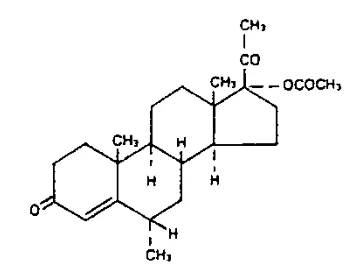
Proper name: Medroxyprogesterone acetate
Chemical name: (1) Pregn-4-ene-3,20-dione,17-(acetyloxy)-6-methyl-,(6α)-;
(2) 17-Hydroxy-6α-methylpregn-4-ene-3,20-dione acetate
Molecular formula and molecular mass: C24H34O4; 386.53
Structural formula:
Physicochemical properties: Medroxyprogesterone acetate is a white to off-white, odourless crystalline powder, stable in air, melting between 200oC and 210oC. It is freely soluble in chloroform, soluble in acetone and dioxane, sparingly soluble in ethanol and methanol, slightly soluble in ether and insoluble in water.
14. Clinical Trials
14.1. Clinical Trials by Indication
Study demographics and trial design
The following studies discussed are based on published literature.
Hormonal Replacement Therapy:
The incidence of estrogen-associated endometrial hyperplasia was assessed in 2 large, long-term, randomized clinical trials. A 3-year multicentre, double-blind, placebo-controlled study of 596 nonhysterectomized, postmenopausal women between the ages of 45 and 64 years at study entry were randomized to receive placebo, conjugated estrogen only, conjugated estrogen plus medroxyprogesterone acetate, or conjugated estrogen plus micronized progesterone. Participants administered with 1 of the 3 estrogen-progestin regimens had similar rates of hyperplasia as those given placebo (P=0.16). Combining conjugated estrogen with medroxyprogesterone acetate or micronized progesterone protected the endometrium from hyperplastic changes associated with estrogen-only therapy.
In a second study, 1724 postmenopausal women between the ages of 45 and 65 years were enrolled in a 1-year prospective, multicentre, double-blind, randomized study. All 1385 patients with valid biopsy data received conjugated estrogen 0.625 mg every day of a 28-day cycle, and were randomized to receive medroxyprogesterone acetate 2.5 mg or 5 mg daily, or 5 mg or 10 mg for 14 days per 28-day cycle, or conjugated estrogen only. The endometrial hyperplasia incidence was significantly lower in women treated with conjugated estrogen and medroxyprogesterone acetate (P<0.001) than in women treated with conjugated estrogen alone.
Functional Menstrual Disorders:
A prospective, randomized, double-blind study in 77 premenopausal women compared the effectiveness of either medroxyprogesterone acetate or dydrogesterone treatment in inducing withdrawal bleeding in these women with secondary amenorrhea. Of the 48 women qualified for the study, 22 patients received a daily dose of 10 mg medroxyprogesterone acetate and 26 patients received a daily dose of 20 mg dydrogesterone over a 5-day treatment course. Withdrawal bleeding occurred in 21 of the 22 (95%) women taking medroxyprogesterone acetate and in 24 of the 26 (92%) women taking dydrogesterone. Mastalgia was the only side effect reported for both treatments.
Treatment of Endometrial Carcinoma:
A randomized trial was conducted in 299 women with advanced or recurrent endometrial carcinoma to assess the importance of prognostic factors and to determine whether a higher dose of medroxyprogesterone acetate would yield a higher response rate. Patients were randomized to receive either 200 mg or 1000 mg of medroxyprogesterone acetate per day orally, and were followed until unacceptable toxicity intervened or their disease progressed. Among patients receiving the low-dose regimen, there was an overall response rate of 25%, whereas this rate was 15% in the group of patients receiving the high-dose regimen. The use of medroxyprogesterone acetate 200 mg/day orally is a reasonable initial approach to the treatment of advanced or recurrent endometrial carcinoma.
Treatment of Metastatic Breast Cancer in Post-Menopausal Women
The effective treatment of metastatic breast cancer with medroxyprogesterone acetate in post-menopausal women was demonstrated in 2 controlled trials. In the first study, 39 postmenopausal women with metastatic breast carcinoma were treated with either 400 mg/day or 800 mg/day medroxyprogesterone acetate. The results showed an objective remission rate of 44% (17 patients). Median remission duration was 8 months. No apparent difference in response between the 2 dose levels was observed. The most common side effects were increased appetite (66%) and weight gain (97%).
In a second study, 47 postmenopausal women with evaluable breast cancer were treated with medroxyprogesterone acetate at daily dose levels of 400 mg. Twenty-five (53%) patients responded to this treatment with duration of remission from 5 to 26 months, with a median of 10 months and a mean of 12+ months. The most common side effect was weight gain (36%).
15. Microbiology
No microbiological information is required for this drug product.
16. Non-Clinical Toxicology
General Toxicology:
Acute Toxicity: The oral LD50 of medroxyprogesterone acetate was found to be greater than 10,000 mg/kg in the mouse. The intraperitoneal LD50 in the mouse was 6985 mg/kg.
Sub-acute and Chronic Toxicology: Medroxyprogesterone acetate administered orally to rats and mice (334 mg/kg/day) and dogs (167 mg/kg/day) for 30 days was found to be non-toxic.
Medroxyprogesterone acetate was administered orally to dogs and rats at 3, 10 and 30 mg/kg/day for 6 months. The drug was considered to be non-toxic at these levels but with anticipated hormonal effects at the higher doses.
Genotoxicity: In the Salmonella/Microsome test (Ames test), DNA damage/alkaline elution assay, and micronucleus test, medroxyprogesterone acetate showed no mutagenic properties.
Carcinogenicity: Long-term toxicology studies in the monkey, dog, and rat with parenteral medroxyprogesterone acetate have disclosed:
- 1. No uterine or breast abnormalities were revealed in the rat after 2 years.
- 2.
Beagle dogs receiving 75 mg/kg and 3 mg/kg every 90 days, for 7 years, developed mammary nodules, as did some of the control animals. The nodules appearing in the control animals were intermittent in nature, whereas the nodules in the drug treated animals were larger, persistent, and more numerous. In addition, 2 high-dose animals developed breast malignancies.
The Food and Drug Administration (United States), the Committee on Safety of Medicines (United Kingdom), and 3 International panels of experts have concluded that the Beagle bitch is not an appropriate model for mammary carcinogenicity testing of progesterone derivatives such as medroxyprogesterone acetate.
Because of differences between the Beagle bitch and the human female with regard to sensitivity and metabolism of progestins, positive carcinogenicity studies in the Beagle bitch can no longer be considered indicative of a significant hazard to women.
- 3.
No uterine malignancies were found in monkeys receiving placebo, 3 mg/kg, or 30 mg/kg every 90 days for 10 years. However, 2 monkeys receiving 150 mg/kg every 90 days for 10 years developed endometrial carcinoma. One was treated for 111 months and the other for 125 months of the 130-month study. The lesions were remarkably similar in cell morphology to epithelial plaques which occur in monkeys but not in humans. Electron microscopic studies confirmed that the neoplasms were malignant, epithelial (not mesenchymal), and thus of a type not stimulated by progestins in women. Therefore, it was concluded that the occurrence of these lesions, regardless of the cause, does not indicate medroxyprogesterone acetate is carcinogenic in women.
In the same study, mammary nodules were found in three of the monkeys in the 30 mg/kg group. The lesions showed no signs of malignancy.
Because these lesions were both non-progressive and non-invasive, and because many lesions of this type are known to appear and then regress, it was concluded that the occurrence of this non-malignant mammary lesion in 3 treated monkeys poses no potential risk of breast cancer in women.
Reproductive and Developmental Toxicology: Animal studies have not demonstrated any impairment of fertility in first or second generation studies.
In rats, medroxyprogesterone acetate may have some effect on genital systems, but standard teratologic techniques have shown no effects on non-genital systems.
Medroxyprogesterone acetate produced cleft palates in rabbits, but has been attributed to that particular species' sensitivity to the drug's glucocorticoid activity.
Medroxyprogesterone acetate given orally at 1, 10, and 50 mg/kg/day in pregnant Beagle bitches produced clitoral hypertrophy in the female pups of the high-dose animals. No abnormalities were noted in any of the male pups.
The relevance of any of these findings with respect to humans has not been established.