


Product Monograph - Utrogestan
Recent Major Label Changes
| 2 CONTRAINDICATIONS | 2026-04 |
|---|---|
| 7 WARNINGS AND PRECAUTIONS, 7.1 Special Populations; 7.1.1 Pregnant Women; 7.1.2 Breast-feeding; 7.1.3 Pediatrics; 7.1.4 Geriatrics | 2026-04 |
Certain sections or subsections that are not applicable at the time of the preparation of the most recent authorized product monograph are not listed.
Table of Contents
Recent Major Label Changes ................................................................................................... 2
Table of Contents ................................................................................................................... 2
Part 1: Healthcare Professional Information ........................................................................... 4
- 1.
Indications ....................................................................................................................... 4
1.1. Pediatrics .................................................................................................................. 4
1.2. Geriatrics .................................................................................................................. 4
- 2. Contraindications ............................................................................................................ 4
- 4.
Dosage and Administration ............................................................................................. 4
4.2. Recommended Dose and Dosage Adjustment ......................................................... 4
4.4. Administration .......................................................................................................... 4
4.5. Missed Dose ............................................................................................................. 4
- 5. Overdose ......................................................................................................................... 5
- 6. Dosage Forms, Strengths, Composition, and Packaging ................................................... 5
- 7.
Warnings and Precautions ............................................................................................... 5
General ................................................................................................................................. 5
7.1. Special Populations .................................................................................................. 6
7.1.1. Pregnancy ........................................................................................................ 6
7.1.2. Breastfeeding .................................................................................................. 7
7.1.3. Pediatrics ......................................................................................................... 7
7.1.4. Geriatrics ......................................................................................................... 7
- 8.
Adverse Reactions ........................................................................................................... 7
8.1. Adverse Reaction Overview ...................................................................................... 7
8.2. Clinical Trial Adverse Reactions ................................................................................ 8
8.2.1. Clinical Trial Adverse Reactions – Pediatrics .................................................... 9
8.5. Post-Market Adverse Reactions ............................................................................... 9
- 9.
Drug Interactions ............................................................................................................. 9
9.3. Drug-Behaviour Interactions .................................................................................... 9
9.4. Drug-Drug Interactions ........................................................................................... 10
9.7. Drug-Laboratory Test Interactions ......................................................................... 12
- 10.
Clinical Pharmacology ................................................................................................... 13
10.1. Mechanism of Action .............................................................................................. 13
10.3. Pharmacokinetics ................................................................................................... 13
- 11. Storage, Stability, and Disposal ...................................................................................... 14
Part 2: Scientific Information ................................................................................................ 15
- 13. Pharmaceutical Information .......................................................................................... 15
- 14.
Clinical Trials .................................................................................................................. 15
14.1. Clinical Trials by Indication ..................................................................................... 15
- 16. Non-Clinical Toxicology .................................................................................................. 18
Patient Medication Information ........................................................................................... 20
Part 1: Healthcare Professional Information
1. Indications
UTROGESTAN (progesterone) is indicated for:
- luteal phase support during in vitro fertilization (IVF) cycles
1.1. Pediatrics
Pediatrics (<18 years): This drug is not intended for pediatric use and no clinical data have been collected in children
1.2. Geriatrics
Geriatrics (>65 years of age): No clinical data have been collected in patients over age 65.
2. Contraindications
UTROGESTAN should not be used in individuals with any of the following conditions:
- Hypersensitive to progesterone, soya lecithin, gelatin or to any other ingredient in the formulation, including any non-medicinal ingredient, or component of the container. For a complete listing, see 6. Dosage Forms, Strengths, Composition, and Packaging of the product monograph
- Known missed abortion or ectopic pregnancy
- Severe hepatic dysfunction or disease
- Known or suspected breast cancer or genital tract cancer
- Active arterial or venous thromboembolism or severe thrombophlebitis or cerebro-vascular disease, or a history of these events
- Porphyria
- Undiagnosed Vaginal Bleeding
4. Dosage and Administration
4.2. Recommended Dose and Dosage Adjustment
The recommended dosage is 600 mg/day in divided doses, from the day of embryo transfer until at least the 7th week of pregnancy and not later than the 12th week of pregnancy.
4.4. Administration
The method of administration is vaginal. Each soft capsule of UTROGESTAN must be inserted deep into the vagina.
4.5. Missed Dose
If a patient misses a dose, the patient should be instructed to take the dose as soon as she remembers. The patient should also be instructed not to use more than her daily dose and not to double dose.
5. Overdose
Symptoms of overdosage may include somnolence, dizziness, euphoria or dysmenorrhoea which have been observed mainly following oral administration and to a much lower extent following vaginal administration.
Treatment of overdosage consists of decreasing the dose or discontinuation of progesterone vaginal soft capsules, and observation together with institution of appropriate symptomatic and supportive care
For the most recent information in the management of a suspected drug overdose, contact your regional poison control centre or Health Canada’s toll-free number, 1-844 POISON-X (1-844-764-7669).
- 6. Dosage Forms, Strengths, Composition, and Packaging
Table 1 – Dosage Forms, Strengths, and Composition
Description
UTROGESTAN 200 mg soft capsules are ovoid, slightly yellow soft gelatin soft capsules.
UTROGESTAN is supplied in blister packages, with 7 soft capsules per blister package. Each box contains 3 blisters, corresponding to 21 soft capsules per box.
7. Warnings and Precautions
General
- Before starting treatment, the patient and her partner should be assessed by a doctor for causes of infertility.
- A pretreatment physical examination should include special reference to breasts, pelvic organs as well as Papanicolaou smear.
- A complete medical examination must be performed regularly during the treatment.
- In all cases of irregular vaginal bleeding adequate diagnostic measures should be undertaken.
- Progesterone may cause fluid retention and conditions which might be influenced by this (e.g., epilepsy, migraine, asthma, cardiac or renal dysfunction) require careful observation.
- The pathologist should be informed of progesterone therapy when relevant specimens are submitted.
- UTROGESTAN should not be recommended for use with other vaginal products (such as antifungal products) as this may alter progesterone release and absorption from the vaginal insert (see 9.4 Drug-Drug Interactions).
- Sex steroid use may also increase the risk of retinal vascular lesions. To prevent these latter
| Route of Administration | Dosage Form/ Strength/Composition | Non-Medicinal Ingredients |
| vaginal | Soft capsule / 200 mg / micronized progesterone | gelatin, glycerol, purified water, soybean lecithin, sunflower oil, titanium dioxide |
- complications, caution is to be taken in users >35 years, in smokers, and in those with risk factors for atherosclerosis. Use should be terminated in case of transient ischemic events, appearance of sudden severe headaches, or vision impairments related to papillary edema or retinal hemorrhage.
- UTROGESTAN (progesterone) is not suitable for use as a contraceptive and is not a treatment for imminent premature labour. It must only be used in accordance with the indications of use see 1 Indications.
- Progesterone use should be discontinued if a non-viable pregnancy (missed abortion) or ectopic pregnancy is diagnosed.
Each Progesterone Soft Capsule 200 mg contains 2 mg soya lecithin and may cause hypersensitivity reactions (urticarial and anaphylactic shock in hypersensitive patients) (see 2 Contraindications). As there is a possible relationship between allergy to soya and allergy to peanut, patients with peanut allergy should avoid using Progesterone Soft Capsules.
Progesterone Soft Capsules contain highly refined oil, for which the incidence of hypersensitivity is very rare in adults
Cardiovascular
The physician should be alert to earliest signs of myocardial infarction, cerebrovascular disorders, arterial or venous thromboembolism (venous thromboembolism or pulmonary embolism), thrombophlebitis or retinal thrombosis. UTROGESTAN should be discontinued if any of these are suspected.
Endocrine and Metabolism
Decrease in glucose tolerance has been noted in a few patients when taking oestrogen- progestin combination drugs. The mechanism for this is unknown. Diabetic patients should be carefully monitored while receiving progesterone therapy.
Hepatic/Biliary/Pancreatic
Cautious use in patients with mild to moderate hepatic dysfunction.
Psychiatric
Patients who have a history of depression should be carefully observed. UTROGESTAN should be discontinued if symptoms worsen.
7.1. Special Populations
7.1.1. Pregnancy
During pregnancy, UTROGESTAN should only be used during the first three months. UTROGESTAN is not a treatment for premature labour. Prescription of progesterone beyond the first trimester of pregnancy may reveal gravidic cholestasis.
Progesterone crosses the placenta. No association has been found between the maternal use of progesterone in early pregnancy and fetal malformations. Data on the risk of fetal effects with exposure in later stages of pregnancy are limited.
7.1.2. Breastfeeding
UTROGESTAN is not indicated during lactation. Detectable amounts of progesterone enter the breast milk. Progesterone is excreted in human milk to such an extent that the effects on the breastfed newborns / infants are likely.
7.1.3. Pediatrics
Pediatrics (<18 years): No data are available to Health Canada; therefore, Health Canada has not authorized an indication for pediatric use.
7.1.4. Geriatrics
Geriatrics (>65 years of age): No data are available to Health Canada; therefore, Health Canada has not authorized an indication for geriatric use.
8. Adverse Reactions
8.1. Adverse Reaction Overview
Local intolerance (burning, pruritus or fatty discharge) has been observed during the different clinical trials and reported in the literature but incidences were extremely low. Most local adverse events are mild in nature.
No systemic side effects, in particular somnolence or dizziness (observed with the oral form) have been reported during clinical studies with progesterone vaginal soft capsules at the recommended dosages.
The adverse reactions listed below are based on post-marketing data and clinical trials.
Gastrointestinal disorders
Abdominal distension (including discomfort); abdominal pain (including upper and lower abdominal pain); nausea; constipation; diarrhoea; vomiting.
General disorders and administration site conditions
Fatigue; oedema (including peripheral swelling); burning sensation.
Infections and infestations
Vulvovaginal mycotic infection.
Metabolism and nutrition disorders
Fluid retention; weight fluctuation
Musculoskeletal and connective tissue disorders
Back pain; muscle spasms.
Nervous system disorders
Dizziness; headache; somnolence; migraine.
Psychiatric disorders
Insomnia; depression; nervousness.
Renal and urinary disorders
Dysuria.
Reproductive system and breast disorders
Breast discomfort (including pain, swelling, discomfort and tenderness); vaginal discharge; vaginal haemorrhage; vulvovaginal discomfort; menstrual cycle abnormal.
Skin and subcutaneous tissue disorders
Pruritus; rash (including rash erythematous and pruritic); acne; alopecia; eczema; erythema; urticaria.
Common undesirable effects
Common known undesirable effects following vaginal exposure include insomnia, dizziness, headache, somnolence, abdominal distension, abdominal pain, nausea, pruritus, rash, breast discomfort, vaginal discharge, vaginal haemorrhage and fatigue.
8.2. Clinical Trial Adverse Reactions
Clinical trials are conducted under very specific conditions. Therefore, the frequencies of adverse reactions observed in the clinical trials may not reflect frequencies observed in clinical practice and should not be compared to frequencies reported in clinical trials of another drug.
A randomized, controlled, open label, comparative clinical trial enrolled 430 women undergoing IVF that were treated with either UTROGESTAN 200 mg three times daily (n=218) or Progesterone gel 8% twice daily (n=212) from embryo transfer until 12 weeks of pregnancy. 1 patient (0.5%) in the UTROGESTAN group discontinued the trial because of an adverse event (suspicious cervical smear) and 1 patient discontinued the trial because of local intolerance (0.5%). In the Progesterone gel 8% group, overall 5 patients discontinued, due to local intolerance (3/5), severe itching (1/5) and ovarian hyperstimulation syndrome (1/5).
Overall, 21 patients (9.7 %) in the UTROGESTAN group and 21 patients (9.9 %) in progesterone gel group reported adverse events.
Adverse events occurring at a frequency of ≥ 1% in the clinical trial are presented in Table 2.
Table 2 – Adverse Events That Occurred in ≥ 1% Of Patients, In Both Treatment1 Groups, In A Randomized, Controlled, Open Label, Comparative Clinical Trial
| System organ class/preferred term | UTROGESTAN n = 28 (%) | Progesterone gel 8% n = 212 (%) | ||
| System organ class/preferred term | UTROGESTAN n = 28 (%) | Progesterone gel 8% n = 212 (%) | ||
| Digestive | ||||
| Nausea or emesis | 1 | 0 | ||
| Genitourinary | ||||
| Ovarian hyperstimulation syndrome | 3 | 4 | ||
| Sexual Function/Reproduction | ||||
| Vaginal spotting or bleeding | 1 | 1 | ||
| Vaginal discharge | 0 | 3 | ||
| Skin | ||||
| Local irritation | 0 | 2 | ||
1 Vaginal administration of each treatment: from evening of embryo transfer until 12th week of pregnancy
Local tolerability was additionally assessed, based on patient interview and gynecological examination at 4, 8, and 12 weeks of pregnancy. In the UTROGESTAN group, there were a total of 28 local reactions reported (erythema (14), burning (6), vaginal discharge (5) and itching (3)) in 15 patients (6.9 %). In the 8% progesterone gel group, there were a total of 31 local reactions (erythema (16), burning (6), vaginal discharge (2) and itching (7)) in 15 patients (7.1 %). Local reactions in both groups were mild in the majority of cases.
In a clinical study in which 24 healthy subjects received a single 200 mg vaginal administration of UTROGESTAN, the most common adverse events reported were tiredness (54%), headache (17%) and nausea (12.5%).
8.2.1. Clinical Trial Adverse Reactions – Pediatrics
There is no relevant use of UTROGESTAN in women less than 18 years.
8.5. Post-Market Adverse Reactions
The following common adverse reactions have been identified during post-approval use of UTROGESTAN administered vaginally.
Gastrointestinal disorders: nausea, abdominal pain / distension
Nervous system disorders: dizziness, headache, somnolence
Psychiatric disorders: insomnia
Skin and subcutaneous tissue disorders: pruritus, rash
Reproductive system and breast disorders: breast discomfort, vaginal discharge / haemorrhage
General disorders and administration site conditions: fatigue
9. Drug Interactions
9.3. Drug-Behaviour Interactions
The interaction of UTROGESTAN with individual behavioural risks (e.g. cigarette smoking, cannabis use, and/or alcohol consumption) has not been studied.
9.4. Drug-Drug Interactions
No formal drug-drug interaction studies have been conducted for UTROGESTAN.
The effect of concomitant vaginal products on the exposure of progesterone from UTROGESTAN has not been assessed. UTROGESTAN is not recommended for use with other vaginal products (such as antifungal products) as this may alter progesterone release and absorption from the vaginal insert.
Interactions associated with both vaginal and oral progesterone are listed below.
Enzyme inhibitors can alter the metabolism of progesterone, thereby increasing or decreasing progesterone levels.
The drugs listed in this table are based on either drug interaction case reports or studies, or potential interactions due to the expected magnitude and seriousness of the interaction (i.e., those identified as contraindicated).
Table 3 – Established or Potential Drug-Drug Interactions
| Non-proprietary name(s) of the drug product(s) | Source of evidence | Effect | Clinical comment |
Enzyme inhibitors:
| T | Can reduce the metabolism of progesterone, thereby increasing the bioavailability of progesterone levels | The clinical relevance of the in vitro findings is unknown |
Drugs known to induce the hepatic enzyme CYP450-3A:
| T | May increase the metabolism and elimination of progesterone | The clinical relevance of the in vitro findings is unknown |
| |||
| T | Progesterone may raise the plasma concentration of ciclosporin and the associated risk of toxicity The proposed mechanism is a competitive inhibition of ciclosporin metabolism via CYP450 3A4 | The clinical relevance of the in vitro findings is unknown |
| Diabetic medications | C / T | Progesterone can influence the control of diabetes mellitus | Progesterone-only steroids have been associated with an increase of Type 2 diabetes. An adjustment in anti-diabetic dosage may be required for women being treated concomitantly with progesterone (see section warning) |
| Anticoagulants | T | Progesterone may enhance or reduce the anticoagulant effect of | |
| coumarins. Progesterone antagonises the anticoagulant effect of phenindione | |||
| Benzodiazepine derivatives | T | Progesterone may increase the plasma concentration of benzodiazepine derivatives such as diazezpam, chlordiazepoxide and alprazolam, and induce glucoronidation of oxazepam and lorazepam | These synergistic effects are probably not clinically significant, because the therapeutic spectrum of benzodiazepines is wide |
| Tizanidine | T | Progesterone may increase the plasma concentration of tizanidine | The clinical relevance of this theoretical consideration is unknown |
| Emergency contraceptives | T | The concomitant use of ulipristal acetate with progesterone is expected to result in reduced efficacy of progesterone | The emergency contraceptive pill, ulipristal acetate (UPA), is a progesterone receptor agonist / antagonist |
Legend: C = Case Study; CT = Clinical Trial; T = Theoretical; PBPK = Physiologically based pharmacokinetic modeling; popPK = Population pharmacokinetic modeling
9.7. Drug-Laboratory Test Interactions
UTROGESTAN may affect the results of laboratory tests of hepatic and/or endocrine functions. The pathologist should be informed of progesterone therapy when relevant specimens are submitted.
10. Clinical Pharmacology
Administered vaginally, progesterone may undergo a uterine pass effect as suggested by higher uterine tissue progesterone concentrations after vaginal administration than seen in intramuscular (IM) administration.
In blood, progesterone is largely (95- 98%) bound to plasma proteins. The 3 primary progesterone- binding proteins in plasma are albumin, cortisol-binding globulin (CBG), and sex hormone-binding globulin (SHBG), with albumin being predominant progesterone- binding protein. Progesterone is primarily metabolized through reduction processes.
Progesterone is metabolized hepatically to pregnanediol and conjugated with glucuronic acid. Approximately 50-60% of metabolite excretion occurs via the kidney and an additional 10% of metabolites are excreted via the bile. Progesterone metabolites excreted in the bile may undergo enterohepatic recycling or may be excreted in the feces.
Because progesterone is primarily metabolized through reduction process, hydroxylation processes and therefore the potential role for CYP isoforms, which catalyze oxidative biotransformations, play a minor role. Drug interactions have not been identified with other progesterone vaginal products. There is no evidence that progesterone treatment, especially when given vaginally, will clinically significantly affect the metabolism of other drugs administered concomitantly. Other drugs administered concomitantly with UTROGESTAN are not expected to affect UTROGESTAN metabolism in a clinically significant way.
10.1. Mechanism of Action
Progesterone is a naturally occurring steroid that is secreted by the ovary (corpus luteum), placenta, and adrenal gland. Progesterone exerts its action primarily on the uterus. In the presence of adequate estrogen, progesterone transforms a proliferative endometrium into a secretory endometrium. Progesterone is necessary to increase endometrial receptivity for implantation of an embryo. Once an embryo is implanted, progesterone acts to maintain a pregnancy.
10.3. Pharmacokinetics
Absorption
A randomized, crossover study compared the plasma bioavailability of progesterone after single dose vaginal administration of 200 mg UTROGESTAN vaginal soft capsule and 1.125 g of a 8% progesterone gel (containing 90 mg of progesterone). Healthy non-pregnant women (aged 19-38 years) received both treatments between Day 4 and 18 of the menstrual cycle on were on an oral estradiol analogue/progestin combination contraceptive to ensure suppression of endogenous progesterone secretion. The main pharmacokinetic results for UTROGESTAN are presented below (the AUC and Cmax were calculated after adjustment to endogenous progesterone):
Table 4 - Mean (±SD) Plasma Pharmacokinetic Parameters for Progesterone Following Single dose Vaginal Administration of UTROGESTAN 200 mg Soft Capsule or 1.125 g of Progesterone Gel 8%
| Parameter | UTROGESTAN | Progesterone 8% Gel | Ratio or *Difference (90% Confidence Interval) |
|---|---|---|---|
| Cδmax | 6.87 ± 1.80 | 6.83 ± 2.32 | 103.4% (92.4-115.8%) |
| Tmax (h) | 40.55 ± 29.10 | 10.08 ± 6.11 | 28.73 (17.01-38.88) |
| AUCδ (ng•h/mL) | 281.9 ± 120.8 | 189.4 ± 96.9 | 146.1% (126.2-169.1%) |
| T1/2 (h) | 14.82 ± 10.00 | 17.47 ± 9.13 | 88.2% (67.0-116.3) |
N = 23; ¥ AUCδ until the last concentration above the limit of quantification AUCδ = Area under the net plasma concentration—time curve; Cδmax= maximum plasma concentration increase T1/2 = Apparent terminal half-life; Tmax = Time to maximum plasma concentration. | |||
The maximum plasma concentration increase above baseline (Cδmax) and terminal half-life of plasma progesterone were comparable following both treatments. Systemic availability was almost 50% greater with UTROGESTAN compared with the progesterone gel and the Tmax was 29 hours later with UTROGESTAN.
On multiple vaginal dosing of UTROGESTAN 200 mg three times daily, a steady-state progesterone concentration of 11.63 ng/mL ± 3.55 (mean ± SD) was achieved.
Distribution
Progesterone is approximately 96% to 99% bound to serum proteins, primarily to serum albumin and corticosteroid binding globulin.
Metabolism
Progesterone is metabolized primarily by the liver largely to pregnanediols and pregnanolones. Pregnanediols and pregnanolones are conjugated in the liver to glucuronide and sulfate metabolites. Progesterone metabolites that are excreted in the bile may be deconjugated and may be further metabolized in the gut via reduction, dehydroxylation, and epimerization.
Elimination
Progesterone undergoes renal and biliary elimination. Following injection of labeled progesterone, 50-60% of the excretion of metabolites occurs via the kidney; approximately 10% occurs via the bile and feces. Overall recovery of the labeled material accounts for 70% of an administered dose. Only a small portion of unchanged progesterone is excreted in the bile.
Special populations and conditions
- Pediatrics (<18 years): No studies have been conducted to investigate the pharmacokinetics of progesterone in pediatric patients
- Geriatrics (>65 years of age): No studies have been conducted to investigate the pharmacokinetics of progesterone in geriatric patients
- Storage, Stability, and Disposal
Store UTROGESTAN between 15- 30°C. Do not refrigerate.
Part 2: Scientific Information
13. Pharmaceutical Information
Drug Substance
Non-proprietary name of the drug substance: Progesterone
Chemical name: Pregn-4-ene-3,20-dione
Molecular formula and molecular mass: C21H30O2 and 314.47
Structural formula:
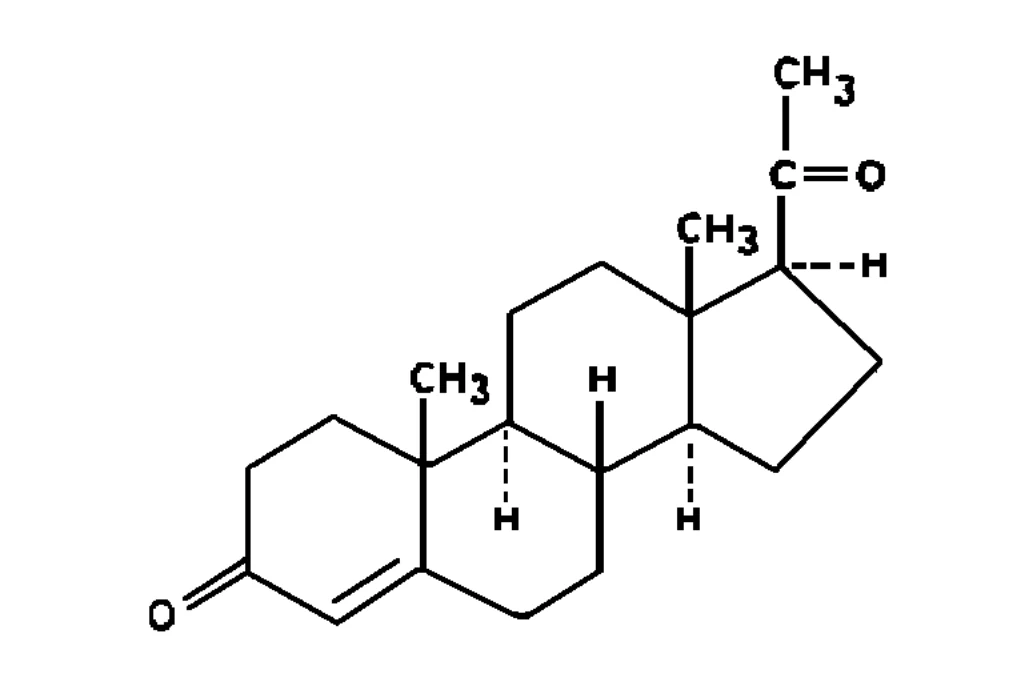
Physicochemical properties: Micronized progesterone is a white or almost white crystalline powder or colourless crystals. The form used UTROGESTAN is the alpha-crystalline form, and has a melting point of 126°C - 131°C.
Progesterone is practically insoluble in water, freely soluble in ethanol and sparingly soluble in acetone and in fatty oils.
Pharmaceutical standard: Progesterone CRS issued by the European Pharmacopeia
14. Clinical Trials
14.1. Clinical Trials by Indication
Study #1 compared the efficacy and tolerability of UTROGESTAN and Progesterone gel 8% in women undergoing a first IVF or intracytoplasmic sperm injection cycle after successful transfer of two or three embryos.
Table 5 – Summary of Patient Demographics for Clinical Trials in IVF
| Study # | Study design | Dosage, route of administration and duration | Study subjects (n) | Age (range) | Sex | ||||
| 1 | multicentre, randomized, controlled, open-label, parallel-group | UTROGESTAN 600 mg daily (200 mg t.i.d., vaginal administration, from evening of embryo transfer until 12th week of pregnancy | N = 218 | 30.7± 2.9 (22-35) | Female | ||||
| 1.125 g Progesterone gel 8% b.i.d. vaginal administration, from evening of embryo transfer until 12th week of pregnancy | N = 212 | 30.1± 3.0 (23-35) | |||||||
Treatment groups were comparable with respect to demographic data and other baseline conditions. A high rate of compliance with the drug treatment was observed in both the UTROGESTAN (98%) and the progesterone gel (8% w/v) (94%) groups. Demographic data for the women randomized to each of the two treatment groups, UTROGESTAN (N= 218) Progesterone gel 8% (N= 212), are shown in Table 6.
Table 6: Demographic data, infertility, and Assisted Reproductive Technology-specific characteristics of patients
| Variable | UTROGESTAN group N (%) | Progesterone gel 8% N (%) | |||||||
|---|---|---|---|---|---|---|---|---|---|
| Randomized patients (n) | 218 | 212 | |||||||
| Cause of infertility | |||||||||
| Tubal factor | 66 (30.3) | 48 (22.6) | |||||||
| Male factor | 104 (47.7) | 117 (55.2) | |||||||
| Endometriosis | 12 (5.5) | 16 (7.6) | |||||||
| Other | 36 (16.5) | 31 (14.6) | |||||||
| Number of transferred embryos | |||||||||
| 2 | 165 (75.7) | 155 (73.1) | |||||||
| 3 | 53 (24.3) | 57 (26.9) | |||||||
| Mode of fertilization | |||||||||
| Conventional IVF | 143 (65.5) | 140 (66.0) | |||||||
| ICSI | 75 (34.3) | 72 (34.0) | |||||||
Comparable numbers of withdrawals were observed in both treatment groups. Overall, 163 (74.8%) of 218 women in the UTROGESTAN group withdrew prematurely, compared with 165 (77.8%) of 212 women in the 8% progesterone gel group. The reasons for withdrawal are given in Table 7.
Table 7 – Reasons for discontinuation
| Withdrawal reason | UTROGESTAN | Progesterone gel 8% |
|---|---|---|
| n (% of study group) | % of study group | |
| Pregnancy failure | 153 (70.2) | 150 (70.8) |
| Lack of β-hCG increase or start of menstrual bleeding | 143 (65.6) | 141 (66.5) |
| Abortion | 3 (1.4) | 6 (2.8) |
| Missed abortion | 7 (3.2) | 3 (1.4) |
| Other reasons for withdrawal | 10 (4.6) | 15 (7.1) |
| Adverse event | 1 (0.5) | 2 (0.9) |
| Local intolerance | 1 (0.5) | 3 (1.4) |
| Unallowed hormone therapy | 4 (1.8) | 3 (1.4) |
| Withdrawal of consent | - | 2 (0.9) |
| Lost to follow-up | 3 (1.4) | 2 (0.9) |
| Other | 1 (0.5) | 3 (1.4) |
| Total Withdrawn | 163 (74.8) | 165 (77.8) |
Table 8 – Results of Study #1
| Primary Endpoints | UTROGESTAN N=218 | Progesterone gel 8% N=212 | Treatment percentage difference (90% Confidence interval) |
|---|---|---|---|
| Ongoing pregnancy rate at the end of the 12th week of gestation | 25.2% (55/218) | 22.2% (47/212) | 3.1% (-3.9 – 10.0) |
The primary endpoint was the ongoing pregnancy rate at the end of the 12th week of gestation in the per-protocol population. Ongoing pregnancy rates were 25.2% (95% confidence interval: 19.6-31.5) in the UTROGESTAN group and 22.2 % (95% confidence interval: 16.8-28.4) in the progesterone gel group. The ongoing pregnancy rate in patients treated with UTROGESTAN was non-inferior to the one in patients treated with Progesterone gel 8%. The rate difference was 3.1% (90% CI -3.9 - 10.0). According to the pre-specified criteria, the pregnancy rate in the UTROGESTAN group was demonstrated to be non-inferior to that in the progesterone gel group (lower limit of the 90% confidence interval > -0.1).
Similar numbers of implantations or living fetuses were recorded in both treatment groups. In total, 71% of pregnancies in the UTROGESTAN group and 79% in the progesterone gel (8% w/v) group were singleton pregnancies.
A very similar number of women experienced abortion or missed abortion in the UTROGESTAN (4.6%) and the progesterone gel (8% w/v) (4.2%) groups.
16. Non-Clinical Toxicology
General toxicology: The toxicology of micronized progesterone has been studied in a number of animal species, including mice, rats, rabbits and dogs.
Single-Dose Toxicity
Progesterone demonstrated a very low order of acute toxicity. In rats the oral LD50 was 1,000 to 2,000 mg/kg in males and 320 to 400 mg/kg in females. In rabbits, the intravenous LD50 was 26.5 mg/kg.
For the neonate mouse, the subcutaneous LD50 progressed with age from 70 mg/kg in 0 to 24-hour old mice to 2,700 mg/kg in 121 to 168-hour old mice.
Repeat-Dose Toxicity
In rats, oral administration of progesterone at doses up to 250 mg/kg/day for 4 weeks and up to 135 mg/kg/day for 12 weeks resulted in signs of sedation, relaxation and coma at the highest dose levels (135 and 250 mg/kg/day), salivation at 100 mg/kg/day and dose related weight gain in females at 100 and 250 mg/kg/day.
In a 26-week study in rats, subcutaneous administration of progesterone revealed toxic effects only at the highest dose of 16 mg/kg/day with atrophy of the gonads, uterus and prostate and, in males, increased pituitary weight. Oral administration led to virtually no effects (NOEL of 160 mg/kg/day).
In dogs, the repeat-dose oral toxicity of micronized progesterone was studied at daily doses of 50, 125 and 325 mg/kg for 12 weeks, where no mortalities were observed at any dose level. Animals receiving 325 mg/kg experienced treatment related effects of irritability and sedation. Serum biochemical alterations occurred at all levels of treatment, including changes in serum cholesterol, lipoproteins, total lipids and electrolyte balance. Target tissue effects included histopathological findings such as mammary gland adenoma, ovarian cysts and cystic dysplasia of the endometrium. Treatment related histological changes were not observed in other tissues.
Treatment of monkeys for one year with vaginal rings releasing 235 or 1,770 μg progesterone/day showed effects on organs of the reproductive system at both dose levels.
Genotoxicity: Progesterone did not induce genotoxicity in a range of in vitro and in vivo investigations.
Studies on transformation in rodent cells in vitro were inconclusive, with a rat embryo cell study giving a positive result, a mouse cell study giving a weak positive result and a Syrian hamster embryo cell study giving a negative result.
Carcinogenicity: Some evidence of reproductive tissue carcinogenicity (ovarian, uterine and mammary) was observed in mice, and pre- neoplastic mammary gland nodules were seen in dogs after chronic treatment. Progesterone is known to increase the tumour incidence in endocrine target tissues after continuous (parenteral) doses clearly above the physiological levels.
Reproductive and developmental toxicology: A Clauberg-McPhail test in rabbits, established an oral hormonal NOEL of 3.2 mg/kg/day, while the subcutaneous NOEL was 0.025 mg/kg/day. The findings of a hormonal effect at such doses is to be expected and is consistent with the therapeutic hormonal role of progesterone.
Progesterone administered intramuscularly to rats at a dose of 5 mg/day on gestation days (GD) 16 to 19 had no effect, but the same dosage on GD 20 to 23 caused fetal death, which was probably related to the prolonged delay of parturition due to progesterone administration.
Reproductive studies have been performed in mice at doses up to 9 times the human oral dose, in rats at doses up to 44 times the human oral dose, in rabbits at a dose of 10 μg/day, in guinea pigs at doses of approximately one-half the human oral dose and in rhesus monkeys at doses approximately the same as the human dose (all based on body surface area). These studies have revealed little or no evidence of impaired fertility or harm to the fetus due to progesterone.
Administration of progesterone by SC injection to pregnant mice resulted in a decrease in sexual behavior in male offspring with no changes to internal or external genitalia, and an increase in aggressive behavior in female offspring. No abnormalities of internal or external genitalia were observed in the offspring of rats treated with progesterone by SC injection.
Local Tolerance: An intravaginal repeat dose local tolerance study was performed in adult female New Zealand White rabbits using UTROGESTAN soft capsules. Groups of six adult female rabbits received 33 mg/day progesterone (1/3 soft capsule) or placebo (1/3 soft capsule) daily for 29 consecutive days. A third group of six females served as absolute controls.
There were no treatment-related deaths and no clinical signs of adverse effects. Examination of the vulva revealed no adverse treatment-related local tolerance findings, with no treatment-related increases in vulvar erythema. As well, there were no adverse effects on the body weight, development or food consumption. There were no macroscopic or microscopic abnormalities attributable to treatment.
The findings from the study show no evidence of any local tolerance concerns after repeated intravaginal treatment with UTROGESTAN at a daily dose comparable to the maximum clinical dose of 600 mg/day for women of approximately 60 kg body weight.