


Product Monograph - Dalacin Vaginal Cream
SUMMARY PRODUCT INFORMATION
| Route of Administration | Dosage Form / Strength | Clinically Relevant Nonmedicinal Ingredients |
| vaginal | 20 mg/g clindamycin (as clindamycin phosphate) | DALACIN VAGINAL CREAM contains: clindamycin phosphate, sorbitan monostearate, polysorbate 60, propylene glycol, stearic acid, cetostearyl alcohol, cetyl palmitate, mineral oil, benzyl alcohol and purified water. For a complete listing see Dosage Forms, Composition and Packaging section. |
INDICATIONS AND CLINICAL USE
DALACIN VAGINAL CREAM (clindamycin vaginal cream (as clindamycin phosphate)) is indicated for the treatment of bacterial vaginosis (formerly referred to as Haemophilus vaginalis vaginitis, Gardnerella vaginalis vaginitis, nonspecific vaginitis, Corynebacterium vaginitis, or anaerobic vaginosis).
To reduce the development of drug-resistant bacteria and maintain the effectiveness of DALACIN VAGINAL CREAM and other antibacterial drugs, DALACIN VAGINAL CREAM should be used only to treat infections that are proven or strongly suspected to be caused by susceptible bacteria. When culture and susceptibility information are available, they should be considered in selecting or modifying antibacterial therapy. In the absence of such data, local epidemiology and susceptibility patterns may contribute to the empiric selection of therapy.
Diagnosis
The clinical diagnosis of bacterial vaginosis is usually made on the basis of four criteria:
(1) presence of a milky homogenous vaginal discharge; (2) an unpleasant, fishy, amine odor accentuated by addition of 10% KOH to the vaginal fluid; (3) vaginal fluid pH greater than 4.5; and (4) presence of clue cells in the vaginal fluid. In general, if three or more of the above criteria are present, the patient is considered to have bacterial vaginosis.
An alternate method of diagnosis is a Gram stain of the vaginal fluid. If the Gram stain reveals an absence or marked decrease in Lactobacillus morphotype (large gram-positive rods) and a predominance of Gardnerella vaginalis/Bacteroides species morphotypes (small gram variable/gram-negative rods) it is considered compatible with the diagnosis of bacterial vaginosis.
Other pathogens commonly associated with vulvovaginitis (eg, Trichomonas vaginalis and Candida albicans) should be ruled out by appropriate laboratory methods.
CONTRAINDICATIONS
DALACIN VAGINAL CREAM (clindamycin vaginal cream (as clindamycin phosphate)) is contraindicated in individuals with a history of hypersensitivity to preparations containing clindamycin, lincomycin or any components of the cream (see DOSAGE FORMS, COMPOSITION AND PACKAGING).
DALACIN VAGINAL CREAM is also contraindicated in individuals with a history of inflammatory bowel disease (including regional enteritis and ulcerative colitis), or a history of antibiotic - associated colitis (including pseudomembranous colitis).
WARNINGS AND PRECAUTIONS
General
Clindamycin should be prescribed with caution in atopic individuals.
Cross resistance has been demonstrated between clindamycin and lincomycin.
DALACIN VAGINAL CREAM (clindamycin vaginal cream (as clindamycin phosphate)) is for intravaginal use only.
DALACIN VAGINAL CREAM contains ingredients that will cause burning and irritation of the eye. In the event of accidental contact with the eye, rinse the eye with copious amounts of cool tap water.
The patient should be instructed not to engage in vaginal intercourse or use other vaginal products (such as tampons or douches) during treatment with DALACIN VAGINAL CREAM.
The patient should be advised that this cream contains mineral oil. Mineral oil may weaken latex or rubber products such as condoms or vaginal contraceptive diaphragms; and therefore, use of such products within 72 hours following treatment with DALACIN VAGINAL CREAM is not recommended.
In menstruating patients, treatment should be delayed until menstruation is completed.
Vaginally applied clindamycin phosphate contained in DALACIN VAGINAL CREAM could be absorbed in sufficient amounts to produce systemic effects. Approximately 4 mg of an administered dose of 100 mg clindamycin (as clindamycin phosphate) is systemically absorbed following vaginal administration (see ACTION AND CLINICAL PHARMACOLOGY).
Use of clindamycin with other drugs may lead to drug-drug interactions (see DRUG INTERACTIONS).
Gastrointestinal
Clostridium difficile-associated disease: Use of the topical formulation of clindamycin results in systemic absorption of 4% of the clindamycin dose. Clostridium difficile-associated disease (CDAD) has been reported with use of many antibacterial agents, including Clindamycin Vaginal Cream. CDAD may range in severity from mild diarrhea to fatal colitis. It is important to consider this diagnosis in patients who present with diarrhea, or symptoms of colitis, pseudomembranous colitis, toxic megacolon, or perforation of colon subsequent to the administration of any antibacterial agent. CDAD has been reported to occur over 2 months after the administration of antibacterial agents.
Treatment with antibacterial agents may alter the normal flora of the colon and may permit overgrowth of Clostridium difficile. C. difficile produces toxins A and B, which contribute to the development of CDAD. CDAD may cause significant morbidity and mortality.
If the diagnosis of CDAD is suspected or confirmed, appropriate therapeutic measures should be initiated. Mild cases of CDAD usually respond to discontinuation of antibacterial agents not directed against Clostridium difficile. In moderate to severe cases, consideration should be given to management with fluids and electrolytes, protein supplementation, and treatment with an antibacterial agent clinically effective against Clostridium difficile. CDAD can be refractory to antimicrobial therapy. Surgical evaluation should be instituted as clinically indicated, as surgical intervention may be required in certain severe cases (see ADVERSE REACTIONS).
Susceptibility/Resistance
Development of drug-resistant bacteria: Prescribing DALACIN VAGINAL CREAM in the absence of a proven or strongly suspected bacterial infection is unlikely to provide benefit to the patient and risks the development of drug-resistant bacteria.
Special Populations
Pregnant Women: DALACIN VAGINAL CREAM should not be used during pregnancy unless clearly needed and unless the expected benefits to the mother outweigh any potential risks to the fetus.
There are no adequate and well-controlled studies in pregnant women during their first trimester.
DALACIN VAGINAL CREAM has been studied in pregnant women during the second trimester. In women treated for seven days, abnormal labor was reported in 1.1% of patients who received DALACIN VAGINAL CREAM compared with 0% of women treated for three days and 0.5% of women who received placebo for 7 days.
Reproduction studies have been performed in rats and mice using subcutaneous and oral doses of clindamycin ranging from 20 to 600 mg/kg/day and have revealed no evidence of impaired fertility or harm to the fetus, except at doses that caused maternal toxicity. In one mouse strain, cleft palates were observed in treated fetuses; this response was not produced in other mouse strains or in other species, and therefore may be a strain specific effect. Animal reproduction studies are not always predictive of human response.
Nursing Women: It is not known if clindamycin is excreted in human breast milk following the use of vaginally-administered clindamycin phosphate. However, clindamycin has been reported to appear in human breast milk in ranges from <0.5 to 3.8 mcg/mL following systemic use. Approximately 4 mg of an administered dose of 100 mg clindamycin (as clindamycin phosphate) is systemically absorbed following vaginal administration to the mother.
Clindamycin has the potential to cause adverse effects on the breastfed infant’s gastrointestinal flora such as diarrhea or blood in the stool, or rash. If clindamycin is required by a nursing mother, it is not a reason to discontinue breastfeeding, but an alternate drug may be preferred. Monitor the infant for possible adverse effects on the gastrointestinal flora, such as diarrhea, candidiasis (thrush, diaper rash) or blood in the stool indicating possible antibiotic-associated colitis.
The developmental and health benefits of breastfeeding should be considered along with the mother’s clinical need for DALACIN VAGINAL CREAM and any potential adverse effects on the breastfed child from DALACIN VAGINAL CREAM or from the underlying maternal condition.
Pediatrics: Safety and efficacy in pediatric patients have not been established.
ADVERSE REACTIONS
Clinical Trial Adverse Drug Reactions
Because clinical trials are conducted under very specific conditions the adverse reaction rates observed in the clinical trials may not reflect the rates observed in practice and should not be compared to the rates in the clinical trials of another drug. Adverse drug reaction information from clinical trials is useful for identifying drug-related adverse events and for approximating rates.
Non-Pregnant Women: In clinical trials involving non-pregnant women, 1.8% of 600 patients receiving DALACIN VAGINAL CREAM (clindamycin vaginal cream (as clindamycin phosphate)) for 3 days and 2.7% of 1325 patients who received treatment for 7 days discontinued therapy due to drug-related adverse events. Medical events judged to be related, probably related, possibly related, or of unknown relationship to vaginally administered clindamycin phosphate vaginal cream, were reported for 20.7% of the patients receiving treatment for 3 days and 21.3% of the patients receiving treatment for 7 days. Adverse events occurring in ≥1% of patients receiving DALACIN VAGINAL CREAM are shown in Table 1.
| Table 1 – Adverse Events Occurring in ≥1% of Non-pregnant Patients Receiving DALACIN VAGINAL CREAM | ||
| Event | 3 Day N= 600 % | 7 Day N= 1325 % |
| Urogenital | ||
| Vaginal candidiasis | 7.7 | 10.4 |
| Vulvovaginitis | 6.0 | 4.4 |
| Vulvovaginal disorder | 3.2 | 5.3 |
| Trichomonal vaginitis | 0 | 1.3 |
| Body as a Whole | ||
| Candidiasis (body) | 1.3 | 0.2 |
Other events occurring in < 1% of the DALACIN VAGINAL CREAM groups include:
Body as a whole: abdominal cramps, abdominal distension, abnormal microbiological test, allergic reaction, back pain, bacterial infection, fungal infection, generalized abdominal pain, generalized pain, halitosis, headache, inflammatory swelling, localized abdominal pain, and pelvic pain.
Central nervous system: dizziness and vertigo.
Dermatologic: erythema, maculopapular rash, candidiasis (skin), pruritus (non-application site), rash, and urticaria.
Endocrine: hyperthyroidism.
Urogenital system: dysuria, endometriosis, menstrual disorder, metrorrhagia, urinary tract infection, vaginal discharge, vaginal pain, and vaginitis/vaginal infection.
Gastrointestinal: constipation, diarrhea, dyspepsia, flatulence, gastrointestinal disorder, nausea, and vomiting.
Respiratory: epistaxis.
Special Senses: taste perversion.
Pregnant Women: In clinical trials involving women during the second trimester, 1.7% of 180 patients who received treatment for 7 days discontinued therapy due to drug-related adverse events. Medical events judged to be related, probably related, possibly related, or of unknown relationship to vaginally administered clindamycin phosphate vaginal cream, were reported for 22.8% of pregnant patients. Adverse events occurring in ≥1% of patients receiving DALACIN VAGINAL CREAM are shown in Table 2. and compared with the placebo group.
Table 2 – Adverse Events Occurring in ≥1% of Pregnant Patients Receiving DALACIN VAGINAL CREAM | ||
| Event | DALACIN VAGINAL CREAM | Placebo |
7 Day N = 180 % | 7 Day N=184 % | |
| Urogenital | ||
| Vaginal candidiasis | 13.3 | 7.1 |
| Vulvovaginal disorder | 6.7 | 7.1 |
| Abnormal labor | 1.1 | 0.5 |
| Body as a Whole | ||
| Fungal infection | 1.7 | 0 |
| Dermatological | ||
| Pruritus, non-application site | 1.1 | 0 |
Other events occurring in < 1% of the DALACIN VAGINAL CREAM group include:
Body as a whole: moniliasis (body) and upper respiratory infection.
Dermatological: erythema and pruritus (topical application site).
Gastrointestinal: diarrhea.
Urogenital system: dysuria, glycosuria, metrorrhagia, proteinuria, trichomonal vaginitis, and vaginal pain.
Post-Market Adverse Drug Reactions
In the post-marketing period, there have been case reports of clostridium difficile-associated disease with the use of DALACIN VAGINAL CREAM.
Additional serious adverse reactions and altered laboratory tests have been reported with the oral or parenteral use of clindamycin.
DRUG INTERACTIONS
Drug-Drug Interactions
Antagonism has been demonstrated between clindamycin and erythromycin in vitro.
Because of a possible clinical significance, the two drugs should not be administered concurrently.
Clindamycin (oral and parenterally administered) has been shown to have neuromuscular blocking properties that may enhance the action of other neuromuscular blocking agents. Therefore, DALACIN VAGINAL CREAM (clindamycin vaginal cream (as clindamycin phosphate)) should be used with caution in patients receiving such agents.
Drug-Food Interactions
Interactions with food have not been established.
Drug-Herb Interactions
Interactions with herbs have not been established.
Drug-Laboratory Interactions
Interactions with laboratory tests have not been established.
DOSAGE AND ADMINISTRATION
Dosing Considerations
DALACIN VAGINAL CREAM (clindamycin vaginal cream (as clindamycin phosphate)) is for intravaginal use only.
This cream contains mineral oil. Mineral oil may weaken latex or rubber products such as condoms or vaginal contraceptive diaphragms; and therefore, use of such products within 72 hours following treatment with DALACIN VAGINAL CREAM, is not recommended.
In menstruating patients, treatment should be delayed until menstruation is completed.
Recommended Dose
The recommended dose is one applicatorful (5 grams) of DALACIN VAGINAL CREAM intravaginally at bedtime for seven consecutive nights. This is equivalent to approximately 100 mg of clindamycin (as clindamycin phosphate).
Missed Dose
If one dose is missed, treatment should continue with the next dose the following day. Do not take extra doses.
OVERDOSAGE
| For management of a suspected drug overdose, contact your regional Poison Control Centre. |
Vaginally applied clindamycin phosphate contained in DALACIN VAGINAL CREAM (clindamycin vaginal cream (as clindamycin phosphate)) could be absorbed in sufficient amounts to produce systemic effects (see WARNINGS AND PRECAUTIONS).
Intravaginal overdosage is unlikely with DALACIN VAGINAL CREAM. Only 4 mg of a total daily dose of 100 mg clindamycin (as clindamycin phosphate) is systemically absorbed when administered vaginally. By comparison, the usual intravenous total daily dose of clindamycin is 2700 mg.
Accidental ingestion could be accompanied by effects related to therapeutic levels of oral clindamycin.
In the event of overdosage, general symptomatic and supportive measures should be undertaken as required.
ACTION AND CLINICAL PHARMACOLOGY
Mechanism of Action
Although clindamycin phosphate is inactive in vitro, rapid in vivo hydrolysis converts this compound to the antibacterially-active clindamycin. Clindamycin is a lincosamide antibiotic that inhibits bacterial protein synthesis by affecting the translation process at the bacterial ribosome. The antibiotic targets specifically the peptidyl transferase loop in domain V of 23S rRNA of the 50S ribosomal subunit which is the site for peptide bond formation during protein elongation (transpeptidation or translocation) and for the hydrolysis of peptidyl-tRNA during the termination of bacterial protein synthesis. Clindamycin may also inhibit the binding of aminoacyl-tRNA (decoding). The antibiotic may thus affect bacterial ribosome subunit formation.
Pharmacodynamics
(see MICROBIOLOGY)
Pharmacokinetics
Absorption: Following a once a day intravaginal dose of 5 grams of DALACIN VAGINAL CREAM (clindamycin vaginal cream (as clindamycin phosphate)) in normal volunteers, equivalent to 100 mg clindamycin (as clindamycin phosphate), peak serum clindamycin levels average 25 ng/mL (range 6 to 61 ng/mL). Approximately 4% (range 0.6 to 11%) of the administered dose is absorbed systemically. In women with bacterial vaginosis, the amount of clindamycin absorbed systemically following vaginal administration of 5 grams of DALACIN VAGINAL CREAM is also approximately 4 mg (range 2 to 8 mg).
STORAGE AND STABILITY
DALACIN VAGINAL CREAM (clindamycin vaginal cream (as clindamycin phosphate)) may be stored at controlled temperature between 15ºC and 25ºC. Protect from freezing.
DOSAGE FORMS, COMPOSITION AND PACKAGING
DALACIN VAGINAL CREAM contains: clindamycin phosphate, sorbitan monostearate, polysorbate 60, propylene glycol, stearic acid, cetostearyl alcohol, cetyl palmitate, mineral oil, benzyl alcohol and purified water.
DALACIN VAGINAL CREAM (clindamycin vaginal cream (as clindamycin phosphate)), 20 mg clindamycin per gram, is available as a semi-solid white cream in 40 g collapsible laminate tubes with 7 disposable applicators for intravaginal use. Each full applicator (one dose), contains 100 mg of clindamycin (as clindamycin phosphate) in 5 grams of cream.
PART II: SCIENTIFIC INFORMATION
PHARMACEUTICAL INFORMATION
Drug Substance
Proper name: clindamycin phosphate
Chemical name:
- 1) L-threo-α-D-galacto-Octopyranoside, methyl 7-chloro-6,7,8-trideoxy-6-[[(1-methyl-4-propyl-2-pyrrolidinyl)carbonyl]amino]-1-thio-, 2-(dihydrogen phosphate), (2S-trans)-;
- 2) Methyl 7-chloro-6,7,8-trideoxy-6-(1-methyl-trans-4-propyl-L-2-pryrrolidinecarboxamido)-1-thio-L-threo-α-D-galacto-octopyranoside 2-(dihydrogen phosphate);
- 3) 7-(S)-Chloro-7-deoxylicomycin 2-phosphate.
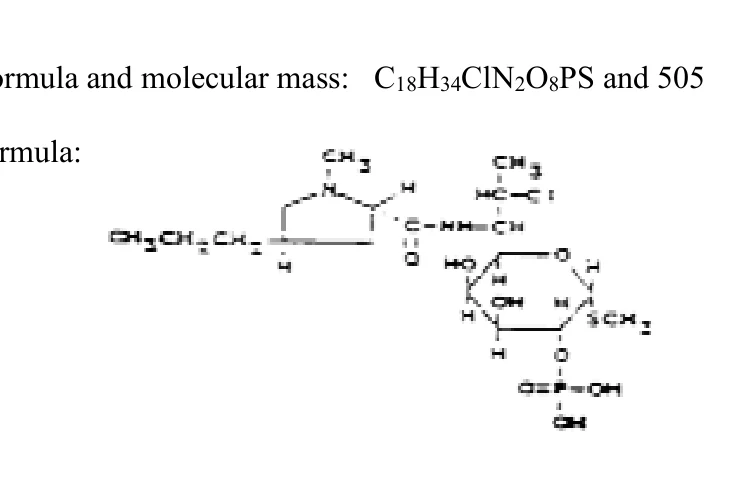
Molecular formula and molecular mass: C18H34ClN2O8PS and 505
Structural formula:
Physicochemical properties: Clindamycin phosphate is a water soluble ester of clindamycin and phosphoric acid. It is a white to off-white crystalline hygroscopic powder that is odorless or nearly odorless. It has a pH of 3.5 to 4.5 and melts with decomposition at about 175ºC. The partition coefficient is 0.03.
DETAILED PHARMACOLOGY
Pharmacokinetics
Table 3 summarizes pharmacokinetic data after intravaginal administration in healthy volunteers and in patients diagnosed with bacterial vaginosis.
Table 3 PHARMACOKINETIC PARAMETERS (HUMAN) AFTER VAGINAL ADMINISTRATION | |||||
| Type of Study | Dosage Regimen 100 mg intravaginally daily at bedtime X 7 days | Pharmacokinetic parameters mean (SD) day 7 | Observations Results-Conclusions | ||
day 7 Cmax (ng/mL) | AUC0-24 (ng x hr/mL) | relative bioavailability1 | |||
| Bioavailability | Healthy volunteers | 25.4 (19.5) | 460 (324) | 0.047 (0.037) | Bioavailability averaged 4% for both healthy volunteers and bacterial vaginosis patients |
| Bacterial vaginosis patients | 16 (7.62) | 311 (156) | 0.043 (0.023) | ||
- 1 fraction of the administered dose of 100 mg of Dalacin Vaginal Cream (clindamycin phosphate vaginal cream) which reached the systemic circulation when compared to a 100 mg single IV dose of Dalacin C Phosphate (clindamycin phosphate sterile solution). Serum clindamycin levels in pregnant patients were comparable after similar treatment.
MICROBIOLOGY
Clindamycin phosphate is inactive in vitro, but is rapidly converted in vivo to the antibacterially-active clindamycin. Clindamycin has in vitro activity against the organisms associated with bacterial vaginosis, including Gardnerella vaginalis, Mobiluncus species, Bacteroides species, Mycoplasma hominis and Peptostreptococcus species. Clindamycin activity is slightly reduced in an acidic environment; however the compound is still active against all potential bacterial vaginosis pathogens. Clindamycin, like most protein synthesis inhibitors, is predominantly bacteriostatic and efficacy is associated with the length of time the concentration of active ingredient remains above the MIC of the infecting organism.
Development of Resistance
Clindamycin resistance mechanisms have been reported in some species which may be involved as pathogens in bacterial vaginosis; however the incidence of resistant organisms appears to be low. Culture identity and antimicrobial susceptibility data are not routinely available in the diagnosis of bacterial vaginosis and to guide treatment.
This is due to the normal flora contaminating the vaginal specimen, and the technical difficulty associated with the isolation of some of the highly fastidious organisms found in the vaginal flora. Resistance to clindamycin is most often due to modification of the target site on the ribosome, usually by chemical modification of RNA bases or by point mutations in RNA or occasionally in proteins. Cross resistance has been demonstrated in vitro between lincosamides, macrolides and streptogramins B in some organisms. Cross resistance has been demonstrated between clindamycin and lincomycin.
Susceptibility Testing
Susceptibility to clindamycin can be determined in the laboratory using standardized test methods for some organisms; however, universally accepted susceptibility test methods for Gardnerella vaginalis, and Mobiluncus species have not been defined. Methods for determining the susceptibility of Bacteroides spp. and Gram-positive anaerobic cocci, as well as Mycoplasma spp. have been described by the Clinical and Laboratory Standards Institute (CLSI) and clindamycin susceptibility breakpoints for Gram-negative and Gram-positive anaerobes have been published by both EUCAST and CLSI. Clinical isolates that test susceptible to clindamycin and resistant to erythromycin should also be tested for inducible clindamycin resistance using the D-test. However, the breakpoints are intended to guide systemic, rather than localized, antibiotic treatment.
TOXICOLOGY
Acute Toxicity
The results of LD50 studies are shown in Table 4:
Table 4 LD50 RESULTS | ||
| SPECIES | ROUTE | LD50 (MG/KG) |
| ADULT MOUSE | IP | 1145 |
| ADULT MOUSE | IV | 855 |
| ADULT RAT | SC | >2000 |
| ADULT RAT | PO | 1832 |
| NEWBORN RAT | SC | 179 |
Sub-acute toxicity
Table 5 VAGINAL IRRITATION STUDIES | |||
| SPECIES/ NUMBER | DURATION (DAYS) | DOSE (MG/KG/DAY) | OBSERVATIONS |
RAT 20 (10 per group) | 14 | 0.002 clindamycin or 0.001 clotrimazole |
|
MONKEY 16 (4 per group) | 30 | 0,4,6 and 8 |
|
Tables 6 and 7 on page 17 summarize toxicity and teratology studies.
Reproductive and Development Toxicity
In oral embryo-fetal development studies in rats and subcutaneous embryo-fetal development studies in rats and rabbits, no developmental toxicity was observed except at doses that produced maternal toxicity.
Mutagenicity
Clindamycin phosphate did not show evidence of mutagenicity when tested in the Ames Assay (Salmonella/Microsome Test) or the Micronucleus Test.
| Table 6 - TOXICITY STUDIES | |||||
| Type of Study | Species | Route | Dose mg/kg/d | Duration | Conclusions |
| Tolerance | Rabbit N=3 | i.m. | 100,200, 300 mg | single dose | Slight to moderate irritation. |
| Tolerance | Rat N=10 | s.c. | 120 | 6 days | Local evidence of multiple epidermal breakdown with scab formation over the injection site was present in most rats. No systemic evidence of drug effect was detected at necropsy. Organ weights were not significantly different from control animals and likewise no significant deviations of hematologic data were noted among treated animals. |
| Tolerance | Dog N=3 | i.m. | 60 | 6 days | These doses were well tolerated by the dogs. Serum transaminase values were elevated terminally with SGOT values increasing in advance of SGPT values, suggesting that the source of these changes was the injected muscles. No other evidence of treatment-related changes was noted in terminal hemograms, blood chemistry values and urinalyses. Gross pathological changes were confined to the injection sites where there were signs of slight hemorrhage and edema. |
| Subacute Toxicity | Rat N=10 | s.c. | 30,60,90 | 1 month | No drug-related systemic effects were observed. Local inflammatory changes were seen at all three dose levels with focal necrosis of the subcutaneous tissues and overlying epidermis seen in the 60 and 90 mg/kg groups. |
| Subacute Toxicity | Dog N=9 | i.m. | 30,60,90 | 1 month | Under the conditions of this study, clindamycin phosphate was found to be mildly to moderately irritating. Elevations of SGOT and SGPT were noted in these dogs and were thought to be due to muscle damage caused by the injections. Other blood evaluations and liver function tests were in the normal range. A slight dose-related increase in liver weight was indicated on the basis of per cent of body weight, but no morphologic evidence of drug effect on the liver was obtained. |
| Subacute Toxicity | Dog N=8 | i.v. | 60,120 | 1 month | No drug related effects were observed in any of the animals during or after the intravenous administrations. In particular, there was no evidence of drug-induced hemolysis or drug-related changes in the cephalic veins on both gross and microscopic examination. |
| Table 7 - TERATOLOGY STUDIES | ||||
| Species | Route | Dose mg/kg/day | Duration | Conclusions |
| Rat | s.c. | 0,100,180 | gestation days 6-15 | not teratogenic |
| Mouse | s.c. 2 strains | 100,180 | gestation days 6-15 | A low incidence of cleft palate occurred in one strain in the initial experiment and as a result, the study was repeated twice with no abnormalities noted. The study in the second strain of mice was completely within normal limits. |
| Rat | p.o. | 100,300 | No biologically significant effect on the reproductive parameters studied was noted. Pups from treated females were slightly lighter at birth and weaning but post-natal survival was not affected by this slight weight reduction. None of the pups which were dead at birth, died before weaning, or were sacrificed at weaning, exhibited significant morphologic abnormalities. | |
REFERENCES
- 1. Albert DG, Timm JA, Hearron MS, Powley GW. Efficacy of clindamycin vaginal cream vs oral metronidazole in the treatment of bacterial vaginosis (Protocol M/1115/0017). Technical Report 9156/91/013.
- 2. Borin MT, Forbes KK. Systemic absorption of clindamycin following intravaginal application of clindamycin phosphate 1% cream. Pharm Res 1989;6:S-220.
- 3. Borin MT. Systemic absorption of clindamycin following intravaginal application of clindamycin phosphate 1% cream. J Clin Pharmacol 1990;30:33-8.
- 4. Greaves WL, Chungafung J, Morris B, Haile A, Townsend JL. Clindamycin versus metronidazole in the treatment of bacterial vaginosis. Obstet Gynecol 1988;72(5):799-802.
- 5. Heman-Ackah SM, Garrett ER. Kinetics and mechanisms of action of drugs on microorganisms XV: Effect of erythromycin on the action of lincomycin (Phase II) and the 7(s)-chloro analogs of lincomycin against Escherichia Coli. J Pharmaceut Sci 1972;61:545-51.
- 6. Hillier S, Krohn MA, Watts DH, Wolner-Hanssen P, Eschenbach D. Microbiologic efficacy of intravaginal clindamycin cream for the treatment of bacterial vaginosis. Obstet Gynecol 1990;76(3 Pt 1):407-13.
- 7. Livengood CH III, Thomason JL, Hill GB. Bacterial vaginosis: diagnostic and pathogenic findings during topical clindamycin therapy. Am J Obstet Gynecol 1990;163:515-20.
- 8. Livengood CH III, Thomason JL, Hill GB. Bacterial vaginosis: treatment with topical intravaginal clindamycin phosphate. Obstet Gynecol 1990;76(1):118-23.
- 9. Lossick JG. Treatment of sexually transmitted vaginosis/vaginitis. Rev Infect Dis 1990;12(Suppl 6):S665-81.
- 10. Quan M. Diagnosis and management of infectious vaginitis.
- 11. J Am Board Fam Pract 1990;3(3):195-205.
- 12. Redondo-Lopez V, Meriwether C, Schmitt C, Opitz M, Cook R, Sobel JD. Vulvovaginal candidiasis complicating recurrent bacterial vaginosis. Sex Transm Dis 1990;17(1):51-3.
- 13. Sobel JD. Bacterial vaginosis. Br J Clin Pract Symp Suppl 1990;71:65-9.
- 14. Thomason JL, Gelbart SM, Anderson RJ, Walt AK, Osypowski PJ, Broekhuizen FF. Statistical evaluation of diagnostic criteria for bacterial vaginosis. Am J Obstet Gynecol 1990;162(1):155-60.
- 15. Meadowcroft AM, Diaz PR, Latham GS; Clostridium difficile toxin-induced colitis after use of clindamycin phosphate vaginal cream. The Annals of Pharmacotherapy, 1998; 32(3); 309-11