


Product Monograph - Daurismo
RECENT MAJOR LABEL CHANGES
| 4 DOSAGE AND ADMINISTRATION, 4.1 Dosing Considerations | 01/2022 |
| 4 DOSAGE AND ADMINISTRATION, 4.2 Recommended Dose and Dose Adjustment | 01/2022 |
| 4 DOSAGE AND ADMINISTRATION, 4.2 Recommended Dose and Dose Adjustment | 10/2022 |
| 7 WARNINGS AND PRECAUTIONS | 10/2022 |
TABLE OF CONTENTS
RECENT MAJOR LABEL CHANGES............................................................................................ 2
TABLE OF CONTENTS .............................................................................................................. 2
PART I: HEALTH PROFESSIONAL INFORMATION ..................................................................... 4
1 INDICATIONS .............................................................................................................. 4
1.1 Pediatrics .......................................................................................................... 4
1.2 Geriatrics........................................................................................................... 4
2 CONTRAINDICATIONS ................................................................................................. 4
3 SERIOUS WARNINGS AND PRECAUTIONS BOX ............................................................ 5
4 DOSAGE AND ADMINISTRATION................................................................................. 5
4.1 Dosing Considerations ....................................................................................... 5
4.2 Recommended Dose and Dosage Adjustment..................................................... 6
4.4 Administration................................................................................................... 9
4.5 Missed Dose .................................................................................................... 10
5 OVERDOSAGE ........................................................................................................... 10
6 DOSAGE FORMS, STRENGTHS, COMPOSITION AND PACKAGING ............................... 10
7 WARNINGS AND PRECAUTIONS ................................................................................ 10
7.1 Special Populations .......................................................................................... 13
7.1.1 Pregnant Women ....................................................................................... 16
7.1.2 Breast-feeding............................................................................................ 16
7.1.3 Pediatrics ................................................................................................... 16
7.1.4 Geriatrics ................................................................................................... 16
8 ADVERSE REACTIONS ................................................................................................ 16
8.1 Adverse Reaction Overview.............................................................................. 16
8.2 Clinical Trial Adverse Reactions ........................................................................ 17
8.3 Less Common Clinical Trial Adverse Reactions .................................................. 19
8.4 Abnormal Laboratory Findings: Hematologic, Clinical Chemistry and Other Quantitative Data ...................................................................................................... 19
9 DRUG INTERACTIONS................................................................................................ 20
9.4 Drug-Drug Interactions .................................................................................... 20
9.5 Drug-Food Interactions .................................................................................... 23
9.6 Drug-Herb Interactions .................................................................................... 23
9.7 Drug-Laboratory Test Interactions .................................................................... 23
10 CLINICAL PHARMACOLOGY ....................................................................................... 23
10.1 Mechanism of Action.................................................................................. 23
10.2 Pharmacodynamics .................................................................................... 23
10.3 Pharmacokinetics ....................................................................................... 23
11 STORAGE, STABILITY AND DISPOSAL ......................................................................... 25
PART II: SCIENTIFIC INFORMATION ...................................................................................... 26
13 PHARMACEUTICAL INFORMATION............................................................................ 26
14 CLINICAL TRIALS........................................................................................................ 26
14.1 Trial Design and Study Demographics ......................................................... 26
14.2 Study Results ............................................................................................. 27
16 NON-CLINICAL TOXICOLOGY ..................................................................................... 28
PATIENT MEDICATION INFORMATION ................................................................................. 30
PART I: HEALTH PROFESSIONAL INFORMATION
1 INDICATIONS
DAURISMO (glasdegib) is indicated, in combination with low-dose cytarabine, for the treatment of newly diagnosed and previously untreated acute myeloid leukemia (AML) in adult patients who are age ≥75 years or who are not eligible to receive intensive induction chemotherapy.
Distribution Restrictions
DAURISMO is only available through a control distribution program called the DAURISMO Pregnancy Prevention Program (DPPP). Under this program, only prescribers and pharmacies registered with the program are able to prescribe and dispense the product, respectively. In addition, DAURISMO can only be dispensed to patients who are registered and meet all the conditions of the DPPP. For more information, please contact the DPPP at 1 844 616-6888.
1.1 Pediatrics
Pediatrics (˂18 years of age): The safety and efficacy of DAURISMO in the pediatric population have not been established. Adverse changes in growing bone, including premature partial to complete closure of the epiphyseal plate were observed in non-clinical toxicity studies. DAURISMO is not indicated for use in the pediatric population.
1.2 Geriatrics
Geriatrics (> 65 years of age): In the clinical studies of DAURISMO with low-dose cytarabine, 98% of the patients were age 65 years or older and 60% of the patients were age 75 years or older.
2 CONTRAINDICATIONS
DAURISMO (glasdegib) is contraindicated in:
- Female patients who are pregnant (see 3 SERIOUS WARNINGS AND PRECAUTIONS BOX and 7.1.1 WARNINGS AND PRECAUTIONS, Special Populations, Pregnant Women).
- Breastfeeding female patients (see 3 SERIOUS WARNINGS AND PRECAUTIONS BOX and 7.1.1 WARNINGS AND PRECAUTIONS, Special Populations, Breast-feeding).
- Female patients of childbearing potential who do not comply with effective contraceptive measures (see 3 SERIOUS WARNINGS AND PRECAUTIONS BOX and 7.1 WARNINGS AND PRECAUTIONS, Special Populations, Females of Childbearing Potential).
- Male patients who do not comply with effective contraceptive measures (see 3 SERIOUS WARNINGS AND PRECAUTIONS BOX and 7.1 WARNINGS AND PRECAUTIONS, Special Populations, Male Patients).
- Children and adolescents aged below 18 years. (see 3 SERIOUS WARNINGS AND PRECAUTIONS BOX and 7.1.3 WARNINGS AND PRECAUTIONS, Special Populations, Pediatrics).
- Patients who are hypersensitive to this drug or to any ingredient in the formulation, including any non-medicinal ingredient, or component of the container. For a complete listing, see 6 DOSAGE FORMS, STRENGTHS, COMPOSITION AND PACKAGING.
3 SERIOUS WARNINGS AND PRECAUTIONS BOX
Serious Warnings and Precautions
DAURISMO (glasdegib) should be initiated and monitored only under the supervision of a physician qualified in the use of cancer therapies and with a full understanding of the risks of DAURISMO therapy and monitoring requirements.
|
4 DOSAGE AND ADMINISTRATION
4.1 Dosing Considerations
CYP3A4 Inhibitors
Co-administration of DAURISMO (glasdegib) with strong CYP3A4 inhibitors increased glasdegib plasma concentrations. Increased glasdegib concentrations may increase the risk of adverse reactions including QTc interval prolongation (see 7 WARNINGS AND PRECAUTIONS, Cardiovascular). Consider alternative therapies that are not strong CYP3A4 inhibitors during treatment with DAURISMO. Monitor patients for increased risk of adverse reactions including QTc interval prolongation (see 9.4 DRUG INTERACTIONS, Drug-Drug Interactions).
CYP3A4 Inducers
Avoid co-administration of DAURISMO with strong CYP3A4 inducers. Co-administration of DAURISMO with strong CYP3A4 inducers decreased glasdegib plasma concentrations (see 9.4 DRUG INTERACTIONS, Drug-Drug Interactions).
Avoid co-administration of DAURISMO with moderate CYP3A4 inducers. Co-administration of DAURISMO with moderate CYP3A inducers may decrease glasdegib plasma concentrations (see 4.2 Recommended Dose and Dosage Adjustment, 9.4 DRUG INTERACTIONS, Drug-Drug Interactions).
QTc Prolonging Drugs
Avoid co-administration of QTc prolonging drugs with DAURISMO or replace with alternative therapies. Co-administration of DAURISMO with QTc prolonging drugs may increase the risk of QTc interval prolongation (see 7 WARNINGS AND PRECAUTIONS, Cardiovascular, QT Interval Prolongation and 9.4 DRUG INTERACTIONS, Drug-Drug Interactions). If co-administration of a QTc prolonging drug is unavoidable, monitor patients for increased risk of QTc interval prolongation (see 7 WARNINGS AND PRECAUTIONS, Monitoring and Laboratory Test).
Hepatic Impairment
No dose adjustments are recommended in patients with mild (total bilirubin ≤1 × upper limit of normal [ULN] and aspartate aminotransferase [AST] >1 × ULN, or total bilirubin >1.0 to 1.5 x ULN and any AST) hepatic impairment. Limited data are available in patients with moderate (n=3; total bilirubin > 1.5 to 3.0 x ULN and any AST) and severe hepatic impairment (n=1; total bilirubin >3.0 × ULN and any AST). Caution should be used in patients with moderate and severe hepatic impairment.
Renal Impairment
No dose adjustments are recommended for patients with mild or moderate renal impairment (creatinine clearance [CrCl] ≥30 mL/min). No data are available for glasdegib in patients with severe renal impairment (CrCl <30 mL/min) (see 10.3 CLINICAL PHARMACOLOGY, Special Populations and Conditions, Renal Insufficiency). Caution should be used in patients with severe renal impairment. No data are available in patients requiring hemodialysis.
Geriatric Population
No dose adjustment of DAURISMO in elderly (≥65 years of age) patients is required (see 10.3 CLINICAL PHARMACOLOGY, Special Populations and Conditions, Geriatrics).
No starting dose adjustments are required on the basis of patient age, race, gender, or body weight (see 10.3 CLINICAL PHARMACOLOGY, Special Populations and Conditions).
4.2 Recommended Dose and Dosage Adjustment
Recommended Dose
The recommended dose of DAURISMO is 100 mg taken orally once daily on days 1 to 28 in combination with cytarabine 20 mg subcutaneously twice daily on days 1 to 10 of each 28-day cycle in the absence of unacceptable toxicity or loss of disease control. Continue DAURISMO as long as the patient is deriving clinical benefit. For patients without unacceptable toxicity, treat for a minimum of 6 cycles to allow time for clinical response.
Dose Modifications
Dose modifications may be required based on individual safety and tolerability. If dose reduction is necessary, then the dose of DAURISMO should be reduced to 50 mg taken orally once daily.
Dose modification and management guidelines for specific adverse reactions are provided in Table 1 below.
Table 1 - DAURISMO Dose Modifications and Management Recommendations for Adverse Drug Reactions
| Adverse Drug Reaction | Recommended Action and/or Dose Modification | |
|---|---|---|
| QTc interval prolongation on at least 2 separate electrocardiograms (ECGs) | QTc interval greater than 480 ms to 500 ms |
|
| QTc interval interval greater than 500 ms |
| |
| QTc interval interval prolongation with life-threatening arrhythmia | Discontinue DAURISMO permanently. | |
| Creatine Kinase (CK) Elevations and Muscle-Related Adverse Reactions | Grade 1* [CK elevation >ULN - 2.5 x ULN] |
|
Grade 2* without renal impairment (serum Cr ≤ ULN) [CK elevation >2.5 x ULN - 5 x ULN] |
| |
| Adverse Drug Reaction | Recommended Action and/or Dose Modification | ||
|---|---|---|---|
| |||
Grade 3 or 4* without renal impairment (serum Cr ≤ ULN) [Grade 3 (CK elevation >5 x ULN - 10 x ULN)] [Grade 4 (CK elevation >10 x ULN)] |
| ||
| Grade 2, 3 or 4 with renal impairment (serum Cr > ULN per CTCAE 4.0) |
| ||
| Hematologic toxicity | Platelets less than 10 Gi/L for more than 42 days in the absence of disease | Discontinue DAURISMO and low-dose cytarabine permanently. | |
| Neutrophil count less than 0.5 Gi/L for more than 42 days in the absence of disease | Discontinue DAURISMO and low-dose cytarabine permanently. | ||
| Adverse Drug Reaction | Recommended Action and/or Dose Modification | |
|---|---|---|
| Nonhematologic toxicity | Grade 3* |
|
| Grade 4* | Withhold DAURISMO and/or low dose cytarabine until symptoms resolve to Grade ≤1 or return to baseline. Upon recovery, resume DAURISMO at a dose of 50 mg or discontinue treatment at the discretion of the prescriber. | |
*Grading according to CTCAE 4.0: Grade 1 is mild, Grade 2 is moderate, Grade 3 is severe, Grade 4 is life-threatening.
Abbreviations: CTCAE=Common Terminology Criteria for Adverse Events.
Dosage modification for Concomitant Use with Moderate CYP3A4 Inducers
Avoid concomitant use of DAURISMO with moderate CYP3A4 inducers. If concomitant use of moderate CYP3A4 inducers cannot be avoided, increase the DAURISMO dose as tolerated as shown in Table 2. After the moderate CYP3A4 inducer has been discontinued for 7 days, resume the DAURISMO dose taken prior to initiating the moderate CYP3A4 inducer (see 9.4 DRUG INTERACTIONS, Drug-Drug Interactions).
Table 2 - Dose Modification Recommendations for DAURISMO with Concomitant Use of Moderate CYP3A4 Inducers
| Current Dose | Adjusted Dose |
| 100 mg orally once daily | 200 mg orally once daily |
| 50 mg orally once daily | 100 mg orally once daily |
4.4 Administration
DAURISMO may be taken with or without food.
Patients should be encouraged to take their dose at approximately the same time each day. If a dose of DAURISMO is vomited, do not administer a replacement dose; wait until the next scheduled dose is due.
4.5 Missed Dose
If a dose of DAURISMO is missed or not taken at the usual time, the dose should be administered as soon as possible and at least 12 hours prior to the next scheduled dose. The normal schedule should be resumed the following day. Two doses of DAURISMO should not be administered within 12 hours.
5 OVERDOSAGE
There is no specific antidote for DAURISMO (glasdegib). Management of DAURISMO overdose should include symptomatic treatment and ECG monitoring.
Glasdegib has been administered in clinical studies up to a dose of 640 mg/day. At the highest dosage the adverse events reported were nausea, vomiting, dehydration, fatigue and dizziness.
| For management of a suspected drug overdose, contact your regional poison control centre. |
6 DOSAGE FORMS, STRENGTHS, COMPOSITION AND PACKAGING
Table 3 - Dosage Forms, Strengths, Composition and Packaging
100 mg strength: pale orange film-coated tablet debossed with “Pfizer” on one side and “GLS 100” on the other side.
25 mg strength: yellow film-coated tablet debossed with “Pfizer” on one side and “GLS 25” on the other side.
Packaging: DAURISMO (glasdegib) is supplied as follows:
- 25 mg: Bottle containing 60 tablets
- 100 mg: Bottle containing 30 tablets
7 WARNINGS AND PRECAUTIONS
Please see SERIOUS WARNINGS AND PRECAUTIONS BOX.
Cardiovascular
QT Interval Prolongation
Heart rate corrected QT (QTc) interval prolongation has been observed in patients treated with DAURISMO at greater than two-fold therapeutic dose (>270 mg). Ventricular arrhythmias, including
| Route of Administration | Dosage Form / Strength/Composition | Non-medicinal Ingredients |
| Oral | Tablets 25 mg glasdegib (as glasdegib maleate) 100 mg glasdegib (as glasdegib maleate) | Dibasic calcium phosphate anhydrous, hypromellose, iron oxide yellow (25 mg tablet), iron oxide red and iron oxide yellow (100 mg tablet), lactose monohydrate, macrogol, magnesium stearate, microcrystalline cellulose, sodium starch glycolate; titanium dioxide, triacetin |
ventricular fibrillation and ventricular tachycardia, have been reported. In a thorough QT study in 36 healthy subjects treated with DAURISMO, at steady state therapeutic plasma concentrations (achieved with a 150 mg single dose), the largest mean QTc interval change was 8.03 msec (see 10.2 CLINICAL PHARMACOLOGY, Pharmacodynamics, Cardiac Electrophysiology). In randomized study B1371003 (BRIGHT AML 1003), of patients with AML for which DAURISMO is not indicated, patients treated with DAURISMO 100 mg once daily with low-dose cytarabine, QTcF interval greater than 500 msec was reported in 6.0% of patients.
Driving and Operating Machinery
No studies on the effects of DAURISMO on the ability to drive or operate machinery have been conducted. However, patients experiencing fatigue while taking DAURISMO should exercise caution when driving or operating machinery.
Effects on Post-Natal Development
The safety and effectiveness of DAURISMO has not been established in pediatric patients. In repeat-dose toxicity studies in rats, oral administration of DAURISMO resulted in adverse changes in growing bone, teeth, and testis. Premature effects on bone consisted of partial to complete closure of the epiphyseal plate. Effects in growing incisor teeth included degeneration/necrosis of ameloblasts, and complete tooth loss with oral ulceration. Reproductive tissue toxicity was evidenced by testicular degeneration and hypospermatogenesis. These effects in bone, teeth and testis were observed after administration of DAURISMO for 26 weeks at greater than or equal to 50 mg/kg/day corresponding to approximately 8-times the steady state AUC in patients at the recommended human dose (see 2 CONTRAINDICATIONS, 16 NON-CLINICAL TOXICOLOGY, Repeat-Dose Toxicity and Reproductive Toxicity).
Embryo-Fetal Toxicity
Based on its mechanism of action and findings from animal embryo-fetal developmental toxicity studies, DAURISMO (glasdegib) can cause embryo-fetal death or severe birth defects when administered to a pregnant woman. There is no clinical data on the use of DAURISMO in pregnant women. In animal embryo-fetal developmental toxicity studies, glasdegib caused embryotoxicity, fetotoxicity, and teratogenicity at exposures lower than the recommended human dose of 100 mg (see 16 NON-CLINICAL TOXICOLOGY, Developmental Toxicity). Advise pregnant women of the potential risk to the fetus.
Females of Child-Bearing Potential (FCBP)
DAURISMO is contraindicated for use during pregnancy. A FCBP must not be given DAURISMO until pregnancy is excluded. Verify the pregnancy status of women of reproductive potential prior to initiating DAURISMO treatment. Advise females of reproductive potential to use effective contraception during treatment with DAURISMO and for at least 30 days after the last dose.
Breastfeeding is contraindicated during treatment with DAURISMO and for at least 30 days after the last dose (see 2 CONTRAINDICATIONS and 7.1.2 WARNINGS AND PRECAUTIONS, Special Populations, Breast-feeding).
Males
Advise male patients with female partners of the potential risk of exposure through semen and to use effective contraception, including a condom with spermicide, even after vasectomy, to avoid drug exposure to a pregnant partner or a female partner of reproductive potential during treatment with DAURISMO for at least 30 days after the last dose (see 2 CONTRAINDICATIONS).
Blood Donation
Advise patients not to donate blood or blood products while taking DAURISMO and for at least 30 days after the last dose of DAURISMO because their blood or blood products might be given to a female of reproductive potential.
Monitoring and Laboratory Tests
Assess complete blood counts, electrolytes, renal, and hepatic function prior to the initiation of DAURISMO and at least once weekly for the first month. Monitor electrolytes and renal function once monthly for the duration of therapy.
Creatine Kinase
Obtain serum creatine kinase (CK) levels prior to initiating treatment with DAURISMO and as indicated clinically thereafter (e.g., if muscle symptoms are reported). Manage any abnormalities promptly (see 4.2 Recommended Dose and Dosage Adjustment).
ECG Monitoring
Monitor ECGs prior to the initiation of DAURISMO, approximately one week after initiation, and then once monthly for the next two months to assess for QTc prolongation. Repeat ECG if abnormal. Certain patients may require more frequent and ongoing ECG monitoring (see 7 WARNINGS AND PRECAUTIONS, Cardiovascular, QT Interval Prolongation). Manage any abnormalities promptly (see 8 ADVERSE REACTIONS).
Musculoskeletal
Muscle-related adverse reactions
In randomized study B1371003, muscle spasms were observed in 15% of patients treated with DAURISMO in combination with low-dose cytarabine (see 8.2 Clinical Trial Adverse Reactions).
Inform all patients starting treatment with DAURISMO of the risk of muscle-related adverse reactions. Instruct them to report promptly any unexplained muscle pain, tenderness or weakness occurring during treatment with DAURISMO or if symptoms persist after discontinuing treatment.
Monitor serum CK levels prior to and during treatment with DAURISMO (see 7 WARNINGS AND PRECAUTIONS, Monitoring and Laboratory Tests). Management of high-grade CK elevation based on current standards of medical practice and following appropriate treatment guidelines is recommended. Follow dose modification or management recommendations (see 4.2 Recommended Dose and Dosage Adjustment).
Reproductive Health: Female and Male Potential
Contraception in Men and Women
Based on its mechanism of action and findings from animal embryo-fetal developmental studies, DAURISMO can cause fetal harm when administered to a pregnant woman. Females of reproductive potential who are receiving this medication should use effective contraception during treatment with DAURISMO and for at least 30 days after the last dose (see 7.1 WARNINGS AND PRECAUTIONS, Special Populations, Females of Childbearing Potential).
It is not known whether DAURISMO is present in semen. Advise males of the potential risk of exposure through semen and to use effective contraception, including a condom with spermicide, even after a vasectomy, to avoid drug exposure to a pregnant partner or a female partner of reproductive potential during treatment with DAURISMO and for at least 30 days after the last dose (see 7.1 WARNINGS AND PRECAUTIONS, Special Populations, Male Patients).
Fertility
Based on nonclinical safety findings, DAURISMO has the potential to impair reproductive function in males. Some effects on male reproductive organs did not recover (see 16 NON-CLINICAL TOXICOLOGY). Men should seek advice on effective fertility preservation before treatment. Based on its mechanism of action, DAURISMO may impair female fertility.
In repeat-dose toxicity studies in rats, findings observed in the male reproductive tract included adverse testicular changes with DAURISMO at doses ≥50 mg/kg/day, and consisted of minimal to severe hypospermatogenesis characterized by partial to complete loss of spermatogonia, spermatocytes and spermatids and testicular degeneration. Hypospermatogenesis did not recover whereas testicular degeneration did recover. The dose at which adverse testicular effects were observed in male rats was identified as 50 mg/kg/day with corresponding systemic exposures that were approximately 8-times those associated with the observed human exposure at the 100 mg once daily dose (based on unbound AUC in respective species).
7.1 Special Populations
Females of Childbearing Potential
Females of childbearing potential must comply with effective contraceptive measures (see 2 CONTRAINDICATIONS) to avoid becoming pregnant, as per the DAURISMO Pregnancy Prevention Program (DPPP). A FCBP must not be given DAURISMO until pregnancy is excluded. Verify the pregnancy status of female patients of reproductive potential prior to initiating treatment. If the patient becomes pregnant while taking DAURISMO, the patient should be apprised of the potential hazard to the fetus.
Criteria for FCBP
A FCBP is defined in the DPPP as a female patient who meets at least one of the following criteria:
- is menstruating,
- is amenorrhoeic and has not entered menopause (menopause should be clinically confirmed),
- is perimenopausal.
A female patient who does not meet one of the above criteria, has a XY genotype, Turner’s syndrome, or uterine agenesis is defined as a Female of Non-Childbearing Potential.
For FCBP, DAURISMO is contraindicated unless ALL of the following conditions are met:
- The patient is willing and able to comply with the DPPP and all the conditions of use.
- If the patient is biologically capable of having children and is sexually active, the patient must agree to use two (2) highly effective methods of contraception consistently and correctly or to commit to continually abstaining from heterosexual contact.
- The patient has a consultation with a health care professional to discuss the two most appropriate simultaneous contraceptive methods to be used, and to instruct the patient in their consistent and correct use.
The patient must be willing and able to comply with the pregnancy testing requirements noted in detail below; which includes a negative pregnancy test (blood or urine) within 7 days prior to
- initiating DAURISMO treatment, as well as on-going monthly pregnancy tests throughout treatment.
- The patient is informed of the potential risk to a fetus.
- The patient understands the need to consult the health care professional immediately if the selected birth control methods are discontinued or if pregnancy is known or suspected.
Contraception
- FCBP (including those who normally do not use contraception due to a history of infertility and those who have amenorrhoea and have not entered menopause) must agree to use 2 highly effective methods of contraception consistently and correctly for the duration of the treatment period and for at least 30 days following discontinuation of DAURISMO.
- FCBP who chooses to abstain from heterosexual contact as a contraceptive measure must commit to using two methods of contraception at the same time if abstinence is no longer practiced.
- A FCBP who has amenorrhoea or has become amenorrhoeic must also use two effective methods of contraception simultaneously as outlined above.
- Female patients with a previous hysterectomy or bilateral oophorectomy are exempt from contraception use during DAURISMO therapy.
- FCBP must consult with a health care professional to discuss the most appropriate and effective contraceptive methods to be used.
Acceptable forms of highly effective methods of contraception include:
- abstinence,
- established use of oral, injected or implanted hormonal methods of contraception,
- correctly placed intrauterine device (IUD) or intrauterine system (IUS),
- male condom or female condom used WITH a spermicide (i.e., foam, gel, film, cream, suppository),
- male sterilization with appropriately confirmed absence of sperm in the post-vasectomy ejaculate,
- bilateral tubal ligation or bilateral salpingectomy.
Pregnancy Testing
- Pregnancy must be excluded in a FCBP prior to initiating DAURISMO treatment.
- Even if abstinence is the chosen method of contraception, a pregnancy test (with sensitivity of at least 25 mIU/mL) must be conducted by a health care provider within 7 days prior to initiating DAURISMO treatment, and monthly during treatment.
- Additionally, pregnancy tests will be performed if a menstrual cycle is missed or when potential pregnancy is otherwise suspected.
- Dates and results for all pregnancy tests must be documented.
For FCBP, continuation of treatment will require a new prescription each month to allow for monthly pregnancy testing.
Pregnancy Reporting
- Patients must contact their health care provider immediately if pregnancy is suspected.
- If a patient becomes pregnant while taking DAURISMO, treatment must be immediately discontinued, and the patient should be referred to an obstetrician/gynecologist experienced in reproductive toxicity, for further evaluation and counseling.
- Report any suspected exposures to DAURISMO during pregnancy to Pfizer at 1-844-616-6888.
Fertility
Based on its mechanism of action, DAURISMO may impair female fertility.
Male Patients
- The patient must be willing and able to comply with the DPPP and all the conditions of use.
- The male patient must inform their female sexual partner that they are taking DAURISMO.
- The male patient must inform their female sexual partners of the potential serious risks to a developing fetus should she become pregnant during her male partner’s course of treatment with DAURISMO, dose interruptions, and for at least 30 days following treatment discontinuation.
Contraception
- It is not known whether DAURISMO is present in semen. Advise males of the potential risk of exposure through semen and to use effective contraception, including a condom with spermicide, even after a vasectomy, to avoid drug exposure to a pregnant partner or a female partner of reproductive potential during treatment with DAURISMO, during dose interruptions, and for at least 30 days after the last dose.
- Your female partner of reproductive potential must also use a highly effective method of birth control for the duration of the male patient’s treatment, and for at least 30 days after the last dose.
Semen Donation
Male patients must not donate semen during treatment with DAURISMO (including dose interruptions) and for at least 30 days following treatment discontinuation.
Pregnancy Reporting
- Male patients must contact their health care provider immediately if their female sexual partner may be pregnant.
- If a female sexual partner becomes pregnant following exposure to semen by a male patient taking DAURISMO, the female partner should be referred to an obstetrician/gynecologist experienced in reproductive toxicity, for further evaluation and counseling.
- Report any suspected exposures to DAURISMO during pregnancy to Pfizer at 1-844-616-6888.
Fertility
DAURISMO may affect fertility in males. Male patients should seek advice from their health care professional on effective fertility preservation before treatment.
7.1.1 Pregnant Women
- DAURISMO is contraindicated for use during pregnancy.
- DAURISMO can cause fetal harm when administered to a pregnant female. Based on its mechanism of action and findings in animal embryo-fetal developmental toxicity studies, DAURISMO can cause fetal harm when administered to a pregnant woman. There are no adequate and well-controlled studies using DAURISMO in pregnant women. The pregnancy status of women of reproductive potential should be established prior to initiating therapy.
- DAURISMO is embryotoxic, fetotoxic, and teratogenic in animals (see 16 NON-CLINICAL TOXICOLOGY, Developmental Toxicity).
7.1.2 Breast-feeding
- Breastfeeding is contraindicated during treatment with DAURISMO.
- No studies have been conducted in humans to assess the effect of DAURISMO on milk production, its presence in breast milk, or its effects on the breastfed child. It is unknown whether of DAURISMO and its metabolites are excreted in human milk. Given the potential for serious adverse drug reactions in nursing infants from DAURISMO, females should not breastfeed during treatment with DAURISMO and for at least 30 days after the last dose (see 16 NON-CLINICAL TOXICOLOGY).
7.1.3 Pediatrics
Pediatrics (≤18 years): The safety and efficacy of DAURISMO in pediatric patients has not been established. Non-clinical toxicity studies resulted in adverse changes in growing bone, teeth and testis (see 16 NON-CLINICAL TOXICOLOGY and 2 CONTRAINDICATIONS). Premature effects on bone consisted of partial to complete closure of the epiphyseal plate. Premature fusion epiphyses have occurred in pediatric patients treated with other hedgehog pathway inhibitors.
7.1.4 Geriatrics
Geriatrics (> 65 years of age): In clinical study B1371003 of DAURISMO with low-dose cytarabine, 98% of the patients were aged 65 years or older and 60% of the patients were aged 75 years or older. The study did not include a sufficient number of patients younger than age 65 to determine differences in adverse drug reactions reported from patients older than 65 (see 14 CLINICAL TRIALS).
8 ADVERSE REACTIONS
8.1 Adverse Reaction Overview
The safety profile of DAURISMO (glasdegib) is based on experience in study B1371003 (BRIGHT AML 1003) for 111 adults with newly diagnosed AML and 14 adults with high-risk myelodysplastic syndrome (high-risk MDS) for which DAURISMO is not indicated (see 14 CLINICAL TRIALS). Patients were treated with DAURISMO 100 mg daily in combination with low-dose cytarabine (N=84) or low-dose cytarabine alone (N=41). The median duration of treatment in the DAURISMO with low-dose cytarabine arm was 83 days (range 3 to 972 days), and the median duration of treatment in the low-dose cytarabine alone arm was 47 days (range 6 to 239 days). The median exposure to DAURISMO in the DAURISMO with low-dose cytarabine arm was 76 days (range 3 to 954 days). The median average dose per cycle for
DAURISMO in the DAURISMO with low-dose cytarabine arm was 90 mg/day (range 19 to 101 mg/day). Thirty-two (32) patients (38%) were treated with DAURISMO with low-dose cytarabine for at least 6 months and 14 patients (17%) were treated for at least 1 year.
Serious adverse reactions were reported in 79% of patients treated in the DAURISMO with low-dose cytarabine arm. The most common (≥5%) serious adverse reactions in patients receiving DAURISMO with low-dose cytarabine were febrile neutropenia (29%), pneumonia (23%), hemorrhage (12%), anemia (7%), and sepsis (7%).
Dose reductions associated with adverse reactions were reported in 26% of patients treated with DAURISMO with low-dose cytarabine, and the most common reasons (≥2%) for dose reductions due to adverse reactions were muscle spasms (5%), fatigue (4%), febrile neutropenia (4%), anemia (2%), thrombocytopenia (2%), and ECG QT prolonged (2%). Adverse reactions leading to permanent discontinuation were reported in 36% of patients treated with DAURISMO with low-dose cytarabine, and the most common (≥2%) reasons for permanent discontinuation were pneumonia (6%), febrile neutropenia (4%), sepsis (4%), sudden death (2%), myocardial infarction (2%), nausea (2%), and renal insufficiency (2%).
8.2 Clinical Trial Adverse Reactions
Clinical trials are conducted under very specific conditions. The adverse reaction rates observed in the clinical trials; therefore, may not reflect the rates observed in practice and should not be compared to the rates in the clinical trials of another drug. Adverse reaction information from clinical trials may be useful in identifying and approximating rates of adverse drug reactions in real-world use.
Adverse reactions reported in the first 90 days of therapy in study B1371003 are shown in Table 4.
Table 4 - Adverse Reactions Occurring in ≥ 10% of Patientsa,b Within the First 90 Days of Therapy in Study B1371003
| Body System | Adverse Reactions | DAURISMO With Low-Dose Cytarabine N=84 | Low-Dose Cytarabine N=41 | |||||||||
|---|---|---|---|---|---|---|---|---|---|---|---|---|
All Grades % | Grade ≥ 3 % | All Grades % | Grade ≥ 3 % | |||||||||
| Blood and lymphatic system disorder | Anemia Hemorrhagec Febrile neutropenia Thrombocytopenia | 43 36 31 30 | 41 6 31 30 | 42 42 22 27 | 37 12 22 24 | |||||||
| General disorders and administration site conditions | Fatigued Edemae Mucositisf Pyrexia Chest paing | 36 30 21 18 12 | 14 0 1 1 1 | 32 20 12 22 2 | 7 2 0 2 0 | |||||||
| Musculoskeletal and connective tissue disorders | Musculoskeletal painh Muscle spasmi | 30 15 | 2 0 | 17 5 | 2 0 | |||||||
| Gastrointestinal disorders | Nausea Constipation Abdominal painj Diarrheak | 29 20 19 18 | 1 1 0 4 | 12 12 12 22 | 2 0 0 0 | |||||||
| Body System | Adverse Reactions | DAURISMO With Low-Dose Cytarabine N=84 | Low-Dose Cytarabine N=41 |
|---|
All Grades % | Grade ≥ 3 % | All Grades % | Grade ≥ 3 % | ||
|---|---|---|---|---|---|
| Vomiting | 18 | 2 | 10 | 2 | |
| Respiratory thoracic and mediastinal disorders | Dyspneal Coughm | 23 18 | 11 0 | 24 15 | 7 2 |
| Metabolism and nutrition disorders | Decreased appetite | 21 | 1 | 7 | 2 |
| Nervous system disorders | Dysgeusian Dizziness Headache | 21 18 12 | 0 1 0 | 2 7 10 | 0 0 2 |
| Skin and subcutaneous tissue disorders | Rasho | 20 | 2 | 7 | 2 |
| Infection and infestations | Pneumoniap | 19 | 15 | 24 | 22 |
| Investigations | Hyponatremia Platelet count decreased Weight decreased White blood cell count decreased | 11 15 13 11 | 6 15 0 11 | 0 10 2 5 | 0 10 0 2 |
| Cardiac disorders | Atrial arrhythmiaq | 13 | 4 | 7 | 2 |
| Renal and urinary disorders | Renal insufficiencyr | 19 | 5 | 10 | 0 |
Abbreviations: N = number of patients. Preferred terms were retrieved by applying the Medical Dictionary for Regulatory Activities (MedDRA) version 19.1. Study B1371003 used National Cancer Institute Common Terminology Criteria for Adverse Events (CTCAE) version 4.0. Adverse reactions include events that commenced within 28 days after the last treatment dose. a. Adverse reactions with ≥10% incidence in the DAURISMO with low-dose cytarabine arm or the low-dose cytarabine arm are included. b. No Grade 5 events in the DAURISMO with low-dose cytarabine or low-dose cytarabine alone arm. c. Hemorrhage includes petechiae, epistaxis, hematoma, contusion, rectal hemorrhage, anal hemorrhage, ecchymosis, gingival bleeding, hematuria, mouth hemorrhage, purpura, cerebral hemorrhage, eye contusion, eye hemorrhage, gastric hemorrhage, gastrointestinal hemorrhage, hematemesis, hemoptysis, hemorrhage, implant site hematoma, injection site bruising, retroperitoneal hematoma, thrombotic thrombocytopenic purpura, tracheal hemorrhage, conjunctival hemorrhage, disseminated intravascular coagulation, eyelid hematoma, hematochezia, hemorrhage intracranial, hemorrhoidal hemorrhage, lower gastrointestinal hemorrhage, retinal hemorrhage, and subdural hematoma. d. Fatigue includes asthenia and fatigue. e. Edema includes edema peripheral, edema, fluid overload, fluid retention, and swelling face. |
| Body System |
|---|
Adverse Reactions
DAURISMO With Low-Dose Cytarabine N=84 | Low-Dose Cytarabine N=41 |
|---|
All Grades % | Grade ≥ 3 % | All Grades % | Grade ≥ 3 % |
|---|---|---|---|
f. Mucositis includes mucosal inflammation, oropharyngeal pain, stomatitis, anal ulcer, gingival pain, laryngeal inflammation, esophagitis, oral pain, aphthous ulcer, mouth ulceration, and pharyngeal inflammation. g. Chest pain includes chest pain and non-cardiac chest pain. h. Musculoskeletal pain includes pain in extremity, arthralgia, back pain, myalgia, musculoskeletal pain, musculoskeletal chest pain, neck pain, and bone pain. i. Muscle spasms includes muscle spasms and muscle tightness. j. Abdominal pain includes abdominal pain, abdominal pain upper, and abdominal pain lower. k. Diarrhea includes diarrhea, colitis, and gastroenteritis. l. Dyspnea includes dyspnea, hypoxia, bronchospasm, and respiratory failure. m. Cough includes cough and productive cough. n. Dysgeusia includes dysgeusia and ageusia. o. Rash includes rash, pruritus, erythema, skin ulcer, rash maculo-papular, and rash pruritic. p. Pneumonia includes pneumonia, pneumonia aspiration, and lung infection. q. Atrial arrhythmia includes atrial fibrillation, bradycardia, tachycardia, and sinus tachycardia. r. Renal insufficiency includes acute kidney injury, blood creatinine increased, oliguria, and renal failure. | |||
QT Interval Prolongation: (see 7 WARNINGS AND PRECAUTIONS, Cardiovascular, QT Interval Prolongation, and 10.2 CLINICAL PHARMACOLOGY, Pharmacodynamics, Cardiac Electrophysiology).
8.3 Less Common Clinical Trial Adverse Reactions
Clinically-significant adverse reactions occurring in < 10% of patients treated with DAURISMO and low-dose cytarabine in study B1371003 include:
- Dental disorders: loose tooth and toothache
- Skin and subcutaneous tissue disorders: alopecia
- Cardiac disorders: QT interval prolonged
8.4 Abnormal Laboratory Findings: Hematologic, Clinical Chemistry and Other Quantitative Data
Clinical Trial Findings
Changes in selected post-baseline laboratory values that were observed in patients with newly diagnosed AML and other conditions for which DAURISMO is not indicated in the clinical trial are shown in Table 5.
Table 5 - Selected Laboratory Abnormalities (≥ 15%)a Within the First 90 Days of Therapy in Study B1371003
| Laboratory Abnormality | DAURISMO with Low-Dose Cytarabine | Low-Dose Cytarabine | ||||||||||
|---|---|---|---|---|---|---|---|---|---|---|---|---|
| N | All Grades % | Grade 3 or 4* % | N | All Grades % | Grade 3 or 4* % | |||||||
| Creatinine increased | 81 | 96 | 1 | 40 | 80 | 5 | ||||||
| Hyponatremia | 81 | 54 | 7 | 39 | 41 | 8 | ||||||
| Hypomagnesemia | 81 | 33 | 0 | 39 | 23 | 0 | ||||||
| AST increased | 80 | 28 | 1 | 40 | 23 | 0 | ||||||
| Blood bilirubin increased | 80 | 25 | 4 | 39 | 33 | 3 | ||||||
| ALT increased | 80 | 24 | 0 | 40 | 28 | 3 | ||||||
| Alkaline phosphatase increased | 80 | 23 | 0 | 40 | 28 | 3 | ||||||
| Hyperkalemia | 81 | 16 | 1 | 40 | 8 | 3 | ||||||
| CPK increased | 38 | 16 | 0 | 17 | 6 | 0 | ||||||
| Hypokalemia | 81 | 15 | 0 | 40 | 23 | 0 | ||||||
Abbreviations: N = number of patients; AST = aspartate aminotransferase; ALT = alanine aminotransferase; CPK = creatine phosphokinase. Study B1371003 used National Cancer Institute Common Terminology Criteria for Adverse Events (CTCAE) version 4.0. * Grade 1 is mild, Grade 2 is moderate, Grade 3 is severe, Grade 4 is life-threatening. a. Maximum severity based on the number of patients with available on-study laboratory data. | ||||||||||||
9 DRUG INTERACTIONS
9.4 Drug-Drug Interactions
CYP3A4 inhibitors
Ketoconazole, a strong inhibitor of CYP3A4, dosed at 400 mg once daily for 7 days, increased the geometric mean area under the curve (AUCinf) by ~140% and Cmax by 40% of a single 200 mg oral dose of glasdegib in healthy volunteers. Use caution when administering concomitantly with strong CYP3A4 inhibitors (e.g., boceprevir, cobicistat, conivaptan, itraconazole, ketoconazole, posaconazole, telaprevir, troleandomycin, voriconazole, ritonavir, paritaprevir in combination with ritonavir and ombitasvir and/or dasabuvir, and ritonavir in combination with either danoprevir, elvitegravir, indinavir, lopinavir or tipranavir) as an increase in glasdegib plasma concentration may occur. Selection of an alternate concomitant medication with no or minimal CYP3A4 inhibition potential is recommended, if possible.
CYP3A4 inducers
Rifampin, a strong inducer of CYP3A4, administered at a dose of 600 mg once daily for 11 days, reduced the geometric mean AUCinf by 70% and Cmax by 35% of a single 100 mg dose of glasdegib in healthy volunteers. Avoid concomitant use with strong CYP3A4 inducers (e.g., rifampin, carbamazepine, enzalutamide, mitotane, phenytoin and St. John’s Wort), as this may decrease glasdegib plasma concentrations. Use caution with concomitant use of moderate CYP3A4 inducers (e.g., bosentan, efavirenz, etravirine, modafinil, nafcillin), as they may also reduce glasdegib plasma concentrations.
Simulations using physiologic-based pharmacokinetic modeling suggested that coadministration of efavirenz (a moderate inducer of CYP3A4) with glasdegib decreased glasdegib AUCinf by 55% and Cmax by 25%. Avoid concomitant use of moderate CYP3A4 inducers (e.g., bosentan, efavirenz, etravirine, modafinil, nafcillin), as this may decrease glasdegib plasma concentrations. If concomitant use of moderate CYP3A4 inducers cannot be avoided, the dose of DAURISMO should be increased (see 4.2 DOSAGE AND ADMINISTRATION, Recommended Dose and Dosage Adjustment).
The drugs listed in Table 6 are based on either drug interaction case reports or studies, or potential interactions due to the expected magnitude and seriousness of the interaction (i.e., those identified as contraindicated).
Table 6 - Established or Potential Drug-Drug Interactions
| Category/Common name | Source of Evidence | Effect | Clinical comment |
|---|---|---|---|
Strong CYP3A4 Inhibitors Such as boceprevir, cobicistat, conivaptan, itraconazole, ketoconazole, posaconazole, telaprevir, troleandomycin, voriconazole, ritonavir, paritaprevir in combination with ritonavir and ombitasvir and/or dasabuvir, and ritonavir in combination with either danoprevir, elvitegravir, indinavir, lopinavir or tipranavir | CT | Co-administration of DAURISMO (glasdegib) with strong CYP3A inhibitors increased glasdegib plasma concentrations. Increased glasdegib concentrations may increase the risk of adverse reactions including QTc interval prolongation (see 7 WARNINGS AND PRECAUTIONS, Cardiovascular). | Consider alternative therapies that are not strong CYP3A4 inhibitors during treatment with DAURISMO. Monitor patients for increased risk of adverse reactions including QTc interval prolongation (see 7 WARNINGS AND PRECAUTIONS, Cardiovascular). |
Strong CYP3A Inducers Such as rifampin, carbamazepine, enzalutamide, mitotane, phenytoin and St. John’s Wort | CT | Co-administration of DAURISMO with strong CYP3A inducers decreased glasdegib plasma concentrations. | Avoid co-administration of DAURISMO with strong CYP3A4 inducers. |
| Moderate CYP3A Inducers (bosentan, efavirenz, etravirine, modafinil, nafcillin) | PK modelling | Co-administration of DAURISMO with moderate CYP3A inducers may decrease glasdegib plasma concentrations. | Avoid concomitant use of moderate CYP3A4 inducers |
| Category/Common name | Source of Evidence | Effect | Clinical comment |
|---|---|---|---|
| QTc Prolonging Drugs | CT | Co-administration of DAURISMO with QTc prolonging drugs may increase the risk of QTc interval prolongation (see 7 WARNINGS AND PRECAUTIONS, Cardiovascular). | Avoid co-administration of QTc prolonging drugs with DAURISMO or replace with alternative therapies. If co-administration of a QTc prolonging drug is unavoidable, monitor patients for increased risk of QTc interval prolongation (see 7 WARNINGS AND PRECAUTIONS, Cardiovascular). |
Legend: C = Case Study; CT = Clinical Trial; T = Theoretical
In vitro studies of other CYP inhibition and induction
In vitro studies indicated that clinical drug-drug interactions as a result of glasdegib-mediated inhibition of the metabolism of substrates for CYP1A2, CYP2B6, CYP2C8, CYP2C9, CYP2C19, CYP2D6, and CYP3A4/5 are unlikely to occur at clinically relevant concentrations. In vitro studies indicated that clinical drug-drug interactions as a result of glasdegib-mediated induction of the metabolism of substrates for CYP1A2, CYP2B6, or CYP3A4 are unlikely to occur.
In vitro studies of UGT inhibition
In vitro studies indicated that clinical drug-drug interactions as a result of glasdegib-mediated inhibition of the metabolism of substrates for uridine-diphosphate glucuronosyltransferase (UGT)1A4, UGT1A6, UGT2B7, and UGT2B15 are unlikely to occur at clinically relevant concentrations. Glasdegib may have the potential to inhibit UGT1A1, and possibly UGT1A9 however, clinically relevant drug-drug interactions are not expected.
Gastric pH altering medicines:
Co-administration of a 100 mg glasdegib dose under fasted conditions with rabeprazole (a proton-pump inhibitor) did not alter glasdegib exposure and decreased Cmax by 20%. Concomitant administration of glasdegib with acid-reducing agents (including PPIs, H2-receptor antagonists, and locally-acting antacids) is not expected to result in clinically relevant interactions.
In vitro studies with drug transporters
In vitro studies indicated that clinical drug-drug interactions with concomitant medications that are substrates for P-glycoprotein (P-gp) systemically, organic anion transporting polypeptide (OATP)1B1, OATP1B3, organic anion transporter (OAT)1, OAT3, organic cation transporter (OCT)2, and multidrug and toxic compound extrusion (MATE)1 are unlikely to occur.
In vitro studies indicated that glasdegib may have the potential to inhibit breast cancer resistance protein (BCRP; systemically and at the gastrointestinal [GI] tract), P-gp (GI tract), (MATE)1 and MATE2K at clinically relevant concentrations.
9.5 Drug-Food Interactions
DAURISMO may be administered with or without food. The impact of food on the pharmacokinetics of glasdegib is not considered clinically relevant (see 10.3 CLINICAL PHARMACOLOGY, Pharmacokinetics, Absorption).
9.6 Drug-Herb Interactions
Interactions with herbal products have not been established.
9.7 Drug-Laboratory Test Interactions
Interactions with laboratory tests have not been established.
10 CLINICAL PHARMACOLOGY
10.1 Mechanism of Action
Glasdegib is an inhibitor of the Hedgehog (Hh) signal transduction pathway that binds to Smoothened (SMO), a transmembrane protein. SMO stimulates the nuclear localization of Glioma-Associated Oncogene (GLI) transcription factors and induction of Hedgehog target genes. Glasdegib binding to SMO inhibits activity of SMO and blocks Hedgehog signaling. SMO is implicated in the maintenance of leukemic stem cell (LSC) dormancy and resistance to chemotherapy and targeted therapy.
10.2 Pharmacodynamics
Cardiac Electrophysiology: The effect of glasdegib administration on corrected QT interval (QTc) was evaluated in a randomized, single-dose, double-blind, 4-way crossover, placebo- and open-label moxifloxacin controlled study in 36 healthy subjects. At therapeutic plasma concentrations (achieved with a 150 mg single dose), the largest, placebo and baseline-adjusted QTc interval change was 8.03 msec (90% CI: 5.85, 10.22 msec). At approximately twice the therapeutic concentration (achieved with a 300 mg single dose), the QTc change was 13.43 msec (95% CI: 11.25, 15.61 msec). Moxifloxacin (400 mg), used as a positive control, showed a mean QTc change from baseline of 13.87 msec.
10.3 Pharmacokinetics
Absorption
Following a single 100 mg dose of glasdegib in patients, peak concentrations in plasma are rapidly reached with the median Tmax of 2 hours. Following repeat 100 mg once daily dosing to steady state, glasdegib median Tmax ranged from approximately 1.3 hours to 1.8 hours, in patients dosed with glasdegib in combination with low dose cytarabine.
After oral administration of glasdegib tablets, the mean absolute bioavailability is 77.12% (90% CI: 71.83%, 82.81%) compared to intravenous administration. Administration of a single 100 mg glasdegib dose with a high-fat, high-calorie meal (approximately total 800-1000 calories: 500-600 fat calories, 250 carbohydrate calories and 150 protein calories) decreased exposure (AUC) by 16% and maximal concentrations (Cmax) by 31%. The impact of food on the pharmacokinetics of glasdegib is not considered clinically relevant.
The steady state systemic glasdegib exposure (Cmax and AUCtau) increased in a dose proportional manner over the dosing range of 5 mg to 600 mg once daily. The median accumulation ratio of glasdegib ranged from 1.2 to 2.5 following once-daily dosing. At the 100 mg once daily glasdegib dose given in combination with low dose cytarabine, the geometric mean (geometric coefficient of variation, % CV) of glasdegib Cmax was 1252 ng/mL (44%) and AUCtau was 17210 ng.hr/mL (54%).
Distribution
Glasdegib is 91% bound to human plasma proteins in vitro. The geometric mean (geometric %CV) apparent volume of distribution (Vz/F) was 188 (20) L following a single dose of 100 mg glasdegib in patients with hematologic malignancies.
Metabolism
The primary metabolic pathways for glasdegib were comprised of N-demethylation, glucuronidation, oxidation, and dehydrogenation. In vitro, CYP3A4 is responsible for the majority of parent depletion and contributed to the formation of other minor oxidative metabolites, with CYP2C8 and UGT1A9 playing a minor role in the metabolism of glasdegib.
In plasma, the N-desmethyl and N-glucuronide metabolites of glasdegib accounted for 7.9% and 7.2% of the circulating radioactivity, respectively. Other metabolites in plasma individually accounted for <5% of circulating radioactivity.
Elimination
The mean (± SD) plasma half-life of glasdegib was 17.4 ± 3.66 hours after a single dose of 100 mg glasdegib in patients with select hematologic malignancies. The geometric mean oral clearance after multiple dosing was 6.45 L/h. Following oral administration of a 100 mg radiolabeled dose of glasdegib to healthy subjects, mean 48.9% and 41.7% of the radioactivity dosed was recovered in urine and feces, respectively. The overall mean mass balance of the dosed radioactivity in the excreta was 90.6%. Unchanged glasdegib was the major component of human plasma, accounting for 69.4% of the total drug-related material. Unchanged glasdegib recovered in the urine and feces accounted for 17.2% and 19.5% of the dose, respectively.
Special Populations and Conditions
- Pediatrics: The safety and efficacy of DAURISMO (glasdegib) in pediatric patients have not been established.
- Geriatrics: In patients assigned to treatment with DAURISMO with low-dose cytarabine (n=88; BRIGHT AML 1003, study B1371003), 97.7% of the patients were aged 65 or older and 60.2% of the patients were aged 75 or older. This study did not include a sufficient number of patients younger than age 65 to determine differences in adverse drug reactions reported from patients older than 65.
- Sex: Population pharmacokinetic analyses in patients (n=269) indicate that there are no clinically relevant effects of gender on the pharmacokinetics of glasdegib.
Pregnancy and Breast-feeding: DAURISMO is contraindicated for use during pregnancy. Based on its mechanism of action and findings in animal embryo-fetal developmental toxicity studies, DAURISMO can cause fetal harm when administered to a pregnant woman. There are no adequate and well-controlled studies using DAURISMO in pregnant women. Verify the pregnancy status of females of reproductive potential prior to initiating therapy (see 16 NON-CLINICAL TOXICOLOGY, Developmental Toxicity).
No studies have been conducted in humans to assess the effect of glasdegib on milk production, its presence in breast milk, or its effects on the breastfed child. It is unknown whether glasdegib and its metabolites are excreted in human milk. Given the potential for serious adverse drug reactions in nursing infants from DAURISMO, breastfeeding is contraindicated during treatment with DAURISMO and for at least 30 days after the last dose (see 2 CONTRAINDICATIONS).
- Ethnic Origin: Population pharmacokinetic analyses in patients (n=269) indicate that there are no clinically relevant effects of ethnic origin on the pharmacokinetics of glasdegib.
- Hepatic Insufficiency: Most clinical studies that were conducted excluded patients with AST or ALT >2.5 × ULN, or if due to underlying malignancy, >3.0 × ULN or with total bilirubin >2.0 × ULN. Based on a pooled population pharmacokinetic analysis, glasdegib clearance was not altered in patients with mild (n=43; total bilirubin ≤1 × ULN and AST >1 × ULN, or total bilirubin >1.0 to 1.5 × ULN and any AST) hepatic impairment. No dose adjustments are recommended in patients with mild hepatic impairment. Insufficient data are available in patients with moderate (n=3; total bilirubin > 1.5 to 3.0 x ULN and any AST) and severe hepatic impairment (n=1; total bilirubin >3.0 × ULN and any AST).
Renal Insufficiency: Following a 100 mg dose, 17.2% of glasdegib was recovered unchanged in the urine. Most clinical studies excluded patients with serum creatinine >1.5 × ULN or estimated CLcr <60 mL/min.
Results from a pooled population pharmacokinetic analysis indicate glasdegib clearance was not altered in patients with mild (n=102) renal impairment (60 mL/min≤CrCl<90 mL/min). While the clearance in patients with moderate (n=61) renal impairment (30 mL/min≤CrCl<60 mL/min) was numerically lower, it was not considered to be clinically relevant. No dose adjustments are recommended for patients with mild or moderate renal impairment. No data are available for glasdegib in patients with severe renal impairment (CrCl<30 mL/min). No data are available in patients requiring hemodialysis.
- Obesity: Population pharmacokinetic analyses in patients (n=269) indicate that there are no clinically relevant effects of body weight on the pharmacokinetics of glasdegib.
11 STORAGE, STABILITY AND DISPOSAL
Store at 15oC to 30oC.
The release of pharmaceuticals in the environment should be minimized. Any unused medicinal product or waste material should not be disposed of via wastewater and disposal through household waste should be avoided. Use established “collection systems”, if available in your location.
PART II: SCIENTIFIC INFORMATION
13 PHARMACEUTICAL INFORMATION
Drug Substance
Proper/Common name: glasdegib maleate
Chemical name: 1-((2R,4R)-2-(1H-benzo[d]imidazol-2-yl)-1-methylpiperidin-4-yl)-3-(4-cyanophenyl) urea maleate
Molecular formula and molecular mass:
C25H26N6O5
490.51 Daltons
Structural formula:
Physicochemical properties: Glasdegib maleate is a white to pale colored powder with pKa values of 1.7 (benzimidazole nitrogen) and 6.1 (methylpiperidine nitrogen). The aqueous solubility of glasdegib maleate is 1.7 mg/mL.
14 CLINICAL TRIALS
14.1 Trial Design and Study Demographics
The efficacy of DAURISMO (glasdegib) in combination with low-dose cytarabine was evaluated in a multicenter, open-label, randomized study (BRIGHT AML 1003, study B1371003) in a total of 132 patients, which included 116 patients age 55 years or older with newly diagnosed AML who met at least one of the following criteria: a) age > 75 years, b) severe cardiac disease, c) baseline Eastern Cooperative Oncology Group (ECOG) performance status of 2, or d) baseline serum creatinine >1.3 mg/dL. Patients were randomized 2:1 to receive DAURISMO at a 100 mg daily dose with low-dose cytarabine 20 mg subcutaneously twice daily on days 1 to 10 of a 28-day cycle (N=78) or low-dose cytarabine alone (N=38) in 28-day cycles until disease progression or unacceptable toxicity.
Patients were stratified by cytogenetic risk (good/intermediate or poor) at randomization.
The baseline demographic and disease characteristics are shown in Table 7.
Table 7 - Baseline Demographic and Disease Characteristics in Patients with AML
| Demographic and Disease Characteristics | DAURISMO With Low-Dose Cytarabine (N=78) | Low-Dose Cytarabine Alone (N=38) |
| Demographics | ||
Age Median (Min, Max) (Years) ≥ 75 years N (%) | 77 (64, 92) 48 (62) | 76 (58, 83) 23 (61) |
Sex, N (%) Male Female | 59 (77) 19 (24) | 23 (61) 15 (39) |
Race, N (%) White Black or African American Asian | 75 (96) 1 (1) 2 (3) | 38 (100) 0 (0) 0 (0) |
Disease History, N (%) De Novo AML Secondary AML | 38 (49) 40 (51) | 18 (47) 20 (53) |
| Prior Hypomethylating Agent Use | 11 (14) | 6 (16) |
ECOG PSa, N (%) 0 to 1 2 | 36 (46) 41 (53) | 20 (53) 18 (47) |
Cytogenetic Risk Status, N (%) Good/Intermediate Poor | 49 (63) 29 (37) | 21 (55) 17 (45) |
| Baseline Severe Cardiac Disease | 52 (67) | 20 (53) |
| Baseline Serum Creatinine >1.3 mg/dL | 15 (19) | 5 (13) |
Abbreviations: AML = acute myeloid leukemia; N = number of patients; ECOG PS = Eastern Cooperative Oncology Group Performance Status.
a Baseline ECOG PS was not reported for one patient in the DAURISMO with low-dose cytarabine arm.
14.2 Study Results
Efficacy in the overall study population was established on the basis of overall survival (OS) from the date of randomization to death from any cause. With a median follow-up of approximately 20 months, the DAURISMO with low-dose cytarabine arm was superior to low-dose cytarabine alone arm (Figure 1). The efficacy results are shown in Table 8.
Table 8 - Efficacy Results From Study B1371003
| Endpoint/Study Population | DAURISMO With Low-Dose Cytarabine | Low-Dose Cytarabine Alone |
| OS | N=78 | N=38 |
| Median survival, months (95% CI) | 8.3 (4.7, 12.2) | 4.3 (1.9, 5.7) |
| Hazard ratio (95% CI)a | 0.46 (0.30, 0.72) | |
| p-valueb | 0.0002 | |
| CR | N=14 | N=1 |
| CR rate (in %, 95% CI) | 17.9 (9.4, 26.5) | 2.6 (0.0, 7.7) |
Abbreviations: AML = acute myeloid leukemia; N = number of patients; OS = overall survival; CI = confidence interval; CR = complete response.
a. Hazard ratio (DAURISMO with low-dose cytarabine/low-dose cytarabine alone) based on the Cox Proportional hazards model stratified by cytogenetic risk.
b. 1-sided p-value from log-rank test stratified by cytogenetic risk.
Figure 1 - Study B1371003 - Kaplan-Meier Plot of Overall Survival for Patients with AML
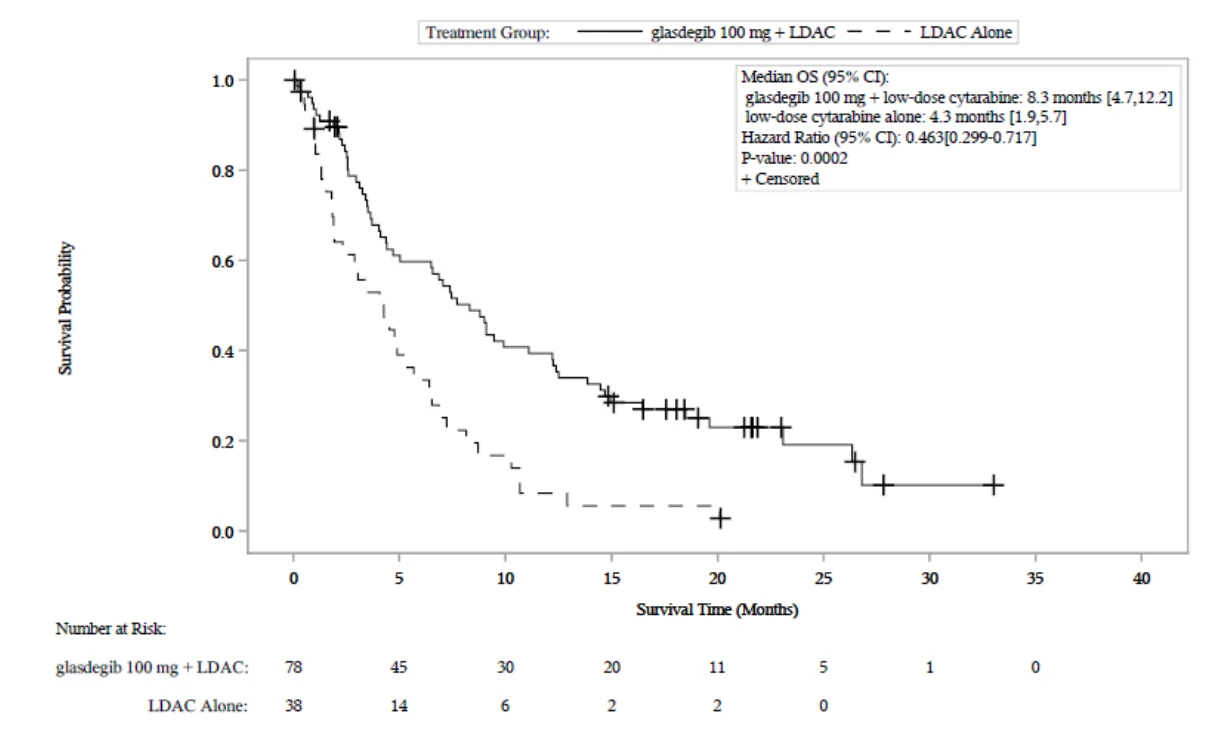
Abbreviations: CI = confidence interval; OS = overall survival; LDAC = low-dose cytarabine.
16 NON-CLINICAL TOXICOLOGY
Repeat-Dose Toxicity: The primary target organ findings following repeat oral administration of glasdegib in rats and dogs for up to 26 and 39 weeks in duration, respectively, included the kidney (degeneration/necrosis) in rat and dog, the liver (necrosis/inflammation) in dog only, and the testis (degeneration), growing incisor teeth (necrosis/broken), growing bone (partial to full closure of epiphysis), and peripheral nerve (axonal degeneration) in rat only. Additional clinical observations of weight loss, alopecia and muscle tremors/twitching, known class effects of SMO inhibitors, were observed in both species. These systemic toxicities were generally dose-dependent and observed at exposures ranging from approximately <0.03 to 8 times the clinically relevant exposure based on nonclinical to clinical comparison of the observed unbound AUC at the recommended clinical dose of 100 mg once daily.
Complete reversibility of toxicities to the kidney (degeneration/necrosis), peripheral nerve (axonal degeneration), seminiferous tubule (testicular degeneration), and the clinical observations of muscle tremors/twitching was demonstrated following up to 16-week recovery, whereas partial recovery was demonstrated in the liver (necrosis/inflammation). The observations of weight loss, of alopecia, bone and teeth effects, and testicular hypospermatogenesis did not recover. In addition, QTc prolongation was identified in telemetered dogs at unbound Cmax exposures approximately 4-times the observed unbound Cmax exposure at the recommended clinical dose of 100 mg once daily.
Carcinogenicity: Carcinogenicity studies have not been conducted with glasdegib.
Genotoxicity: Glasdegib was not mutagenic in vitro in the bacterial reverse mutation (Ames) assay and was not clastogenic in the in vitro chromosome aberration assay in human lymphocytes. Glasdegib was not clastogenic or aneugenic in the rat micronucleus assay.
Reproductive Toxicity: Effects on male reproductive organs were observed in animals at 50 mg/kg/day (approximately 8 times the unbound human clinical exposure based on AUC). Safety margin for NOAEL (10 mg/kg/day) is 0.6, hence lower than clinically relevant.
The effect of testicular degeneration did recover whereas the hypospermatogenesis did not recover.
Developmental Toxicity: In embryo-fetal developmental toxicity studies, repeat dosing of glasdegib to pregnant rats and rabbits during the period of organogenesis resulted in embryotoxicity, fetotoxicity, and teratogenicity. Glasdegib administration resulted in complete resorption of fetuses and/or low fetal body weights, and fetal developmental abnormalities and malformations (craniofacial malformations, malformed limbs, paws/digits, trunk and tail, dilation of brain, malpositioned/ malformed eyes, misshapen head, small tongue, absent palate, teeth and viscera, diaphragmatic hernia, edema, heart defects, rib and vertebral abnormalities, malformed or absent structures in the appendicular skeleton (notably the long bones)). Embryo-fetal lethality (88% resorption in rats and 100% resorption in rabbit) was observed at maternal systemic exposure multiples of approximately 4-times and 3-times the unbound human AUC in rats and rabbits, respectively. Severe developmental malformations were observed at maternal systemic Cmax and AUC exposures in rats and rabbits approximately 0.71 times and 0.6 times, respectively to the relevant human exposure at the recommended dose of 100 mg once daily.