


Product Monograph - Dawnzera
Recent Major Label Changes
| None at time of the most recent authorization. |
|---|
Table of Contents
Certain sections or subsections that are not applicable at the time of the preparation of the most recent authorized product monograph are not listed.
Recent Major Label Changes ................................................................................................................ 2
Part 1: Healthcare Professional Information ......................................................................................... 4
- 1.
Indications ................................................................................................................................... 4
1.1. Pediatrics ................................................................................................................................. 4
1.2. Geriatrics ................................................................................................................................. 4
- 2. Contraindications ......................................................................................................................... 4
- 4.
Dosage and Administration .......................................................................................................... 4
4.1. Dosing Considerations ............................................................................................................. 4
4.2. Recommended Dose and Dosage Adjustment........................................................................ 5
4.4. Administration ......................................................................................................................... 5
4.5. Missed Dose ............................................................................................................................ 6
- 5. Overdose ...................................................................................................................................... 6
- 6. Dosage Forms, Strengths, Composition, and Packaging ................................................................. 6
- 7.
Warnings and Precautions ............................................................................................................ 6
General ................................................................................................................................................. 6
Carcinogenesis and Genotoxicity .......................................................................................................... 7
Driving and Operating Machinery......................................................................................................... 7
Hematologic .......................................................................................................................................... 7
Hepatic/Biliary/Pancreatic .................................................................................................................... 7
Immune ................................................................................................................................................. 7
Reproductive Health ............................................................................................................................. 7
Skin ........................................................................................................................................................ 8
7.1. Special Populations ................................................................................................................. 8
7.1.1. Pregnancy ....................................................................................................................... 8
7.1.2. Breastfeeding ................................................................................................................. 8
7.1.3. Pediatrics ........................................................................................................................ 8
7.1.4. Geriatrics ........................................................................................................................ 8
- 8.
Adverse Reactions ........................................................................................................................ 9
8.1. Adverse Reaction Overview .................................................................................................... 9
8.2. Clinical Trial Adverse Reactions ............................................................................................... 9
8.2.1. Clinical Trial Adverse Reactions – Pediatrics ................................................................ 10
8.4. Abnormal Laboratory Findings: Hematologic, Clinical Chemistry, and Other Quantitative Data ............................................................................................................................................... 10
- 9.
Drug Interactions ........................................................................................................................ 11
9.2. Drug Interactions Overview .................................................................................................. 11
9.3. Drug-Behaviour Interactions ................................................................................................. 11
9.4. Drug-Drug Interactions .......................................................................................................... 11
9.5. Drug-Food Interactions ......................................................................................................... 11
9.6. Drug-Herb Interactions ......................................................................................................... 11
9.7. Drug-Laboratory Test Interactions ........................................................................................ 11
- 10.
Clinical Pharmacology ................................................................................................................ 11
10.1. Mechanism of Action ............................................................................................................ 11
10.2. Pharmacodynamics ............................................................................................................... 11
10.3. Pharmacokinetics .................................................................................................................. 12
10.4. Immunogenicity .................................................................................................................... 14
- 11. Storage, Stability, and Disposal ................................................................................................... 15
Part 2: Scientific Information ............................................................................................................. 16
- 13. Pharmaceutical Information ....................................................................................................... 16
- 14.
Clinical Trials .............................................................................................................................. 17
14.1. Clinical Trials by Indication .................................................................................................... 17
- 16. Non-Clinical Toxicology ............................................................................................................... 21
Patient Medication Information ......................................................................................................... 24
INSTRUCTIONS FOR USE ..................................................................................................................... 28
Part 1: Healthcare Professional Information
1. Indications
DAWNZERA (donidalorsen injection) is indicated for:
- the prevention of attacks of hereditary angioedema (HAE) in adult and pediatric patients 12 years of age and older.
DAWNZERA is not intended for acute treatment of HAE attacks.
1.1. Pediatrics
Pediatrics (≥12 years): Based on the data submitted and reviewed by Health Canada, the safety and efficacy of DAWNZERA in pediatric patients aged 12 years and older have been established. Therefore, Health Canada has authorized an indication for pediatric use in patients aged 12 to less than 18 years (see 7.1.3 Pediatrics, 10.3 Pharmacokinetics, and 14 Clinical Trials).
Pediatrics (<12 years of age): No data are available to Health Canada; therefore, Health Canada has not authorized an indication for use in pediatric patients less than 12 years of age.
1.2. Geriatrics
Geriatrics (≥65 years of age): Limited evidence from clinical studies suggests that use of DAWNZERA in the geriatric population is not associated with differences in safety or effectiveness.
2. Contraindications
DAWNZERA is contraindicated in:
- Patients with a history of serious hypersensitivity reactions to donidalorsen, including anaphylaxis;
- Patients who are hypersensitive to this drug or to any ingredient in the formulation, including any non-medicinal ingredient, or component of the container. For a complete listing, see 6 Dosage Forms, Strengths, Composition, and Packaging.
4. Dosage and Administration
4.1. Dosing Considerations
- DAWNZERA is intended for use under the guidance of a healthcare professional experienced in the diagnosis and management of patients with HAE. If the healthcare professional determines that it is appropriate, the patient may self-inject DAWNZERA, or a caregiver may administer DAWNZERA after proper training in subcutaneous injection technique.
- DAWNZERA is not intended for the treatment of acute HAE attacks. Patients should not take additional doses of DAWNZERA to treat an acute attack of HAE (see General).
- In patients previously receiving another prophylactic therapy for HAE, the timing of transition to DAWNZERA should take into account the onset of its clinical effect (see 10 Clinical Pharmacology). A reduction in attack rate was observed as early as Week 1 following initiation of DAWNZERA, with the maximal effect expected after approximately 1 month. Therefore, when transitioning from a prophylactic therapy with a short half-life, concomitant administration with DAWNZERA for up to 14 days may be considered to maintain prophylactic coverage during the transition period. For prophylactic therapies with a long half-life, DAWNZERA may be initiated at the end of the previous therapy's dosing interval.
4.2. Recommended Dose and Dosage Adjustment
Adults and Pediatric Patients (aged 12 years and older): The recommended starting dose of DAWNZERA is 80 mg injected subcutaneously every 4 weeks (Q4W). A dosage of 80 mg administered subcutaneously every 8 weeks (Q8W) may be considered if the patient is well controlled (e.g., attack-free) for at least 3 months while receiving DAWNZERA.
Pediatric use (<12 years): Health Canada has not authorized an indication for use in pediatric patients less than 12 years of age (see 1.1 Pediatrics).
Geriatric use (≥65 years): No dose adjustment is required for patients above 65 years of age (see 7.1.4 Geriatrics and 10.3 Pharmacokinetics).
Patients with renal impairment: No dosage adjustment of DAWNZERA is recommended for patients with mild renal impairment (estimated glomerular filtration rate [eGFR] 60-89 mL/min/1.73 m2). DAWNZERA has not been studied in patients with moderate or severe renal impairment, or end-stage renal disease (see 10.3 Pharmacokinetics).
Patients with hepatic impairment: No specific dose adjustment for DAWNZERA is recommended for patients with mild hepatic impairment (defined using NCI-ODWG Criteria: total bilirubin ≤1 × ULN and AST >1 × ULN, or total bilirubin >1 to 1.5 × ULN and any AST). Use of DAWNZERA is not recommended in patients with moderate or severe hepatic impairment (NCI-ODWG criteria) (see Hepatic/Biliary/Pancreatic and 10.3 Pharmacokinetics).
4.4. Administration
DAWNZERA is administered subcutaneously only.
DAWNZERA is intended for self-administration or administration by a caregiver. Prior to treatment initiation, patients and caregivers must be trained on proper preparation and subcutaneous injection technique.
DAWNZERA is provided as a ready-to-use prefilled autoinjector that does not require additional reconstitution or dilution for administration.
Inspect the DAWNZERA autoinjector for any damage. The solution should be clear and colorless to yellow. Do not use the autoinjector if the solution appears cloudiness, discoloured or contains visible particles. Avoid vigorous agitation of the autoinjector.
Remove the single-dose autoinjector from refrigerator approximately 30 minutes prior to the injection to allow the solution to come to room temperature. Do not use other warming methods.
Inject DAWNZERA prefilled autoinjector subcutaneously into the abdomen or upper thigh region. The back of the upper arm can also be used as an injection site if a healthcare professional or caregiver is giving the injection.
DAWNZERA must not be injected into areas where the skin is tender, bruised, red, hard, infected or discoloured.
For detailed instructions on the preparation and administration of DAWNZERA, see the Instructions for Use of DAWNZERA autoinjector included with Patient Medication Information.
4.5. Missed Dose
If a dose of DAWNZERA is missed, instruct the patient to administer the dose of DAWNZERA as soon as possible. Resume treatment at the recommended dosing frequency from the date of the most recently administered dose.
5. Overdose
There is no clinical experience with overdose of DAWNZERA. In the event of an overdose, supportive medical care should be administered as appropriate including consulting with a healthcare professional and close observation of the clinical status of the patient.
| For the most recent information in the management of a suspected drug overdose, contact your regional poison control centre or Health Canada’s toll-free number, 1-844 POISON-X (1-844-764-7669). |
|---|
- 6. Dosage Forms, Strengths, Composition, and Packaging
Table 1. Dosage Forms, Strengths, and Composition
Description
DAWNZERA (donidalorsen injection) is a preservative-free, clear, colorless to yellow, ready-to-use parenteral solution supplied in an individual packaged prefilled autoinjector.
Package size: 1 single-dose autoinjector of DAWNZERA per carton.
7. Warnings and Precautions
General
DAWNZERA should not be used for treatment of acute HAE attacks. In the event of an acute attack, individualized treatment should be initiated with an approved acute HAE treatment.
| Route of Administration | Dosage Form/Strength/Composition | Non-Medicinal Ingredients |
| Subcutaneous injection | Sterile solution; single-dose 80 mg donidalorsen in 0.8 mL single use prefilled autoinjector | Disodium hydrogen phosphate, Hydrochloric acid, Sodium chloride, Sodium dihydrogen phosphate, Sodium hydroxide, Water for injection |
Carcinogenesis and Genotoxicity
Based on the non-clinical data, donidalorsen is not genotoxic and no evidence of carcinogenic effects was observed in mice (see 16 Non-Clinical Toxicology).
Driving and Operating Machinery
No studies have been conducted to investigate the effect of donidalorsen on driving performance or the ability to operate machinery. However, it is not anticipated that DAWNZERA would affect these abilities or cause impairment of mental ability.
Hematologic
Decrease in Platelet Count
DAWNZERA may cause decreases in platelet count. If clinically significant decreases in platelet count occur, institute appropriate clinical management. In clinical studies, no DAWNZERA-treated patient developed severe thrombocytopenia (platelet count <50,000/mm3) and no major bleeding events were reported (see 8.4 Abnormal Laboratory Findings: Hematologic, Clinical Chemistry, and Other Quantitative Data).
Hepatic/Biliary/Pancreatic
Liver Enzyme Elevations
Treatment with DAWNZERA was associated with an increased incidence of liver enzymes elevation from baseline (see 8.4 Abnormal Laboratory Findings: Hematologic, Clinical Chemistry, and Other Quantitative Data). Elevations in alanine aminotransferase (ALT), aspartate aminotransferase (AST), and gamma-glutamyl transferase (GGT) were observed more frequently in DAWNZERA-treated patients and were generally mild in severity (up to 3 × the upper limit of normal [ULN]). Patients who develop signs or symptoms suggestive of hepatic dysfunction should be evaluated promptly.
Immune
Hypersensitivity Reactions including Anaphylaxis
Hypersensitivity reactions, including anaphylaxis, have been reported with DAWNZERA in clinical trials. Symptoms included generalized rash, dyspnea, chest pain, and peri-oral swelling (see 8.1 Adverse Reaction Overview).
If anaphylaxis or severe allergic reactions occur, discontinue DAWNZERA; treat promptly per standard of care, and monitor until signs and symptoms resolve.
Reproductive Health
Fertility
There are no human data on the effect of donidalorsen on fertility. Reproductive toxicity data revealed no effect on fertility and reproductive function of female and male mice, with the exception of an increase in sperm abnormalities in male mice treated with donidalorsen (see 16 Non-Clinical Toxicology).
Skin
Injection Site Reactions
Injection site reactions have been reported with DAWNZERA in clinical trials (see 8.1 Adverse Reaction Overview). All injection site reactions were non serious, mild to moderate in severity, and generally resolved over time. In some patients, the injection site reactions such as injection site erythema, injection site pruritus, and injection site discolouration persisted for 2 or more days. In one patient who received higher than labelled doses in accordance with the protocol, injection site discoloration led to permanent discontinuation of treatment.
7.1. Special Populations
7.1.1. Pregnancy
There are no adequate and well-controlled studies with DAWNZERA in pregnancy. Therefore, the use of DAWNZERA is not recommended during pregnancy.
Animal studies did not indicate direct or indirect harmful effects with respect to reproductive toxicity (see 16 Non-Clinical Toxicology).
7.1.2. Breastfeeding
It is unknown if DAWNZERA is excreted in human milk. There are no data on the presence of donidalorsen in human milk, the effects on the breastfed infant, or the effects on milk production.
Based on the non-clinical data, donidalorsen was excreted in the milk of lactating mice (see 16 Non-Clinical Toxicology). A risk of newborns/infants exposure to DAWNZERA though breast milk cannot be excluded.
7.1.3. Pediatrics
Pediatrics (<12 years): No data are available to Health Canada; therefore, Health Canada has not authorized an indication for pediatric use in patients younger than 12 years of age.
Pediatrics (≥12 years): The safety and efficacy of DAWNZERA were evaluated in a subgroup of pediatric patients (n=7) aged 12 to <18 years as part of pivotal Study OASIS-HAE/CS5, and in an additional 11 pediatric patients in the open-label extension safety study. The safety profile and attack rate of the subgroup analysis were similar to those observed in adults (see 8.2.1 Clinical Trial Adverse Reactions – Pediatrics). The safety and effectiveness of DAWNZERA in pediatric patients aged 12 years and older is extrapolated from adults from Study OASIS-HAE/CS5 with support from pharmacokinetic analysis and pharmacodynamic response (see 10.2 Pharmacodynamics, 10.3 Pharmacokinetics, and 14 Clinical Trials). Warnings applicable to adults are also relevant to pediatric use.
7.1.4. Geriatrics
There is limited clinical data with DAWNZERA in elderly patients. Available data do not suggest differences in safety or effectiveness compared with younger adults; however, only 6 (3.3%) DAWNZERA-treated patients were 65 to 74 years of age, and no patients were ≥75 years of age. Therefore, as clinical trials did not include sufficient numbers of patients ≥65 years of age, no definitive conclusions can be drawn to determine whether elderly patients respond differently from younger adults.
8. Adverse Reactions
8.1. Adverse Reaction Overview
Safety data were available for 176 adult and pediatric patients 12 years and older (42.6% males and 57.4% females) with HAE treated with DAWNZERA at any dosing regimen in clinical studies. Overall, cumulative exposure amounted to 237.31 patient-years. The mean duration of exposure was 50 weeks for DAWNZERA 80 mg Q4W, and 59 weeks for DAWNZERA 80 mg Q8W. About half of the subjects were exposed for >1 year.
The most frequently reported (>10%) treatment-emergent adverse events (TEAEs) were nasopharyngitis, upper respiratory tract infection, headache, influenza, COVID-19, injection site erythema, urinary tract infection, and back pain. Related events (>2%), which occurred in 40.3% of patients overall, were mostly considered injection site reactions, including injection site erythema, discolouration, site pain, site pruritus, site induration, site bruising, site swelling; headache, fatigue, hepatic enzyme increased, abdominal pain, and alanine aminotransferase increased.
Among DAWNZERA-treated patients, 39 (22.2%) reported hypersensitivity reactions. A total of 8 (4.5%) subjects experienced at least one serious adverse event (AE) while receiving treatment. None of the serious AEs were considered treatment-related. Two patients experienced severe and serious hypersensitivity reactions; one case fulfilled Sampson’s criteria for the diagnosis of anaphylaxis.
The incidence of TEAEs leading to discontinuation were infrequent (5 [2.8%] patients).
8.2. Clinical Trial Adverse Reactions
Clinical trials are conducted under very specific conditions. Therefore, the frequencies of adverse reactions observed in the clinical trials may not reflect frequencies observed in clinical practice and should not be compared to frequencies reported in clinical trials of another drug.
The safety of DAWNZERA was evaluated in a Phase 3, multicenter, randomized, double-blind, placebo-controlled study (OASIS-HAE/CS5) that included 91 adult and pediatric patients aged 12 years and older with HAE. Patients were randomized to receive at least one subcutaneous dose of DAWNZERA 80 mg once every 4 weeks (Q4W), DAWNZERA 80 mg once every 8 weeks (Q8W), or matching placebo (see 14.1 Clinical Trials by Indication). Only 7 adolescents were enrolled in the study (4 in the 80 mg Q4W group and 3 in the 80 mg Q8W group), and none were randomized to the placebo group.
The most common adverse reactions that were reported in ≥5% of patients treated with DAWNZERA from study OASIS-HAE/CS5 are listed by MedDRA system organ class in Table 2.
Table 2. Adverse Reactions Reported in ≥5% of Patients with HAE Treated with DAWNZERA or Placebo in Study OASIS-HAE/CS5
System Organ Class Adverse Reaction (Preferred Term) | DAWNZERA | Placebo (N=22) | |||||||
|---|---|---|---|---|---|---|---|---|---|
80 mg Q4W (N=45) | 80 mg Q8W (N=23) | ||||||||
| n (%) | n (%) | n (%) | |||||||
| Gastrointestinal disorders | |||||||||
| Abdominal discomfort | 3 (7) | 0 (0) | 0 (0) | ||||||
| General disorders and administration site conditions | |||||||||
| Injection site reactions*† | 11 (24) | 1 (4) | 1 (5) | ||||||
| Infections and infestations | |||||||||
| Upper respiratory tract infection | 4 (9) | 2 (9) | 1 (5) | ||||||
| Urinary tract infection | 4 (9) | 2 (9) | 0 (0) | ||||||
N = number of patients; n = number of patients experiencing the event; Q4W = every 4 weeks; Q8W = every 8 weeks. * Injection site reactions include: erythema, discoloration, pain, pruritus, induration, bruising, haematoma, hypersensitivity, swelling, reaction, and urticaria. † All injection site reactions were mild, non-serious, and the majority of them resolved without receiving any treatment. | |||||||||
8.2.1. Clinical Trial Adverse Reactions – Pediatrics
Pediatrics (12 to <18 years of age): The safety of DAWNZERA were evaluated in a subgroup of pediatric patients (n=7) aged 12 to <18 years as part of pivotal study OASIS-HAE/CS5, and in an additional 11 pediatric patients in the open-label extension safety study (OASISplus-HAE/CS7). Although the number of pediatric participants was limited, the available evidence demonstrated a safety and tolerability profile in pediatric patients (12 to <18) that was generally consistent with the overall safety profile observed in adult patients.
8.4. Abnormal Laboratory Findings: Hematologic, Clinical Chemistry, and Other Quantitative Data
Clinical Trial Findings
Hepatic enzyme elevations: ALT or AST elevations ≥3 × ULN occurred in 8 DAWNZERA-treated patients (5 receiving Q4W and 3 receiving Q8W). Of these, 2 patients had ALT elevations ≥5 × ULN (one with concomitant AST ≥3 × ULN), including one patient with ALT >8 × ULN. Two patients discontinued treatment due to liver function test abnormalities (see Hepatic/Biliary/Pancreatic).
Platelet count reductions: Mean platelet counts decreased from baseline to Week 25 by 9.6% in the DAWNZERA 80 mg Q4W group and 7.9% in the DAWNZERA 80 mg Q8W group, compared with 1.4% in the placebo group. Baseline mean platelet counts were 266,000/mm3, 265,000/mm3, and 245,000/mm3, respectively. No DAWNZERA-treated patient developed severe thrombocytopenia (platelet count <50,000/mm³), and no major bleeding events were reported in clinical studies (see Hematologic).
9. Drug Interactions
9.2. Drug Interactions Overview
No clinical drug-drug interaction studies have been conducted with donidalorsen.
In vitro data
In vitro studies show that donidalorsen is not a substrate or inhibitor of transporters, does not interact with highly plasma protein bound drugs, and is not an inhibitor or inducer of cytochrome P450 (CYP) enzymes.
In vitro studies show that linker related metabolite M8 is not an inhibitor or inducer of CYP enzymes. M8 is a substrate of transporters bile salt export pump (BSEP) and organic anion transporting polypeptide 1B3 (OATP1B3) and is an inhibitor of multidrug and toxin extrusion protein 1 (MATE1) transporter.
9.3. Drug-Behaviour Interactions
The interaction of DAWNZERA with individual behavioral risks (e.g., cigarette smoking, cannabis use, and/or alcohol consumption) has not been studied.
9.4. Drug-Drug Interactions
Interactions with other drugs have not been established.
9.5. Drug-Food Interactions
Interactions with food have not been established.
9.6. Drug-Herb Interactions
Interactions with herbal products have not been established.
9.7. Drug-Laboratory Test Interactions
Interactions with laboratory tests have not been established.
10. Clinical Pharmacology
10.1. Mechanism of Action
Donidalorsen is a 2’-O-methoxyethyl–modified antisense oligonucleotide (ASO) conjugated to a triantennary N-acetylgalactosamine (GalNAc3) moiety. Donidalorsen binds to prekallikrein (PKK) mRNA and promotes its degradation by ribonuclease H1 (RNase H1), which results in reduced production of PKK protein. PKK is a pro-enzyme for plasma kallikrein, which generates bradykinin, a potent vasodilator causing swelling and pain in HAE. In patients with HAE, C1-inhibitor (C1-INH) deficiency or dysfunction leads to excessive plasma kallikrein activity, bradykinin generation, and angioedema attacks. Donidalorsen lowers PKK concentration, preventing excessive bradykinin production in patients with HAE.
10.2. Pharmacodynamics
In OASIS-HAE/CS5, a 24-week multicenter, randomised, double-blind, placebo-controlled trial in adult and pediatric patients (≥12 years) with Type I or Type II HAE (see 14 Clinical Trials), a decrease in plasma PKK concentrations was observed at the first assessment (Week 5) following treatment with DAWNZERA 80 mg. The mean percentage reduction from baseline at Week 5 across both treatment groups was 48%. The mean percentage change from baseline to Week 25 in trough plasma PKK concentrations indicated reductions of 73% and 47% following treatment with DAWNZERA 80 mg Q4W and Q8W, respectively, compared with a slight increase (2%) observed in the placebo group.
Cardiac Electrophysiology
A dedicated thorough QT/QTc study has not been conducted with DAWNZERA. Based on an interpolation of data from clinical studies and modelling analysis, the predicted mean placebo-corrected QTcF change from baseline at the highest recommended dose of donidalorsen 80 mg Q4W was estimated as 0.80 ms (90% CI: -4.86, 6.46). At the maximum recommended dose of DAWNZERA (80 mg Q4W), clinically significant QTc interval prolongation was not observed.
10.3. Pharmacokinetics
The pharmacokinetic properties of DAWNZERA were evaluated following subcutaneous administration of multiple doses every 4 weeks in healthy subjects and Q4W or Q8W in patients with HAE. The pharmacokinetics of DAWNZERA were similar between healthy subjects and patients with HAE.
Steady-state-maximum plasma concentration (Cmax,ss), trough plasma concentration (Ctrough,ss), and area under the plasma concentration time-curve over the dosing interval (AUCτ,ss) following donidalorsen administration 80 mg Q4W or 80 mg Q8W in HAE patients are presented in Table 3. Donidalorsen was rapidly absorbed into the systemic circulation, with a median time to maximal concentration (Tmax) ranging from 1 to 3 hours and thereafter exhibited a multi-phase decline characterized by an initial relatively rapid disposition phase followed by a slower apparent elimination phase. No accumulation of donidalorsen Cmax and AUC was observed in plasma after repeated dosing every 4 weeks. However, a 2-fold increase of plasma donidalorsen Ctrough was observed following repeated dosing every 4 weeks. Donidalorsen exposure (AUC) at steady-state following subcutaneous administration in healthy subjects increased in a greater than dose proportional manner over the dose range of 20 mg Q4W to the maximum recommended dosage of 80 mg Q4W.
Table 3. Summary of Steady-State Donidalorsen Pharmacokinetic Parameters Following Dosing of DAWNZERA 80 mg Every 4 Weeks or 80 mg Every 8 Weeks in Patients with HAE
| Dose | Geometric mean (CV%) | |||
|---|---|---|---|---|
| AUCτ,ss (ng·h/mL) | Cmax,ss (ng/mL) | Ctrough,ss (ng/mL) | t1/2 (hr) | |
| 80 mg Q4W | 5240 (52%) | 417 (81%) | 0.755 (63%) | 769 (25.1%) |
| 80 mg Q8W | 5210 (52%) | 416 (78%) | 0.255 (73%) | 753 (24%) |
AUCτ,ss = area under the plasma concentration time curve over each dosing interval at steady-state; Cmax,ss = maximum plasma concentration at steady state; Ctrough,ss = trough plasma concentration at steady state; t1/2= terminal elimination half-life; Q4W = every 4 weeks; Q8W = every 8 weeks; CV= Coefficient of Variation.
Values presented are based on population pharmacokinetic analysis, unless otherwise specified.
Absorption
Following subcutaneous administration, donidalorsen is absorbed with the time to maximum plasma concentration of approximately 1-3 hours post-dose.
Distribution
Donidalorsen is expected to distribute primarily to the liver and kidney cortex after subcutaneous dosing. The apparent volume of distribution for the central (Vc/F) and peripheral (Vp/F) compartment were 69.8 L and 1840 L, respectively. Donidalorsen is highly bound to human plasma proteins (>98% bound) in vitro.
Metabolism
The oligonucleotide moiety of donidalorsen is expected to be metabolized by endo and exonucleases to short oligonucleotide fragments of varying sizes within the liver. Based on in vitro studies, donidalorsen is not a substrate of cytochrome P450 (CYP) enzymes.
The linker that covalently connects the ASO to the GalNAc residues is cleaved via hydrolysis and undergoes dephosphorylation and subsequent oxidative metabolism to form inactive metabolites, which are minimally released in circulation. The most abundant linker-related metabolite (M8), which is <2% of parent drug donidalorsen at the 2-hour timepoint in humans, is inactive and a substrate of CYP3A4.
Elimination
The mean fraction of unchanged ASO eliminated in urine was less than 1% of the administered dose in healthy subjects within 24 hours post-dose. The renal route of elimination is minor for linker-related metabolites.
The terminal plasma elimination half-life of donidalorsen in a typical patient with HAE is approximately 1 month. The half-life of the initial rapid clearance phase, reflecting tissue distribution, was approximately 5 hours.
Special populations and conditions
- Pediatrics: No data were available to Health Canada for pediatric patients <12 years of age; therefore, Health Canada has not authorized an indication for use in this pediatric population (see 1.1 Pediatrics). Based on population pharmacokinetic analysis, donidalorsen exposure was approximately 40 to 45% higher in pediatric patients 12 to <18 years of age compared with adults (18-64 years). This difference was not considered clinically relevant, as exposure remained within the range of observed exposure in adults and did not warrant dose adjustment (see 4.2 Recommended Dose and Dosage Adjustment).
- Geriatrics: Donidalorsen exposure was approximately 26 to 30% higher in geriatric patients (≥65 years) than in adults (18-64 years). Although the number of geriatric patients enrolled in clinical studies was limited (see 7.1.4 Geriatrics), population pharmacokinetic analysis indicated that age had no clinical relevant effect on pharmacokinetics of donidalorsen.
- Sex: Based on the population pharmacokinetic analysis, donidalorsen exposure was approximately 49% higher in females than in males. This difference was not considered clinically relevant, as exposure remained within the range of observed exposure in study population.
- Race: Based on population pharmacokinetic analysis, donidalorsen exposure was approximately 11.6% lower in Caucasian population compared to African American population. This difference was not considered clinically relevant, as exposure remained within the range of observed exposure in study population.
- Obesity: Population pharmacokinetic analysis indicated that body weight had no clinically relevant effect on donidalorsen pharmacokinetics. Relative to the reference body weight range of 68.5 to 78 kg, exposure was approximately 34.9% higher in individuals weighing 37 to <68.5 kg and approximately 18.7% lower in those weighing >78 to 89.1 kg. These exposure differences remained within the range of observed exposure and did not warrant dose adjustment based on body weight in adult and pediatric patients (≥12 years of age).
- Genetic Polymorphism: The effect of genetic polymorphism on the pharmacokinetics of donidalorsen has not been evaluated.
- Pregnancy and Breastfeeding: See 7.1.1 Pregnancy and 7.1.2 Breastfeeding.
- Hepatic Insufficiency: Based on the population pharmacokinetic analysis, donidalorsen exposure was approximately 14% lower in patients with mild hepatic impairment (NCI-ODWG criteria) than in patients with normal hepatic function. This difference was not considered clinically relevant, as exposure remained within the range of observed exposure in the study population. DAWNZERA has not been studied in patients with moderate (NCI-ODWG criteria) or severe (NCI-ODWG criteria) hepatic impairment (see 4.2 Recommended Dose and Dosage Adjustment).
- Renal Insufficiency: Based on the population pharmacokinetic analysis, donidalorsen exposure was approximately 32% higher in patients with mild renal impairment (eGFR 60-89 mL/min/1.73 m2) than in patients with normal renal function. This difference was not considered clinically relevant, as exposure remained within the range of observed exposure in study population. DAWNZERA has not been studied in patients with moderate or severe renal impairment, end-stage renal disease (see 4.2 Recommended Dose and Dosage Adjustment).
10.4. Immunogenicity
The detection of antibody formation is highly dependent on the sensitivity and specificity of the assay. Additionally, the observed incidence of antibody positivity (including neutralizing antibody) in an assay may be influenced by several factors including assay methodology, sample handling, timing of sample collection, concomitant medications, and underlying disease. For these reasons, the incidence of antibodies to donidalorsen cannot be directly compared with the incidence of antibodies of other products.
In Study OASIS-HAE/CS5, treatment-emergent anti-drug antibodies (ADAs) in adult and pediatric patients (≥12 years of age) with HAE were detected in 20% (9/45) patients treated with DAWNZERA 80 mg Q4W and 22% (5/23) of patients treated with DAWNZERA 80 mg Q8W for up to 24 weeks. In the open-label safety extension study, the incidence of treatment-emergent ADAs was 35% (22/63) in patients receiving DAWNZERA 80 mg Q4W and patients initially randomized to placebo in OASIS-HAE/CS5 (32%, 6/19). The incidence of treatment-emergent ADAs was 21% (3/14) in patients receiving DAWNZERA 80 mg Q8W in OASIS-HAE/CS5 and open-label extension. No obvious relationship was seen between hypersensitivity reactions and ADA against donidalorsen status.
The development of ADA against donidalorsen did not appear to adversely affect the pharmacodynamics, safety, or clinical response in any patient. An increase in donidalorsen plasma Ctrough was observed in ADA-positive patients with high antibody titers. However, the effects of ADAs on the pharmacokinetics, pharmacodynamics, safety and effectiveness of DAWNZERA remain inconclusive due to the limited sample size.
- 11. Storage, Stability, and Disposal
Store the DAWNZERA autoinjector in the refrigerator between 2°C to 8°C in the original carton.
The DAWNZERA autoinjector can be stored at room temperature up to 30°C in the original carton for up to 6 weeks. If not used within the 6 weeks stored at room temperature, discard DAWNZERA.
Do not freeze. Do not expose to heat. Protect from light.
Part 2: Scientific Information
13. Pharmaceutical Information
Drug Substance
Non-proprietary name of the drug substance(s): Donidalorsen sodium
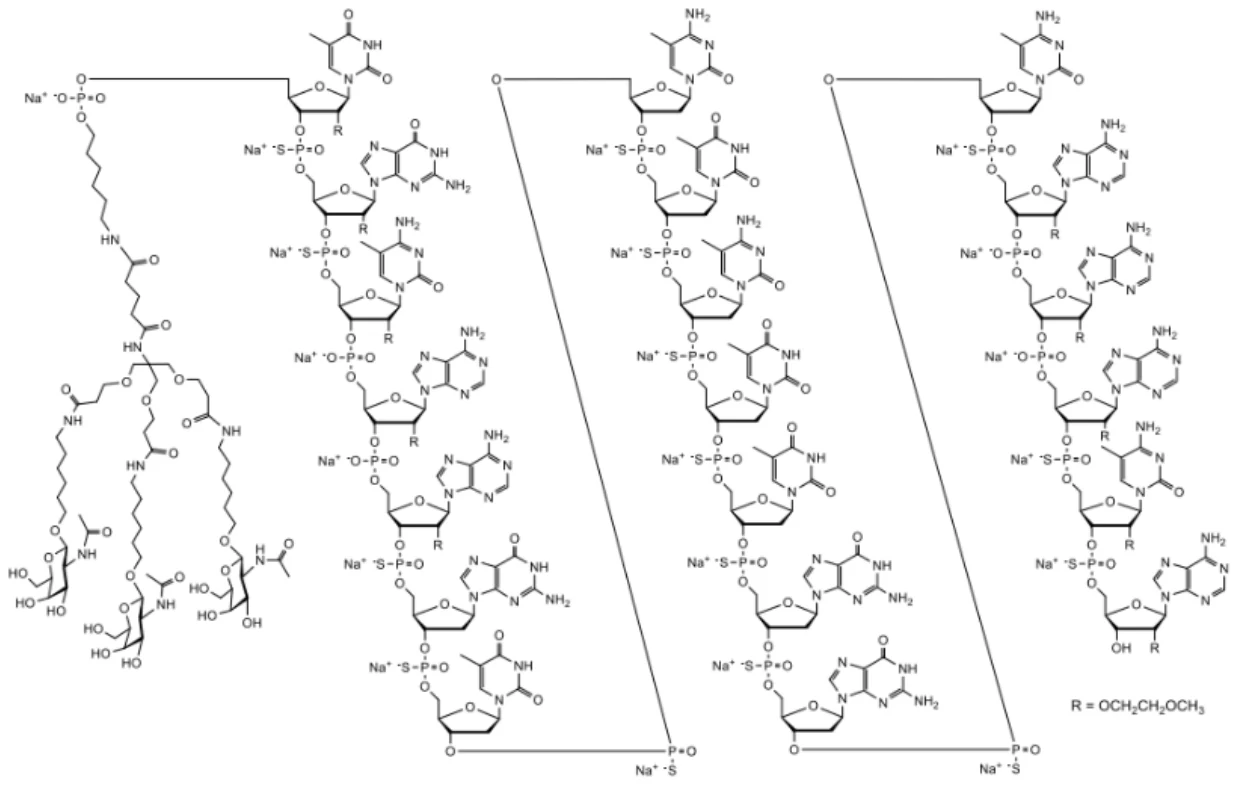
Chemical name: DNA, d([2′-O-(2-methoxyethyl)]m5rU-sp-[2′-O-(2-methoxyethyl)]rG-sp-[2′-O-(2-methoxyethyl)]m5rC-[2′-O-(2-methoxyethyl)]rA-[2′-O-(2-methoxyethyl)]rA-sp-G-sp-T-sp-m5C-sp-T-sp-m5C-sp-T-sp-T-sp-G-sp-G-sp-m5C-sp-[2′-O-(2-methoxyethyl)]rA-[2′-O-(2-methoxyethyl)]rA-[2′-O-(2-methoxyethyl)]rA-sp-[2′-O-(2-methoxyethyl)]m5rC-sp-[2′-O-(2-methoxyethyl)]rA), 5′-[26-[[2-(acetylamino)-2-deoxy-β-D-galactopyranosyl]oxy]-14,14-bis[[3-[[6-[[2-(acetylamino)-2-deoxy-β-D-galactopyranosyl]oxy]hexyl]amino]-3-oxopropoxy]methyl]-8,12,19-trioxo-16-oxa-7,13,20-triazahexacos-1-yl hydrogen phosphate], sodium salt (1:20).
Molecular formula and molecular mass: Molecular Formula: C296H415N83O151P20S15Na20
Molecular Mass: 9112.27 daltons
Structural formula:
Physicochemical properties: Donidalorsen sodium is a white to yellow solid and is freely soluble in water and in aqueous sodium acetate buffer (pH3).
14. Clinical Trials
14.1. Clinical Trials by Indication
Prevention of Attacks of Hereditary Angioedema (HAE)
Table 4. Summary of Patient Demographics for Clinical Trials in HAE Patients
| Study # | Study design | Dosage, route of administration and duration | Study subjects (n) | Mean age (range) | Sex |
| OASIS-HAE/CS5 | Phase 3, multicentre, randomized, double-blind, placebo-controlled | Donidalorsen: 80 mg Q4W 80 mg Q8W or Placebo SC injection Treatment period: 24 week | 80 mg Q4W: n=45 80 mg Q8W: n=23 Placebo: n=22 | 80 mg Q4W: 39.6 years (12-68 years) 80 mg Q8W: 34.1 years (12-66 years) Placebo: 35.4 years (21-59 years) | Female: 48 (53.3%) Male: 42 (46.7%) |
| OASISplus-HAE/CS7 | Phase 3, multicentre, open-label, extension | Donidalorsen: 80 mg Q4W 80 mg Q8W SC injection Treatment period: 52 weeks Extended treatment period: 156 weeks planned | Rollovera: 83
Nonrolloverb: 65
| Rollovera: 80 mg Q4W: 38.4 years (12-68 years) 80 mg Q8W: 30.2 years (15-47 years) Nonrolloverb : 41.6 years (12-69 years) | Rollovera: Female: 45 (54.2%) Male: 38 (45.8%) Nonrolloverb: Female: 38 (59.4%) Male: 26 (40.6%) |
Legend: Q4W = every 4 weeks; Q8W = every 8 weeks; SC = subcutaneous
a Rollover subjects (subjects who participated in OASIS-HAE/CS5)
b Nonrollover subjects (subjects who did not participate in OASIS-HAE/CS5 and were previously maintained on another HAE prophylactic therapy) received donidalorsen Q4W.
The efficacy and safety of DAWNZERA (donidalorsen injection) in preventing attacks of HAE in adult and pediatric patients aged 12 years and older with Type I or Type II HAE was evaluated in the Study OASIS-HAE/CS5. The OASIS-HAE/CS5 study was followed by an ongoing, open-label, uncontrolled extension study (Study OASISplus-HAE/CS7).
HAE in Adults and Pediatric Patients (≥12 years)
The pivotal OASIS-HAE/CS5 study was a Phase 3, randomized, multicentre, double-blind, placebo-controlled, parallel-arm study in patients with a confirmed diagnosis of Type I or Type II HAE. The study enrolled 90 patients, including 83 adults and 7 adolescents aged ≥12 years (mean age: 14 years), who experienced at least 2 Investigator-confirmed HAE attacks within the first 8 weeks of the run-in period and received at least one dose of DAWNZERA. The median age (min, max) of the study population was 35.5 years (12, 68); 53.3% were female; and 91.1% were Caucasian. Three patients had a baseline body weight of <50 kg, including 2 adolescents.
Patients were randomized to receive DAWNZERA 80 mg once every 4 weeks (n=45; including 4 adolescents), DAWNZERA 80 mg once every 8 weeks (n=23; including 3 adolescents), or matching placebo (n=22; no adolescents randomized to placebo). Randomization was first stratified by dosing regimen (2:1) and, within each regimen, patients were randomized in a 3:1 ratio to receive DAWNZERA or placebo during the 24-week treatment period. The placebo groups were pooled for efficacy analyses. Patients were required to discontinue other long-term prophylactic HAE therapies, except androgens or tranexamic acid, prior to entering the study; all patients were allowed to use rescue medications for treatment of breakthrough HAE attacks.
Overall, 93.3% of patients had a diagnosis of Type I HAE; 52% of patients had a history of laryngeal attacks, and 17.8% had previous used long-term prophylactic therapy. During the prospective run-in period (baseline attack rate), the mean HAE attack rate was 3.33 attacks per 4 weeks, and 68.9% of patients enrolled had a baseline attack rate ≥2 attacks per 4 weeks.
The primary efficacy endpoint was the HAE attack rate, defined as the time-normalized number of Investigator-confirmed HAE attacks per 4-week period from Week 1 to Week 25. Key secondary endpoints were assessed from Week 5 to Week 25 and included the HAE attack rate, the rate of moderate or severe HAE attacks, and the HAE attacks requiring acute treatment.
As shown in Table 5, both DAWNZERA treatment regimens resulted in statistically significant reductions in HAE attack rate compared with placebo. Across the key secondary endpoints, DAWNZERA 80 mg Q4W demonstrated statistically significant improvements versus placebo, while DAWNZERA 80 mg Q8W showed statistically significant or nominally statistically significant improvements.
Table 5. Results of Primary and Key Secondary Efficacy Endpoints in Subjects with HAE in Study OASIS-HAE/CS5 – Full Analysis Set
| Endpoint Statistics | Placebo (N=22) | DAWNZERA 80 mg Q4W (N=45) | DAWNZERA 80 mg Q8W (N=23) | |||||||
|---|---|---|---|---|---|---|---|---|---|---|
Primary Endpoint HAE attack rate per 4 weeks from Week 1 to Week 25* | ||||||||||
| LS mean (95% CI) attack ratea | 2.26 (1.66, 3.09) | 0.44 (0.27, 0.73) | 1.02 (0.65, 1.59) | |||||||
| % Reduction (95% CI) relative to pooled placebob | -- | −81 (−89, −65) | −55 (−74, −22) | |||||||
| Wald chi-square p-valuec | -- | <0.001† | 0.004† | |||||||
Key Secondary Endpoints HAE attack rate per 4 weeks from Week 5 to Week 25 | ||||||||||
LS mean (95% CI) attack ratea starting from second dose (Week 5) | 2.25 (1.59, 3.18) | 0.30 (0.15, 0.58) | 0.90 (0.53, 1.52) | |||||||
% Reduction (95% CI)b relative to pooled placebo starting from second dose (Week 5) | -- | −87 (−94, −72) | −60 (−79, −25) | |||||||
| Wald chi-square p-valuec | -- | <0.001† | 0.004† | |||||||
| Moderate or severe HAE attack rate per 4 weeks from Week 5 to Week 25 | ||||||||||
LS mean (95% CI) moderate or severe attack ratea starting from second dose (Week 4) | 1.15 (0.72, 1.83) | 0.12 (0.04, 0.35) | 0.68 (0.37, 1.23) | |||||||
| % Reduction (95% CI)b relative to pooled placebo starting from second dose (Week 5) | -- | −89 (−97, −66) | −41 (−72, 26) | |||||||
| Wald chi-square p-valuec | -- | <0.001† | NS | |||||||
| HAE attacks per 4 weeks requiring acute therapy from Week 5 to Week 25 | ||||||||||
LS mean (95% CI) HAE attacks requiring acute therapy starting from second dose (Week 5) | 1.80 (1.23, 2.62) | 0.15 (0.06, 0.39) | 0.59 (0.31, 1.15) | |||||||
% Reduction (95% CI)b relative to pooled placebo starting from second dose (Week 5) | -- | −92 (−97, −77) | −67 (−85, −29) | |||||||
| Wald chi-square p-valuec | -- | <0.001† | 0.004‡ | |||||||
CI = confidence interval; HAE = hereditary angioedema; LS = least square; N = number of patients in the specific treatment group; NS = nonsignificant; Q4W = every 4 weeks; Q8W = every 8 weeks.
* Primary efficacy endpoint = comparison of the time-normalized number of investigator-confirmed HAE attacks per 4 weeks from Week 1 to Week 25 between the DAWNZERA 80 mg Q4W group and the placebo group.
a HAE attack rates were analyzed using a Poisson regression model adjusted for baseline attack rate and treatment.
b Percentage difference versus placebo was derived from estimated rate ratio.
c A hierarchical testing procedure controls for the overall alpha level of 5%.
† Statistically significance (p value <0.05).
‡ Nominally significance (p value <0.05).
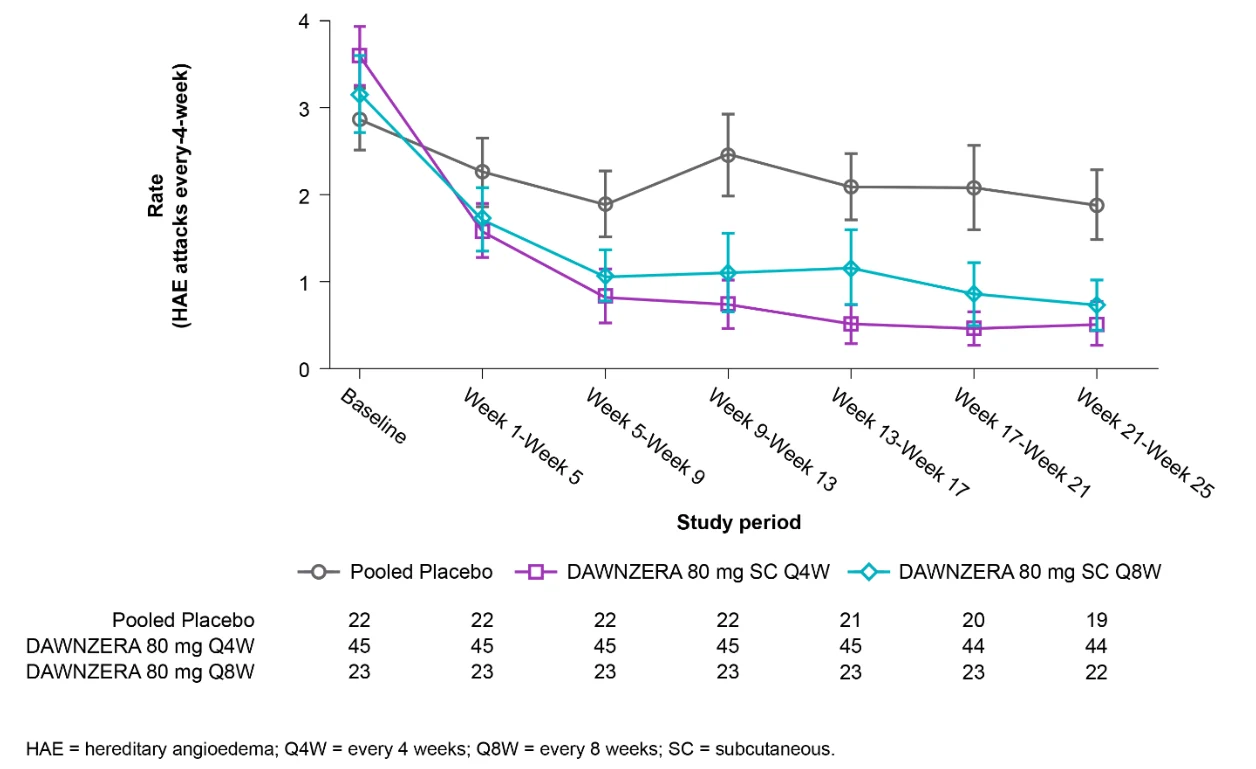
A sustained response to DAWNZERA with mean decreases from baseline in the HAE attack rate was observed throughout the treatment period in the DAWNZERA treatment groups as shown in Figure 1.
Figure 1. Mean (± SEM) Investigator-Confirmed HAE Attack Rate (per 4 weeks) in Study OASIS-HAE/CS5
Additional pre-defined secondary endpoints included the proportion of responders to study drug and who were attack-free. The proportion of patients with a ≥50%, ≥70%, and ≥90% reduction from baseline to Week 5 through Week 25 in the DAWNZERA treatment group was 93%, 82%, and 62%, respectively, in the 80 mg Q4W group, and 83%, 65%, and 48%, respectively, in the 80 mg Q8W group, compared to 27%, 18%, and 9%, respectively, in the pooled placebo group. The proportion of patients who were attack-free (100%) from Week 5 to Week 25 were 53% in the DAWNZERA 80 mg Q4W group, 35% in the 80 mg Q8W group, and 9% in the pooled placebo group, representing an odds ratio of being attack-free of 11.79 (95% CI: 2.34, 59.36) and 3.23 (95% CI: 0.46, 22.85), respectively.
An improvement in quality of life was observed for DAWNZERA treatment groups compared to placebo as measured by the Angioedema Quality of Life (AE-QoL) Questionnaire (minimally important clinical difference (MCID) ≥6 in the AE-QoL total score points is considered a clinically meaningful) total score. For the total AE-QoL score at Week 25, the least square mean change from baseline in the DAWNZERA treatment group was −24.8 and −19.9 for the 80 mg Q4W group and 80 mg Q8W group, respectively, compared to −6.2 in the placebo group.
Long Term Extension Study
Study OASISplus-HAE/CS7 is an ongoing open-label extension study designed to investigate the long-term safety and efficacy of DAWNZERA for the prevention of HAE attacks.
As of the data cutoff date, 147 patients (136 adults and 11 pediatric patients ≥12 years of age) with Type I or Type II HAE had received at least 1 dose of DAWNZERA, including 83 rollover patients from Study OASIS-HAE/CS5 and 64 nonrollover patients transitioning from other HAE prophylactic therapies. With the exception of the inclusion of the nonrollover patients, demographics and baseline characteristics were comparable to those of the pivotal study.
As the study is ongoing, the long-term efficacy database remains incomplete. Preliminary results suggested maintenance of treatment effect with longer-term treatment, with reductions of 93% and 66% in HAE attack rate observed in rollover and nonrollover patients, respectively.
16. Non-Clinical Toxicology
General Toxicology
In the 26-week mouse study, conjugated (full length) donidalorsen and mouse-specific surrogate ASO were injected subcutaneously (SC) to female and male CD-1 mice at doses of 1, 4 and 12 mg/kg/q2w and at a dose of 4 mg/kg/q2w, respectively. Donidalorsen was extensively distributed in the liver and in kidneys, but no adverse effects were observed in the kidneys. Donidalorsen-related findings occurred in skin/subcutis, injection sites, lymph nodes, and spleen of both sexes, and were completely resolved after a 13-week recovery phase. Minimal to moderate hepatocellular hypertrophy correlated with increased mean liver weights in animals administered ≥4 mg/kg/q2w donidalorsen (0.5-fold the MRHD of 80 mg/month based on BSA), and with mild increased liver enzymes ALT, AST, and/or ALP activities which were reversible (except for AST in females). At the recovery sacrifice, increased liver weights were still noted in both sexes administered 12 mg/kg/q2w (1-fold the MRHD of 80 mg/month based on BSA) and correlated with hepatocyte vacuolation. Benign hepatocellular adenoma exceeding the historical control upper range was observed in males only, at the end of dosing period. The NOAEL in mice was 4 mg/kg/q2w.
In the monkey study, conjugated donidalorsen was injected SC to female and male cynomolgus monkeys in the main toxicology groups (Groups 1-5) at doses of 2, 6, 12 or 30 mg/kg/week for 13 weeks and 2, 6 and 12 mg/kg/week for 39 weeks. Donidalorsen is extensively distributed in the liver and kidneys relative to plasma. Microscopic liver findings were limited to minimal to mild hepatocellular hypertrophy and accumulation of basophilic granules in hepatocytes and Kupffer cells. At all doses, dose-dependent macrophages (tissue histiocytes) and minimal to moderate accumulation of basophilic granules were observed in the kidneys, liver, lymph nodes and injection sites of both sexes, consistent with oligonucleotide uptake and associated inflammatory responses. After a 26-week recovery phase, donidalorsen-related effects were fully reversible in the kidneys and injection site (in most animals) or partially reversible in the liver or lymph nodes. Reversible moderate increases in C-reactive protein (CRP), consistent with an acute inflammatory response, were observed up to 7-fold relative to baseline in females at doses ≥12 mg/kg/week (127-fold the MRHD based on AUC) and up to 17-fold relative to baseline in males at 6 and 12 mg/kg/week (7- to 127-fold the MRHD based on AUC). These changes were considered non-adverse. The NOAEL in monkeys was 6 mg/kg/week.
Genotoxicity
Conjugated donidalorsen was not genotoxic at maximum tested limits. Donidalorsen was not mutagenic with or without metabolic activation in an in vitro bacterial reverse mutation assay in five bacteria strains. Donidalorsen was not clastogenic in an in vitro chromosomal aberration assay using Chinese hamster lung cells, and it did not induce micronuclei formation in an in vivo micronucleus assay in bone marrow of mice following subcutaneous dosing up to 2000 mg/kg.
Carcinogenicity
Conjugated donidalorsen was not carcinogenic in Tg.rasH2 mice at doses up to 60 mg/kg/q2w (up to 7-fold the MRHD based on BSA) in females and up to 20 mg/kg/q2w (up to 2-fold the MRHD based on BSA) in males when injected subcutaneously for 26 weeks. Liver adenomas were developed only in three male mice but were not dose-dependent nor observed in females.
No long-term animal studies have been performed to evaluate the carcinogenic potential of donidalorsen.
Reproductive and Developmental Toxicology
In fertility and embryofetal development mouse studies, conjugated donidalorsen and unconjugated donidalorsen were injected in male and pregnant female mice, respectively, at doses of 1, 4, or 10 mg/kg/week (up to 4-fold the MRHD based on BSA), and at 10.5, 42, or 84 mg/kg/week (up to 32-fold the MRHD based on BSA). In both studies, most effects in either males or females were observed in oligonucleotides’ target organs (kidney, liver, spleen), and were either minimal, or lacked dose-response dependency. In mid and high dose groups, donidalorsen was detected in testes, abnormal sperm percentage was increased in a dose dependent manner and exceeded the historical controls and concurrent vehicle control. Donidalorsen was also detected in placenta at very low concentrations relative to concentrations in parental liver, but it was not detected in offsprings’ hepatic tissue.
In an embryo-fetal development (EFD) rabbit study, unconjugated donidalorsen was injected subcutaneously at dose levels of 12.5, 25, and 75 mg/kg/week in pregnant rabbits from GD 6 to GD 18. Other than an increase in weight of target organs in female rabbits, there were no maternal or embryo-fetal developmental toxicities at doses up to 75 mg/kg/week for maternal rabbits corresponding, respectively, to 68-fold the MRHD based on BSA. Donidalorsen was detected at very low concentrations in placental tissue relative to maternal hepatic tissue but was not detected in offspring’s hepatic tissue.
In the pre- and postnatal development (PPND) study in mice, conjugated donidalorsen was injected subcutaneously at doses of 5, 10, or 20 mg/kg to pregnant F0 female mice every other day from gestation Day (GD) 6 through GD 18 and weekly from Lactation Day (LD) 1 through LD20. Donidalorsen, at doses up to 12-fold the MRHD based on BSA, did not induce effects on pre- and postnatal development of male and female offspring, or any notable effects in F0 females other than increased hepatic enzymes (ALP and ALT) on LD 22. In this PPND study, the concentrations of donidalorsen in breast milk from lactating mice increased in a dose dependent manner at doses ≥10 mg/kg/week (up to 4-fold the MRHD based on BSA), but these concentrations in milk were lower than the observed concentrations in the liver where the drug is extensively distributed. Despite donidalorsen’s excretion in maternal milk, the systemic exposure of donidalorsen was not determined in pups, it is however expected to be low due to the potentially weak oral absorption of donidalorsen.
Juvenile Toxicity
In a juvenile mouse study, conjugated donidalorsen was injected subcutaneously to male and female mice at doses of 1, 4, and 12 mg/kg/q2w (up to 1-fold the MRHD based on BSA), beginning on postnatal day (PND) 21, for 13 weeks. No treatment-related effects on growth or developmental endpoints were observed. Non-adverse effects included minimal basophilic granules in the tubular epithelial cytoplasm at 12 mg/kg/q2w and vacuolated macrophages in the subcutis and/or dermis at all doses; these findings were partially or completely reversible following a 6-week recovery phase.
Special Toxicology
In transgenic mice expressing the human KLKB1/PKK gene, donidalorsen produced potent dose-responsive and time-dependent reductions in human PKK plasma protein levels. In other mouse studies, a mouse-active surrogate antisense oligonucleotide was used to assess target-related pharmacology; in the 26-week study, the oligonucleotide produced a significant reduction in mouse hepatic PKK mRNA (approximately 77% versus control).
In a repeat-dose monkey study, donidalorsen produced dose-dependent decreases in hepatic PKK mRNA up to 68% after 13 weeks of treatment, as well as dose- and time-dependent reductions in plasma PKK protein activity at doses ≥2 mg/kg/week for 13 or 39 weeks.