


Product Monograph - Diazepam Injection USP (Hikma Canada)
RECENT MAJOR LABEL CHANGES
| 1 INDICATIONS, 1.2 Geriatrics | 08/2021 |
| 3 SERIOUS WARNINGS AND PRECAUTIONS BOX | 08/2021 |
| 4 DOSAGE AND ADMINISTRATION, 4.1 Dosing Considerations | 08/2021 |
| 7 WARNINGS AND PRECAUTIONS, General | 08/2021 |
| 7 WARNINGS AND PRECAUTIONS, Dependence/Tolerance | 08/2021 |
| 7 WARNINGS AND PRECAUTIONS, Falls and fractures | 08/2021 |
| 7 WARNINGS AND PRECAUTIONS, 7.1 Special Populations, 7.1.4 Geriatrics | 08/2021 |
TABLE OF CONTENTS
Sections or subsections that are not applicable at the time of authorization are not listed.
RECENT MAJOR LABEL CHANGES ......................................................................................... 2
TABLE OF CONTENTS ........................................................................................................... 2
PART I: HEALTH PROFESSIONAL INFORMATION ................................................................... 4
1 INDICATIONS ........................................................................................................... 4
1.1 Pediatrics ................................................................................................................ 4
1.2 Geriatrics ................................................................................................................ 4
2 CONTRAINDICATIONS .............................................................................................. 4
3 SERIOUS WARNINGS AND PRECAUTIONS BOX .......................................................... 4
4 DOSAGE AND ADMINISTRATION .............................................................................. 5
4.1 Dosing Considerations............................................................................................ 5
4.2 Recommended Dose and Dosage Adjustment ...................................................... 5
4.4 Administration ....................................................................................................... 6
5 OVERDOSAGE .......................................................................................................... 6
6 DOSAGE FORMS, STRENGTHS, COMPOSITION AND PACKAGING ............................... 7
7 WARNINGS AND PRECAUTIONS ............................................................................... 7
7.1 Special Populations .............................................................................................. 10
7.1.1 Pregnant Women ................................................................................................. 10
7.1.2 Breast-feeding ...................................................................................................... 10
7.1.3 Pediatrics .............................................................................................................. 10
7.1.4 Geriatrics .............................................................................................................. 10
8 ADVERSE REACTIONS ............................................................................................. 11
8.1 Adverse Reaction Overview ................................................................................. 11
8.5 Post-Market Adverse Reactions........................................................................... 11
9 DRUG INTERACTIONS ............................................................................................. 11
9.1 Serious Drug Interactions .................................................................................... 11
9.2 Drug Interactions Overview ................................................................................. 12
9.3 Drug-Behavioural Interactions ............................................................................. 12
9.4 Drug-Drug Interactions ........................................................................................ 12
9.5 Drug-Food Interactions ........................................................................................ 12
9.6 Drug-Herb Interactions ........................................................................................ 12
9.7 Drug-Laboratory Test Interactions ....................................................................... 12
10 CLINICAL PHARMACOLOGY .................................................................................... 12
10.1 Mechanism of Action ........................................................................................... 12
10.2 Pharmacodynamics .............................................................................................. 13
10.3 Pharmacokinetics ................................................................................................. 13
11 STORAGE, STABILITY AND DISPOSAL ...................................................................... 13
12 SPECIAL HANDLING INSTRUCTIONS ........................................................................ 13
PART II: SCIENTIFIC INFORMATION .................................................................................... 14
13 PHARMACEUTICAL INFORMATION ......................................................................... 14
14 CLINICAL TRIALS ..................................................................................................... 14
15 MICROBIOLOGY ..................................................................................................... 14
16 NON-CLINICAL TOXICOLOGY .................................................................................. 14
17 SUPPORTING PRODUCT MONOGRAPHS ................................................................. 15
PATIENT MEDICATION INFORMATION ............................................................................... 16
PART I: HEALTH PROFESSIONAL INFORMATION
1 INDICATIONS
Diazepam Injection USP (diazepam) is indicated when a rapid response to the use of diazepam is desired and may be useful:
- To control prolonged seizure activity (status epilepticus) not associated with acute neurologic disorders.
- To alleviate the symptoms of acute alcoholic withdrawal, including delirium tremens.
- In acute anxiety or tension states related to non-psychotic emotional disorders and to relieve spasticity in cerebral palsy, athetosis and the rare "Stiff Man Syndrome".
1.1 Pediatrics
Pediatrics (≥ 12 years of age): Based on the data submitted and reviewed by Health Canada, the safety and efficacy of Diazepam Injection USP in pediatric patients has not been established in children under 12; therefore, Health Canada has not authorized an indication for children under 12. Diazepam Injection USP is contraindicated in infants.
1.2 Geriatrics
Long-term use of Diazepam Injection USP should be avoided in elderly patients. Enhanced monitoring is recommended (see 7 WARNINGS AND PRECAUTIONS, Falls and fractures; 4 DOSAGE AND ADMINISTRATION, 4.1 Dosing considerations).
2 CONTRAINDICATIONS
Diazepam Injection USP is contraindicated in:
- patients with known hypersensitivity to benzodiazepines, to this drug or to any ingredient in the formulation or component of the container. For a complete listing, see the Dosage Forms, Composition and Packaging section of the product monograph.
- myasthenia gravis,
- acute narrow angle glaucoma,
- infants
3 SERIOUS WARNINGS AND PRECAUTIONS BOX
Serious Warnings and Precautions
Addiction, Abuse and Misuse
The use of benzodiazepines, including Diazepam Injection USP, can lead to abuse, misuse, addiction, physical dependence and withdrawal reactions. Abuse and misuse can result in overdose or death, especially when benzodiazepines are combined with other medicines, such as opioids, alcohol or illicit drugs.
- Assess each patient’s risk prior to prescribing Diazepam Injection USP
- Monitor all patients regularly for the development of these behaviours or conditions.
- Diazepam Injection USP should be stored securely to avoid theft or misuse.
Withdrawal
Benzodiazepines, like Diazepam Injection USP, can produce severe or life-threatening withdrawal symptoms.
- Avoid abrupt discontinuation or rapid dose reduction of Diazepam Injection USP.
- Terminate treatment with Diazepam Injection USP by gradually tapering the dosage schedule under close monitoring.
(see 7 WARNINGS AND PRECAUTIONS, Dependence/Tolerance)
Risks from Concomitant use with Opioids
Concomitant use of Diazepam Injection USP and opioids may result in profound sedation, respiratory depression, coma and death (see 7 WARNINGS AND PRECAUTIONS, General, Concomitant use with opioids).
- Reserve concomitant prescribing of these drugs for use in patients for whom alternative treatment options are not possible.
- Limit dosages and durations to the minimum required.
- Follow patients for signs and symptoms of respiratory depression and sedation.
4 DOSAGE AND ADMINISTRATION
4.1 Dosing Considerations
- Diazepam Injection USP should always be prescribed at the lowest effective dose for the shortest duration possible.
- Diazepam Injection USP can produce withdrawal signs and symptoms or rebound phenomena following abrupt discontinuation or rapid dose reduction (see 3 SERIOUS WARNINGS AND PRECAUTIONS BOX, Withdrawal; 7 WARNINGS AND PRECAUTIONS, Dependence/Tolerance). Abrupt discontinuation should be avoided and treatment - even if only of short duration - should be terminated by gradually tapering the dosage schedule under close monitoring.
- Tapering should be tailored to the specific patient. Special attention should be given to patients with a history of seizure.
- If a patient experiences withdrawal signs and symptoms, consider postponing the taper or raising the benzodiazepine to the previous dosage prior to proceeding with a gradual taper.
Geriatric patients in particular may be more sensitive to benzodiazepines (see 7 WARNINGS
AND PRECAUTIONS, Falls and Fractures).
Long-term use of Diazepam Injection USP should be avoided in elderly patients.
Enhanced monitoring is recommended.
- Diazepam should not be administered to patients in shock or coma.
4.2 Recommended Dose and Dosage Adjustment
Diazepam Injection USP is used without diluent for both the IM and the IV routes. The intramuscular route should be preferred whenever the indication and urgency of the clinical situation permit.
While the dosage should be individualized for maximum beneficial effect, as a general rule the mean dose for both the IV and IM routes is:
| USUAL DOSAGE | |
| 5 to 10 mg IV (preferred route) or IM initially. Repeat in 2 to 4 hours, if necessary. |
| 10 mg IM or IV initially, then 5 mg to 10 mg in 3 to 4 hours, if necessary. |
| 2 mg to 10 mg IM or IV. Repeat in 3 to 4 hours, if necessary. |
| 5 mg to 10 mg IM or IV initially, then 5 mg to 10 mg in 3 to 4 hours, if necessary. For tetanus, larger doses may be required. |
| Pediatrics (≥ 12 years of age): | Diazepam Injection USP is not indicated in children under 12 years of age, and is contraindicated in infants. |
| Elderly and debilitated patients: (See 7 WARNINGS and PRECAUTIONS, 7.1 Special Populations, 7.1.4 Geriatrics) | 2 mg to 5 mg IM or IV |
In acute conditions, the injection may be repeated within one hour although an interval of three to four hours is usually satisfactory. Generally not more than 30 mg should be given in an eight-hour period.
4.4 Administration
Intramuscular: Diazepam Injection USP should be injected deeply into the muscle.
Intravenous: Diazepam Injection USP should be administered slowly, i.e. 5 mg (1 mL) per minute.
Rapid injection or the use of veins with too small a lumen carries the risk of thrombophlebitis.
Intravenous injection should be directly into a large lumen vessel, such as an antecubital vein, and the ampoule solution should be administered slowly, e.g. 1 mL (5 mg) per minute. Do not mix or dilute Diazepam with other solutions or drugs.
- Intra-arterial injection must be carefully avoided on account of the danger of necrosis.
- Diazepam should not be added to parenteral fluids. Neither should it be further diluted or mixed with other drugs.
5 OVERDOSAGE
The main symptoms of overdosage are drowsiness, oversedation and ataxia. When the effects of the drug overdosage begin to wear off, the patient exhibits some jitteriness and overstimulation. The cardinal manifestations of overdosage are drowsiness and confusion, reduced reflexes and coma. There are minimum effects on respiration, pulse and blood pressure unless the overdosage is extreme.
There is no specific antidote known. If necessary, a CNS stimulant such as caffeine or methylphenidate may be administered with caution. Supportive measures should be instituted as
indicated: maintenance of an adequate airway, levarterenol bitartrate or metaraminol for hypotension. Dialysis appears to be of little value.
For management of a suspected drug overdose, contact your regional poison control centre.
6 DOSAGE FORMS, STRENGTHS, COMPOSITION AND PACKAGING
Table – Dosage Forms, Strengths, Composition and Packaging
| Route of | Dosage Form / | Non-medicinal Ingredients | ||||
| Administration | Strength/Composition | |||||
| Intramuscular, Intravenous | Sterile Solution for Injection / 5 mg/mL | anhydrous ethyl alcohol 10%, propylene glycol 40%, sodium hydroxide to adjust pH and water for injection. | ||||
Diazepam Injection USP 5 mg/mL is available in 2 mL ampoules, boxes of 10.
7 WARNINGS AND PRECAUTIONS
Please see 3 SERIOUS WARNINGS AND PRECAUTIONS BOX.
General
Concomitant use with opioids:
Concomitant use of benzodiazepines, including Diazepam Injection USP, and opioids may result in profound sedation, respiratory depression, coma, and death. Because of these risks, reserve concomitant prescribing of these drugs for use in patients for whom alternative treatment options are not possible (see 3 SERIOUS WARNINGS AND PRECAUTIONS BOX, Risks from Concomitant use with Opioids; 9 DRUG INTERACTIONS, 9.1 Serious Drug Interactions).
Observational studies have demonstrated that concomitant use of opioid analgesics and benzodiazepines increases the risk of drug-related mortality compared to use of opioid analgesics alone. Because of similar pharmacological properties, it is reasonable to expect similar risk with the concomitant use of other CNS depressant drugs with benzodiazepines.
If a decision is made to prescribe Diazepam Injection USP concomitantly with opioids, prescribe the lowest effective dosages and minimum durations of concomitant use. In patients already receiving an opioid analgesic, prescribe a lower initial dose of Diazepam Injection USP than indicated, and titrate based on clinical response. If an opioid analgesic is initiated in a patient already taking Diazepam Injection USP, prescribe a lower initial dose of the opioid analgesic and titrate based on clinical response. Follow patients closely for signs and symptoms of respiratory depression and sedation (see 5 OVERDOSAGE).
Advise both patients and caregivers about the risks of respiratory depression and sedation when Diazepam Injection USP is used with opioids.
Advise patients not to drive or operate heavy machinery until the effects of concomitant use of the opioid have been determined.
Alertness:
After parenteral administration of diazepam injectable, ambulation should be delayed at least one or two hours or until complete alertness is restored.
Patients receiving diazepam injectable should be advised to proceed cautiously wherever mental alertness and physical coordination are required.
Dependence/Tolerance
Use of benzodiazepines, such as Diazepam Injection USP, can lead to abuse, misuse, addiction, physical dependence (including tolerance) and withdrawal reactions. Abuse and misuse can result in overdose or death, especially when benzodiazepines are combined with other medicines, such as opioids, alcohol, or illicit drugs.
The risk of dependence increases with higher doses and longer term use but can occur with short-term use at recommended therapeutic doses. The risk of dependence is greater in patients with a history of psychiatric disorders and/or substance (including alcohol) use disorder.
Discuss the risks of treatment with Diazepam Injection USP with the patient, considering alternative
(including non-drug) treatment options.
- Carefully evaluate each patient’s risk of abuse, misuse and addiction, considering their medical condition and concomitant drug use, prior to prescribing Diazepam Injection USP. In individuals prone to substance use disorder, Diazepam Injection USP should only be administered if deemed medically necessary, employing extreme caution and close supervision.
- Diazepam Injection USP should always be prescribed at the lowest effective dose for the shortest duration possible.
- All patients receiving benzodiazepines should be routinely monitored for signs and symptoms of misuse and abuse. If a substance use disorder is suspected, evaluate the patient and refer them for substance abuse treatment, as appropriate.
Withdrawal:
Benzodiazepines, such as Diazepam Injection USP, can produce withdrawal signs and symptoms, ranging from mild to severe and even life threatening, following abrupt discontinuation or rapid dose reduction. Other factors that may precipitate withdrawal are switching from a long-acting to a short- acting benzodiazepine, decreasing blood levels of the drug or administration of an antagonist. The risk of withdrawal is higher with higher dosages and/or prolonged use, but can occur with short-term use at recommended therapeutic doses.
The onset of withdrawal signs and symptoms can range from hours to weeks following drug cessation and occur even with tapered dosage. Some symptoms can persist for months. Since symptoms are
often similar to those for which the patient is being treated, it may difficult to distinguish from a relapse of the patient’s condition.
Severe or life-threatening signs and symptoms of withdrawal include catatonia, delirium tremens, depression, dissociative effects (e.g. hallucinations), mania, psychosis, seizures (including status epilepticus) and suicidal ideation and behaviour.
Other withdrawal signs and symptoms include abdominal cramps, cognitive impairment, diarrhea, dysphoria, extreme anxiety or panic attacks, headache, hypersensitivity to light, noise and physical
contact, insomnia, irritability, muscle pain or stiffness, paresthesia, restlessness, sweating, tension, tremors and vomiting. There is also a possibility of rebound anxiety or rebound insomnia.
- Abrupt discontinuation should be avoided and treatment - even if only of short duration - should be terminated by gradually tapering the dosage schedule under close monitoring.
- Tapering should be tailored to the specific patient. Special attention should be given to patients with a history of seizure.
- If a patient experiences withdrawal symptoms, consider postponing the taper or raising the benzodiazepine to the previous dosage prior to proceeding with a gradual taper.
- Inform patients of risk of discontinuing abruptly, reducing dosage rapidly or switching medications.
- Stress the importance of consulting with their health care professional in order to discontinue safely.
- Patients experiencing withdrawal symptoms should seek immediate medical attention.
(see 3 SERIOUS WARNINGS AND PRECAUTIONS BOX, Addiction, Abuse and Misuse, Withdrawal; 4 DOSAGE AND ADMINISTRATION, 4.1 Dosing Considerations)
Driving and Operating Machinery
Exercise caution when driving or operating a vehicle or potentially dangerous machinery.
Hepatic/Biliary/Pancreatic
The usual precautions in treating patients with impaired hepatic functions should be observed. If diazepam injectable is administered for protracted periods, periodic blood counts and liver function tests may be advisable.
Monitoring and Laboratory Tests
Interference with Serum Creatine Phosphokinase Determinations: As with a number of other intramuscular dosage forms, intramuscular administration of diazepam injectable (but not oral or intravenous administration) can lead to a rise in serum creatine phosphokinase activity. A maximum level is usually noticed between 12 and 24 hours after intramuscular injection. These elevated readings should be taken into account in the event of differential diagnosis of myocardial infarction.
Musculoskeletal Falls and fractures:
There have been reports of falls and fractures among benzodiazepine users due to adverse reactions such as sedation, dizziness and ataxia. The risk is increased in those taking concomitant sedatives (including alcoholic beverages), the elderly or debilitated patients.
Neurologic
Use in Status Epilepticus: Diazepam is not recommended as a substitute for standard anticonvulsant medication in the long-term control of epilepsy. Appropriate anticonvulsant therapy should be instituted or continued when necessary, as soon as possible after interruption of the status epilepticus. Although diazepam injectable is used to control status epilepticus, it may occasionally induce or aggravate seizures in some patients with convulsive disorders.
Psychiatric
Use in Emotional Disorders: Diazepam is not recommended in the treatment of psychotic or severely depressed patients. Precautions are indicated for severely depressed patients or those who show any evidence of impending depression, particularly the recognition that suicidal tendencies may be present
and protective measures may be necessary.
Since excitement and other paradoxical reactions may result from use of the drug in psychotic patients, it should not be used in ambulatory patients suspected of having psychotic tendencies.
Respiratory
Rare reports of apnea or cardiac arrest have been noted, usually following IV administration, especially in elderly or very ill patients and those with limited pulmonary reserve. Duration is generally brief. Resuscitative facilities should be available since lingual obstruction of the airway may occur, particularly in children and in the elderly; caution is required to maintain a free airway in patients receiving Diazepam.
Renal
The usual precautions in treating patients with impaired renal functions should be observed.
Reproductive Health: Female and Male Potential
- Fertility
This information is not available for this drug product.
- Teratogenic Risk
This information is not available for this drug product.
7.1 Special Populations
7.1.1 Pregnant Women
Diazepam should not be used during the first trimester of pregnancy except if absolutely necessary. The safety and efficacy of diazepam injectable in obstetrics have not yet been established.
In humans, comparable blood levels of diazepam were obtained in maternal and cord blood indicating rapid placental transfer of the drug following parenteral administration.
7.1.2 Breast-feeding
It is unknown if Diazepam Injection USP is excreted in human milk. Precaution should be exercised because many drugs can be excreted in human milk.
7.1.3 Pediatrics
Pediatrics (≥ 12 years of age): The safety and efficacy of diazepam injectable have not been established in children under 12. Diazepam injection USP is contraindicated in infants.
7.1.4 Geriatrics
Elderly and debilitated patients and those with organic brain disorders have been found to be very prone to central nervous system depression following even low doses of diazepam. For these patients, diazepam injectable should be used with caution and in low doses to preclude development of ataxia, sedation or other possible adverse effects.
Long-term use of Diazepam Injection USP should be avoided in elderly or debilitated patients who may be more sensitive to benzodiazepines. There is an increased risk of cognitive impairment, delirium, falls, fractures, hospitalizations and motor vehicle accidents in these users. Enhanced monitoring is recommended in this population.
8 ADVERSE REACTIONS
8.1 Adverse Reaction Overview
The most common adverse reactions reported for diazepam injectable are drowsiness and ataxia.
Other reactions noted less frequently are fatigue, dizziness, nausea, blurred vision, diplopia, vertigo, headache, slurred speech, tremors, hypoactivity, dysarthria, euphoria, impairment of memory, confusion, depression, incontinence or urinary retention, constipation, skin rash, generalized exfoliative dermatitis, hypotension, tachycardia, flushing, hematuria, changes in libido, pain at the site of injection and phlebitis following intravenous administration.
The more serious adverse reactions occasionally reported are leucopenia, jaundice, hypersensitivity and paradoxical reactions. Circulatory and respiratory depression may follow rapid intravenous administration of diazepam injectable.
Paradoxical reactions such as hyperexcited states, anxiety, excitement, hallucinations, increased muscle spasticity, insomnia, rage, as well as sleep disturbances and stimulation have been reported, should these occur, the drug should be discontinued.
Minor changes in EEG patterns have been observed in patients on diazepam injectable therapy. These changes consist of low to moderate voltage fast activity, 20-30 cycles per second, and are of no known significance.
8.5 Post-Market Adverse Reactions
Injury, Poisoning and Procedural Complications: There have been reports of falls and fractures in benzodiazepine users due to adverse reactions such as sedation, dizziness and ataxia. The risk is increased in those taking concomitant sedatives (including alcoholic beverages), the elderly and debilitated patients.
Dependence/Withdrawal: Development of physical dependence and withdrawal following discontinuation of therapy has been observed with benzodiazepines such as Diazepam Injection USP. Severe and life-threatening symptoms have been reported. (see 3 SERIOUS WARNINGS AND PRECAUTIONS BOX, Addiction, Abuse and Misuse; 7 WARNINGS AND PRECAUTIONS, Dependence/Tolerance)
9 DRUG INTERACTIONS
9.1 Serious Drug Interactions
Serious Drug Interactions
Concomitant use of Diazepam Injection USP and opioids may result in profound sedation, respiratory depression, coma and death.
- Reserve concomitant prescribing of these drugs for use in patients for whom alternative treatment options are not possible.
- Limit dosages and durations to the minimum required.
Follow patients for signs and symptoms of respiratory depression and sedation.
(see 7 WARNINGS AND PRECAUTIONS, General, Risks from Concomitant use with Opioids)
9.2 Drug Interactions Overview
Potentiation of Drug Effects: Careful consideration should be given if diazepam injectable is to be combined with other psychotropic agents (phenothiazines, barbiturates, MAO inhibitors and other antidepressants) because the pharmacological action of these agents might potentiate the action of diazepam injectable.
Patients should be advised to abstain from alcohol during treatment with diazepam injectable.
In view of possible adverse reactions and potentiation of effects, patients should be advised to abstain from CNS depressant drugs during treatment with diazepam injectable.
9.3 Drug-Behavioural Interactions
Use of benzodiazepines, such as Diazepam Injection USP, can lead to abuse, misuse, addiction, physical dependence (including tolerance) and withdrawal reactions. Abuse and misuse can result in overdose or death, especially when benzodiazepines are combined with other medicines, such as opioids, alcohol, or illicit drugs (see 3 SERIOUS WARNINGS AND PRECAUTIONS BOX, Addiction, Abuse and Misuse; 7 WARNINGS AND PRECAUTIONS, Dependence/Tolerance).
9.4 Drug-Drug Interactions
Concomitant use of Diazepam Injection USP and opioids may result in profound sedation, respiratory depression, coma and death. Because of similar pharmacological properties, it is reasonable to expect similar risk with the concomitant use of Diazepam Injection USP and other CNS depressant drugs. (see 7 WARNINGS AND PRECAUTIONS, General, Concomitant use with opioids).
9.5 Drug-Food Interactions
Interactions with food have not been established
9.6 Drug-Herb Interactions
Interactions with herbal products have not been established.
9.7 Drug-Laboratory Test Interactions
Interference with Serum Creatine Phosphokinase Determinations: As with a number of other intramuscular dosage forms, intramuscular administration of diazepam injectable (but not oral or intravenous administration) can lead to a rise in serum creatine phosphokinase activity. A maximum level is usually noticed between 12 and 24 hours after intramuscular injection. These elevated readings should be taken into account in the event of differential diagnosis of myocardial infarction (see 7 WARNINGS AND PRECAUTIONS, Monitoring and Laboratory Tests).
10 CLINICAL PHARMACOLOGY
10.1 Mechanism of Action
Diazepam is an anxiolytic-sedative drug useful in the symptomatic relief of anxiety and tension states associated with psychoneurotic disorders. It also has anticonvulsant properties and adjunctive value in the relief of certain neurospastic conditions. As an anticonvulsant, diazepam injectable has a major use in the control of status epilepticus.
Peak blood levels are reached very rapidly after intravenous administration of diazepam as compared to one hour after a single oral dosing and are of the same magnitude. The acute half-life is 2-3 hours with a slower decline thereafter, possibly due to tissue storage. Repeated doses further
increase blood levels.
10.2 Pharmacodynamics
Diazepam is a benzodiazepine with CNS depressant properties and a somewhat flatter dose-response slope than the sedative-hypnotic drugs. In laboratory animals it produces, in varying doses, taming, disinhibitory, sedative, anticonvulsant, muscle relaxant, ataxic hypnotic effects.
As with the sedative-hypnotic drugs, at doses producing only mild sedation, it reduces slightly the behavioural arousal, increases responsiveness to environmental stimuli, suppresses passive avoidance behaviour and increases approach behaviour, while, at slightly higher doses, it appears to increase errors of commission in performing tasks and may produce drowsiness, muscle weakness and ataxia. The most selective behavioural properties observed in laboratory animals at low doses are suppression of passive avoidance behaviour and "trace" avoidance conditioning, blocking the extinction of active avoidance behaviour and increased food intake.
Diazepam selectively suppresses subcutaneous metrazol-induced convulsions, but is less effective against maximal electroshock convulsions and relatively ineffective against minimal electroshock convulsions. It reduces body tone in the cat at sub-ataxic doses and is active in the inclined screen test, and in blocking decerebrate rigidity and the spinal reflex in the cat at higher doses.
Parenteral administration decreases the amplitude of local evoked potentials recorded from the mesencephalic reticular formation, septal region, amygdaloid complex and hyppocampus in the cat and monkey. It also depresses the cardiovascular and intestinal responses to stimulation of the hypothalamus in the cat.
Diazepam is relatively devoid of autonomic effects and does not significantly reduce locomotor activity at low doses, or depress amphetamine-induced excitation. In high doses it activates the drug metabolizing enzymes in the liver. Diazepam also possesses dependence liability and may produce withdrawal symptoms, but has a wide margin of safety against poisoning.
10.3 Pharmacokinetics
Metabolism studies in animals and man have indicated that oral diazepam is rapidly absorbed from the gastrointestinal tract. Peak blood levels are reached within 1 to 2 hours after administration. The acute half-life is 6 to 8 hours with a slower decline thereafter, possibly due to tissue storage.
With the parenteral form, peak blood levels are reached within 15 minutes after intravenous administration and are of the same magnitude as after oral administration. The respective half-life is approximately 2 to 3 hours.
The distribution and fate of tritium-labelled diazepam in man has indicated that the drug has a rapid and extensive uptake by tissues. Although the radioactivity in blood appears to represent mainly the intact drug, diazepam was shown to be excreted exclusively in the form of its metabolites. The two major metabolites are oxazepam glucuronide and N-demethylated diazepam.
11 STORAGE, STABILITY AND DISPOSAL
Store between 15 and 30 °C. Protect from light.
12 SPECIAL HANDLING INSTRUCTIONS
This information is not available for this drug product. 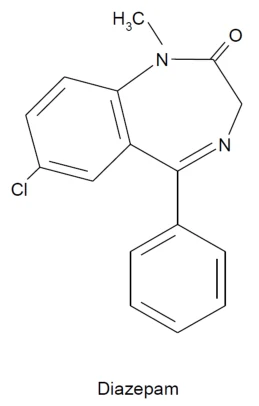
PART II: SCIENTIFIC INFORMATION
13 PHARMACEUTICAL INFORMATION
Drug Substance
Proper name: Diazepam
Chemical name: 7-chloro-1, 3-dihydro-1-methyl-5-phenyl-2H-1,4-benzodiazepin-2-one
Molecular formula and molecular mass: C16H13ClN2O 284.75 g / mol
Structural formula:
Physicochemical properties: Diazepam is a white to practically white crystalline powder, odorless. Practically insoluble in water.
Product Characteristics:
This information is not available for this drug product.
14 CLINICAL TRIALS
This information is not available for this drug product.
15 MICROBIOLOGY
No microbiological information is required for this drug product.
16 NON-CLINICAL TOXICOLOGY
General Toxicology:
Acute Toxicity
| Administration Route | LD50 (mg/kg) | |
| Mouse | Rat | |
| Intravenous | 24.9 | 51.8 |
| Intramuscular | 66.0 | > 50 |
| Administration Route | LD50 (mg/kg) | |
| Mouse | Rat | |
| Oral | 1050 | 1050 |
Subacute Toxicity
Diazepam has been administered orally at 20, 80 and 320 mg/kg to male and female rats, for a 12-week period.
Hematological and biochemical evaluations as well as urinalyses have been performed after 5 and 12 weeks of treatment respectively.
Following 12 weeks of treatment, the animals were sacrificed and their tissues submitted to histopathological examination. These toxicity studies on diazepam gave results similar to those obtained with other diazepam preparations.
An increase in the size of the liver as well as hepatic degeneration have been observed following benzodiazepine administration.
Local Irritation:
Diazepam 0.1 mL was administered to rabbits twice daily for five consecutive days. The injections were made in the marginal vein or one ear, the other ear being used as control. Local reactions such as temperature elevation, edema and erythema were observed, but these manifestations were transient and disappeared completely within 7 days of the last injection of diazepam.
17 SUPPORTING PRODUCT MONOGRAPHS
Diazepam Injection USP, Sterile Solution for Injection, 5 mg/mL, submission control 245324, Product Monograph, Sandoz Canada Inc. May, 12, 2021.