


Product Monograph - Chlordiazepoxide
RECENT MAJOR LABEL CHANGES
| 1 Indications, 1.2 Geriatrics | 12/2021 |
| 2 Contraindications | 12/2021 |
| 3 Serious Warnings and Precautions Box | 12/2021 |
| 4 Dosage and Administration, 4.1 Dosing considerations | 12/2021 |
| 7 Warnings and Precautions | 12/2021 |
| 7 Warnings and Precautions, 7.1.1 Pregnant Women | 12/2021 |
| 7 Warnings and Precautions, 7.1.2 Breast-feeding | 12/2021 |
| 7 Warnings and Precautions, 7.1.4 Geriatrics | 12/2021 |
TABLE OF CONTENTS
Sections or subsections that are not applicable at the time of authorization are not listed.
RECENT MAJOR LABEL CHANGES..............................................................................................2
TABLE OF CONTENTS ................................................................................................................2
PART I: HEALTH PROFESSIONAL INFORMATION .......................................................................4
1 INDICATIONS ................................................................................................................4
1.1 Pediatrics ............................................................................................................4
1.2 Geriatrics.............................................................................................................4
2 CONTRAINDICATIONS ...................................................................................................4
3 SERIOUS WARNINGS AND PRECAUTIONS BOX ..............................................................5
4 DOSAGE AND ADMINISTRATION...................................................................................5
4.1 Dosing Considerations .........................................................................................5
4.2 Recommended Dose and Dosage Adjustment.......................................................6
4.4 Administration.....................................................................................................6
4.5 Missed Dose ........................................................................................................6
5 OVERDOSAGE ...............................................................................................................6
6 DOSAGE FORMS, STRENGTHS, COMPOSITION AND PACKAGING ...................................7
7 WARNINGS AND PRECAUTIONS ....................................................................................7
7.1 Special Populations ............................................................................................ 11
7.1.1 Pregnant Women .........................................................................................11
7.1.2 Breast-feeding..............................................................................................11
7.1.3 Pediatrics .....................................................................................................11
7.1.4 Geriatrics .....................................................................................................11
8 ADVERSE REACTIONS .................................................................................................. 12
8.1 Adverse Reaction Overview................................................................................ 12
8.5 Post-Market Adverse Reactions.......................................................................... 12
9 DRUG INTERACTIONS.................................................................................................. 13
9.1 Serious Drug Interactions ................................................................................... 13
9.2 Drug Interactions Overview................................................................................ 13
9.3 Drug-Behavioural Interactions............................................................................ 13
9.4 Drug-Drug Interactions ...................................................................................... 13
9.5 Drug-Food Interactions ...................................................................................... 14
9.6 Drug-Herb Interactions ...................................................................................... 14
9.7 Drug-Laboratory Test Interactions ...................................................................... 14
10 CLINICAL PHARMACOLOGY ......................................................................................... 14
10.1 Mechanism of Action.................................................................................... 14
10.2 Pharmacodynamics ...................................................................................... 14
10.3 Pharmacokinetics ......................................................................................... 14
11 STORAGE, STABILITY AND DISPOSAL ........................................................................... 15
12 SPECIAL HANDLING INSTRUCTIONS............................................................................. 15
PART II: SCIENTIFIC INFORMATION ........................................................................................ 16
13 PHARMACEUTICAL INFORMATION.............................................................................. 16
14 CLINICAL TRIALS.......................................................................................................... 16
15 MICROBIOLOGY .......................................................................................................... 16
16 NON-CLINICAL TOXICOLOGY ....................................................................................... 16
PATIENT MEDICATION INFORMATION ................................................................................... 18
PART I: HEALTH PROFESSIONAL INFORMATION
1 INDICATIONS
CHLORDIAZEPOXIDE (chlordiazepoxide hydrochloride) is indicated:
- For the symptomatic relief of mild anxiety and tension, and for reduction of tension states that may accompany muscle spasm.
- As an adjunct in tension states associated with insomnia, pre- and post- operative apprehension, tension headache, premenstrual tension and stress, and functional gastrointestinal, cardiovascular, gynecological, and dermatological disorders with an emotional overlay.
- For the alleviation of alcohol withdrawal syndromes.
- To reduce anxiety associated with psychosis. Chlordiazepoxide should not be used in place of appropriate treatment in psychotic patients.
1.1 Pediatrics
Pediatrics (< 18 years of age): Health Canada has not authorized an indication for the pediatric population (see 4.2 Recommended Dose and Dosage Adjustment).
1.2 Geriatrics
Geriatrics (> 65 years of age): Evidence from clinical studies and experience suggests that use in the geriatric population is associated with differences in safety or effectiveness. See 7.1.4 Geriatrics.
Long-term use of CHLORDIAZEPOXIDE should be avoided in elderly patients. Enhanced monitoring is recommended. See 7 WARNINGS AND PRECAUTIONS, Falls and fractures; 4.1 Dosing considerations.
2 CONTRAINDICATIONS
CHLORDIAZEPOXIDE is contraindicated in:
- Patients who have known hypersensitivity to chlordiazepoxide or other benzodiazepines, or to any ingredient in the formulation, including any non-medicinal ingredient, or component of the container. For a complete listing, see 6 DOSAGE FORMS, STRENGTHS, COMPOSITION AND PACKAGING.
- Patients with myasthenia gravis.
- Patients with acute narrow angle glaucoma.
- Patients with severe hepatic insufficiency.
- Patients with severe respiratory insufficiency (e.g. sleep apnea syndrome).
3 SERIOUS WARNINGS AND PRECAUTIONS BOX
Serious Warnings and Precautions
Addiction, Abuse and Misuse The use of benzodiazepines, including CHLORDIAZEPOXIDE, can lead to abuse, misuse, addiction, physical dependence and withdrawal reactions. Abuse and misuse can result in overdose or death, especially when benzodiazepines are combined with other medicines, such as opioids, alcohol or illicit drugs.
Withdrawal Benzodiazepines, like CHLORDIAZEPOXIDE, can produce severe or life-threatening withdrawal symptoms.
See 7 WARNINGS AND PRECAUTIONS, Dependence/Tolerance. Risks from Concomitant use with Opioids Concomitant use of CHLORDIAZEPOXIDE and opioids may result in profound sedation, respiratory depression, coma and death. See 7 WARNINGS AND PRECAUTIONS, General, Concomitant use with opioids.
|
4 DOSAGE AND ADMINISTRATION
4.1 Dosing Considerations
- CHLORDIAZEPOXIDE should always be prescribed at the lowest effective dose for the shortest duration possible.
Discontinuation
CHLORDIAZEPOXIDE can produce withdrawal signs and symptoms or rebound phenomena following abrupt discontinuation or rapid dose reduction. See 3 SERIOUS WARNINGS AND PRECAUTIONS BOX, Withdrawal, 7 WARNINGS AND PRECAUTIONS, Dependence/Tolerance.
- Abrupt discontinuation should be avoided and treatment - even if only of short duration - should be terminated by gradually tapering the dosage schedule under close monitoring.
- Tapering should be tailored to the specific patient. Special attention should be given to patients with a history of seizure.
- If a patient experiences withdrawal signs and symptoms, consider postponing the taper or raising the benzodiazepine to the previous dosage prior to proceeding with a gradual taper.
Geriatric
Geriatric patients in particular may be more sensitive to benzodiazepines. See 7 WARNINGS AND PRECAUTIONS, Falls and Fractures. Long-term use of CHLORDIAZEPOXIDE should be avoided in elderly patients. Enhanced monitoring is recommended.
4.2 Recommended Dose and Dosage Adjustment
Recommended Dose
Adults: Usually 15 to 40 mg daily in divided doses. In severe cases 25 mg 3 or 4 times daily may be given.
Elderly or debilitated patients: 5 mg 2 to 4 times daily.
Preoperative apprehension: 5 to 10 mg 3 to 4 times daily on days prior to surgery.
Pediatrics: Initiate therapy with 5 to 10 mg daily in divided doses, increasing, if necessary, to 30 mg daily in divided doses 2 to 3 times daily.
4.4 Administration
CHLORDIAZEPOXIDE capsules should be swallowed whole with a glass of water.
4.5 Missed Dose
If the patient misses a dose, inform the patient to skip the missed dose and take the next dose at the regular dosing schedule.
5 OVERDOSAGE
Manifestations of chlordiazepoxide hydrochloride overdosage include drowsiness, ataxia and confusion. Depression of the cardiovascular and respiratory centers may occur. In children, induce emesis. Management consists of supportive measures, close supervision and monitoring. Cardiovascular and CNS stimulants may be used if necessary. Dialysis appears to be of little value. There have been occasional reports of excitation in patients following chlordiazepoxide hydrochloride overdosage; if this occurs, barbiturates should not be used. As with the management of intentional overdosage with any drug, it should be borne in mind that multiple agents may have been ingested.
| For management of a suspected drug overdose, contact your regional poison control centre. |
6 DOSAGE FORMS, STRENGTHS, COMPOSITION AND PACKAGING
Table – Dosage Forms, Strengths, Composition and Packaging
Each yellow opaque body and light green opaque cap, hard gelatin capsule, imprinted 5 in black ink with a white powder fill, contains 5 mg chlordiazepoxide hydrochloride.
Each light green opaque body and black cap, hard gelatin capsule, imprinted 10 in white ink with a white powder fill, contains 10 mg chlordiazepoxide hydrochloride.
Each white opaque body and light green opaque cap, hard gelatin capsule, imprinted 25 in black ink with a white power fill, contains 25 mg chlordiazepoxide hydrochloride.
Each strength is available in package size of 100 capsules.
7 WARNINGS AND PRECAUTIONS
General
Concomitant use with opioids: Concomitant use of benzodiazepines, including CHLORDIAZEPOXIDE, and opioids may result in profound sedation, respiratory depression, coma, and death. Because of these risks, reserve concomitant prescribing of these drugs for use in patients for whom alternative treatment options are not possible. See 3 SERIOUS WARNINGS AND PRECAUTIONS BOX, Risks from
| Route of Administration | Dosage Form / Strength/Composition | Non-medicinal Ingredients |
| Oral | Capsule 5mg, 10 mg and 25 mg of chlordiazepoxide hydrochloride | Each capsule contains the non-medicinal ingredients cornstarch, lactose monohydrate, stearic acid and talc. The capsule shell ingredients include D&C yellow #10, FD&C blue #1 (10 mg only), FD&C green #3, FD&C red #40 (10 mg only), FD&C yellow #6, gelatin, and titanium dioxide. The edible black ink used for imprinting on the 5 mg and 25 mg capsules contains the non-medicinal ingredients allura red AC aluminum lake, black iron oxide, brilliant blue FCF aluminum lake, D&C yellow #10 aluminum lake, indigo carmine aluminum lake, propylene glycol and shellac glaze. The edible white ink used for imprinting on the 10 mg capsule contains the non-medicinal ingredients ammonium hydroxide, propylene glycol, shellac glaze, simethicone, and titanium dioxide. |
Concomitant with Opioids, 9.1 Serious Drug Interactions.
Observational studies have demonstrated that concomitant use of opioid analgesics and benzodiazepines increases the risk of drug-related mortality compared to use of opioid analgesics alone. Because of similar pharmacological properties, it is reasonable to expect similar risk with the concomitant use of other CNS depressant drugs with benzodiazepines.
If a decision is made to prescribe CHLORDIAZEPOXIDE concomitantly with opioids, prescribe the lowest effective dosages and minimum durations of concomitant use. In patients already receiving an opioid analgesic, prescribe a lower initial dose of CHLORDIAZEPOXIDE than indicated, and titrate based on clinical response. If an opioid analgesic is initiated in a patient already taking CHLORDIAZEPOXIDE, prescribe a lower initial dose of the opioid analgesic and titrate based on clinical response. Follow patients closely for signs and symptoms of respiratory depression and sedation. See 5 OVERDOSAGE.
Advise both patients and caregivers about the risks of respiratory depression and sedation when CHLORDIAZEPOXIDE is used with opioids.
Advise patients not to drive or operate heavy machinery until the effects of concomitant use of the opioid have been determined.
Dependence/Tolerance
Use of benzodiazepines, such as CHLORDIAZEPOXIDE, can lead to abuse, misuse, addiction, physical dependence (including tolerance) and withdrawal reactions. Abuse and misuse can result in overdose or death, especially when benzodiazepines are combined with other medicines, such as opioids, alcohol, or illicit drugs.
The risk of dependence increases with higher doses and longer term use but can occur with short-term use at recommended therapeutic doses. The risk of dependence is greater in patients with a history of psychiatric disorders and/or substance (including alcohol) use disorder.
- Discuss the risks of treatment with CHLORDIAZEPOXIDE with the patient, considering alternative (including non-drug) treatment options.
- Carefully evaluate each patient’s risk of abuse, misuse and addiction, considering their medical condition and concomitant drug use, prior to prescribing CHLORDIAZEPOXIDE. In individuals prone to substance use disorder, CHLORDIAZEPOXIDE should only be administered if deemed medically necessary, employing extreme caution and close supervision.
- CHLORDIAZEPOXIDE should always be prescribed at the lowest effective dose for the shortest duration possible.
- All patients receiving benzodiazepines should be routinely monitored for signs and symptoms of misuse and abuse. If a substance use disorder is suspected, evaluate the patient and refer them for substance abuse treatment, as appropriate.
Withdrawal
Benzodiazepines, such as CHLORDIAZEPOXIDE, can produce withdrawal signs and symptoms, ranging from mild to severe and even life threatening, following abrupt discontinuation or rapid dose reduction. Other factors that may precipitate withdrawal are switching from a long-acting to a short-acting benzodiazepine, decreasing blood levels of the drug or administration of an antagonist. The risk of withdrawal is higher with higher dosages and/or prolonged use, but can occur with short-term use at recommended therapeutic doses.
The onset of withdrawal signs and symptoms can range from hours to weeks following drug cessation and occur even with tapered dosage. Some symptoms can persist for months. Since symptoms are often similar to those for which the patient is being treated, it may be difficult to distinguish from a relapse of the patient’s condition.
Severe or life-threatening signs and symptoms of withdrawal include catatonia, delirium tremens, depression, dissociative effects (e.g. hallucinations), mania, psychosis, seizures (including status epilepticus) and suicidal ideation and behaviour.
Other withdrawal signs and symptoms include abdominal cramps, cognitive impairment, diarrhea, dysphoria, extreme anxiety or panic attacks, headache, hypersensitivity to light, noise and physical contact, insomnia, irritability, muscle pain or stiffness, paresthesia, restlessness, sweating, tension, tremors and vomiting. There is also a possibility of rebound anxiety or rebound insomnia, a transient syndrome whereby the symptoms that led to treatment with a benzodiazepine recur in an enhanced form, on withdrawal of treatment.
- Abrupt discontinuation should be avoided and treatment - even if only of short duration - should be terminated by gradually tapering the dosage schedule under close monitoring.
- Tapering should be tailored to the specific patient. Special attention should be given to patients with a history of seizure.
- If a patient experiences withdrawal symptoms, consider postponing the taper or raising the benzodiazepine to the previous dosage prior to proceeding with a gradual taper.
- Inform patients of risk of discontinuing abruptly, reducing dosage rapidly or switching medications.
- Stress the importance of consulting with their health care professional in order to discontinue safely.
- Patients experiencing withdrawal symptoms should seek immediate medical attention.
See 3 SERIOUS WARNINGS AND PRECAUTIONS BOX, Addiction, Abuse and Misuse, 3 SERIOUS WARNINGS AND PRECAUTIONS BOX, Withdrawal; 4.1 Dosing Considerations.
Driving and Operating Machinery
Patients receiving CHLORDIAZEPOXIDE should be cautioned against engaging in hazardous activities requiring complete mental alertness, judgement and physical coordination, such as driving an automobile or operating dangerous machinery.
Falls and fractures
There have been reports of falls and fractures among benzodiazepine users due to adverse reactions such as sedation, dizziness and ataxia. The risk is increased in those taking concomitant sedatives (including alcoholic beverages), the elderly or debilitated patients.
Hematologic
Leucopenia and rare cases of agranulocytosis have been reported (see 8.1 Adverse Reaction Overview). CHLORDIAZEPOXIDE should be administered with caution to patients with a history of blood dyscrasias.
Hepatic/Biliary/Pancreatic
CHLORDIAZEPOXIDE is contraindicated in patients with severe hepatic insufficiency (see 2 CONTRAINDICATIONS).
Hepatic dysfunction and jaundice have occasionally been reported (see 8.1 Adverse Reaction Overview). CHLORDIAZEPOXIDE should be administered with caution to patients with history of hepatic disease.
Monitoring and Laboratory Tests
Periodic blood counts and liver function tests are recommended if the medication is administered over a protracted period of time.
Neurologic
Memory disturbance
Anterograde amnesia may occur with therapeutic doses of benzodiazepines and may be associated with inappropriate behaviour. Anterograde amnesia is a dose-related phenomenon and elderly subjects may be at particular risk.
Psychiatric
Confusion
Benzodiazepines affect mental efficiency, e.g. concentration, attention and vigilance. The risk of confusion is greater in the elderly and in patients with cerebral impairment.
Confusion has been reported with CHLORDIAZEPOXIDE (see 8.1 Adverse Reaction Overview).
Mental and Emotional Disorders
Caution should be exercised if CHLORDIAZEPOXIDE is prescribed to patients with signs or symptoms of depression that could be intensified by benzodiazepines. The potential for self-harm is high in patients with depression. Employ the usual precautions in treatment of anxiety states with evidence of impending depression; suicidal tendencies may be present and protective measures necessary.
Paradoxical Reactions
Paradoxical reactions such as restlessness, agitation, irritability, aggressiveness, anxiety, delusion, anger, nightmares, hallucinations, psychoses, inappropriate behaviour and other adverse behavioural effects may occur due to chlordiazepoxide in rare instances and in random fashion (see 8.1 Adverse Reaction Overview). These reactions are more likely to occur in children and in the elderly. Should this occur, the use of chlordiazepoxide should be discontinued. Since excitement and other paradoxical reactions can result from the use of anxiolytic sedatives in psychotic patients, chlordiazepoxide should not be used in ambulatory patients suspected of having psychotic tendencies.
These reactions may be secondary to the relief of anxiety symptoms and should be watched for particularly in the early phase of medication.
Renal
CHLORDIAZEPOXIDE should be administered with caution to patients with history of renal disease.
Reproductive Health: Female and Male Potential
Teratogenic Risk
Teratogenic and non-teratogenic effects have been reported in association to use of benzodiazepines during pregnancy. The use of CHLORDIAZEPOXIDE during pregnancy is not recommended (see 7.1.1 Pregnant Women).
7.1 Special Populations
7.1.1 Pregnant Women
Chlordiazepoxide crosses the placental barrier (see 10.3 Pharmacokinetics).
Several studies have suggested an increased risk of congenital malformations (e.g. congenital malformations of the heart, cleft lip and/or palate) associated with the use of diazepam, chlordiazepoxide and meprobamate during the first trimester of pregnancy. Therefore, the administration of chlordiazepoxide is rarely justified in women of childbearing potential. If the drug is prescribed for a woman of childbearing potential, she should be warned to contact her physician regarding discontinuation of the drug if she intends to become, or suspects that she is pregnant.
Chronic use of chlordiazepoxide during pregnancy may cause physical dependence with resulting withdrawal symptoms in the neonate. Symptoms such as hypoactivity, hypotonia, hypothermia, respiratory depression, apnea, feeding problems, and impaired metabolic response to cold stress have been reported in neonates born of mothers who have received benzodiazepines during the late phase of pregnancy or at delivery. Use of chlordiazepoxide just prior to or during labour may cause neonatal flaccidity.
7.1.2 Breast-feeding
Chlordiazepoxide or its metabolites may be excreted in breast milk. Therefore, it should not be administered to breast-feeding women, unless the expected benefit to the mother outweighs the potential risk to the infant.
Sedation and inability to suckle have occurred in neonates of lactating mothers taking benzodiazepines.
7.1.3 Pediatrics
Pediatrics (< 18 years of age): Health Canada has not authorized an indication for the pediatric population (see 4.2 Recommended Dose and Dosage Adjustment).
7.1.4 Geriatrics
Geriatrics (> 65 years of age): Caution should be exercised and the minimal effective dosage that does not cause ataxia or over-sedation should be maintained in elderly or debilitated patients. Dosage should be increased gradually as needed and tolerated. See 4 DOSAGE AND ADMINISTRATION.
Long-term use of CHLORDIAZEPOXIDE should be avoided in elderly or debilitated patients who may be more sensitive to benzodiazepines. There is an increased risk of cognitive impairment, delirium, falls, fractures, hospitalizations and motor vehicle accidents in these users. Enhanced monitoring is recommended in this population.
8 ADVERSE REACTIONS
8.1 Adverse Reaction Overview
The following adverse reactions have been reported with chlordiazepoxide:
Blood and lymphatic system disorders: dyscrasias including agranulocytosis, leucopenia Gastrointestinal disorders: nausea, constipation
Hepatobiliary disorders: jaundice, hepatic dysfunction
Immune system disorders: edema
Nervous system disorders:
- Drowsiness, ataxia and confusion may occur, especially in the elderly and debilitated. These are reversible in most instances by the proper dosage adjustment, but are also occasionally observed at the lower dosage ranges.
- Syncope
- Extrapyramidal symptoms
- Changes in electroencephalogram (EEG) patterns (low voltage fast activity) may appear during and after treatment.
Psychiatric disorders: Paradoxical reactions such as excitement, stimulation, elevation of mood and rage.
Reproductive system and breast disorders: Increased and decreased libido, minor menstrual irregularities
Skin and subcutaneous disorders: skin eruptions
8.5 Post-Market Adverse Reactions
Injury, Poisoning and Procedural Complications
There have been reports of falls and fractures in benzodiazepine users due to adverse reactions such as sedation, dizziness and ataxia. The risk is increased in those taking concomitant sedatives (including alcoholic beverages), the elderly and debilitated patients.
Dependence/Withdrawal
Development of physical dependence and withdrawal following discontinuation of therapy has been observed with benzodiazepines such as CHLORDIAZEPOXIDE. Severe and life-threatening symptoms have been reported. See 3 SERIOUS WARNINGS AND PRECAUTIONS BOX, Addiction, Abuse and Misuse, 7 WARNINGS AND PRECAUTIONS, Dependence/Tolerance.
9 DRUG INTERACTIONS
9.1 Serious Drug Interactions
Serious Drug Interactions Concomitant use of CHLORDIAZEPOXIDE and opioids may result in profound sedation, respiratory depression, coma and death.
See 7 WARNINGS AND PRECAUTIONS, General, Concomitant use with opioids |
9.2 Drug Interactions Overview
CHLORDIAZEPOXIDE may produce additive CNS depressant effects when co- administered with alcohol, sedative antihistamines, narcotic analgesics, anticonvulsants, or psychotropic medications which themselves can produce CNS depression.
The activity of benzodiazepines, including CHLORDIAZEPOXIDE, may be enhanced by compounds which inhibit certain hepatic enzymes such as cytochrome P450 enzymes. Examples include cimetidine or erythromycin.
9.3 Drug-Behavioural Interactions
CHLORDIAZEPOXIDE may produce additive CNS depressant effects when co-administered with alcohol.
Patients should also be warned against the ingestion of alcohol, since tolerance may be decreased and effects enhanced.
9.4 Drug-Drug Interactions
CNS depressant drugs
Benzodiazepines, including CHLORDIAZEPOXIDE, may produce additive CNS depressant effects when co-administered sedative antihistamines, narcotic analgesics, anticonvulsants, antipsychotics (neuroleptics), anesthetics, antidepressant agents or psychotropic medications (e.g. monoamine oxidase inhibitors and phenothiazines) which themselves can produce CNS depression.
Cytochrome P450
Compounds which inhibit certain hepatic enzymes (particularly cytochrome P450) may enhance the activity of benzodiazepines and benzodiazepine-like agents. Examples include cimetidine or erythromycin.
Opioids
Due to additive CNS depressant effect, the concomitant use of benzodiazepines, including CHLORDIAZEPOXIDE, and opioids increases the risk of profound sedation, respiratory depression, coma, and death. Reserve concomitant prescribing of these drugs for use in patients for whom alternative treatment options are inadequate. Limit dosages and durations of concomitant use of benzodiazepines and opioids to the minimum required. Follow patients closely for respiratory depression and sedation (see 3 SERIOUS WARNINGS AND PRECAUTIONS BOX, Risks from Concomitant use with Opioids; 7 WARNINGS AND PRECAUTIONS, General, Concomitant use with opioids).
Oral anticoagulants
Variable effects on blood coagulation have been reported very rarely in patients receiving the drug and oral anticoagulants; a causal relationship has not been established clinically.
9.5 Drug-Food Interactions
Interactions with food have not been established.
9.6 Drug-Herb Interactions
Interactions with herbal products have not been established.
9.7 Drug-Laboratory Test Interactions
Interactions with laboratory tests have not been established.
10 CLINICAL PHARMACOLOGY
10.1 Mechanism of Action
Chlordiazepoxide depresses the CNS at the levels of the cortex, the limbic system, and the brain stem reticular formation, and also depresses polysynaptic reflex arcs of the spinal cord. It does not produce ganglionic blockade or reduce affective responses at therapeutic dosage as do phenothiazine drugs and reserpine; its skeletal muscle relaxant properties are similar to those of meprobamate. Amine oxidase inhibition has not been demonstrated with chlordiazepoxide.
10.2 Pharmacodynamics
There is no relevant data available on the pharmacodynamic effect of CHLORDIAZEPOXIDE in humans.
10.3 Pharmacokinetics
Absorption
Following oral administration, the drug appears in the blood stream in 0.5 to 1 hour, peak blood levels occur in 2 to 4 hours. After i.m. administration, effects of the drug appear in 15 to 30 minutes.
In humans, the plasma half-life of a single oral dose of chlordiazepoxide is about 20 to 24 hours.
Distribution:
There is no relevant distribution data available for CHLORDIAZEPOXIDE in humans.
Following administration of radioactive chlordiazepoxide to rats, distribution of the drug or its metabolites has been shown to be fairly even throughout all body tissues.
Metabolism:
The drug is metabolized, presumable by the liver, to a lactam derivative, which may be further metabolized to the amino acid N-(2-amino-5-chloroalpha-phenylbenzylidine)-glycine-N-oxide.
Elimination
Chlordiazepoxide is excreted, chiefly as the lactam derivative, as the amino acid and conjugates of the amino acid, in the urine and feces.
Special Populations and Conditions
- Pregnancy and Breast-feeding: Chlordiazepoxide readily passes the placental barrier, with the concentration of the drug in the fetal circulation approaching or equaling that in maternal circulation.
11 STORAGE, STABILITY AND DISPOSAL
Store at room temperature (15°C – 30°C).
CHLORDIAZEPOXIDE should never be disposed of in household trash. Disposal via a pharmacy take back program is recommended.
12 SPECIAL HANDLING INSTRUCTIONS
None
PART II: SCIENTIFIC INFORMATION
13 PHARMACEUTICAL INFORMATION
Drug Substance
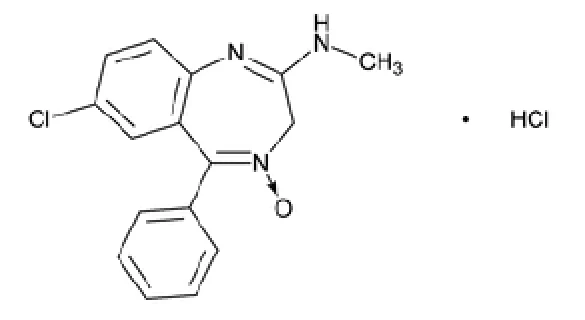
Proper name: Chlordiazepoxide hydrochloride
Chemical name: 3H-1,4-Benzodiazepin-2-amine, 7-chloro-N-methyl-5-phenyl-, 4-oxide, monohydrochloride.
7-Chloro-2-(methylamino)-5-phenyl-3H-1,4-benzodiazepine 4-oxide monohydrochloride.
Molecular formula and molecular mass: C16H14CIN3O and 336.22 g/mol
Structural formula:
Physicochemical properties: White or practically white, odorless, crystalline powder with a melting point 236-236.5 °C. Soluble in water; sparingly soluble in alcohol; insoluble in solvent hexane, pK 4.8.
14 CLINICAL TRIALS
The clinical trial data on which the original indication was authorized is not available.
15 MICROBIOLOGY
No microbiological information is required for this drug product.
16 NON-CLINICAL TOXICOLOGY
General Toxicology: Information is not available.
Carcinogenicity: No long-term animal studies have been performed to evaluate carcinogenic potential.
Genotoxicity: No long-term animal studies have been performed to evaluate mutagenic potential.
Reproductive and Developmental Toxicology: No long-term animal studies have been performed to evaluate whether CHLORDIAZEPOXIDE affects fertility in males or females.
Special Toxicology: Information is not available.
Juvenile Toxicity: Information is not available.