


Patient Medication Information: uses, side effects, how to take - Diclofenac
What is DICLOFENAC used for?
DICLOFENAC is used to treat:
- eye inflammation after cataract surgery and
- eye inflammation after a non-penetrating eye injury.
How does DICLOFENAC work?
DICLOFENAC is a nonsteroidal anti-inflammatory drug (NSAID). It helps reduce chemicals produced in your eye (prostaglandins) which cause pain and swelling.
What are the ingredients in DICLOFENAC?
Medicinal ingredients: Diclofenac sodium
Non-medicinal ingredients: Boric Acid, Trometamol, Macrogol glycerol Ricinoleate, Sodium Hydroxide, and Purified Water. No preservative agent.
DICLOFENAC comes in the following dosage forms:
Ophthalmic Solution, 0.1% w/v
DICLOFENAC is available in unit dose containers of 0.3 mL each and as a, 10, 20 or 50 fold block then sealed in Aluminum laminated sachets.
Do not use DICLOFENAC if:
- you are allergic to diclofenac sodium, any other ingredient in the formulation (see What are the ingredients- nonmedicinal ingredients)
you have had reactions to other NSAID medications, such as:
- acetylsalicylic acid
- diflunisal
- ibuprofen
- flurbiprofen
- ketoprofen
- indomethacin
- mefenamic acid
- piroxicam
- sulindac
- tiaprofenic acid.
To help avoid side effects and ensure proper use, talk to your healthcare professional before you take DICLOFENAC. Talk about any health conditions or problems you may have, including if you:
- Have had complicated eye surgery or multiple eye surgeries
- Have pre-existing corneal problems or problems with your eye surface (such as dry eye)
Have diabetes
Have rheumatoid arthritis
Other warnings you should know about:
- Taking DICLOFENAC more than 24 hours before eye surgery or for more than 14 days after surgery may increase your risk for developing serious eye side effects;
- Check with your healthcare professional if you are not getting any relief or if any problems develop, such as an eye infection or bleeding problems;
- Report any reactions to your healthcare professional. This is very important Because it will help in the early detection and prevention of problems;
If you experience any vision problems, in particular blurring of vision, DO NOT drive or operate any machinery.
- Your regular medical check-ups, including monitoring of eye pressure, are essential.
Pregnancy and breast feeding
You should tell your healthcare professional if you are pregnant or think that you may be pregnant. You should not use DICLOFENAC while pregnant unless absolutely necessary.
As with other anti-inflammatory medicines, you must not use DICLOFENAC during the last 3 months of pregnancy, as it could harm your unborn child or cause problems at delivery.
You should tell your healthcare professional if you are breast-feeding.
You should not breast-feed if you are taking DICLOFENAC as it might be harmful for your infant.
Your healthcare professional will discuss with you the potential risk of using DICLOFENAC during pregnancy or breast-feeding.
Fertility in Women:
DICLOFENAC is not recommended to use in women attempting to conceive as it may impair female fertility.
Tell your healthcare professional about all the medicines you take, including any drugs, vitamins, minerals, natural supplements or alternative medicines.
The following may interact with DICLOFENAC:
- Corticosteroids
- Medications that prolong bleeding time
How to take DICLOFENAC:
Open the drops container just before you want to use it. After using the drops, throw away what is left. This is because the drops cannot be kept free of bacteria after being opened.
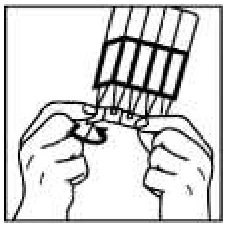
First wash your hands and then break off a single dose container from the strip. Then twist open the top of the single dose container as shown. Each single dose container contains enough solution for both eyes. If you wear contact lenses, remove them before using your eye drops.

Pull down your lower eyelid with a clean finger until there is a ‘pocket’ between the eyelid and your eye. This is where the drop will go. Bring the single dose container close to the eye. Do this in front of the mirror if it helps.
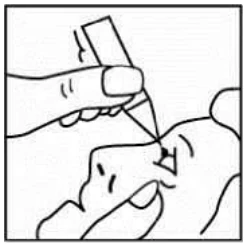
Close your eyelid and gently press the inner corner of your eye with your forefinger for 2 minutes.

Wipe any excess liquid from your face with a tissue. If you must use more than 1 drop in the same eye, wait at least 5 minutes before applying the next drop. Eye ointments should be applied last.
Wash your hands to remove any medication. Discard unused portion.
Usual dose:
Cataract surgery
Before surgery: Apply 1 drop into the affected eye(s) up to 5 times during the 3 hours before your scheduled surgery.
After surgery: Apply 1 drop into the affected eye(s) 15, 30 and 45 minutes following surgery. Then apply 1 drop 3 to 5 times per day for up to 4 weeks.
Inflammation from non-penetrating wounds
Apply 1 drop into the affected eye(s) 4 to 5 times per day as directed by your healthcare professional.
Overdose:
If DICLOFENAC is accidentally ingested, fluids should be taken to dilute the medication.
Missed Dose:
If a dose of this medication has been missed, it should be taken as soon as possible. However, if it is almost time for the next dose, skip the missed dose and go back to the regular dosing schedule. DO NOT double doses.
What are possible side effects from using DICLOFENAC?
These are not all the possible side effects you may have when taking DICLOFENAC. If you experience any side effects not listed here, tell your healthcare professional.
Occasionally you may experience a mild to moderate burning sensation when DICLOFENAC is instilled in the eye. This symptom usually disappears rapidly, but if it or any other side effects persist, check with your healthcare professional.
Uncommon eye side effects are: itchy eye(s), reddening of eye and blurred vision immediately after instillation of the eye drops, eye pain, eye surface inflammation with surface damage, sensitivity to light, abnormal vision, eye allergy, pink eye, eye swelling, clouding of the eye surface, eyelid swelling, eye irritation, eye discharge, eyelid reddening, swelling or rash, eyelid crusting, eye discomfort, slower healing and a stainable cornea
Uncommon side effects in the rest of the body are: bad taste, feeling of pressure, abdominal pain, feeling weak, chills, dizziness, swelling of the face, fever, headache, problems sleeping, nausea, pain, nose irritation, a viral infection, hives, rash, eczema, skin redness, cough and
If you think you, or a person you are caring for, have taken too much DICLOFENAC, contact a healthcare professional, hospital emergency department, or regional poison control centre immediately, even if there are no symptoms.
vomiting.
If you are using DICLOFENAC after cataract surgery, you may feel increased eye pressure (intraocular pressure).
If you are using DICLOFENAC after refractive surgery, you may notice tearing.
If you use corticosteroids, have infections or have rheumatoid arthritis, you may develop ulcers, thinning or inflammation of your cornea, which may cause loss of vision.
Report any reactions to your healthcare professional. This is very important because it will help in the early detection and prevention of problems.
Serious side effects and what to do about them
| Symptom / effect | Talk to your healthcare professional | Stop taking drug and get immediate medical help | |
|---|---|---|---|
| Only if severe | In all cases | ||
| UNCOMMON | |||
| Ulcer (sore on your eye) | ✓ | ||
| Swelling (keratitis) or other issues with your cornea (the front of your eye): Difficulty opening your eye due to pain, irritation or light sensitivity; feeling like something is in your eye; blurry / decreased vision | ✓ | ||
| Shortness of breath | ✓ | ||
Increase in signs and symptoms of asthma | ✓ | ||
Allergic Reaction: difficulty swallowing or breathing, wheezing, feeling sick to your stomach and throwing up, hives or rash, swelling of the face, lips, tongue or throat. | ✓ | ||
| UNKNOWN | |||
| Tiny tears (perforations) in your cornea | ✓ | ||
If you have a troublesome symptom or side effect that is not listed here or becomes bad enough to interfere with your daily activities, tell your healthcare professional.
Storage:
Store at 15oC to 30oC. Protect from light. Keep this and all medication in a safe place.
Keep out of the reach and sight of children.
If you want more information about DICLOFENAC:
- Talk to your healthcare professional.
- Find the full product monograph that is prepared for healthcare professionals and includes this Patient Medication Information by visiting the Health Canada website: (https://www.canada.ca/en/health-canada/services/drugs-health-products/medeffect- canada/adverse-reaction-reporting.html; the manufacturer’s website www.pharmastulln.ca, or by calling 1-833-278-8556..
Last Revised: November 16, 2023
Reporting Side Effects
You can report any suspected side effects associated with the use of health products to Health Canada by:
- Visiting the Web page on Adverse Reaction Reporting (https://www.canada.ca/en/health- canada/services/drugs-health-products/medeffect-canada.html) for information on how to report online, by mail or by fax; or
- Calling toll-free at 1-866-234-2345.
NOTE: Contact your health professional if you need information about how to manage your side effects. The Canada Vigilance Program does not provide medical advice.