


Product Monograph - Doptelet
RECENT MAJOR LABEL CHANGES
| 7 WARNINGS AND PRECAUTIONS | 08/2024 |
|---|
TABLE OF CONTENTS
Sections or subsections that are not applicable at the time of authorization are not listed.
RECENT MAJOR LABEL CHANGES ............................................................................................ 2
TABLE OF CONTENTS .............................................................................................................. 2
PART I: HEALTH PROFESSIONAL INFORMATION ...................................................................... 4
1 INDICATIONS ............................................................................................................... 4
1.1 Pediatrics ................................................................................................................ 4
1.2 Geriatrics ................................................................................................................ 4
2 CONTRAINDICATIONS ................................................................................................. 4
4 DOSAGE AND ADMINISTRATION ................................................................................. 4
4.1 Dosing Considerations ............................................................................................ 4
4.2 Recommended Dose and Dosage Adjustment ....................................................... 4
4.4 Administration ........................................................................................................ 7
4.5 Missed Dose ........................................................................................................... 7
5 OVERDOSAGE .............................................................................................................. 7
6 DOSAGE FORMS, STRENGTHS, COMPOSITION AND PACKAGING ................................. 7
7 WARNINGS AND PRECAUTIONS .................................................................................. 8
7.1 Special Populations............................................................................................... 10
7.1.1 Pregnant Women ........................................................................................... 10
7.1.2 Breast-feeding ................................................................................................ 10
7.1.3 Pediatrics ........................................................................................................ 11
7.1.4 Geriatrics ........................................................................................................ 11
8 ADVERSE REACTIONS ................................................................................................ 11
8.1 Adverse Reaction Overview .................................................................................. 11
8.2 Clinical Trial Adverse Reactions ............................................................................ 12
8.3 Less Common Clinical Trial Adverse Reactions ..................................................... 17
8.4 Abnormal Laboratory Findings: Hematologic, Clinical Chemistry and Other Quantitative Data ........................................................................................................... 18
8.5 Post-Market Adverse Reactions ........................................................................... 18
9 DRUG INTERACTIONS ................................................................................................ 18
9.2 Drug Interactions Overview .................................................................................. 18
9.3 Drug-Behavioural Interactions .............................................................................. 19
9.4 Drug-Drug Interactions ......................................................................................... 19
9.5 Drug-Food Interactions ......................................................................................... 20
9.6 Drug-Herb Interactions ......................................................................................... 20
9.7 Drug-Laboratory Test Interactions ........................................................................ 20
10 CLINICAL PHARMACOLOGY ....................................................................................... 20
10.1 Mechanism of Action ...................................................................................... 20
10.2 Pharmacodynamics ........................................................................................ 20
10.3 Pharmacokinetics ........................................................................................... 21
11 STORAGE, STABILITY AND DISPOSAL ......................................................................... 22
12 SPECIAL HANDLING INSTRUCTIONS ........................................................................... 22
PART II: SCIENTIFIC INFORMATION ....................................................................................... 23
13 PHARMACEUTICAL INFORMATION ............................................................................ 23
14 CLINICAL TRIALS ........................................................................................................ 24
14.1 Clinical Trials by Indication ............................................................................. 24
Chronic Liver Disease Patients Scheduled to Undergo a Procedure ............................... 24
Chronic Immune Thrombocytopenia Patients ................................................................ 28
15 MICROBIOLOGY ........................................................................................................ 29
16 NON-CLINICAL TOXICOLOGY ..................................................................................... 29
PATIENT MEDICATION INFORMATION .................................................................................. 32
PART I: HEALTH PROFESSIONAL INFORMATION
1 INDICATIONS
DOPTELET (avatrombopag) is indicated for:
- the treatment of severe thrombocytopenia in adult patients with chronic liver disease (CLD) who are scheduled to undergo an invasive procedure.
- the treatment of thrombocytopenia in adult patients with chronic immune thrombocytopenia (ITP) who have had an insufficient response to a previous treatment.
1.1 Pediatrics
Pediatrics (< 18 years of age): The safety and efficacy of DOPTELET in pediatric patients have not been established; therefore, Health Canada has not authorized an indication for pediatric use.
1.2 Geriatrics
Geriatrics (≥ 65 years of age): Clinical studies of DOPTELET in CLD patients who were scheduled to undergo an invasive procedure did not identify differences in responses between the elderly and younger patients. The clinical study of DOPTELET in patients with chronic ITP did not include sufficient numbers of patients aged 65 years and older to determine whether they respond differently from younger patients.
2 CONTRAINDICATIONS
DOPTELET is contraindicated in:
- patients who are hypersensitive to this drug or to any ingredient in the formulation, including any non-medicinal ingredient, or component of the container. For a complete listing, see 6 DOSAGE FORMS, STRENGTHS, COMPOSITIONS AND PACKAGING, Table 5.
4 DOSAGE AND ADMINISTRATION
4.1 Dosing Considerations
- For CLD patients, obtain a platelet count prior to administration of DOPTELET therapy and on the day of a procedure to ensure an adequate increase in platelet count.
- For chronic ITP patients, the platelet count response during the course of the treatment will affect dose adjustment (see 4.2 Recommended Dose and Dosage Adjustment,
- Table 3 and Table 4).
- For chronic ITP patients, DOPTELET can be administered in addition to other ITP medications.
- For chronic ITP patients taking concomitant medications (i.e., moderate or strong dual inhibitors or moderate or strong dual inducers of cytochrome P450 [CYP] enzymes CYP2C9 and CYP3A4), adjust the DOPTELET starting dose (see 4.2 Recommended Dose and Dosage Adjustment, Table 2).
4.2 Recommended Dose and Dosage Adjustment
Chronic Liver Disease Patients Scheduled to Undergo a Procedure
Begin DOPTELET dosing with food 10 to 13 days prior to the scheduled procedure. The recommended daily dose of DOPTELET is based on the patient’s platelet count prior to the scheduled procedure (see Table 1). Patients should undergo their procedure 5 to 8 days after the last dose of DOPTELET.
Table 1: Recommended Dose and Duration in Patients with Chronic Liver Disease Scheduled to Undergo a Procedure
| Platelet Count (x109/L) | Once Daily Dose | Duration |
|---|---|---|
| Less than 40 | 60 mg (3 tablets) | 5 days |
| 40 to less than 50 | 40 mg (2 tablets) | 5 days |
DOPTELET has been investigated only as a single 5-day once daily dosing regimen in clinical trials in patients with chronic liver disease (see 14.1 Clinical Trials by Indication). DOPTELET should not be administered to patients with chronic liver disease in an attempt to normalize platelet counts.
Chronic Immune Thrombocytopenia Patients
Use the lowest dose of DOPTELET needed to achieve and maintain a platelet count greater than or equal to 50 x109/L as necessary to reduce the risk for bleeding. Dose adjustments are based on platelet count response. Do not use DOPTELET to normalize platelet counts.
Initial Dose Regimen: Begin DOPTELET at a starting dose of 20 mg (1 tablet) once daily with food for all patients except those taking moderate or strong dual inducers or moderate or strong dual inhibitors of CYP2C9 and CYP3A4 (see Table 2).
Table 2: DOPTELET Recommended Starting Dose for Patients with Chronic Immune Thrombocytopenia Based on Concomitant Medications
| Concomitant Medications | Recommended Starting Dose |
|---|---|
| Moderate or strong dual inhibitors of CYP2C9 and CYP3A4 | 20 mg (1 tablet) three times a week |
| Moderate or strong dual inducers of CYP2C9 and CYP3A4 | 40 mg (2 tablets) once daily |
Monitoring: After initiating therapy with DOPTELET, assess platelet counts weekly until a stable platelet count greater than or equal to 50 x109/L has been achieved, and then obtain platelet counts monthly thereafter to maintain platelet counts ≥ 50 ×109/L and ≤ 150 ×109/L. Obtain platelet counts weekly for at least 4 weeks following discontinuation of DOPTELET.
Dose adjustment recommendations (see
Table 3 and Table 4) are based on the platelet count response and were established using clinical and pharmacokinetic and pharmacodynamic modelling and simulation data. Do not exceed a daily dose of 40 mg (2 tablets).
Table 3: DOPTELET Dose Adjustments for Patients with Chronic Immune Thrombocytopenia
| Platelet Count (x109/L) | Dose Adjustment or Action |
|---|---|
| Less than 50 after at least 2 weeks of DOPTELET |
|
| Between 150 and 250 |
|
| Platelet Count (x109/L) | Dose Adjustment or Action |
|---|---|
| |
| Greater than 250 |
|
| Less than 50 after 4 weeks of DOPTELET 40 mg once daily |
|
| Greater than 250 after 2 weeks of DOPTELET 20 mg weekly |
|
Table 4: DOPTELET Dose Levels for Titration in Patients with Chronic Immune Thrombocytopenia
*Initial dose regimen for all patients except those taking moderate or strong dual inducers or moderate or strong dual inhibitors of CYP2C9 and CYP3A4 (see Table 2).
#Patients taking DOPTELET less frequently than once daily should take the medication in a consistent manner from week to week.
Dose Level 3: Three non-consecutive days a week, e.g. Monday, Wednesday and Friday
Dose Level 2: Two non-consecutive days a week, e.g. Monday and Friday
Dose Level 1: The same day each week, e.g. Monday
Discontinuation: Discontinue DOPTELET if the platelet count does not increase to greater than or equal to 50 x109/L after 4 weeks of dosing at the maximum dose of 40 mg once daily. Discontinue DOPTELET if the platelet count is greater than 250 x109/L after 2 weeks of dosing at 20 mg once weekly.
Special populations
Renal impairment
No dose adjustment is required in patients with mild or moderate renal impairment. Due to limited clinical data, DOPTELET should be used with caution in these patients. No clinical data are available for patients with CrCl < 30 mL/min.
Geriatrics (≥ 65 years of age)
No dose adjustment is required for patients aged 65 years and older. Due to limited clinical data, DOPTELET should be used with caution in elderly patients with chronic ITP.
Pediatrics (< 18 years of age)
Health Canada has not authorized an indication for pediatric use.
| Dose# | Dose Level |
|---|---|
| 40 mg Once Daily | 6 |
| 40 mg Three Times a Week AND 20 mg on the Four Remaining Days of Each Week | 5 |
| 20 mg Once Daily* | 4 |
| 20 mg Three Times a Week | 3 |
| 20 mg Twice a Week OR 40 mg Once Weekly | 2 |
| 20 mg Once Weekly | 1 |
4.4 Administration
Chronic Liver Disease Patients Scheduled to Undergo a Procedure
DOPTELET should be taken orally once daily for 5 consecutive days with food.
Chronic Immune Thrombocytopenia Patients
DOPTELET should be taken orally with food.
4.5 Missed Dose
Chronic Liver Disease Patients Scheduled to Undergo a Procedure
In the case of a missed dose, patients should take the next dose of DOPTELET as soon as they remember. Patients should not take two doses at one time to make up for a missed dose, and should take the next dose at the usual time the next day; all 5 days of dosing should be completed.
Chronic Immune Thrombocytopenia Patients
In the case of a missed dose, patients should take the missed dose of DOPTELET as soon as they remember. Patients should not take two doses at one time to make up for a missed dose, and should take the next dose per the current regimen.
5 OVERDOSAGE
There is no specific antidote for overdose with DOPTELET.
In the event of overdose, platelet count may increase excessively and increase the risk of thrombotic or thromboembolic complications. Closely monitor the patient and platelet count. Treat thrombotic complications in accordance with standard of care.
Hemodialysis is not expected to enhance the elimination of DOPTELET because DOPTELET is only approximately 6% renally excreted and is highly bound to plasma proteins.
| For management of a suspected drug overdose, contact your regional poison control centre. |
|---|
6 DOSAGE FORMS, STRENGTHS, COMPOSITION AND PACKAGING
Table 5: Dosage Forms, Strengths, Composition and Packaging
Description
Tablets: 20 mg as round, biconvex, yellow, film-coated tablets debossed with “AVA” on one side and “20” on the other side.
| Route of Administration | Dosage Form / Strength/Composition | Non-medicinal Ingredients |
| Oral | Tablet 20 mg (equivalent to 23.6 mg avatrombopag maleate) | colloidal anhydrous silica, crospovidone, lactose monohydrate, magnesium stearate and microcrystalline cellulose Coating film: iron oxide yellow, macrogol 3350, polyvinyl alcohol, talc, and titanium dioxide |
DOPTELET is supplied as follows:
- carton with one blister card of 10 tablets
- carton with one blister card of 15 tablets
- carton with two blister cards of 15 tablets (30 count)
7 WARNINGS AND PRECAUTIONS
General
DOPTELET should not be administered to patients with chronic liver disease or chronic immune thrombocytopenia in an attempt to normalize platelet counts. Monitor platelet counts and follow the dosing guidelines to achieve target platelet counts.
The diagnosis of ITP in adults should be confirmed by exclusion of other clinical entities presenting with thrombocytopenia. The efficacy and safety of DOPTELET have not been established for use in other thrombocytopenic conditions including chemotherapy-induced thrombocytopenia and myelodysplastic syndromes (MDS) (see Myelodysplastic syndromes).
Cardiovascular
QTc prolongation
At mean Cmax exposures similar to that achieved at the 40 mg dose, avatrombopag did not prolong the QT interval to any clinically relevant extent. Mean QTc prolongation effects > 20 ms are not anticipated with the highest recommended therapeutic dosing regimen based on analysis of data from the pooled clinical trials in patients with chronic liver disease. However, caution must be exercised when avatrombopag is co-administered with moderate or strong dual CYP3A4 and CYP2C9 inhibitors, or with moderate or strong CYP2C9 inhibitors, as these medications can increase avatrombopag exposures. Caution must also be exercised in patients with loss-of-function polymorphisms of CYP2C9, as these can increase avatrombopag exposure.
Driving and Operating Machinery
DOPTELET has no or negligible influence on the ability to drive and use machines.
Hematologic
DOPTELET is a thrombopoietin (TPO) receptor agonist and TPO receptor agonists have been associated with thrombotic and thromboembolic complications in patients with chronic liver disease or chronic immune thrombocytopenia. In patients with chronic liver disease, thromboembolic events (portal vein thrombosis) occurred in 0.4% (1/274) of patients receiving DOPTELET. In patients with chronic immune thrombocytopenia, thromboembolic events (arterial or venous) occurred in 7% (9/128) of patients receiving DOPTELET.
Consider the potential increased thrombotic risk when administering DOPTELET to patients with known risk factors for thromboembolism, including but not limited to advanced age, patients with prolonged periods of immobilization, malignancies, use of contraceptives or hormone replacement therapy, surgery/trauma, obesity, smoking, genetic prothrombotic conditions (e.g., Factor V Leiden, Prothrombin 20210A, Antithrombin deficiency or Protein C or S deficiency), and acquired risk factors (e.g., antiphospholipid syndrome).
Monitor patients receiving DOPTELET for signs and symptoms of thromboembolic events and institute treatment promptly.
Recurrence of thrombocytopenia
Recurrence of thrombocytopenia following discontinuation of DOPTELET (e.g., a platelet count <10×109/L and 10×109/L less than baseline count) may occur, as expected for treatment with TPO receptor agonists in chronic ITP patients. Platelet counts must be monitored weekly for at least 4 weeks following discontinuation of DOPTELET. Monitor patients for signs and symptoms of bleeding events.
Risk of bone marrow reticulin fibrosis
TPO receptor agonists, including DOPTELET, may increase the risk for development or progression of reticulin fibers within the bone marrow.
Myelodysplastic syndromes (MDS)
There is a theoretical concern that TPO receptor agonists, including DOPTELET, may stimulate the progression of existing hematological malignancies such as MDS. TPO receptor agonists are growth factors that lead to thrombopoietic progenitor cell expansion, differentiation and platelet production. The TPO receptor is predominantly expressed on the surface of cells of the myeloid lineage.
Hepatic/Biliary/Pancreatic
There is limited information on the use of DOPTELET in patients with severe hepatic impairment (Child-Turcotte-Pugh Class C, Model for End-Stage Liver Disease [MELD] score > 24) who are scheduled to undergo an invasive procedure. DOPTELET should only be used in such patients if the expected benefit outweighs the expected risks.
Lactose Sensitivity
DOPTELET tablet contains lactose. Patients with rare hereditary problems of lactose or galactose intolerance (e.g., the Lapp lactase deficiency or glucose-galactose malabsorption) should not take DOPTELET.
Monitoring and Laboratory Tests
CLD patients scheduled to undergo a procedure
Obtain a platelet count prior to administration of DOPTELET therapy and on the day of a procedure to ensure an adequate increase in platelet count.
Chronic ITP patients
After initiating therapy with DOPTELET, assess platelet counts weekly until a stable platelet count greater than or equal to 50 x109/L has been achieved, and then obtain platelet counts monthly thereafter. Obtain platelet counts weekly for at least 4 weeks following discontinuation of DOPTELET (see 4.2 Recommended Dose and Dosage Adjustment, Table 2).
Peripheral blood smear and complete blood count (CBC):
Increased bone marrow reticulin is believed to be a result of TPO receptor stimulation, leading to an increased number of megakaryocytes in the bone marrow, which may subsequently release cytokines. Increased reticulin may be suggested by morphological changes in the peripheral blood cells and can be detected through bone marrow biopsy. Therefore, examinations for cellular morphological abnormalities using peripheral blood smear and complete blood count (CBC) prior to and during treatment with DOPTELET are recommended.
Bone marrow biopsy:
Bone marrow reticulin staining should be considered when abnormal peripheral blood smears are observed in chronic ITP patients treated with DOPTELET.
Peri-Operative Considerations
The efficacy and safety of DOPTELET have not been established in CLD patients undergoing major surgeries such as neurosurgical interventions, thoracotomy, laparotomy or organ resection.
Reproductive Health: Female and Male Potential
- Fertility
Avatrombopag did not affect fertility or early embryonic development in male rats at exposures 15 times, or in female rats at exposures 79 times, the AUC observed in ITP patients at the maximum recommended dose of 40 mg once daily (see Reproductive and Developmental Toxicology).
- Teratogenic Risk
There were no embryo-fetal effects in rats administered avatrombopag at doses up to 100 mg/kg/day (37 times the human exposure based on AUC ITP) or rabbits administered avatrombopag at doses up to 600 mg/kg (24 times the human exposure based on AUC ITP) (see Reproductive and Developmental Toxicology).
7.1 Special Populations
7.1.1 Pregnant Women
Based on findings from animal reproduction studies, DOPTELET may cause fetal harm when administered to a pregnant woman. The available data on DOPTELET in pregnant women are insufficient to inform a drug-associated risk of adverse developmental outcomes. In animal reproduction studies, oral administration of avatrombopag resulted in adverse developmental outcomes when administered during organogenesis in rabbits and during organogenesis and the lactation period in rats. However, these findings were observed at exposures based on an AUC substantially higher than the AUC observed in ITP patients at the maximum recommended dose of 40 mg once daily i.e., 24 times the human exposure based on AUC (see Reproductive and Developmental Toxicology). DOPTELET is not recommended in pregnant women.
7.1.2 Breast-feeding
There is no information regarding the presence of avatrombopag in human milk, the effects on the breastfed child, or the effects on milk production. Avatrombopag was present in the milk of lactating rats at a concentration similar to its concentration in plasma (see Reproductive and Developmental Toxicology). When a drug is present in animal milk, it is likely the drug will be present in human milk. Due to the potential for serious adverse reactions in a breastfed child from DOPTELET, breastfeeding is not recommended during treatment with DOPTELET and for at least 2 weeks after the last dose.
A lactating woman receiving DOPTELET for brief periods such as prior to an invasive procedure, should interrupt breastfeeding and pump and discard breastmilk during treatment and for two weeks after the last dose of DOPTELET in order to minimize exposure to a breastfed child. Advise lactating women receiving chronic DOPTELET therapy not to breastfeed during treatment with DOPTELET and for at least 2 weeks after the last dose.
7.1.3 Pediatrics
Pediatrics (< 18 years of age): The safety and efficacy of DOPTELET in pediatric patients have not been established; therefore, Health Canada has not authorized an indication for pediatric use.
7.1.4 Geriatrics
Geriatrics (≥ 65 years of age): Clinical studies of DOPTELET in CLD patients who were scheduled to undergo an invasive procedure did not identify differences in responses between the elderly and younger patients.
The clinical study of DOPTELET in patients with chronic ITP did not include sufficient numbers of patients aged 65 years and older to determine whether they respond differently from younger patients. In general, caution should be exercised in the administration and monitoring of DOPTELET in elderly patients, reflecting the greater frequency of decreased hepatic, renal, or cardiac function and of concomitant disease or other drug therapy.
8 ADVERSE REACTIONS
8.1 Adverse Reaction Overview
Patients with Chronic Liver Disease
The safety of DOPTELET was evaluated in two international, identically designed, randomized, double-blind, placebo-controlled trials, ADAPT-1 and ADAPT-2, in which 430 patients with chronic liver disease and thrombocytopenia received either DOPTELET (n=274) or placebo (n=156) daily for 5 days prior to a scheduled procedure, and had 1 post-dose safety assessment. Patients were divided into two groups based on their mean platelet count at baseline:
- Low Baseline Platelet Count Cohort (less than 40 x109/L) who received DOPTELET 60 mg once daily for 5 days
- High Baseline Platelet Count Cohort (40 to less than 50 x109/L) who received DOPTELET 40 mg once daily for 5 days
The majority of patients were males (65%) and median subject age was 58 years (ranging from 19-86 years of age). The racial and ethnic distribution was White (60%), Asian (33%), Black (3%), and Other (3%).
The most common treatment-emergent adverse events (TEAEs) (those occurring in ≥3% of patients) in the DOPTELET-treated groups (60 mg or 40 mg) versus placebo, across the pooled data from the two trials, were pyrexia (10% vs 9%), abdominal pain (7% vs 6%), nausea (7% vs 7%), headache (6% vs 6%), fatigue (4% vs 3%) and edema peripheral (3% vs 2%) (Table 6Table 6).
Patients with Chronic Immune Thrombocytopenia
The safety of DOPTELET was evaluated in four clinical trials in patients with chronic immune thrombocytopenia: two Phase 3 trials (one randomized, double-blind, placebo-controlled trial and one randomized, double-blind, active-controlled trial) and two Phase 2 trials (one randomized, double-blind, placebo-controlled, dose-ranging trial and one open-label extension trial) in 161 patients with chronic immune thrombocytopenia in both the double-blind and open-label extension phases.
The pooled safety data from these four clinical trials includes 128 patients who received 2.5 to 40 mg of DOPTELET once daily for a median duration of exposure of 29.1 weeks and had one post-dose safety assessment. The majority of DOPTELET treated patients were female (63%) and median subject age was 50.5 years (ranging from 18-88 years of age). The racial and ethnic distribution was White (84%), Black (6%), Asian (6%) and Other (6%).
The most common TEAEs (those occurring in ≥10% of patients) in the DOPTELET treatment group versus placebo were headache (31% vs 14%), fatigue (28% vs 9%), contusion (26% vs 18%), epistaxis (19% vs 18%), upper respiratory tract infection (15% vs 5%), arthralgia (13% vs 0%), gingival bleeding (13% vs 0%), petechiae (11% vs 9%) and nasopharyngitis (10% vs 0%) (Table 7).
8.2 Clinical Trial Adverse Reactions
Clinical trials are conducted under very specific conditions. The adverse reaction rates observed in the clinical trials therefore may not reflect the rates observed in practice and should not be compared to the rates in the clinical trials of another drug. Adverse reaction information from clinical trials may be useful in identifying and approximating rates of adverse drug reactions in real-world use.
Patients with Chronic Liver Disease
Table 6: Treatment-Emergent Adverse Events Reported in ≥1% of CLD Patients Treated with DOPTELET (Greater than Placebo) – Pooled Data of ADAPT-1 and ADAPT-2
| Treatment Group | ||||||||||||||||||
|---|---|---|---|---|---|---|---|---|---|---|---|---|---|---|---|---|---|---|
| System Organ Class/ Preferred Term | Low Baseline Platelet Count Cohort (˂40 x109/L) | High Baseline Platelet Count Cohort (≥40 to ˂50 x109/L) | Combined Baseline Platelet Count Cohorts (˂50 x109/L) | |||||||||||||||
DOPTELET 60 mg (N=159) n (%) | Placebo (N=91) n (%) | DOPTELET 40 mg (N=115) n (%) | Placebo (N=65) n (%) | Total DOPTELET (N=274) n (%) | Total Placebo (N=156) n (%) | |||||||||||||
| Blood and lymphatic system disorders | ||||||||||||||||||
| Anemia | 3 (2) | 1 (1) | 1 (1) | 0 | 4 (2) | 1 (1) | ||||||||||||
| Leukopenia | 2 (1) | 0 | 1 (1) | 0 | 3 (1) | 0 | ||||||||||||
| Gastrointestinal disorders | ||||||||||||||||||
| Abdominal pain | 10 (6) | 6 (7) | 8 (7) | 4 (6) | 18 (7) | 10 (6) | ||||||||||||
| Ascites | 3 (2) | 2 (2) | 2 (2) | 0 | 5 (2) | 2 (1) | ||||||||||||
| Vomiting | 2 (1) | 2 (2) | 3 (3) | 0 | 5 (2) | 2 (1) | ||||||||||||
| Varices esophageal | 3 (2) | 0 | 2 (2) | 0 | 5 (2) | 0 | ||||||||||||
| Treatment Group | ||||||||||||||||||||
|---|---|---|---|---|---|---|---|---|---|---|---|---|---|---|---|---|---|---|---|---|
| System Organ Class/ Preferred Term | Low Baseline Platelet Count Cohort (˂40 x109/L) | High Baseline Platelet Count Cohort (≥40 to ˂50 x109/L) | Combined Baseline Platelet Count Cohorts (˂50 x109/L) | |||||||||||||||||
DOPTELET 60 mg (N=159) n (%) | Placebo (N=91) n (%) | DOPTELET 40 mg (N=115) n (%) | Placebo (N=65) n (%) | Total DOPTELET (N=274) n (%) | Total Placebo (N=156) n (%) | |||||||||||||||
| Gastritis | 2 (1) | 0 | 1 (1) | 0 | 3 (1) | 0 | ||||||||||||||
| General disorders and administration site conditions | ||||||||||||||||||||
| Pyrexia | 18 (11) | 8 (9) | 9 (8) | 6 (9) | 27 (10) | 14 (9) | ||||||||||||||
| Fatigue | 7 (4) | 4 (4) | 3 (3) | 1 (2) | 10 (4) | 5 (3) | ||||||||||||||
| Edema peripheral | 5 (3) | 2 (2) | 4 (4) | 1 (2) | 9 (3) | 3 (2) | ||||||||||||||
| Chills | 0 | 0 | 3 (3) | 0 | 3 (1) | 0 | ||||||||||||||
| Infections and infestations | ||||||||||||||||||||
| Urinary tract infection | 1 (1) | 2 (2) | 3 (3) | 0 | 4 (2) | 2 (1) | ||||||||||||||
| Injury, poisoning and procedural complications | ||||||||||||||||||||
| Procedural pain | 8 (5) | 2 (2) | 0 | 0 | 8 (3) | 2 (1) | ||||||||||||||
| Contusion | 3 (2) | 1 (1) | 1 (1) | 0 | 4 (2) | 1 (1) | ||||||||||||||
| Investigations | ||||||||||||||||||||
| Neutrophil count decreased | 2 (1) | 0 | 3 (3) | 0 | 5 (2) | 0 | ||||||||||||||
| Musculoskeletal and connective tissue disorders | ||||||||||||||||||||
| Muscle spasms | 0 | 0 | 3 (3) | 0 | 3 (1) | 0 | ||||||||||||||
| Psychiatric disorders | ||||||||||||||||||||
| Insomnia | 3 (2) | 0 | 2 (2) | 0 | 5 (2) | 0 | ||||||||||||||
| Respiratory, thoracic and mediastinal disorders | ||||||||||||||||||||
| Cough | 1 (1) | 1 (1) | 3 (3) | 0 | 4 (2) | 1 (1) | ||||||||||||||
| Dyspnea | 1 (1) | 0 | 3 (3) | 0 | 4 (2) | 0 | ||||||||||||||
MedDRA Version 19.1
For the Low Baseline Platelet Count Cohort, the incidence of treatment-emergent serious adverse events was 7% (11/159) in the 60 mg DOPTELET treatment group. For the High Baseline Platelet Count Cohort, the incidence of serious adverse events was 8% (9/115) in the 40 mg DOPTELET treatment group. The most common serious adverse event reported with DOPTELET was hyponatremia. Two DOPTELET-treated patients (0.7%) developed hyponatremia.
In patients with chronic liver disease, thromboembolic events (portal vein thrombosis) occurred in 0.4% (1/274) of patients receiving DOPTELET.
TEAEs resulting in discontinuation of DOPTELET occurred in two patients in the DOPTELET (60 mg) treatment group. Anemia and myalgia were reported in a single patient (0.4%) and pyrexia was reported in a second patient (0.4%). The reported anemia and myalgia were considered to be treatment-related serious adverse events.
Patients with Chronic Immune Thrombocytopenia
Table 7: Treatment-Emergent Adverse Events Reported in ≥2% of Patients with Chronic Immune Thrombocytopenia (Greater than Placebo) – Pooled Data from Clinical Trials
| Treatment Group | |||||||||
|---|---|---|---|---|---|---|---|---|---|
| System Organ Class / Preferred Term | DOPTELET N=128 n (%) | Placebo N=22 n (%) | |||||||
| Blood and lymphatic system disorders | |||||||||
| Thrombocytopenia | 18 (14) | 0 | |||||||
| Increased tendency to bruise | 4 (3) | 0 | |||||||
| Eye disorders | |||||||||
| Eye irritation | 3 (2) | 0 | |||||||
| Gastrointestinal disorders | |||||||||
| Gingival bleeding | 16 (13) | 0 | |||||||
| Diarrhea | 12 (9) | 0 | |||||||
| Nausea | 12 (9) | 0 | |||||||
| Mouth hemorrhage | 10 (8) | 0 | |||||||
| Vomiting | 10 (8) | 0 | |||||||
| Constipation | 6 (5) | 0 | |||||||
| Abdominal pain upper | 5 (4) | 0 | |||||||
| Abdominal discomfort | 4 (3) | 0 | |||||||
| Flatulence | 4 (3) | 0 | |||||||
| Gastroesophageal reflux disease | 4 (3) | 0 | |||||||
| Hemorrhoids | 4 (3) | 0 | |||||||
| Abdominal pain | 3 (2) | 0 | |||||||
| General disorders and administration site conditions | |||||||||
| Fatigue | 36 (28) | 2 (9) | |||||||
| Edema peripheral | 7 (6) | 0 | |||||||
| Asthenia | 6 (5) | 0 | |||||||
| Pain | 4 (3) | 0 | |||||||
| Peripheral swelling | 4 (3) | 0 | |||||||
| Edema | 3 (2) | 0 | |||||||
| Treatment Group | |||||||||
|---|---|---|---|---|---|---|---|---|---|
| System Organ Class / Preferred Term | DOPTELET N=128 n (%) | Placebo N=22 n (%) | |||||||
| Infections and infestations | |||||||||
| Upper respiratory tract infection | 19 (15) | 1 (5) | |||||||
| Nasopharyngitis | 13 (10) | 0 | |||||||
| Influenza | 6 (5) | 0 | |||||||
| Pharyngitis | 6 (5) | 1 (5) | |||||||
| Cellulitis | 3 (2) | 0 | |||||||
| Oral herpes | 3 (2) | 0 | |||||||
| Tinea pedis | 3 (2) | 0 | |||||||
| Urinary tract infection | 3 (2) | 0 | |||||||
| Injury, poisoning and procedural complications | |||||||||
| Contusion | 33 (26) | 4 (18) | |||||||
| Investigations | |||||||||
| Platelet count increased | 8 (6) | 0 | |||||||
| Platelet count decreased | 6 (5) | 0 | |||||||
| Blood lactate dehydrogenase increased | 5 (4) | 0 | |||||||
| Alanine aminotransferase increased | 4 (3) | 0 | |||||||
| Aspartate aminotransferase increased | 3 (2) | 0 | |||||||
| Metabolism and nutrition disorders | |||||||||
| Decreased appetite | 4 (3) | 0 | |||||||
| Iron deficiency | 4 (3) | 0 | |||||||
| Musculoskeletal and connective tissue disorders | |||||||||
| Arthralgia | 16 (13) | 0 | |||||||
| Pain in extremity | 12 (9) | 1 (5) | |||||||
| Back pain | 11 (9) | 0 | |||||||
| Myalgia | 6 (5) | 0 | |||||||
| Musculoskeletal pain | 5 (4) | 0 | |||||||
| Musculoskeletal chest pain | 4 (3) | 0 | |||||||
| Musculoskeletal stiffness | 4 (3) | 0 | |||||||
| Nervous system disorders | |||||||||
| Headache | 39 (31) | 3 (14) | |||||||
| Dizziness | 11 (9) | 1 (5) | |||||||
| Hypoesthesia | 4 (3) | 0 | |||||||
| Paresthesia | 4 (3) | 0 | |||||||
| Migraine | 3 (2) | 0 | |||||||
| Treatment Group | |||||||||
|---|---|---|---|---|---|---|---|---|---|
| System Organ Class / Preferred Term | DOPTELET N=128 n (%) | Placebo N=22 n (%) | |||||||
| Psychiatric disorders | |||||||||
| Insomnia | 12 (9) | 1 (5) | |||||||
| Anxiety | 3 (2) | 0 | |||||||
| Renal and urinary disorders | |||||||||
| Hematuria | 4 (3) | 0 | |||||||
| Reproductive system and breast disorders | |||||||||
| Menorrhagia | 4 (3) | 0 | |||||||
| Respiratory, thoracic and mediastinal disorders | |||||||||
| Epistaxis | 24 (19) | 4 (18) | |||||||
| Cough | 9 (7) | 0 | |||||||
| Dyspnea | 7 (6) | 0 | |||||||
| Oropharyngeal pain | 6 (5) | 0 | |||||||
| Nasal congestion | 3 (2) | 0 | |||||||
| Rhinorrhea | 3 (2) | 0 | |||||||
| Skin and subcutaneous tissue disorders | |||||||||
| Petechiae | 14 (11) | 2 (9) | |||||||
| Ecchymosis | 8 (6) | 0 | |||||||
| Blood blister | 3 (2) | 0 | |||||||
| Pruritus | 3 (2) | 0 | |||||||
| Vascular disorders | |||||||||
| Hypertension | 7 (6) | 1 (5) | |||||||
MedDRA Version 19.1.
In patients with chronic immune thrombocytopenia, thromboembolic events (arterial or venous) occurred in 7% (9/128) of patients receiving DOPTELET.
A higher percentage of patients experienced TEAEs leading to discontinuation of study drug in the avatrombopag treatment group (13.3% [17/128] patients) compared to placebo group (0%). The SOCs with the highest incidence of TEAEs leading to discontinuation of DOPTELET were Nervous System Disorders and Investigations (3.9% [5/128] patients each) followed by Blood and Lymphatic System Disorders and Gastrointestinal Disorders (1.6% [2/128] patients each). TEAEs resulting in discontinuation of DOPTELET that were reported in more than one patient included platelet count increased (3.9% [5/128]) and headache (1.6% [2/128]). The incidence of treatment-emergent serious adverse events was 25% (32/128) in the DOPTELET treatment group (pooled safety data). Treatment-emergent serious adverse events reported in more than one DOPTELET-treated patient included thrombocytopenia (6.3% [8/128]), vomiting (3.1% [4/128]), and platelet count decreased (2.3% [3/128]), followed by cerebrovascular accident, gastritis hemorrhagic, headache, immune thrombocytopenic purpura, and nausea (1.6% [2/128] each).
8.3 Less Common Clinical Trial Adverse Reactions
Patients with Chronic Liver Disease
Treatment-emergent adverse events occurring in <1% of DOPTELET treated patients (with a higher incidence compared to placebo and occurring in at least 2 patients) are presented below. The events are categorized by body system.
Blood and lymphatic system disorders: neutropenia
Eye disorders: conjunctival hemorrhage
Gastrointestinal disorders: abdominal discomfort, chronic gastritis, duodenal ulcer, epigastric discomfort, gastrointestinal hemorrhage, gastroesophageal reflux disease, hemorrhoids, toothache
General disorders and administration site conditions: chest discomfort, malaise, pain, vessel puncture site bruise
Infections and infestations: nasopharyngitis, pneumonia
Investigations: blood lactate dehydrogenase increased, blood urine present
Metabolism and nutritional disorders: hyperkalemia, hyponatremia
Musculoskeletal and connective tissue disorders: bone pain, myalgia
Psychiatric disorders: depression
Renal and urinary disorders: acute kidney injury
Respiratory, thoracic and mediastinal disorders: dysphonia
Skin and subcutaneous tissue disorders: erythema
Vascular disorders: hypertension
Patients with Chronic Immune Thrombocytopenia
Treatment-emergent adverse events occurring in <2% of DOPTELET treated patients (with a higher incidence compared to placebo and occurring in at least 2 patients) are presented below. The events are categorized by body system.
Blood and lymphatic system disorders: leukocytosis, splenomegaly
Gastrointestinal disorders: abdominal tenderness, dental caries, gastric hemorrhagic, oral mucosal blistering, stomatitis, toothache
General disorders and administration site conditions: chest discomfort, pyrexia
Immune system disorders: seasonal allergy
Infections and infestations: gingivitis, sinusitis, viral upper respiratory tract infection
Injury, poisoning and procedural complications: laceration
Investigations: blood gastrin increased, blood pressure increased, weight increased
Musculoskeletal and connective tissue disorders: limb discomfort, muscle spasms
Nervous system disorders: cerebrovascular accident, dysgeusia, head discomfort
Psychiatric disorders: irritability
Reproductive system and breast disorders: amenorrhea
Respiratory, thoracic and mediastinal disorders: chronic obstructive pulmonary disease, dyspnea exertional, paranasal sinus discomfort
Skin and subcutaneous tissue disorders: acne, hyperhidrosis, night sweats, urticaria
Vascular disorders: hematoma, varicose vein
8.4 Abnormal Laboratory Findings: Hematologic, Clinical Chemistry and Other Quantitative Data
Clinical Trial Findings
Other than the expected effects on platelet counts, there were no clinically important effects of DOPTELET on any laboratory parameters in the studies of patients with chronic liver disease and thrombocytopenia.
In studies of patients with chronic immune thrombocytopenia, markedly abnormal low hemoglobin was observed in a higher percentage of patients treated with DOPTELET (9.5% [12/126]) than placebo (4.5% [1/22]). Markedly abnormal low lymphocytes were observed in more patients treated with DOPTELET (9.5% [12/126]) than placebo (0 patients).
8.5 Post-Market Adverse Reactions
Because these reactions are reported voluntarily from a population of uncertain size, it is not always possible to reliably estimate their frequency or establish a causal relationship to drug exposure.
Immune System Disorders: hypersensitivity reactions including pruritus, rash, choking sensation, erythema, pharyngeal edema, rash macular, swelling face, and swollen tongue.
9 DRUG INTERACTIONS
9.2 Drug Interactions Overview
Avatrombopag metabolism is mediated by cytochrome P450 (CYP) enzymes CYP3A4 and CYP2C9. Drug-drug interaction studies with moderate to strong CYP3A and CYP2C9 modulators suggest that CYP2C9 plays a major role relative to CYP3A4 in the oxidative metabolism of avatrombopag. The recommended starting doses of avatrombopag for patients receiving moderate to strong dual CYP3A4 and CYP2C9 modulators are described in 4.2 Recommended Dose and Dosage Adjustment, Table 2.
Avatrombopag is a substrate of P-gp transport. Concomitant use of avatrombopag with P-gp inhibitor verapamil resulted in alterations in exposure that were moderate, however, no clinically important differences in platelet count elevations were observed. No dose adjustment is recommended with P-gp inhibitors, such as verapamil and cyclosporine. The recommended dose of avatrombopag is based on the patient’s platelet count which should be monitored as per 4.2 Recommended Dose and Dosage Adjustment.
9.3 Drug-Behavioural Interactions
Not applicable.
9.4 Drug-Drug Interactions
Patients with Chronic Immune Thrombocytopenia
The listing of drugs in Table 8 is based on clinical studies in healthy subjects and on pharmacokinetic and pharmacodynamic (PKPD) modelling.
Table 8: Effects of Co-Administered Drugs on Avatrombopag Pharmacokinetics
| Common Name | Source of Evidence | Effect | Clinical Comment |
|---|---|---|---|
| Moderate or Strong Dual Inhibitors of CYP2C9 and CYP3A4 (e.g., fluconazole, itraconazole, ritonavir) | CT / T | Co-administration of fluconazole 400 mg at steady state increased the exposure (AUC) of DOPTELET by 116% and co-administration of itraconazole 200 mg increased the exposure (AUC) by 37%. | Reduce the starting dosage of DOPTELET; monitor platelet counts and adjust dose as necessary (see 4.2 Recommended Dose and Dosage Adjustment). |
| Moderate or Strong Dual Inducers of CYP2C9 and CYP3A4 (e.g., carbamazepine, enzalutamide, phenytoin, rifampicin) | CT / T | Co-administration of rifampicin 600 mg at steady state decreased the exposure (AUC) of DOPTELET by 43%. | Increase the recommended starting dosage of DOPTELET; monitor platelet counts and adjust dose as necessary (see 4.2 Recommended Dose and Dosage Adjustment). |
| P-gp inhibitor (e.g., cyclosporine, digoxin, rivaroxaban, verapamil) | CT / T | Co-administration of a single dose of cyclosporine 400 mg decreased exposure (AUC) of DOPTELET by 17%. | No dosage adjustment necessary. |
CT = Clinical Trial; T = Theoretical / PKPD modelling
Medications for Treatment of ITP Medications used in the treatment of ITP in combination with avatrombopag in clinical trials included corticosteroids, danazol, dapsone, and intravenous immunoglobulin (IVIg). Platelet counts should be monitored when combining avatrombopag with other medications for the treatment of ITP in order to avoid platelet counts outside of the recommended range.
In Vitro Studies Where Drug Interaction Potential Was Not Further Evaluated Clinically
CYP enzymes: Avatrombopag does not inhibit CYP1A, CYP2B6, CYP2C8, CYP2C9, CYP2C19, CYP2D6, CYP2E1, or CYP3A, does not induce CYP1A, CYP2B6, CYP2C, or CYP3A, and weakly induces CYP2C8 and CYP2C9.
Transporter Systems
Avatrombopag inhibits organic anion transporter (OAT) 3 and breast cancer resistance protein (BCRP), but not organic anion transporter polypeptide (OATP) 1B1 or 1B3, organic cation transporter (OCT) 2, or OAT1. Avatrombopag is not a substrate for OATP1B1, OATP1B3, OCT2, OAT1, or OAT3.
Patients with Chronic Liver Disease
Drug interactions are not expected to have a clinically important effect on platelet counts due to the 5-day treatment duration. No dosage adjustments are required for patients with chronic liver disease.
9.5 Drug-Food Interactions
Following administration of a single 40 mg dose of DOPTELET under low fat, low calorie or high fat, high calorie fed conditions to healthy volunteers, there was a decrease in the intra-subject variability of avatrombopag exposure when compared to administration under fasting conditions. As a result, DOPTELET administered under fasting conditions is not bioequivalent to administration under fed conditions. DOPTELET should be administered with food (see 4 DOSAGE AND ADMINISTRATION; 10.3 Pharmacokinetics).
9.6 Drug-Herb Interactions
Interactions with herbal products have not been established.
9.7 Drug-Laboratory Test Interactions
Interactions with laboratory tests have not been established.
10 CLINICAL PHARMACOLOGY
10.1 Mechanism of Action
Avatrombopag is an orally bioavailable, small molecule TPO receptor agonist that stimulates proliferation and differentiation of megakaryocytes from bone marrow progenitor cells, resulting in an increased production of platelets. Avatrombopag does not compete with TPO for binding to the TPO receptor and has an additive effect with TPO on platelet production.
10.2 Pharmacodynamics
Platelet Response
Avatrombopag administered to adult patients resulted in dose- and exposure-dependent elevations in platelet counts. The onset of the platelet count increase was observed within 3 to 5 days of the start of treatment, with peak effect after 10 to 13 days. Post treatment, platelet counts decreased gradually, returning to near baseline values.
Cardiac Electrophysiology
In a double-blind, placebo- and positive-controlled, crossover ECG assessment study in healthy subjects (N=47) receiving avatrombopag at a single dose of 100 mg, no pharmacodynamic effect on the QTc interval was evident. The mean Cmax achieved with the 100 mg dose in this study was 125 ng/mL. The mean Cmax for the maximum recommended therapeutic dose of 60 mg QD for 5 days was 352 ng/mL. Mean QTc prolongation effects >20 ms are not anticipated with the highest recommended therapeutic dosing regimen based on analysis of data from the pooled clinical trials in patients with chronic liver disease.
Population Pharmacokinetics/Pharmacodynamics
Population pharmacokinetic (Pop-PK) and pharmacokinetic and pharmacodynamic (PKPD) analyses of avatrombopag were conducted on records from 577 healthy volunteers and ITP patients. Avatrombopag was administered as single and/or multiple oral doses ranging from 1 to 100 mg. Avatrombopag has been investigated only as daily dosing regimen in clinical trials in patients with ITP (see 14.1 Clinical Trials by Indication). The final Pop-PKPD models were used to perform simulations to support dose recommendations.
10.3 Pharmacokinetics
Avatrombopag demonstrated dose-proportional pharmacokinetics after single doses from 10 mg (0.5 times the lowest approved dosage) to 80 mg (1.3 times the highest recommended dosage). Healthy subjects administered 40 mg of avatrombopag had a geometric mean (%CV) maximal concentration (Cmax) of 166 (84%) ng/mL and area under the time-concentration curve extrapolated to infinity (AUC0-inf) of 4198 (83%) ng·hr/mL. The pharmacokinetics of avatrombopag were similar in both healthy subjects and the chronic liver disease population.
Table 9: Summary of Avatrombopag Pharmacokinetic Parameters
| Cmax (ng/mL) a | Tmax b | t½ (h) c | AUC0-∞ (ng·hr/mL) a | CL (L/h) | Vd (L) | |
| Single dose mean - 40 mg | 166 | 5.0 | 18 | 4198 | 6.9 | 180 |
a: geometric mean; b: median, c: arithmetic mean
Absorption: The median time to maximal concentration (Tmax) occurred at 5 to 6 hours post-dose.
Effect of Food
Following administration of a single 40 mg dose of DOPTELET under low fat, low calorie (500 calories, 3 g fat, 15 g protein, and 108 g carbohydrates) or high fat, high calorie (918 calories, 59 g fat, 39 g protein, and 59 g carbohydrates) fed conditions to healthy volunteers, there was a decrease in the intra-subject variability of avatrombopag exposure ranging from approximately 11% to 60% when compared to administration under fasting conditions. As a result, DOPTELET administered under fasting conditions is not bioequivalent to administration under fed conditions. DOPTELET should be administered with food (see 4 DOSAGE and ADMINISTRATION).
Distribution: In vitro studies suggest that avatrombopag is highly bound to human plasma proteins (> 96%). The apparent volume of distribution of avatrombopag in patients with thrombocytopenia and chronic liver disease based on population pharmacokinetic analysis is approximately 180 L, and the apparent volume of distribution with patients with chronic immune thrombocytopenia is approximately 235 L, suggesting that avatrombopag is extensively distributed.
Metabolism: Avatrombopag is primarily metabolized by CYP2C9 and CYP3A4 enzymes.
Elimination: The predominant route of avatrombopag excretion is via feces. Following administration of a single 20 mg 14C-avatrombopag dose to healthy male volunteers, 88% of the dose was recovered in feces and 6% in urine. Of the 88% of drug-related material in the feces, 77% was identified as parent (34%) and the 4-hydroxy metabolite (44%). No metabolites of avatrombopag were detected in plasma. The mean plasma elimination half-life (%CV) of avatrombopag is approximately 19 hours (19%). The mean (%CV) of the clearance of avatrombopag is estimated to be 6.9 L/hr (29%).
Special Populations and Conditions
Pediatrics: The effect of age (< 18 years) on avatrombopag pharmacokinetics is unknown.
Geriatrics: Age had no clinically meaningful effects on the pharmacokinetics of avatrombopag.
Sex: No clinically meaningful effects on the pharmacokinetics of avatrombopag.
Genetic Polymorphism: The CYP2C9*2 and CYP2C9*3 loss-of-function polymorphisms result in reduced CYP2C9 enzymatic activity. In a pooled pharmacogenomic analysis of avatrombopag studies, subjects heterozygous for CYP2C9 loss-of-function polymorphisms (intermediate metabolizers [n=24]) had approximately 1.4-fold higher exposure and subjects homozygous for CYP2C9 loss-of-function polymorphisms (poor metabolizers [n=2]) had approximately 2-fold higher exposure compared to subjects wild-type for CYP2C9 (normal metabolizers [n=94]).
Ethnic Origin: No clinically meaningful effects on the pharmacokinetics of avatrombopag.
Hepatic Insufficiency: Any hepatic impairment (Child-Turcotte-Pugh [CTP] grade A, B, and C, or Model for End-Stage Liver Disease [MELD] score 4-23) did not have clinically meaningful effects on the pharmacokinetics of avatrombopag.
Renal Insufficiency: Mild to moderate renal impairment (CrCl ≥30 mL/min) did not have clinically meaningful effects on the pharmacokinetics of avatrombopag. The effect of severe renal impairment (CrCl <30 mL/min, Cockcroft-Gault) including patients requiring hemodialysis on avatrombopag pharmacokinetics is unknown.
Body Weight: There was no clinically important effect of body weight on platelet counts. However, limited data was available for body weights below 50 kg or exceeding 100 kg.
11 STORAGE, STABILITY AND DISPOSAL
Store at room temperature (15°C to 30°C). Store tablets in original package.
Keep out of reach and sight of children.
12 SPECIAL HANDLING INSTRUCTIONS
No special handling instructions are required for DOPTELET.
PART II: SCIENTIFIC INFORMATION
13 PHARMACEUTICAL INFORMATION
Drug Substance
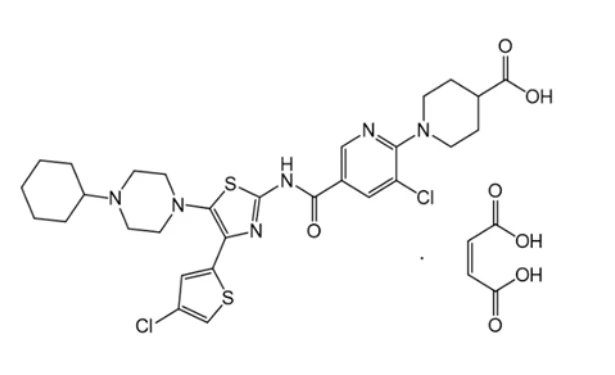
Proper name: Avatrombopag maleate
Chemical name: 4-piperidinecarboxylic acid, 1-[3-chloro-5-[[[4-(4-chloro-2-thienyl)-5-(4-cyclohexyl-1-piperazinyl)-2-thiazolyl]amino]carbonyl]-2-pyridinyl]-, (2Z)-2-butenedioate (1:1)
Molecular formula and molecular mass: C29H34Cl2N6O3S2・C4H4O4 and 765.73
Structural formula:
Physicochemical properties: Avatrombopag maleate is a white to off white powder. It is freely soluble in 1,3-dimethyl-2-imidazolidinone, dimethyl sulfoxide and N-methylpyrrolidone, slightly soluble in methanol and ethanol (dehydrated) and practically insoluble in water, acetonitrile, acetone, ethyl acetate, hexane, and tert-butylmethyl ether.
The aqueous solubility of avatrombopag maleate at various pH levels indicates that the drug substance is practically insoluble at pH 1 to 11.
14 CLINICAL TRIALS
14.1 Clinical Trials by Indication
Chronic Liver Disease Patients Scheduled to Undergo a Procedure
Table 10: Summary of Patient Demographics for Clinical trials in Chronic Liver Disease
| Study # | Trial design | Dosage, route of administration and duration | Study subjects (n) | Mean age (Range) (years) | Sex |
| ADAPT-1 | Phase 3, multicenter, randomized, double-blind, placebo-controlled trial | Cohort 1a: 60 mg (3×20-mg tablets; once daily on Day 1 through 5) Cohort 2b: 40 mg (2×20-mg tablets; daily on Day 1 through 5) 5 days | Ava = 90 Placebo = 48 Ava = 59 Placebo = 34 Total: 231 | Ava: 55.6 (29 - 78) Placebo: 55.1 (25 - 76) Ava: 57.5 (19 - 77) Placebo: 57.8 (30 - 76) Total: 56.3 (19 - 78) | Ava: M=72.2% F=27.8% Placebo: M=66.7% F=33.3% Ava: M=62.7% F=37.3% Placebo: M=70.6% F=29.4% Total: M=68.4% F=31.6% |
| ADAPT-2 | Phase 3, multicenter, randomized, double-blind, placebo-controlled trial | Cohort 1a: 60 mg (3×20-mg tablets; once daily on Day 1 through 5) Cohort 2b: 40 mg (2×20-mg tablets; daily on Day 1 through 5) 5 days | Ava = 70 Placebo = 43 Ava = 58 Placebo = 33 Total: 204 | Ava: 58.6 (20 - 86) Placebo: 57.3 (27 - 77) Ava: 57.9 (29 - 77) Placebo: 59.2 (39 - 81) Total: 58.2 (20 - 86) | Ava: M=71.4% F=28.6% Placebo: M=62.8% F=37.2% Ava: M=56.9% F=43.1% Placebo: M=51.5% F=48.5% Total: M=62.3% F=37.7% |
Ava = avatrombopag
a Cohort 1 Low Baseline Platelet Count <40×109/L
b Cohort 2 High Baseline Platelet Count between ≥40 to <50×109/L
The efficacy of DOPTELET for the treatment of severe thrombocytopenia in patients with chronic liver disease who are scheduled to undergo an invasive procedure was established in 2 identically-designed multicenter, randomized, double-blind, placebo-controlled trials (ADAPT-1 and ADAPT-2). In each trial, patients were assigned to the Low Baseline Platelet Count Cohort (<40 x109/L) or the High Baseline Platelet Count Cohort (≥40 to <50 x109/L) based on their platelet count at baseline. Patients were then randomized in a 2:1 ratio to either DOPTELET or placebo. Patients were stratified according to hepatocellular cancer (HCC) status and risk of bleeding (low, moderate, or high) associated with the elective procedure.
Patients in the Low Baseline Platelet Count Cohort received 60 mg DOPTELET or matching placebo once daily for 5 days, and patients in the High Baseline Platelet Count Cohort received 40 mg DOPTELET or matching placebo once daily for 5 days. Eligible patients were scheduled to undergo their procedure (low, moderate, or high bleeding risk) 5 to 8 days after their last dose of treatment. Patient populations were similar between the pooled Low and High Baseline Platelet Count Cohorts and consisted of 66% male and 35% female; median age 58 years and 61% White, 34% Asian, and 3% Black. A total of 24.8% of patients were ≥ 65 years of age, 4.6% ≥ 75 years of age, and only 1 (0.2%) ≥ 85 years of age. Patients’ MELD scores ranged from < 10 (37.5%), 10 to 14 (46.3%) and from > 14 to < 24 (16.2%), and included patients with Child-Turcotte-Pugh Class A (56.4%), Class B (38.1%), and Class C (5.6%).
In ADAPT-1, in the Low Baseline Platelet Count Cohort, the mean baseline platelet count for the DOPTELET-treated group was 31.1 x10⁹/L and for the placebo-treated patients was 30.7 x10⁹/L. In the High Baseline Platelet Count Cohort, the mean baseline platelet count for the DOPTELET-treated patients was 44.3 x10⁹/L and for placebo-treated patients was 44.9 x10⁹/L.
In ADAPT-2, in the Low Baseline Platelet Count Cohort, the mean baseline platelet count for the DOPTELET-treated group was 32.7 x10⁹/L and for the placebo-treated patients was 32.5 x10⁹/L. In the High Baseline Platelet Count Cohort, the mean baseline platelet count for the DOPTELET-treated patients was 44.3 x10⁹/L and for the placebo-treated patients was 44.5 x10⁹/L.
Across both baseline platelet count cohorts and the DOPTELET and placebo treatment groups, patients underwent a broad spectrum of types of scheduled procedures that ranged from low to high bleeding risk. Overall, the majority of patients (60.8% [248/408]) in all treatment groups underwent low bleeding risk procedures (such as gastrointestinal endoscopy and colonoscopy), 17.2% (70/408) of patients underwent procedures associated with moderate bleeding risk (such as liver biopsy and chemoembolization for HCC), and 22.1% (90/408) of patients underwent procedures associated with high bleeding risk (such as dental procedures, radiofrequency ablation and vascular catheterization). The proportions of patients undergoing low, moderate, and high-risk procedures were similar between DOPTELET and placebo treatment groups.
The major efficacy outcome was the proportion of patients who did not require a platelet transfusion or any rescue procedure for bleeding after randomization and up to 7 days following an elective procedure. Additional secondary efficacy outcomes were the proportion of patients who achieved platelet counts of >50 x109/L on the day of procedure, and the change in platelet count from baseline to procedure day.
Responders were defined as patients who did not require a platelet transfusion or any rescue procedure for bleeding after randomization and up to 7 days following a scheduled procedure. The following were considered rescue therapies to manage the risk of bleeding associated with a procedure: whole blood transfusion, packed red blood cell (RBC) transfusion, platelet transfusion, fresh frozen plasma (FFP) or cryoprecipitate administration, Vitamin K, desmopressin, recombinant activated factor VII, aminocaproic acid, tranexamic acid, or surgical or interventional radiology procedures performed to achieve hemostasis and control blood loss. In both baseline platelet count cohorts, patients in the DOPTELET treatment groups had a greater proportion of responders than the corresponding placebo treatment groups that was both clinically meaningful and statistically significant (Table 11).
Table 11: Proportion of Patients Not Requiring a Platelet Transfusion or Any Rescue Procedure for Bleeding by Baseline Platelet Count Cohort and Treatment Group – ADAPT-1 & ADAPT-2
| Low Baseline Platelet Count Cohort (<40 x109/L) | ||
|---|---|---|
| Category | ADAPT-1 | ADAPT-2 |
DOPTELET 60 mg (n=90) | Placebo (n=48) | |
DOPTELET 60 mg (n=70) | Placebo (n=43) | |
Responders 95% CIa | ||
66% (56, 75) | 23% (11, 35) | |
69% (58, 79) | 35% (21, 49) | |
Difference of Proportion vs. Placebob 95% CIc | 43% (27, 58) | 34% (16, 52) |
| p-valued | ˂0.0001 | 0.0006 |
| High Baseline Platelet Count Cohort (≥40 to <50 x109/L) | ||
| Category | ADAPT-1 | ADAPT-2 |
DOPTELET 40 mg (n=59) | Placebo (n= 34) | |
DOPTELET 40 mg (n=58) | Placebo (n=33) | |
Responders 95% CIa | ||
88% (80, 96) | 38% (22, 55) | |
88% (80, 96) | 33% (17, 49) | |
Difference of Proportion vs. Placebob 95% CIc | 50% (32, 68) | 55% (37, 73) |
| p-valued | ˂0.0001 | ˂0.0001 |
- a. Two-sided 95% confidence interval based on normal approximation.
- b. Difference of Proportion vs. placebo = Proportion of Responders for DOPTELET – Proportion of Responders for placebo.
- c. 95% confidence interval calculated based on normal approximation.
- d. By Cochran-Mantel-Haenszel Testing stratified by bleeding risk for the procedure.
In addition, both trials demonstrated a higher proportion of patients who achieved the target platelet count of ≥50 x109/L on the day of procedure, a secondary efficacy endpoint, in both DOPTELET-treated groups versus the placebo-treated groups for both cohorts (Low Baseline Platelet Count Cohort – ADAPT-1: 69% vs 4%, respectively; p<0.0001, ADAPT-2: 67% vs 7%, respectively; p <0.0001; High Baseline Platelet Count Cohort – ADAPT-1: 88% vs 21%, respectively; p <0.0001: ADAPT-2: 93% vs 39%, respectively; p <0.0001). Further, both trials demonstrated a greater mean change in platelet counts from baseline to the day of the procedure, a secondary efficacy endpoint, in both DOPTELET-treated groups versus the placebo-treated groups for both cohorts (Low Baseline Platelet Count Cohort – ADAPT-1: 32 x109/L vs 0.8 x10⁹/L, respectively; p<0.0001; ADAPT-2: 31.3 x10⁹/L vs 3.0 x10⁹/L, respectively; p <0.0001; High Baseline Platelet Count Cohort – ADAPT-1: 37.1 x10⁹/L vs 1.0 x10⁹/L, respectively; p <0.0001; ADAPT-2: 44.9 x10⁹/L vs 5.9 x10⁹/L, respectively; p <0.0001).
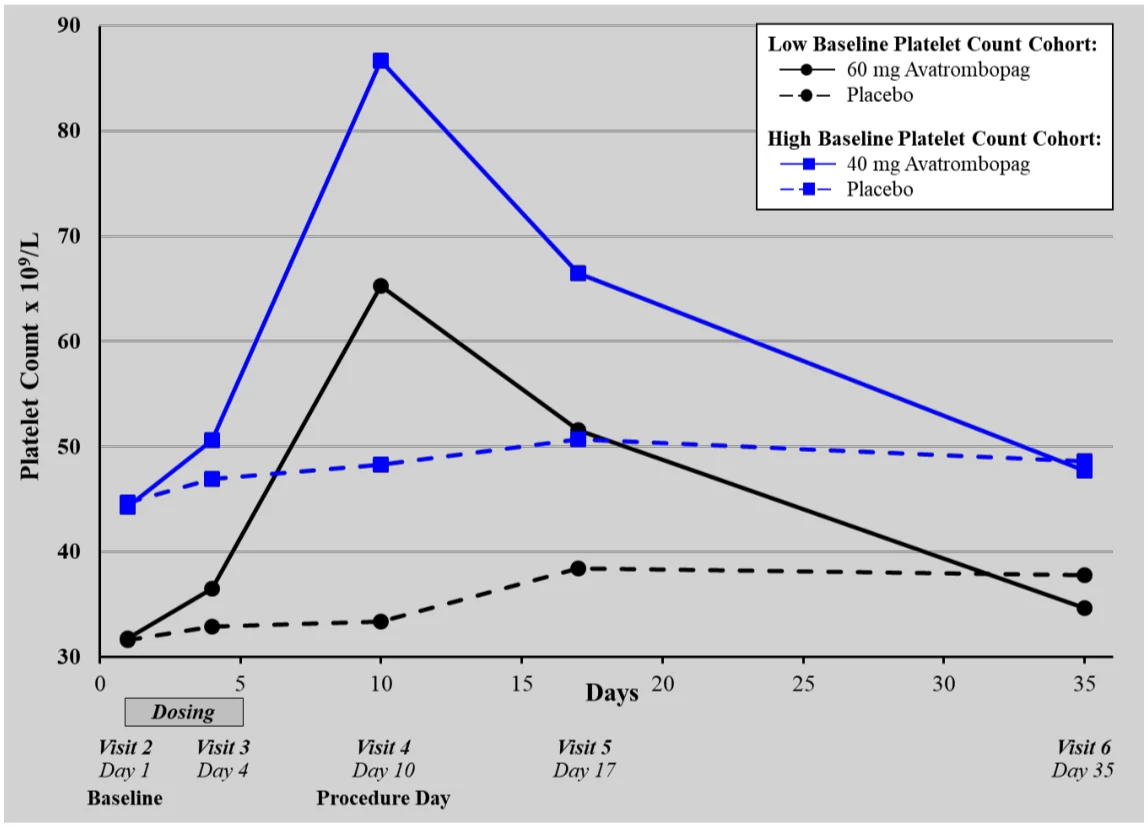
A measured increase in platelet counts was observed in both DOPTELET treatment groups over time beginning on Day 4 post-dose, that peaked on Day 10-13, decreased 7 days post-procedure, and then returned to near baseline values by Day 35 (Figure 1).
Figure 1: Mean Platelet Count by Treatment Group and Visit Day – Pooled Data from ADAPT-1 and ADAPT-2 (Full Analysis Set)
Chronic Immune Thrombocytopenia Patients
Table 12: Summary of Patient Demographics for Clinical Trials in Patients with Chronic Immune Thrombocytopenia
| Study # | Trial design | Dosage, route of administration and duration | Study subjects (n) | Mean age (Range) (years) | Sex |
| 302 | Phase 3, multicenter, randomized, double-blind, placebo-controlled trial | Starting dose of 20 mg; dose titration down to 5 mg or up to 40 mg 26 weeks | Ava = 32 Placebo = 17 Total: 49 | Ava: 46.4 (20 - 69) Placebo: 41.2 (18 - 65) Total: 44.6 (18 - 69) | Ava: M=28.1% F=71.9% Placebo: M=52.9% F=47.1% Total: M=36.7% F=63.3% |
Ava = avatrombopag
The efficacy of DOPTELET in adult patients with chronic immune thrombocytopenia was evaluated in a Phase 3, multicenter, randomized, double-blind, placebo-controlled trial. Patients had previously received one or more prior chronic immune thrombocytopenia therapies and had an average of screening and baseline platelet counts <30 x109/L. Patients were centrally stratified by splenectomy status, baseline platelet count (≤15 x109/L or >15 x109/L to <30 x109/L), and use of concomitant chronic immune thrombocytopenia medication, and then randomized (2:1) to receive either DOPTELET or placebo for 6 months. Patients received a starting dose of 20 mg once daily, with doses subsequently titrated based on platelet response.
Patients in the DOPTELET and placebo treatment groups had similar mean [SD] baseline platelet counts (14.1 [8.6]×109/L and 12.7 [7.8]×109/L, respectively). 94% patients were Caucasian, 4% Asian and 2% Black. A total of 8.2% of patients were ≥ 65 years of age, and no patients were ≥ 75 years of age. The median duration of exposure was 26 weeks for DOPTELET-treated patients and 6 weeks for placebo-treated patients. One third of patients, 11 (34.4%) and 5 (29.4%) had a history of splenectomy; 15 (46.9%) and 7 (41.2%) patients used concomitant ITP medication at baseline in the DOPTELET and placebo treatment groups, respectively.
The primary efficacy outcome in this trial was the cumulative number of weeks in which the platelet count was ≥50 x109/L during the 6-month treatment period in the absence of rescue therapy. DOPTELET-treated patients had a longer duration of platelet counts ≥50 x109/L in the absence of rescue therapy than those who received placebo (median 12.4 [0, 25] vs 0 [0, 2] weeks, respectively, p<0.0001) (Table 13).
Table 13: Cumulative Number of Weeks of Platelet Response - Phase 3 Trial in Patients with Chronic Immune Thrombocytopenia
| Primary Efficacy Analysis | DOPTELET (n=32) | Placebo (n=17) | |||
|---|---|---|---|---|---|
| Cumulative Number of Weeks with a Platelet Response* | |||||
| Mean (SD) | 12.0 (8.75) | 0.1 (0.49) | |||
| Median | 12.4 | 0.0 | |||
| Min, Max | 0, 25 | 0, 2 | |||
| p-value of Wilcoxon rank sum test | <0.0001 | ||||
Max=maximum, Min=minimum, SD=Standard deviation.
*Cumulative number of weeks of platelet response is defined as the total numbers of weeks in which the platelet count was ≥50x109/L during 6 months of treatment in the absence of rescue therapy.
In addition, a larger proportion of patients in the DOPTELET treatment group had platelet counts ≥50 x109/L at Day 8 compared to placebo (21/32; 66% vs 0/17; 0.0%, respectively; 95% CI (47, 86); p<0.0001).
15 MICROBIOLOGY
No microbiological information is required for this drug product.
16 NON-CLINICAL TOXICOLOGY
General Toxicology:
Avatrombopag does not stimulate platelet production in mice, rats, dogs or monkeys and is only functionally active in humans and chimpanzees. This species-specific effect is due to the unique structure of the TPO receptor. These animal species do not therefore model any potential on-target adverse effects related to the pharmacology of avatrombopag in the general toxicology, reproductive toxicology, and carcinogenicity studies. In the absence of non-clinical models to study potential on-target effects, it is acknowledged that the toxicology program lacks the ability to fully evaluate the safety of avatrombopag through study of the exaggerated pharmacology. The toxicology evaluation was therefore limited to identify potential off-target effects.
In repeated dose toxicity studies, treatment related gastric lesions were observed in mice, rats, and cynomolgus monkeys. In these species, avatrombopag caused histopathology changes in the fundic mucosa of the glandular stomach, characterized by degeneration of the glandular epithelium with a decrease in matured parietal cells. This effect was not associated with inflammatory response or any evidence of erosion or ulcer formation. The severity of gastric lesions was dependent on dose and duration of avatrombopag administration and showed a clear trend towards reversibility during the recovery period. These histologic changes in the stomach were accompanied by elevation of serum gastrin in animals and were reversible even after chronic treatment.
The exposures (area under concentration-time curve [AUC]) at doses that showed no gastric lesions (No Observed Adverse Effect Level [NOAEL]) across the species were 2- to 23-fold higher than the exposures in humans at the maximum recommended ITP dose regimen. In mice, the exposure ranged from 9- to 23-fold higher and NOAELs of 20 and 80 mg/kg were reported. In rats, the exposure ranged from 6- to 11-fold higher and NOAELs of 20 and 30 mg/kg were reported. In dogs, the exposure was 5-fold higher and a NOAEL of 30 mg/kg was reported. In monkeys, the exposure ranged from 2- to 6-fold higher and NOAELs of 5, 10 and >15 mg/kg were reported for gastric changes.
Reversible renal toxicity was observed in repeated-dose toxicity studies in dogs, but not in mice, rats or monkeys. The changes included increases in BUN, creatinine, urinary protein, and urinary volume, decreased glomerular filtration rate and effective plasma flow, accompanied by histological changes (epithelial cell regeneration of proximal tubules). The systemic exposure at NOAEL was 5 times higher than the human exposure at the maximum human recommended dose of 40 mg daily (ITP).
Reversible skeletal muscle degeneration and necrosis was observed in one rat strain (F344 rats) and cynomolgus monkeys in repeated-dose toxicity studies. These findings were observed at systemic exposures 7 times (rat) and 1 times (monkey) the exposure in humans at the maximum human recommended dose of 40 mg daily (ITP). However, these findings were observed only in short duration studies. Lesions were not observed in other species (mice, SD rats, dogs).
Carcinogenicity:
In two-year carcinogenicity studies, avatrombopag was administered orally at doses of 20, 60, 160 mg/kg/day in mice and doses of 20, 50, 160 mg/kg/day in rats. Avatrombopag induced a statistically significant increase in neuroendocrine cell (enterochromaffin-like cell, ECL cell) gastric tumors (carcinoids) in the stomach at 160 mg/kg in female rats. The 160 mg/kg/day dose resulted in exposures 81 times the AUC observed in patients at the maximum human recommended dose of 40 mg once daily (ITP). Gastric neuroendocrine cell tumours were observed in mice exposed to avatrombopag, but the incidence of tumours was not statistically different from vehicle treated animals. The tumours seen in one female mouse at 60 mg/kg and in one male mouse at 160 mg/kg resulted in exposures 19 times and 45 times the AUC observed in patients at the maximum human recommended dose of 40 mg once daily (ITP). The gastric carcinoids were considered likely due to prolonged hypergastrinemia observed in toxicity studies. Hypergastrinemia-related gastric carcinoids in rodents are generally considered to be of low risk or relevance to humans. Non-neoplastic chronic nephropathy was observed in both species and sexes, at starting doses of 60 mg/kg in mice and 50 mg/kg in rats resulting in exposures 19 times (mice) and 25 times (rats) the AUC observed in patients at the maximum human recommended dose of 40 mg once daily (ITP). Nephropathy accounted for early deaths in females in both mice and rats in the high-dose group.
Avatrombopag was not mutagenic in an in vitro bacterial reverse mutation (Ames) assay nor clastogenic in an in vitro human lymphocyte chromosomal aberrations assay or in an in vivo rat bone marrow micronucleus assay.
Reproductive and Developmental Toxicology:
Avatrombopag did not affect fertility or early embryonic development in male rats at exposures 15 times, or in female rats at exposures 79 times, the AUC observed in patients at the maximum recommended ITP dose of 40 mg once daily.
In embryo-fetal development studies, avatrombopag was administered during organogenesis at doses of 100, 300, and 1000 mg/kg/day in rats and doses of 100, 300, and 600 mg/kg/day in rabbits. There were no embryo-fetal effects in rats administered avatrombopag at doses up to 100 mg/kg/day 37 times the human exposure based on AUC ITP) or rabbits administered avatrombopag at doses up to 600 mg/kg (24 times the human exposure based on AUC ITP). An increased incidence of skeletal variations was observed in rats at doses greater than 300 mg/kg/day and minimal decreases in fetal weights were observed at the maternally toxic dose of 1000 mg/kg/day. Spontaneous abortions were observed at all doses tested in rabbits and were associated with decreased body weights and food consumption at 300 and 600 mg/kg/day; exposures at the lowest dose of 100 mg/kg/day were 7 times the AUC in patients at the maximum recommended dose of 40 mg once daily (ITP).
In pre- and postnatal development studies in rats, avatrombopag was administered during both the organogenesis and lactation periods at doses ranging from 5 to 600 mg/kg/day. Doses of 100, 300, and 600 mg/kg/day caused maternal toxicity, with maternal moribundity and mortality and leading to total litter losses, decreased body weight in pups, and increased pup mortality, with the majority of the pup mortality occurring from postnatal days 14 to 21. At a dose of 50 mg/kg/day that did not produce clear maternal toxicity, avatrombopag caused increased pup mortality from postnatal days 4 to 21, and mortality continued through postnatal day 25. The 50 mg/kg/day dose also decreased body weight gain in the pups, resulting in a delay in sexual maturation. There were no effects on behavioral or reproductive functions in the offspring. The 50 mg/kg/day dose resulted in maternal exposures 30 times and pup exposures 2 times the AUC observed in patients at the maximum recommended dose of 40 mg once daily (ITP).
Avatrombopag was present in milk of lactating rats 24 hours after a single oral administration of 3 mg/kg [14C]avatrombopag. The pharmacokinetic parameters of avatrombopag in milk were similar to those in plasma with an exposure ratio of avatrombopag related radioactivity (milk to plasma) of 0.94.