


Patient Medication Information: uses, side effects, how to take - Dorzolamide (Jamp Pharma)
What is Dorzolamide used for?
Dorzolamide lowers the pressure in the eye for conditions such as ocular hypertension or open-angle glaucoma.
How does Dorzolamide work?
Dorzolamide belongs to a group of medicines called carbonic anhydrase inhibitors. Dorzolamide works by reducing the production of liquid in the eye. This helps lower the pressure in the eye.
What are the ingredients in Dorzolamide?
Medicinal ingredient: dorzolamide (present as the hydrochloride salt)
Non-medicinal ingredients: hydroxyethyl cellulose, mannitol, sodium citrate dihydrate, sodium hydroxide (to adjust pH) and water for injection.
Benzalkonium chloride is only added as a preservative to Dorzolamide ophthalmic solution.
Dorzolamide comes in the following dosage forms:
Solution: 2% dorzolamide (dorzolamide hydrochloride)
Do not use Dorzolamide if:
- You are allergic to any of its components (see What are the ingredients in Dorzolamide?)
- You have severe kidney problems.
- You are taking oral carbonic anhydrase inhibitors.
To help avoid side effects and ensure proper use, talk to your healthcare professional before you take Dorzolamide. Talk about any health conditions or problems you may have, including if you:
- Have any medical problems now or have had any in the past, including eye (corneal) problems, or previous eye surgery;
- Have any allergies to any medications;
Dorzolamide contains the preservative benzalkonium chloride. If you wear contact lenses, you should consult your healthcare professional before using Dorzolamide. Do not use Dorzolamide while wearing (soft) contact lenses. Remove lenses before
Are pregnant or intend to become pregnant;
- Are breastfeeding or intend to breastfeed;
- Have now or have had in the past liver problems;
- Have now or have had in the past kidney problems.
Other warnings you should know about:
You may find that your vision is blurred for a time just after you put Dorzolamide in your eye. Do not drive or use any tools or machines until your vision is clear.
Dorzolamide is not recommended for children under 18 years of age.
Tell your healthcare professional about all the medicines you take, including any drugs, vitamins, minerals, natural supplements or alternative medicines.
The following may interact with Dorzolamide:
- Other drugs (including eye drops) that you are using or plan to use;
- Other drugs obtained without a prescription;
- Other carbonic anhydrase inhibitors;
- Large dose of ASA (acetylsalicylic acid);
- A group of drugs known as “sulfa drugs’’.
How to take Dorzolamide:
- Do not start taking any other medicines unless you have discussed the matter with your healthcare professional.
- If you use other eye drops, they should be used at least ten minutes apart.
- If you use Dorzolamide with a beta blocker eye drop, then the dose is one drop of Dorzolamide in the affected eye(s) in the morning and in the evening.
- Do not change how you take this drug without talking to your healthcare professional. If you must stop taking this drug, contact your healthcare professional immediately.
Dorzolamide Ophthalmic Solution
- 1. Before using the medication for the first time, be sure the safety seal on the bottle is unbroken.
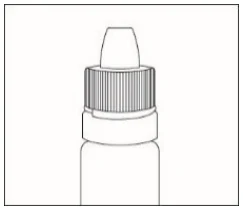
- 2. Twist the safety seal to break the seal.
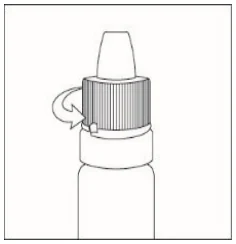
- 3. To open the bottle, unscrew the cap by turning the cap. Do not pull the cap directly up and away from the bottle. Pulling the cap directly up will prevent your dispenser from operating properly.
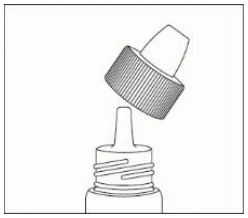
- 4.
Tilt your head back and pull your lower eyelid down slightly to form a pocket between
your eyelid and your eye.
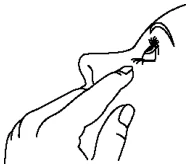
- 5. Invert the bottle and press lightly with the thumb or index finger (as shown) until a single drop is dispensed into the eye as directed by the doctor.
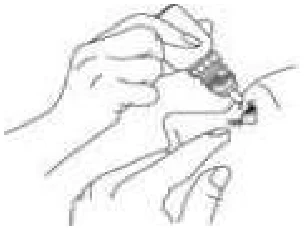
DO NOT TOUCH YOUR EYE OR EYELID WITH THE DROPPER TIP.
Eye droppers can become contaminated with bacteria from touching the eye or around the eye area. This can cause eye infections leading to serious damage of the eye, even loss of vision. If you think your bottle may be contaminated, or if you develop an eye infection, contact your healthcare professional immediately concerning continued use of this bottle.
- 6.
If drop dispensing is difficult after opening for the first time, replace the cap on the bottle
- and tighten (DO NOT OVERTIGHTEN). Then, remove by turning the cap in the opposite direction
- 7. Repeat steps 4 & 5 with the other eye if instructed to do so by your healthcare professional.
- 8. Replace the cap by turning until it is firmly touching the bottle. Do not overtighten or you may damage the bottle and cap.
- 9. The dispenser tip is designed to provide a single drop; therefore, do NOT enlarge the hole of the dispenser tip.
- 10. After you have used all doses, there will be some Dorzolamide left in the bottle. You should not be concerned since an extra amount of Dorzolamide has been added and you will get the full amount of Dorzolamide that your doctor prescribed. Do not attempt to remove excess medicine from the bottle.
Usual dose:
Your doctor will tell you the right dose and length of time to use Dorzolamide
When Dorzolamide is used alone, the dose is one drop in the affected eye(s) in the morning, in the afternoon and in the evening.
Overdose:
| If you think you, or a person you are caring for, have taken too much Dorzolamide, contact a healthcare professional, hospital emergency department, or regional poison control centre immediately, even if there are no symptoms. |
|---|
Missed Dose:
It is important to apply Dorzolamide as prescribed by your physician. If you miss a dose, apply it as soon as possible. However, if it is almost time for the next dose, skip the missed dose and go back to your regular dosing schedule.
What are possible side effects from using Dorzolamide?
These are not all the possible side effects you may have when taking Dorzolamide. If you experience any side effects not listed here, tell your healthcare professional.
You may experience eye symptoms such as:
- Burning and stinging
- Blurred vision
- Itching
- Tearing
- Redness of the eye(s)
- Eye pain
- Swelling of the eyelids
- Crusting of the eyelids
- Eyelid irritation
- Sensitivity to light
A feeling of something in the eye Other side effects may include:
- Bitter taste after putting in your eye drops
- Headache
- Nosebleed
- Dry mouth
- Throat irritation
- Nausea
- Tiredness
- Dizziness
- Numbness or tingling of the skin
- Itchy skin
If the contents of the container are swallowed, you should contact your healthcare professional immediately.
Serious side effects and what to do about them
| Symptom / effect | Talk to your healthcare professional | Stop taking drug and get immediate medical help | |
|---|---|---|---|
| Only if severe | In all cases | ||
| UNKNOWN | |||
Allergic Reaction: rash, hives, swelling of the mouth, throat, and lips, difficulty breathing, blue skin, shock, loss of consciousness, low blood pressure | ✓ | ||
Stevens-Johnson syndrome (severe skin rash): redness, blistering and / or peeling of the skin and / or inside of the lips, eyes, mouth, nasal passages or genitals, accompanied by fever, chills, headache, cough, body aches or swollen glands | ✓ | ||
| Toxic Epidermal Necrolysis (severe skin reaction): redness, blistering and / or peeling of large areas of the skin | ✓ | ||
Serious side effects and what to do about them
| Symptom / effect | Talk to your healthcare professional | Stop taking drug and get immediate medical help | |
|---|---|---|---|
| Only if severe | In all cases | ||
| Urolithiasis (kidney stones): pain when urinating, severe pain in the side and back, below the ribs | ✓ | ||
| Increased heart rate | ✓ | ||
Hypertension (high blood pressure): shortness of breath, fatigue, dizziness or fainting, chest pain or pressure, swelling in your ankles and legs, racing pulse or heart palpitations. | ✓ | ||
If you have a troublesome symptom or side effect that is not listed here or becomes bad enough to interfere with your daily activities, tell your healthcare professional.
Reporting Side Effects
You can report any suspected side effects associated with the use of health products to Health Canada by:
NOTE: Contact your health professional if you need information about how to manage your side effects. The Canada Vigilance Program does not provide medical advice. |
|---|
Storage:
Store at 15-25°C in a tightly closed upright bottle. Protect from light. Discard 28 days after opening. Do not use this medicine after the date shown on the container.
Keep out of reach and sight of children.
If you want more information about Dorzolamide:
- Talk to your healthcare professional
- Find the full Product Monograph that is prepared for healthcare professionals and includes this Patient Medication Information by visiting the Health Canada website: (https://www.canada.ca/en/health-canada/services/drugs-health-products/drug-products/drug-product-database.html); or by calling 1-866-399-9091.
JAMP Pharma Corporation
1310 rue Nobel
Boucherville, Quebec
J4B 5H3, Canada