


Product Monograph - Doxorubicin Hydrochloride Injection (Teva Canada)
RECENT MAJOR LABEL CHANGES
| 7 WARNINGS AND PRECAUTIONS, Reproductive Health: Female and Male Potential | 02/2023 |
|---|---|
| 7 WARNINGS AND PRECAUTIONS, 7.1 Special Populations | 02/2023 |
TABLE OF CONTENTS
Sections or subsections that are not applicable at the time of authorization are not listed.
RECENT MAJOR LABEL CHANGES ............................................................................................ 2
TABLE OF CONTENTS .............................................................................................................. 2
PART I: HEALTH PROFESSIONAL INFORMATION ...................................................................... 4
1 INDICATIONS ................................................................................................................. 4
1.1 Pediatrics ........................................................................................................................ 4
1.2 Geriatrics ......................................................................................................................... 4
2 CONTRAINDICATIONS .................................................................................................... 5
3 SERIOUS WARNINGS AND PRECAUTIONS BOX ............................................................... 5
4 DOSAGE AND ADMINISTRATION .................................................................................... 6
4.2 Recommended Dose and Dosage Adjustment ............................................................... 6
4.4 Administration ................................................................................................................ 8
4.5 Missed Dose .................................................................................................................... 9
5 OVERDOSAGE ................................................................................................................ 9
6 DOSAGE FORMS, STRENGTHS, COMPOSITION AND PACKAGING .................................. 10
7 WARNINGS AND PRECAUTIONS ................................................................................... 10
7.1 Special Populations ....................................................................................................... 17
7.1.1 Pregnant Women .......................................................................................................... 17
7.1.2 Breast-feeding............................................................................................................... 17
7.1.3 Pediatrics ...................................................................................................................... 17
8 ADVERSE REACTIONS .................................................................................................... 17
8.1 Adverse Reaction Overview ............................................................................................ 17
9 DRUG INTERACTIONS .................................................................................................. 18
9.2 Drug Interactions Overview .......................................................................................... 18
9.3 Drug-Behavioural Interactions...................................................................................... 19
9.4 Drug-Drug Interactions ................................................................................................. 19
9.5 Drug-Food Interactions ................................................................................................. 19
9.6 Drug-Herb Interactions ................................................................................................. 20
9.7 Drug-Laboratory Test Interactions ............................................................................... 20
10 CLINICAL PHARMACOLOGY .......................................................................................... 20
10.1 Mechanism of Action .................................................................................................... 20
10.2 Pharmacodynamics ....................................................................................................... 21
10.3 Pharmacokinetics .......................................................................................................... 21
11 STORAGE STABILITY AND DISPOSAL ............................................................................. 21
12 SPECIAL HANDLING INSTRUCTIONS .............................................................................. 21
Preparation and Handling ............................................................................................ 21
Disposal ...................................................................................................................... 22
Needles, Syringes, Disposable and Non-disposable Equipment ..................................... 22
Spillage/Contamination ............................................................................................... 23
PART II: SCIENTIFIC INFORMATION .................................................................................. 24
13 PHARMACEUTICAL INFORMATION ............................................................................... 24
14 CLINICAL TRIALS .......................................................................................................... 25
15 MICROBIOLOGY ........................................................................................................... 25
16 NON-CLINICAL TOXICOLOGY ........................................................................................ 26
17 SUPPORTING PRODUCT MONOGRAPHS ....................................................................... 27
PATIENT MEDICATION INFORMATION .................................................................................. 28
PART I: HEALTH PROFESSIONAL INFORMATION
CAUTION:
DOXORUBICIN HYDROCHLORIDE INJECTION IS A POTENT DRUG AND SHOULD BE USED ONLY BY PHYSICIANS EXPERIENCED WITH CANCER CHEMOTHERAPY DRUGS (SEE 7 WARNINGS AND PRECAUTIONS). BLOOD COUNTS AND HEPATIC FUNCTION TESTS SHOULD BE PERFORMED REGULARLY. BECAUSE OF THE EXPERIENCE WITH CARDIAC TOXICITY, IT IS NOT RECOMMENDED TO EXCEED A TOTAL DOSE OF DOXORUBICIN HYDROCHLORIDE 550 MG/M2 WITH THE 21-DAY REGIMEN AND 700 MG/M2 WITH THE WEEKLY REGIMEN. CARDIAC MONITORING IS ADVISED IN THOSE PATIENTS WHO HAVE RECEIVED MEDIASTINAL RADIOTHERAPY, OTHER ANTHRACYCLINE OR ANTHRACENE THERAPY, WITH PRE-EXISTING CARDIAC DISEASE, OR WHO HAVE RECEIVED PRIOR DOXORUBICIN HYDROCHLORIDE INJECTION CUMULATIVE DOSES EXCEEDING 400 MG/M2 WITH THE 21-DAY REGIMEN AND 550 MG/M2 UTILIZING THE WEEKLY REGIMEN.
1 INDICATIONS
Doxorubicin hydrochloride has been used successfully both as a single agent and also in combination with other approved cancer chemotherapeutic agents to produce regression in neoplastic conditions such as acute lymphoblastic leukemia, acute myeloblastic leukemia, Wilms’ tumor, neuroblastomas, soft tissue sarcomas, bone sarcomas, breast carcinoma, gynecologic carcinomas, testicular carcinomas, bronchogenic carcinoma, Hodgkin's disease, non-Hodgkin's lymphoma, thyroid carcinoma, bladder carcinomas, squamous cell carcinoma of the head and neck, and gastric carcinoma.
Doxorubicin hydrochloride has also been used by instillation into the bladder for the topical treatment of superficial bladder tumors.
A number of other solid tumors have also shown some responsiveness to doxorubicin hydrochloride alone or in combination with other drugs (see 4 DOSAGE AND ADMINISTRATION). Studies to date have shown malignant melanoma, kidney carcinoma, large bowel carcinomas, brain tumors and metastases to the central nervous system not to be significantly responsive to doxorubicin hydrochloride therapy.
1.1 Pediatrics
Pediatrics (0-18 years): Based on the data submitted and reviewed by Health Canada, the safety and efficacy of doxorubicin hydrochloride in pediatric patients has not been established; therefore, Health Canada has not authorized an indication for pediatric use (see 7.2.3 Pediatrics).
1.2 Geriatrics
Geriatrics (≥ 60 years): No data are available to Health Canada; therefore, Health Canada has not authorized an indication for geriatric use.
2 CONTRAINDICATIONS
- Patients who are hypersensitive to this drug or to any ingredient in the formulation or component of the container. For a complete listing, see the 6 DOSAGE FORMS, STRENGTHS, COMPOSITION AND PACKAGING section of the product monograph.
- Hypersensitivity to doxorubicin or any other component of the product, other anthracyclines or anthracenediones such as PHARMORUBICIN (epirubicin hydrochloride), daunorubicin hydrochloride, mitoxantrone or mitomycin C.
- Marked persistent myelosuppression induced by prior treatment with other anti-tumor agents or by radiotherapy;
- Severe hepatic impairment;
- Severe myocardial insufficiency;
- Recent myocardial infarction;
- Severe arrhythmias;
- History of severe cardiac disease;
- Previous treatment with maximum cumulative doses of doxorubicin, daunorubicin, epirubicin, idarubicin and/or other anthracyclines and anthracenediones (see 7 WARNINGS AND PRECAUTIONS).
Contraindication for intravesical use:
- Hematuria;
- Urinary tract infections;
- Inflammation of the bladder.
3 SERIOUS WARNINGS AND PRECAUTIONS BOX
Serious Warnings and Precautions
|
|---|
|
|---|
4 DOSAGE AND ADMINISTRATION
4.2 Recommended Dose and Dosage Adjustment
A variety of dose schedules has been used. The following recommendations are for use as a single agent only.
Intravenous (IV) Administration
The total DOXORUBICIN HYDROCHLORIDE INJECTION dose per cycle may differ according to its use within a specific treatment regimen (e.g., given as a single agent or in combination with other cytotoxic drugs) and according to the indication.
The most commonly used dosage schedule is 60-75 mg/m2 as a single intravenous injection administered at 21-day intervals. An alternative dose schedule is weekly doses of 20 mg/m2, which has been reported to produce a lower incidence of congestive heart failure. A dose of 30 mg/m2 on each of 3 successive days repeated every 4 weeks has also been used.
- Hepatic Dysfunction: DOXORUBICIN HYDROCHLORIDE INJECTION dosage must be reduced if the bilirubin is elevated as follows: Serum Bilirubin 1.2-3.0 mg/dL – give ½ of recommended starting dose, > 3 mg/dL – give ¼ of recommended starting dose. Doxorubicin should not be administered to patients with severe hepatic impairment (see 2 CONTRAINDICATIONS).
- Other Special Populations: Lower starting doses or longer intervals between cycles may need to be considered for heavily pretreated patients, children, elderly patients, obese patients, or patients with neoplastic bone marrow infiltration (see 7 WARNINGS AND PRECAUTIONS).
Drug Incompatibility: Doxorubicin should not be mixed with fluorouracil (e.g. in the same IV infusion bag or at the Y-site of an IV infusion line) since it has been reported that these drugs are incompatible to the extent that a precipitate might form. If concomitant therapy
- with doxorubicin and fluorouracil is required, it is recommended that the IV line be flushed between the administration of these drugs.
Intravesical Administration
Intravesical administration is not suitable for the treatment of invasive tumors that have penetrated the muscular layer of the bladder wall. When DOXORUBICIN HYDROCHLORIDE INJECTION is instilled intravesically for the treatment of superficial bladder carcinomas, the usual dose employed ranges from 50-80 mg in a total volume of 50-100 mL of 0.9% Sodium Chloride Solution USP with a contact time of 1-2 hours. Care should be taken to ensure that the tip of the catheter is in the bladder cavity before instilling the doxorubicin hydrochloride solution. Instillation is repeated weekly for 4 weeks, and subsequently at monthly intervals. Therapy may continue for 1 year or longer as no significant systemic toxicity has been reported. Care should be exercised in the handling and disposal of the voided urine. (Refer to 12 SPECIAL HANDLING INSTRUCTIONS) PVC gloves should be worn and the urine should be inactivated by decolorizing it with 10 mL or more of sodium hypochlorite solution (household bleach).
Other methods of administration have been investigated, including intra-arterial administration and also continuous or long-term intravenous infusion utilizing appropriate infusion pumps.
Clinical studies support the efficacy of doxorubicin hydrochloride used concurrently with other chemotherapeutic agents. Listed below are tumor types and drugs used concurrently with doxorubicin hydrochloride:
- Acute lymphocytic leukemia in adults: Doxorubicin hydrochloride with vincristine and prednisone or with cytosine arabinoside, vincristine and prednisone.
- Acute lymphocytic leukemia in children: Doxorubicin hydrochloride with L-asparaginase, vincristine and prednisone.
- Acute non-lymphocytic leukemia: Doxorubicin hydrochloride with cytosine arabinosyl or with arabinosyl cytosine, vincristine and prednisone.
- Carcinoma of the breast: Doxorubicin hydrochloride in treating early or advanced breast cancer in combination with 5-fluorouracil and/or cyclophosphamide or with vincristine with or without cyclophosphamide, or with taxane therapy.
- Bronchogenic carcinoma, non-small cell: Doxorubicin hydrochloride with cyclophosphamide, methotrexate and procarbazine or with cyclophosphamide and cisplatinum.
- Bronchogenic carcinoma, small cell: Doxorubicin hydrochloride with vincristine or etoposide (VP-16) and cyclophosphamide.
- Hodgkin's disease: Doxorubicin hydrochloride with bleomycin, vincristine and dacarbazine.
- Non-Hodgkin's lymphoma: Doxorubicin hydrochloride with cyclophosphamide, vincristine and prednisone, or bleomycin, cyclophosphamide, vincristine and prednisone.
- Carcinoma of the ovary: Doxorubicin hydrochloride with cisplatinum.
- Soft tissue sarcoma: Doxorubicin hydrochloride with dacarbazine, or with dacarbazine, cyclophosphamide and vincristine.
- Carcinoma of the bladder: Doxorubicin hydrochloride with methotrexate, vinblastine and cisplatinum or cisplatinum and cyclophosphamide or with 5-fluorouracil.
- Carcinoma of the stomach: Doxorubicin hydrochloride with 5-fluorouracil and mitomycin-C.
4.4 Administration
Intravenous (IV) Administration
Care in the administration of DOXORUBICIN HYDROCHLORIDE INJECTION will reduce the chance of perivenous infiltration. It may also decrease the chance of local reactions such as urticaria and erythematous streaking. On intravenous administration of DOXORUBICIN HYDROCHLORIDE INJECTION, extravasation may occur with or without an accompanying stinging or burning sensation even if the blood returns well on aspiration of the infusion needle. If any signs or symptoms of extravasation have occurred, the injection or infusion should be immediately terminated and restarted in another vein.
If it is known or suspected that subcutaneous extravasation has occurred, the following steps are recommended:
- 1. Attempt aspiration of the infiltrated doxorubicin hydrochloride solution.
- 2. Local intermittent application of ice for up to 3 days.
- 3. Elevation of the affected limb.
- 4. Close observation of the lesion.
- 5. Consultation with a plastic surgeon familiar with drug extravasations if local pain persists or skin changes progress after 3 to 4 days. If ulceration begins, early wide excision of the involved area should be considered.
DOXORUBICIN HYDROCHLORIDE INJECTION should be slowly administered into the tubing of a freely running intravenous infusion of Sodium Chloride Solution USP (0.9%) or 5% Dextrose Solution USP. The compatibility of DOXORUBICIN HYDROCHLORIDE INJECTION with PVC infusion bags has not been demonstrated. Non-PVC infusion bags should be used. The tubing should be attached to a Butterfly needle or other suitable device and inserted preferably into a large vein. If possible, avoid veins over joints or in extremities with compromised venous or lymphatic drainage. The rate of administration is dependent on the size of the vein and the dosage, however, the dosage should be administered for not less than 3 minutes and not more than 10 minutes to minimize the risk of thrombosis or perivenous extravasation. Local erythematous streaking along the vein as well as facial flushing may be indicative of too rapid administration. A direct push injection is not recommended due to the risk of extravasation, which may occur even in the presence of adequate blood return upon needle aspiration (see 7 WARNINGS AND PRECAUTIONS).
Unless specific compatibility data are available, the mixing of doxorubicin hydrochloride solutions with other drugs is not recommended. Precipitation occurs with 5-fluorouracil and heparin.
Parenteral drug products should be inspected visually for clarity, particulate matter, precipitation, discolouration and leakage prior to administration, whenever solution and container permit.
Intravesical Administration
Doxorubicin should be instilled using a catheter and retained intravesically for 1 to 2 hours. Care should be taken to ensure that the tip of the catheter is in the bladder cavity before instilling the doxorubicin hydrochloride solution. During instillation, the patient should be rotated to ensure that the vesical mucosa of the pelvis receives the most extensive contact with the solution. To avoid dilution with urine, the patient should be instructed not to drink any fluid in the 12 hours prior to instillation. The patient should be instructed to void at the end of the instillation.
4.5 Missed Dose
If you miss your scheduled treatment with the drug, contact your doctor as soon as possible to schedule your next treatment.
5 OVERDOSAGE
Acute overdosage with doxorubicin hydrochloride enhances the toxic effects of mucositis, leukopenia and thrombocytopenia. Treatment of acute overdosage consists of treatment of the severely myelosuppressed patient with hospitalization, antibiotics, platelet and granulocyte transfusions and symptomatic treatment of mucositis.
Chronic overdosage with cumulative doses exceeding 550 mg/m2 increases the risk of cardiomyopathy and resultant congestive heart failure. Treatment consists of vigorous management of congestive heart failure with digitalis preparations and diuretics. The use of peripheral vasodilators has been recommended.
| For management of a suspected drug overdose, contact your regional poison control centre. |
|---|
6 DOSAGE FORMS, STRENGTHS, COMPOSITION AND PACKAGING
Table – Dosage Forms, Strengths, Composition and Packaging
Route of Administration | Dosage Form / Strength / Composition | Non-medicinal Ingredients |
|---|---|---|
| Parenteral and intravesical | Ready to use solution for injection 2 mg/mL (5 mL, 25 mL, 100 mL vials) | Hydrochloric acid (for pH adjustment), sodium chloride, sodium hydroxide (for pH adjustment) and water for injection |
Description
DOXORUBICIN HYDROCHLORIDE INJECTION is a sterile, red-orange isotonic, preservative-free solution.
Each milliliter of the injectable solution contains 2 mg doxorubicin hydrochloride with the following non-medical ingredients: sodium chloride, water for injection, hydrochloric acid and sodium hydroxide to adjust the pH to a target of 3.0.
DOXORUBICIN HYDROCHLORIDE INJECTION is supplied in single-use snap-cap vials containing 10 mg (5 mL vials in boxes), 50 mg (25 mL vials in single boxes), and 200 mg (100 mL pharmacy bulk vials in single boxes). The stopper is not made with natural rubber latex.
NOTE: THE USE OF PHARMACY BULK VIALS IS RESTRICTED TO HOSPITALS WITH A RECOGNIZED INTRAVENOUS ADMIXTURE PROGRAM. THE PHARMACY BULK VIAL IS INTENDED FOR SINGLE PUNCTURE, MULTIPLE DISPENSING AND FOR INTRAVENOUS USE ONLY.
Incompatibility:
Unless specific compatibility data are available, DOXORUBICIN HYDROCHLORIDE INJECTION should not be mixed with other drugs. Contact with alkaline solutions should be avoided since this can lead to hydrolysis of doxorubicin. Doxorubicin should not be mixed with heparin due to chemical incompatibility that may lead to precipitation. Precipitation also occurs with 5-fluorouracil.
7 WARNINGS AND PRECAUTIONS
General
Intravesical Route of Administration
Administration of doxorubicin by the intravesical route may produce symptoms of chemical cystitis (such as dysuria, polyuria, nocturia, stranguria, hematuria, bladder discomfort, necrosis of the bladder wall) and bladder constriction. Special attention is required for catheterization problems (e.g., urethral obstruction due to massive intravesical tumors).
Carcinogenesis and Mutagenesis
Doxorubicin was genotoxic in a battery of in vitro or in vivo tests. An increase in the incidence of mammary tumors was reported in rats, and a trend for delay or arrest of follicular maturation was seen in female dogs (see 16 NON CLINICAL TOXICOLOGY).
Doxorubicin is mutagenic and can induce chromosomal damage in human spermatozoa. Oligospermia or azoospermia may be permanent; however, sperm counts have been reported to return to normospermic levels in some instances. This may occur several years after the end of therapy (see 7 WARNINGS AND PRECAUTIONS, Reproductive Health: Female and Male Potential, Fertility).
Secondary Malignancies
Secondary leukemia, with or without a preleukemic phase, has been reported in patients treated with topoisomerase-II inhibitors including the anthracyclines such as doxorubicin. Secondary leukemia is more common when anthracyclines are given in combination with DNA-damaging antineoplastic agents (0.5%), or when patients have been heavily pretreated with cytotoxic drugs, or when doses of the anthracyclines have been escalated and/or in combination with radiotherapy (2.5 %). Cumulative incidences ranged from 0.2% at five years to 1.5% at 10 years in two separate trials involving the adjuvant treatment of women with breast cancer. Secondary leukemia can have a 1-3 year latency period, and can occur as late as 10 years following treatment.
Pediatric patients are also at risk of developing secondary AML.
Cardiovascular
Acute life-threatening arrhythmias have been reported to occur during or within a few hours after doxorubicin hydrochloride administration (see 8 ADVERSE REACTIONS).
Cardiac Function
Cardiotoxicity is a risk of anthracycline treatment that may be manifested by early (i.e., acute) or late (i.e., delayed) events.
Early (i.e., Acute) Events
Early cardiotoxicity of doxorubicin consists mainly of sinus tachycardia and/or ECG abnormalities such as non-specific ST-T wave changes.
Tachyarrhythmias, including premature ventricular contractions and ventricular tachycardia, bradycardia, and atrioventricular and bundle-branch block also have been reported. Those effects usually do not predict subsequent development of delayed cardiotoxicity, are rarely of clinical importance and generally do not necessitate discontinuation of doxorubicin treatment.
Late (i.e., Delayed) Events
Delayed cardiotoxicity usually develops late in the course of therapy with doxorubicin or within 2 to 3 months after treatment termination, but later events, several months to years after completion of treatment, have also been reported. Delayed cardiomyopathy is manifested by reduced left ventricular ejection fraction (LVEF) and/or signs and symptoms of congestive heart failure (CHF) such as dyspnea, pulmonary edema, dependent edema, cardiomegaly and hepatomegaly, oliguria, ascites, pleural effusion and gallop rhythm. Subacute effects such as pericarditis/myocarditis also have been reported. Life-threatening CHF is the most severe form of anthracycline-induced cardiomyopathy and is the cumulative dose-limiting toxicity of anthracycline drugs.
The probability of developing CHF is estimated around 1% to 2% at a total cumulative dose of 300 mg/m2 of doxorubicin HCl. Thereafter, the risk of developing CHF increases steeply; 3 to 5% at 400 mg/m2; 5 to 8% at 450 mg/m2, and 6 to 20% at 500 mg/m2, when doxorubicin HCl is administered every 3 weeks. IT IS RECOMMENDED NOT TO EXCEED A MAXIMUM CUMULATIVE DOSE OF 550 MG/M2 OF DOXORUBICIN HYDROCHLORIDE INJECTION.
The total dose of DOXORUBICIN HYDROCHLORIDE INJECTION administered to a patient should take into account: prior therapy with related compounds such as epirubicin and daunorubicin or anthracene derivatives; and/or radiotherapy to the mediastinal area.
Risk factors for cardiac toxicity include active or dormant cardiovascular disease, prior or concomitant radiotherapy to the mediastinal/pericardial area, previous therapy with other anthracyclines or anthracenediones and concomitant use of drugs with the ability to suppress cardiac contractility or cardiotoxic drugs. Anthracyclines including doxorubicin should not be administered in combination with other cardiotoxic agents unless the patient’s cardiac function is closely monitored.
Patients receiving anthracyclines after stopping treatment with other cardiotoxic agents, especially those with long half-lives such as trastuzumab, may also be at an increased risk of developing cardiotoxicity. The reported half-life of trastuzumab is approximately 28-38 days. Trastuzumab may persist in the circulation for up to 7 months. Therefore, physicians should avoid anthracycline-based therapy for up to 7 months after stopping trastuzumab when possible. If anthracyclines are used before this time, careful monitoring of cardiac function is recommended.
Cardiac function must be carefully monitored in patients receiving high cumulative doses and in those with risk factors. While cardiotoxicity with doxorubicin may occur at lower cumulative doses whether or not cardiac risk factors are present, it may be more likely to occur at lower cumulative doses in patients with these risk factors.
New studies show that children and adolescents are at an increased risk for developing delayed cardiotoxicity following doxorubicin administration (up to 15 years). Females may be at greater risk than males. Follow-up cardiac evaluations such as ECHO LVEF/MUGA are recommended periodically to monitor for this effect (see 7 WARNINGS AND PRECAUTIONS, Monitoring and Laboratory Tests).
Vascular Effects
Phlebosclerosis may result from an injection into a small vessel or from repeated injections into the same vein. Following the recommended administration procedures may minimize the risk of phlebitis/thrombophlebitis at the injection site (see 4 DOSAGE AND ADMINISTRATION).
As with other cytotoxic agents, thrombophlebitis and thromboembolic phenomena, including pulmonary embolism (in some cases fatal), have been coincidentally reported with the use of doxorubicin.
Contamination
Toxicities with Co-Administration of Antineoplastic Agents
DOXORUBICIN HYDROCHLORIDE INJECTION may potentiate the toxicity of other anticancer therapies. Exacerbation of cyclophosphamide-induced hemorrhagic cystitis and enhancement of the hepatotoxicity of 6-mercaptopurine have been reported. Radiation-induced toxicity to the myocardium, mucosae, skin and liver has been reported to be increased by the administration of doxorubicin hydrochloride.
Patients should recover from acute toxicities of prior cytotoxic treatment (such as stomatitis, neutropenia, thrombocytopenia, and generalized infections) before beginning treatment with doxorubicin.
Endocrine and Metabolism
Tumor-Lysis Syndrome
Doxorubicin may induce hyperuricemia as a consequence of the extensive purine catabolism that accompanies drug-induced rapid lysis of neoplastic cells (tumor-lysis syndrome). Blood uric acid levels, potassium, calcium phosphate and creatinine should be evaluated after initial treatment. Hydration, urine alkalinization, and prophylaxis with allopurinol to prevent hyperuricemia may minimize potential complications of tumor-lysis syndrome.
Gastrointestinal
Doxorubicin is emetogenic. Mucositis/stomatitis generally appears early after drug administration and, if severe, may progress over a few days to mucosal ulcerations. Most patients recover from this adverse event by the third week of therapy.
Necrotizing colitis manifested by typhlitis (cecal inflammation), bloody stools and severe and sometimes fatal infections have been associated with a combination of doxorubicin hydrochloride given by IV push daily for 3 days and cytarabine given by continuous infusion daily for 7 or more days.
Genitourinary
Doxorubicin hydrochloride may impart a red colouration to the urine for 1 to 2 days after administration and patients should be advised to expect this during active therapy.
Hematologic
As with other cytotoxic agents, doxorubicin can cause severe myelosuppression. Hematologic profiles should be assessed before and during each cycle of therapy with doxorubicin, including differential white blood cell (WBC) counts. A dose-dependent, reversible leukopenia and/or granulocytopenia (neutropenia) is the predominant manifestation of doxorubicin hematologic toxicity and is the most common acute dose-limiting toxicity of this drug. Leukopenia and neutropenia generally reach the nadir between days 10 and 14 after drug administration; the WBC/neutrophil counts return to normal values in most cases by Day 21. Thrombocytopenia and anemia may also occur. Clinical consequences of severe myelosuppression include fever, infections, sepsis/septicemia, septic shock, hemorrhage, tissue hypoxia, or death. Hematologic toxicity may require dose reduction or suspension or delay of DOXORUBICIN HYDROCHLORIDE INJECTION therapy. Persistent severe myelosuppression may result in superinfection or hemorrhage.
In early breast cancer patient study (National Surgical Adjuvant Breast and Bowel Project B-15), the incidence of severe myelosuppression was: grade 4 leukopenia (0.3%), grade 3 leukopenia (3%), and grade 4 thrombocytopenia (0.1%). A dose-dependent, reversible neutropenia is the predominant manifestation of hematologic toxicity from doxorubicin HCl. When doxorubicin HCl is administered every 21 days, the neutrophil count reaches its nadir 10 to 14 days after administration with recovery usually occurring by the 21st day. Anemia may also occur.
Hepatic/Biliary/Pancreatic
Doxorubicin is extensively metabolized by the liver and its major route of elimination is the hepatobiliary system. Toxicity to recommended doses of DOXORUBICIN HYDROCHLORIDE INJECTION is enhanced by hepatic impairment, therefore, prior to the individual dosing and during treatment, evaluation of hepatic function is recommended using conventional clinical laboratory tests such as AST, ALT, alkaline phosphatase and bilirubin. Patients with elevated bilirubin may experience slower clearance of doxorubicin with an increase in overall toxicity. Lower doses of doxorubicin are recommended in these patients (see 4 DOSAGE AND ADMINISTRATION). Patients with severe hepatic impairment should not receive doxorubicin (see 2 CONTRAINDICATIONS).
Immune
Immunosuppressant Effects/Increased Susceptibility to Infections
Administration of live or live-attenuated vaccines in patients immuno-compromised by chemotherapeutic agents including doxorubicin may result in serious or fatal infections.
Vaccination with a live vaccine should be avoided in patients receiving doxorubicin. Killed or inactivated vaccines may be administered; however, the response to such vaccines may be diminished.
Monitoring and Laboratory Tests
Initial treatment with DOXORUBICIN HYDROCHLORIDE INJECTION requires close observation of the patient and extensive laboratory monitoring. Like other cytotoxic drugs, DOXORUBICIN HYDROCHLORIDE INJECTION may induce hyperuricemia secondary to rapid lysis of neoplastic cells, particularly in patients with leukemia. The clinician should monitor the patient's serum chemistry and blood uric acid level and be prepared to use such supportive and pharmacologic measures as might be necessary to control this problem. Hydration, urine alkalinization and allopurinol administration will help to prevent or minimize potential complications of tumor-lysis syndrome.
Hematologic profiles should be assessed before and during each cycle of therapy with doxorubicin, including differential white blood cell (WBC) counts.
Evaluation of hepatic function is recommended using conventional clinical laboratory tests such as AST, ALT, alkaline phosphatase and bilirubin.
The systemic clearance of doxorubicin has been found to be reduced in obese patients (i.e., > 130% ideal body weight; see 4.2 Recommended Dose and Dosage Adjustment, Other Special Populations).
Cardiac function should be assessed before patients undergo treatment with doxorubicin and must be monitored throughout therapy to minimize the risk of incurring severe cardiac impairment. The risk may be decreased through regular monitoring of LVEF during the course of treatment with prompt discontinuation of doxorubicin at the first sign of impaired function. The appropriate quantitative method for repeated assessment of cardiac function (evaluation of LVEF) includes multi-gated radionuclide angiography (MUGA) or echocardiography (ECHO). A baseline cardiac evaluation with an ECG and either a MUGA scan or an ECHO is recommended, especially in patients with risk factors for increased cardiotoxicity. Repeated MUGA or ECHO determinations of LVEF should be performed, particularly with higher cumulative anthracycline doses (e.g. ≥ 450 mg/m2). The technique used for assessment should be consistent throughout follow-up.
DOXORUBICIN HYDROCHLORIDE INJECTION is not an anti-microbial agent.
Reproductive Health: Female and Male Potential
Fertility
In women, doxorubicin may cause infertility during the time of drug administration. Doxorubicin may cause amenorrhea. Ovulation and menstruation appear to return after termination of therapy, although premature menopause can occur.
Doxorubicin was toxic to male reproductive organs in animal studies, producing testicular atrophy, diffuse degeneration of the seminiferous tubules, and hypospermia.
Doxorubicin is mutagenic and can induce chromosomal damage in human spermatozoa. Oligospermia or azoospermia may be permanent; however, sperm counts have been reported to return to normospermic levels in some instances. This may occur several years after the end of therapy (see 7 WARNINGS AND PRECAUTIONS, Carcinogenesis and Mutagenesis). Men undergoing doxorubicin treatment should use effective contraceptive methods.
Both men and women should seek advice on fertility preservation before treatment.
Embryo-fetal Toxicity
Doxorubicin can cause genotoxicity. An effective method of contraception is required for both male and female patients during and for a period after treatment with doxorubicin (see 7 WARNINGS AND PRECAUTIONS, Reproductive Health: Female and Male Potential, Women of Childbearing Potential/Contraception in Males and Females). Patients desiring to have children after completion of therapy should be advised to obtain genetic counselling if appropriate and available.
Women of Childbearing Potential/Contraception in Males and Females
Women of childbearing potential should be advised to avoid becoming pregnant during treatment and to use effective contraceptive methods during treatment and for at least 6 months and 10 days after last dose. Men with female partners of childbearing potential should be advised to use effective contraception during treatment with doxorubicin and for at least 3 months and 10 days after last dose.
Skin
Extravasation
Extravasation of doxorubicin during intravenous injection may produce local pain, severe tissue lesions (vesication, severe cellulitis) and necrosis. If any signs or symptoms of extravasation have occurred, the injection or infusion should be immediately stopped.
7.1 Special Populations
7.1.1 Pregnant Women
The embryotoxic potential of doxorubicin was confirmed in vitro and in vivo. When given to female rats before and during mating, pregnancy, and lactation, doxorubicin was toxic to both dams and fetuses.
Doxorubicin has been implicated in causing fetal harm when administered to a pregnant woman. If a woman receives doxorubicin during pregnancy or becomes pregnant while taking the drug, she should be informed of the potential hazard to the fetus.
7.1.2 Breast-feeding
Doxorubicin is secreted into breast milk. Because of the potential for serious reactions in nursing infants from doxorubicin mothers should not breast-feed while undergoing chemotherapy with DOXORUBICIN HYDROCHLORIDE INJECTION and for at least 10 days after last dose.
7.1.3 Pediatrics
Pediatric population is at a higher risk of Secondary Leukemia (AML included). Early and delayed cardiotoxicities have been described in children. On long-term follow-up, subclinical cardiac dysfunction may occur in over 20% of pediatric patients and 5% may develop congestive heart failure. This long-term cardiotoxicity may be related to the dose of doxorubicin
8 ADVERSE REACTIONS
8.1 Adverse Reaction Overview
The following adverse events have been reported in association with doxorubicin hydrochloride therapy:
Cardiovascular: sinus tachycardia, ECG abnormalities, tachyarrhythmias, atrio- ventricular and bundle branch block, asymptomatic reductions in left ventricular ejection fraction (LVEF), congestive heart failure, acute life-threatening arrhythmias during or within few hours after doxorubicin hydrochloride administration [see 7 WARNINGS AND PRECAUTIONS, Cardiovascular]
Hematologic: leukopenia, neutropenia, anemia, thrombocytopenia, hemorrhage
Gastrointestinal: anorexia, nausea/vomiting, dehydration, mucositis/stomatitis, hyper-pigmentation of the oral mucosa, esophagitis, abdominal pain, gastric erosions, gastrointestinal tract bleeding, diarrhea, colitis
Liver: changes in transaminase levels, hyperuricemia
Endocrine: amenorrhea, hot flashes, oligospermia, azoospermia, weight gain
Ocular: conjunctivitis/keratitis, lacrimation
Skin: alopecia, local toxicity, rash/itch, skin changes, severe local tissue necrosis with intravenous injection, extravasation may occur, skin and nail hyper-pigmentation, photosensitivity, hypersensitivity to irradiated skin (‘radiation recall reaction’), urticaria, acral erythema, palmar plantar erythrodysesthesia
Vascular: phlebitis, thrombophlebitis, thromboembolism
Urological: red coloration of urine for 1 to 2 days after administration
Bladder, local: pain, hemorrhage, and occasionally decreased bladder capacity upon instillation
Local: severe cellulitis, vesication, tissue necrosis upon extravasation, erythematous streaking along the vein proximal to the site of the injection (see 4 DOSAGE AND ADMINISTRATION)
Other: anaphylaxis, infection, sepsis/septicemia, acute lymphocytic leukemia, acute myelogenous leukemia, malaise/asthenia, fever, chills, shock, cross sensitivity to lincomycin
9 DRUG INTERACTIONS
9.2 Drug Interactions Overview
Doxorubicin hydrochloride is mainly used in combination with other cytotoxic drugs. Additive toxicity may occur especially with regard to bone marrow/hematologic and gastrointestinal effects (see 7 WARNINGS AND PRECAUTIONS). The use of doxorubicin in combination chemotherapy with other potentially cardiotoxic drugs, as well as the concomitant use of other cardioactive compounds (e.g., calcium channel blockers), requires monitoring of cardiac function throughout treatment. Changes in hepatic function induced by concomitant therapies may affect doxorubicin metabolism, pharmacokinetics, therapeutic efficacy and/or toxicity.
9.3 Drug-Behavioural Interactions
No drug-behavioural interactions have been established.
9.4 Drug-Drug Interactions
Literature reports have described the following drug interactions:
- Paclitaxel can cause increased plasma-concentrations of doxorubicin and/or its metabolites when given prior to doxorubicin. The pharmacokinetic drug interaction is dependent on the administration schedule, dose, sequence, infusion duration and time interval between administration. Certain data indicate that this effect is minor when this anthracycline is administrated prior to paclitaxel;
- Phenobarbital increases elimination of doxorubicin;
- Phenytoin levels may be decreased by doxorubicin;
- Streptozocin may inhibit hepatic metabolism of doxorubicin;
- Exacerbation of cyclophosphamide induced hemorrhagic cystitis;
- Enhancement of the hepatotoxicity of 6-mercaptopurine;
- Concomitant actinomycin-D therapy produces “recall” acute pneumonitis at variable times after local radiation therapy, in pediatric populations.
- Increases in the AUC of doxorubicin as high as 47% were observed in concomitant treatments with sorafenib 400 mg twice daily. The clinical significance of these findings is unknown. Doxorubicin hydrochloride and sorafenib are not indicated for use in combination.
- Doxorubicin is a substrate of P-glycoprotein (P-gp). Clinically significant interactions have been reported with inhibitors of P-gp (eg. verapamil), resulting in up to 2-fold higher doxorubicin plasma concentration and higher myelosuppression.
- Cyclosporine can cause an increased plasma concentration of doxorubicin and its active metabolite doxorubicinol by up to 55% and 443%, respectively possibly due to a decrease in clearance of the parent drug and a decrease in metabolism of doxorubicinol. Literature reports suggest that adding cyclosporine to doxorubicin results in more profound and prolonged hematologic toxicity than that observed with doxorubicin alone. Coma and seizures with fatal outcome have also been described with concomitant administration of cyclosporine and doxorubicin.
9.5 Drug-Food Interactions
Interactions with food have not been established.
9.6 Drug-Herb Interactions
Interactions with herbal products have not been established.
9.7 Drug-Laboratory Test Interactions
Interactions with laboratory tests have not been established.
10 CLINICAL PHARMACOLOGY
Doxorubicin, when administered by IV, is rapidly cleared from the plasma of rodents, with concentration of the drug being seen in the liver, spleen, kidney, lung and heart. Drug excretion is prolonged and occurs predominantly via the liver.
In man, doxorubicin has also been shown to have a rapid plasma clearance and a large volume of distribution that suggests an extensive drug distribution into the tissues. Urinary excretion is minimal, with only 5% of the drug excreted during the first 5 days as measured by fluorimetric methods, suggesting prolonged tissue binding. After an injection of 1.5 mg/kg of tritium-labelled doxorubicin, approximately 50% of the administered radioactivity was detected in the feces in 7 days, while in patients with impaired liver function, the fecal excretion accounted for only 20%. Doxorubicin is metabolized predominantly by the liver to doxorubicinol and several aglycone derivatives; approximately half of the drug excreted in bile was unchanged doxorubicin and 30% conjugates. Biliary excretion of doxorubicin was measured in 1 patient. A total of 40% of the administered dose was recovered as fluorescent material in the bile over a 1-week period.
The predominant fluorescent material in both urine and bile was doxorubicin followed by doxorubicinol. Pharmacokinetic studies in patients with hepatic dysfunction show significant and prolonged plasma levels of doxorubicin metabolites associated with exaggerated clinical cytotoxicity. These observations are the basis of a requirement for dose de-escalation in patients with impaired hepatic function.
Neither doxorubicin nor any of its fluorescent metabolites were detectable in human cerebrospinal fluid obtained at varying intervals after drug administration in a variety of patients, including some with meningeal leukemia and cerebral metastasis, situations in which the blood brain barrier might be expected to be altered.
10.1 Mechanism of Action
Though not completely elucidated, the mechanism of action of doxorubicin is related to its ability to bind to DNA and inhibit nucleic acid synthesis.
10.2 Pharmacodynamics
Cell culture studies have demonstrated rapid cell penetration and perinucleolar chromatin binding, rapid inhibition of mitotic activity and nucleic acid synthesis, mutagenesis and chromosomal aberrations. Animal studies have shown activity in a wide spectrum of experimental tumors, immunosuppression, carcinogenic properties in rodents, induction of a variety of toxic effects, including delayed and progressive cardiac toxicity, myelosuppression in all species and atrophy of testes in rats and dogs.
10.3 Pharmacokinetics
Pharmacokinetic studies show that the intravenous administration of normal or radiolabelled doxorubicin hydrochloride for injection is followed by rapid plasma clearance and significant tissue binding. Urinary excretion, as determined by fluorimetric methods, accounts for approximately 4-5% of the administered dose in 5 days. Biliary excretion represents the major excretion route, 40-50% of the administered dose being recovered in the bile or the feces in 7 days. Impairment of liver function results in slower excretion, and, consequently, increased retention and accumulation in plasma and tissues. Doxorubicin does not cross the blood brain barrier.
11 STORAGE, STABILITY AND DISPOSAL
DOXORUBICIN HYDROCHLORIDE INJECTION 2 mg/mL shall be stored under refrigeration
(2°C-8°C) and retained in carton until time of use. Discard unused solution.
Storage of the solution for injection at refrigerated conditions can result in the formation of a gelled product. This gelled product will likely return to a slightly viscous to a mobile solution after 2 hours to a maximum of 4 hours equilibration at controlled room temperature (15-25°C).
Dispensing from the Pharmacy Bulk Vial should be completed within 8 hours of initial entry because of the potential for microbial contamination. The contents of the syringes filled from the Pharmacy Bulk Vial should be used within 24 hours at room temperature or 48 hours when refrigerated from the time of the initial entry into the Pharmacy Bulk Vial.
12 SPECIAL HANDLING INSTRUCTIONS
Preparation and Handling
- 1. Personnel should be trained in good techniques for reconstitution and handling. Pregnant staff should be excluded from working with this drug.
- 2. Preparation of antineoplastic solutions should be done in a vertical laminar flow hood (Biological Safety Cabinet - Class II). The work surface should be protected by disposable, plastic-backed absorbent paper.
- 3. Personnel handling DOXORUBICIN HYDROCHLORIDE INJECTION solutions should wear PVC gloves, safety glasses and protective clothing such as disposable gowns and masks. If DOXORUBICIN HYDROCHLORIDE INJECTION contacts the skin or mucosa, the area should be washed with soap and water or sodium bicarbonate immediately. Do not abrade the skin by using a scrub brush and always wash hands after removing gloves.
- 4. In case of contact with the eye(s), hold back the eyelid of the affected eye(s) and flush with copious amounts of water for at least 15 minutes; proceed to a physician for medical evaluation.
- 5. Personnel regularly involved in the preparation and handling of antineoplastics should have blood examinations on a regular basis.
- 6.
Directions for Dispensing from Pharmacy Bulk Vial
The use of Pharmacy Bulk Vials is restricted to hospitals with a recognized intravenous admixture program. The Pharmacy Bulk Vial is intended for single puncture, multiple dispensing and for intravenous use only.
Entry into the vial must be made with a suitable, sterile transfer or dispensing device. Multiple use of a syringe with needle is not recommended since it may cause leakage as well as increasing the potential for microbial and particulate contamination.
In a suitable work area such as a laminar flow hood, swab the vial stopper with an antiseptic solution. Insert the device into the vial. Withdraw contents of the vial into sterile syringes using strict aseptic techniques. Dispensing from the Pharmacy Bulk Vial should be completed within 8 hours of the initial entry because of the potential for microbial contamination. Discard any unused portion. The contents of the syringes filled from the Pharmacy Bulk Vial should be used within 24 hours at room temperature or 48 hours when refrigerated from the time of the initial entry into the Pharmacy Bulk Vial.
Disposal
- 1. Avoid contact with skin and inhalation of airborne particles by use of PVC gloves and disposable gowns and masks.
- 2. All needles, syringes, vials and other materials which have come in contact with doxorubicin should be segregated in plastic bags, sealed, and marked as hazardous waste. Incinerate at 1000°C or higher. Sealed containers may explode if a tight seal exists.
- 3. If incineration is not available, DOXORUBICIN HYDROCHLORIDE INJECTION may be detoxified by adding sodium hypochlorite solution (household bleach) to the vial, in sufficient quantity to decolorize the doxorubicin, care being taken to vent the vial to avoid a pressure build-up of the chlorine gas which is generated. Dispose of detoxified vials in a safe manner.
Needles, Syringes, Disposable and Non-disposable Equipment:
Rinse equipment with an appropriate quantity of sodium hypochlorite solution. Discard the solution and disposable equipment in a safe manner. Thoroughly wash non-disposable equipment in soap and water.
Spillage/Contamination:
Wear gloves, mask, protective clothing. Treat spilled powder or liquid with dilute sodium hypochlorite solution (1% available chlorine). Carefully absorb solution with gauze pads or towels, wash area with water and absorb with gauze or towels again and place in polyethylene bag; seal, double bag and mark as hazardous waste. Dispose of waste by incineration or by other methods approved for hazardous materials. Personnel involved in clean-up should wash with soap and water.
PART II: SCIENTIFIC INFORMATION
13 PHARMACEUTICAL INFORMATION
Drug Substance
Proper name: Doxorubicin Hydrochloride
Chemical name: (8S,10S)-10-[(3-Amino-2,3,6-trideoxy-α-L-lyxo-hexopyranosyl)oxy]-6,8,11 trihydoxy-8-(hydroxyacetyl)-1-methoxy-7,8,9,10-tetrahydrotetracene-5,12-dione hydrochloride.
Molecular Formula and molecular mass: C27H29NO11.HCl; 579.99 g/mol
Structural formula:
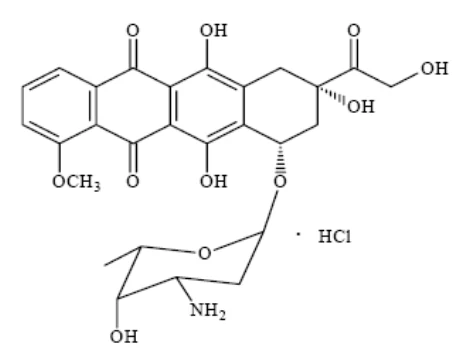
Physicochemical properties: Doxorubicin hydrochloride is a red-orange, almost odourless, hygroscopic powder. Its melting point is 205°C, and it is soluble in water and dilute alcohols. It is practically insoluble in acetone, benzene, chloroform, ethyl ether and petroleum ether. The anthracycline ring is lipophilic but the saturated end of the ring system contains abundant hydroxyl groups adjacent to the amino sugar, producing a hydrophilic center. The molecule is amphoteric, containing acidic functions in the ring phenolic groups and a basic function in the sugar amino group. The pKa is 8.22 for doxorubicin hydrochloride in N/20 sodium hydroxide solution.
14 CLINICAL TRIALS
Clinical studies have shown a wide spectrum of antitumor activity in solid tumor and hematologic malignancies in adults and children when used as a single cytotoxic agent or in polydrug regimens. The most important therapeutic results achieved with doxorubicin hydrochloride in the treatment of various malignancies are briefly summarized below:
Complete remission rates (CR), have been reported with doxorubicin when administered as single cytotoxic agent: 38% in sarcomas, about 40% in endometrial cancer, only poor results (15-20%) in lung cancer depending on cell type, 5-8% in oesophageal cancer, 22-25% in cancer of the stomach, 25% in hepatocellular carcinoma, less than 5% in colo-rectal cancer and 8-10% in cancer of the pancreas. In thyroid carcinomas, doxorubicin alone gives an overall objective response rate of approximately 30%, in squamous cancers of the head and neck an overall response rate of about 20%.
In general, doxorubicin hydrochloride gave higher CR and objective response rates in anthracycline sensitive carcinomas when used in combination with other anti-tumor agents such as cyclophosphamide, corticosteroids (prednisone and dexamethasone), bleomycin, vinblastine, dacarbazine, methotrexate, vincristine, fluorouracil, platinum, etoposide, taxanes, actinomycin d, nitrosoures derivatives, mitomycin C and hydroxyurae.
Doxorubicin hydrochloride-containing regimen have drastically improved the CR rate up to about 75% in Hodgkin’s disease, 60-82% in acute myeloblastic leukemia, and 70-80% in breast cancer.
To minimize cardiac toxicity of doxorubicin hydrochloride, it is reported that equal low-dose (20 mg/m2) weekly therapy is less cardiotoxic than high-dose (60-75 mg/m2) therapy given every 3 weeks. These findings have also been confirmed when doxorubicin hydrochloride is given in combination with other drugs. The total dose of DOXORUBICIN HYDROCHLORIDE INJECTION administered to a patient should take into account: prior therapy with related compounds such as epirubicin and daunorubicin or anthracene derivatives; and/or radiotherapy to the mediastinal area. Most important, it is recommended not to exceed a maximum cumulative dose of 550 mg/m2 of doxorubicin hydrochloride, with close monitoring of cardiac function in patients receiving a cumulative dose greater than 450 mg/m2 (see 7 WARNINGS AND PRECAUTIONS, Monitoring and Laboratory Tests).
15 MICROBIOLOGY
No microbiological information is required for this drug product.
16 NON-CLINICAL TOXICOLOGY
General Toxicology: The acute toxicity of doxorubicin in Swiss mice varies greatly according to the route of administration. The LD50 is 8.5 mg/kg by the intra-peritoneal route, 21.1 mg/kg by the intravenous route, and greater than 750 mg/kg by the oral route.
Chronic toxicity was studied in the rabbit and in the dog. Doxorubicin when administered IV for three months at a daily dose of 0.125 mg/kg of body weight did not cause mortality or any measurable morphologic and functional changes in either species. At a dose of 0.25 mg/kg/day a few lesions were observed in the rabbit and more serious lesions in the dog, where the mortality rate reached 30%. The 0.5 mg/kg/day dose produced death in 40% of the treated rabbits within 2 months, and in 100% of the treated dogs within 10 days. Organs affected were gastrointestinal mucosa, hemopoietic tissues, and testes in both species, kidneys in the rabbit and skin (alopecia and melanosis) in the dog.
Doxorubicin hydrochloride preservative free solution was compared to the regular doxorubicin hydrochloride lyophilized formulation administered I.P. in P388 leukemic mice and IV to Gross leukemic mice. No difference in activity or toxicity was noted between the 2 formulations.
In local tolerance studies conducted in mice, rats, rabbits, and dogs, either by the intravenous or intradermal routes, the lesions induced by the doxorubicin hydrochloride preservative free solution formulation appeared to be similar to those obtained with the doxorubicin hydrochloride lyophilized formulation. In other tests using doxorubicin hydrochloride preservative free solution, there was no evidence of incompatibility with human blood, plasma or serum.
Carcinogenicity: Doxorubicin has been shown to be carcinogenic in the rat. The drug caused the appearance of breast fibroadenomas after a single IV dose of 8.0 mg/kg at an average of 33 weeks in 6 of 25 animals. Another animal developed a breast adenocarcinoma.
Reproductive and Developmental Toxicology: Doxorubicin, when administered intravenously to rats at doses of 0.8 mg/kg/day during the period of organogenesis, resulted in an increased incidence of fetal resorption and fetal skeletal and soft tissue malformations. Rats treated intraperitoneally with doses of 1 mg/kg/day or greater also demonstrated skeletal and soft tissue malformations. The intravenous administration of doxorubicin to rabbits at doses of 0.1 mg/kg/day interfered with implantation and caused fetal resorption and at doses of 0.6 mg/kg/day was abortifacient. In addition, high single doses of 2 or 4 mg/kg in rabbits were shown to block implantation when administered on Day 3 of pregnancy, to be embryotoxic when administered on Day 7 of pregnancy, and to be abortifacient when administered on Days 11, 15 or 20 of pregnancy.
17 SUPPORTING PRODUCT MONOGRAPHS
- 1. Adriamycin® PFS (Solution, 2 mg/mL), submission control 259714, Product Monograph, Pfizer Canada ULC. (MAY 09, 2022)