


Patient Medication Information: uses, side effects, how to take - Empaveli
Serious warnings and precautions box
EMPAVELI increases your chance of getting serious infections caused by certain types of bacteria. This includes serious infections caused by the bacteria Streptococcus pneumoniae, Neisseria meningitidis, and Haemophilus influenzae.
- You must be vaccinated against these bacteria at least 2 weeks before your first dose of EMPAVELI, if you have not already had these vaccines in the past.
- If you start EMPAVELI therapy less than 2 weeks after being vaccinated, your healthcare professional will prescribe antibiotics. You must take antibiotics to reduce the risk of infection until 2 weeks after your vaccination.
You must be monitored for early signs of serious infections (i.e., from Streptococcus pneumoniae, Neisseria meningitidis, and Haemophilus influenzae). Vaccines reduce the risk of serious infections, but do not prevent all serious infections. If you have any of the following symptoms, you should seek medical care immediately:
- fever with or without shivers or the chills;
- fever and a rash;
- headache and a fever;
- headache with nausea or vomiting;
- headache with a stiff neck or stiff back;
- shortness of breath;
- high heart rate;
- extreme pain or discomfort;
- confusion;
- muscle aches with flu-like symptoms;
- clammy skin;
- eyes sensitive to light.
- EMPAVELI is only available through a controlled distribution program. Your healthcare professional will enroll you in this program and counsel you on the risk of serious infections. They will also give you a patient guide and patient card. Talk to your healthcare professional if you have any questions about this program.
What EMPAVELI is used for:
EMPAVELI is used to:
- treat adult patients (18 years of age and older) with paroxysmal nocturnal hemoglobinuria (PNH) when treatment with another type of PNH medicine called C5 inhibitor has not worked well or was not tolerated well. PNH is a type of disease that affects the blood system. It is not known if EMPAVELI is safe and effective in patients under 18 years of age with PNH.
- treat adult and pediatric patients (12 years of age and older) with certain kidney diseases called complement 3 glomerulopathy (C3G) or primary immune-complex membranoproliferative glomerulonephritis (primary IC-MPGN), to reduce levels of protein in the urine (proteinuria). It is not known if EMPAVELI is safe and effective in patients under 12 years of age with C3G or primary IC-MPGN.
How EMPAVELI works:
EMPAVELI is a medicine that contains the active substance pegcetacoplan. Pegcetacoplan has been designed to attach to the C3 complement protein, which is a part of the body’s defense system called the ‘complement system’.
In PNH patients, pegcetacoplan helps prevent your body’s immune system from destroying your red blood cells.
In C3G and primary IC-MPGN patients, pegcetacoplan helps reduce the build-up of C3 complement protein deposits in the kidneys that cause kidney damage.
The ingredients in EMPAVELI are:
Medicinal ingredient(s): pegcetacoplan.
Non-medicinal ingredients: glacial acetic acid, sodium acetate trihydrate, sorbitol, and water for injection.
May also contain sodium hydroxide and/or additional glacial acetic acid for pH adjustment.
EMPAVELI comes in the following dosage form(s):
Solution for subcutaneous infusion: 1080 mg / 20 mL of pegcetacoplan in a vial.
Do not use EMPAVELI if:
- you are allergic to pegcetacoplan or any of the other ingredients in EMPAVELI (see The ingredients in EMPAVELI are: ).
- you have an infection caused by encapsulated bacteria including Streptococcus pneumoniae, Neisseria meningitidis, or Haemophilus influenzae. See Serious warnings and precautions box at the beginning of this Patient Medication Information.
To help avoid side effects and ensure proper use, talk to your healthcare professional before you take EMPAVELI. Talk about any health conditions or problems you may have, including if you:
- have an infection or fever.
- have an intolerance to some sugars or have hereditary fructose intolerance (a rare genetic disorder in which a person cannot break down fructose). EMPAVELI contains sorbitol, a source of fructose.
Other warnings you should know about:
Allergic reactions
- EMPAVELI may cause allergic reactions, such as hives and anaphylaxis (serious allergic reactions).
- Stop your EMPAVELI infusion and seek medical attention right away if you have any symptom of a serious allergic reaction. See the Serious side effects and what to do about them table, below, for signs and symptoms to be aware of.
Female patients
Pregnancy and birth control
- Talk to your healthcare professional if you are pregnant or planning to become pregnant. EMPAVELI may harm your unborn baby.
- Females who are able to become pregnant should have a pregnancy test before starting treatment with EMPAVELI.
- Avoid becoming pregnant during treatment with EMPAVELI. Females who are able to become pregnant should use an effective method of birth control during treatment and for at least 8 weeks after your last dose of EMPAVELI.
- Talk to your healthcare professional right away if you become pregnant during treatment.
Breastfeeding
- Talk to your healthcare professional if you are breastfeeding or plan to breastfeed. It is not known if EMPAVELI passes into your breast milk.
- You should not breastfeed during treatment with EMPAVELI and for 8 weeks after the last dose.
- Monitoring and laboratory tests
- During your treatment with EMPAVELI, your healthcare professional will do regular check-ups. This may include blood tests for lactate dehydrogenase (LDH) levels. Depending on your test results, your healthcare professional may adjust your dose if needed.
Tell your healthcare professional about all the medicines you take, including any drugs, vitamins, minerals, natural supplements or alternative medicines.
The following may interact with EMPAVELI:
There are no known interactions with EMPAVELI at this time.
Know the medicines you take and the vaccines you receive. Keep a list of them to show your healthcare professional when you get a new medicine.
How to take EMPAVELI:
At least 2 weeks before you start treatment with this medicine, your healthcare professional will review your medical records and may give you one or more vaccinations. If you cannot be vaccinated at least 2 weeks before you start treatment with EMPAVELI, your healthcare professional will prescribe antibiotics. You must take antibiotics to reduce the risk of infection until 2 weeks after your vaccination.
- See the detailed Instructions for Use that comes with your EMPAVELI for information about how to prepare and infuse your dose of EMPAVELI.
- Your healthcare professional will show you how to prepare and infuse EMPAVELI before you use it for the first time.
- Use EMPAVELI exactly as your healthcare professional tells you. Your healthcare professional will tell you how much EMPAVELI to infuse and how often to infuse EMPAVELI. Do not infuse more or less than your healthcare professional tells you to.
- EMPAVELI is given by infusion under the skin (subcutaneously) into your stomach (abdomen), back of upper arms, hips, or thighs using an infusion pump.
- Remove a single carton from the refrigerator. Keep the vial in the carton at room temperature and allow it to warm up for about 30 minutes.
- Start the infusion right away after drawing EMPAVELI into the syringe.
- EMPAVELI infusion takes about 30 minutes to complete (if using 2 infusion sites) or about 60 minutes (if using 1 infusion site).
Usual dose:
Your healthcare professional will decide the right dose and frequency of EMPAVELI for you. This may depend on your condition, age, weight, and how you react to EMPAVELI. If you are unsure or forget, talk to your healthcare professional. The usual doses are listed below.
Paroxysmal Nocturnal Hemoglobinuria (PNH):
- Adults (18 years of age and older): 1080 mg of EMPAVELI two times a week by subcutaneous infusion (on Day 1 and 4 of each treatment week). Do NOT change your dose or dosing interval without consulting your healthcare professional.
If you are switching your PNH treatment from a C5 inhibitor PNH medicine (e.g., eculizumab or ravulizumab) to EMPAVELI:
- Adults (18 years of age and older): For the first 4 weeks, 1080 mg of EMPAVELI two times a week by subcutaneous infusion (on Day 1 and 4 of each treatment week), while continuing your current dose of the C5 inhibitor PNH medicine. After 4 weeks, stop taking your C5 inhibitor medicine and continue taking 1080 mg of EMPAVELI two times a week.
Stopping EMPAVELI treatment for PNH:
- Your healthcare professional will tell you how long you need to take this medicine. If you wish to stop using EMPAVELI, you must speak to your healthcare professional first. Stopping EMPAVELI suddenly can have serious effects.
- If your healthcare professional decides to stop your treatment with this medicine, follow their instructions for how to stop.
Stopping treatment with EMPAVELI may cause a breakdown of red blood cells due to PNH. Your healthcare professional will closely monitor you for at least 8 weeks after stopping treatment for any signs of the destruction of red blood cells (hemolysis) due to PNH. Symptoms or problems that can happen due to red blood cell breakdown include:
- decreased hemoglobin level in your blood/red blood cell count;
- blood clots (thrombosis);
- blood in your urine;
pain in the stomach (abdomen).
- tiredness;
- shortness of breath;
- trouble swallowing;
- erectile dysfunction (ED) in males;
If you have any of these signs and symptoms, contact your healthcare professional.
Complement 3 Glomerulopathy (C3G) or Primary Immune-Complex Membranoproliferative Glomerulonephritis (Primary IC-MPGN):
- Adults (18 years of age and older): 1080 mg of EMPAVELI two times a week by subcutaneous infusion (on Day 1 and 4 of each treatment week).
- Pediatrics (12 years of age to <18 years of age): Based on body weight. Your healthcare professional will calculate and tell you your dose of EMPAVELI based on the dosing table below.
| Body weight | First dose (infusion volume) | Second dose (infusion volume) | Maintenance dose (infusion volume) |
|---|---|---|---|
| ≥50 kg | 1080 mg twice weekly (20 mL)* | ||
| 35 to <50 kg | 648 mg (12 mL) | 810 mg (15 mL) | 810 mg twice weekly (15 mL)* |
| 30 to <35 kg | 540 mg (10 mL) | 540 mg (10 mL) | 648 mg twice weekly (12 mL)* |
* You should take the twice weekly dose on Day 1 and Day 4 of each treatment week.
Stopping EMPAVELI treatment for C3G or primary IC-MPGN:
- C3G and primary IC-MPGN are lifelong conditions and so it is expected that you will use this medicine for a long time. If you wish to stop using the medicine, please speak to your healthcare professional first.
Overdose:
If you think you, or a person you are caring for, have taken too much EMPAVELI, contact a healthcare professional, hospital emergency department, regional poison control centre or Health Canada’s toll-free number, 1-844 POISON-X (1-844-764-7669) immediately, even if there are no signs or symptoms.
Missed dose:
If you miss a dose of EMPAVELI, take the missed dose as soon as possible. Take your next dose at your regularly scheduled time.
Possible side effects from using EMPAVELI:
These are not all the possible side effects you may have when taking EMPAVELI. If you experience any side effects not listed here, tell your healthcare professional.
- injection site reactions (such as redness, swelling or hardening of skin, itching);
- diarrhea;
- headache;
- congested nose;
- runny nose;
- sore throat;
- sneezing and coughing;
- fatigue.
Abnormal blood test results have been observed in patients taking EMPAVELI. Your healthcare professional will decide when to perform blood tests and will interpret the results.
Serious side effects and what to do about them
| Frequency/Side Effect/Symptom | Talk to your healthcare professional | Stop taking this drug and get immediate medical help | |
|---|---|---|---|
| Only if severe | In all cases | ||
| Common | |||
| Fever | X | ||
| Hemolysis* (breakdown of red blood cells): low blood counts (anemia), tiredness, difficulty in functioning, pain, dark urine, shortness of breath, and blood clots | X | ||
| Hives | X | ||
| Uncommon | |||
| Hypersensitivity (allergic reaction) including serious reactions (anaphylaxis): itchy skin, rash, swelling of face/tongue/throat, shortness of breath, difficulty breathing, low blood pressure, feeling dizzy/faint, chest pain | X | ||
| Rare | |||
| Hypertension (high blood pressure): You may not experience any symptoms, but possible symptoms associated with high blood pressure are: headache, blurred vision, fatigue, irregular, fast, hard heartbeats | X | ||
| Paralysis of face | X | ||
| Thrombocytopenia (low blood platelets): bruising or bleeding for longer than usual if you hurt yourself, fatigue and weakness | X | ||
| Unknown | |||
| Pneumonia (lung infection): fever, cough, shortness of breath, chest pain, fatigue, rapid breathing | X | ||
| Sepsis (serious blood infection): fever, fast heart rate, confusion, low blood pressure, reduce urine, clammy skin | X | ||
* for PNH patients
If you have a troublesome symptom or side effect that is not listed here or becomes bad enough to interfere with your daily activities, tell your healthcare professional.
Reporting side effects
You can report any suspected side effects associated with the use of health products to Health Canada by:
- Visiting the Web page on Adverse Reaction Reporting (canada.ca/drug-device-reporting) for information on how to report online, by mail or by fax; or
- Calling toll-free at 1-866-234-2345.
NOTE: Contact your healthcare professional if you need information about how to manage your side effects. The Canada Vigilance Program does not provide medical advice.
Storage:
- Store vials of EMPAVELI in the refrigerator (2°C to 8°C) in the original carton to protect from light.
- Do not use EMPAVELI past the expiration date stamped on the carton.
- Keep EMPAVELI out of reach and sight of children.
If you want more information about EMPAVELI:
- Talk to your healthcare professional
- Find the full Product Monograph that is prepared for healthcare professionals and includes the Patient Medication Information by visiting the Health Canada Drug Product Database website (https://www.canada.ca/en/health-canada/services/drugs-health-products/drug-products/drug-product-database.html); the manufacturer’s website https://www.sobi.com/canada/en; or by calling 1-833-697-0049.
Swedish Orphan Biovitrum AB (publ), SE-112 76 Stockholm, Sweden
Date of Authorization:
EMPAVELI is a registered trademark of Swedish Orphan Biovitrum AB (publ).
Copyright 2026 Swedish Orphan Biovitrum (publ). All rights reserved.
INSTRUCTIONS FOR USE
PrEMPAVELI®
Pegcetacoplan injection
Solution for subcutaneous use
PLEASE READ THESE INSTRUCTIONS BEFORE USE
Read this Instructions for Use before you start using EMPAVELI and each time you get a refill. There may be new information. This information guide does not take the place of talking to your healthcare professional about your medical condition or treatment. Your healthcare professional will show you or your caregiver how to infuse EMPAVELI the right way before you use it for the first time. Please also read the Patient Medication Information insert carefully and ask your healthcare professional about any instructions you do not understand.
STORAGE INFORMATION
- Store vials of EMPAVELI in the refrigerator (2°C to 8°C) in the original carton to protect from light.
- Do not use EMPAVELI past the expiration date stamped on the carton.
- Keep EMPAVELI out of the reach and sight of children.
| Step 1 | Prepare for infusion Before you start:
Gather your supplies (See Figure A):
| Figure A: Supplies 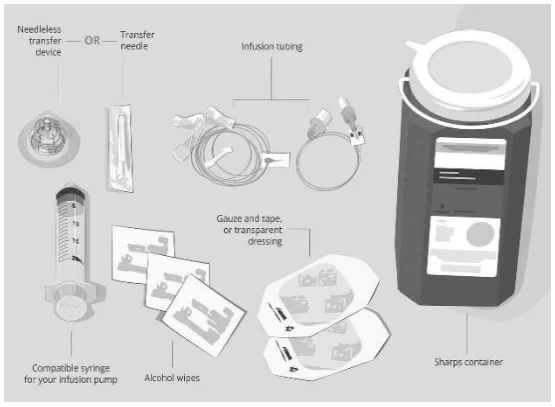 |
|---|---|---|
| Clean your work surface well using an alcohol wipe. | ||
| Wash your hands well with soap and water. Dry your hands. | ||
| Step 2 | Check the vial and liquid Remove the vial from the carton. Carefully look at the liquid in the vial. EMPAVELI is a clear, colourless to slightly yellowish liquid. Check for particles or colour changes (See Figure B). Do NOT use the vial if:
| Figure B 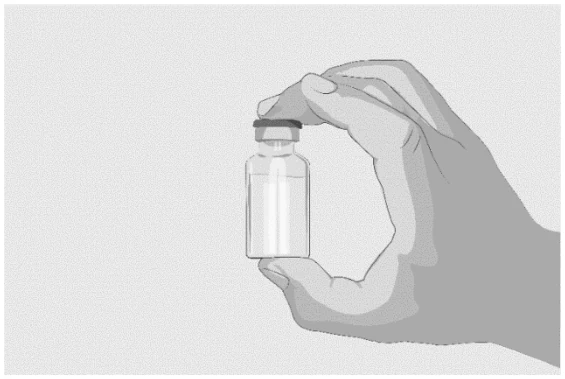 |
| Step 3 | Prepare and fill syringe
Option 1: If using a needleless transfer device (such as a vial adapter), follow the instructions provided by the device manufacturer. OR Option 2: If transfer is done using a transfer needle and a syringe, follow the instructions below:
| Figure C Figure D |
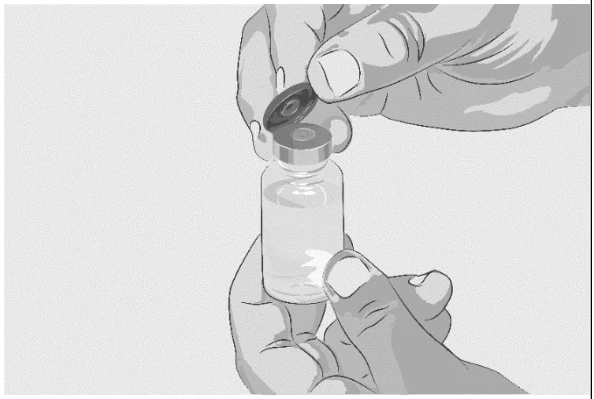 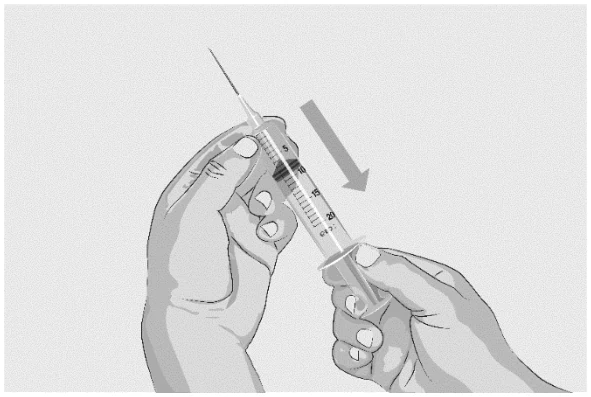
| Figure E 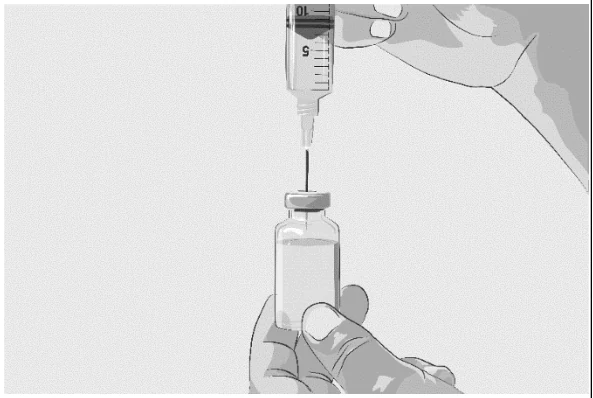 Figure F 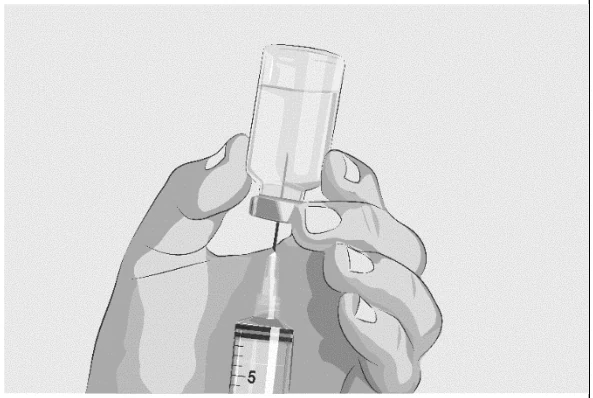 | |
With the transfer needle tip in the solution, slowly pull the plunger to fill the syringe and adjust it to the required volume (See Figure G). Double check that you have withdrawn your prescribed dose. Any excess volume should be disposed. Remove the filled syringe and the transfer needle from the vial.
| Figure G 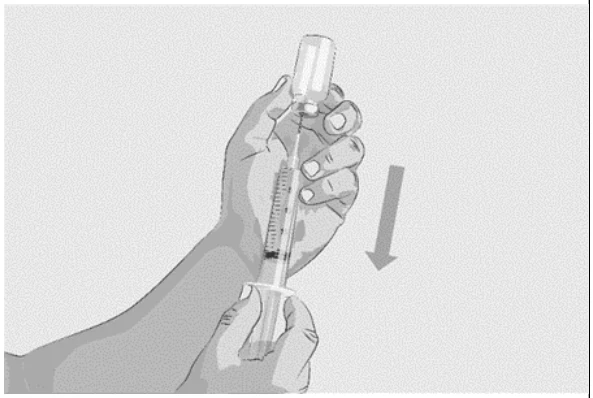 | |
| Step 4 | Prepare infusion pump and tubing
| |
| Step 5 | Prepare the infusion site(s)
Avoid the following infusion areas:
| Figure H 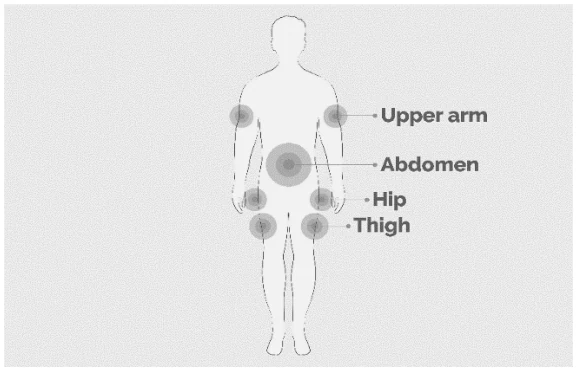 Figure I 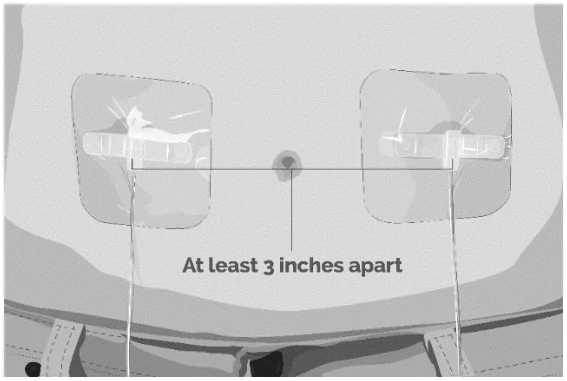 Figure J 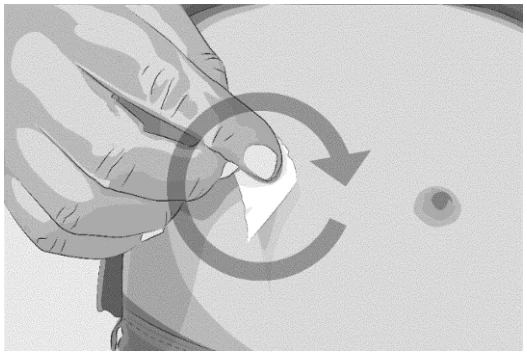 |
| Step 6 | Insert and secure the infusion needle(s)
| Figure K 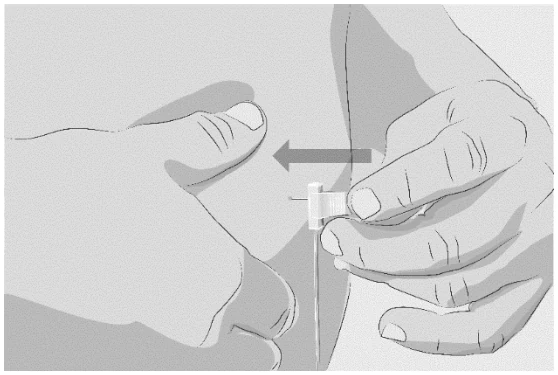 Figure L 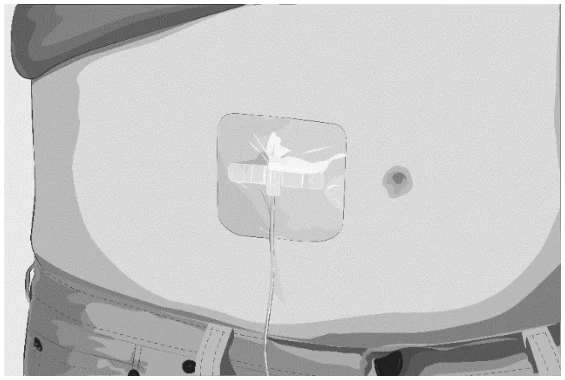 |
| Step 7 | Start infusion
EMPAVELI infusion takes about 30 minutes to complete (if using 2 infusion sites) or about 60 minutes (if using 1 infusion site). | |
| Step 8 | Complete infusion
| |
| Step 9 | Record infusion
| |
Call your healthcare professional to talk about any questions you may have. For questions or concerns visit the manufacturer’s website https://www.sobi.com/canada/en, or call 1-833-697-0049.
Swedish Orphan Biovitrum AB, SE-112 76 Stockholm, Sweden
Date of Authorization: 2026-04-08
EMPAVELI is a registered trademark of Swedish Orphan Biovitrum AB (publ).
Copyright 2026 Swedish Orphan Biovitrum (publ). All rights reserved.
| Step 10 | Clean up
| Figure M 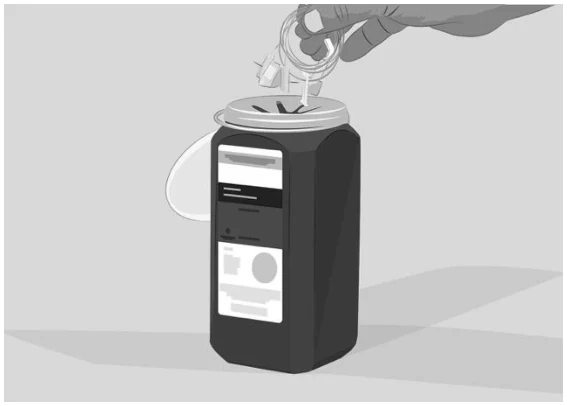 |
|---|