


Product Monograph - Empaveli
Recent Major Label Changes
| 1 Indications | 2026-04 |
|---|---|
| 1 Indications, 1.1 Pediatrics | 2026-04 |
| 1 Indications, 1.2 Geriatrics | 2026-04 |
| 3 Serious Warnings and Precautions Box | 2025-05 |
| 4 Dosage and Administration, 4.1 Dosing Considerations | 2026-04 |
| 4 Dosage and Administration, 4.2 Recommended Dose and Dosage Adjustment | 2026-04 |
| 4 Dosage and Administration, 4.2.1 Discontinuing Treatment | 2026-04 |
| 4 Dosage and Administration, 4.5 Missed Dose | 2026-04 |
| 7 Warnings and Precautions, Serious Infections Caused by Encapsulated Bacteria | 2025-05 |
| 7 Warnings and Precautions, General | 2025-05 |
| 7 Warnings and Precautions, Immune | 2026-04 |
| 7 Warnings and Precautions, 7.1.3 Pediatrics | 2026-04 |
| 7 Warnings and Precautions, 7.1.4 Geriatrics | 2026-04 |
Table of Contents
Certain sections or subsections that are not applicable at the time of the preparation of the most recent authorized product monograph are not listed.
Recent Major Label Changes ................................................................................................... 2
Table of Contents ................................................................................................................... 2
Part 1: Healthcare Professional Information ........................................................................... 5
- 1.
Indications ....................................................................................................................... 5
1.1. Pediatrics .................................................................................................................. 5
1.2. Geriatrics .................................................................................................................. 5
- 2. Contraindications ............................................................................................................ 5
- 3. Serious Warnings and Precautions Box ............................................................................ 6
- 4.
Dosage and Administration ............................................................................................. 6
4.1. Dosing Considerations .............................................................................................. 6
4.2. Recommended Dose and Dosage Adjustment ......................................................... 6
4.2.1. Discontinuing Treatment ................................................................................. 8
4.4. Administration .......................................................................................................... 8
4.5. Missed Dose ............................................................................................................. 8
- 5. Overdose ......................................................................................................................... 8
- 6. Dosage Forms, Strengths, Composition, and Packaging ................................................... 9
- 7.
Warnings and Precautions ............................................................................................... 9
General ................................................................................................................................. 9
Driving and Operating Machinery ....................................................................................... 10
Immune .............................................................................................................................. 10
Monitoring and Laboratory Tests ....................................................................................... 10
Reproductive Health ........................................................................................................... 10
7.1. Special Populations ................................................................................................ 11
7.1.1. Pregnancy ...................................................................................................... 11
7.1.2. Breastfeeding ................................................................................................ 11
7.1.3. Pediatrics ....................................................................................................... 11
7.1.4. Geriatrics ....................................................................................................... 11
- 8.
Adverse Reactions ......................................................................................................... 12
8.1. Adverse Reaction Overview .................................................................................... 12
8.2. Clinical Trial Adverse Reactions .............................................................................. 12
8.2.1. Clinical Trial Adverse Reactions – Pediatrics .................................................. 14
8.3. Less Common Clinical Trial Adverse Reactions ....................................................... 14
8.4. Abnormal Laboratory Findings ............................................................................... 14
8.5. Post-Market Adverse Reactions ............................................................................. 15
- 9.
Drug Interactions ........................................................................................................... 15
9.3. Drug-Behaviour Interactions .................................................................................. 15
9.4. Drug-Drug Interactions ........................................................................................... 15
9.5. Drug-Food Interactions........................................................................................... 16
9.6. Drug-Herb Interactions ........................................................................................... 16
9.7. Drug-Laboratory Test Interactions ......................................................................... 16
- 10.
Clinical Pharmacology ................................................................................................... 16
10.1. Mechanism of Action .............................................................................................. 16
10.2. Pharmacodynamics ................................................................................................ 16
10.3. Pharmacokinetics ................................................................................................... 17
10.4. Immunogenicity ...................................................................................................... 18
- 11. Storage, Stability, and Disposal ...................................................................................... 18
Part 2: Scientific Information ................................................................................................ 19
- 13. Pharmaceutical Information .......................................................................................... 19
- 14.
Clinical Trials .................................................................................................................. 20
14.1. Clinical Trials by Indication ..................................................................................... 20
Treatment of Paroxysmal Nocturnal Hemoglobinuria (PNH) ......................................... 20
Treatment of C3 Glomerulopathy (C3G) or Primary Immune-Complex Membranoproliferative Glomerulonephritis (IC-MPGN) ............................................... 24
- 15. Microbiology ................................................................................................................. 29
- 16. Non-Clinical Toxicology .................................................................................................. 29
Patient Medication Information ........................................................................................... 30
INSTRUCTIONS FOR USE ....................................................................................................... 37
Part 1: Healthcare Professional Information
1. Indications
EMPAVELI (pegcetacoplan) is a complement inhibitor indicated for:
- the treatment of adult patients with paroxysmal nocturnal hemoglobinuria (PNH) who have an inadequate response to, or are intolerant of, a C5 inhibitor.
- the treatment of adult and pediatric patients aged 12 years and older with C3 glomerulopathy (C3G) or primary immune-complex membranoproliferative glomerulonephritis (IC-MPGN) to reduce proteinuria.
EMPAVELI is only available through a controlled distribution program. Information about the EMPAVELI controlled distribution program is available at https://www.empaveli.ca/en/.
1.1. Pediatrics
PNH
Pediatrics (< 18 years of age): No data are available to Health Canada; therefore, Health Canada has not authorized an indication for pediatric PNH use.
C3G and Primary IC-MPGN
Pediatrics (≥ 12 to less than 18 years of age): Based on the data submitted and reviewed by Health Canada, the safety and efficacy of EMPAVELI in pediatric patients with C3G or primary IC-MPGN has been established. Therefore, Health Canada has authorized an indication for patients 12 years of age and older.
1.2. Geriatrics
Geriatrics (> 65 years of age): EMPAVELI may be administered to patients with PNH over 65 years of age. Although there were no apparent age-related differences observed in clinical studies, the number of patients over 65 years of age was not sufficient to determine whether they respond differently from younger patients. There is no evidence indicating any special precautions are required for treating an elderly population. There is limited information on the use of EMPAVELI in patients with C3G or primary IC-MPGN older than 65 years. Two C3G patients were over 65 years of age and initiated EMPAVELI during the open-label period of the study.
2. Contraindications
EMPAVELI is contraindicated in patients:
- who are hypersensitive to this drug or to any ingredient in the formulation, including any non-medicinal ingredient, or component of the container (see 6 Dosage Forms, Strengths, Composition, and Packaging).
- who have unresolved serious infection caused by encapsulated bacteria including Streptococcus pneumoniae, Neisseria meningitidis, and Haemophilus influenzae (see 7 Warnings and Precautions, Serious Infections caused by Encapsulated Bacteria).
3. Serious Warnings and Precautions Box
Due to its mechanism of action, the use of EMPAVELI may predispose individuals to serious infections caused by encapsulated bacteria, such as Streptococcus pneumoniae, Neisseria meningitidis types A, C, W, Y, and B, and Haemophilus influenzae type B (Hib) (see 7 Warnings and Precautions, Serious Infections Caused by Encapsulated Bacteria).
- Comply with the most current National Advisory Committee on Immunization (NACI) recommendations for vaccinations against encapsulated bacteria in patients with complement deficiencies.
- Patients must be vaccinated against encapsulated bacteria at least 2 weeks prior to initiating EMPAVELI, unless the risks of delaying EMPAVELI therapy outweigh the risks of developing a serious infection.
- Patients who initiate treatment with EMPAVELI less than 2 weeks after vaccination must receive treatment with appropriate prophylactic antibiotics until 2 weeks after vaccination.
- Vaccination reduces, but does not eliminate, the risk of serious infections. Monitor patients for early signs of serious infections and treat immediately if infection is suspected.
- EMPAVELI is only available through a controlled distribution program under which prescribers must enrol patients and confirm vaccination against encapsulated bacteria. Prescribers must also counsel patients about the risk of serious infection and provide them with the patient guide and patient card. Information about the EMPAVELI controlled distribution program is available at https://www.empaveli.ca/en/.
4. Dosage and Administration
4.1. Dosing Considerations
Therapy should be initiated under the supervision of a healthcare professional experienced in the management of patients with hematological or renal disorders.
Vaccinate patients against encapsulated bacteria including Streptococcus pneumoniae, Neisseria meningitidis types A, C, W, Y, and B, and Haemophilus influenzae Type B (Hib) according to current NACI guidelines to reduce the risk of serious infection (see 7 Warnings and Precautions, Serious Infections Caused by Encapsulated Bacteria).
Patients who initiate treatment with EMPAVELI less than 2 weeks after vaccination must receive treatment with appropriate prophylactic antibiotics until 2 weeks after vaccination.
4.2. Recommended Dose and Dosage Adjustment
EMPAVELI can be given by a healthcare professional or administered by the patient or caregiver following proper training by a healthcare professional. Infuse EMPAVELI in the abdomen, thighs, hips, or upper arms.
PNH
Adult patients with PNH
EMPAVELI is administered twice weekly as a 1080 mg subcutaneous infusion with a commercially available syringe system infusion pump that can deliver doses up to 20 mL. The twice weekly dose should be administered on Day 1 and Day 4 of each treatment week (see 4.4 Administration).
Dosage for PNH patients switching to EMPAVELI from C5 inhibitors
- For the first 4 weeks, EMPAVELI is administered as twice weekly subcutaneous doses of 1080 mg in addition to the patient’s current dose of C5 inhibitor treatment to minimize the risk of hemolysis with abrupt treatment discontinuation.
- After 4 weeks, the patient can discontinue C5 inhibitor while continuing on monotherapy with EMPAVELI.
Dose adjustment for PNH treatment with EMPAVELI
- The dosing regimen may be changed to 1080 mg every third day (i.e., Day 1, Day 4, Day 7, Day 10, Day 13, and so forth) if a subject has a lactate dehydrogenase (LDH) level greater than 2 × the upper limit of normal (ULN) on twice weekly dosing.
- In the event of a dose increase, monitor LDH twice weekly for at least 4 weeks.
PNH is a chronic disease and treatment with EMPAVELI is recommended to continue for the patient’s lifetime unless the discontinuation is clinically indicated (see 4.2.1 Discontinuing Treatment, and 7 Warnings and Precautions, General, EMPAVELI Treatment Discontinuation).
C3G and Primary IC-MPGN
EMPAVELI is administered twice weekly as a subcutaneous infusion with a commercially available syringe system infusion pump that can deliver doses up to 20 mL. The twice weekly dose should be administered on Day 1 and Day 4 of each treatment week (see 4.4 Administration).
Adult patients with C3G or primary IC-MPGN
EMPAVELI is administered twice weekly as a 1080 mg subcutaneous infusion.
Pediatric patients with C3G or primary IC-MPGN
For pediatric patients (≥ 12 to less than 18 years of age), the dosing regimen is based on the patient´s body weight and consists of the following (Error! Not a valid bookmark self-reference.):
Table 1 Dosing of EMPAVLI in pediatric patients with C3G or primary IC-MPGN
| Body weight | First dose (infusion volume) | Second dose (infusion volume) | Maintenance dose (infusion volume) |
|---|---|---|---|
| ≥50 kg | 1080 mg twice weekly (20 mL) | ||
| 35 to <50 kg | 648 mg (12 mL) | 810 mg (15 mL) | 810 mg twice weekly (15 mL) |
| 30 to <35 kg | 540 mg (10 mL) | 540 mg (10 mL) | 648 mg twice weekly (12 mL) |
C3G and primary IC-MPGN are chronic diseases. Discontinuation of EMPAVELI is not recommended unless clinically indicated.
No dosage adjustment is required in geriatric patients, patients with renal impairment, or in patients with hepatic impairment (see 7.1.4 Geriatrics and 10.3 Pharmacokinetics, Special Populations and Conditions). EMPAVELI has not been studied in patients with end-stage renal disease (ESRD) requiring dialysis.
The safety and efficacy of EMPAVELI in pediatric patients with PNH have not been established; therefore, Health Canada has not authorized an indication for PNH in pediatrics (<18 years of age).
Based on the data submitted and reviewed by Health Canada, the safety and efficacy of EMPAVELI in pediatric patients under 12 years of age with C3G or primary IC-MPGN has not been established. Therefore, Health Canada has not authorized an indication for patients under 12 years of age.
4.2.1. Discontinuing Treatment
Paroxysmal Nocturnal Hemoglobinuria (PNH)
If patients with PNH discontinue treatment with EMPAVELI, they should be closely monitored for signs and symptoms of serious intravascular hemolysis (see 7 Warnings and Precautions, General, EMPAVELI Treatment Discontinuation). If discontinuation of EMPAVELI is necessary, an alternate therapy should be considered because PNH is life-threatening if untreated. Patients should be closely monitored for at least 8 weeks from the last dose of EMPAVELI to detect serious hemolysis and other reactions. In addition, slow weaning should be considered.
4.4. Administration
EMPAVELI should only be administered via subcutaneous administration using a syringe system infusion pump.
When therapy with EMPAVELI is initiated, a qualified healthcare professional will instruct the patient in infusion techniques, the use of a syringe system infusion pump, the keeping of a treatment record, recognition of possible adverse reactions, and measures to be taken in case these occur.
- Prior to use‚ allow EMPAVELI to reach room temperature for approximately 30 minutes. Keep the vial in the carton until ready for use to protect from light.
- EMPAVELI is a clear, colourless to slightly yellowish solution. Do not use if the liquid looks cloudy, contains particles, or is dark yellow.
- Use a needleless transfer device (such as a vial adapter) or a transfer needle to fill the syringe.
- Rotate infusion sites (i.e., abdomen, thighs, hips, upper arms) from one infusion to the next. Infusion sites should be at least 3 inches (7.5 cm) apart from each other. Do not infuse where the skin is tender, bruised, red, or hard. Avoid infusing into tattoos, scars, or stretch marks.
- The typical infusion time is approximately 30 minutes (if using two sites) or approximately 60 minutes (if using one site). The infusion should be started promptly after drawing EMPAVELI into the syringe. Complete the administration within 2 hours after preparing the syringe.
- Discard any unused portion.
4.5. Missed Dose
If a dose of EMPAVELI is missed, it should be administered as soon as possible, then the regular schedule should be resumed even if this results in an interval of less than 3 days between the replacement dose and the subsequent dose.
5. Overdose
No case of overdose of EMPAVELI has been reported during clinical studies.
For the most recent information in the management of a suspected drug overdose, contact your regional poison control centre or Health Canada’s toll-free number, 1-844 POISON-X (1-844-764-7669).
- 6. Dosage Forms, Strengths, Composition, and Packaging
Table 2 Dosage Forms, Strengths, and Composition
* May also contain sodium hydroxide and/or additional glacial acetic acid for pH adjustment.
Description
EMPAVELI is a clear, colourless to slightly yellowish sterile aqueous solution.
EMPAVELI is available in the following formats:
- Carton containing 1 x 20 mL (54 mg/mL) single-dose vial
7. Warnings and Precautions
See 3 Serious Warnings and Precautions Box.
Serious Infections caused by Encapsulated Bacteria
EMPAVELI is only available under a controlled distribution program. Information about the EMPAVELI controlled distribution program is available at https://www.empaveli.ca/en/.
Due to its mechanism of action, the use of EMPAVELI may predispose individuals to serious infections caused by encapsulated bacteria including Streptococcus pneumoniae, Neisseria meningitidis types A, C, W, Y, and B, and Haemophilus influenzae type B (Hib). To reduce the risk of infection, all patients must be vaccinated against these bacteria according to current local guidelines at least 2 weeks prior to receiving EMPAVELI, unless the risk of delaying therapy with EMPAVELI outweighs the risk of developing an infection. Revaccinate patients in accordance with current local guidelines and recommendations considering the duration of therapy with EMPAVELI. Patients who initiate treatment with EMPAVELI less than 2 weeks after vaccination must receive treatment with appropriate prophylactic antibiotics until 2 weeks after vaccination.
Vaccination may not be sufficient to prevent serious infection. Consider official guidance on the appropriate use of antibacterial agents. Monitor all patients for early signs of infections caused by encapsulated bacteria including Neisseria meningitidis, Streptococcus pneumoniae, and Haemophilus influenzae, evaluate immediately if infection is suspected, and treat with appropriate antibiotics if necessary. Inform patients of these signs and symptoms and that they should seek medical care immediately.
General
Hypersensitivity Reactions
Systemic hypersensitivity reactions have been reported, including urticaria and anaphylaxis (see 8.5 Post-Market Adverse Reactions). Patients should be informed of the signs and symptoms of serious hypersensitivity reactions and advised to immediately discontinue infusion with EMPAVELI and seek medical attention if one occurs.
| Route of Administration | Dosage Form/ Strength/Composition | Non-Medicinal Ingredients* |
| Subcutaneous use | Solution / 1080 mg/20 mL single-dose vials | glacial acetic acid, sodium acetate trihydrate, sorbitol, water for injection |
EMPAVELI Treatment Discontinuation
If patients with PNH discontinue treatment with EMPAVELI, they should be closely monitored for signs and symptoms of serious intravascular hemolysis. Intravascular hemolysis is identified by elevated LDH levels along with sudden decrease in PNH clone size or hemoglobin (Hb), or reappearance of symptoms such as fatigue, hemoglobinuria, abdominal pain, shortness of breath (dyspnea), major adverse vascular events (including thrombosis), dysphagia, or erectile dysfunction. If discontinuation of EMPAVELI is necessary, an alternate therapy should be considered because PNH is life-threatening if untreated. Patients should be closely monitored for at least 8 weeks from the last dose of EMPAVELI to detect serious hemolysis and other reactions. In addition, slow weaning should be considered.
Hereditary fructose intolerance
EMPAVELI 1080 mg contains 820 mg sorbitol in each vial.
Patients with hereditary fructose intolerance (HFI) should not take/be given this medicinal product.
Driving and Operating Machinery
EMPAVELI has no influence on the ability to drive and use machines.
Immune
Immunogenicity
As with all therapeutic peptides, there is a potential for immunogenicity. Immunogenicity data are highly dependent on the sensitivity and specificity of the assay. Two different assays for the detection of anti-pegcetacoplan peptide anti-drug antibody (ADA) were used in PNH and C3G or primary IC-MPGN clinical studies, respectively.
The available methodology and data on anti-pegcetacoplan antibody formation in PNH clinical studies were not adequate to fully assess the incidence of anti-drug antibodies or their effect on pharmacokinetics, pharmacodynamics, safety, or effectiveness of pegcetacoplan.
Monitoring and Laboratory Tests
Patients receiving EMPAVELI should be monitored regularly for signs and symptoms of hemolysis, including measuring LDH levels, and may require dose adjustment within the recommended dosing schedule (see 4.2 Recommended Dose and Dosage Adjustment).
Effects on Laboratory Tests
There may be interference between silica reagents in coagulation panels and pegcetacoplan that results in artificially prolonged activated partial thromboplastin time (aPTT); therefore, the use of silica reagents in coagulation panels should be avoided.
Polyethylene Glycol (PEG) Accumulation
EMPAVELI is a PEGylated medicinal product. The potential long-term effects of PEG accumulation in the kidneys, the choroid plexus of the brain, and other organs are unknown (see 16 Non-Clinical Toxicology). Regular laboratory testing of renal function is recommended.
Reproductive Health
It is recommended that women of childbearing potential use effective contraception methods to prevent pregnancy during treatment with pegcetacoplan and for at least 8 weeks after the last dose of pegcetacoplan (see 7.1.1 Pregnancy). For women planning to become pregnant, the use of EMPAVELI may be considered following an assessment of the risks and benefits
- Fertility
Effects of pegcetacoplan upon fertility have not been studied in animals. There were no microscopic abnormalities in male or female reproductive organs in toxicity studies in rabbits and monkeys.
7.1. Special Populations
7.1.1. Pregnancy
There are no data on EMPAVELI use in pregnant women to inform a drug-associated risk of major birth defects, miscarriage, or adverse maternal or fetal outcomes. The use of EMPAVELI may be considered following an assessment of the risks and benefits.
Animal reproduction studies with pegcetacoplan were conducted in rats, rabbits, and cynomolgus monkeys. Pegcetacoplan treatment of pregnant cynomolgus monkeys at a subcutaneous dose of 28 mg/kg/day (2.9 times the human steady state AUC) from the gestation period through parturition resulted in a statistically significant increase in abortions or stillbirths compared to controls. No maternal toxicity or teratogenic effects were observed in offspring delivered at term. Additionally, no developmental effects were observed in infants up to 6 months postpartum. Systemic exposure to pegcetacoplan was detected in fetuses from monkeys treated with 28 mg/kg/day from the period of organogenesis through the second trimester (less than 1% of maternal serum levels) (see 16 Non-Clinical Toxicology).
7.1.2. Breastfeeding
It is not known whether pegcetacoplan is secreted in human milk or whether there is potential for absorption and harm to the infant. Pegcetacoplan excretion in milk has been demonstrated in monkeys (less than 1% of maternal serum levels) (see 16 Non-Clinical Toxicology).
It is recommended to discontinue breastfeeding during pegcetacoplan treatment. Breastfeeding should be discontinued during treatment and for 8 weeks after the last dose.
7.1.3. Pediatrics
PNH
Pediatrics (< 18 years of age): No data are available to Health Canada; therefore, Health Canada has not authorized an indication for pediatric PNH use.
C3G and Primary IC-MPGN
Pediatrics (< 12 years of age): Based on the data submitted and reviewed by Health Canada, the safety and efficacy of EMPAVELI in pediatric patients under 12 years of age with C3G or primary IC-MPGN has not been established. Therefore, Health Canada has not authorized an indication for patients under 12 years of age.
7.1.4. Geriatrics
Geriatrics (> 65 years of age): EMPAVELI may be administered to patients with PNH over 65 years of age. Although there were no apparent age-related differences observed in clinical studies, the number of patients over 65 years of age was not sufficient to determine whether they respond differently from younger patients. There is no evidence indicating any special precautions are required for treating an elderly population. There is limited information on the use of EMPAVELI in patients with C3G or primary IC-MPGN older than 65 years. Two C3G patients were over 65 years of age and initiated EMPAVELI during the open-label period of the study.
8. Adverse Reactions
8.1. Adverse Reaction Overview
PNH
The safety of EMPAVELI in patients with PNH was evaluated in the open-label, randomized, active-controlled, Phase 3 study: PEGASUS (Study APL2-302).
A total of 8 serious adverse events (irrespective of causality) were reported in 7 (17.1%) patients treated with EMPAVELI. These included hemolysis in 2 patients (4.9%) and gastroenteritis, bacterial infection, dyspnea, atrial fibrillation, pyrexia and facial paralysis in 1 patient each (2.4%).
The most frequent adverse events (≥10%) reported in patients treated with EMPAVELI were diarrhea (22.0%), injection site erythema (17.1%) and hemolysis (12.2%). A total of 3 (7.3%) patients discontinued EMPAVELI due to hemolysis.
In patients treated with EMPAVELI, the most commonly reported adverse reactions (≥5%) (as assessed by investigators) were injection site erythema (14.6%), injection site reaction (9.8%), injection site swelling (9.8%) and injection site induration (7.3%). These reactions were mild to moderate in intensity and did not lead to discontinuation of treatment.
C3G and Primary IC-MPGN
The safety of EMPAVELI in patients with C3G or primary IC-MPGN was evaluated in the double-blind, randomized, placebo-controlled, Phase 3 study: VALIANT (Study APL2-C3G-310).
The most-commonly reported adverse drug reactions in patients with C3G or primary IC-MPGN treated with EMPAVELI in the clinical trial were infusion site reactions and upper respiratory tract infections. Pneumonia was reported as a serious adverse reaction in clinical trials.
8.2. Clinical Trial Adverse Reactions
Clinical trials are conducted under very specific conditions. Therefore, the frequencies of adverse reactions observed in the clinical trials may not reflect frequencies observed in clinical practice and should not be compared to frequencies reported in clinical trials of another drug.
PNH
The safety of EMPAVELI (pegcetacoplan) solution for subcutaneous infusion was evaluated in patients with PNH in the PEGASUS (APL2-302) study. This was a Phase 3, open-label, randomized, active controlled, multicentre study in patients ≥18 years of age with PNH and Hb levels <10.5 g/dL (<105 g/L) despite treatment with a stable dose of eculizumab for at least 3 months prior to the study screening visit. The data described below reflect the exposure of patients with PNH who received EMPAVELI at the recommended dosing regimen of 1080 mg twice weekly for up to 48 weeks, including a 16-week randomized controlled period (RCP) and a 32-week open-label period (OLP). Table 3 describes the adverse reactions as assessed by investigators and reported in ≥3% of patients during the RCP in the PEGASUS study.
Table 3 Adverse Reactions as Assessed by Investigators Reported in ≥3% in PNH Patients Treated with EMPAVELI in the PEGASUS Study (APL2-302) – Safety Analysis Set
| RCP | |||||||
|---|---|---|---|---|---|---|---|
EMPAVELI b (N=41) n (%) | Eculizumab c (N=39) n (%) | ||||||
System Organ Class Preferred Terma | |||||||
| Blood and lymphatic system disorders | |||||||
| Hemolysis | 2 (4.9) | 3 (7.7) | |||||
| General disorders and administration site conditions | |||||||
| Injection site erythema | 6 (14.6) | 0 | |||||
| Injection site reaction | 4 (9.8) | 0 | |||||
| Injection site swelling | 4 (9.8) | 0 | |||||
| Injection site induration | 3 (7.3) | 0 | |||||
aMedDRA Version 23.0
bIncludes ADRs that started during EMPAVELI monotherapy during the RCP.
cIncludes ADRs that started during eculizumab monotherapy in the RCP.
RCP, Randomized Controlled Period
Additional adverse reactions reported in ≥3% of patients treated with EMPAVELI during the entire 48-week study (N=80) compared to Table 3 were injection site pruritus (6.3%), headache (5.0%) and pyrexia (3.8%).
C3G and Primary IC-MPGN
Table 4 Adverse Reactions in Patients with C3G or Primary IC-MPGN - VALIANT Study (APL2-C3G-310)
| RCP | |||||||
|---|---|---|---|---|---|---|---|
EMPAVELI (N=63) n (%) | Placebo (N=61) n (%) | ||||||
System Organ Class Preferred Terma | |||||||
| Infections and infestations | |||||||
| Nasopharyngitis | 11 (17.5) | 7 (11.5) | |||||
| Influenza | 7 (11.1) | 3 (4.9) | |||||
| General disorders and administration site conditions | |||||||
| Infusion site reactionb | 16 (25.4) | 14 (23.0) | |||||
| Pyrexia | 12 (19.0) | 6 (9.8) | |||||
a MedDRA Version 26.0
bIncludes high level term (HLT) Infusion site reactions and HLT Injection site reactions.
RCP, Randomized Controlled Period
In transplanted patients with C3G or primary IC-MPGN (N=5) included in the randomized controlled period of Study APL2-C3G-310, the safety profile appeared consistent with the overall results.
8.2.1. Clinical Trial Adverse Reactions – Pediatrics
C3G and primary IC-MPGN
In pediatric patients with C3G or primary IC-MPGN (N=28, aged 12 years to less than 18 years) included in Study APL2-C3G-310, the safety profile appeared consistent with the overall population. The most common adverse reactions reported in this patient population were infusion site reactions and upper respiratory tract infections. More adverse events such as metabolism/nutrition (14.3% vs 3.7%), gastrointestinal (42.9% vs 22.2%), and ear (10.7% vs 3.7%) disorders were reported in pediatric patients treated with EMPAVELI than placebo.
The safety of EMPAVELI has not been studied in pediatric patients less than 12 years of age.
8.3. Less Common Clinical Trial Adverse Reactions
Less common clinical trial adverse reactions in Study APL2-302 (patients with PNH)
The less common adverse reactions (as assessed by the investigators) reported between 2% and <3% of patients treated with EMPAVELI in the RCP in the PEGASUS study are shown below.
Gastrointestinal disorders: diarrhea (2.4%)
General disorders and administration site conditions: injection site pruritus and injection site pain (2.4% each)
Hepatobiliary disorders: hyperbilirubinemia (2.4%)
Infections and infestations: nasopharyngitis (2.4%)
Investigations: bilirubin conjugated increased and weight increased (2.4% each)
Metabolism and nutrition disorders: hypercalcemia (2.4%)
Musculoskeletal and connective tissue disorders: neck pain (2.4%)
Nervous system disorders: facial paralysis and heart discomfort (2.4% each)
Psychiatric disorders: restlessness (2.4%)
Skin and subcutaneous tissue disorders: erythema and pigmentation disorder (2.4% each)
Vascular disorders: hypertension (2.4%)
Additional adverse reactions reported between 2 and <3% of patients treated with EMPAVELI during the entire 48-week study (N=80) compared to the RCP were:
Blood and lymphatic system disorders: thrombocytopenia (2.5%)
Infections and infestations: urinary tract infection (2.5%)
Investigations: alanine aminotransferase increased (2.5%)
8.4. Abnormal Laboratory Findings
Abnormal laboratory findings in Study APL2-302 (patients with PNH)
Table 5 summarizes the CTCAE grades 3 and 4 laboratory abnormalities for PNH patients who had normal values at Baseline in the PEGASUS study.
Table 5 CTCAE Grades 3 and 4 Laboratory Abnormalities in the PEGASUS Study (APL2-302) – Safety Analysis Set
| Laboratory Parameter | EMPAVELI (N=41) n (%) | Eculizumab (N=39) n (%) |
|---|---|---|
| Neutropenia | 2 (4.9%) | 1 (2.9%) |
| Thrombocytopenia | 2 (4.9%) | 2 (5.1%) |
| Elevated ALT | 1 (2.4%) | 2 (5.1%) |
| Elevated AST | 0 | 1 (2.6%) |
| Elevated total bilirubin | 1 (3.0%) | 5 (16.7%) |
| Elevated direct bilirubin | 0 | 8 (25.8%) |
| Elevated BUN | 0 | 0 |
| Elevated creatinine | 0 | 0 |
Note: Worst on-study (during the randomized phase) values in patients with normal baseline. CTC Grades:
Neutrophil count decreased (Grade 3: <1.0 - 0.5 x 10⁹/L, Grade 4: <0.5 x 10⁹/L)
Platelet count decreased (Grade 3: <50.0 - 25.0 x 10⁹/L, Grade 4: <25.0 x 10⁹/L)
Alanine aminotransferase and Aspartate aminotransferase increased (Grade 3: >5.0 - 20.0 x ULN, Grade 4: >20.0 x ULN)
Blood bilirubin increased (Grade 3: >3.0 - 10.0 x ULN, >10.0 x ULN)
Blood Urea Nitrogen (BUN) (Grade 3: >31 mg/dL)
Creatinine increased (Grade 3: >3.0 - 6.0 x ULN, >6.0 x ULN)
Abnormal laboratory findings in Study APL2-C3G-310 (patients with C3G or primary IC-MPGN)
No clinically relevant laboratory abnormalities were identified in Study APL2-C3G-310.
8.5. Post-Market Adverse Reactions
The following additional adverse reactions have been identified during post approval use of EMPAVELI.
Immune system disorders: anaphylactic reaction, anaphylactic shock
Infections and infestations: pneumonia, sepsis
Skin and subcutaneous tissue disorders: urticaria
9. Drug Interactions
9.3. Drug-Behaviour Interactions
The interaction of EMPAVELI with individual behavioural risks (e.g. cigarette smoking, cannabis use, and/or alcohol consumption) has not been studied.
9.4. Drug-Drug Interactions
No interaction studies have been performed. Based on in vitro data, pegcetacoplan has low potential for clinical drug-drug interactions.
9.5. Drug-Food Interactions
Interactions with food have not been established.
9.6. Drug-Herb Interactions
Interactions with herbal products have not been established.
9.7. Drug-Laboratory Test Interactions
There may be interference between silica reagents in coagulation panels and pegcetacoplan that results in artificially prolonged activated partial thromboplastin time (aPTT); therefore, the use of silica reagents in coagulation panels should be avoided.
10. Clinical Pharmacology
10.1. Mechanism of Action
Pegcetacoplan binds to complement protein C3 and its activation fragment C3b, thereby regulating the cleavage of C3 and the generation of downstream effectors of complement activation.
PNH
In PNH, extravascular hemolysis (EVH) is facilitated by C3b opsonization while intravascular hemolysis (IVH) is mediated by the downstream membrane attack complex (MAC). Pegcetacoplan acts proximally in the complement cascade controlling both C3b-mediated EVH and terminal complement-mediated IVH.
C3G and primary IC-MPGN
In C3G and primary IC-MPGN, there is excessive deposition of C3 breakdown products in the glomeruli of the kidney leading to renal parenchymal damage and impairment of kidney function. Pegcetacoplan targets upstream effectors of complement activation (C3 and C3b), thereby inhibiting activation initiated by all (alternative, classical and lectin) complement pathways, reducing and preventing the excessive deposition of C3 breakdown products in the glomeruli of the kidney.
10.2. Pharmacodynamics
PNH
In Study APL2-302, the mean serum C3 concentration increased from 0.94 g/L at baseline to 3.83 g/L at Week 16 in the pegcetacoplan group and was sustained through Week 48. The percentage of PNH Type II + III RBCs increased from 66.8% at baseline to 93.9% at Week 16 and remained elevated through Week 48. The mean percentage of PNH Type II + III RBCs with C3 deposition was decreased from 17.7% at baseline to 0.20% at Week 16 which was sustained through Week 48.
C3G and primary IC-MPGN
In Study APL2-C3G-310, the mean serum C3 concentration increased from 0.62 g/L at baseline to 3.71 g/L at Week 26 in the pegcetacoplan group and the effect was sustained up to Week 52. In the placebo group, C3 concentrations remained stable up to Week 26 (0.57 g/L at baseline; 0.58 g/L at Week 26) and increased upon switch to pegcetacoplan to 3.59 g/L at Week 52.
Mean plasma sC5b-9 concentration decreased from 902.5 ng/mL at baseline to 290.2 ng/mL at Week 26 in the pegcetacoplan group and the effect was sustained up to Week 52. In the placebo group, sC5b-9 concentrations remained stable (768.3 ng/mL at baseline; 759.9 ng/mL at Week 26) and decreased upon switch to pegcetacoplan to 272.9 ng/mL at Week 52.
Of patients with evaluable kidney biopsies (n=69), 74.3% (26/35) of patients on pegcetacoplan had a decrease in C3 complement staining by at least 2 orders of magnitude from baseline to Week 26 compared to 11.8% (4/34) on placebo and 71.4% (25/35) of patients on pegcetacoplan had a C3 staining score of zero from baseline to Week 26 compared to 8.8% (3/34) on placebo.
In Study APL2-C3G-204, in patients (n=13) with post-transplant recurrent disease, median serum C3 concentration increased from 0.75 g/L at baseline to 2.76 g/L at Week 52, and median plasma sC5b-9 concentration decreased from 229.0 ng/mL at baseline to 114.0 ng/mL at Week 52.
Cardiac Electrophysiology
No specific studies have been conducted to determine the potential for pegcetacoplan to delay cardiac repolarization. Pegcetacoplan showed no inhibition in the human ether-a-go-go gene (hERG) ion channel assay in vitro. Analysis of concentration-QTc (QT interval corrected for heart rate) confirmed no large mean increases in QTc interval (i.e., greater than 20 msec) at the recommended dose of EMPAVELI.
10.3. Pharmacokinetics
Steady-state serum concentrations following twice weekly dosing at 1080 mg in patients with PNH were achieved approximately 4 to 6 weeks following the first dose. In Study APL2-302, the mean (%CV) steady-state serum concentrations of pegcetacoplan ranged between 590 (38.9%) to 706 (15.1%) µg/mL in patients treated for 48 weeks. Exposure of pegcetacoplan increased in a dose proportional manner from 45 to 1440 mg.
Steady-state serum concentrations following twice weekly dosing at 1080 mg in C3G or primary IC-MPGN patients were achieved approximately 4 to 8 weeks following the first dose and therapeutic concentrations of pegcetacoplan were maintained through Week 52. In patients of study APL2-C3G-310, the steady-state mean (%CV) serum concentrations ranged between 715.8 (31.2%) and 765.7 (23.2%) µg/mL up to Week 26 and remained between 670.1 (30.1%) and 726.6 (30.5%) µg/mL up to Week 52.
Absorption
Pegcetacoplan is administered by subcutaneous infusion and is gradually absorbed into the systemic circulation with a median Tmax between 108 and 144 hours (4.5 to 6.0 days).
Distribution
The mean (%CV) of central volume of distribution of pegcetacoplan is approximately 3.9 L (35%) in patients with PNH.
The geometric mean (%CV) of central volume of distribution of pegcetacoplan is approximately 4.31 L (32.1%) in adult patients with C3G or primary IC-MPGN.
Metabolism
Based on its PEGylated peptide structure, the degradation of pegcetacoplan is expected to occur via catabolic pathways into small peptides, amino acids and PEG.
Elimination
Results of a study of radiolabeled pegcetacoplan in cynomolgus monkeys suggest the primary route of elimination of the labelled peptide moiety is via urinary excretion. Although the elimination of PEG was not studied, it is known to undergo renal excretion.
Following multiple subcutaneous dosing of pegcetacoplan, the estimated mean (CV%) of clearance (CL) is 0.015 L/hour (28%) and median effective half life of elimination (t1/2) is 8.0 days in patients with PNH.
The estimated geometric mean (CV%) of CL is 0.012 L/hour (43%) in adult patients with C3G or primary IC-MPGN. The median terminal t1/2 is 10.1 days in adult patients with C3G or primary IC-MPGN.
Special populations and conditions
No impact on the pharmacokinetics of pegcetacoplan was identified with age (12 to 81 years), race (Asian versus non-Asian) and sex based on the results of population pharmacokinetic analysis in patients with PNH, C3G or primary IC-MPGN.
- Pediatrics: Based on population pharmacokinetic analysis, body weight has an impact on clearance and volume of distribution. The dosing regimen for pediatrics with C3G or primary IC-MPGN is based on the patient´s body weight (see 4.2 Recommended Dose and Dosage Adjustment). The model-predicted exposure for pediatrics with C3G or primary IC-MPGN is adequately matched to the adult reference exposure.
- Hepatic Insufficiency: No specific studies have been conducted to determine the effect of hepatic impairment on the pharmacokinetics of pegcetacoplan. As biotransformation is mainly via catabolism, hepatic impairment is not expected to influence the clearance of pegcetacoplan.
- Renal Insufficiency: In a study that enrolled 8 participants with severe renal impairment, defined as creatinine clearance (CrCl) less than 30 mL/min using the Cockcroft-Gault formula (with 4 participants with CrCL less than 20 mL/min), renal impairment had no effect on the pharmacokinetics of pegcetacoplan. Based on population pharmacokinetic analysis, eGFR had no clinically meaningful impact on pegcetacoplan exposure in a pooled analysis population. There are no available clinical data for the use of pegcetacoplan in patients with ESRD requiring dialysis.
10.4. Immunogenicity
C3G and primary IC-MPGN
Anti-drug antibody (ADA) incidence (treatment-emergent ADA or boosted ADA from pre-existing level) in Study APL2-C3G-310 was 23.6% for anti-PEG and 16.3% for anti-pegcetacoplan peptide. Based on population PK/PD analysis, ADAs had no clinically meaningful impact on efficacy. Five patients also tested positive for neutralizing antibody (NAb). NAb response had no apparent impact on PK or efficacy based on limited data. Twenty-nine out of 123 patients developed anti-PEG antibodies; 14 were treatment-emergent and 15 were treatment-boosted. In patients with post-transplant recurrent disease in Study APL2-C3G-204, no patient developed a positive ADA response (treatment-emergent ADA or boosted ADA from pre-existing level) to pegcetacoplan peptide or PEG. During the 26-week placebo-controlled period in Study APL2-C3G-310, there was no detectable impact of ADAs on the safety of pegcetacoplan treatment.
- 11. Storage, Stability, and Disposal
Store in the refrigerator (2°C to 8°C). Keep EMPAVELI in its original package to protect from light.
Discard any partially used vial(s) and disposable supplies in accordance with local requirements.
Part 2: Scientific Information
13. Pharmaceutical Information
Drug Substance
Non-proprietary name of the drug substance(s): pegcetacoplan
Chemical name: N6,15,N6,15’-[poly(oxyethylene), oxy-α-carbonyl, ω-carbonyl]-bis[N-acetyl-L-isoleucyl-L-cysteinyl-L-valyl-1-methyl-L-tryptophyl-L-glutaminyl-Laspartyl-L-tryptophylglycyl-L-alanyl-L-histidyl-Larginyl-L-cysteinyl-L-threonyl-2-[2-(2-aminoethoxy)ethoxy]acetyl-L-lysinamide, cyclic(2-12)-disulfide]
Molecular formula and molecular mass: C1970H3848N50O947S4
43.5 kDa
Structural formula:
Physicochemical properties: Pegcetacoplan is a white to off-white solid. Pegcetacoplan exists as the free-base, free of specific counterions. Pegcetacoplan is very soluble in both water and buffer (10 mM acetate buffer, pH 5.0 containing 4.1% sorbitol), and freely soluble in both ethanol and 5% dextrose solution.
At 25°C, pegcetacoplan displays negligible adsorption of water at moderate relative humidity (RH) levels (i.e., less than 3% water adsorption at RH ≤ 65%) and low to moderate water adsorption at high relative humidity levels (i.e., ca 6% water adsorption at 85% RH).
Aqueous solutions of pegcetacoplan (5 mg/mL in unbuffered water) were found to have pH values between 7.0 and 7.5.
Pegcetacoplan is indicated as very hydrophilic with a calculated logP value of -8.0.
14. Clinical Trials
14.1. Clinical Trials by Indication
Treatment of Paroxysmal Nocturnal Hemoglobinuria (PNH)
The efficacy and safety of EMPAVELI in patients with PNH was assessed in one open-label, randomized, controlled Phase 3 study: PEGASUS (Study APL2-302). All patients who completed the study were eligible to enroll in a separate long-term extension study.
In PEGASUS, patients were vaccinated against Streptococcus pneumoniae, Neisseria meningitidis types A, C, W, Y, and B, and Haemophilus influenzae type B (Hib), either within 2 years prior to Day 1 or within 2 weeks after starting treatment with EMPAVELI. Patients vaccinated after Day 1 received prophylactic treatment with appropriate antibiotics until 2 weeks after vaccination. In addition, prophylactic antibiotic therapy was administered at the discretion of the investigator in accordance with local treatment guidelines for patients with PNH receiving treatment with a complement inhibitor.
The dose of EMPAVELI was 1080 mg twice weekly. If required, the dose of EMPAVELI could be adjusted to 1080 mg every 3 days. EMPAVELI was administered as a subcutaneous infusion; the infusion time was approximately 20 to 40 minutes.
PEGASUS (Study APL2-302) was a Phase 3, randomized, open-label study with an active comparator-controlled period of 16-weeks followed by a 32-week open label period (OLP) (NCT03500549). The study enrolled patients with PNH who had been treated with a stable dose of eculizumab for at least the previous 3 months and with Hb levels <10.5 g/dL (<105 g/L).
Eligible patients entered a 4-week run in period during which they received EMPAVELI 1080 mg subcutaneously twice weekly in addition to their current dose of eculizumab. Patients were then randomized in a 1:1 ratio to receive either 1080 mg of EMPAVELI twice weekly or their current dose of eculizumab through the duration of the 16-week randomized controlled period (RCP). If required, the dose of EMPAVELI could be adjusted to 1080 mg every 3 days.
Randomization was stratified based on the number of packed red blood cell (PRBC) transfusions within the 12 months prior to Day -28 (<4; ≥4) and platelet count at screening (<100,000/mm3; ≥100,000/mm3). Following completion of the RCP, all patients entered a 32-week open-label period (OLP) and received EMPAVELI for up to 32 weeks (patients who received eculizumab during the RCP entered a 4-week run in period before switching to EMPAVELI monotherapy). All patients who completed the 48-week period were eligible to enroll in a separate long term extension study.
A total of 80 patients were randomized to receive treatment, 41 to EMPAVELI and 39 to eculizumab. Demographics and baseline disease characteristics were comparable between treatment groups (see Table 6 and Table 7). A total of 38 patients in the group treated with EMPAVELI and 39 patients in the eculizumab group completed the 16-week RCP and continued into the 32-week OLP. Per protocol 15 subjects had their dose adjusted to 1080 mg every three days. Twelve patients were evaluated for benefit and 8 of the 12 patients demonstrated benefit from the dose adjustment.
Table 6 Summary of Trial Design and Patient Demographics in PNH, PEGASUS Study (APL2-302)
| Study Number | Study Design | Dosage, route of administration and duration | Study subjects (n) | Mean age (Range) | Sex n (%) |
|---|---|---|---|---|---|
| APL2-302 | Phase 3, multicenter, open-label, randomized, active controlled study in patients previously treated with complement inhibitor therapy | 1080 mg/mL, subcutaneous infusion, twice weekly | EMPAVELI n=41 Eculizumab n=39 Total n=80 | EMPAVELI 50.2 years (19 – 81) Eculizumab 47.3 years (23 - 78) | EMPAVELI Female 27 (65.9) Male 14 (34.1) Eculizumab Female 22 (56.4) Male 17 (43.6) |
Table 7 Patient Baseline Demographics and Characteristics in PNH, PEGASUS (APL2-302)
| Parameter | Statistics | EMPAVELI (N=41) | Eculizumab (N=39) |
|---|---|---|---|
| Parameter | Statistics | EMPAVELI (N=41) | Eculizumab (N=39) |
Age (years) 18-64 years ≥65 years | Mean (SD) n (%) n (%) | 50.2 (16.3) 31 (75.6) 10 (24.4) | 47.3 (15.8) 32 (82.1) 7 (17.9) |
Sex Female Male | n (%) n (%) | 27 (65.9) 14 (34.1) | 22 (56.4) 17 (43.6) |
Race Asian Black or African American White Other Not reported | n (%) n (%) n (%) n (%) n (%) | 5 (12.2) 2 (4.9) 24 (58.5) 0 10 (24.4) | 7 (17.9) 0 25 (64.1) 1 (2.6) 6 (15.4) |
Ethnicity Hispanic or Latino Not Hispanic or Latino Not reported | n (%) n (%) n (%) | 2 (4.9) 29 (70.7) 10 (24.4) | 1 (2.6) 32 (82.1) 6 (15.4) |
Dose level of eculizumab at baseline Every 2 weeks IV 900 mg Every 11 days IV 900 mg Every 2 weeks IV 1200 mg Every 2 weeks IV 1500 mg | n (%) n (%) n (%) n (%) | 26 (63.4) 1 (2.4) 12 (29.3) 2 (4.9) | 29 (74.4) 1 (2.6) 9 (23.1) 0 |
| Time since diagnosis of PNH (years) to Day -28 | Mean (SD) | 8.7 (7.4) | 11.4 (9.7) |
Hb level (g/dL) Hb level (g/L) | Mean (SD) Mean (SD) | 8.7 (1.1) 86.9 (10.7) | 8.7 (0.9) 86.8 (8.9) |
| Absolute Reticulocyte count (109/L) | Mean (SD) | 218 (75.0) | 216 (69.1) |
| LDH level (U/L) | Mean (SD) | 257.5 (97.7) | 308.6 (284.8) |
| Total FACIT-Fatigue scorea | Mean (SD) | 32.2 (11.4) | 31.6 (12.5) |
| Number of transfusions in last 12 months prior to Day -28 | Mean (SD) | 6.1 (7.3) | 6.9 (7.7) |
| <4 | n (%) | 20 (48.8) | 16 (41.0) |
| ≥4 | n (%) | 21 (51.2) | 23 (59.0) |
| Platelet count at screening (109/L) | Mean (SD) | 167 (98.3) | 147 (68.8) |
| <100,000/mm3 | n (%) | 12 (29.3) | 9 (23.1) |
| ≥100,000/mm3 | n (%) | 29 (70.7) | 30 (76.9) |
| PNH RBC clone sizes (Type III) | Mean total (%) | 47 | 50 |
| History of aplastic anemia | n (%) | 11 (26.8) | 9 (23.1) |
| History of myelodysplastic syndrome | n (%) | 1 (2.4) | 2 (5.1) |
| History of at least one type of Thrombosis | n (%) | 15 (36.6) | 10 (25.6) |
aFACIT-Fatigue is measured on a scale of 0-52, with higher values indicating less fatigue.
The primary and secondary efficacy endpoints were assessed at Week 16. The primary efficacy endpoint was change from baseline to Week 16 (during RCP) in Hb level. Baseline was defined as the average of measurements recorded prior to taking the first dose of EMPAVELI. Key secondary efficacy endpoints were transfusion avoidance, defined as the proportion of patients who did not require a transfusion during the RCP, and change from baseline to Week 16 in absolute reticulocyte count (ARC), LDH level, and functional assessment of chronic illness therapy fatigue (FACIT-Fatigue) scale score.
EMPAVELI was superior to eculizumab for the primary endpoint of the Hb change from baseline (p<0.0001). The adjusted mean change from baseline in Hb level was 2.4 g/dL (24 g/L) in the group treated with EMPAVELI versus -1.5 g/dL (-15 g/L) in the eculizumab group, demonstrating an adjusted mean increase of 3.8 g/dL (38 g/L) with EMPAVELI compared to eculizumab at Week 16 (95% CI, 2.33-5.34) (Figure 1). Treatment differences between the EMPAVELI and eculizumab groups were evident as early as Week 2 and persisted throughout the 16-week RCP.
Figure 1 Adjusted Mean (± SE) Change from Baseline to Week 16 in Hemoglobin (g/dL), PEGASUS (APL2-302)
Non inferiority was demonstrated in key secondary endpoints of transfusion avoidance and ARC (see Figure 2). Transfusion avoidance was achieved in 85% of patients in the group treated with EMPAVELI, as compared to 15% in the eculizumab group. In the group treated with EMPAVELI, the adjusted mean change from baseline in ARC was -136 × 109/L versus 28 × 109/L in the eculizumab group, demonstrating an adjusted mean decrease of -164 × 109/L compared to eculizumab.
Figure 2 Key Secondary Endpoints Analysis, PEGASUS (APL2-302)
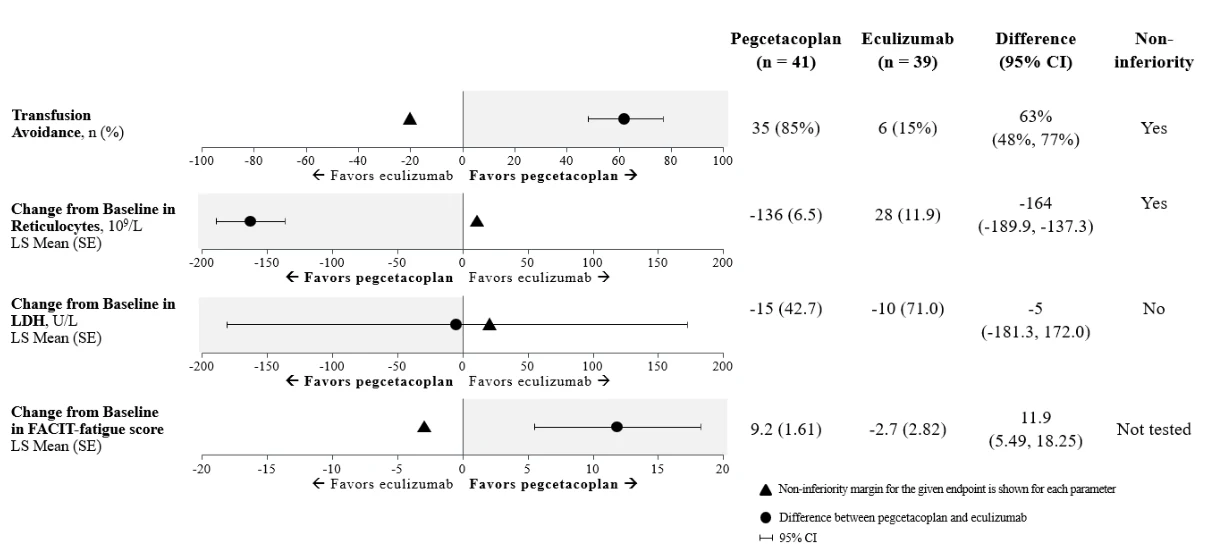
FACIT-Fatigue score not tested as LDH did not achieve non-inferiority.
Results were consistent across all supportive analyses of the primary and key secondary endpoints, including all observed data with post-transfusion data included.
In patients treated with EMPAVELI, primary and key secondary efficacy analyses showed no notable differences based on gender, race, or age, however; these results need to be interpreted with caution given small sample sizes.
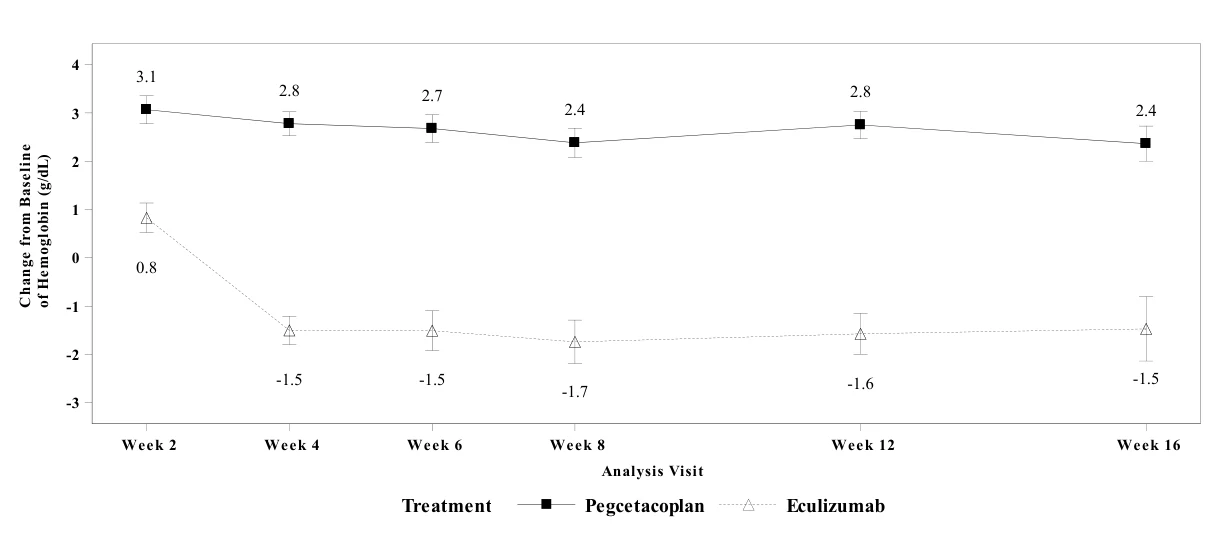
LDH normalization was achieved in 71% of patients in the group treated with EMPAVELI and in 15% of the eculizumab group. Normalization of ARC was achieved in 78% of patients in the group treated with EMPAVELI and in 3% of the eculizumab group.
A total of 77 patients entered the 32-week OLP, during which all patients received EMPAVELI, resulting in a total exposure of up to 48 weeks. The results at Week 48 were generally consistent with those at Week 16 and support sustained efficacy.
Treatment of C3 Glomerulopathy (C3G) or Primary Immune-Complex Membranoproliferative Glomerulonephritis (IC-MPGN)
The efficacy and safety of EMPAVELI in adult and pediatric patients aged 12 years and older and weighing at least 30 kg with native kidney or post transplant recurrent C3G or primary IC-MPGN was assessed in the Phase 3 study VALIANT (APL2-C3G-310). There was one patient with recurrent IC-MPGN post-kidney transplantation treated with EMPAVELI in the study.
Study APL2-C3G-310 was a randomized, double-blinded study with a placebo-controlled period of 26-weeks (randomized controlled period, RCP), followed by a 26-week open-label period (OLP). Patients were vaccinated against Streptococcus pneumoniae, Neisseria meningitidis types A, C, W, Y, and B, and Haemophilus influenzae type B (Hib) prior to starting treatment with EMPAVELI. Patients were on a stable and optimised dose regimen for C3G/primary IC-MPGN treatment (e.g., renin-angiotensin system inhibitors, sodium-glucose cotransporter-2 [SGLT-2] inhibitors, immunosuppressants, systemic corticosteroids no higher than 20 mg/day of prednisone equivalent) for at least 12 weeks prior to randomisation and throughout the RCP. Patients with evidence of improving renal disease within 8 weeks of screening, or with evidence of renal transplant rejection were excluded.
Eligible patients were randomized in a 1:1 ratio to receive EMPAVELI or placebo subcutaneously twice weekly during the 26-week RCP. Two stratification factors were applied to the randomization; patients with post-transplant recurrence versus native kidney disease patients, and patients with baseline renal biopsies (either collected during screening or within 28 weeks prior to randomization) versus patients without baseline renal biopsies. Patients who completed the RCP, entered the 26-week OLP, in which all participants were treated with EMPAVELI twice weekly.
A total of 124 patients were randomized, 63 to EMPAVELI and 61 to placebo. Demographics and baseline disease characteristics were generally balanced between the two groups (see Table 8 and Table 9). A total of 118 patients completed the 26-week RCP, of which 114 patients completed the OLP treatment period with EMPAVELI (N=59 EMPAVELI-to-EMPAVELI; N=55 placebo-to-EMPAVELI).
Table 8 Summary of Trial Design and Patient Demographics in C3G or primary IC-MPGN, VALIANT Study (APL2-C3G-310)
| Study Number | Study Design | Dosage, route of administration and duration | Study subjects (n) | Mean age (Range) | Sex n (%) |
|---|---|---|---|---|---|
| APL2-C3G-310 | Phase 3 prospective, randomized, placebo-controlled, double-blind multicenter study in adults and pediatric patients (aged 12-17 years) with a diagnosis of C3G or primary IC-MPGN (with or without previous renal transplant) | Adults and pediatric patients ≥50kg: 1080 mg EMPAVELI SC twice weekly (20mL) Pediatric patients (aged 12 – 17 years) 35 to <50kg: first dose 648 mg SC (12 mL) then 810 mg SC (15 mL) twice weekly Pediatric patients (aged 12 -17 years) 30 to <35kg: 540 mg SC (10mL) first and second dose, then 648 mg SC (12 mL) twice weekly | EMPAVELI n=63 Placebo n=61 Total n=124 | EMPAVELI 28.2 years (12 – 62) Placebo 23.6 years (12 - 74) | EMPAVELI Female 37 (58.7) Male 26 (41.3) Placebo Female 33 (54.1) Male 28 (45.9) |
Table 9 Patient Baseline Demographics and Disease Characteristics in C3G or primary IC-MPGN, VALIANT Study (APL2-C3G-310)
| Parameter | Statistics | EMPAVELI (N=63) | Placebo (N=61) |
|---|---|---|---|
| Parameter | Statistics | EMPAVELI (N=63) | Placebo (N=61) |
| Age (years) | |||
| Pediatric patients (12 – 17 years) | n (%) | 28 (44.4) | 27 (44.3) |
| Adults ≥ 18 years | n (%) | 35 (55.6) | 34 (55.7) |
| Type of disease at Screening | |||
| C3G | n (%) | 51 (81.0) | 45 (73.8) |
| C3GN | n (%) | 45 (71.4) | 41 (67.2) |
| DDD | n (%) | 4 (6.3) | 4 (6.6) |
| Undetermined | n (%) | 2 (3.2) | 0 |
| IC-MPGN | n (%) | 12 (19.0) | 16 (26.2) |
| Time since diagnosis of C3G / IC-MPGN (years) | Mean (SD) | 3.64 (3.47) | 3.76 (3.62) |
| Prior kidney transplant | n (%) | 5 (7.9) | 4 (6.6) |
| Time since last kidney transplant (years) | Mean (SD) | 11.4 (6.7) | 5.8 (6.4) |
| Time since most recent post-transplant recurrence (years) | Mean (SD) | 1.47 (1.49) | 1.38 (1.64) |
| Baseline triplicate FMU uPCR (mg/g) | Mean (SD) | 3116 (2397) | 2541 (2015) |
| Baseline eGFR (mL/min/1.73 m2) | Mean (SD) | 78.5 (34.1) | 87.2 (37.2) |
| C3c staining in baseline biopsy | |||
| 3+ | n (%) | 51 (81.0) | 51 (83.6) |
| 2+ | n (%) | 12 (19.0) | 10 (16.4) |
| Baseline serum albumin (g/dL) | Mean (SD) | 3.31 (0.61) | 3.39 (0.70) |
| Baseline serum C3 (mg/dL) | Mean (SD) | 60.6 (45.7) | 56.3 (35.6) |
| Disease manifestations | |||
| Edema | n (%) | 45 (71.4) | 32 (52.5) |
| Fatigue | n (%) | 16 (25.4) | 8 (13.1) |
| Hematuria | n (%) | 37 (58.7) | 39 (63.9) |
| High Blood Pressure | n (%) | 35 (55.6) | 29 (47.5) |
| Nephrotic Syndrome | n (%) | 32 (50.8) | 27 (44.3) |
| Use of other treatments at baselinea | |||
| Agents acting on the renin-angiotensin system | n (%) | 60 (95.2) | 54 (88.5) |
| Immunosuppressants | n (%) | 49 (77.8) | 45 (73.8) |
| Glucocorticoids | n (%) | 29 (46.0) | 27 (44.3) |
aWithin 12 weeks prior to study entry.
C3G = C3 glomerulopathy; C3GN = C3 glomerulonephritis; DDD = dense-deposit disease; IC-MPGN = immune-complex membranoproliferative glomerulonephritis; FMU = first-morning urine; uPCR = urine protein-to-creatinine ratio; eGFR = estimated glomerular filtration rate; SD = standard deviation.
The primary and key secondary efficacy endpoints were assessed at Week 26. The primary efficacy endpoint was the log-transformed ratio of first-morning urine (FMU) protein-to-creatinine ratio (uPCR) at Week 26 compared with baseline.
Treatment with EMPAVELI resulted in a 67.2% reduction in uPCR from baseline (95% CI: 57.2% to 74.9%). With a 2.9% increase in uPCR from baseline on placebo (95% CI: -8.6% to 15.9%), treatment with EMPAVELI demonstrated a statistically significant 68.1% reduction in uPCR compared to placebo at Week 26 (95% CI: 57.3% to 76.2%, p<0.0001). The reduction in proteinuria was apparent as early as Week 4 and was maintained up to Week 52 (Error! Reference source not found.). Similar reductions were observed in subgroups by age, disease type, transplant status and concomitant use of immunosuppressants/glucocorticoids (Figure 4).
Figure 3 Geometric Mean Ratio (95% CI) of FMU uPCR Compared to Baseline Over Time by Treatment Group from MMRM Module in Study APL2-C3G-310
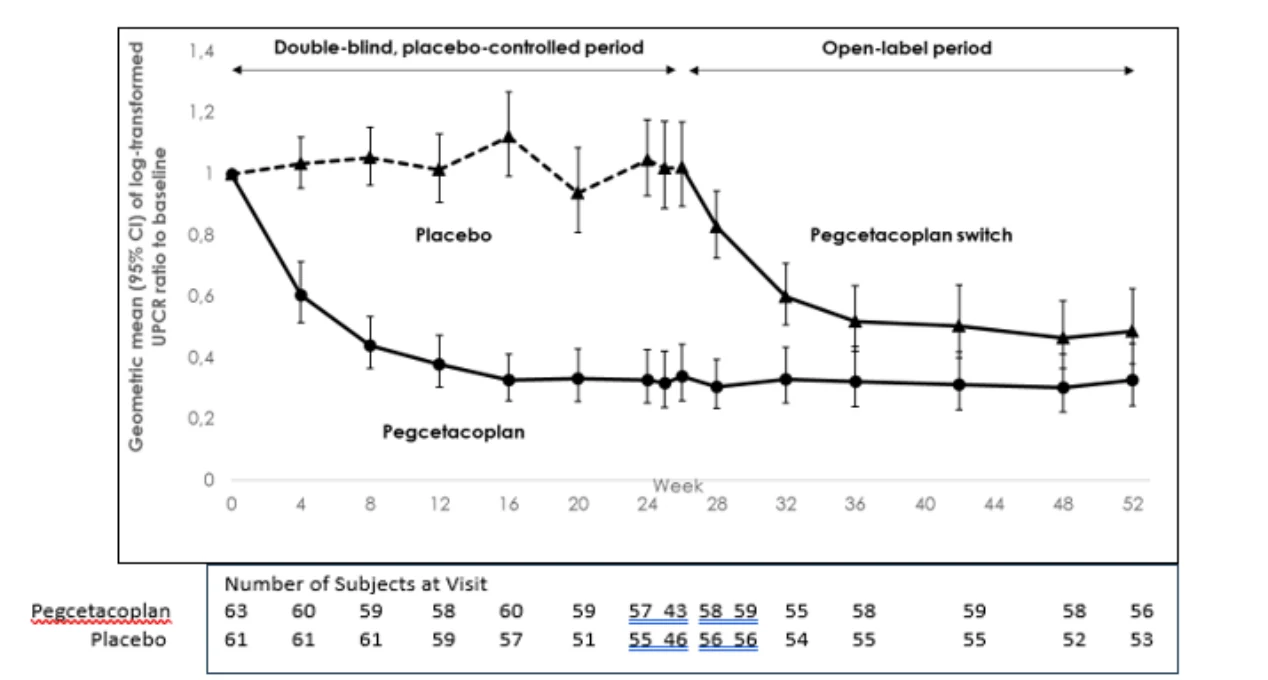
CI = Confidence interval, LS = Least square, FMU = First-morning urine; uPCR = Urine protein-to-creatinine ratio, MMRM = Mixed model of repeated measure.
Note: Geometric mean ratio calculated from re-exponentiated LS Means. All estimates are model based (MMRM) and thus all patients contribute to estimates for all time points with model-based imputations where data is missing.
Figure 4 Adjusted Geometric Mean Ratio (95% CI) of the Reduction from Baseline in FMU uPCR at Week 26 for EMPAVELI Compared to Placebo During the Randomized Controlled Period in Study APL2-C3G-310
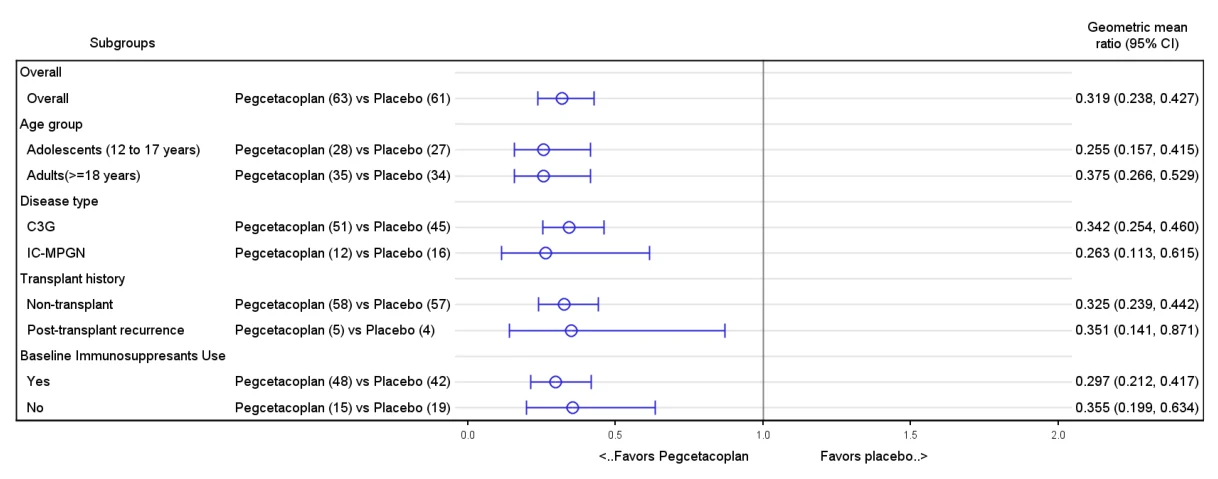
CI = Confidence interval, FMU = First-morning urine, uPCR = Urine protein-to-creatinine ratio.
C3G = C3 glomerulopathy, IC MPGN = Immune-complex membranoproliferative glomerulonephritis
Treatment with EMPAVELI also demonstrated statistically significant improvement in the key secondary endpoints related to proteinuria reduction at Week 26 (Table 10). In addition, numerical reduction in C3c staining intensity on renal biopsy and stabilization of estimated glomerular filtration rate (eGFR) were observed. These effects on the key secondary endpoints were consistent in subgroups by age, disease type and transplant status.
Overall, the results in the pediatric patient subgroup (aged 12 to 17 years) were consistent with those of the overall APL2-C3G-310 population at Week 26 for key secondary endpoints. Treatment with EMPAVELI resulted in 56.6% (95% CI: 32.2% to 81.1%) of pediatric patients (aged 12 to 17 years) achieving the composite endpoint: stable or improved eGFR (≤15% reduction) and ≥50% reduction in uPCR compared with baseline by Week 26 and 63.2% (95% CI: 41.2% to 85.1) achieving at least a 50% reduction in uPCR from baseline in pediatric patients (aged 12 to 17 years) receiving EMPAVELI compared to placebo.
Table 10 Analysis of Key Secondary Endpoints at Week 26 in Study APL2-C3G-310
| Key Secondary Endpoints | Overall population | ||
|---|---|---|---|
EMPAVELI (N=63) | Placebo (N=61) | Difference EMPAVELI - placebo (95% CI) p-valueb | |
| Comparison of the proportion of patients meeting the composite renal endpoint definitiona by Week 26 | 49.2% | 3.3% | 45.6% (21.2% – 70.0%) p < 0.0001 |
| Comparison of the proportion of patients with a reduction of at least 50% from baseline in uPCR by Week 26 | 60.3% | 4.9% | 52.8% (29.3% – 76.3%) p < 0.0001 |
| Comparison of the proportion of patients with evaluable renal biopsies showing decreases by at least two orders of magnitude in C3c staining intensity on renal biopsy from baseline to Week 26 | 26 (74.3%) | 4 (11.8%) | 64.3% (41.4% - 87.2%) |
| Change from baseline to Week 26 in eGFR | -1.497 (2.242) | -7.808 (1.919) | 6.312 (0.501, 12.122) |
aDefined as a stable or improved eGFR compared with the baseline visit (≤15% reduction in eGFR), and a ≥50% reduction in uPCR compared with the baseline visit.
bAll p-values correspond to a statistical test performed in odds ratio terms, differences shown for intelligibility reasons. Subgroup analyses were prospectively planned but not controlled for multiplicity, hence p-values are nominal.
C3G = C3 glomerulopathy; eGFR = estimated glomerular filtration rate; IC MPGN = immune-complex membranoproliferative glomerulonephritis; uPCR = urine protein-to-creatinine ratio
The effect of EMPAVELI on uPCR was sustained up to 52 weeks (67.2% reduction in the EMPAVELI-to-EMPAVELI group compared to baseline). Patients who switched from placebo to EMPAVELI in the 26-week OLP experienced a 51.3% reduction in uPCR (Figure 3). When compared to baseline, 50.8% of the patients in EMPAVELI-to-EMPAVELI group, and 41.0% in the placebo-to-EMPAVELI group, had a ≥50% reduction in uPCR at Week 52. The stabilization of eGFR seen at Week 26 was maintained throughout the duration of the study for the EMPAVELI-to-EMPAVELI group and was also demonstrated in patients switching from placebo to EMPAVELI with mean change from baseline (CFB) at Week 52 of -3.651 mL/min/1.73 m2 and -4.720 mL/min/1.73 m2, respectively.
15. Microbiology
No microbiological information is required for this drug product.
16. Non-Clinical Toxicology
General toxicology: Repeat-dose studies were conducted in rabbits (4 weeks and 6 months) and cynomolgus monkeys (4 weeks and 9 months) with daily subcutaneous doses of pegcetacoplan up to 7 times the human dose (1080 mg twice weekly). Histologic findings were observed in both species at exposures (Cmax and AUC) lower than those for the human dose and included dose-dependent epithelial vacuolation and infiltrates of vacuolated macrophages in multiple tissues. These findings are attributable to uptake of the PEG moieties of pegcetacoplan. Reversibility was not demonstrated in the pegcetacoplan animal studies after one month and was not evaluated for a longer duration.
Renal tubular degeneration was observed microscopically in both species at exposures (Cmax and AUC) less than (rabbit) or comparable (monkey) to those for the human dose after daily administration of pegcetacoplan for 4-weeks and 9 months, to a similar extent. These findings were still observed in the 4-week study in monkeys following a 4-week recovery period. The NOAEL for renal degeneration in monkeys was 7 mg/kg/day (1.4-fold margin for Cmax and AUC over clinical exposure). The clinical significance and functional consequence of these findings are unknown.
Genotoxicity: Pegcetacoplan was not mutagenic when tested in in vitro bacterial reverse mutation (Ames) assays and was not genotoxic using an in vitro assay in human TK6 cells or in an in vivo micronucleus assay in mice.
Carcinogenicity: Long term animal carcinogenicity studies of pegcetacoplan have not been conducted.
Reproductive and developmental toxicology: Pegcetacoplan treatment of pregnant cynomolgus monkeys at a subcutaneous dose of 28 mg/kg/day (2.9 times the human steady state AUC) from gestation day 20 through parturition resulted in a statistically significant increase in abortions or stillbirths compared to controls. No maternal toxicity or teratogenic effects were observed in offspring delivered at term. Additionally, no developmental effects were observed in infants up to 6 months postpartum. Pegcetacoplan was detected in fetuses from monkeys treated with 28 mg/kg/day from the period of organogenesis through the second trimester (exposure was less than 1% of maternal serum levels).