


Product Monograph - Bekemv
RECENT MAJOR LABEL CHANGES
| N/A |
|---|
TABLE OF CONTENTS
Sections or subsections that are not applicable at the time of authorization are not listed.
RECENT MAJOR LABEL CHANGES ......................................................................................... 2
TABLE OF CONTENTS ............................................................................................................... 2
PART I: HEALTH PROFESSIONAL INFORMATION ................................................................. 4
1 INDICATIONS .................................................................................................................. 4
1.1 Pediatrics ................................................................................................................ 4
1.2 Geriatrics ................................................................................................................. 4
2 CONTRAINDICATIONS ................................................................................................... 4
3 SERIOUS WARNINGS AND PRECAUTIONS BOX ........................................................ 5
4 DOSAGE AND ADMINISTRATION ................................................................................. 6
4.1 Dosing Considerations ............................................................................................ 6
4.2 Recommended Dose and Dosage Adjustment ....................................................... 6
4.3 Reconstitution ......................................................................................................... 8
4.4 Administration ......................................................................................................... 8
4.5 Missed Dose ........................................................................................................... 9
5 OVERDOSAGE ................................................................................................................ 9
6 DOSAGE FORMS, STRENGTHS, COMPOSITION AND PACKAGING ......................... 9
7 WARNINGS AND PRECAUTIONS ................................................................................ 10
7.1 Special Populations .............................................................................................. 12
7.1.1 Pregnant Women ............................................................................................ 12
7.1.2 Breast-feeding ................................................................................................. 13
7.1.3 Pediatrics ........................................................................................................ 13
7.1.4 Geriatrics ......................................................................................................... 14
8 ADVERSE REACTIONS ................................................................................................ 14
8.1 Adverse Reaction Overview .................................................................................. 14
8.2 Clinical Trial Adverse Reactions ........................................................................... 14
8.2.1 Clinical Trial Adverse Reactions – Pediatrics .................................................. 18
8.3 Less Common Clinical Trial Adverse Reactions ................................................... 20
8.4 Abnormal Laboratory Findings: Hematologic, Clinical Chemistry and Other Quantitative Data 20
8.5 Post-Market Adverse Reactions ........................................................................... 20
9 DRUG INTERACTIONS ................................................................................................. 21
9.1 Serious Drug Interactions ..................................................................................... 21
9.2 Drug Interactions Overview ................................................................................... 21
9.3 Drug-Behavioural Interactions .............................................................................. 21
9.4 Drug-Drug Interactions .......................................................................................... 21
9.5 Drug-Food Interactions ......................................................................................... 21
9.6 Drug-Herb Interactions .......................................................................................... 21
9.7 Drug-Laboratory Test Interactions ........................................................................ 21
10 CLINICAL PHARMACOLOGY ....................................................................................... 21
10.1 Mechanism of Action ....................................................................................... 21
10.2 Pharmacodynamics ......................................................................................... 21
10.3 Pharmacokinetics ............................................................................................ 22
11 STORAGE, STABILITY AND DISPOSAL ..................................................................... 22
12 SPECIAL HANDLING INSTRUCTIONS ........................................................................ 22
PART II: SCIENTIFIC INFORMATION ...................................................................................... 23
13 PHARMACEUTICAL INFORMATION ........................................................................... 23
14 CLINICAL TRIALS ......................................................................................................... 24
14.1 Clinical Trials - Reference Biologic Drug ......................................................... 24
15 MICROBIOLOGY ........................................................................................................... 35
16 NON-CLINICAL TOXICOLOGY ..................................................................................... 35
17 SUPPORTING PRODUCT MONOGRAPHS .................................................................. 37
PATIENT MEDICATION INFORMATION .................................................................................. 38
BEKEMV™ (eculizumab for injection) is a biosimilar biologic drug (biosimilar) to SOLIRIS®. A biosimilar is a biologic drug that was granted authorization based on a demonstration of similarity to a version previously authorized in Canada, known as the reference biologic drug.
PART I: HEALTH PROFESSIONAL INFORMATION
1 INDICATIONS
Atypical Hemolytic Uremic Syndrome (atypical HUS)
BEKEMV (eculizumab for injection) is indicated for the treatment of patients with atypical hemolytic uremic syndrome (atypical HUS) to reduce complement-mediated thrombotic microangiopathy.
BEKEMV is not indicated for the treatment of patients with Shiga toxin-producing E. coli related hemolytic uremic syndrome (STEC-HUS).
BEKEMV should be administered by a qualified healthcare professional.
1.1 Pediatrics
Pediatrics (< 18 years of age):
Based on the data submitted and reviewed by Health Canada, the safety and efficacy of eculizumab in 28 pediatric patients with atypical HUS has been established; therefore, Health Canada has authorized an indication for pediatric use [see 14.1 Clinical Trials - Reference Biologic Drug, Atypical Hemolytic Uremic Syndrome (atypical HUS)].
Administer vaccinations for the prevention of infection due to Neisseria meningitidis, Streptococcus pneumoniae and Haemophilus influenzae type b (Hib) according to the National Advisory Committee on Immunization (NACI) guidelines.
1.2 Geriatrics
Geriatrics (≥ 65 years of age): BEKEMV may be administered to patients aged 65 years and over. Four patients 65 years of age or older, with atypical HUS, were treated with eculizumab in clinical studies. Although there were no apparent age-related differences observed in these studies, the number of patients aged 65 and over is not sufficient to determine whether they respond similarly to younger patients.
2 CONTRAINDICATIONS
Bekemv is contraindicated in patients who are hypersensitive to this drug, murine proteins, or to any ingredient in the formulation, including any non-medicinal ingredient, or component of the container. For a complete listing, see 6 DOSAGE FORMS, STRENGTHS, COMPOSITION AND PACKAGING.
Do not initiate Bekemv therapy in patients:
- with unresolved Neisseria meningitidis infection
- who are not currently vaccinated against Neisseria meningitidis (unless they receive prophylactic treatment with appropriate antibiotics until 2 weeks after vaccination)
Please refer to section 3 SERIOUS WARNINGS AND PRECAUTIONS BOX, Serious Meningococcal Infections.
Bekemv is contraindicated in patients with hereditary fructose intolerance (HFI). Prior to initiating treatment, HFI should be excluded on age-appropriate clinical grounds (see 7 WARNINGS AND PRECAUTIONS, Endocrine and Metabolism).
Bekemv is contraindicated in babies and children below 2 years of age since they may not yet be diagnosed with HFI (see 7 WARNINGS AND PRECAUTIONS, Endocrine and Metabolism).
3 SERIOUS WARNINGS AND PRECAUTIONS BOX
Serious Warnings and Precautions
Cases of serious or fatal meningococcal infections have been reported in patients treated with eculizumab. Meningococcal infections may become rapidly life-threatening or fatal if not recognized and treated early.
- Comply with the most current National Advisory Committee on Immunization (NACI) recommendations for meningococcal vaccination in patients with complement deficiencies.
- All patients must be vaccinated with meningococcal vaccines prior to, or at the time of, initiating Bekemv, unless the risks of delaying eculizumab therapy outweigh the risks of developing a meningococcal infection; revaccinate according to current medical guidelines for vaccine use.
- All patients must be monitored for early signs of meningococcal infections, evaluated immediately if infection is suspected, and treated with antibiotics, if necessary.
Vaccination may not prevent all meningococcal infections.
Serious Meningococcal Infections:
Due to its mechanism of action, the use of eculizumab increases the patient's susceptibility to meningococcal infection (Neisseria meningitidis). Meningococcal disease due to any serogroup may occur. To reduce the risk of infection, all patients must be vaccinated against meningococcal infections prior to, or at the time of, initiating Bekemv. Patients who initiate Bekemv treatment less than 2 weeks after receiving a meningococcal vaccine must receive treatment with appropriate prophylactic antibiotics until 2 weeks after vaccination. Vaccines against serogroups A, C, Y, W 135 and B where available, are recommended in preventing the commonly pathogenic meningococcal serogroups. Patients must be vaccinated or revaccinated according to current national vaccination guidelines for vaccination use. Vaccination may not be sufficient to prevent meningococcal infection. Consideration should be given to official guidance on the appropriate use of antibacterial agents.
Vaccination, particularly with a vaccine against serogroup B meningococcal infection, may further activate complement. As a result, patients with complement-mediated diseases, including atypical HUS, may experience increased signs and symptoms of their underlying disease, such as TMA complications. Therefore, patients should be closely monitored for disease symptoms after recommended vaccination. For patients stabilized on Bekemv and receiving maintenance therapy, and for whom additional vaccination is warranted, careful consideration should be given to the timing of vaccination (or booster in patients previously vaccinated against meningococcal infections) relative to administration of Bekemv. It is recommended to vaccinate only when the underlying complement mediated disease is clinically controlled with Bekemv, and when systemic eculizumab concentrations are considered to be relatively high (ie, within one week following a Bekemv infusion).
Cases of serious or fatal meningococcal infections have been reported in eculizumab treated patients. All patients should be monitored for early signs of meningococcal infection, evaluated immediately if infection is suspected, and treated with antibiotics, if necessary. Patients should be informed of these signs and symptoms and steps to take to seek medical care immediately (see 8 ADVERSE REACTIONS). Discontinue Bekemv in patients who are undergoing treatment for serious meningococcal infections.
Other Systemic Infections:
Due to its mechanism of action, Bekemv therapy should be administered with caution to patients with active systemic infections. Eculizumab blocks terminal complement activation; therefore, patients may have increased susceptibility to infections, especially with Neisseria and encapsulated bacteria. Serious infections with Neisseria species (other than Neisseria meningitidis), including disseminated gonococcal infections, have been reported. Counsel patients about gonorrhea prevention and advise regular testing for patients at risk. Additionally, Aspergillus infections have occurred in immunocompromised and neutropenic patients. Patients should be provided with information from the Patient Information Brochure to increase their awareness of potential serious infections and their signs and symptoms.
Children treated with eculizumab may be at increased risk of developing serious infections due to Streptococcus pneumoniae and Haemophilus influenzae type b (Hib). Administer vaccinations for the prevention of Streptococcus pneumoniae and Haemophilus influenzae type b (Hib) infections according to national guidelines. For patients stabilized on eculizumab and receiving maintenance therapy, and for whom additional vaccination is warranted, careful consideration should be given to the timing of vaccination relative to administration of Bekemv (section 3 SERIOUS WARNINGS AND PRECAUTIONS BOX, Serious Meningococcal Infections)
Serious infections, infectious agents and subsequent treatments for these infections should be documented for all patients treated with Bekemv.
4 DOSAGE AND ADMINISTRATION
4.1 Dosing Considerations
- Bekemv should be administered by a qualified healthcare professional.
- Do not administer as an IV Push or Bolus Injection.
4.2 Recommended Dose and Dosage Adjustment
Recommended Dosage Regimen
- Atypical HUS
For patients 18 years of age and older Bekemv therapy consists of:
- 900 mg weekly for the first 4 weeks, followed by
- 1200 mg for the fifth dose 1 week later, then
- 1200 mg every 2 weeks thereafter
For patients with atypical HUS and less than 18 years of age, administer Bekemv based upon body weight, according to the following schedule (Table 1):
Table 1. Dosing recommendations in patients less than 18 years of age
| Patient Body Weight | Induction | Maintenance |
|---|---|---|
| 40 kg and over | 900 mg weekly x 4 doses | 1200 mg at week 5; then 1200 mg every 2 weeks |
| 30 kg to less than 40 kg | 600 mg weekly x 2 doses | 900 mg at week 3; then 900 mg every 2 weeks |
| 20 kg to less than 30 kg | 600 mg weekly x 2 doses | 600 mg at week 3; then 600 mg every 2 weeks |
| 10 kg to less than 20 kg | 600 mg weekly x 1 dose | 300 mg at week 2; then 300 mg every 2 weeks |
| 5 kg to less than 10 kg | 300 mg weekly x 1 dose | 300 mg at week 2; then 300 mg every 3 weeks |
For adult and pediatric patients with atypical HUS, supplemental dosing of Bekemv is required in the setting of concomitant support with PE/PI (plasmapheresis or plasma exchange; or fresh frozen plasma infusion) (Table 2). The goal of the additional dosing after plasma intervention is to restore and maintain the plasma concentration above targeted therapeutic concentration.
Table 2. Supplemental dose of Bekemv after PE/PI
| Type of Intervention | Most Recent Bekemv Dose | Bekemv Dose with Each PE/PI Intervention | Timing of Supplemental Bekemv Dose | ||
|---|---|---|---|---|---|
| Plasmapheresis or plasma exchange | 300 mg | 300 mg per each plasmapheresis or plasma exchange session | Within 60 minutes after each plasmapheresis or plasma exchange | ||
| 600 mg or more | 600 mg per each plasmapheresis or plasma exchange session | ||||
| Fresh frozen plasma infusion | 300 mg or more | 300 mg per infusion of fresh frozen plasma | 60 minutes prior to each infusion of fresh frozen plasma | ||
Based on pharmacokinetic simulation, including data from atypical HUS patients, who received plasma intervention while on eculizumab therapy. Plasma exchange resulted in an approximately 50% decline in eculizumab concentrations following a 1-hour intervention and the half-life of eculizumab was reduced to 1.3 hours.
The recommended doses in Table 1 and Table 2 are based entirely on estimates from a one-compartment model which was demonstrated to adequately describe eculizumab pharmacokinetics.
Bekemv should be administered at the recommended dosage regimen time points, or within two days of these time points (see 7 WARNINGS AND PRECAUTIONS).
4.3 Reconstitution
Parenteral Products:
Bekemv must be diluted to a final admixture concentration of 5 mg / mL using the following steps:
- Withdraw the required amount of Bekemv from the vial into a sterile syringe
- Transfer the recommended dose to an infusion bag
- Dilute Bekemv to a final concentration of 5 mg / mL by adding the appropriate amount (equal volume of diluent to drug volume) of 0.9% Sodium Chloride Injection, USP; 0.45% Sodium Chloride Injection, USP; 5% Dextrose in Water Injection, USP; or Ringer’s Injection, USP to the infusion bag.
- The final admixed Bekemv 5 mg / mL infusion volume is 60 mL for 300 mg doses, 120 mL for 600 mg doses, 180 mL for 900 mg doses or 240 mL for 1200 mg doses (Table 3). Gently invert the infusion bag containing the diluted Bekemv solution to ensure thorough mixing of the product and diluent.
Prior to administration, the admixture should be allowed to adjust to room temperature [18°-25°C, 64°-77°F]. The admixture must not be heated in a microwave or with any heat source other than ambient air temperature. The Bekemv admixture should be inspected visually for particulate matter and discolouration prior to administration.
Table 3. Reconstitution
| Dose | Vial Size | Volume of Diluent to be Added to Vial | Approximate Available Volume | Nominal Concentration per mL |
| 300 mg | 30 mL x 1 | 30 mL | 60 mL | 5 mg / mL |
| 600 mg | 30 mL x 2 | 60 mL | 120 mL | 5 mg / mL |
| 900 mg | 30 mL x 3 | 90 mL | 180 mL | 5 mg / mL |
| 1200 mg | 30 mL x 4 | 120 mL | 240 mL | 5 mg / mL |
Discard any unused portion left in a vial, as the product contains no preservatives.
Bekemv does not contain any antimicrobial preservative; therefore, care must be taken to ensure the sterility of the prepared solution. From a microbiological point of view, the product should be used immediately. If not used immediately, in-use storage times and conditions prior to use are the responsibility of the user and would normally not be longer than 24 hours at 2°C to 8°C, unless dilution has taken place in controlled and validated aseptic conditions.
After aseptic dilution, chemical, physical, and microbiological in-use stability has been demonstrated for 96 hours at 2°C to 8°C or 48 hours at room temperature.
4.4 Administration
DO NOT ADMINISTER AS AN IV PUSH OR BOLUS INJECTION.
The Bekemv admixture should be administered by intravenous infusion over 35 minutes in adults and 1-4 hours in pediatric patients via gravity feed, a syringe-type pump, or an infusion pump.
If an adverse reaction occurs during the administration of Bekemv, the infusion may be slowed or stopped at the discretion of the physician. If the infusion is slowed, the total infusion time should not exceed two hours in adults and four hours in pediatric patients. Monitor the patient for at least one hour following completion of the infusion for signs or symptoms of an infusion reaction.
4.5 Missed Dose
In case of a missed dose, resume the regular schedule as soon as possible.
5 OVERDOSAGE
Bekemv is to be administered under the supervision of a healthcare professional which minimizes the potential of a significant overdose. No cases of overdose have been reported during clinical studies
For management of a suspected drug overdose, contact your regional poison control centre.
6 DOSAGE FORMS, STRENGTHS, COMPOSITION AND PACKAGING
To help ensure the traceability of biologic products, including biosimilars, health professionals should recognise the importance of recording both the brand name and the non-proprietary (active ingredient) name as well as other product-specific identifiers such as the Drug Identification Number (DIN) and the batch/lot number of the product supplied.
Table 4. Dosage Forms, Strengths, Composition and Packaging
Bekemv is a sterile, clear to opalescent, colourless to slightly yellow, preservative-free 10 mg / mL solution for intravenous (IV) infusion and is supplied in 30 mL single-use vials. The product is formulated at pH 5.2 and each vial contains 300 mg of eculizumab. Each carton contains one vial.
Description
Bekemv is a formulation of eculizumab which is a recombinant humanized monoclonal immunoglobulin isotype class G subclass 2/4 (IgG2/4k) kappa antibody that binds to the human C5 complement protein and inhibits the activation of terminal complement. Eculizumab contains human constant regions and murine complementarity-determining regions grafted onto the human framework light-and heavy-chain variable regions. Eculizumab is composed of two 448 amino acid heavy chains and two 214 amino acid light chains and has a molecular weight of approximately 148 kDa.
Eculizumab, the active ingredient in Bekemv, is produced in Chinese hamster ovary (CHO) cells. Purification of Bekemv is achieved through a series of chromatography, viral inactivation and filtration, and removal steps.
| Route of Administration | Dosage Form / Strength/Composition | Non-medicinal Ingredients | |
| Intravenous (IV) infusion | 300 mg single-use vial | Acetic acid (glacial), Disodium edetate (EDTA), Polysorbate 80, Sodium Hydroxidea, Sorbitolb, Water for injection | |
a Sodium hydroxide may be used to adjust pH b Refer to 7 WARNINGS AND PRECAUTIONS, Endocrine and Metabolism | |||
7 WARNINGS AND PRECAUTIONS
Please see 3 SERIOUS WARNINGS AND PRECAUTIONS BOX.
General
Allergy / Infusion Reactions
As with all protein products, administration of eculizumab may result in infusion reactions, including anaphylaxis or other hypersensitivity reactions. No patients with atypical HUS experienced an infusion reaction which required discontinuation of eculizumab. Post-marketing reports of infusion reactions have been received (see Sensitivity / Resistance section below). Interrupt Bekemv infusion and institute appropriate treatment and supportive measures if signs of cardiovascular instability or respiratory compromise occur.
Monitoring Disease Manifestations after Bekemv Discontinuation / Missed Dose
- Treatment Discontinuation for atypical HUS
Bekemv treatment is recommended to continue for the patient’s lifetime, unless the discontinuation of Bekemv is clinically indicated (see 7 WARNINGS AND PRECAUTIONS).
Thrombotic microangiopathy complications were observed after eculizumab discontinuation in the atypical HUS clinical studies. If patients with atypical HUS discontinue treatment with Bekemv they should be monitored closely for signs and symptoms of thrombotic microangiopathy complications. Monitoring may be insufficient to predict or prevent severe thrombotic microangiopathy complications in patients with atypical HUS after discontinuation of Bekemv.
Thrombotic microangiopathy (TMA) complications post discontinuation can be identified by (i) Any two, or repeated measurement of any one, of the following: a decrease in platelet count of 25% or more as compared to either baseline or to peak platelet count during eculizumab treatment; an increase in serum creatinine of 25% or more as compared to baseline or to nadir during eculizumab treatment; or, an increase in serum LDH of 25% or more as compared to baseline or to nadir during eculizumab treatment; or by (ii) any one of the following: a change in mental status or seizures; angina or dyspnoea; or thrombosis.
Monitor any patient who discontinues Bekemv for at least 12 weeks to detect thrombotic microangiopathy complications.
If thrombotic microangiopathy complications occur after Bekemv discontinuation, consider reinstitution of Bekemv treatment, plasma therapy [plasmapheresis, plasma exchange, or fresh frozen plasma (PE/PI)], or appropriate organ-specific supportive measures including renal support with dialysis, respiratory support with mechanical ventilation or anticoagulation. In atypical HUS clinical studies, 18 patients (5 in the prospective studies) discontinued eculizumab treatment. Seven (7) thrombotic microangiopathy complications were observed following the missed dose in 5 patients and eculizumab was re-initiated in 4 of these 5 patients.
Immunization
Prior to initiating Bekemv therapy, it is recommended that patients with atypical HUS receive immunizations according to current immunization guidelines. Additionally, all patients must receive meningococcal vaccines prior to, or at the time of receiving Bekemv. Patients less than 2 years of age, or patients who are treated with Bekemv less than 2 weeks after receiving a meningococcal vaccine must receive treatment with appropriate prophylactic antibiotics until 2 weeks after vaccination. Vaccines against serotypes A, C, Y, W135, and B, are recommended in preventing the commonly pathogenic meningococcal serotypes.
Children treated with eculizumab may be at increased risk of developing serious infections due to Streptococcus pneumoniae and Haemophilus influenzae type b (Hib). Administer vaccinations for the prevention of Streptococcus pneumoniae and Haemophilus influenzae type b (Hib) infections according to NACI guidelines. Additionally, Aspergillus infections have occurred in immunocompromised and neutropenic patients. Use caution when administering Bekemv to patients with any systemic infection.
Carcinogenesis and Mutagenesis
Carcinogenesis and mutagenesis studies have not been performed. There is no evidence to suggest that the use of eculizumab is associated with carcinogenesis (see 16 NON-CLINICAL TOXICOLOGY section).
Cardiovascular
In atypical HUS clinical trials, serious cardiovascular events such as hypertension, venous thrombosis and tachycardia were observed.
Endocrine and Metabolism
The formulation of Bekemv contains 50 mg sorbitol (E420) in each mL. Patients with HFI must not be given this medicinal product. Intravenous administration of medicines containing sorbitol/fructose may be life-threatening to patients with HFI. Babies and children (aged 0-2 years) may not yet be diagnosed with HFI. A detailed history with regard to HFI symptoms must be taken of each patient prior to administration of this medicinal product.
Gastrointestinal
Rare episodes of severe abdominal pain have been reported with eculizumab treatment.
Genitourinary
Serious urinary tract infections and disseminated gonococcal infections have been reported. Counsel patients about gonorrhea prevention and advise regular testing for patients at-risk.
Immune
Infrequent antibody responses have been detected in eculizumab-treated patients across all clinical studies.
In patients with atypical HUS treated with eculizumab, antibodies to eculizumab were detected in 3/100 (3%) by ECL bridging format assay. 1/100 (1%) of atypical HUS patients had low positive values for neutralizing antibodies.
There has been no observed correlation of antibody development to clinical response or adverse events.
Eculizumab blocks terminal complement; therefore, patients may have increased susceptibility to Neisseria meningitis (see 3 SERIOUS WARNINGS AND PRECAUTIONS BOX, Serious Meningococcal Infections section above).
Infections
Patients are at increased risk of serious infections caused by Neisseria and encapsulated bacteria. Meningococcal sepsis is the most serious adverse reaction experienced by patients receiving eculizumab.
In clinical studies, 3 out of 130 previously vaccinated patients with atypical HUS developed meningococcal infections while receiving treatment with eculizumab.
Use caution when administering Bekemv to patients with any systemic infection.
Monitoring and Laboratory Tests
- Atypical HUS
Patients with atypical HUS receiving Bekemv therapy should be monitored for early signs of thrombotic microangiopathy (TMA) including a decrease in platelet count and increases in serum LDH and creatinine levels. Follow patients for signs of TMA by monitoring serial platelet counts, serum LDH, and creatinine during Bekemv therapy and for a minimum of 12 weeks after discontinuation of Bekemv (see Monitoring Disease Manifestations after Bekemv Discontinuation / Missed Dose). Patients may require dose adjustment within the recommended 14 ± 2-day dosing schedule during the maintenance phase (up to every 12 days).
Neurologic
Transient, severe headaches have been reported with eculizumab. Headache (occurred mostly in the initial phase of dosing) is most common adverse reaction in patients treated with eculizumab.
Reproductive Health: Female and Male Potential
See section 7.1.1 Pregnant Women below.
Fertility
No specific study on fertility has been conducted.
Sensitivity / Resistance
As with all infusions with biologic agents, there is a risk of infusion reactions and anaphylaxis. (For information regarding allergic/infusion reactions, see General, Allergy / Infusion Reactions above).
Thrombosis Prevention and Management
The effect of withdrawal of anticoagulant therapy during eculizumab treatment has not been established.
7.1 Special Populations
7.1.1 Pregnant Women
Data in pregnant women treated with eculizumab from clinical trials and in a post-marketing setting, including the atypical HUS registry indicate that eculizumab is unlikely to increase the risk of malformative or feto-neonatal toxicity in the atypical HUS patient population.
The use of Bekemv may be considered during pregnancy, if clinically needed.
In the general population, the estimated risks of major birth defects and miscarriage in clinically recognized pregnancies are 2 - 4% and 10 - 20%, respectively.
Limited data are available from reports of pregnancy-related outcomes from the safety database. Analysis of available data show no difference in the risk of overall major birth defects for eculizumab (0.94 per 100 live-births) compared with the background rate for major birth defects of 2.7% in the U.S. reference population of the Metropolitan Atlanta Congenital Defects Program (MACDP) or 2 - 3% in the U.K. reference population. The rate of fetal death (miscarriage and stillbirth) observed in the safety database is estimated to be 16.2%. The estimated background rate of miscarriage in clinically recognized pregnancies in the U.S. general population is 15 - 20%.
The background risk of birth defects for the indicated population of atypical HUS is not thought to be different than that in the general population. Methodological limitations of this data analysis include the use of MACDP and published literature on atypical HUS as the external comparator group. The MACDP population is not disease-specific, evaluates women and infants from a limited geographic area, and does not include outcomes for births that occurred at < 20 weeks gestation.
Animal reproduction studies have not been conducted with eculizumab due to lack of pharmacologic activity in non-human species. Reproductive toxicology studies were conducted in mice using the murine surrogate molecule BB5.1, which assessed effect of C5 blockade on the reproductive system. No clear test-article related reproductive and developmental toxicities were identified in these studies (see Section 16 NON-CLINICAL TOXICOLOGY, Reproductive and Developmental Toxicology). Animal studies are not always predictive of human response; therefore, it is unknown whether eculizumab can cause fetal harm when administered to a pregnant woman. Human IgG are known to cross the human placental barrier, and thus eculizumab may potentially cause terminal complement inhibition in the fetal circulation.
7.1.2 Breast-feeding
Limited data available suggest that eculizumab is not excreted in human milk.
The developmental and health benefits of breast-feeding should be considered along with the mother’s clinical need for eculizumab and any potential adverse effects on the breast-fed child from eculizumab or from the underlying maternal condition.
Nonclinical reproductive toxicology studies conducted in mice with the murine surrogate molecule BB5.1 identified no adverse effect to pups resulting from consuming milk from treated dams; however, animal studies are not always predictive of human response (see Section 16 NON-CLINICAL TOXICOLOGY, Reproductive and Developmental Toxicology).
7.1.3 Pediatrics
Pediatrics (< 18 years of age):
Four clinical studies assessing the safety and effectiveness of eculizumab for the treatment of atypical HUS included a total of 28 pediatric patients (ages 2 months to 17 years). The safety and effectiveness of eculizumab for the treatment of atypical HUS appear similar in pediatric and adult patients. A retrospective chart review was conducted in patients with atypical HUS treated with eculizumab outside of the scope of a clinical trial, which included 19 pediatric patients.
Administer vaccinations for the prevention of infection due to Neisseria meningitidis, Streptococcus pneumoniae and Haemophilus influenzae type b (Hib) according to NACI guidelines (see 7 WARNINGS AND PRECAUTIONS).
7.1.4 Geriatrics
Four patients 65 years of age or older, with atypical HUS, were treated with eculizumab in clinical studies. Although there were no apparent age-related differences observed in these studies, the number of patients aged 65 and over is not sufficient to determine whether they respond differently from younger patients.
8 ADVERSE REACTIONS
The adverse drug reaction profiles reported in clinical studies to date that compared Bekemv to the reference biologic drug were comparable. The description of adverse reactions in this section is based on clinical experience with the reference biologic drug.
8.1 Adverse Reaction Overview
The most common adverse reaction was headache, (occurred mostly in the initial phase), and, of all meningococcal infections the most frequently reported serious adverse reaction was meningococcal sepsis.
Thrombotic microangiopathy complications were observed after eculizumab discontinuation in the atypical HUS clinical studies. Patients who discontinue Bekemv should be closely monitored.
8.2 Clinical Trial Adverse Reactions
Clinical trials are conducted under very specific conditions. The adverse reaction rates observed in the clinical trials; therefore, may not reflect the rates observed in practice and should not be compared to the rates in the clinical trials of another drug. Adverse reaction information from clinical trials may be useful in identifying and approximating rates of adverse drug reactions in real-world use.
- Atypical HUS
The safety of eculizumab therapy in patients with atypical HUS was evaluated in four prospective, single-arm studies, three in adult and adolescent patients (Studies C08-002, C08-003, and C10-004), one in pediatric and adolescent patients (Study C10-003), and one retrospective study (Study C09-001r).
The data described below (Table 5) were derived from 78 adult and adolescent patients with atypical HUS enrolled in studies C08-002, C08-003, and C10-004. All patients received the recommended dosage of eculizumab, and the median exposure was 67 weeks (range: 2 – 145 weeks). The most commonly reported serious adverse events (SAE) were infections (24%), hypertension (5%), chronic renal failure (5%), and renal impairment (5%).
Table 5 summarizes all adverse drug reactions reported in at least 10% of patients in atypical HUS Studies C08-002, C08-003, and C10-004 combined.
Table 5. Per Patient Incidence of Adverse Drug Reactions (ADRs) in 10% or More Adult and Adolescent Patients Enrolled in Atypical HUS Study C08-002, Atypical HUS Study C08-003, and Atypical HUS Study C10-004 Separately and in Total
| MedDRA ver. 15.1 | Number (%) of Patients | ||||||||
|---|---|---|---|---|---|---|---|---|---|
Study C08-002 (N = 17) | Study C08-003 (N = 20) | Study C10-004 (N = 41) | Total (N = 78) | ||||||
| Blood and lymphatic system disorders | |||||||||
| Leukopenia | 2 (11.8) | 2 (10.0) | 0 (0.0) | 4 (5.1) | |||||
| Lymphopenia | 0 (0.0) | 2 (10.0) | 0 (0.0) | 2 (2.6) | |||||
| Gastrointestinal disorders | |||||||||
| Nausea | 2 (11.8) | 0 (0.0) | 0 (0.0) | 2 (2.6) | |||||
| Vomiting | 3 (17.6) | 0 (0.0) | 1 (2.4) | 4 (5.1) | |||||
| Nervous system disorders | |||||||||
| Headache | 1 (5.9) | 3 (15.0) | 0 (0.0) | 4 (5.1) | |||||
| Respiratory, thoracic and mediastinal disorders | |||||||||
| Cough a | 0 (0.0) | 2 (10.0) | 0 (0.0) | 2 (2.6) | |||||
| Vascular disorders | |||||||||
| Hypertension b | 3 (17.6) | 0 (0.0) | 0 (0.0) | 3 (3.8) | |||||
a Includes preferred terms Cough and Productive Cough
b Includes preferred terms Hypertension and Accelerated Hypertension
In Studies C08-002A/B, C08-003A/B, and C10-004 combined, 60% (47/78) of patients experienced a serious adverse event (SAE). The most commonly reported SAEs were infections (24%), hypertension (5%), chronic renal failure (5%), and renal impairment (5%).
Cumulative studies
Supportive safety data were obtained from 18 completed and two ongoing clinical studies that included 610 patients exposed to eculizumab, including the aHUS disease population. Table 6 lists the adverse reactions observed in eculizumab completed and ongoing clinical trials, including atypical HUS studies. Adverse reactions reported at a very common (≥ 1/10), common (≥ 1/100 to < 1/10), or uncommon (≥ 1/1,000 to < 1/100) frequency with eculizumab, are listed by system organ class and preferred term. Within each frequency grouping, adverse reactions are presented in order of decreasing seriousness.
| Table 6. Adverse Reactions reported in 610 patients included in overall eculizumab clinical trials (including patients with atypical HUS) | ||||||
|---|---|---|---|---|---|---|
| Table 6. Adverse Reactions reported in 610 patients included in overall eculizumab clinical trials (including patients with atypical HUS) | ||||||
| Table 6. Adverse Reactions reported in 610 patients included in overall eculizumab clinical trials (including patients with atypical HUS) | ||||||
| MedDRA System Organ Class | Very Common (≥ 1/10) | Common (≥ 1/100 to < 1/10) | Uncommon (≥ 1/1000 to < 1/100) | |||
| MedDRA System Organ Class | Very Common (≥ 1/10) | Common (≥ 1/100 to < 1/10) | Uncommon (≥ 1/1000 to < 1/100) | |||
| MedDRA System Organ Class | Very Common (≥ 1/10) | Common (≥ 1/100 to < 1/10) | Uncommon (≥ 1/1000 to < 1/100) | |||
| Infection and infestations | Nasopharyngitis Upper respiratory tract infection Urinary tract infection Influenza | Bronchitis Sinusitis Viral infection Oral herpes Pneumonia Cystitis Lower respiratory tract infection Cellulitis Infection Fungal infection Gastrointestinal infection Tooth infection Sepsis | a Meningococcal infection Gingivitis Septic shock Abscess Haemophilus infection Peritonitis Genitourinary tract gonococcal infection Impetigo | |||
| Neoplasms benign, malignant and unspecified (including cysts and polyps) | Malignant melanoma Myelodysplastic syndrome | |||||
| Blood and lymphatic system disorders | Anaemia Leukopenia Haemolysis Thrombocytopenia Lymphopenia | Coagulopathy Abnormal clotting factor Red blood cell agglutination | ||||
| Immune system disorders | Hypersensitivity | |||||
| Endocrine disorders | Basedow’s disease | |||||
| Metabolism and nutrition disorders | Decreased appetite | |||||
| Psychiatric disorders | Insomnia Depression Anxiety | Sleep disorder Abnormal dreams Mood swings | ||||
| Nervous system disorders | Headache Dizziness | Paraesthesia Syncope Dysgeusia | Tremor | |||
| Eye disorders | Vision blurred | Conjunctival irritation | ||||
| Ear and labyrinth disorders | Vertigo Tinnitus | |||||
| Cardiac disorders | Palpitations | |||||
| Vascular disorders | Hypertension Haematoma Hypotension | Hot flush Accelerated hypertension Vein disorder | ||||
| Respiratory, thoracic, and mediastinal disorders | Cough Oropharyngeal pain | Epistaxis Dyspnoea Rhinorrhoea Nasal congestion Throat irritation | ||||
| Gastrointestinal disorders | Diarrhoea Nausea Vomiting Abdominal pain | Constipation Dyspepsia Abdominal distension Gastrooesophageal reflux disease | Gingival pain | |||
| Hepatobiliary disorders | Jaundice | |||||
| Skin and subcutaneous tissue disorders | Rash Pruritus Alopecia Dry skin Erythema Urticaria Dermatitis Hyperhidrosis Petechiae | Skin depigmentation | ||||
| Musculoskeletal and connective tissue disorders | Back pain Arthralgia Pain in extremity Myalgia | Muscle spasms Neck pain Joint swelling Bone pain | Trismus | |||
| Renal and urinary disorders | Renal impairment Dysuria Haematuria | |||||
| Reproductive system and breast disorders | Menstrual disorder Spontaneous penile erection | |||||
| General disorders and administration site conditions | Pyrexia Fatigue | Influenza like illness Chest pain Asthenia Chills Chest discomfort Oedema | Feeling hot Infusion site pain Extravasation Injection site paraesthesia | |||
| Investigations | Alanine aminotransferase increased | Gamma- glutamyltransferase increased Haemoglobin decreased Aspartate aminotransferase increased Haematocrit decreased | ||||
| Injury, poisoning and procedural complication | Infusion related reaction | |||||
*See section 8.1 Adverse Reaction Overview a Meningococcal infection includes the following group of PTs: Meningococcal sepsis, Meningococcal meningitis, Neisseria infection
8.2.1 Clinical Trial Adverse Reactions – Pediatrics
- Atypical HUS
Atypical HUS Study C10-003 included 22 pediatric and adolescent patients, of which 18 pediatric patients were less than 12 years of age. All patients received the recommended dosage of eculizumab. Median exposure was 44 weeks (range: 1 dose - 87 weeks).
Table 7 summarizes all adverse events reported in at least 10% of patients enrolled in Study C10-003.
| Table 7. Per Patient Incidence of Adverse Reactions in 10% or More Patients Enrolled in Study C10-003 | ||
|---|---|---|
| Table 7. Per Patient Incidence of Adverse Reactions in 10% or More Patients Enrolled in Study C10-003 | ||
1 month to < 12 yrs (n = 18) | Total (n = 22) | |
1 month to < 12 yrs (n = 18) | Total (n = 22) | |
| Eye disorders | 3 (17) | 3 (14) |
| Gastrointestinal disorders | ||
| Abdominal pain | 6 (33) | 7 (32) |
| Diarrhea | 5 (28) | 7 (32) |
| Vomiting | 4 (22) | 6 (27) |
| Dyspepsia | 0 | 3 (14) |
| General disorders and administration site conditions | ||
| Pyrexia | 9 (50) | 11 (50) |
| Infections and infestations | ||
| Upper respiratory tract infection | 5 (28) | 7 (32) |
| Nasopharyngitis | 3 (17) | 6 (27) |
| Rhinitis | 4 (22) | 4 (18) |
| Urinary tract infection | 3 (17) | 4 (18) |
| Catheter site infection | 3 (17) | 3 (14) |
| Musculoskeletal and connective tissue disorders | ||
| Muscle spasms | 2 (11) | 3 (14) |
| Nervous system disorders | ||
| Headache | 3 (17) | 4 (18) |
| Renal and urinary disorders | 3 (17) | 4 (18) |
| Respiratory, thoracic, and mediastinal disorders | ||
| Cough | 7 (39) | 8 (36) |
| Oropharyngeal pain | 1 (6) | 3 (14) |
| Skin and subcutaneous tissue disorders | ||
| Rash | 4 (22) | 4 (18) |
| Vascular disorders | ||
| Hypertension | 4 (22) | 4 (18) |
In Study C10-003, 59% (13/22) of patients experienced a serious adverse event (SAE). The most commonly reported SAEs were hypertension (9%), viral gastroenteritis (9%), pyrexia (9%), and upper respiratory infection (9%). One patient discontinued eculizumab due to an adverse event (severe agitation).
Analysis of retrospectively collected adverse event data from pediatric and adult patients enrolled in atypical HUS Study C09-001r (N = 30) revealed a safety profile that was similar to that which was observed in the two prospective studies. Atypical HUS Study C09-001r included 19 pediatric patients less than 18 years of age.
Overall, the safety of eculizumab in pediatric patients with atypical HUS enrolled in Study C09-001r appeared similar to that observed in adult patients. The most common (≥ 15%) adverse drug reactions occurring in pediatric patients are presented in Table 8.
Table 8. Adverse Reactions Occurring in at Least 15% of Patients Less than 18 Years of Age Enrolled in atypical HUS Study C09-001r
| Number (%) of Patients | |||||||||
|---|---|---|---|---|---|---|---|---|---|
| MedDRA ver. 11.0 | < 2 yrs. (n = 5) | 2 to < 12 yrs. (n = 10) | 12 to < 18 yrs. (n = 4) | Total (n = 19) | |||||
| General disorders and administration site conditions | |||||||||
| Pyrexia | 4 (80) | 4 (40) | 1 (25) | 9 (47) | |||||
| Gastrointestinal disorders | |||||||||
| Diarrhea | 1 (20) | 4 (40) | 1 (25) | 6 (32) | |||||
| Vomiting | 2 (40) | 1 (10) | 1 (25) | 4 (21) | |||||
| Infections and infestations | |||||||||
| Upper respiratory tract infection a | 2 (40) | 3 (30) | 1 (25) | 6 (32) | |||||
| Respiratory, thoracic and mediastinal disorders | |||||||||
| Cough | 3 (60) | 2 (20) | 0 (0) | 5 (26) | |||||
| Nasal congestion | 2 (40) | 2 (20) | 0 (0) | 4 (21) | |||||
| Cardiac disorders | |||||||||
| Tachycardia | 2 (40) | 2 (20) | 0 (0) | 4 (21) | |||||
aincludes the preferred terms upper respiratory tract infection and nasopharyngitis
One patient discontinued treatment due to serious adverse events of persistent worsening renal function, fever, increased creatinine and pancytopenia considered unrelated to eculizumab administration. One patient discontinued treatment with eculizumab whose systemic lupus had been misdiagnosed as atypical HUS (see section regarding Monitoring Disease Manifestations after Bekemv Discontinuation / Missed Dose).
8.3 Less Common Clinical Trial Adverse Reactions
Table 6 lists uncommon (≥ 1/1,000 to < 1/100) frequency adverse reactions with eculizumab.
8.4 Abnormal Laboratory Findings: Hematologic, Clinical Chemistry and Other Quantitative Data
Clinical Trial Findings
- Atypical HUS
Overall, laboratory events were uncommon and no clinically meaningful changes in laboratory values were reported.
8.5 Post-Market Adverse Reactions
Overall, safety data from post-marketing reports for patients with atypical HUS are consistent with the known safety profile observed in clinical studies. Cases of serious or fatal meningococcal infections have been reported.
9 DRUG INTERACTIONS
9.1 Serious Drug Interactions
Drug interaction studies have not been performed with eculizumab.
9.2 Drug Interactions Overview
Drug interaction studies have not been performed with eculizumab.
9.3 Drug-Behavioural Interactions
Interactions with behaviour have not been established.
9.4 Drug-Drug Interactions
Intravenous human immunoglobulin (IVIg) treatment may interfere with the endosomal neonatal Fc receptor (FcRn) recycling mechanism of monoclonal antibodies such as eculizumab and thereby decrease serum eculizumab concentrations. Drug interaction studies have not been conducted with eculizumab in patients treated with IVIg.
Interactions with other drugs have not been established.
9.5 Drug-Food Interactions
Interactions with food have not been established.
9.6 Drug-Herb Interactions
Interactions with herbal products have not been established.
9.7 Drug-Laboratory Test Interactions
Interactions with laboratory tests have not been established.
10 CLINICAL PHARMACOLOGY
10.1 Mechanism of Action
Eculizumab, the active ingredient in Bekemv, is a monoclonal antibody that specifically binds to the complement protein C5 with high affinity, thereby inhibiting its cleavage to C5a and C5b and preventing the generation of the terminal complement complex C5b-9 and free C5a.
Eculizumab inhibits complement-mediated thrombotic microangiopathy (TMA) in patients with atypical HUS.
10.2 Pharmacodynamics
Pharmacodynamic activity measured by free C5 concentrations of < 0.5 mcg/mL, is correlated with essentially complete blockade of terminal complement activity in patients with atypical HUS.
10.3 Pharmacokinetics
Following intravenous maintenance doses of 1200 mg once every 2 weeks in patients with aHUS, the week 26 observed mean ± SD Ctrough was 242 ± 101 mcg/mL.
Steady state was achieved 4 weeks after starting eculizumab treatment, with accumulation ratio of approximately 2-fold in all studied indications. Population pharmacokinetic analyses showed that eculizumab pharmacokinetics were dose-linear and time-independent over the 600 mg to 1200 mg dose range, with inter-individual variability of 21% to 38%.
Absorption
Eculizumab is administered intravenously; therefore, eculizumab bioavailability is assumed to be 100% with immediate absorption into the vascular space.
Distribution
Eculizumab is a humanized antibody and is expected to have distribution similar to native human antibodies, primarily limited to the vascular space. The eculizumab volume of distribution for a typical 70 kg patient was 5 L to 8 L.
Metabolism
Eculizumab contains only naturally occurring amino acids and has no known active metabolites. Human antibodies are predominately catabolized by lysosomal enzymes to small peptides and amino acids.
Elimination
The half-life of eculizumab is 11.3 days to 17.3 days.
Special Populations and Conditions
- Renal Insufficiency: The pharmacokinetics of eculizumab have been studied in patients with atypical HUS with a range of renal impairment and age. There have been no observed differences in pharmacokinetic parameters noted in these subpopulations of patients with atypical HUS.
11 STORAGE, STABILITY AND DISPOSAL
Bekemv vials must be stored in the original carton until time of use under refrigerated conditions at 2 - 8ºC and protected from light. Bekemv vials may be held in the original carton at room temperature (not more than 30ºC) for a single period of up to 7 days. Do not use beyond the expiration date stamped on the carton. Refer to 4.3 Reconstitution for information on the stability and storage of diluted solutions of Bekemv.
12 SPECIAL HANDLING INSTRUCTIONS
Do NOT freeze. Do NOT shake.
PART II: SCIENTIFIC INFORMATION
13 PHARMACEUTICAL INFORMATION
Drug Substance
Proper name: eculizumab
Chemical name: immunoglobulin isotype class G subclass 2/4 (IgG2/4) kappa monoclonal antibody
Molecular formula and molecular mass:
eculizumab consists of 2 heavy chains and 2 light chains that are covalently linked by a total of 18 disulfide bonds with a theoretical molecular weight of 147 869 Da (without heavy chain C-terminal lysine and with the addition of 2 N-linked A2G0F glycans).
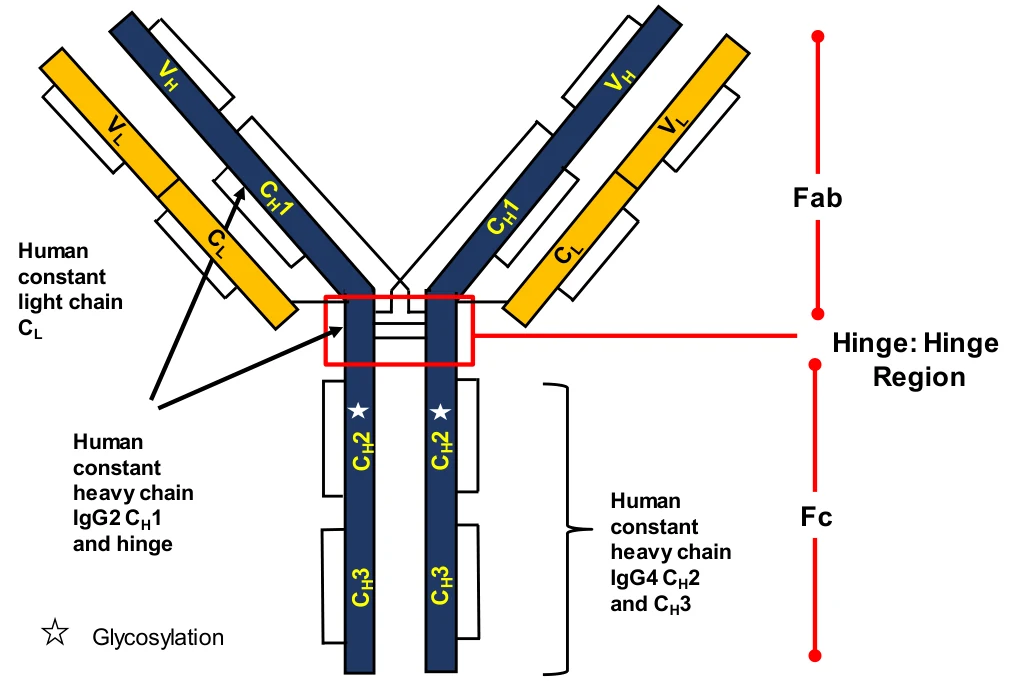
Structural formula:
Heavy chains are shown in blue and light chains are shown in orange
VH is the variable domain of the heavy chain
CH1, CH2, and CH3 are the constant domains of the heavy chain
VL is the variable domain of the light chain
CL is the constant domain of the light chain
A single consensus site for N-glycosylation exists at Asn298 on each heavy chain (starred region).
Physicochemical properties: Bekemv is a sterile, preservative-free, clear to opalescent, colourless to slightly yellow, pH 5.2 solution in a single-use vial for intravenous (IV) infusion.
Pharmaceutical standard: In-house
Product Characteristics:
Bekemv is a formulation of eculizumab, which is a recombinant humanized monoclonal IgG2/4 kappa antibody that binds to the human C5 complement protein and inhibits the activation of terminal complement. Eculizumab contains human constant regions and murine complementarity- determining regions grafted onto the human framework light-and heavy-chain variable regions. Eculizumab is composed of two 448 amino acid heavy chains and two 214 amino acid light chains.
Eculizumab, the active ingredient in Bekemv, is produced in Chinese hamster ovary (CHO) cells and purified through a series of chromatography, filtration, and viral inactivation and removal steps.
14 CLINICAL TRIALS
14.1 Clinical Trials - Reference Biologic Drug
- Atypical Hemolytic Uremic Syndrome (atypical HUS)
Four single-arm prospective studies (atypical HUS Studies C08-002, C08-003, C10-004, and C10-003) and one single-arm retrospective study (C09-001r) evaluated the safety and efficacy of eculizumab for the treatment of atypical HUS. Patients with atypical HUS received meningococcal vaccination prior to receipt of eculizumab or received prophylactic treatment with antibiotics until 2 weeks after vaccination. Study C09-001r was a retrospective chart review.
| Table 9. Summary of patient demographics for clinical trials in atypical HUS | |||||
|---|---|---|---|---|---|
| Table 9. Summary of patient demographics for clinical trials in atypical HUS | |||||
| Study # | Trial design | Dosage, route of administration and duration | Study subjects (n) | Median age (Range) | Sex N (%) |
| Study # | Trial design | Dosage, route of administration and duration | Study subjects (n) | Median age (Range) | Sex N (%) |
C08-002 (Atypical HUS resistant to PE/PI*) | Phase II open-label, single arm, multi-centre | Dosage: 900 mg every 7 ± 2 days for 4 weeks, followed by 1200 mg 7 ± 2 days later, then 1200 mg every 14 ± 2 days thereafter Route of administration: intravenous infusion Duration: Minimum 26 weeks, Median 100 weeks, Range 2 - 145 weeks | 17 | 28 years (17 to 68 years) | Female 12 (71) |
C08-003 (Atypical HUS sensitive to PE/PI*) | Phase II open-label, single arm, multi-centre | Dosage: 900 mg every 7 ± 2 days for 4 weeks, followed by 1200 mg 7 ± 2 days later, then 1200 mg every 14 ± 2 days thereafter Route of administration: intravenous infusion Duration: Minimum 26 weeks, Median 114 weeks, Range 26 - 129 weeks | 20 | 28 years (13 to 63 years) | Female 12 (60) |
C10-004 (Adult patients with atypical HUS) | Open-label, single-arm, multi-centre | Dosage: 900 mg every 7 ± 2 days for 4 weeks, followed by 1200 mg 7 ± 2 days later, then 1200 mg every 14 ± 2 days thereafter Route of administration: intravenous infusion Duration: Minimum 26 weeks, Median 50 weeks, Range 13 - 86 weeks | 41 | 35 years (18 to 80 years) | Female 28 (68) |
C10-003 (Pediatric & Adolescent patients with atypical HUS) | Open-label, single-arm, multi-centre | Dosage: | |||
| Weight (kg) | Induction mg/wk | Maint. Dose mg |
|---|---|---|
| ≥ 40 | 900 for 4 weeks | 1200 at Wk 5; Then: 1200 Q2W |
| 30 -< 40 | 600 for 2 weeks | 900 at Wk 3; Then: 900 Q2W |
| 20 -< 30 | 600 for 2 weeks | 600 at Wk 3; Then: 600 Q2W |
| 10 -< 20 | 600 for 1 week | 300 at Wk 2; Then: 300 Q2W |
| 5 -< 10 | 300 for 1 week | 300 at Wk 2; Then: 300 Q3W |
| Table 9. Summary of patient demographics for clinical trials in atypical HUS | |||||
|---|---|---|---|---|---|
| Study # | Trial design | Dosage, route of administration and duration | Study subjects (n) | Median age (Range) | Sex N (%) |
| 22 | 6.5 years (5 months to 17 years) | Female 10 (46) | |||
Route of administration: intravenous infusion Duration: Minimum: 26 weeks, Median: 44 weeks, Range: 1 dose to 88 weeks | |||||
| C09-001r | Retrospective chart review | Dosage: Dose levels used were 300, 600, 900, and 1200 mg. Actual dose administered to patients may have been different from recommendations since treatment was outside of controlled clinical trial setting. Route of administration: intravenous infusion Duration: Median 27.5 weeks, Range 1 - 94 weeks | 30 | 12 years (2 months to 51 years) #pts per age range Infant to < 2: 5 ≥ 2 to <12: 10 ≥12 to <18: 4 ≥ 18: 11 | Female 16 (53 |
*PE/PI: Plasma Exchange / Plasma Infusion
Efficacy evaluations were based on thrombotic microangiopathy (TMA) endpoints including the following:
- platelet count change from baseline
- Hematologic normalization (maintenance of normal platelet counts and LDH levels for at least four weeks)
- Complete TMA response (hematologic normalization plus at least a 25% reduction in serum creatinine for a minimum of four weeks)
- TMA-event free status (absence for at least 12 weeks of a decrease in platelet count of > 25% from baseline, plasma exchange or plasma infusion, and new dialysis requirement)
- Daily TMA intervention rate (defined as the number of plasma exchange or plasma infusion interventions and the number of dialyses required per patient per day)
Atypical HUS Resistant to PE/PI (Study C08-002)
Study Summary
Study C08-002 enrolled patients who displayed signs of thrombotic microangiopathy (TMA) despite receiving at least four PE/PI treatments the week prior to screening. One patient had no PE/PI the week prior to screening because of PE/PI intolerance. In order to qualify for enrollment, patients were required to have a platelet count ≤ 150 x 109/L, evidence of hemolysis such as an elevation in serum LDH, and serum creatinine above the upper limits of normal, without the need for chronic dialysis. The median patient age was 28 (range: 17 to 68 years).
Patients enrolled in Study C08-002 were required to have ADAMTS-13 activity level above 5%; observed range of values in the trial were 70% - 121%. Seventy-six percent (76%) of patients had an identified complement regulatory factor mutation or auto-antibody. Table 10 summarizes the key baseline clinical and disease-related characteristics of patients enrolled in Study C08- 002.
Table 10. Baseline Characteristics of Patients Enrolled in Study C08-002
| Parameter | Study C08-002 N = 17 |
|---|---|
| Time from atypical HUS diagnosis until screening in months, median (min, max) | 10 (0.26, 236) |
| Time from current clinical TMA manifestation until screening in months, median (min, max) | < 1 (< 1, 4) |
| Baseline platelet count (x 109/L) median (range) | 118 (62, 161) |
| Baseline LDH (U/L) median (range) | 269 (134, 634) |
Patients in Study C08-002 received eculizumab for a minimum of 26 weeks. Study C08-002. The median duration of eculizumab therapy was approximately 100 weeks (range: 2 weeks to 145 weeks), and the primary endpoint was change in platelet count from baseline through Week 26.
Study Results
Renal function, as measured by eGFR, was improved and maintained during eculizumab therapy. The mean eGFR (± SD) increased from 23 ± 15 mL/min/1.73m2 at baseline to 56 ± 40 mL/min/1.73m2 by 26 weeks; this effect was maintained through 2 years (56 ± 30 mL/min/1.73m2). Four of the five patients who required dialysis at baseline were able to discontinue dialysis.
Reduction in terminal complement activity and an increase in platelet count relative to baseline were observed after commencement of eculizumab. Eculizumab reduced signs of complement-mediated TMA activity, as shown by an increase in mean platelet counts from baseline to 26 weeks. In Study C08-002, mean platelet count (± SD) increased from 109 ± 32 x109/L at baseline to 169 ± 72 x109/L by one week; this effect was maintained through 26 weeks (210 ± 68 x 109/L, and 2 years (205 ± 46 x 109/L). When treatment was continued for more than 26 weeks, two additional patients achieved Hematologic Normalization as well as Complete TMA response. Hematologic Normalization and Complete TMA response were maintained by all responders. Table 11 summarizes the efficacy results for Study C08-002.
Table 11. Efficacy Results for Study C08-002
| Efficacy Parameter | Study C08-002 at 26 wks a N = 17 | Study C08-002 at 2 yrs b N = 17 |
|---|---|---|
| Platelet Count Normalization c | 14 (82) | 15 (88) |
Complete TMA response, n (%) Median duration of complete TMA response, weeks (range) | 11 (65) 38 (25, 56) | 13 (77) 99 (25, 139) |
eGFR improvement ≥ 15 mL/min/1.73 m2, n (%) Median duration of eGFR improvement, days (range) | 9 (53) 251 (70, 392) | 10 (59) ND |
Hematologic normalization, n (%) Median Duration of hematologic normalization, weeks (range) | 13 (76) 37 (25, 62) | 15 (88) 99 (25, 145) |
| TMA event-free status, n (%) | 15 (88) | 15 (88) |
Daily TMA intervention rate, median (range) Before eculizumab On eculizumab treatment | 0.88 (0.04, 1.59) 0 (0, 0.31) | 0.88 (0.04, 1.59) 0 (0, 0.31) |
a At data cut-off (September 8, 2010).
b At data cut-off (April 20, 2012).
c Normal platelet count is defined as ≥ 150 × 109/L.
Atypical HUS Sensitive to PE/PI (Study C08-003)
Study Summary
Study C08-003 enrolled patients undergoing chronic PE/PI who generally did not display hematologic signs of ongoing thrombotic microangiopathy (TMA). All patients had received PT at least once every two weeks, but no more than three times per week, for a minimum of eight weeks prior to the first eculizumab dose. Patients on chronic dialysis were permitted to enroll in Study C08-003. Patients enrolled in Study C08-003 were required to have ADAMTS13 activity level above 5%; observed range of values in the trial were 37% - 118%. Seventy percent of patients had an identified complement regulatory factor mutation or auto-antibody. Table 12 summarizes the key baseline clinical and disease-related characteristics of patients enrolled in Study C08-003.
Table 12. Baseline Characteristics of Patients Enrolled in Study C08-003
| Parameter | Study C08-003 N = 20 |
|---|---|
| Time from atypical HUS diagnosis until screening in months median (min, max) | 48 (0.66, 286) |
| Time from current clinical TMA manifestation until screening in months median (min, max) | 9 (1, 45) |
| Baseline platelet count (x 109/L) median (range) | 218 (105, 421) |
| Baseline LDH (U/L) median (range) | 200 (151, 391) |
Patients in Study C08-003 received eculizumab for a minimum of 26 weeks. The primary endpoint was TMA Event-Free status defined as no decrease in platelet count > 25% AND no PT AND no new dialysis for 12 consecutive weeks during the study period. In Study C08-003, the median duration of eculizumab therapy was approximately 114 weeks (range: 26 to 129 weeks).
Study Results
The primary endpoint of Study C08-003 was TMA Event-Free status defined as no decrease in platelet count >25% AND no PT AND no new dialysis for 12 consecutive weeks during the study period.
Renal function, as measured by eGFR, was maintained during eculizumab therapy. The mean eGFR (± SD) was 31 ± 19 mL/min/1.73m2 at baseline and was maintained through 26 weeks (37 ± 21 mL/min/1.73m2) and 2 years (40 ± 18 mL/min/1.73m2). No patient required new dialysis with eculizumab.
Reduction in terminal complement activity was observed in all patients after the commencement of eculizumab. Eculizumab reduced signs of complement-mediated TMA activity, as shown by an increase in mean platelet counts from baseline to 26 weeks. Platelet counts were maintained at normal levels despite the elimination of PE/PI. The mean platelet count (± SD) was 228 ± 78 x 109/L at baseline, 233 ± 69 x 109/L at week 26, and 224 ± 52 x 109/L at 2 years. When treatment was continued for more than 26 weeks, six additional patients achieved Complete TMA response. Complete TMA Response and Hematologic Normalization were maintained by all responders. Table 13 summarizes the efficacy results for Study C08-003.
Table 13. Efficacy Results of Patients Enrolled in Study C08-003
| Efficacy Parameter | Study C08-003 at 26 wksa N = 20 | Study C08-003 at 2 yrsb N = 20 |
|---|---|---|
Complete TMA response, n (%) Median duration of complete TMA response, weeks (range) | 5 (25) 32 (12, 38) | 11 (55) 68 (38, 109) |
| eGFR improvement ≥ 15 mL/min/1.73 m2, n (%) | 1 (5) | 8 (40) |
| TMA Event-free status, n (%) | 16 (80) | 19 (95) |
Daily TMA intervention rate, median (range) Before eculizumab On eculizumab treatment | 0.23 (0.05, 1.09) 0 | 0.23 (0.05, 1.09) 0 |
Hematologic normalizationd, n (%) Median duration of hematologic normalization, weeks (range)c | 18 (90) 38 (22, 52) | 18 (90) 114 (33, 125) |
a At data cut-off (September 8, 2010).
b At data cut-off (April 20, 2012).
c Calculated at each post-dose day of measurement (excluding Days 1 to 4) using a repeated measurement ANOVA model.
d In atypical HUS Study C08-003, 85% of patients had normal platelet counts and 80% of patients had normal serum LDH levels at baseline, so hematologic normalization in this population reflects maintenance of normal parameters in the absence of PE/PI.
Adult Patients with atypical HUS (Study C10-004)
Study Summary
Study C10-004 enrolled patients who displayed signs of thrombotic microangiopathy (TMA). In order to qualify for enrollment, patients were required to have a platelet count < lower limit of normal range (LLN), evidence of hemolysis such as an elevation in serum LDH, and serum creatinine above the upper limits of normal, without the need for chronic dialysis. All patients enrolled in Study C10-004 were required to have ADAMTS13 activity level above 5%; observed range of values in the trial were 28-116%. Fifty-one percent of patients had an identified complement regulatory factor mutation or auto-antibody. A total of 35 patients received PE/PI prior to eculizumab. Table 14 summarizes the key baseline clinical and disease-related characteristics of patients enrolled in Study C10-004.
Table 14. Baseline Characteristics of Patients Enrolled in Study C10-004
| Parameter | Study C10-004 N = 41 |
|---|---|
| Time from atypical HUS diagnosis until screening in months median (range) | 0.79 (0.03 – 311) |
| Time from current clinical TMA manifestation until first study dose in months median (range) | 0.52 (0.03 – 19) |
| Baseline platelet count (× 109/L) median (range) | 125 (16 – 332) |
| Baseline LDH (U/L) median (range) | 375 (131 – 3318) |
Patients in Study C10-004 received eculizumab for a minimum of 26 weeks. The submission primary endpoint was the responder rate defined by the proportion of patients with complete TMA response as evidenced by normalization of hematological parameters [platelet count and lactate dehydrogenase (LDH)] and ≥ 25% decrease in serum creatinine from baseline during treatment with eculizumab. Complete TMA response is defined as two consecutive measurements obtained at least 4 weeks apart. In Study C10-004, the median duration of eculizumab therapy was approximately 50 weeks (range: 13 weeks to 86 weeks).
Study Results
The primary endpoint was responder rate defined by the proportion of patients with complete TMA response as evidenced by normalization of hematological parameters [platelet count and lactate dehydrogenase (LDH)] and ≥ 25% decrease in serum creatinine from baseline during treatment with eculizumab. Complete TMA response is defined as two consecutive measurements obtained at least 4 weeks apart.
Complete TMA Response was achieved by 23 patients (56%; 95% CI: 40, 72) through Week 26 and by 26 patients (63%; 95% CI 47, 78) through data cut-off. All patients who achieved a response through Week 26 remained in response through data cut-off. The median duration of Complete TMA Response through data cut-off was nine months (range 1 - 17 months).
Thirty-six patients (88%; 95% CI: 74, 96) achieved a Hematologic Normalization through Week 26 and 40 patients (98%; 95% CI: 87, 99) through data cut-off. Hematologic Normalization was maintained in all 40 responders. The median duration of Hematologic Normalization through data cut-off was 10 months (range 2 - 17 months).
Renal function, as measured by eGFR, was improved during eculizumab therapy. The mean eGFR (± SD) increased from 17 ± 12 mL/min/1.73m2 at baseline to 47 ± 24 mL/min/1.73m2 by 26 weeks. Of the 24 patients who required dialysis at study baseline, 5 patients discontinued dialysis prior to the first dose of eculizumab and 15 were able to discontinue dialysis during eculizumab treatment.
Reduction in terminal complement activity and an increase in platelet count relative to baseline were observed after commencement of eculizumab. Eculizumab reduced signs of complement-mediated TMA activity, as shown by an increase in mean platelet counts from baseline to 26 weeks. In Study C10-004, mean platelet count (± SD) increased from 119 ± 66 x109/L at baseline to 200 ± 84 x109/L by one week; this effect was maintained through 26 weeks (mean platelet count (± SD) at week 26: 252 ± 70 x109/L). Table 15 summarizes the efficacy results for Study C10-004.
Table 15. Results of Atypical HUS study C10-004
| Efficacy Parameter | Study C10-004 (N = 41) |
|---|---|
| Platelet Count Normalization a | 40 (98%) |
| Complete TMA response, n (%) 95% CI Median duration of submission complete TMA response, weeks (range) | 23 (56) 40,72 42 (6, 75) |
| Patients with eGFR improvement ≥ 15 mL/min/1.73 m2, n (%) | 22 (54) |
Hematologic Normalization, n (%) Median duration of hematologic normalization, weeks (range) | 36 (88) 46 (10, 75) |
| TMA Event-free Status, n (%) | 37 (90) |
Daily TMA Intervention Rate, median (range) Before eculizumab On eculizumab treatment | 0.63 (0, 1.38) 0 (0, 0.58) |
a Normal platelet count is defined as ≥150 × 109/L.
In atypical HUS studies C08-002, C08-003, and C10-004, a total of 43% of patients with no known mutation in the gene encoding for complement regulatory protein achieved Complete TMA response compared to 54% of patients with a known mutation. In pediatric and adolescents Study C10-003, complete TMA response was achieved in 55% of patients with no known mutation compared to 73% in patients with a known mutation. The number of patients in each group was small. Efficacy outcomes were independent whether patient had in an identified genetic mutation.
Pediatric and Adolescent Patients with atypical HUS (atypical HUS Study C10-003)
Study Summary
Atypical HUS Study C10-003 enrolled patients who were required to have a platelet count < lower limit of normal range (LLN), evidence of hemolysis such as an elevation in serum LDH above the upper limits of normal, serum creatinine level ≥ 97 percentile for age without the need for chronic dialysis. Patients enrolled in Study C10-003 were required to have ADAMTS13 activity level above 5%; observed range of values in the trial were 38%-121%. Fifty percent of patients had an identified complement regulatory factor mutation or auto-antibody. A total of 10 patients received PE/PI prior to eculizumab. Table 16 summarizes the key baseline clinical and disease-related characteristics of patients enrolled in atypical HUS Study C10-003.
Table 16. Baseline Characteristics of Patients Enrolled in atypical HUS C10-003
| Parameter | Patients 1 month to < 12 years (N = 18) | All Patients (N = 22) |
|---|---|---|
| Time from atypical HUS diagnosis until screening in months median (range) | 0.51 (0.03 – 58) | 0.56 (0.03 - 191) |
| Time from current clinical TMA manifestation until first study dose in months median (range) | 0.23 (0.03 - 4) | 0.2 (0.03 - 4) |
| Baseline platelet count (x109/L) median (range) | 110 (19 - 146) | 91 (19 - 146) |
| Baseline LDH (U/L) median (range) | 1510 (282 - 7164) | 1244 (282 - 7164) |
Patients in atypical HUS Study C10-003 received eculizumab for a minimum of 26 weeks. The primary endpoint was responder rate defined by the proportion of patients with Complete TMA response as evidenced by normalization of hematological parameters [platelet count and lactate dehydrogenase (LDH)] and ≥ 25% improvement in serum creatinine from baseline during treatment with eculizumab. Complete TMA response is defined as two consecutive measurements obtained at least four weeks apart. In atypical HUS Study C10-003, the median duration of eculizumab therapy was approximately 44 weeks (range: 1 dose to 88 weeks).
Study Results
The primary endpoint of Study C10-003 was responder rate defined as the proportion of patients with Complete TMA response as evidenced by normalization of hematological parameters [platelet count and lactate dehydrogenase (LDH)] and ≥ 25% improvement in serum creatinine from baseline during treatment with eculizumab. Complete TMA response is defined as two consecutive measurements obtained at least four weeks apart.
Complete TMA response was achieved in 14 of the 22 patients (64%; 95% CI: 41, 83) through Week 26 and in 15 patients (68%; 95% CI: 45, 86) through data cut-off. All 15 patients maintained their response through data cut-off, with a median duration of eight months (range 3 - 18 months).
For the 18 pediatric patients <12 years old, Complete TMA Response rates were similar through Week 26 (11 patients [61%; 95% CI: 36, 83]) and through data cut-off (12 patients [67%; 95% CI: 41, 87]).
Hematologic Normalization was observed in 18 of 22 patients (82%; 95% CI: 60, 95) through Week 26 and increased to 20 patients (91%; 95% CI: 71, 99) through data cut-off. Hematologic Normalization was maintained in all 20 responders through data cut-off with a median duration of 8 months (range 3 – 18 months).
For the 18 pediatric patients < 12 years old, Hematologic Normalization was achieved in 14 patients (78; 95% CI: 52, 94) through Week 26 and 16 patients (89%; 95% CI: 65, 99) through data cut-off.
Renal function, as measured by median eGFR, was improved during eculizumab therapy. The mean eGFR (± SD) increased from 33 ± 30 mL/min/1.73m2 at baseline to 98 ± 44 mL/min/1.73m2 by 26 weeks. Among the 20 patients with a CKD stage ≥ 2 at baseline, 17 (85%) achieved a CKD improvement of ≥ 1 stage. Among the 16 patients ages 1 month to < 12 years with a CKD stage ≥ 2 at baseline, 14 (88%) achieved a CKD improvement by ≥ 1 stage. Nine of the 11 patients who required dialysis at study baseline were able to discontinue dialysis for the duration of eculizumab treatment. Responses were similar across all ages from 5 months to 17 years of age.
Reduction in terminal complement activity was observed in all patients after commencement of eculizumab. Eculizumab reduced signs of complement-mediated TMA activity, as shown by an increase in mean platelet counts from baseline to 26 weeks. The mean platelet count (± SD) increased from 88 ± 42 x109/L at baseline to 281 ± 123 x109/L by one week; this effect was maintained through 26 weeks [mean platelet count (± SD) at week 26: 293 ± 106 x109/L]. In atypical HUS C10-003, responses to eculizumab were similar in patients with and without identified mutations in genes encoding complement regulatory factor proteins or auto-antibodies to factor H. Table 17 summarizes the efficacy results for atypical HUS Study C10-003.
Table 17. Efficacy Results for atypical HUS Study C10-003
| Efficacy Parameter | Patients 1 month to < 12 years (N = 18) | All Patients (N = 22) |
|---|---|---|
| Platelet Count Normalization a | 21 (96%) | |
| Complete TMA response, n (%) 95% CI Median Duration of complete TMA response, weeks (range)b | 11 (61) 36, 83 40 (14, 77) | 14 (64) 41, 83 37 (14, 77) |
| eGFR improvement ≥15 mL / min/ 1.73•m2•n (%) | 16 (89) | 19 (86) |
Complete Hematologic Normalization, n (%) Median Duration of complete hematologic normalization, weeks (range) | 14 (78) 38 (14, 77) | 18 (82) 38 (14, 77) |
| TMA Event-Free Status, n (%) | 17 (94) | 21 (95) |
| Daily TMA Intervention rate, median (range) | ||
| Before eculizumab treatment | 0.2 (0, 1.7) | 0.4 (0, 1.7) |
| On eculizumab treatment | 0 (0, 0.01) | 0 (0, 0.01) |
aNormal platelet count is defined as ≥ 150 × 109/L.
bThrough data cut-off (October 12, 2012)
Retrospective Chart Review of Patients with atypical HUS (Study C09-001r)
Exploratory analyses were conducted in the retrospective chart review (Study C09-001r) and results were generally consistent with results of the two prospective studies. Eculizumab reduced signs of complement-mediated TMA activity, as shown by an increase in mean platelet counts from baseline. Mean platelet count (± SD) increased from 171 ± 83 x109/L at baseline to 233 ±109 x109/L after one week of therapy; this effect was maintained through 26 weeks (mean platelet count (± SD) at week 26: 254 ± 79 x109/L).
A total of 19 pediatric patients (ages 2 months to 17 years) received eculizumab in Study C09-001r. The median duration of eculizumab therapy was 16 weeks (range 4 to 70 weeks) for children < 2 years of age (n = 5), 31 weeks (range 19 to 63 weeks) for children 2 to < 12 years of age (n = 10), and 38 weeks (range 1 to 69 weeks) for patients 12 to 18 years of age (n = 4). Fifty-three percent of pediatric patients had an identified complement regulatory factor mutation or auto-antibody. Eighty nine percent (17/19, 89%) of these pediatric patients achieved a platelet count normalization and 42% (8/19) had hematologic normalization and complete TMA responses. The daily TMA intervention rate decreased from a median of 0.31 prior to eculizumab to 0 after eculizumab. No pediatric patient required new dialysis.
Table 18. Efficacy Results in Pediatric Patients Enrolled in Study C09-001r
| Efficacy Parameter | < 2 yrs. (n = 5) | 2 to < 12 yrs. (n = 10) | 12 to < 18 yrs. (n = 4) | Total (n = 19) |
|---|---|---|---|---|
| Patients with Hematologic Normalization and Complete TMA Response | 2/5 (40) | 5/9 (56) | 1/3 (33) | 8 (47) |
Patients with eGFR improvement ≥ 15 mL/min/1.73 m2, n (%) b | 2 (40) | 6 (60) | 1 (25) | 9 (47) |
| Platelet count normalization, n (%) a | 4 (80) | 10 (100) | 3 (75) | 17 (89) |
| Daily TMA intervention rate median (range) | 0.31 (0.00, 2.38) | |||
Before eculizumab On eculizumab treatment | 1 (0, 2) < 1 (0, < 1) | < 1 (0.07, 1.46) 0 (0, < 1) | < 1 (0, 1) 0 (0, < 1) | 0.00 (0.00, 0.08) |
a Platelet count normalization was defined as a platelet count of at least 150,000 x 109/L on at least two consecutive measurements spanning a period of at least 4 weeks.
b Of the 9 patients who experienced an eGFR improvement of at least 15 mL/min/1.73 m2, one received dialysis throughout the study period and another received eculizumab as prophylaxis following renal allograft transplantation.
15 MICROBIOLOGY
No microbiological information is required for this drug product.
16 NON-CLINICAL TOXICOLOGY
General Toxicology:
The specificity of eculizumab for C5 in human serum was evaluated in two in vitro studies.
The tissue cross-reactivity of eculizumab was evaluated by assessing binding to a panel of 38 human tissues. C5 expression in the human tissue panel examined in this study is consistent with published reports of C5 expression, as C5 has been reported in smooth muscle, striated muscle, and renal proximal tubular epithelium. No unexpected tissue cross-reactivity was observed.
A 26-week, repeat-dose, toxicity study in mice with a surrogate antibody BB5.1, directed against murine C5, was performed. The treatment did not affect any of the toxicity parameters examined. C5-induced hemolytic activity in an ex vivo assay was effectively blocked throughout the course of the study in both female and male mice.
Carcinogenicity:
No studies have been performed to evaluate the carcinogenic potential of eculizumab.
Genotoxicity:
No studies have been performed to evaluate the genotoxic potential of eculizumab.
Reproductive and Developmental Toxicology:
Animal reproductive and developmental toxicology studies have not been conducted with eculizumab, due to a lack of pharmacologic activity in non-human species but were conducted in mice with a murine surrogate complement inhibitory antibody, BB5.1. No clear treatment-related effects or adverse effects were observed in the murine surrogate reproductive and developmental toxicology studies in mice. When maternal exposure to the antibody occurred during organogenesis, two cases of retinal dysplasia and one case of umbilical hernia were observed among 230 offspring born to mothers exposed to the higher antibody dose; however, these findings were not clearly test-article related.
17 SUPPORTING PRODUCT MONOGRAPHS
- 1. SOLIRIS® (eculizumab for injection), solution, 300 mg (10 mg/mL), Submission Control Number: 245907, Product Monograph, Alexion Pharma GmbH. March 25, 2021.