


Product Monograph - Fabhalta
Recent Major Label Changes
1 Indications 4 Dosage and Administration, 4.1 Dosing Considerations 4 Dosage and Administration, 4.2 Recommended Dose and Dosage Adjustment 7 Warnings and Precautions, Renal 7 Warnings and Precautions, 7.1 Special populations, 7.1.1 Pregnancy | 2026-08 |
|---|
Table of Contents
Recent Major Label Changes ................................................................................................. 2
Table of Contents ................................................................................................................. 2
Part 1: Healthcare Professional Information.......................................................................... 4
- 1.
Indications..................................................................................................................... 4
1.1. Pediatrics .................................................................................................................... 4
1.2. Geriatrics .................................................................................................................... 4
- 2. Contraindications .......................................................................................................... 4
- 3. Serious Warnings and Precautions Box ........................................................................... 4
- 4.
Dosage and Administration ............................................................................................ 5
4.1. Dosing Considerations ............................................................................................... 5
4.2. Recommended Dose and Dosage Adjustment .......................................................... 5
4.4. Administration ........................................................................................................... 6
4.5. Missed Dose ............................................................................................................... 6
- 5. Overdose ....................................................................................................................... 6
- 6. Dosage Forms, Strengths, Composition, and Packaging .................................................. 7
- 7.
Warnings and Precautions ............................................................................................. 7
General ................................................................................................................................... 8
Monitoring and Laboratory Tests ........................................................................................... 8
Renal ....................................................................................................................................... 8
Reproductive Health ............................................................................................................... 9
7.1. Special Populations .................................................................................................... 9
7.1.1. Pregnancy ........................................................................................................... 9
7.1.2. Breastfeeding ..................................................................................................... 9
7.1.3. Pediatrics ............................................................................................................ 9
7.1.4. Geriatrics .......................................................................................................... 10
- 8.
Adverse Reactions ....................................................................................................... 10
8.1. Adverse Reaction Overview ..................................................................................... 10
8.2. Clinical Trial Adverse Reactions ............................................................................... 10
8.3 Less Common Clinical Trial Adverse Reactions ........................................................ 13
8.4 Abnormal Laboratory Findings: Hematologic, Clinical Chemistry, and Other Quantitative Data ................................................................................................................. 13
- 9.
Drug Interactions ......................................................................................................... 14
9.2. Drug Interactions Overview ..................................................................................... 14
9.4. Drug-Drug Interactions ............................................................................................ 14
9.5. Drug-Food Interactions ............................................................................................ 15
9.6. Drug-Herb Interactions ............................................................................................ 15
9.7. Drug-Laboratory Test Interactions........................................................................... 15
- 10.
Clinical Pharmacology .................................................................................................. 15
10.1. Mechanism of Action ............................................................................................... 15
10.2. Pharmacodynamics .................................................................................................. 16
10.3. Pharmacokinetics ..................................................................................................... 17
- 11. Storage, Stability, and Disposal .................................................................................... 18
- 12. Special Handling Instructions ....................................................................................... 18
Part 2: Scientific Information .............................................................................................. 19
- 13. Pharmaceutical Information ........................................................................................ 19
- 14.
Clinical Trials ............................................................................................................... 20
14.1. Clinical Trials by Indication ...................................................................................... 20
- 15. Microbiology ............................................................................................................... 29
- 16. Non-Clinical Toxicology ................................................................................................ 29
Patient Medication Information ......................................................................................... 31
Part 1: Healthcare Professional Information
1. Indications
FABHALTA® (iptacopan capsules) is indicated:
- as monotherapy in the treatment of adult patients with paroxysmal nocturnal hemoglobinuria (PNH) who have hemolytic anemia
- for the treatment of adult patients with C3 glomerulopathy (C3G) to reduce proteinuria
1.1. Pediatrics
Pediatrics (< 18 years of age): The safety and efficacy of FABHALTA in pediatric patients below 18 years of age have not been established; therefore, Health Canada has not authorized an indication for pediatric use.
1.2. Geriatrics
Geriatric patients (≥ 65 years of age): FABHALTA may be administered to patients aged 65 years and over. Evidence from clinical studies suggests that use in the geriatric population is not associated with differences in safety or effectiveness.
2. Contraindications
FABHALTA is contraindicated:
- in patients with hypersensitivity to iptacopan or to any of the other excipients.
- in patients who are not currently vaccinated against Neisseria meningitidis and Streptococcus pneumoniae unless the risk of delaying FABHALTA treatment outweighs the risk of developing an infection from these encapsulated bacteria (see 7 Warnings and Precautions).
- for initiation in patients with unresolved serious infection caused by encapsulated bacteria, including Streptococcus pneumoniae, Neisseria meningitidis, or Haemophilus influenzae type B.
3. Serious Warnings and Precautions Box
Due to its mechanism of action, the use of FABHALTA may predispose individuals to serious infections caused by encapsulated bacteria, such as Streptococcus pneumoniae and Neisseria meningitidis (see 7 Warnings and Precautions, Serious Infections Caused by Encapsulated Bacteria).
|
|---|
|
4. Dosage and Administration
4.1. Dosing Considerations
- Vaccinate patients against encapsulated bacteria, including Neisseria meningitidis and Streptococcus pneumoniae. It is recommended to vaccinate against Haemophilus influenzae type B.
- Vaccines should be administered at least 2 weeks prior to initiation of FABHALTA therapy. Refer to the current NACI guidelines to reduce the risk of serious infection (see 7 Warnings and Precautions, Serious Infections Caused by Encapsulated Bacteria).
- If FABHALTA must be initiated prior to vaccination, provide patients with antibacterial drug prophylaxis until 2 weeks after vaccine(s) are administered.
C3G patients
The safety and efficacy of FABHALTA have not been established in C3G patients who were not on maximally tolerated dose of a renin-angiotensin system (RAS) inhibitor prior to treatment initiation.
4.2. Recommended Dose and Dosage Adjustment
The recommended dose is 200 mg taken orally twice daily.
PNH and C3G are diseases that require chronic treatment. Discontinuation of this medicinal product is not recommended unless clinically indicated.
Adherence to dosing schedule
Healthcare providers should advise all patients about the importance of adherence to the dosing schedule.
In PNH patients, adherence is important to minimize the risk of hemolysis (see 7 Warnings and Precautions).
PNH patients switching from anti-C5 (eculizumab, ravulizumab) or other PNH therapies to FABHALTA
To reduce the potential risk of hemolysis with abrupt treatment discontinuation:
- For patients switching from eculizumab, FABHALTA should be initiated no later than 1 week after the last dose of eculizumab.
- For patients switching from ravulizumab, FABHALTA should be initiated no later than 6 weeks after the last dose of ravulizumab.
Switching from other complement inhibitors to FABHALTA has not been studied. When switching from other PNH therapies to FABHALTA, the dosing interval and mode of action of the previous medicinal products should be considered.
Special populations
Renal impairment: No dose adjustment is required in patients with mild (estimated glomerular filtration rate [eGFR] 60 to <90 mL/min/1.73 m2) or moderate (eGFR 30 to <60 mL/min/1.73 m2) renal impairment. No data are currently available in patients with severe renal impairment (eGFR <30 mL/min/1.73m2) or on dialysis and no dose recommendations can be given (see 10.3 Pharmacokinetics).
Hepatic impairment: The use of FABHALTA is not recommended in patients with severe hepatic impairment (Child-Pugh class C). No dose adjustment is required for patients with mild (Child-Pugh class A) or moderate (Child-Pugh class B) hepatic impairment (see 10.3 Pharmacokinetics).
Pediatric patients (< 18 years of age): The safety and efficacy of FABHALTA in patients below the age of 18 years have not been established.
Geriatric patients (65 years of age or above): No dose adjustment is required for patients aged 65 years and over (see 10.3 Pharmacokinetics).
4.4. Administration
For oral use. FABHALTA may be taken with or without food (see 10.3 Pharmacokinetics).
4.5. Missed Dose
If a dose or doses are missed, the patient should be advised to take one dose of FABHALTA as soon as possible (even if it is soon before the next scheduled dose) and then to resume the regular dosing schedule.
5. Overdose
Limited data are available with regard to overdose in humans. During clinical studies, a few patients took up to 800 mg FABHALTA daily and this was well tolerated. In healthy volunteers, the highest dose was 1200 mg administered as a single dose and this was well tolerated.
General supportive measures and symptomatic treatment should be initiated in cases of suspected overdose.
| For the most recent information in the management of a suspected drug overdose, contact your regional poison control centre or Health Canada’s toll-free number, 1-844 POISON-X (1-844-764-7669). |
|---|
- 6. Dosage Forms, Strengths, Composition, and Packaging
Table 1: Dosage Forms, Strengths, and Composition
Description
FABHALTA 200 mg hard capsules are pale yellow opaque, imprinted with “LNP200” on the body and “NVR” on the cap, containing white or almost white to pale purplish-pink powder.
FABHALTA is supplied in PVC/PE/PVDC blisters.
The following pack size is available:
- Packs containing 56 hard capsules (4 x 14).
7. Warnings and Precautions
Please see 3 Serious Warnings and Precautions.
Serious infections caused by encapsulated bacteria
FABHALTA is only available under a controlled distribution program.
The use of complement inhibitors, such as FABHALTA, may predispose individuals to serious, life-threatening, or fatal infections caused by encapsulated bacteria. To reduce the risk of infection, all patients must be vaccinated against encapsulated bacteria, including Neisseria meningitidis and Streptococcus pneumoniae. It is recommended to vaccinate patients against Haemophilus influenzae type B. Vaccinate patients according to current NACI or regional practice guidelines to reduce the risk of serious infection.
Vaccines should be administered at least 2 weeks prior to administration of the first dose of FABHALTA. If FABHALTA must be initiated prior to vaccination, patients should be vaccinated as soon as possible and provided with antibacterial drug prophylaxis until 2 weeks after vaccine administration.
If necessary, patients should be revaccinated in accordance with local vaccination guideline recommendations.
Vaccination reduces, but does not eliminate, the risk of serious infection. Serious infection may rapidly become life-threatening or fatal if not recognized and treated early. Patients should be informed of and monitored for early signs and symptoms of serious infection. Patients should be immediately evaluated and treated if infection is suspected. The use of FABHALTA during treatment of serious infection may be considered following an assessment of the risks and benefits. However, it is contraindicated to initiate FABHALTA in patients with unresolved serious infections caused by encapsulated bacteria.
| Route of Administration | Dosage Form/ Strength/Composition | Non-Medicinal Ingredients |
| Oral | Hard capsules / 200 mg / iptacopan (as 225.8 mg iptacopan hydrochloride monohydrate) | Capsule fill: None Capsule shell: Hard gelatin, red iron oxide, titanium dioxide, and yellow iron oxide. Printing ink: Black iron oxide, concentrated ammonia solution, propylene glycol, potassium hydroxide, and shellac. |
General
Monitoring of PNH manifestations after discontinuation of FABHALTA
If treatment with FABHALTA must be discontinued, patients must be closely monitored for signs and symptoms of hemolysis for at least 2 weeks after the last dose. These signs include, but are not limited to, elevated lactate dehydrogenase (LDH) levels along with sudden decrease in hemoglobin or PNH clone size, fatigue, hemoglobinuria, abdominal pain, dyspnea, major adverse vascular events (including thrombosis), dysphagia, or erectile dysfunction. If discontinuation of FABHALTA is necessary, consider alternative therapy.
If hemolysis occurs after discontinuation of FABHALTA, restarting FABHALTA treatment or initiating an alternative therapy should be considered.
Monitoring and Laboratory Tests
Patients with PNH receiving FABHALTA should be monitored as per standard PNH management and regularly for signs and symptoms of hemolysis, including measuring lactate dehydrogenase (LDH) levels.
Increases in blood pressure, particularly diastolic blood pressure (DBP), as well as cholesterol were observed in patients with PNH treated with FABHALTA in clinical studies. Patients with PNH should be monitored for changes in these parameters. The clinical relevance of such findings should be assessed based on individual patient characteristics and the patient should be managed accordingly (see 8.4 Abnormal Laboratory Findings: Hematologic, Clinical Chemistry and Other Quantitative Data).
Renal
C3G patients
There is limited clinical experience with the use of FABHALTA in patients with recurrent C3G following kidney transplantation. An open-label, single arm, Phase II study administered FABHALTA 200 mg twice daily for 3 months to 11 patients with recurrent C3G. Diagnosis of recurrent C3G required histological assessment of glomerular C3 staining intensity on a recent biopsy of the transplanted kidney. The baseline mean age was 35 years (range 18-70), the geometric mean UPCR was 0.32 g/g, the mean (SD) eGFR was 52.2 (17.29) ml/min/1.73 m2, and the median C3 deposit score was 3 on a scale of 0-12 at baseline. All patients were on MMF/MPS and/or corticosteroids in addition to calcineurin inhibitors. Ten patients from the study transitioned to an on-going open-label roll-over extension study with the same FABHALTA dosing regimen; two patients dropped out due to deterioration of renal function. In the other 8 participants that completed a 33 month observation period, eGFR (mean -5.8 ml/min/1.73 m2 from baseline) and UPCR (<0.4 g/g) remained relatively stable until the end of the observation period. Nine participants were reported to have experienced infections, of which 2 had serious infections by encapsulated bacteria; both of these events resolved with antibiotic treatment. The safety and efficacy of FABHALTA in patients with recurrent C3G following kidney transplantation have not been established.
Patients with severe renal impairment (eGFR <30ml/min/1.73m2) or on dialysis have not been studied.
There is no experience with the use of iptacopan in patients with C3G in native kidney who have proteinuria below 1 g/g at treatment initiation.
Reproductive Health
Fertility
There are no data on the effect of FABHALTA on human fertility. In animal fertility studies, iptacopan did not impact fertility in male rats up to the highest dose tested, which corresponds to 4-fold the maximum recommended human dose (MRHD) based on AUC. Reversible effects on the male reproductive system (testicular tubular degeneration and hypospermatogenesis) were observed in repeated dose toxicity studies in dogs at doses 3-fold the MRHD based on AUC, with no apparent effects on sperm numbers, morphology or motility.
In female rats, increased pre- and post-implantation losses and, consequently, decreased numbers of live embryos, were observed at 4-fold the MRHD based on AUC (see 16 Non-Clinical Toxicology).
7.1. Special Populations
7.1.1. Pregnancy
There are insufficient data on FABHALTA use in pregnant women to inform a drug-associated risk of major birth defects, miscarriage, or other adverse maternal or fetal outcomes. There are risks to the mother and fetus associated with untreated PNH and C3G in pregnancy.
In PNH, these include worsening cytopenia, thrombotic events, infections, bleeding, miscarriages, increased maternal mortality, fetal death, and premature delivery.
C3G in pregnancy may be associated with adverse maternal outcomes, in particular preeclampsia and miscarriage, as well as adverse fetal outcomes including prematurity and low birth weight.
The use of FABHALTA in pregnant women or women planning to become pregnant may only be considered following a careful assessment of the risks and benefits, if necessary.
Animal reproduction studies in rats and rabbits demonstrated that administration of FABHALTA during organogenesis did not induce adverse embryo or fetal toxicity up to the highest doses tested, which correspond to 4-fold (rats) and 6-fold (rabbits) the MRHD based on AUC (see 16 Non-Clinical Toxicology, Reproductive and Developmental Toxicology).
7.1.2. Breastfeeding
It is not known if iptacopan is transferred into human or animal milk after oral administration of FABHALTA. There are no data on the effects of FABHALTA on the breastfed child or on milk production. As potential serious adverse effects in breastfed infants cannot be ruled out, breastfeeding should be discontinued during treatment and for 5 days after the final dose.
7.1.3. Pediatrics
Pediatrics (<18 years of age): The safety and efficacy of FABHALTA in pediatric patients below 18 years of age have not been established.
7.1.4. Geriatrics
Geriatrics (≥ 65 years of age): FABHALTA may be administered to patients aged 65 years and over. Evidence from clinical studies suggests that use in the geriatric population is not associated with differences in safety or effectiveness.
8. Adverse Reactions
8.1. Adverse Reaction Overview
Paroxysmal Nocturnal Hemoglobinuria (PNH)
The safety of FABHALTA in patients with PNH was evaluated in a randomized, active-comparator controlled, open-label trial (APPLY-PNH) for 24 weeks. The safety profile is further supplemented by a supportive single-arm, open-label trial (APPOINT-PNH) for 24 weeks.
A total of 8 serious adverse events (irrespective of causality) were reported in 6 (9.7%) patients who received FABHALTA during the 24-week randomized treatment period in APPLY-PNH. These included sinus node dysfunction, COVID-19, pyelonephritis, urinary tract infection, blood creatine phosphokinase increased, basal cell carcinoma, myelodysplastic syndrome, transient ischemic attack.
The most common adverse reactions as assessed by investigators (≥ 5%) with FABHALTA were headache and vomiting.
There were no discontinuations due to adverse events or serious adverse events in either of these studies.
Complement 3 Glomerulopathy (C3G)
The safety profile of FABHALTA in patients with C3G was evaluated in a randomized, placebo-controlled trial (APPEAR-C3G) for 26 weeks. Serious adverse events reported in 3 patients who received FABHALTA included chest discomfort, infected bite and blood culture positive for Streptococcus pneumoniae. There were no deaths or discontinuations due to adverse events.
8.2. Clinical Trial Adverse Reactions
Clinical trials are conducted under very specific conditions. Therefore, the frequencies of adverse reactions observed in the clinical trials may not reflect frequencies observed in clinical practice and should not be compared to frequencies reported in clinical trials of another drug.
Paroxysmal Nocturnal Hemoglobinuria (PNH)
The data described below reflect the exposure in adult patients with PNH who received FABHALTA (n = 62) or anti-C5 treatment (eculizumab or ravulizumab, n = 35) in APPLY-PNH and FABHALTA (n = 40) in APPOINT-PNH at the recommended dosing regimens for 24 weeks.
Table 2 describes the adverse reactions (as assessed by the investigators) that were reported in ≥ 3% of patients treated with FABHALTA in the APPLY-PNH or APPOINT-PNH studies listed by MedDRA system organ class.
Table 2: Adverse Reactions as Assessed by Investigators Reported in ≥ 3% of PNH Patients Treated with FABHALTA in APPLY-PNH or APPOINT-PNH Studies (24-Week Treatment Period)
| System organ class/preferred term | APPLY-PNH | APPOINT-PNH | |||||||||
|---|---|---|---|---|---|---|---|---|---|---|---|
FABHALTA (N = 62) n (%) | Anti-C5 (N = 35) n (%) | FABHALTA (N = 40) n (%) | |||||||||
| Blood and lymphatic system disorders | |||||||||||
| Platelet count decreaseda | 3 (5) | 0 | 0 | ||||||||
| Gastrointestinal disorders | |||||||||||
| Nausea | 3 (5) | 1 (3) | 0 | ||||||||
| Diarrhea | 2 (3) | 0 | 0 | ||||||||
| Abdominal painb | 2 (3) | 0 | 0 | ||||||||
| Vomiting | 0 | 0 | 2 (5) | ||||||||
| Infections and infestations | |||||||||||
| Upper respiratory tract infectionc | 2 (3) | 0 | 0 | ||||||||
| Musculoskeletal and connective tissue disorders | |||||||||||
| Arthralgia | 3 (5) | 0 | 0 | ||||||||
| Nervous system disorders | |||||||||||
| Headached | 5 (8) | 1 (3) | 4 (10) | ||||||||
| Vascular disorders | |||||||||||
| Hot flush | 2 (3) | 0 | 0 | ||||||||
aPlatelet count decreased includes thrombocytopenia and platelet count decreased. bAbdominal pain includes abdominal pain, abdominal pain upper cUpper respiratory tract infection includes nasopharyngitis and upper respiratory tract infection. dHeadache includes headache and head discomfort. | |||||||||||
Complement 3 Glomerulopathy (C3G)
The data described below reflect the exposure in adult patients with C3G who received FABHALTA (n = 38) or placebo (n = 36) in APPEAR-C3G at the recommended dosing regimens for 26 weeks.
Table 3 describes the adverse reactions (as assessed by the investigators) that were reported in patients treated with FABHALTA in the APPEAR-C3G study listed by MedDRA system organ class.
Table 3: Adverse drug reactions as assessed by investigators reported in ≥3% of C3G patients treated with FABHALTA in APPEAR-C3G study
| System organ class/preferred term | Controlled period (6 months) in APPEAR-C3G | ||||||
|---|---|---|---|---|---|---|---|
FABHALTA (N=38) n (%) | Placebo (N=36) n (%) | ||||||
| Gastrointestinal disorder | |||||||
| Nausea | 1 (3) | 0 | |||||
| Aphthous ulcer | 0 | 1 (3) | |||||
| Frequent bowel movements | 0 | 1 (3) | |||||
| General disorders and administration site conditions | |||||||
| Fatigue | 0 | 1 (3) | |||||
| Infections and infestations | |||||||
| Lower respiratory tract infection | 1 (3) | 0 | |||||
| Otitis media | 1 (3) | 0 | |||||
| Pneumonia | 1 (3) | 0 | |||||
| Upper respiratory tract infection | 6 (16) | 4 (11) | |||||
| COVID-19 | 0 | 1 (3) | |||||
| Investigations | |||||||
| Aspartate aminotransferase increased | 1 (3) | 0 | |||||
| Blood creatine phosphokinase increased | 1 (3) | 0 | |||||
| Blood culture positive | 1 (3) | 0 | |||||
| Dihydrotestosterone decreased | 1 (3) | 0 | |||||
| Nervous system disorders | |||||||
| Headache | 1 (3) | 0 | |||||
Infections
A serious adverse reaction of pneumococcal infection (pneumonia pneumococcal and pneumococcal sepsis) was reported in 1 patient treated with FABHALTA during the open-label treatment period of APPEAR-C3G. The patient had been vaccinated against Neisseria meningitidis, Streptococcus pneumoniae, and Haemophilus influenzae type B and recovered following treatment with antibiotics. FABHALTA treatment was interrupted and restarted after recovery.
8.3 Less Common Clinical Trial Adverse Reactions
Less common adverse reactions (as assessed by the investigators) reported below 3% of patients in APPLY-PNH and APPOINT-PNH are included below.
Blood and lymphatic system disorders: neutropenia
Cardiac disorders: sinus bradycardia
Ear and labyrinth disorders: hypoacusis
Eye disorders: blepharospasm
Gastrointestinal disorders: gastritis, haemorrhoidal haemorrhage
General disorders and administration site conditions: asthenia, fatigue, feeling hot, thirst
Hepatobiliary disorders: hepatic function abnormal, hypertransaminasemia
Infections and infestations: bronchitis, mucosal infection, pneumonia, urinary tract infection
Investigations: activated partial thromboplastin time prolonged, alanine aminotransferase increased, amylase increased, aspartate aminotransferase increased, blood albumin increased, blood alkaline phosphatase increased, blood cholesterol increased, blood creatine phosphokinase increased, blood creatinine increased, blood follicle stimulating hormone increased, blood lactate dehydrogenase increased, blood magnesium decreased, blood triglycerides increased, blood uric acid increased, dihydrotestosterone decreased, low density lipoprotein increased, neutrophil count decreased, neutrophil percentage decreased, reverse tri-iodothyronine increased, weight increased, white blood cell count decreased
Musculoskeletal and connective tissue disorders: back pain, muscle spasms, myalgia
Nervous system disorders: dizziness, hypoesthesia, peripheral sensory neuropathy
Psychiatric disorders: sleep disorder
Renal and urinary disorders: chromaturia
Reproductive system and breast disorders: dysmenorrhea
Skin and subcutaneous tissue disorders: acne, alopecia, dermatitis acneiform, hyperhidrosis, rash erythematous, rash macular
Vascular disorders: hypertension
8.4 Abnormal Laboratory Findings: Hematologic, Clinical Chemistry, and Other Quantitative Data
Clinical Trial Findings
Platelet count decreased in patients with PNH
- with pre-existing thrombocytopenia had further decreases to Grade 3 or 4 (based on CTCAE* version 4.03).
*Common Terminology Criteria for Adverse Events. Version 4.03 is dated June 2010
Blood cholesterol and blood pressure increased in patients with PNH
In patients treated with iptacopan 200 mg twice a day in PNH clinical studies, mean increases from baseline of approximately 0.7 mmol/L (28 mg/dL) were seen at month 6 for both total cholesterol and LDL-cholesterol. The mean values remained within the normal ranges. Increases in blood pressure, particularly diastolic blood pressure (DBP), were observed (mean increase 4.7 mmHg at month 6). The mean DBP did not exceed 80 mmHg. Total cholesterol, LDL-cholesterol and DBP increases correlated with increases in hemoglobin (improvement in anemia) in patients with PNH (see 14 Clinical Trials).
In patients treated with iptacopan 200 mg twice a day in the C3G clinical study, no clinically relevant differences were observed in total cholesterol, LDL-cholesterol or blood pressure compared to placebo.
9. Drug Interactions
9.2. Drug Interactions Overview
Iptacopan is a substrate of cytochrome P450 enzyme (CYP)2C8. Concomitant use of CYP2C8 inducers or strong CYP2C8 inhibitors may result in clinically relevant changes in iptacopan exposure (see 9.4 Drug-Drug Interactions).
Iptacopan induced CYP3A4 expression in human hepatocytes in vitro. Concomitant use of FABHALTA may decrease plasma concentrations of sensitive CYP3A4 substrates (see 9.4 Drug-Drug Interactions).
9.4. Drug-Drug Interactions
The drugs listed in this table are based on either drug interaction case reports or studies, or potential interactions due to the expected magnitude and seriousness of the interaction.
Table 4: Established or Potential Drug-Drug Interactions
| Non-proprietary names of the drug products | Source of Evidence | Effect | Clinical comment |
|---|---|---|---|
| Agents that may alter iptacopan plasma concentrations | |||
| CYP2C8 inducers (e.g., rifampin) | T | Concomitant use of CYP2C8 inducers may decrease plasma concentrations of iptacopan, which may result in loss of or reduced efficacy of FABHALTA. | Monitor the clinical response and discontinue use of the CYP2C8 inducer if loss of efficacy of FABHALTA is evident. |
| Strong CYP2C8 inhibitors (e.g., gemfibrozil) | T | Concomitant use of strong CYP2C8 inhibitors may increase iptacopan exposure, which may | Coadministration with a strong CYP2C8 inhibitor is not recommended. |
| result in an increased risk for adverse reactions with FABHALTA. | |||
| Agents that may have their plasma concentrations altered by iptacopan | |||
| CYP3A4 substrates (e.g., carbamazepine) | T | Concomitant use of iptacopan may decrease plasma concentrations of sensitive CYP3A4 substrates, which may result in loss of or reduced efficacy. | Caution should be exercised if co-administration of iptacopan with sensitive CYP3A4 substrates is required, especially those with a narrow therapeutic index. |
T = Theoretical
Clinical drug interaction studies
Based on a clinical drug interaction study in healthy volunteers, iptacopan exposure did not change to a clinically relevant degree when co-administered with clopidogrel (a moderate CYP2C8 inhibitor) or cyclosporine (a P-gp, BCRP, and OATP1B1/1B3 inhibitor). The exposure of digoxin (a P-gp substrate) or rosuvastatin (an OATP substrate) did not change to a clinically relevant degree when co-administered with iptacopan.
In vitro drug interaction studies
Iptacopan did not inhibit CYP1A2, 2A6, 2B6, 2C8, 2C9, 2C19, 2D6, 2E1 or 3A4/5 or induce CYP1A2, 2B6, 2C8, 2C9 or 2C19 in vitro at clinically relevant concentrations. Iptacopan did not inhibit transporters MATE1, MATE2-K, OAT1, OAT3, OCT1 or OCT2 in vitro at clinically relevant concentrations.
9.5. Drug-Food Interactions
FABHALTA may be taken with or without food (see 4 Dosage and Administration and 10.3 Pharmacokinetics, Absorption).
9.6. Drug-Herb Interactions
Interactions with herbal products have not been established.
9.7. Drug-Laboratory Test Interactions
Interactions with laboratory tests have not been established.
10. Clinical Pharmacology
10.1. Mechanism of Action
Iptacopan binds to complement Factor B and inhibits the alternative complement pathway. Iptacopan inhibits the cleavage of the complement component C3, inhibiting the formation of C3 and C5 convertases and subsequent formation of the membrane attack complex (MAC).
In PNH, intravascular hemolysis (IVH) is mediated by the MAC, while extravascular hemolysis (EVH) is facilitated by C3 fragment opsonization. Iptacopan acts proximally in the alternative pathway of the complement cascade to control both C3 fragment-mediated EVH and MAC-mediated IVH.
In C3G, overactivation of the alternative complement pathway leads to systemic C3 cleavage, resulting in C3 deposition and inflammation in the glomeruli, which are responsible for the pathogenesis of C3G and can lead to kidney damage and failure. By binding to Factor B iptacopan selectively inhibits the proximal alternative pathway, which addresses the root cause of C3G.
10.2. Pharmacodynamics
The onset of inhibition of the alternative complement pathway biomarkers, ex vivo alternative pathway assay and plasma Bb (fragment Bb of FB), was ≤2 hours after a single iptacopan dose in healthy volunteers.
In PNH patients receiving concomitant anti-C5 treatment and iptacopan 200 mg twice daily, the ex vivo alternative pathway assay and plasma Bb decreased from baseline by 54.1% and 56.1%, respectively, on the first observation on Day 8. In treatment-naïve PNH patients, these same biomarkers decreased from baseline by 78.4% and 58.9%, respectively, on the first observation after 4 weeks of treatment with iptacopan 200 mg twice daily.
In PNH patients on concomitant anti-C5 treatment and iptacopan 200 mg twice daily, the mean PNH red blood cells (RBC) clone size was 54.8% at baseline and increased to 89.2% after 13 weeks; the proportion of PNH Type II + III RBCs with C3 deposition was 12.4% at baseline and decreased to 0.2% after 13 weeks. In treatment-naïve PNH patients, the mean PNH RBC clone size was 49.1% at baseline and increased to 91.1% after 12 weeks; there were negligible PNH Type II + III RBCs with C3 deposition in this population due to the predominance of IVH.
Iptacopan reduces serum LDH levels. In PNH patients previously treated with eculizumab, all patients treated with iptacopan 200 mg twice daily achieved a reduction of LDH levels to <1.5 times upper limit of normal (ULN) after 13 weeks and maintained the effect through the end of the study. In treatment-naïve PNH patients, iptacopan 200 mg twice daily reduced LDH by >60% compared to baseline after 12 weeks and maintained the effect through the end of the study.
In C3G patients, the mean serum C3 level increased by 249% compared to baseline at Day 14 of iptacopan treatment, reflecting inhibition of pathological C3 cleavage. A reduction of glomerular C3 deposition was also observed based on C3 deposit score change. The plasma soluble C5b-9 (also known as membrane attack complex (MAC)) and urine soluble C5b-9 decreased from baseline by 71.8% and 92.1%, respectively, on the first observation at Day 30 of treatment with iptacopan 200 mg twice daily. The effect was sustained over the observation period of 6 months. In the iptacopan arm, 42.1% of participants had normalization of the serum complement C3 (≥ 900 mg/L) at 6 months and none in the placebo arm. In patients with recurrent C3G after kidney transplantation, the mean serum C3 level reached the normal range by doubling from baseline to Day 28 of iptacopan treatment and was sustained for up to 39 months of follow-up.
Cardiac electrophysiology
In a QTc clinical study in healthy volunteers, single supra-therapeutic iptacopan doses up to 1200 mg (which provided greater than 4-fold peak concentration of the 200 mg twice daily) showed no effect on cardiac repolarization or QT interval.
10.3. Pharmacokinetics
At doses between 25 mg and 200 mg twice daily, the systemic exposure of iptacopan was overall less than dose proportional. However, oral doses of 100 mg and 200 mg were approximately dose proportional. At the recommended dosing regimen of 200 mg twice daily, steady-state is achieved in approximately 5 days with minor accumulation (1.4-fold).
Table 5: Summary of Iptacopan Pharmacokinetic Parameters at Steady State in Healthy Volunteers after Administration of 200 mg Twice Daily
| Cmax (ng/mL) | Tmax (h) | t½ (h) | AUCtau (ng*hr/mL) | CL/F (mL/hr) | Vd/F (mL) | |
| Multiple dose mean | 4120 (1090) | 2.02 [0.75; 3.0] | 25.0 (11) | 25,600 (4300) | 7960 (1070) | 288,000 (141,000) |
Pharmacokinetic data are summarized as arithmetic mean (standard deviation) except for Tmax which is presented as median [minimum; maximum]; Cmax, maximum concentration; Tmax, time of maximum concentration; t1/2, half-life; AUCtau, area under the curve during the dosing interval; CL/F, apparent total body clearance; Vd/F, apparent volume of distribution.
Absorption
Following oral administration, iptacopan reached peak plasma concentrations approximately 2 hours post dose.
Effect of food
The Cmax and AUC data from a food-effect study involving administration of iptacopan to healthy volunteers under fasting conditions or with a high-fat meal indicated that exposure to iptacopan is not affected by food. Therefore, FABHALTA may be taken with or without food.
Distribution
Iptacopan showed concentration-dependent plasma protein binding due to binding to the target FB in the systemic circulation. Iptacopan was 75% to 93% protein bound in vitro at the relevant clinical plasma concentrations.
Metabolism
Metabolism is a predominant elimination pathway for iptacopan with approximately 50% of the dose attributed to oxidative pathways. Metabolism of iptacopan includes N-dealkylation, O-demethylation, oxidation, and dehydrogenation, mostly driven by CYP2C8 (98%) with a small contribution from CYP2D6 (2%). Iptacopan undergoes Phase 2 metabolism through glucuronidation by UGT1A1, UGT1A3, and UGT1A8. In plasma, iptacopan was the major component accounting for 83% of the total drug related exposure. Two acyl glucuronides were the only metabolites detected in plasma and were minor, accounting for 8% and 5% of the total drug related exposure. Iptacopan metabolites are not considered pharmacologically active.
Elimination
In a human study, following a single 100 mg oral dose of [14C] iptacopan, mean total excretion of radioactivity (iptacopan and metabolites) was 71.5% in the feces and 24.8% in the urine giving total mean excretion of >96% of the dose. Specifically, 17.9% of the dose was excreted as parent iptacopan into the urine and 16.8% in feces.
Special populations and conditions
A population pharmacokinetic analysis was conducted on data from 234 patients. Age (18 to 84 years), body weight, race and gender did not have a clinically significant effect on iptacopan pharmacokinetics. Studies that included Asian subjects showed that the pharmacokinetics of iptacopan were similar to Caucasian (white) subjects.
- Hepatic Insufficiency: Based on a study in subjects with mild (Child-Pugh A), moderate (Child-Pugh B), or severe (Child-Pugh C) hepatic impairment, a negligible effect of hepatic impairment on the exposure of total (bound plus unbound) iptacopan was observed. However, unbound iptacopan AUCinf increased by 1.5-, 1.6- and 3.7-fold in subjects with mild, moderate and severe hepatic impairment, respectively, compared to subjects with normal hepatic function following a single 200 mg oral dose of iptacopan.
- Renal Insufficiency: The effect of renal impairment on the clearance of iptacopan was assessed using a population pharmacokinetic analysis. Renal function was estimated as eGFR using the Chronic Kidney Disease Epidemiology Collaboration (CKD-EPI) equation. There were no clinically relevant differences in the clearance of iptacopan between patients with normal renal function and patients with mild (eGFR 60 to <90 mL/min/1.73m2) or moderate (eGFR 30 to <60 mL/min/1.73m2) renal impairment. Patients with severe renal impairment or on dialysis have not been studied.
- Storage, Stability, and Disposal
Store below 30°C.
This medicinal product does not require any special storage conditions.
FABHALTA must be kept out of the reach and sight of children.
12. Special Handling Instructions
Not applicable.
Part 2: Scientific Information
13. Pharmaceutical Information
Drug Substance
Non-proprietary name of the drug substance(s): iptacopan
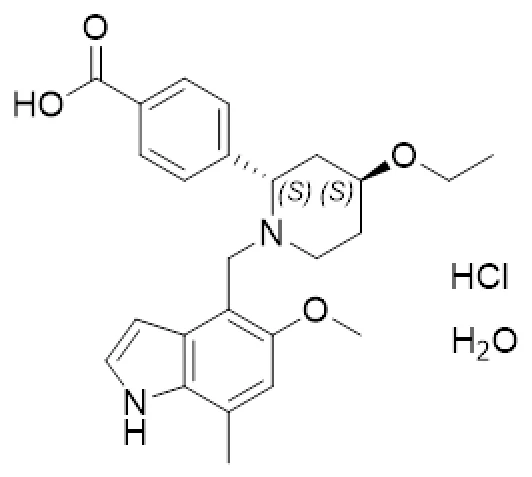
Chemical name: [(2S,4S)-2-(4-Carboxyphenyl)-4-ethoxy-1-[(5-methoxy-7-methyl-1H-indol-4-yl) methyl]piperidin-1-ium chloride―water (1/1)
Molecular formula and molecular mass:
Active moiety: C25H30N2O4
Salt on solvate (hydrate) form: C25H30N2O4·HCl H2O
Structural formula:
Physicochemical properties:
White or almost white to pale purplish-pink powder.
Solubility: slightly soluble in water at 25 ± 0.2°C and sparingly soluble in water at 37 ± 0.5°C.
pH value: pH of 0.1% (m/V) solution in water measured at 22.5°C potentiometrically was found to be 3.18.
14. Clinical Trials
14.1. Clinical Trials by Indication
Paroxysmal Nocturnal Hemoglobinuria (PNH)
The efficacy and safety of FABHALTA in adult patients with PNH were evaluated in two multi-center, open-label, 48-week Phase 3 studies: an active comparator-controlled study (APPLY-PNH) and a single arm study (APPOINT-PNH).
Table 6: Summary of Patient Demographics for Clinical Trials in PNH
| Study # | Study design | Dosage, route of administration and duration | Study subjects (n) | Mean age (Range) | Sex n (%) |
| APPLY-PNH (C12302) | Phase 3 randomized, multicenter, active-comparator controlled, open-label trial | Iptacopan 200 mg orally twice daily Anti-C5 (Eculizumab 300 mg/30mL IV or Ravulizumab 300 mg/30mL IV) Duration: 24 weeks | Iptacopan n= 62 Anti-C5 n= 35 (eculizumab n=23 or ravulizuma b n=12) | Iptacopan 51.7 years (22-84) Anti-C5 49.8 years (20-82) | Iptacopan Female 43 (69.4%) Male 19 (30.6%) Anti-C5 Female 24 (68.6%) Male 11 (31.4%) |
APPOINT-PNH (C12301) | Phase 3 multicenter, single-arm, open-label trial | Iptacopan 200 mg orally twice daily Duration: 24 weeks | n= 40 | 42.1 years (18-81) | Female 17 (42.5%) Male 23 (57.5%) |
- APPLY-PNH: anti-C5 treatment experienced patients with PNH
APPLY-PNH enrolled adult PNH patients with residual anemia (hemoglobin <10 g/dL) despite previous treatment with a stable regimen of anti-C5 treatment (either eculizumab or ravulizumab) for at least 6 months prior to randomization.
Ninety-seven patients were randomized in 8:5 ratio either to switch to FABHALTA 200 mg orally twice daily (n=62) or to continue anti-C5 treatment (eculizumab n=23 or ravulizumab n=12) throughout the duration of the 24-week randomized treatment period. Randomization was stratified based on prior anti-C5 treatment and transfusion history within the last 6 months. Following completion of the 24-week randomized treatment period, all patients were eligible to enroll in a 24-week treatment extension period and receive FABHALTA monotherapy. Subsequently, patients were eligible to enter a separate long-term extension study.
Patients were required to be vaccinated against Neisseria meningitidis and recommended to be vaccinated against Streptococcus pneumoniae and Haemophilus influenzae type B. If the patient had not been previously vaccinated or if a booster was required, vaccination was administered at least 2 weeks prior to first dosing. If FABHALTA treatment was initiated earlier than 2 weeks after vaccination, antibacterial drug prophylaxis was administered. In total, 97%, 86% and 89% of patients in the FABHALTA arm were vaccinated against Streptococcus pneumoniae, Neisseria meningitidis and Haemophilus influenzae type B, respectively, either before or during treatment with FABHALTA. All patients (100%) in the FABHALTA arm were vaccinated against meningococcal serotype A, C, W-135 and Y vaccines.
Demographics and baseline disease characteristics were generally well balanced between treatment groups (see Table 7). The mean time on prior anti-C5 treatment was 3.8 and 4.2 years for FABHALTA and anti-C5 groups, respectively. The baseline mean PNH RBC clone size (Type II + III) was 64.6% for FABHALTA and 57.4% for the anti-C5 group.
During the randomized treatment period, one patient in the FABHALTA group discontinued treatment due to pregnancy; no patients in the anti-C5 group discontinued.
Table 7: Patient Baseline Demographics and Characteristics in APPLY- PNH
| Parameters | Statistics | FABHALTA (n=62) | Anti-C5 (n=35) | |||
|---|---|---|---|---|---|---|
| Parameters | Statistics | FABHALTA (n=62) | Anti-C5 (n=35) | |||
| Age (years) | Mean (SD) min, max | 51.7 (16.9) 22, 84 | 49.8 (16.7) 20, 82 | |||
Sex Female Male | n (%) | 43 (69.4) 19 (30.6) | 24 (68.6) 11 (31.4) | |||
Race Asian Black or African American White or Caucasian | n (%) n (%) n (%) | 12 (19.4) 2 (3.2) 48 (77.4) | 7 (20.0) 2 (5.7) 26 (74.3) | |||
Ethnicity Hispanic or Latino Not Hispanic or Latino Not reported/unknown | n (%) n (%) n (%) | 8 (12.9) 51 (82.3) 3 (4.8) | 2 (5.7) 27 (77.1) 6 (17.1) | |||
| Hemoglobin level (g/dL) | Mean (SD) | 8.9 (0.7) | 8.9 (0.9) | |||
| LDH level (U/L) | Mean (SD) | 269.1 (70.1) | 272.7 (84.8) | |||
| Absolute reticulocyte count (ARC) (109/L) | Mean (SD) | 193.2 (83.6) | 190.6 (80.9) | |||
| At least one transfusion in 12 months prior to screening | n (%) | 37 (59.7) | 22 (62.9) | |||
| At least one transfusion in 6 months prior to randomization | n (%) | 35 (56.5) | 21 (60.0) | |||
| Number of transfusions in 6 months prior to randomization among patients who had a transfusion | Mean (SD) | 3.1 (2.6) | 4.0 (4.3) | |||
| History of MAVEs (including thrombosis) | n (%) | 12 (19.4) | 10 (28.6) | |||
| Disease duration (years) | Mean (SD) | 11.9 (9.8) | 13.5 (10.9) | |||
| Abbreviations: LDH, lactate dehydrogenase; MAVEs, major adverse vascular events; SD, standard deviation. | ||||||
Efficacy was based on two primary endpoints to demonstrate superiority of switching to FABHALTA compared to continuing on anti-C5 therapy in achieving hematological response after 24 weeks of treatment, without a need for transfusion, by assessing the proportion of patients demonstrating: 1) sustained increase of ≥ 2 g/dL in hemoglobin levels from baseline (hemoglobin improvement) and/or 2) sustained hemoglobin levels ≥12 g/dL.
FABHALTA was superior to anti-C5 treatment, with a significant difference in response rate of 80.2% (82.3% vs 2%) for sustained increase of hemoglobin levels ≥ 2 g/dL from baseline, and 67% (68.8% vs 1.8%) for sustained hemoglobin level ≥12 g/dL without a need for RBC transfusion, after 24 weeks of treatment (p<0.0001) (see Table 8).
FABHALTA was also superior to anti-C5 treatment for transfusion avoidance rate, change from baseline in hemoglobin level, improving fatigue as assessed by FACIT-Fatigue, in annualized rate of clinical breakthrough hemolysis and reduction in absolute reticulocyte count from baseline (see Table 8). Patient-reported FACIT-fatigue may be an under- or over-estimation, because patients were not blinded to treatment assignment.
The treatment effect of FABHALTA on hemoglobin was seen as early as Day 7 and sustained during the study. The LDH ratio to baseline was similar for both treatment groups, demonstrating that FABHALTA maintained control of IVH following discontinuation of anti-C5 treatment.
The results for the primary endpoints were consistent across the predefined subgroups studied (including disease duration, age, sex, baseline hemoglobin, history of MAVEs, previous anti-C5 treatment (eculizumab or ravulizumab), the need for transfusion in the last 6 months, number of transfusions in the last 6 months (<2 or ≥2), LDH level at baseline and duration of previous anti-C5 treatment) although these results should be interpreted with caution given the small sample size and inherent risks with subgroup analyses in general.
Table 8: Efficacy results for the 24-week randomized treatment period in APPLY-PNH
| Endpoints | FABHALTA (N=62) | Anti-C5 (N=35) | Difference (95% CI) p-value | ||||||||
|---|---|---|---|---|---|---|---|---|---|---|---|
| Endpoints | FABHALTA (N=62) | Anti-C5 (N=35) | Difference (95% CI) p-value | ||||||||
| Primary endpoints | |||||||||||
Number of patients achieving hemoglobin improvement (sustained increase of hemoglobin levels ≥2 g/dL from baselinea in the absence of transfusions) Response ratec (%) | 51/60b 82.3 | 0/35b 2.0 | 80.2 (71.2, 87.6) <0.0001 | ||||||||
| Number of patients achieving sustained hemoglobin level ≥12 g/dLa in the absence of transfusions | 42/60b | 0/35b | |||||||||
| Response ratec (%) | 68.8 | 1.8 | 67.0 (56.4, 76.9) <0.0001 | ||||||||
| Secondary endpoints | |||||||||||
Number of patients avoiding transfusiond,e Transfusion avoidance ratec (%) | 59/62b 94.8 | 14/35b 25.9 | 68.9 (51.4, 83.9) <0.0001 | ||||||||
| Hemoglobin level change from baseline (g/dL) (adjusted meanf) | 3.60 | -0.06 | 3.66 (3.20, 4.12) <0.0001 | ||||||||
| FACIT-Fatigue score change from baseline (adjusted meana,g,h) | 8.59 | 0.31 | 8.29 (5.28, 11.29) <0.0001 | ||||||||
Clinical breakthrough hemolysis i,j, % (n/N) Annualized rate of clinical breakthrough hemolysis | 3.2 (2/62) 0.07 | 17.1 (6/35) 0.67 | RR=0.10 (0.02, 0.61) 0.01 | ||||||||
| Absolute reticulocyte counts change from baseline (109/L) (adjusted meang) | -115.8 | 0.43 | -116.2 (-132.0, -100.3) <0.0001 | ||||||||
| LDH ratio to baseline (adjusted geometric meana,g) | 0.96 | 0.98 | Ratio = 0.99 (0.89, 1.10) 0.84 | ||||||||
MAVEsi % (n/N) Annualized rate of MAVEsi | 1.6 (1/62) 0.03 | 0 0 | 0.03 (-0.03, 0.10) 0.32 | ||||||||
Abbreviations: RR, rate ratio; LDH, lactate dehydrogenase; MAVEs, major adverse vascular events. a Assessed between Day 126 and 168. b Based on observed data among evaluable patients. c Response rate reflects the adjusted proportion. d Assessed between Day 14 and 168. e Transfusion avoidance is defined as absence of administration of packed-red blood cell transfusions or meeting the criteria for transfusion between Day 14 and 168. f Adjusted mean assessed between Day 126 and 168, values within 30 days after transfusion were excluded from the analysis. g Adjusted mean assessed between Day 126 and 168, values within 30 days after transfusion were included in the analysis. h Patient-reported FACIT-fatigue may be an under- or over-estimation, because patients were not blinded to treatment assignment. i Assessed between Day 1 and 168. j Clinical breakthrough hemolysis defined as meeting clinical criteria (either decrease of Hemoglobin level ≥ 2 g/dL compared to the last assessment or within 15 days; or signs or symptoms of gross hemoglobinuria, painful crisis, dysphagia or any other significant clinical PNH-related signs and symptoms) and laboratory criteria (LDH> 1.5-times ULN and increased as compared to the last 2 assessments). | |||||||||||
Treatment extension
A total of 95 patients entered the 24-week treatment extension period, where all patients received FABHALTA, resulting in a total exposure of up to 48 weeks. The efficacy results at Week 48 were consistent with those at Week 24 and demonstrated sustained efficacy of FABHALTA treatment.
- APPOINT-PNH: Complement inhibitor naïve study
APPOINT-PNH studied 40 adult PNH patients (RBC clone size ≥10%) with hemoglobin <10 g/dL and LDH > 1.5 ULN, who were not previously treated with a complement inhibitor. All 40 patients received FABHALTA 200 mg orally twice daily during the 24-week open-label core treatment period. Subsequently, patients were eligible to enroll in a 24-week treatment extension period and continue to receive FABHALTA, followed by a separate long-term extension study.
The mean age of the patients was 42.1 years and 42.5% were female. The mean disease duration was 4.7 years. The baseline mean PNH RBC clone size (Type II + III) was 42.7%, mean baseline hemoglobin was 8.2 g/dL, and approximately 70% of patients required a transfusion in the 6 months prior to treatment. The baseline mean LDH level was 1,699 U/L and the mean absolute reticulocyte count was 154 X 109/L. About 12.5% of patients had a history of MAVEs. No patients discontinued from the core treatment period of the study.
FABHALTA treatment resulted in a response rate of 92.2% (95% CI: 82.5, 100.0) for a sustained increase of ≥2 g/dL in hemoglobin levels from baseline, without a need for RBC transfusion, after 24 weeks. The response rate for patients achieving hemoglobin ≥12 g/ dL without a need for RBC transfusion, after 24 weeks was 62.8% (95% CI: 47.5, 77.5). FABHALTA treatment led to transfusion avoidance rate of 97.6% (95% CI: 92.5, 100.0).
Patients treated with FABHALTA experienced clinically meaningful improvements in patient reported fatigue (FACIT-Fatigue score change from baseline +10.8; 95% CI: 8.7, 12.8). Patient-reported FACIT-fatigue may be an under- or over-estimation, because patients were not blinded to treatment assignment. No patients experienced clinical breakthrough hemolysis or MAVEs. When compared to baseline, in patients treated with FABHALTA, hemoglobin levels increased by 4.3 g/dL (95% CI: 3.9, 4.7), absolute reticulocyte counts decreased by 82.5 x 10⁹/L (95% CI: 89.3, 75.6), and LDH levels decreased by 83.6% (95% CI: 84.9, 82.1) after 24 weeks. The treatment effect of FABHALTA on LDH was seen as early as Day 7 and reached <1.5 ULN by Day 14, which was sustained during the study.
The results for the primary endpoint were consistent across the predefined subgroups examined, including disease duration, age, sex, baseline hemoglobin, history of MAVEs, need for transfusion in the last 6 months, and number of transfusions in the last 6 months (<2 or ≥2), although these results should be interpreted with caution given the small sample size.
Treatment extension
All 40 patients entered the 24-week treatment extension period, where all patients continued FABHALTA treatment, resulting in a total exposure of up to 48 weeks. The efficacy results at Week 48 were consistent with those at Week 24 demonstrating sustained efficacy of FABHALTA treatment.
Complement 3 Glomerulopathy
The efficacy and safety of FABHALTA in adult patients with C3G were evaluated in a multicenter, randomized, double-blind study (APPEAR-C3G, NCT04817618). The study enrolled 74 adult patients with biopsy confirmed C3G who had urine protein-to-creatinine ratio (UPCR) ≥ 1 g/g and eGFR ≥ 30 mL/min/1.73 m2.
Table 9: Summary of Patient Demographics for Clinical Trials in C3G
| Study # | Study design | Dosage, route of administration and duration | Study subjects (n) | Mean age (Range) | Sex n (%) |
| APPEAR-C3G (B12301) | Phase 3 randomized, double-blind, parallel group, placebo-controlled trial | Iptacopan 200 mg orally twice daily Placebo Duration: 52 weeks (including a 6-month blinded treatment part and a 6-month open-label part) | Iptacopan n= 38 Placebo n= 36 | Iptacopan 26.1 years (10.4) Placebo 29.8 years (10.8) | Iptacopan Female 11 (28.9%) Male 27 (71.1%) Placebo Female 16 (44.4%) Male 20 (55.6%) |
- APPEAR-C3G
Patients were randomized (1:1) to receive either FABHALTA 200 mg orally twice daily (n=38) or placebo (n=36) for 6 months, followed by a 6-month open label treatment period in which patients received FABHALTA 200 mg orally twice daily. Seventy-three patients completed the open label treatment period.
Patients were on a stable maximally tolerated dose of a renin-angiotensin system (RAS) inhibitor. Randomization was stratified according to whether or not patients were receiving concomitant immunosuppressive therapy (i.e., corticosteroid and/or mycophenolate mofetil/sodium (MMF/MPS)). All of these therapies (i.e., RAS inhibitors, corticosteroids and MMF/MPS) were required to be at stable doses 90 days prior to randomization and throughout the study.
Patients were required to be vaccinated against Neisseria meningitidis and Streptococcus pneumoniae and were recommended to be vaccinated against Haemophilus influenzae Type B. If the patient had not been previously vaccinated, or if a booster was required, vaccination was administered at least 2 weeks prior to first dosing. If FABHALTA treatment was initiated earlier than 2 weeks after vaccination, antibacterial drug prophylaxis was administered.
Baseline demographics and characteristics for the randomized patients are shown in Table 10. The higher 24-hour UPCR and lower eGFR observed at baseline in the FABHALTA group compared to the placebo group represent a more severe disease phenotype in the FABHALTA group.
Table 10: Patient Baseline Demographics and Characteristics in APPEAR-C3G
| Parameters | Statistics | FABHALTA (N = 38) n (%) | Placebo (N = 36) n (%) | |||
|---|---|---|---|---|---|---|
| Age (years) | Mean (SD) min, max | 26.1 (10.4) 18, 52 | 29.8 (10.8) 18, 60 | |||
Age at C3G diagnosis < 18 years ≥ 18 years | n (%) n (%) | 15 (39.5) 23 (60.5) | 6 (16.7) 30 (83.3) | |||
Sex Male Female | n (%) n (%) | 27 (71.1) 11 (28.9) | 20 (55.6) 16 (44.4) | |||
Race White or Caucasian Asian Black or African American Other | n (%) n (%) n (%) n (%) | 27 (71.1) 9 (23.7) 1 (2.6) 1 (2.6) | 24 (66.7) 9 (25) 1 (2.8) 2 (5.6) | |||
Ethnicity Not Hispanic or Latino Not reported/Unknown Hispanic or Latino | n (%) n (%)n (%) | 34 (89.5) 3 (7.9) 1 (2.6) | 29 (80.6) 1 (2.8) 6 (16.7) | |||
| 24-hour UPCR, g/g | Geometric mean (95% CI) | 3.33 (2.8, 4.0) | 2.58 (2.2, 3.1) | |||
| eGFR, mL/min/1.73 m2 | Mean (SD) min, max | 89.3 (35.2) 28, 135 | 99.2 (26.9) 37, 136 | |||
C3G subtype C3GN DDD Mixed C3GN/DDD Unknown | n (%) n (%) n (%) n (%) | 26 (68.4) 9 (23.7) 2 (5.3) 1 (2.6) | 32 (88.9) 1 (2.8) 2 (5.6) 1 (2.8) | |||
| Immunosuppressive therapy with corticosteroids and/or MMF/MPS | n (%) | 16 (42.1) | 17 (47.2) | |||
| Abbreviations: SD, Standard Deviation; C3GN, C3 glomerulonephritis; DDD, dense deposit disease | ||||||
The primary efficacy endpoint was percent change in 24-hour UPCR compared to baseline after 6 months of treatment.
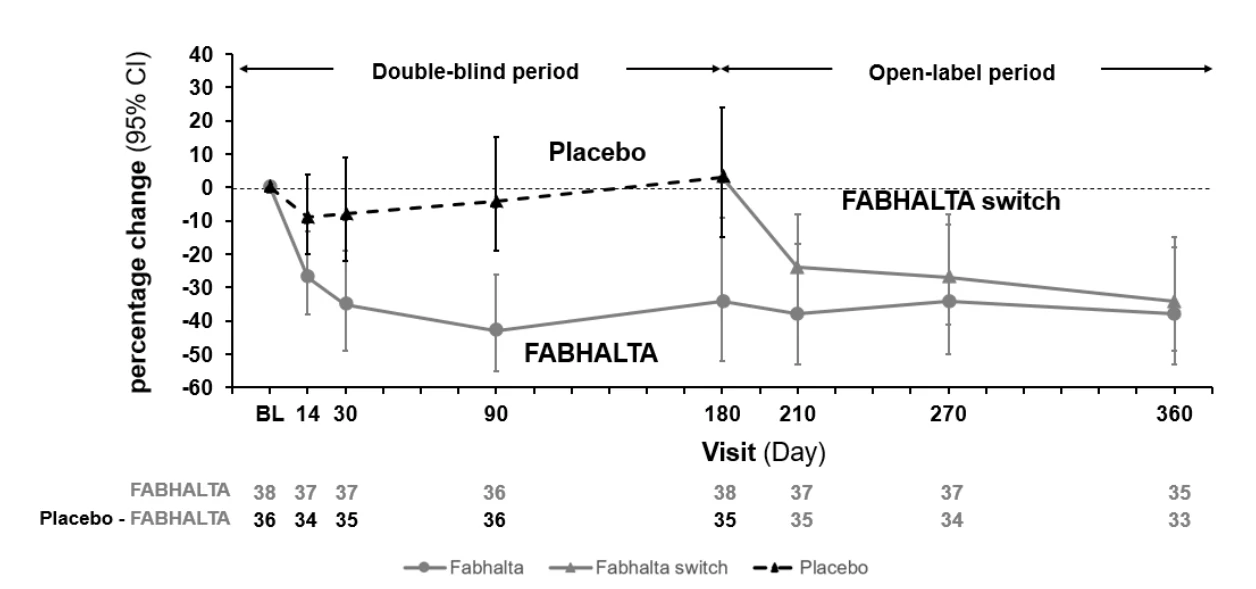
FABHALTA was superior to placebo, with a statistically significant and clinically meaningful 35.1% reduction in 24-hour UPCR from baseline compared to placebo after 6 months of treatment (-30.2% and +7.6% for FABHALTA and placebo, respectively, 1-sided p=0.0014). See Table 11 for more details. The effect of FABHALTA on 24-hour UPCR was sustained up to 12 months (40.0% reduction from baseline). Patients who switched from placebo to FABHALTA in the 6 month open label treatment period experienced a 31.0% reduction in 24-hour UPCR from Month 6 to Month 12. In addition, reduction in UPCR in the FABHALTA group was seen as early as Day 14 (measured as first morning void [FMV]) (See Figure 1).
In a post-hoc analysis, treatment with FABHALTA substantially reduced the percentage of patients with nephrotic range proteinuria (defined as UPCR ≥3 g/g) relative to baseline. The percentage of patients with nephrotic range proteinuria decreased from 55.3% at baseline to 31.6% and 36.8% in the FABHALTA group at Month 6 and 12, respectively. The percentage of patients randomized to placebo with nephrotic range proteinuria increased from 30.6% at baseline to 41.7% at Month 6. After switching to FABHALTA treatment, the percentage of nephrotic patients decreased to 27.8% at Month 12.
Patients treated with FABHALTA had 7-fold higher odds (29.0% vs 5.7%, 1-sided p=0.0166) of achieving the composite renal endpoint (defined as a ≥50% reduction in 24-hour UPCR compared to baseline and stable [≤ 15% reduction in eGFR] or improved eGFR compared to baseline) providing a statistically significant treatment effect compared to placebo. See Table 10 for more details. This effect was mainly driven by 29.7% of FABHALTA-treated patients achieving ≥50% reduction in 24-hour UPCR compared to baseline vs 5.6% in the placebo group.
After 12 months of FABHALTA treatment, 44.1% of patients achieved the composite renal endpoint. In the patients who switched to FABHALTA treatment during the open label treatment period, the proportion of patients who achieved the composite renal endpoint increased from 5.7% on placebo at Month 6 to 24.0% on FABHALTA at Month 12.
Table 11: Efficacy Results for the 6-month double-blind treatment period in APPEAR-C3G
| Endpoints | FABHALTA (N=38) | Placebo (N=36) | Difference (95% CI) 1-sided p-value | |||
|---|---|---|---|---|---|---|
| Primary endpoint | ||||||
| % Change from baseline in 24-hour UPCR at 6 months | -30.2 % | 7.6 % | 35.1%1 (13.8, 51.1) 0.0014 | |||
| Secondary endpoint | ||||||
| Proportion of patients who achieved a composite renal endpoint at 6 months2 | 29.0% | 5.7% | 23.3% (7.2, 39.4) 0.01663 | |||
N: number of subjects enrolled 1 Relative difference based on Mixed Models for Repeated Measures (MMRM) model. 2 Defined as stable (≤15% reduction in eGFR) or improved eGFR compared to baseline and a ≥50% reduction in 24-hour UPCR compared to baseline in patients that did not require initiation of treatment with any complement system modifying agent, or initiation/intensification of corticosteroid, immunosuppressant, or renal replacement therapy. 3Multiplicity adjusted p-value for the secondary endpoint. | ||||||
Figure 1: Geometric Mean Percent Change from Baseline in FMV UPCR up to 12 months (APPEAR-C3G)
FABHALTA treatment for 6 months resulted in a numerical improvement of +2.2 mL/min/1.73m2 (95% CI: -2.7, 7.1, 1-sided p=0.3241) in eGFR from baseline compared to placebo (+1.3 and -0.9 mL/min/1.73 m2 change for FABHALTA and placebo, respectively). The eGFR remained stable during the 12 months duration of the study in the FABHALTA treatment arm (+0.44 mL/min/1.73 m2 from baseline).
FABHALTA treatment for 6 months resulted in a mean difference in glomerular C3 deposition as measured by the C3 deposit score of -1.9 (95% CI: -3.3, -0.5; nominal 1-sided p=0.0053) from baseline compared to placebo. Change from baseline on iptacopan was -0.78 (95% CI: -1.81, 0.25) compared to an increase of 1.09 (95% CI: 0.11, 2.08) with placebo.
A beneficial effect of FABHALTA on 24-hour UPCR after 6 months of treatment was observed across subgroups including age, sex, race, baseline disease characteristics (such as baseline proteinuria and eGFR levels) and use of immunosuppressive therapies.
15. Microbiology
No microbiological information is required for this drug product.
16. Non-Clinical Toxicology
General toxicology
The preclinical safety profile of iptacopan was assessed in oral repeat-dose toxicity studies in rats and in dogs.
In a 26-week study, rats were administered iptacopan at 50, 150, or 750 mg/kg/day. Increased thyroid gland weight was observed at all doses, which correlated with follicular cell hypertrophy and large thyroid at higher dose levels. Increased testis weight was noted at all doses without microscopic findings or changes in sperm parameters. All changes showed full reversibility and were considered non-adverse. The no observed adverse effect level (NOAEL) in this study was 750 mg/kg/day (5-fold MRHD based on AUC).
In a 39-week study, dogs were administered iptacopan at 5, 30, or 150 mg/kg/day. Dyserythropoiesis with bone marrow fibrosis led to one death at the highest dose. Transient increases in heart rate were observed upon treatment initiation at the highest dose (17-fold MRHD based on Cmax), which were associated with decreased blood pressure and reflexive decreases in PR and QT intervals. No effects on corrected QT interval or QRS were observed. Increased thyroid gland weight with follicular cell hypertrophy were noted at all doses. Decreased testis weight associated with tubular degeneration and increased cellular debris in the epididymis were observed at ≥30 mg/kg/day, and considered adverse. Findings in surviving animals showed full reversibility. The NOAEL in this study was 5 mg/kg/day (0.6-fold MRHD based on AUC).
In a 4-week study where a higher dose of 300 mg/kg/day (45-fold and 30-fold MRHD based on Cmax and AUC, respectively) was administered to dogs, increased heart rate was associated with partially reversible cardiomyocyte degeneration and fibrosis.
Genotoxicity
Iptacopan was not genotoxic or mutagenic in the bacterial reverse mutation assay, in vitro human lymphocyte micronucleus test, and in vivo rat micronucleus test.
Carcinogenicity
Oral administration of iptacopan to rasH2 transgenic mice for 6 months with doses up to 1000 mg/kg/day (3-fold MRHD based on AUC) and to rats for 2 years with doses up to 750 mg/kg/day (9-fold MRHD based on AUC) did not identify any carcinogenic potential.
Reproductive and developmental toxicology
In fertility studies in rats, oral administration of iptacopan to males for 13 weeks prior to pairing and during pairing had no adverse effects on fertility up to the highest dose of 750 mg/kg/day (4-fold MRHD based on AUC). Administration of iptacopan to female rats for 2 weeks prior to pairing until gestation day 6 increased pre- and post-implantation loss and decreased the number of live embryos at the highest dose of 1000 mg/kg/day (4-fold MRHD based on AUC). The NOAEL for fertility in female rats was 300 mg/kg/day (2-fold MRHD based on AUC).
In the embryo-fetal development study in rats, oral administration of iptacopan during organogenesis did not induce adverse maternal, embryo or fetal toxicity up to the highest dose of 1000 mg/kg/day (4-MRHD based on AUC). Non-adverse fetal skull ossification delays were observed at all doses (lowest dose equivalent to 0.6-fold MRHD based on AUC).
In the embryo-fetal development study in rabbits, oral administration of iptacopan did not induce adverse embryo or fetal toxicity at any dose, while maternal toxicity (adverse body weight loss and reduced food consumption) was observed at the highest dose of 450 mg/kg/day (6-fold the MRHD based on AUC.)
In the pre- and postnatal development study in rats, oral administration of iptacopan to females from gestational day 6 to lactation day 21 had no adverse effects on pregnant dams or offspring up to the highest dose of 1000 mg/kg/day (4-fold MRHD based on AUC). Excretion of iptacopan in milk was not investigated.
Special toxicology
Iptacopan absorbs light in the UVB and UVA range. In the local lymph node assay in female mice administered iptacopan doses of up to 1000 mg/kg (34-fold MRHD based on Cmax), transient minimal erythema, scabs and dryness, and slight increase in ear weight subsequent to irradiation were observed in a non-dose dependent manner.