


Product Monograph - Voydeya
RECENT MAJOR LABEL CHANGES
| 4 DOSAGE AND ADMINISTRATION, 4.2 Recommended Dose and Dosage Adjustment | 10/2025 |
|---|
TABLE OF CONTENTS
Sections or subsections that are not applicable at the time of authorization are not listed.
RECENT MAJOR LABEL CHANGES .......................................................................................... 2
Part 1: Healthcare Professional Information.......................................................................... 4
1 Indications ................................................................................................................ 4
1.1 Pediatrics ................................................................................................................ 4
1.2 Geriatrics ................................................................................................................ 4
2 Contraindications ...................................................................................................... 4
3 Serious Warnings and Precautions Box ...................................................................... 4
4 Dosage and Administration ....................................................................................... 5
4.1 Dosing Considerations ........................................................................................... 5
4.2 Recommended Dose and Dosage Adjustment ...................................................... 5
4.4 Administration ....................................................................................................... 6
4.5 Missed Dose ........................................................................................................... 6
5 Overdose .................................................................................................................. 6
6 Dosage Forms, Strengths, Composition, and Packaging .............................................. 6
7 Warnings and Precautions ......................................................................................... 7
7.1 Special Populations ................................................................................................ 9
7.1.1 Pregnancy ........................................................................................................... 9
7.1.2 Breastfeeding ..................................................................................................... 9
7.1.3 Pediatrics ............................................................................................................ 9
7.1.4 Geriatrics ............................................................................................................ 9
8 Adverse Reactions ..................................................................................................... 9
8.1 Adverse Reaction Overview ................................................................................... 9
8.2 Clinical Trial Adverse Reactions ........................................................................... 10
8.4 Abnormal Laboratory Findings: Hematologic, Clinical Chemistry and Other Quantitative Data ............................................................................................................. 12
9 Drug Interactions .................................................................................................... 12
9.2 Drug Interactions Overview ................................................................................. 12
9.4 Drug-Drug Interactions ........................................................................................ 12
9.5 Drug-Food Interactions ........................................................................................ 13
9.6 Drug-Herb Interactions ........................................................................................ 13
9.7 Drug-Laboratory Test Interactions....................................................................... 13
10 Clinical Pharmacology ............................................................................................. 14
10.1 Mechanism of Action ........................................................................................... 14
10.2 Pharmacodynamics .............................................................................................. 14
10.3 Pharmacokinetics ................................................................................................. 14
Special Populations and Conditions ................................................................................. 15
11 Storage, Stability, and Disposal ................................................................................ 16
12 Special Handling Instructions ................................................................................... 16
Part 2: Scientific Information .............................................................................................. 17
13 Pharmaceutical Information .................................................................................... 17
14 Clinical Trials ........................................................................................................... 18
14.1 Clinical Trials by Indication .................................................................................. 18
15 Microbiology ........................................................................................................... 22
16 Non-Clinical Toxicology ........................................................................................... 22
Reproductive and Developmental Toxicology: ................................................................ 23
Part 1: Healthcare Professional Information
1 Indications
Voydeya (danicopan tablets) is indicated:
- As an add-on to ravulizumab or eculizumab for the treatment of adult patients with paroxysmal nocturnal hemoglobinuria (PNH) who have residual hemolytic anemia due to extravascular hemolysis (EVH).
1.1 Pediatrics
Pediatrics (0 to < 18 years of age): No data are available to Health Canada; therefore, Health Canada has not authorized an indication for pediatric use.
1.2 Geriatrics
Voydeya has been studied in patients up to 82 years old. No apparent differences in the efficacy of Voydeya were observed between patients <65 years old and ≥65 years old, however, the analyses were limited by the low number of patients ≥65 years old.
2 Contraindications
Voydeya is contraindicated in patients:
- who are hypersensitive to this drug or to any ingredient in the formulation, including any non-medicinal ingredient, or component of the container. For a complete listing, see 6 Dosage Forms, Strengths, Composition, and Packaging
- who have unresolved serious infection caused by encapsulated bacteria including Streptococcus pneumoniae, Neisseria meningitidis, and Haemophilus influenzae type B.
3 Serious Warnings and Precautions Box
Serious Warnings and Precautions
Voydeya may predispose individuals to serious infections caused by encapsulated bacteria, such as Streptococcus pneumoniae, Neisseria meningitidis, and Haemophilus influenzae type B (see 7 Warnings and Precautions Serious Infections Caused by Encapsulated Bacteria).
- Comply with the most current National Advisory Committee on Immunization (NACI) recommendations for vaccinations against encapsulated bacteria, specifically Neisseria meningitidis and Streptococcus pneumoniae, in patients with complement deficiencies.
- Patients must be vaccinated against encapsulated bacteria, specifically Neisseria meningitidis and Streptococcus pneumoniae, at least 2 weeks prior to initiating Voydeya, unless the risks of delaying Voydeya therapy outweigh the risks of developing a serious infection.
- Patients who initiate treatment with Voydeya less than 2 weeks after vaccination must receive treatment with appropriate prophylactic antibiotics until 2 weeks after vaccination.
- Vaccination reduces, but does not eliminate, the risk of serious infections. Monitor patients for early signs of serious infections and treat immediately if infection is suspected.
4 Dosage and Administration
4.1 Dosing Considerations
- Vaccinate patients according to current NACI guidelines to reduce the risk of serious infection (see 7 Warnings and Precautions Serious Infections Caused by Encapsulated Bacteria).
- Provide two weeks of antibacterial drug prophylaxis to patients if Voydeya must be initiated immediately and vaccines are administered less than 2 weeks before starting Voydeya therapy.
- Voydeya should not be administered as monotherapy and should only be prescribed as an add-on to ravulizumab or eculizumab.
4.2 Recommended Dose and Dosage Adjustment
Recommended Dose:
The recommended starting dose of Voydeya is 150 mg three times a day administered orally, approximately 8 hours apart (± 2 hours).
The dose of Voydeya can be increased to 200 mg three times a day if a patient’s hemoglobin level has not increased by at least 2 g/dL after 4 weeks of therapy, if a patient required a transfusion within the previous 4 weeks, or to achieve an appropriate hemoglobin response based on clinical judgement.
Hepatic Impairment:
No dose adjustment is required in patients with mild to moderate hepatic impairment (Child-Pugh Class A and B). Studies have not been conducted in patients with severe hepatic impairment (Child-Pugh Class C); therefore, Voydeya is not recommended in this patient population (see 10.3 Pharmacokinetics, Special Populations and Conditions).
Renal Impairment:
No adjustment to the starting dose is required in patients with mild, moderate, or severe renal impairment. Dose escalation to 200 mg three times a day is not recommended in patients with severe renal impairment. There are no available clinical data for the use of Voydeya in patients with end-stage renal disease requiring hemodialysis (see 10.3 Pharmacokinetics Special Populations and Conditions).
Treatment Discontinuation: (see 7 Warnings and Precautions General Voydeya Treatment Discontinuation)
Due to the possibility of alanine aminotransferase (ALT) elevations after treatment cessation, if Voydeya treatment discontinuation is necessary, the dose should be tapered over a 6-day period until complete cessation as follows:
- 150 mg regimen: 100 mg three times a day for 3 days, followed by 50 mg three times a day for 3 days
- 200 mg regimen: 100 mg three times a day for 3 days, followed by 100 mg twice a day for 3 days
4.4 Administration
Voydeya can be taken with or without food.
4.5 Missed Dose
If a dose is missed, advise patients to take it as soon as they remember unless it is within 3 hours prior to the next dose, in which case patients should skip the missed dose and take the medicine at the next regularly scheduled time. Advise patients not to take 2 or more doses of Voydeya at the same time.
5 Overdose
Single doses up to 1,200 mg and multiple doses up to 800 mg twice a day have been taken in healthy volunteers. Alanine aminotransferase (ALT) elevations occurred after treatment cessation without a taper in 2 subjects who received 500 mg and 800 mg twice a day. All abnormal ALT findings were transient, with no evidence of hepatic function abnormality and resolved spontaneously.
In case of overdose, elevations in liver enzymes may occur. General supportive measures are recommended. It is not known if Voydeya can be removed by dialysis.
For management of a suspected drug overdose, contact your regional poison control centre or Health Canada’s toll-free number, 1-844 POISON-X (1-844-764-7669).
6 Dosage Forms, Strengths, Composition, and Packaging
Table 1: Dosage Forms, Strengths, and Composition
This medicinal product contains less than 1 mmol sodium (23 mg) per tablet.
Voydeya is available in 2 strengths containing 50 mg or 100 mg of danicopan per tablet.
Voydeya tablets are available in the dose strengths and packages listed in Table 2.
| Route of Administration | Dosage Form / Strength/Composition | Non-medicinal Ingredients |
| Oral | Tablet 50 mg, 100 mg | colloidal silicon dioxide, croscarmellose sodium, hypromellose acetate succinate, lactose monohydrate, magnesium stearate, microcrystalline cellulose, polyethylene glycol, polyvinyl alcohol, sodium lauryl sulfate, talc, and titanium dioxide. |
Table 2: Voydeya Tablet Presentations
| Dose Strength | Tablet Strength | Film-Coated Tablet Markings | Tablet Color/Shape | Pack Size |
|---|---|---|---|---|
| High density polyethylene bottles with desiccant and child resistant seal, packed inside a carton (30 day supply): | ||||
| 150 mg | 50 mg | Debossed on one side with “DCN 50” | White to off-white, round film-coated tablets | One 90 count bottle of 50 mg tablets One 90 count bottle of 100 mg tablets |
| 100 mg | Debossed on one side with “DCN 100” | |||
| 200 mg | 100 mg | Debossed on one side with “DCN 100” | White to off-white, round film-coated tablets | Two 90 count bottles of 100 mg tablets |
| 7-day blister packs sealed into a wallet card, with four wallet cards in each carton (28 day supply): | ||||
| 150 mg | 50 mg | Debossed on one side with “DCN 50” | White to off-white, round film-coated tablets | Four blister wallet cards of twenty-one 50 mg tablets and twenty-one 100 mg tablets per wallet |
| 100 mg | Debossed on one side with “DCN 100” | |||
| 200 mg | 100 mg | Debossed on one side with “DCN 100” | White to off-white, round film-coated tablets | Four blister wallet cards of forty-two 100 mg tablets per wallet |
7 Warnings and Precautions
See 3 Serious Warnings and Precautions Box.
Serious Infections Caused by Encapsulated Bacteria
Due to its mechanism of action, Voydeya may predispose patients to serious infections caused by encapsulated bacteria, including Neisseria meningitidis, Streptococcus pneumoniae, and Haemophilus influenzae type B. To reduce the risk of infection, all patients must be vaccinated against these bacteria, specifically Neisseria meningitidis and Streptococcus pneumoniae, according to current NACI guidelines for persons with complement deficiencies, at least 2 weeks prior to receiving the first dose of Voydeya. Depending on the duration of treatment with Voydeya, patients may require revaccination according to current NACI guidelines.
Patients who initiate Voydeya treatment less than 2 weeks after vaccination must receive treatment with appropriate prophylactic antibiotics until 2 weeks after vaccination. Consideration should be given to official guidance on the appropriate use of antibacterial agents.
All patients treated with Voydeya should be monitored for early signs of infection and sepsis, evaluated immediately if infection is suspected, and treated with appropriate antibiotics. Patients should be informed of these signs and symptoms and instructed to seek medical care immediately. Interruption of treatment with Voydeya may be considered in patients who are undergoing treatment for serious infections.
General
Voydeya Treatment Discontinuation
If patients with PNH discontinue treatment with Voydeya, they should be closely monitored for signs and symptoms of hemolysis, including fatigue or a sudden decrease in hemoglobin. If discontinuation of Voydeya is necessary, continue treatment with ravulizumab or eculizumab, or consider alternative therapy.
Excipients
This medicinal product contains lactose monohydrate. Patients with rare hereditary problems of galactose intolerance, total lactase deficiency or glucose-galactose malabsorption should not take this medicinal product.
Endocrine and Metabolism
Voydeya increases total cholesterol and LDL-cholesterol. Some patients required cholesterol-lowering medications. Monitor serum lipid parameters periodically during treatment with Voydeya and initiate cholesterol lowering medication, if indicated (See 8.4 Abnormal Laboratory Findings: Hematologic, Clinical Chemistry and Other Quantitative Data).
Hepatic/Biliary/Pancreatic
Alanine aminotransferase (ALT) elevations have been observed in clinical trials of Voydeya (see 8.2 Clinical Trial Adverse Reactions). In the 12-week randomized control period of Study ALXN2040-PNH-301 (see 14 Clinical Trials ), laboratory abnormalities related to elevations in ALT levels were observed in 14.0% of patients receiving Voydeya compared to 3.4% of patients receiving placebo. In Voydeya-treated patients, ALT elevations > 3 × the upper limit of normal (ULN) and ≤ 5 × ULN occurred in 8.8%, and > 5 × ULN and ≤ 10 × ULN in 5.3% of patients. All patients were asymptomatic. Some elevations occurred in the context of hemolysis.
Consider treatment interruption or discontinuation if elevations are clinically significant or if the patient becomes symptomatic (see 4.2 Recommended Dose and Dosage Adjustment).
Monitoring and Laboratory Tests
Monitoring for laboratory or clinical parameters should be conducted as per PNH management. In addition, the following are recommended for patients treated with Voydeya:
- Liver enzyme tests should be performed prior to initiation of treatment with Voydeya and periodically thereafter.
- Serum lipid parameters should be monitored periodically during treatment with Voydeya.
Reproductive Health
- Reproduction
Women of childbearing potential should use effective contraception methods during treatment with Voydeya and until 3 days after discontinuation.
Fertility
No human data on the effect of Voydeya on fertility are available. Animal studies do not indicate any potential direct effect on fertility of males or females at therapeutically relevant dose (see 16 Non-Clinical Toxicology , Reproductive and Developmental Toxicology).
7.1 Special Populations
7.1.1 Pregnancy
There are no available data from the use of Voydeya in pregnant women. Animal studies do not indicate direct or indirect harmful effects with respect to reproductive toxicity (see 16 Non-Clinical Toxicology , Reproductive and Developmental Toxicology). As a precautionary measure, it is preferable to avoid the use of Voydeya during pregnancy.
7.1.2 Breastfeeding
Available pharmacodynamic/toxicological data in animals have shown excretion of danicopan/metabolites in milk (see 16 Non-Clinical Toxicology Reproductive and Developmental Toxicology:). A risk to the newborns/infants cannot be excluded. Voydeya should not be used during breast-feeding and breast-feeding should not be initiated until 3 days after discontinuation.
7.1.3 Pediatrics
Pediatrics (0 to < 18 years of age): No data are available to Health Canada; therefore, Health Canada has not authorized an indication for pediatric use of Voydeya.
7.1.4 Geriatrics
Voydeya has been studied in patients up to 82 years old. There were no apparent age-related differences between patients <65 years old and ≥65 years old. However, the analyses were limited by the low number of patients ≥65 years old.
8 Adverse Reactions
8.1 Adverse Reaction Overview
The safety of Voydeya as an add-on to C5 inhibitor therapy in patients with PNH was evaluated in a randomized, double-blind, placebo-controlled study (ALXN2040-PNH-301) in 86 patients. A total of 4 serious adverse events (irrespective of causality) were reported in 3 patients who received Voydeya during the placebo-controlled randomized 12-week period. These included pancreatitis, blood bilirubin increased, cholecystitis, and COVID-19.
The most frequent adverse event (≥ 10%) was headache.
Adverse events leading to danicopan discontinuation were reported in 3 patients who received Voydeya and were predominantly related to liver enzyme elevations.
8.2 Clinical Trial Adverse Reactions
Clinical trials are conducted under very specific conditions. Therefore, the adverse reaction rates observed in the clinical trials of a drug may not reflect the rates observed in practice and should not be compared to rates in the clinical trials of another drug. Adverse reaction information from clinical trials may be useful in identifying and approximating rates of adverse drug reactions in real-world use.
The data described below reflect the exposure of 86 adult patients with PNH who received Voydeya (n = 57) or placebo (n = 29) as add-on therapy to ravulizumab or eculizumab at the recommended dosing regimens for 12 weeks in the randomized, double-blind, placebo-controlled study.
Table 3 describes adverse reactions reported in ≥3% of patients treated with Voydeya and greater than placebo in the randomized control period of PNH Study ALXN2040-PNH-301.
Table 3 : Treatment-Emergent Adverse Events Reported in ≥3% of Voydeya-Treated Patients with PNH and Greater than Placebo
Body System Adverse Reaction | Number of Patients | ||||||
|---|---|---|---|---|---|---|---|
Body System Adverse Reaction | Number of Patients | ||||||
Voydeya (add-on to ravulizumab or eculizumab) N = 57 n (%) | Placebo (ravulizumab or eculizumab only) N = 29 n (%) | ||||||
Voydeya (add-on to ravulizumab or eculizumab) N = 57 n (%) | Placebo (ravulizumab or eculizumab only) N = 29 n (%) | ||||||
| Blood and Lymphatic System Disorders | |||||||
| Hemolysis | 2 (4) | 0 (0) | |||||
| Neutropenia | 2 (4) | 0 (0) | |||||
| Gastrointestinal Disorders | |||||||
| Vomitinga | 4 (7) | 0 (0) | |||||
| Constipation | 2 (4) | 1 (3) | |||||
| Pancreatitis | 2 (4) | 0 (0) | |||||
| General Disorders and Administration Site Conditions | |||||||
| Pyrexia | 3 (5) | 0 (0) | |||||
| Fatigue | 2 (4) | 1 (3) | |||||
| Infections and Infestations | |||||||
| COVID-19 | 2 (4) | 0 (0) | |||||
| Urinary tract infection | 3 (5) | 1 (3) | |||||
| Viral infection | 2 (4) | 0 (0) | |||||
| Investigations | |||||||
| Hepatic enzyme increaseda | 5 (9) | 1 (3) | |||||
| Blood bilirubin increased | 2 (4) | 1 (3) | |||||
| White blood cell count decreased | 2 (4) | 0 (0) | |||||
| Musculoskeletal and Connective Tissue Disorders | |||||||
| Arthralgia | 4 (7) | 2 (7) | |||||
| Pain in extremity | 3 (5) | 0 (0) | |||||
| Myalgia | 2 (4) | 0 (0) | |||||
| Nervous System Disorders | |||||||
| Headache | 6 (11) | 3 (10) | |||||
| Respiratory, Thoracic and Mediastinal Disorders | |||||||
| Cough | 2 (4) | 0 (0) | |||||
| Oropharyngeal pain | 2 (4) | 0 (0) | |||||
| Rhinorrhoea | 2 (4) | 0 (0) | |||||
| Skin and Subcutaneous Tissue Disorders | |||||||
| Acne | 2 (4) | 0 (0) | |||||
| Vascular Disorders | |||||||
| Hypertension | 3 (5) | 1 (3) | |||||
a Vomiting includes Preferred Terms vomiting and discoloured vomit
b Hepatic enzyme increased includes Preferred Terms alanine aminotransferase increased, hepatic function abnormal, and hepatic enzyme increased
8.4 Abnormal Laboratory Findings: Hematologic, Clinical Chemistry and Other Quantitative Data
Clinical Trial Findings
Of the 50 Voydeya-treated patients who had a normal total cholesterol level at baseline in Study ALXN2040-PNH-301, 30% developed Grade 1 hypercholesterolemia. Of the 6 Voydeya treated patients who had Grade 1 hypercholesterolemia at baseline in Study ALXN2040-PNH-301, 1 patient experienced increased total cholesterol that worsened to Grade 2. Of the 54 Voydeya-treated patients who had LDL-cholesterol ≤130 mg/dL at baseline in Study ALXN2040-PNH-301, 13% developed LDL-cholesterol >130-160 mg/dL and 9% developed LDL-cholesterol >160-190 mg/dL (see 7 Warnings and Precautions Endocrine and Metabolism).
9 Drug Interactions
9.2 Drug Interactions Overview
Drugs that may alter danicopan plasma concentrations:
Available nonclinical data showed non-Cytochrome P450 (CYP) based metabolism is the predominant clearance pathway for Voydeya. The minimal contribution of CYP metabolism in human hepatocytes is suggestive of a very low likelihood of Voydeya as a victim of CYP based drug-drug interactions.
Drugs that may have their plasma concentrations altered by danicopan:
Danicopan is an inhibitor of P-glycoprotein (P-gp). Concomitant administration of Voydeya with a P-gp substrate known to have a narrow therapeutic range may require dose adjustment of the P-gp substrate (see 9.4 Drug-Drug Interactions).
9.4 Drug-Drug Interactions
The drugs listed in this table are based on either drug interaction case reports or studies, or potential interactions due to the expected magnitude and seriousness of the interaction.
| Proper/Common name | Source of Evidence | Effect | Clinical comment | ||
| Effect of Voydeya on other drugs | |||||
P-gp substrates (eg, fexofenadine, digoxin, dabigatran, edoxaban, tacrolimus) | Clinical trial | Repeated doses of danicopan increased fexofenadine1 Cmax 1.42-fold and AUC 1.62-fold Repeated doses of danicopan increased tacrolimus2 Cmax 1.13-fold and AUC 1.49-fold | Use caution when coadministering Voydeya with P-gp substrates that have a narrow therapeutic range (eg, digoxin). Dose adjustment of the P-gp substrate may be necessary. | ||
| BCRP substrates (eg. rosuvastatin, sulfasalazine) | Clinical trial | Repeated doses of danicopan increased rosuvastatin3 Cmax 3.29-fold and AUC 2.25-fold | Monitor patients more frequently for adverse reactions and consider dose reduction of the BCRP substrate drug. For rosuvastatin, the dose should not exceed 10 mg once daily. | ||
1 Co-administration of a single oral dose of 180 mg fexofenadine, with 150 mg danicopan three times daily
2 Co-administration of a single oral dose of 2 mg tacrolimus, with 200 mg danicopan three times daily
3 Co-administration of a single oral dose of 20 mg rosuvastatin, with 200 mg danicopan three times daily
Other Clinical Studies:
Effects of gastric acid reducing agents on danicopan:
No clinically meaningful differences in danicopan pharmacokinetics were observed when co-administered with gastric acid reducing agents (calcium carbonate, aluminum/magnesium hydroxide/simethicone) or a proton pump inhibitor (omeprazole).
Effects of danicopan on substrates of CYP enzymes:
No clinically meaningful differences were observed on the pharmacokinetics of substrates of CYP2B6 (bupropion), CYP2C9 (warfarin), CYP2C19 (omeprazole), or CYP3A4 (midazolam), when coadministered with danicopan.
Effects of danicopan on substrates of UGT enzymes:
No clinically meaningful differences were observed on the pharmacokinetics of mycophenolic acid, a substrate of UGT1A1 and UGT2B7, when coadministered with danicopan.
In vitro Studies:
Danicopan is a substrate of P-gp, but not a substrate of BCRP, OATP1B1, or OATP1B3. As a P-gp substrate with high permeability and low efflux ratio in vitro, the oral exposure of Voydeya does not appear to be affected by P-gp efflux in the gastrointestinal tract.
Danicopan is not an inducer of CYP1A2, CYP2B6 or CYP2C9. Danicopan is an inhibitor of BCRP and P-gp, but not an inhibitor of OATP1B1, OATP1B3, OAT1, OAT3, OCT2, MATE1, and MATE2-K.
9.5 Drug-Food Interactions
Interactions with food are not clinically meaningful and Voydeya can be administered with or without food (see 4.4 Administration).
9.6 Drug-Herb Interactions
Interactions with herbal products have not been established.
9.7 Drug-Laboratory Test Interactions
Interactions with laboratory tests have not been established.
10 Clinical Pharmacology
10.1 Mechanism of Action
Danicopan binds reversibly to complement Factor D and selectively inhibits the alternative complement pathway. Danicopan prevents the cleavage of complement Factor B into the Ba and Bb fragments which are required for the formation of the alternative pathway (AP) complement component C3 convertase (C3bBb), the generation of downstream effectors including C3 fragment opsonization, and the amplification of the terminal pathway.
In PNH, intravascular hemolysis (IVH) is mediated by the terminal membrane attack complex (MAC), while extravascular hemolysis (EVH) is facilitated by C3 fragment opsonization. Danicopan acts proximally in the alternative pathway of the complement cascade to control preferentially C3 fragment-mediated EVH, while co-administered ravulizumab or eculizumab maintains control over MAC-mediated IVH.
10.2 Pharmacodynamics
Danicopan inhibits the AP of complement system, as demonstrated by decreases in ex vivo serum AP activity and in vivo plasma Bb concentration. Danicopan also reduces complement C3 fragment deposition on circulating red blood cells (RBCs) in patients with PNH.
In patients with PNH receiving treatment with ravulizumab or eculizumab, add-on danicopan (150 mg or 200 mg three times a day) inhibited AP activity by 90%, reduced plasma Bb levels by about 50%, and decreased the proportion of PNH RBCs with C3 fragment deposition by over 50%.
Cardiac Electrophysiology:
At a single-dose of 1200 mg that results in approximately 2 times the peak concentration achieved following 200 mg three times a day, danicopan does not prolong the QTc interval to any clinically relevant extent.
10.3 Pharmacokinetics
At the recommended dosages of 150 or 200 mg three times a day, the median systemic exposure (range) of danicopan at steady state is shown in the following table:
Table 4: Steady-State Danicopan Exposure (Median [range]) in PNH Patients at Recommended Dosages Based on a Population Pharmacokinetic Model
| Danicopan Dose | Cmax,ss (ng/mL) | AUC24h,ss (ng*h/mL) |
|---|---|---|
| 150 mg three times a day | 535 [151, 945] | 8180 [3310, 14400] |
| 200 mg three times a day | 665 [187, 1180] | 10200 [4110, 17900] |
Cmax,ss = maximum observed concentration at steady state; AUC24,ss = area under the concentration-time curve over 24 hours at steady state
Danicopan exposures at steady state generally increase in a dose-proportional manner from 150 mg three times a day to 200 mg three times a day. Danicopan systemic exposure reaches steady state in approximately 2 days. An approximately 2-fold accumulation of danicopan exposure is expected at steady state following three times a day dosing compared to a single dose.
Absorption
The median time to maximum drug concentration (Tmax) of danicopan is 3.7 hours following oral administration of 150 mg danicopan in patients with PNH.
Consumption of a high-fat, high-calorie meal (approximately 900 kcal) 30 minutes before Voydeya administration (200 mg dose (2 x 100 mg tablets)) in healthy subjects increased the extent of danicopan absorption (AUC0-inf) by 25% and the rate of absorption (Cmax) by 93% compared with administration under fasted conditions. Median time to maximum drug concentration (Tmax) was comparable when danicopan was administered in the fed or fasted state. Voydeya can be administered with or without food (see 4.4 Administration).
Distribution
Plasma protein binding of danicopan is 91.5% to 94.3%. Danicopan is mainly distributed in plasma with a whole blood to plasma distribution ratio of 0.545. The apparent volume of distribution for a 75 kg person was 395 L.
Metabolism
Danicopan is extensively metabolized (96%) after oral dosing via oxidation, reduction, and hydrolysis pathways, with amide hydrolysis identified as the major pathway of elimination. Metabolism by CYP-mediated mechanisms is minimal.
Elimination
The mean half-life (t½) is 7.9 hours. The mean apparent clearance of danicopan is 63 L/h.
After a single oral administration of 150 mg [14C]-danicopan in humans, 69% of total radioactivity (danicopan plus metabolites) was excreted in feces and 25% was excreted in urine. Unchanged danicopan accounted for 3.57% and 0.48% of the dose excreted in feces and urine, respectively.
Special Populations and Conditions
No clinically meaningful differences in the pharmacokinetics of danicopan were observed based on sex, age (16.9 to 82 years), or race (White or Asian), based on a population PK assessment.
Hepatic Insufficiency
In a dedicated hepatic impairment study, following oral administration of 200 mg danicopan in participants with moderate hepatic impairment (Child-Pugh Class B), danicopan AUC0-inf decreased by 8% and Cmax decreased by 27% compared to participants with normal hepatic function. No dosage adjustment is necessary for patients with baseline mild or moderate (Child-Pugh A and B) hepatic impairment. Studies have not been conducted in participants with severe hepatic impairment (Child-Pugh C).
Renal Insufficiency
In a dedicated renal impairment study, following oral administration of 200 mg danicopan in participants with severe renal impairment (eGFR < 30 mL/min / 1.73 m2), danicopan AUC0-inf increased by 52% as compared to participants with normal renal function. There was no clinically meaningful change in Cmax, Tmax, and t½. There are no clinical data for the use of danicopan in patients requiring dialysis.
11 Storage, Stability, and Disposal
Keep in a safe place out of reach and sight of children.
Store in the original container at room temperature between 15°C and 30°C.
12 Special Handling Instructions
Any unused medicinal product or waste material should be disposed of in accordance with local requirements.
Part 2: Scientific Information
13 Pharmaceutical Information
Drug Substance
Non-proprietary name of the drug substance: Danicopan
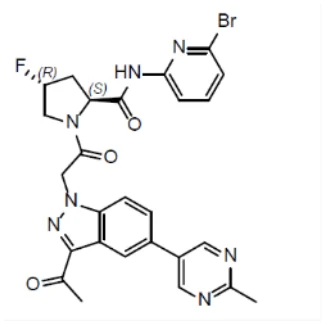
Chemical name: (2S,4R)-1-{[3-acetyl-5-(2-methylpyrimidin-5-yl)-1H-indazol-1-yl] acetyl}-N-(6- bromopyridin-2-yl)-4-fluoropyrrolidine-2-carboxamide
Molecular formula: C26H23BrFN7O3
Molecular mass: 580.4 atomic mass units
Structural formula:
Polymorphic form: Crystalline Form II
Physicochemical properties: White /Off-white to pale yellow powder
Solubility: Freely soluble in dimethyl sulfoxide and acetone and slightly soluble in water. Practically insoluble over the physiological pH range.
Pharmaceutical Standard: Professed
14 Clinical Trials
14.1 Clinical Trials by Indication
Paroxysmal Nocturnal Hemoglobinuria (PNH) with Residual Hemolytic Anemia due to Extravascular Hemolysis (EVH).
Trial Design and Study Demographics
Table 5: Summary of patient demographics for clinical trial in PNH (ALXN2040-PNH-301)
| Study # | Study design | Dosage, route of administration and duration | Study subjects (n) | Mean age (Range) | Sex |
| ALXN20 40-PNH-301 | Randomized, double-blind, placebo-controlled study followed by open-label extension | Danicopan 150 mg tablets orally three times a day or matching placebo; Danicopan dose could be escalated to 200 mg three times a day. All patients received background eculizumab or ravulizumab. | 86 Danicopan: 57 Placebo: 29 | 52.8 (25, 80) | Male = 32 (37.2 %) Female = 54 (62.8 %) |
The efficacy and safety of Voydeya were assessed in a multiple-region, randomized, double-blind, placebo-controlled study in adult patients with PNH and clinically significant EVH who were receiving a C5 inhibitor. Patients must have had anemia (hemoglobin [Hgb] ≤ 9.5 g/dL) with absolute reticulocyte count ≥ 120 × 109/L, with or without transfusion support, and must have been treated with a stable dose of ravulizumab or eculizumab for at least the previous 6 months. Patients were vaccinated against meningococcal infection prior to or at the time of initiating treatment with Voydeya if vaccination status within 3 years could not be verified.
Patients were randomized (2:1) to receive either Voydeya or matching placebo as an add-on to their C5 inhibitor for 12 weeks. The starting dose of Voydeya was 150 mg three times a day and could be escalated up to a maximum of 200 mg three times a day depending on the clinical response. During the randomized 12-week treatment period, 14 of 57 (24.6%) patients in the danicopan add-on group were dose escalated from 150 mg to 200 mg three times a day. A total of 4 participants, 3 (5.3%) from the danicopan group and 1 (3.4%) from the placebo group discontinued treatment. There were no discontinuations due to hemolysis.
After week 12, all patients who initially received placebo crossed over to receive Voydeya. At 24 weeks, patients could enter a long-term extension period to continue receiving Voydeya with their background C5 inhibitor.
The primary endpoint was the change in Hgb level from Baseline to Week 12. Key secondary endpoints were the proportion of patients with Hgb increase of ≥ 2 g/dL at Week 12 in the absence of transfusions, the proportion of patients with transfusion avoidance through Week 12, the change from Baseline in Functional Assessment of Chronic Illness Therapy (FACIT)-Fatigue scores at Week 12 and change from Baseline in absolute reticulocyte count at Week 12. Transfusion avoidance was considered as achieved only by the patients who did not receive a transfusion and did not meet the protocol specified guidelines for transfusion from Baseline through Week 12.
A pre-specified interim analysis was performed when 63 participants reached the end (either completed or discontinued) of the 12-week randomized, double-blind treatment period.
Demographic or baseline characteristics were generally balanced between treatment groups.
presents the baseline characteristics of the patients with PNH enrolled in the study.
Table 6 : Baseline Characteristics in Study ALXN2040-PNH-301
| Parameter | Statistics | Voydeya (Add-on to ravulizumab or eculizumab) n = 57 | Placebo (Add-on to ravulizumab or eculizumab) n = 29 |
|---|---|---|---|
| Parameter | Statistics | Voydeya (Add-on to ravulizumab or eculizumab) n = 57 | Placebo (Add-on to ravulizumab or eculizumab) n = 29 |
| Age (years) | Mean (SD) Median Min, max | 53 (17) 56 20, 82 | 53 (14) 53 29, 77 |
Sex
| n (%) n (%) | 23 (40.4) 34 (59.6) | 9 (31.0) 20 (69) |
Race
| n (%) n (%) n (%) n (%) n (%) n (%) n (%) | 1 (1.8) 22 (38.6) 2 (3.5) 28 (49.1) 1 (1.8) 3 (5.3) 0 | 0 10 (34.5) 0 14 (48.3) 0 4 (13.8) 1 (3.4) |
| Hemoglobin level (g/dL) | Mean (SD) | 7.7 (0.9) | 7.9 (1.0) |
| Reticulocyte count (109/L) | n Mean (SD) | 57 248 (97) | 28 223 (115) |
| Number of patients with pRBC/whole blood transfusions within 24 weeks prior to first dose | n (%) | 52 (91.2) | 24 (82.8) |
| pRBC/whole blood Transfusions within 24 weeks prior to first dose | Mean (SD) | 2.5 (2.0) | 2.8 (2.2) |
| LDH (U/L) | n Mean (SD) | 56 304 (123.600) | 28 286 (93.138) |
| FACIT-Fatigue score | Mean (SD) | 34 (11) | 32 (11) |
Background treatment with:
| n (%) n (%) | 36 (63) 21 (37) | 15 (52) 14 (48) |
Abbreviations: FACIT = Functional Assessment of Chronic Illness Therapy; LDH = lactate dehydrogenase; N=number of patients; pRBC = packed red blood cells; SD = standard deviation
Study Results
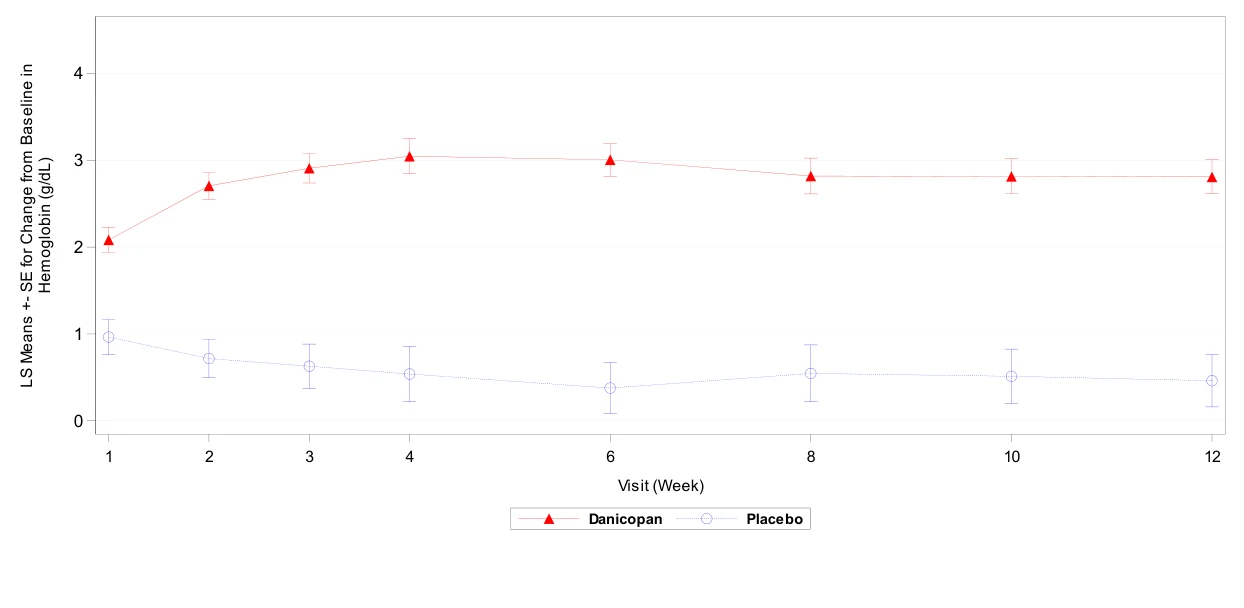
The primary efficacy analysis was performed when the first 63 randomised participants reached the end (either completed or discontinued) of the 12-week primary treatment period 1. Voydeya was superior to placebo as an add-on to ravulizumab or eculizumab and resulted in a clinically meaningful increase in Hgb from Baseline to Week 12. The least squares (LS) mean (standard error [SE]) increase in Hgb was 2.94 (0.211) g/dL in the Voydeya group compared with 0.50 (0.313) g/dL in the placebo group. The treatment group difference was 2.44 (0.375) g/dL (p < 0.0001). Treatment differences were observed as early as Week 1. Voydeya also achieved statistically significant improvement compared to placebo for all 4 key secondary endpoints: proportion of patients with Hgb increase of ≥2 g/dL [1.2 mmol/L] in the absence of transfusion (59.5% vs. 0%, treatment difference: 46.9 [95% CI: 29.2, 64.7]; p < 0.0001), proportion of patients with transfusion avoidance (83.3% vs. 38.1%, treatment difference: 41.7 [95% CI: 22.7, 60.8]; p = 0.0004), change in FACIT-Fatigue score (7.97 vs. 1.85, treatment difference: 6.12 [95% CI: 2.33, 9.91]; p = 0.0021) and change in absolute reticulocyte count (-83.8 x 10⁹/L vs. 3.5 x 10⁹/L, treatment difference: -87.2 [95% CI: -117.7, -56.7]; p < 0.0001). The improvements observed were generally consistent across the different subgroups tested (transfusion history, screening Hgb level, age, race, sex, background C5 inhibitor), although these results need to be interpreted with caution given the small sample sizes.
Supplemental results at Week 12 and Week 24 based on all randomized patients (N = 86) were consistent with those from the primary efficacy analysis (Table 7).
| Table 7: Analysis of Primary and Key Secondary Endpoints (all randomized patients; N=86) | |||||||||
|---|---|---|---|---|---|---|---|---|---|
Voydeya (Add-on to ravulizumab or eculizumab) (n = 57) | Placebo (Add-on to ravulizumab or eculizumab) (n = 29) | ||||||||
| Change in Hemoglobin Level (Primary Endpoint) | |||||||||
| Mean change from Baseline to Week 12 (g/dL) | 2.81 | 0.46 | |||||||
| Treatment difference* | 2.35 (95% CI: 1.63, 3.06) | ||||||||
| P-value | < 0.0001* | ||||||||
| Proportion of Patients with Hemoglobin Increase of ≥ 2 g/dL in the Absence of Transfusion | |||||||||
| At Week 12 (%) | 54.4 | 0 | |||||||
| Treatment difference** | 47.5 (95% CI: 32.63, 62.39) | ||||||||
| P-value | < 0.0001 | ||||||||
| Proportion of Patients with Transfusion Avoidance | |||||||||
| Through 12-Week Treatment Period (%) | 78.9 | 27.6 | |||||||
| Treatment difference** | 48.4 (95% CI: 31.8, 64.9) | ||||||||
| P-value | < 0.0001 | ||||||||
| Change in FACIT-Fatigue Score*** | |||||||||
| Mean change from Baseline to Week 12 | 8.13 | 2.35 | |||||||
| Treatment difference**** | 5.79 (95% CI: 2.68, 8.89) | ||||||||
| P-value | 0.0004 | ||||||||
| Change in Absolute Reticulocyte Count | |||||||||
| Mean change from Baseline to Week 12 (109/L) | -92.5 | -0.8 | |||||||
| Treatment difference**** | -91.7 (95% CI: -120.1, -63.4) | ||||||||
| P-value | < 0.0001 | ||||||||
(*) Based on MMRM test; The model included the fixed, categorical effects of treatment group, study visit, and study visit-by-treatment group interaction, as well as the fixed, continuous covariate of baseline value and the randomization stratification factor of transfusion history. An unstructured covariance matrix was used to model the within-patient errors.
(**) The proportions were compared between treatment groups using the Cochrane-Mantel-Haenszel (CMH) test stratified by randomization stratification factors of transfusion history and screening Hgb level. The p-value was from the stratified CMH test. 95% CI was calculated using Miettinen and Nurminen method.
(***) FACIT-Fatigue scores range from 0-52, with higher scores indicating less fatigue.
(****) Based on MMRM; The model included the fixed, categorical effects of treatment group, study visit, and study visit-by-treatment group interaction, as well as the fixed, continuous covariate of baseline value and the randomization stratification factors of transfusion history and screening Hgb level. An unstructured covariance matrix was used to model the within-patient errors.
Abbreviations: CI = confidence interval; FACIT = Functional Assessment of Chronic Illness Therapy; MMRM = mixed-effect model for repeated measures
Figure 1: Mean Change in Hemoglobin Level from Baseline to Week 12 (all randomised patients)
A total of 80 patients entered the LTE, during which all patients received Voydeya. Efficacy results up to Week 72 are consistent with those at Week 12 and Week 24 and support durability and maintenance of the effect over time. In patients who received danicopan for 72 weeks (N = 38), the mean change in Hgb from Baseline to Week 72 was 2.81 g/dL.
15 Microbiology
No microbiological information is required for this drug product.
16 Non-Clinical Toxicology
General Toxicology:
The nonclinical toxicity profile of danicopan has been evaluated in oral toxicology studies in rats and dogs (most sensitive toxicology species), safety pharmacology studies in dogs, developmental and reproductive toxicology (DART) studies in rabbits and rats, genetic toxicology studies, carcinogenicity studies in rats and TgRasH2 mice, and phototoxicity studies. Danicopan-related reversible hepatobiliary cholestasis was observed in dogs at doses ≥ 150 mg/kg/day and the AUC exposure multiple at the no-observed-adverse-effect level [NOAEL; 75 mg/kg/day] was ~5-fold above human exposure at 200 mg tid.
Carcinogenicity:
Danicopan was not carcinogenic in the 6-month carcinogenicity study in TgRasH2 mice and 2-year
carcinogenicity study in Wistar Han rats. Exposure multiples at NOAELs in these studies relative to the human exposure at the 200 mg tid dose (based on AUC) were ~38-77-fold in TgRasH2 mice and ~15-23 fold in Wistar Han rats, respectively.
Genotoxicity:
Danicopan was not genotoxic in the Ames bacterial reverse mutation assay, in vitro micronucleus assay in human peripheral blood lymphocytes or in the in vivo micronucleus assay in rats.
Reproductive and Developmental Toxicology:
In a rabbit study, reduction in the male and female fertility and copulation / conception indices was noted at exposures ~11-fold above the human exposure at the maximum recommended human dose of 200 mg three times a day (based on AUC).
There were no effects on organogenesis in rabbits up to mean maternal systemic exposure ~15-fold above human exposure at the maximum recommended human dose of 200 mg three times a day (based on AUC) or during post-natal development. In the rats, there were no effects on embryo-fetal development up to maternal exposure ~23-fold above the human exposure at 200 mg three times a day.
Excretion in Milk:
Danicopan was excreted into the milk of lactating rabbits following oral administration from lactation day 4 to 10, with milk concentrations approximately 5 and 3.5 times higher compared to maternal plasma concentrations at 50 and 250 mg/kg/day, respectively.
Phototoxicity:
Ocular phototoxicity was observed in pigmented rats at systemic exposures 15 to 28 times greater than the maximum recommended human dose (based on AUC and Cmax, respectively). Since danicopan can accumulate in the eye, there is a potential risk of ocular phototoxicity for patients on long-term danicopan therapy who are exposed to prolonged unprotected UV radiation. The clinical relevance of these findings is currently unknown.