


Product Monograph - Tavneos
RECENT MAJOR LABEL CHANGES
| 7 WARNINGS AND PRECAUTIONS, Driving and Operating Machinery | 11/2024 |
|---|---|
| 7 WARNINGS AND PRECAUTIONS, Hepatic | 11/2024 |
TABLE OF CONTENTS.
RECENT MAJOR LABEL CHANGES ......................................................................................................... 2
TABLE OF CONTENTS. .......................................................................................................................... 2
PART I: HEALTH PROFESSIONAL INFORMATION .................................................................................. 4
1 INDICATIONS .......................................................................................................................... 4
1.1 Pediatrics ..............................................................................................................................4
1.2 Geriatrics ..............................................................................................................................4
2 CONTRAINDICATIONS ............................................................................................................. 4
4 DOSAGE AND ADMINISTRATION ............................................................................................. 4
4.1 Dosing Considerations .........................................................................................................4
4.2 Recommended Dose and Dosage Adjustment ....................................................................5
4.4 Administration .....................................................................................................................5
4.5 Missed Dose .........................................................................................................................6
5 OVERDOSAGE ......................................................................................................................... 6
6 DOSAGE FORMS, STRENGTHS, COMPOSITION AND PACKAGING ............................................. 6
7 WARNINGS AND PRECAUTIONS .............................................................................................. 6
7.1 Special Populations ..............................................................................................................8
7.1.1 Pregnant Women ..........................................................................................................8
7.1.2 Breast-feeding ...............................................................................................................9
7.1.3 Pediatrics .......................................................................................................................9
7.1.4 Geriatrics .......................................................................................................................9
8 ADVERSE REACTIONS .............................................................................................................. 9
8.1 Adverse Reaction Overview .................................................................................................9
8.2 Clinical Trial Adverse Reactions ........................................................................................ 10
8.3 Less Common Clinical Trial Adverse Reactions ................................................................. 11
8.4 Abnormal Laboratory Findings: Hematologic, Clinical Chemistry And Other Quantitative Data ........................................................................................................................................... 11
8.5 Post-Market Adverse Reactions ........................................................................................ 12
9 DRUG INTERACTIONS ............................................................................................................ 12
9.2 Drug Interactions Overview .............................................................................................. 12
9.3 Drug-Behavioural Interactions .......................................................................................... 12
9.4 Drug-Drug Interactions ..................................................................................................... 12
9.5 Drug-Food Interactions ..................................................................................................... 14
9.6 Drug-Herb Interactions ..................................................................................................... 14
9.7 Drug-Laboratory Test Interactions .................................................................................... 14
10 CLINICAL PHARMACOLOGY ................................................................................................... 14
10.1 Mechanism of Action .................................................................................................. 14
10.2 Pharmacodynamics .................................................................................................... 15
10.3 Pharmacokinetics ....................................................................................................... 16
11 STORAGE, STABILITY AND DISPOSAL ..................................................................................... 18
12 SPECIAL HANDLING INSTRUCTIONS ....................................................................................... 18
PART II: SCIENTIFIC INFORMATION ................................................................................................... 19
13 PHARMACEUTICAL INFORMATION ........................................................................................ 19
14 CLINICAL TRIALS.................................................................................................................... 19
14.1 Clinical Trials by Indication ......................................................................................... 19
15 MICROBIOLOGY .................................................................................................................... 22
16 NON-CLINICAL TOXICOLOGY ................................................................................................. 22
PATIENT MEDICATION INFORMATION .............................................................................................. 25
PART I: HEALTH PROFESSIONAL INFORMATION
1 INDICATIONS
TAVNEOS (avacopan capsules) is indicated for:
- the adjunctive treatment of adult patients with severe active anti-neutrophil cytoplasmic autoantibody (ANCA)-associated vasculitis (granulomatosis with polyangiitis [GPA] and microscopic polyangiitis [MPA]) in combination with standard background therapy including glucocorticoids. TAVNEOS does not eliminate glucocorticoid use.
1.1 Pediatrics
Pediatrics (<18 years of age): No data are available to Health Canada; therefore, Health Canada has not authorized an indication for pediatric use.
1.2 Geriatrics
Geriatrics (≥ 65 years of age): Evidence from clinical trials suggest that use in geriatric population is not associated with a difference in effectiveness.
2 CONTRAINDICATIONS
TAVNEOS is contraindicated in:
- Patients who are hypersensitive to this drug or to any ingredient in the formulation, including any non-medicinal ingredient, or component of the container. For a complete listing, see 6 DOSAGE FORMS, STRENGTHS, COMPOSITION AND PACKAGING.
4 DOSAGE AND ADMINISTRATION
4.1 Dosing Considerations
Treatment with TAVNEOS should be initiated and monitored by healthcare professionals experienced in the diagnosis and treatment of ANCA-associated vasculitis (GPA and MPA).
Serum alanine aminotransferase [ALT], aspartate aminotransferase [AST], alkaline phosphatase and total bilirubin and Hepatitis B virus (HBV) serology should be obtained prior to initiating treatment with TAVNEOS to establish baseline liver function. For patients with evidence of prior or current HBV infection, consult with a physician with expertise in managing hepatitis B regarding monitoring and consideration for HBV treatment before or during treatment with TAVNEOS. TAVNEOS is not recommended for use in patients with cirrhosis, especially with severe hepatic impairment (Child-Pugh Class C) (see 7 WARNINGS AND PRECAUTIONS, Hepatic
). Treatment with TAVNEOS should be re-assessed clinically if alanine aminotransferase (ALT) or aspartate aminotransferase (AST) is more than 3 times the upper limit of normal.
Obtain liver function tests (ALT, AST, alkaline phosphatase and total bilirubin) before initiating treatment with TAVNEOS, and monitor every 4 weeks after start of therapy for the first 6 months of treatment and as clinically indicated thereafter.
4.2 Recommended Dose and Dosage Adjustment
The recommended dose of TAVNEOS is 30 mg (3 capsules of 10 mg each) taken orally twice daily with food.
Treatment must be temporarily stopped and re-assessed clinically if:
- alanine aminotransferase (ALT) or aspartate aminotransferase (AST) is > 3-5 × upper limit of normal (ULN),
- a patient develops leukopenia (white blood cell count < 2 × 10⁹/L) or neutropenia (neutrophils < 1 × 10⁹/L), or lymphopenia (lymphocytes < 0.2 × 10⁹/L),
- a patient has an active, serious infection.
Treatment may be resumed once drug-induced liver injury has been ruled out and upon normalization of values and based on an individual benefit/risk assessment.
If treatment is resumed, hepatic transaminases and total bilirubin are to be monitored closely.
Permanent discontinuation of treatment must be considered if any of the following occur:
- ALT or AST > 8 × ULN,
- ALT or AST > 5 × ULN for more than 2 weeks,
- ALT or AST > 3 × ULN and total bilirubin > 2 × ULN or international normalized ratio (INR) > 1.5,
- ALT or AST > 3 × ULN with the appearance of fatigue, nausea, vomiting, right upper quadrant pain or tenderness, fever, rash, and/or eosinophilia (> 5%),
- an association between avacopan and hepatic dysfunction has been established.
Pediatric patients. Health Canada has not authorized an indication for pediatric use.
Patients with renal impairment. No dosage adjustment is required in patients with mild, moderate, or severe renal impairment. Avacopan has not been studied in patients with ANCA-associated vasculitis who are on dialysis.
Patients with hepatic impairment. Avacopan should be used with caution in patients with mild or moderate hepatic impairment. If a positive benefit-risk assessment is made, no dose adjustment is required in these patients. Avacopan has not been studied in patients with cirrhosis or severe hepatic impairment (Child-Pugh Class C) and it is therefore not recommended for use in these patient populations (see 10.3 Pharmacokinetics: Special Populations and Conditions
; Hepatic Insufficiency).
Geriatric patients. No dose adjustment is required in geriatric patients.
Patients taking strong CYP3A4 inhibitors. Reduce the dosage of TAVNEOS to 30 mg once daily when used concomitantly with strong CYP3A4 inhibitors (see 9.4 Drug-Drug Interactions).
Patients taking CYP3A4 substrates. Monitor for adverse reactions and consider dose reduction of sensitive CYP3A4 substrates with narrow therapeutic window (see 9.4 Drug-Drug Interactions).
4.4 Administration
TAVNEOS is for oral use.
The capsules should be taken with food in the morning and the evening.
The capsules should be swallowed whole with water and must not be crushed, chewed, or opened.
4.5 Missed Dose
If a patient misses a dose, the missed dose should be taken as soon as possible, unless within three hours of the next scheduled dose. If within three hours, then the missed dose should not be taken.
5 OVERDOSAGE
TAVNEOS was studied in healthy subjects at a maximum total daily dose of 200 mg (given as 100 mg twice daily) for 7 days without evidence of dose limiting toxicities.
In case of an overdose, it is recommended that the patient is monitored for any signs or symptoms of adverse effects, and appropriate symptomatic treatment and supportive care are provided.
| For management of a suspected drug overdose, contact your regional poison control centre. |
|---|
6 DOSAGE FORMS, STRENGTHS, COMPOSITION AND PACKAGING
Table 1: Dosage Forms, Strengths, Composition and Packaging
TAVNEOS oral capsules have a light orange cap and yellow body with “CCX168” in black ink on the capsule.
Available in high density polyethylene (HDPE) bottle with child-resistant closure and induction seal. Bottles of 180 or 30 capsules.
7 WARNINGS AND PRECAUTIONS
Cardiovascular
Patients with GPA or MPA are at risk of cardiac disorders such as myocardial infarction, cardiac failure and cardiac vasculitis.
Serious adverse events (SAEs) of cardiac disorder have been reported in patients treated with avacopan. Certain treatment regimens may carry an increased risk for cardiac disorders (a treatment regimen based on the combination with cyclophosphamide followed by azathioprine may carry an increased risk for cardiac disorders as compared to a regimen based on the combination with rituximab).
| Route of Administration | Dosage Form / Strength/Composition | Non-medicinal Ingredients |
| Oral | Capsule/10 mg of avacopan containing an opaque, white to slightly-coloured, waxy solid | Black iron oxide Gelatin Macrogol 4000 Macrogolglycerol hydroxystearate Polysorbate 80 Potassium hydroxide Red iron oxide Shellac Titanium dioxide Yellow iron oxide |
Driving and Operating Machinery
TAVNEOS has no or negligible influence on the ability to drive and use machines.
Gastrointestinal
TAVNEOS contains macrogolglycerol hydroxystearate as excipient, which may cause gastrointestinal symptoms such as dyspepsia, vomiting, nausea and diarrhoea. There was a case of serious nausea observed in the clinical trial.
Hepatic
Serious cases of hepatic injury have been observed in patients taking TAVNEOS. In controlled clinical trials, the TAVNEOS treatment groups had a higher incidence of transaminase elevations and hepatobiliary events, including serious and life-threatening events. Vanishing bile duct syndrome as a consequence of drug-induced liver injury has been reported, including cases with fatal outcome, in the post-marketing setting (see 8 ADVERSE REACTIONS).
If AST or ALT is > 3 times the upper limit of normal, temporarily stop TAVNEOS until TAVNEOS drug-induced liver injury is ruled out (see 8 ADVERSE REACTIONS); unless one of the situation of permanent discontinuations occurs (see 4.2 Recommended Dose and Dosage Adjustment).
TAVNEOS is not recommended for patients with activated, untreated and / or uncontrolled chronic liver disease (e.g., chronic active hepatitis B, untreated hepatitis C, uncontrolled autoimmune hepatitis) and cirrhosis. Consider the risks and benefits before administrating TAVNEOS to a patient with a liver disease. Monitor patients closely for hepatic adverse reactions (see 4.1 Dosing Considerations, 0 7.1 Special Populations).
Immune
Angioedema
TAVNEOS may cause angioedema (see 8 ADVERSE REACTIONS). In clinical trials, two cases of angioedema occurred, including one serious event requiring hospitalization. If angioedema occurs, discontinue TAVNEOS immediately, provide appropriate therapy, and monitor for airway compromise. TAVNEOS must not be re-administered unless another cause has been established. Educate patients on recognizing the signs and symptoms of a hypersensitivity reaction and to seek immediate medical care should they develop.
Immunization
The safety of immunization with live vaccines, following avacopan has not been studied. Administer vaccination preferably prior to initiation of treatment with avacopan.
Infection
Serious infections, including fatal infections, have been reported in patients receiving TAVNEOS. The most common serious infections reported in the TAVNEOS group were pneumonia (4.8%) and urinary tract infections (1.8%).
Avoid use of TAVNEOS in patients with an active serious infection, including localized infections. Consider the risks and benefits of treatment prior to initiating TAVNEOS in patients:
- With chronic or recurrent infections
- Who have been exposed to tuberculosis
- With a history of a serious or an opportunistic infection
- Who have resided or traveled in areas of endemic tuberculosis or endemic mycoses; or
- With underlying conditions that may predispose them to infection.
Closely monitor patients for the development of signs and symptoms of infection during and after treatment with TAVNEOS. Interrupt TAVNEOS if a patient develops a serious or opportunistic infection and treat accordingly. TAVNEOS may be resumed once the infection is controlled.
Pneumocystis jirovecii pneumonia prophylaxis:
Pneumocystis jirovecii pneumonia prophylaxis is recommended for adult patients with GPA or MPA during TAVNEOS treatment, as appropriate according to local clinical practice guidelines.
Monitoring and Laboratory Tests
Liver function tests and Hepatitis B virus (HBV) serology should be obtained prior to initiation of therapy (see 4.1 Dosing Considerations4.1 Dosing Considerations and 7 WARNINGS AND PRECAUTIONS, Hepatic
). Patients should be monitored for elevation of liver function test periodically during the treatment with avacopan (see 4.1 Dosing Considerations and 7 WARNINGS AND PRECAUTIONS).
Reproductive Health: Female and Male Potential
- Fertility
There are no data on the effects of avacopan on human fertility.
Fertility/early embryo development, embryo/foetal development, and pre- and post-natal development studies conducted with avacopan in hamsters or rabbits generally showed no evidence of reproductive toxicity or teratogenicity, at doses up to 1,000 mg/kg/day in hamsters and 200 mg/kg/day in rabbits; the only exceptions were an increased incidence of skeletal variations at 1,000 mg/kg/day avacopan in hamster and of abortion at 200 mg/kg/day avacopan in rabbits (see 16 NON-CLINICAL TOXICOLOGY, Reproductive and Developmental Toxicology
).
7.1 Special Populations
7.1.1 Pregnant Women
Avacopan is not recommended during pregnancy and in women of childbearing potential not using contraception. There are no data from the use of avacopan in pregnant women.
In animal studies designed to assess effects of avacopan upon embryo-fetal development with pregnant hamsters (dosed by the oral route during the period of organogenesis from gestation day 6 to 12), there was an increased incidence of skeletal variations (short thoracolumbar supernumerary rib) at the highest dose tested (500 mg/kg BID, which is equivalent to an exposure of 5 times the maximum recommended human dose calculated on an AUC basis with 1000 mg/kg/day). In a prenatal and postnatal development study with pregnant hamsters (orally dosed from gestation day 6 to lactation day 20), avacopan had no effects on the growth and development of offspring with exposures up to approximately 5 times the maximum recommended human dose (based on maternal doses of up to 1000 mg/kg/day). An embryo-fetal development study with pregnant rabbits dosed by the oral route during the period of organogenesis from gestation day 6 to 18 was conducted. The study showed a dose-related increased incidence of abortion and early deliveries at an exposure 0.6 times the maximum recommended human dose (based on AUCs with the maternal oral doses of 30 mg/kg/day and higher) (see 16 NON-CLINICAL TOXICOLOGY, Reproductive and Developmental Toxicology
).
7.1.2 Breast-feeding
The safety of avacopan when used during pregnancy or breastfeeding has not been evaluated in humans. There are no data on the use of avacopan in lactating women and it is unknown whether avacopan is excreted in human milk.
Avacopan has not been measured in milk of lactating animals; however, avacopan has been detected in the plasma of nursing animal offspring from drug-treated dams in a pre- and post-natal development study in hamsters at a pup to maternal plasma ratio of 0.37. The no-observed-adverse-effect-level (NOAEL) for viability, growth, and reproduction in F1 offspring was 1,000 mg/kg/day (500 mg/kg twice daily) (see 16 NON-CLINICAL TOXICOLOGY, Reproductive and Developmental Toxicology
).
A risk to newborns/infants cannot be excluded. A decision must be made whether to discontinue breast-feeding or to discontinue therapy with TAVNEOS, considering the benefit of breast-feeding for the child and the benefit of therapy for the woman suffering from ANCA-associated vasculitis.
7.1.3 Pediatrics
Based on the data submitted and reviewed by Health Canada, the safety and efficacy of TAVNEOS in pediatric patients have not been established; therefore, Health Canada has not authorized an indication for pediatric use.
7.1.4 Geriatrics
No dosage adjustments are required in patients 65 years of age and older (see 10 CLINICAL PHARMACOLOGY and 4 DOSAGE AND ADMINISTRATION).
8 ADVERSE REACTIONS
8.1 Adverse Reaction Overview
The safety of TAVNEOS has been studied in two (2) Phase 2 clinical trials and one (1) Phase 3 clinical trial (ADVOCATE) in which a total of 239 patients with ANCA-associated vasculitis who received at least one dose of TAVNEOS.
The frequencies of adverse reactions are those reported in the Phase 3 trial (n = 330); a prospective, randomized, double-blind, double-dummy, active-controlled clinical trial assessing TAVNEOS (30 mg TAVNEOS twice a day for 52 weeks) in patients with newly diagnosed or relapsing active ANCA-associated vasculitis when administered with a standard background cyclophosphamide or rituximab regimen: 166 patients were in the TAVNEOS group and 164 patients were in the prednisone group.
The most common adverse reactions in patients with ANCA-associated vasculitis who received TAVNEOS plus cyclophosphamide or azathioprine or mycophenolate mofetil or rituximab, were headache (20.5%), nausea (23.5%) and vomiting (15.1%). Only one nausea treatment-emergent adverse event (TEAE) was considered serious, and none of the vomiting and headache events were considered serious. Serious adverse reactions reported more frequently in patients with TAVNEOS than the comparator treatment groups were pneumonia (4.8% vs 3.7%), urinary tract infection (1.8% versus 1.2%) and hepatic function abnormal (1.2% vs 0.0%).
Severe adverse reactions reported more frequently in patients with TAVNEOS than the comparator treatment groups and in ≥ 1% of patients were pneumonia (2.4% vs. 1.2%) and hepatic function abnormal (1.2% vs. 0%).
Within 52 weeks, 4 patients in the prednisone treatment group (2.4%) and 2 patients in the TAVNEOS group (1.2%) died. There were no deaths in the shorter duration phase 2 trials.
In the phase 3 trial, seven patients (4.2%) in the TAVNEOS treatment group and 2 patients (1.2%) in the prednisone treatment group discontinued treatment due to hepatic related adverse reactions, including hepatobiliary adverse reactions and liver enzyme abnormalities. The most frequent adverse reaction that led to drug discontinuation in patients treated with TAVNEOS was hepatic function abnormal (1.8%).
In the pivotal phase 3 trial, 2 patients (1.2%) in the TAVNEOS group had a TEAE of angioedema. One patient was hospitalized for the event. TAVNEOS treatment was discontinued, and angioedema did not recur.
8.2 Clinical Trial Adverse Reactions
Clinical trials are conducted under very specific conditions. The adverse reaction rates observed in the clinical trials, therefore, may not reflect the rates observed in practice and should not be compared to the rates in the clinical trials of another drug. Adverse reaction information from clinical trials is useful for identifying and approximating rates of adverse drug-related reactions in real-world use.
Table 2: Adverse Reactions with Incidence of ≥5% in Patients who Received TAVNEOS in the ANCA-Associated Vasculitis Phase 3 Trial
System Organ Class MedDRA Preferred Term | TAVNEOS (N = 166) n (%) | PREDNISONE (N = 164) n (%) | |||
|---|---|---|---|---|---|
| Gastrointestinal Disorders | |||||
| nausea | 39 (24%) | 34 (21%) | |||
| vomiting | 25 (15%) | 21 (13%) | |||
| diarrhea | 25 (15%) | 24 (15%) | |||
| abdominal pain upper | 11 (7%) | 10 (6%) | |||
| General Disorders and Administration Site Conditions | |||||
| fatigue | 17 (10%) | 15 (9%) | |||
| Infections and Infestations | |||||
| nasopharyngitis | 25 (15%) | 30 (18%) | |||
| upper respiratory tract infection | 24 (15%) | 24 (15%) | |||
| urinary tract infection | 12 (7%) | 23 (14%) | |||
| pneumonia | 11 (7%) | 11 (7%) | |||
| sinusitis | 10 (6%) | 12 (7%) | |||
| Nervous System Disorders | |||||
| headache | 34 (21%) | 23 (14%) |
|---|---|---|
| Skin and Subcutaneous Tissue Disorders | ||
| rash | 19 (11%) | 13 (8%) |
| Vascular Disorders | ||
| hypertension | 30 (18%) | 29 (18%) |
8.3 Less Common Clinical Trial Adverse Reactions
Immune: Hypersensitivity including Angioedema - In the pivotal phase 3 trial, 2 patients (1.2%) in the TAVNEOS group had a TEAE of angioedema. One patient was hospitalized for the event. TAVNEOS treatment was discontinued and both events resolved without sequelae. TAVNEOS was restarted in 1 patient and angioedema did not recur.
Infections and infestations: bronchitis, cellulitis, gastroenteritis, herpes zoster, influenza, lower respiratory tract infection, oral candidiasis, oral herpes, otitis media, rhinitis.
8.4 Abnormal Laboratory Findings: Hematologic, Clinical Chemistry And Other Quantitative Data
Table 3: Hematologic
System Organ Class MedDRA Preferred Term | TAVNEOS (N = 166) n (%) | PREDNISONE (N = 164) n (%) | |||
|---|---|---|---|---|---|
| Blood and lymphatic system disorders | |||||
| neutropenia | 4 (2%) | 4 (2%) | |||
| Investigations | |||||
| white blood cell count decreased* | 8 (5%) | 2 (1%) | |||
| * Includes leukopenia. | |||||
Table 4: Clinical Chemistry
System Organ Class MedDRA Preferred Term | TAVNEOS (N = 166) n (%) | PREDNISONE (N = 164) n (%) | ||||||
|---|---|---|---|---|---|---|---|---|
| Hepatobiliary disorders | ||||||||
| liver function test increased* | 22 (13%) | 19 (12%) | ||||||
| ALT increase >3-5 ULN | 6 (4%) | 4 (2%) | ||||||
| AST increase >3-5 ULN | 3 (2%) | 0 | ||||||
| bilirubin increase >1.5-3 ULN | 2 (1%) | 1 (1%) | ||||||
| bilirubin increase >3-10 ULN | 1 (1%) | 0 | ||||||
| Investigations | ||||||||
| blood creatine phosphokinase increased | 6 (4%) | 1 (1%) | ||||||
| * Alanine aminotransferase increased, total blood bilirubin increased, hepatic function abnormal, gamma glutamyl transferase increased, hepatic enzyme increased, transaminases increased. | ||||||||
Liver function test increased
Elevations (>3 to 5 x ULN) of ALT were observed in 3.6% (6/166) of patients treated with TAVNEOS, and 2.4% (4/164) of patients treated with prednisone during the 52 weeks of the Phase 3 clinical trial, while elevations (>3 to 5 x ULN) of AST were observed in 1.8% (3/166) of patients treated with TAVNEOS and 0% (0/164) patients treated with prednisone (see 7 WARNINGS AND PRECAUTIONS, Hepatic
). Elevations (>1.5 to 3 x ULN) of bilirubin were observed in 1.2% (2/166) of patients treated with TAVNEOS, and 0.6% (1/164) of patients treated with prednisone. Elevation (>3 to 10 x ULN) of bilirubin was only observed in one patient (0.6%) treated with TAVNEOS and no patients treated with prednisone.
Blood Creatine phosphokinase increased
Increased blood creatine phosphokinase (CPK) TEAEs were reported in 6 patients (3.6%) in the TAVNEOS group and 1 patient (0.6%) in the prednisone group in the Phase 3 trial. One TAVNEOS treated patient discontinued treatment due to increased creatinine phosphokinase. No increases in blood CPK were reported in either treatment group as an SAE. No adverse events of rhabdomyolysis were observed.
8.5 Post-Market Adverse Reactions
The following adverse event has been reported during the post-marketing use of TAVNEOS.
Hepatobiliary Disorders Unknown: Vanishing bile duct syndrome
9 DRUG INTERACTIONS
9.2 Drug Interactions Overview
Avacopan is a substrate of cytochrome P450 (CYP) 3A4 and thus co-administration with CYP3A4 inhibitors or CYP3A4 inducers may lead to a change in avacopan exposure (see 4.1 Dosing Considerations).
9.3 Drug-Behavioural Interactions
Consumption of alcohol could exacerbate ALT and AST elevations and should be minimized when avacopan is being taken.
9.4 Drug-Drug Interactions
The drugs listed in this table are based on either drug interaction case reports or studies, or potential interactions due to the expected magnitude and seriousness of the interaction.
Table 5: Established or Potential Drug-Drug Interactions
| Proper/Common name | Source of Evidence | Effect | Clinical comment | |||
|---|---|---|---|---|---|---|
| Effect of strong CYP3A4 inducers on avacopan | ||||||
| rifampicin (600 mg, once daily) | CT | AUC ↓ 93% Cmax ↓79% | Since this interaction may result in loss of efficacy of avacopan, the use of strong CYP3A4 enzyme inducers (e.g., carbamazepine, enzalutamide, mitotane, phenobarbital, phenytoin, rifampicin, and St. John’s Wort) with | |||
| Proper/Common name | Source of Evidence | Effect | Clinical comment | |||
|---|---|---|---|---|---|---|
| avacopan should be avoided. Patients anticipated to require long term administration of these active substances should not be treated with avacopan. If short-term co-administration cannot be avoided in a patient already using avacopan, the patient should be monitored closely for recurrence of disease activity (4.1 Dosing Considerations). | ||||||
| Effect of moderate CYP3A4 inducers on avacopan | ||||||
| bosentan, efavirenz, etravirine, and modafinil | T | AUC ↓ Cmax ↓ | Concomitant use of moderate inducers should be avoided. If co-administration cannot be avoided in a patient already using TAVNEOS, the patient should be monitored closely for recurrence of disease activity. | |||
| Effect of strong CYP3A4 inhibitors on avacopan | ||||||
| itraconazole (200 mg, once daily) | CT | AUC ↑119% Cmax ↑87% | Strong CYP3A4 enzyme inhibitors (e.g., clarithromycin, itraconazole, ketoconazole, lopinavir/ritonavir, posaconazole, ritonavir, and voriconazole) should be used with caution in patients who are being treated with avacopan. Grapefruit and grapefruit juice can increase the concentration of avacopan. Administer TAVNEOS 30 mg once daily when co-administered with strong CYP3A4 inhibitors (see 4.1 Dosing Considerations, 4.2 Recommended Dose and Dosage Adjustment). | |||
| Effect of avacopan on CYP3A4 and CYP2C9 substrates | ||||||
| midazolam | CT | AUC ↑81% Cmax ↑55% | Avacopan is a moderate inhibitor of CYP3A4 and a weak inhibitor of CYP2C9 in vivo. Monitor for adverse reactions and consider dose reduction. | |||
simvastatin 40 mg daily β-hydroxy-simvastatin acid | CT | AUC ↑253% Cmax ↑220% AUC ↑73% Cmax ↑64% | ||||
| Proper/Common name | Source of Evidence | Effect | Clinical comment | |||
|---|---|---|---|---|---|---|
| cyclosporine, dihydroergotamine, fentanyl, sirolimus and tacrolimus | T | AUC ↑ | ||||
| celecoxib | CT | AUC ↑15% Cmax ↑64% | Modest inhibition of CYP2C9 with negligible DDI risk with CYP2C9 substrates. | |||
Legend: CT=Clinical Trial; T=Theoretical. Abbreviation: DDI=drug-drug interaction
Note: The effects of bosentan, efavirenz, etravirine, and modafinil, cyclosporine, dihydroergotamine, fentanyl, sirolimus and tacrolimus on avacopan exposure are predictions based on exposures simulated based on population PK analysis.
Avacopan is a substrate of CYP3A4. Co-administration of inducers or inhibitors of this enzyme may affect the pharmacokinetics of avacopan.
In vitro studies indicate that avacopan is not a substrate of BCRP (Breast cancer resistance protein) and P-gp (p-glycoprotein) efflux, or of OATP1B1 (Organic anion transporting polypeptide 1B1) and OATP1B3 (Organic anion transporting polypeptide 1B3) uptake transporters. M1, avacopan’s major metabolite, is a substrate of P-gp but is not a substrate of BCRP efflux, or of OAT1B1 and OATP1B3 uptake transporters.
Effect of avacopan on other CYP substrates
In vitro, avacopan was shown to not be an inhibitor or inducer of other CYP enzymes (CYP1A2, CYP2B6, CYP2C8, CP2C9, CYP2C19, CYP2D6). Co-administration of avacopan with substrates of other CYP enzymes is, therefore, unlikely to significantly affect the clearance and the exposure of active substances that are metabolized by CYP enzymes and no dose adjustment of CYP enzyme substrates is required.
Effect of avacopan on Transporters
Avacopan showed negligible to weak inhibition of the following transporters: P-gp, BCRP, OATP1B1, OATP1B3, OAT1 (Organic anion transporter 1), OAT3 (Organic anion transporter 3), OCT2 (Organic cation transporter 2), MATE1 (Multidrug and toxin extrusion 1) and MATE2-K (Multidrug and toxin extrusion 2) in vitro. Therefore, clinically relevant drug-drug interactions are unlikely when avacopan is co-administered with substances that are substrates or inhibitors of these transporters.
9.5 Drug-Food Interactions
Grapefruit and grapefruit juice can increase the concentration of avacopan; therefore, grapefruit and grapefruit juice should be used with caution in treated patients with avacopan.
Avacopan should be taken with food.
9.6 Drug-Herb Interactions
Interactions with herbal products have not been established; however, St John’s Wort should be avoided while taking TAVNEOS.
9.7 Drug-Laboratory Test Interactions
Interactions with laboratory tests have not been established.
10 CLINICAL PHARMACOLOGY
10.1 Mechanism of Action
Avacopan is a small molecule C5a receptor antagonist that selectively blocks the effect of C5a through the receptor (C5aR1 or CD88), including blocking neutrophil chemoattraction and activation. It competitively inhibits the interaction between C5aR1 and the anaphylatoxin C5a.
C5a and C5aR1 play a central role in the pathogenesis of ANCA-associated vasculitis (AAV). C5a is released when neutrophils are stimulated by inflammatory cytokines and C5a primes and activates further neutrophils. C5a is a powerful neutrophil chemoattractant and increases neutrophil adhesion and decreases their deformability. C5a also activates vascular endothelial cells, promoting their retraction and increased permeability. The interaction between neutrophils and C5a generated through activation of the alternative complement pathway is critical to vascular inflammation and organ damage in AAV.
The specific and selective blockade of C5aR1 by avacopan reduces the pro-inflammatory effects of C5a, which include neutrophil activation and migration, and decreases adherence to sites of small blood vessel inflammation, and vascular endothelial cell retraction and increased permeability.
Avacopan does not inhibit the formation of the membrane attack complex (MAC; composed of complement fragments C5b, C6, C7, C8 and C9) or terminal complement complex (TCC), which is important in fighting infections with encapsulated bacteria such as Neisseria meningitidis.
10.2 Pharmacodynamics
Avacopan reduced the severity of disease in a 6-day study in ANCA-induced glomerulonephritis model in human C5aR transgenic mice. Both 5 mg/kg twice-daily (BID) avacopan-treated mice and 37.5 mg/kg once-a-day (QD) avacopan-treated mice exhibited significant reductions in the incidence of histologically evident glomerular crescent formation and necrosis, the primary hallmarks of disease, relative to vehicle-treated mice. In addition, both 5 mg/kg BID avacopan-treated mice and 37.5 mg/kg QD avacopan-treated mice exhibited significantly reduced indicators of kidney dysfunction, including proteinuria, leukocyturia, and hematuria.
The effect on neutrophil migration was studied in healthy subjects receiving single 30 mg or 100 mg daily doses of avacopan; however, ex vivo inhibition of chemotaxis was determined to not be a reliable metric for measuring avacopan inhibition of C5aR in this study.
The effect of avacopan on C5a-induced CD11b upregulation was studied in healthy subjects receiving single 10 mg, 30 mg, and 100 mg daily doses and 30 mg twice-daily doses of avacopan. CD11b expression was used as a surrogate endpoint for inhibition of C5aR because it is a downstream target of C5a-C5aR signaling. CD11b upregulation was measured by fluorescence activated cell sorting (FACS) at 2 hours and 12 or 24 hours post-dose. The CD11b upregulation study provided preliminary evidence that blood neutrophils from subjects treated with a single dose of avacopan, but not placebo-treated subjects, were impaired in their ability to upregulate CD11b in response to exogenously-added recombinant C5a. In the 30 mg avacopan BID group, the overall expression levels of CD11b were higher than in the single dose groups, and the trend of CD11b inhibition was less pronounced.
Avacopan functionally inhibited C5a-mediated chemotaxis in vitro using a myeloid human cell line with potency (IC50) of 0.92 nM. Additionally, avacopan displaced 125I-C5a from human C5aR with an IC50 of 0.45 nM. When tested on freshly isolated human neutrophils, avacopan inhibited the C5a-mediated increase in cytoplasmic calcium levels with an IC50 of 0.2 nM.
The effects of therapeutic (30 mg BID) and supratherapeutic doses (100 mg BID) of avacopan on the heart rate corrected QT interval was evaluated in a thorough QT study in healthy subjects. Avacopan at the studied doses had no clinically relevant effects on cardiac repolarization, i.e., QT/QTc intervals, or on cardiac conduction, i.e., the PR and QRS intervals. Based on the concentration-QTc analysis, an effect on ΔΔQTcF exceeding 10 ms can be excluded within the full observed range of plasma concentrations of avacopan and the primary metabolite (M1), up to ~1220 ng/mL and ~335 ng/mL, respectively. The Cmax values (mean value of 819.2 ng/mL with a maximum of 1220 ng/mL) on Day 14 of this study following 100 mg BID for 7 days are over twice the steady state Cmax value (349 ng/mL) predicted by population PK modeling in patients with ANCA-associated vasculitis receiving 30 mg BID.
10.3 Pharmacokinetics
Avacopan exhibits linear pharmacokinetics (PK). In patients with ANCA-associated vasculitis receiving 30 mg avacopan twice daily, based on population PK analysis, the area under the plasma concentration over time curve (AUC0-12hr) and maximum plasma concentration (Cmax) were estimated to be 3466 ± 1921 ng*h/mL and 349 ± 169 ng/mL, respectively. Following administration of avacopan at 30 mg BID in patients with ANCA-associated vasculitis, the steady state of avacopan plasma levels were reached by Week 13 with a 4-fold accumulation, estimated by population PK analysis.
Table 6: Summary of Avacopan and M1 Pharmacokinetic Parameters in Healthy Subjects (Fed)
Cmax ng/mL (CV%) | Tmax* h | t½ h | AUC∞ ng*h/mL (CV%) | CL† L/h | Vd† L | |||||||||||
|---|---|---|---|---|---|---|---|---|---|---|---|---|---|---|---|---|
| Avacopan | ||||||||||||||||
Single dose avacopan 3 x 10mg capsules (n=16) | 128 (26.0) | 6.00 (2.00, 8.01) | 97.6 ± 40.1 | 1650 (29.1) | 18.9 ± 5.23 | 2580 ± 1100 | ||||||||||
| Metabolite M1 | ||||||||||||||||
Single dose avacopan 3 x 10mg capsules (n=16) | 20.3 (22.9) | 6.00 (2.51, 12.0) | 55.6 (17.3) | 610 (28.1) | - | - | ||||||||||
* Tmax is presented as Median (Minimum, Maximum) † CL and Vd are presented as Mean ± SD | ||||||||||||||||
Absorption
Following single oral doses of 1 mg to 100 mg QD without food in healthy subjects, avacopan was rapidly absorbed, with a Tmax at 1 to 2.5 hours, and the plasma exposures of avacopan increased approximately dose-proportionally for Cmax (1 – 100 mg) and AUC (30 – 100 mg). Approximately dose-proportional exposures were also observed upon multiple dosing of avacopan in the range of 10 mg to 100 mg.
At least 93% of the oral dose was absorbed following an oral solution dose of 100 mg avacopan.
Administration of avacopan to subjects on a high fat, high calorie meal led to an increased AUC (fed/fasted AUC ratio = 1.72) and a delayed absorption (mean Tmax increased by ~ 3 hours), but the Cmax remained unchanged.
Distribution
Tissue distribution of avacopan is extensive with a mean Vz/F value in the range of approximately 3,000 to 11,000 L after a single dose of 30 mg avacopan in healthy subjects.
Avacopan and the mono-hydroxylated CCX168-M1 (M1) metabolite are reversibly protein bound in human plasma at >99.9% over the concentration range of 2.5 to 50 μM. Avacopan is bound reversibly to human albumin and α1-acid glycoprotein (AAG) at >99.9%, while M1 is bound reversibly to human albumin and AAG at 99.9% and ~99%, respectively.
Metabolism
Avacopan is metabolized by CYP3A4-mediated oxidation. There is one major circulating metabolite, mono-hydroxylated CCX168-M1 (M1), which is present at approximately 12% of the total plasma exposure. This metabolite constitutes 30 to 50% of the parent exposure has approximately the same activity as avacopan on the C5aR.
Avacopan and the primary metabolite M1 displayed negligible direct inhibition of CYP enzymes except for M1 being identified as a weak inhibitor of CYP2C9 (IC50 = 4.7 μM). In human liver microsomes, both avacopan and M1 showed no time-dependent inhibition against CYP1A2, CYP2B6, CYP2C8, CYP2C9, CYP2C19 and CYP2D6 but displayed some degree of time-dependent inhibition of CYP3A4.
Elimination
The main route of clearance of avacopan is metabolism followed by biliary excretion of the metabolites into feces. Following oral administration of radiolabelled avacopan, about 77% and 10% of the radioactivity was recovered in feces and urine, respectively, and 7% and <0.1% of the radioactive dose was recovered as unchanged avacopan in feces and urine, respectively.
Based on population PK analysis, the total apparent body clearance (CL/F) of avacopan is 16.3 ± 2.05 L/h (95% CI: 13.1 - 21.1 L/h). The mean effective half-life is 38.8 ± 19.0 hours and the median terminal elimination half-life is 545 ± 199 hours. When avacopan is stopped after steady state has been reached, the residual plasma concentration of avacopan is projected to decrease to ~20%, <10%, and <5% of the steady state maximum concentration approximately 4 weeks, 7 weeks, and 10 weeks, respectively, after the last dose.
Special Populations and Conditions
Pediatrics: The safety and efficacy of TAVNEOS have not been established in children.
Geriatrics: Population PK analysis found no significant effect of age (among adults) on the plasma exposure of avacopan; however, there were limited (PK) data in patients over 75 years of age in clinical trials. No dosage adjustment is necessary for geriatric patients.
Hepatic Insufficiency: The PK properties of avacopan have been examined in 16 patients with mild (Child-Pugh class A) or moderate (Child-Pugh class B) hepatic impairment. When compared to normal controls, no pharmacologically relevant differences in exposure of avacopan or its major metabolite M1 were observed (geometric mean ratios for both the Cmax and AUClast were within the range of 0.8 – 1.25). Compared to patients with normal liver function, in patients with mild or moderate hepatic impairment, avacopan AUC increased by 12% and 12%, respectively, avacopan Cmax decreased by 13% and 17%, respectively, M1 AUC increased by 11% and 18%, respectively, and M1 Cmax decreased by 5% and 16%, respectively. Avacopan has not been studied in patients with severe hepatic impairment (Child-Pugh class C).
Renal Insufficiency: The Phase 3 trial included ANCA-associated vasculitis patients with various degrees of renal impairment (severe: eGFR <30 mL/min/1.73 m2; moderate: 30 – 60 mL/min/1.73 m2; normal or mild: >60 mL/min/1.73 m2). Population PK analysis of these patients found that renal function (eGFR) is a covariate of avacopan PK. Moderate and severe renal impairment decreased the clearance of avacopan by 15 – 34% and 34 – 49%, respectively. The majority of patients (>85%) with ANCA-associated vasculitis in the Phase 3 trial had mild to severe renal impairment. The steady state mean plasma exposures (AUC, Cmax or Cmin) of avacopan or the metabolite M1 were similar (<20%) among these patients with renal impairment based on the population PK analysis. A small percentage of the patients in the Phase 3 trial had normal renal function and their avacopan exposures were slightly lower but still within 25% compared to average values in patients with renal impairment. Avacopan has not been studied in patients with ANCA-associated vasculitis who are on dialysis.
11 STORAGE, STABILITY AND DISPOSAL
Store at room temperature (15 °C to 30 °C) and in the original package. Any unused medicinal product or waste material should be disposed of in accordance with local requirements.
12 SPECIAL HANDLING INSTRUCTIONS
None.
PART II: SCIENTIFIC INFORMATION
13 PHARMACEUTICAL INFORMATION
Drug Substance
Proper name: avacopan
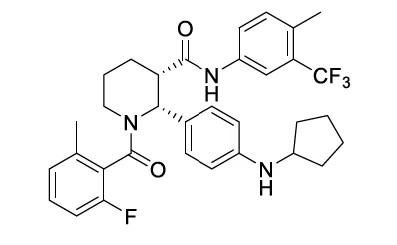
Chemical name: 3-piperidinecarboxamide, 2-[4-(cyclopentylamino)phenyl]-1-(2-fluoro-6-methylbenzoyl)-N-[4-methyl-3-(trifluoromethyl)phenyl]-, (2R,3S)-
Molecular formula and molecular mass: C33H35F4N3O2 582 Da.
Structural formula:
Physicochemical properties: Avacopan is white to pale yellow solid. It is practically insoluble in aqueous media (<0.011 mg/mL) and no pH dependence of solubility was observed.
14 CLINICAL TRIALS
14.1 Clinical Trials by Indication
TAVNEOS (avacopan capsules) is indicated for:
- the adjunctive treatment of adult patients with severe active anti-neutrophil cytoplasmic autoantibody (ANCA)-associated vasculitis (granulomatosis with polyangiitis [GPA] and microscopic polyangiitis [MPA]) in combination with standard background therapy including glucocorticoids. TAVNEOS does not eliminate glucocorticoid use.
The trial design is summarized below in Table 7:
Table 7: Summary of Subject Demographics for the Phase 3 Clinical Trial (ADVOCATE) in ANCA-Associated Vasculitis
| Trial # | Trial design | Dosage, route of administration and duration | Trial patients (n) | Mean age (Range) | Sex |
CL010_168 (ADVOCATE) | 3 x 10 mg oral capsules, twice daily, 52 weeks +8 weeks follow-up | Avacopan (166) Prednisone (165) | 64 (13-88 years) | 187 males (56.5%) 144 females (43.5%) |
controlled clinical trial, assessing the efficacy, safety, and tolerability of avacopan in patients with newly diagnosed or relapsing active ANCA-associated vasculitis when administered against a standard background cyclophosphamide or rituximab regimen. The trial treatment period was 52 weeks with an 8-week follow-up period.
The primary objectives of the trial were to evaluate the efficacy of avacopan to achieve:
- Remission at week 26; defined as Birmingham Vasculitis Activity Score (BVAS)=0 and not taking glucocorticoids for antineutrophil cytoplasmic antibody (ANCA)–associated vasculitis within 4 weeks before week 26
- Sustained remission at week 52; defined as remission at week 26 and week 52, without relapse through week 52, and not taking glucocorticoids for ANCA-associated vasculitis within 4 weeks before week 52
The inclusion criteria included patients with GPA and MPA and patients with renal or non-renal vasculitis.
A total of 331 patients were randomized in a 1:1 ratio to one of two treatment groups:
- TAVNEOS group (N=166): Patients received 30 mg TAVNEOS twice daily for 52 weeks plus prednisone-matching placebo tapering regimen over 20 weeks
- Prednisone group (N=164): Patients received TAVNEOS-matching placebo twice daily for 52 weeks plus prednisone (tapered from 60 mg/day to 0 over 20 weeks)
All patients in both groups received standard immunosuppressive regimens of either:
- IV cyclophosphamide for 13 weeks (15 mg/kg up to 1.2 g every 2 to 3 weeks), and then starting on week 15, oral azathioprine 1 mg/kg daily with titration up to 2 mg/kg daily (mycophenolate mofetil 2 g daily was allowed in place of azathioprine), or
- Oral cyclophosphamide for 14 weeks (2 mg/kg daily) followed by oral azathioprine, or mycophenolate mofetil starting at week 15 (same dosing regimen as IV cyclophosphamide) or
- Rituximab at the dose of 375 mg/m² for 4 weekly IV doses.
Patients were stratified at time of randomization based on three factors:
- Receiving either intravenous (IV) rituximab, IV cyclophosphamide, or oral cyclophosphamide
- Having proteinase 3 (PR3) or myeloperoxidase (MPO) ANCAs
- Newly diagnosed or relapsed ANCA-associated vasculitis.
Table 8: Selected baseline characteristics in the pivotal phase 3 ADVOCATE trial (Intent-to-Treat Population)
| Demographic characteristic | TAVNEOS (N=166) | Prednisone tapering arm (N=164) | |||
|---|---|---|---|---|---|
| ANCA-associated vasculitis Status, n (%) | |||||
| Newly diagnosed | 115 (69.3%) | 114 (69.5%) | |||
| Relapsed | 51 (30.7%) | 50 (30.5%) | |||
| Gender, n (%) | |||||
| Demographic characteristic | TAVNEOS (N=166) | Prednisone tapering arm (N=164) | |||
|---|---|---|---|---|---|
| Male | 98 (59.0%) | 88 (53.7%) | |||
| Female | 68 (41.0%) | 76 (46.3%) | |||
| Background treatment, n (%) | |||||
| Rituximab | 107 (64.5%) | 107 (65.2%) | |||
| IV or Oral cyclophosphamide | 59 (35.5%) | 57 (34.8%) | |||
| ANCA Positivity, n (%) | |||||
| PR3 | 72 (43.4%) | 70 (42.7%) | |||
| MPO | 94 (56.6%) | 94 (57.3%) | |||
| Type of ANCA-associated vasculitis, n (%) | |||||
| Granulomatosis with polyangiitis (GPA) | 91 (54.8%) | 90 (54.9%) | |||
| Microscopic polyangiitis (MPA) | 75 (45.2%) | 74 (45.1%) | |||
| BVAS score | |||||
| Mean ± SD | 16.3 ± 5.87 | 16.2 ± 5.69 | |||
| eGFR (MDRD) | |||||
| Mean ± SEM | 44.6 ± 2.42 | 45.6 ± 2.36 | |||
| Glucocorticoid | |||||
| Patients with prior glucocorticoid use | 125 (75.3%) | 135 (82.3%) | |||
Abbreviations: ANCA=antineutrophil cytoplasmic autoantibody; BVAS= Birmingham Vasculitis Activity Score; IV=intravenous; MDRD: Modified Diet in Renal Disease; MPO=myeloperoxidase; PR3=proteinase-3; SEM: Standard error of mean.
Disease Remission and Sustained Remission
As shown in Table 9, the trial met both of its primary endpoints, remission at Week 26 and sustained remission at Week 52. The avacopan group was not inferior to the prednisone group with respect to the proportion of patients who achieved disease remission at Week 26 and was superior with regard to those who achieved sustained remission at Week 52.
Table 9: Results of the Phase 3 Trial (ADVOCATE) in ANCA-Associated Vasculitis (Intent-to-Treat Population)
| Primary Endpoints | n/N (%) | P-value | |
| Avacopan | Prednisone tapering arm | ||
| Disease Remission at Week 26 | 120/166 (72.3%) | 115/164 (70.1%) | <0.0001 (non-inferiority) 0.2387 (superiority) |
| Sustained Remission at Week 52 | 109/166 (65.7%) | 90/164 (54.9%) | <0.0001 (non-inferiority) 0.0066 (superiority) |
Abbreviations: N=number of patients in the analysis population for the treatment group; n=number of patients with disease remission
15 MICROBIOLOGY
No microbiological information is required for this drug product.
16 NON-CLINICAL TOXICOLOGY
General Toxicology
Avacopan and metabolite M1 were found to be potent antagonists of human, hamster, and monkey C5aR, moderately potent against rabbit C5aR, but to be non- or minimally active against rat and mouse C5aR. Therefore, rat and mouse (excluding human C5aR transgenic mice, see 10.2 Pharmacodynamics) are not considered a pharmacologically relevant species.
Single-Dose Toxicity
A single-dose oral (gavage) toxicity study was conducted in male and female young adult Sprague Dawley rats at doses up to 100 mg/kg. There were no clinical observations attributable to avacopan and no effects upon body weight or food consumption from avacopan treatment. There were no statistically significant avacopan-related changes in hematology, clinical chemistry and urinalysis parameters. There were no avacopan-related gross macroscopic lesions or microscopic liver findings. No changes in organ weights attributed to treatment with avacopan were noted. Based on these results the No Observed Adverse Effect Level (NOAEL) was determined to be ≥ 100 mg/kg.
Repeat-Dose Toxicity
In 13-week and 26-week repeat-dose toxicity studies in rats, avacopan was well tolerated at doses up to 100 mg/kg/day and 200 mg/kg/day, respectively. There was no avacopan-related mortality during either study. The only avacopan-related clinical observation was infrequent salivation (considered non-adverse and noted only in the 13-week study) which was noted in the mid- and high-dose groups. There were no avacopan-related changes in body weights, food consumption, ophthalmic examinations, gross observations, organ weights, or histopathology. Clinical pathology changes were limited to minor serum chemistry changes in the 26-week study at doses >100 mg/kg/day which were small in magnitude, reversible, and considered non-adverse. The NOAEL for avacopan in the 13-week and 26-week studies was determined to be 100 mg/kg/day and 200 mg/kg/day (the highest doses assessed), respectively.
In 20-week and 44-week repeat-dose toxicity studies in cynomolgus monkeys, avacopan was well tolerated at doses up to 30 mg/kg/day and 30/45 mg/kg/day, respectively. As a result of a dosing modification in the 44-week study, animals received either 0 (vehicle control article), 5, 15, or 30 mg/kg/day of avacopan from Weeks 1 to 25, and then 0, 7.25, 22.5, or 45 mg/kg/day of avacopan from Weeks 26 to 44. Once daily dosing was via nasogastric intubation (Weeks 1-5), and via oral gavage thereafter. There was no mortality observed during either study. There were no avacopan-related changes in clinical observations, body weights, ophthalmic examinations, electrocardiographic examinations, neurological evaluations, blood pressure and respiratory examinations, immunotoxicology endpoints, clinical pathology gross observations, organ weights, or histopathology. The NOAEL in the 20-week and 44-week studies was determined to be 30 mg/kg/day and 30/45 mg/kg/day, respectively.
Carcinogenicity
The carcinogenic potential of avacopan was evaluated in a 2-year study in both rats and hamsters.
Avacopan was not carcinogenic in female rats at all doses up to and including 100 mg/kg/day (the highest dose tested). In male rats, there was an increased incidence in c-cell adenomas with an incidence of 13/57 (23%) at 100 mg/kg/day; this increase was not statistically significant and the incidence was within the historical control range. There was an increase in non-neoplastic focal C-cell hyperplasia in the thyroid of male rats, with highest incidence (11/57 or 19.3%) at 100 mg/kg/day, which was within the historical range.
Avacopan was not carcinogenic in hamsters, the pharmacologically relevant species.
Genotoxicity
The genotoxic potential of avacopan was assessed in a battery of in vitro and in vivo test systems. In the bacterial reverse mutation (Ames test) assay, avacopan did not cause an increase in the mean number of revertants per plate with any tester strains, either in the presence or absence of microsomal activation (S9 fraction) prepared from Aroclor™-induced rat liver. Avacopan was found to be negative for inducing forward mutations at the thymidine kinase locus in L5178Y mouse lymphoma cells, under the metabolic activation and non-activation conditions used for this assay. Similarly, avacopan was negative in the rat bone marrow micronucleus assay, following two consecutive daily oral doses up to the dose limit of 2,000 mg/kg/day. Based upon in vitro and in vivo metabolism data, the genetic toxicity studies characterized the effects of not only avacopan, but also the metabolite M1.
Reproductive and Developmental Toxicology
In a hamster fertility and early embryo development study (Segment I), avacopan at oral doses of up to 1,000 mg/kg/day (500 mg/kg BID) produced no effects on male or female fertility.
In a hamster embryo-fetal development study (Segment II), oral doses of up to 1,000 mg/kg/day (500 mg/kg BID) avacopan were given from gestation day (GD) 6 to 12. An increased incidence of skeletal variations (short thoracolumbar supernumerary rib) was observed at 1,000 mg/kg/day (500 mg/kg BID). No other adverse gross external, soft tissue or skeletal fetal abnormalities were associated with either daily doses up to 100 mg/kg or twice daily doses of 500 mg/kg avacopan in hamsters.
In a rabbit embryo-fetal development study (Segment II), oral doses of up to 200 mg/kg/day avacopan were given from GD 6 to 18 (during the period of organogenesis). No avacopan-related gross external, soft tissue or skeletal fetal alterations (malformations or variations) were observed at doses as high as 200 mg/kg/day. There was a dose-related increase in spontaneous abortions or early deliveries due to maternal toxicity. The maternal NOAEL was 30 mg/kg/day. The developmental NOAEL was 200 mg/kg/day.
A pre- and post-natal development study (Segment III) in hamsters, with avacopan given as daily doses up to 100 mg/kg or BID doses of 500 mg/kg from GD 6 through lactation until weaning of the offspring, resulted in no adverse findings in either the F0 dams or the F1 offspring, including developmental, behavioral, immunological or reproductive measures. The NOAEL for reproduction in the dams, and for viability, growth, and reproduction in the F1 generation hamsters was 1,000 mg/kg/day (500 mg/kg BID). Systemic exposure to avacopan and metabolite M1 (Cmax hours and AUC0-8hr) increased with the increase in avacopan dose level from 10 to 100 mg/kg/day but did not increase at 1,000 mg/kg/day. Analysis of avacopan plasma levels in the lactating dams and the plasma levels in nursing offspring on the 15th day of lactation showed the presence of avacopan. Thus, avacopan is likely excreted into the milk of lactating hamsters.
Special Toxicology
Phototoxicity
Avacopan absorbs light between 290 nm and 370 nm, with a peak molar extinction coefficient of 2989 L mol-1 cm-1 at 290 nm. An in vitro study in Balb/c 3T3 mouse fibroblasts revealed that avacopan was not phototoxic when tested up to the solubility limit (10 μM) in culture media.
Immunotoxicity
No evidence of avacopan-related inhibition of T-cell dependent humoral responses related to C5aR inhibition was seen in a 4-week T-cell dependent antibody response (TDAR) study in rats when avacopan was administered orally at doses up to 100 mg/kg/day. No effects upon immunophenotypic parameters or TDAR were observed in a 44-week repeat-dose toxicity studies in cynomolgus monkeys.