


Patient Medication Information: uses, side effects, how to take - Eprex Sterile Solution 20000IU/mL
ABOUT THIS MEDICATION
What the medication is used for:
EPREX is used to increase the production of red blood cells and to decrease the need for red blood cell transfusion. The dose should be gradually adjusted to achieve this goal. EPREX may be used in adults and children with chronic kidney disease; adults who have HIV-infection and are receiving a drug called zidovudine; adult cancer patients receiving chemotherapy; and adults scheduled to undergo major elective surgery.
What it does:
EPREX is a protein made in the laboratory which acts like a substance naturally made in the human body called erythropoietin. Erythropoietin controls the production of red blood cells in the body.
When it should not be used:
You should not use EPREX if:
- you are allergic to any of the ingredients in the product;
you make antibodies (develop pure red cell aplasia
[PRCA]) following treatment with any erythropoiesis- stimulating agent;
- you have uncontrolled high blood pressure;
you cannot for any reason receive adequate
antithrombotic treatment.
What the medicinal ingredient is:
epoetin alfa
What the nonmedicinal ingredients are:
albumin (human) or glycine and polysorbate 80 as stabilizers, sodium chloride, water for injection and either sodium citrate and citric acid, or sodium phosphate
Single-use vials and pre-filled syringes do not contain preservatives. The 20,000 IU/mL multi-use vial contains benzyl alcohol as a preservative.
What dosage forms it comes in:
Single-use vials: 1,000 IU/0.5 mL, 2,000 IU/mL, 4,000 IU/mL, 10,000 IU/mL, 40,000 IU/mL
Multi-use vial: 20,000 IU/mL
Single-use pre-filled syringes with PROTECS* needle guard: 1,000 IU/0.5 mL, 2,000 IU/0.5 mL, 3,000 IU/0.3 mL, 4,000 IU/0.4 mL, 5,000 IU/0.5 mL, 6,000 IU/0.6 mL, 7,000 IU/0.7 mL, 8,000 IU/0.8 mL, 9,000 IU/0.9 mL, 10,000 IU/mL, 20,000 IU/0.5 mL, 30,000 IU/0.75 mL, 40,000 IU/mL
To reduce the risk of accidental needle sticks to users, each pre-filled syringe is equipped with the PROTECS needle guard that is automatically activated to cover the needle after complete delivery of the syringe content.
WARNINGS AND PRECAUTIONS
BEFORE taking EPREX:
- Tell your doctor about any medical problems and about any allergies you have or have had in the past.
- Tell your doctor if you have or have had high blood pressure, seizures, blood clots, liver disease, porphyria, or gout.
- While you are treated with EPREX your doctor will need to check your blood pressure. Your blood pressure will be monitored carefully and any changes outside of the guidelines that your doctor has given you must be reported. If your blood pressure increases, you may need medication to lower it. If you already take blood pressure medication, your doctor may increase the amount.
- Your doctor will also measure your serum iron levels, red blood cell levels and other factors in your blood, prior to starting and during treatment with EPREX, as deemed appropriate.
- If you are on dialysis, your dialysis prescription may need to be changed while you are being treated with EPREX. Your doctor will take blood tests to determine if any change is needed. Your doctor may also need to adjust any medication you receive to prevent blood clotting.
Tell your doctor if you are pregnant, if you think you might be pregnant, or if you are trying to become pregnant.
- Tell your doctor if you are breast-feeding.
- In many women with severe kidney failure, the monthly period may stop. When these women take EPREX they may restart their monthly cycle. If you are a woman with kidney disease, you should discuss contraception with your doctor.
In patients with kidney disease, due to the possibility of an increase in blood pressure, there is a small chance of having a seizure when therapy starts. During the initial phase of treatment, your doctor may advise you to avoid driving, using machines or doing anything else that could be dangerous if you are not alert.
- If you are a home dialysis patient, you should continue to check your access, as your doctor or nurse has shown you, to make sure it is working. Be sure to let Serious Warnings and Precautions
ALL PATIENTS
To minimize the risks for death and serious
cardiovascular (heart and blood vessel-related) side effects, your doctor will follow the recommended dosage for each indication.
The multi-use preserved formulation contains
benzyl alcohol. Benzyl alcohol has been reported to be associated with an increased incidence of neurological and other complications in premature infants which are sometimes fatal.
Patients with uncontrolled hypertension should
not be treated with EPREX epoetin alfa; blood pressure should be controlled adequately before initiation of therapy.
EPREX epoetin alfa should be used with caution
in patients with a history of seizures.
During hemodialysis, patients treated with
EPREX epoetin alfa may require increased anticoagulation with heparin to prevent clotting of the artificial kidney. Patients with pre-existing vascular disease should be monitored closely.
The multi-use formulation of EPREX epoetin alfa
contains albumin, a derivative of human blood. The theoretical risk of transmission of Creutzfeldt-Jakob disease is considered extremely remote. No cases of viral disease transmission or CJD have ever been identified as a result of albumin use.
Hemoglobin levels during EPREX treatment
should not be higher than 120 g/L (may not apply to surgery patients)
If you undergo surgery while taking EPREX,
your physician may prescribe a blood thinner, as appropriate for the surgical procedure, to prevent blood clots.
Antibody-mediated pure red cell aplasia (PRCA)
has been reported after months to years of treatment with recombinant erythropoietins. If you develop PRCA, you may suddenly become severely anemic and this could result in a dependency on blood transfusions. CHRONIC RENAL FAILURE PATIENTS
If your hemoglobin is kept too high, you have an
increased chance of heart attack, stroke, heart failure, blood clots and death. Your doctor should try to keep your hemoglobin between 100 and 120 g/L
CANCER PATIENTS
If you are a cancer patient and your hemoglobin is kept too high (over 120 g/L),
- your tumor may grow faster,
- you have an increased chance of heart attack, stroke, blood clots and death.
Your doctor should use the lowest dose of
EPREX needed to avoid red blood cell transfusions.
- In some instances, red blood cell transfusion should be the preferred treatment option.
- Once you have finished your chemotherapy course, EPREX should be discontinued.
your healthcare professional know right away if there is a problem.
If you are a cancer patient you should be aware that
EPREX is a red blood cell growth factor and in some circumstances your cancer may grow faster. You should discuss treatment options for your anemia with your doctor.
INTERACTIONS WITH THIS MEDICATION
Tell your doctor about all medications you are using, including those obtained without a prescription and any other remedies or dietary supplements. It is especially important that your doctor know if you are taking high blood pressure medication.
PROPER USE OF THIS MEDICATION
Follow your doctor's instructions about when and how to take this medication.
EPREX Sterile Solution is injected under the skin (subcutaneously) into the arms, legs or abdomen.
While you are receiving EPREX, your doctor will measure your red blood cells. Your doctor will use this information to adjust the dose to the amount right for you.
Do not shake EPREX Sterile Solution. The solution in the vial or pre-filled syringe should always be clear and colourless. Do not use EPREX Sterile Solution if the contents of the vial or pre-filled syringe appear discoloured or cloudy, or if the vial or pre-filled syringe appears to contain lumps, flakes, or particles. If the vial or pre-filled syringe has been shaken vigorously, the solution may appear to be frothy and should not be used.
Single-use vials and pre-filled syringes of EPREX Sterile Solution do not contain preservatives and therefore are to be used once and discarded. Any unused portion of a vial or pre-filled syringe should not be used. Multi-use vials contain benzyl alcohol as a preservative and may be re-entered. Multi-use vials should be discarded 30 days after first entry.
Overdose:
If you accidentally take too much EPREX, obtain immediate medical advice.
Missed dose:
If you miss a dose, contact your doctor for instructions.
Preparing and Injecting the Dose
Important: To help avoid contamination and possible infection, follow these instructions exactly.
Single-Use and Multi-Use Vials
Use the Correct Syringe: Your doctor has instructed you on how to give yourself the correct dosage of EPREX. This dosage will usually be measured in units per milliliter or ccs. It is important to use a syringe that is marked in tenths of milliliters (for example, 0.1, 0.2, etc., mL or cc). Failure to use the proper syringe can lead to a mistake in dosage, and you may receive too much or too little EPREX. Only use disposable syringes and needles as they do not require sterilization; they should be used once and disposed of as instructed by your doctor.
- 1. Take a vial out of the refrigerator. The liquid needs to come to room temperature. This usually takes between 15 to 30 minutes.
- 2. Check the vial, to make sure it is the right dose, has not passed its expiry date, is not damaged, and the liquid is clear and not frozen. When using the multi-use vial, record the date of first entry for each vial on the inside flap of the box.
- 3. Assemble the other items you will need for your injection: a syringe, needle and antiseptic swabs.
- 4. Wash your hands.
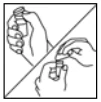
- 5. Remove the cap from the top of the vial but do not remove the rubber stopper. Clean the rubber stopper with an antiseptic swab.
- 6. Remove the needle cover from the syringe. Pull the syringe plunger out to fill the syringe with an amount of air equal to the amount of liquid prescribed by your doctor.
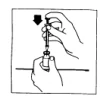
- 7. Put the vial on a flat surface and push the syringe needle through the rubber stopper. Push the syringe plunger down to add the air into the vial.
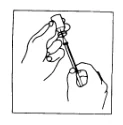
- 8. Turn the vial and the syringe upside down. Pull on the syringe plunger to fill the syringe with the correct amount of liquid from the vial. It is important that the needle is always in the liquid in order to prevent air bubbles forming in the syringe.
- 9. Remove the syringe and needle from the vial. Hold the syringe with the needle pointing up to see if it has any air bubbles inside. If there are air bubbles gently press the plunger until all of the air (but none of the liquid) has been removed.
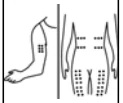
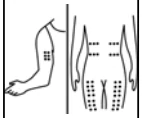
- 10. Choose an injection site. Good sites are the top of the thigh and around the tummy (abdomen) but away from the navel. Vary the site from day to day.
- 11. Use an antiseptic swab on the injection site, to disinfect it.
- 12.
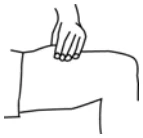
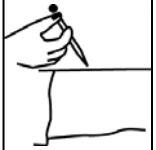
Pinch a fold of skin between your thumb and index
finger. Don’t squeeze it.

- 13.
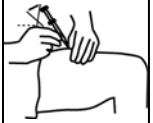
Push the syringe needle in fully. Your doctor or
nurse may have shown you how
to do this.
- 14.
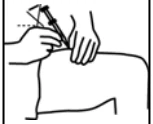
Check that you haven’t punctured a blood vessel.
Pull back slightly on the plunger. If you see blood, take the syringe out and choose a new injection site.
- 15.
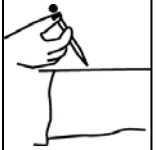
Push the plunger with your thumb as far as it will
go to inject the liquid. Push it slowly and evenly, keeping the skinfold pinched.
- 16.
When the plunger is pushed as far as it will go, take
out the needle and let go of the skin.
- 17.
Press an antiseptic swab over the
injection site for a few seconds after
the injection.
- 18.
Dispose of your used syringe in a safe container (see
Disposal of Syringes) and dispose of your vial.
Single-Use Pre-filled Syringe with PROTECS needle guard
To reduce the risk of accidental needle sticks to users, each pre-filled syringe is equipped with the PROTECS needle guard that is automatically activated to cover the needle after complete delivery of the syringe content.
- 1.
Take a syringe out of the refrigerator. The liquid
needs to come to room temperature. This usually takes between 15 to 30 minutes.
- 2.
Check the syringe to make sure it is the right dose,
has not passed its expiry date, is not damaged, and the liquid is clear and not frozen.
- 3.
Choose an injection site. Good
sites are the top of the thigh and
around the tummy (abdomen) but
away from the navel. Vary the site
from day to day.
- 4.
Wash your hands. Use an antiseptic swab on the
injection site, to disinfect it.
- 5.
Take the cover off the syringe by holding the barrel
and pulling the cover off carefully without twisting it.
Don’t push the plunger, touch the needle or shake the syringe.
- 6.
Pinch a fold of skin between
your thumb and index finger.
Don’t squeeze it.
- 7.
Push the needle in fully.
Your doctor or nurse may
have shown you how to do
this.
- 8.
Check that you haven’t punctured a blood vessel.
Pull back slightly on the plunger. If you see blood, take the syringe out and choose a new injection site.
- 9. Push the plunger with your thumb as far as it will go to inject all of the liquid. Push it slowly and evenly, keeping the skinfold pinched. The needle guard will not activate unless the entire dose is given.
- 10.
When the plunger is pushed as far as it will go, take out the needle and let go of
the skin.
- 11. Take your thumb off the plunger. Allow the syringe to move up until the entire needle is covered by the needle guard.
- 12. Press an antiseptic swab over the injection site for a few seconds after the injection.
- 13.
Dispose of your used syringe in a safe container (see
Disposal of Syringes).
- 14.
Only take one dose of EPREX from each syringe.
If any liquid remains in the syringe after an injection, the syringe should be properly disposed of, not reused (see Disposal of Syringes).
- 6.
Disposal of Syringes
- 1. Place all used needles and syringes in a hard plastic container with a screw-on cap, or a metal container with a plastic lid, such as a coffee can properly labelled as to content. If a metal container is used, cut a small hole in the plastic lid and tape the lid to the metal container. If a hard-plastic container is used, always screw the cap on tightly after each use. When the container is full, tape around the cap or lid, and dispose of according to your doctor's instructions.
- 2.
Do not use glass or clear plastic containers (or any
other container) that will be recycled or returned to a store.
- 3.
Always store the container out of the reach of
children.
- 4.
Please check with your doctor, nurse, or pharmacist
for other suggestions.
SIDE EFFECTS AND WHAT TO DO ABOUT THEM
Any medicine may have unwanted effects. The side effects you might experience may vary depending on the reason you are taking EPREX. Tell your doctor or pharmacist about any unusual sign or symptom whether listed or not. The side effects reported most often in all patients receiving EPREX are flu-like symptoms such as dizziness, drowsiness, fever, headache, muscle and joint pain and weakness, and gastrointestinal disturbances such as nausea, vomiting and diarrhea. Redness, burning and pain at the place where EPREX is given have also been reported.
Be sure to tell your doctor if you have an increase in headaches or develop unusual headaches, as this may be a sign of increased blood pressure.
There is a possible association of a worsening of increased blood pressure if red blood cell production occurs too rapidly. Your doctor may need to reduce your dose of EPREX and initiate or increase blood pressure medication. Signs and symptoms of serious cardiovascular events may include but are not limited to: chest pain, leg pain and swelling, shortness of breath, sudden weakness, numbing or tingling of face, arm or leg, an increase in headaches or severe sudden headaches, loss of vision or loss of speech, lightheadedness.
Patients experiencing these signs or symptoms should contact their doctor immediately.
Patients should NOT discontinue their medication without consulting their doctor first.
| SERIOUS SIDE EFFECTS, HOW OFTEN THEY | |||
| HAPPEN AND WHAT TO DO ABOUT THEM | |||
Additional side effects which have been reported more often in chronic renal failure patients than other patients include increases in blood pressure, clotted access, seizures and pure red cell aplasia (PRCA). PRCA is a condition in which severe and sudden anemia (characterized by symptoms such as severe tiredness/fatigue, and shortness of breath on mild exertion) develops due to failure of the bone marrow to produce red blood cells. PRCA could result in a dependency on blood transfusions. Should you be diagnosed with PRCA, your doctor will stop your EPREX therapy and may initiate treatment with drugs and/or blood transfusions to help increase your red blood cell count.
If you develop signs of allergy such as difficulty breathing, hives, itching, rash, or swelling of the throat, face, eyelids, mouth or tongue, discontinue the use of EPREX and contact your doctor or obtain medical help immediately.
This is not a complete list of side effects. For any unexpected effects while taking EPREX, contact your doctor or pharmacist.
HOW TO STORE IT
- Store unopened in a refrigerator between 2 and 8 degrees centigrade. Do not freeze. Protect from light.
- Do not use this product after the expiry date written on the package.
- Keep this and all medicines in a safe place away from children.
- If you are using EPREX at home, it is important that the vial or syringe be stored in your refrigerator although not in the freezer compartment. EPREX should not be frozen. Do not use EPREX if it has been frozen. Leave the EPREX vial or syringe to stand for about 15 to 30 minutes until it reaches room temperature prior to using it.
- When the pre-filled syringe or single-use vial is about to be used, it may be removed from the refrigerator and stored at room temperature (not above 25°C) for one single period of maximum 7 days.
- The multi-use vial may be re-entered and therefore should be stored in the refrigerator following each injection.
- Discard the multi-use vial 30 days after the date of first entry into the vial, which you recorded on the inside flap of the box.
MORE INFORMATION
This document plus the full Product Monograph, prepared for health professionals, can be found at:
http://www.janssen-ortho.com
or by contacting the sponsor, Janssen-Ortho Inc., at: 1-800-567-3331
Janssen-Ortho Inc.
Toronto, Ontario M3C 1L9
Last revised: July 2009
REPORTING SUSPECTED SIDE EFFECTS
To monitor drug safety, Health Canada through the Canada Vigilance Program collects information on serious and unexpected side effects of drugs. If you suspect you have had a serious or unexpected reaction to this drug you may notify Canada Vigilance :
By toll-free telephone: 866-234-2345 By toll-free fax: 866-678-6789
Online: www.healthcanada.gc.ca/medeffect By email: CanadaVigilance@hc-sc.gc.ca
By regular mail:
Canada Vigilance National Office
Marketed Health Products Safety and Effectiveness Information Bureau
Marketed Health Products Directorate
Health Products and Food Branch
Health Canada
Tunney’s Pasture, AL 0701C
Ottawa ON K1A 0K9
NOTE: Should you require information related to the management of the side effect, please contact your health care provider before notifying Canada Vigilance. The Canada Vigilance Program does not provide medical advice.