


Patient Medication Information: uses, side effects, how to take - Mircera
ABOUT THIS MEDICATION
What the medication is used for:
This medicine has been prescribed for you because you have anemia. This means that you have too few red blood cells and your hemoglobin level is too low (your body’s tissues might not receive enough oxygen). The symptoms may be fatigue, weakness, and shortness of breath.
MIRCERA is used to treat the anemia caused by your chronic kidney disease and can be used if you are on dialysis or not on dialysis.
What it does:
Like the natural hormone erythropoietin, MIRCERA increases the number of red blood cells and hemoglobin level in your blood. Compared to other similar medicines called erythropoiesis stimulating agents (ESA), MIRCERA can stay in your body longer, therefore fewer injections are required for your treatment.
When it should not be used:
Do not use MIRCERA:
- if you have high blood pressure that cannot be controlled
if you are allergic (hypersensitive) to methoxy polyethylene
glycol-epoetin beta or to any of the other ingredients. What the medicinal ingredient is:
The active ingredient is methoxy polyethylene glycol-epoetin beta.
What the nonmedicinal ingredients are:
The nonmedicinal ingredients are: sodium phosphate monobasic monohydrate, sodium sulfate, mannitol, methionine and poloxamer 188.
What dosage forms it comes in:
Single-dose vials: 50 μg/mL, 100 μg/mL, 200 μg/mL, 300 μg/mL, 400 μg/mL, 600 μg/mL, 1000 μg/mL
Single-dose pre-filled syringes: 50 μg/0.3 mL , 75 μg/0.3 mL, 100 μg/0.3 mL, 150 μg/0.3 mL, 200 μg/0.3 mL, 250 μg/0.3 mL, 400 μg/0.6 mL, 600 μg/0.6 mL
WARNINGS AND PRECAUTIONS
- Erythropoiesis stimulating agents (ESAs) are drugs used to increase the production of red blood cells and to decrease the need for red blood cell transfusion and the dose should be gradually adjusted to achieve this goal. Hemoglobin levels during ESA treatment should be maintained within the range of 100-120 g/L.
- Patients with uncontrolled high blood pressure should not be treated with MIRCERA; blood pressure should be adequately controlled before receiving MIRCERA.
- MIRCERA should be used with caution in patients with a history of seizures
- If your haemoglobin is kept too high (over 120 g/L), erythropoietic therapies increase the risk of heart attack, stroke, blood clots and death.
- Antibody-mediated Pure Red Cell Aplasia (PRCA) has been reported after months to years of treatment with recombinant erythropoietins
- MIRCERA is not indicated for anemia treatment if you are receiving chemotherapy.
BEFORE you use MIRCERA talk to your doctor or pharmacist if:
you are pregnant, think you are pregnant or intend to become pregnant.
- you are breast-feeding or intend to breast-feed.
- you are a cancer patient: be aware that ESAs and MIRCERA, may act as growth factors. Please discuss this with your doctor.
- you have hemoglobinopathies (disorders associated with abnormal hemoglobin), severe liver disease, seizures, or have a high blood platelet count. It is not known if MIRCERA has a different effect in patients with hemoglobinopathies and your doctor must treat you with caution.
During treatment with MIRCERA:
- Your doctor will carry out regular blood tests to monitor how your anemia is responding to treatment by measuring your hemoglobin level.
- Your doctor will check the amount of iron in your blood before and during MIRCERA treatment. If the amount is too low your doctor may give you additional iron therapy.
- Your doctor will check your blood pressure before and during your MIRCERA treatment. If your blood pressure is high and cannot be controlled either by medicine or a special diet, your doctor will interrupt your MIRCERA treatment or reduce the dose.
INTERACTIONS WITH THIS MEDICATION
Please tell your doctor or pharmacist if you are taking, or have recently taken, any other medicines, including medicines obtained without a prescription. The results of clinical studies do not indicate any interaction of MIRCERA with other medicines.
PROPER USE OF THIS MEDICATION
Food and drink do not affect MIRCERA.
Usual dose:
If you are not currently treated with an ESA: The recommended starting dose of MIRCERA is based on body weight. The dose is to be given to you once every 2 weeks as a single injection. Your doctor may increase or decrease your dose or temporarily stop your treatment to adjust your hemoglobin level. Dose changes will not be made more often than once a month.
If you are currently being treated with another ESA: Your doctor may replace your current medicine with MIRCERA. Your doctor will decide to treat you with MIRCERA administered as a single injection once a month. Your doctor will calculate your MIRCERA starting dose based on the last dose of your previous medicine. The first MIRCERA dose will be given on the planned injection day of your previous medicine. Your doctor may increase or decrease your dose or stop your treatment for a short amount of time to adjust your hemoglobin to an appropriate level for you. Dose changes will not be made more often than once a month.
Overdose:
Please contact your doctor or pharmacist if you used too large a dose of MIRCERA as it may be necessary to perform some blood tests and interrupt your treatment.
Missed Dose:
If you miss a dose of MIRCERA, administer the missed dose as soon as you remember and speak to your doctor about when to use the next dose.
SIDE EFFECTS AND WHAT TO DO ABOUT THEM
Like all medicines, MIRCERA can cause side effects, although not everybody experiences them.
Contact your doctor if you feel tired, weak or have shortness of breath as this could mean that your MIRCERA treatment is not effective. Your doctor will check that you do not have other causes of anemia and may perform blood tests or examine your bone marrow. If you have developed Pure Red Cell Aplasia (stopped or reduced production of red blood cells), your MIRCERA treatment will be discontinued. You will not receive another ESA and your doctor will treat you for this condition.
| SERIOUS SIDE EFFECTS, HOW OFTEN THEY | ||||||||||||||
| HAPPEN AND WHAT TO DO ABOUT THEM | ||||||||||||||
| Symptom / effect | Talk with your | Stop taking | ||||||||||||
| doctor or | drug and | |||||||||||||
| pharmacist | call your | |||||||||||||
| Only if | In all | doctor or | ||||||||||||
| severe | cases | pharmacist | ||||||||||||
| Common (less than 1/10 patients) | High Blood Pressure : You may not experience any symptoms but you may experience: headache, blurred vision, fatigue, irregular/fast/hard heartbeats | 9 | ||||||||||||
Uncomm on (less than 1/100) | Vascular access thrombosis (blood clots in your dialysis access) | 9 | ||||||||||||
Rare (less than 1/1000) | Maculopapular rash (red skin reactions than can include pimples or spots) | 9 | ||||||||||||
Hypersensitivity [unusual wheezing (high-pitched whistling sound), difficulty in breathing, swollen tongue, face or throat, swelling around injection site] | 9 | |||||||||||||
| Hypertensive encephalopathy (severe headache, sudden stabbing migraine-like headache, confusion, speech disturbances, fits or convulsions) | 9 | |||||||||||||
This is not a complete list of side effects. For any unexpected effects while taking MIRCERA, contact your doctor or pharmacist.
REPORTING SUSPECTED SIDE EFFECTS To monitor drug safety, Health Canada through the Canada Vigilance Program collects information on serious and unexpected side effects of drugs. If you suspect you have had a serious or unexpected reaction to this drug you may notify Canada Vigilance:
By toll-free telephone; 866-234-2345
By toll-free fax: 866-678-6789
Online: www.healthcanada.gc.ca/medeffect By email: CanadaVigilance@hc-sc.gc.ca
By regular mail:
Canada Vigilance National Office
Marketed Health Products Safety and Effectiveness Information Bureau
Marketed Health Products Directorate
Health Products and Food Branch
Health Canada
Tunney's Pasture, AL 070lC
Ottawa ON KIA OK9
NOTE: Should you require information related to the management of the side effect, please contact your health care provider before notifying Canada Vigilance. The Canada Vigilance Program does not provide medical advice
HOW TO STORE IT
Keep out of the reach and sight of children.
Store in a refrigerator (2°C -8°). Do not freeze. Keep the vial or pre-filled syringe in the outer carton in order to protect from light.
You may remove MIRCERA pre-filled syringe from the refrigerator and store it at room temperature (not above 25°C) for a period of one month and on one occasion only. Once you have removed your medicine from the refrigerator you must use it within this period of one month.
You may remove MIRCERA vial from the refrigerator and store it at room temperature (not above 25°C) for a period of 7 days and on one occasion only. Once you have removed your medicine from the refrigerator you must use it within this period of 7 days.
Do not use MIRCERA after the expiry date which is stated on the outer carton. The expiry date refers to the last day of that month.
Information for Self Injection –Pre-Filled Syringe
Always take MIRCERA exactly as your doctor has told you. Check with your doctor or nurse if you are unsure.
Treatment with MIRCERA must be started under the supervision of a healthcare professional. Further injections can be given by a healthcare professional or, after you have been trained, you can inject MIRCERA yourself
The MIRCERA pre-filled syringe is ready for use and can be injected by yourself either under the skin or if you are on hemodialysis, through the hemodialysis vascular access according to your doctor’s advice.
Each pre-filled syringe is to be used for a single injection only. Do not mix MIRCERA solution with other injectable medicines.
Store MIRCERA in the outer carton box.
Safety tips
- Remove the pre-filled syringe of MIRCERA from the refrigerator and allow it to reach room temperature in its original carton box. This should take about 30 minutes after the package has been removed from the fridge.
- Make sure that the pre-filled syringe has not been removed from the fridge for longer than a single period of 1 month.
- Do not use a pre-filled syringe that has been frozen and do not expose it to temperatures above 25°C.
- Do not use a pre-filled syringe after the expiry date stated on the label.
- Use the pre-filled syringe only if the liquid is clear, colourless to yellowish and free of particles.
- Do not shake the pre-filled syringe; if the solution has been shaken and appears foamy, do not use it (shaking MIRCERA or exposing it to light may damage the medicine).
- When handling the syringe, do not touch the needle.
- Do not use a syringe more than once
Getting started
Assemble all of the supplies you will need for an injection on a clean surface:
Included in the pack:
- a MIRCERA pre-filled safety syringe and a separate needle*
Not included in the pack:
- cleansing alcohol swabs
- sterile gauze
- a container for the waste material
How do I Inject MIRCERA myself?
The following instructions explain how to use the pre-filled syringe to inject MIRCERA yourself. Please read the instructions carefully and follow them step by step. 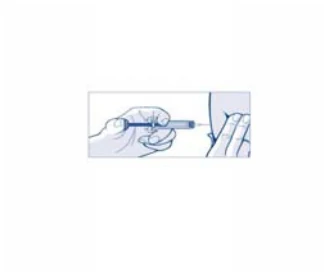
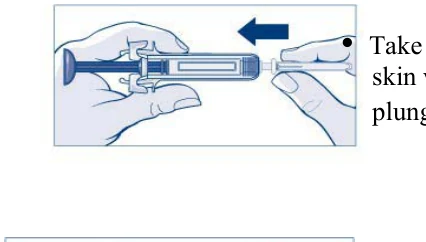
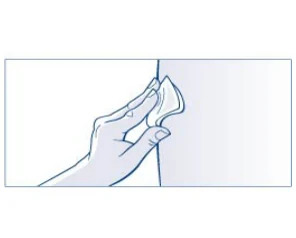
Remove the plastic tray of MIRCERA from the box without peeling back the protective film. Wash your hands well with soap and warm water.
Preparing the syringe and needle for injection
Peel back plastic foil from
plastic tray and remove syringe and needle.
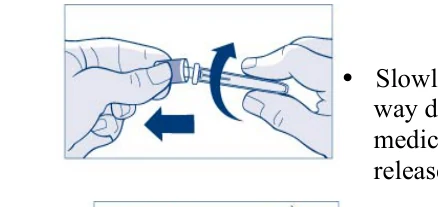
Grasp the needle firmly in
both hands. Break seal of the needle, using a twisting motion and remove the cap. Do not remove the needle shield.
y Remove the rubber tip cap
from the syringe (bend and pull)
Attach the needle to the
syringe by pushing firmly together.
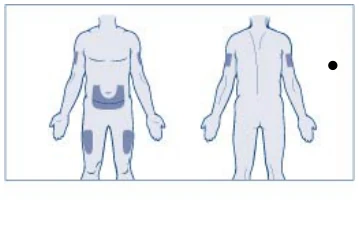
y Choose one of the
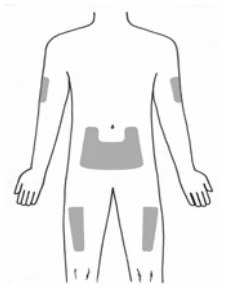
recommended injection sites, arm abdomen or thigh (except the navel or waistline). Do not inject MIRCERA into an area that is tender or healing
y Clean the site with a new
alcohol swab.
y Remove the needle shield.
Grab syringe and needle shield and pull firmly
Injecting the solution
If your doctor has advised you to inject MIRCERA into a vein, please administer your dose as shown by your health care professional. If you are advised to inject MIRCERA under your skin please administer your dose as described below:
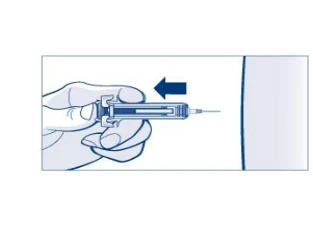
y Pinch a fold of skin at the site
and insert the needle. Insert the
needle in a quick, “dart-like”
motion as shown by your health
care professional.
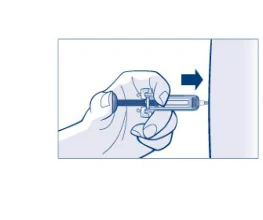
y Slowly push the plunger all the
way down until all the
medicine is injected. Do not
release plunger.
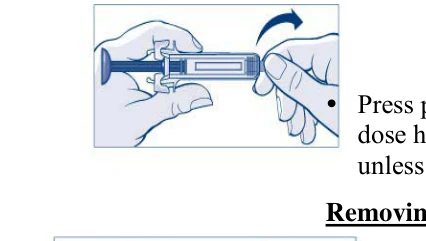
y Press plunger while holding the finger rests until the full dose has been given. The needle guard will not activate unless the full dose has been given.
Removing the needle
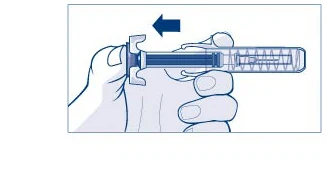
y Take the needle out of the
skin without releasing the
plunger.
y Release the plunger
allowing the needle
guard to protect the
needle
- Press the injection site with a small bandage or sterile gauze for several seconds.
- Do not massage the injection site.
- Any bleeding may be covered with an adhesive bandage.
Disposal
The syringe is intended for single use and must be thrown away after the injection. Dispose of the syringe in a closed container.
For patients on hemodialysis using venous injection
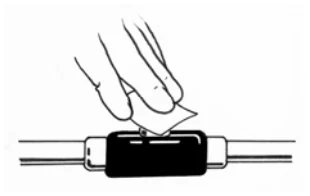
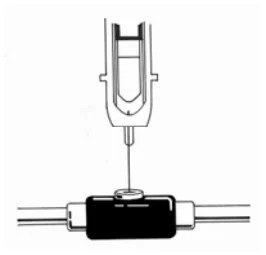
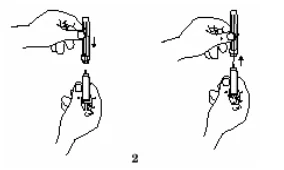
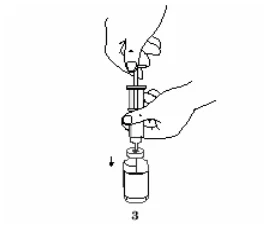
Clean the venous port of
the hemodialysis tubing
with a new alcohol swab.
Insert the needle of the
syringe into the cleaned
venous port and push the
plunger all the way down
to inject required dose of
medicine.
Remove the syringe from the venous port. Throw away the
prefilled syringe with any remaining liquid in the puncture-proof disposable container. Only use the prefilled syringe once.
Information for Self Injection –Vials
Always take MIRCERA exactly as your doctor has told you. Check with your doctor or nurse if you are unsure.
MIRCERA can be injected by yourself either under the skin or if you are on haemodialysis, through the hemodialysis vascular access according to your doctor’s advice. Each vial is to be used for a single injection only.
Do not mix MIRCERA solution with other injectable medicines.
Store MIRCERA in the outer carton box.
Safety tips
Remove the vial of MIRCERA from the refrigerator and
allow it to reach room temperature in its original carton box. This should take about 30 minutes after the package has been removed from the fridge.
Make sure that the vial has not been removed from the fridge
for more than a single period or for longer than 7 days.
Do not use a vial that has been frozen and do not expose it to
temperatures above 25°C.
- Do not use a vial after the expiry date stated on the label.
Only use the vial if the solution is clear, colourless (slightly
yellow in colour is acceptable) and is free of visible particles.
- Do not shake the vial.
- When handling syringes, do not touch the needles.
Keep the syringes in their wrappers until you are ready to
prepare your dose.
Getting started
Assemble all of the supplies you will need for an injection on a clean surface:
Included in the pack:
- One vial of MIRCERA solution for injection
Not included in the pack:
- A syringe
- One long needle to withdraw MIRCERA from the vial
- One short needle for injection
- Cleansing alcohol swabs
- Sterile gauze
- Container for the waste material
The following instructions explain how to use MIRCERA vials to inject yourself. Please read the instructions carefully and follow them step by step.
Wash your hands thoroughly before you start.
Preparing the vial of MIRCERA
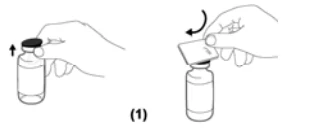
- Remove the protective cap from the MIRCERA vial.
- Clean the rubber top of the vial with an alcohol swab.
- Remove the syringe from the wrapping. Do not touch the tip of the syringe.
- Take the needle guard containing the long needle and place it firmly on to the tip of the syringe
y Remove the needle guard without touching the needle and keep the syringe with the needle in your hand.
- Insert the needle through the rubber top of the MIRCERA vial
- Hold the vial firmly in one hand and the syringe in the other and turn both upside down.
Keeping the vial upside down, slowly pull back on the plunger to fill the syringe with
MIRCERA liquid to the line that matches the dose your
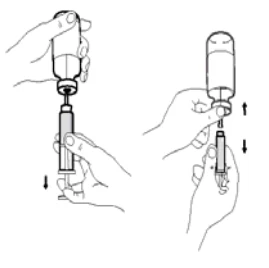
doctor prescribed.
Keeping the vial upside down
and maintaining the tip of the
needle in the liquid, slowly pull
the plunger back to the line on
the syringe that matches your
dose.
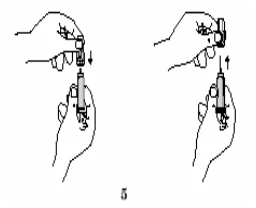
Remove the syringe from the
long needle while keeping the
needle in the vial. Avoid
touching the tip of the syringe.
Take the needle guard
containing the short needle and
place it firmly on to the tip of
the syringe.
Injecting the solution
If your doctor has advised you to inject MIRCERA into a vein, please administer your dose as shown by your health care professional.
If you are advised to inject MIRCERA under your skin, please administer your dose as described below.
Select the injection site in the arm, thigh or abdomen (except
your navel or waistline).
Clean the skin, where the injection is to be made with a
cleansing alcohol swab.
- Wait for the area to dry.
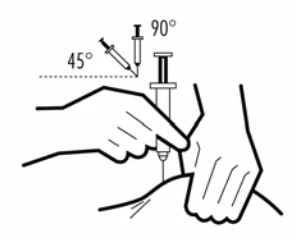
- With one hand, pinch a fold of loose skin.
Insert the needle into the
pinched skin, holding the
syringe like a pencil, use a
quick “dart like” motion to
insert the needle either
straight up and down (90
degrees angle) or at a slight
angle (45 degrees angle) into
the skin, as shown by your
health care professional.
Inject the solution by gently pushing the plunger all the way
down.
- Pull the needle straight out of the skin.
Press on the injection site with a small bandage or sterile
gauze for several seconds.
- Do not massage the injection site.
- Any bleeding may be covered with an adhesive bandage. Disposal
The syringe, needle and all injection materials are intended for single use and must be discarded after the injection. Dispose of the syringe and needle safely in a closed container.
MORE INFORMATION
Reminder: This medicine has been prescribed only for you. Do not give it to anybody else. If you have any further questions, please ask your doctor or pharmacist.
This document plus the full product monograph, prepared for health professionals can be found at:
www.rochecanada.com
®Eprex is a registered Trade-Mark of Johnson & Johnson ®Aranesp is a registered Trade-Mark of Amgen Inc.