


Patient Medication Information: uses, side effects, how to take - Eprex Sterile Solution 40000IU/mL
Serious Warnings and Precautions
ALL PATIENTS
|
|
|
|
CHRONIC RENAL FAILURE PATIENTS
|
CANCER PATIENTS
|
|
What is Eprex used for?
- Eprex is used to increase the production of red blood cells and to decrease the need for red blood cell transfusion.
- The dose should be gradually adjusted to achieve this goal.
- Eprex may be used in adults and children with chronic kidney disease; adults who have HIV-infection and are receiving a drug called zidovudine; adult cancer patients receiving chemotherapy; and adults scheduled to undergo major elective surgery.
INFORMATION ABOUT ANEMIA
What is anemia:
Anemia is a condition where your blood contains a lower than normal number of red blood cells. Red blood cells contain a substance called hemoglobin that is responsible for transporting oxygen in your blood. As the number of red blood cells in your blood decreases, so does the amount of oxygen delivered to your body. Development of anemia is characterized by several symptoms, such as weakness, fatigue, shortness of breath, dizziness, poor concentration and chills. These symptoms over time can negatively impact your overall quality of life.
What causes anemia:
Anemia may be the result of several causes, including blood loss or nutritional deficiencies. Anemia due to blood loss must be investigated and treated by a physician. Nutritional anemia caused by a deficiency of iron, vitamin B12 or folic acid can be treated with dietary supplements. Anemia can also be caused by chronic disease, such as cancer or kidney (renal) disease.
Anemia in Chronic Kidney Disease:
In chronic kidney disease, anemia results when the kidneys are unable to manufacture enough natural erythropoietin to stimulate the bone marrow to produce more red blood cells.
Anemia in Cancer:
Anemia in cancer can be caused by the chemotherapy regimens used to treat the cancer. The toxic effects of chemotherapy reduce the body’s ability to produce erythropoietin as well as the bone marrow's ability to respond and make more red blood cells. As a result, not enough red blood cells are produced and the patient becomes anemic.
How does Eprex work?
Eprex is a protein made in the laboratory which acts like a substance naturally made in the human body called erythropoietin. Erythropoietin controls the production of red blood cells in the body.
What are the ingredients in Eprex?
Medicinal ingredients: epoetin alfa
Non-medicinal ingredients: Glycine, polysorbate 80, sodium chloride, sodium phosphate and water for injection.
Pre-filled syringes do not contain preservatives.
The needle cover of the pre-filled syringe contains dry natural rubber (a derivative of latex), which should not be handled by persons sensitive to this substance.
Eprex comes in the following dosage forms:
Single-use pre-filled syringes with PROTECS® needle guard: 1000 IU/0.5 mL, 2000 IU/0.5 mL,
3000 IU/0.3 mL, 4000 IU/0.4 mL, 5000 IU/0.5 mL,
6000 IU/0.6 mL, 8000 IU/0.8 mL, 10 000 IU/mL,
20 000 IU/0.5 mL, 30 000 IU/0.75 mL, 40 000 IU/mL
To reduce the risk of accidental needle sticks to users, each pre-filled syringe is equipped with the PROTECS® needle guard that is automatically activated to cover the needle after complete delivery of the syringe content.
Do not use Eprex if:
- you are allergic to any of the ingredients in the product;
- you have been diagnosed with Pure Red Cell Aplasia (the bone marrow cannot produce enough red blood cells) after previous treatment with any product that stimulates red blood cell production (including Eprex). See Serious Warnings and Precautions.
- you have uncontrolled high blood pressure;
you are due to have major orthopedic surgery (such as hip or knee surgery), and you
- have severe heart disease;
- have severe disorders of the veins and arteries;
- have recently had a heart attack or stroke;
- while on Eprex, some people may need medicines to reduce the risk of blood clots. You should not take Eprex if you cannot for any reason take medicines that prevent blood clotting.
To help avoid side effects and ensure proper use, talk to your healthcare professional before you take Eprex. Talk about any health conditions or problems you may have, including if you:
- Have or have had in the past any medical problems or any allergies, including an allergy to latex.
- Have or have had high blood pressure, seizures, blood clots, liver disease, porphyria (a rare blood disorder), or gout.
Are pregnant, think you might be pregnant, or are trying to become pregnant.
- Are breast-feeding.
- Are a woman with kidney disease. In many women with severe kidney failure, the monthly period may stop. When these women take Eprex they may restart their monthly cycle. You should discuss contraception with your doctor.
Other warnings you should know about:
- While you are treated with Eprex your doctor will need to check your blood pressure. Your blood pressure will be monitored carefully and any changes outside of the guidelines that your doctor has given you must be reported. If your blood pressure increases, you may need medication to lower it. If you already take blood pressure medication, your doctor may increase the amount.
- Your doctor will also measure your serum iron levels, red blood cell levels and other factors in your blood, prior to starting and during treatment with Eprex, as deemed appropriate.
- If you are on dialysis, your dialysis prescription may need to be changed while you are being treated with Eprex. Your doctor will take blood tests to determine if any change is needed. Your doctor may also need to adjust any medication you receive to prevent blood clotting.
In patients with kidney disease, due to the possibility of an increase in blood pressure, there is a small chance of having a seizure when therapy starts. During the initial phase of treatment, your doctor may advise you to avoid driving, using machines or doing anything else that could be dangerous if you are not alert.
- If you are a home dialysis patient, you should continue to check your access, as your doctor or nurse has shown you, to make sure it is working. Be sure to let your healthcare professional know right away if there is a problem.
- If you are a cancer patient you should be aware that Eprex is a red blood cell growth factor and in some circumstances your cancer may grow faster. You should discuss treatment options for your anemia with your doctor.
Tell your healthcare professional about all the medicines you take, including any drugs, vitamins, minerals, natural supplements or alternative medicines. It is especially important that your doctor know if you are taking high blood pressure medication.
How to take Eprex:
Eprex may be given by injection:
- Either into a vein or a tube that goes into a vein (intravenously) by a healthcare professional
- Or under the skin (subcutaneously) into the arms, legs or abdomen
Do not shake Eprex Sterile Solution. The solution in pre-filled syringe should always be clear and colourless. Prolonged vigorous shaking may damage the product. If the pre-filled syringe has been shaken vigorously, the solution may appear to be frothy and should not be used.
The product should not be used, and should be discarded if:
- the seal is broken,
- the liquid is colored or
- particles are in it,
- it may have been frozen, or
- there has been a refrigeration failure.
The product is for single use only. Pre-filled syringes of Eprex Sterile Solution do not contain preservatives and therefore are to be used once and discarded. Any unused portion of a pre-filled syringe should not be used. Subcutaneous Injection: Preparing and Injecting the Dose
Important: To help avoid contamination and possible infection, follow these instructions exactly.
Single-Use Pre-filled Syringe with PROTECS® needle guard
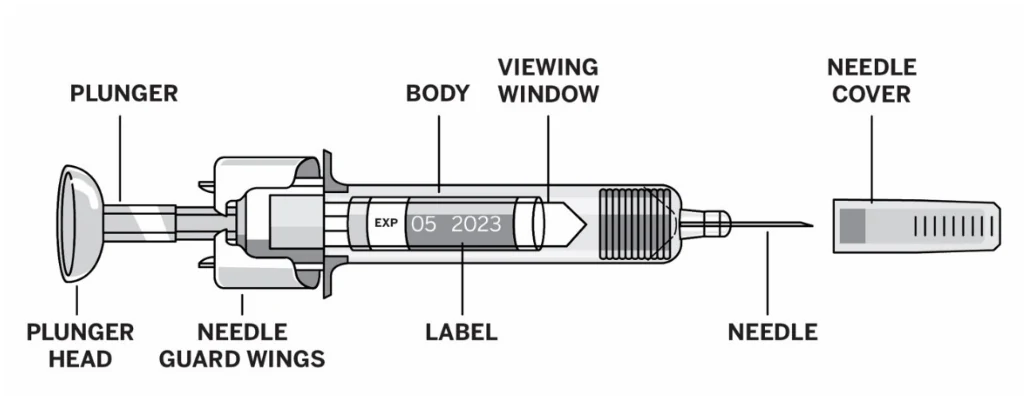
To reduce the risk of accidental needle sticks to users, each pre-filled syringe is equipped with the PROTECS® needle guard that is automatically activated to cover the needle after complete delivery of the syringe content.
- 1. Take a syringe out of the refrigerator. The liquid needs to come to room temperature. This usually takes between 15 to 30 minutes. Do not remove the syringe’s needle cover while allowing it to reach room temperature.
- 2. Check the syringe to make sure it is the right dose, has not passed its expiry date, is not damaged, and the liquid is clear and not frozen.
- 3. Choose an injection site. Good sites are the top of the thigh and around the tummy (abdomen) but away from the navel. Vary the site from day to day.
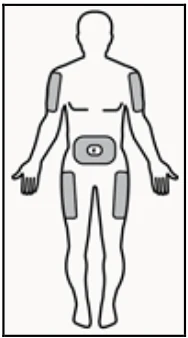
- 4. Wash your hands. Use an antiseptic swab on the injection site, to disinfect it.
- 5. Hold the pre-filled syringe by the body of the syringe with the covered needle pointing upward.
- 6. Do not hold by the plunger head, plunger, needle guard wings, or needle cover.
- 7. Do not pull back on the plunger at any time.
- 8. Do not remove the needle cover from the pre-filled syringe until you are ready to inject your Eprex.
- 9. Take the needle cover off the syringe by holding the body and pulling the needle cover off carefully without twisting it. Don’t push the plunger, touch the needle or shake the syringe.
- 10. Do not touch the needle guard wings to prevent prematurely covering the needle with the needle guard.
- 11. Pinch a fold of skin between your thumb and index finger. Don’t squeeze it.
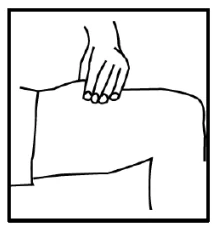
- 12. Push the needle in fully. Your doctor or nurse may have shown you how to do this.
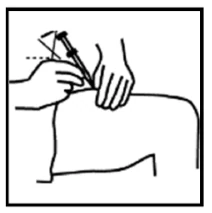
- 13. Push the plunger with your thumb as far as it will go to inject all of the liquid. Push it slowly and evenly, keeping the skinfold pinched. The needle guard will not activate unless the entire dose is given. You may hear a click when theneedle guard has been activated.
- 14. When the plunger is pushed as far as it will go, take out the needle and let go of the skin.
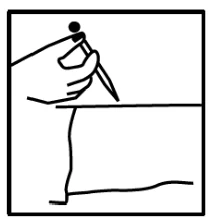
- 15. Slowly take your thumb off the plunger. Allow the syringe to move up until the entire needle is covered by the needle guard.
- 16. When the needle is pulled out of your skin, there may be a little bleeding at the injection site. This is normal. Press an antiseptic swab over the injection site for a few seconds after the injection.
- 17. Dispose of your used syringe in a safe container (see Disposal of Syringes).
- 18. Only take one dose of Eprex from each syringe. If any liquid remains in the syringe after an injection, the syringe should be properly disposed of, not reused (see Disposal of Syringes).
Disposal of Syringes
- 1.
Place all used needles and syringes in a hard plastic container with a screw-on cap, or a metal container with a plastic lid, such as a coffee can properly labelled as to content. If a metal container is used, cut a small hole in the plastic lid and tape the lid to the metal
- container. If a hard-plastic container is used, always screw the cap on tightly after each use. When the container is full, tape around the cap or lid, and dispose of according to your doctor's instructions.
- 2. Do not use glass or clear plastic containers (or any other container) that will be recycled or returned to a store.
- 3. Always store the container out of the reach of children.
- 4. Please check with your doctor, nurse, or pharmacist for other suggestions.
Usual dose:
Follow your doctor's instructions about when and how to take this medication.
While you are receiving Eprex, your doctor will measure your red blood cells. Your doctor will use this information to adjust the dose to the amount right for you.
Overdose:
| If you think you, or a person you are caring for, have taken too much Eprex, contact a healthcare professional, hospital emergency department, or regional poison control centre immediately, even if there are no symptoms |
Missed dose:
If you miss a dose, contact your doctor for instructions.
What are possible side effects from using Eprex?
These are not all the possible side effects you may have when taking Eprex. If you experience any side effects not listed here, tell your healthcare professional.
Any medicine may have unwanted effects. The side effects you might experience may vary depending on the reason you are taking Eprex. Tell your doctor or pharmacist about any unusual sign or symptom whether listed or not. The side effects reported most often in all patients receiving Eprex are high blood pressure and flu-like symptoms such as dizziness, drowsiness, fever, headache, muscle and joint pain and weakness, and gastrointestinal disturbances such as nausea, vomiting and diarrhea. Redness, burning and pain at the place where Eprex is given have also been reported.
There is a possible association of a worsening of increased blood pressure if red blood cell production occurs too rapidly. Your doctor may need to reduce your dose of Eprex and initiate or increase blood pressure medication.
Additional side effects which have been reported more often in chronic renal failure patients than other patients include increases in blood pressure, clotted access, seizures and pure red cell aplasia (PRCA). Should you be diagnosed with PRCA, your doctor will stop your Eprex therapy and may initiate treatment with drugs and/or blood transfusions to help increase your red blood cell count.
Patients should NOT discontinue their medication without consulting their doctor first. Talk to your healthcare professional immediately if you experience any of the serious side effects listed in the table below.
Serious side effects and what to do about them
| Symptom / effect | Talk to your healthcare professional | Stop taking drug and get immediate medical help | |
|---|---|---|---|
| Only if severe | In all cases | ||
| VERY COMMON | |||
| Increased High Blood Pressure: signs may be increase in headaches or development of unusual headaches (sudden stabbing migraine-like headache) | |||
| COMMON | |||
| Seizure | |||
| UNCOMMON | |||
| Blood Clots: chest pain, leg pain and swelling, shortness of breath, sudden weakness, numbing or tingling of face, arm or leg, an increase in headaches or severe sudden headaches, loss of vision or loss of speech, lightheadedness. | |||
| VERY RARE | |||
| Pure Red Cell Aplasia (PRCA): severe and sudden anemia characterized by severe tiredness/fatigue, and shortness of breath on mild exertion | |||
| Severe Skin Reactions: a rash, which may be severe, may cover your whole body and can also include blisters or areas of skin coming off | |||
| Allergic Reaction: signs may include difficulty breathing, hives, itching, rash, or swelling of the throat, face, eyelids, mouth or tongue |
If you have a troublesome symptom or side effect that is not listed here or becomes bad enough to interfere with your daily activities, tell your healthcare professional.
Reporting Side Effects
You can report any suspected side effects associated with the use of health products to Health Canada by:
NOTE: Contact your health professional if you need information about how to manage your side effects. The Canada Vigilance Program does not provide medical advice. |
Storage:
Store unopened in a refrigerator between 2 and 8 degrees centigrade. Do not freeze. Protect from light.
Do not use this product after the expiry date written on the package.
Keep this and all medicines in a safe place away from children.
If you are using Eprex at home, it is important that the syringe be stored in your refrigerator although not in the freezer compartment. Eprex should not be frozen. Do not use Eprex if it has been frozen. Leave the Eprex syringe to stand for about 15 to 30 minutes until it reaches room temperature prior to using it.
When the pre-filled syringe is about to be used, it may be removed from the refrigerator and stored at room temperature (not above 25°C) for one single period of maximum 7 days.
If you want more information about Eprex:
- Talk to your healthcare professional
- Find the full product monograph that is prepared for healthcare professionals and includes this Patient Medication Information by visiting www.janssen.com/canada or by calling Janssen Inc., at: 1-800-567-3331 or 1-800-387-8781.
Last revised: April 21, 2022
All trademarks used under license.