


Product Monograph - Erbitux
SUMMARY PRODUCT INFORMATION
| Route of Administration | Dosage Form / Strength | Clinically, Relevant Nonmedicinal Ingredients |
|---|---|---|
| Intravenous injection | Injectable liquid Strength: 2 mg/mL 100 mg cetuximab/50 mL single use vial 200 mg cetuximab/100 mL single use vial | For nonmedicinal ingredients see DOSAGE FORMS, COMPOSITION AND PACKAGING section |
Description
ERBITUX (cetuximab) is a recombinant, human/mouse chimeric monoclonal antibody that binds specifically to the extracellular domain of the human epidermal growth factor receptor (EGFR) with high affinity (Kd=0.2 nM). ERBITUX is genetically engineered by combining the Fv regions of a murine anti-EGFR antibody (M225) with human IgG1 heavy and kappa light chain constant regions. ERBITUX is composed of two identical heavy chains consisting of 449 amino acids each, and two identical light chains consisting of 214 amino acids each, and has an approximate molecular weight of 152 kDa.
INDICATIONS AND CLINICAL USE
Colorectal Cancer
ERBITUX (cetuximab) is indicated for the treatment of EGFR-expressing K-Ras wild-type metastatic colorectal carcinoma (mCRC)
- in combination with FOLFIRI (irinotecan, 5-fluorouracil, leucovorin) for first-line treatment. The benefits and risks of ERBITUX in combination with FOLFIRI, for first-line treatment in mCRC patients, have been observed only in a subgroup analysis of patients with ECOG performance status of 0 or 1 (see CLINICAL TRIALS).
- in combination with irinotecan in patients who are refractory to other irinotecan-based chemotherapy regimens.
- as a single agent in patients who are intolerant to irinotecan-based chemotherapy.
- as a single agent for the treatment of patients who have failed both irinotecan- and oxaliplatin-based regimens and who have received a fluoropyrimidine.
Use of ERBITUX is not indicated for the treatment of colorectal cancer in patients with Ras mutations or unknown Ras mutation tumor results.
Squamous Cell Carcinoma of the Head and Neck (SCCHN)
ERBITUX (cetuximab) is indicated in combination with radiation therapy for the initial treatment of locally or regionally advanced squamous cell carcinoma of the head and neck.
Geriatrics (≥ 65 years of age)
In clinical studies of advanced colorectal cancer, no overall differences in safety or efficacy were observed between patients who were 65 years of age or older and younger patients. Clinical studies of head and neck cancer did not include sufficient number of subjects aged 65 and over to determine whether they respond differently from younger subjects.
Pediatrics
The safety and effectiveness of ERBITUX in pediatric patients have not been established.
CONTRAINDICATIONS
ERBITUX (cetuximab) is contraindicated in patients with known severe hypersensitivity to cetuximab or any component of this product (see WARNINGS AND PRECAUTIONS).
WARNINGS AND PRECAUTIONS
Serious Warnings and Precautions
Infusion Reactions: Severe infusion reactions occurred with the administration of ERBITUX in approximately 3% of patients in clinical trials, rarely with fatal outcome (< 1 in 1000). Approximately 90% of severe infusion reactions were associated with the first infusion of ERBITUX. Severe infusion reactions are characterized by rapid onset of airway obstruction (bronchospasm, stridor, hoarseness), hypotension, shock, loss of consciousness, myocardial infarction and/or cardiac arrest. Fatal anaphylactic reactions may occur despite the use of prophylactic premedications. Severe infusion reactions require immediate interruption of the ERBITUX infusion and permanent discontinuation from further treatment (see WARNINGS AND PRECAUTIONS: Infusion Reactions, ADVERSE REACTIONS and DOSAGE AND ADMINISTRATION).
Cardiopulmonary Arrest: Cardiopulmonary arrest and/or sudden death occurred in 2% of 208 patients with squamous cell carcinoma of the head and neck treated with radiation therapy and ERBITUX. Carefully consider use of ERBITUX in combination with radiation therapy in head and neck cancer patients with a history of coronary artery disease, congestive heart failure, or arrhythmias, in light of these risks. Closely monitor serum electrolytes, including serum magnesium, potassium and calcium, during and after treatment with ERBITUX (see WARNINGS AND PRECAUTIONS: Cardiopulmonary Arrest).
Infusion Reactions
Symptoms of infusion reactions may include flushing, fever and chills, and in severe cases rapid onset of airway obstruction (bronchospasm, stridor, hoarseness), hypotension, shock, or loss of consciousness, myocardial infarction and/or cardiac arrest have occurred with the administration of ERBITUX (cetuximab).
In clinical studies, severe infusion reactions were observed in 2-5% of patients with fatal outcome in 1 patient (see DOSAGE AND ADMINISTRATION – Dose Modifications).
Anaphylactic reactions to cetuximab can occur in patients without previous cetuximab exposure. Severe IRRs such as anaphylactic reactions can occur despite the use of premedication. The risk for anaphylactic reactions is increased in patients with a history of tick bites, red meat allergy, or in the presence of IgE antibodies directed against galactose-α-1,3-galactose (alpha-gal) which is present on cetuximab.
Approximately 90% of severe infusion reactions were associated with the first infusion of ERBITUX despite the use of prophylactic antihistamines. However, caution must be exercised with every ERBITUX infusion, as there are patients who experienced their first severe infusion reaction during later infusions. Symptoms of IRRs usually occur during the first infusion, but may occur after several hours or with subsequent infusions. It is recommended to warn patients of the possibility of such a late onset and instruct them to contact their physician if symptoms or signs of an infusion reaction occur.
Severe infusion reactions require immediate interruption of the ERBITUX infusion and permanent discontinuation from further treatment. Appropriate physician supervision and supportive medical resources for the treatment of severe infusion reactions, anaphylaxis and cardiac arrest/myocardial infarction must be available. Monitor patients for 1 hour following ERBITUX infusions in a setting with resuscitation equipment and other agents necessary to treat anaphylaxis (e.g., epinephrine, parenteral corticosteroids, intravenous antihistamines, bronchodilators, vasopressors and oxygen). Longer observation periods may be required in patients who experience infusion reactions to confirm resolution of the event. Patients should be observed until all signs and symptoms have completely resolved (see DOSAGE AND ADMINISTRATION – Dose Modifications).
Grade 1 and 2 infusion reactions including chills, fever, and dyspnea usually occurring on the first day of initial dosing, were observed in 11-19% of patients receiving ERBITUX in clinical trials.
Special attention is recommended for patients with poor performance status and pre-existing cardio-pulmonary disease.
In clinical trials, mild to moderate infusion reactions have been managed by slowing the infusion rate of ERBITUX and by employing prophylactic use of antihistamine medications for subsequent doses (see DOSAGE AND ADMINISTRATION).
Cardiopulmonary Arrest
Cardiopulmonary arrest and/or sudden death occurred in 4 (2%) of 208 patients treated with radiation therapy and ERBITUX as compared to none of 212 patients treated with radiation therapy alone in a randomized, controlled ERBITUX trial in patients with SCCHN. Three patients with prior history of coronary artery disease died at home, with myocardial infarction as the presumed cause of death. One of these patients had arrhythmia and one had congestive heart failure. Death occurred 27, 32, and 43 days after the last dose of ERBITUX. One patient with no prior history of coronary artery disease died one day after the last dose of ERBITUX. In some studies association with age ≥ 65 years or performance status has been observed. Carefully consider use of ERBITUX in combination with radiation therapy in head and neck cancer patients with a history of coronary artery disease, congestive heart failure, arrhythmias and performance status. Concomitant administration of cardiotoxic compounds such as fluoropyrimidines should be taken into account in light of these risks. Closely monitor serum electrolytes, including serum magnesium, potassium, and calcium, during and after treatment with ERBITUX (see WARNINGS AND PRECAUTIONS – Monitoring and Laboratory Tests).
Pulmonary Toxicity
Interstitial lung disease (ILD), including 1 fatality, occurred in 6 (< 0.3%) patients receiving ERBITUX in clinical trials. In the events of acute onset or worsening pulmonary symptoms, ERBITUX therapy should be interrupted and a prompt investigation of these symptoms should occur. If ILD is confirmed, ERBITUX should be discontinued and the patient should be treated appropriately.
Carcinogenesis, Mutagenesis, Impairment of Fertility
Long-term animal studies have not been performed to test ERBITUX for the carcinogenic potential or potential to impair fertility. No mutagenic or clastogenic potential of ERBITUX was observed in the Salmonella-Escherichia coli (AMES) assay or in the in vivo rat micronucleus test. It is not known if ERBITUX can impair fertility in humans.
Immunogenicity
As with all therapeutic proteins, there is potential for immunogenicity. The incidence of antibodies to ERBITUX was measured by collecting and analysing serum pre-study, prior to selected infusions and during treatment follow-up. Although the data are limited, there does not appear to be any relationship between the appearance of antibodies to ERBITUX and the safety or antitumour activity of the molecule.
The observed incidence of anti-ERBITUX antibody responses may be influenced by the low sensitivity of available assays, sample handling, timing of sample collection, concomitant medications and underlying disease. For these reasons, comparison of the incidence of antibodies to ERBITUX with the incidence of antibodies to other products may be misleading (see DETAILED PHARMACOLOGY/Immunogenicity).
Dermatologic Toxicity
Dermatologic toxicities, including acneiform rash, skin drying and fissuring, paronychial inflammation, and infectious sequelae (eg, S. aureus sepsis, abscess formation, cheillitis and cellulitis) and hypertrichosis, have occurred in patients receiving ERBITUX. Acneiform rash occurred in 76-88% of patients receiving ERBITUX in clinical trials. Severe acneiform rash occurred in 1-18% of patients.
Acneiform rash usually developed within the first two weeks of therapy and resolved in a majority of the patients after cessation of treatment, although in nearly half, the event continued beyond 28 days. Life-threatening and fatal bullous mucocutaneous disease with blisters, erosions, and skin sloughing has also been observed in patients treated with ERBITUX. It could not be determined whether these mucocutaneous adverse reactions were directly related to EGFR inhibition or to idiosyncratic immune-related effects (e.g., Stevens Johnson syndrome or toxic epidermal necrolysis).
Patients developing dermatologic toxicities while receiving ERBITUX should be monitored for the development of inflammatory or infectious sequelae, and appropriate treatment of these symptoms initiated.
Dose modifications of any future ERBITUX infusions should be instituted in case of severe acneiform rash (see DOSAGE AND ADMINISTRATION – Dose Modifications). Instruct patients to limit sun exposure during treatment with ERBITUX and for 2 months following the last dose of ERBITUX.
Eye Disorders
Patients presenting with signs and symptoms suggestive of keratitis such as acute or worsening blepharitis, conjunctivitis, or keratitis/ulcerative keratitis with decreased visual acuity should be referred promptly to an ophthalmology specialist (see ADVERSE REACTIONS - Clinical Trial Experience, Eye Disorders).
If a diagnosis of ulcerative keratitis is confirmed, treatment with ERBITUX should be interrupted or discontinued. If keratitis is diagnosed, the benefits and risks of continuing treatment should be carefully considered.
ERBITUX should be used with caution in patients with a history of keratitis, ulcerative keratitis or severe dry eye. Contact lens use is also a risk factor for keratitis and ulceration.
Use of ERBITUX in Combination with Radiation and Cisplatin
The safety of ERBITUX in combination with radiation therapy and cisplatin has not been established. Death and serious cardiotoxicity were observed in a single-arm trial with ERBITUX, radiation therapy, and cisplatin (100 mg/m2) in patients with locally advanced SCCHN. Two of 21 patients died, one as a result of pneumonia and one of an unknown cause.
Four patients discontinued treatment due to adverse events. Two of these discontinuations were due to cardiac events.
Use of ERBITUX in Combination with irinotecan, 5-fluorouracil and leucovorin (FOLFIRI)
Cardiac events were observed in the K-Ras wild-type population in a randomized, controlled ERBITUX trial in patients with advanced colorectal cancer. There were 2 reports of fatal cardiac arrest, 1 each in either treatment arm. In the cetuximab arm, 1 patient, with no relevant medical history reported, died 2.5 months after the first and 5 days after the most recent cetuximab infusion. In the FOLFIRI-alone arm, 1 patient, with no relevant medical history reported, experienced cardiac arrest 15 days after chemotherapy was started.
The cardiac event of infarction/ischemia, all Grade, occurred in 11 (3.4%) of 317 patients treated with ERBITUX and FOLFIRI compared with 7 (2.1%) of 350 patients treated with FOLFIRI. Grade 3-4 infarction/ischemia occurred in 8 patients (2.5%) treated with ERBITUX and FOLFIRI and in 2 patients (0.6%) treated with FOLFIRI. In the experimental arm, 1 patient experienced fatal cardiovascular insufficiency, secondary to severe prolonged diarrhea and dehydration.
The cardiac event of congestive heart failure, all Grade, occurred in 3 (0.9%) of 317 patients treated with ERBITUX and FOLFIRI compared with none of 350 patients treated with FOLFIRI. Grade 3-4 congestive heart failure occurred in 3 patients (0.9%) treated with ERBITUX and FOLFIRI.
Palmar-plantar erythrodysaesthesia syndrome, all Grade, occurred in 60 (18.9%) of 317 patients treated with ERBITUX and FOLFIRI compared with 14 ( 4.0%) of 350 patients treated with FOLFIRI, in the K-Ras wild-type population. Grade 3-4 palmar-plantar erythrodysaesthesia syndrome occurred in 13 (4.1%) patients treated with ERBITUX and FOLFIRI compared with 1 ( 0.3%) patient treated with FOLFIRI.
Ras Mutated Colorectal Cancer and Ras Testing:
Assessment of Ras Mutation should be performed for patient selection by an experienced laboratory using a validated method.
ERBITUX is only indicated for patients with K-Ras wild-type mCRC.
ERBITUX is not indicated for the treatment of patients with colorectal cancer that harbor somatic mutations in exon 2 (codons 12 and 13), exon 3 (codons 59 and 61), and exon 4 (codons 117 and 146) of either K-Ras or N-Ras and hereafter is referred to as “Ras.”
Retrospective subset analyses of Ras-mutant and wild-type populations across several randomized clinical trials, including the trial in metastatic colorectal carcinoma in patients who had not received prior systemic therapy, were conducted to investigate the role of Ras mutations on the clinical effects of anti-EGFR-directed monoclonal antibodies (such as cetuximab). Use of cetuximab in patients with Ras mutations resulted in no clinical benefit with possible treatment related toxicity (see INDICATIONS AND CLINICAL USE).
Special Populations
Pregnant Women: Animal data do not suggest a teratogenic effect. However an increased incidence of abortions was observed in monkeys administered doses 1.6 to 4 times greater than human exposure. There are no adequate and well controlled studies of ERBITUX in pregnant women. It is also not known whether ERBITUX can cause foetal harm when administered to a pregnant woman or whether ERBITUX can affect reproduction capacity. IgG molecules are known to cross the placental barrier; therefore ERBITUX may be transmitted from the mother to the developing foetus. Based on animal models, EGFR has been implicated in the control of prenatal development, may be essential for normal organogenesis, and may play a role in proliferation and differentiation in the developing embryo. Therefore, ERBITUX should not be given to a pregnant woman or any woman not employing adequate contraception unless the potential benefit justifies the potential risk to the foetus. If the patient becomes pregnant while receiving this drug, she should be apprised of the potential hazard to the foetus and/or the potential risk for loss of the pregnancy.
Nursing Women: It is not known whether ERBITUX is excreted in human milk. Because human IgG is excreted in human milk, and the potential for absorption and harm to the infant is unknown, women should be advised to discontinue nursing during treatment with ERBITUX and based on the mean half-life, for a minimum of 60 days after the last dose of ERBITUX.
Pediatrics: The safety and effectiveness of ERBITUX in pediatric patients have not been established.
Geriatrics: Of the total number of patients who received ERBITUX with irinotecan, ERBITUX with FOLFIRI or ERBITUX monotherapy in six studies of advanced colorectal cancer, 588 patients were 65 years of age or older. No overall differences in safety or efficacy were observed between these patients and younger patients.
Clinical studies of ERBITUX conducted in patients with head and neck cancer did not include sufficient number of subjects aged 65 and over to determine whether they respond differently from younger subjects. Of the 208 patients with head and neck cancer who received ERBITUX with radiation therapy, 45 patients were 65 years of age or older.
Monitoring and Laboratory Tests
In patients evaluated during clinical trials, hypomagnesemia occurred in 43% of patients receiving ERBITUX and was severe (NCI-CTC Grade 3 and 4) in 4-17%. The onset of hypomagnesemia and accompanying electrolyte abnormalities occurred days to months after initiation of ERBITUX.
Patients should be monitored for hypomagnesemia, and accompanying hypocalcemia and hypokalemia, before and periodically during and following the completion of ERBITUX therapy. Monitoring should continue for a period of time commensurate with the half-life and persistence of the product; i.e. at least 8 weeks following the completion of ERBITUX therapy. Replenish electrolytes as necessary (see ADVERSE REACTIONS – Abnormal Hematologic and Clinical Chemistry Findings).
ADVERSE REACTIONS
Adverse Drug Reactions Overview
Across all studies, the most common adverse reactions with ERBITUX (incidence ≥ 25%) are cutaneous adverse reactions (including rash, pruritus, and nail changes), headache, diarrhea, stomatitis, pyrexia and infection.
The most serious adverse reactions with ERBITUX are infusion reactions, cardiopulmonary arrest, dermatologic toxicity and radiation dermatitis, sepsis, renal failure, interstitial lung disease, and pulmonary embolus.
Across all studies, ERBITUX was discontinued in 3-10% of patients because of adverse reactions.
Infusion reactions, which included pyrexia, chills, rigors, dyspnea, bronchospasm, angioedema, urticaria, hypertension, and hypotension occurred in 13-21% of patients across studies. Grades 3 and 4 infusion reactions occurred in 2-5% of patients; infusion reactions were fatal in 1 patient.
The incidence of infection was variable across studies, ranging from 13-48%. Sepsis occurred in 1-4% of patients.
Renal failure occurred in 1% of patients with colorectal cancer.
Clinical Trial Experience
Because clinical trials are conducted under very specific conditions the adverse reaction rates observed in the clinical trials may not reflect the rates observed in practice and should not be compared to the rates in the clinical trials of another drug. Adverse drug reaction information from clinical trials is useful for identifying drug-related adverse events and for approximating rates.
Infusion Reactions
In clinical trials, severe, potentially fatal infusion reactions were reported. These events include the rapid onset of airway obstruction (bronchospasm, stridor, hoarseness), hypotension, loss of consciousness, and/or cardiac arrest. In clinical studies, severe (NCI CTC Grades 3 and 4) infusion reactions were observed in 2-5% of patients rarely with fatal outcome (<1 in 1000) (see WARNINGS AND PRECAUTIONS and DOSAGE AND ADMINISTRATION – Dose Modifications). Approximately 90% of severe infusion reactions were associated with the first infusion of ERBITUX despite the use of prophylactic antihistamines. Grade 1 and 2 infusion reactions including chills, fever, and dyspnea usually occurring on the first day of initial dosing, were observed in 11-19% of patients receiving ERBITUX in clinical trials (see CLINICAL TRIALS).
Dermatologic Toxicity and Related Disorders
Dermatologic toxicities, including acneiform rash, skin drying and fissuring, paronychial inflammation, and infectious sequelae (eg, S. aureus sepsis, abscess formation, cheilitis, cellulitis) and hypertrichosis have occurred in patients receiving ERBITUX. Acneiform rash occurred in 76-88% of patients receiving ERBITUX in clinical trials. Severe acneiform rash occurred in 1-18% of patients.
Acneiform rash usually developed within the first two weeks of therapy and resolved in a majority of the patients after cessation of treatment, although in nearly half, the event continued beyond 28 days.
Patients developing dermatologic toxicities while receiving ERBITUX should be monitored for the development of inflammatory or infectious sequelae, and appropriate treatment of these symptoms initiated.
Dose modifications of any future ERBITUX infusions should be instituted in case of severe acneiform rash (see DOSAGE AND ADMINISTRATION – Dose Modifications). Instruct patients to limit sun exposure during treatment with ERBITUX (see CLINICAL TRIALS).
Eye Disorders
Blepharitis, conjunctivitis and keratitis/ulcerative keratitis with decreased visual acuity have occurred in patients receiving ERBITUX.
Patients presenting with signs and symptoms suggestive of keratitis such as acute or worsening blepharitis, conjunctivitis, or keratitis/ulcerative keratitis with decreased visual acuity should be referred promptly to an ophthalmology specialist (see WARNINGS AND PRECAUTIONS).
If a diagnosis of ulcerative keratitis is confirmed, treatment with ERBITUX should be interrupted or discontinued. If keratitis is diagnosed, the benefits and risks of continuing treatment should be carefully considered.
ERBITUX should be used with caution in patients with a history of keratitis, ulcerative keratitis or severe dry eye. Contact lens use is also a risk factor for keratitis and ulceration.
Squamous Cell Carcinoma of the Head and Neck
Table 1 contains selected adverse events in 420 patients receiving radiation therapy either alone or with ERBITUX for locally or regionally advanced SCCHN. ERBITUX was administered at the recommended dose and schedule (400 mg/m2 initial dose, followed by 250 mg/m2 weekly). Patients received a median of 8 infusions (range 1-11).
| Table 1: Incidence of Treatment Emergent Adverse Events (≥ 1%) in Patients with Locoregionally Advanced SCCHN | |||||||||||
|---|---|---|---|---|---|---|---|---|---|---|---|
| Worst Grade per Patient | % of Patients | ||||||||||
Erbitux + Radiation N = 208 | Radiation Alone N = 212 | ||||||||||
| COSTART Body System COSTART Preferred Term | |||||||||||
| Grade 1-4 | Grade 3/4 | Grade 1-4 | Grade 3/4 | ||||||||
| Body as a Whole | |||||||||||
| Mucous Membrane Disorder | 86 | 52 | 86 | 50 | |||||||
| Asthenia | 56 | 4 | 49 | 5 | |||||||
| Fever | 29 | 1 | 13 | 1 | |||||||
| Pain | 28 | 6 | 28 | 7 | |||||||
| Headache | 19 | <1 | 8 | <1 | |||||||
| Chills | 16 | 0 | 5 | 0 | |||||||
| Infection | 13 | 1 | 9 | 1 | |||||||
| Moniliasis | 8 | 0 | 6 | <1 | |||||||
| Abdominal Pain | 7 | 0 | 4 | 1 | |||||||
| Chest Pain | 5 | <1 | 1 | 0 | |||||||
| Neck Pain | 5 | <1 | 7 | 0 | |||||||
| Allergic Reaction | 4 | 2 | 2 | 0 | |||||||
| Infection Bacterial | 4 | 2 | 1 | <1 | |||||||
| Accidental Injury | 3 | 0 | 1 | 0 | |||||||
| Back Pain | 3 | <1 | 1 | 0 | |||||||
| Cellulitis | 3 | 1 | 1 | <1 | |||||||
| Face Edema | 2 | 0 | 4 | <1 | |||||||
| Injection Site Reaction | 2 | 0 | 1 | 0 | |||||||
| Abscess | 1 | 1 | 1 | <1 | |||||||
| Anaphylactoid Reaction | 1 | 1 | 0 | 0 | |||||||
| Carcinoma | 1 | 1 | 1 | 1 | |||||||
| Flu Syndrome | 1 | 0 | 1 | <1 | |||||||
| Necrosis | 1 | 1 | 0 | 0 | |||||||
| Radiation Injury | 1 | 0 | 2 | 0 | |||||||
| Sepsis | 1 | <1 | 2 | 1 | |||||||
| Infection Fungal | 0 | 0 | 1 | <1 | |||||||
| Cardiovascular System | |||||||||||
| Tachycardia | 7 | 0 | 3 | 1 | |||||||
| Syncope | 5 | 2 | 2 | 1 | |||||||
| Hypotension | 4 | 1 | 4 | 1 | |||||||
| Vasodilatation | 4 | 0 | 1 | 0 | |||||||
| Hemorrhage | 2 | 0 | 5 | 1 | |||||||
| Hypertension | 2 | 0 | 2 | 1 | |||||||
| Cardiovascular Disorder | 1 | 0 | 1 | 0 | |||||||
| Postural Hypotension | 1 | 0 | 1 | 0 | |||||||
| Arrhythmia | 0 | 0 | 1 | <1 | |||||||
| Digestive System | |||||||||||
| Dry Mouth | 72 | 5 | 71 | 3 | |||||||
| Dysphagia | 65 | 26 | 63 | 30 | |||||||
| Nausea | 49 | 2 | 37 | 2 | |||||||
| Constipation | 35 | 5 | 30 | 5 | |||||||
| Table 1: Incidence of Treatment Emergent Adverse Events (≥ 1%) in Patients with Locoregionally Advanced SCCHN |
|---|
| Worst Grade per Patient | % of Patients |
|---|
Erbitux + Radiation N = 208 | Radiation Alone N = 212 |
|---|
| COSTART Body System COSTART Preferred Term |
|---|
| Grade 1-4 | Grade 3/4 | Grade 1-4 | Grade 3/4 | |
|---|---|---|---|---|
| Vomiting | 28 | 2 | 23 | 4 |
| Anorexia | 27 | 2 | 23 | 2 |
| Stomatitis | 23 | 5 | 22 | 5 |
| Diarrhea | 19 | 2 | 13 | 1 |
| Oral Moniliasis | 19 | 0 | 22 | 0 |
| Dyspepsia | 14 | 0 | 9 | 1 |
| Glossitis | 4 | <1 | 4 | <1 |
| Flatulence | 3 | 0 | 1 | 0 |
| Increased Salivation | 3 | <1 | 6 | 0 |
| Esophagitis | 2 | 1 | 3 | 1 |
| Tongue Discoloration | 2 | 0 | 1 | 0 |
| Rectal Disorder | 1 | 0 | 1 | 0 |
| Rectal Hemorrhage | 1 | 0 | 1 | 0 |
| Sialadenitis | 1 | 0 | <1 | 0 |
| Mouth Ulceration | 1 | 0 | 3 | <1 |
| Tongue Disorder | 1 | 0 | 2 | 0 |
| Gastroenteritis | <1 | 0 | 1 | 1 |
| Tooth Disorder | <1 | 0 | 1 | 0 |
| Hemic and Lymphatic System | ||||
| Leukopenia | 19 | 18 | 20 | 18 |
| Anemia | 3 | 1 | 13 | 6 |
| Thrombocytopenia | 2 | <1 | 1 | <1 |
| Lymphadenopathy | <1 | 0 | 1 | <1 |
| Metabolic/Nutritional Disorder | ||||
| Weight Loss | 84 | 11 | 72 | 7 |
| Dehydration | 25 | 6 | 19 | 8 |
| Hyperglycemia | 9 | 6 | 6 | 4 |
| Hyponatremia | 7 | 6 | 9 | 9 |
| Edema | 5 | 0 | 6 | <1 |
| Hyperkalemia | 3 | 2 | 2 | <1 |
| Hypoproteinemia | 3 | 2 | 0 | 0 |
| Cachexia | 2 | 1 | 4 | 2 |
| Healing Abnormal | 2 | 0 | <1 | <1 |
| Hypokalemia | 2 | 1 | 4 | 3 |
| Peripheral Edema | 2 | 0 | 3 | 0 |
| Weight Gain | 2 | 0 | 4 | 0 |
| Alkaline Phosphatase Increased | 1 | <1 | 1 | 0 |
| BUN Increased | 1 | 0 | 1 | <1 |
| Hypercalcemia | 1 | <1 | 1 | <1 |
| Hyperuricemia | 1 | 0 | 1 | 1 |
| Hypocalcemia | 1 | 1 | 2 | 1 |
| Hypoglycemia | 1 | 0 | 2 | 1 |
| Hypomagnesemia | 1 | 0 | 2 | 0 |
| Table 1: Incidence of Treatment Emergent Adverse Events (≥ 1%) in Patients with Locoregionally Advanced SCCHN |
|---|
| Worst Grade per Patient | % of Patients |
|---|
Erbitux + Radiation N = 208 | Radiation Alone N = 212 |
|---|
| COSTART Body System COSTART Preferred Term |
|---|
| Grade 1-4 | Grade 3/4 | Grade 1-4 | Grade 3/4 | |
|---|---|---|---|---|
| Hypophosphatemia | 1 | 1 | 2 | 2 |
| Lactic Dehydrogenase Increased | 1 | 0 | <1 | <1 |
| SGPT Increased | 5 | 2 | 1 | <1 |
| SGOT Increased | 4 | 2 | 1 | <1 |
| Musculoskeletal System | ||||
| Bone Pain | 2 | 0 | 0 | 0 |
| Myalgia | 2 | 0 | 1 | 0 |
| Arthralgia | 1 | 0 | <1 | 0 |
| Nervous System | ||||
| Insomnia | 15 | 0 | 14 | 0 |
| Anxiety | 11 | <1 | 9 | 1 |
| Depression | 9 | 1 | 9 | <1 |
| Dizziness | 8 | <1 | 7 | 0 |
| Confusion | 6 | 2 | 3 | 1 |
| Paresthesia | 4 | 0 | 2 | 0 |
| Trismus | 3 | 0 | 7 | 1 |
| Neuropathy | 2 | 0 | <1 | 0 |
| Somnolence | 2 | 0 | 2 | 0 |
| Abnormal Gait | 1 | 0 | <1 | 0 |
| Agitation | 1 | 0 | 1 | 0 |
| Hallucinations | 1 | <1 | 2 | 1 |
| Speech Disorder | <1 | <1 | 1 | 0 |
| Respiratory System | ||||
| Pharyngitis | 26 | 3 | 19 | 4 |
| Cough Increased | 20 | <1 | 19 | 0 |
| Voice Alteration | 19 | 0 | 22 | 0 |
| Sputum Increased | 13 | 0 | 15 | 1 |
| Dyspnea | 9 | 1 | 7 | 4 |
| Larynx Edema | 7 | 0 | 7 | 1 |
| Hemoptysis | 6 | 0 | 4 | 0 |
| Lung Disorder | 6 | 1 | 4 | 1 |
| Respiratory Disorder | 5 | <1 | 5 | 1 |
| Rhinitis | 5 | 0 | 2 | 0 |
| Hiccup | 4 | 0 | 2 | 0 |
| Pneumonia | 4 | 2 | 4 | 3 |
| Asthma | 3 | 0 | 2 | <1 |
| Sinusitis | 3 | 0 | 1 | 0 |
| Epistaxis | 2 | 0 | 1 | 0 |
| Hypoxia | 2 | 1 | <1 | <1 |
| Laryngitis | 2 | 1 | 6 | <1 |
| Bronchitis | 1 | <1 | 2 | 0 |
| Aspiration Pneumonia | 1 | 1 | 2 | 2 |
| Skin and Appendages | ||||
| Table 1: Incidence of Treatment Emergent Adverse Events (≥ 1%) in Patients with Locoregionally Advanced SCCHN |
|---|
| Worst Grade per Patient | % of Patients |
|---|
Erbitux + Radiation N = 208 | Radiation Alone N = 212 |
|---|
| COSTART Body System COSTART Preferred Term |
|---|
| Grade 1-4 | Grade 3/4 | Grade 1-4 | Grade 3/4 | |
|---|---|---|---|---|
| Radiation Dermatitis | 86 | 23 | 90 | 18 |
| Acne | 62 | 11 | 1 | 0 |
| Rash | 28 | 5 | 5 | 1 |
| Dry Skin | 22 | 1 | 5 | 0 |
| Application Site Reaction | 18 | 0 | 12 | 1 |
| Pruritus | 16 | 0 | 4 | 0 |
| Skin Ulcer | 6 | 0 | 2 | 0 |
| Skin Discoloration | 5 | 0 | 7 | 0 |
| Sweating | 5 | 0 | 2 | 0 |
| Maculopapular Rash | 4 | <1 | <1 | 0 |
| Alopecia | 3 | 0 | 2 | 0 |
| Fungal Dermatitis | 3 | <1 | 2 | 0 |
| Nail Disorder | 3 | 0 | <1 | 0 |
| Exfoliative Dermatitis | 2 | 1 | <1 | 0 |
| Skin Disorder | 2 | 0 | 0 | 0 |
| Urticaria | 2 | 0 | 0 | 0 |
| Herpes Simplex | 1 | 0 | 1 | 0 |
| Leukoderma | 1 | 0 | 1 | 0 |
| Skin Hypertrophy | <1 | 0 | 2 | 0 |
| Skin Necrosis | 0 | 0 | 1 | 1 |
| Special Senses | ||||
| Taste Perversion | 29 | 0 | 28 | 0 |
| Ear Pain | 8 | 0 | 9 | <1 |
| Otitis Externa | 8 | 1 | 3 | <1 |
| Taste Loss | 7 | 0 | 7 | 0 |
| Conjunctivitis | 3 | 0 | 1 | 0 |
| Deafness | 3 | 0 | 2 | <1 |
| Ear Disorder | 2 | 0 | 1 | 0 |
| Otitis Media | 2 | 0 | 1 | 0 |
| Tinnitus | 2 | 0 | 2 | 0 |
| Amblyopia | 1 | 0 | 1 | 0 |
| Urogenital System | ||||
| Urinary Tract Infection | 3 | 1 | 2 | 1 |
| Urinary Incontinence | 2 | 0 | 1 | 0 |
| Dysuria | 1 | 0 | 2 | 0 |
| Urinary Frequency | 1 | 0 | 1 | 0 |
| Kidney Function Abnormal | 0 | 0 | 1 | 1 |
Late Radiation Toxicity
The overall incidence of late radiation toxicities (any grade) was higher in ERBITUX in combination with radiation therapy compared with radiation therapy alone. The following sites were affected: salivary glands (65% versus 56%), larynx (52% versus 36%), subcutaneous tissue (49% versus 45%), mucous membrane (48% versus 39%), esophagus (44% versus 35%), skin
(42% versus 33%). The incidence of Grade 3 or 4 late radiation toxicities was similar between the radiation therapy alone and the ERBITUX plus radiation treatment groups.
Less Common Clinical Trial Adverse Drug Reactions < 1% in Squamous Cell Carcinoma of the Head and Neck – ERBITUX in combination with radiotherapy:
Body as a whole: Abdomen enlarged, Accidental injury, Carcinoma, Cellulitis, Cyst, Death, Flank pain, Flu syndrome, Halitosis, Infection parasitic, Infection superimposed, Injection site inflammation, Injection site pain, Overdose, Radiation injury, Reaction unevaluable, Sepsis, Sudden death, Viral infection
Cardiovascular system Arterial anomaly, Atrial fibrillation, Bradycardia,,Cardiovascular disorder, Heart arrest, Migraine, Myocardial infarct, Myocardial ischemia, Pallor, Palpitation, Peripheral vascular disorder, Phlebitis, Postural hypotension, Thrombosis, Vascular anomaly, Vasodilatation
Digestive system Cheilitis, Cholelithiasis, Duodenal ulcer perforation, Fecal impaction, Gastritis, Gastroenteritis, Gastrointestinal Disorder, Gingivitis, Hematemesis, Hepatitis, Intestinal perforation, Liver function tests abnormal, Melena, Mouth ulceration, Pancreatitis, Parotid gland enlargement, Perforated stomach ulcer, Pseudomembranous colitis, Salivary gland enlargement, Sialadenitis, Stomach ulcer, Thirst, Tongue discoloration, Tooth Disorder
Hemic and lymphatic system Ecchymosis, Leukocytosis, Lymphadenopathy, Lymphedema, Thromboplastin decreased
Metabolic/nutritional disorder Acidosis, Alcohol intolerance, Alkaline phosphatase increased, Alkalosis, BUN increased, Gamma glutamyl transpeptidase increased, Glycosuria, Healing abnormal, Hypercalcemia, Hypernatremia, Hyperuricemia, Hypoglycemia, Hypophosphatemia Lactic Dehydrogenase increased
Musculoskeletal system Arthralgia, Arthritis, Bone disorder, Generalized spasm, Leg cramps, Muscle atrophy, Myalgia, Myasthenia, Ptosis
Nervous system Abnormal gait, Aphasia, Cerebral ischemia, Coma, Delirium, Emotional lability, Hallucinations, Hypertonia, Manic reaction, Movement disorder, Myoclonus, Nervousness, Neuropathy, Paralysis Sleep disorder, Speech disorder, Thinking abnormal, Tremor, Twitching, Vertigo
Respiratory system Aspiration pneumonia, Bronchitis, Carcinoma of lung, Epistaxis, Hypoxia, Lung fibrosis, Pleural effusion, Pneumothorax, Sinusitis, Stridor
Skin and appendages Eczema, Exfoliative dermatitis, Furunculosis, Herpes simplex, Herpes zoster, Hirsutism, Leukoderma, Lichenoid dermatitis, Maculopapular rash, Nail disorder, Skin carcinoma, Skin hypertrophy, Skin nodule
Special senses Abnormal vision, Conjunctivitis, Corneal lesion, Dry eyes, Ear disorder, Eye pain, Keratoconjunctivitis, Lacrimation disorder, Otitis media, Photophobia, Vitreous disorder
Urogenital system Amenorrhea, Hematuria, Kidney calculus, Menstrual disorder, Oliguria, Prostatic carcinoma, Sexual function abnormal, Urinary frequency, Urinary incontinence, Urination impaired, Vaginal hemorrhage, Vaginitis
Colorectal Cancer
- 1. Metastatic colorectal carcinoma in patients who have not received prior systemic therapy
Table 2 contains adverse events in 667 patients with K-Ras wild-type metastatic colorectal cancer receiving Erbitux plus FOLFIRI (n=317) or FOLFIRI alone (n=350). ERBITUX was administered at the recommended dose and schedule (400 mg/m2 initial dose, followed by 250 mg/m2 weekly). Patients received a median of 26 infusions (range 1-224).
| Table 2: Incidence of Adverse Events (≥ 1%) in Patients with Advanced Colorectal Carcinoma | |||||||||||
|---|---|---|---|---|---|---|---|---|---|---|---|
System Organ Class (Primary)1 Preferred Term | % of Patients | ||||||||||
ERBITUX plus FOLFIRI (n = 317) | FOLFIRI (n = 350) | ||||||||||
| Any Grades2 | Grades 3 and 42 | Any Grades2 | Grades 3 and 42 | ||||||||
| Blood and Lymphatic System Disorders | |||||||||||
| Anaemia | 19 | 3 | 21 | 3 | |||||||
| Febrile Neutropenia | 3 | 3 | 2 | 2 | |||||||
| Granulocytopenia | 1 | 1 | 1 | 0 | |||||||
| Leukopenia | 22 | 8 | 21 | 5 | |||||||
| Lymphopenia | 6 | 2 | 7 | 1 | |||||||
| Neutropenia | 49 | 31 | 42 | 24 | |||||||
| Thrombocytopenia | 6 | 1 | 3 | 0 | |||||||
| Cardiac Disorders | |||||||||||
| Angina Pectoris | 1 | 1 | 1 | 0 | |||||||
| Table 2: Incidence of Adverse Events (≥ 1%) in Patients with Advanced Colorectal Carcinoma |
|---|
System Organ Class (Primary)1 Preferred Term | % of Patients |
|---|
ERBITUX plus FOLFIRI (n = 317) | FOLFIRI (n = 350) |
|---|
| Any Grades2 | Grades 3 and 42 | Any Grades2 | Grades 3 and 42 | |
|---|---|---|---|---|
| Atrial Fibrillation | 1 | 1 | 1 | 1 |
| Myocardial Ischaemia | 2 | 1 | 1 | 0 |
| Palpitations | 1 | 0 | 1 | 0 |
| Sinus Tachycardia | 2 | 0 | 1 | 0 |
| Tachycardia | 2 | 0 | 1 | 0 |
| Ear and Labyrinth Disorders | ||||
| Vertigo | 5 | 0 | 2 | 0 |
| Eye Disorders | ||||
| Blepharitis | 2 | 0 | 0 | 0 |
| Conjunctivitis | 18 | 0 | 3 | 0 |
| Dry Eye | 2 | 0 | 1 | 0 |
| Eye Irritation | 1 | 0 | 0 | 0 |
| Eye Pruritus | 1 | 0 | 0 | 0 |
| Lacrimation Increased | 2 | 0 | 3 | 0 |
| Vision Blurred | 2 | 0 | 1 | 0 |
| Gastrointestinal Disorders | ||||
| Abdominal Discomfort | 3 | 0 | 2 | 0 |
| Abdominal Distension | 2 | 0 | 1 | 0 |
| Abdominal Pain | 25 | 4 | 29 | 4 |
| Abdominal Pain Lower | 1 | 0 | 3 | 1 |
| Abdominal Pain Upper | 10 | 1 | 6 | 0 |
| Anal Fissure | 1 | 0 | 0 | 0 |
| Anal Haemorrhage | 1 | 0 | 0 | 0 |
| Anorectal Discomfort | 1 | 0 | 1 | 0 |
| Aphthous Stomatitis | 1 | 0 | 0 | 0 |
| Ascites | 1 | 0 | 2 | 1 |
| Cheilitis | 4 | 0 | 1 | 0 |
| Colitis | 1 | 0 | 1 | 0 |
| Constipation | 22 | 2 | 22 | 1 |
| Diarrhoea | 66 | 16 | 60 | 10 |
| Dry Mouth | 4 | 0 | 2 | 0 |
| Dyspepsia | 16 | 0 | 9 | 0 |
| Dysphagia | 1 | 0 | 1 | 0 |
| Flatulence | 4 | 0 | 3 | 0 |
| Gastritis | 3 | 0 | 1 | 0 |
| Gastrooesophageal Reflux Disease | 1 | 0 | 0 | 0 |
| Glossodynia | 1 | 0 | 0 | 0 |
| Haematochezia | 2 | 0 | 0 | 0 |
| Haemorrhoids | 4 | 0 | 1 | 0 |
| Ileus | 2 | 2 | 1 | 1 |
| Intestinal Obstruction | 1 | 1 | 2 | 1 |
| Mouth Ulceration | 3 | 0 | 2 | 0 |
| Nausea | 54 | 3 | 60 | 2 |
| Odynophagia | 2 | 0 | 0 | 0 |
| Table 2: Incidence of Adverse Events (≥ 1%) in Patients with Advanced Colorectal Carcinoma |
|---|
System Organ Class (Primary)1 Preferred Term | % of Patients |
|---|
ERBITUX plus FOLFIRI (n = 317) | FOLFIRI (n = 350) |
|---|
| Any Grades2 | Grades 3 and 42 | Any Grades2 | Grades 3 and 42 | |
|---|---|---|---|---|
| Oral Pain | 1 | 0 | 1 | 0 |
| Proctalgia | 3 | 0 | 2 | 0 |
| Proctitis | 2 | 0 | 1 | 0 |
| Rectal Haemorrhage | 5 | 0 | 3 | 0 |
| Stomatitis | 31 | 3 | 19 | 1 |
| Subileus | 0 | 0 | 1 | 1 |
| Toothache | 2 | 0 | 0 | 0 |
| Vomiting | 33 | 4 | 36 | 5 |
| General Disorders and Administration Site Conditions | ||||
| Asthenia | 18 | 3 | 17 | 3 |
| Catheter Related Complication | 1 | 0 | 0 | 0 |
| Catheter Site Inflammation | 2 | 1 | 0 | 0 |
| Catheter Site Pain | 2 | 0 | 1 | 0 |
| Catheter Thrombosis | 1 | 1 | 0 | 0 |
| Chest Pain | 4 | 0 | 4 | 0 |
| Chills | 4 | 0 | 3 | 0 |
| Face Oedema | 1 | 0 | 0 | 0 |
| Fatigue | 32 | 4 | 30 | 6 |
| Inflammation | 2 | 0 | 0 | 0 |
| Influenza Like Illness | 3 | 0 | 1 | 0 |
| Injection Site Phlebitis | 0 | 0 | 1 | 0 |
| Injection Site Reaction | 8 | 1 | 5 | 1 |
| Malaise | 2 | 0 | 2 | 0 |
| Mucosal Inflammation | 14 | 2 | 9 | 1 |
| Oedema | 1 | 0 | 2 | 0 |
| Oedema Peripheral | 8 | 0 | 7 | 0 |
| Pain | 2 | 0 | 1 | 0 |
| Pyrexia | 26 | 1 | 14 | 1 |
| Hepatobiliary Disorders | ||||
| Hyperbilirubinaemia | 3 | 1 | 2 | 0 |
| Immune System Disorders | ||||
| Drug Hypersensitivity | 2 | 0 | 0 | 0 |
| Hypersensitivity | 2 | 0 | 0 | 0 |
| Infections and Infestations | ||||
| Bronchitis | 2 | 0 | 3 | 0 |
| Catheter Related Infection | 2 | 1 | 1 | 1 |
| Cellulitis | 3 | 0 | 1 | 0 |
| Central Line Infection | 6 | 3 | 2 | 0 |
| Cystitis | 2 | 0 | 0 | 0 |
| Folliculitis | 2 | 0 | 0 | 0 |
| Herpes Simplex | 2 | 0 | 1 | 0 |
| Herpes Zoster | 1 | 0 | 1 | 0 |
| Infection | 3 | 1 | 1 | 0 |
| Influenza | 2 | 0 | 1 | 0 |
| Localised Infection | 2 | 0 | 0 | 0 |
| Table 2: Incidence of Adverse Events (≥ 1%) in Patients with Advanced Colorectal Carcinoma |
|---|
System Organ Class (Primary)1 Preferred Term | % of Patients |
|---|
ERBITUX plus FOLFIRI (n = 317) | FOLFIRI (n = 350) |
|---|
| Any Grades2 | Grades 3 and 42 | Any Grades2 | Grades 3 and 42 | |
|---|---|---|---|---|
| Lower Respiratory Tract Infection | 1 | 0 | 1 | 0 |
| Nail Infection | 2 | 0 | 1 | 0 |
| Nasopharyngitis | 6 | 0 | 7 | 0 |
| Oral Candidiasis | 1 | 0 | 1 | 0 |
| Oral Herpes | 2 | 0 | 2 | 0 |
| Paronychia | 20 | 4 | 0 | 0 |
| Pharyngitis | 1 | 0 | 2 | 0 |
| Pneumonia | 3 | 2 | 1 | 1 |
| Respiratory Tract Infection Viral | 2 | 0 | 1 | 0 |
| Rhinitis | 3 | 0 | 3 | 0 |
| Skin Infection | 2 | 0 | 1 | 0 |
| Upper Respiratory Tract Infection | 6 | 0 | 4 | 0 |
| Urinary Tract Infection | 3 | 1 | 4 | 1 |
| Wound Infection | 1 | 0 | 0 | 0 |
| Injury, Poisoning and Procedural Complications | ||||
| Contusion | 1 | 0 | 0 | 0 |
| Fall | 3 | 0 | 0 | 0 |
| Post Procedural Haemorrhage | 2 | 0 | 0 | 0 |
| Skin Laceration | 1 | 0 | 0 | 0 |
| Wound | 1 | 0 | 1 | 0 |
| Investigations | ||||
| Alanine Aminotransferase Increased | 3 | 1 | 3 | 2 |
| Aspartate Aminotransferase Increased | 2 | 0 | 3 | 1 |
| Blood Alkaline Phosphatase Increased | 1 | 0 | 2 | 0 |
| Blood Bilirubin Increased | 3 | 1 | 1 | 0 |
| Blood Creatinine Increased | 1 | 0 | 1 | 0 |
| Blood Lactate Dehydrogenase Increased | 1 | 0 | 2 | 0 |
| Gamma-Glutamyltransferase Increased | 2 | 1 | 3 | 0 |
| Haemoglobin Decreased | 4 | 0 | 4 | 0 |
| Neutrophil Count Decreased | 3 | 2 | 5 | 3 |
| Platelet Count Decreased | 2 | 0 | 1 | 0 |
| Weight Decreased | 15 | 1 | 9 | 1 |
| Weight Increased | 3 | 1 | 3 | 0 |
| White Blood Cell Count Decreased | 4 | 2 | 4 | 1 |
| Metabolism and Nutrition Disorders | ||||
| Anorexia | 30 | 3 | 23 | 2 |
| Dehydration | 8 | 4 | 5 | 3 |
| Table 2: Incidence of Adverse Events (≥ 1%) in Patients with Advanced Colorectal Carcinoma |
|---|
System Organ Class (Primary)1 Preferred Term | % of Patients |
|---|
ERBITUX plus FOLFIRI (n = 317) | FOLFIRI (n = 350) |
|---|
| Any Grades2 | Grades 3 and 42 | Any Grades2 | Grades 3 and 42 | |
|---|---|---|---|---|
| Hyperglycaemia | 3 | 1 | 2 | 0 |
| Hypoalbuminaemia | 2 | 1 | 1 | 0 |
| Hypocalcaemia | 3 | 1 | 1 | 0 |
| Hypokalaemia | 9 | 5 | 5 | 3 |
| Hypomagnesaemia | 9 | 3 | 0 | 0 |
| Hyponatraemia | 1 | 0 | 2 | 1 |
| Musculoskeletal and Connective Tissue Disorders | ||||
| Arthralgia | 5 | 0 | 4 | 0 |
| Back Pain | 8 | 1 | 11 | 1 |
| Bone Pain | 1 | 0 | 2 | 0 |
| Joint Swelling | 1 | 0 | 1 | 0 |
| Muscle Spasms | 2 | 0 | 1 | 0 |
| Musculoskeletal Chest Pain | 1 | 0 | 1 | 0 |
| Musculoskeletal Pain | 3 | 0 | 2 | 0 |
| Myalgia | 4 | 0 | 3 | 0 |
| Neck Pain | 1 | 0 | 1 | 0 |
| Pain in Extremity | 6 | 1 | 3 | 1 |
| Neoplasms Benign, Malignant and Unspecified (Incl Cysts and Polyps) | ||||
| Metastases to Liver | 1 | 0 | 0 | 0 |
| Pyogenic Granuloma | 2 | 0 | 0 | 0 |
| Nervous System Disorders | ||||
| Ataxia | 0 | 0 | 1 | 1 |
| Cholinergic Syndrome | 3 | 0 | 4 | 0 |
| Dizziness | 9 | 0 | 7 | 0 |
| Dysgeusia | 9 | 0 | 7 | 0 |
| Headache | 11 | 1 | 9 | 0 |
| Hypoaesthesia | 1 | 0 | 0 | 0 |
| Lethargy | 5 | 1 | 3 | 1 |
| Paraesthesia | 5 | 0 | 3 | 0 |
| Peripheral Sensory Neuropathy | 2 | 0 | 2 | 0 |
| Polyneuropathy | 2 | 0 | 0 | 0 |
| Sciatica | 0 | 0 | 1 | 0 |
| Syncope | 3 | 1 | 1 | 1 |
| Tremor | 1 | 0 | 1 | 0 |
| Psychiatric Disorders | ||||
| Anxiety | 2 | 0 | 4 | 0 |
| Confusional State | 1 | 0 | 1 | 1 |
| Depressed Mood | 1 | 0 | 2 | 0 |
| Depression | 2 | 0 | 1 | 0 |
| Insomnia | 11 | 0 | 9 | 0 |
| Renal and Urinary Disorders | ||||
| Dysuria | 3 | 0 | 3 | 0 |
| Haematuria | 2 | 0 | 1 | 0 |
| Pollakiuria | 2 | 0 | 0 | 0 |
| Table 2: Incidence of Adverse Events (≥ 1%) in Patients with Advanced Colorectal Carcinoma |
|---|
System Organ Class (Primary)1 Preferred Term | % of Patients |
|---|
ERBITUX plus FOLFIRI (n = 317) | FOLFIRI (n = 350) |
|---|
| Any Grades2 | Grades 3 and 42 | Any Grades2 | Grades 3 and 42 | |
|---|---|---|---|---|
| Renal Syst | 1 | 0 | 0 | 0 |
| Reproductive System and Breast Disorders | ||||
| Pelvic Pain | 2 | 0 | 2 | 1 |
| Vaginal Haemorrhage | 3 | 1 | 0 | 0 |
| Respiratory, Thoracic and Mediastinal Disorders | ||||
| Cough | 12 | 1 | 9 | 0 |
| Dysphonia | 3 | 0 | 1 | 0 |
| Dyspnoea | 10 | 3 | 5 | 1 |
| Dyspnoea Exertional | 2 | 0 | 1 | 0 |
| Epistaxis | 9 | 0 | 5 | 0 |
| Hiccups | 3 | 0 | 5 | 0 |
| Nasal Dryness | 2 | 0 | 1 | 0 |
| Oropharyngeal Pain | 4 | 0 | 3 | 0 |
| Pleural Effusion | 2 | 1 | 1 | 0 |
| Productive Cough | 2 | 0 | 0 | 0 |
| Pulmonary Embolism | 4 | 4 | 3 | 3 |
| Rhinitis Allergic | 1 | 0 | 1 | 0 |
| Rhinorrhoea | 4 | 0 | 1 | 0 |
| Skin and Subcutaneous Tissue Disorders | ||||
| Acne | 14 | 2 | 0 | 0 |
| Alopecia | 39 | 1 | 39 | 0 |
| Dermatitis | 1 | 0 | 1 | 0 |
| Dermatitis Acneiform | 26 | 5 | 0 | 0 |
| Dermatitis Allergic | 2 | 0 | 0 | 0 |
| Dry skin | 22 | 0 | 4 | 0 |
| Eczema | 3 | 0 | 1 | 0 |
| Erythema | 8 | 0 | 2 | 0 |
| Exfoliative Rash | 7 | 1 | 1 | 0 |
| Hyperhidrosis | 3 | 0 | 3 | 0 |
| Hypertrichosis | 4 | 0 | 0 | 0 |
| Ingrowing Nail | 1 | 0 | 0 | 0 |
| Nail Bed Inflammation | 2 | 0 | 0 | 0 |
| Nail Bed Tenderness | 2 | 0 | 0 | 0 |
| Nail Disorder | 8 | 0 | 1 | 0 |
| Onychoclasis | 2 | 0 | 0 | 0 |
| Pain of skin | 1 | 0 | 1 | 0 |
| Palmar-Plantar Erythrodysaesthesia Syndrome | 19 | 4 | 4 | 0 |
| Pigmentation Disorder | 2 | 0 | 2 | 0 |
| Pruritus | 14 | 0 | 3 | 0 |
| Rash | 44 | 9 | 4 | 0 |
| Rash Maculo-Papular | 2 | 0 | 0 | 0 |
| Skin Chapped | 3 | 0 | 0 | 0 |
| Skin Exfoliation | 3 | 0 | 0 | 0 |
| Table 2: Incidence of Adverse Events (≥ 1%) in Patients with Advanced Colorectal Carcinoma |
|---|
System Organ Class (Primary)1 Preferred Term | % of Patients |
|---|
ERBITUX plus FOLFIRI (n = 317) | FOLFIRI (n = 350) |
|---|
| Any Grades2 | Grades 3 and 42 | Any Grades2 | Grades 3 and 42 | |
|---|---|---|---|---|
| Skin Fissures | 19 | 2 | 1 | 0 |
| Skin Hyperpigmentation | 1 | 0 | 1 | 0 |
| Skin Lesion | 2 | 0 | 0 | 0 |
| Skin Reaction | 2 | 0 | 0 | 0 |
| Skin Toxicity | 7 | 2 | 0 | 0 |
| Urticaria | 1 | 0 | 1 | 0 |
| Vascular Disorders | ||||
| Deep Vein Thrombosis | 6 | 5 | 1 | 1 |
| Flushing | 3 | 0 | 0 | 0 |
| Hypertension | 10 | 3 | 6 | 2 |
| Hypotension | 7 | 1 | 4 | 1 |
| Phlebitis | 8 | 0 | 3 | 1 |
| Thrombosis | 3 | 2 | 3 | 3 |
Note: If a subject experienced more than one adverse event within a SOC/preferred term, the subject was counted once in that SOC/preferred term.
1 MedDRA version 12.0 used
2 Adverse events were graded using the NCI CTC, v 2.0
Less Common Clinical Trial Adverse Drug Reaction < 1%
Information is presented by body system for 317 previously untreated K-Ras wild-type metastatic colorectal carcinoma patients treated with ERBITUX + FOLFIRI
Blood and Lymphatic Agranulocytosis, Coagulopathy, Granulocytopenia,
System Disorders Leukocytosis Lymphadenitis, Lymphadenopathy, Lymphocytosis, Microcytic Anemia, Neutrophilia, Thrombocythaemia
Cardiac Disorders Acute Myocardial Infarction, Angina Pectoris, Arrhythmia, Cardiac arrest, Cardiac Failure Congestive, Cardiogenic Shock, Cardiopulmonary Failure, Cardiovascular Disorder, Extrasystoles, Palpitations, Supraventricular Tachycardia
Congenital, familial and genetic Congenital Cleft Hand, Ehlers-Danlos Syndrome
Ear and Labyrinth Disorders Ear Pain, Hearing Impaired, Otorrhoea, Tinnitus,
Eye Disorders Cataract, Chalazion, Conjuctival Haemorrhage, Diplopia, Ectropion, Eye Oedema, Eye Pain, Eyelash Discolouration, Eyelid Margin Crusting, Eyelid Oedema, Eyelid Pruritus, Gaze Palsy, Growth of Eyelashes, Keratitis, Lagophthalmos, Macular Oedema, Ocular Discomfort,
Ocular Hyperaemia, Ocular Toxicity, Otorrhoea, Periorbital Disorder, Photophobia, Scleral Discolouration, Trichiasis, Visual Acuity Reduced
Gastrointestinal Disorders Abdominal Heria, Abdominal Pain Lower, Abdominal Tenderness, Abnormal Faeces, Anal Sphincter Atony, Anorectal Discomfort, Change of Bowl Habit, Chapped Lips, Colitis, Dental Caries, Dyschezia, Epigastric Discomfort, Eructation, Faecal Incontinence, Frequent Bowl Movements, Gastric Haemorrhage, Gastric Ulcer, Gastrointestinal Disorder, Gastrointestinal Erosion, Gastrointestinal Haemorrhage, Gastrointestinal Hypomotility, Gastrointestinal Pain, Gastrointestinal Sounds Abnormal, Gingivitis, Glossititis, Haematemesis, Haemorrhoidal Haemorrhage, Inguinal Hernia, Intestinal Haemorrhage, Irritable Bowl Syndrome, Lip Disorder, Lip Dry, Lip Oedema, Lip Pain, Lip Swelling, Lip Ulceration, Melaena, Mesenteric Vein Thrombosis, Mouth Haemorrhage, Oesophagitis, Pancreatitis, Paraesthesia Oral, Periodontitis, Rectal Discharge, Reflux Oesophagitis, Salivary Hypersecretion, Tongue Disorder, Tongue Ulceration, Tooth Disorder
General Disorders and Catheter Site Discharge, Catheter Site Haemorrhage,
Administrative Site Conditions Catheter Site Related Reaction, Chest Discomfort, Crepitations, Disease Progression, Extravasation, Facial Pain, Feeling Cold, General Physical Health Deterioration, Hernia, Impaired Healing, Infusion Site Extravasation, Infusion Site Phlebitis, Infusion Site Reaction, Infusion Site Swelling, Injection Site Haematoma, Mucosal Dryness, Pelvic Mass, Swelling, Vessel Puncture Site Haematoma
Hepatobiliary disorders Bile Duct Stenosis, Cholangitis, Cholelithiasis, Hepatic Failure, Hepatic Pain, Hepatic Steatosis, Hepatic Vein Thrombosis, Hepatitis, Hepatomegaly, Hepatotoxicity, Jaundice, Liver Tenderness
Infections and infestations Abdominal Abcess, Abcess, Abcess Intestinal, Anal Abcess, Aspergillosis, Bronchopneumonia, Bronchopulmonary Aspergillosis, Canadidiasis, Catheter Sepsis, Ear Infection, Enterococcal Infection, Erysipelas, Escherichia Bacteraemia, Escherichia Sepsis, Eye Infection, Febrile Infection, Fungal Infection, Fungal Skin Infection, Furuncle, Gastroenteritis, Gastrointestinal Infection, Groin Infection, Hepatitis B, Hepatitis C, Herpes Virus Infection, Impetigo, Implant Site Pustules,
Labyrinthitis, Lower Respiratory Tract Infection, Lower Respiratory Tract Infection Viral, Lung Infection, nail Bed Infection, neutropenic Infection, Neutropenic Sepsis, Oral Fungal Infection, Orchitis, otitus External, Otitis Media, Otitis Media Acute, Otitis Media Chronic, Pneumonia Klebsiella, Pneumonia Streptococcal, Postoperative Wound Infection, Pseudomonas Infection, Pyelonephritis, Pyelonephritis Acute, Rash Pustular, Repiratory Tract Infection, Retroperitoneal Abcess, Roseola, Sepsis, Septic Shock, Sinusitis, Skin Bacterial Infection, Skin Candida, Soft Tissue Infection, Staphylococcal Infection, Tinea Pedis, Tooth Abcess, Urethritis, Vaginal Infection, Viral Infection
Injury, Poisoning, Alchohol Poisoning, Contrast Media Reaction,
and Procedural Complications Epicondylitis, Excoriation, Femoral Neck Fracture, Femur Fracture, hip Fracture, Humerous Fracture, Joint Injury, Joint Sprain, Limb Injury, mouth Injury, muscle Rupture, Open Wound, postoperative Hernia, Procedural Pain, Radiation Skin Injury, Radius Fracture, Rib Fracture, Soft Tissue Injury, Subdural Haematoma, Sunburn, Suture Rupture, Wound Complication
Investigations Activated Partial Thromboplastin Time Prolonged, Blood Albumin Decreased, Blood Calcium, Blood Cholesterol, Blood Creatinine Increased, Blood Glucose Increased, Blood Iron Decreased, Blood Lactate Dehydrogenase Increased, Blood Potassium Decreased, Blood Sodium Decreased, Blood Urea Increased, Electrocardiogram Abnormal, Electrocardiogram ST Segment Depression, Eosinophil Count Increased, Granulocyte Count Decreased, Haemoglobin, Haemoglobin Abnormal, International Normalised Ration Increased, laboratory Test Abnormal, Lymph Node Palpable. Neutrophil Count Abnormal, Neutrophil Count Increased, Platelet Count Increased,Prothrombin Time Prolonged, Red Blood Cell Count Decreased, Transaminases Increased, White Blood Cell Count Increased
Metabolic and Nutrition Disorders Cachexia, Decreased Appetite, Glucose Tolerance Impaired, Hyperalbuminaemia, Hypercalcaemia, Hypercreatininaemia, Hyperkalaemia, Hypermagnesaemia, Hyponatraemia, Hypophagia, Hypophosphataemia, Hypoproteinaemia, Lactic Acidosis, Polydipsia, Tetany, Type 1 Diabetes Mellitus, Type 2 Diabetes Mellitus
Musculoskeletal and Bursitis, Groin Pain, Intervertebral Disc Protrusion,
Connective Tissue Disorders Muscular Weakness, Musculoskeletal Chest Pain, Nodule on Extremity, Osteoarthritis, Osteochondrosis, Osteoporosis, Pubic Pain, Sacroilitis
Neoplasms Benign, Malignant and Bladder Neoplasm, Metastases to Central Nervous System,
Unspecified (Incl Cysts and Polyps) Tumor Associated Fever, Tumor Pain
Nervous System Disorders Ageusia, Ataxia, Balance Disorder, Burning Sensation, Cerebral Haemorrhage, Cerebral Ischaemia, Convulsion, Depressed Level of Consciousness, Dizziness Postural, Dyskinesia, Extrapyramidal Disorder, Hemiparesis, Loss of Consciousness, Migraine, Neuropathy Peripheral, Peripheral Motor Neuropathy, Presyncope, Sciatica, Sinus Headache, Somnolence, Speech Disorder, Transient Ischaemic Attack, Tremor
Psychiatric Disorders Agitation, Confusional State, Hallucination, Mood Altered, Nervousness, Panic Attack, Self-induced Vomiting, Stress
Renal and Urinary Disorders Bence Jones Proteinuria, Bladder Pain, Bladder Spasm, Calculus Ureteric, Haemorrhagic Urinary Tract, Hydronephrosis, Nephrolithiasis, Polyuria, Proteinuria, Renal Colic, Renal Pain, Ureteric Obstruction, Urinary Incontinence, urinary Retention
Reproductive System Balanitis, Breast Oedema, Genital Ulceration,
and Breast Disorders Metrorrhagia, Ovarian Cyst, Penile Haemorrhage, Penis Disorder, Perineal Pain, Sexual Dysfunction, Uterine Haemorrhage, Vaginal Discharge
Respiratory, Thoracic, Apnoea, Atelectasis, Bronchial Obstruction,
and Mediastinal Disorders Bronchospasm, Dry Throat, Increased Upper Airway Secretion, Interstitial Lung Disease, Nasal Congestion, Nasal Mucosal Disorder, Pleuritic Pain, Pneumonitis, Pneumothorax, Postnasal Drip, Pulonary Artery Thrombosis, Rales, Respiratory Disorder, Respiratory Failure, Rhinitis Allergic, Sinus Congestion, Tachypnoea
Skin and Subcutaneous Acrodermatitis, Blister, Decubitus Ulcer, Dermatitis
Tissue Disorders Contact, Dyshidrosis, Erythrosis, Hangnail, Hirsutism, Increased Tendency to Bruise, Intertrigo, Nail Dystrophy, Nail Toxicity, Night Sweats, Onychalgia, Onycholysis, Onychomadesis, Periorbital Oedema, Petechiae, Photodermatosis, Photosensitivity Reaction, Pruritus Generalised, Rash Erythematous, Rash Generalised, Rash
Macular, Rash Papular, Rash Pruritic, Scab, Scar Pain, Seborrhoeic Dermatitis, Skin Burning Sensation, Skin Discolouration, Skin Disorder, Skin Erosion, Skin Irritation, Skin Ulcer, Subcutaneous Nodule, Telangiectasia, Xeroderma
Vascular Disorders Arterial Disorder, Axillary Vein Thrombosis, Cardiovascular Insufficiency, Circulatory Collapse, Embolism, Hot Flush, Hyperaemia, Intermittent Claudication, Jugular Vein Thrombosis, Orthostatic Hypotension, Pallor, Phlebitis Superficial, Subclavian Vein Thrombosis, Thrombophlebitis, Thrombophlebitis Superficial, Vein Pain, Venous Thrombosis, Venous Thrombosis Limb
- 2. Metastatic colorectal carcinoma in patients who are refractory or intolerant to irinotecan-based chemotherapy.
Safety data are presented below for the 774 patients who received ERBITUX (cetuximab) plus irinotecan (n=354) or ERBITUX monotherapy (n=420) in four advanced colorectal cancer studies.
Patients receiving ERBITUX plus irinotecan received a median of 12 doses (with 88/354 [25%] treated for over 6 months), and patients receiving monotherapy received a median of 7 doses (with 36/420 [9%] treated for over 6 months). The range of dosing for patients receiving ERBITUX plus irinotecan was 1-84 infusions, and the range of dosing for patients receiving ERBITUX monotherapy was 1-63 infusions.
The addition of irinotecan to ERBITUX in irinotecan- refractory colorectal cancer patients increased the frequency and severity of a number of adverse events when compared to ERBITUX monotherapy.
These adverse events, typically associated with irinotecan treatment (eg, digestive events and myelosuppression), did not appear to occur at a frequency or severity greater than the reported safety profile of irinotecan in metastatic colorectal cancer. [Please consult the Product Monograph for irinotecan, Camptosar®1 for full safety information]. Likewise, the frequency and severity of ERBITUX-associated adverse events did not appear to be exacerbated by the addition of irinotecan.
The most common adverse events (regardless of relationship to study therapy) seen in 354 patients receiving ERBITUX plus irinotecan were acneiform rash (88%), asthenia/malaise (73%), diarrhea (72%), nausea (55%), abdominal pain (45%), and vomiting (41%). The most
1 Registered trademark of Pfizer
common grade 3 or 4 adverse events (regardless of relationship to ERBITUX) seen in this group of patients were diarrhea (22%), leukopenia (17%), asthenia/malaise (16%), and acneiform rash (14%).
The most common adverse events (regardless of relationship to study therapy) seen in 420 patients receiving ERBITUX monotherapy were acneiform rash (90%), asthenia/malaise (48%), nausea (29%), fever (27%), constipation (26%), abdominal pain (26%), headache (26%), and diarrhea (25%). The most common grade 3 or 4 adverse events (regardless of relationship to ERBITUX) seen in this group of patients were asthenia/malaise (10%), abdominal pain (9%), acneiform rash (8%), and dyspnea (7%).
Thirty-seven (10%) patients receiving ERBITUX plus irinotecan and 17 (4%) patients receiving ERBITUX monotherapy discontinued treatment primarily because of adverse events.
Data in patients with advanced colorectal carcinoma in Table 3 are based on the experience of 354 patients treated with ERBITUX plus irinotecan and 420 patients treated with ERBITUX monotherapy.
| Table 3: Incidence of Adverse Events (≥ 1%) Regardless of Relationship to Study Therapy in Patients with Advanced Colorectal Carcinoma | ||||||||||
|---|---|---|---|---|---|---|---|---|---|---|
Body System COSTART Preferred Term1 | ERBITUX plus Irinotecan (n = 354) | ERBITUX Monotherapy (n = 420) | ||||||||
Grades 1-4 | Grades 3 and 4 | Grades 1-4 | Grades 3 and 4 | |||||||
| % of Patients | ||||||||||
| Body as a Whole | ||||||||||
| Asthenia/Malaise2 | 73 | 16 | 48 | 10 | ||||||
| Abdominal Pain | 45 | 8 | 26 | 9 | ||||||
| Fever3 | 34 | 4 | 27 | |||||||
| Pain | 23 | 6 | 17 | 5 | ||||||
| Infusion Reaction4 | 19 | 3 | 21 | 2 | ||||||
| Infection | 16 | 1 | 14 | 1 | ||||||
| Back Pain | 16 | 3 | 10 | 2 | ||||||
| Headache | 14 | 2 | 26 | 2 | ||||||
| Chills3 | 11 | 1 | 11 | |||||||
| Carcinoma | 7 | 6 | 1 | 1 | ||||||
| Chest Pain | 6 | 4 | ||||||||
| Ascites | 5 | 2 | 4 | 2 | ||||||
| Flu Syndrome | 4 | 4 | ||||||||
| Mucous Membrane Disorder | 4 | 2 | ||||||||
| Sepsis | 4 | 4 | 2 | 2 | ||||||
| Accidental Injury | 4 | 2 | ||||||||
| Injection Site Pain | 3 | |||||||||
| Pelvic Pain | 3 | 1 | 1 | |||||||
| Infection Bacterial | 2 | 1 | 1 | |||||||
| Cellulitis | 2 | 1 | ||||||||
| Face Edema | 2 | |||||||||
| Table 3: Incidence of Adverse Events (≥ 1%) Regardless of Relationship to Study Therapy in Patients with Advanced Colorectal Carcinoma |
|---|
Body System COSTART Preferred Term1 | ERBITUX plus Irinotecan (n = 354) | ERBITUX Monotherapy (n = 420) |
|---|
Grades 1-4 | Grades 3 and 4 | Grades 1-4 | Grades 3 and 4 |
|---|
| % of Patients | ||||
|---|---|---|---|---|
| Flank Pain | 2 | 1 | ||
| Infection Fungal | 2 | 3 | ||
| Injection Site Inflammation | 2 | 1 | ||
| Injection Site Reaction | 2 | 1 | 1 | |
| Abscess | 1 | 1 | 1 | 1 |
| Abdomen Enlarged | 1 | 2 | ||
| Cyst | 1 | 2 | ||
| Neck Pain | 1 | 1 | ||
| Photosensitivity reaction | 1 | 1 | ||
| Cardiovascular | ||||
| Hypotension | 5 | 2 | 1 | 1 |
| Tachycardia | 5 | 2 | ||
| Hypertension | 5 | 1 | 1 | |
| Vasodilatation | 4 | |||
| Thrombosis | 3 | 2 | ||
| Pallor | 2 | |||
| Syncope | 2 | 1 | ||
| Cardiovascular Disorder | 2 | |||
| Deep Vein Thrombophlebitis | 2 | 2 | 1 | 1 |
| Hemorrhage | 2 | 1 | ||
| Palpitation | 1 | 1 | ||
| Atrial Fibrillation | 1 | 1 | ||
| Digestive | ||||
| Diarrhea | 72 | 22 | 25 | 2 |
| Nausea | 55 | 6 | 29 | 2 |
| Vomiting | 41 | 7 | 25 | 3 |
| Anorexia | 36 | 4 | 23 | 2 |
| Constipation | 30 | 2 | 26 | 2 |
| Stomatitis | 26 | 2 | 10 | |
| Dyspepsia | 14 | 6 | ||
| Dry Mouth | 6 | 1 | ||
| Flatulence | 5 | 3 | ||
| Jaundice | 5 | 3 | 5 | 2 |
| Intestinal Obstruction | 5 | 3 | 6 | 6 |
| Gastrointestinal Disorder | 4 | 1 | 3 | 1 |
| Hepatomegaly | 4 | 1 | 1 | 1 |
| Rectal Disorder | 4 | 2 | ||
| Rectal Hemorrhage | 4 | 3 | ||
| Melena | 3 | 1 | ||
| Gastritis | 3 | |||
| Dysphagia | 2 | 2 | 1 | |
| Table 3: Incidence of Adverse Events (≥ 1%) Regardless of Relationship to Study Therapy in Patients with Advanced Colorectal Carcinoma |
|---|
Body System COSTART Preferred Term1 | ERBITUX plus Irinotecan (n = 354) | ERBITUX Monotherapy (n = 420) |
|---|
Grades 1-4 | Grades 3 and 4 | Grades 1-4 | Grades 3 and 4 |
|---|
| % of Patients | ||||
|---|---|---|---|---|
| Gastrointestinal Hemorrhage | 2 | 1 | 3 | 1 |
| Oral Moniliasis | 2 | 1 | ||
| Mouth Ulceration | 2 | |||
| Cheilitis | 1 | |||
| Esophagitis | 1 | 1 | ||
| Gingivitis | 1 | |||
| Glossitis | 1 | 3 | ||
| Gum Hemorrhage | 1 | 1 | ||
| Tongue Disorder | 1 | 1 | ||
| Ulcerative Stomatitis | 1 | 1 | ||
| Haematic/Lymphatic | ||||
| Leukopenia | 25 | 17 | ||
| Anemia | 16 | 5 | 9 | 3 |
| Hypochromic Anemia | 4 | |||
| Thrombocytopenia | 2 | 1 | 1 | |
| Ecchymosis | 2 | 1 | ||
| Prothrombin Decreased | 2 | 2 | ||
| Lymphadenopathy | 1 | 1 | ||
| Coagulation Disorder | 1 | 1 | ||
| Leukocytosis | 1 | 1 | ||
| Lymphedema | 1 | |||
| Metabolic/Nutritional | ||||
| Weight Loss | 21 | 7 | 1 | |
| Peripheral Edema | 16 | 1 | 10 | 1 |
| Dehydration | 15 | 6 | 10 | 3 |
| Hypokalemia | 7 | 4 | 5 | 1 |
| Hyperglycemia | 6 | 3 | 1 | |
| Bilirubinemia | 5 | 4 | 2 | 1 |
| Edema | 5 | 1 | 5 | |
| Alkaline Phosphatase Increased | 3 | 1 | ||
| Hypoproteinemia | 3 | 1 | ||
| Weight Gain | 3 | |||
| Hypomagnesemia | 3 | 1 | 3 | |
| Hyponatremia | 3 | 1 | ||
| Hypocalcemia | 3 | 1 | 1 | |
| SGOT Increased | 3 | 1 | ||
| SGPT Increased | 2 | 1 | ||
| Cachexia | 2 | 1 | 1 | |
| Hypovolemia | 2 | 1 | ||
| Acidosis | 1 | 1 | ||
| Healing Abnormal | 1 | |||
| Table 3: Incidence of Adverse Events (≥ 1%) Regardless of Relationship to Study Therapy in Patients with Advanced Colorectal Carcinoma |
|---|
Body System COSTART Preferred Term1 | ERBITUX plus Irinotecan (n = 354) | ERBITUX Monotherapy (n = 420) |
|---|
Grades 1-4 | Grades 3 and 4 | Grades 1-4 | Grades 3 and 4 |
|---|
| % of Patients | ||||
|---|---|---|---|---|
| Hyperkalemia | 1 | 1 | ||
| Hypoglycemia | 1 | |||
| Hypophosphatemia | 1 | 1 | 1 | |
| Musculoskeletal | ||||
| Myalgia | 5 | 4 | ||
| Bone Pain | 3 | 1 | ||
| Myasthenia | 2 | 3 | ||
| Arthralgia | 2 | 4 | ||
| Muscle Atrophy | 1 | 0 | ||
| Joint Disorder | 1 | |||
| Leg Cramps | 1 | 1 | ||
| Nervous | ||||
| Insomnia | 12 | 10 | ||
| Depression | 10 | 7 | ||
| Anxiety | 9 | 4 | ||
| Dizziness | 8 | 1 | 5 | |
| Paresthesia | 7 | 4 | ||
| Neuropathy | 6 | 1 | 3 | |
| Somnolence | 4 | 1 | 3 | 1 |
| Confusion | 3 | 1 | 3 | 1 |
| Tremor | 3 | |||
| Nervousness | 2 | 1 | ||
| Vertigo | 2 | 1 | ||
| Neuralgia | 1 | 1 | ||
| Twitching | 1 | |||
| Dry Mouth | 2 | |||
| Agitation | 1 | 1 | ||
| Thinking Abnormal | 1 | 1 | 1 | |
| Amnesia | 1 | 1 | ||
| Convulsion | 1 | 1 | 1 | |
| Vasodilatation | 1 | |||
| Respiratory | ||||
| Dyspnea3 | 23 | 2 | 17 | 7 |
| Cough Increased | 20 | 11 | 1 | |
| Epistaxis | 8 | 9 | ||
| Rhinitis | 8 | 5 | ||
| Respiratory Disorder | 7 | 2 | ||
| Pharyngitis | 5 | 2 | ||
| Pneumonia | 5 | 2 | 2 | 2 |
| Lung Disorder | 3 | |||
| Hiccup | 3 | 1 | 1 | |
| Table 3: Incidence of Adverse Events (≥ 1%) Regardless of Relationship to Study Therapy in Patients with Advanced Colorectal Carcinoma |
|---|
Body System COSTART Preferred Term1 | ERBITUX plus Irinotecan (n = 354) | ERBITUX Monotherapy (n = 420) |
|---|
Grades 1-4 | Grades 3 and 4 | Grades 1-4 | Grades 3 and 4 |
|---|
| % of Patients | ||||
|---|---|---|---|---|
| Asthma | 3 | 1 | 1 | |
| Pleural Effusion | 3 | 1 | 4 | 2 |
| Bronchitis | 2 | 1 | 1 | |
| Voice Alteration | 2 | 1 | ||
| Hemoptysis | 1 | 2 | ||
| Sputum Increased | 1 | |||
| Sinusitis | 1 | 1 | ||
| Hypoxia | 1 | 1 | 1 | 1 |
| Pulmonary Embolus | 1 | 1 | ||
| Apnea | 1 | 1 | ||
| Skin/Appendages | ||||
| Acneiform Rash5 | 88 | 14 | 90 | 8 |
| Alopecia | 21 | 4 | ||
| Skin Disorder | 15 | 1 | 4 | |
| Nail Disorder | 12 | 16 | ||
| Pruritus | 10 | 1 | 11 | |
| Sweating | 8 | 4 | ||
| Skin Ulcer | 4 | 1 | 1 | |
| Hirsutism | 3 | 1 | 3 | |
| Eczema | 2 | |||
| Herpes Simplex | 1 | 1 | ||
| Skin Discoloration | 1 | |||
| Hair Disorder | 1 | 4 | ||
| Vesiculobulluous Rash | 1 | |||
| Herpes Zoster | 1 | |||
| Special Senses | ||||
| Conjunctivitis | 14 | 1 | 7 | |
| Taste Perversion | 5 | 1 | ||
| Dry Eyes | 3 | 2 | ||
| Amblyopia | 2 | 1 | ||
| Lacrimation Disorder | 2 | 2 | ||
| Abnormal Vision | 1 | |||
| Blepharitis | 1 | |||
| Deafness | 1 | 1 | ||
| Tinnitus | 1 | |||
| Ear Disorder | 1 | 1 | ||
| Urogenital | ||||
| Urinary Tract Infection | 8 | 2 | 6 | 1 |
| Hematuria | 5 | 1 | 3 | |
| Dysuria | 3 | 3 | ||
| Table 3: Incidence of Adverse Events (≥ 1%) Regardless of Relationship to Study Therapy in Patients with Advanced Colorectal Carcinoma |
|---|
Body System COSTART Preferred Term1 | ERBITUX plus Irinotecan (n = 354) | ERBITUX Monotherapy (n = 420) |
|---|
Grades 1-4 | Grades 3 and 4 | Grades 1-4 | Grades 3 and 4 |
|---|
| % of Patients | ||||
|---|---|---|---|---|
| Kidney Failure | 2 | 2 | ||
| Urinary Incontinence | 2 | 1 | 1 | |
| Urinary Retention | 2 | 1 | ||
| Hydronephrosis | 1 | 1 | 1 | |
| Vaginal Hemorrhage | 1 | 1 | ||
| Cystitis | 1 | |||
| Kidney Function Abnormal | 1 | 1 | ||
| Oliguria | 1 | |||
| Urinary Frequency | 1 | 1 | ||
| Urine Abnormality | 1 | |||
1 Adverse events that occurred (toxicity grades 1 through 4) in ≥ 1% of patients with refractory colorectal carcinoma treated with ERBITUX plus Irinotecan or in ≥ 1% of patients with refractory colorectal carcinoma treated with ERBITUX monotherapy.
2 Asthenia/malaise is defined as any events described as “asthenia”, “malaise”, or “somnolence”.
3 Includes cases reported as infusion reaction.
4 Infusion reaction is defined as any event described at any time during the clinical study as “allergic reaction” or anaphylactoid reaction”, or any events occurring on the first day of dosing described as “allergic reaction”, “anaphylactoid reaction”, “fever”, “chills”, “chills and fever”, or “dyspnea”.
5 Acneiform rash is defined as any events described as “acne”, “rash”, “maculopapular rash”, “pustular rash”, “dry skin”, or “exfoliative dermatitis”.
Less Common Clinical Trial Adverse Drug Reactions <1%
Information is presented by body system for 354 patients treated with ERBITUX + irinotecan followed by information on 420 patients treated with ERBITUX as monotherapy, in the colorectal cancer trials.
ERBITUX + Irinotecan
| Body as a whole | Chills and fever, cholinergic syndrome, injection site edema, lab test abnormal, peritonitis, viral infection, cachexia, death, hypothermia, infection superimposed, injection site hemorrhage, moniliasis, neck rigidity, overdose. |
| Cardiovascular system | Pericardial effusion, heart arrest, migraine, postural hypotension, vascular disorder, arrhythmia, arterial thrombosis, atrial fibrillation, endocarditis, heart failure myocardial infarct, peripheral vascular disorder, pulmonary artery thrombosis, pulmonary embolus, shock, supraventricular extrasystoles, supraventricular tachycardia, thrombophlebitis, vascular headache, ventricular tachycardia. |
| Digestive system | Cholestatic jaundice, eructation, hepatic failure, tongue disorder, aphthous stomatitis, cholangitis, cholelithiasis, gastroenteritis, ileus, increased salivation, intestinal perforation, pseudomembranous colitis, tenesmus, thirst, tooth caries, abnormal stools, biliary pain, cirrhosis of liver, colitis,duodenal ulcer hemorrhage, enteritis, hematemesis, increased appetite, liver damage, liver function tests abnormal, periodontal abscess, proctitis, stenosis of colon, tooth disorder, ulcerative stomatitis. |
| Hemic and Lymphatic system | Thromboplastin decreased, coagulation time increased, disseminated intravascular coagulation, granulocytosis, lymphedema, marrow depression, petechia. |
| Metabolic and Nutritional system | Gamma glutamyl transpeptidase increased, hyperuricemia, lactic dehydrogenase increased, creatinine increased, diabetes mellitus, gout, hypervolemia, BUN increased, cyanosis, hypernatremia, hyperphosphatemia. |
| Musculoskeletal system | Pathological fracture, tetany, bone disorder, bone neoplasm, generalised spasm, joint disorder, myositis. |
| Nervous system | Hypertonia, stupor, aphasia, encephalopathy, hypesthesia, myclonus, peripheral neuritis, speech disorder, akinesia, apathy, ataxia, cerebrovascular accident, coma, emotional lability, foot drop, hallucinations, hemiplegia, hypokinesia, incoordination, meningitis, movement disorder, sleep disorder. |
| Respiratory system | Hyperventilation, lung fibrosis, atelectasis, laryngitis, lung edema, pulmonary embolus. |
| Skin and Appendages | Fungal dermatitis, skin hypertrophy, leukoderma, urticaria, contact dermatitis, erythema nodosum, furunculosis, herpes zoster, psoriasis, purpuric rash, seborrhea, skin carcinoma, subcutaneous nodule. |
| Special Senses | Cataract specified, eye disorder, parosmia photophobia, taste loss, vitreous disorder. |
| Urogenital system | Acute kidney failure, leukorrhea, testis disorder, vaginal moniliasis, albuminuria, hydroureter, kidney pain, urinary tract disorder, urinary urgency, cervix neoplasm, impotence, kidney calculus, nocturia, pyelonephritis, uremia, vaginitis. |
| ERBITUX Monotherapy | |
| Body as a whole | Lab test abnormal, chills and fever, face edema, hernia, peritonitis, anaphylactoid reaction, cachexia, cellulitis, flank pain, hormone level altered, injection site hemorrhage, injection site inflammation, injection site pain, moniliasis, multiple organ failure, viral infection. |
| Cardiovascular system | Bradycardia, migraine, pallor, thrombosis, arrhythmia, arteriosclerosis, atrial arrhythmia, cardiovascular disorder, heart failure, myocardial infarct, peripheral vascular disorder, postural hypotension, supraventricular tachycardia, syncope, vascular disorder. |
| Digestive system | Gastroenteritis, pancreatitis, tooth disorder, gastritis, hepatic failure, intestinal perforation, large intestine perforation, mouth ulceration, tenesmus, aphthous stomatitis, cheilitis, cholangitis, cholecystitis, cholelithiasis, cholestatic jaundice, eructation, fecal impaction, fecal incontinence, gingivitis, hematemesis, liver damage, liver damage aggravated, liver tenderness, thirst, tongue discoloration. |
| Hemic and Lymphatic system | Hypochromic anemia, leukopenia, thromboplastin decreased, coagulation time increased, cyanosis, fibrinogen increased, pancytopenia, purpura. |
| Metabolic and Nutritional Disorders | Creatinine increased, diabetes mellitus, alkaline phosphatase increased, hyperkalemia, hypoglycemia, hypoproteinemia, SGOT increased, electrolyte depletion, gamma glutamyl transpeptidase increased, generalised edema, hypercalcemia, hypercholesteremia, hyperlipemia, hyponatremia, SGPT increased, weight gain. |
| Musculoskeletal system | Generalized spasm, bone disorder. |
| Nervous system | Abnormal gait, hypertonia, peripheral neuritis, ileus, tremor, ataxia, emotional lability, facial paralysis, grand mal convulsion, hallucinations, hyperkinesia, incoordination, libido decreased, neuritis, speech disorder, stupor, vasospasm, withdrawal syndrome. |
| Respiratory system | Lung edema, pneumothorax, atelectasis, laryngismus, lung disorder, sputum increased, aspiration pneumonia, laryngitis, pleural disorder. |
| Skin and Appendages | Fungal dermatitis, cutaneous moniliasis, vesiculobullous rash, application site reaction, eczema, hair discoloration, seborrhoea, skin melanoma, skin nodule, urticaria. |
| Special Senses | Eye disorder, eye pain, abnormal vision, blepharitis, blindness, cataract specified, diplopia, eye hemorrhage, parosmia, photophobia, ptosis, retinal disorder, taste loss. |
| Urogenital system | Acute kidney failure, kidney calculus, leukorrhea, urinary tract disorder, vaginal moniliasis, abnormal ejaculation, balanitis, breast enlargement, epididymitis, impotence, kidney failure, kidney function abnormal, labial edema, metrorrhagia, nocturia, oliguria, polyuria, prostatic disorder, prostatic specific antigen increase, pyuria, urination impaired, urogenital disorder, vaginitis. |
- 3. Metastatic colorectal carcinoma after failure of both irinotecan- and oxaliplatin-based regimens.
ERBITUX was administered at the recommended dose and schedule (400 mg/m2 initial dose, followed by 250 mg/m2 weekly).
In the prospectively defined, retrospective analysis, 389 out of the 562 patients with pre-treated metastatic CRC receiving ERBITUX plus BSC or BSC alone were evaluated for K-Ras status. Of these, 227 patients were determined to have K-Ras wild-type tumours. The median duration of ERBITUX treatment for patients with K-Ras wild-type was 16 weeks and the median duration of ERBITUX treatment for patients whose tumours have K-Ras mutations was 8 weeks. The infusion rate was decreased and/or the infusion temporarily interrupted in 17% of the 117 patients who received ERBITUX and had K-Ras wild-type tumours (see CLINICAL TRIALS).
Table 4 contains adverse events in the 227 patients with K-Ras wild-type, receiving ERBITUX plus BSC or BSC alone.
The safety profile of ERBITUX in patients with K-Ras wild-type (n=117) was consistent with the profile of the overall ERBITUX-treated study population (n=288). Patients not eligible for ERBITUX therapy, i.e., those whose tumours express K-Ras mutations, may have an increased risk of some adverse events.
| Table 4: Incidence of Adverse Events Occurring in ≥ 1% of K-Ras Wild-Type Patients with Advanced Colorectal Carcinoma Treated with ERBITUX plus BSC | ||||||||||
|---|---|---|---|---|---|---|---|---|---|---|
CTC Category CTC Term | % of Patients | |||||||||
ERBITUX plus BSC (n = 117) | BSC Alone (n = 110) | |||||||||
| Any Grades1 | Grades 3 and 4 | Any Grades1 | Grades 3 and 4 | |||||||
| Allergy | ||||||||||
| Allergic rhinitis | 8 | 0 | 3 | 0 | ||||||
| Auditory | ||||||||||
| Inner ear/hearing | 2 | 1 | 1 | 0 | ||||||
| Other-auditory3 | 2 | 0 | 0 | 0 | ||||||
| Blood/Bone Marrow | ||||||||||
| Hemoglobin | 2 | 1 | 3 | 1 | ||||||
| Table 4: Incidence of Adverse Events Occurring in ≥ 1% of K-Ras Wild-Type Patients with Advanced Colorectal Carcinoma Treated with ERBITUX plus BSC |
|---|
CTC Category CTC Term | % of Patients |
|---|
ERBITUX plus BSC (n = 117) | BSC Alone (n = 110) |
|---|
| Any Grades1 | Grades 3 and 4 | Any Grades1 | Grades 3 and 4 | |
|---|---|---|---|---|
| Cardiovascular | ||||
| Edema | 32 | 5 | 31 | 8 |
| Sinus tachycardia | 5 | 1 | 0 | 0 |
| Hypotension | 4 | 2 | 3 | 2 |
| Hypertension | 3 | 0 | 1 | 0 |
| Thrombosis/embolism | 3 | 3 | 7 | 7 |
| Supraventricular arrhythmias | 2 | 2 | 0 | 0 |
| Dermatology | ||||
| Rash/desquamation | 95 | 18 | 19 | 1 |
| Dry skin | 60 | 0 | 16 | 0 |
| Pruritus | 52 | 3 | 12 | 0 |
| Other-dermatology3 | 34 | 0 | 7 | 2 |
| Nail changes | 28 | 0 | 5 | 0 |
| Alopecia | 7 | 0 | 5 | 0 |
| Hand-foot skin reaction | 4 | 0 | 1 | 0 |
| Bruising | 3 | 0 | 2 | 0 |
| Injection site reaction | 2 | 0 | 0 | 0 |
| Endocrine | ||||
| Hot flashes/ flushes | 4 | 0 | 2 | 0 |
| Flu-Like Symptoms | ||||
| Fatigue | 91 | 30 | 78 | 25 |
| Fever | 25 | 2 | 15 | 0 |
| Rigors, chills | 13 | 1 | 3 | 0 |
| Sweating | 8 | 0 | 10 | 0 |
| Other-flu-like symptoms3 | 4 | 0 | 2 | 0 |
| Gastrointestinal | ||||
| Anorexia | 68 | 7 | 64 | 3 |
| Nausea | 61 | 5 | 48 | 6 |
| Constipation | 51 | 3 | 35 | 3 |
| Diarrhea | 39 | 2 | 20 | 2 |
| Vomiting | 37 | 5 | 25 | 4 |
| Stomatitis | 31 | 0 | 10 | 0 |
| Other-gastrointestinal3 | 24 | 11 | 15 | 5 |
| Dyspepsia/heartburn | 15 | 0 | 17 | 0 |
| Mouth dryness | 14 | 0 | 7 | 0 |
| Dehydration | 10 | 3 | 3 | 0 |
| Taste disturbance | 10 | 0 | 5 | 0 |
| Dysphagia | 7 | 0 | 5 | 0 |
| Ascites | 6 | 3 | 1 | 0 |
| Flatulence | 4 | 0 | 2 | 0 |
| Proctitis | 3 | 0 | 1 | 0 |
| Hemorrhage | ||||
| Epistaxis | 9 | 0 | 2 | 0 |
| Melena/GI bleeding | 4 | 3 | 5 | 4 |
| Other-hemorrhage3 | 4 | 0 | 2 | 2 |
| Rectal bleeding | 4 | 0 | 5 | 0 |
| Table 4: Incidence of Adverse Events Occurring in ≥ 1% of K-Ras Wild-Type Patients with Advanced Colorectal Carcinoma Treated with ERBITUX plus BSC |
|---|
CTC Category CTC Term | % of Patients |
|---|
ERBITUX plus BSC (n = 117) | BSC Alone (n = 110) |
|---|
| Any Grades1 | Grades 3 and 4 | Any Grades1 | Grades 3 and 4 | |
|---|---|---|---|---|
| Hematuria | 3 | 1 | 1 | 0 |
| Hemoptysis | 3 | 0 | 3 | 0 |
| Vaginal bleeding | 3 | 0 | 1 | 0 |
| Hematemesis | 2 | 2 | 0 | 0 |
| Hepatic | ||||
| Other-hepatic3 | 11 | 6 | 7 | 3 |
| Bilirubin | 2 | 2 | 3 | 2 |
| Liver dysfunction | 2 | 2 | 1 | 1 |
| Hypersensitivity Reaction | ||||
| Infusion reaction2 | 20 | 4 | - | - |
| Drug fever | 7 | 0 | - | - |
| Dyspnea | 3 | 3 | - | - |
| Chills, rigors | 5 | 0 | - | - |
| Swelling | 3 | 1 | - | - |
| Urticaria | 3 | 1 | - | - |
| Bronchospasm | 2 | 0 | - | - |
| Chest tightness | 2 | 1 | - | - |
| Flushing | 2 | 0 | - | - |
| Hypertension | 2 | 0 | - | - |
| Hypotension | 2 | 1 | - | - |
| Tachycardia | 2 | 0 | - | - |
| Infection | ||||
| Infection without neutropenia | 40 | 9 | 18 | 5 |
| Lymphatics | ||||
| Lymphedema | 2 | 0 | 2 | 0 |
| Musculoskeletal | ||||
| Other-musculoskeletal3 | 7 | 1 | 0 | 0 |
| Muscle weakness | 5 | 3 | 7 | 5 |
| Neurology | ||||
| Neuropathy-sensory | 49 | 1 | 36 | 2 |
| Insomnia | 30 | 0 | 13 | 1 |
| Confusion | 17 | 7 | 8 | 1 |
| Depression | 15 | 1 | 4 | 0 |
| Anxiety | 13 | 2 | 3 | 1 |
| Dizziness | 10 | 1 | 5 | 1 |
| Neuropathy-motor | 5 | 1 | 5 | 1 |
| Ataxia | 4 | 0 | 2 | 1 |
| Depressed level of consciousness | 4 | 1 | 2 | 0 |
| Tremor | 4 | 0 | 2 | 0 |
| Extrapyramidal | 3 | 0 | 1 | 0 |
| Hallucinations | 3 | 3 | 3 | 3 |
| Other-neurology3 | 3 | 1 | 6 | 1 |
| Speech impairment | 3 | 2 | 0 | 0 |
| Memory loss | 2 | 0 | 1 | 0 |
| Ocular | ||||
| Table 4: Incidence of Adverse Events Occurring in ≥ 1% of K-Ras Wild-Type Patients with Advanced Colorectal Carcinoma Treated with ERBITUX plus BSC |
|---|
CTC Category CTC Term | % of Patients |
|---|
ERBITUX plus BSC (n = 117) | BSC Alone (n = 110) |
|---|
| Any Grades1 | Grades 3 and 4 | Any Grades1 | Grades 3 and 4 | |
|---|---|---|---|---|
| Other-ocular3 | 9 | 0 | 0 | 0 |
| Dry eye | 6 | 0 | 0 | 0 |
| Tearing | 4 | 0 | 2 | 0 |
| Conjunctivitis | 3 | 0 | 0 | 0 |
| Pain | ||||
| Abdominal pain | 59 | 14 | 56 | 13 |
| Pain-other | 57 | 17 | 35 | 6 |
| Headache | 38 | 3 | 9 | 0 |
| Arthralgia | 14 | 2 | 5 | 0 |
| Bone pain | 14 | 4 | 8 | 1 |
| Chest pain | 11 | 1 | 14 | 1 |
| Myalgia | 10 | 3 | 8 | 2 |
| Hepatic pain | 3 | 1 | 2 | 0 |
| Neuropathic pain | 3 | 0 | 2 | 1 |
| Pelvic pain | 3 | 2 | 5 | 0 |
| Pleuritic pain | 3 | 1 | 3 | 0 |
| Rectal/perirectal pain | 3 | 0 | 6 | 0 |
| Pulmonary | ||||
| Dyspnea | 48 | 16 | 45 | 14 |
| Cough | 26 | 1 | 16 | 2 |
| Hiccoughs | 3 | 0 | 1 | 0 |
| Other-pulmonary3 | 3 | 1 | 3 | 0 |
| Pleural effusion | 2 | 0 | 0 | 0 |
| Voice changes | 2 | 0 | 1 | 0 |
| Renal | ||||
| Other-renal3 | 9 | 2 | 5 | 1 |
| Dysuria | 6 | 0 | 2 | 0 |
| Urinary retention | 4 | 1 | 2 | 0 |
| Urine frequency/urgency | 4 | 1 | 10 | 1 |
| Urine color change | 3 | 0 | 0 | 0 |
| Incontinence | 2 | 0 | 5 | 0 |
| Weight | ||||
| Weight loss | 4 | 0 | 6 | 1 |
1 Adverse events were graded using the NCI CTC, v 2.0. Excluding AEs reported as cancer death.
2 Infusion reaction is defined as any event (drug fever, dyspnea, chills rigors, swelling, urticaria, bronchospasm, chest tightness, flushing, hypertension, hypotension, tachycardia, angioedema, nausea, other-hypersensivity reaction3, pain, pruritus, rash, sweating, or tremors shaking) recorded by the investigator at any time during the clinical study as infusion related.
3 Events coded using the CTC term “Other” within each category.
BSC = best supportive care; NCI = National Cancer Institute; CTC = common toxicity criteria
Abnormal Hematologic and Clinical Chemistry Findings
In patients evaluated during clinical trials, hypomagnesemia occurred in 43% of patients receiving ERBITUX and was severe (NCI CTC Grade 3 and 4) in 4-17%. Electrolyte repletion was necessary in some patients and in severe cases, intravenous replacement was required. The onset of hypomagnesemia and electrolyte abnormalities has been reported to occur from days to months after initiation of ERBITUX. Patients should be periodically monitored for hypomagnesemia, and accompanying hypocalcemia and hypokalemia, during and following the completion of ERBITUX therapy. Monitoring should continue for a period of time commensurate with the half-life of the product; i.e. at least 8 weeks following the completion of ERBITUX therapy.
The time to resolution of electrolyte abnormalities is not well known, hence monitoring after ERBITUX treatment is recommended (see WARNINGS AND PRECAUTIONS - Laboratory Tests).
Post-Market Adverse Drug Reactions
Dermatologic Toxicity and Related Disorders
Very rare cases of skin necrosis have been reported in the post-marketing setting. Dermatologic toxicities with infectious sequelae (for example S. aureus sepsis, cellulitis, blepharitis, conjunctivitis, keratitis, cheilitis) have been reported in the post-marketing setting. Stevens-Johnson syndrome/toxic epidermal necrolysis, life threatening and fatal bullous mucocutaneous disease have been reported in the post marketing setting.
Infusion Reactions
Cases of shock and myocardial infarction have been reported in the context of serious infusion reactions.
Hepatobiliary Disorders
Isolated cases of increases in liver enzymes have been reported in the post-marketing setting.
Nervous System Disorders
Cases of aseptic meningitis have been reported in the post-marketing setting.
DRUG INTERACTIONS
Drug-Drug Interactions
A single drug interaction study was performed to investigate the potential for pharmacokinetic interaction between ERBITUX (cetuximab) and irinotecan when given in combination. No pharmacokinetic interaction was observed.
In addition, an integrated population pharmacokinetic analysis across all clinical studies demonstrated that the pharmacokinetics were unaffected by concomitant cisplatin, paclitaxel, doxorubicin, gemcitabine or radiation therapy.
Drug-Herb Interactions
Interactions with herbal products have not been established.
Drug-Laboratory Interactions
Interactions with laboratory tests have not been established.
DOSAGE AND ADMINISTRATION
Recommended Dose and Dosage Adjustment
COLORECTAL CANCER
Whenever ERBITUX in combination with irinotecan or FOLFIRI is scheduled to be administered in the same week, irinotecan or FOLFIRI should be administered after the end of the ERBITUX infusion.
- The recommended initial dose, either as monotherapy or in combination with irinotecan or FOLFIRI, is 400 mg/m2 administered as a 120-minute infusion (maximum infusion rate 10 mg/min).
- The recommended subsequent weekly dose, either as monotherapy or in combination with irinotecan or FOLFIRI, is 250 mg/m2 infused over 60 minutes (maximum infusion rate 10 mg/min) until progression of the underlying disease or unacceptable toxicity.
SQUAMOUS CELL CARCINOMA OF THE HEAD AND NECK (SCCHN)
ERBITUX is administered in combination with radiation therapy as follows:
- The recommended initial dose is 400 mg/m2 administered one week prior to initiation of a course of radiation therapy as a 120-minute intravenous infusion (maximum infusion rate 10 mg/min).
- The recommended subsequent weekly dose (all other infusions) is 250 mg/m2 infused over 60 minutes (maximum infusion rate 10 mg/min) for the duration of radiation therapy (6-7 weeks). Complete ERBITUX administration 1 hour prior to radiation therapy
Dose Modifications
Infusion Reactions (see WARNINGS AND PRECAUTIONS and ADVERSE REACTIONS).
If the patient experiences a mild or moderate (NCI CTC Grade 1 or 2) infusion reaction, the infusion rate should be reduced by 50%. It is recommended that the ERBITUX infusion rate remain at the lower value for all subsequent infusions.
Occurrences of a severe (Grade 3 or 4) infusion reaction require immediate and permanent discontinuation of ERBITUX therapy and may necessitate emergency treatment and/or hospitalisation.
Dermatologic Toxicity (see WARNINGS AND PRECAUTIONS and ADVERSE REACTIONS).
If a patient experiences severe acneiform rash (grade 3 or 4), ERBITUX treatment adjustment should be made according to Table 5. If the rash improves and is no longer severe, treatment may be resumed without any change in dose level. The recurrence of severe acneiform rash may require further interruption of therapy with dose reductions at pretreatment after improvement (initially to 200 mg/m2 and subsequently to 150 mg/m2) or discontinuation of therapy.
Table 5 ERBITUX Dose Modifications Guidelines for rash | |||
| Severe Acneiform Rash | ERBITUX | Outcome | ERBITUX Dose Modification |
| 1st occurrence | Delay infusion 1 to 2 weeks | Improvement | Continue at 250 mg/m2 |
| No improvement | Discontinue ERBITUX | ||
| 2nd occurrence | Delay infusion 1 to 2 weeks | Improvement | Reduce dose to 200 mg/m2 |
| No improvement | Discontinue ERBITUX | ||
| 3rd occurrence | Delay infusion 1 to 2 weeks | Improvement | Reduce dose to 150 mg/m2 |
| No improvement | Discontinue ERBITUX | ||
| 4th occurrence | Discontinue ERBITUX | ||
Administration
ERBITUX must be administered with the use of a low protein binding 0.22-micron in-line filter. DO NOT ADMINISTER ERBITUX AS AN IV PUSH OR BOLUS.
DO NOT SHAKE. DO NOT DILUTE.
Recommended Premedication
Premedication with an H1 antagonist (eg, 50 mg of IV diphenhydramine) intravenously 30-60 minutes prior to the first dose should be used. Premedication with an intravenous corticosteroid prior to the first dose may be used. Premedication may be administered for subsequent ERBITUX doses based upon clinical judgment and presence/severity of prior infusion reactions. Anaphylactic reactions may occur despite the use of prophylactic premedications. Physicians should always remain vigilant for signs and symptoms of severe infusion reactions. (see WARNINGS AND PRECAUTIONS - Infusion Reactions).
How ERBITUX is Supplied
ERBITUX is supplied as 50 mL and 100 mL ready-to-use vials that contain 100 mg and 200 mg cetuximab, respectively, at a concentration of 2 mg/mL in phosphate buffered saline. The solution should be clear and colourless and may contain a small amount of easily visible, white, amorphous cetuximab particulates. The particulates are product-related and do not affect the quality of the product.
Preparation for Administration
DO NOT SHAKE OR DILUTE.
PREPARE INFUSION USING APPROPRIATE ASEPTIC TECHNIQUE. ERBITUX SHOULD BE ADMINISTERED VIA INFUSION PUMP OR SYRINGE PUMP.
To obtain the recommended dose, multiple vials should be pooled aseptically into an infusion container prior to administration. To prevent vacuum formation, a vented needle may be used. ERBITUX should not be mixed or diluted with other drugs as no studies have been conducted on the physical or biochemical compatibility of ERBITUX mixed with other agents.
For squamous cell carcinoma of the head and neck complete ERBITUX administration 1 hour prior to radiation therapy.
For colorectal cancer patients receiving ERBITUX in combination with irinotecan/irinotecan-based regimen, the irinotecan dosage and dose modifications should be performed according to the Product Monograph for Irinotecan (Camptosar®). Whenever ERBITUX and irinotecan are scheduled to be administered in the same week, irinotecan should be administered after the end of the ERBITUX infusion.
Saline may be used to clear the infusion set of ERBITUX and to ensure complete dose delivery.
ERBITUX can be administered in an appropriate outpatient setting.
Infusion Pump
- Draw up the volume of a vial using a sterile syringe attached to an appropriate needle (a vented needle or pin may be used).
- Fill ERBITUX into a sterile evacuated container or bag such as glass containers, polyolefin bags (eg, Baxter Intravia), ethylene vinyl acetate bags (eg, Baxter Clintec), DEHP plasticized PVC bags (eg, Abbott Lifecare), or PVC bags.
- Repeat procedure until the calculated volume has been put into the container. Use a new needle for each vial.
- Administer through a low protein binding 0.22-micrometer in-line filter (placed as proximal to the patient as practical).
- Affix the infusion line and prime it with ERBITUX before starting the infusion.
- Maximum infusion rate should not exceed 10 mg/min.
- Use 0.9% saline solution to flush line at the end of infusion.
Syringe Pump
- Draw up the volume of a vial using a sterile syringe attached to an appropriate needle (a vented needle or pin may be used).
- Place the syringe into the syringe driver of a syringe pump and set the rate.
- Administer through a low protein binding 0.22-micrometer in-line filter rated for syringe pump use (placed as proximal to the patient as practical).
- Connect up the infusion line and start the infusion after priming the line with ERBITUX.
- Repeat procedure until the calculated volume has been infused.
- Use a new needle and filter for each vial.
- Maximum infusion rate should not exceed 10 mg/min.
- Use 0.9% saline solution to flush line at the end of infusion.
ERBITUX should be piggybacked to the patient’s infusion line.
Following the ERBITUX infusion, a 1-hour observation period is recommended. Longer observation periods may be required for patients who experience infusion reactions.
ERBITUX is compatible with:
- polyethylene, ethyl vinyl acetate or polyvinyl chloride bags;
- polyethylene, ethyl vinyl acetate, polyvinyl chloride, polybutadiene or polymethane infusion sets;
- polyethersulfone, polyamide or polysulfone in-line filters.
Care must be taken to ensure aseptic handling when preparing the infusion.
Opened vials should be disposed of as biohazardous waste.
OVERDOSAGE
There is limited experience with single doses higher than 400 mg/m2 body surface area to date or weekly administrations of doses higher than 250 mg/m2 body surface area. In clinical studies with doses up to 700 mg/m2 given every 2 weeks the safety profile was consistent with that described in section “Adverse reactions”.
The maximum single dose of ERBITUX administered is 1000 mg/m2 in one patient and no adverse events were reported for this patient. There is very limited experience with overdosage in human clinical trials.
ACTION AND CLINICAL PHARMACOLOGY
EGFR (HER1, c-ErbB-1), a transmembrane glycoprotein, is a member of a structurally- related subfamily of type I receptor tyrosine kinases that includes EGFR (HER1), HER2, HER3, and HER4. The EGFR is expressed in many human cancers including those of the bladder, brain, cervix, colon and rectum, esophagus, head and neck, kidney, lung, ovary, pancreas, and prostate. EGFR is also expressed in normal epithelial tissues, including the skin follicle. ERBITUX (cetuximab) functions as a competitive antagonist that inhibits binding of the ligands, such as epidermal growth factor (EGF) and transforming growth factor-alpha (TGF-α), to the EGFR, and stimulates receptor internalization, leading to a reduction of EGFR expression on the cell surface. This antagonist action inhibits EGFR phosphorylation and activation, resulting in inhibition of cell growth, induction of apoptosis, decreased matrix metalloproteinase (MMP) production, and decreased vascular endothelial growth factor (VEGF) production. In tumours with a wild-type K-Ras gene (Kirsten rat sarcoma 2 viral oncogene homolog), activation of Ras protein by signals from the EGFR contribute to tumour growth, survival, and metastasis. However, in tumours with a mutant Ras gene, the resulting Ras proteins are continuously active regardless of EGFR regulation/activation.
In vitro assays and in vivo animal studies have shown that ERBITUX inhibits the growth and survival of tumour cells that express the EGFR. In vivo animal studies have shown that ERBITUX, in combination with various chemotherapeutic agents: cisplatin, doxorubicin, fluorouracil, gemcitabine, paclitaxel, topotecan and irinotecan, or radiation, enhances the antitumour effects of these agents (see PART II: SCIENTIFIC INFORMATION - Detailed Pharmacology).
Pharmacokinetics
ERBITUX administered as monotherapy or in combination with concomitant chemotherapy or radiation therapy exhibits nonlinear pharmacokinetics. The area under the concentration time curve (AUC) increased in a greater than dose proportional manner while clearance of cetuximab decreased from 0.08 to 0.02 L/h/m2 as the dose increased from 20 to 200 mg/m2, it appeared to plateau. The volume of distribution for cetuximab appeared to be independent of dose and approximated 2-3 L/m2, a volume approximating the vascular space.
Maximum median serum concentrations (Cmax) of approximately 181 μg/mL (range: 92-327 μg/mL) were achieved following a 2-hour infusion of 400 mg/m2. A 1-hour infusion of 250 mg/m2 produced a median Cmax of approximately 132 μg/mL (range 120-170 μg/mL).
Increases in ERBITUX half-life (Figure 1) and exposure (Figure 2) were approximately dose proportional and predictable across the recommended doses of 400 mg/m2 initial dose/250 mg/m2 weekly dose.
Figure 1
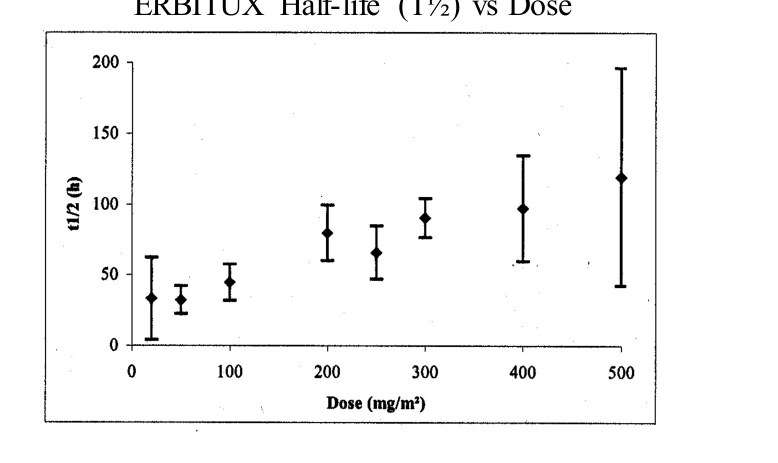
ERBITUX Half-life (T½) vs Dose
The median half life of ERBITUX following a weekly dose of 250 mg/m2, was 64 hours (range 45 to 104 hours).
Following the recommended dose regimen (400 mg/m2 initial dose/250 mg/m2 weekly dose), ERBITUX concentrations reached steady state levels by the third weekly infusion with mean peak and trough concentrations across studies ranging from 168 to 235 and 41 to 85 μg/mL respectively. The mean half life was approximately 112 hours (range 63-230 hours). The pharmacokinetics of cetuximab were similar in patients with SCCHN and those with colorectal cancer.
Figure 2
ERBITUX Exposure (AUCinf) vs Dose
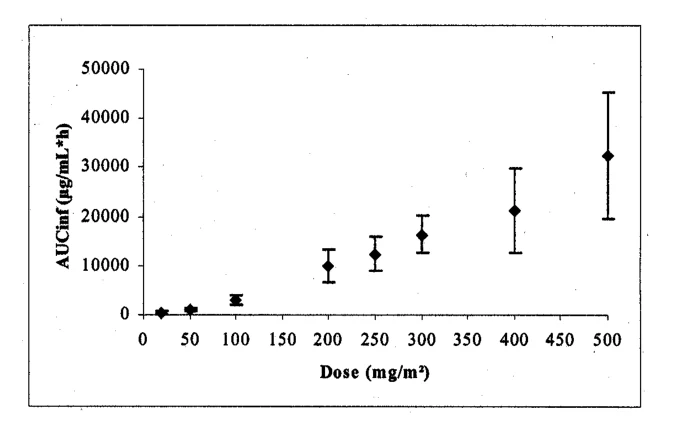
In patients with metastatic colorectal carcinoma, ERBITUX, when administered (400 mg/m2 initial dose/250 mg/m2 weekly dose) in combination with irinotecan, exhibited mean trough levels ranging from 46 to 66 μg/mL over the course of therapy. When given as monotherapy, similar serum concentrations of ERBITUX were obtained.
Special Populations and Conditions
No formal clinical studies in patients with hepatic impairment, renal impairment, or in pediatric populations were conducted.
A population pharmacokinetic model analysis was used to investigate the potential effects of selected covariates including hepatic and renal function, race, weight, body surface area, and age on ERBITUX pharmacokinetics. None of these covariates appeared to have a statistically significant effect on cetuximab pharmacokinetics suggesting that dose adjustments are not needed for these groups.
Based on a population pharmacokinetic analysis, a small difference in clearance was observed between males and females with CRC however, with females exhibiting a lower maximal clearance. Qualitatively similar, but smaller gender differences in cetuximab clearance were observed in patients with SCCHN. The gender differences do not appear to necessitate any dose modification, because of a similar safety profile.
STORAGE AND STABILITY
Store vials under refrigeration at 2˚-8˚C (36˚-46˚F). Do not freeze. Prepare using appropriate aseptic technique and administer as soon as possible as this product contains no preservatives. ERBITUX (cetuximab) in infusion containers prepared under controlled conditions has been demonstrated to be chemically and physically stable for up to 12 hours at 2˚-8˚ C (36˚-46˚F) and up to 8 hours at controlled room temperature (20˚-25˚C; 68˚-77˚F). It is not recommended to store ERBITUX in the infusion container and any remaining solution should be discarded after 8 hours at controlled room temperature or after 12 hours at 2˚-8˚C.
DOSAGE FORMS, COMPOSITION AND PACKAGING
ERBITUX (cetuximab) is supplied as single-use, ready-to-use, 50-mL and 100 mL vials containing 100 mg and 200 mg, respectively, of cetuximab (2 mg/mL) as a sterile, preservative-free, injectable liquid. Each carton contains one ERBITUX vial.
Table 6 Statement of Composition of ERBITUX | ||
| Ingredient | Amount per 50 mL Vial | Amount per 100 mL Vial |
| Cetuximab Drug Substance (Bulk Concentrate) | 100 mg | 200 mg |
| Sodium Phosphate Dibasic Heptahydrate, USP | 94 mg | 188 mg |
| Sodium Phosphate Monobasic Monohydrate, USP | 20.5 mg | 41 mg |
| Sodium Chloride, USP | 424 mg | 848 mg |
| Sodium Hydroxide, NF as 10 M Solution | For pH adjustment | For pH adjustment |
| Hydrochloric Acid, NF as 6 M Solution | For pH adjustment | Fpr pH Adjustment |
| Water for Injection, USP | QS | QS |
PART II: SCIENTIFIC INFORMATION
PHARMACEUTICAL INFORMATION
Drug Substance
Proper name: Cetuximab, C225, IMC-C225, Ch225
Structure:
Cetuximab is a chimeric mouse/human monoclonal antibody of the IgG1 subclass that targets the human epidermal growth factor receptor (EGFR). It is composed of four polypeptide chains, two identical heavy (γ) chains consisting of 449 amino acids each, and two identical light (κ) chains consisting of 214 amino acids each. The antibody chains contain the functional binding domain of murine antibody M225 to the human EGF. The four chains are held together by a combination of covalent (disulfide) and non-covalent bonds. The light chain and heavy chain subunits contain one and two consensus sequences for N-linked glycosylation, respectively. The two sites on the heavy chain are glycosylated, while the site on the light chain is not occupied. The N-terminal residue of the heavy chain is cyclized as pyroglutamic acid. There are 32 cysteine residues, and accordingly, 16 potential disulfide bonds per molecule.
Molecular weight:
Table 7
| Lot No. | Whole Antibody (kDA) | Light Chain (kDa) | Heavy Chain (kDa) |
Reference Standard Lot No. 01C00314 | 151.8 | 23.39 | 52.69 |
Exhibit Lot No. 01J01498 | 151.8 | 23.38 | 52.63 |
| Theoretical1 | 145.5 | 23.43 | 49.34 |
| 1 Theoretical molecular weight calculated from the amino acid composition predicted by cDNA. | |||
Physical form: Clear, colourless liquid which may contain particulates
pH: 7.0-7.4
Product Characteristics
Cetuximab Injection, 100 mg/50 mL vial, is a sterile, clear colourless liquid for intravenous (IV) administration. Each single-use, ready-to-use vial contains 100 mg of cetuximab as a 2.0-mg/mL preservative-free solution in phosphate buffered saline. The drug product is packaged in a 50-mL nominal volume type 1 flint glass moulded vial with a Teflon-coated gray plug stopper, sealed with an aluminum/polypropylene flip seal. Vials are packaged one per carton.
Cetuximab Injection, 200 mg/100 mL vial, is a sterile, clear colourless liquid for intravenous (IV) administration. Each single-use, ready-to-use vial contains 200 mg of cetuximab as a 2.0-mg/mL preservative-free solution in phosphate buffered saline. The drug product is packaged in a 100-mL nominal volume type 1 flint glass moulded vial with a Teflon-coated gray plug stopper, sealed with an aluminum/polypropylene flip seal. Vials are packaged one per carton.
CLINICAL TRIALS
Growth factors including EGF (epidermal growth factor) are thought to have a significant role in the formation of tumours. In addition, it has been shown that EGFR (epidermal growth factor receptor) expression is correlated with poor prognosis, decreased survival and increased risk of metastasis. The expression of the EGFR in several solid cancer tumours and its role in tumour formation (or in their growth and survival) provides the rationale for the investigation and development of EGFR antagonists.
Squamous Cell Carcinoma of the Head and Neck (SCCHN)
The efficacy and safety of ERBITUX were studied in combination with radiation therapy in a randomized, controlled trial of 424 patients with locally or regionally advanced SCCHN versus radiation therapy alone.
Study Demographics and Trial Design
This study was a randomized, multicenter, controlled trial of 424 patients with locally or regionally advanced SCCHN. Patients with Stage III/IV SCCHN of the oropharynx, hypopharynx, or larynx with no prior therapy were randomized (1:1) to receive either ERBITUX plus radiation therapy or radiation therapy alone. Stratification factors were Karnofsky Performance Status (60-80 versus 90-100), nodal stage (N0 versus N+), tumour stage (T1-3 versus T4 using American Joint Committee on Cancer 1998 staging criteria), and radiation therapy fractionation (concomitant boost versus once-daily versus twice-daily). Radiation therapy was administered for 6-7 weeks as once daily, twice daily, or concomitant boost. ERBITUX was administered as a 400 mg/m2 initial dose beginning one week prior to initiation of radiation therapy, followed by 250 mg/m2 weekly administered 1 hour prior to radiation therapy for the duration of radiation therapy (6-7 weeks).
Of the 424 randomized patients, the median age was 57 years, 80% were male, 83% were Caucasian, and 90% had baseline Karnofsky Performance Status ≥ 80. There were 258 patients enrolled in US sites (61%). Sixty percent of patients had oropharyngeal, 25% laryngeal, and 15% hypopharyngeal primary tumours; 28% had AJCC T4 tumour stage. Fifty-six percent of the patients received radiation therapy with concomitant boost, 26% received once-daily regimen, and 18% twice-daily regimen.
Study Results
The main outcome measure of this trial was duration of locoregional control. Overall survival was also assessed. Results are presented in Table 8 and Figures 3 and 4.
| Table 8: Clinical Efficacy in Locoregionally Advanced SCCHN | ||||||||
ERBITUX + Radiation (n = 211) ( 95% CI ) | Radiation Alone (n = 213) ( 95% CI ) | Hazard Ratio ( 95% CI ) | Stratified Log Rank p-value | |||||
Locoregional control Median duration (months) | 24.4 (15.7, 45.1) | 14.9 (11.8, 19.9) | 0.68 (0.52 - 0.89) | 0.005 | ||||
Overall Survival Median duration (months) | 49.0 (32.8, 62.6) | 29.3 (20.6, 42.8) | 0.74 (0.57-0.97) | 0.032 | ||||
Progression Free Survival Median duration (months) | 17.1 (14.6, 31.0) | 12.4 (10.3, 17.6) | 0.70 (0.54 – 0.90) | 0.006 | ||||
CI: confidence interval
Figure 3: Locoregional Control in Locoregionally Advanced SCCHN
ERBITUX + Radiation
Figure 4: Overall Survival in Locoregionally Advanced SCCHN
Clinical data of all randomized patients have been reviewed by an independent review committee (IRC) for evidence of locoregional recurrence and disease progression. Patients on RT + cetuximab experienced improvement in the primary endpoint of locoregional control as well as in the secondary endpoints of progression free survival and overall survival compared to patients on RT alone. The log-rank test, stratified by KPS, N-stage, T-stage, and RT fractionation, was used as the primary analysis for treatment comparison.
The median duration of locoregional control following RT + cetuximab was 9.5 months longer than after RT alone (24.4 vs.14.9 months). These results are statistically significant and overall, RT + cetuximab was associated with a 32% reduction in the risk of locoregional failure compared to RT alone (HR: 0.68; 95% CI: 0.52-0.89; p=0.005).
With a median duration of progression free survival of 17.1 months, PFS was 4.7 months longer in the RT + cetuximab treatment arm than with RT alone (12.4 months) (HR: 0.7; 95% CI: 0.54-0.90; p=0.006).
The median overall survival time in the RT + cetuximab arm was 49.0 months compared to 29.3 months in patients receiving RT alone. This difference was again statistically significant and clinically meaningful; also evident was a 26% risk reduction in the mortality of patients treated with the combination of RT + cetuximab compared to RT alone (HR: 0.74; 95% CI: 0.56-0.97; p=0.03).
The median durations of locoregional control, overall survival, and progression-free survival were improved in the Erbitux plus radiation therapy arm in patients with: an age < 65 years, KPS score of 90-100%, the primary tumour in the oropharynx, an AJCC tumour stage of T1-3,
ERBITUX + Radiation
and in patients who received concomitant boost radiation therapy compared to patients in the radiation therapy alone arm. Patients in the Erbitux plus radiation therapy arm who received twice daily radiation therapy had longer median durations of locoregional control and progression-free survival compared to patients in the radiation therapy alone arm. Based on clinical trial data, patients with a good prognosis as indicated by tumour stage, Karnofsky performance status (KPS) score and age had a more pronounced benefit, when ERBITUX was added to radiation therapy. Clinical benefit was not demonstrated in patients with KPS ≤ 80. The numerically lower relative benefit of ERBITUX in the non-US region may be due to confounding by KPS.
Quality of Life assessments, using EORTC QLQ-C30 and QLQ-H&N35, demonstrated no overall difference in quality of life in the ERBITUX plus radiation arm versus the radiation only arm up through 8 months post-treatment.
Single-Arm Trial
ERBITUX as monotherapy was studied in a single-arm, multicenter clinical trial in 103 patients with recurrent or metastatic SCCHN. Sixty six patients had documented disease progression within 30 days after 2-6 cycles of a platinum-based chemotherapy regimen as assessed by the Independent Radiographic Review Committee (IRC). The median age was 57 years (range 23-77), 100% of patients were Caucasian, and 62% had a Karnofsky performance status of ≥ 80. There were 84 (81.6%) men and 19 (18.4%) women enrolled in the study.
Patients received a 20-mg test dose of ERBITUX on Day 1, followed by a 400-mg/m2 initial dose, and 250 mg/m2 weekly until disease progression or unacceptable toxicity.
The overall response rate reported in patients with documented disease progression at baseline, treated with cetuximab as a single agent, was 12.1% [95% CI (5.4%; 22.5%)].
The evaluation of the results of the study does not permit a meaningful conclusion to be drawn regarding the benefit – risk ratio of monotherapy with cetuximab in patients with recurrent or metastatic squamous cell cancer of the head and neck after failure of first line chemotherapy.
Colorectal Cancer
Metastatic colorectal carcinoma in patients who have not received prior systemic therapy
The efficacy and safety of ERBITUX were evaluated in a randomized, open-label, multicenter, controlled study of 1217 patients with metastatic colorectal cancer. Patients were randomized (1:1) to receive either ERBITUX in combination with FOLFIRI (irinotecan, 5-fluorouracil, leucovorin) or FOLFIRI alone as first-line treatment. Stratification factors were Eastern Cooperative Oncology Group (ECOG) performance status (0 and 1 versus 2) and region (sites in Western Europe versus Eastern Europe versus other).
Patients treated with ERBITUX in combination with FOLFIRI received an initial intravenous infusion of ERBITUX 400 mg/m2 and weekly infusions of 250 mg/m2 thereafter. For all patients, the FOLFIRI regimen included 14-day cycles of irinotecan (180 mg/m2 administered intravenously on Day 1), folinic acid (400 mg/m2 [racemic] or 200 mg/m2 [L-form] administered intravenously on Day 1), and 5-FU (400 mg/m2 bolus on Day 1 followed by 2400 mg/m2 as a 46-hour continuous infusion). Study treatment continued until disease progression or unacceptable toxicity occurred.
The primary endpoint was progression-free survival in the intent-to-treat population (ITT); secondary endpoints were overall survival and response rate. Progression-free survival was derived from a blinded assessment by an independent review committee (IRC) according to modified WHO criteria.
In this study, K-Ras mutation status was available for 1079/1217 (89%) of the patients: 676 (63%) patients had K-Ras wild-type tumors and 403 (37%) patients had K-Ras mutant tumors.
Patient characteristics of the all randomized population are shown in Table 9.
| Table 9: Demographics and Baseline Characteristics | ||||||
|---|---|---|---|---|---|---|
| Characteristics | ERBITUX plus FOLFIRI (n = 608) | FOLFIRI (n = 609) | ||||
| Gender | ||||||
| Male/Female | 61%/39% | 59%/41% | ||||
| Ethnic Origin | ||||||
| Caucasian | 86% | 86% | ||||
| Noncaucasian | 14% | 14% | ||||
| Age ≥65 Years | 38% | 37% | ||||
| ECOG Performance Status | ||||||
| 0 to 1 | 97% | 96% | ||||
| 2 | 3% | 4% | ||||
| Liver Metastases Only | 20% | 22% | ||||
| Number of Metastatic Sites | ||||||
| 1 | 42% | 38% | ||||
| 2 | 44% | 45% | ||||
| ≥3 | 13% | 15% | ||||
| Prior Adjuvant Chemotherapy | 21% | 19% | ||||
* Baseline demographic and disease characteristics in the K-Ras mutation-negative (wild-type) cohort were comparable to that seen in the overall population
The analysis of PFS in the all randomized population was performed after 714 events had been reported. The combination of ERBITUX plus FOLFIRI demonstrated a median PFS of 8.9 months compared with a median PFS of 8.1 months for FOLFIRI. The PFS difference between two arms was statistically significant (HR=0.853 [0.735, 0.989], p=0.0358).
The analysis of OS in the all randomized population was performed after 838 deaths had been reported with the protocol-defined cut-off date of 31 December 2007. The overall survival was not statistically different between the combination of ERBITUX plus FOLFIRI arm and the FOLFIRI arm (19.6 months vs. 18.5 months, HR=0.93 [0.82, 1.07], p=0.3271).
Post-hoc analyses on PFS, overall response and updated OS (cut-off 31-May-2009) were performed in subgroups of patients based on the K-Ras mutation status. The results of treatment with ERBITUX in combination with FOLFIRI on progression-free survival, the post-hoc updated overall survival (1000 events, cut-off date 31 May 2009) and overall response rate in all randomized population and the all randomized subgroups of patients based on K-Ras mutation status are presented in Table 10.
ERBITUX in combination with FOLFIRI resulted in improvement in progression-free survival in the all randomized population (Figure 5). The benefit was most pronounced in the K-Ras wild-type population (Figure 6) and no benefit was observed in the K-Ras mutant population (Figure 7).
The updated post-hoc analysis of overall survival in the K-Ras wild-type population (Figure 8) suggests that the benefit is clinically meaningful in patients receiving ERBITUX plus FOLFIRI, with a median OS of 23.5 months compared to a median OS of 19.5 months in patients receiving FOLFIRI alone (HR=0.796 [0.670, 0.945]). There is no benefit by addition of ERBITUX to FOLFIRI in patients with K-Ras mutation-positive tumors.
| Table 10: Clinical Efficacy in First-line EGFR-expressing Metastatic Colorectal Cancer (All Randomized and K-Ras Status) | ||||||||||||||||
|---|---|---|---|---|---|---|---|---|---|---|---|---|---|---|---|---|
| All Randomized | K-Ras Mutation-negative (Wild-type) | K-Ras Mutation-positive | ||||||||||||||
| ERBITUX plus FOLFIRI (N = 608) | FOLFIRI (n = 609) | ERBITUX plus FOLFIRI (n = 320) | FOLFIRI (n = 356) | ERBITUX plus FOLFIRI (n = 216) | FOLFIRI (n = 187) | |||||||||||
| Progression-Free Survival | ||||||||||||||||
| Number of Events (%) | 343 (56.4) | 371 (60.9) | 165 (51.6) | 214 (60.1) | 138 (63.9) | 112 (59.9) | ||||||||||
| Median (months) (95% CI) | 8.9 (8.0, 9.4) | 8.1 (7.6, 8.8) | 9.5 (8.9, 11.1) | 8.1 (7.4, 9.2) | 7.5 (6.7, 8.7) | 8.2 (7.4, 9.2) | ||||||||||
| HR (95% CI) | 0.853 (0.735, 0.989) | 0.696 (0.566, 0.856) | 1.134 (0.880, 1.462) | |||||||||||||
| p-valuea | 0.0358 | |||||||||||||||
| Overall Survivalb | ||||||||||||||||
| Number of Events (%) | 491 (80.8) | 509 (83.6) | 244 (76.3) | 292 (82.0) | 189 (87.5) | 159 (85.0) | ||||||||||
| Median (months) (95% CI) | 19.6 (18.5, 21.2) | 18.5 (16.5, 19.8) | 23.5 (20.7, 26.1) | 19.5 (17.3, 21.2) | 16.0 (14.8, 17.9) | 16.7 (14.9, 19.4) | ||||||||||
| HR (95% CI) | 0.880 (0.777, 0.997) | 0.796 (0.670, 0.945) | 1.040 (0.839, 1.288) | |||||||||||||
| Objective Response Rate | ||||||||||||||||
| ORR (95% CI) | 46.4% (42.4, 50.4) | 38.3% (34.4, 42.3) | 56.7% (51.1, 62.2) | 39.0% (34.0, 44.3) | 31.0% (24.9, 37.7) | 35.3% (28.5, 42.6) | ||||||||||
| Odds ratio (95% CI) | 1.397 (1.112, 1.756) | 2.042 (1.492, 2.794) | 0.815 (0.536, 1.240) | |||||||||||||
a Based on the Stratified Log-rank test.
b Post-hoc updated OS analysis, results based on 1000 events.
Figure 5: Kaplan-Meier Curve for Progression Free Survival in the All Randomized Population
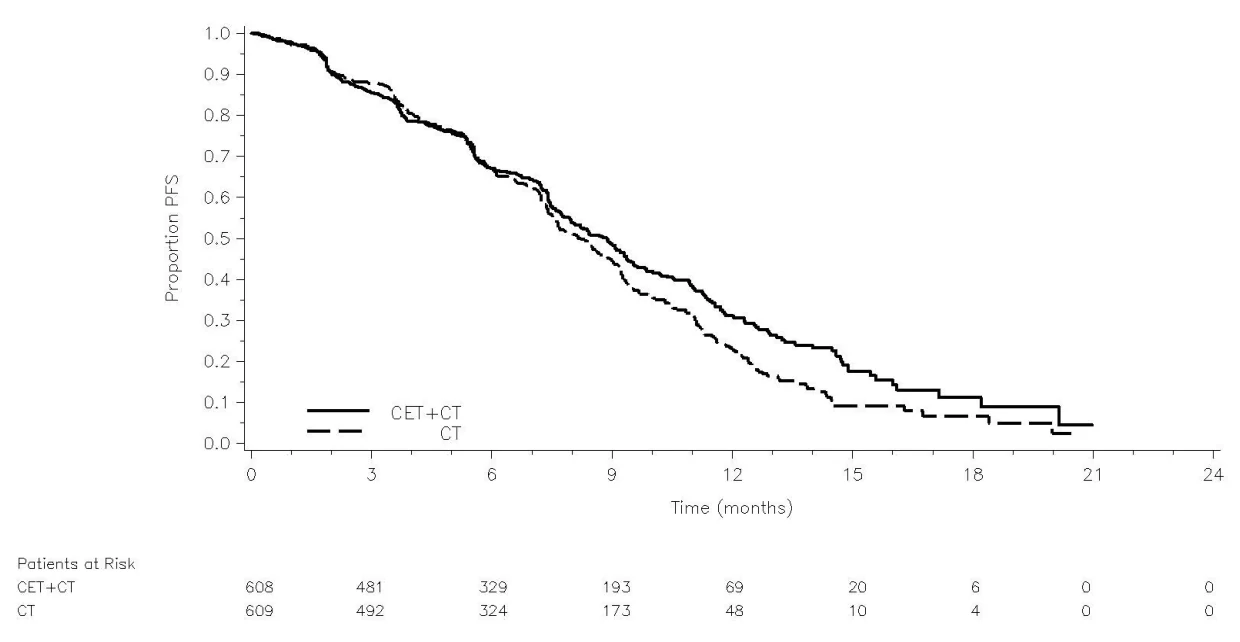
Figure 6: Kaplan-Meier Curve for Progression Free Survival in the K-Ras Wild-Type Population
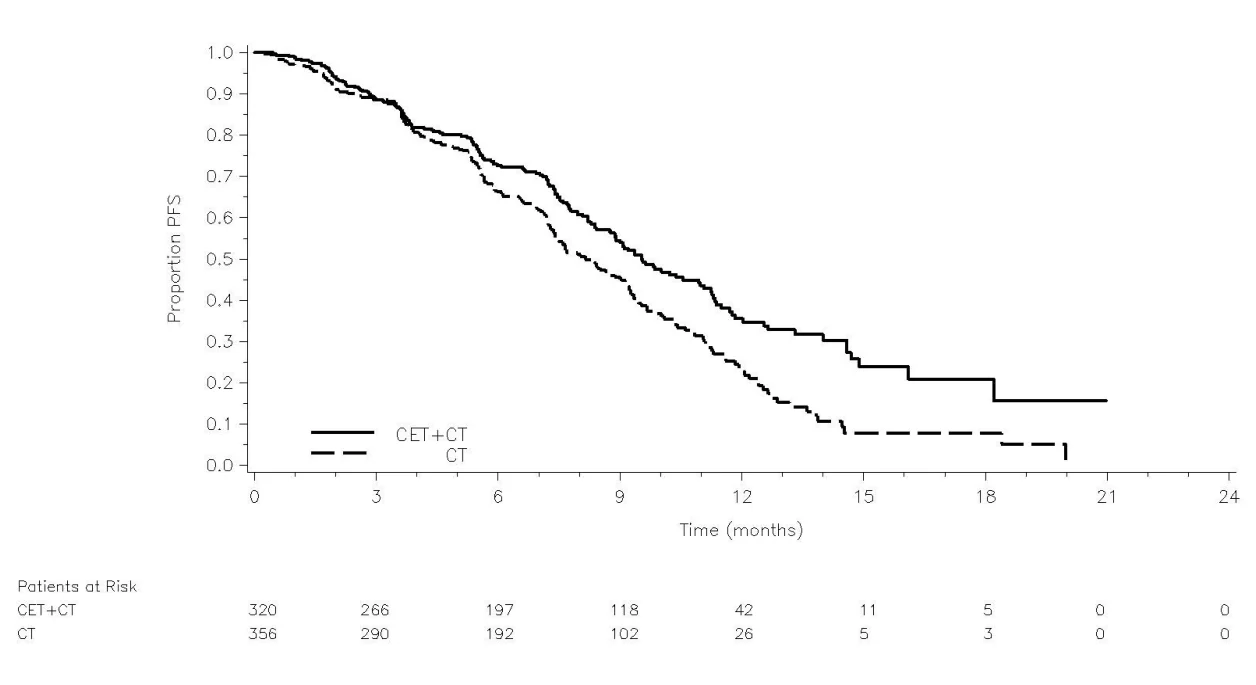
Figure 7: Kaplan-Meier Curve for Progression Free Survival in the K-Ras Mutant Population
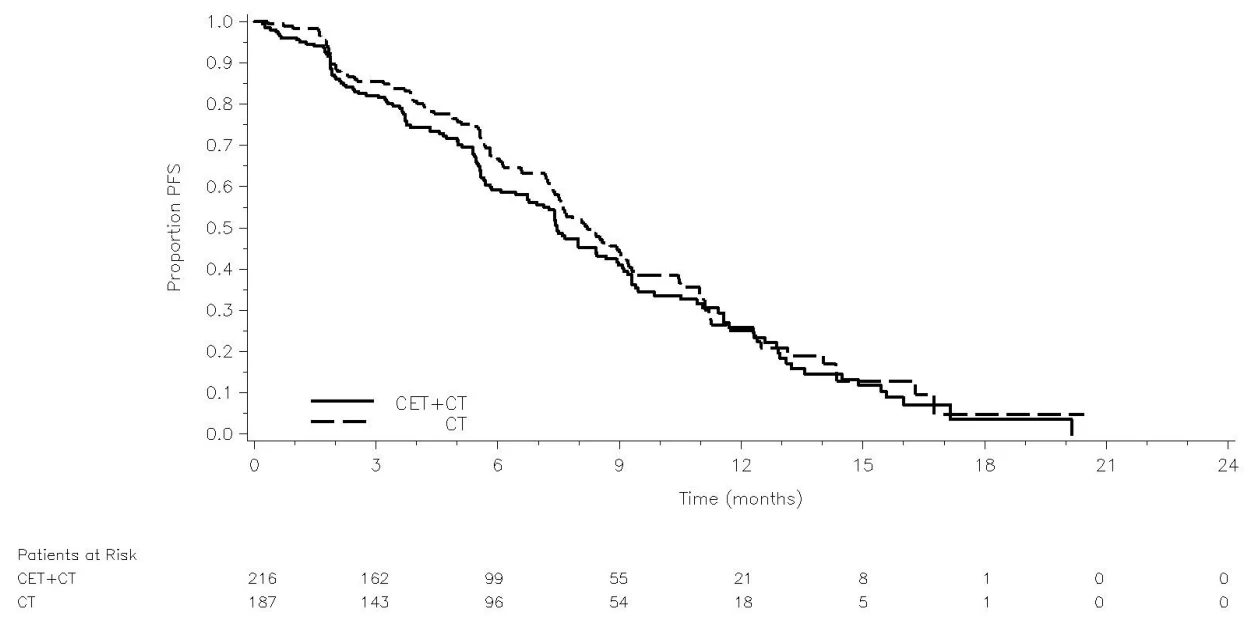
Figure 8: Kaplan-Meier Curve for Overall Survival in the K-Ras Wild-Type Population
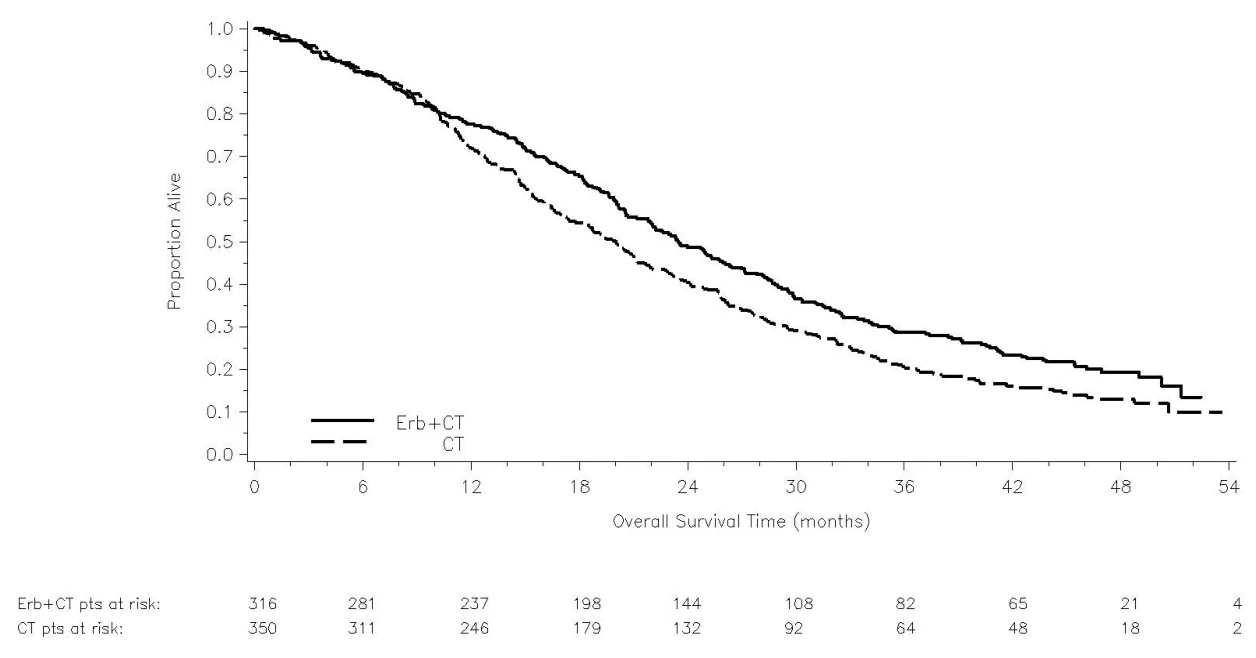
In prespecified analyses, Overall Survival (OS), Progression-free Survival (PFS), and Objective Response Rate (ORR) were examined in a series of patient subsets, including age, gender, ECOG performance status, number of metastatic sites, liver metastases only, and prior adjuvant chemotherapy.
The benefit is not observed by addition of ERBITUX to FOLFIRI in the subgroup of patients with ECOG performance status 2.
Metastatic colorectal carcinoma in patients who are refractory or intolerant to irinotecan-based chemotherapy.
The efficacy and safety of ERBITUX were studied in a pivotal multicenter, randomized trial in 329 patients with EGFR expressing metastatic colorectal cancer, whose disease had progressed within 3 months prior to protocol entry, while receiving irinotecan. EGFR expression was determined by immunohistochemistry. Over 60% of the patients in both arms of the study had received oxaliplatin-based chemotherapy in addition to irinotecan prior to protocol entry.
The efficacy and safety of ERBITUX were also studied in two multi-centre open-label Phase 2 studies. The two protocols investigated the efficacy and safety of ERBITUX as monotherapy and in combination with irinotecan.
A tumour was considered to be EGFR-positive, if one stained cell could be identified. Over 80% of the patients with metastatic colorectal cancer screened for clinical studies had an EGFR-expressing tumour and were therefore considered eligible for cetuximab treatment (474 of 577 patients).
Study Demographics and Trial Design
In the pivotal trial, a total of 329 patients were randomized in a 2:1 ratio to receive either ERBITUX plus irinotecan (218 patients) or ERBITUX monotherapy (111 patients). In both arms of the study, ERBITUX was administered as a 400 mg/m2 initial dose infused over 120 minutes, followed by 250 mg/m2 doses infused over 60 minutes each week until disease progression or unacceptable toxicity. In the ERBITUX plus irinotecan arm, irinotecan was added to ERBITUX using the same dose and schedule for irinotecan as the patient had previously failed. An independent radiographic review, blinded to the treatment arms, assessed both the progression on prior irinotecan and the response to protocol treatment for all patients. Patient demographics and baseline characteristics are summarized in Table 11.
Table 11 Demographics and Baseline Characteristics | ||
|---|---|---|
| Characteristic | ERBITUX + Irinotecan (n = 218) | ERBITUX Monotherapy (n = 111) |
| Gender (%) | ||
| Male | 66 | 57 |
| Female | 34 | 43 |
| Age (years) | ||
| Median | 59 | 58 |
| Range | 26 - 82 | 39 - 84 |
| Karnofsky performance status (%) | ||
| < 80 | 11 | 14 |
| ≥ 80 | 89 | 86 |
| Prior oxaliplatin treatment (%) | 62 | 64 |
Study Results
Response to treatment with ERBITUX plus irinotecan or ERBITUX monotherapy was evaluated in all randomized patients (intent-to-treat or ITT) and several pre-specified subpopulations, including 206 randomized patients who had received prior oxaliplatin-based chemotherapy in addition to irinotecan (irinotecan-oxaliplatin pretreated population).
Effectiveness in irinotecan-refractory patients was determined in the 132 patients who received ERBITUX plus irinotecan and 69 patients who received ERBITUX monotherapy. All irinotecan-refractory patients had received at least two cycles of prior irinotecan-based chemotherapy prior to treatment with ERBITUX, and had independent confirmation of disease progression within 30 days of completion of the last cycle of irinotecan-based chemotherapy.
- ERBITUX as monotherapy demonstrated meaningful anti-tumour activity, with an objective response rate of 10.8% in patients with metastatic colorectal cancer who had shown progressive disease after treatment with an irinotecan-containing regimen.
- The addition of irinotecan to ERBITUX in irinotecan refractory patients resulted in a significantly higher level of anti-tumour activity with the objective response rate of 22.9%.
Analyses were also conducted in two pre-specified subpopulations: irinotecan refractory and irinotecan and oxaliplatin failures. The irinotecan refractory population was defined as randomized patients who had received at least two cycles of irinotecan-based chemotherapy prior to treatment with ERBITUX, and had independent confirmation of disease progression within 30 days of completion of the last cycle of irinotecan-based chemotherapy.
The irinotecan and oxaliplatin failure population was defined as irinotecan refractory patients who had previously been treated with and failed an oxaliplatin-containing regimen.
The objective response rates ORR [(CR + PR) complete response + partial response] in these populations are presented in Table 12.
Table 12 Objective Response Rates per Independent Review | ||||||
| Populations | ERBITUX + Irinotecan | ERBITUX Monotherapy | Difference (95% CIa) | p-valueb CMH | ||
| N | ORR (%) | N | ORR (%) | |||
| Intent-to-treat | 218 | 22.9 | 111 | 10.8 | 12.1 (4.1 - 20.2) | 0.007 |
| Irinotecan-Oxaliplatin Failure | 80 | 23.8 | 44 | 11.4 | 12.4 ( 0.8 - 25.6) | 0.09 |
| Irinotecan Refractory | 132 | 25.8 | 69 | 14.5 | 11.3 (0.1 - 22.4) | 0.07 |
a 95% Confidence interval for the difference in objective response rates. b Cochran-Mantel-Haenzel test. | ||||||
In responding patients in both arms of the study, durable antitumour activity was observed. The median duration of response was 5.7 months in the combination arm and 4.2 months in the monotherapy arm.
The median duration of response in overall population was 5.7 months in the combination arm and 4.2 months in the monotherapy arm. Compared with patients randomized to ERBITUX alone, patients randomized to ERBITUX and irinotecan experienced a significantly longer median time to disease progression (see Table 13).
Table 13 Time to Progression per Independent Review | ||||
| Populations | ERBITUX + Irinotecan (median) | ERBITUX Monotherapy (median) | Hazard Ratio (95%Cla) | Log-rank p-value |
| All Patients | 4.1 mo | 1.5 mo | 0.54 (0.42 - 0.71) | < 0.001 |
| Irinotecan-Oxaliplatin Failure | 2.9 mo | 1.5 mo | 0.48 (0.31 - 0.72) | < 0.001 |
| Irinotecan Refractory | 4.0 mo | 1.5 mo | 0.52 (0.37 - 0.73) | < 0.001 |
| a Hazard ratio of ERBITUX + irinotecan: ERBITUX monotherapy with 95% confidence interval. | ||||
Within the treatment arm, the objective response rate tended to be greater in patients with more severe acne-like rash (Table 14).
Table 14 Objective Response Rates and Incidence of Acne-like Rash | ||||
ERBITUX + Irinotecan (N=218) | ERBITUX monotherapy (N=111) | |||
| n/Na | ORR (%) | n/Na | ORR (%) | |
| Acne-like rash | ||||
| None | 8/48 | 17 | 2/27 | 7 |
| Grade 1-2 | 29/148 | 20 | 9/80 | 11 |
| Grade 3-4 | 13/22 | 59 | 1/4 | 25 |
| a Number of responders/N | ||||
Within the treatment arm, the objective response rate did not vary with intensity of EGFR expression in tumours (Table 15).
Table 15 Objective Response Rates by EGFR Staining | ||||
ERBITUX + Irinotecan (N=217) | ERBITUX monotherapy (N=110) | |||
| n/Na | ORR (%) | n/Na | ORR (%) | |
| EGFR staining | ||||
| Faint/barely | 11/53 | 21 | 1/21 | 5 |
| Weak to moderate | 22/89 | 25 | 7/55 | 13 |
| Strong | 17/75 | 23 | 4/34 | 12 |
| a Number of responders/N. | ||||
Figures 9 and 10 show the Kaplan-Meier plots for time-to-progression in the intent-to-treat and irinotecan-refractory populations.
Figure 9
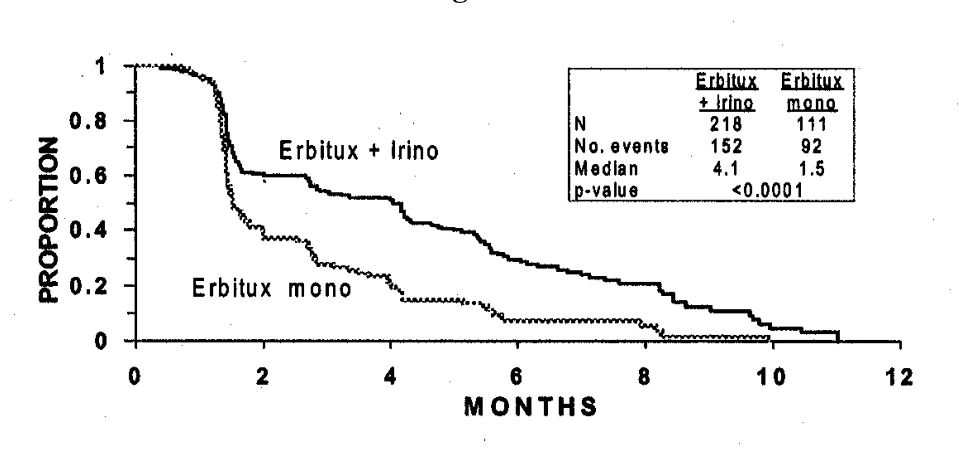
Time-to-Progression: ITT Population
Figure 10
Time-to-Progression: Irinotecan-refractory Population
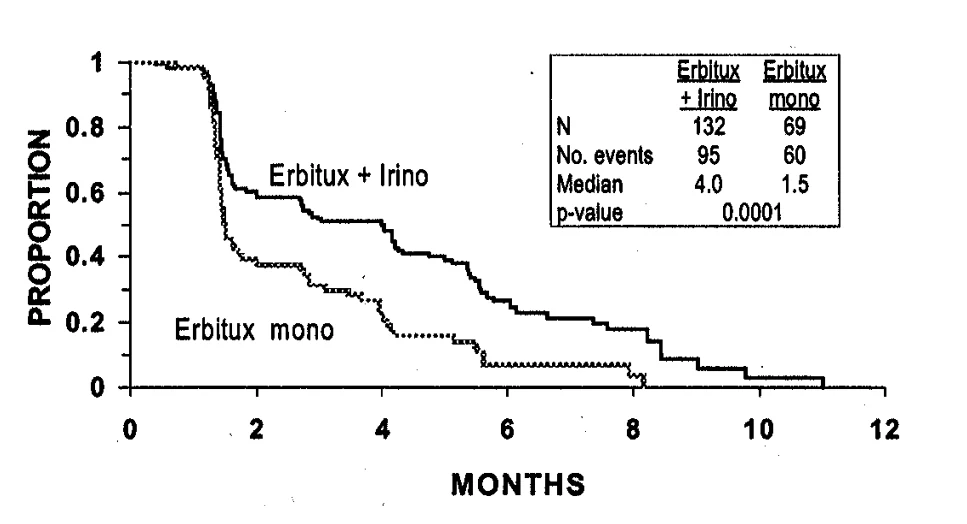
Time to progression (TTP) was analysed based on the on-study progression dates assigned by the Independent Radiographic Committee. The median TTP for the ITT Population was 4.1 months for the combination regimen and 1.5 months for the monotherapy regimen. The hazard ratio (combination arm/monotherapy arm) is 0.54 (95% CI [0.42-0.71]), showing a 46% lower risk of progression in the combination arm compared to the monotherapy arm. The stratified log-rank p-value was < 0.0001. Similar results are seen with the other populations.
Single-Arm Trials
ERBITUX, in combination with irinotecan, was studied in a single-arm, multicenter, open-label clinical trial in 138 patients with EGFR-expressing metastatic colorectal cancer who had progressed following an irinotecan-containing regimen. Patients received a 20-mg test dose of ERBITUX on Day 1, followed by a 400 mg/m2 initial dose, and 250 mg/m2 weekly until disease progression or unacceptable toxicity. Patients received the same dose and schedule for irinotecan as the patient had previously failed. Acceptable irinotecan schedules were 350 mg/m2 every three weeks or 125 mg/m2 weekly times four doses every 6 weeks. Of 138 patients enrolled, 74 patients had documented progression to irinotecan as determined by an IRC. The overall response rate was 15% for the overall population and 12% for the irinotecan-failure population. The median durations of response were 6.5 and 6.7 months, respectively.
ERBITUX was studied as a single agent in a multicenter, open-label, single-arm clinical trial in patients with EGFR-expressing, metastatic colorectal cancer who progressed following an irinotecan-containing regimen. Of 57 patients enrolled, 28 patients had documented progression to irinotecan. The overall response rate was 9% for the all-treated group and 14% for the irinotecan-failure group. The median times to progression were 1.4 and 1.3 months, respectively. The median duration of response was 4.2 months for both groups.
Metastatic colorectal carcinoma after failure of both irinotecan- and oxaliplatin-based regimens.
Study Demographics and Trial Design
A multicenter, open-label, randomized, phase 3 trial was conducted in 572 patients with EGFR-expressing, previously treated, recurrent, metastatic colorectal cancer. All patients were to have received and/or progressed on prior therapy including a thymidylate synthase inhibitor (eg. 5-FU, capecitabine), an irinotecan-containing regimen and/or an oxaliplatin-containing regimen for adjuvant and/or metastatic disease. Patients were randomized (1:1) to receive either ERBITUX plus best supportive care (BSC) or BSC alone. ERBITUX was administered as a 400 mg/m2 initial dose, followed by 250 mg/m2 weekly until disease progression or unacceptable toxicity.
Mutational analyses of K-Ras were performed to assess the influence of K-Ras status on clinical outcome. Of the 572 randomized patients, 394 (69%) had evaluable tissue samples. The results described in this section pertain to the K-Ras evaluated subset of patients.
The demographics and baseline characteristics of patients in the K-Ras evaluated subset were representative of the overall study population and are shown in Table 16.
Table 16: Study demographics and baseline characteristics
| K-Ras Wild-type | K-Ras Mutant | |||||||||
| ERBITUX plus BSC N=117 | BSC N=113 | ERBITUX plus BSC N=81 | BSC N=83 | |||||||
| Median Age (years) | 63 | 64 | 63 | 62 | ||||||
| Male (%) | 69 | 66 | 59 | 64 | ||||||
| Caucasian (%) | 92 | 94 | 90 | 89 | ||||||
| ECOG baseline 0-1 (%) | 82 | 77 | 79 | 77 | ||||||
Study Results
The main outcome measure of this trial was overall survival. The results by K-Ras status are presented in Table 17 and Figures 11 and 12.
| Table 17: Efficacy by K-Ras Status | ||||||||||||||||||
|---|---|---|---|---|---|---|---|---|---|---|---|---|---|---|---|---|---|---|
| K-Ras Wild-type | K-Ras Mutant | |||||||||||||||||
| ERBITUX plus BSC N = 117 | BSC N = 113 | ERBITUX plus BSC N = 81 | BSC N = 83 | |||||||||||||||
| Overall survival: | ||||||||||||||||||
| Median (months) (95% CI) | 9.5 (7.7, 10.3) | 4.8 (4.2, 5.5) | 4.5 (3.8, 5.6) | 4.6 (3.6, 5.5) | ||||||||||||||
| 6-Month survival (%) (95% CI) | 73 (65, 81) | 35 (26, 44) | 36 (25, 47) | 35 (25, 46) | ||||||||||||||
| Hazard ratioa (95% CI) | 0.55 (0.41, 0.75) | 0.99 (0.70, 1.39) | ||||||||||||||||
| Log-rank p-valuea | < 0.0001 | 0.9522 | ||||||||||||||||
| Interaction p-valueb | 0.0127 | |||||||||||||||||
| Progression-free survival: | ||||||||||||||||||
| Median (months) (95% CI) | 3.7 (3.1, 5.1) | 1.9 (1.8, 2.0) | 1.8 (1.7, 1.8) | 1.8 (1.7, 1.8) | ||||||||||||||
| Hazard ratioa (95% CI) | 0.40 (0.30, 0.54) | 1.00 (0.73, 1.37) | ||||||||||||||||
| Log-rank p-valuea | < 0.0001 | 0.9895 | ||||||||||||||||
| Interaction p-valueb | 0.0002 | |||||||||||||||||
| Response rate: | ||||||||||||||||||
Objective response rate (%) (95% CI)* Partial response (%) Stable disease (%) Progressive disease (%) Inevaluable for response (%) Unknown (%) | 13 (7, 20) 13 40 35 4 8 | 0 0 13 52 34 1 | 1 (0, 7) 1 12 63 17 6 | 0 0 11 60 29 0 | ||||||||||||||
| Fisher’s exact test p-value for difference in response rates | < 0.0001 | 0.4939 | ||||||||||||||||
a Stratified by ECOG PS (0 or 1 vs. 2) at randomization.
b Likelihood test p-value for the interaction between treatment and K-Ras status.
BSC = best supportive care; CI = confidence interval
* There is no complete response.
Figure 11: Kaplan-Meier Plot of Overall Survival - K-Ras Wild-type
Figure 12: Kaplan-Meier Plot of Overall Survival - K-Ras Mutant
DETAILED PHARMACOLOGY
Pharmacokinetics
The pharmacokinetic information contained in this submission is based on serum cetuximab concentration data obtained from a total of 906 patients in 19 trials in various tumour types including prostate cancer, breast cancer, squamous cell carcinoma head and neck (SCCHN), renal cancer, colorectal cancer (CRC), melanoma, and non small cell lung cancer (NSCLC). Cetuximab concentration data were obtained at the target dose (initial dose of 400 mg/m2 followed by weekly doses of 250 mg/m2) from 731 patients in 9 studies. No studies in healthy subjects were performed with cetuximab.
Pharmacokinetic parameters were examined following single and multiple doses (ranging from 5-500 mg/m2) in 12 studies. In these studies, as well as 7 additional studies, serum cetuximab peak and trough concentrations were determined.
Table 18 Single-Dose PK Parameters for Cetuximab Across All Studies using 200 mg/m2 - 500 mg/m2 | |||||
Single Dose Studies mg/m2 | Cmax µg/mL Mean (S.D.) | AUC0 - ∞ µg/mL*h Mean (S.D.) | T½ h Mean (S.D.) | CL L/h/m2 Mean (S.D.) | VSS L/m2 Mean (S.D.) |
| 200 | n = 14 102.36 (29.37) | n = 14 9923 (3226) | n = 14 79.83 (19.63) | n = 14 0.020 (0.010) | n = 14 2.31 (1.05) |
| 250 | n = 8 140.20 (19.63) | n = 8 12414 (3332) | n = 8 65.91 (18.83) | n = 8 0.021 (0.005) | n = 8 2.17 (0.16) |
| 300 | n = 4 133.25 (47.66) | n = 4 16311 (3786) | n = 4 90.45 (13.75) | n = 4 0.019 (0.005) | n = 4 2.52 (0.49) |
| 400 | n = 56 184.51 (54.62) | n = 53 21142 (8657) | n = 53 97.24 (37.38) | n = 53 0.022 (0.009) | n = 53 2.91 (0.90) |
| 500 | n = 20 283.80 (84.08) | n = 18 32448 (12880) | n = 18 119.35 (76.91) | n = 18 0.018 (0.008) | n = 18 2.63 (0.66) |
| Abbreviations: S.D. = Standard Deviation | |||||
Table 19 PK Parameters After Multiple Doses (400 mg/m2 Initial [Week 1], 250 mg/m2 Weekly) | |||||
| Weeks | Statistic | CL (L/h/m2) | AUC (μg/mL*h) | T½ (h) | VSS (L/m2) |
| 1 | Mean S.D. | 0.022 0.009 | 21142 8657 | 97.24 37.38 | 2.91 0.90 |
| 3 | Mean S.D. | 0.020 0.006 | 22723 10313 | 123.25 41.39 | 2.08 0.52 |
| 4 | Mean S.D. | 0.017 0.006 | 24329 11202 | 108.09 29.32 | 1.99 0.59 |
| Abbreviations: S.D. = Standard Deviation | |||||
Population pharmacokinetic evaluation: A comparison of the derived PK parameters from the non-compartmental analysis and the retrospective pooled population PK analysis was performed. A concentration-dependent decrease in CL was observed in the population pharmacokinetic analysis, similar to that observed in the non-compartmental analysis. The population PK analysis indicated that at concentrations equal to the peak concentrations observed following single infusions of 250, 400 and 500 mg/m2, CL for cetuximab ranged from 0.01-0.012 L/h/m2, which is in reasonable agreement with CL values obtained in the non-compartmental analysis (0.02 L/h/m2).
Pharmacodynamics
A single PK/PD study was conducted to characterize the effects of single doses of cetuximab (50-500 mg/m2) on expression and saturation of EGFR, and on other downstream signalling pathways, in normal skin and in tumour tissue of cancer patients. EGFR analysis in skin biopsy samples demonstrated a decrease in EGFR protein levels across the 250-500 mg/m2 dose range, with a maximal effect occurring at 400 mg/m2, and an increase in EGFR protein levels across the 50 and 100 mg/m2 doses. Single dose pharmacodynamic effects on EGFR, p-EGFR, p-MAPK, Ki67 and P27 were inconclusive secondary to tumour sample variability.
Dose-finding Rationale
A therapeutically useful dose of cetuximab was hypothesized to be one that maintained continuous occupancy of EGFR in vivo, resulting in prolonged blockade of EGFR-dependent signal transduction cascades. In the early dose-escalation studies examining doses between 5-500 mg/m2, an acceptable safety profile was seen up to and including a 400 mg/m2 weekly dose. Doses of 500 mg/m2 produced an unacceptably high incidence of skin toxicity; therefore, only doses below 500 mg/m2 were evaluated in further clinical development.
A pharmacodynamic analysis of cetuximab on EGFR protein demonstrated maximal inhibition of EGFR expression in skin across the 250-500 mg/m2 dose range. An initial dose of 400 mg/m2 followed by a weekly dose of 250 mg/m2 was demonstrated to be well tolerated and efficacious across multiple studies. The pharmacokinetic behaviour of cetuximab together with its pharmacodynamic activity on the EGFR is further supportive of both this dose and regimen.
Drug-drug Interaction Studies
A formal drug-drug interaction study of cetuximab and irinotecan did not reveal any evidence of a PK interaction between these agents. In addition, the possible impact of radiation, cisplatin, paclitaxel, doxorubicin, gemcitabine, and irinotecan on the PK of cetuximab was evaluated in the population PK analysis. This analysis demonstrated that these concomitant therapies did not have a demonstrable influence on the PK characteristics of cetuximab.
Pharmacokinetics in Special Populations
No formal clinical studies in patients with hepatic impairment, renal impairment or in pediatric populations were conducted. A population PK model analysis was used to investigate the potential effects of selected covariates including, hepatic and renal function, gender, race, weight, body surface area, and age on cetuximab pharmacokinetics. None of these covariates appeared to have a statistically significant effect on cetuximab PK, suggesting that dose adjustments are not needed for these groups. However, a gender difference was seen, with females exhibiting a lower maximal cetuximab clearance. This difference did not appear to be clinically significant or necessitate any dose modification.
Immunogenicity
Cetuximab has the potential to induce an immune response. An ELISA methodology was used to characterize the incidence of anti-cetuximab antibodies. In total, 105 ERBITUX-treated patients with at least one post-baseline blood sample (≥4 weeks post first administration) were assessed for the development of anti-cetuximab binding antibodies and the incidence of treatment-emergent anti-cetuximab binding antibodies was <5%.
TOXICOLOGY
A 39-week toxicity study was conducted in monkeys in which treatment was initiated with a 2-hour infusion of an ERBITUX loading dose of 0, 12, 38, or 120 mg/kg, respectively, followed by weekly maintenance doses (infused over 1 hour) of 0, 7.5, 24, and 75 mg/kg/dose, respectively. Examination of individual sexual cycle length from week 25 onwards (including the treatment-free period), revealed a tendency for an impairment of the menstrual cycle in ERBITUX-treated females, such as increased incidences of irregularity or absence of cycles, when compared to controls. Evaluation of testosterone data and sperm analysis did not show any toxicologically significant differences among the treated groups when compared to controls.
Acute Toxicity
Single-dose IV toxicity studies in mice and rats revealed no pharmacologic or toxicologic effects associated with cetuximab administration at dose levels of 282 and 300 mg/kg for mice and 17, 50 and 200 mg/kg for rats. The highest no observed effects levels (NOEL) were 282 and 300 mg/kg for mice and 200 mg/kg for rats.
Table 20– Single-Dose Toxicity Studies
Species Group size | Dose (mg/kg) | Study duration | Major findings |
|---|---|---|---|
CD-1 mice 5 M 5 F | 0, 300 IV (bolus) | Single dose, observations for 16 days | No treatment-related effects on survival, clinical signs, body weight, food consumption, clinical pathology or gross necropsy. The highest NOEL was 300 mg/kg |
CD-1 mice 8 M 8 F | 0, 282 IV (bolus) | Single dose, observations for 16 days | No treatment-related effects on survival, clinical signs, body weight, food consumption, clinical pathology or gross necropsy. The highest NOEL dose was 282 mg/kg |
Sprague-Dawley rats 15 M 15 F | 0, 17, 50, 200 IV infusion 15 minutes | Single dose, observations for 14 days | No treatment-related effects on survival, clinical signs, body weight, food consumption, clinical pathology or gross necropsy. The dose level of 200 mg/kg was the highest NOEL. |
Subacute Toxicity
Table 21 – Subacute Toxicity Study
Species Group size | Dose (mg/kg) | Study duration | Major findings |
Sprague-Dawley rats 15 M 15 F | 0, 2.5, 10, 40 IV infusion 15 minutes | Twice weekly up to 28 days | There were no treatment-related effects on body weight, food consumption, clinical pathology or necropsy data. The dose level of 40 mg/kg was the highest NOEL. |
The administration of cetuximab was not associated with any drug-related effects. The highest dose administered (40 mg/kg/dose) was the highest NOEL; the actual NOEL is considered to be higher.
Chronic Toxicity
Table 22 – Chronic Toxicity Studies
| Groups | No. of Animals | Dose level (mg/kg/dose) | Necropsy after weeks of treatment | Necropsy at week 45 Recovery period | ||||
| M | F | Wk 1 | Wk 2 to 39 | Wk 36 | Wk 39 | 6 wks | 9 wks | |
| Control | 5 | 5 | 0 | 0 | 3 M/F | 2 M/F | ||
| Low | 3 | 3 | 12 | 7.5 | 3 M/F | |||
| Intermediate | 3 | 3 | 38 | 24 | 3 M/F | |||
| High | 5(2)* | 5(3) | 120 | 75 | 1M | 2M/F | ||
* ( ) Intercurrent death **Dosing temporarily discontinued from week 25 - 28 (females only). Dosing terminated at week 36. | ||||||||
Dose levels for the monkey study were selected such that the low dose (12 mg/kg starting dose in week 1; 7.5 mg/kg subsequent weekly doses from week 2 onwards) would represent approximately the human therapeutic dose (on a mg/m2 basis). The high dose (120/75 mg/kg) was chosen as 10 times the low dose (~10 times the human therapeutic dose) and the intermediate dose (38/24 mg/kg) represents the geometric mean of the high and low dose.
Comparison of human and primate systemic exposures after repeated dosing and under steady-state conditions resulted in the following relationships. Based on the mean Cmax and AUC values, the low dose of 12/7.5 mg/kg in Cynomolgus monkeys resulted in systemic exposures approximately 1 to 2 times the systemic exposures at the human therapeutic dose (400/250 mg/m2). The intermediate dose of 38/24 mg/kg approximately represents 4 to 6 times the human systemic exposure and the high dose of 120/75 mg/kg approximately represents 17 to 21 times the systemic exposure at human therapeutic dose.
In a long-term toxicity study with Cynomolgus monkeys, 2 high-dose males and 3 high-dose females died or were euthanised for humane reasons due to morbidity between week 14 to 35. These animals displayed reduced food consumption, body-weight loss or reduced body-weight gain, apathy, prostration, and morbidity preceding death. Furthermore, skin lesions were observed, including desquamation, wounds, hematoma, and cracked skin, which manifested more severely as the study progressed. Overall these deaths were considered to be indirectly related to treatment with cetuximab because cetuximab-induced dermatosis provided the basis for ulcerative dermatitis and subsequent septicemia.
Besides skin lesions the following clinical signs were notable. Soft feces and/or diarrhea in cetuximab-treated and in control monkeys; conjunctivitis, incrusted, reddened and/or swollen eyes in one low dose, two intermediate-dose and five high-dose monkeys, as well as hypoactivity, sluggishness, and tremor on few occasions during infusion in individual monkeys at the intermediate and high doses.
Treatment-related clinical chemistry findings included dose-related increases in gamma glutamyl transferase levels in monkeys of all cetuximab-treated groups and increases in glutamate dehydrogenase in high-dose animals. The majority of cetuximab-treated monkeys also showed decreases in albumin and albumin to globulin ratio as well as increases of globulin levels. The majority of treatment-related clinical chemistry findings did not show full reversibility at the end of the treatment-free recovery period. There were no drug-related macro- or microscopic correlates to the increased liver function tests.
Cetuximab was well tolerated at the low (12/7.5 mg/kg) and intermediate (38/24 mg/kg) doses but due to the presence of skin changes at all dose levels, a NOEL could not be determined. Once-weekly dosing produced steady-state circulating levels of cetuximab by week 4, with no accumulation of cetuximab over the 39-week dosing period. There was a 13.6% incidence of induction of anti-cetuximab antibodies, and the presence of anti-cetuximab antibody affected plasma cetuximab clearance in only one animal.
Local Tolerance
Three studies were performed to test local tolerance of cetuximab in New Zealand White rabbits. Cetuximab was injected on the left and vehicle on the right side ears on the same animal. After administration of cetuximab solution, transient reddening of the ear was observed. No signs of systemic toxicity were observed. Gross pathological and histological examinations revealed non toxicologically relevant alterations.
Immunogenicity Studies
The immunogenicity of the chimeric antibody cetuximab was investigated in rats and monkeys.
Table 23 – Immunogenicity Studies
| Species/ Group Size | ||
|---|---|---|
| Dosea (mg/kg) | ||
| Study Duration | ||
| Major Findings | ||
| Dose | ELISA-positive | Confirmed by Immunoblot |
Sprague-Dawley rats 15M/15F | ||
0, 2.5, 10, 40 IV infusion | ||
| Twice weekly for up to 28 days | ||
| 0 | 3/30 | 0/30 |
| 2.5 | 8/32b | 8/32b |
| 10 | 5/32 | 4/32 |
| 40 | 3/30 | 2/30 |
| Overall | 16/92 (17.4%) | 14/92 (15.2%) |
| Cetuximab is immunogenic in the rat and induces humoral immune responses as early as 7 days following initial exposure | ||
Cynomolgus monkeys 3M/3F (low and intermediate dose groups) 5M/5F (control and high dose groups) | ||
Control (0/0 mg/kg) low (12/7.5 mg/kg) intermediate (38/24 mg/kg) high (120/75 mg/kg) IV infusion | ||
| Once weekly for 39 weeks | ||
Of the 22 animals that received active drug, 2 animals in the intermediate group demonstrated anti-cetuximab binding from week 12 to week 36, with the exception of the 16 week time point. One high dose animal showed anti-cetuximab binding activity in the pre-treatment sample, this was not considered as positive. Within the treatment-free recovery phase, 1 of 4 high dose animals evaluated showed anti-cetuximab binding activity (week 43 and 45). The overall incidence of treated animals with anti-cetuximab antibody response was 3 of 22 (13.6%). | ||
a First number denotes dose (over 2 hours), second number denotes all subsequent doses (over 1 hours) b Due to failure of infusion catheters, 2 animals of the 2.5 mg/kg group had to be replaced and were excluded from evaluation in toxicity study. They were, however, included in the immunogenicity evaluation resulting in a group of 32 instead of 30 animals for 2 groups. | ||
Mutagenicity
In vitro genotoxicity investigations using Salmonella typhimurium and Escherichia coli as systems with and without addition of liver S9 mix as external metabolizing system yielded no indications of a mutagenic potential of cetuximab. In addition, cetuximab was not genotoxic in an in vivo micronucleus test in male Wistar rats.
Reproduction and Teratology
Pregnant cynomolgus monkeys were treated weekly with 0.4 to 4 times the recommended human dose of cetuximab (based on body surface area) during the period of organogenesis (gestation day 20-48). Cetuximab was detected in the amniotic fluid and in the serum of embryos from treated dams at gestation day 49. No foetal malformations or other teratogenic effects occurred in offsprings. However, significant increases in embryolethality and abortions occurred at doses of approximately 1.6 to 4 times the recommended human dose of cetuximab (based on total body surface area).
Menstrual cyclicity was impaired in female cynomolgus monkeys receiving weekly doses of 0.4 to 4 times the human dose of cetuximab (based on total body surface area). Cetuximab-treated animals exhibited increased incidences of irregular or absent cycles, as compared to control animals. These effects were initially noted beginning week 25 of cetuximab treatment and continued through the 6-week recovery period. In the same study, there were no effects of cetuximab treatment on measured male fertility parameters (i.e., serum testosterone levels and analysis of sperm counts, viability, and motility) as compared to control male monkeys. It is not known if cetuximab can impair fertility in humans.
No formal animal studies have been performed to establish the carcinogenic potential of cetuximab or to determine its effects on male and female fertility.
REFERENCES
- 1. Abbott BD, Buckalew AR. Epidermal growth factor receptor pathway in developmental toxicity: Knockout models in mechanistic toxicology research. SOT Annual Meeting 2002.
- 2. Cunningham et al. A randomized comparison of cetuximab monotherapy and cetuximab plus irinotecan in irinotecan-refractory metastatic colorectal cancer. N Engl J Med 2004; 351
- 3. Fan Z, Masui H, Altas I et al. Blockade of epidermal growth factor receptor function by bivalent and monovalent fragments of 225 anti-epidermal growth factor receptor monoclonal antibodies. Cancer Res 1993a;53:4322-8
- 4. Folprecht et al. Pharmacokinetic (PK) evaluation of cetuximab in combination with weekly irinotecan (CPT-11) and 24H infusional 5-FU/Folinic acid (FA) as first line treatment in patients (pts) with epidermal growth factor receptor (EGFR) positive metastatic colorectal cancer (MCRC). ASCO abstract study 009.
- 5. Fracasso et al. A Study to Assess the Pharmacokinetics (PK) and Pharmacodynamics (PD) of a Single Infusion of Cetuximab (IMC-C225). ASCO abstract study 005-BMS.
- 6. Gatzemeier et al. Cetuximab (C225) in combination with cisplatin/vinorelbine vs. ciplastin/ vinorelbine alone in the first line treatment of patients (pts) with epidermal growth factor receptor (EGFR) positive advanced non-small cell lung cancer (NSCLC). ASCO abstract study 011 #2582.
- 7. Goldstein NI, Prewett M, Zuklys K et al. Biological efficacy of a chimeric antibody to the epidermal growth factor receptor in a human tumour xenograft model. Clin Cancer Res 1995;1:1311-8.
- 8. Kim et al. A Phase II Study of Cetuximab, an Epidermal Growth Factor Receptor (EGFR) Blocking Antibody, in Combination with Docetaxel in Chemotherapy Refractory/Resistant Patients with Advanced Non-Small Cell Lung Cancer (NSCLC): Final Report . ASCO abstract study 0036 #2581.
- 9. Masui H, Kawamoto T, Sato JD, Wolf B, Sato G, Mendelsohn J. Growth inhibition of human tumour cells in athymic mice by anti-epidermal growth factor receptor monoclonal antibodies. Cancer Res 1984;44:1002-1007.
- 10. Pfister et al. Concurrent Cetuximab, Cisplatin, And Concomitant Boost Radiation Therapy (RT) for Locoregionally Advanced, Squamous Cell Head And Neck Cancer (SCCHN): Preliminary Evaluation of a New Combined-Modality Paradigm. ASCO abstract study 9813 #1993.
- 11. Robert et al. Phase IB/IIA Study of Anti-Epidermal Growth Factor Receptor (EGFR) Antibody, Cetuximab, In Combination With Gemcitabine/Carboplatin In Patients With Advanced Non-small Cell Lung Cancer (NSCLC). ASCO abstract study 9925 #2587.
- 12. Saltz et al. The presence and intensity of the cetuximab-induced acne-like rash predicts increased survival in studies across multiple malignancies. ASCO abstract study Multiple.
- 13. Tebbs CA, Cumberland PFT, Pratten MK. The role of maternally derived epidermal growth factor and the epidermal growth factor receptor during organogenesis in the rat embryo. J Anat 1997;190:491-5.
- 14. Van Laethem et al. Cetuximab (C225) in combination with bi-weekly irinotecan (CPT-11), infusional 5-fluorouracil (5-FU) and folinic acid (FA) in patients (pts) with metastatic colorectal cancer (CRC) expressing the Epidermal Growth FActor Receptor (EGFR). ASCO abstract study 010 #1058.
- 15. LB Saltz et al. Phase II trial of cetuximab in patients with refractory colorectal cancer that expresses the epidermal growth factor receptor. JCO 2004.10.182
- 16. J.A. Bonner et al. Radiotherapy plus Cetuximab for Squamous-Cell Carcinoma of the Head and Neck. N.Eng.J.Med.:2006; 354; 567-78
- 17. D.J. Jonker et al. Cetuximab for the Treatment of Colorectal Cancer. N.Eng.J.Med.:2007; 357; 2040-8
- 18. C.S. Karapetis et al. K-Ras Mutations and Benefit from Cetuximab in Advanced Colorectal Cancer. N.Eng.J.Med.:2008, 359, 1757-65
- 19. Van Cutsem E et al. Cetuximab plus irinotecan, fluorouracil, and leucovorin as first-line treatment for metastatic colorectal cancer: updated analysis of overall survival according to tumor K-Ras and BRAF mutation status. J Clin Oncol. 2011;29(15):2011-2019.
- 20. Gunnar Folprecht et al. Tumour response and secondary resectability of colorectal liver metastases following neoadjuvant chemotherapy with cetuximab: the CELIM randomised phase 2 trial. Lancet Oncol 2009; published online Nov 25.