


Product Monograph - Vectibix (Amgen Canada, 100 mg, 400 mg)
RECENT MAJOR LABEL CHANGES
| 4 DOSAGE AND ADMINISTRATION, 4.1 Dosing Considerations | XX/2021 |
| 7 WARNINGS AND PRECAUTIONS, Ophthalmologic | XX/2021 |
TABLE OF CONTENTS
Sections or subsections that are not applicable at the time of authorization may not be listed.
PART I: HEALTH PROFESSIONAL INFORMATION.............................................................. 4
1 INDICATIONS.............................................................................................................. 4
1.1 Pediatrics ........................................................................................................... 4
1.2 Geriatrics............................................................................................................ 4
2 CONTRAINDICATIONS ............................................................................................... 4
3 SERIOUS WARNINGS AND PRECAUTIONS BOX...................................................... 5
4 DOSAGE AND ADMINISTRATION .............................................................................. 5
4.1 Dosing Considerations ........................................................................................ 5
4.2 Recommended Dose and Dosage Adjustment .................................................... 6
4.3 Reconstitution..................................................................................................... 6
4.4 Administration..................................................................................................... 7
4.5 Missed Dose....................................................................................................... 7
5 OVERDOSAGE ........................................................................................................... 8
6 DOSAGE FORMS, STRENGTHS, COMPOSITION AND PACKAGING ........................ 8
7 WARNINGS AND PRECAUTIONS .............................................................................. 8
7.1 Special Populations .......................................................................................... 12
7.1.1 Pregnant Women ........................................................................................ 12
7.1.2 Breast-feeding............................................................................................. 12
7.1.3 Pediatrics .................................................................................................... 12
7.1.4 Geriatrics .................................................................................................... 12
8 ADVERSE REACTIONS ............................................................................................ 13
8.1 Adverse Reaction Overview .............................................................................. 13
8.2 Clinical Trial Adverse Reactions ........................................................................ 14
8.3 Less Common Clinical Trial Adverse Reactions................................................. 36
8.4 Abnormal Laboratory Findings: Hematologic, Clinical Chemistry and Other Quantitative Data ....................................................................................................... 38
8.5 Post-Market Adverse Reactions ........................................................................ 40
9 DRUG INTERACTIONS ............................................................................................. 40
9.1 Serious Drug Interactions.................................................................................. 40
9.2 Drug Interactions Overview ............................................................................... 40
9.3 Drug-Behavioural Interactions ........................................................................... 40
9.4 Drug-Drug Interactions...................................................................................... 40
9.5 Drug-Food Interactions ..................................................................................... 40
9.6 Drug-Herb Interactions...................................................................................... 40
9.7 Drug-Laboratory Test Interactions ..................................................................... 40
10 CLINICAL PHARMACOLOGY ................................................................................... 41
10.1 Mechanism of Action ................................................................................... 41
10.2 Pharmacodynamics..................................................................................... 41
10.3 Pharmacokinetics........................................................................................ 41
11 STORAGE, STABILITY AND DISPOSAL .................................................................. 43
12 SPECIAL HANDLING INSTRUCTIONS ..................................................................... 43
PART II: SCIENTIFIC INFORMATION .................................................................................. 44
13 PHARMACEUTICAL INFORMATION ........................................................................ 44
14 CLINICAL TRIALS .................................................................................................... 45
14.1 Trial Design and Study Demographics ......................................................... 45
14.2 Study Results.............................................................................................. 48
14.3 Comparative Bioavailability Studies ............................................................. 56
14.4 Immunogenicity ........................................................................................... 56
15 MICROBIOLOGY....................................................................................................... 57
16 NON-CLINICAL TOXICOLOGY ................................................................................. 57
PATIENT MEDICATION INFORMATION .............................................................................. 61
PART I: HEALTH PROFESSIONAL INFORMATION
1 INDICATIONS
VECTIBIX (panitumumab for injection) is indicated:
- for the treatment of previously untreated patients with non-mutated (wild-type) RAS metastatic colorectal carcinoma (mCRC) in combination with FOLFOX (infusional 5-fluorouracil, leucovorin, and oxaliplatin).
- as monotherapy for the treatment of patients with non-mutated (wild-type) RAS mCRC after failure of fluoropyrimidine-, oxaliplatin-, and irinotecan-containing chemotherapy regimens.
1.1 Pediatrics
The safety and effectiveness of VECTIBIX in pediatric patients (< 18 years of age) have not been established.
1.2 Geriatrics
Of the 737 patients with wild-type KRAS mCRC who received VECTIBIX monotherapy in Studies 20020408 and 20080763 (see 14 CLINICAL TRIALS), 36% were 65 years of age and over while 8% were 75 years of age and over. In monotherapy Study 20100007, of the 142 patients with wild-type RAS mCRC who received VECTIBIX, 39% were 65 years of age and over while 5% were 75 years of age and over. No overall differences in safety or efficacy were observed in elderly patients (≥ 65 years of age) compared to patients < 65 years of age treated with VECTIBIX monotherapy. However, an increased number of serious adverse events were reported in elderly patients with wild-type RAS mCRC treated with VECTIBIX in combination with FOLFOX (57%, 55/96) compared to FOLFOX alone (38%, 36/95) (see 7.1.4 Geriatrics).
2 CONTRAINDICATIONS
- VECTIBIX (panitumumab) is contraindicated in patients with a history of severe or life-threatening hypersensitivity reactions to panitumumab or to any ingredient in the formulation, including any non-medicinal ingredient, or component of the container. For a complete listing, see 6 DOSAGE FORMS, STRENGTHS, COMPOSITION AND PACKAGING.
- VECTIBIX is not indicated for the treatment of patients with RAS (KRAS and NRAS) mutant mCRC or for whom RAS (KRAS and NRAS) mutation status is unknown (see 7 WARNINGS AND PRECAUTIONS).
3 SERIOUS WARNINGS AND PRECAUTIONS BOX
Serious Warnings and Precautions
|
4 DOSAGE AND ADMINISTRATION
4.1 Dosing Considerations
If needed, Amgen Entrust™ Patient Support Programs can facilitate the administration of VECTIBIX through infusion clinics staffed by qualified healthcare professionals specially trained in the administration of VECTIBIX infusions. Information about Entrust™ Patient Support Programs can be obtained by calling VICTORY® by Amgen Entrust™ at 1-888-706-4717.
4.2 Recommended Dose and Dosage Adjustment
Health Canada has not authorized an indication for pediatric use (see 7.1.3 Pediatrics)
The recommended dose of VECTIBIX is 6 mg/kg of body weight administered as an intravenous infusion over 60 minutes once every 2 weeks. Dose until disease progression or unacceptable toxicity (see 4.4 Administration).
Infusion Reactions
Reduce infusion rate by 50% in patients experiencing a mild or moderate (grade 1 or 2) infusion reaction for the duration of that infusion.
Stop infusion if a severe or life-threatening infusion reaction occurs. Depending on the severity and/or persistence of the reaction, permanently discontinue VECTIBIX.
Management of Skin Toxicities
Proactive skin treatment including skin moisturizer, sunscreen (SPF > 15 UVA and UVB), topical steroid cream (not stronger than 1% hydrocortisone) and an oral antibiotic (eg, doxycycline), as prescribed by the physician, may be useful in the management of skin toxicities. Patients may be advised to apply moisturizer and sunscreen to face, hands, feet, neck, back and chest every morning during treatment, and to apply the topical steroid to face, hands, feet, neck, back and chest every night. Treatment of skin reactions should be based on severity and may include a moisturizer, sun screen (SPF > 15 UVA and UVB), and topical steroid cream (not stronger than 1% hydrocortisone) applied to affected areas, and/or oral antibiotics, as prescribed by the physician (see 7 WARNINGS AND PRECAUTIONS).
Dermatological Reactions
If a patient develops dermatologic toxicities related to VECTIBIX that are grade 3 or higher or are considered intolerable, the following dose modifications are recommended:
Table 1. Dose Modifications during VECTIBIX Treatment
| Occurrence of skin symptom(s): ≥ grade 3 | Administration of VECTIBIX | Outcome | Dose Regulation | |||||||||
| Initial occurrence | Stop 1 or 2 doses | Improved (< grade 3) | Continue infusion at 100% of original dose | |||||||||
| Not recovered | Discontinue | |||||||||||
| At the second occurrence | Stop 1 or 2 doses | Improved (< grade 3) | Continue infusion at 80% of original dose | |||||||||
| Not recovered | Discontinue | |||||||||||
| At the third occurrence | Stop 1 or 2 doses | Improved (< grade 3) | Continue infusion at 60% of original dose | |||||||||
| Not recovered | Discontinue | |||||||||||
| At the fourth occurrence | Discontinue permanently | - | - | |||||||||
4.3 Reconstitution
Not applicable.
4.4 Administration
VECTIBIX is supplied as a sterile, colourless, preservative-free solution containing 20 mg/mL panitumumab in a single-use vial. VECTIBIX should be inspected visually prior to administration. The solution may contain a small amount of visible, translucent-to-white, amorphous, proteinaceous panitumumab particulates (which will be removed by in-line filtration). Do not administer VECTIBIX if its appearance is not as described above. VECTIBIX should not be shaken.
The VECTIBIX infusion should be prepared using appropriate aseptic technique. Do not administer VECTIBIX as an IV push or bolus. VECTIBIX must be administered using an IV infusion pump:
- Do not use a hypodermic needle with a gauge less than a 21-gauge to withdraw the necessary amount of VECTIBIX for a dose of 6 mg/kg as appropriate. Do not use needle-free devices (eg, vial adapters) to withdraw vial contents.
- Dilute in 0.9% sodium chloride injection USP* to a maximum concentration of ≤ 10 mg/mL and total volume of 100 mL.
- Mix diluted solution by gentle inversion. Do not shake.
- Administer using a low protein binding 0.2 mcm or 0.22 mcm in-line filter.
- Infuse over approximately 60 minutes through a peripheral line or indwelling catheter*. If the first infusion is tolerated, then subsequent infusions may be administered over 30 to 60 minutes.
- Flush line before and after VECTIBIX administration with 0.9% sodium chloride injection USP to avoid mixing with other drug products or IV solutions.
* If a patient’s actual body weight requires doses higher than 1000 mg, administer infusions over approximately 90 minutes.
VECTIBIX should not be mixed with, or administered as, an infusion with other medicinal products. No other medications should be added to solutions containing VECTIBIX, and VECTIBIX should be diluted with 0.9% sodium chloride injection USP.
No incompatibilities have been observed between VECTIBIX and 0.9% sodium chloride injection USP in polyvinyl chloride bags or polyolefin bags.
4.5 Missed Dose
Every attempt should be made to administer VECTIBIX within 3 days before or 3 days after the scheduled dose (except as noted in the 4.2 Recommended Dose and Dosage Adjustment, Dermatological Reactions section). If this dose is missed, VECTIBIX should be administered as soon as possible. The next dose should be given on a new schedule, relative to the day the last dose was administered (ie, every 2 weeks for doses of 6 mg/kg of VECTIBIX).
5 OVERDOSAGE
Doses up to 9 mg/kg have been tested in clinical trials. There have been reports of overdosage at doses up to approximately twice the recommended therapeutic dose (12 mg/kg). Adverse events observed included skin toxicity, diarrhea, dehydration, and fatigue and were consistent with the safety profile at the recommended dose.
| For management of a suspected drug overdose, contact your regional poison control centre. |
6 DOSAGE FORMS, STRENGTHS, COMPOSITION AND PACKAGING
To help ensure the traceability of biologic products, including biosimilars, health professionals should recognise the importance of recording both the brand name and the non-proprietary (active ingredient) name as well as other product-specific identifiers such as the Drug Identification Number (DIN) and the batch/lot number of the product supplied.
Table 2. Dosage Forms, Strengths, Composition and Packaging
VECTIBIX is a sterile‚ colourless‚ preservative-free solution containing 20 mg/mL VECTIBIX in a single-use vial.
Availability of Dosage Forms
VECTIBIX is supplied as a preservative-free solution (20 mg/mL) containing 100 or 400 mg of panitumumab in 5 and 20 mL single-use vials, respectively. VECTIBIX is provided in a dispensing pack containing one vial.
7 WARNINGS AND PRECAUTIONS
Please see 3 SERIOUS WARNINGS AND PRECAUTIONS BOX.
General
Other Hypersensitivity Reactions
Hypersensitivity reactions have been reported, including a fatal case of angioedema that occurred more than 24 hours after the infusion. Depending on the severity (eg, presence of bronchospasm, edema, angioedema, hypotension, need for parenteral medication, or anaphylaxis) and/or persistence (eg, prolonged versus transient) of hypersensitivity reactions, permanently discontinue VECTIBIX (see 2 CONTRAINDICATIONS and 8 ADVERSE REACTIONS). Hypersensitivity reactions should be treated immediately with appropriate medical therapy consistent with the treating physician’s medical judgement.
| Route of Administration | Dosage Form / Strength/Composition | Non-medicinal Ingredients |
| Intravenous (IV) Infusion | Sterile Concentrate for Solution for Infusion / 100 mg, 400 mg (20 mg/mL) | Sodium acetate, sodium chloride, water for injection (USP) |
It is recommended to warn patients of the possibility of a late onset hypersensitivity reaction and instruct them to contact their physician if symptoms occur.
VECTIBIX in Combination with Oxaliplatin-based Chemotherapy in Patients with Mutant RAS mCRC or for Whom RAS Status is Unknown
VECTIBIX should not be administered to patients with mutant RAS (KRAS and NRAS) mCRC or for whom RAS (KRAS and NRAS) status is unknown.
A predefined retrospective subset analysis of 641 patients of the 656 patients with wild-type KRAS (exon 2) mCRC from the phase 3 study 20050203 identified additional RAS (KRAS [exons 3 and 4] or NRAS [exons 2, 3, 4]) mutations in 17% (n = 108) of patients. A shortening of PFS and OS was observed in patients with mutant RAS mCRC who received VECTIBIX and FOLFOX (n = 51) versus FOLFOX alone (n = 57) (see Monitoring and Laboratory Tests, Tumour Genetic Marker Testing).
Increased toxicity and decreased overall survival in combination with bevacizumab and chemotherapy
A randomized, open-label, multicentre study of 1,053 patients evaluated the efficacy and safety of bevacizumab and oxaliplatin- or irinotecan-containing chemotherapeutic regimens with and without VECTIBIX in the first-line treatment of mCRC.
Across both chemotherapy treatment groups, more toxicity was seen in groups which also received VECTIBIX, manifesting as a greater incidence of grade 3 and higher adverse events, a greater incidence of serious adverse events, and more overall deaths relative to the control group.
Serious adverse events were experienced by 59% in the VECTIBIX group versus 37% in the control group, with higher incidences in the VECTIBIX group of dehydration, diarrhea, pulmonary embolism, nausea, and vomiting. Serious infections overall displayed a treatment difference (15% versus 9%); however, no one specific type of infection occurred at a high frequency. Nineteen percent of patients receiving VECTIBIX experienced a serious event that was considered related to VECTIBIX, the most common of which were diarrhea, dehydration, and vomiting.
VECTIBIX is not indicated for use in combination with bevacizumab with or without chemotherapy for the treatment of mCRC.
Combination treatment with Irinotecan, Bolus 5-fluorouracil, and Leucovorin (IFL) regimen
In a single-arm study (N = 19), patients receiving VECTIBIX in combination with irinotecan, bolus 5-fluorouracil, and leucovorin administered as the IFL regimen experienced a high incidence of severe diarrhea (58%). VECTIBIX is not indicated for use in combination with IFL regimen.
Patients With ECOG 2 Performance Status Treated With VECTIBIX in Combination With Chemotherapy
In phase 3 study 20050203 (N = 1,183; 656 patients with wild-type KRAS and 440 patients with mutant KRAS mCRC) evaluating VECTIBIX in combination with FOLFOX compared to FOLFOX alone as first-line therapy, wild-type KRAS mCRC patients with ECOG 2 (Eastern Cooperative Oncology Group) performance status [N = 37; n = 19 (VECTIBIX plus FOLFOX), n=18 (FOLFOX alone)] were observed to have increased toxicity and significant shortening of progression-free survival (PFS) and overall survival (OS) relative to ECOG 0 or 1 performance status (n = 611). In patients with wild-type KRAS mCRC , adverse events with > 20% difference between treatment arms within each ECOG group, and a > 5% difference between ECOG groups of the VECTIBIX plus FOLFOX arm were hypomagnesemia, hypokalemia, anemia, and weight decreased. Similar safety findings were observed in patients with wild-type RAS mCRC. For patients with ECOG 2 performance status, assessment of risk-benefit is recommended prior to initiation of VECTIBIX in combination with chemotherapy for treatment of mCRC.
Patients on a Controlled Sodium Diet
This medicinal product contains 0.150 mmol sodium (which is 3.45 mg sodium) per ml of concentrate. This should be taken into consideration by patients on a controlled sodium diet.
Carcinogenesis and Mutagenesis
No carcinogenesis or mutagenesis studies were conducted with VECTIBIX.
Driving and Operating Machinery
No studies on the effects on the ability to drive and to use machines have been performed. If patients experience treatment-related symptoms affecting their vision and/or ability to concentrate and react, it is recommended that they do not drive or use machines until the effect subsides.
Hepatic/Biliary/Pancreatic
The safety and effectiveness of VECTIBIX in patients with hepatic impairment have not been established.
Monitoring and Laboratory Tests
Electrolyte Monitoring
Progressively decreasing serum magnesium levels leading to severe hypomagnesemia have been observed in some patients across clinical trials. In Study 20020408, in the wild-type KRAS population, events of hypomagnesemia occurred in 3% (4/123) of VECTIBIX-treated patients. Two patients (2%, 2/123) who received VECTIBIX had a grade 3 or higher event. In Study 20080763, events of hypomagnesemia occurred in 29% (143/496) of VECTIBIX-treated patients. Grade 3 or higher adverse events occurred in 7% (36/496) of VECTIBIX-treated patients. In Study 20100007 (Safety Analysis Set), events of hypomagnesemia occurred in 29% (54/189) of VECTIBIX-treated patients. Twelve patients (6%, 12/189) who received VECTIBIX had a grade 3 or higher event. In the wild-type RAS Safety Analysis Set, events of hypomagnesemia occurred in 32% (45/142) of VECTIBIX-treated patients. Eleven (8%, 11/142) who received VECTIBIX had a grade 3 or higher event. Patients should be monitored for hypomagnesemia and accompanying hypocalcemia or hypokalemia prior to initiating VECTIBIX treatment, and periodically during VECTIBIX treatment and for up to 8 weeks after the completion of treatment.
Other electrolyte disturbances, including hypokalemia, have also been observed. Repletion of magnesium or other electrolytes is recommended, as appropriate.
Tumour Genetic Marker Testing
Evidence of wild-type RAS (KRAS and NRAS) status is required before initiating treatment with VECTIBIX. Mutational status should be determined by an experienced laboratory using validated test methods for detection of KRAS (exons 2 [codons 12 and 13], 3 [codons 59 and 61], and 4 [codons 117 and 146]) and NRAS (exons 2 [codons 12 and 13], 3 [codons 59 and 61], and 4 [codons 117 and 146]) mutations.
Ophthalmologic
Ocular Toxicities
In monotherapy clinical trials, adverse events of ocular toxicities have been observed. Twenty three percent of patients who received VECTIBIX with best supportive care (BSC) in Study 20020408 (wild-type KRAS analysis set) experienced ocular toxicities, with 1% of grade 3 events. In Study 20080763, 14% of patients who received VECTIBIX experienced ocular toxicities, with 1% of grade 3 or higher events.
In a phase 3 study (20050203) evaluating VECTIBIX in combination with FOLFOX compared to FOLFOX alone as first-line therapy, 36% of patients with wild-type RAS mCRC who received VECTIBIX experienced any grade ocular toxicities compared to 15% who received FOLFOX alone, with 2% and 0% of those ocular toxicities being grade 3 events, respectively.
Serious cases of keratitis, ulcerative keratitis, and corneal perforation have been reported. Patients who develop ocular toxicities while receiving VECTIBIX should be monitored for evidence of keratitis, ulcerative keratitis, or corneal perforation. Depending on the severity and/or persistence of the event, interrupt or discontinue VECTIBIX. VECTIBIX should be used with caution in patients with a history of keratitis, ulcerative keratitis or severe dry eye. Contact lens use is also a risk factor for keratitis and ulceration.
Renal
The safety and effectiveness of VECTIBIX in patients with renal impairment have not been established.
Acute Renal Failure
Acute renal failure has been observed in metastatic colorectal cancer (mCRC) patients treated with VECTIBIX who develop severe diarrhea and dehydration (see 8.5 Post-Market Adverse Reactions).
Patients should be monitored for signs and symptoms of severe diarrhea and dehydration (such as decreased urine output, dizziness, low blood pressure, rapid heartbeat) and treated immediately with appropriate medical therapy consistent with the treating physician’s medical judgement. VECTIBIX should be withheld until the patient is no longer experiencing severe diarrhea, dehydration or acute renal failure.
Reproductive Health: Female and Male Potential
No studies evaluating sexual function or reproduction in humans were conducted with VECTIBIX. Animal studies have shown reversible effects on the menstrual cycle and reduced female fertility in monkeys. VECTIBIX may impair fertility in women of childbearing potential (see 7.1 Special Populations, 16 NON-CLINICAL TOXICOLOGY).
Respiratory
Cases of fatal and non-fatal interstitial lung disease (ILD) have been reported in patients treated with EGFR inhibitors including VECTIBIX in the post-marketing setting. In the event of acute onset or worsening of pulmonary symptoms, VECTIBIX treatment should be interrupted and a prompt investigation of these symptoms should occur. If ILD is confirmed, VECTIBIX should be permanently discontinued and the patient should be treated appropriately.
In patients with a history of, or evidence of interstitial pneumonitis or pulmonary fibrosis, the benefits of administration of VECTIBIX versus the risk of pulmonary complications must be carefully considered before administration. These patients were excluded from clinical studies.
7.1 Special Populations
7.1.1 Pregnant Women
There are no data from the use of VECTIBIX in pregnant women. The potential risk for humans is unknown. However, EGFR has been implicated in the control of prenatal development and may be essential for normal organogenesis, proliferation, and differentiation in the developing embryo. Therefore VECTIBIX has the potential to cause fetal harm when administered to pregnant women. VECTIBIX should not be used in pregnant women. Studies in animals have shown reproductive toxicity (see 16 NON-CLINICAL TOXICOLOGY).
Human IgG is known to cross the placental barrier; therefore VECTIBIX may be transmitted from the mother to the developing fetus. In women of childbearing potential, appropriate precautions must be undertaken to avoid pregnancy and at least one effective contraceptive method should be used during treatment with VECTIBIX and for at least 6 months following the last dose. If VECTIBIX is used during pregnancy or if the patient becomes pregnant while receiving this drug, she should be advised of the potential risk for loss of the pregnancy and the potential hazard to the fetus (see 16 NON-CLINICAL TOXICOLOGY).
7.1.2 Breast-feeding
It is unknown whether VECTIBIX is excreted in human breast milk. Because human IgG is excreted into human milk, VECTIBIX may also be excreted. Because the potential for absorption and harm to the infant is unknown, it is recommended that women do not breastfeed or should discontinue breastfeeding during treatment with VECTIBIX for at least 2 months after the last dose.
7.1.3 Pediatrics
The safety and effectiveness of VECTIBIX in pediatric patients (< 18 years of age) have not been established.
7.1.4 Geriatrics
No overall differences in safety or efficacy were observed in patients greater than or equal to 65 years of age treated with VECTIBIX monotherapy. However, an increased number of serious adverse events were reported in elderly patients treated with VECTIBIX in combination with irinotecan or oxaliplatin-based chemotherapy compared to chemotherapy alone.
In three studies in which patients received VECTIBIX monotherapy (Studies 20020408 [n = 123] and 20080763 [n = 496] [wild-type KRAS safety analysis set], and Study 20100007 [wild-type RAS safety analysis set (n = 142)]), the incidences of adverse events were as follows: 100% in patients < 65 years of age and ≥ 65 years of age (Study 20020408); 98% in patients < 65 years of age and ≥ 65 years of age (Study 20080763); and 98% in patients < 65 years of age and 96% in patients ≥ 65 years of age (Study 20100007). Adverse events leading to discontinuation occurred as follows: in 6% of patients < 65 years of age and 10% of patients ≥ 65 years of age in Study 20020408; in 12% of patients < 65 years of age and 18% of patients ≥ 65 years of age in Study 20080763; and in 7% of patients < 65 years of age and 9% in patients ≥ 65 years of age in Study 20100007.
In Study 20020408, the most commonly reported adverse events in patients < 65 years of age and ≥ 65 years of age were erythema (72% and 69%, respectively), pruritus (66% and 73%), dermatitis acneiform (56% and 65%), paronychia (34% and 33%), abdominal pain (31% and 21%), fatigue (27% and 40%), exfoliative rash (25% and 25%), constipation (24% and 25%), skin fissures (23% and 27%), anorexia (21% and 42%), and diarrhea (20% and 31%). Additional commonly reported adverse events were rash (24%), nausea (23%) and pyrexia (23%) in patients < 65 years of age, and dyspnea (21%) and cough (29%) in patients ≥ 65 years of age.
In Study 20080763, the most commonly reported adverse events in patients < 65 years of age and ≥ 65 years of age were rash (55% and 42%, respectively), dermatitis acneiform (26% and 31%), and hypomagnesemia (25% and 33%); diarrhea (22%) was also commonly reported in patients ≥ 65 years of age.
In Study 20100007, the most commonly reported adverse events in patients with wild-type KRAS mCRC (Safety Analysis Set [n = 189]) < 65 years of age and ≥ 65 years of age were rash (41% and 35%, respectively), dermatitis acneiform (26% and 32%), hypomagnesemia (25% and 33%), and pruritus (22% and 29%). Similarly, in patients < 65 years of age and ≥ 65 years of age with wild-type RAS mCRC (wild-type RAS Safety Analysis Set), the most commonly reported adverse events were rash (42% and 36%, respectively), dermatitis acneiform (28% and 29%), hypomagnesemia (26% and 39%), and pruritus (22% and 29%).
In Study 20050203 in which patients received VECTIBIX in combination with FOLFOX, the proportion of patients with wild-type RAS mCRC who discontinued VECTIBIX due to adverse events were 13% in patients < 65 years of age and 24% in patients ≥ 65 years of age. The most commonly reported serious adverse event in patients with wild-type RAS mCRC, < 65 years of age and ≥ 65 years of age treated with VECTIBIX plus FOLFOX, was diarrhea (5% and 17% respectively). Additional reported serious adverse events were pyrexia (4%) in patients with wild-type RAS mCRC < 65 years of age, and nausea (4%), mucosal inflammation (4%), dehydration (4%), and colorectal cancer metastatic (4%) in patients ≥ 65 years of age. Adverse events of Grade ≥ 3 were 89% in patients with wild-type RAS mCRC < 65 years of age and 93% in patients ≥ 65 years of age. Diarrhea was the only serious adverse event with a difference in patient incidence greater than 5% (8 patients [5%] < 65 years, 16 patients [17%] ≥ 65 years). In addition to diarrhea, Grade ≥ 3 stomatitis, asthenia, mucosal inflammation and anorexia were reported at a higher incidence (≥ 5%) in patients ≥ 65 years of age compared with patients < 65 years of age treated with VECTIBIX plus FOLFOX.
8 ADVERSE REACTIONS
8.1 Adverse Reaction Overview
Safety data are available from clinical trials in which patients received:
- VECTIBIX monotherapy, including Study 20020408, an open-label, multinational, randomized, controlled clinical trial (N = 463) evaluating VECTIBIX with best supportive care (BSC) versus BSC alone, in patients with EGFR-expressing mCRC; Study 20080763, an open-label, multicentre, multinational, randomized clinical trial (N = 1010) in patients with wild-type KRAS mCRC who were randomized 1:1 to receive either VECTIBIX or cetuximab; and Study 20100007, an open-label, multinational, randomized clinical trial (N = 377) evaluating VECTIBIX with BSC versus BSC alone in patients with wild-type KRAS mCRC.
- VECTIBIX in combination with FOLFOX, including Study 20050203
In the pooled monotherapy clinical trials (N = 842), the most commonly reported adverse events (≥ 20%) were gastrointestinal disorders (nausea, diarrhea, vomiting and abdominal pain); general disorders (fatigue); infections and infestations (paronychia); skin and subcutaneous disorders (pruritus, erythema, dermatitis acneiform, and rash); and metabolism and nutrition disorders (anorexia). Serious adverse events (≥ 2%) were abdominal pain, dyspnea, dehydration, and vomiting. Adverse events requiring discontinuation of VECTIBIX were dermatitis acneiform, erythema, hypomagnesemia, paronychia, pleural effusion, sepsis, and rash. In Study 20020408, the most common adverse events (≥ 20%) with VECTIBIX were skin rash with variable presentations, paronychia, fatigue, nausea, and diarrhea. The most common serious adverse events in the VECTIBIX arm were general physical health deterioration and intestinal obstruction. The most frequently reported adverse events for VECTIBIX leading to withdrawal were general physical health deterioration and intestinal obstruction. The adverse event profile observed in Study 20080763 and Study 20100007 was consistent with the pooled monotherapy data.
The safety profile of VECTIBIX in combination with FOLFOX consisted of the reported adverse reactions of VECTIBIX (as monotherapy) and the toxicities of the background chemotherapy regimen. Skin reactions were the most frequently occurring adverse reactions in patients with wild-type RAS mCRC receiving VECTIBIX in combination with chemotherapy (97%; 249/256 patients). Other toxicities that were observed with a greater frequency relative to chemotherapy (> 5%) included conjunctivitis, diarrhea, stomatitis, mucosal inflammation, asthenia, paronychia, weight decreased, anorexia, hypomagnesemia, hypokalemia, and epistaxis (Table 11). The commonly reported adverse events leading to discontinuation in patients with wild-type RAS mCRC receiving VECTIBIX were rash, fatigue, dermatitis acneiform and diarrhea.
8.2 Clinical Trial Adverse Reactions
Clinical trials are conducted under very specific conditions. The adverse reaction rates observed in the clinical trials; therefore, may not reflect the rates observed in practice and should not be compared to the rates in the clinical trials of another drug. Adverse reaction information from clinical trials may be useful in identifying and approximating rates of adverse drug reactions in real-world use.
Monotherapy Wild-type KRAS
The safety profile of VECTIBIX in patients whose tumour express wild-type KRAS (N = 394) was generally consistent with that observed in the overall mCRC monotherapy set. Differences noted were that nail disorder and hypomagnesemia were reported as very common (≥ 1/10) in the wild-type KRAS arm but reported as common (≥ 1/100 to < 1/10) in the overall mCRC monotherapy population and that acne was reported as common in the wild-type KRAS versus very common in the overall mCRC monotherapy population (N = 842).
The most commonly reported adverse reactions ≥ 20% were: gastrointestinal disorders [nausea (28%), diarrhea (28%)]; general disorders [fatigue (33%)]; infections and infestations [paronychia (27%)]; skin and subcutaneous disorders [pruritus (68%), erythema (70%), dermatitis acneiform (65%), rash (27%), exfoliative rash (22%) and skin fissures (22%)].
Serious adverse reactions (≥ 2% of patients) were dyspnea, dehydration, and hypomagnesemia.
The commonly (≥ 1%) reported adverse reactions leading to discontinuation in patients receiving VECTIBIX were dermatitis acneiform, erythema, paronychia, exfoliative rash, and pruritus.
In Study 20020408 and Study 20080763, the overall safety profile of VECTIBIX in patients with wild-type KRAS exon 2 mCRC was similar to the safety profile observed in the pooled monotherapy mCRC patient population, with some notable differences observed between treatment groups. In Study 20080763, hypomagnesemia was reported in more patients receiving VECTIBIX than in patients receiving cetuximab (29% versus 19%, respectively), and infusion reactions were reported in more patients receiving cetuximab than in patients receiving VECTIBIX (13% versus 3%, respectively).
In Study 20100007, the most commonly reported adverse reactions (≥ 20%) in VECTIBIX-treated patients with wild-type KRAS mCRC (n=189) were: rash (39%), dermatitis acneiform (29%), hypomagnesemia (28%), and pruritus (25%). The most common serious adverse reactions (≥ 1.5%) in VECTIBIX-treated patients with wild-type KRAS mCRC (n=189) were abdominal pain (1.6%), colon cancer (1.6%), ileus (1.6%), and intestinal obstruction (1.6%). Adverse reactions ≥ 1% leading to discontinuation in patients receiving VECTIBIX was colorectal cancer metastatic (1.1%).
In the wild-type KRAS safety analysis set of Study 20020408, fatal adverse events were reported in 24 patients (20%) in the VECTIBIX arm and 18 patients (15%) in the BSC alone arm. Most fatal adverse events in both arms were due to worsening of the disease (21 of 24 patients [88%] in the VECTIBIX arm and all 18 patients [100%] in the BSC alone arm).
In Study 20080763, fatal adverse events were reported in 29 patients (6%) in the VECTIBIX arm and 50 patients (10%) in the cetuximab arm. Of these, 20 patients (69%) in the VECTIBIX arm and 34 patients (68%) in the cetuximab arm died due to progressive disease. Most of the remaining fatal adverse events occurred in association with disease progression including sepsis and acute renal failure reported in the VECTIBIX arm.
Adverse reactions reported in the monotherapy clinical trials are presented in Table 3 and Table 4.
| Table 3. Adverse Reactions Observed in Clinical Trials - mCRC Monotherapy KRAS Wild-Type | |||||||
|---|---|---|---|---|---|---|---|
| CIOMS Frequency | Study 20020408 WT KRAS | All VECTIBIX* | |||||
| (Very common: ≥ 10% Common: | VECTIBIX Plus Best Supportive Care (N = 123) | Best Supportive Care (N = 120) | Treated WT KRAS Subjects (N = 394) | ||||
System Organ Class Preferred Term | 1% - < 10% Uncommon: 0.1% - < 1%)1 | Any Grade n (%) | Grade 3-4 n (%) | Any Grade n (%) | Grade 3-4 n (%) | Any Grade n (%) | Grade 3-4 n (%) |
| Eye disorders | |||||||
| Conjunctivitis | Common | 4 (3) | 1 (<1) | 26 (7) | 2 (<1) | ||
| Growth of eyelashes | Common | 12 (10) | 18 (5) | ||||
| Lacrimation increased | Common | 5 (4) | 1 (<1) | 13 (3) | |||
| Eye irritation2 | Common | 2 (2) | 11 (3) | ||||
| Ocular hyperemia | Common | 7 (6) | 8 (2) | ||||
| Eye pruritus2 | Common | 1 (<1) | 7 (2) | ||||
| Dry eye2 | Common | 4 (1) | |||||
| Eyelid irritation2 | Common | 3 (2) | 3 (<1) | ||||
| Gastrointestinal disorders | |||||||
| Diarrhea | Very common | 30 (24) | 3 (2) | 13 (11) | 112 (28) | 10 (3) | |
| Nausea | Very common | 22 (18) | 1 (<1) | 19 (16) | 1 (<1) | 109 (28) | 6 (2) |
| Vomiting | Very common | 18 (15) | 4 (3) | 8 (7) | 1 (<1) | 72 (18) | 12 (3) |
| Stomatitis | Common | 9 (7) | 2 (2) | 30 (8) | |||
| Dry mouth | Common | 6 (5) | 1 (<1) | 13 (3) | 1 (<1) | ||
| Chapped lips2 | Common | 1 (<1) | 2 (<1) | ||||
| General disorders and administration site conditions | |||||||
| Fatigue | Very common | 40 (33) | 6 (5) | 15 (13) | 4 (3) | 130 (33) | 23 (6) |
| Pyrexia | Very common | 21 (17) | 1 (<1) | 14 (12) | 3 (3) | 55 (14) | 2 (<1) |
| Chills | Common | 4 (3) | 1 (<1) | 22 (6) | |||
| Mucosal inflammation | Common | 10 (8) | 1 (<1) | 2 (2) | 22 (6) | 1 (<1) | |
| Infusion related reaction2 | Common | 2 (<1) | 1 (<1) | ||||
| Infections and infestations | |||||||
| Paronychia | Very common | 41 (33) | 4 (3) | 106 (27) | 9 (2) | ||
| Rash pustular | Common | 5 (4) | 2 (2) | 31 (8) | 4 (1) | ||
| Table 3. Adverse Reactions Observed in Clinical Trials - mCRC Monotherapy KRAS Wild-Type |
|---|
| CIOMS Frequency | Study 20020408 WT KRAS | All VECTIBIX* |
|---|
| (Very common: ≥ 10% Common: | VECTIBIX Plus Best Supportive Care (N = 123) | Best Supportive Care (N = 120) | Treated WT KRAS Subjects (N = 394) |
|---|
System Organ Class Preferred Term | 1% - < 10% Uncommon: 0.1% - < 1%)1 | Any Grade n (%) | Grade 3-4 n (%) | Any Grade n (%) | Grade 3-4 n (%) | Any Grade n (%) | Grade 3-4 n (%) | |||||||
|---|---|---|---|---|---|---|---|---|---|---|---|---|---|---|
| Eye infection2 | Common | 4 (3) | 5 (1) | |||||||||||
| Eyelid infection2 | Common | 2 (2) | 2 (<1) | |||||||||||
| Metabolic and nutritional disorders | ||||||||||||||
| Hypomagnesemia2 | Very common | 2 (2) | 1 (<1) | 38 (10) | 12 (3) | |||||||||
| Hypokalemia | Common | 5 (4) | 1 (<1) | 1 (<1) | 23 (6) | 4 (1) | ||||||||
| Dehydration2 | Common | 5 (4) | 3 (2) | 3 (3) | 22 (6) | 10 (3) | ||||||||
| Hypocalcemia2 | Common | 2 (2) | 14 (4) | 4 (1) | ||||||||||
| Nervous system disorders | ||||||||||||||
| Headache2 | Common | 4 (3) | 1 (<1) | 4 (3) | 26 (7) | 2 (<1) | ||||||||
| Respiratory, thoracic and mediastinal disorders | ||||||||||||||
| Dyspnea | Very common | 22 (18) | 5 (4) | 18 (15) | 4 (3) | 75 (19) | 17 (4) | |||||||
| Cough | Very common | 24 (20) | 9 (8) | 65 (16) | 3 (<1) | |||||||||
| Epistaxis | Common | 6 (5) | 25 (6) | |||||||||||
| Nasal dryness2 | Common | 1 (<1) | 3 (<1) | |||||||||||
| Pulmonary embolism2 | Uncommon | 1 (<1) | 1 (<1) | 1 (<1) | 1 (<1) | |||||||||
| Skin and subcutaneous tissue disorders | ||||||||||||||
| Erythema | Very common | 86 (70) | 10 (8) | 1 (<1) | 275 (70) | 28 (7) | ||||||||
| Pruritus | Very common | 83 (67) | 4 (3) | 2 (2) | 266 (68) | 15 (4) | ||||||||
| Dermatitis acneiform | Very common | 72 (59) | 9 (7) | 1 (<1) | 257 (65) | 31 (8) | ||||||||
| Rash | Very common | 25 (20) | 2 (2) | 1 (<1) | 105 (27) | 15 (4) | ||||||||
| Exfoliative rash | Very common | 31 (25) | 4 (3) | 88 (22) | 11 (3) | |||||||||
| Skin fissures | Very common | 30 (24) | 3 (2) | 87 (22) | 5 (1) | |||||||||
| Dry skin | Very common | 16 (13) | 64 (16) | 1 (<1) | ||||||||||
| Skin exfoliation | Very common | 14 (11) | 2 (2) | 46 (12) | 3 (<1) | |||||||||
| Nail disorder | Very common | 13 (11) | 41 (10) | |||||||||||
| Acne | Common | 21 (17) | 2 (2) | 36 (9) | 3 (<1) | |||||||||
| Skin ulcer | Common | 8 (7) | 1 (<1) | 25 (6) | 1 (<1) | |||||||||
| Scab | Common | 6 (5) | 2 (2) | 22 (6) | 2 (<1) | |||||||||
| Table 3. Adverse Reactions Observed in Clinical Trials - mCRC Monotherapy KRAS Wild-Type |
|---|
| CIOMS Frequency | Study 20020408 WT KRAS | All VECTIBIX* |
|---|
| (Very common: ≥ 10% Common: | VECTIBIX Plus Best Supportive Care (N = 123) | Best Supportive Care (N = 120) | Treated WT KRAS Subjects (N = 394) |
|---|
System Organ Class Preferred Term | 1% - < 10% Uncommon: 0.1% - < 1%)1 | Any Grade n (%) | Grade 3-4 n (%) | Any Grade n (%) | Grade 3-4 n (%) | Any Grade n (%) | Grade 3-4 n (%) | |||
|---|---|---|---|---|---|---|---|---|---|---|
| Rash papular | Common | 4 (3) | 19 (5) | 2 (<1) | ||||||
| Onychoclasis2 | Common | 2 (2) | 15 (4) | |||||||
| Alopecia | Common | 3 (2) | 13 (3) | |||||||
| Rash pruritic2 | Common | 2 (2) | 8 (2) | |||||||
| Rash erythematous2 | Common | 3 (2) | 7 (2) | 1 (<1) | ||||||
| Rash macular2 | Common | 7 (2) | ||||||||
| Rash maculo-papular2 | Common | 7 (2) | ||||||||
| Hypertrichosis2 | Common | 1 (<1) | 1 (<1) | 6 (2) | ||||||
| Hirsutism2 | Common | 5 (1) | ||||||||
| Onycholysis2 | Common | 1 (<1) | 3 (<1) | |||||||
* All VECTIBIX group includes WT KRAS subjects from Studies 20020408, 20030167, 20030194 and 20030250 This table is based on the w ild-type KRAS Safety Analysis Set, w hich includes all w ild-type KRAS subjects w ho received at least one dose of the protocol-assigned treatment and is based on the actual treatment received. Adverse events were coded using MedDRA version 9.0. 1 The classification of Very Common and Common events is based on cut-off percentages that were applied to adverse event incidence in the “Any Grade” column of the "All VECTIBIX Treated WT KRAS Subjects" group. Preferred terms with an incidence ≥ 2% (before rounding) in the “Any Grade” column of the "All VECTIBIX Treated WT KRAS Subjects" group and a ≥ 2% (before rounding) between group difference in 20020408 WT KRAS subjects are displayed in this table. 2 These terms did not meet the above criteria but are added in the table because they are biologically plausible. Grade 5 adverse reactions were not observed. | ||||||||||
| Table 4. Adverse Reactions Observed in Study 20080763 | |||||
|---|---|---|---|---|---|
| VECTIBIX (N = 496) | Cetuximab (N = 503) | ||||
System Organ Class Preferred Term | CIOMS Frequency (Very common: ≥ 10% Common:1% - < 10% Uncommon:0.1%-< 1%)1 | Any Grade n (%) | Grade 3-4 n (%) | Any Grade n (%) | Grade 3-4 n (%) |
| Eye disorders | |||||
| Conjunctivitis | Common | 23 (5) | 3 (<1) | 24 (5) | 2 (<1) |
| Dry eye | Common | 14 (3) | 2 (<1) | 12 (2) | |
| Eye irritation | Common | 7 (1) | 2 (<1) | ||
| Eye pruritus | Common | 9 (2) | 7 (1) | ||
| Eyelid irritation | Uncommon | 1 (<1) | |||
| Growth of eyelashes | Uncommon | 1 (<1) | |||
| Lacrimation increased | Common | 6 (1) | 5 (<1) | ||
| Ocular hyperemia | Uncommon | 1 (<1) | 3 (<1) | ||
| Gastrointestinal disorders | |||||
| Chapped lips | 1 (<1) | ||||
| Diarrhea | Very common | 91 (18) | 10 (2) | 89 (18) | 9 (2) |
| Dry mouth | Common | 6 (1) | 9 (2) | ||
| Nausea | Very common | 68 (14) | 4 (<1) | 57 (11) | 7 (1) |
| Stomatitis | Common | 26 (5) | 3 (<1) | 34 (7) | |
| Vomiting | Very common | 59 (12) | 9 (2) | 51 (10) | 7 (1) |
| General disorders and administration site conditions | |||||
| Chills | Uncommon | 3 (<1) | 11 (2) | ||
| Fatigue | Very common | 75 (15) | 14 (3) | 88 (17) | 18 (4) |
| Mucosal inflammation | Common | 22 (4) | 1 (<1) | 25 (5) | 3 (<1) |
| Pyrexia | Common | 31 (6) | 2 (<1) | 56 (11) | 4 (<1) |
| Infections and infestations | |||||
| Eye infection | 3 (<1) | ||||
| Paronychia | Very common | 58 (12) | 11 (2) | 75 (15) | 10 (2) |
| Rash pustular | Uncommon | 4 (<1) | 2 (<1) | 4 (<1) | |
| Injury, poisoning and procedural complications | |||||
| Infusion related reaction | Uncommon | 3 (<1) | 19 (4) | 3 (<1) | |
| Metabolic and nutritional disorders | |||||
| Dehydration | Common | 5 (1) | 4 (<1) | 7 (1) | 1 (<1) |
| Hypocalcemia | Common | 26 (5) | 6 (1) | 16 (3) | 6 (1) |
| Hypokalemia | Common | 41 (8) | 16 (3) | 23 (5) | 8 (2) |
| Table 4. Adverse Reactions Observed in Study 20080763 |
|---|
| VECTIBIX (N = 496) | Cetuximab (N = 503) |
|---|
System Organ Class Preferred Term | CIOMS Frequency (Very common: ≥ 10% Common:1% - < 10% Uncommon:0.1%-< 1%)1 | Any Grade n (%) | Grade 3-4 n (%) | Any Grade n (%) | Grade 3-4 n (%) | ||||||
|---|---|---|---|---|---|---|---|---|---|---|---|
| Hypomagnesemia | Very common | 136 (27) | 35 (7) | 89 (18) | 13 (3) | ||||||
| Nervous system disorders | |||||||||||
| Headache | Common | 17 (3) | 36 (7) | ||||||||
| Respiratory, thoracic and mediastinal disorders | |||||||||||
| Cough | Common | 40 (8) | 38 (8) | ||||||||
| Dyspnea | Common | 22 (4) | 5 (1) | 38 (8) | 6 (1) | ||||||
| Epistaxis | Common | 10 (2) | 9 (2) | 1 (<1) | |||||||
| Nasal dryness | 1 (<1) | ||||||||||
| Pulmonary embolism | Uncommon | 2 (<1) | 2 (<1) | 1 (<1) | 1 (<1) | ||||||
| Skin and subcutaneous tissue disorders | |||||||||||
| Acne | Very common | 52 (10) | 3 (<1) | 69 (14) | 5 (<1) | ||||||
| Alopecia | Common | 6 (1) | 6 (1) | ||||||||
| Dermatitis acneiform | Very common | 138 (28) | 17 (3) | 136 (27) | 14 (3) | ||||||
| Dry skin | Very common | 83 (17) | 1 (<1) | 79 (16) | |||||||
| Erythema | Common | 22 (4) | 4 (<1) | 17 (3) | 1 (<1) | ||||||
| Exfoliative rash | Uncommon | 2 (<1) | |||||||||
| Hirsutism | Uncommon | 2 (<1) | 2 (<1) | ||||||||
| Hypertrichosis | Uncommon | 3 (<1) | 6 (1) | ||||||||
| Nail disorder | Common | 26 (5) | 1 (<1) | 31 (6) | 2 (<1) | ||||||
| Onychoclasis | Uncommon | 2 (<1) | 3 (<1) | ||||||||
| Onycholysis | Uncommon | 1 (<1) | 1 (<1) | 1 (<1) | |||||||
| Pruritus | Very common | 83 (17) | 4 (<1) | 88 (17) | 1 (<1) | ||||||
| Rash | Very common | 249 (50) | 24 (5) | 257 (51) | 18 (4) | ||||||
| Rash erythematous | Uncommon | 4 (<1) | 8 (2) | 1 (<1) | |||||||
| Rash macular | 1 (<1) | ||||||||||
| Rash maculo-papular | Uncommon | 4 (<1) | 1 (<1) | ||||||||
| Rash papular | Uncommon | 4 (<1) | 1 (<1) | 1 (<1) | |||||||
| Rash pruritic | Common | 6 (1) | 6 (1) | 1 (<1) | |||||||
| Scab | Uncommon | 2 (<1) | |||||||||
| Skin exfoliation | Common | 22 (4) | 3 (<1) | 13 (3) | 1 (<1) | ||||||
| Skin fissures | Common | 42 (8) | 1 (<1) | 43 (9) | 3 (<1) | ||||||
| Skin ulcer | Uncommon | 2 (<1) | 1 (<1) | 5 (<1) | |||||||
This table is based on the Safety Analysis Set. Adverse events were coded using MedDRA version 15.1. Adverse reactions identified from the VECTIBIX mCRC monotherapy dataset. One subject in the cetuximab arm experienced a grade 5 dyspnea was counted in the "Any Grade" column but not in the "Grade 3- 4" column. 1The classification of Very Common and Common events is based on cut-off percentages that were applied to adverse event incidence in the "Any Grade" column of the "VECTIBIX" group.
Adverse events (that were not reported as adverse drug reactions) reported in ≥ 2% of patients treated with VECTIBIX plus best supportive care (BSC) or BSC alone (wild-type KRAS Safety Analysis Set), and in ≥ 2% of patients treated with VECTIBIX or cetuximab, are presented in Table 5 and Table 6, respectively.
| Table 5. Treatment-Emergent Adverse Events Occurring in ≥ 2% in VECTIBIX Arm That Were Not Reported as Adverse Drug Reactions in Table 3 (Study 20020408) | ||
|---|---|---|
System Organ Class Preferred Term | VECTIBIX Plus BSC (N = 123) n (%) | BSC Alone (N = 120) n (%) |
| Blood and lymphatic system disorders | ||
| Anemia | 8 (6.5) | 3 (2.5) |
| Gastrointestinal disorders | ||
| Abdominal distension | 5 (4.1) | 3 (2.5) |
| Abdominal pain | 33 (26.8) | 21 (17.5) |
| Abdominal pain upper | 11 (8.9) | 12 (10.0) |
| Aphthous stomatitis | 3 (2.4) | 1 (0.8) |
| Ascites | 6 (4.9) | 2 (1.7) |
| Constipation | 30 (24.4) | 11 (9.2) |
| Dyspepsia | 5 (4.1) | 3 (2.5) |
| Flatulence | 4 (3.3) | 2 (1.7) |
| Intestinal obstruction | 9 (7.3) | 3 (2.5) |
| Rectal hemorrhage | 3 (2.4) | 4 (3.3) |
| General disorders and administration site conditions | ||
| Asthenia | 18 (14.6) | 12 (10.0) |
| General physical health deterioration | 11 (8.9) | 4 (3.3) |
| Edema | 7 (5.7) | 4 (3.3) |
| Edema peripheral | 14 (11.4) | 9 (7.5) |
| Pain | 5 (4.1) | 4 (3.3) |
| Hepatobiliary disorders | ||
| Hepatomegaly | 7 (5.7) | 4 (3.3) |
| Jaundice | 9 (7.3) | 5 (4.2) |
| Infections and infestations | ||
| Bronchitis | 3 (2.4) | 3 (2.5) |
| Nasopharyngitis | 7 (5.7) | 0 (0.0) |
| Respiratory tract infection | 3 (2.4) | 0 (0.0) |
| Table 5. Treatment-Emergent Adverse Events Occurring in ≥ 2% in VECTIBIX Arm That Were Not Reported as Adverse Drug Reactions in Table 3 (Study 20020408) |
|---|
System Organ Class Preferred Term | VECTIBIX Plus BSC (N = 123) n (%) | BSC Alone (N = 120) n (%) |
|---|---|---|
| Investigations | ||
| Weight decreased | 7 (5.7) | 1 (0.8) |
| Metabolic and nutritional disorders | ||
| Anorexia | 37 (30.1) | 25 (20.8) |
| Cachexia | 4 (3.3) | 0 (0.0) |
| Decreased appetite | 3 (2.4) | 1 (0.8) |
| Musculoskeletal and connective tissue disorders | ||
| Arthralgia | 7 (5.7) | 3 (2.5) |
| Back pain | 16 (13.0) | 6 (5.0) |
| Bone pain | 4 (3.3) | 1 (0.8) |
| Muscle spasms | 5 (4.1) | 2 (1.7) |
| Musculoskeletal chest pain | 5 (4.1) | 4 (3.3) |
| Pain in extremity | 6 (4.9) | 4 (3.3) |
| Shoulder pain | 4 (3.3) | 5 (4.2) |
| Neoplasms benign, malignant and unspecified (incl cysts and polyps) | ||
| Colorectal cancer | 7 (5.7) | 4 (3.3) |
| Colorectal cancer metastatic | 14 (11.4) | 13 (10.8) |
| Nervous system disorders | ||
| Paraesthesia | 4 (3.3) | 4 (3.3) |
| Psychiatric disorders | ||
| Anxiety | 4 (3.3) | 3 (2.5) |
| Depression | 6 (4.9) | 1 (0.8) |
| Insomnia | 6 (4.9) | 6 (5.0) |
| Renal and urinary disorders | ||
| Dysuria | 3 (2.4) | 0 (0.0) |
| Haematuria | 5 (4.1) | 0 (0.0) |
| Skin and subcutaneous tissue disorders | ||
| Hyperhidrosis | 3 (2.4) | 2 (1.7) |
| Pain of skin | 3 (2.4) | 0 (0.0) |
| Skin toxicity | 4 (3.3) | 0 (0.0) |
| Vascular disorders | ||
| Hypertension | 6 (4.9) | 2 (1.7) |
| Table 6. Treatment-Emergent Adverse Events Occurring in ≥ 2% in VECTIBIX Arm That Were Not Reported as Adverse Drug Reactions in Table 4 (Study 20080763) | ||||||
|---|---|---|---|---|---|---|
System Organ Class Preferred Term | VECTIBIX (N = 496) n (%) | Cetuximab (N = 503) n (%) | ||||
| Blood and lymphatic system disorders | ||||||
| Anemia | 31 (6.3) | 32 (6.4) | ||||
| Gastrointestinal disorders | ||||||
| Abdominal distension | 12 (2.4) | 16 (3.2) | ||||
| Abdominal pain | 61 (12.3) | 83 (16.5) | ||||
| Abdominal pain upper | 15 (3.0) | 23 (4.6) | ||||
| Ascites | 16 (3.2) | 12 (2.4) | ||||
| Constipation | 41 (8.3) | 72 (14.3) | ||||
| Dyspepsia | 19 (3.8) | 26 (5.2) | ||||
| Intestinal obstruction | 12 (2.4) | 9 (1.8) | ||||
| Mouth ulceration | 10 (2.0) | 8 (1.6) | ||||
| General disorders and administration site conditions | ||||||
| Asthenia | 35 (7.1) | 48 (9.5) | ||||
| Chest pain | 10 (2.0) | 13 (2.6) | ||||
| Edema peripheral | 23 (4.6) | 40 (8.0) | ||||
| Pain | 19 (3.8) | 15 (3.0) | ||||
| Infections and infestations | ||||||
| Upper respiratory tract infection | 15 (3.0) | 28 (5.6) | ||||
| Urinary tract infection | 20 (4.0) | 22 (4.4) | ||||
| Investigations | ||||||
| Alanine aminotransferase increased | 13 (2.6) | 18 (3.6) | ||||
| Aspartate aminotransferase increased | 17 (3.4) | 19 (3.8) | ||||
| Blood alkaline phosphatase increased | 10 (2.0) | 6 (1.2) | ||||
| Weight decreased | 26 (5.2) | 21 (4.2) | ||||
| Metabolic and nutritional disorders | ||||||
| Decreased appetite | 69 (13.9) | 78 (15.5) | ||||
| Hyperkalemia | 10 (2.0) | 9 (1.8) | ||||
| Hypoalbuminemia | 14 (2.8) | 16 (3.2) | ||||
| Musculoskeletal and connective tissue disorders | ||||||
| Arthralgia | 14 (2.8) | 8 (1.6) | ||||
| Back pain | 36 (7.3) | 39 (7.8) | ||||
| Table 6. Treatment-Emergent Adverse Events Occurring in ≥ 2% in VECTIBIX Arm That Were Not Reported as Adverse Drug Reactions in Table 4 (Study 20080763) |
|---|
System Organ Class Preferred Term | VECTIBIX (N = 496) n (%) | Cetuximab (N = 503) n (%) | |||
|---|---|---|---|---|---|
| Nervous system disorders | |||||
| Dizziness | 16 (3.2) | 17 (3.4) | |||
| Lethargy | 18 (3.6) | 12 (2.4) | |||
| Psychiatric disorders | |||||
| Insomnia | 27 (5.4) | 46 (9.1) | |||
| Skin and subcutaneous tissue disorders | |||||
| Hair growth abnormal | 10 (2.0) | 2 (0.4) | |||
| Palmar-plantar erythrodysesthesia syndrome | 14 (2.8) | 17 (3.4) | |||
| Skin toxicity | 13 (2.6) | 13 (2.6) | |||
| The data cutoff date for this analysis is 05FEB2013. Coded using MedDRA version v15.1 Reporting period is from the day of the first dose of study therapy through 30 days since the last dose date. | |||||
Monotherapy Wild-type RAS
The safety profile of VECTIBIX in patients whose tumour express wild-type RAS (n = 142) was generally consistent with that observed in the overall mCRC monotherapy set.
In Study 20100007, the most commonly reported adverse reactions (≥ 20%) in VECTIBIX-treated patients with wild-type RAS mCRC (n = 142) were: rash (39%), hypomagnesemia (31%), dermatitis acneiform (28%), and pruritus (25%). The most common serious adverse reaction (≥ 2%) in VECTIBIX-treated patients with wild-type RAS mCRC (n = 142) was colon cancer. There were no adverse reactions ≥ 1% leading to discontinuation in patients with wild-type RAS mCRC receiving VECTIBIX.
In Study 20020408, the most commonly reported adverse reactions ≥ 20% in patients with wild-type RAS mCRC receiving VECTIBIX were: skin and subcutaneous disorders [pruritus (71%), erythema (68%), dermatitis acneiform (63%), skin fissures (31%), and exfoliative rash (29%)]; gastrointestinal disorders [diarrhea (22%)]; general disorders [fatigue (39%)]; infections and infestations [paronychia (42%)]; respiratory, thoracic and mediastinal disorders [cough (21%)] (see Table 7). Serious adverse events (> 5% of patients) were colorectal cancer metastatic, intestinal obstruction, general physical health deterioration, constipation, and colorectal cancer. There were no adverse events > 1% leading to discontinuation of VECTIBIX treatment.
In the wild-type RAS safety analysis set of Study 20100007, fatal adverse events were reported in 6 patients (4.2%) in the VECTIBIX arm and 10 patients (7.8%) in the BSC alone arm. Most fatal adverse events in both arms were due to colorectal cancer (5 of 6 patients [83%] in the VECTIBIX arm and 5 of 10 patients [50%] in the BSC alone arm).
Adverse reactions reported in patients with wild-type RAS mCRC in Studies 20100007 and 20020408 are presented in Table 7 and Table 8, respectively.
| Table 7. Adverse Reactions Observed in Study 20100007 (Wild-type RAS Safety Analysis Set) | |||||
|---|---|---|---|---|---|
CIOMS Frequency (Very common: ≥ 10% Common: 1% - < 10% | VECTIBIX Plus Best Supportive Care (N = 142) | Best Supportive Care (N = 128) | |||
System Organ Class Preferred Term | Uncommon: 0.1% - < 1%)1 | Any Grade n (%) | Grade 3-4 n (%) | Any Grade n (%) | Grade 3-4 n (%) |
| Eye disorders | |||||
| Dry eye | Common | 8 (6) | |||
| Blepharitis2 | Common | 2 (1) | |||
| Growth of eyelashes2 | Common | 2 (1) | |||
| Lacrimation increased2 | Common | 2 (1) | |||
| Ocular hyperaemia2 | Common | 2 (1) | |||
| Eye pruritus2 | Uncommon | 1 (<1) | |||
| Gastrointestinal disorders | |||||
| Diarrhea | Very common | 20 (14) | 1 (<1) | 4 (3) | |
| Stomatitis | Common | 8 (6) | |||
| Abdominal discomfort2 | Common | 2 (1) | 1 (<1) | ||
| Abdominal pain lower2 | Uncommon | 1 (<1) | 1 (<1) | ||
| Dry mouth2 | Uncommon | 1 (<1) | |||
| General disorders and administration site conditions | |||||
| Fatigue | Very common | 20 (14) | 2 (1) | 11 (9) | 3 (2) |
| Pyrexia | Common | 12 (8) | 8 (6) | 1 (<1) | |
| Mucosal inflammation | Common | 5 (4) | |||
| Chills2 | Uncommon | 1 (<1) | |||
| Xerosis2 | Uncommon | 1 (<1) | 1 (<1) | ||
| Hepatobiliary disorders | |||||
| Hyperbilirubinemia | Common | 6 (4) | 4 (3) | 1 (<1) | 1 (<1) |
| Infections and infestations | |||||
| Paronychia | Very common | 22 (15) | |||
| Conjunctivitis | Common | 10 (7) | 2 (1) | ||
| Eye infection2 | Uncommon | 1 (<1) | |||
| Folliculitis2 | Uncommon | 1 (<1) | 1 (<1) | ||
| Rash pustular2 | Uncommon | 1 (<1) | |||
| Investigations | |||||
| Blood magnesium decreased2 | Uncommon | 1 (<1) | 1 (<1) | ||
| Metabolic and nutritional disorders | |||||
| Hypomagnesemia | Very common | 44 (31) | 10 (7) | 1 (<1) | |
| Hypocalcemia | Common | 10 (7) | 2 (1) | ||
| Table 7. Adverse Reactions Observed in Study 20100007 (Wild-type RAS Safety Analysis Set) |
|---|
CIOMS Frequency (Very common: ≥ 10% Common: 1% - < 10% | VECTIBIX Plus Best Supportive Care (N = 142) | Best Supportive Care (N = 128) |
|---|
System Organ Class Preferred Term | Uncommon: 0.1% - < 1%)1 | Any Grade n (%) | Grade 3-4 n (%) | Any Grade n (%) | Grade 3-4 n (%) | ||||
|---|---|---|---|---|---|---|---|---|---|
| Hyperkalemia | Common | 9 (6) | 3 (2) | ||||||
| Hypokalemia | Common | 8 (6) | 2 (1) | 1 (<1) | 1 (<1) | ||||
| Hypoalbuminemia | Common | 7 (5) | 1 (<1) | 1 (<1) | |||||
| Hypophosphatemia | Common | 3 (2) | 2 (1) | ||||||
| Dehydration2 | Uncommon | 1 (<1) | 1 (<1) | ||||||
| Respiratory, thoracic and mediastinal disorders | |||||||||
| Nasal dryness | Common | 6 (4) | |||||||
| Dyspnea2 | Uncommon | 1 (<1) | 1 (<1) | 5 (4) | 1 (<1) | ||||
| Epistaxis2 | Uncommon | 1 (<1) | |||||||
| Pulmonary embolism2 | Uncommon | 1 (<1) | 1 (<1) | ||||||
| Skin and subcutaneous tissue disorders | |||||||||
| Rash | Very common | 56 (39) | 11 (8) | 1 (<1) | |||||
| Dermatitis acneiform | Very common | 40 (28) | 9 (6) | ||||||
| Pruritus | Very common | 35 (25) | 3 (2) | ||||||
| Dry skin | Very common | 24 (17) | 1 (<1) | ||||||
| Acne | Very common | 23 (16) | 3 (2) | ||||||
| Erythema | Very common | 21 (15) | |||||||
| Palmar-plantar erythrodysesthesia syndrome | Common | 14 (10) | |||||||
| Rash maculo-papular | Common | 9 (6) | 1 (<1) | ||||||
| Nail disorder | Common | 6 (4) | |||||||
| Skin exfoliation | Common | 5 (4) | |||||||
| Alopecia | Common | 4 (3) | |||||||
| Skin hyperpigmentation | Common | 4 (3) | |||||||
| Exfoliative rash | Common | 3 (2) | |||||||
| Pruritus generalized | Common | 3 (2) | |||||||
| Skin fissures | Common | 3 (2) | |||||||
| Hair growth abnormal2 | Common | 2 (1) | |||||||
| Rash generalised2 | Common | 2 (1) | 1 (<1) | ||||||
| Rash pruritic2 | Common | 2 (1) | |||||||
| Acute generalized exanthematous pustulosis2 | Uncommon | 1 (<1) | 1 (<1) | ||||||
| Dermatitis2 | Uncommon | 1 (<1) | |||||||
| Eczema2 | Uncommon | 1 (<1) | |||||||
| Table 7. Adverse Reactions Observed in Study 20100007 (Wild-type RAS Safety Analysis Set) |
|---|
CIOMS Frequency (Very common: ≥ 10% Common: 1% - < 10% | VECTIBIX Plus Best Supportive Care (N = 142) | Best Supportive Care (N = 128) |
|---|
System Organ Class Preferred Term | Uncommon: 0.1% - < 1%)1 | Any Grade n (%) | Grade 3-4 n (%) | Any Grade n (%) | Grade 3-4 n (%) | |
|---|---|---|---|---|---|---|
| Generalized erythema2 | Uncommon | 1 (<1) | 1 (<1) | |||
| Hypertrichosis2 | Uncommon | 1 (<1) | ||||
| Nail ridging2 | Uncommon | 1 (<1) | ||||
| Plantar erythema2 | Uncommon | 1 (<1) | 1 (<1) | |||
| Rash erythematous2 | Uncommon | 1 (<1) | 1 (<1) | |||
| Rash papular2 | Uncommon | 1 (<1) | ||||
| The data cutoff date for this analysis is 10JUN2014. Adverse events were coded using MedDRA version 17.0. 1 The classification of Very common and Common events is based on cut-off percentages that were applied to adverse event incidence in the “Any Grade” column of the “VECTIBIX Plus Best Supportive Care" group. Preferred terms with an incidence ≥ 2% (before rounding) in the "Any Grade" column of the 20100007 VECTIBIX Plus Best Supportive Care group and a ≥ 2% (before rounding) between group difference are displayed in this table. 2 These terms did not meet the above criteria but are added in the table because they are biologically plausible. There are no grade 5 adverse reactions in this table. | ||||||
| Table 8. Adverse Reactions Observed in Study 20020408 (Wild-type RAS Safety Analysis Set) | |||||
|---|---|---|---|---|---|
| CIOMS Frequency | |||||
| (Very common: ≥ 10% Common: 1% - < 10% | VECTIBIX Plus Best Supportive Care (N = 72) | Best Supportive Care (N = 64) | |||
System Organ Class Preferred Term | Uncommon: 0.1% - < 1%)1 | Any Grade n (%) | Grade 3-4 n (%) | Any Grade n (%) | Grade 3-4 n (%) |
| Eye disorders | |||||
| Growth of eyelashes | Very common | 11 (15) | |||
| Ocular hyperemia | Very common | 7 (10) | |||
| Lacrimation increased | Common | 3 (4) | |||
| Conjunctivitis | Common | 2 (3) | |||
| Eye irritation | Common | 2 (3) | |||
| Eyelid irritation | Common | 2 (3) | |||
| Eye pruritus2 | Common | 1 (1) | |||
| Table 8. Adverse Reactions Observed in Study 20020408 (Wild-type RAS Safety Analysis Set) |
|---|
| CIOMS Frequency |
|---|
| (Very common: ≥ 10% Common: 1% - < 10% | VECTIBIX Plus Best Supportive Care (N = 72) | Best Supportive Care (N = 64) |
|---|
System Organ Class Preferred Term | Uncommon: 0.1% - < 1%)1 | Any Grade n (%) | Grade 3-4 n (%) | Any Grade n (%) | Grade 3-4 n (%) | |||||
|---|---|---|---|---|---|---|---|---|---|---|
| Gastrointestinal disorders | ||||||||||
| Diarrhea | Very common | 16 (22) | 5 (8) | |||||||
| Vomiting | Very common | 8 (11) | 2 (3) | 4 (6) | ||||||
| Stomatitis | Very common | 7 (10) | 2 (3) | |||||||
| Gastritis | Common | 2 (3) | ||||||||
| General disorders and administration site conditions | ||||||||||
| Fatigue | Very common | 28 (39) | 2 (3) | 9 (14) | 1 (2) | |||||
| Pyrexia | Very common | 12 (17) | 1 (1) | 6 (9) | 1 (2) | |||||
| Mucosal inflammation | Common | 5 (7) | 1 (2) | |||||||
| Chills | Common | 3 (4) | ||||||||
| Infections and infestations | ||||||||||
| Paronychia | Very common | 30 (42) | 4 (6) | |||||||
| Eye infection | Common | 3 (4) | ||||||||
| Rash pustular | Common | 3 (4) | 1 (1) | |||||||
| Eyelid infection | Common | 2 (3) | ||||||||
| Respiratory tract infection | Common | 2 (3) | ||||||||
| Investigations | ||||||||||
| Blood urine present | Common | 2 (3) | 1 (1) | |||||||
| Metabolic and nutritional disorders | ||||||||||
| Dehydration | Common | 3 (4) | 2 (3) | |||||||
| Hypomagnesemia | Common | 2 (3) | 1 (1) | |||||||
| Hypocalcemia2 | Common | 1 (1) | ||||||||
| Nervous system disorders | ||||||||||
| Headache2 | Common | 2 (3) | 3 (5) | |||||||
| Lethargy | Common | 2 (3) | 1 (1) | |||||||
| Respiratory, thoracic and mediastinal disorders | ||||||||||
| Cough | Very common | 15 (21) | 5 (8) | |||||||
| Epistaxis | Common | 4 (6) | ||||||||
| Dysphonia | Common | 2 (3) | ||||||||
| Pharyngolaryngeal pain | Common | 2 (3) | ||||||||
| Table 8. Adverse Reactions Observed in Study 20020408 (Wild-type RAS Safety Analysis Set) |
|---|
| CIOMS Frequency |
|---|
| (Very common: ≥ 10% Common: 1% - < 10% | VECTIBIX Plus Best Supportive Care (N = 72) | Best Supportive Care (N = 64) |
|---|
System Organ Class Preferred Term | Uncommon: 0.1% - < 1%)1 | Any Grade n (%) | Grade 3-4 n (%) | Any Grade n (%) | Grade 3-4 n (%) | ||||
|---|---|---|---|---|---|---|---|---|---|
| Nasal dryness2 | Common | 1 (1) | |||||||
| Pulmonary embolism2 | Common | 1 (1) | 1 (1) | ||||||
| Skin and subcutaneous tissue disorders | |||||||||
| Pruritus | Very common | 51 (71) | 4 (6) | 2 (3) | |||||
| Erythema | Very common | 49 (68) | 4 (6) | 1 (2) | |||||
| Dermatitis acneiform | Very common | 45 (63) | 5 (7) | ||||||
| Skin fissures | Very common | 22 (31) | 1 (1) | ||||||
| Exfoliative rash | Very common | 21 (29) | 2 (3) | ||||||
| Acne | Very common | 13 (18) | 1 (1) | ||||||
| Rash | Very common | 12 (17) | 1 (1) | ||||||
| Dry skin | Very common | 10 (14) | |||||||
| Nail disorder | Very common | 10 (14) | |||||||
| Skin exfoliation | Common | 5 (7) | |||||||
| Skin ulcer | Common | 5 (7) | |||||||
| Rash erythematous | Common | 3 (4) | |||||||
| Scab | Common | 3 (4) | 1 (1) | ||||||
| Alopecia | Common | 2 (3) | |||||||
| Hair disorder | Common | 2 (3) | |||||||
| Onychoclasis | Common | 2 (3) | |||||||
| Onychomadesis | Common | 2 (3) | |||||||
| Rash papular | Common | 2 (3) | |||||||
| Rash pruritic | Common | 2 (3) | |||||||
| Hypertrichosis2 | Common | 1 (1) | 1 (2) | ||||||
| Adverse events were coded using MedDRA version 9.0. 1 The classification of Very common and Common events is based on cut-off percentages that were applied to adverse event incidence in the "Any Grade" column of the “VECTIBIX Plus Best Supportive Care” group. Preferred terms with an incidence ≥ 2% (before rounding) in the “Any Grade” column of the “VECTIBIX Plus Best Supportive Care” group and a ≥ 2% (before rounding) between group difference are displayed in this table. 2 These terms did not meet the above criteria but are added in the table because they are biologically plausible. There are no grade 5 adverse reactions in this table. | |||||||||
Adverse events (that were not reported as adverse drug reactions) reported in ≥ 2% of patients treated with VECTIBIX plus BSC (wild-type RAS Safety Analysis Set), are presented in Table 9 and Table 10.
| Table 9. Treatment-Emergent Adverse Events Occurring in ≥ 2% in VECTIBIX Arm That Were Not Reported as Adverse Drug Reactions in Table 7 (Study 20100007) | ||
|---|---|---|
| System Organ Class Preferred Term | VECTIBIX Plus BSC (N = 142) n (%) | BSC Alone (N = 128) n (%) |
| Blood and lymphatic system disorders | ||
| Anemia | 8 (5.6) | 14 (10.9) |
| Gastrointestinal disorders | ||
| Abdominal pain | 20 (14.1) | 18 (14.1) |
| Abdominal pain upper | 6 (4.2) | 0 (0.0) |
| Constipation | 9 (6.3) | 8 (6.3) |
| Dyspepsia | 7 (4.9) | 1 (0.8) |
| Ileus | 3 (2.1) | 1 (0.8) |
| General disorders and administration site conditions | ||
| Asthenia | 5 (3.5) | 5 (3.9) |
| Edema peripheral | 7 (4.9) | 0 (0.0) |
| Pain | 5 (3.5) | 2 (1.6) |
| Hepatobiliary disorders | ||
| Hyperbilirubinemia | 6 (4.2) | 1 (0.8) |
| Infections and infestations | ||
| Urinary tract infection | 3 (2.1) | 1 (0.8) |
| Investigations | ||
| Alanine aminotransferase increased | 3 (2.1) | 2 (1.6) |
| Aspartate aminotransferase increased | 6 (4.2) | 4 (3.1) |
| Blood alkaline phosphatase increased | 3 (2.1) | 4 (3.1) |
| Weight decreased | 9 (6.3) | 3 (2.3) |
| Metabolic and nutritional disorders | ||
| Decreased appetite | 12 (8.5) | 16 (12.5) |
| Hyperkalemia | 9 (6.3) | 0 (0.0) |
| Hypoalbuminemia | 7 (4.9) | 1 (0.8) |
| Hypophosphatemia | 3 (2.1) | 0 (0.0) |
| Musculoskeletal and connective tissue disorders | ||
| Arthralgia | 5 (3.5) | 2 (1.6) |
| Back pain | 10 (7.0) | 7 (5.5) |
| Myalgia | 3 (2.1) | 0 (0.0) |
| Pain in extremity | 3 (2.1) | 4 (3.1) |
| Table 9. Treatment-Emergent Adverse Events Occurring in ≥ 2% in VECTIBIX Arm That Were Not Reported as Adverse Drug Reactions in Table 7 (Study 20100007) |
|---|
| System Organ Class Preferred Term | VECTIBIX Plus BSC (N = 142) n (%) | BSC Alone (N = 128) n (%) | |||
|---|---|---|---|---|---|
| Neoplasms benign, malignant and unspecified (incl cysts and polyps) | |||||
| Colon cancer | 3 (2.1) | 1 (0.8) | |||
| Nervous system disorders | |||||
| Dizziness | 3 (2.1) | 1 (0.8) | |||
| Paraesthesia | 5 (3.5) | 0 (0.0) | |||
| Renal and urinary disorders | |||||
| Dysuria | 5 (3.5) | 2 (1.6) | |||
| Skin and subcutaneous tissue disorders | |||||
| Palmar-plantar erythrodysesthesia syndrome | 14 (9.9) | 0 (0.0) | |||
| Pruritus generalized | 3 (2.1) | 0 (0.0) | |||
| Skin hyperpigmentation | 4 (2.8) | 0 (0.0) | |||
| The data cutoff date for this analysis is 10JUN2014. Adverse events were coded using MedDRA version 17.0. | |||||
| Table 10. Treatment-Emergent Adverse Events Occurring in ≥ 2% in VECTIBIX Arm That Were Not Reported as Adverse Drug Reactions in Table 8 (Study 20020408) | ||
|---|---|---|
System Organ Class Preferred Term | VECTIBIX Plus BSC (N = 72) n (%) | BSC Alone (N = 64) n (%) |
| Blood and lymphatic system disorders | ||
| Anemia | 5 (6.9) | 1 (1.6) |
| Gastrointestinal disorders | ||
| Abdominal distension | 4 (5.6) | 3 (4.7) |
| Abdominal pain | 25 (34.7) | 11 (17.2) |
| Abdominal pain upper | 8 (11.1) | 7 (10.9) |
| Aphthous stomatitis | 2 (2.8) | 1 (1.6) |
| Ascites | 4 (5.6) | 2 (3.1) |
| Constipation | 19 (26.4) | 7 (10.9) |
| Dyspepsia | 2 (2.8) | 3 (4.7) |
| Gastritis | 2 (2.8) | 0 (0.0) |
| Gastroesophageal reflux disease | 2 (2.8) | 1 (1.6) |
| Table 10. Treatment-Emergent Adverse Events Occurring in ≥ 2% in VECTIBIX Arm That Were Not Reported as Adverse Drug Reactions in Table 8 (Study 20020408) |
|---|
System Organ Class Preferred Term | VECTIBIX Plus BSC (N = 72) n (%) | BSC Alone (N = 64) n (%) |
|---|---|---|
| Intestinal obstruction | 7 (9.7) | 2 (3.1) |
| Rectal hemorrhage | 2 (2.8) | 3 (4.7) |
| General disorders and administration site conditions | ||
| Asthenia | 13 (18.1) | 10 (15.6) |
| General physical health deterioration | 8 (11.1) | 3 (4.7) |
| Edema | 5 (6.9) | 2 (3.1) |
| Edema peripheral | 9 (12.5) | 6 (9.4) |
| Pain | 2 (2.8) | 0 (0.0) |
| Hepatobiliary disorders | ||
| Hepatic failure | 2 (2.8) | 2 (3.1) |
| Hepatomegaly | 6 (8.3) | 3 (4.7) |
| Jaundice | 6 (8.3) | 3 (4.7) |
| Infections and infestations | ||
| Bronchitis | 2 (2.8) | 2 (3.1) |
| Nasopharyngitis | 6 (8.3) | 0 (0.0) |
| Respiratory tract infection | 2 (2.8) | 0 (0.0) |
| Upper respiratory tract infection | 2 (2.8) | 0 (0.0) |
| Urinary tract infection | 2 (2.8) | 1 (1.6) |
| Investigations | ||
| Blood bilirubin increased | 2 (2.8) | 1 (1.6) |
| Blood urine present | 2 (2.8) | 0 (0.0) |
| Weight decreased | 5 (6.9) | 0 (0.0) |
| Metabolic and nutritional disorders | ||
| Anorexia | 22 (30.6) | 13 (20.3) |
| Cachexia | 4 (5.6) | 0 (0.0) |
| Musculoskeletal and connective tissue disorders | ||
| Arthralgia | 5 (6.9) | 2 (3.1) |
| Back pain | 14 (19.4) | 5 (7.8) |
| Bone pain | 2 (2.8) | 0 (0.0) |
| Muscle spasms | 5 (6.9) | 0 (0.0) |
| Myalgia | 2 (2.8) | 0 (0.0) |
| Pain in extremity | 5 (6.9) | 2 (3.1) |
| Shoulder pain | 3 (4.2) | 3 (4.7) |
| Table 10. Treatment-Emergent Adverse Events Occurring in ≥ 2% in VECTIBIX Arm That Were Not Reported as Adverse Drug Reactions in Table 8 (Study 20020408) |
|---|
System Organ Class Preferred Term | VECTIBIX Plus BSC (N = 72) n (%) | BSC Alone (N = 64) n (%) | ||
|---|---|---|---|---|
| Neoplasms benign, malignant and unspecified (incl cysts and polyps) | ||||
| Colorectal cancer | 4 (5.6) | 2 (3.1) | ||
| Colorectal cancer metastatic | 9 (12.5) | 8 (12.5) | ||
| Nervous system disorders | ||||
| Lethargy | 2 (2.8) | 0 (0.0) | ||
| Paresthesia | 2 (2.8) | 3 (4.7) | ||
| Psychiatric disorders | ||||
| Anxiety | 4 (5.6) | 2 (3.1) | ||
| Depression | 2 (2.8) | 0 (0.0) | ||
| Insomnia | 3 (4.2) | 4 (6.3) | ||
| Renal and urinary disorders | ||||
| Dysuria | 2 (2.8) | 0 (0.0) | ||
| Hematuria | 3 (4.2) | 0 (0.0) | ||
| Respiratory, thoracic and mediastinal disorders | ||||
| Dysphonia | 2 (2.8) | 0 (0.0) | ||
| Hemoptysis | 2 (2.8) | 0 (0.0) | ||
| Pharyngolaryngeal pain | 2 (2.8) | 0 (0.0) | ||
| Productive cough | 2 (2.8) | 1 (1.6) | ||
| Skin and subcutaneous tissue disorders | ||||
| Hair disorder | 2 (2.8) | 0 (0.0) | ||
| Hyperhidrosis | 2 (2.8) | 1 (1.6) | ||
| Onychomadesis | 2 (2.8) | 0 (0.0) | ||
| Pain of skin | 3 (4.2) | 0 (0.0) | ||
| Vascular disorders | ||||
| Hypertension | 5 (6.9) | 2 (3.1) | ||
| Pallor | 2 (2.8) | 1 (1.6) | ||
| Adverse events were coded using MedDRA version 9.0. | ||||
VECTIBIX in Combination with FOLFOX Chemotherapy
Study 20050203 was a multicenter, open-label, randomized trial to assess the efficacy of VECTIBIX in combination with FOLFOX chemotherapy compared with FOLFOX alone in patients with mCRC. The most frequently reported adverse reactions (≥ 25%, and a ≥ 2% difference between treatment arms) in patients with wild-type RAS mCRC receiving VECTIBIX and FOLFOX (N = 256) were diarrhea, stomatitis, abdominal pain, fatigue, pyrexia, mucosal inflammation, anorexia, hypomagnesemia, paraesthesia, rash, dermatitis acneiform, and pruritis (Table 11).
The most common serious adverse reaction (≥ 2% difference between treatment arms) in VECTIBIX-treated patients with wild-type RAS mCRC was diarrhea.
The commonly (≥ 2%) reported adverse reactions leading to discontinuation in patients with wild-type RAS mCRC receiving VECTIBIX were rash, fatigue, dermatitis acneiform, and diarrhea.
In the wild-type RAS Safety Analysis Set, fatal adverse events were reported in 14 patients (5%) receiving VECIBIX plus FOLFOX and 16 patients (6%) receiving FOLFOX alone. Fatal adverse events occurring in more than a single subject in either treatment arm for patients with wild-type RAS mCRC were colorectal cancer metastatic (5 [2%] panitumumab plus FOLFOX vs 4 [2%] FOLFOX alone), cardiorespiratory arrest (2 [1%] vs 0 [0%]), hepatic failure (2 [1%] vs 0 [0%]), and pneumonia (0 [0%] vs 2 [1%]).
| Table 11. Adverse Reactions (≥ 2% Difference) Observed in Patients with Wild-Type RAS Tumours Treated with VECTIBIX and FOLFOX Compared to FOLFOX Alone (Study 20050203) | |||||||||||||||
|---|---|---|---|---|---|---|---|---|---|---|---|---|---|---|---|
| CIOMS Frequency | VECTIBIX Plus FOLFOX (N = 256) | FOLFOX Alone (N = 250) | |||||||||||||
System Organ Class Preferred Term | (Very common: ≥ 10% Common: 1% - < 10%)1 | Any Grade n (%) | Grade 3-4 n (%) | Any Grade n (%) | Grade 3-4 n (%) | ||||||||||
| Eye disorders | |||||||||||||||
| Conjunctivitis | Very common | 51 (20) | 5 (2) | 9 (4) | |||||||||||
| Dry eye | Common | 9 (4) | |||||||||||||
| Growth of eyelashes | Common | 8 (3) | |||||||||||||
| Gastrointestinal disorders | |||||||||||||||
| Diarrhea | Very common | 167 (65) | 48 (19) | 129 (52) | 22 (9) | ||||||||||
| Stomatitis | Very common | 77 (30) | 14 (5) | 36 (14) | 1 (<1) | ||||||||||
| Abdominal pain | Very common | 71 (28) | 12 (5) | 62 (25) | 13 (5) | ||||||||||
| Rectal hemorrhage | Common | 14 (5) | 6 (2) | 2 (<1) | |||||||||||
| Gastroesophageal reflux disease | Common | 10 (4) | 3 (1) | ||||||||||||
| Oral pain | Common | 10 (4) | 4 (2) | ||||||||||||
| Abdominal pain lower | Common | 9 (4) | 3 (1) | 1 (<1) | |||||||||||
| Cheilitis | Common | 7 (3) | 1 (<1) | 1 (<1) | |||||||||||
| Table 11. Adverse Reactions (≥ 2% Difference) Observed in Patients with Wild-Type RAS Tumours Treated with VECTIBIX and FOLFOX Compared to FOLFOX Alone (Study 20050203) |
|---|
| CIOMS Frequency | VECTIBIX Plus FOLFOX (N = 256) | FOLFOX Alone (N = 250) |
|---|
System Organ Class Preferred Term | (Very common: ≥ 10% Common: 1% - < 10%)1 | Any Grade n (%) | Grade 3-4 n (%) | Any Grade n (%) | Grade 3-4 n (%) | ||||||||
|---|---|---|---|---|---|---|---|---|---|---|---|---|---|
| General disorders and administration site conditions | |||||||||||||
| Fatigue | Very common | 100 (39) | 26 (10) | 90 (36) | 7 (3) | ||||||||
| Pyrexia | Very common | 81 (32) | 2 (<1) | 71 (28) | 7 (3) | ||||||||
| Mucosal inflammation | Very common | 64 (25) | 13 (5) | 40 (16) | 1 (<1) | ||||||||
| Asthenia | Very common | 60 (23) | 13 (5) | 46 (18) | 9 (4) | ||||||||
| Pain | Common | 11 (4) | 4 (2) | ||||||||||
| Infections and infestations | |||||||||||||
| Paronychia | Very common | 60 (23) | 10 (4) | ||||||||||
| Localized infection | Common | 11 (4) | 1 (<1) | 1 (<1) | |||||||||
| Folliculitis | Common | 10 (4) | 4 (2) | 3 (1) | |||||||||
| Cellulitis | Common | 7 (3) | 3 (1) | ||||||||||
| Conjunctivitis infective | Common | 7 (3) | 3 (1) | 1 (<1) | |||||||||
| Nail infection | Common | 6 (2) | 1 (<1) | ||||||||||
| Investigations | |||||||||||||
| Weight decreased | Very common | 47 (18) | 3 (1) | 15 (6) | |||||||||
| Metabolic and nutritional disorders | |||||||||||||
| Anorexia | Very common | 93 (36) | 11 (4) | 66 (26) | 5 (2) | ||||||||
| Hypomagnesemia | Very common | 77 (30) | 19 (7) | 17 (7) | |||||||||
| Hypokalemia | Very common | 55 (21) | 26 (10) | 33 (13) | 12 (5) | ||||||||
| Dehydration | Common | 20 (8) | 6 (2) | 8 (3) | 4 (2) | ||||||||
| Hypocalcemia | Common | 15 (6) | 3 (1) | 6 (2) | 1 (<1) | ||||||||
| Hyperglycemia | Common | 11 (4) | 3 (1) | 4 (2) | 2 (<1) | ||||||||
| Nervous system disorders | |||||||||||||
| Paraesthesia | Very common | 83 (32) | 23 (9) | 75 (30) | 15 (6) | ||||||||
| Respiratory, thoracic and mediastinal disorders | |||||||||||||
| Epistaxis | Very common | 40 (16) | 24 (10) | ||||||||||
| Skin and subcutaneous tissue disorders | |||||||||||||
| Rash | Very common | 142 (55) | 44 (17) | 20 (8) | 1 (<1) | ||||||||
| Dermatitis acneiform | Very common | 86 (34) | 26 (10) | ||||||||||
| Pruritus | Very common | 66 (26) | 3 (1) | 11 (4) | |||||||||
| Dry skin | Very common | 57 (22) | 5 (2) | 13 (5) | |||||||||
| Table 11. Adverse Reactions (≥ 2% Difference) Observed in Patients with Wild-Type RAS Tumours Treated with VECTIBIX and FOLFOX Compared to FOLFOX Alone (Study 20050203) |
|---|
| CIOMS Frequency | VECTIBIX Plus FOLFOX (N = 256) | FOLFOX Alone (N = 250) |
|---|
System Organ Class Preferred Term | (Very common: ≥ 10% Common: 1% - < 10%)1 | Any Grade n (%) | Grade 3-4 n (%) | Any Grade n (%) | Grade 3-4 n (%) | |||||||
|---|---|---|---|---|---|---|---|---|---|---|---|---|
| Erythema | Very common | 45 (18) | 7 (3) | 9 (4) | ||||||||
| Skin fissures | Very common | 44 (17) | 1 (<1) | 1 (<1) | ||||||||
| Alopecia | Very common | 42 (16) | 22 (9) | |||||||||
| Acne | Very common | 38 (15) | 8 (3) | 1 (<1) | ||||||||
| Nail disorder | Very common | 31 (12) | 4 (2) | 3 (1) | ||||||||
| Palmar-plantar erythrodysesthesia syndrome | Very common | 27 (11) | 4 (2) | 7 (3) | 1 (<1) | |||||||
| Skin exfoliation | Common | 10 (4) | 5 (2) | 2 (<1) | ||||||||
| Skin toxicity | Common | 8 (3) | 1 (<1) | 1 (<1) | ||||||||
| Rash generalized | Common | 7 (3) | 2 (<1) | |||||||||
| Skin ulcer | Common | 7 (3) | 1 (<1) | 1 (<1) | ||||||||
| Hair growth abnormal | Common | 6 (2) | ||||||||||
| Hypertrichosis | Common | 6 (2) | ||||||||||
| Ingrowing nail | Common | 6 (2) | ||||||||||
| Pain of skin | Common | 6 (2) | 1 (<1) | |||||||||
| Skin lesion | Common | 6 (2) | ||||||||||
| Vascular disorders | ||||||||||||
| Deep vein thrombosis | Common | 14 (5) | 11 (4) | 7 (3) | 4 (2) | |||||||
| Flushing | Common | 7 (3) | 1 (<1) | |||||||||
| This table is based on the w ild-type RAS Safety Analysis Set, w hich includes all w ild-type KRAS and w ild-type NRAS subjects who received at least one dose of the protocol-specified treatment and is based on the actual treatment received. Adverse events were coded using MedDRA version 12.0. 1 The classification of Very common and Common events is based on cut-off percentages that were applied to adverse event incidence in the “Any Grade” column of the "VECTIBIX Plus FOLFOX" group. Preferred terms with an incidence ≥ 1% in the “Any Grade” column of the "VECTIBIX Plus FOLFOX" group with a ≥ 2% between group difference are displayed in this table. Grade 5 adverse reactions include: Hypokalemia. | ||||||||||||
8.3 Less Common Clinical Trial Adverse Reactions
Less Common Clinical Trial Adverse Drug Reactions (< 1%)
The above tables under the Clinical Trial Adverse Drug Reactions section contain all adverse drug reactions that were reported in clinical trials including the less common (as defined by criteria for each study) clinical trials adverse drug reactions reported in monotherapy trials and in combination with FOLFOX.
Dermatologic Toxicity and Related Disorders
Dermatological reactions (including nail effects), observed in patients treated with VECTIBIX or other EGFR inhibitors, are known to be associated with the pharmacologic effects of therapy. Across the monotherapy mCRC clinical trials, dermatologic toxicity and related disorders were observed in 92% (773/842) of patients receiving VECTIBIX. Skin rash most commonly occurred on the face, upper back and chest, but could extend to the extremities and was characterized by multiple pustular-, macular-, or papular-appearing lesions. In Study 20050203, dermatologic toxicity and related disorders were observed in 97% (249/256) and were severe (NCI-CTC ≥ grade 3) in 41% of patients with wild-type RAS mCRC receiving VECTIBIX plus FOLFOX.
In the monotherapy mCRC clinical trials, severe (grade 3 and grade 4) events included dermatitis acneiform (6%), erythema (5%), rash (3%), pruritus (2%), exfoliative rash (2%), acne (1%), skin fissures (1%), paronychia (1%), skin exfoliation (0.5%), skin toxicity (0.4%), dry skin (0.1%), skin ulcer (0.1%), scab (0.1%), rash erythematous (0.1%), rash papular (0.1%), rash vesicular (0.1%), acne pustular (0.1%), dermatitis allergic (0.1%), and erythema multiforme (0.1%). In Study 20050203, 4 patients (1.6%) receiving VECTIBIX in combination with FOLFOX had dermatologic toxicities that resulted in serious adverse events including cellulitis, folliculitis and/or skin infections.
In all clinical trials and the post-marketing setting, skin drying and fissures were common and in some cases were associated with inflammatory and infectious sequelae, including sepsis, in rare cases leading to death, and local abscesses requiring incisions and drainage (see 7 WARNINGS AND PRECAUTIONS).
In Study 20020408, 1% of patients (1/123) in the VECTIBIX arm with wild-type KRAS tumour status discontinued treatment due to skin-related toxicity and 17% (21/123) of patients required a dose change due to symptomatic skin-related toxicity. In Study 20080763, < 1% of patients (3/496) discontinued treatment due to skin-related toxicity and 35% (66/496) of patients required dose interruption due to skin- or nail-related toxicity in the VECTIBIX arm. The median time to first symptom of dermatologic toxicity was 10 days, and the median time to resolution after the last dose of VECTIBIX was 37 days. The subject incidence and duration of dermatologic and related disorders were correlated with VECTIBIX exposure. In Study 20100007 (Safety Analysis set), 0.5% of patients (1/189) in the VECTIBIX arm with wild-type KRAS tumour status discontinued treatment due to skin-related toxicity and 14% of patients (27/189) required a dose change due to symptomatic skin-related toxicity. In the wild-type RAS Safety Analysis Set, 0.7% of patients (1/142) in the VECTIBIX arm with wild-type RAS tumour status discontinued treatment due to skin-related toxicity and 16% (23/142) of patients required a dose change due to symptomatic skin-related toxicity.
In Study 20050203, 10% of patients (26/256) with wild-type RAS tumour status treated with VECTIBIX plus FOLFOX discontinued treatment or required dose interruption due to dermatologic toxicity. The median time to first symptom of dermatologic toxicity was 9 days, and the median time to resolution was 89 days.
Infusion Reactions
Across the monotherapy mCRC clinical trials (N = 842), potential infusion reactions (occurring within 24 hours of any infusion), which may include symptoms/signs such as anaphylactic reactions, bronchospasm, chills, fever, dyspnea or hypotension, were reported in 3% (29/842) of VECTIBIX-treated patients, of which 0.6% (5/842) were severe (NCI-CTC grade 3-grade 4).
Most of the symptoms of potential infusion reactions were mild in intensity, resolved without treatment, were isolated occurrences and did not require alteration or interruption of VECTIBIX administration.
In Study 20020408, in the wild-type KRAS Safety Analysis Set, infusion reactions were observed in 5.7% (7/123) of VECTIBIX-treated patients. None of the events was grade 3 or higher. In Study 20080763, infusion reactions were observed in 2.8% (14/496) of VECTIBIX-treated patients. One patient experienced an event of grade 3 or higher. In Study 20100007, in patients with wild-type RAS mCRC, infusion reactions were observed in 1.4% (2/142) of VECTIBIX-treated patients. None of the events was grade 3 or higher.
In Study 20050203, in the wild-type RAS Safety Analysis Set, infusion reactions were observed in 25% of patients (65/256) treated with VECTIBIX plus FOLFOX and 27% of patients (67/250) treated with FOLFOX alone, with 2.7% (7/256) and 1.6% (4/250), respectively, being severe (Grade ≥ 3). One patient with wild-type RAS mCRC (0.4%) discontinued VECTIBIX due to infusion reactions.
Other Adverse Reactions
Combination with anti-tumour therapies
In a study of 19 patients with mCRC treated with VECTIBIX in combination with the IFL regimen (bolus 5-fluorouracil, leucovorin, and irinotecan), the incidence of grade 3 or higher diarrhea was 58% (see 7 WARNINGS AND PRECAUTIONS). In a study of 24 patients with mCRC treated with VECTIBIX plus FOLFIRI (infusional 5-fluorouracil, leucovorin, and irinotecan), the incidence of grade 3 or higher diarrhea was 25%. VECTIBIX is not indicated for use in combination with IFL or FOLFIRI regimens.
A randomized, open-label, multicentre study of 1,053 patients evaluated the efficacy of bevacizumab and oxaliplatin- or irinotecan-containing chemotherapeutic regimens with and without VECTIBIX in the first-line treatment of metastatic colorectal cancer. In an interim analysis based on 947 randomized patients, increased deaths were observed in the patients receiving VECTIBIX in combination with bevacizumab and chemotherapy. A greater frequency of pulmonary embolism, infections (predominantly of dermatologic origin), diarrhea, and dehydration was also observed in the treatment arms using VECTIBIX in combination with bevacizumab and chemotherapy. The addition of VECTIBIX to the combination of bevacizumab with or without chemotherapy in first-line metastatic colorectal cancer is not indicated.
8.4 Abnormal Laboratory Findings: Hematologic, Clinical Chemistry and Other Quantitative Data
Clinical Trial Findings
Electrolyte Depletion
In monotherapy clinical studies in which magnesium levels were collected at specified time intervals during treatment with VECTIBIX, 41% of patients had decreased magnesium levels compared to baseline measurement. Grade 3 or higher hypomagnesemia was reported in 6% of these patients, approximately half of whom proceeded to receive electrolyte replacement therapy. Serious cases of hypomagnesemia occurred 6 weeks or longer after the initiation of VECTIBIX. In 1% of patients, events of hypomagnesemia occurred with concurrent hypocalcemia. Patients’ electrolytes should be periodically monitored prior to initiating VECTIBIX therapy, during, and for 8 weeks after, the completion of VECTIBIX therapy.
Institute appropriate treatment, eg, oral or intravenous electrolyte repletion, as needed (see 7 WARNINGS AND PRECAUTIONS).
In Study 20020408, in the wild-type KRAS Safety Analysis Set, decreased serum magnesium values were observed during the study in patients receiving VECTIBIX with BSC, while magnesium values remained unchanged in the BSC alone arm. Grade 3 and 4 decreases in serum magnesium occurred in 9 patients (7%) who received VECTIBIX with BSC and in no patients who received BSC alone.
In Study 20080763, serum magnesium was decreased by 3 or 4 grades in 42 patients (8%) who received VECTIBIX and 12 patients (2%) who received cetuximab based on laboratory values; 41 of these patients had normal (grade 0) magnesium levels at baseline (the baseline magnesium level was not available for one patient). Serum calcium was decreased by 3 or 4 grades in 8 patients (2%) who received VECTIBIX and 2 patients (< 1%) who received cetuximab. Serum potassium was decreased by 3 or 4 grades in 15 patients (3%) who received VECTIBIX and 8 patients (2%) who received cetuximab. Other changes in serum chemistry parameters were similar between treatment arms. Of the patients who had hypomagnesemia (any grade), 21 VECTIBIX-treated patients (4%) and 12 cetuximab-treated patients (2%) had concurrent hypocalcemia, and 20 VECTIBIX-treated patients (4%) and 12 cetuximab-treated patients (2%) had concurrent hypokalemia. Seventy-three patients treated with VECTIBIX (15%) and 40 patients (8%) who received cetuximab had unresolved hypomagnesemia, hypocalcemia or hypokalemia at the end of the study.
In Study 20100007, in patients with wild-type RAS mCRC, a worst post-baseline grade of 3 or higher for decreased serum magnesium was reported for 11 subjects (7.7%) in the VECTIBIX plus BSC group and no subjects in the BSC alone group. A worst post-baseline grade of 3 or higher for decreased serum calcium was reported for 2 subjects (1.4%) in the VECTIBIX plus BSC group and no subjects in the BSC alone group, and a worst post-baseline grade of 3 or higher for decreased serum potassium was reported for 6 subjects (4.2%) in the VECTIBIX plus BSC group and no subjects in the BSC alone group. These results are similar to those observed for patients with wild-type KRAS mCRC in Study 20100007.
In Study 20050203, serum magnesium was decreased (grade 3 or 4) in 36 patients (14%) with wild-type RAS mCRC who received VECTIBIX plus FOLFOX and 4 patients (2%) who received FOLFOX alone based on laboratory values. Serum calcium was decreased (grade 3 or 4) in 17 patients (7%) who received VECTIBIX plus FOLFOX and 4 patients (2%) who received FOLFOX alone. Serum potassium was decreased (grade 3 or 4) in 45 patients (18%) who received VECTIBIX plus FOLFOX and 18 patients (7%) who received FOLFOX alone. Other changes in serum chemistry parameters were similar between treatment arms.
Total neutrophil counts were decreased (grade 3 or 4) in 92 patients (36%) who received VECTIBIX plus FOLFOX and 78 patients (31%) who received FOLFOX alone.
Of the patients who had hypomagnesemia (any grade), 11 patients (4%) with wild-type RAS mCRC treated with VECTIBIX plus FOLFOX while none treated with FOLFOX alone had concurrent hypocalcemia, and 25 patients (10%) treated with VECTIBIX plus FOLFOX and 7 patients (3%) treated with FOLFOX alone had concurrent hypokalemia. Of the patients who had hypomagnesemia (any grade), 26 of 83 patients (31%) treated with VECTIBIX plus FOLFOX and 8 of 18 patients (44%) who received FOLFOX alone had unresolved hypomagnesemia at the end of the study. Of the patients who had hypocalcemia (any grade), 6 patients (38%) treated with VECTIBIX plus FOLFOX and no patients who received FOLFOX alone had unresolved hypocalcemia at the end of the study. Of the patients who had hypokalemia (any grade), 8 patients (14%) treated with VECTIBIX plus FOLFOX and 5 patients (14%) who received FOLFOX alone had unresolved hypokalemia at the end of the study.
8.5 Post-Market Adverse Reactions
The following additional adverse reactions were reported in the post-marketing experience: infusion reactions; hypersensitivity reactions, including angioedema; skin necrosis; corneal perforation (including keratorhexis and corneal perforation), keratitis/ulcerative keratitis; life-threatening and fatal bullous mucocutaneous disease, including Stevens-Johnson syndrome and toxic epidermal necrolysis.
Gastrointestinal Disorders
There have been reports of severe diarrhea and dehydration in patients administered VECTIBIX. In some cases of severe diarrhea and dehydration patients have experienced reduction in renal function. Although there appeared to be confounding factors in some of the cases, such as underlying sepsis, diabetes or hypertension, a review of these cases suggests a risk of acute renal failure (secondary to diarrhea and or dehydration), primarily in the setting of combination chemotherapy, in patients administered VECTIBIX (see 7 WARNINGS AND PRECAUTIONS).
Patients should be monitored for signs and symptoms of severe diarrhea and dehydration (such as decreased urine output, dizziness, low blood pressure, rapid heartbeat) and treated immediately with appropriate medical therapy consistent with the treating physician’s medical judgement. VECTIBIX should be withheld until the patient is no longer experiencing severe diarrhea, dehydration or acute renal failure.
9 DRUG INTERACTIONS
9.1 Serious Drug Interactions
No serious drug interactions at the time of authorization.
9.2 Drug Interactions Overview
No formal drug interaction studies have been conducted with VECTIBIX.
9.3 Drug-Behavioural Interactions
Drug-Behavioural interactions have not been established.
9.4 Drug-Drug Interactions
Interactions with other drugs have not been established.
9.5 Drug-Food Interactions
Interactions with food have not been established.
9.6 Drug-Herb Interactions
Interactions with herbal products have not been established.
9.7 Drug-Laboratory Test Interactions
Interactions with laboratory tests have not been established.
10 CLINICAL PHARMACOLOGY
10.1 Mechanism of Action
VECTIBIX (panitumumab) is a recombinant, fully human IgG2 monoclonal antibody that binds with high affinity and specificity to the human EGFR. EGFR is a transmembrane glycoprotein that is a member of a subfamily of type I receptor tyrosine kinases including EGFR (HER1/c-ErbB-1), HER2, HER3, and HER4. EGFR promotes cell growth in normal epithelial tissues, including the skin and hair follicle, and is expressed on a variety of tumour cells (including colon, lung, breast, prostate, pancreatic, and head and neck carcinomas).
VECTIBIX binds to the ligand-binding domain of EGFR and competitively inhibits receptor autophosphorylation induced by all known EGFR ligands. Binding of VECTIBIX to EGFR results in the internalization of the receptor, inhibition of cell growth, induction of apoptosis, and decreased interleukin 8 and vascular endothelial growth factor production.
The KRAS and NRAS (Neuroblastoma RAS viral oncogene homologue) are highly related members of the RAS oncogene family. KRAS and NRAS genes encode small, GTP-binding proteins involved in signal transduction. A variety of stimuli, including that from the EGFR, activate KRAS and NRAS, which in turn stimulate other intracellular proteins to promote cell proliferation, cell survival, and angiogenesis.
Activating mutations in the RAS genes occur frequently in a variety of human tumours and have been implicated in both oncogenesis and tumour progression.
10.2 Pharmacodynamics
In vitro assays and in vivo animal studies have shown that VECTIBIX inhibits the growth and survival of tumour cells expressing EGFR. No anti-tumour effects of VECTIBIX were observed in human tumour xenografts lacking EGFR expression. The addition of VECTIBIX to chemotherapy and/or targeted therapeutic agents in animal studies resulted in an increase in anti-tumour effects compared to chemotherapy or targeted therapeutic agents alone.
10.3 Pharmacokinetics
VECTIBIX (panitumumab) administered as a single agent or in combination with chemotherapy exhibits non-linear pharmacokinetics. The concentration-time profile is best described by a 2-compartment pharmacokinetic model with dual linear and non-linear clearance pathways, likely mediated by the reticuloendothelial system (RES) and EGFR, respectively. Since panitumumab that is bound to cell-surface EGFR can be internalized and degraded, the non-linear clearance is probably related to saturable binding of panitumumab to EGFR. The average clearance value decreases with increasing dose and approaches the clearance value for endogenous IgG2 (1 - 4 mL/day/kg). The mean half-life values during the dosing interval are 7.5 days (SD ± 1.8) and 8.5 days (based on pharmacokinetic modeling) for the 6 mg/kg and 2.5 mg/kg doses, respectively.
A population pharmacokinetic analysis was performed to explore the potential effects of selected covariates on VECTIBIX pharmacokinetics. Results suggest that age, gender, tumour type, race, hepatic function, renal function, chemotherapeutic agents, and EGFR expression in tumour cells had no apparent impact on the pharmacokinetics of VECTIBIX. No clinical studies have been conducted to examine the pharmacokinetics of VECTIBIX in patients with renal impairment or hepatic impairment. No age-related differences in the pharmacokinetics of VECTIBIX were observed in clinical studies in patients 26 to 85 years of age.
In vitro assays and in vivo animal studies have shown that VECTIBIX inhibits the growth and survival of tumour cells expressing EGFR. No anti-tumour effects of VECTIBIX were observed in human tumour xenografts lacking EGFR expression. The addition of VECTIBIX to chemotherapy and/or targeted therapeutic agents in animal studies resulted in an increase in anti-tumour effects compared to chemotherapy or targeted therapeutic agents alone.
Absorption:
In all clinical trials, VECTIBIX (panitumumab) was administered as an intravenous infusion. Therefore, panitumumab is 100% bioavailable to the blood circulation.
Distribution:
After intravenous infusion, serum panitumumab declined bi-exponentially and was best described by a model with 2 compartments: central and peripheral compartments. Compartmental analysis suggested that the volume of distribution approximated the plasma volume (42 mL/kg) for the central compartment and was approximately 26 mL/kg for the peripheral compartment.
Elimination:
Metabolism and Excretion
Over a wide range of clinical doses examined (0.75 to 9 mg/kg), panitumumab exhibited nonlinear pharmacokinetics; the time-averaged clearance (estimated by dose divided by area under the concentration time curve, AUC) decreased with increasing dose. The elimination of panitumumab is assumed to be mediated by two pathways: (1) via the reticuloendothelial system (RES), a common pathway for endogenous immunoglobulins, and (2) via the EGF receptor (EGFR). Since panitumumab that is bound to cell-surface EGFR can be internalized and degraded, the nonlinear clearance is probably related to saturable binding of panitumumab to EGFR.
At doses > 2 mg/kg, the time-averaged clearance of panitumumab remains relatively constant, because at these higher doses the nonlinear clearance pathway is saturated and becomes relatively insignificant, leaving the overall clearance process being driven mainly by the linear pathway. When the clearance of panitumumab is relatively constant, the exposure to panitumumab (AUC) increases in a dose-proportional manner.
Pharmacokinetic steady-state is reached after 3 doses at 6 mg/kg given once every 2 weeks without a loading dose. The pharmacokinetic parameter of panitumumab at steady state is summarized in Table 12.
Table 12. Mean (SD) Panitumumab Pharmacokinetic Parameters at Steady State
| Dose Regimen | N | Cmax (mcg/mL) | Cmin (mcg/mL) | AUC0-tau (mcg·day/mL) | t1/2 (day) | CL (mL/day/kg) |
| 6 mg/kg Q2W | 14 | 219 (54) | 47 (19) | 1431 (412) | 7.5 (1.8) | 4.6 (1.4) |
Cmax = maximum serum concentration; Cmin = minimum serum concentration; AUC0-tau = area under the curve for the dosing interval; t1/2 = half-life during the dosing interval; CL = serum clearance.
Special Populations and Conditions
A population pharmacokinetic analysis was performed to explore the potential effects of selected covariates on VECTIBIX pharmacokinetics. Results suggest that age, gender, tumour type, race, hepatic function, renal function, chemotherapeutic agents, and EGFR membrane expression in tumour cells had no apparent impact on the pharmacokinetics of VECTIBIX.
No clinical studies have been conducted to examine the pharmacokinetics of VECTIBIX in patients with renal impairment or hepatic impairment. No age-related differences in the pharmacokinetics of VECTIBIX were observed in clinical studies in patients 26 to 85 years of age (see 7.1.4 Geriatrics).
11 STORAGE, STABILITY AND DISPOSAL
Store vials in the original carton under refrigeration at 2°C to 8°C (36°F to 46°F) until time of use. Protect from direct sunlight. Do not freeze VECTIBIX. Do not shake. Since VECTIBIX does not contain preservatives, any unused portion remaining in the vial must be discarded after the single use.
The diluted infusion solution of panitumumab should be used immediately after dilution. If not used immediately, in-use storage times and conditions prior to use are the responsibility of the user and should be no longer than 24 hours at 2°C to 8°C (36°F to 46°F). Do not freeze or shake the diluted infusion solution of VECTIBIX.
12 SPECIAL HANDLING INSTRUCTIONS
VECTIBIX should not be shaken or frozen.
PART II: SCIENTIFIC INFORMATION
13 PHARMACEUTICAL INFORMATION
Drug Substance
Proper name: panitumumab
Chemical name: recombinant, human IgG2 anti-EGFR monoclonal antibody
Molecular formula and molecular mass: Panitumumab has a total molecular weight of 147,000 daltons.
Structural formula: Panitumumab is a recombinant, human IgG2 monoclonal antibody produced in a mammalian cell line (CHO). Panitumumab consists of 2 gamma heavy chains and 2 kappa light chains.
Physicochemical properties: VECTIBIX (panitumumab) is a sterile‚ colourless‚ preservative-free solution. The solution may contain a small amount of visible amorphous panitumumab particulates.
Pharmaceutical standard: Professed Standard
Product Characteristics:
VECTIBIX is a recombinant, fully human IgG2 monoclonal antibody that binds specifically to the human epidermal growth factor receptor (EGFR). VECTIBIX consists of 2 gamma heavy chains and 2 kappa light chains and has an approximate molecular weight of 147 kDa. VECTIBIX is produced in a mammalian cell line (CHO) by recombinant DNA technology.
14 CLINICAL TRIALS
14.1 Trial Design and Study Demographics
VECTIBIX in Combination with Oxaliplatin, 5-fluorouracil (5-FU), and Leucovorin (FOLFOX)
Table 13. Summary of Patient Demographics for Clinical Trials in Metastatic Colorectal Cancer in Combination with Oxaliplatin-based Chemotherapy
| Study # | Trial design | Dosage, route of administration and duration* | Study subjects (n = number) | Mean age (Range) years | Gender (female/male) | |
| Randomized, Controlled Trial | ||||||
| 20050203 | Phase 3, open-label, randomized, VECTIBIX in combination with FOLFOX chemotherapy vs FOLFOX alone as 1st line treatment for patients with mCRC | IV infusion at 6 mg/kg given once every 2 weeks | N = 1183 N =1096 KRAS evaluable n = 656 wild-type KRAS (n = 325 VECTIBIX plus FOLFOX; n = 331 FOLFOX alone) n = 440 mutant KRAS (n = 221 VECTIBIX plus FOLFOX; n = 219 FOLFOX alone) n = 512 wild-type RAS (n = 259 VECTIBIX plus FOLFOX; n = 253 FOLFOX alone) n = 108 wild-type KRAS/ mutant Other RAS (n = 51 VECTIBIX plus FOLFOX; n = 57 FOLFOX alone) | Wild-type KRAS: 61.0 (27-85) VECTIBIX plus FOLFOX 60.2 (24-82) FOLFOX alone Mutant KRAS: 62.3 (33-83) VECTIBIX plus FOLFOX 60.7 (27-82) FOLFOX alone Wild-type RAS: 60.5 (27-81) VECTIBIX plus FOLFOX 59.8 (24-82) FOLFOX alone | Wild-type KRAS: 108/217 VECTIBIX plus FOLFOX; 127/204 FOLFOX alone Mutant KRAS: 76/145 VECTIBIX plus FOLFOX 91/128 FOLFOX alone Wild-type RAS: 86/173 VECTIBIX plus FOLFOX 95/158 FOLFOX alone | |
* duration of treatment w as until disease progression, intolerance or other reason (death, w ithdraw al, etc).
VECTIBIX as Monotherapy After Failure of Fluoropyrimidine-, Oxaliplatin-, and Irinotecan-containing Chemotherapy Regimens
| Table 14. Summary of Patient Demographics for Clinical Trials in Metastatic Colorectal Cancer as Monotherapy | ||||||
|---|---|---|---|---|---|---|
| Study # | Trial design | Dosage, route of administration and duration* | Study subjects (n = number) | Mean age (Range) years | Gender (female/male) | |
| Randomized, Controlled Trial & Extension Study | ||||||
| 20020408 | Phase 3, open-label, randomized, VECTIBIX plus best supportive care (BSC) vs. (BSC), 1:1 | IV infusion at 6 mg/kg given once every 2 weeks | N = 463 (n = 231 VECTIBIX plus BSC; n = 232 BSC alone) | 61.2 (10.3) VECTIBIX plus BSC 61.4 (10.8) BSC alone | 85/146 VECTIBIX plus BSC 84/148 BSC alone | |
| 20030194 | Open-label, single-arm extension study of 20020408 BSC alone arm upon disease progression | IV infusion at 6 mg/kg given once every 2 weeks | N = 174 | 61.7 (10.3) | 63/111 | |
| 20080763 | Phase 3, open-label, randomized, noninferiority, VECTIBIX vs. cetuximab | VECTIBIX IV infusion at 6 mg/kg given once every 2 weeks Cetuximab 400 mg/m2 followed by 250 mg/m2 IV infusion every 7 days | N = 1010 (n = 506 VECTIBIX; n = 504 cetuximab) | 59.6 (10.9) VECTIBIX 60.2 (11.2) cetuximab | 187/319 VECTIBIX 183/321 cetuximab | |
| 20100007 | Phase 3, open-label, randomized, VECTIBIX plus BSC vs. BSC, 1:1 | IV infusion at 6 mg/kg given once every 2 weeks | N = 377 Wild-type KRAS evaluable (n = 189 VECTIBIX plus BSC; n = 188 BSC alone) | Wild-type KRAS: 60.2 (30-82) VECTIBIX plus BSC; 58.7 (19-79) BSC alone | Wild-type KRAS: 82/107 VECTIBIX plus BSC; 79/109 BSC alone | |
| Table 14. Summary of Patient Demographics for Clinical Trials in Metastatic Colorectal Cancer as Monotherapy |
|---|
| Study # | Trial design | Dosage, route of administration and duration* | Study subjects (n = number) | Mean age (Range) years | Gender (female/male) | |
|---|---|---|---|---|---|---|
N = 270 wild-type RAS (n = 142 VECTIBIX plus BSC; n = 128 BSC alone) | Wild-type RAS: 59.9 (30-82) VECTIBIX plus BSC; 58.5 (19-79) BSC alone | Wild-type RAS: 62/80 VECTIBIX plus BSC; 51/77 BSC alone | ||||
| N = 54 mutant RAS (n = 26 VECTIBIX plus BSC; n = 28 BSC alone) | Mutant RAS: 61.4 (32, 82) VECTIBIX plus BSC; 62.8 (49, 75) BSC alone | Mutant RAS: 15/11 VECTIBIX plus BSC; 16/12 BSC alone | ||||
| Single-Arm Studies | ||||||
| 20025405 | Phase 2, open-label, single-arm | IV infusion at 2.5 mg/kg given once weekly | n = 148 | 59.0 (13.1) | 65/83 | |
| 20030167 | Phase 2, open-label, single-arm | IV infusion at 6 mg/kg given once every 2 weeks | n = 39 | 58.6 (10.1) | 16/23 | |
| 20030250 | Phase 2, open-label, single-arm | IV infusion at 6 mg/kg given once every 2 weeks | n = 23 | 65.2 (10.5) | 7/16 | |
* duration of treatment w as until disease progression, intolerance or other reason (death, w ithdraw al, etc) for all studies.
The efficacy of VECTIBIX (panitumumab) as monotherapy in patients with mCRC who had disease progression during or after prior chemotherapy was studied in randomized controlled trials (1,473 patients) and open-label, single-arm trials (384 patients) (see Table 14). The safety of VECTIBIX in patients with mCRC who received at least one dose of VECTIBIX was evaluated in 1,052 patients.
14.2 Study Results
VECTIBIX in Combination with Oxaliplatin, 5-fluorouracil (5-FU), and Leucovorin (FOLFOX)
Study 20050203
The efficacy of VECTIBIX in combination with oxaliplatin, 5-fluorouracil (5-FU), and leucovorin (FOLFOX) was evaluated in a randomized, open-label, controlled trial of 1183 patients with mCRC with the primary endpoint of progression-free survival (PFS) assessed by an independent central review. Other key endpoints included the overall survival (OS) and objective response rate (ORR). The stratification factors were geographic region (Western Europe, Canada and Australia vs. Rest of World) and Eastern Cooperative Oncology Group (ECOG) performance status (0 or 1 vs. 2). The study was prospectively analysed by tumour KRAS (exon 2) status which was evaluable in 93% of the patients. The primary and pre-specified final analyses, as well as an exploratory analysis of overall survival (> 80% OS events), evaluated tumours by KRAS (exon 2) status. Subsequently, a predefined retrospective assessment of the primary analysis data evaluated tumours of wild-type KRAS status for additional mutations in KRAS and NRAS (RAS).
Of the 1183 patients randomized in Study 20050203, 1096 patients (92.6%) were evaluable for KRAS status. Of these, 656 patients were determined to have wild-type KRAS and 440 patients were determined to have mutant KRAS. Among the 656 patients wild-type KRAS, 620 patients were evaluable for RAS status. Of these 620 patients, 512 patients were determined to have wild-type RAS and 108 patients were determined to have mutant RAS. The subset of patients with wild-type RAS mCRC represented 43.3% (512/1183 patients) of the patients originally randomized in this study. The ascertainment rate for RAS status was 90% overall (1060 of 1183 randomized patients).
Predefined retrospective subset analysis of efficacy and safety by RAS (i.e., KRAS and NRAS) biomarker status
Among the 656 patients with wild-type KRAS (exon 2) mCRC, RAS mutation status was determined for 620 patients using Sanger bidirectional sequencing and Surveyor®/WAVE® analysis, which showed that approximately 17% of the wild-type KRAS (exon 2) population harbour additional mutations beyond KRAS exon 2, i.e., in KRAS exons 3 and 4 and NRAS exon 2, 3, and 4. A predefined retrospective subset analysis evaluated the treatment effect of VECTIBIX plus FOLFOX compared with FOLFOX alone in patients with wild type RAS mCRC (n = 512).
In both treatment arms, most patients were men and were white. In patients with wild-type RAS mCRC receiving VECTIBIX plus FOLFOX, 67% were men and 91% were white. In patients with wild-type RAS mCRC receiving FOLFOX alone, 62% were men and 92% were white. The median age in both treatment arms was 61 years. In patients with wild-type RAS mCRC receiving VECTIBIX plus FOLFOX, 66% had colon cancer and 34% had rectal cancer. In patients with wild-type RAS mCRC receiving FOLFOX alone, 65% had colon cancer and 35% had rectal cancer. In addition, baseline disease characteristics were generally balanced between treatment arms.
Results in patients with wild-type RAS mCRC from the primary analysis are presented in the table below.
Table 15. Summary of Primary Efficacy Results in Study 20050203
| VECTIBIX plus FOLFOX Median (95% CI), (months) | FOLFOX Alone Median (95% CI), (months) | Hazard Ratio (95% CI) | |
|---|---|---|---|
| N = 259 | N = 253 | ||
| PFS | 10.1 (9.3, 12.0) | 7.9 (7.2, 9.3) | 0.72 (0.58, 0.90) (p = 0.004*) |
| OS | 26.0 (21.7, 30.4) | 20.2 (17.7, 23.1) | 0.78 (0.62, 0.99) (p = 0.043*) |
* p-values from retrospective analysis by RAS status were not adjusted for multiplicity testing.
In the wild-type RAS Central Tumour Response Analysis Set, objective response rate (ORR) was achieved in 149 patients (59%) in the VECTIBIX plus FOLFOX arm and 114 patients (46%) in the FOLFOX alone arm.
VECTIBIX plus FOLFOX was associated with an improvement in OS compared with FOLFOX alone in patients with wild-type RAS mCRC. A total of 128 patients (49%) in the VECTIBIX plus FOLFOX arm and 148 patients (58%) in the FOLFOX alone arm had died at the time of the primary analysis cut-off date. Median OS was improved by 5.8 months in the VECTIBIX plus FOLFOX arm relative to the FOLFOX alone arm in this subset (26.0 vs 20.2 months, respectively), and the OS hazard ratio was 0.78 (95% CI: 0.62, 0.99). The Kaplan-Meier plot of OS is shown in Figure 1.
Figure 1. Kaplan-Meier Plot of Survival Time (Primary Analysis) (Wild-type RAS)
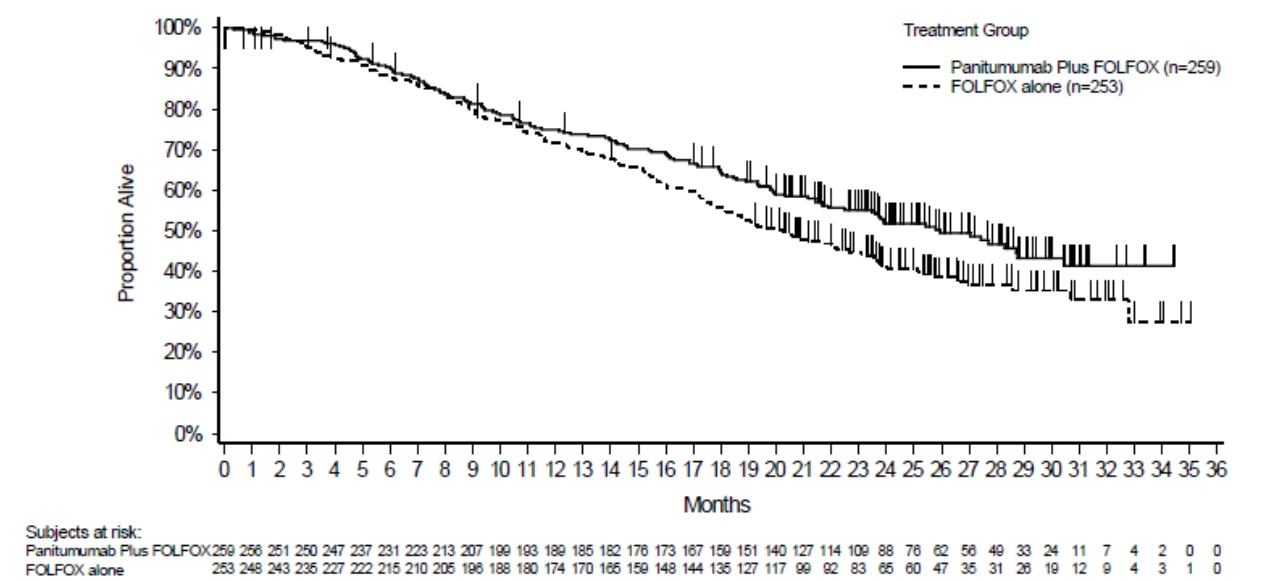
In patients with mutant RAS tumours, median PFS was 7.3 months in the VECTIBIX plus FOLFOX arm and 8.7 months in the FOLFOX alone arm with a hazard ratio of 1.31 (95% CI: 1.07, 1.60); median OS was 15.6 months in the VECTIBIX plus FOLFOX arm and 19.2 months in the FOLFOX alone arm, with an OS hazard ratio of 1.25 (95% CI: 1.02, 1.55).
ECOG performance status was a predefined covariate and a stratification factor for Study 20050203. Based on a subgroup analysis according to ECOG status in patients with wild-type RAS mCRC, the hazard ratio for PFS was 0.68 (95% CI: 0.54, 0.86) in the ECOG 0 or 1 subgroup and 1.69 (95% CI: 0.75, 3.82) in the ECOG 2 subgroup. The hazard ratio for OS was 0.74 (95% CI: 0.57, 0.95) in the ECOG 0 or 1 subgroup and 1.34 (95% CI: 0.63, 2.89) in the ECOG 2 subgroup.
VECTIBIX as Monotherapy After Failure of Fluoropyrimidine-, Oxaliplatin-, and Irinotecan-containing Chemotherapy Regimens
Randomized-Controlled Trials
Study 20020408
An open-label, multinational, randomized, controlled trial (Study 20020408) was conducted in 463 patients with EGFR-expressing metastatic carcinoma of the colon or rectum after confirmed failure of fluoropyrimidine-, oxaliplatin- and irinotecan-containing regimens. Patients were randomized 1:1 to receive VECTIBIX at a dose of 6 mg/kg given once every two weeks plus best supportive care (not including chemotherapy) (BSC) or BSC alone. Patients were treated until investigator-determined disease progression or unacceptable toxicity. Upon disease progression BSC alone patients were eligible to crossover to a companion study and receive VECTIBIX at a dose of 6 mg/kg given once every two weeks. Stratification factors were Eastern Cooperative Oncology Group (ECOG) performance status (0 and 1 vs 2) and geographic region (Western Europe, Eastern/Central Europe, or other).
Overall, of the 463 patients, 63% were male. The median age was 62 years (range 27 to 83), and 99% were Caucasian. Three hundred and ninety-six (86%) patients had a baseline ECOG Performance Status of 0 or 1. Sixty-seven percent of patients had colon cancer and 33% had rectal cancer.
Of the 427 patients who had a tumour sample analyzed for KRAS, 243 (57%) were determined to have wild-type KRAS and 184 (43%) were determined to have mutant KRAS. Among patients that were randomized to receive VECTIBIX plus BSC, 60% had wild-type and 40% had mutant KRAS; among patients that were randomized to receive BSC alone, 54% had wild-type and 46% had mutant KRAS.
In the wild-type KRAS analysis set, 83 patients (67%) who received VECTIBIX plus BSC and 76 patients (64%) who received BSC alone were male. The median age was 63 years in both treatment groups. One hundred and twenty-two patients (98%) who received VECTIBIX plus BSC and 118 patients (99%) who received BSC alone were Caucasian. One hundred and nine patients (88%) who received VECTIBIX plus BSC and 102 patients (86%) who received BSC alone had a baseline ECOG Performance Status of 0 or 1. Sixty nine percent in both treatment groups had colon cancer, and 31% in both treatment groups had rectal cancer.
The relationship between KRAS mutation status, determined in archived paraffin embedded tumour tissue, and clinical outcome was evaluated in a retrospective analysis.
Tumour samples obtained from the primary resection of colorectal cancer were analyzed for the presence of the seven most common activating mutations in exon 2, codons 12 and 13 of the KRAS gene by using an allele-specific polymerase chain reaction. Four hundred and twenty seven (92%) patients were evaluable for KRAS status of which 184 had mutations. In the primary analysis of PFS, the hazard ratio for PFS was 0.45 (95% CI: 0.34-0.59) in favour of VECTIBIX in the wild-type KRAS mCRC group (stratified log-rank p-value < 0.0001) and 1.00 (95% CI: 0.73-1.36) in the mutant KRAS mCRC group. The difference in median PFS in the wild-type KRAS mCRC group was 5 weeks (Figure 2). To correct for potential bias from unscheduled assessments, radiologic progression was assigned to the closest scheduled assessment in a sensitivity analysis [wild-type group hazard ratio = 0.49 (95% CI: 0.37-0.65) and mutant group hazard ratio = 1.07 (95% CI: 0.77-1.48)]. In these analyses, the difference in median PFS in the wild-type group was 8 weeks. There was no difference in median PFS in the mutant group. The progression-free survival rates at the first scheduled visit (week 8) in the mutant KRAS mCRC group were 26.2% on VECTIBIX plus BSC and 34.4% on BSC alone, a difference of 8.2% [95% CI: -21.9, 5.5]. There were no differences in overall survival seen in either group. In the wild-type KRAS mCRC group the response rate was 17% for VECTIBIX and 0% for BSC. In the mutant KRAS mCRC group there were no responses in either treatment arm. Stable disease rates in the wild-type KRAS mCRC group were 34% for VECTIBIX and 12% for BSC. The stable disease rates in the mutant KRAS mCRC group were 12% for VECTIBIX and 8% for BSC. Response rate (investigator assessment) in patients that crossed over to VECTIBIX after progression on BSC alone was 22% (95% CI: 14.0, 31.9) for those with wild-type KRAS tumours and 0% (95% CI: 0.0, 4.3) for those with mutant KRAS tumours.
Figure 2. PFS (Central Assessment) by Randomized Treatment in Wild-type KRAS mCRC Stratum (Study 20020408)
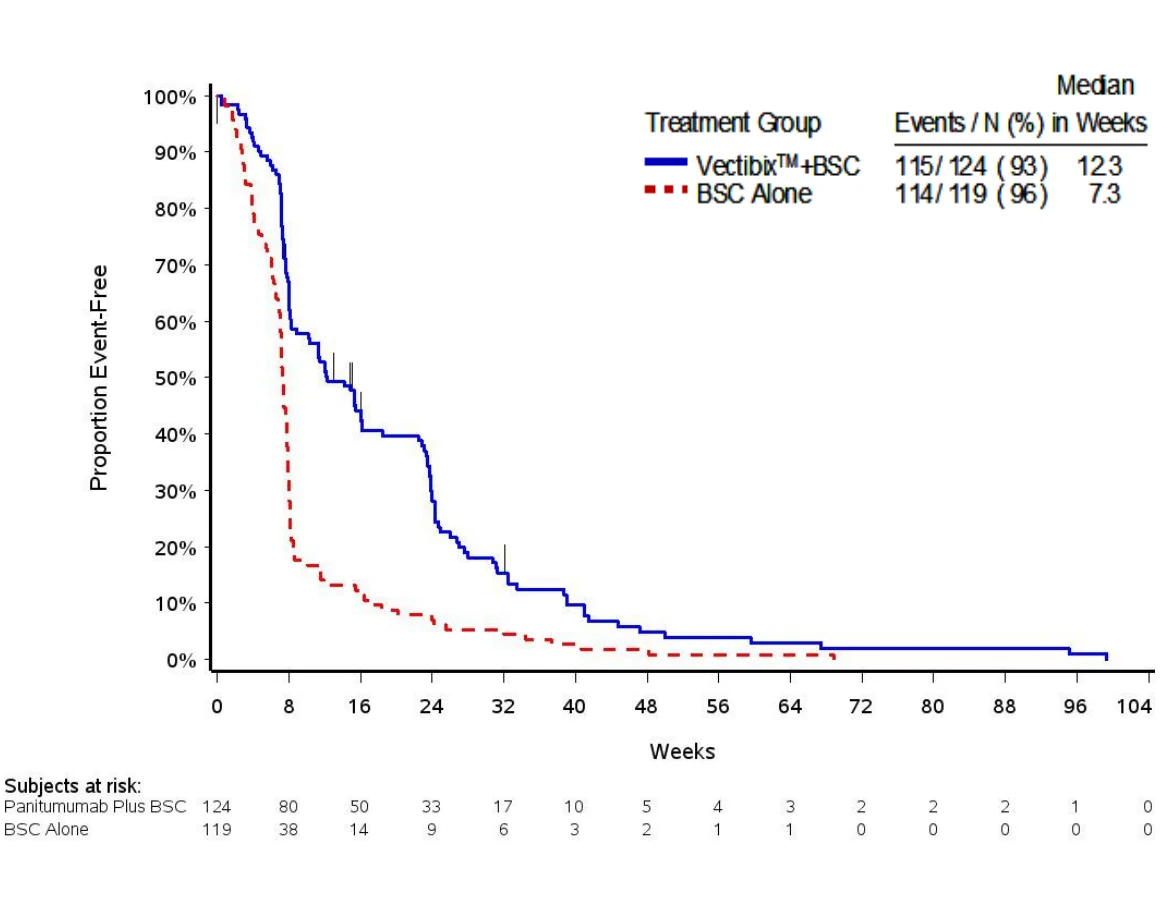
Study 20080763
The efficacy of VECTIBIX was also evaluated in an open-label, multicentre, phase 3 clinical trial in patients with wild-type KRAS (exon 2) mCRC (Study 20080763). A total of 1,010 patients refractory to chemotherapy who received prior treatment with irinotecan, oxaliplatin, and a thymidylate synthase inhibitor were randomized 1:1 to receive VECTIBIX vs. cetuximab to test whether VECTIBIX is non-inferior to cetuximab. Subjects were stratified by geographic region (North America, Western Europe, and Australia versus the rest of the world) and Eastern Cooperative Oncology Group (ECOG) performance status (0 or 1 versus 2). The primary endpoint was overall survival (OS). Secondary endpoints included progression free survival (PFS)-per investigator, and objective response rate (ORR). The hypothesis for demonstrating non-inferiority was that VECTIBIX preserved at least 50% of the OS effect of cetuximab over best standard of care (BSC). This was based on the pre-specified NCIC CTG CO.17 study OS hazard ratio of 0.55 (95% CI: 0.41, 0.74) for cetuximab (median OS of 9.5 months) versus BSC (median OS of 4.8 months) with 69% KRAS ascertainment.
Of 1,010 patients in the Intent-to-Treat Analysis Set, 319 patients (63%) who received VECTIBIX and 321 patients (64%) who received cetuximab were male. The median age was 61 years in both treatment groups. Two hundred twenty-five patients (44%) who received VECTIBIX, and 230 patients (46%) who received cetuximab were Asian. Four hundred sixty four patients (92%) in both treatment groups had baseline ECOG Performance Status of 0 or 1. One hundred thirty three patients (26%) who received VECTIBIX, and 126 patients (25%) who received cetuximab received prior bevacizumab. Two hundred ninety-six patients (58%) who received VECTIBIX and 330 patients (66%) who received cetuximab had colon cancer. Two hundred and ten patients (42%) who received VECTIBIX and 174 patients (34%) who received cetuximab had rectal cancer.
The primary analysis for the study demonstrated that VECTIBIX was non-inferior (normal scoreZPC -3.19, p = 0.001) to cetuximab for overall survival.
The efficacy results for the study are presented in the Table 16 and Figure 3, below.
Table 16. Study 20080763 Efficacy Results in patients with wild-type KRAS (exon 2) mCRC
| Wild-type KRAS (exon 2) Population | VECTIBIX (n = 499) | Cetuximab (n = 500) |
| OS | ||
| Median (months) (95% CI) | 10.4 (9.4, 11.6) | 10.0 (9.3, 11.0) |
Hazard ratio (95% CI) p-value | 0.97 (0.84, 1.11) p = 0.001* | |
| PFS | ||
| Median (months) (95% CI) | 4.1 (3.2, 4.8) | 4.4 (3.2, 4.8) |
| Hazard ratio | 1.00 | |
| ORR | n = 486 | n = 485 |
| n (%) (95% CI) | 107 (22%) (18%, 26%) | 96 (20%) (16%, 24%) |
| Odds ratio | 1.15 | |
* The OS non-inferiority hypothesis was tested at a 1-sided 2.5% significance level. The p value demonstrated that VECTIBIX was statistically significantly non-inferior to cetuximab for OS. The efficacy analysis used a modified ITT defined as all randomized patients who received at least one dose of study drug. | ||
Figure 3. OS in Patients with Wild-type KRAS mCRC (Study 20080763)
P ro p o rti o n A li ve 0% 20% 40% 60% 80% 100% Months 0 4 8 12 16 20 24 28 32 36 Subjects at risk: Panitumumab Cetuximab 499 399 286 185 124 76 32 12 2 0 500 398 283 181 122 70 37 16 1 0 Treatment Group Panitumumab (n=499) Cetuximab (n=500)
Study 20100007
The efficacy of VECTIBIX was further evaluated in Study 20100007, an open-label, multicenter, randomized study of VECTIBIX plus BSC versus BSC alone where crossover from the BSC arm to the VECTIBIX plus BSC arm was not permitted. Patients were treated until disease progression, withdrawal of consent, unacceptable toxicity, or death. A total of 377 patients with chemorefractory, wild-type KRAS mCRC (patients were to have failed prior treatment for mCRC with regimens containing irinotecan and oxaliplatin [either sequentially or in combination] and were also to have received a thymidylate synthase inhibitor) were randomized to receive either VECTIBIX (6 mg/kg every 14 days) plus BSC (n = 189) or BSC alone (n = 188). Stratification factors were Eastern Cooperative Oncology Group (ECOG) performance status (0 and 1 versus 2) and region (sites in Europe versus Asia versus rest of world).
All patients enrolled in the study were determined to have wild-type KRAS exon 2. Studied subject’s paraffin-embedded, formalin-fixed tumour tissue (primary or metastasis) was tested for KRAS exon 2 (codons 12 and 13) mutation status, using a clinical trial assay (CTA) version of the therascreen KRAS. The mutation status of KRAS exon 3 (codons 59 and 61) and exon 4 (codons 117 and 146) and NRAS exons 2, 3 and 4 were further tested by Sanger bi-directional sequencing. RAS mutation status (defined by KRAS exons 2, 3, and 4 and NRAS exons 2, 3, and 4) was available for 86% of the tumours: 270 (72%) patients had wild-type RAS tumours and 54 (14%) patients had mutant RAS tumours. The primary objective was met in wild type KRAS exon 2 subjects. However, only data for the pre-specified analysis of the wild-type RAS population is presented below.

Predefined secondary analyses of efficacy and safety by RAS (i.e., KRAS and NRAS) biomarker status
Of the 270 patients included in the wild-type RAS efficacy analysis set (VECTIBIX plus BSC: n = 142, BSC alone: n = 128), approximately half of the subjects were men (58%) and were white (57%). Most subjects had a baseline ECOG performance status of 0-1 (90%). Among patients in the VECTIBIX plus BSC arm, 56% were men and the median age was 62 years. A total of 62% subjects had primary tumour localized in colon, and 42% had at least 3 sites of metastatic disease. Prior bevacizumab treatment was received by 34% of the subjects. Among patients in the BSC alone arm, 60% were men and the median age was 60 years. A total of 56% subjects had primary tumour localized in colon, and 45% had at least 3 sites of metastatic disease. Prior bevacizumab treatment was received by 27% of the subjects. Other baseline demographic and disease characteristics were generally balanced between treatment arms.
The pre-specified endpoints of OS and PFS in subjects with wild-type RAS were evaluated in a hierarchical fashion. Results in patients with wild-type RAS mCRC from the secondary analyses are presented in Table 17.
Table 17. Summary of Efficacy Analysis of the Wild-type RAS Set in Study 20100007
VECTIBIX Plus BSC Median (95% CI), (months) (N = 142) | BSC Alone Median (95% CI), (months) (N = 128) | Hazard Ratio (95% CI) | |
| OS | 10.0 (8.7, 11.6) | 6.9 (5.2, 7.9) | 0.594 (0.440, 0.803)* (p = 0.0007) |
| PFS | 5.2 (3.5, 5.3) | 1.7 (1.6, 2.2) | 0.435 (0.330, 0.572)* (p < 0.0001) |
CI = confidence interval; OS = overall survival; PFS = progression-free survival; RAS = rat Sarcoma viral oncogene homolog gene family
* Cox proportional hazards model adjusted for all clinically meaningful covariates.
VECTIBIX plus BSC was associated with an improvement in OS compared with BSC alone in patients with wild-type RAS mCRC. A total of 104 patients (73%) in the VECTIBIX plus BSC arm and 95 patients (74%) in the BSC alone arm had died at the time of the primary analysis cut-off date. Median OS was improved by 3.1 months in the VECTIBIX plus BSC arm relative to the BSC alone arm in this subset (10.0 vs. 6.9 months, respectively), and the OS hazard ratio was 0.594 (95% CI: 0.440, 0.803). The Kaplan-Meier plot of OS is shown in Figure 4.
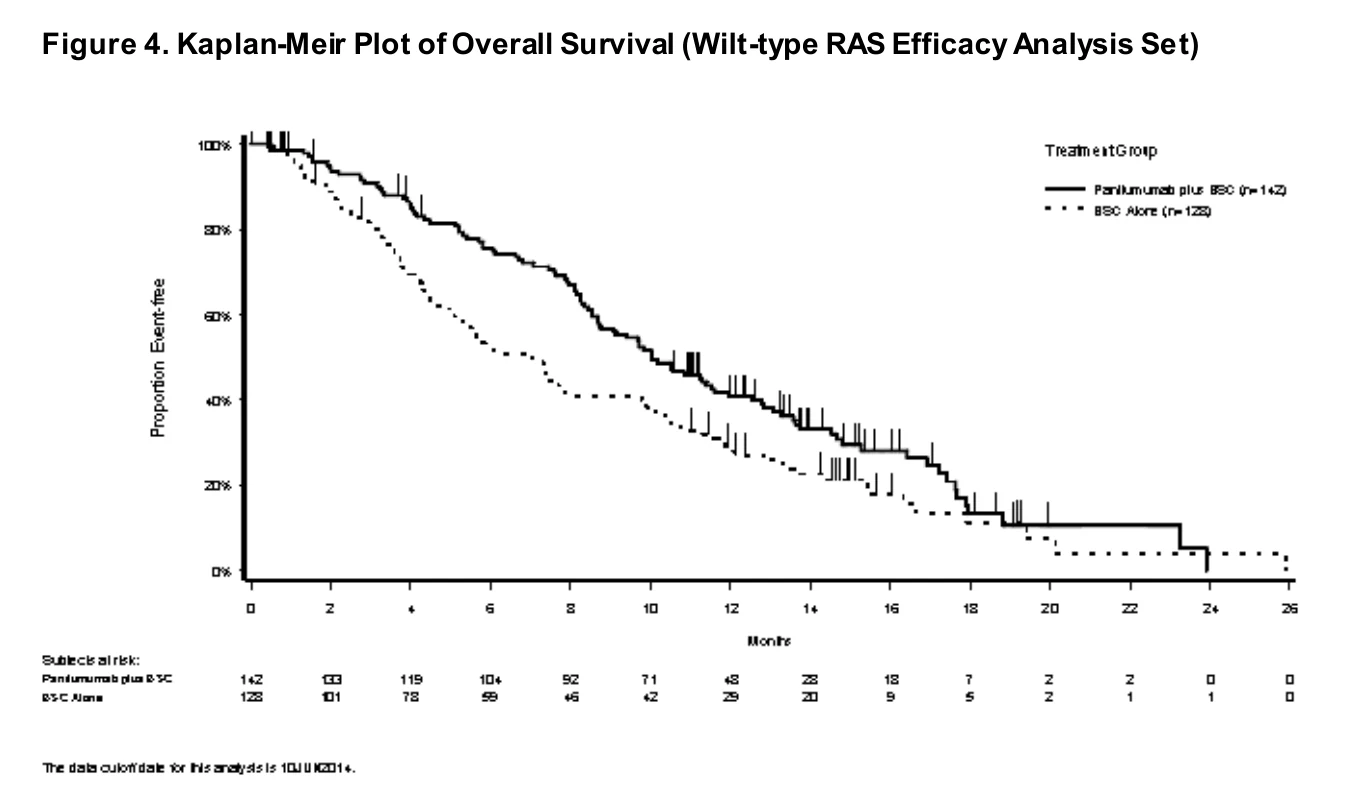
Figure 4. Kaplan-Meir Plot of Overall Survival (Wilt-type RAS Efficacy Analysis Set)
In patients with mutant RAS mCRC, median OS was 7.6 months in the VECTIBIX plus BSC arm and 7.5 months in the BSC alone arm with a hazard ratio of 0.985 (95% CI: 0.485, 1.999); median PFS was 1.6 months in the VECTIBIX plus BSC arm and 1.6 months in the BSC alone arm, with a hazard ratio of 1.027 (95% CI: 0.555, 1.901).
ECOG performance status was a predefined covariate and a stratification factor for Study 20100007. Based on a subgroup analysis according to ECOG status in patients with wild-type RAS mCRC, the hazard ratio for OS was 0.72 (95% CI: 0.54, 0.97) in the ECOG 0 or 1 subgroup and 0.34 (95% CI: 0.14, 0.81) in the ECOG 2 subgroup. The hazard ratio for PFS was 0.46 (95% CI: 0.35, 0.61) in the ECOG 0 or 1 subgroup and 0.34 (95% CI: 0.14, 0.84) in the ECOG 2 subgroup.
Retrospective analysis from Non-pivotal Clinical Studies
To further evaluate the association of KRAS status with the efficacy of VECTIBIX (panitumumab) seen in pivotal Study 20020408, retrospective analysis of the efficacy and safety based on the KRAS status of patients from the non-pivotal clinical studies 20030167 and 20030250 was performed.
The primary objective of these retrospective analyses was to assess the effect of treatment with panitumumab on the objective response in subjects with metastatic colorectal cancer whose tumours express wild-type KRAS and those whose tumours express mutant KRAS. As was observed in Study 20020408, all of the objective responses to panitumumab in studies 20030167 and 20030250 occurred in subjects whose tumours expressed wild-type KRAS. No responses were seen in subjects whose tumours harboured activating KRAS mutations. The results of these retrospective analyses help confirm the findings in Study 20020408 and suggest that patients with tumour KRAS mutations do not benefit from treatment with panitumumab monotherapy.
Single-Arm Trials
Three single-arm, open-label studies evaluated the efficacy and safety of VECTIBIX in patients with mCRC who had disease progression following 1 or more fluoropyrimidine-based regimens (with or without leucovorin) plus either irinotecan, oxaliplatin, or both (given either concurrently or sequentially) and bevacizumab. Two of these studies are ongoing with a median follow-up ranging from 12 to 15 weeks. These studies assessed the doses of 6 mg/kg given once every two weeks (n = 62) and 2.5 mg/kg given once weekly (n = 148), and explored the relationship between EGFR tumour membrane staining (≥ 10%, < 10%) and response. Across these studies, response rate (per modified-WHO or modified-RECIST criteria) was consistent with that observed in the randomized, controlled trial (8%, 9%, and 13%) and responses were observed in patients whose tumours were negative (< 1%) for EGFR tumour membrane staining.
EGFR Expression and Response
Patients enrolled in clinical studies were required to have immunohistochemical evaluation of tumour EGFR expression using the DakoCytomation EGFR pharmDx™ test kit. In the randomized, controlled trial exploratory univariate analyses were conducted to assess the correlation of EGFR expression and efficacy. Efficacy results did not correlate with either presence, percentage of positive cells or the intensity of EGFR tumour expression. The utility of the test kit to guide clinical decision-making is unclear.
14.3 Comparative Bioavailability Studies
Not Applicable
14.4 Immunogenicity
As with all therapeutic proteins, there is potential for immunogenicity. The immunogenicity of panitumumab has been evaluated using two different screening immunoassays for the detection of binding anti-panitumumab antibodies: an acid dissociation bridging enzyme-linked immunosorbant assay (ELISA), and a Biacore® biosensor Immunoassay. For patients whose sera tested positive in either screening immunoassay, an in vitro biological assay was performed to detect neutralizing antibodies.
As monotherapy, the incidence of binding antibodies (excluding pre-dose and transient positive patients) was 0.5% as detected by the acid-dissociation ELISA and 3.3% as detected by the Biacore assay. The incidence of neutralizing antibodies (excluding pre-dose and transient positive patients) was 0.7%. Although the data are limited, there was no evidence of altered pharmacokinetic or toxicity profiles in patients who developed antibodies to VECTIBIX.
In combination with irinotecan- or oxaliplatin-based chemotherapy, the incidence of binding antibodies (excluding predose positive patients) was 1.0% as detected by the acid-dissociation ELISA and < 1% as detected by the Biacore assay. The incidence of neutralizing antibodies (excluding predose positive patients) was < 1%. In Study 20050203, (combination with oxaliplatin-based chemotherapy), the incidence of binding antibodies (excluding predose positive patients) in patients with wild-type RAS mCRC was 2.3% as detected by the acid-dissociation ELISA and 2.3% as detected by the Biacore assay (total of 4.7% detected by either ELISA or Biacore). The incidence of neutralizing antibodies (excluding predose positive patients) in patients with wild-type RAS mCRC was 0.5%. Although the data are limited, no evidence of an altered safety profile was found in patients who tested positive for antibodies to VECTIBIX.
The detection of antibody formation is dependent on the sensitivity and specificity of the assay. The observed incidence of antibody positivity in an assay may be influenced by several factors including sample handling, concomitant medications and underlying disease. Therefore, comparison of the incidence of antibodies to other products may be misleading.
15 MICROBIOLOGY
No microbiological information is required for this drug product.
16 NON-CLINICAL TOXICOLOGY
A summary of Toxicology studies is shown in Table 18.
Acute and Multiple Dose Toxicity
Adverse reactions seen in animals at exposure levels similar to clinical exposure levels and with possible relevance to clinical use were as follows:
Skin rash and diarrhea were the major findings observed in repeat-dose toxicity studies of up to 26 weeks duration in cynomolgus monkeys who received VECTIBIX (panitumumab) at doses up to approximately 5-fold the exposure of the recommended human dose. These findings were reversible upon termination of administration of VECTIBIX. The skin rash and diarrhea observed in monkeys are considered related to the pharmacological action of VECTIBIX and are consistent with the toxicities observed with other anti-EGFR inhibitors.
In the 6-month repeated-dose toxicity study, following a single-dose of VECTIBIX (panitumumab) on Study Day 1, panitumumab exhibited dose-linear toxicokinetics within the dose range of 7.5 to 30 mg/kg of panitumumab. The mean (± SD) Cmax values were 261 ± 66, 676 ± 253, and 1080 ± 406 μg/mL for the 7.5, 15, and 30 mg/kg groups, respectively. The mean (± SD) AUC (0-7) values were 649 ± 133, 1650 ± 440, and 3440 ± 993 day*μg/mL for the 7.5, 15, and 30 mg/kg groups, respectively. In Week 26, for animals that did not develop monkey anti-human antibody (MAHA), a dose-proportional increase in AUC (0-7) was observed as dose increased from 7.5 mg/kg to 30 mg/kg panitumumab, with a mean ± SD AUC (0-7) in Week 26 of 774 ± 259, 1660 ± 266, and 3260 ± 1300 day*μg/mL for the 7.5, 15, and 30 mg/kg groups.
NOAEL could not be identified due to mild to severe skin rash and/or diarrhea that was observed in some monkeys across all dose levels in all repeated-dose toxicity studies. This is due to the pharmacologic activity of panitumumab. Toxicities were observed within therapeutic dose level.
Mutagenicity and Oncogenic/Carcinogenic Potential
Studies to evaluate the mutagenic and carcinogenic potential of VECTIBIX have not been performed.
Reproductive Toxicity
VECTIBIX has been shown to be an abortifacient in cynomolgus monkeys when administered during the period of organogenesis at doses up to 5-fold the exposure of recommended human dose on a mg/kg basis.
Formal male fertility studies have not been conducted; however, microscopic evaluation of male reproductive organs from cynomolgus monkeys administered VECTIBIX for up to
26 weeks at doses up to approximately 5-fold the human dose on a mg/kg basis, revealed no differences compared to control male monkeys. Fertility studies conducted in female cynomolgus monkeys showed that VECTIBIX may produce secondary effects that could impact the ability of a woman to become pregnant while receiving VECTIBIX.
Prolonged menstrual cycles and/or amenorrhea were observed in normally cycling, female cynomolgus monkeys following weekly doses of panitumumab of 1.25 to 5-fold greater than the recommended human dose (based on body weight). Menstrual cycle irregularities in panitumumab-treated, female cynomolgus monkeys were accompanied by both a decrease and delay in peak progesterone and 17β-estradiol levels. Normal menstrual cycling resumed in most animals after discontinuation of panitumumab treatment. A no-effect level for menstrual cycle irregularities and serum hormone levels was not identified. A trend of a dose-dependent decrease in the pregnancy rate was observed in monkeys.
VECTIBIX treatment was associated with significant increases in embryolethal or abortifacient effects in pregnant cynomolgus monkeys when administered weekly during the period of organogenesis (gestation day [GD] 20-50), at doses approximately 1.25 to 5-fold greater than the recommended human dose (by body weight). There were no fetal malformations or other evidence of teratogenesis noted in the offspring. While no panitumumab was detected in serum of neonates from panitumumab-treated dams, anti-panitumumab antibody titers were present in 14 of 27 offspring delivered at GD 100. Therefore, while no teratogenic effects were observed in panitumumab treated monkeys, panitumumab has the potential to cause fetal harm when administered to pregnant women.
Local Tolerance
No formal local tolerance studies were conducted, however, injection sites were evaluated in repeated-dose toxicity studies, including the 6-month study. With the exception of the skin changes associated with the pharmacological action of panitumumab (erythema, thin skin, dry/flaky skin, scab formation), no other injection site changes were noted in panitumumab treated animals compared with control animals.
| Table 18. Summary of Toxicology Studies | |||||
|---|---|---|---|---|---|
| Study Type | Species | Route of Administration | Dose/Dose Regimen | Duration | Key Findings |
| Single-dose Toxicitya | |||||
| Safety Pharmacology (cardiovascular, respiratory, central nervous system) | Monkey/ Cynomolgus (telemeterized) | Intravenous injection | 0 (vehicle control), 7.5, 30, and 60 mg/kg | Single dose | No treatment-related effects on evaluated cardiovascular, respiratory, or central nervous system parameters were noted. |
| Repeated-dose Toxicity | |||||
| 1-Month (4 studies) 3-Month (2 studies) 6-Month (1 study) | Monkey/ Cynomolgus | Intravenous injection | 0 (vehicle), 0.3, 3, 7.5, 15, and 30 mg/kg once weekly | Up to 6 months | Principal treatment-related findings were dose-dependent skin rash and diarrhea, ranging from mild to severe. Supportive treatment such as antibiotics was necessary for some animals in order to minimize secondary infection related to skin lesions. In the 6-month study, 15 out of 36 animals (2 of 12 in 7.5 mg/kg, 7 of 12 in 15 mg/kg, and 6 of 12 in 30 mg/kg once weekly) were euthanized at unscheduled intervals during post dosing on Day 43 (Week 7) to Day 96 (Week 15) because of the severity of the skin rash and general poor condition. One animal in 15 mg/kg group died post dosing on Day 134. Both the diarrhea and skin changes were either partially or completely reversible within 4 to 8 weeks after the last panitumumab dose. |
| Table 18. Summary of Toxicology Studies |
|---|
| Study Type | Species | Route of Administration | Dose/Dose Regimen | Duration | Key Findings |
|---|---|---|---|---|---|
| Reproductive Toxicity | |||||
| Female Fertility Study | Monkey/ Cynomolgus | Intravenous injection | 0, 7.5, 15, and 30 mg/kg once weekly for 2 pre-mating menstrual cycles, 1 or 2 menstrual cycles (depending on when the female became pregnant), up to gestation day 20 to 25 | 13 to 23 weeks (depending if the female became pregnant in the first or second mating cycle) | Prolonged menstrual cycles and/or amenorrhea and alterations in 17β-estradiol and progesterone levels were observed in most panitumumab-treated monkeys. Normal menstrual cycling resumed in most monkeys during the dosing period or within 10 weeks after discontinuation of panitumumab treatment, suggesting that the effects on the menstrual cycle are reversible. Some panitumumab-treated monkeys did become pregnant, however, the pregnancy rate for panitumumab-treated monkeys was lower than control monkeys. |
| Embryo/fetal Development Study | Monkey/ Cynomolgus | Intravenous injection | 0, 7.5, 15, and 30 mg/kg once weekly during the period of organogenesis (gestation days 20 to 50) | Dosing during the period of organogenesis (gestations days 20 to 50); cesarean section performed on gestation days 100 to 103 | While no teratogenic effects were observed, fetal abortions or fetal deaths occurred in all panitumumab dose groups. |
a With the exception of the single-dose safety pharmacology study, no single-dose toxicity studies have been conducted