


Patient Medication Information: uses, side effects, how to take - Estragyn Vaginal Cream
ABOUT THIS MEDICATION
What the medication is used for:
Estragyn Vaginal Cream is used to treat the:
- dryness
- itching and
- burning
in and around the vagina due to a lack of estrogen.
Estragyn Vaginal Cream should not be used by women with intact uteri unless it is prescribed in association with a progestin. Estragyn Vaginal Cream is intended for short term use.
Estragyn Vaginal Cream should be used only under the supervision of a doctor, with regular follow-up at least once a year to identify side effects associated with its use.
Your first follow-up visit should be within 3 to 6 months of starting treatment. Your visit may include a blood pressure check, a breast exam, a Pap smear and pelvic exam. You should have a mammogram before starting treatment and at regular intervals as recommended by your doctor. Your doctor may recommend some blood tests.
You should carefully discuss the risks and benefits of hormone replacement therapy (HRT) with your doctor. You should regularly talk with your doctor about whether you still need treatment with HRT.
What It Does
Estrone which is the active component of Estragyn Vaginal Cream contributes to the growth of the epithelial cells of the vaginal walls to improve their thickness and elasticity, to aid in lubrication and provide relief from itching and dryness. The treatment is working when there is relief from the symptoms of vaginal dryness and itching.
When Estragyn Vaginal Cream should not be used:
Before using Estragyn Vaginal Cream be sure to tell your doctor if you have any of the following problems, as Estragyn Vaginal Cream should not be used under these conditions:
- Hypersensitivity to this drug or to any ingredient in the formulation or component of the container. For a listing see “What the medical ingredient is” and “What the nonmedicinal ingredients are”.
- Liver dysfunction (serious liver disease) or disease as long as liver function tests have failed to return to normal.
- If you currently have or have ever had cancer of the uterus or endometrium (lining of the womb) or any other estrogen-dependent cancer.
- Endometrial hyperplasia (overgrowth of the lining of the uterus).
- Known, suspected, or past history of breast cancer
- Undiagnosed abnormal genital bleeding
Known or suspected pregnancy
- Active or past history of arterial thromboembolic disease (e.g. stroke, heart attack, coronary heart disease.)
- Active or past history of problems with blood clots forming in the blood vessels including in the legs (deep vein thrombosis), lungs (pulmonary embolism) or other organs.
- Thrombophlebitis (painful inflammation of the veins in the legs)
- Partial or complete loss of vision due to blood vessel disease of the eye (ophthalmic vascular disease).
- If you are breastfeeding.
- If you have to use latex condoms for any reason
- If you experience migraine headaches
What the medicinal ingredient is:
Estrone
What the nonmedicinal ingredients are:
Arlacel 165, isopropyl myristate, methyl paraben, mineral oil, Peg 40 stearate, propyl paraben, sorbitan monostearate, stearic acid, water.
WARNINGS AND PRECAUTIONS
Serious Warnings and Precautions
The Women’s Health Initiative (WHI) trial is a large clinical study that assessed the benefits and risks of oral combined estrogen plus progestin therapy and oral estrogen-alone therapy compared with placebo (a pill with no active ingredients) in postmenopausal women.
The WHI trial indicated an increased risk of myocardial infarction (heart attack), stroke, breast cancer, pulmonary emboli (blood clots in the lungs) and deep vein thrombosis (blood clots in the large veins) in postmenopausal women taking oral combined estrogen plus progestin.
The WHI trial indicated an increased risk of stroke and deep vein thrombosis in postmenopausal women with prior hysterectomy (surgical removal of the uterus) taking oral estrogen-alone.
Therefore, you should highly consider the following:
- There is an increased risk of developing invasive breast cancer, heart attack, stroke and blood clots in both lungs and large veins with the use of estrogen plus progestin therapy.
- There is an increased risk of stroke and blood clots in the large veins with the use of estrogen-alone therapy.
- Estrogens with or without progestin should not be used for the prevention of heart disease or stroke.
- Estrogens with or without progestin should be used at the lowest effective dose and for the shortest period of time possible. Regular medical follow-up is advised.
Breast Cancer
The results of WHI trial indicated an increased risk of breast cancer in post-menopausal women taking combined estrogen plus progestin compared to women taking placebo.
The results of the WHI trial indicated no difference in the risk of breast cancer in post-menopausal women with prior hysterectomy taking estrogen alone compared to women taking placebo.
Estrogens with or without progestin should not be taken by women who have a personal history of breast cancer.
In addition, women with a family history of breast cancer or women with a history of breast lumps, breast biopsies, or abnormal mammograms (breast x-rays) should consult with their doctor before starting HRT.
Women should have a mammogram before starting HRT and at regular intervals during treatment as recommended by their doctor.
Regular breast examinations by a doctor and regular breast self-examinations are recommended for all women. You should review technique for breast self-examination with your doctor.
Overgrowth of the lining of the uterus and cancer of the uterus
The use of estrogen-alone therapy by post menopausal women who still have a uterus increases the risk of endometrial hyperplasia (overgrowth of the lining of the uterus) which increases the risk of endometrial cancer (cancer of the lining of the uterus).
If you still have your uterus, you should take a progestin medication (another hormone drug) regularly for a certain number of days of each month to reduce the risk of endometrial hyperplasia.
You should discuss progestin therapy and risk factors for endometrial hyperplasia and endometrial carcinoma with your doctor. You should also report any unexpected or unusual vaginal bleeding to your doctor.
If you have your uterus removed, you are not at risk of endometrial hyperplasia or endometrial carcinoma. Progestin therapy is therefore not generally required in women who have had a hysterectomy.
Ovarian cancer
In some studies, the use of estrogen-alone and estrogen plus progestin therapies for 5 or more years has been associated with an increased risk of ovarian cancer.
Heart Disease and Stroke
The results of the WHI trial indicated an increased risk of stroke and coronary heart disease in post-menopausal women taking combined estrogen plus progestin compared to women taking placebo.
The results of the WHI trial indicated an increased risk of stroke, but no difference in the risk of coronary heart disease in post-menopausal women with prior hysterectomy taking estrogen-alone compared to women taking placebo.
Abnormal Blood Clotting
The results of the WHI trial indicated an increased risk of blood clots in the lungs and large veins in post-menopausal women taking combined estrogen plus progestin compared to women taking placebo.
The results of the WHI trial indicated an increased risk of blood clots in the large veins but no difference in the risk of blood clots in the lungs in post-menopausal women with prior hysterectomy taking estrogen-alone compared to women taking placebo.
The risk of blood clots also increases with age, if you or a family member has had blood clots, if you smoke or if you are severely overweight. The risk of blood clots is also temporarily increased if you are immobilized for long periods of time and following major surgery. You should discuss risk factors for blood clots with your doctor since blood clots can be life-threatening or cause serious disability.
Gallbladder Disease
The use of estrogens by postmenopausal women has been associated with an increased risk of gallbladder disease requiring surgery.
Dementia
The Women’s Health Initiative Memory Study (WHIMS) was a substudy of the WHI trial and indicated an increased risk of dementia (loss of memory and intellectual function) in post-menopausal women age 65 and over taking oral combined estrogen plus progestin compared to women taking placebo.
The WHIMS indicated no difference in the risk of dementia in post-menopausal women age 65 and over with prior hysterectomy taking oral estrogen-alone compared to women taking placebo.
BEFORE you use Estragyn Vaginal Cream talk to your doctor or pharmacist if you:
- Have a history of allergy or intolerance to any medications or other substances
- Have a personal history of breast disease (including breast lumps) and/or breast biopsies or a family history of breast cancer.
- Have experienced any unusual or undiagnosed vaginal bleeding
- Have a history of uterine fibroids or endometriosis
- Have a history of liver disease, liver tumours, or jaundice (yellowing of the eyes and/or skin) or itching related to estrogen use or during pregnancy
- Have a history of migraine headache
- Have a history of high blood pressure
- Have a personal or family history of blood clots, or a personal history of heart disease or stroke
- Have history of kidney disease, asthma or epilepsy (seizures)
- Have a history of bone disease (this includes certain metabolic conditions or cancers that can affect blood levels of calcium and phosphorus)
- Have been diagnosed with diabetes
- Have been diagnosed with porphyria (a disease of blood pigment)
- Have a history of high cholesterol or high triglycerides
- Are pregnant or may be pregnant
- Have had a hysterectomy (surgical removal of the uterus)
- Smoke
- If you use latex condoms for any reason, as they are not compatible with the mineral oil found in Estragyn Vaginal Cream.
- Have been told that you have a condition called hereditary angioedema or if you have had episodes of rapid swelling of the hands, feet, face, lips, eyes, tongue, throat (airway blockage), or digestive tract.
- Have been diagnosed with lupus
- Have been diagnosed with hearing loss due to otosclerosis
- If you are breastfeeding
INTERACTIONS WITH THIS MEDICATION
Drug interactions
Some medications (such as medications for high blood pressure, diabetes, blood clots, sleeping, anxiety, seizures, pain-relief and tuberculosis) may affect how Estragyn Vaginal Cream works. Estragyn Vaginal Cream may also affect how other medicines work.
Tell your doctor or pharmacist if you are taking any other medications, including prescription medications, over-the-counter medications, vitamins or herbal products (such as St. John’s wort).
PROPER USE OF THIS MEDICATION
Usual dose
The dosage is 0.5 – 4 g daily used intravaginally. Use cyclically 3 weeks on 1 week off and then discontinue treatment as soon as possible. If used continuously then lower the dosage to the lowest amount that controls symptoms. You and your healthcare provider should talk regularly about whether the current dose of Estragyn Vaginal Cream helps relieve your symptoms and whether you still need treatment with Estragyn Vaginal Cream. Use according to your doctor’s instructions. Estragyn Vaginal Cream is intended for short-term use.
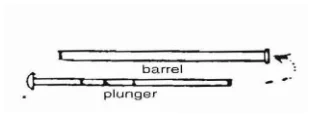
The plastic applicator provided with this package is specifically designed to permit proper administration of a measured amount of vaginal cream. The applicator consists of a calibrated plunger and a barrel.
Instructions for the proper use of the supplied vaginal applicator:
- Before piercing the tube, screw the applicator barrel to the tube. Repeat this at least twice to ensure that the applicator screws on with ease. If the applicator does not screw to the tube, please contact Searchlight Pharma Inc. at 1-855-331-0830.
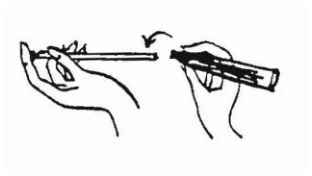
Fill the applicator by proceeding as follows:
- Remove the cap from the tube.
- Pierce the tube end with the pointed end of the cap
- Screw the applicator barrel firmly to the tube with the plunger fully in.
- Squeeze the tube to fill the applicator with the prescribed dose.
- Measure the required amount of cream by aligning the line calibrator on the plunger to the barrel end.
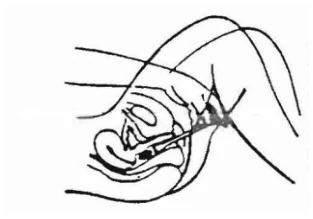
Inserting the vaginal applicator with cream:
- Lie on your back.
Using either hand, grasp the barrel of the
- applicator firmly with thumb and middle finger.
- Pointing the applicator slightly downward, insert it deeply into the vagina as far as it will comfortably go without using force.
- Do not push the plunger with the index finger until after the applicator is in the proper position in the vagina.
- Push the plunger all the way down to deposit the cream in the vagina.
- Gently remove the applicator from the vagina.
Care of the applicator:
- Separate the plunger from the barrel by pulling it all the way out.
- Wash both sections of the applicator thoroughly with mild detergent and warm water, allowing the water to flow through the barrel to rinse well.
- Sterilisation of the applicator is not necessary and extremely hot water should not be used because it may soften the plastic applicator.
- Dry the applicator and store it in a clean place.
Caution: the applicator should be used only on the advice of a physician.
Overdose
Excessive amounts of estrogen may cause nausea, abdominal cramps, headaches, and dizziness or a feeling of general indisposition.
Missed Dose
If a dose has been clearly missed it is safer to restart at the time of the next dose. Do not double dose.
SIDE EFFECTS AND WHAT TO DO ABOUT THEM
Self Limiting Side Effects Include:
Spotting, changes in vaginal secretion have been associated with estrogen vaginal cream. Discontinue use and speak to your doctor if the condition persists beyond a few days.
The following table consists of serious side effects associated with hormone replacement therapies in general. If any conditions arise where cessation is indicated below then do so.
| In case of a suspected overdose, contact a health care practitioner, hospital emergency department or regional poison control center immediately. |
| SERIOUS SIDE EFFECTS, HOW OFTEN THEY HAPPEN AND WHAT TO DO ABOUT THEM | ||||
| Frequency (common or uncommon) | Symptom/possible side effect | Talk with your doctor or pharmacist | Stop taking drug and call your doctor or pharmacist | |
| Only if severe | In all cases | |||
| Abdominal pain, nausea or vomiting |  | |||
| Breast lump |  | |||
| Crushing chest pain or chest heaviness |  | |||
| Pain or swelling in the leg |  | |||
| Persistent sad mood | | |||
| Sharp pain in the chest, coughing blood or sudden shortness of breath | | |||
| Sudden partial or complete loss of vision | | |||
| Sudden severe headache or worsening of headache, vomiting, dizziness, fainting, disturbance of vision or speech or weakness or numbness in an arm or leg | | |||
| Unexpected vaginal bleeding | | |||
| Yellowing of the skin or eyes (jaundice) | | |||
This is not a complete list of side effects. For any unexpected effects while taking Estragyn Vaginal Cream, contact your doctor or pharmacist.
HOW TO STORE IT
Store at room temperature between 15°C and 30°C. Avoid freezing as it may cause the cream to separate destroying its properties.
Keep out of reach and sight of children.
REPORTING SUSPECTED SIDE EFFECTS
Reporting Side Effects
You can help improve the safe use of health products for Canadians by reporting serious and unexpected side effects to Health Canada. Your report may help to identify new side effects and change the product safety information.
3 ways to report:
- Online at MedEffect; (http://hc-sc.gc.ca/dhp-mps/medeff/index-eng.php)
- By calling 1-866-234-2345 (toll-free);
By completing a Patient Side Effect
Reporting Form and sending it by:
- Fax to 1-866-678-6789 (toll-free), or
Mail to: Canada Vigilance Program
Health Canada
Postal Locator 0701E Ottawa, ON
K1A 0K9
Postage paid labels and the Patient Side Effect Reporting Form are available at MedEffect. (http://hc-sc.gc.ca/dhp-mps/medeff/index-eng.php)
NOTE: Contact your health professional if you need information about how to manage your side effects. The Canada Vigilance Program does not provide medical advice.
MORE INFORMATION
This document plus the full product monograph prepared for health professionals can be obtained by calling Searchlight Pharma Inc. at 1-855-331-0830