


Patient Medication Information: uses, side effects, how to take - Imvexxy
What is IMVEXXY used for?
- IMVEXXY is used to treat postmenopausal women who experience pain before, during or after sex. This is a symptom of vulvar and vaginal atrophy (thinning, drying and inflammation of the vulva and vagina).
The safe and effective use of IMVEXXY for more than 12 weeks has not been studied.
You should carefully discuss the risks and benefits of hormone replacement therapy (HRT) with your healthcare professional. You should regularly talk with your healthcare professional about whether you still need treatment with HRT.
How does IMVEXXY work?
After menopause, your body stops making the female hormone estrogen. IMVEXXY contains estradiol, which is a type of estrogen. It replaces the estrogen that some women are missing in
Serious Warnings and Precautions
The Women’s Health Initiative (WHI) trial was a large clinical study. This study assessed the benefits and risks of two oral therapies (combined estrogen plus progestin and estrogen-alone) compared with placebo (a pill with no active ingredients) in postmenopausal women. In postmenopausal women taking oral estrogen-alone, who had a prior surgery to remove the uterus (called a hysterectomy), the WHI trial indicated an increased risk of stroke and deep vein thrombosis. Therefore, you should highly consider the following:
|
the vagina. This may help reduce dryness and discomfort around your vagina, which can improve pain before, during or after sex.
What are the ingredients in IMVEXXY?
Medicinal ingredients: estradiol as estradiol hemihydrate.
Non-medicinal ingredients: ethylene glycol palmitostearate, FD&C Red #40, gelatin, glycerin, hydrolyzed gelatin, lecithin, mannitol, medium chain triglycerides, pharmaceutical ink, polyethylene glycol stearates, purified water, sorbitan, sorbitol, titanium dioxide.
IMVEXXY comes in the following dosage forms:
Softgel vaginal inserts of 4 mcg and 10 mcg.
Do not use IMVEXXY if:
- you are allergic to estradiol or to any of the non-medicinal ingredients in IMVEXXY or a component of the container (see What are the ingredients in IMVEXXY?)
you are pregnant or think you may be pregnant
- you have or have had liver problems, and blood tests to measure how your liver is working have not returned to normal
- you have, might have or had cancer that is sensitive to estrogen (e.g. breast cancer or endometrial cancer)
- your uterus lining is thicker than normal (endometrial hyperplasia)
- you have or have had breast cancer, or you are suspected of having it
- you have unexplained bleeding from the vagina
- you have recently had a heart attack, stroke, a blockage or narrowing of the arteries around the heart (called coronary heart disease)
you have or have had blood clotting problems:
- deep vein thrombosis (blood clots in big veins)
- pulmonary embolism (blood clots in the lung)
- thrombophlebitis (inflammation of a vein caused by a blood clot)
- protein C, protein S, or anti-thrombin deficiency
- you have eye problems that are caused by low blood flow to the eye
To help avoid side effects and ensure proper use, talk to your healthcare professional before you take IMVEXXY. Talk about any health conditions or problems you may have, including if you:
have or had uterus problems:
- fibroids (growths) inside your uterus
- endometriosis (growth of the uterine lining outside your uterus)
- a history of endometrial hyperplasia (overgrowth of the lining of the uterus)
- have had a hysterectomy (surgical removal of the uterus).
- have a history of allergy or intolerance to any drugs or other substances
- have a history of liver problems, yellowing of the eyes and/or skin (jaundice) or itching
have symptoms of blood blockage to the brain
- migraine, headaches, trouble speaking, paralysis, loss of consciousness.
- have or had high blood pressure;
- have or had asthma
- have kidney problems
- have seizures (epilepsy)
- have or had bone disease (this includes certain conditions or cancers that can affect blood levels of calcium and phosphorus)
- have or had diabetes or a family history of diabetes
- have or had high levels of fat in your blood (cholesterol, triglycerides)
- are breastfeeding
- smoke
- have or had an autoimmune disease
- had or will have surgery
- have a disease that affects how the blood functions (porphyria)
- have low or high levels of calcium
- Have thyroid problems
- Have biliary problems (gallbladder disease, bile problems);
- Have eye problems
Other warnings you should know about:
Cancer:
Breast cancer: The results of the WHI trial indicated an increased risk of breast cancer in post-menopausal women taking combined estrogen plus progestin compared to women taking placebo.
The results of the WHI trial indicated no difference in the risk of breast cancer in postmenopausal women with prior hysterectomy taking estrogen-alone compared to women taking placebo.
There is an increased risk for breast cancer in women taking menopausal HRT for many years. The risk increases the longer you take HRT and persists for more than 10 years after stopping treatment with both estrogen plus progestin therapy and estrogen-alone therapy.
If you have had breast cancer, you should not take estrogens with or without progestins.
If you have a family history of breast cancer or have had breast lumps, breast biopsies or abnormal mammograms (breast x-rays), talk to your healthcare professional before starting HRT.
Women should have a mammogram before starting HRT and at regular intervals during treatment as recommended by their healthcare professional.
Regular breast examinations by a healthcare professional and regular self-breast examinations are recommended for all women. You should review techniques for breast self-examination with your healthcare professional.
The increased risk of breast cancer in patients taking estrogen-alone is lower than in patients using combined (estrogen-progestogen) HRT.
- Ovarian cancer: Women who take estrogen-only or combined HRT for 5 or more years have a slightly higher chance of ovarian cancer.
Overgrowth of the lining of the uterus and cancer of the uterus:
There was one report of proliferative endometrium (uterus lining growth) seen in women using IMVEXXY.
The use of estrogen-alone therapy increases the risk of developing endometrial hyperplasia (overgrowth of the lining of the uterus). The risk of endometrial cancer (cancer of the lining of the uterus) increases the longer you use estrogen-alone therapy. These risks apply to post-menopausal women with a uterus.
Talk to your healthcare professional about the risk factors for overgrowth and cancer of the uterus lining. They should discuss ways to reduce the risks, including progestin treatments.
You should also report any unexpected or unusual vaginal bleeding.
Heart disease (heart attack) and stroke:
The WHI trial showed:
- An increased risk of stroke and coronary heart disease in postmenopausal women taking combined estrogen plus progestin.
- An increased risk of stroke, but no difference in the risk of coronary heart disease in postmenopausal women with a previous hysterectomy taking estrogen-alone.
Abnormal blood clotting (including pulmonary embolism and deep vein thrombosis): The WHI trial showed:
- An increased risk of pulmonary emboli and deep vein thrombosis (blood clots in the lung and in big veins) in postmenopausal women taking combined estrogen plus progestin.
- An increased risk of deep vein thrombosis, but no difference in the risk of pulmonary emboli in postmenopausal women with previous hysterectomy taking estrogen-alone.
You are more likely to get a blood clot in your veins as you get older. Blood clots can be life-threatening or cause serious disability. Talk to your healthcare professional if any of the below situations apply to you:
- you use estrogens
- you are overweight and your BMI is greater than 30
you have any blood clotting problem that needs long-term treatment with a medicine used
- any of your close relatives has ever had a blood clot in the leg, lung or another organ
- you smoke
- you have systemic lupus erythematosus (an autoimmune disease)
- you have cancer
The risk for blood clots is also temporarily higher if you are immobilized for long periods of time and following major surgery. If you are going to have a surgery, tell your healthcare professional that you are taking IMVEXXY. You may need to stop taking IMVEXXY at least 4 weeks before the surgery to reduce the risk of a blood clot. Ask your healthcare professional when you can start taking IMVEXXY again.
Gallbladder disease: The use of estrogens by postmenopausal women has been associated with an increased risk of gallbladder disease that needs surgery.
Dementia: The Women’s Health Initiative Memory Study (WHIMS) was a sub-study of the WHI trial. The WHIMS study showed:
- An increased risk of dementia (loss of memory and intellectual function) in postmenopausal women age 65 and over who were taking oral combined estrogen plus progestin.
- No difference in the risk of dementia in postmenopausal women aged 65 and over who had previously had a hysterectomy and were taking oral estrogen-alone.
Physical exam, tests, and check-ups: Before you start taking IMVEXXY, you will need to have examinations and tests. These will include a physical exam, a Pap smear and a breast exam. Your healthcare professional will ask you about your personal and your family’s health history. You will also have your blood pressure taken as well as blood tests and a mammogram (breast x-ray). A uterus tissue sample might be needed.
While you are taking IMVEXXY, check your breasts often and get regular check-ups with your healthcare professional.
Your first check-up should be within 3 to 6 months of starting IMVEXXY. Thereafter, these should be scheduled at least once a year. These check-ups will help to identify any side effects you may have. Your visits may include a blood pressure check, a breast exam, a Pap smear, and pelvic exam. You will also have repeat mammograms and blood tests. Your healthcare professional will decide when these are necessary and will interpret the results.
Tell your healthcare professional about all the medicines you take, including any drugs, vitamins, minerals, natural supplements or alternative medicines.
The following may interact with IMVEXXY:
- medicines used to treat diabetes, such as glyburide and insulin.
- medicines used for the prevention or treatment of blood clots (anticoagulants), such as warfarin
- medicines used to treat high blood pressure, such as verapamil and diltiazem
- Medicines used to help you relax or sleep, such as barbiturates and meprobamates
- phenylbutazone, a nonsteroidal anti-inflammatory drug (NSAID) used to treat fever, pain and inflammation
- rifampicin, used to treat tuberculosis
- phenobarbital, phenytoin, hydantoins, carbamazepine, used to treat epilepsy and seizures
- ritonavir and nelfinavir, used to treat HIV/AIDS
- St. John’s Wort, used to treat depression
How to use IMVEXXY:
- Use IMVEXXY exactly as directed by your healthcare professional.
- Do not use more than the recommended dose prescribed by your healthcare professional.
- Do not change the dose or schedule unless your healthcare professional tells you to.
- IMVEXXY is a vaginal insert that you place in your vagina.
- IMVEXXY is only for use in the vagina (without an applicator).
- Do not take IMVEXXY by mouth (orally).
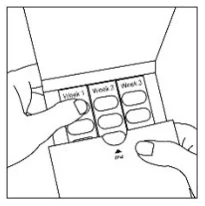
Step 1:
- Push one IMVEXXY insert through the foil of the blister package (Figure A).
Figure A
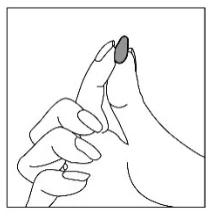
Step 2:
- Hold the IMVEXXY insert with the larger end between your fingers (Figure B).
Figure B
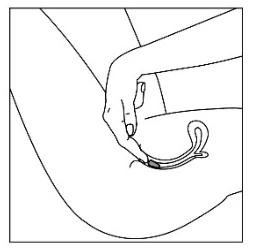
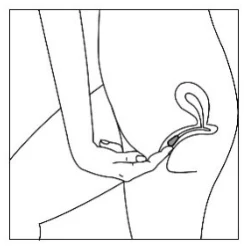
Step 3:
- To place the vaginal insert, select the position that is most comfortable for you. See Figure C for the lying down position or Figure D for the standing position.
- With the smaller end up, put the insert about two inches into your vagina using your finger.
Figure C or Figure D
Usual dose:
Starter Dosage (First Two Weeks):
- 1. Wash and dry your hands before handling the IMVEXXY insert.
- 2. Place one vaginal insert into your vagina, once per day at about the same time, for the first two weeks.
- 3. Write down the days you will put in your IMVEXXY insert.
Maintenance Dosage:
- 1. Wash and dry your hands before handling the IMVEXXY insert.
- 2. Place one vaginal insert into your vagina, twice a week (every three to four days).
- 3. Write down the days you will put in your IMVEXXY insert.
- • Your healthcare professional may interrupt or stop your treatment with IMVEXXY. This will depend on your condition and how you are feeling.
Overdose:
Signs of an overdose may include feeling sick or vomiting, breast pain, fluid retention (swelling), or bloating. Vaginal bleeding might occur as well.
| If you think you, or a person you are caring for, have taken too much IMVEXXY contact a healthcare professional, hospital emergency department, or regional poison control centre immediately, even if there are no symptoms. |
|---|
Missed Dose:
If you forget to use a vaginal insert, use one as soon as you remember. However, if the dose is close to the next scheduled dose, skip the missed insert and continue with your next scheduled insert.
Do not use two vaginal inserts to make up for a missed dose.
What are possible side effects from using IMVEXXY?
These are not all the possible side effects you may have when taking IMVEXXY. If you experience any side effects not listed here, tell your healthcare professional.
Side effects may include:
- Headache, dizziness, memory loss
- Vision changes
- Abdominal, back and pelvic pain
- Nausea
- Diarrhea
- Feeling bloated
- Feeling tired (fatigue)
- Change in appetite, body weight
- Excessive sweating, body odor
- Vaginal discharge, discomfort, odor
- Anxiety, feeling nervous
- Loss of scalp hair
- Excess hair on face, chest, abdomen or legs
- Breast tenderness, pain, swelling
- Acne, rash, itchy skin
- Pain during sex
IMVEXXY can cause abnormal blood test results. Your healthcare professional will decide when these are necessary and will interpret the results. They will tell you if your test results are abnormal and if you need treatment.
The risks related to oral estrogen should be considered as well. Serious side effects that are possible with IMVEXXY, as well as oral estrogen, are listed in the table below.
Serious side effects and what to do about them
| Symptom / effect | Talk to your healthcare professional | Stop taking drug and get immediate medical help | |
|---|---|---|---|
| Only if severe | In all cases | ||
| COMMON | |||
| Nasopharyngitis (a cold): runny or stuffy nose, sore throat, cough, sinus congestion, body aches, headache, sneezing, fever, generally feeling unwell | √ | ||
Serious side effects and what to do about them
| Symptom / effect | Talk to your healthcare professional | Stop taking drug and get immediate medical help | |
|---|---|---|---|
| Only if severe | In all cases | ||
| Urinary tract infection (infection in urinary system including kidneys, ureters, bladder and urethra): pain or burning sensation while urinating, frequent urination, blood in urine, pain in the pelvis, strong smelling urine, cloudy urine | √ | ||
| Vaginal bleeding changes: increased or decreased menstrual bleeding, spotting, infrequent periods or absence of bleeding, severe vaginal bleeding | √ | ||
| UNCOMMON | |||
| Stroke (blood clot in the brain): sudden severe headache, vomiting, dizziness, fainting, problems with your vision or speech, weakness or numbness in the face, arm, or leg | √ | ||
| Pulmonary embolism (blood clot in the lungs): sharp chest pain, coughing up blood, or sudden shortness of breath | √ | ||
| Deep vein thrombosis (blood clot in the legs) or Thrombophlebitis (inflammation of a vein often in the leg): sudden leg swelling or pain; redness, warmth, tenderness and pain in affected area | √ | ||
| RARE | |||
| Breast abnormalities (including breast cancer): dimpling or sinking of the skin, changes in the nipple, or any lumps you can see or feel, discharge from breasts, enlarged breasts, swelling | √ | ||
| Coronary thrombosis (blocked heart arteries): chest pain and pressure, shortness of breath | √ | ||
| Cystitis (bladder infection): increased need to urinate, pain in the pelvis or lower back, frequent urination during the night, cloudy urine that may contain blood, burning sensation when passing urine | √ | ||
| Depression (sad mood that won’t go away): difficulty sleeping or sleeping too much, changes in appetite or weight, feelings of worthlessness, guilt, regret, helplessness or hopelessness, withdrawal from social situations, family, gatherings and | √ | ||
Serious side effects and what to do about them
| Symptom / effect | Talk to your healthcare professional | Stop taking drug and get immediate medical help | |
|---|---|---|---|
| Only if severe | In all cases | ||
| activities with friends, reduced libido (sex drive) and thoughts of death or suicide. | |||
| Endometrial hyperplasia (abnormal growth of the lining of the uterus): menstrual bleeding that is heavier or lasts longer than normal, bleeding after menopause, menstrual cycles that are shorter than 21 days | √ | ||
| Endometrial cancer (cancer of the lining of the uterus): vaginal bleeding not associated with a period or after menopause; abnormal blood-tinged discharge from the vagina; pain in the pelvis | √ | ||
| Erythema multiforme (an allergic skin reaction): raised red or purple skin patches, possibly with blister or crust in the center; possibly swollen lips, mild itching or burning | √ | ||
| Erythema nodosum (swelling of the fat cells under the skin): tender red lumps usually on both shins | √ | ||
| Eye disorders: blurred vision, loss of vision in eye, increased sensitivity of the eyes to light, eye pain or redness, swelling and itching of the eyelids, decreased sharpness of vision, eye irritation, blocked eye veins | √ | ||
| Gastrointestinal disorders: stomach pain, decreased appetite, diarrhea, nausea, vomiting, vomiting of blood, black stools, constipation, heartburn, swelling or bloating of the abdomen, blood in stool | √ | ||
| Hypertension (high blood pressure): shortness of breath, fatigue, dizziness or fainting, chest pain or pressure, swelling in your ankles and legs, bluish colour to your lips and skin, racing pulse or heart palpitations | √ | ||
| Liver problems: yellowing of your skin and eyes (jaundice), right upper stomach area pain or swelling, nausea or vomiting, unusual dark urine, light coloured stool, unusual tiredness | √ | ||
| Migraine: severe headache often accompanied by nausea, vomiting and sensitivity to light | √ | ||
Serious side effects and what to do about them
| Symptom / effect | Talk to your healthcare professional | Stop taking drug and get immediate medical help | |
|---|---|---|---|
| Only if severe | In all cases | ||
| Neuritis (inflammation of a nerve): pain, feeling of pins-and needles, numbness, loss of reflexes | √ | ||
| Ovarian cancer: abdominal pain or bloating, quickly feeling full after eating, weight loss, pain in pelvis, change in bowel habits, need to urinate often | √ | ||
| Palpitation (fast-beating, fluttering or pounding heart): skipping beats, beating too fast, pounding, fluttering rapidly | √ | ||
| Peripheral edema (swelling of the legs or hands caused by fluid retention): swollen or puffy legs or hands, feeling heavy, achy or stiff | √ | ||
| Urinary tract disorders: difficulty and pain when passing urine, blood in urine | √ | ||
| Vaginal yeast infection (inflammation of the vagina): itching, burning, or discharge from the vagina | √ | ||
| Gallbladder problems: fever, nausea, pain that radiates to your shoulder or back, severe pain in your upper right abdomen, vomiting | √ | ||
| Hypersensitivity (allergic reaction): fever, skin rash, hives, itching, swelling, shortness of breath, wheezing, runny nose, itchy, watery eyes | √ | ||
| Dementia (memory and thinking problems): memory loss, impaired thinking, difficulty speaking, loss of control of body movements, disorientation, trembling | √ | ||
If you have a troublesome symptom or side effect that is not listed here or becomes bad enough to interfere with your daily activities, tell your healthcare professional.
Reporting Side Effects
You can report any suspected side effects associated with the use of health products to Health Canada by:
NOTE: Contact your health professional if you need information about how to manage your side effects. The Canada Vigilance Program does not provide medical advice. |
Storage:
- Store IMVEXXY at room temperature between 15°C and 25°C.
- Keep out of reach and sight of children.
If you want more information about IMVEXXY
- Talk to your healthcare professional
- Find the full product monograph that is prepared for healthcare professionals and includes this Patient Medication Information by visiting the Health Canada website (https://health-products.canada.ca/dpd-bdpp/index-eng.jsp); the manufacturer’s website (https://knighttx.com), by emailing medinfo@knighttx.com, or by calling 1-844-483-5636.
IMVEXXY ®is a registered trademark of TherapeuticsMD Inc., used under license by Knight Therapeutics Inc.