


Patient Medication Information: uses, side effects, how to take - Estrogel
Serious Warnings and Precautions
The Women’s Health Initiative (WHI) trial is a large clinical study that assessed the benefits and risks of oral combined estrogen plus progestin therapy and oral estrogen-alone therapy compared with placebo (a pill with no active ingredients) in postmenopausal women. The WHI trial indicated an increased risk of myocardial infarction (heart attack), stroke, breast cancer, pulmonary emboli (blood clots in the lungs) and deep vein thrombosis (blood clots in the large veins) in postmenopausal women taking oral combined estrogen plus progestin. The WHI trial indicated an increased risk of stroke and deep vein thrombosis in postmenopausal women with prior hysterectomy (surgical removal of the uterus) taking oral estrogen-alone. Therefore, you should highly consider the following:
|
|---|
What ESTROGEL is used for:
ESTROGEL is used for replacement of estrogen in menopausal women with symptoms of menopause, which may include hot flushes, disturbed sleep and vaginal dryness. ESTROGEL should not be used by women who have not had a hysterectomy (surgical removal of the uterus) unless it is taken with a progestogen medication. ESTROGEL does not contain progestogens.
You should carefully discuss the risks and benefits of hormone replacement therapy (HRT) with your healthcare professional. You should regularly talk with your healthcare professional about whether you still need treatment with ESTROGEL.
How ESTROGEL works:
The medicinal ingredient in ESTROGEL is estradiol, a natural female hormone. In healthy women of childbearing age, estradiol is the main estrogen produced by the ovaries.
During menopause, your body stops making estrogen. When your estrogen levels begin dropping, you may get symptoms, such as feelings of warmth in the face, neck, and chest, or sudden intense feeling of heat and sweating, trouble sleeping and vaginal dryness. In some women the symptoms are mild, but in other women, symptoms can be more severe.
ESTROGEL replaces the estrogens that are missing to help with these symptoms.
The ingredients in ESTROGEL are:
Medicinal ingredients: 17β-estradiol (as estradiol hemihydrate)
Non-medicinal ingredients: Carbopol 980, ethanol, purified water and triethanolamine.
ESTROGEL comes in the following dosage forms:
Transdermal gel; 0.06% w/w
ESTROGEL comes in a metered-dose pump. It has 80 g of gel. One full pump actuation (pushing the pump all the way down) delivers 1.25 g of gel. This amount of gel has 0.75 mg of 17β-estradiol. The pump contains 64 metered doses.
Do not use ESTROGEL if you:
- are allergic (hypersensitive) to 17β-estradiol or any of the non-medicinal ingredients in ESTROGEL
- have or have had liver disease
- have a personal history of breast cancer or endometrial cancer (cancer of the uterus)
- have been diagnosed with endometrial hyperplasia (overgrowth of the lining of the uterus)
- have experienced undiagnosed or unexpected vaginal bleeding
- are pregnant or think you might be pregnant
- are breastfeeding
- have a history of coronary heart disease (including heart attack), stroke or chest pain
- experience migraine headaches
had, have or have a family history of blood clot problems:
- blood clot in a vein (thrombosis), such as in the leg (deep venous thrombosis) or the lungs (pulmonary embolism)
- Protein C, Protein S or Antithrombin deficiency
- active thrombophlebitis (inflammation of the veins)
- have had partial or complete loss of vision due to blood vessel disease of the eye
- have a known or suspected hormone dependant cancer
- have porphyria (disease of blood pigments)
To help avoid side effects and ensure proper use, talk to your healthcare professional before you take ESTROGEL. Talk about any health conditions or problems you may have, including if you:
- have a history of liver tumours, jaundice (yellowing of the eyes and/skin), or itching related to estrogen use.
- have experienced pressure or pain in your abdomen or pelvis
- have a history of uterine fibroids (abnormally thick tissue in the uterus) or endometriosis (disorder of the uterine lining)
- smoke
- have a history of high blood pressure
- have history of kidney problems, asthma or epilepsy (seizures)
- have a history of bone disease (this includes certain metabolic conditions or cancers that can affect blood levels of calcium and phosphorus)
- have been diagnosed with diabetes
- have a history of high cholesterol or high triglycerides (a type of fat in the blood)
- have had a hysterectomy (surgical removal of the uterus)
- have been told that you have a condition called hereditary or acquired angioedema or if you have had episodes of rapid swelling of the hands, feet, face, lips, eyes, tongue, throat (airway blockage), or digestive tract
- have been diagnosed with lupus
- have been diagnosed with hearing loss due to otosclerosis
- have Hepatitis C virus (HCV)
Other warnings you should know about:
Breast Cancer
- There is an increased risk for breast cancer in women taking menopausal hormone therapy (MHT) for many years. The risk increases the longer you take MHT and persists for more than 10 years after stopping treatment with both estrogen plus progestin therapy and estrogen-alone therapy.
- The results of the WHI trial indicated an increased risk of breast cancer in post-menopausal women taking combined estrogen plus progestogen compared to women taking placebo.
- The results of the WHI trial indicated no difference in the risk of breast cancer in postmenopausal women with prior hysterectomy taking estrogen-alone compared to women taking placebo.
- Estrogens should not be taken by women who have a personal history of breast cancer.
- In addition, women with a family history of breast cancer or women with a history of breast lumps, breast biopsies or abnormal mammograms (breast x-rays) should talk to their healthcare professional before starting HRT.
- Women should have a mammogram before starting HRT and at regular intervals during treatment as recommended by their healthcare professional.
- Regular breast exams by a healthcare professional and regular breast self-examinations are recommended for all women. You should review your technique for breast self-examination with your healthcare professional.
Overgrowth of the lining of the uterus and cancer of the uterus
The use of estrogen-alone therapy by post-menopausal women who still have a uterus
- increases the risk of developing endometrial hyperplasia (overgrowth of the lining of the uterus), which increases the risk of endometrial cancer (cancer of the lining of the uterus).
- If you still have your uterus, you should take a progestogen medication (another hormone drug) regularly for a certain number of days of each month to reduce the risk of endometrial hyperplasia.
- You should discuss progestogen therapy and risk factors for endometrial hyperplasia and endometrial carcinoma with your healthcare professional. You should also tell your healthcare professional about any unexpected or unusual vaginal bleeding.
- If you have had your uterus removed, you are not at risk of developing endometrial hyperplasia or endometrial carcinoma. Progestogen therapy is therefore not generally required in women who have had a hysterectomy.
Ovarian Cancer
- There might be a higher risk of ovarian cancer with the use of estrogen-alone therapy and estrogen plus progestogen therapies for 5 or more years. The risk lowers over time after stopping.
Heart Disease and Stroke
- The results of the WHI trial indicated an increased risk of stroke and coronary heart disease in post-menopausal women taking combined estrogen plus progestin compared to women taking placebo.
- The results of the WHI trial indicated an increased risk of stroke, but no difference in the risk of coronary heart disease in post-menopausal women with prior hysterectomy taking estrogen alone compared to women taking placebo.
Abnormal Blood Clotting
- The results of the WHI trial indicated an increased risk of blood clots in the lungs and large veins in post-menopausal women taking combined estrogen plus progestin compared to women taking placebo.
- The results of the WHI trial indicated an increased risk of blood clots in the large veins, but no difference in the risk of blood clots in the lungs, in post-menopausal women with prior hysterectomy taking estrogen-alone compared to women taking placebo.
- The risk of blood clots also increases with age, if you or a family member has had blood clots, if you smoke or if you are severely overweight. The risk of blood clots is also temporarily increased if you are immobilized for long periods of time and following major surgery. You should discuss risk factors for blood clots with your healthcare professional since blood clots can be life-threatening or cause serious disability.
- Tell your healthcare professional right away if you notice symptoms of a blood clot, such as painful swelling in a leg, sudden chest pain, or difficulty breathing. If a blood clot occurs after starting HRT, the use of ESTROGEL should be stopped right away.
Gallbladder Disease
- The use of estrogen therapy by post-menopausal women has been associated with an increased risk of gallbladder disease requiring surgery.
Dementia
- The Women’s Health Initiative Memory Study (WHIMS) was a sub-study of the WHI trial and indicated an increased risk of dementia (loss of memory and intellectual function) in postmenopausal women age 65 and over taking oral combined estrogen plus progestin compared to women taking placebo.
- The WHIMS indicated no difference in the risk of dementia in post-menopausal women age 65 and over with prior hysterectomy taking oral estrogen-alone compared to women taking placebo.
Contact Sensitization
- Products applied onto the skin may result in sensitization. Although it is extremely rare, skin sensitization may evolve into severe hypersensitivity (allergic) reaction with continued use of the gel.
Pregnancy and Breastfeeding
- Do not take ESTROGEL if you are pregnant or breastfeeding.
If you are able to become pregnant:
- Your healthcare professional will do a pregnancy test before you start taking ESTROGEL. This test must show that you are not pregnant.
- If you become pregnant, stop using ESTROGEL and talk to your healthcare professional right away.
Children
- ESTROGEL should not be used by children under 18 years old.
- ESTROGEL can be accidentally transferred from the skin to other people.
- Do not allow others, especially children, to come into contact with the exposed area of your skin. If needed, cover the area, after the gel has dried.
- If a child comes in contact with the area of the skin where ESTROGEL was applied, wash the child’s skin with soap and water as soon as possible.
- Young children who have been exposed to ESTROGEL may show signs of puberty that are not expected (for example breast budding). In most cases the symptoms will disappear when the child is no longer exposed.
- Talk to your healthcare professional if you see any signs or symptoms (such as breast development or other sexual changes) in a child that may have been exposed accidentally to ESTROGEL.
Blood Tests and Monitoring
- ESTROGEL should be used only under the supervision of a healthcare professional.
- You will have regular follow-ups, at least once a year to check for side effects. Your first follow-up visit should be within 3 to 6 months of starting treatment. Your visit may include a blood pressure check, a breast exam, a Pap smear and pelvic exam. You should have a mammogram before starting treatment and at regular intervals as recommended by your healthcare professional.
- Your healthcare professional may also do blood tests. These will check your blood sugar levels, blood calcium, cholesterol and triglycerides and the health of your liver. They will decide when to do the tests and interpret the results.
Tell your healthcare professional about all the medicines you take, including any drugs, vitamins, minerals, natural supplements or alternative medicines.
The following may interact with ESTROGEL:
- barbiturates, medicines that cause you to relax and feel drowsy, used to treat anxiety and insomnia among other conditions
- anticonvulsant medicines used to prevent seizures, such as hydantoins, phenobarbital, carbamazepine, phenytoin, lamotrigine
- meprobamate, a tranquillizer used to treat anxiety
- antibiotics used to treat bacterial infections, such as rifampin, rifabutin
- atorvastatin, used to lower cholesterol
- aminoglutethimide, used to treat problems with the adrenal gland such as Cushing’s syndrome or cancer
- some herbal products, such as St. John’s wort, used to treat depression
- medicines used to treat diabetes, such as troglitazone used to treat Type 2 diabetes
- vitamin C (ascorbic acid)
- acetaminophen, used to treat pain and fever
- oral birth control containing ethinyl estradiol
- the hormone progestogen
- medicines used to treat HIV such as nevirapine, efavirenz, nelfinavir
- medicines used to treat Hepatitis C virus (HCV), such as the combination regimen ombitasvir/paritaprevir/ritonavir with or without dasabuvir as well as a regimen with glecaprevir/pibrentasvir
- anticoagulants, medicines used to thin the blood and prevent blood clots
- medicines used to lower high blood pressure
- ESTROGEL might interfere with certain blood tests. Before you have any blood tests tell the healthcare professional that you are using ESTROGEL.
How to take ESTROGEL:
- ESTROGEL is for transdermal use only.
- ESTROGEL contains alcohol. It may cause a burning sensation if it is applied to damaged skin.
- ESTROGEL is flammable until it is dry.
- ESTROGEL does not stain and has no odour.
- Your healthcare professional will prescribe the dose of ESTROGEL that is right for you. Apply ESTROGEL exactly as your healthcare professional has told you. Check with your healthcare professional if you are not sure.
ESTROGEL is applied in cycles. You can use it on one of these schedules:
- Each calendar month: Use it from day 1 to day 25.
- Each 28-day cycle: Use it from day 1 to day 21.
- If your periods have stopped or are irregular, or if you are changing from a continuous estrogen-progestogen combined hormone replacement therapy (HRT), you can start taking ESTROGEL at any time. If your symptoms are not controlled during the treatment free interval talk to your healthcare professional. They may recommend a continuous application of ESTROGEL.
- If you are switching from a cyclic or continuous sequential HRT, you should finish your current treatment before starting ESTROGEL.
- ESTROGEL can be applied in the morning or evening but preferably at about the same time each day.
Do NOT apply ESTROGEL:
- on or near the breasts
- to the face
- on your vagina or the area around it
- to irritated or damaged skin
- Do NOT swallow the gel.
Women with a uterus:
Your healthcare professional may recommend you to take ESTROGEL with a progestogen, like progesterone. This helps lower the risk of developing uterus problems.
- Your healthcare professional will determine your dose and schedule of ESTROGEL and progestogen.
Women without a uterus:
Taking ESTROGEL with progestogen is not recommended unless you have endometriosis (disorder of the uterine lining).
- Your healthcare professional will determine your dose and schedule of ESTROGEL and progestogen if needed.
Using the ESTROGEL Pump
- 1. Remove the pump cover.
- 2.
Prime the pump.
- • When you open a new pump, press on the pump once or twice in order to prime the pump.
- • Discard these doses.
- 3.
To get your dose.
- • Wash and dry your hands and the areas of skin where you will apply the gel.
- • Press firmly on the pump for one full pump actuation (pushing the pump all the way down).
- • Collect the gel in one hand.
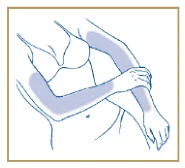
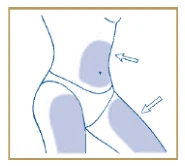
- • Apply the gel over a large area of clean, dry skin (at least 2,000 cm2). This is about 4 times the size of your hand.
- • Repeat the steps above but apply the second amount of gel to a different part of your body.
- • If you are applying ESTROGEL to your arms, use the opposite hand to apply the second amount of gel to the second arm.
- • Allow the gel to dry for 2 minutes before covering the areas you have applied it with clothing.
- • Always replace the pump cover after each use.
Usual dose:
2.5 g of gel (containing about 1.5 g of estradiol) each day. To get this dose, take two full pump actuations. This means you push the pump all the way down twice.
Your healthcare professional may change your dose. This may happen if you:
- experience side effects, like feel breast discomfort or have unexpected bleeding, suggesting the dose is too high or
- your menopausal symptoms are not being controlled, suggesting the dose is too low.
Overdose:
| If you think you, or a person you are caring for, have taken too much ESTROGEL, contact a healthcare professional, hospital emergency department, regional poison control centre or Health Canada’s toll-free number, 1-844 POISON-X (1-844-764-7669) immediately, even if there are no signs or symptoms. |
|---|
When someone accidentally takes too much ESTROGEL, the following symptoms may happen: nausea, breast discomfort, fluid retention, abdominal cramps, headache, dizziness, bloating or vaginal bleeding in women.
Missed Dose:
If a dose of this medication has been missed, it should be taken as soon as possible. However, if it is almost time for the next dose, skip the missed dose and go back to the regular dosing schedule. Do not double dose. If you are not sure, talk to your healthcare professional.
Possible side effects from using ESTROGEL:
These are not all the possible side effects you may have when taking ESTROGEL. If you experience any side effects not listed here, tell your healthcare professional.
Side effects may include:
- headaches
- breast tenderness/swelling, larger breasts
- water retention (bloating, swelling)
- nausea, vomiting, abdominal discomfort (cramps, pressure, pain)
- menstrual cramps
- vaginal itching/discharge
- pain during sexual intercourse
- painful periods, heavy or prolonged menstrual bleeding, bleeding between periods
- change in sexual drive
- pain on urination or difficulty urinating
- premenstrual syndrome (PMS)
- brown, blotchy spots on exposed skin (also called mask of pregnancy)
- skin rash, tender red lumps or nodules or other skin reactions
- skin irritation where ESTROGEL has been applied
- loss of hair, excessive hair growth
- acne
- worsening of varicose veins (visible and bulging veins)
- nervousness, irritability
- fatigue, tiredness
- intolerance to contact lenses
- changes in appetite and body weight
- holding onto extra water, which can cause swelling in the feet and legs.
- pain in the joints, bones, muscles
- vertigo (spinning feeling)
Serious side effects and what to do about them
| Frequency/Side Effect/Symptom | Talk to your healthcare professional | Stop taking this drug and get immediate medical help | |
|---|---|---|---|
| Only if severe | In all cases | ||
| COMMON | |||
| Breast lump | √ | ||
| Unexpected vaginal bleeding: bleeding or spotting between normal periods | √ | ||
| UNCOMMON | |||
| Migraine: severe headache often accompanied by nausea, vomiting and sensitivity to light | √ | ||
| Stroke: sudden severe headache or worsening of headache, vomiting, dizziness, fainting, disturbance of vision or speech, weakness or numbness in an arm, leg or face, sudden confusion, difficulty in walking or loss of balance or coordination | √ | ||
| RARE | |||
| Myocardial infarction (heart attack): pressure or squeezing pain between the shoulder blades, in the chest, jaw, left arm or upper abdomen, shortness of breath, dizziness, fatigue, light-headedness, clammy skin, sweating, indigestion, anxiety, feeling faint and possible irregular heartbeat | √ | ||
| Hypertension (high blood pressure): shortness of breath, fatigue, | √ | ||
| dizziness or fainting, chest pain or pressure, swelling in your ankles and legs, blueish colour to your lips and skin, racing pulse or heart palpitations | |||
| Depression: persistent sad mood, difficulty sleeping or sleeping too much, changes in appetite or weight, feelings of worthlessness, withdrawal from social situations | √ | ||
| Liver problems: yellowing of the skin or eyes (jaundice), right upper stomach pain or swelling, nausea or vomiting, unusual dark urine, unusual tiredness | √ | ||
| VERY RARE | |||
| Endometrial hyperplasia (overgrowth of the lining of the uterus): heavier and/or longer than normal periods, bleeding between periods, vaginal bleeding after menopause | √ | ||
| Heart palpitations: fast or irregular heartbeat, pounding heartbeat | √ | ||
| UNKNOWN | |||
| Deep vein thrombosis (blood clot in the deep veins of the leg or arm): pain, swelling, leg or arm may be warm to the touch and may appear red | √ | ||
| Pulmonary embolism (blood clot in the lung): sharp chest pain that may increase with deep breathing, cough, coughing blood, shortness of breath | √ | ||
| Blood clot in the eye: sudden partial or complete loss of vision | √ | ||
| Gallbladder problems: fever, nausea, vomiting, pain that radiates to your shoulder or back, severe pain in your upper right abdomen | √ | ||
If you have a troublesome symptom or side effect that is not listed here or becomes bad enough to interfere with your daily activities, tell your healthcare professional.
Reporting Side Effects
You can report any suspected side effects associated with the use of health products to Health Canada by:
NOTE: Contact your health professional if you need information about how to manage your side effects. The Canada Vigilance Program does not provide medical advice. |
Storage:
ESTROGEL should be stored with the pump cover on securely and at room temperature (15-30°C).
Keep out of reach and sight of children.
If you want more information about ESTROGEL:
- Talk to your healthcare professional
- Find the full product monograph that is prepared for healthcare professionals and includes this Patient Medication Information by visiting the Health Canada website https://www.canada.ca/en/health-canada/services/drugs-health-products/drug-products/drug-product-database.html or the Organon Canada website www.organon.ca or by calling Organon Canada at 1-844-820-5468.
Date of Authorization: 2026-07-23
® N.V. Organon. Used under license.
© 2026 Organon group of companies. All rights reserved.