


Patient Medication Information: uses, side effects, how to take - Vagifem
ABOUT THIS MEDICATION
What the medication is used for:
Vagifem® (estradiol vaginal tablets) is used for the treatment of the symptoms of atrophic vaginitis due to estrogen deficiency.
Addition of a progestin is not recommended.
Vagifem® should be used only under the supervision of a doctor, with regular follow-up at least once a year to identify side effects associated with its use. Your first follow-up visit should be within 3 to 6 months of starting treatment. Your visit may include a blood pressure check, a breast exam, a Pap smear and pelvic exam. You should have a mammogram before starting treatment and at regular intervals as recommended by your doctor. Your doctor may recommend some blood tests.
You should carefully discuss the risks and benefits of hormone therapy (HT) with your doctor. You should regularly talk with your doctor about whether you still need treatment with HT.
What it does:
Vagifem® provides estrogen in and around the vagina. This helps to reduce dryness and discomfort you are experiencing in the urinary and genital area. Estrogen is made in your body by your ovaries. At some point, usually between the ages of 45 and 55, the ovaries decrease the amount of estrogen produced or stop producing estrogen all together. At this time, women go through the “change of life” or menopause. Monthly periods stop. Some women experience irritating feelings of warmth, heat and sweating (hot flashes).
Others find that the tissues of the vagina and urinary tract become thin and dry. This can be very uncomfortable and you may feel itching, burning and pain. Some women feel pain during sex. The same feelings may occur if the ovaries are surgically removed.
When it should not be used:
Vagifem® should NOT be used under these conditions:
Known or suspected estrogen-dependent carcinoma
- Overgrowth of the lining of the uterus (endometrial hyperplasia)
- Known or suspected, or past history of breast cancer
- Unexpected or unusual vaginal bleeding
Known or suspected pregnancy
- Breast feeding
- Have or have had blood clot disorders, including blood clots in the leg, lung or thrombophlebitis
Allergic to estradiol or any of the ingredients in
Vagifem®
What the medicinal ingredient is:
17ß-Estradiol
What the important nonmedicinal ingredients are:
Lactose, maize starch, methylhydroxypropylcellulose, magnesium stearate and polyethylene glycol 6000
What dosage forms it comes in:
Vagifem® is available as vaginal tablets, supplied in cartons of 15 vaginal tablets. Each tablet is pre-loaded into the applicator and contains 25 µg estradiol.
Carcinogenesis and Mutagenesis
Breast Cancer
The results of the WHI trial indicated no difference in the risk of breast cancer in post-menopausal women with prior hysterectomy taking oral estrogen-alone compared to women taking placebo.
Estrogens should not be taken by women who have a personal history of breast cancer.
In addition, women with a family history of breast cancer or women with a history of breast lumps, breast biopsies or abnormal mammograms (breast x-rays) should consult with their doctor before starting HT.
WARNINGS AND PRECAUTIONS
Women should have a mammogram before starting HT and at regular intervals during treatment as recommended by their doctor.
Regular breast examinations by a doctor and regular breast self-examinations are recommended for all women. You should review technique for breast self-examination with your doctor.
Overgrowth of the lining of the uterus and cancer of the uterus
Vagifem has not been shown to increase risk of overgrowth of the lining of the uterus and cancer of the uterus.
Ovarian Cancer:
Use of estrogen alone and estrogen plus progestin therapies for 5 or more years has been associated with increased risk of ovarian cancer.
Heart Disease and Stroke
The results of the WHI trial indicated an increased risk of stroke and coronary heart disease in post-menopausal women taking combined oral estrogen plus progestin compared to women taking placebo.
In postmenopausal women taking oral estrogen-alone HT, the results of the WHI indicated an increased risk of stroke, but no difference in the risk of coronary heart disease in post-menopausal women with prior hysterectomy taking oral estrogen-alone compared to women taking placebo.
Abnormal Blood Clotting
Use of oral estrogen with or without progestin by menopausal woman is associated with increased risk of blood clots.
The risk of blood clots also increases with age, if you or a family member has had blood clots, if you smoke or if you are severely overweight. The risk of blood clots is also temporarily increased if you are immobilized for long periods of time and following major surgery. You should discuss risk factors for blood clots with your doctor since blood clots can be life-threatening or cause serious disability.
Gallbladder Disease
The use of oral estrogens by postmenopausal women has been associated with an increased risk of gallbladder disease requiring surgery.
Dementia
Use of combined oral estrogen plus progestin in women age 65 and over is associated with increased risk of probable dementia.
BEFORE you use Vagifem® talk to your doctor or pharmacist if you:
- have a history of allergy or intolerance to any medications or other substances
- have a personal history of breast disease (including breast lumps) and/or breast biopsies, or a family history of breast cancer
- have experienced any unusual or undiagnosed vaginal bleeding
- have a history of uterine fibroids or endometriosis
- have a history of liver disease, jaundice (yellowing of the eyes and/or skin) or itching related to estrogen use or during pregnancy
- have a history of migraine headache
- have a history of high blood pressure
- have a personal or family history of blood clots, or a personal history of heart disease or stroke
have a history of kidney disease, asthma or epilepsy
(seizures)
- have been diagnosed with diabetes
- are pregnant or may be pregnant
- If you think you may have a vaginal infection
INTERACTIONS WITH THIS MEDICATION
Tell your doctor or pharmacist if you are taking any other medications, including prescription medications, over-the-counter medications, vitamins or herbal products.
PROPER USE OF THIS MEDICATION
Usual dose:
In order to prevent injury, you need to be shown how to use Vagifem® correctly. Ask your doctor or pharmacist to demonstrate the proper use of Vagifem® applicator.
You can start using Vagifem® on any day of the week at any time of day you like. Once started, it is recommended that Vagifem® be used at that same time each day. Use 1 vaginal tablet each day for the first 2 weeks (7 vaginal tablets per week. A total of 14 vaginal tablets). Then, use 1 vaginal tablet twice a week with 3 or 4 days between doses (2 vaginal tablets per week).
The vaginal tablet is pre-loaded into the applicator. You can see this through the plastic bubble in the package.
- 1. Wash your hands.
- 2.
Push the Vagifem® applicator through the foil backing (not
through the plastic bubble) that says Vagifem® and Novo Nordisk.
- 3.
Choose the position that is most comfortable for you. You
may want to:
- sit on the edge of a chair with your knees apart,
stand up with one foot raised on the edge of the tub or
bed,
- squat
- lie down.
Inserting Vagifem® is like inserting a tampon.
- 4.
Hold the applicator with your thumb and middle finger.
Leave your index finger free to press the applicator plunger.
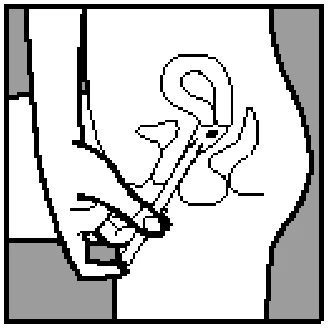
- 5. With your free hand, hold open the skin at the vaginal opening.
- 6. Gently slide the vaginal tablet end of the applicator into the vagina as far as it will comfortably go. This will be no more than 8 cm. Aim towards your lower back. DO NOT FORCE. You do not need to insert the entire applicator into your body. The plunger end of the applicator will be outside your body. The words Vagifem® and Novo Nordisk on the applicator will be outside your body.
- 7.
Use your index finger to gently push the plunger. This will
release the vaginal tablet from the applicator onto the vaginal tissues. You will hear a clicking sound when the tablet is released.
- 8.
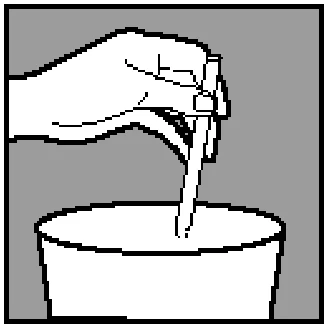
Withdraw the applicator and discard in a waste basket. Do not
flush the applicator down the toilet.
If Vagifem® is expelled immediately after use, it is recommended to insert another vaginal tablet.
Overdose:
No cases of overdose have been reported. In general, excessive doses of estrogen may result in nausea, vomiting, abdominal cramps, headache, dizziness, and general ill feeling (malaise). Call your doctor if you suspect an overdose.
Missed Dose:
If a dose is forgotten, it should be taken as soon as the patient remembers. A double dose should be avoided.
SIDE EFFECTS AND WHAT TO DO ABOUT THEM
The following side effects were reported during clinical trials conducted on Vagifem®.
- Genital infection with a fungus or vaginal inflammation
- Headache
- Nausea
Abdominal pain (stomach), distension or discomfort
- Indigestion
- Vomiting
- Flatulence
- Vaginal bleeding, discharge or discomfort
- Breast edema, breast enlargement, breast pain or pain tenderness
- Peripheral edema (swelling of arms or legs)
- Upper respiratory tract infection (URI) and influenza
- Back pain
The following side effects were reported voluntarily by patients who used Vagifem®; hence, it is not possible to estimate their frequency or to establish a relationship with Vagifem®:
- Breast cancer
- Cancer of the lining of the uterus (endometrial cancer)
- Hypersensitivity (allergic reactions)
- Fluid retention
- Insomnia
- Depression
- Deterioration of present migraine
- Blood clots (deep venous thrombosis)
- Diarrhea
- Hives
- Rash
- Itching in and around the vagina (genital pruritus)
- Excessive growth of the lining of the womb (endometrial hyperplasia)
- Vaginal irritation, vaginal pain, painful spasm of the vagina or vaginal ulceration
- Drug ineffective
- Weight increase
- Increase in blood estrogen
Although Vagifem® is only used in the vagina to treat local urogenital symptoms of menopause, the risks associated with oral estrogen therapy in general should be taken into account.
SERIOUS SIDE EFFECTS, HOW OFTEN THEY HAPPEN AND WHAT TO DO ABOUT THEM | ||||
How often they happen | Symptom/possible side effect | Talk with your doctor or pharmacist | Stop taking drug and call your doctor | |
| Only if severe | In all cases | |||
| Common | Abdominal pain, nausea or vomiting | |||
| Uncommon | Breast lump | |||
| Uncommon | Crushing chest pain or chest heaviness | |||
| Uncommon | Pain or swelling in the leg | |||
| Uncommon | Persistent sad mood | |||
| Uncommon | Sharp pain in the chest, coughing blood or sudden shortness of breath | |||
| Uncommon | Sudden partial or complete loss of vision | |||
| Uncommon | Sudden severe headache or worsening of headache, vomiting, dizziness, fainting, disturbance of vision or speech or weakness or numbness in an arm or leg | |||
| Common | Unexpected vaginal bleeding | |||
| Uncommon | Yellowing of the skin or eyes (jaundice) | |||
| Uncommon | Hypersensitivity | |||
These are not all the possible side effects of Vagifem®. For more information, ask your health care provider or pharmacist.
HOW TO STORE IT
Keep out of the reach of children. Keep Vagifem® at room temperature, between 15 and 30°C (59 - 86°F), away from heat and humidity. Do not refrigerate. Store away from direct sunlight. Do not store any of your medications near the cooking area of the kitchen, the shower area of the bathroom, or the glove compartment of your car as the temperature in these areas may go above normal room temperature from time to time.
Do not use Vagifem® after the expiration date printed on the package.
Speak to your doctor or pharmacist if you have further questions after reading this information.
REPORTING SUSPECTED SIDE EFFECTS
To monitor drug safety, Health Canada through the Canada Vigilance Program collects information on serious and unexpected side effects of drugs. If you suspect you have had a serious or unexpected reaction to this drug you may notify Canada Vigilance:
By toll-free telephone: 1-866-234-2345
By toll -free fax: 1-866-678-6789
Online: www.healthcanada.gc.ca/medeffect By email: CanadaVigilance@hc-sc.gc.ca
By regular mail:
Canada Vigilance National Office
Marketed Health Products Safety and Effectiveness Information Bureau
Marketed Health Products Directorate
Health Products and Food Branch
Health Canada
Tunney’s Pasture, AL 0701C
Ottawa ON K1A 0K9
NOTE: Should you require information related to the management of the side effect, please contact your health care provider before notifying Canada Vigilance. The Canada Vigilance Program does not provide medical advice.
MORE INFORMATION
This document plus the full product monograph, prepared for health professionals can be obtained by contacting the sponsor, Novo Nordisk Canada, at 1-800-465-4334