


Patient Medication Information: uses, side effects, how to take - Divigel (Teva Canada)
ABOUT THIS MEDICATION
What the medication is used for:
DIVIGEL is approved for the replacement of estrogen in menopausal women with symptoms of menopause, which may include hot flushes, disturbed sleep and vaginal dryness.
DIVIGEL should not be used by women with an intact uterus unless it is prescribed in association with a progestin.
Divigel should be used only under the supervision of a doctor, with regular follow-up at least once a year to identify side effects associated with its use. Your first follow-up visit should be within 3 to 6 months of starting treatment. Your visit may include a blood pressure check, a breast exam, a Pap smear and pelvic exam. You should have a mammogram before starting treatment and at regular intervals as recommended by your doctor. Your doctor may recommend some blood tests.
You should carefully discuss the risks and benefits of hormone replacement therapy (HRT) with your doctor. You should regularly talk with your doctor about whether you still need treatment with HRT.
What it does:
ABOUT MENOPAUSE
Menopause is not a disease. Menopause is a natural phase in a women’s life when the ovaries decrease their production of the female hormones, estrogen and progesterone. In most women, this occurs between the ages of 45 and 55 or sooner if the ovaries have been removed by surgery.
The symptoms associated with menopause vary for every woman. The most common symptom is hot flushes/flashes.
Other symptoms some women may develop during menopause include insomnia (reduced quality of sleep) and vaginal atrophy (dryness). Your doctor can provide you with further information about menopause.
The active ingredient is DIVIGEL is estradiol, a natural female hormone. In healthy women of childbearing age, estradiol is the main estrogen produced by the ovaries.
DIVIGEL does not contain progestins.
For information on the dose and how frequently it should be taken, please see PROPER USE OF THIS MEDICATION below.
When it should not be used:
Do not use DIVIGEL if you:
- have liver disease
- have a personal history of breast cancer or endometrial cancer (cancer of the uterus)
have been diagnosed with endometrial hyperplasia
(overgrowth of the lining of the uterus)
- have experienced undiagnosed or unexpected vaginal bleeding
are pregnant or suspect you may be pregnant;
- are breast feeding
- have a history of coronary heart disease (including heart attack) or stroke
- experience migraine headaches
- have a history of blood clots
- have active thrombophlebitis (inflammation of the veins)
- have had partial or complete loss of vision due to blood vessel disease of the eye
- known or suspected hormone dependent cancer
- have had an allergic or unusual reaction to DIVIGEL or to an of its ingredients (see information below on medicinal and nonmedicinal ingredients)
What the medicinal ingredient is:
Estradiol 0.1%.
What the important nonmedicinal ingredients are:
Carbomer, ethanol, propylene glycol, purified water and triethanolamine.
What dosage forms it comes in:
DIVIGEL is packaged in single dose foil pouches.
Divigel is supplied:
Carton of 30 packets, 0.25 mg
Carton of 30 packets, 0.5 mg
Carton of 30 packets, 1.0 mg
WARNINGS AND PRECAUTIONS
Serious Warnings and Precautions
The Women’s Health Initiative (WHI) trial is a large clinical study that assessed the benefits and risks of oral combined estrogen plus progestin therapy and oral estrogen-alone therapy compared with placebo (a pill with no active ingredients) in postmenopausal women.
The WHI trial indicated an increased risk of myocardial infarction (heart attack), stroke, breast cancer, pulmonary emboli (blood clots in the lungs) and deep vein thrombosis (blood clots in the large veins) in postmenopausal women taking oral combined estrogen plus progestin.
The WHI trial indicated an increased risk of stroke and deep vein thrombosis in postmenopausal women with prior hysterectomy (surgical removal of the uterus) taking oral estrogen-alone.
Therefore, you should carefully consider the following:
There is an increased risk of developing invasive breast
cancer, heart attack, stroke and blood clots in both lungs and large veins with the use of estrogen plus progestin therapy.
There is an increased risk of stroke and blood clots in the
large veins with the use of estrogen-alone therapy.
Estrogens with or without progestins should not be used to
prevent heart disease or stroke.
Estrogens with or without progestins should be used at the
lowest effective dose and for the shortest period of time possible. Regular medical follow-up is advised.
Breast Cancer
The results of the WHI trial indicated an increased risk of breast cancer in post-menopausal women taking combined estrogen plus progestin compared to women taking placebo.
The results of the WHI trial indicated no difference in the risk of breast cancer in post-menopausal women with prior hysterectomy taking estrogen-alone compared to women taking placebo.
Estrogens with or without progestins should not be taken by women who have a personal history of breast cancer. In addition, women with a family history of breast cancer or women with a history of breast lumps, breast biopsies or abnormal mammograms (breast x-rays) should consult with their doctor before starting HRT.
Women should have a mammogram before starting HRT and at regular intervals during treatment as recommended by their doctor.
Regular breast examinations by a doctor and regular breast self-examinations are recommended for all women. You should review the technique for breast self-examination with your doctor.
Overgrowth of the lining of the uterus and cancer of the uterus
Ovarian Cancer:
In some studies the use of estrogen-alone therapy and estrogen plus progestin therapies for 5 or more years has been associated with an increased risk of ovarian cancer.
The use of estrogen-alone therapy by post menopausal women who still have a uterus increases the risk of developing endometrial hyperplasia (overgrowth of the lining of the uterus), which increases the risk of endometrial cancer (cancer of the lining of the uterus).
If you plan to take estrogen therapy and you still have your uterus, you should take a progestin medication (another hormone drug) regularly for a certain number of days of each month to reduce the risk of endometrial hyperplasia.
You should discuss progestin therapy and risk factors for endometrial hyperplasia and endometrial carcinoma with your doctor. You should also report any unexpected or unusual vaginal bleeding to your doctor.
If you have had your uterus removed, you are not at risk of developing endometrial hyperplasia or endometrial carcinoma. Progestin therapy is therefore not generally required in women who have had a hysterectomy.
Heart Disease and Stroke
The results of the WHI trial indicated an increased risk of stroke and coronary heart disease in post-menopausal women taking combined estrogen plus progestin compared to women taking placebo.
The results of the WHI trial indicated an increased risk of stroke, but no difference in the risk of coronary heart disease in post-menopausal women with prior hysterectomy taking estrogen-alone compared to women taking placebo.
Abnormal Blood Clotting
The results of the WHI trial indicated an increased risk of blood clots in the lungs and large veins in post-menopausal women taking combined estrogen plus progestin compared to women taking placebo.
The results of the WHI trial indicated an increased risk of blood clots in the large veins, but no difference in the risk of blood clots in the lungs in post-menopausal women with prior hysterectomy taking estrogen-alone compared to women taking placebo.
The risk of blood clots also increases with age, if you or a family member has had blood clots, if you smoke or if you are severely overweight. The risk of blood clots is also temporarily increased 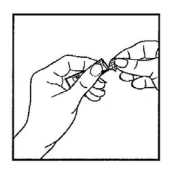
if you are immobilized for long periods of time and following major surgery. You should discuss risk factors for blood clots with your doctor since blood clots can be life-threatening or cause serious disability.
Gallbladder Disease
The use of estrogens by postmenopausal women has been associated with an increased risk of gallbladder disease requiring surgery.
Dementia
The Women's Health Initiative Memory Study (WHIMS) was a substudy of the WHI trial and indicated an increased risk of dementia (loss of memory and intellectual function) in post-menopausal women age 65 and over taking oral combined estrogen plus progestin compared to women taking placebo.
The WHIMS indicated no difference in the risk of dementia in post-menopausal women age 65 and over with prior hysterectomy taking oral estrogen-alone compared to women taking placebo.
BEFORE you use DIVIGEL, talk to your doctor or pharmacist if you:
have a history of allergy or intolerance to any medications or
other substances
have a personal history of breast disease (including breast
lumps) and/or breast biopsies, or a family history of breast cancer
have experienced any unusual or undiagnosed vaginal
bleeding
- have a history of uterine fibroids or endometriosis
have a history of liver disease, jaundice (yellowing of the
eyes and/or skin) or itching related to estrogen use or during pregnancy
- have a history of migraine headache
- have a history of high blood pressure
have a personal or family history of blood clots, or a personal
history of heart disease or stroke
have a history of kidney disease, asthma or epilepsy
(seizures)
have a history of bone disease (this includes certain
metabolic conditions or cancers that can affect blood levels of calcium and phosphorus)
- have been diagnosed with diabetes
have been diagnosed with porphyria (a disease of blood
pigment)
- have a history of high cholesterol or high triglycerides
- are pregnant or may be pregnant
- have had a hysterectomy (surgical removal of the uterus);
- smoke
- have a thyroid problem (hypothyroidism)
INTERACTIONS WITH THIS MEDICATION
Drugs that may interact with DIVIGEL include: Barbiturates, hydantoins, carbamazepine, meprobamate, phenylbutazone or rifampin, atorvastin, antibiotics, aminoglutethimide, some herbal products (e.g., St. John’s Wort),
phenobarbital, phenytoin, troglitazone, ascorbic acid, acetaminophen, oral contraceptives containing ethinyl estradiol, progestin.
Estrogens may diminish the effectiveness of anticoagulant (substances that prevent coagulation), antidiabetic (drugs treating diabetes mellitus) and antihypertensive agents (drugs treating high blood pressure).
Tell your doctor or pharmacist if you are taking any other medications, including prescription medications, over-the-counter medications, vitamins or herbal products.
PROPER USE OF THIS MEDICATION
How should DIVIGEL be applied?
DIVIGEL should be applied once a day, around the same time each day.
Apply DIVIGEL to clean, dry, and unbroken (without cuts or scrapes) skin. If you take a bath or shower, be sure to apply your DIVIGEL after your skin is dry. The application site should be completely dry before dressing or swimming.
Apply DIVIGEL to either your left or right upper thigh. Change between your left and right upper thigh each day to help prevent skin irritation.
How and when to apply DIVIGEL:
- 1. Wash and dry your hands thoroughly.
- 2. Sit in a comfortable position.
- 3.
Cut or tear the DIVIGEL packet as shown in Diagram 1.
Diagram 1
- 4.
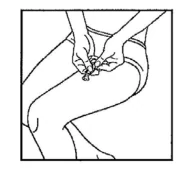
Using your thumb and index finger, squeeze the entire contents of the packet onto the skin of the upper thigh as shown in Diagram 2.
Diagram 2
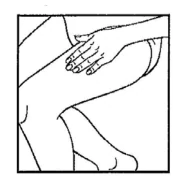
Gently spread the gel in a thin layer on your upper thigh over an area of about 5 by 7 inches, or two palm prints as shown in Diagram 3. It is not necessary to massage or rub in DIVIGEL.
Diagram 3
- 5. Allow the gel to dry completely before dressing.
- 6. Dispose of the empty DIVIGEL packet in the trash.
- 7.
Wash your hands with soap and water immediately after
applying DIVIGEL to remove any remaining gel and reduce the chance of transferring DIVIGEL to other people.
Important things to remember when using DIVIGEL®
- Wash your hands with soap and water after applying the gel to reduce the chance that the medicine will be spread from your hands to other people
Allow the gel to dry before dressing. Try to keep the
area dry for as long as possible
Do not allow others to come in contact with the area of
skin where you applied the gel for at least one hour after you apply Divigel
You should not allow others to apply the gel for you.
However, if this is necessary, the individual should wear a disposable plastic glove to avoid direct contact with Divigel
Do not apply Divigel to your face, breast, or irritated
skin. If you get Divigel in your eyes, flush your eyes right away with lukewarm tap water.
- Never apply Divigel in or around the vagina
- Divigel contains alcohol. Alcohol based gels are flammable. Avoid fire, flame or smoking until the gel has dried
Overdose:
In the case of accidental overdosage or ingestion (swallowing) of Divigel, contact your doctor and/or your
local Poison Control Cenre.
Missed Dose:
If you miss a dose, do not double the dose on the next day to catch up. If your next dose is less than 12 hours away, it is best just to wait and apply your normal dose the next day. If it is more than 12 hours until the next dose, apply the dose you missed and resume your normal dosing the next day. Do not apply Divigel more than once each day. If you accidentally spill some of the contents of a Divigel packet, do not open a new packet. Wait and apply your normal dose the next day.
SIDE EFFECTS AND WHAT TO DO ABOUT THEM
Adverse drug reactions occur most commonly during the first months of treatment. They are usually mild and subside with
continued treatment. Very rarely skin irritation can occur with DIVIGEL. Using alternate thighs for each dosing is recommended.
The following side effects generally do not require medical attention, and will go away as your body adjusts to DIVIGEL:
Common: headache, breast pain, breast tenderness, bloating, weight increase, nausea/vomiting, abdominal pain (cramping), skin irritation.
Uncommon: Migraine, changes in mood.
If you think you are reacting poorly to Divigel or are having other problems, please tell your doctor.
| SERIOUS SIDE EFFECTS, HOW OFTEN THEY HAPPEN AND WHAT TO DO ABOUT THEM | ||||
| Symptom / effect | Talk with your doctor or pharmacist | Stop taking drug and call your doctor or pharmacist | ||
| Only if severe | In all cases | |||
| Frequency | Abdominal pain, nausea or vomiting | √ | ||
| Breast lump | √ | |||
| Crushing chest pain or chest heaviness | √ | |||
| Pain or swelling in the leg | √ | |||
| Persistent sad mood | √ | |||
| Sharp pain in the chest, coughing blood or sudden shortness of breath | √ | |||
| Sudden partial or complete loss of vision | √ | |||
Sudden severe headache or worsening of headache, vomiting, dizziness, fainting, disturbance of vision or speech or weakness or numbness in an arm or leg | √ | |||
| Unexpected vaginal bleed | √ | |||
| Yellowing of the skin or eyes (jaundice) | √ | |||
This is not a complete list of side effects. For any unexpected effects while taking DIVIGEL, contact your doctor or pharmacist.
HOW TO STORE IT
Store at controlled room temperature of 15 to 30°C.
Keep out of the reach of children.
REPORTING SUSPECTED SIDE EFFECTS
To monitor drug safety, Health Canada through the Vigilance Program collects information on serious and unexpected side effects of drugs. If you suspect you have had a serious or unexpected reaction to this drug you may notify Canada Vigilance:
You can report any suspected adverse reactions associated with the use of health products to the Canada Vigilance Program by one of the following 3 ways:
Report online at www.healthcanada.gc.ca/medeffect Call toll-free at 1-866-234-2345
Complete a Canada Vigilance Reporting Form and:
- Fax toll-free to 1-866-678-6789, or
Mail to: Canada Vigilance Program Health Canada
Postal Locator 0701E
Ottawa, ON K1A 0K9
Postage paid labels, Canada Vigilance
Reporting Form and the adverse reaction reporting guidelines are available on the MedEffect™ Canada Web site at www.healthcanada.gc.ca/medeffect.
NOTE: Should you require information related to the management of the side effect, please contact your health care provider before notifying Canada Vigilance. The Canada Vigilance program does not provide medical advice.
MORE INFORMATION
This document plus the full product monograph, prepared for health professionals, can be found by contacting the sponsor, http://www.tevacanadainnovation.ca
or by contacting the sponsor, Teva Canada Innovation, at: 1-855-519-8382