


Product Monograph - Fenomax
SUMMARY PRODUCT INFORMATION
Route of Administration | Dosage Form / Strength | Clinically Relevant Nonmedicinal Ingredients |
| Oral | Capsules, 100 mg and 160 mg | Lauroyl macrogol glyceride, polyethylene glycol, hydroxypropylcellulose, and sodium starch glycolate. The capsule shells contain titanium dioxide and gelatin. |
INDICATIONS AND CLINICAL USE
Fenomax™ is indicated as an adjunct to diet, at least equivalent to the Adults Treatment Panel III (ATP III) and Therapeutic Lifestyle Changes (TLC) diet and other therapeutic measures when the response to diet and other measures has been inadequate for:
- 1. Treatment of patients including patients with type 2 diabetes (non-insulin dependent), with dyslipoproteinemia, hypercholesterolemia, Fredrickson classification Types IIa and IIb mixed hyperlipidemia, to regulate lipid levels (reduce serum triglycerides and LDL cholesterol levels and increase HDL cholesterol).
- 2.
Treatment of adult patients with very high serum triglyceride levels, Fredrickson classification
Type IV and Type V hyperlipidemia, who are at a high risk of sequelae and complications (i.e. pancreatitis) from their hyperlipidemia.
Fenomax™ alone may not be adequate therapy in some patients with familial combined hyperlipidemia with Type IIb and Type IV hyperlipoproteinemia.
Fenomax™ is not indicated for treatment of Type I hyperlipoproteinemia.
Geriatrics (> 65 years of age):
Fenomax™ is also indicated in geriatric patients. Very minor changes in pharmacokinetic parameters were observed in elderly subjects.
Pediatrics (< 18 years of age):
Safety and effectiveness have not been established in this population. See WARNINGS.
CONTRAINDICATIONS
- 1. Hepatic or severe renal dysfunction (creatinine clearance < 20ml/min), including primary biliary cirrhosis.
- 2. Preexisting gallbladder disease (see WARNINGS).
- 3. Hypersensitivity to fenofibrate, any component of this medication, or other drugs of the fibrate class.
- 4. The drug should not be used in pregnant or lactating patients.
- 5. Known photoallergy or phototoxic reaction during treatment with fibrates or ketoprofen.
WARNINGS AND PRECAUTIONS
General
Initial therapy: Before instituting fenofibrate therapy, attempts should be made to control serum lipids with appropriate diet, exercise and weight loss in obese patients. Other medical problems, such as diabetes mellitus and hypothyroidism, should also be controlled. In patients at high risk, consideration should be given to the control of other risk factors such as smoking, excessive alcohol intake, hormonal contraceptive use and inadequately controlled hypertension.
Long-term therapy: Because long-term administration of fenofibrate is recommended, the potential risks and benefits should be carefully weighed. Adequate pretreatment laboratory studies should be performed to ensure that patients have elevated serum cholesterol and/or triglycerides or low HDL-cholesterol levels. Periodic determination of serum lipids, fasting glucose, creatinine and ALT (SGPT) should be considered during fenofibrate treatment, particularly during the first months of therapy.
Carcinogenesis and Mutagenesis
In long-term animal toxicity and carcinogenicity studies fenofibrate has been shown to be tumorigenic for the liver in male rats at 12 times the human dose. At this dose level in male rats there was also an increase in benign Leydig cell tumors. Pancreatic acinar cell tumors were increased in male rats at 9 and 40 times the human dose. However, mice and female rats were unaffected at similar doses. Florid-hepato-cellular peroxisome proliferation has been observed following fenofibrate administration to rats. Such changes have not been found in the human liver after up to 3.5 years of fenofibrate administration.
Cardiovascular
Not applicable.
Dependence/Tolerance
Not applicable.
Ear/Nose/Throat
Not applicable.
Endocrine and Metabolism
Not applicable.
Gastrointestinal
Not applicable.
Genitourinary
Not applicable.
Hematologic
Mild hemoglobin, haematocrit and white blood cell decreases have been observed occasionally in patients following initiation of fenofibrate therapy. However, these levels stabilize during long-term administration. Periodic blood counts are recommended during the first 12 months of fenofibrate administration.
Hepatic/Biliary/Pancreatic
In patients with a past history of jaundice or hepatic disorder, fenofibrate should be used with caution.
Fenofibrate may increase cholesterol excretion into the bile, and may lead to cholelithiasis. If cholelithiasis is suspected, gallbladder studies are indicated. Fenomax™ therapy should be discontinued if gallstones are found.
In common with some other fibrates, pancreatitis has been reported in patients taking fenofibrate. This occurrence may represent a failure of efficacy in patients with severe hypertriglyceridemia, a direct drug effect, or a secondary phenomenon mediated through biliary tract stone or sludge formation with obstruction of the common bile duct.
Immune
Not applicable.
Neurologic
Not applicable.
Ophthalmologic
Not applicable.
Peri-Operative Considerations
Not applicable.
Psychiatric
Not applicable.
Renal
In patients with hypoalbuminemia, e.g., nephrotic syndrome, and in patients with renal insufficiency, the dosage of fibrates must be reduced and renal function should be monitored regularly. Fenofibrate is not removed by hemodialysis and should not be used in dialysis patients.
Respiratory
Not applicable.
Sensitivity/Resistance
Not applicable.
Sexual Function/Reproduction
Standard tests for teratology, fertility and peri-and post-natal effects in animals have shown a relative absence of risk; however, embryo-toxicity has occurred in animals at maternally toxic doses.
Skeletal Muscle
Treatment with drugs of the fibrate class has been associated on rare occasions with rhabdomyolysis or myositis, usually in patients with impaired renal function. Myopathy should be considered in any patient with diffuse myalgias, muscle tenderness or weakness, and/or marked elevation of creatine phosphokinase levels.
Patients should be advised to promptly report unexplained muscle pain, tenderness or weakness, particularly if accompanied by malaise or fever. CPK levels should be assessed in patients reporting these symptoms, and fenofibrate therapy should be discontinued if markedly elevated CPK levels (10 times the upper limit of normal) occur or myopathy is diagnosed.
Skin
Not applicable.
Special Populations
Pregnant Women: Strict birth control procedures must be exercised by women of childbearing potential. If pregnancy occurs despite birth control procedures, Fenomax™ should be discontinued. Women who are planning pregnancy should discontinue Fenomax™ several months prior to conception.
Nursing Women: in the absence of information concerning the presence of fenofibrate in human breast milk, Fenomax™ should not be used by nursing mothers.
Pediatrics (< 18 years of age): Limited experience is available in children and adolescents, at the dose of 5 mg/kg/day fenofibrate non-micronized formulation. However, safety and effectiveness have not been established in this sub-population (see selected bibliography).
Geriatrics (> 65 years of age): No specific warnings or precautions.
Monitoring and Laboratory Tests
Abnormal liver function tests have been observed occasionally during fenofibrate administration, including elevations of transaminases, and decreases or, rarely, increases in alkaline phosphatase. However, these abnormalities disappear when therapy with fenofibrate is discontinued. Therefore, periodic liver function tests (AST [SGOT], ALT [SGPT] and GGT [if originally elevated]) in
addition to other baseline tests are recommended after 3 to 6 months and at least yearly thereafter. Fenomax™ should be terminated if abnormalities persist.
ADVERSE REACTIONS
Adverse Drug Reaction Overview
Clinical adverse effects of fenofibrate therapy have been reported at an incidence between 2 and 15% with a mean of 6.3% in European trials of less than 12 months duration. In longer term studies, the incidence was between 7 and 14% with a mean of 11.3%. The most frequently reported adverse events include: gastrointestinal (epigastric distress, flatulence, abdominal pain, nausea, diarrhea, constipation), dermatologic (erythema, pruritus, urticaria), musculoskeletal (muscle pain and weakness, arthralgia), central nervous system (headache, dizziness, insomnia), miscellaneous (decreased libido, hair loss, weight loss).
Clinical Trial Adverse Drug Reactions
In two open, non- controlled clinical studies conducted in Canada and Germany, a total of 375 patients on fenofibrate, microcoated formulation, were evaluated for adverse events. Listed in Table 1 are the adverse events possibly or probably related to fenofibrate, microcoated formulation and reported by more than 0.5% of the patients.
Table 1: Number (%) of patients reporting adverse events possibly or probably related to fenofibrate
Canadian and German multicenter studies (12-week treatment) |
Adverse Events
microcoated fenofibrate (n = 375) | |
Digestive system Gastrointestinal disorder Nausea Flatulence Diarrhea Liver function tests abnormal Dyspepsia Gastritis Constipation | 4 (1.1%) 3 (0.8%) 2 (0.5%) 2 (0.5%) 2 (0.5%) 2 (0.5%) 2 (0.5%) 2 (0.5%) |
Body as a whole Abdominal pain Headache Asthenia Lab test abnormal | 4 (1.1%) 2 (0.5%) 2 (0.5%) 2 (0.5%) |
Metabolic and Nutritional Disorders ALT increased (> 3 x ULN) AST increased (> 3 x ULN) Creatine kinase increased (> 5 x ULN) | 3 (0.8%) 4 (1.1%) 1 (0.3%) |
Nervous system Dizziness Libido decreased | 2 (0.5%) 2 (0.5%) |
Less Common Clinical Trial Adverse Drug Reactions (<1%)
No information available.
Abnormal Hematologic and Clinical Chemistry Findings
In most trials, sporadic and transient increases in aminotransferase levels have been associated with the use of fenofibrate. The reported frequency of AST [SGOT] and ALT [SGPT] elevations was variable; in the clinical studies conducted in Canada and Germany elevations above three times the upper limit of normal were observed in 2.0% of the patients treated with fenofibrate, microcoated formulation. In two dose-ranging studies, the incidence of increases in transaminases (>3 x ULN) due to fenofibrate therapy appears to be dose related; 0.6% (80 mg tablet), 1.9% (160 mg tablet) and 4.0% (240 mg tablet). Values usually return to normal without interruption of treatment. (see WARNINGS AND PRECAUTIONS). Reductions in alkaline phosphatase levels have also been observed.
Mild decreases in hemoglobin, haematocrit, and white blood cell counts have been observed occasionally in patients following initiation of fenofibrate therapy but these observations were without clinical significance. However, these levels stabilize during long-term administration. In addition, a decrease in haptoglobin concentration has been observed in some patients with Type IV hyperlipidemia during long-term use of fenofibrate. However, this decrease in haptoglobin was not associated with any other sign of blood dyscrasia and/or haemolysis.
The mean plasma levels of urea and creatinine showed increases, particularly during long-term fenofibrate treatment, most of them remaining within the limits of normal values.
Fenofibrate also has the potential to provoke CPK elevations and changes in haematologic parameters which generally subside when the drug is discontinued (see WARNINGS AND PRECAUTIONS). In the clinical studies conducted in Canada and Germany, the reported frequency of CPK elevations above 5 times the upper limit of normal was approximately 0.3% of the patients treated with fenofibrate, microcoated formulation.
Post-Market Adverse Drug Reactions
Surveillance in countries in which fenofibrate has been marketed for more than 25 years in Europe, indicates that clinical adverse effects reported include gastrointestinal disorders (abdominal pain, nausea, vomiting, diarrhea and flatulence), painful muscles (diffuse myalgia, myositis, cramps, weakness, rhabdomyolysis) , skin reactions such as rashes, pruritus, urticaria, erythema or photosensitivity reactions (with or without erythema, vesiculation or nodulation), loss of weight, impotence, sexual asthenia (rare), diverse nervous complaints, alopecia (rare), interstitial pneumopathies (very rare), gallstones, pancreatitis and hepatitis (jaundice). DRUG INTERACTIONS
Overview
In vitro studies using human liver microsomes indicate that fenofibrate and fenofibric acid are not inhibitors of cytochrome P450 (CYP) isoforms CYP3A4, CYP2D6, CYP2E1, or CYP1A2. They are weak inhibitors of CYP2C19 and CYP2A6, and mild-to-moderate inhibitors of CYP2C9 at therapeutic concentrations.
Drug-Drug Interactions
Table 2- Established or Potential Drug-Drug Interactions
Fenofibrate
| Ref | Effect |
Clinical comment
Oral anticoagulants
| C | 8 INR |
Caution should be exercised when oral anticoagulants are given in conjunction with Fenomax™. The dosage of oral anticoagulant should be reduced to maintain the prothrombin time at the desired level to prevent bleeding complications. Careful monitoring of prothrombin time is therefore
recommended until it has been definitely determined that the prothrombin level has been stabilized.
Statins and cyclosporine
| C | Myositis, Rhabdomyolisis |
Severe myositis and rhabdomyolisis have occurred when a statin or cyclosporine was administered in combined therapy with a fibrate. Therefore, the benefits and risks of using fenofibrate concomitantly with these drugs should be carefully considered.
Resins
| C | Fibrate absorption impaired |
When a fibrate is used concurrently with cholestyramine or any other resin, an interval of at least 2 hours should be maintained between the administration of the two drugs, since the absorption of fibrates is impaired by cholestyramine.
Estrogens
| T | Possible ↑ lipid levels |
Since estrogens may lead to a rise in lipid levels, the prescribing of fibrates in patients taking estrogens or estrogen-containing contraceptives must be critically considered on an individual basis.
Legend: C = Case Study; CT = Clinical Trial; T = Theoretical
Drug-Food Interactions None known.
Drug-Herb Interactions None known.
Drug-Laboratory Interactions None known.
Drug-Lifestyle Interactions
None known.
DOSAGE AND ADMINISTRATION
Dosing Considerations
Patients should be placed on a standard cholesterol-lowering diet (at least equivalent to the Adult Treatment Panel III (ATP III TLC diet)) before receiving Fenomax™, and should continue on this diet during treatment with Fenomax™. If appropriate, a program of weight control and physical exercise should be implemented.
Prior to initiating therapy with Fenomax™, secondary causes for elevations in plasma lipid levels should be excluded. A lipid profile should also be performed.
If a significant serum lipid response is not obtained in three months, Fenomax™ should be discontinued.
Recommended Dose and Dosage Adjustment
The recommended dose for Fenomax™ in adults is 160 mg daily. The maximum recommended total daily dose of Fenomax™ is 200 mg.
In patients with renal insufficiency (creatinine clearance between 20 and 100 ml/min), Fenomax™ treatment should be initiated at the dose of 100 mg/day and increased only after evaluation of the tolerance and effects on the lipid parameters. Fenomax™ is not removed by hemodialysis and should not be used when the creatinine clearance is lower than 20 ml/min.
Missed Dose
If a patient misses a dose of FenomaxTM, they should take it as soon as they remember. However, if it is almost time for the next dose, they should skip the dose and take only the next regularly scheduled dose. The patient should not take a double dose of FenomaxTM.
Administration
Take with the main meal.
Reconstitution: Not applicable
OVERDOSAGE
While there have been no reported cases of overdosage, symptomatic and supportive measures should be taken. Fenofibrate is not dialysable because the main metabolite (fenofibric acid) is highly bound to plasma proteins.
ACTION AND CLINICAL PHARMACOLOGY
Mechanism of Action
Recent findings suggest that the lipid modulating effects of fenofibrate are mediated by the activation of a specific nuclear receptor called peroxisome proliferator activated receptor alpha (PPARγ), which produces:
- a reduction in apo C-III, and therefore a reduction in the level of dense atherogenic LDL particles
- a stimulation of mitochondrial beta-oxidation, and therefore a reduction in triglyceride secretion
- a rise in lipoprotein lipase production, and therefore an acceleration of triglyceride rich lipoprotein breakdown
- a rise in apo A-I and apo A-II production, and a corresponding rise in HDL.
Pharmacodynamics
Fenofibrate lowers elevated serum lipids by decreasing the low density lipoprotein (LDL) fraction rich in cholesterol and the very low density lipoprotein (VLDL) fraction rich in triglycerides. In addition, fenofibrate increases the high density lipoprotein (HDL) cholesterol fraction.
Fenofibrate appears to have a greater depressant effect on the very low density lipoproteins (VLDL) than on the low density lipoproteins (LDL). Therapeutic doses of fenofibrate produce elevations of HDL cholesterol, a reduction in the content of the low density lipoproteins cholesterol, and a substantial reduction in the triglyceride content of very low density lipoproteins.
Pharmacokinetics
Absorption: After oral administration, fenofibrate is rapidly hydrolysed to fenofibric acid, the active metabolite. Fenofibrate's absorption is low and variable when the product is administered under fasting conditions. Fenofibrate's absorption is increased when the compound is given with food.
Distribution: Fenofibric acid is extensively bound (> 99 %) to plasma proteins. This binding is not saturable.
Metabolism: Fenofibrate is metabolized by hydrolysis to its active form, fenofibric acid.
Excretion: In man, fenofibric acid is eliminated conjugated with glucuronic acid. The elimination half-life of fenofibric acid is about 20-24 hours. This value is not modified after multiple dosing. In man it is mainly excreted through the kidney.
In patients with severe renal failure, significant accumulation was observed with a large increase in half-life. Therefore, the dose of fenofibrate may need to be reduced, depending on the rate of creatinine clearance.
Special Populations and Conditions
Pediatrics: No information to report.
Geriatrics: Very minor changes of pharmacokinetic parameters were observed in elderly subjects.
Gender: No sex related differences in pharmacokinetics and metabolism were observed.
Race: No information to report.
Hepatic Insufficiency: No information to report.
Renal Insufficiency: In patients with severe renal failure, significant accumulation was observed with a large increase of the half-life.
Genetic Polymorphism: No information to report.
STORAGE AND STABILITY
Store at 15-30ºC. Protect from light and moisture. Protect from freezing.
SPECIAL HANDLING INSTRUCTIONS
Not applicable.
DOSAGE FORMS, COMPOSITION AND PACKAGING
Fenomax™ 100 mg Capsules: each white opaque hard gelatin capsule (size #2) is imprinted in light blue with the Oryx Pharmaceuticals logo and “100”, and contains 100 mg fenofibrate. Fenomax™ 100 mg is available in bottles of 7 (professional sample), 30 and 90 capsules.
Fenomax™ 160 mg Capsules: each white opaque hard gelatin capsule (size #0) is imprinted in dark blue with the Oryx Pharmaceuticals logo and “160”, and contains 160 mg fenofibrate. Fenomax™ 160 mg is available in bottles of 7 (professional sample), 30 and 90 capsules.
PART II: SCIENTIFIC INFORMATION
PHARMACEUTICAL INFORMATION
Drug Substance
Proper name: Fenofibrate
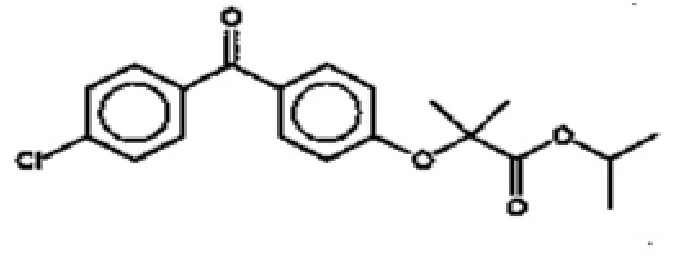
Chemical name: Isopropyl 2-[4-(4-Chlorobenzoyl) phenoxy]-2-methylpropionate
Molecular formula: C20H21O4Cl
Molecular weight: 360.8
Structural formula:
Description: Fenofibrate is a white to off white crystalline powder.
Melting point: Between 79 to 82ºC
Solubilities: Fenofibrate is very soluble in dichloromethane, soluble in ethanol, and insoluble in water.
CLINICAL TRIALS
Bioequivalence to Lipidil Supra® (fenofibrate microcoated) Tablets
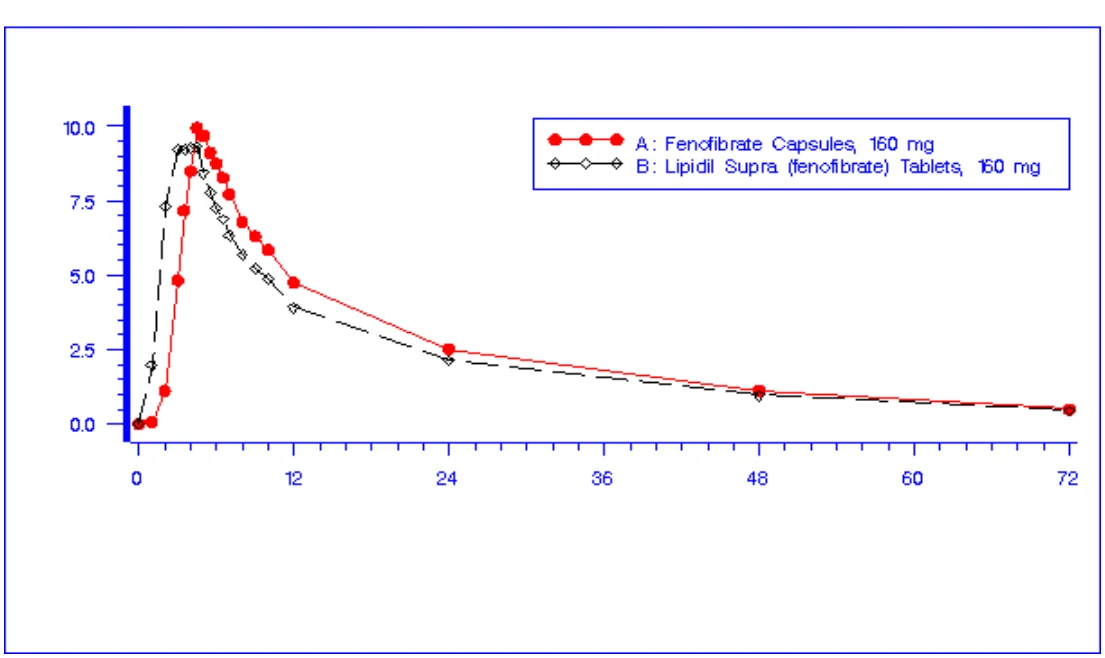
In a bioequivalence study comparing Fenomax™ 160 mg Capsules and Lipidil Supra® 160 mg, dosed with a high fat breakfast, Fenomax™ was found to be bioequivalent for both peak concentration (Cmax) and the total amount absorbed into the systemic circulation (AUC) (see Table 1) . The study was a blinded, randomized two period study and included 25 male volunteers, with a 1 week washout between dose periods. Blood sampling times were pre-dose (0), 1, 2, 3, 3.5, 4, 4.5, 5, 5.5, 6, 6.5, 7, 8, 9, 10, 12, 24, 48 and 72 hours. The plasma was analyzed for fenofibric acid by LC-MS/MS with a limit of quantitation of 0.0500 :g/mL.
Table 1: Summary Comparative Bioavailability Data Single Dose, Fed Bioequivalence Study of Fenomax™ and Lipidil Supra® (n = 25)
(1 x 160 mg) From measured data Analyte: Fenofibric Acid
| Fenomax™ | Lipidil Supra® (Canada) | |||
| Parameter | Geometric Mean Arithmetic Mean (CV%) | Ratio of Geometric Means (%) | 90% Confidence Interval | |
| AUC0-72 (:g. h/mL) | 167.86 175.04 (28) | 155.00 163.21 (32) | 108.30 | 104.10 - 112.67 |
| AUC0-inf (:g. h/mL) | 180.19 190.19 (32) | 166.24 177.18 (36) | 108.39 | 104.60 - 112.32 |
| Cmax (:g/mL) | 10.5 10.8 (21) | 10.4 10.5 (20) | 101.45 | 94.30 - 109.14 |
| Tmaxa (h) | 4.5 (3.5-10) | 3.0 (2.0-6.5) | - | |
| T½b (h) | 18.29 (26) | 18.89 (24) | - | |
a For Tmax, median (range) is expressed. b Expressed as arithmetic mean (CV%) only.
Figure 1: Mean Plasma Fenofibric Acid Concentration (:g/mL) vs Time (h) Curves (N=25)
The effects of fenofibrate on total mortality, and cardiovascular mortality and morbidity have not been established.
The activity of fenofibrate has been evaluated in more than 150 clinical trials performed in the U.S., Canada and Europe. The majority of these were conducted with fenofibrate, micronized formulation, at a daily dose of 200 mg.
Specific clinical studies were performed with fenofibrate, micronized formulation.
The first clinical trial followed a double-blind, parallel group versus placebo design. One hundred and eighty-nine patients (Type IIa; 120 and Type IIb; 69) were randomized in three groups: placebo, 200 mg micronized fenofibrate and 3 x 100 mg non micronized fenofibrate. The ages of the patients ranged from 18 to 75 years. The intent-to-treat analysis indicated an efficacy level after 3 months (as assessed by the number of patients who experienced a cholesterol reduction > 15%) which was significantly greater in the micronized fenofibrate group (71.9%) than in the placebo group (14.8%). Micronized fenofibrate treatment was significantly more active than placebo in reducing total cholesterol (-18%), LDL-cholesterol (-22%), triglycerides (-19%) and apolipoprotein B (-24%).
The second clinical trial evaluated the effectiveness of micronized fenofibrate on lipid parameters. Of 131 eligible patients, 94 (31 Type IIa, 23 Type IIb and 40 Type IV) were evaluated for efficacy. Of those with Type IIa and Type IIb, 45.1% and 69.6%, respectively, were classified as good responders for total cholesterol. Of patients with Type IIb and IV, 71.4% and 77.7%, respectively, were considered good responders for triglycerides. After 3 months of treatment, the mean value of total cholesterol was lowered in patients with Type IIa from 311.4 mg/dl to 258.3 mg/dl with a mean decrease of 17 %. In patients with Type IIb, the mean value of total cholesterol was lowered from 328.0 mg/dl to 266.5 mg/dl, with a mean decrease of 18.6 %. The mean value of triglycerides was lowered in patients with Type IIb from 254.8 mg/dl to 165.7 mg/dl with a mean decrease of 34.4 %. In patients with Type IV, the mean value of triglycerides was lowered from 383.8 mg/dl to 231.1 mg/dl with a mean decrease of 37.9 %.
A placebo-controlled, double-blind study was also performed in 418 patients with type 2 diabetes: The Diabetes Atherosclerosis Intervention Study (DAIS). The patients were randomized to either fenofibrate 200 mg once daily or to placebo for an average of 38 months. The main objectives were to determine the safety of 200 mg fenofibrate, micronized formulation, in a population of type 2 diabetic patients and to measure angiographic responses by quantitative coronary angiography (QCA). Male (73%) and female patients were included in the study. They presented with adequate glycemic control, ‘’total cholesterol/high density lipoprotein cholesterol ratio $4, and either low-density lipoprotein cholesterol (LDL-C) from 3.5 to 4.5 mmol/l with triglycerides (TG) ≤ 5.2 mmol/l, or TG from 1.7 to 5.2 mmol/l with LDL-C ≤ 4.5 mmol/l. An adequate QCA with previous CABG or PTCA or at least one coronary segment with a minimal detectable stenosis was also required.
The primary efficacy parameter was the mean segment parameter, averaged per patient, to test a null hypothesis of no difference between fenofibrate- and placebo-treated patients. Additional secondary angiographic efficacy parameters were also analyzed.
The angiographic results showed that the primary endpoint (mean segment diameter per patient) did not reach statistical significance and the change from baseline was not clinically meaningful (see Table 3). The change in mean segment diameter was minimal in both groups over the treatment period, with no statistical difference between groups.
Table 3: DAIS study: Mean coronary angiogram values (" S.D.) averaged per patient and per segment at baseline and at the end of study (ITT population)
Fenofibrate N=207 | Placebo N=211 | p-value* | |
| Per patient analysis | |||
Mean segment diameter (mm) Baseline Final | 2.70 (0.45) 2.62 (0.49) | 2.67 (0.45) 2.56 (0.50) | 0.494 0.173 |
Minimum segment diameter (mm) Baseline Final | 2.14 (0.44) 2.05 (0.46) | 2.10 (0.44) 1.98 (0.48) | 0.457 0.028 |
Percent diameter stenosis (%) Baseline Final | 21.8 (7.8) 24.1 (9.8) | 21.8 (7.4) 25.7 (10.8) | 0.958 0.02 |
Fenofibrate N=1884 | Placebo N=1993 | p-value* | |
| Per segment analysis | |||
Mean diameter (mm) Baseline Final | 2.76 (0.84) 2.68 (0.87) | 2.72 (0.83) 2.62 (0.87) | 0.145 0.037 |
Minimum diameter (mm) Baseline Final | 2.20 (0.82) 2.11 (0.84) | 2.16 (0.81) 2.03 (0.83) | 0.077 0.541 |
% stenosis Baseline Final | 21.0 (13.1) 23.0 (15.9) | 21.4 (12.8) 24.9 (17.2) | 0.309 0.059 |
*p-values for Student’s t test and for covariance analysis to compare treatment groups, respectively, at baseline and at the end of the study (last available value on treatment). Statistical significance was established at 0.025.
The changes in lipid levels were also monitored in the type 2 diabetic patients included in the DAIS study. The major lipid values at baseline and at the end of the study are shown in Table 4 for both the fenofibrate- and placebo-treated groups.
Table 4: DAIS study: Mean major lipid values ("S.D.) at baseline and at the end of the study
(ITT population)
| Fenofibrate | Placebo | p-value* | |
Total cholesterol (mmol/L) Baseline Final | 5.56 (0.80) 4.93 (0.83) | 5.58 (0.72) 5.42 (0.79) | 0.751 < 0.001 |
Total triglycerides (mmol/L) Baseline Final | 2.56 (1.23) 1.65 (0.90) | 2.52 (1.22) 2.16 (1.20) | 0.706 < 0.001 |
HDL-C (mmol/L) Baseline Final | 1.00 (0.19) 1.06 (0.26) | 1.04 (0.21) 1.06 (0.24) | 0.045 0.045 |
Calc. LDL-C (mmol/L) Baseline Final | 3.36 (0.71) 3.12 (0.69) | 3.39 (0.72) 3.38 (0.73) | 0.532 0.042 |
TC / HDL-C Baseline Final | 5.63 (1.08) 4.87 (1.27) | 5.51 (1.10) 5.35 (1.25) | 0.115 < 0.001 |
Apo AI (g/L) Baseline Final | 1.24 (0.18) 1.33 (0.22) | 1.26 (0.277) 1.29 (0.20) | 0.277 0.02 |
*p-values for Student’s t test and for covariance analysis to compare treatment groups at baseline and at the end of the study (last available value on treatment)
Safety was closely monitored in the DAIS study for both adverse events and laboratory anomalies. Fenofibrate was used safely in type 2 diabetic patients, as the overall incidence and severity of adverse events were comparable for the two treatment groups. Table 5 summarizes the incidence of adverse events, by body system, observed in the fenofibrate and placebo treatment groups.
Table 5: DAIS study: Incidence of adverse events (AEs) by system, experienced by type 2 diabetic patients during treatment with fenofibrate or placebo (ITT population)
| Body System | Fenofibrate (N=207) | Placebo (N=211) | ||
Total # pts. with at least 1 AE | AEs Patients | AEs Patients | ||
Total AEs: 1710 201 (97.1%) | Total AEs: 1759 202 (95.7%) | |||
| Body as a whole | 371 (21.7%) | 136 (65.7%) | 362 (20.6%) | 146 (69.2%) |
| Cardiovascular | 183 (10.7%) | 84 (40.6%) | 220 (12.5%) | 96 (45.5%) |
| Digestive | 196 (11.5%) | 86 (41.6%) | 194 (11.0%) | 87 (41.2%) |
| Endocrine | 11 (0.6%) | 10 (4.8%) | 19 (1.1%) | 11 (5.2%) |
| Hemic/lymphatic | 31 (1.8%) | 19 (9.2%) | 23 (1.3%) | 15 (7.1%) |
| Metabolic/nutritional | 50 (2.9%) | 32 (15.5%) | 70 (4.9%) | 41 (19.4%) |
| Musculo-skeletal | 155 (9.1%) | 84 (40.6%) | 180 (10.2%) | 84 (39.8%) |
| CNS | 103 (6.0%) | 59 (28.5%) | 98 (5.6%) | 58 (27.5%) |
| Respiratory | 301 (17.6%) | 108 (52.2%) | 279 (15.9%) | 105 (49.8%) |
| Skin/appendage | 107 (6.3%) | 58 (28.0%) | 107 (6.1%) | 48 (22.8%) |
| Special senses | 73 (4.3%) | 44 (21.3%) | 90 (5.1%) | 50 (23.7%) |
| Urogenital | 118 (6.9%) | 55 (26.6%) | 103 (5.9%) | 46 (21.8%) |
| Other | 11 (0.6%) | 9 (4.4%) | 14 (0.8%) | 11 (5.2%) |
DETAILED PHARMACOLOGY
Animal Pharmacology
The antilipidemic activity of fenofibrate was investigated in normal and hyperlipidemic rats. Fenofibrate significantly lowers total lipids, LDL and VLDL cholesterol, and triglyceride levels. At the same time it has been found to variably increase HDL cholesterol concentrations. Its effect is more pronounced in hyperlipidemic rats and those fed high fat diets than in normal rats and those fed standard diets. Studies comparing fenofibrate with clofibrate have found that fenofibrate is a potent cholesterol-lowering drug.
The pronounced hypolipidemic effect in hyperlipidemic animals suggests that fenofibrate reduces cholesterol by enhancing the rate of cholesterol elimination. In normocholesterolemic rats, the main effect of fenofibrate is an inhibition of cholesterol biosynthesis.
Fenofibrate has no anti-inflammatory, cardiovascular, respiratory, CNS, autonomic nervous system, or other basal metabolism activities.
Clinical Pharmacology
Uricosuric action
Fenofibrate decreased the plasma uric acid levels in normal as well as hyperuricemic subjects. In a study involving 10 normal male volunteers, single doses of 300 mg of fenofibrate, non-micronized formulation, were compared to benzbromarone. A uricosuric action was observed with both drugs. During a 14 day study in hyperlipidemic patients, a 28 % decrease in plasma uric acid concentration was observed less than four days after the onset of treatment with 300 mg/day of fenofibrate, non-micronized formulation. This effect remained constant until the end of the study. An additional study conducted in healthy volunteers confirmed the rapid onset of the fenofibrate-induced hypouricemic effect and demonstrated the increased capability of the kidneys under these conditions to eliminate uric acid without damage to the proximal tubules.
Effect on lithogenic index
By virtue of structural similarity to other fibrates, fenofibrate might be suspected to increase the risk of gallstones as a result of increased cholesterol excretion via the bile.
The biliary lithogenic index in fenofibrate-treated patients was evaluated. In most studies, the lithogenic index was shown to be increased but the effect of fenofibrate was not marked and the degree of significance varied from one study to another. The relative proportions of bile lipids were also affected by fenofibrate treatment.
It is not known how fenofibrate treatment modifies the lipid composition of the bile.
Human liver biopsies
Two specific studies have been conducted in hyperlipidemic patients to evaluate the potential hepatocellular toxicity of fenofibrate. Examination of biopsies from liver samples of 38 patients including 28 receiving fenofibrate, non-micronized formulation, over a mean period of approximately 2 years did not show any difference between treated and untreated patients. Peroxisomes were relatively rare, and macroscopic light and electron-microscopic observations revealed no sign of treatment-associated cellular abnormality. A similar study, taking biopsies from 10 patients who had, on average, received fenofibrate, non-micronized formulation, for 9 months, and comparing these with tissue from 13 hyperlipidemic patients who had only received dietary treatment did not show any morphological difference between the two groups or any significant difference in the number or in the size of peroxisomes.
MICROBIOLOGY
Not applicable.
TOXICOLOGY
All toxicology studies were performed using fenofibrate, non-micronized formulation.
Acute toxicity
Results from studies in mice, rats, hamsters and dogs indicate a low toxicity for fenofibrate with the highest administered doses (3200 to 24000 mg/kg), resulting in no deaths over the 7-day observation period. Autopsy findings were negative.
Chronic toxicity studies
Rats with normal or high cholesterol diet were treated for 7 days by gavage with fenofibrate at 0, 3, 10, 30, 100 and 300 mg/kg/day or clofibrate at 20, 60, 200 and 600 mg/kg/day. AST [SGOT] levels were raised in treated rats but ALT[SGPT] levels remained within the normal range for rats on normal diet and were only slightly elevated in rats on the high cholesterol diet. Dose-related hepatomegaly and proliferation of peroxisomes occurred, at doses above 30 mg/kg/day. In a second but similar study of drug metabolising enzymes, rats were treated daily by gavage for 7 days with fenofibrate at 0 or 100 mg/kg or clofibrate 200 mg/kg. The absence of significant change in the parameters measured suggests that the mechanisms resulting in hepatomegaly caused by both fibrates had little effect on cell organelles involved in drug metabolism and protein synthesis. In a third study in rats, oral doses of fenofibrate (0 to 1000 mg/kg) were given for 3 months. Depression of blood lipids was seen at all dose levels. AST [SGOT] and ALT[SGPT] values were increased at 500 and 1000 mg/kg. Hepatomegaly was a consistent finding at all dose-levels reaching a maximum of 78 % increase in weight compared to controls but appeared to regress rapidly. There were no other significant findings in the histological examination.
A 7-month study in dogs with 50 and 100 mg/kg/day and a 24-month study with 25 mg/kg/day were carried out. None of the dogs died but there was substantial weight loss associated with cholelithiasis and some interstitial nephritis. No important changes were observed in the biological parameters. Livers were apparently normal.
Fenofibrate (0, 12, 50 or 500 mg/kg) or clofibrate (200 mg/kg/day) was administered in the food of Rhesus monkeys for 12 months. No fenofibrate-related effect with regard to toxicity was noted in any of the test groups during the study. No evidence of compound-related histomorphologic alterations was present in the animals sacrificed. The Rhesus monkey resembles man where biopsy studies show no signs of peroxisome proliferation during up to 2 years of fenofibrate treatment.
Carcinogenicity studies
Five rodent feeding studies have shown that target organs for tumorigenic effects of fenofibrate are liver, pancreas and testis.
Mice showed increased liver weight with intrahepatic cholestasis and some degenerative changes but not liver tumors with 50 mg/kg/day for 22 months.
Dose-related increases in liver and kidney weight were seen in mice treated with 10 to 200 mg/kg/day of fenofibrate for 80 weeks.
When given at a dose of 200 mg/kg/day, both fenofibrate and clofibrate produced gross hepatomegaly associated with cholestasis and occasional cholangitis and periportal fibrosis. Neoplastic lesions were confined to the liver with significant increases in hepatocellular carcinoma at the high dose of fenofibrate in both sexes. Hepatocellular adenomas were also increased in males. In clofibrate-treated mice there was an excess of hepatic adenomas in females but not in males.
Both fenofibrate and clofibrate were found to be associated with an increased incidence of hepatocellular hypertrophy, lobular dysplasia and Kupffer cell pigmentation in another long-term toxicity study (93 weeks) on mice. In both sexes the incidence of total hepatic neoplasms and carcinomas was significantly increased by the high dose of fenofibrate (200 mg/kg). At the intermediate dose (60 mg/kg) the combined tumor incidence was almost significant in males but not in females, while incidence of carcinomas was not significantly increased in males and absent in females. Also, clofibrate (400 mg/kg) significantly increased the total tumor incidence but not carcinomas in males; females were unaffected.
Rats which received fenofibrate (0, 10, 45 or 200 mg/kg/day) or clofibrate (200 mg/kg/day) mixed with their diet for a 2-year period showed no significant differences in mortality over the study period. Significant increases in incidences of hepatocellular carcinoma were found in the high dose fenofibrate group of animals of both sexes, in mid dose fenofibrate males, and in clofibrate treated males. Mid-dose fenofibrate males and clofibrate-treated males and females also showed significantly increased incidence of hepatocellular adenomas. Well differentiated pancreatic acinar cell carcinomas and adenomas were increased in a dose-related manner in the fenofibrate treated males, and higher incidences were also evident in the clofibrate males.
The chronic toxicity and carcinogenicity of fenofibrate was further studied in rats (0, 10 and 60 mg/kg/day) in order to compare treatment-related responses with those produced by clofibrate (400 mg/kg/day) and gemfibrozil (250 mg/kg/day) during 117 weeks of treatments. The absolute and relative weights of the liver were increased in all treatment groups except with 10 mg/kg fenofibrate. Although comparatively low, an incidence of hepatocellular carcinoma was observed in gemfibrozil-treated rats, and neoplastic nodules were also found in the livers of 50 %
of the males which survived up to the termination of the study. Fewer neoplastic nodules were seen in the clofibrate-treated rats but these animals had a high incidence of hepatocellular carcinoma at termination. A significantly increased incidence of pancreatic acinar cell adenoma was seen in the 60 mg/kg fenofibrate males, while this increase in females was not significant. A significant increase in acinar adenoma and a slight increase in acinar carcinoma occurred with clofibrate (400 mg/kg) and some adenomas were seen in gemfibrozil-treated rats. There was some excess of benign interstitial cell tumors of the testis in all treatment groups except the group that received 10 mg/kg of fenofibrate.
Reproduction and teratology studies
There was no evidence of any increase in malformation frequency in mice, rabbits and rats after administration of fenofibrate compared to that seen in controls. Examination of offspring from fenofibrate-treated dams and those having received clofibrate did not disclose any significant abnormalities when compared to offspring from the controls.
With the highest dose levels at which the mothers were adversely affected, there was evidence of embryotoxicity in rats and rabbits.
Genetic toxicity studies
Gene mutations: In vitro tests for mutagenicity with either fenofibrate or fenofibric acid in the presence or absence of activating rat or human microsomal enzyme preparations, have all given negative results. Thus, fenofibric acid was without effect on gene mutation frequency in bacteria (Ames), yeast and mouse lymphoma cells in culture.
In a second mouse lymphoma cell comparative study, there was no response to clofibric acid while some increased response to fenofibric acid at the highest concentration used was discounted due to poor relative growth. Similar activity was seen with gemfibrozil at toxic concentrations in the absence of metabolic activation. In conclusion, all three fibrates were found to be non-mutagenic on the protocol criteria, both in the absence and presence of metabolic activation.
Chromosome aberrations: Some trace of an increased but not significant incidence of aberrations was seen in an in vitro mouse lymphoma cell multiple end point assay.
Chromosome aberrations as such were not seen in more recent comparative in vitro study with CHO cells when testing clofibric acid and gemfibrozil as well as fenofibric acid. However, clofibric acid did have a marginal effect in increasing sister chromatid exchange frequency.
The absence of excision repair in human originated HeLa cells incubated with a wide range of concentrations of fenofibric acid with or without S9, reaffirmed the essentially non-genotoxic nature of the product.
Direct effects on DNA: The ability to bind covalently to target organ DNA is a property common to chemical substances which act by direct initiation of the carcinogenic process at the nuclear level. This type of genotoxic activity can be studied in vivo by DNA assay in rodents treated with the radiolabeled drug.
Although binding of fenofibric and clofibric acids to proteins was readily observed, no binding to DNA was demonstrated after oral administration of C14-labeled fenofibric or clofibric acid. The data therefore exclude somatic mutations as responsible for the known hepatocarcinogenic activity of these fibrates in rodents.
In a second in vivo test the effects of fenofibric acid were compared with those of clofibric acid and gemfibrozil on DNA synthesis in mouse testicular tissue, as measured by the incorporation of 3H-thymidine. Any response is representative of changes in DNA synthesis in any testicular cells such as germ, Sertoli, Leydig or interstitial cells undergoing scheduled or unscheduled synthesis.
Both fenofibric acid and gemfibrozil caused modest increases in thymidine incorporation above control values. Clofibrate caused some inhibition of the incorporation of thymidine into DNA at the two lowest doses with a small increase at the highest. No positive control substance was used but it would be assumed that, for example, genotoxic alkylating agents might cause a decrease in incorporation due to an inhibition of DNA synthesis. Such inhibition or cell cycle delay is well known for such agents.
The increase in DNA synthesis as observed in mouse testicular tissue with fenofibric acid and gemfibrozil is difficult to evaluate in the absence of a positive control or historical data for this recently developed test, nevertheless such an effect might be anticipated of such agents which are known to cause peroxisome proliferation and which produce increased cell turnover. The occurrence of increased cell turnover would be in keeping with a non-genotoxic but promoting mode of such compounds in mice.
In a rat primary hepatocyte unscheduled DNA sythesis (UDS) assay in vitro, gemfibrozil, clofibric acid and fenofibric acid showed a negative response. None caused nuclear labelling significantly different from the control and no dose-related trends were evident.
Cell growth or malignant transformation in vitro: fenofibric acid was without effect on growth or malignant transformation of cultured mammalian cell lines.
REFERENCES
- 1.
Blane GF. Reviews of European clinical experience with fenofibrate. Cardiology 1989;
76 (suppl. 1): 1-13.
- 2.
Hunninghake DB. Treatment of hypertriglyceridemia with fenofibrate. Practical
Cardiology 1989; 15 (2): 38-39.
- 3. Schneider AG, Ditschuneit HH, Stange EF, Ditschuneit H. Regulation of 3-hydroxy-3-methylglutaryl coenzyme A reductase in freshly isolated human mononuclear cells by fenofibrate. 41st Meeting of the European Atherosclerosis Group, Stockholm June 2-3, 1984, ed by: L.A. CARLSON, A.G. OLSSON in : Treatment of hyperlipoproteinemia, Raven Press, New-York 1984: 181-184.
- 4. Desager JP, Hulhoven R, Harvengt C. Uricosuric effect of fenofibrate in healthy volunteers. J Clin Pharmcol 1980;20 (10): 560-564.
- 5.
Blumke S, Schwartzopff W, Lobeck H, Edmonson NA, Prentice DE, Blane GF.
Influence of Fenofibrate on Cellular and Subcellular Liver Structure in Hyperlipidemic Patients. Atherosclerosis 1983; 46: 105-116.
- 6. Gariot P, Barrat TE, Mejean L, Pointel JP, Drouin P, Debry G. Fenofibrate and human liver. Lack of proliferation of peroxisomes. Arch Toxicol 1983; 53 (2): 151-163.
- 7. Blane GF, Bogaievsky Y, Bonnefous F. Fenofibrate : influence on circulating lipids and side-effects in medium and long-term clinical use. Pharmacological control of hyperlipidaemia, ed. JR. Prous Science Publishers 1986; 187-216.
- 8. Blane GF. Comparative toxicity and safety profile of fenofibrate and other fibric acid derivatives. Am J Med 1987; 83 (suppl 5B.): 26-36.
- 9.
Knopp RH, Brown WV, Dujovne CA, Farquhar JW, Feldman EB, Goldberg AC, Grundy
SM, Lasser NL, Mellies MJ, Palmer RH, Samuel P, Schonfeld G, Superko HR. Effects of fenofibrate on plasma lipoproteins in hypercholesterolemia and combined hyperlipidemia. Am J Med 1987; 83 (suppl. 5B): 50-59.
- 10. Knopp RH, Review of the effects of fenofibrate on lipoproteins, apoproteins and bile saturation: US studies. Cardiology 1989; 76 (suppl. 1): 14-22 and 29-32.
- 11.
Seidehamel RJ. Fenofibrate in type IV and type V hyperlipoproteinemia. Cardiology
1989; 76 (suppl. 1): 23-32.
- 12.
Gurrieri J, Le Lous M, Renson FJ, Tourne C, Voegelin H, Majoie B, Wulfert E.
Experimental study of a new potent hypolipidemic drug, is opropyl-[4'-) p-chlorobenzoyl-2-phenoxy-2-methyl]-propionate (LF178) Arzneimmittelforschung 1976; 26 (5): 889-894.
- 13. Desager JP, Harvengt C. Clinical pharmacokinetic study of procetofen, a new hypolipidemic drug, in volunteers. Int J Clin Pharmacol Res 1978; 16: 570-574.
- 14. Podda M, Zuin M. Effects of fenofibrate on biliary lipids and bile acid pool size in patients type IV hyperlipoprotenemia. Atherosclerosis 1985; 55: 135-142.
- 15.
Brunova E, Valek J, Vondra K, Slabochova Z, Grafnetter D, Bruna J. Treatment of
Hyperlipoproteinemia with Procetofen. Curr Ther Res 1982; 31 (1): 37-44.
- 16.
Harvengt C, Heller F, Desager JP. Hypolipidemic and Hypouricemic Action of
Fenofibrate in Various Types of Hyperlipoproteinemias. Artery 1980; 7 (1): 73-82.
- 17. Lethonen A and Viikari J. Fenofibrate and Cholestyramine in type II hyperlipoproteinemia. Artery 1982; 10 (5): 353-367.
- 18.
Avogaro P, Bittolo Bon G, Belussi F, Pontoglio E, Cassolato G. Variations in Lipids and
Proteins of lipoproteins by Fenofibrate in some hyperlipoproteinaemic states. Atherosclerosis 1983; 47: 95-100.
- 19. Chanu B, Bakir R, Goy-Loeper J, Bouthillier D, Rouffy J. Intérêt de l’évaluation d’un indice achilléen pour la surveillance thérapeutique des hyperlipoprotéinémies avec xanthomatose tendineuse (on the Evaluation of an Achilles Tendon Index for the Therapeutic Surveillance of Hyperlipoproteinemia with Tendinous Xanthomata). Gaz Méd France, numéro spécial du 3éme Colloque Intern. “ Lipides et Athérosclérose” 13-14 mars 1982: 96-99.
- 20. Rouffy J, Sauvanet JP, Chanu B, Bakir R, Goy-Loeper J, Saya C, Pinaroli F. Evaluation long terme de l’activité hypolipidémiante et de la tolérance du fénofibrate. Effect court terme du médicament sur les taux de lipides des lipoprotéines (HDL, LDL, VLDL) et apoprotéines B. (Fenofibrate : Hypolipidemic Activity and Safety in Long term Treatment Effects of HDL, LDL, VLDL and Apoprotein B in Short-term treatment). Nouv Presse Méd 1980; 9 (49): 3747-3751.
- 21.
Drouin P. Two-year Treatment with Procetofen (Fenofibrate) in Patients with Primary
Type II Hyperlipoproteinemia. Effect on Lipoprotein Lipids and Biochemical Tolerance. Clin Ter Cardiovasc 1982; 2: 165-170.
- 22. Fromantin M, Gautier D, Quatre JM, Bon R. Efficacité et tolérance du fénofibrate au cours de traitements long terme. Thérapie 1981; 36: 473-476.
- 23.
Farnier M, Bonnefous F, Debbas N, Irvine A. Comparative Efficacy and Safety of
Micronized Fenofibrate and Simvastatin in Patients With Primary Type II a or II b Hyperlipidemia. Arch Intern Med 1994; 154: 441-449.
- 24. Chicaud P., Demange J., Debry G. Long-Term (18 months) effects of fenofibrate in young hypercholesterolemic subjects. Presse Med., 1984, 13: 417-419.
- 25.
Effect of fenofibrate on progression of coronary-artery disease in type 2 diabetes: the
Diabetes Atherosclerosis Intervention Study, a randomized study. Lancet, 2001; 357; 905-910
- 26. Guichard JP, Blouquin P, Qing Y. A new formulation of fenofibrate: suprabioavailable tablets. Curr Med Res Opin. 2000; 16(2): 134-138
- 27. Kirchgassler KU, Schmitz H, Bach G. Effectiveness and tolerability of 12-week treatment with micronized fenofibrate 200 mg in a drug-monitoring programme involving 9884 patients with dydlipidaemia. Clin Drug Invest., 1998; 15: 197-204
- 28. Fodor JG, Frohlich JJ, Genest JJ Jr, McPherson PR. Recommendations for the management and treatment of dyslipidemia. Report of the Working Group on Hypercholesterolemia and Other Dyslipidemias. CMAJ, 2000; 162: 1441-1447
- 29.
Third Report of the National Cholesterol Education Program (NCEP) Expert Panel on
Detection, Evaluation, and Treatment of High Blood Cholesterol in Adults (Adult Treatment Panel III) final report. Circulation, 2002, 106: 3143-3421.
- 30.
Lipidil Supra® (Fenofibrate Microcoated Formulation Film-coated) Tablets Product
Monograph. September 11, 2003
- 31.
Study No. 01-451 (FENPK.01.05): A Blinded, Single-Dose, Randomized, Two-Way
Crossover Bioequivalence Study of Two Formulations of Fenofibrate 160 mg in Healthy Subjects, under Fed Conditions. October 29, 2001 - November 8, 2001.