


Product Monograph - Fibryga
Recent Major Label Changes
| 4 Dosage and Administration, 4.3 Reconstitution | 2026-01 |
|---|---|
| 4 Dosage and Administration, 4.3 Reconstitution | 2024-10 |
Table of Contents
Certain sections or subsections that are not applicable at the time of the preparation of the most recent authorized product monograph are not listed.
Recent Major Label Changes ..................................................................................................... 2
Table of Contents ........................................................................................................................ 2
Part 1: Healthcare Professional Information ............................................................................ 4
- 1.
Indications ....................................................................................................................... 4
1.1. Pediatrics ............................................................................................................... 4
1.2. Geriatrics ............................................................................................................... 4
- 2. Contraindications ............................................................................................................ 4
- 4.
Dosage and Administration ........................................................................................... 4
4.1. Dosing Considerations .......................................................................................... 4
4.2. Recommended Dose and Dosage Adjustment ..................................................... 5
4.3. Reconstitution ........................................................................................................ 6
4.4. Administration ........................................................................................................ 9
- 5. Overdose .......................................................................................................................... 9
- 6. Dosage Forms, Strengths, Composition, and Packaging ........................................... 9
- 7.
Warnings and Precautions ........................................................................................... 11
General ........................................................................................................................... 11
Monitoring and Laboratory Tests .................................................................................... 11
7.1. Special Populations ............................................................................................. 11
7.1.1. Pregnancy .......................................................................................................... 11
7.1.2. Breastfeeding ..................................................................................................... 12
7.1.3. Pediatrics ........................................................................................................... 12
7.1.4. Geriatrics ........................................................................................................... 12
- 8.
Adverse Reactions ........................................................................................................ 12
8.1. Adverse Reaction Overview ................................................................................ 12
8.2. Clinical Trial Adverse Reactions .......................................................................... 12
8.2.1. Clinical Trial Adverse Reactions - Pediatrics ..................................................... 13
8.5. Post-Market Adverse Reactions .......................................................................... 13
- 9.
Drug Interactions .......................................................................................................... 14
9.2. Drug Interactions Overview ................................................................................. 14
9.4. Drug-Drug Interactions ........................................................................................ 14
9.5. Drug-Food Interactions ........................................................................................ 14
9.6. Drug-Herb Interactions ........................................................................................ 14
9.7. Drug-Laboratory Test Interactions ....................................................................... 14
- 10.
Clinical Pharmacology .................................................................................................. 14
10.1. Mechanism of Action ....................................................................................... 14
10.2. Pharmacodynamics ......................................................................................... 14
10.3. Pharmacokinetics ............................................................................................ 14
- 11. Storage, Stability, and Disposal .................................................................................. 16
- 12. Special Handling Instructions ...................................................................................... 16
Part 2: Scientific Information ................................................................................................... 17
- 13. Pharmaceutical Information ......................................................................................... 17
- 14. Clinical Trials ................................................................................................................. 17
- 16. Non-Clinical Toxicology ............................................................................................... 21
Patient Medication Information ............................................................................................... 22
Part 1: Healthcare Professional Information
1. Indications
FIBRYGA (Fibrinogen concentrate (human)) is indicated for:
- the treatment of acute bleeding episodes and perioperative prophylaxis in adult and pediatric patients with congenital afibrinogenemia and hypofibrinogenemia.
FIBRYGA may be used as a complementary therapy during the management of uncontrolled severe bleeding in patients with acquired fibrinogen deficiency in the course of surgical interventions (See 14 Clinical Trials / Clinical Data in Acquired Fibrinogen Deficiency).
1.1. Pediatrics
Pediatrics (12-17 years of age): Clinical studies of FIBRYGA included 13 pediatric patients 12 to 17 years with congenital afibrinogenemia. Health Canada has authorized an indication for pediatric use in this age range (See 14 Clinical Trials).
Pediatrics (<12 years of age): Clinical studies of FIBRYGA included 14 pediatric patients <12 years of age years with congenital afibrinogenemia. Health Canada has authorized an indication for pediatric use in this age range (See 14 Clinical Trials).
1.2. Geriatrics
Geriatrics (> 65 years of age): Clinical studies of FIBRYGA did not include patients > 65 years of age with congenital afibrinogenemia or hypofibrinogenemia to determine whether they respond differently from younger patients (See 14 Clinical Trials).
2. Contraindications
FIBRYGA is contraindicated in patients who are hypersensitive to this drug or to any ingredient in the formulation, including any non-medicinal ingredient, or component of the container. For a complete listing, see 6 Dosage Forms, Strengths, Composition, and Packaging.
FIBRYGA is contraindicated in individuals who have manifested severe immediate hypersensitivity reactions, including anaphylaxis to FIBRYGA or its components.
4. Dosage and Administration
4.1. Dosing Considerations
The dosage and duration of the substitution therapy depend on the severity of the disorder, location and extent of bleeding and the patient’s clinical condition.
4.2. Recommended Dose and Dosage Adjustment
Congenital Afibrinogenemia and Hypofibrinogenemia
FIBRYGA dosing, duration of dosing and frequency of administration should be individualized based on the extent of bleeding, laboratory values, and the clinical condition of the patient.
The (functional) fibrinogen level should be determined in order to calculate individual dosage and the amount and frequency of administration should be determined by regular measurement of plasma fibrinogen level and continuous monitoring of the patient’s condition and other replacement therapies used.
In congenital afibrinogenemia and hypofibrinogenemia the recommended target fibrinogen plasma level is 100 mg/dL for minor bleeding or minor surgery and 150 mg/dL for major bleeding or major surgery.
FIBRYGA dose when baseline fibrinogen level is known
Dose should be individually calculated for each patient based on the target plasma fibrinogen level based on the type of bleeding, actual measured plasma fibrinogen level and body weight, using age specific formulas:
Adults and adolescents 12 years of age and above:
Dose (mg/kg body weight) = [Target level (mg/dL) - measured level (mg/dL)]
1.8 (mg/dL per mg/kg body weight)
Children 0 to <12 years of age:
Dose (mg/kg body weight) = [Target level (mg/dL) - measured level (mg/dL)]
1.4 (mg/dL per mg/kg body weight)
FIBRYGA dose when baseline fibrinogen level is not known
If the patient’s fibrinogen level is not known, the recommended dose is 60 mg per kg of body weight administered intravenously.
Monitoring of patient’s fibrinogen level is recommended during treatment with FIBRYGA.
Acquired Fibrinogen Deficiency
The recommended initial dose for patients with uncontrolled severe bleeding in the course of surgical interventions is 4 g. Additional doses of 4 g are to be administered as needed to bleeding patients when fibrinogen plasma level is ≤200 mg/dL or FIBTEM A20 is ≤12 mm (or equivalent values generated by other thromboelastometry/thrombelastography methods).
Monitor the patient’s fibrinogen plasma level or the clot firmness of the fibrin-based clot during treatment with FIBRYGA.
4.3. Reconstitution
| Vial Size | Volume of Solvent To Be Added to Vial | Approximate Available Volume | Nominal Concentration Per mL |
| 1 g | 50 mL | 50 mL | 20 mg |
| 2 g | 100 mL | 100 mL | 20 mg |
| |||
| |||
| |||
| Transfer device | ||
|---|---|---|
| Fig. 1 |
|
| Solvent vial | ||
| Fig. 2 |
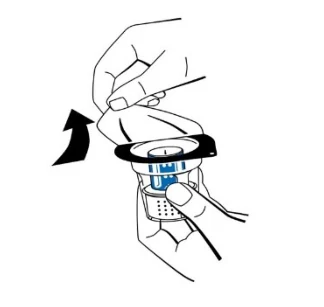 |
|---|
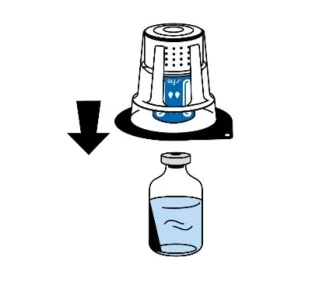 |
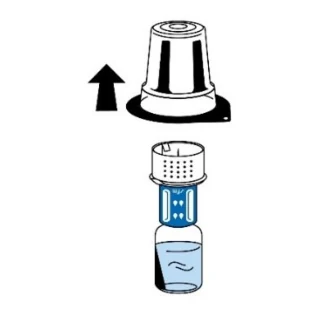
- 5. While holding onto the solvent vial, carefully remove the blister package from the transfer device by pulling vertically upwards. Make sure to leave the transfer device attached firmly to the solvent vial (Fig. 3).
| Solvent vial | ||
| Fig. 3 |
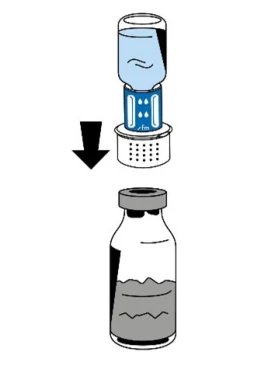
- 6. Place the powder (FIBRYGA) vial on an even, clean surface and hold it firmly. Take the solvent vial with the attached transfer device and turn it upside down. Place the white part of the transfer device connector on top of the powder (FIBRYGA) vial and press firmly down until it snaps into place (Fig. 4). Do not twist while attaching. The solvent will flow automatically into the powder (FIBRYGA) vial.
Solvent vial FIBRYGA vial | ||
| Fig. 4 |
- 7. When transfer of the solvent is complete, gently swirl the FIBRYGA vial with the solvent vial still attached, until the powder is fully dissolved. To avoid foam formation, do not shake the vial. The powder should be dissolved completely within approximately 4 minutes for FIBRYGA 1g and 8 minutes for FIBRYGA 2g. If the product is at room temperature, it should not take longer than approximately 30 minutes to dissolve the powder.On rare occasions, a partially dissolved product cake may be observed. Horizontal agitation of the vial may promote further dissolution. Avoid shaking the vial vertically.
- 8. After reconstitution is complete unscrew the transfer device (blue part) counterclockwise into two parts (Fig. 5). Do not touch the Luer lock connector on the white part of the transfer device.
Empty Solvent vial Reconstituted FIBRYGA vial | ||
| Fig. 5 |
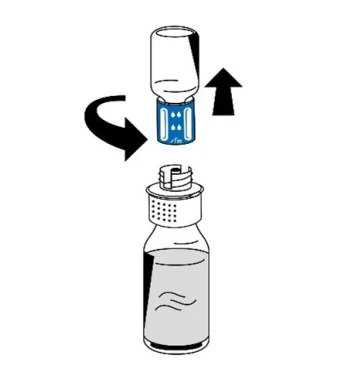
- 9. Discard the empty solvent vial together with the blue part of the transfer device.
- 10. Carefully attach a syringe to the Luer lock connector on the white part of the transfer device (Fig. 6).
- 11. Turn the FIBRYGA vial upside down and draw the solution into the syringe (Fig. 7).
| Reconstituted FIBRYGA vial | Reconstituted FIBRYGA vial | ||
| Fig. 6 | Fig. 7 |
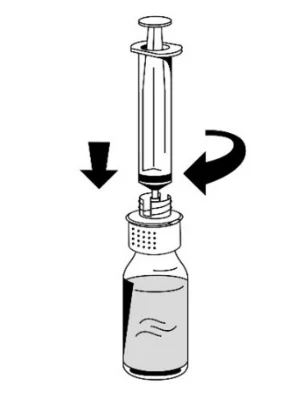
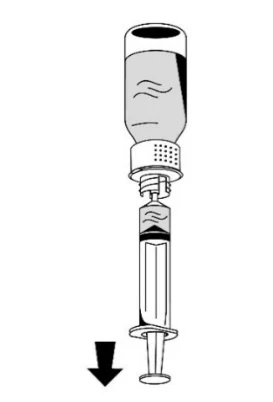
- 12. Once the solution has been transferred, firmly hold the barrel of the syringe (keeping the syringe plunger facing down) and remove the syringe from the transfer device (Fig. 8).
| Empty FIBRYGA vial | ||
| Fig. 8 |
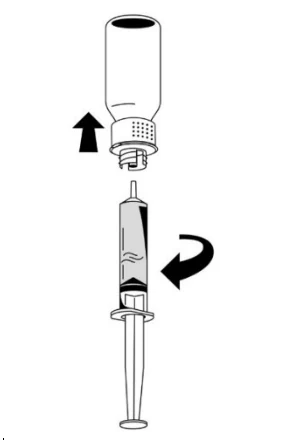
- 13. Dispose of the white part of the transfer device together with the empty FIBRYGA vial.
A standard infusion set is recommended for intravenous application of the reconstituted solution at room temperature.
4.4. Administration
For intravenous use only.
FIBRYGA should be administered slowly intravenously at a recommended maximum rate of 5 mL per minute for patients with congenital afibrinogenemia and hypofibrinogenemia, and at a recommended maximum rate of 20 mL per minute during the management of uncontrolled severe bleeding in the course of surgical interventions for patients with acquired fibrinogen deficiency.
Any unused medicinal product or waste material should be disposed of in accordance with local requirements.
Prior to use, allow FIBRYGA to reach ambient room temperature. Do not use solutions that are cloudy or have deposits.
Precautions
FIBRYGA should not be mixed with other medicinal products. A separate intravenous line should be used for injection. Do not use the product after expiry date.
5. Overdose
No cases of overdose have been reported.
For the most recent information in the management of a suspected drug overdose, contact your regional poison control centre or Health Canada’s toll-free number, 1-844 POISON-X (1-844-764-7669).
- 6. Dosage Forms, Strengths, Composition, and Packaging
To help ensure the traceability of biologic products, healthcare professionals should record both the brand name and the non-proprietary (active ingredient) name as well as other product-specific identifiers such as the Drug Identification Number (DIN) and the batch/lot number of the product supplied.
Table 1 Dosage Forms, Strengths, and Composition
| Route of Administration | Dosage Form / Strength/Composition | Non-Medicinal Ingredients |
| Intravenous use | Powder and Solvent for solution for injection / infusion 1 or 2 g | Powder: Glycine L-Arginine hydrochloride Sodium chloride Sodium citrate dihydrate Solvent: Water for Injection |
FIBRYGA is supplied in a single-use vial containing the labeled amount of functionally active fibrinogen. The components used in the packaging for FIBRYGA are latex-free. FIBRYGA is a powder and solvent for solution for intravenous injection/ infusion.
The following dosage forms are available: 1 g, 2 g
Description
Nature and Contents of Container
Each vial of reconstituted FIBRYGA contains 1 g or 2 g of the active ingredient human fibrinogen. Each package contains 1 glass vial of human fibrinogen, 1 glass vial of solvent (50 mL Water for Injection for FIBRYGA 1 g, 100 mL Water for Injection for FIBRYGA 2 g), a transfer device (Nextaro®) and the package leaflet.
Composition:
FIBRYGA 1 g
Quantity per vial
FIBRYGA 2 g
Quantity per vial
Human Fibrinogen
1 g
2 g
Sodium chloride
300 mg
600 mg
Sodium citrate dihydrate
75 mg
150 mg
Glycine
500 mg
1000 mg
L-Arginine hydrochloride
500 mg
1000 mg
FIBRYGA (Fibrinogen Concentrate (Human), 1 g or 2 g /vial) is a sterile, freeze dried preparation of highly purified fibrinogen.
Solvent: 50 or 100 mL Water for Injection
After reconstitution with 50 mL Water for Injection for FIBRYGA 1 g or 100 mL Water for Injection for FIBRYGA 2 g, FIBRYGA contains approximately 20 mg/mL human fibrinogen.
Pathogen inactivation/removal is accomplished by a solvent detergent (S/D) method and nanofiltration (20 nm).
7. Warnings and Precautions
This product is prepared from large pools of human plasma employing precipitations, filtrations and chromatographic steps. Thus, there is a possibility it may contain causative agents of viral or other undetermined diseases.
General
Products made from human plasma may contain infectious agents, such as viruses and theoretically, the variant Creutzfeldt-Jakob disease (vCJD) agent that can cause disease. The risk that such products will transmit an infectious agent has been reduced by screening plasma donors for prior exposure to certain viruses, by testing for the presence of certain current virus infections, and by inactivating and/or removing certain viruses. Despite these measures, such products can still potentially transmit disease. There is also the possibility that unknown infectious agents may be present in such products. Individuals who receive infusions of blood or plasma products may develop signs and/or symptoms of some viral infections.
Allergic Reactions
Allergic reactions may occur. If symptoms of allergic or early signs of hypersensitivity reactions (including hives, generalized urticaria, tightness of the chest, wheezing, hypotension, and anaphylaxis) occur, immediately discontinue administration. The treatment required depends on the nature and severity of the reaction.
Thrombosis
There is a risk of thrombosis in patients with congenital or acquired fibrinogen deficiency receiving fibrinogen concentrates. Thrombotic events have been reported in patients receiving FIBRYGA. Weigh the benefits of FIBRYGA administration versus the risk of thrombosis. Patients receiving FIBRYGA should be monitored for signs and symptoms of thrombosis.
Monitoring and Laboratory Tests
Determination of the patient’s fibrinogen level using an appropriate method, e.g., Clauss fibrinogen assay, is recommended before and during the treatment with FIBRYGA in order to avoid overdosing or underdosing.
7.1. Special Populations
7.1.1. Pregnancy
The safety of FIBRYGA for use in human pregnancy has not been established in controlled clinical trials. Animal studies have not been conducted to assess the safety with respect to reproduction, development of the embryo or fetus, the course of gestation and peri- and postnatal development. The benefits and risks of administrating FIBRYGA to pregnant women should be carefully weighed.
7.1.2. Breastfeeding
The safety of FIBRYGA for use during lactation has not been established in controlled clinical trials. It is unknown if Fibrinogen Concentrate (Human) is excreted in human milk. Precaution should be exercised because many drugs can be excreted in human milk.
7.1.3. Pediatrics
Data from clinical studies of FIBRYGA in pediatric patients 12-17 years and < 12 years of age submitted and reviewed do not suggest overall apparent differences in the safety profile of FIBRYGA between children and adults patients with congenital afibrinogenemia treated with FIBRYGA.
7.1.4. Geriatrics
Clinical studies of FIBRYGA in congenital afibrinogenemia and hypofibrinogenemia did not include patients aged 65 years of age and over to determine whether or not they respond differently from younger patients.
8. Adverse Reactions
8.1. Adverse Reaction Overview
Two serious adverse reaction have been reported in clinical studies with FIBRYGA so far: a case of thrombosis of moderate severity, described as ischemia due to digital microthrombi and a severe case of thrombosis, described as portal vein thrombosis following splenectomy. Other serious adverse reactions that may potentially be observed for FIBRYGA are anaphylactic type reactions.
8.2. Clinical Trial Adverse Reactions
Clinical trials are conducted under very specific conditions. The adverse reaction rates observed in the clinical trials; therefore, may not reflect the rates observed in practice and should not be compared to the rates in the clinical trials of another drug. Adverse reaction information from clinical trials may be useful in identifying and approximating rates of adverse drug reactions in real-world use.
The clinical safety of FIBRYGA was assessed in four studies in 61 patients with congenital afibrinogenemia, of whom 12 were aged 12 to <18 years and 14 were aged less than 12 years, and 394 patients with acquired fibrinogen deficiency (cardiac surgery or abdominal surgery), of whom one was aged 12 to <18 years (see 14 Clinical Trials). The adverse events (AEs) included nausea, vomiting, pyrexia, diarrhea, headache, nasopharyngitis and other respiratory tract infections, muscle pain, sepsis, cerebrovascular accident, cardiac tamponade, hemorrhage, respiratory failure, acute kidney injury, renal failure, hallucinations, tachycardia and pleural effusion.
Table 2 Adverse Drug Reactions in Clinical Studies
FIBRYGA n = 394 (%) | |
General disorders and administration site conditions Pyrexia Skin and subcutaneous tissue disorders Skin reactions Vascular disorders Phlebitis Thrombosis | 2 (0.51) 2 (0.51) 1 (0.25) 2 (0.51) |
Five mild AEs, one moderate AE (also assessed as serious), and one severe AE (also assessed as serious) were deemed possibly related to FIBRYGA. These AEs occurred in patients with congenital afibrinogenemia and included two cases of mild pyrexia, two cases of mild skin reactions, a case of mild phlebitis, a case of moderate thrombosis (ischemia due to digital microthrombi), and a case of severe portal vein thrombosis (following splenectomy).
A total of 247 serious adverse events were reported in 128 patients, of which two (the moderate case of thrombosis and the severe case of portal vein thrombosis in congenital afibrinogenemia mentioned above) were considered possibly related to the study drug.
8.2.1. Clinical Trial Adverse Reactions - Pediatrics
Overall, there were no apparent differences in the safety profile of FIBRYGA between pediatric and adult patients with congenital afibrinogenemia treated with FIBRYGA. The data available on pediatric patients with acquired fibrinogen deficiency (one patient only) is insufficient to determine whether or not they respond differently from adult patients.
8.5. Post-Market Adverse Reactions
Following post-market adverse drug reactions have been reported for FIBRYGA: acute respiratory distress syndrome, anaphylactic shock, anaphylactoid shock, cardio-respiratory arrest, decreased systolic blood pressure, decreased blood pressure, decreased oxygen saturation, erythema, hepatocellular injury, hypotension, drug ineffective, and product reconstitution quality issue. In addition, the following adverse reactions have been identified during post-approval use of other fibrinogen concentrate products. Because these reactions are reported voluntarily from a population of uncertain size, it is not possible to reliably estimate their frequency or to establish a causal relationship to fibrinogen products:
- Allergic/ anaphylactic reactions: anaphylaxis, dyspnea, rash, tachypnea, hypotension, shock and tachycardia
- Cardiovascular: thromboembolism, pulmonary embolism
- General: chills, fever, nausea, vomiting
9. Drug Interactions
9.2. Drug Interactions Overview
No interactions of human fibrinogen with other medicinal products or concurrent illnesses are known.
9.4. Drug-Drug Interactions
FIBRYGA should not be mixed with other medicinal products.
Interactions with other drugs have not been established.
9.5. Drug-Food Interactions
Interactions with food have not been established.
9.6. Drug-Herb Interactions
Interactions with herbal products have not been established.
9.7. Drug-Laboratory Test Interactions
Interactions with laboratory tests have not been established.
10. Clinical Pharmacology
10.1. Mechanism of Action
Fibrinogen (factor I) is a soluble plasma protein that, during the coagulation process, is converted to fibrin, one of the key components of the blood clot. Fibrinogen is a heterohexamer with a molecular weight of 340 kDa and composed of two sets of Aalpha, Bbeta, and gamma polypeptide chains.
Following coagulation activation and thrombin generation, fibrinogen is cleaved by thrombin at specific sites on Aalpha and Bbeta chains to remove fibrinopeptide A (FPA) and fibrinopeptide B (FPB). The removal of FPA and FPB exposes binding sites on fibrinogen and leads to the formation of fibrin monomers that subsequently undergo fibrin polymerization. The resulting fibrin is stabilized in the presence of calcium ions and by activated factor XIII. Factor XIIIa acts on fibrin to form cross links between fibrin polymers and renders the fibrin clot more resistant to fibrinolysis. The end product of the coagulation cascade is cross-linked fibrin which stabilizes the primary platelet plug and achieves secondary hemostasis.
10.2. Pharmacodynamics
Administration of FIBRYGA provides an increase in plasma fibrinogen level and can temporarily correct the coagulation defect of patients with congenital fibrinogen deficiency.
10.3. Pharmacokinetics
An open label, prospective, randomized, controlled, two-arm cross-over study was conducted in 22 patients with congenital fibrinogen deficiency (afibrinogenemia), ranging in age from 12 to 53 years (6 adolescents, 16 adults). In this cross-over study, these results were compared to the same parameters of another fibrinogen concentrate (RiaSTAPTM) available in Canada in the same subjects. Each subject received a single intravenous 70 mg/kg dose of FIBRYGA and the comparator product. Blood samples were drawn from the patients to determine the fibrinogen activity at baseline and up to 14 days after the infusion. The pharmacokinetic (PK) parameters are summarized in Table 3. The mean values for the AUCnorm (primary endpoint) for fibrinogen activity following administration of FIBRYGA were significantly higher than after administration of RiaSTAP™.
No statistically relevant difference was observed between males and females for fibrinogen activity. In the per-protocol analysis, subjects 12 to less than 18 years of age (n=5) had small differences including a shorter half-life than in adults. The number of subjects 12 to less than 18 years of age in this study limits statistical interpretations.
The incremental in vivo recovery (IVR) was determined from plasma levels obtained up to 4 hours post-infusion. The mean incremental IVR for FIBRYGA was 1.8 mg/dL increase per mg/kg. The mean in vivo recovery indicates that a dose of 70 mg/kg will increase patients’ fibrinogen plasma concentration by approximately 125 mg/dL.
Table 3 Pharmacokinetic (PK) Parameters in Adult and Adolescent Patients with Congenital Afibrinogenemia (n=21)
| Parameters | FIBRYGA Activity Mean ± SD (range) | RiaSTAPTM Activity Mean ± SD (range) | % Ratio of Geometric Means* | 90% Confidence Interval Mean Ratio*† |
| Half-life [hr] | 75.9± 23.8 (40.0–157.0) | 69.4 ± 16.0 (48.6–101.9) | 108.0 | 95.4, 122.4 |
| Cmax [mg/dL] | 139.0 ± 36.9 (83.0–216.0) | 126.5 ± 30.9 (85.0–199.0) | 109.1 | 102.3, 116.2 |
| AUCnorm | 1.62 ± 0.45 (0.85–2.51) | 1.38 ± 0.47 (0.76–2.46) | 119.6 | 111.7, 128.1 |
| Clearance [mL/hr/kg] | 0.67 ± 0.20 (0.40–1.17) | 0.80 ± 0.26 (0.41–1.31) | 83.6 | 78.1, 89.5 |
| Mean residence time [hr] | 106.3 ± 30.9 (58.7–205.5) | 99.0± 20.8 (72.4–141.2) | 106.1 | 94.4, 119.2 |
| Volume of distribution at steady state [mL/kg] | 70.2 ± 29.9 (36.9–149.1) | 76.6 ± 19.6 (47.9–113.7) | 88.6 | 79.1, 99.4 |
* Geometric mean derived from the ANOVA model on log transformed values. †Not adjusted for multiplicity.
Cmax = maximum plasma concentration; AUCnorm = area under the curve normalized to the dose administered;
SD = standard deviation
A prospective, open label, uncontrolled, multicenter phase 3 study was conducted in 14 pediatric patients with congenital fibrinogen deficiency (afibrinogenemia), ranging in age from 1 to 10 years. Six patients were <6 years of age and eight were 6 to <12 years. Of the 14 patients treated, 13 were included in the evaluation of single dose PK. All patients in the PK dataset received a dose of 70 mg/kg of FIBRYGA. The PK parameters are summarized in Table 4. In addition, the median incremental IVR for FIBRYGA was 1.4 mg/dL increase per mg/kg (range 1.3 – 2.1 mg/dL increase per mg/kg).
Table 4 Pharmacokinetic (PK) Parameters in Pediatric Patients <12 Years of Age with Congenital Afibrinogenemia (n=13)
| Parameters | FIBRYGA Activity Mean ± SD (range) |
| Half-life [hr] | 63.3 ± 12.0 (45.6–91.6) |
| Cmax [mg/dL] | 107.2 ± 16.8 (93.0–154.0) |
| AUCnorm | 1.31 ± 0.29 (1.00–1.92) |
| Clearance [mL/hr/kg] | 0.79 ± 0.15 (0.52–1.00) |
| Mean residence time [hr] | 88.0 ± 16.8 (63.6–126.7) |
| Volume of distribution at steady state [mL/kg] | 67.6 ± 7.1 (52.8–76.8) |
Cmax = maximum plasma concentration; AUCnorm = area under the curve normalized to the dose
Numerically lower recovery, shorter half-life and faster clearance were observed in children aged 1 to < 12 years, compared to adults and adolescents in the previously described PK study. Other parameters, such as Cmax and AUCnorm, were also lower in children.
Absorption: Since FIBRYGA is administered intravenously, the product is available immediately. Bioavailability is proportional to the dose administered.
- 11. Storage, Stability, and Disposal
FIBRYGA can be stored at +2°C to +25°C for up to 48 months from the date of manufacture. Do not use product after expiry date.
FIBRYGA contains no preservatives. Stability of the reconstituted solution has been demonstrated for up to 24 hours at +25°C. From a microbiologic point of view, unless the method of opening/reconstitution precludes the risk of microbial contamination, the product should be used immediately. If not used immediately, in-use storage times and conditions are the responsibility of the user. Discard partially used vials.
Do not freeze. Protect from exposure to light. Keep in a safe place out of the reach and sight of children.
12. Special Handling Instructions
FIBRYGA should be inspected visually for particulate matter and discoloration prior to administration. Do not use non-homogenous solutions, or those that have a deposit. Any remaining fraction should be discarded. FIBRYGA should be warmed up to room or body temperature before use.
Any unused product or waste material should be disposed of in accordance with local requirements for blood products.
Part 2: Scientific Information
13. Pharmaceutical Information
Drug Substance
Non-proprietary name of the drug substance: Human Fibrinogen
Chemical name: Human Fibrinogen
Molecular formula and molecular mass: 340 kD
Structure/Structural formula: not applicable
Physicochemical properties: Fibrinogen is a soluble plasma glycoprotein of about 340 kD. The protein is a heterohexamer, composed of three pairs of polypeptides, namely two Aα−, two Bβ− and two γ−chains.
Pharmaceutical standard: Prescription Medication
Product Characteristics:
FIBRYGA (Fibrinogen Concentrate (Human), 1 g or 2 g / vial) is a sterile freeze-dried preparation of highly purified fibrinogen derived from human plasma. It is prepared from large pools of human plasma employing precipitations, filtrations and chromatographic steps. Pathogen inactivation/removal is accomplished by a solvent detergent (S/D) method and a nanofiltration (20 nm).
Viral Inactivation
The pathogen safety of FIBRYGA is ensured through dedicated steps, in particular by the solvent/detergent treatment which inactivates enveloped viruses such as HIV, hepatitis B (HBV) and hepatitis C (HCV) virus and by nanofiltration (20 nm) for removal of both enveloped viruses and non-enveloped viruses such as hepatitis A virus (HAV) and parvovirus B19. Furthermore, the nanofiltration also removes potentially present infectious prion protein of an experimental agent of transmissible spongiform encephalopathy (TSE), considered a prudent model for Creutzfeldt-Jakob disease (CJD) and its variant form (vCJD).
14. Clinical Trials
Pharmacokinetic and functional activity study
An open label, prospective, randomized, controlled, two-arm cross-over study was conducted in 22 patients with congenital fibrinogen deficiency (afibrinogenemia), ranging in age from 12 to 53 years (6 adolescents, 16 adults). In this cross-over study, these results were compared to the same parameters of another fibrinogen concentrate (RiaSTAPTM) available in Canada in the same subjects. Each subject received a single intravenous 70 mg/kg dose of FIBRYGA and the comparator product. Blood samples were drawn from the patients to determine the fibrinogen activity at baseline and up to 14 days after the infusion.
The pharmacokinetic study evaluated the single-dose PK (see 10 Clinical Pharmacology, Pharmacokinetics) and maximum clot firmness (MCF) in subjects with afibrinogenemia. MCF was determined by thromboelastometry (ROTEM®) testing and measured to demonstrate functional activity of replacement fibrinogen.
For each subject, the MCF was determined before (baseline) and one hour after the single dose administration of FIBRYGA or RiaSTAPTM. The mean changes from pre-infusion to 1 hour post-infusion were 9.68 mm (95% CI: 8.37, 10.99) and 10.00 mm (95% CI: 8.07, 11.93), after administration of FIBRYGA or RiaSTAPTM, respectively.
Safety and Efficacy Studies in Congenital Afibrinogenemia and Hypofibrinogenemia
A prospective, open label, uncontrolled, multicenter phase 3 study was conducted in 25 patients with congenital fibrinogen deficiency (afibrinogenemia), ranging in age from 12 to 54 years (6 adolescents aged between 12 and 17 years, and 19 adults). Twenty-four patients were treated on-demand for 89 bleeding episodes and 9 patients underwent 12 surgical procedures. Of the 89 bleeding events (BEs), 67 (75.3%) were spontaneous and 22 (24.7%) were traumatic. There were 87 (97.8%) minor BEs and 2 (2.3%) major BEs.
For the treatment of the first bleeding episode, the patients received a median dose of FIBRYGA of 62.5 mg/kg (mean ± SD, 61.6 ± 16.93; range, 33.9–102.6 mg/kg) per infusion. The median number of infusions for BEs was 1 (range 1–7). A large majority of BEs (83/89, 93.3%) required only one infusion, with five BEs each being treated with two infusions. One BE, which was classed as major (occult gastrointestinal bleed), was treated with seven infusions. The median dose of FIBRYGA per infusion for treatment of all 89 BEs was 57.47 mg/kg (11.54–102.60).
Treatment was considered successful (rating of good or excellent efficacy) for 98.9% of BEs by an independent adjudication committee using an objective scoring system.
The efficacy of FIBRYGA for surgical prophylaxis was assessed in 12 surgical procedures in nine patients; 11 procedures were classified as minor and one was classified as major (eye enucleation with socket reconstruction). Median (range) loading FIBRYGA dose administered for all surgeries was 70 mg/kg (58.46–127.91). Five minor surgeries required between one and four additional intra- and/or postoperative infusions and the major surgery required seven additional post-operative infusions as per fibrinogen activity recommendations in the protocol. Median (range) FIBRYGA dose administered after the loading dose was 16.97 mg/kg (10.59–34.09). The overall success rate (rate of good or excellent efficacy) was 100% as assessed by the independent adjudication committee using an objective scoring system.
MCF was determined before (baseline) and one hour after the first FIBRYGA infusion for the first bleeding episode for each of the 24 patients. The observed mean change in MCF from baseline to 1 hour after the first infusion of FIBRYGA was 6.48 mm (SD=3.07).
One related serious adverse event was reported, a thrombosis of moderate severity, which was described as ischemia due to digital microthrombi. There were no reports of deaths or of severe allergic or hypersensitivity reactions. Three patients had positive anti fibrinogen antibody tests at baseline. In the other three patients, antibodies developed during the study. For one of these patients, these were still present at the end of the study. In the cases where the test indicated the presence of de novo antibodies, these did not appear to be neutralizing as there was no observable effect on fibrinogen levels or efficacy.
Another prospective, open label, uncontrolled, multicentre phase 3 study was conducted in 14 children with congenital fibrinogen deficiency (afibrinogenemia), ranging in age from 1 to 10 years (6 <6 years of age and 8 between 6 and <12 years of age). This included the treatment of 10 BEs and 3 surgical procedures, as well as single dose pharmacokinetics (see 10 Clinical Pharmacology, Pharmacokinetics). Of the 10 BEs treated in 8 patients, 5 (50%) were spontaneous and 5 (50%) were traumatic. There were 8 (80%) minor BEs and 2 (20%) major BEs.
The median dose of FIBRYGA per infusion for the treatment of the 10 BEs was 70.21 mg/kg (23.13–98.44 mg/kg). The median number of infusions for BEs was 1 (range 1–4). All minor BEs required only one infusion, while of the 2 major BEs, 1 (10%) required three infusions and 1 (10%) required 4 infusions.
Treatment was considered successful (rating of good or excellent efficacy) for 100% of BEs by an independent adjudication committee using an objective scoring system.
The efficacy of FIBRYGA for surgical prophylaxis was assessed in 3 surgical procedures in three patients; 2 procedures were classified as minor and one was classified as major (splenectomy). Median (range) loading FIBRYGA dose administered for all surgeries was 75 mg/kg (52.50–108.09). The major surgery required six additional post-operative infusions as per fibrinogen activity recommendations in the protocol. Median (range) FIBRYGA dose administered after the loading dose was 78.8 mg/kg (range 52.5-105.0). The overall success rate (rate of good or excellent efficacy) was 100% as assessed by the independent adjudication committee using an objective scoring system.
MCF was determined before (baseline) and one hour after the first FIBRYGA infusion for the first bleeding episode for each of the 8 patients treated for BEs. The observed mean change in MCF from baseline to 1 hour after the first infusion of FIBRYGA was 3.1 mm (SD=1.96).
One related serious adverse event was reported, a portal vein thrombosis following splenectomy. There were no reports of deaths or of severe allergic or hypersensitivity reactions. Two patients had positive anti fibrinogen antibody tests, one at baseline and one at day 30 following treatment. These did not appear to be neutralizing as there was no observable effect on fibrinogen levels or efficacy.
Clinical Data in Acquired Fibrinogen Deficiency
Data on FIBRYGA in acquired fibrinogen deficiency is available from a prospective, single-center, randomized, controlled, open-label phase 2 study assessing the hemostatic efficacy and safety of FIBRYGA compared with cryoprecipitate as sources of fibrinogen for patients with acquired fibrinogen deficiency undergoing major abdominal surgery, specifically cytoreductive surgery with hyperthermic intraperitoneal chemotherapy for the peritoneal malignancy pseudomyxoma peritonei. Based on predicted average intraoperative blood loss ≥2 L, the first dose of FIBRYGA (4 g) or cryoprecipitate (two pools of five units each) was administered pre-emptively, while further doses of FIBRYGA or cryoprecipitate intraoperatively or during the first 24 hours postoperatively were administered as needed, based on bleeding and a FIBTEM A20 value of 12 mm or less.
A total of 45 patients were randomized and received treatment in the study: 22 patients who were randomized to receive FIBRYGA and 23 patients who were randomized to receive cryoprecipitate. Two patients (one in each treatment group) had a major protocol deviation related to dosing and were therefore excluded from analysis.
During the approximately 8 hours of surgery, a mean ± SD of 6.48 ± 2.96 g of FIBRYGA (representing 89.08 ± 38.884 mg/kg bw) or 4.09 ± 2.18 pools of five units of cryoprecipitate was administered per patient, respectively. For the FIBRYGA group, 21 patients received a total of 34 doses of 4 g each. For the Cryoprecipitate group, 22 patients received a total of 45 doses of 2 pools of 5 units / 400 mL each.
Hemostatic efficacy was based on a composite of the intraoperative hemostatic efficacy as assessed at the end of surgery and the postoperative hemostatic efficacy as assessed 24 hours after the end of surgery. In each case, a different objective 4-point hemostatic efficacy scale was used (excellent, good moderate, none) and was adjudicated by the Independent Data Monitoring & Endpoint Adjudication Committee (IDMEAC) based on a predefined algorithm. The algorithm classified overall treatment efficacy as “hemostatic success” or “hemostatic failure”. For all hemostatic efficacy adjudications, the IDMEAC was blinded to the treatment received by each patient.
Hemostatic therapy based on fibrinogen supplementation was rated as successful for 100% of the surgeries in both groups by the IDMEAC.
A median of 1 unit (range 0-4) and 0.5 units (range 0-5) RBC were administered intraoperatively to the patients treated with FIBRYGA and cryoprecipitate, respectively, with a median of 0 units (range 0-2) RBC during the first 24 hours postoperatively in both groups. No fresh frozen plasma or platelet concentrates were transfused during the study.
FIBRYGA was also investigated within a pragmatic, prospective, multicenter, randomized, controlled, single-blinded, phase 3 study conducted in adult cardiac surgical patients for whom fibrinogen supplementation was ordered in accordance with accepted clinical standards (significant hemorrhage and known or presumed hypofibrinogenemia). Hypofibrinogenemia was defined as fibrinogen plasma level <2.0 g/L by the Clauss method or FIBTEM-derived clot amplitude at 10-minutes (FIBTEM A10) <10 mm by thromboelastometry. Patients were randomly assigned to receive FIBRYGA, 4 g infused over approximately 10 minutes (infusion rate 20 mL per minute), or cryoprecipitate, 10 units infused according to local practice. The doses were to be repeated as needed.
A total of 827 patients were assessed for eligibility and were randomized to receive FIBRYGA (N=415) or cryoprecipitate (N=412). Of these, 32 patients in the FIBRYGA group and 29 patients in the cryoprecipitate group did not receive treatment due to cessation of bleeding and were excluded from analysis. In addition, 11 patients in the FIBRYGA group and 20 patients in the cryoprecipitate group were also excluded from analysis because consent could not be obtained. Overall, 735 patients, ranging in age from 17 to 88 years, were included in the analysis: 372 in the FIBRYGA group and 363 in the cryoprecipitate group. There was one patient <18 years of age, included in the FIBRYGA group. A total of 194 patients 18–65 years of age were included in the FIBRYGA group and 203 in the cryoprecipitate group, while 177 patients >65 years of age were included in the FIBRYGA group and 160 in the cryoprecipitate group. Concomitant administration of any therapies required as part of standard patient care was permitted including hemostatic drugs, Factor VIIa, Prothrombin Complex Concentrates, and tranexamic acid.
Patients received a median of 4 g (range 2.0–20.0) of fibrinogen concentrate and 10 units (range 10.0–120.0) of cryoprecipitate. The fibrinogen level increased from 1.722 ± 0.646 g/L to 2.454 ± 0.592 g/L in the FIBRYGA group and from 1.739 ± 0.583 g/L to 2.322 ± 0.578 g/L for the cryoprecipitate group, representing a mean increase of 0.850 ± 0.425 g/L in the FIBRYGA group and 0.692 ± 0.396 g/L in the cryoprecipitate group.
The mean ± standard deviation (SD) number of units of ABPs transfused in the FIBRYGA group during the first 24 hours after termination of cardio-pulmonary bypass was 16.3 ± 16.7 units (range 5.5–22.0 units). The mean ± SD number of units of ABPs transfused in the cryoprecipitate group was 17.0 ± 16.1 units (range 7.0–23.0 units).
16. Non-Clinical Toxicology
Single Dose Toxicity
Two GLP-compliant single dose toxicity studies were performed with FIBRYGA in doses of up to 500 mg/ kg bw in rats and up to 1000 mg/ kg bw in mice. In both studies no mortality, no test item-related clinical signs and no macroscopic findings were observed.
Repeated Dose Toxicity
Repeated dose toxicity testing in animals with human protein preparations is impracticable due to the induction of, and the interference with antibodies. Therefore, no studies were conducted with FIBRYGA.
Reproductive and developmental toxicology
No studies were conducted with FIBRYGA.
Local Tolerance
The local tolerance of FIBRYGA was tested in two studies after intravenous and intra-arterial and paravenous administration to rabbits. The animals were observed for 96 hours and then sacrificed for histological evaluation of the injection sites.
FIBRYGA was well tolerated, no general or relevant local changes, and no histological noticeable findings were observed.
Mutagenicity and Carcinogenicity
No long-term animal studies have been performed to evaluate carcinogenic or mutagenic potential or whether FIBRYGA affects fertility in males or females.