


Product Monograph - Riastap
Recent Major Label Changes
| N/A |
|---|
Table of Contents
Certain sections (as indicated in section 2.1. of the PM Guidance) or subsections that are not applicable at the time of the preparation of the most recent authorized product monograph are not listed.
Recent Major Label Changes ................................................................................................... 2
Table of Contents ................................................................................................................... 2
Part 1: Healthcare Professional Information ........................................................................... 5
- 1.
Indications ....................................................................................................................... 5
1.1. Pediatrics .................................................................................................................. 5
1.2. Geriatrics .................................................................................................................. 5
- 2. Contraindications ............................................................................................................ 5
- 3. Serious Warnings and Precautions Box ............................................................................ 5
- 4.
Dosage and Administration ............................................................................................. 5
4.1. Dosing Considerations .............................................................................................. 5
4.2. Recommended Dose and Dosage Adjustment ......................................................... 5
4.3. Reconstitution .......................................................................................................... 6
4.4. Administration .......................................................................................................... 8
4.5. Missed Dose ............................................................................................................. 8
- 5. Overdose ......................................................................................................................... 8
- 6. Dosage Forms, Strengths, Composition, and Packaging ................................................... 8
- 7.
Warnings and Precautions ............................................................................................... 9
General ................................................................................................................................. 9
Hematologic ......................................................................................................................... 9
Monitoring and Laboratory Tests ....................................................................................... 10
Sensitivity/Resistance ......................................................................................................... 10
7.1. Special Populations ................................................................................................ 10
7.1.1. Pregnancy ...................................................................................................... 10
7.1.2. Breastfeeding ................................................................................................ 10
7.1.3. Pediatrics ....................................................................................................... 10
7.1.4. Geriatrics ....................................................................................................... 10
- 8.
Adverse Reactions ......................................................................................................... 10
8.1. Adverse Reaction Overview .................................................................................... 10
8.2. Clinical Trial Adverse Reactions .............................................................................. 11
8.2.1. Clinical Trial Adverse Reactions – Pediatrics .................................................. 11
8.3. Less Common Clinical Trial Adverse Reactions ....................................................... 11
8.3.1. Less Common Clinical Trial Adverse Reactions – Pediatrics ........................... 12
8.4. Abnormal Laboratory Findings: Hematologic, Clinical Chemistry, and Other Quantitative Data ............................................................................................................... 12
8.5. Post-Market Adverse Reactions ............................................................................. 12
- 9.
Drug Interactions ........................................................................................................... 12
9.2. Drug Interactions Overview .................................................................................... 12
9.3. Drug-Behaviour Interactions .................................................................................. 13
9.4. Drug-Drug Interactions ........................................................................................... 13
9.5. Drug-Food Interactions........................................................................................... 13
9.6. Drug-Herb Interactions ........................................................................................... 13
9.7. Drug-Laboratory Test Interactions ......................................................................... 13
- 10.
Clinical Pharmacology ................................................................................................... 13
10.1. Mechanism of Action .............................................................................................. 13
10.2. Pharmacodynamics ................................................................................................ 14
10.3. Pharmacokinetics ................................................................................................... 14
10.4. Immunogenicity ...................................................................................................... 15
- 11. Storage, Stability, and Disposal ...................................................................................... 15
- 12. Special Handling Instructions ......................................................................................... 15
Part 2: Scientific Information ................................................................................................ 16
- 13. Pharmaceutical Information .......................................................................................... 16
- 14.
Clinical Trials .................................................................................................................. 17
14.1. Clinical Trials by Indication ..................................................................................... 17
Congenital Fibrinogen Deficiency .................................................................................. 17
- 15. Microbiology ................................................................................................................. 17
- 16. Non-Clinical Toxicology .................................................................................................. 17
Patient Medication Information ........................................................................................... 20
Part 1: Healthcare Professional Information
1. Indications
RiaSTAP (Fibrinogen concentrate (Human), FCH) is indicated for:
- Treatment of congenital fibrinogen deficiency which comprises congenital afibrinogenemia and hypofibrinogenemia.
1.1. Pediatrics
Pediatrics (< 16 years): Clinical studies of RiaSTAP included pediatric patients (see 7.1.3 Pediatrics).
1.2. Geriatrics
Geriatrics (>65 years): No data are available to Health Canada; therefore, Health Canada has not authorized an indication for geriatric use.
2. Contraindications
- Patients who are hypersensitive to this drug or to any ingredient in the formulation or component of the container. For a complete listing, see 6 Dosage Forms, Strengths, Composition, and Packaging.
3. Serious Warnings and Precautions Box
|
|---|
4. Dosage and Administration
4.1. Dosing Considerations
- RiaSTAP (fibrinogen concentrate, Human (FCH)) is for intravenous use only and should be reconstituted with Sterile Water for Injection prior to use.
4.2. Recommended Dose and Dosage Adjustment
The dose of RiaSTAP to be administered and the frequency of administration are based on the extent of bleeding, laboratory values, and the clinical condition of the individual patient. Determination of the patient’s fibrinogen level is recommended before and during the treatment with RiaSTAP1.
If the patient’s fibrinogen level is not known, the recommended dose is an i.v. administration of 70 mg/kg b.w. Target levels were established based on the findings of the clinical survey. The target level (1 g/L) for minor events (e.g. epistaxis, intramuscular bleeding, or menorrhagia) should be maintained for at least 3 days2. The target level (1.5 g/L) for major events (e.g. head trauma, or intracranial
1 Kreuz W, Meili E, Peter-Salonen K, Dobrkovskà A, Devay J, Haertel S, Krzensk U, Egbring R. Pharmacokinetic properties of a pasteurised fibrinogen concentrate. Transfus Apher Sci. 2005 Jun;32(3):239-46.
hemorrhage) should be maintained for 7 days2.
| Dose of fibrinogen (mg/kg b.w.) = | [Target level (g/L) - measured level (g/L)] | |
|---|---|---|
| 0.017 (g/L per mg/kg b.w.) | ||
4.3. Reconstitution
The procedures below are provided as general guidelines for preparation and reconstitution of RiaSTAP.
Do not use RiaSTAP beyond the expiration date. RiaSTAP contains no preservative. Use aseptic technique when preparing and reconstituting RiaSTAP.
Reconstitute RiaSTAP at room temperature as follows:
| 1 | Ensure that the diluent and RiaSTAP product vials are at room temperature. | ||
| 2 | RiaSTAP should be reconstituted with 50 mL Sterile Water for Injection (diluent). | ||
| 3 | Wash hands or use gloves before reconstituting the product. | ||
| 4 | Remove the cap from the product vial to expose the central portion of the rubber stopper. | ||
| 5 | Clean the surface of the rubber stopper with an antiseptic solution and allow it to dry. | ||
| 6 | Using an appropriate transfer device or syringe, transfer 50 mL of Sterile Water for Injection into the product vial. | ||
| 7 | Gently swirl the product vial to ensure the product is fully dissolved (generally 5 to 10 minutes). Do not shake the vial which causes formation of foam. | ||
| 8 | Open the plastic blister containing the Mini-Spike dispensing pin provided with RiaSTAP (Figure 1). | 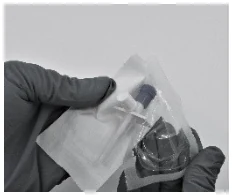 Figure 1 | |
| 9 | Take the provided dispensing pin and insert it into the stopper of the vial with the reconstituted product (Figure 2). | 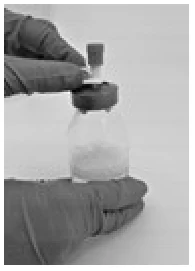 Figure 2 | |
| 10 | After the dispensing pin is inserted, remove the cap. After the cap is removed, do not touch the exposed surface. | ||
2 Peyvandi F, Haertel S, Knaub S, Mannucci PM. Incidence of bleeding symptoms in 100 patients with inherited afibrinogenemia or hypofibrinogenemia. J Thromb Haemost 2006. 2006 Jul;4(7):1634-7.
| 11 | Open the blister with the “syringe filter” provided with RiaSTAP (Figure 3). | 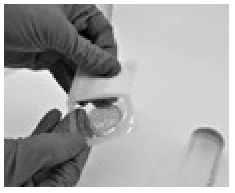 Figure 3 | ||
| 12 | Screw the syringe onto the filter (Figure 4). | 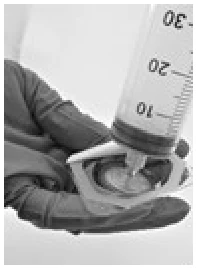 Figure 4 | ||
| 13 | Screw the syringe with the mounted filter onto the dispensing pin (Figure 5). | 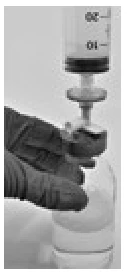 Figure 5 | ||
| 14 | Draw the reconstituted product into the syringe (Figure 6). | 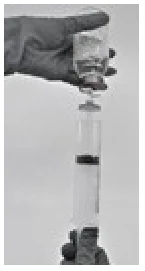 Figure 6 | ||
| 15 | When completed, remove the filter, dispensing pin and empty vial from the syringe, dispose of properly, and proceed with administration as usual. | |||
| 16 | Reconstituted product should be administered immediately by a separate injection/infusion line. | |||
After reconstitution, the RiaSTAP solution should be colorless and clear to slightly opalescent. Inspect visually for particulate matter and discoloration prior to administration. Do not use if the solution is cloudy or contains particulates. Do not freeze RiaSTAP solution. Discard partially used vials.
When reconstituted as directed, RiaSTAP has an approximate fibrinogen concentration of 20 mg/mL.
RiaSTAP is stable for 8 hours after reconstitution when stored at room temperature (+20°C to +25°C) and should be administered within this time period.
4.4. Administration
It is recommended that RiaSTAP be administered at room temperature by slow intravenous injection at a rate not exceeding 5 mL per minute (approximately 100 mg/minute).
RiaSTAP should not be mixed with other medicinal products or intravenous admixtures and should be administered through a separate injection site. Use aseptic technique when administering RiaSTAP.
RiaSTAP should be administered under the supervision of a physician.
4.5. Missed Dose
If a scheduled dose is missed, the healthcare provider should be contacted as soon as possible to reschedule. Missed dose should not be administered by the patient. The healthcare provider will determine the best course of action based on the treatment plan.
5. Overdose
In case of overdosage, the risk of thromboembolic complication is enhanced for patients at risk for these complications.
| For the most recent information in the management of a suspected drug overdose, contact your regional poison control centre or Health Canada’s toll-free number, 1-844 POISON-X (1-844-764-7669). |
|---|
- 6. Dosage Forms, Strengths, Composition, and Packaging
To help ensure the traceability of biologic products, healthcare professionals should record both the brand name and the non-proprietary (active ingredient) name as well as other product-specific identifiers such as the Drug Identification Number (DIN) and the batch/lot number of the product supplied.
Table 1 – Dosage Forms, Strengths, and Composition
The product package contains:
- one single-use RiaSTAP vial (with hanger attached),
- one single-use Sterile Water for Injection vial (50 mL),
- one syringe filter and
- one Mini-Spike® dispensing pin
RiaSTAP does not contain any preservatives. The components used in the packaging for RiaSTAP are latex-free.
| Route of Administration | Dosage Form/ Strength/Composition | Non-Medicinal Ingredients |
| Intravenous injection | Lyophilized powder for reconstitution and infusion (1g/vial; after reconstitution with 50 mL of Sterile Water for Injection approx. 20 mg/mL). | Human albumin, L-arginine hydrochloride, sodium chloride, sodium citrate |
The composition of each vial of RiaSTAP is as follows:
Description
RiaSTAP (Fibrinogen concentrate (Human), FCH) is a pasteurised, preservative free, lyophilised human fibrinogen concentrate. It is derived from human plasma and presented as a white powder for reconstitution with Sterile Water for Injection (provided with the product). RiaSTAP is to be intravenously (i.v.) administered at a maximum infusion rate of 5 mL per minute.
7. Warnings and Precautions
See 3 Serious Warnings and Precautions Box.
General
RiaSTAP (Fibrinogen concentrate (Human), FCH) is made from human plasma. For medicinal products prepared from human plasma the possibility of transmitting infective agents cannot be totally excluded. This applies to unknown or emerging viruses and other pathogens.
Taking into consideration the efficacy of donation screening and the virus inactivation/removal capacity of the manufacturing process it can be concluded that all measures taken during the production of RiaSTAP are effective for enveloped viruses such as HIV, HBV and HCV and for the non-enveloped virus HAV. The measures taken may be of limited value against non-enveloped viruses such as parvovirus B19. Parvovirus B19 infection may be serious for pregnant women (fetal infection) and for individuals with immunodeficiency or increased erythropoiesis (e.g., haemolytic anaemia).
Appropriate vaccination (hepatitis A and B) should be generally considered for patients in regular/repeated receipt of human plasma-derived products.
It is strongly recommended that every time that RiaSTAP is administered to a patient, the name and batch number of the product are recorded in order to maintain a link between the patient and the batch of the product. All infections suspected by a physician to have been transmitted by this product should be reported to CSL Behring (CSLB) at 1-866-773-7721. The physician should discuss the risks and benefits of this product with the patient.
Hematologic
Exercise caution when administering RiaSTAP to patients with a history of deep vein thrombosis, pulmonary embolism, arterial thrombosis or liver disease as there is a risk of thrombosis.
| Components | Amount in a 1 g Dosage Form (mg) |
| Human fibrinogen | 900-1300 |
| Human albumin | 400-700 |
| L-arginine hydrochloride | 375-660 |
| Sodium chloride | 200-350 |
| Sodium citrate | 50-100 |
Monitoring and Laboratory Tests
Determination of the patient’s fibrinogen level using an appropriate method, e.g., Clauss fibrinogen assay, is recommended before and during the treatment with RiaSTAP in order to avoid overdosing.
Sensitivity/Resistance
Allergic reactions may occur. If symptoms of allergic or early signs of hypersensitivity reactions
(including hives, generalized urticaria, tightness of the chest, wheezing, hypotension, and anaphylaxis) occur, immediately discontinue administration. The treatment required depends on the nature and severity of the reaction.
7.1. Special Populations
7.1.1. Pregnancy
The safety of RiaSTAP in human pregnancy has not been established in controlled clinical studies. Animal studies have not been conducted to assess the safety with respect to reproduction, development of the embryo or foetus, the course of gestation and peri- and postnatal development. The benefits and risks of administrating RiaSTAP to pregnant and nursing women should be carefully weighed.
7.1.2. Breastfeeding
It is unknown whether RiaSTAP is excreted in human milk. The use of RiaSTAP in lactating women has not been investigated in clinical trials. A risk to the suckling child cannot be excluded. A decision must be made whether to discontinue breastfeeding or to continue/abstain from RiaSTAP therapy taking into account the benefit of breastfeeding for the child and the benefit of therapy for the woman.
7.1.3. Pediatrics
Pediatrics (< 16 years): RiaSTAP studies have included subjects below the age of 16 years. In the pharmacokinetic study, 2 children (8 and 11 years), 3 adolescents (12, 14 and 16 years), were studied. Subjects less than 16 years of age (n = 4) had shorter half-life (69.9 ± 8.5h) and faster clearance (0.7 ± 0.1 mg/L) compared to adults (half-life: 82.3 ± 20.0h, clearance: 0.53 ± 0.1 mg/L). The number of subjects less than 16 years of age in this study limits statistical interpretation.
Exercise caution when administering to neonates as there is a risk of thrombosis.
7.1.4. Geriatrics
The safety of RiaSTAP in the geriatric population has not been studied, there was an insufficient number of subjects in this age group to determine whether they respond differently from younger subjects.
8. Adverse Reactions
8.1. Adverse Reaction Overview
The most serious adverse reactions observed in subjects treated with RiaSTAP (Fibrinogen concentrate (Human), FCH) during clinical studies or through post-marketing surveillance following RiaSTAP treatment are allergic-anaphylactic reactions and thromboembolic episodes including myocardial infarction, pulmonary embolism, deep vein thrombosis, and arterial thrombosis (see 7 Warnings and Precautions).
The most common adverse reactions that have been reported in clinical studies or through post-marketing surveillance following RiaSTAP treatment are allergic reactions and generalized reactions such as chills, fever, nausea, and vomiting.
8.2. Clinical Trial Adverse Reactions
Clinical trials are conducted under very specific conditions. Therefore, the frequencies of adverse reactions observed in the clinical trials may not reflect frequencies observed in clinical practice and should not be compared to frequencies reported in clinical trials of another drug.
The overall safety profile of RiaSTAP was derived from the standardized collection of safety data from the Pivotal study combined with the data collected in the 4 supporting clinical studies and the report from the clinical survey.
RiaSTAP was well tolerated in the Pivotal study. AEs were reported irrespective of causality and there were no infusion-related treatment-emergent AEs (TEAEs) nor any other significant TEAEs reported during this study. TEAEs were reported by only 2 of 15 subjects, and none of these were assessed by the investigators as related to study medication, were serious, or led to discontinuation from the study. All TEAEs were mild in intensity. The 2 subjects for whom TEAEs were reported experienced 4 events (epistaxis, gastroesophageal reflux symptoms, headache, and pain). Only 1 TEAE (headache) occurred within 72 hours of the end of infusion; all others occurred between 10 and 13 days after the end of infusion.
Very few subjects experienced AEs in the supportive studies (118 subjects). The majority of all AEs were mild in intensity. There was 1 SAE reported for 1 subject who developed venous thrombosis and non-fatal lung embolism outside of the study during drug surveillance. Possibly related AEs were reported for 4 subjects (fever, dyspnea, dizziness with blood pressure at 110/70 mmHg and elevated temperature). One subject experienced a reversible anaphylactic reaction with severe hypotension, cyanosis of lips and extremities, abdominal and pain in the back. Causal relationship of this anaphylactic reaction to the study drug is unknown.
8.2.1. Clinical Trial Adverse Reactions – Pediatrics
The safety and efficacy of FCH has not been systematically evaluated in children. Clinical information suggests there are no apparent differences in the safety and efficacy profiles as compared to adult subjects.
8.3. Less Common Clinical Trial Adverse Reactions
Due to the rare nature of this disease, e.g., congenital afibrinogenemia has an estimated incidence of 5 out of 10 million3; the clinical trial population was not large enough to allow for accurate observation and measurement of these less common adverse events.
3 Canadian Hemophilia Society paper “Factor I Deficiency FIBRINOGEN An Inherited Bleeding Disorder”, 2004. Canadian Hemophilia Society entitled “Factor I Deficiency FIBRINOGEN An Inherited Bleeding Disorder”
8.3.1. Less Common Clinical Trial Adverse Reactions – Pediatrics
Not applicable.
8.4. Abnormal Laboratory Findings: Hematologic, Clinical Chemistry, and Other Quantitative Data
Not applicable.
8.5. Post-Market Adverse Reactions
CSLB’s FCH was licensed in Europe (Germany) in 1985. Since 1986 (date of introduction), it has been used in several European countries and other regions of the world to treat and prevent bleeding in patients with congenital afibrinogenemia, hypofibrinogenemia, or certain types of dysfibrinogenemia (with bleeding tendency) or acquired fibrinogen deficiencies.
Assessment of post-marketing data was based on data collected by a post-marketing surveillance system capturing spontaneous reports, reports from the scientific literature, and reports of suspected adverse drug reactions (ADRs) from unsponsored clinical studies. The number of ADR reports was compared to the number of estimated single standard doses.
Adverse reactions reported in patients receiving RiaSTAP for treatment of fibrinogen deficiency include allergic-anaphylactic reactions (including rash, dyspnea, etc.), general reactions such as chills, fever, nausea, vomiting and thromboembolic complications such as myocardial infarction, pulmonary embolism, and deep vein thrombosis.
The following adverse reactions, identified by system organ class, have shown a possible causal relationship with RiaSTAP:
- Allergic-anaphylactic reactions: anaphylaxis, dyspnea, rash, tachypnea, hypotension, shock and tachycardia
- Cardiovascular: thromboembolism, pulmonary embolism
- General/Body as a whole: chills, fever, nausea, vomiting
Transmission of infectious viruses is a known risk of plasma-derived products including FCH. The specific production procedure for FCH that includes pasteurization assures a very high margin of virus safety. Within the reporting period there was no proven case of virus transmission by FCH.
There were no reports on development of inhibitory antibodies.
In subjects with severe disturbances of coagulation (e.g., DIC) or other severe diseases (e.g., neoplasia, myocardial infarction) a high mortality risk is to be expected related to the underlying disease but not to FCH.
In conclusion, the postmarketing experience is in good agreement with the findings obtained in the clinical studies.
9. Drug Interactions
9.2. Drug Interactions Overview
No interactions of FCH with other medicinal products or concurrent illnesses are known.
No formal drug interaction studies have been conducted with RiaSTAP, and to date no relevant interactions are known.
9.3. Drug-Behaviour Interactions
Not applicable
9.4. Drug-Drug Interactions
Interactions with other drugs have not been established.
9.5. Drug-Food Interactions
Interactions with food have not been established.
9.6. Drug-Herb Interactions
Interactions with herbal products have not been established.
9.7. Drug-Laboratory Test Interactions
Interactions with laboratory tests have not been established.
10. Clinical Pharmacology
10.1. Mechanism of Action
Normal hemostasis in humans requires sequential enzymatic activation of specific plasma proteins which interact with platelets and endothelial cells to form a blood clot which will prevent bleeding and allow for tissue regeneration, i.e. wound healing.
Fibrinogen (factor I) is a soluble glycoprotein found in the plasma, with the molecular weight of about 340kDa4. It comprises of three pairs of non-identical polypeptide chains. (Alpha, Beta, and Gamma chains)5,6,7 linked to each other by disulphide bonds. The genes for the fibrinogen subunits are located on the long arm of the chromosome 48. Fibrinogen has a biological half-life of about 3 days and is synthesized predominantly in the liver.
Fibrinogen is a physiological substrate of 3 enzymes: thrombin, factor XIII and plasmin. Thrombin splits off the A-Alpha and B-Beta chains from the fibrinogen molecule, thus releasing fibrinopeptides A and B (FPA and FPB, respectively). FPA is released rapidly. The remaining molecule is a soluble fibrin monomer (fibrin I). The far slower removal of FPB results in the formation of fibrin II, which is capable of polymerization9.
The polymerization occurs by first end-to-end and then side-to-side aggregation of fibrin monomers.
4 Caspary EA, Kekwick RA. Some physicochemical properties of human fibrinogen. Biochem J. 1957 Sep; 67(1):41-48.
5 Hantgan RR, Francis CW, Marder VJ. Fibrinogen structure and physiology. In:Hemostasis and Thrombosis:Basic Principles and Clinical Practice (3rd ed). Colman RW, Hirsh J, Marder VJ, Salzman EW (eds). J.B. Lippincott Company, Philadelphia 1994:277-300.
6 Blombäck B, Hessel B, Hogg D. Disulfide bridges in NH2-terminal part of human fibrinogen. Thromb Res. 1976 May;8(5):639-58.
7 Blombäck B, Blombäck M, Henschen A, Hessel B, Iwanaga S, Woods KR. N-terminal disulphide knot of human fibrinogen. Nature. 1968 Apr 13;218(5137):130-4.
8 Kant JA, Fornace AJ Jr, Saxe D, Simon MI, McBride OW, Crabtree GR. Evolution and organization of the fibrinogen locus on chromosome 4:Gene duplication accompanied by transposition and inversion. Proc Natl Acad Sci USA. 1985 Apr;82(8):2344-8.
9 Smith GF, Bang NU. Formation of soluble fibrin polymers. Fibrinogen degradation fragments D and E fail to form soluble complexes with fibrin monomer. Biochem. 1972 Aug 1;11(16):2958-66.
The resulting fibrin (urea soluble) is stabilized in the presence of calcium ions by the activated factor XIII which acts as a transglutaminase10. Factor XIIIa-induced cross-linking of fibrin polymers renders the fibrin clot more elastic and more resistant to fibrinolysis11. Cross-linked fibrin is the end result of the coagulation cascade and provides tensile strength to a primary hemostatic platelet plug and structure to the vessel wall as normal repair processes take place.
Fibrin is cleaved by activated plasmin resulting in clot lysis and an accompanied generation of various fibrin fragments such as D-Dimer, D and E fragments and others.
10.2. Pharmacodynamics
The pharmacodynamic properties of human fibrinogen are well documented in the literature7 and RiaSTAP has a pharmacodynamic profile which is similar to that of endogenous fibrinogen.
10.3. Pharmacokinetics
Pharmacokinetic (PK) parameters were assessed in the Pivotal clinical trial BI3023_2001 through the analysis of plasmatic fibrinogen activity. A prospective, open label, uncontrolled, multicenter pharmacokinetic study was conducted in 5 females and 9 males with congenital fibrinogen deficiency (afibrinogenemia), ranging in age from 8 to 61 years (2 children, 3 adolescents, 9 adults). Each subject received a single intravenous dose of 70 mg/kg RiaSTAP. Blood samples were drawn from the patients to determine the fibrinogen activity at baseline and up to 14 days after the infusion. The pharmacokinetic parameters of RiaSTAP are summarized in Table 2.
No statistically relevant difference was observed between males and females for fibrinogen activity. Subjects less than 16 years of age (n=4) had shorter half-life (69.9 ± 8.5), and faster clearance (0.73 ± 0.14) compared to subjects >16 years of age. The number of subjects less than 16 years of age in this study limits statistical interpretations.
The incremental in vivo recovery (IVR) was determined from levels obtained up to 4 hours post-infusion. The median incremental IVR was 0.017 g/L (range 0.013 – 0.0273 g/L) increase per mg/kg. The median in vivo recovery indicates that a dose of 70 mg/kg will increase patients’ fibrinogen plasma concentration by approximately 1.2 g/L.
Median fibrinogen plasma activity level reached its maximum, 1.30 g/L, within 1 hour of RiaSTAP administration.
The pharmacokinetic analysis using fibrinogen antigen data (ELISA) was concordant with the fibrinogen activity (Clauss assay).
10 Schwartz ML, Pizzo SV, Hill RL, McKee PA. The effect of fibrin-stabilizing factor on the subunit structure of human fibrin. J Clin Invest. 1971 Jul;50(7):1506-13.
11 McDonagh RP Jr, McDonagh J, Duckert F. The influence of fibrin crosslinking on the kinetics of urokinase-induced clot lysis. Br J Haematol. 1971 Sep;21(3):323-32.
Table 2 – PK parameters for fibrinogen activity (PK PP population)
| Parameters | Mean ± SD | Median (range) |
| t1/2 (h) | 78.7 ± 18.13 | 77.1 (55.73-117.26) |
| Cmax (g/L) | 1.4 ± 0.27 | 1.3 (1.00-2.10) |
| AUCa (days·kg) (h*mg/mL) | 124.3 ± 24.16 | 126.8 (81.73-156.40) |
| Extrapolated part of AUC (%) | 8.4 ± 1.72 | 7.8 (6.13-12.14) |
| Cl (mL/h/kg) | 0.59 ± 0.13 | 0.55 (0.45-0.86) |
| MRT (h) | 92.8 ± 20.11 | 85.9 (66.14-126.44) |
| Vss (mL/kg) | 52.7 ± 7.48 | 52.7 (36.22-67.67) |
| Incremental IVRb ([mg/dL]/[mg/kg]) | - | 1.7 (1.30-2.73) |
| Classical IVRb (%) | - | 61.8 (52.45-97.43) |
AUC = area under the concentration-time curve; Cl = clearance; Cmax = maximum concentration within 4 hours;
h = hours; MRT = mean residence time; IVR = in vivo recovery; PK PP = pharmacokinetic analysis population; SD = standard deviation;
t1/2 = terminal elimination half-life; Vss = volume of distribution at steady state.
a Standardized to a dose of 70 mg/kg in Study 2001.
b Incremental IVR and classical IVR values were not collected in BI3023_2002 but are referenced from Study 7MN-101FM
Absorption
Since RiaSTAP is administered intravenously, the product is available immediately. Bioavailability is proportional to the dose administered.
Distribution
RiaSTAP is distributed in the organism in the same manner as endogenous fibrinogen.
Metabolism
RiaSTAP is metabolized in the same way as endogenous fibrinogen.
Elimination
RiaSTAP is excreted in the same manner as endogenous fibrinogen.
10.4. Immunogenicity
Not applicable.
- 11. Storage, Stability, and Disposal
RiaSTAP can be stored either in a refrigerator or stored at room temperature between +2oC to +25oC. RiaSTAP (Fibrinogen concentrate (Human), FCH) is stable for the period indicated by the expiration date on the outer carton and vial label. Keep RiaSTAP in its original carton until ready to use. Do not freeze. Protect from light. The shelf life of RiaSTAP is 60 months.
12. Special Handling Instructions
Any unused product or waste material should be disposed of in accordance with local requirements. Do not use if the solution is cloudy or contains particulates.
Part 2: Scientific Information
13. Pharmaceutical Information
Drug Substance
Non-proprietary name of the drug substance: Fibrinogen concentrate (Human), FCH
Molecular formula and molecular mass: 340 kDa
Structure: Fibrinogen (factor I) is a soluble plasma glycoprotein which circulates in the plasma and is a precursor of fibrin. The native molecule is a homo-dimer in which both subunits consist of three different polypeptide chains (Aα, Bβ, and γ). All three polypeptide chains of the subunits, as well as the dimer, are linked with disulfide bonds. The three pairs of polypeptide chains, named Aα, Bβ, and γ, are composed of 610, 461, and 411 amino acids, respectively.
Physicochemical properties: Fibrinogen concentrate (Human), FCH is soluble in water. Once reconstituted with Sterile Water for Injection, RiaSTAP gives a colorless and clear to slightly opalescent solution. This solution has a pH of 6.5 to 7.5.
Product Characteristics
RiaSTAP (Fibrinogen concentrate (Human), FCH) is a purified and lyophilised concentrate of fibrinogen derived from human plasma. It is presented as a white powder to be reconstituted with Sterile Water for Injection. After reconstitution, RiaSTAP is administered via intravenous infusion.
Viral Inactivation
RiaSTAP is produced from pooled human plasma from healthy donors. In addition to strict donor selection, a range of precautions have been implemented to eliminate, or minimize to the greatest extent possible, the risk for potential transmission of infectious and/or pathogenic viruses to subjects being treated with RiaSTAP. The principal measures used to ensure the virus safety of plasma used in the manufacture of RiaSTAP are:
- a) selection of plasma collection centers and plasma donors,
- b) screening of each donation for the absence of viral markers and
- c) discarding any plasma donation in inventory hold, retrospectively suspected to contain viruses based on look-back information.
Finally, the manufacture of RiaSTAP comprises several virus inactivation and removal steps. One such step particularly effective is a pasteurisation procedure in which an aqueous stabilized solution of the product is treated at 60°C for 20 hours.
RiaSTAP is manufactured from cryoprecipitate into a glycine precipitate, which is then further purified by multiple precipitation/adsorption steps. The manufacturing process has been demonstrated to reduce the risk of virus transmission in an additive manner: cryoprecipitation, Al(OH)3 adsorption/ glycine precipitation/ Al(OH)3 adsorption, heat treatment (+60ºC for 20 hours in an aqueous solution), and two subsequent glycine precipitation steps (initial and main glycine precipitation steps). These steps have been validated independently in a series of in vitro experiments for their capacity to inactivate and/or remove both enveloped and non-enveloped viruses.
14. Clinical Trials
14.1. Clinical Trials by Indication
Congenital Fibrinogen Deficiency
The pharmacokinetic study evaluated the single-dose PK (see 10.3 Pharmacokinetics) and maximum clot firmness (MCF) in subjects with afibrinogenemia. MCF was determined by thromboelastometry (ROTEM) testing. MCF was measured to demonstrate functional activity of replacement fibrinogen when a fixed dose of RiaSTAP was administered. Clot firmness is a functional parameter that depends on: activation of coagulation, fibrinogen content of the sample and polymerization/crosslinking of the fibrin network. Thromboelastometry has been shown to be a functional marker for the assessment of fibrinogen content and for the effects of fibrinogen supplementation on clinical efficacy12.
For each subject, the MCF was determined before (baseline) and one hour after the single dose administration of RiaSTAP. RiaSTAP was found to be effective in increasing clot firmness in patients with congenital fibrinogen deficiency (afibrinogenemia) as measured by thromboelastometry. The study results demonstrated that the MCF values were significantly higher after administration of RiaSTAP than at baseline (see Table 3). The mean change from pre-infusion to 1 hour post-infusion was 8.9 mm in the primary analysis (9.9 mm for subjects < 16 years old and 8.5 mm for subjects ≥ 16 to < 65 years old). The mean change in MCF values closely approximated the levels expected from adding known amounts of fibrinogen to plasma in vitro13. Hemostatic efficacy in acute bleeding episodes, and its correlation with MCF, are being verified in a postmarketing study.
Table 3 – Maximum Clot Firmness (MCF) values (in mm) – ITT Population
| Time point | N | Mean ± SD | Median (range) |
| Pre-infusion | 13 | 0 ± 0 | 0 (0-0) |
1 hours post-infusion (PP population) | 13 | 10.3 ± 2.7 | 10.0 (6.5-16.5) |
| Mean change (primary analysis) | 15b | 8.9 ± 4.4 | 9.5 (0-16.5) |
MCF= maximum clot firmness; mm= millimetre; ITT = intention-to-treat
a p-value was <0.0001.
b The mean change was set to 0 for 2 subjects with missing MCF data.
15. Microbiology
No microbiological information is required for this drug product.
16. Non-Clinical Toxicology
Acute toxicity studies were performed in mice and rats, local toxicity studies were conducted in rabbits and neoantigenicity study was also performed in rabbits and guinea pigs.
12 Henschen AH. Human fibrinogen – structural variants and functional sites. Thrombosis and Haemostasis. 1993 Jul 1;70(1):42-7.
13 Fries D, Innerhofer P, Reif C, Streif W, Klingler A, Schobersberger W, Velik-Salchner C, Friesenecker B. The Effect of Fibrinogen Substitution on Reversal of Dilutional Coagulopathy: An In Vitro Model. Anesth Analg. 2006 Feb;102(2):347-51.
General toxicology
Single-dose toxicity studies
The acute toxicity of FCH was investigated in the mouse model following a single intravenous (i.v.) administration of FCH via the tail vein. Three groups, each consisting of 5 male and 5 female mice, received FCH doses of 250, 500 or 1000 mg/kg b.w. A forth group of 5 male and 5 female served as control and received isotonic saline. The application volume was 50 mL/kg for all the groups. The rate of infusion was 1 mL/min. Criteria evaluated to assess FCH’s effects included survival, clinical signs, body weight data and gross pathology. The study showed that all the FCH doses administered were tolerated without any reported adverse reactions. All the animals survived the scheduled end of the study (2 weeks after the administration of FCH). Body weight gain of the animals was normal in all the groups. Macroscopic examination revealed no FCH-related findings.
The acute toxicity of FCH was investigated in the rat model following a single i.v. administration of FCH via the tail vein. Three groups each consisting of five male and five female rats, received FCH doses of 100, 200 or 300 mg/kg b.w. A forth group of 5 male and 5 female served as control and received isotonic saline. The application volume was 15 mL/kg for all the groups. The rate of infusion was 5 mL/min. Criteria evaluated to assess FCH’s effects included survival, clinical signs, body weight data and gross pathology. The study showed that all the FCH doses administered were tolerated without any reported adverse reactions. All the animals survived the scheduled end of the study (2 weeks after the administration of FCH). Body weight gain of the animals was normal in all the groups. Macroscopic examination revealed no FCH-related findings.
Repeat-dose toxicity studies
Because FCH is an heterologous protein for experimental animals, and thus highly immunogenic, the repeat-dose toxicity studies were not performed.
Local tolerance studies
Local tolerance studies were performed in the rabbit model to investigate adverse local effects of FCH following i.v. administration, the intended clinical route of administration, as well as misapplication of the product, i.e following intra-arterial (i.a.) and paravenous (p.v.) administration.
Local tolerance after a single i.v. administration of FCH via the ear vein was performed in 5 female rabbits. The animals received 100 mg of FCH in 5 mL of water for injection. The same animals received an i.v. injection of isotonic saline in the vein of the other ear. The injection site of only two animals treated with FCH exhibited moderate hemorrhages; one control site also showed a slight hemorrhage. FCH can therefore be regarded as locally tolerable after an i.v. injection.
Local tolerance after a single i.a. administration of FCH into the ear was performed in 5 female rabbits. The animals received 100 mg of the protein in 5 mL of water for injection. The same animals received an i.a. injection of isotonic saline in the other ear. None of the injection sites treated with FCH exhibited any relevant clinical or histopathological alteration in the injected area. FCH can therefore be regarded as locally tolerable after an i.a. injection.
Local tolerance after a single p.v. administration of FCH into the ear was performed in 5 female rabbits. The animals received 2 mg of the protein in 0.1 mL of water for injection. The same animals received a p.v. injection of isotonic saline in the other ear. None of the injection sites treated with FCH exhibited any relevant clinical or histopathological alteration in the injected area. FCH can therefore be regarded as locally tolerable after a p.v. injection.
Genotoxicity
No studies on the genotoxic potential of FCH were performed. Human fibrinogen is a physiological constituent of the normal human plasma and an induction of adverse effects on the reproductory functions or on the fetus is not to be expected.
Carcinogenicity
FCH contains fibrinogen which is a human protein circulating in the blood. It is unlikely that meaningful or realistic data could be obtained from studies involving long-term exposure of laboratory animals to plasma proteins. Because it was neither practicable nor relevant to undertake carcinogenicity testing of fibrinogen, no such studies were performed.
Reproductive and developmental toxicology
No reproduction and development toxicity studies were performed for FCH. Since FCH is of human origin, it is catabolised in the same manner as the patient’s own protein. These physiological constituents of the human blood are not expected to induce adverse effects on reproduction or on the foetus.
Special toxicology
Neoantigenicity studies were performed to address the potential formation of neoepitopes resulting from the pasteurization step in the manufacturing process of FCH.
A first study was performed using 4 groups of 5 rabbits each. The rabbits were immunized subcutaneously with HPFC which was either: unheated (Group 1); heated at +60°C for 20 hours, i.e., the routine production conditions (Group 2); unheated (Group 3) or heated at +60°C for 10 hours (Group 4). All the animals received 3 immunisations in weekly intervals. All the HFPC preparations were emulsified in Freund´s adjuvant. Antibodies against the immunising agent were detected in all the sera sampled on Day 22 in the Ouchterlony immunodifusion test. Adsorption of the sera from Groups 2 and 4 with the conventional (unheated) product completely removed the precipitating antibodies. Adsorption of the antibodies was demonstrated in the Ouchterlony test and in the passive cutaneous anaphylaxis (PCA) test in guinea pigs (sera taken at day 33 after the first immunization). It was concluded that heating at +60°C for 10 or 20 hours did not induce the formation of new antigenic determinants in the product.
A second study was conducted with FCH where it was administered i.v. in the absence of Freund´s adjuvant to immunize the rabbits. To detect neoepitopes, native western blots were used as the endpoint assay. Six rabbits (male and female) were immunized with either the pasteurized or non-pasteurized FCH. Fibrinogen concentrate (Human) (FCH) was administered 3 times intravenously at a dose of 100 mg/kg. Blood was sampled 30-40 days after the first administration and immunoglobulins were isolated. One rabbit died after the third immunization with the sign of an anaphylactic shock. This was due to the immune reaction against the human protein in rabbits and was not relevant for the situation in humans as FCH is not immunogenic for humans. Immuno-blots probed with non-blocked antibodies showed the similar banding patterns for both the pasteurized and the non-pasteurized product. Immuno-blots probed with blocked antibodies showed no detectable antibody reactivity. It was concluded that neoantigens could not be detected in the pasteurized HFC even after using the native-western blots as a sensitive endpoint assay.