


Patient Medication Information: uses, side effects, how to take - Riastap
Serious warnings and precautions box
What RiaSTAP is used for:
- RiaSTAP is used for treatment of bleeding in patients with a congenital lack of fibrinogen (hypo- or afibrinogenemia) with bleeding tendency.
How RiaSTAP works:
RiaSTAP contains human fibrinogen which is a protein important for blood clotting (coagulation). Lack of fibrinogen means that the blood does not clot as quickly as it should, which results in an increased tendency of bleeding. The replacement of human fibrinogen with RiaSTAP will correct the coagulation defect.
The ingredients in RiaSTAP are:
Medicinal ingredient: Human fibrinogen
Non-medicinal ingredients: Human albumin, L-arginine hydrochloride, sodium chloride, sodium citrate, sodium hydroxide (for pH adjustment).
RiaSTAP comes in the following dosage form(s):
RiaSTAP is a lyophilized powder to be reconstitution with 50 mL of Sterile Water for Injection (provided with the product) prior to being administered by intravenous injection. Each single product vial contains 1 g fibrinogen; after reconstitution with 50 mL of Sterile Water for Injection approximately 20 mg/mL.
|
The product package contains one single-use RiaSTAP vial (with hanger attached), one single-use Sterile Water for Injection vial (50 mL), one syringe filter and one Mini-Spike® dispensing pin. RiaSTAP does not contain any preservatives. The components used in the packaging for RiaSTAP are latex-free.
Do not use RiaSTAP if:
- You are hypersensitive (allergic) to human fibrinogen or any other ingredients of RiaSTAP.
To help avoid side effects and ensure proper use, talk to your healthcare professional before you take RiaSTAP. Talk about any health conditions or problems you may have, including if you:
- have experienced allergic reactions to RiaSTAP in the past.
- experience allergic or anaphylactic-type reactions during the treatment with RiaSTAP (a serious allergic reaction that causes severe difficulty in breathing or dizziness). The administration of RiaSTAP should be stopped immediately (i.e. discontinue injection).
are at an increased risk of blood clots in a blood vessel (thrombosis), particularly:
- in case of a high dose or repeated dosing
- if you have had a heart attack (a history of coronary heart disease or myocardial infarction)
- if you suffer from liver disease
- if you have just had surgery (patients postoperatively)
- if you will be having surgery soon (patients preoperatively)
- in newborn infants (neonates)
- if you are more likely to suffer from blood clots than normal (patients at risk of thromboembolic phenomena or disseminated intravascular coagulation)
are pregnant or breastfeeding
Your doctor or healthcare professional will consider carefully the benefit of treatment with RiaSTAP compared with the risk of these complications.
Tell your healthcare professional about all the medicines you take, including any drugs, vitamins, minerals, natural supplements or alternative medicines.
The following may interact with RiaSTAP:
- To date, no relevant interactions are known.
How to take RiaSTAP:
It is recommended that RiaSTAP be administered at room temperature by intravenous injection at a rate not exceeding 5 mL per minute (approximately 100 mg/minute).
RiaSTAP should not be mixed with other medicinal products or intravenous admixtures and should be administered through a separate injection site. Use aseptic technique when administering RiaSTAP.
The procedures below are provided as general guidelines for preparation and reconstitution of RiaSTAP.
Do not use RiaSTAP beyond the expiration date. RiaSTAP contains no preservative.
Reconstitute RiaSTAP at room temperature as follows:
| 1 | Ensure that the diluent and RiaSTAP product vials are at room temperature. | |||
| 2 | RiaSTAP should be reconstituted with 50 mL Sterile Water for Injection (diluent). | |||
| 3 | Wash hands or use gloves before reconstituting the product. | |||
| 4 | Remove the cap from the product vial to expose the central portion of the rubber stopper. | |||
| 5 | Clean the surface of the rubber stopper with an antiseptic solution and allow it to dry. | |||
| 6 | Using an appropriate transfer device or syringe, transfer 50 mL of Sterile Water for Injection into the product vial. | |||
| 7 | Gently swirl the product vial to ensure the product is fully dissolved (generally 5 to 10 minutes). Do not shake the vial which causes formation of foam. | |||
| 8 | Open the plastic blister containing the Mini-Spike dispensing pin provided with RiaSTAP (Figure 1). | 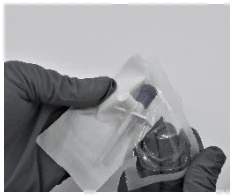 Figure 1 | ||
| 9 | Take the provided dispensing pin and insert it into the stopper of the vial with the reconstituted product (Figure 2). | 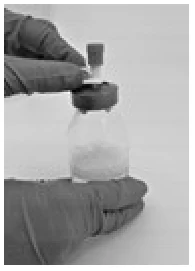 Figure 2 | ||
| 10 | After the dispensing pin is inserted, remove the cap. After the cap is removed, do not touch the exposed surface. | |||
| 11 | Open the blister with the “syringe filter” provided with RiaSTAP (Figure 3). | 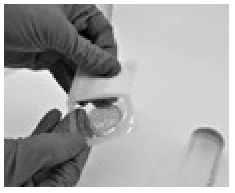 Figure 3 | ||
| 12 | Screw the syringe onto the filter (Figure 4). | 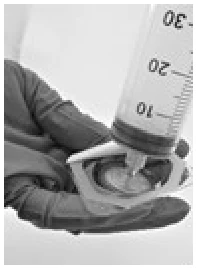 Figure 4 | ||
| 13 | Screw the syringe with the mounted filter onto the dispensing pin (Figure 5). | 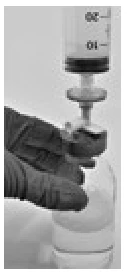 Figure 5 | ||
| 14 | Draw the reconstituted product into the syringe (Figure 6). | 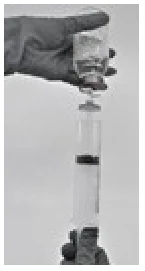 Figure 6 | ||
| 15 | When completed, remove the filter, dispensing pin and empty vial from the syringe, dispose of properly, and proceed with administration as usual. | |||
| 16 | Reconstituted product should be administered immediately by a separate injection/infusion line. | |||
After reconstitution, the RiaSTAP solution should be colorless and clear to slightly opalescent. Inspect visually for particulate matter and discoloration prior to administration. Do not use if the solution is cloudy or contains particulates. Do not freeze RiaSTAP solution. RiaSTAP is stable for 8 hours after reconstitution when stored at room temperature and should be administered within this time period. Discard partially used vials.
Usual dose:
Every patient is different. The dose of RiaSTAP to be administered and the frequency of administration are based on the extent of bleeding, laboratory values, and the clinical condition of the individual patient. Determination of the patient’s fibrinogen level is recommended before and during the treatment.
If the patient’s fibrinogen level is not known, the recommended dose is an intravenous administration of 70 mg/kg body weight.
Overdose:
In case of overdosage, the risk of thromboembolic complication is enhanced for patients at risk for these complications.
| If you think you, or a person you are caring for, have taken too much RiaSTAP, contact a healthcare professional, hospital emergency department, regional poison control centre or Health Canada’s toll-free number, 1-844 POISON-X (1-844-764-7669) immediately, even if there are no signs or symptoms. |
|---|
Missed dose:
If a scheduled dose is missed, please contact your healthcare provider as soon as possible to reschedule. The healthcare provider will determine the best course of action based on your treatment plan.
Possible side effects from using RiaSTAP:
Like all medicines, RiaSTAP can cause side effects, although not everybody gets them.
Please contact your doctor or healthcare professional immediately:
- If any of the side effects occur
- If you notice any side effects not listed in this leaflet (see section Do not use RiaSTAP if:
of this Patient Medication Information).
The following side effects have been observed rarely:
- Increase in body temperature
- A sudden allergic reaction (such as reddening of the skin, skin rash over the whole body, fall in blood pressure, difficulty in breathing).
The following side effects have been observed very rarely:
- Risk of increased formation of blood clots.
This is not a complete list of side effects. For any unexpected effects while taking RiaSTAP, contact your doctor or healthcare professional.
Reporting side effects
You can report any suspected side effects associated with the use of health products to Health Canada by:
NOTE: Contact your healthcare professional if you need information about how to manage your side effects. The Canada Vigilance Program does not provide medical advice. |
* We recommend that CSL Behring Canada, Inc. be copied when reporting suspected side effects, at the following address:
adversereporting@cslbehring.com
Storage:
RiaSTAP can be stored either in a refrigerator or stored at room temperature between +2oC to +25oC. Do not use the product after the expiration date. Keep RiaSTAP in its original carton until ready to use. Do not freeze. Protect from light. The shelf life of RiaSTAP is 60 months.
Keep out of reach and sight of children.
If you want more information about RiaSTAP:
- Talk to your healthcare professional
- Find the full product monograph that is prepared for healthcare professionals and includes the Patient Medication Information by visiting the Health Canada Drug Product Database website (https://www.canada.ca/en/health-canada/services/drugs-health-products/drug-products/drug-product-database.html); the manufacturer’s website (www.cslbehring.ca); or by calling 1-866-773-7721.
Date of Authorization: August 24, 2026