


Product Monograph - Flumist Quadrivalent
RECENT MAJOR LABEL CHANGES
Not Applicable.
TABLE OF CONTENTS
Sections or subsections that are not applicable at the time of authorization are not listed.
RECENT MAJOR LABEL CHANGES ......................................................................................... 2
TABLE OF CONTENTS ............................................................................................................... 2
PART I: HEALTH PROFESSIONAL INFORMATION .................................................................. 4
1 INDICATIONS ................................................................................................................... 4
1.1 Pediatrics ................................................................................................................. 4
1.2 Geriatrics ................................................................................................................. 4
2 CONTRAINDICATIONS ................................................................................................... 4
4 DOSAGE AND ADMINISTRATION .................................................................................. 4
4.2 Recommended Dose and Dosage Adjustment ....................................................... 4
4.4 Administration .......................................................................................................... 5
5 OVERDOSAGE ................................................................................................................ 6
6 DOSAGE FORMS, STRENGTHS, COMPOSITION AND PACKAGING ......................... 6
7 WARNINGS AND PRECAUTIONS .................................................................................. 7
7.1 Special Populations ................................................................................................. 9
7.1.1 Pregnant Women ............................................................................................... 9
7.1.2 Breast-feeding ................................................................................................... 9
7.1.3 Pediatrics ........................................................................................................... 9
7.1.4 Geriatrics ........................................................................................................... 9
8 ADVERSE REACTIONS ................................................................................................. 10
8.1 Adverse Reaction Overview .................................................................................. 10
8.2 Clinical Trial Adverse Reactions ............................................................................ 10
8.2.1 Clinical Trial Adverse Reactions – Pediatrics .................................................. 13
8.5 Post-Market Adverse Reactions ............................................................................ 16
9 DRUG INTERACTIONS .................................................................................................. 16
9.4 Drug-Drug Interactions .......................................................................................... 16
9.5 Drug-Food Interactions .......................................................................................... 17
9.6 Drug-Herb Interactions .......................................................................................... 17
9.7 Drug-Laboratory Test Interactions ......................................................................... 17
10 CLINICAL PHARMACOLOGY ....................................................................................... 17
10.1 Mechanism of Action ....................................................................................... 17
10.2 Pharmacodynamics ......................................................................................... 18
11 STORAGE, STABILITY AND DISPOSAL ...................................................................... 19
12 SPECIAL HANDLING INSTRUCTIONS ......................................................................... 19
PART II: SCIENTIFIC INFORMATION ....................................................................................... 20
13 PHARMACEUTICAL INFORMATION ............................................................................ 20
14 CLINICAL TRIALS ......................................................................................................... 20
14.1 Clinical Trials by Indication .............................................................................. 20
Active Immunization Against Influenza ........................................................................... 20
14.3 Immunogenicity ............................................................................................... 26
15 MICROBIOLOGY ............................................................................................................ 26
16 NON-CLINICAL TOXICOLOGY ..................................................................................... 26
PATIENT MEDICATION INFORMATION .................................................................................. 29
PART I: HEALTH PROFESSIONAL INFORMATION
1 INDICATIONS
FLUMIST QUADRIVALENT [influenza vaccine (live, attenuated)] is indicated for the active immunization of individuals 2-59 years of age against influenza caused by virus subtypes A, and type B contained in the vaccine.
1.1 Pediatrics
Pediatrics (2 – 18 years of age): Based on the data submitted and reviewed by Health Canada, the safety and efficacy of FLUMIST QUADRIVALENT in pediatric patients has been established. Therefore, Health Canada has authorized an indication for pediatric use (see 8.2.1 Clinical Trial Adverse Reactions – Pediatrics and 14 CLINICAL TRIALS).
1.2 Geriatrics
Geriatrics (> 59 years of age): No data are available to Health Canada; therefore, Health Canada has not authorized an indication for geriatric use.
2 CONTRAINDICATIONS
FLUMIST QUADRIVALENT [influenza vaccine (live, attenuated)] is contraindicated in individuals with:
- a history of hypersensitivity, especially anaphylactic reactions, to gentamicin, gelatin, or arginine or to any other non-medicinal ingredient in the formulation, or component of the container. For a complete listing, see 6 DOSAGE FORMS, STRENGTHS, COMPOSITION AND PACKAGING.
- severe allergic reaction (e.g., anaphylaxis) to eggs or to egg proteins (e.g., ovalbumin).
- a history of hypersensitivity to previous influenza vaccination.
4 DOSAGE AND ADMINISTRATION
4.2 Recommended Dose and Dosage Adjustment
FLUMIST QUADRIVALENT [influenza vaccine (live, attenuated)] is a spray for intranasal administration by a health care professional. The recommended dose for previously vaccinated and unvaccinated children and adults is:
| Age Group | Vaccination Status | Dosage Schedule |
| Children (2-8 years) | Not previously vaccinated with seasonal influenza vaccine | 2 doses (0.2 mLa each, at least 4 weeks apart) |
| Previously vaccinated with seasonal influenza vaccine | 1 dose (0.2 mLa) | |
| Children, adolescents and adults 9-59 years | Not applicable | 1 dose (0.2 mLa) |
aAdminister as 0.1 mL per nostril
For children 2-8 years of age not previously vaccinated with seasonal influenza vaccine, 2 doses of FLUMIST QUADRIVALENT, 4 weeks apart, is recommended.
Annual revaccination with influenza vaccine is recommended because immunity declines over time, and because circulating strains of influenza virus can change from year to year.
4.4 Administration
Do not use FLUMIST QUADRIVALENT if damaged, for example if the plunger is loose or displaced from the sprayer or if there are any signs of leakage.
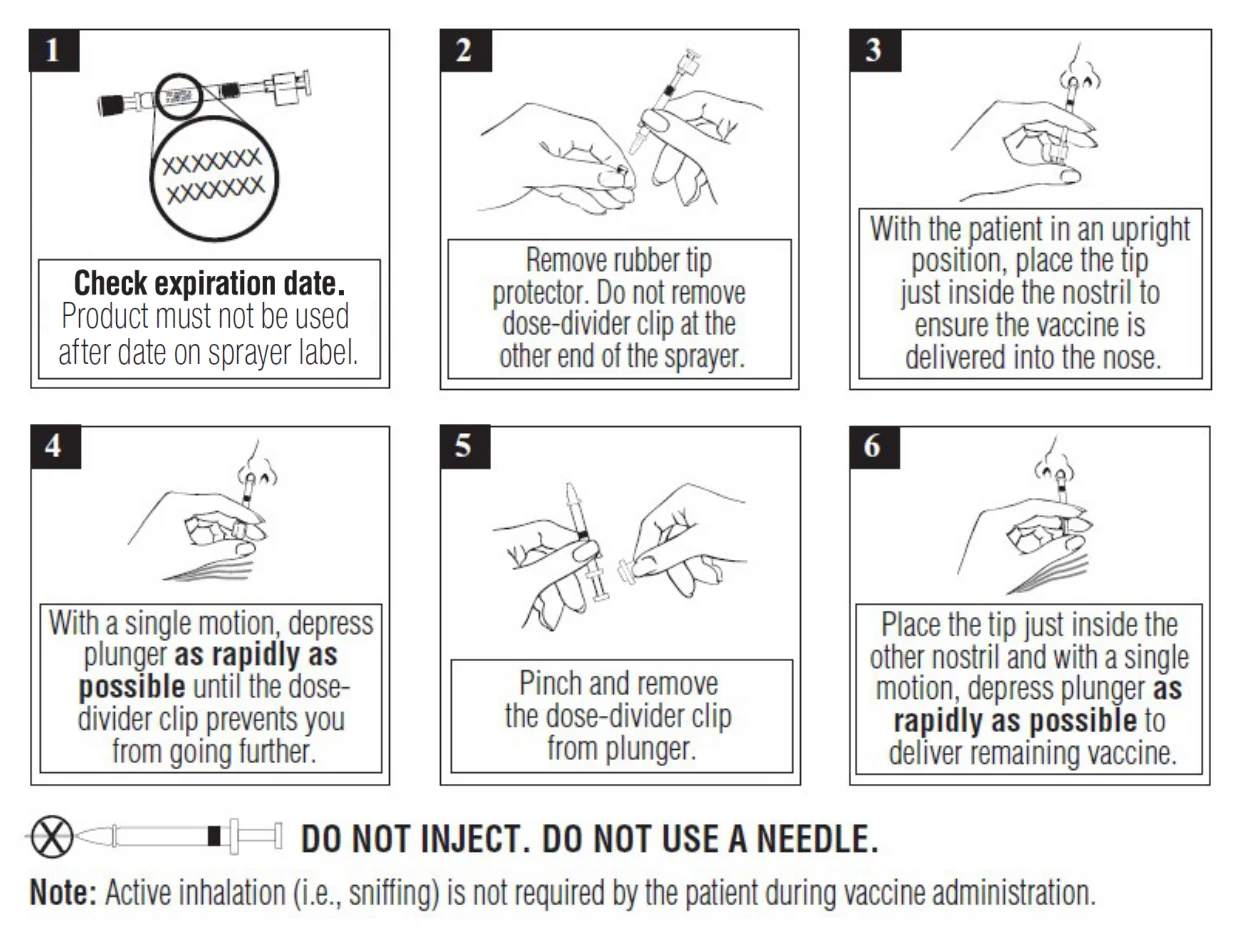
Each sprayer (shown in Figure 1) contains a single dose of FLUMIST QUADRIVALENT; approximately one-half of the contents should be administered into each nostril. Refer to the administration diagram (Figure 2) for step-by-step administration instructions. Once FLUMIST QUADRIVALENT has been administered, the sprayer should be disposed of according to the standard procedures for medical waste (e.g., sharps container or biohazard container).
Figure 1
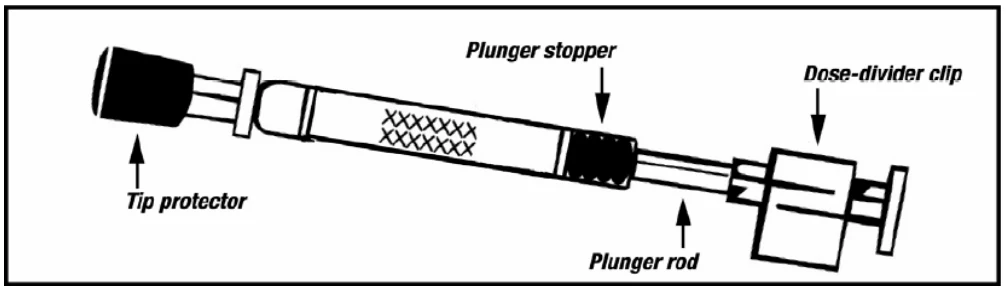
Figure 2
5 OVERDOSAGE
No data are available relevant to overdose with FLUMIST QUADRIVALENT [influenza vaccine (live, attenuated)] vaccine.
| For management of a suspected drug overdose, contact your regional poison control centre. |
|---|
6 DOSAGE FORMS, STRENGTHS, COMPOSITION AND PACKAGING
To help ensure the traceability of vaccines for patient immunization record-keeping as well as safety monitoring, health professionals should record the time and date of administration, quantity of administered dose (if applicable), anatomical site and route of administration, brand name and generic name of the vaccine, the product lot number and expiry date.
FLUMIST QUADRIVALENT is supplied as a 0.2 mL pre-filled, single-use glass sprayer (see Figure 1) and is available as a package of 10 sprayers, 5 sprayers, and a package of 1 sprayer.
Each 0.2 mL dose contains 106.5-7.5 FFU of live attenuated influenza virus reassortants of each of the four strains for the specific season. The four strains used for the 2024-2025 season are: A/Norway/31694/2022 (H1N1) (A/Victoria/4897/2022 (H1N1)pdm09-like virus), A/Thailand/8/2022 (H3N2), B/Phuket/3073/2013 (Yamagata lineage), and B/Austria/1359417/2021 (Victoria lineage).
FLUMIST QUADRIVALENT [influenza vaccine (live, attenuated)] contains no preservatives (e.g., no thimerosal). The intranasal sprayer contains no latex.
7 WARNINGS AND PRECAUTIONS
General
Clinical data presented in this section include studies conducted with FLUMIST [influenza vaccine (live attenuated)], an influenza vaccine containing three strains. These data are relevant because FLUMIST QUADRIVALENT and FLUMIST are manufactured using the same process and have overlapping compositions.
Prior to administration of any dose of FLUMIST QUADRIVALENT, the vaccine recipient should be asked about personal medical history, family medical history, recent and current health status, including immunization history, main allergies and any adverse events associated with previous immunizations (see 2 CONTRAINDICATIONS).
As with most vaccines, supervision and treatment by an appropriately trained healthcare professional should always be readily available in case of an anaphylactic event following the administration of the vaccine.
Influenza virus is unpredictable in that significant antigenic changes may occur from time to time. At this time, current influenza virus vaccines are not effective against all possible influenza strains. Protection is highest against those strains of virus from which the vaccine is prepared or against closely related strains.
| Table 1 Dosage Forms, Strengths and Composition | ||||
| Route of Administration | Dosage Form / Strength/Composition | Non-medicinal Ingredients | ||
| Nasal Use | Nasal spray, suspension, 0.2 mL, each 0.2 mL contains 106.5-7.5 FFU (fluorescent focus units) of live attenuated influenza virus reassortants of each of the four strains listed below | arginine hydrochloride, dibasic potassium phosphate, gelatin hydrolysate (porcine Type A), gentamicin (a trace residual), monobasic potassium phosphate, monosodium glutamate, ovalbumin (a trace residual), sucrose | ||
Febrile
As with other vaccines, vaccination with FLUMIST QUADRIVALENT should be postponed in case of acute severe febrile illness until symptoms have abated. However, the presence of mild non-serious febrile illness (such as mild upper respiratory tract infections) should not result in the deferral of vaccination.
Immune
As with any vaccine, immunization with FLUMIST QUADRIVALENT may not protect 100% of susceptible individuals.
Administration of FLUMIST QUADRIVALENT, a live attenuated virus vaccine, to immunosuppressed persons should be based on careful consideration of potential benefits and risks. Data supporting the safety and efficacy of FLUMIST in immunocompromised individuals are limited. FLUMIST has been administered to approximately 170 children and adults with mild to moderate immunosuppression due to HIV infections and 10 children with mild to moderate immunosuppression due to cancer (see 14 CLINICAL TRIALS). FLUMIST QUADRIVALENT has not been studied in immunocompromised persons.
Vaccine recipients should be informed that FLUMIST QUADRIVALENT is an attenuated live virus vaccine and has the potential for transmission to immunocompromised contacts. Vaccine recipients should attempt to avoid, whenever possible, close association with severely immunocompromised individuals (e.g., bone marrow transplant recipients requiring isolation) for at least 2 weeks following vaccination. Peak incidence of vaccine virus recovery occurred 2-3 days post-vaccination in clinical studies. In circumstances where contact with severely immunocompromised individuals is unavoidable, the potential risk of transmission of the influenza vaccine virus should be weighed against the risk of acquiring and transmitting wild-type influenza virus.
Those under the age of 18 years receiving aspirin therapy or aspirin-containing therapy should avoid vaccination with FLUMIST QUADRIVALENT due to the association of Reye’s syndrome with aspirin and wild-type influenza infection.
Neurologic
If Guillain-Barré syndrome has occurred within 6 weeks of any prior influenza vaccination, the decision to give FLUMIST QUADRIVALENT should be based on careful consideration of the potential benefits and potential risks (see 8 ADVERSE REACTIONS).
Respiratory
FLUMIST QUADRIVALENT should not be administered to individuals with severe asthma (e.g. currently requiring therapy with oral glucocorticosteroids or high dose inhaled glucocorticosteroids) or active wheezing (medically attended wheezing in the seven days prior to vaccination) because these individuals have not been adequately studied in clinical trials.
7.1 Special Populations
7.1.1 Pregnant Women
Studies in pregnant women have not been conducted with FLUMIST QUADRIVALENT.
In the AstraZeneca Safety Pharmacovigilance Database, there were 329 case reports of live attenuated influenza vaccine (LAIV) administration to pregnant women. Pregnancy outcome was provided in 167 cases: 111/167 (66.1%) cases had healthy babies or live births; 26/167 (15.5%) cases with elective abortions; 23/167 (13.7%) cases with spontaneous abortions; and 7/167 (4.2%) cases with a non-healthy baby. A search of the US Vaccine Adverse Event Reporting System (VAERS) identified 27 case reports of LAIV administration to pregnant women. There were 3/27 (11%) cases with spontaneous abortions. The occurrence of spontaneous abortions reported is consistent with rates in the general population: approximately 10% to 20% of pregnancies result in clinically recognized spontaneous abortion.
The effects of FLUMIST QUADRIVALENT on embryo-fetal and pre-weaning development were evaluated in developmental toxicity studies of pregnant rats. The effects of FLUMIST on embryo-fetal and pre-weaning development were evaluated in developmental toxicity studies of pregnant rats and pregnant ferrets. No adverse effects on pregnancy, parturition, lactation or embryo-fetal development were observed in any of the studies and, in addition no adverse effects on pre-weaning development were observed in the rat studies. There were no fetal malformations or other evidence of teratogenesis observed (see 16 NON-CLINICAL TOXICOLOGY).
FLUMIST QUADRIVALENT should be given to pregnant women only if clearly needed.
7.1.2 Breast-feeding
Studies in lactating women have not been conducted with FLUMIST QUADRIVALENT.
There are very limited data from the use of FLUMIST QUADRIVALENT in lactating women. Therefore, as some viruses are excreted in human milk caution should be exercised if FLUMIST QUADRIVALENT is administered to nursing mothers.
No adverse effects on lactation were observed in developmental toxicity studies of pregnant rats and pregnant ferrets (see 7.1.1 Pregnant Women).
7.1.3 Pediatrics
Pediatrics (< 2 years of age): Do not administer FLUMIST QUADRIVALENT to children <24 months of age due to increased risk of wheezing (see 8 ADVERSE REACTIONS).
7.1.4 Geriatrics
Geriatrics (> 59 years of age): No data are available to Health Canada; therefore, Health Canada has not authorized an indication for geriatric use.
8 ADVERSE REACTIONS
8.1 Adverse Reaction Overview
Clinical data presented in this section includes studies conducted with FLUMIST [influenza vaccine (live attenuated)] an influenza vaccine containing three virus strains. These data are relevant because FLUMIST QUADRIVALENT and FLUMIST are manufactured using the same process and have overlapping compositions.
The safety of FLUMIST QUADRIVALENT was evaluated in clinical studies that enrolled 1,386 children and adolescents 2 to 17 years of age and in 2,397 adults 18-49 years of age. The safety of FLUMIST QUADRIVALENT was also based on data from FLUMIST studies that enrolled 28,500 children and adolescents 2 to 17 years of age and over 4,350 adults 18-59 years of age. The most common adverse reaction observed in both FLUMIST and FLUMIST QUADRIVALENT clinical studies in all ages was nasal congestion/rhinorrhea. In clinical studies in children and adults, the safety profile of FLUMIST QUADRIVALENT was similar to that of FLUMIST.
8.2 Clinical Trial Adverse Reactions
Clinical trials are conducted under very specific conditions. The adverse reaction rates observed in the clinical trials; therefore, may not reflect the rates observed in practice and should not be compared to the rates in the clinical trials of another drug. Adverse reaction information from clinical trials may be useful in identifying and approximating rates of adverse drug reactions in real-world use.
FLUMIST
Twelve placebo controlled studies and three active controlled studies were pooled to evaluate solicited events in adults 18-59 years of age. Table 2 presents an analysis of solicited events occurring in at least 1% of FLUMIST recipients and includes rates for these solicited events from active controlled studies. A total of 3,301 adults 18-59 years of age received FLUMIST dosing and provided data for the pooled safety analysis in controlled studies. In these studies, solicited events were documented for 6 days post vaccination.
| Table 2 Summary of Solicited Events Observed During Days 0 to 6 Post Dose in FLUMIST and either Placebo or Active Control Recipients; Adults 18-59 years of age | ||||||||
| Solicited Event | Placebo Controlled Studiesa | Active Controlled Studiesb | ||||||
| FluMist N = 64 - 3,265c (%) | Placebo N = 65 - 1,711c (%) | FluMist N = 10 - 80c (%) | Injectable Influenza Vaccine N = 11 - 77c (%) | |||||
| Any solicited event | 69.1 | 58.9 | 62.5 | 58.4 | ||||
| Runny/stuffy nose | 43.6 | 26.2 | 40.0 | 33.8 | ||||
| Headache | 37.5 | 34.5 | 25.0 | 36.4 | ||||
| Sore throat | 24.7 | 15.2 | 15.0 | 11.7 | ||||
| Table 2 Summary of Solicited Events Observed During Days 0 to 6 Post Dose in FLUMIST and either Placebo or Active Control Recipients; Adults 18-59 years of age | ||||||||
| Solicited Event | Placebo Controlled Studiesa | Active Controlled Studiesb | ||||||
| FluMist N = 64 - 3,265c (%) | Placebo N = 65 - 1,711c (%) | FluMist N = 10 - 80c (%) | Injectable Influenza Vaccine N = 11 - 77c (%) | |||||
| Malaise d | 23.8 | 19.3 | 11.4 | 20.5 | ||||
| Muscle ache | 15.4 | 13.7 | 16.3 | 18.2 | ||||
| Cough | 13.1 | 10.2 | 18.8 | 14.3 | ||||
| Chills | 7.7 | 5.6 | 6.3 | 6.5 | ||||
| Decreased appetite | 5.8 | 8.9 | 2.3 | 9.1 | ||||
| Abdominal pain/stomach ache | 4.7 | 6.2 | 0.0 | 9.1 | ||||
| Vomiting | 3.5 | 3.8 | 2.3 | 2.3 | ||||
| Fever | ||||||||
| ≥ 38.0°C | 0.9 | 1.2 | 2.5 | 0.0 | ||||
| ≥ 38.5°C | 0.2 | 0.4 | 1.3 | 0.0 | ||||
| ≥ 39.0°C | 0.1 | 0.0 | 1.3 | 0.0 | ||||
a Includes Studies AV001, AV003, AV004, AV005, AV009, D145-P501, D153-P001, D153-P003, D153-P004, D153-P507, D153-P510 and DMID 98-005.
b Includes Studies AV003, D153-P003, and D153-P004.
c Number of subjects evaluated for the specific solicited event. Range reflects differences in data collection between pooled studies.
d Collected as decreased activity/tiredness/weakness/malaise.
Serious Adverse Events: In the pooled safety analysis for subjects 18 to 59 years of age, 0.18% (8/4,376) of subjects exposed to FLUMIST reported at least 1 SAE during Days 0 to 28 post dose. Two gastroenteritis events were reported; all other events occurred in 1 subject each. In placebo controlled studies, 0.18% (6/3,315) of subjects who received FLUMIST and 0.29% (5/1,740) of subjects who received placebo reported at least 1 SAE during Days 0 to 28 post dose.
Death: Among the over 4,350 adults 18-59 years of age who received FLUMIST in clinical studies, there were 2 deaths reported within 180 days of FLUMIST dosing: one due to homicide and one due to drowning. In addition, 4 subjects died within 180 days of receipt of concurrent FLUMIST and injectable influenza vaccine in a study that enrolled subjects with stable chronic obstructive pulmonary disease (COPD): two due to COPD; one due to a gastrointestinal hemorrhage; and one due to an acute myocardial infarction.
None of the deaths described in adults were considered by the medical monitor or investigator to be related to FLUMIST.
FLUMIST QUADRIVALENT
In the randomized, active-controlled Study MI-CP185 that compared FLUMIST QUADRIVALENT and FLUMIST in adults 18 through 49 years of age, the rates of solicited adverse reactions reported were generally similar between subjects who received FLUMIST QUADRIVALENT and FLUMIST. Table 3 presents solicited adverse reactions that either occurred at a higher rate (≥ 1% rate difference after rounding) in FLUMIST QUADRIVALENT recipients compared to FLUMIST recipients or were identified in Study AV009 (see Table 2).
Table 3 Summary of Solicited Adverse Reactions Observed Within 14 Days after Dose 1 for FLUMIST QUADRIVALENT and FLUMIST Recipients in Study MI-CP185 in Adults 18 through 49 Years of Age
| Event | FluMist Quadrivalent | FluMist a | |||
| N = 1197 b | N = 597 b | ||||
| % | % | ||||
| Runny Nose/Nasal Congestion | 44 | 40 | |||
| Headache | 28 | 27 | |||
| Sore Throat | 19 | 20 | |||
| Decreased Activity (Lethargy) | 18 | 18 | |||
| Cough | 14 | 13 | |||
| Muscle Aches | 10 | 10 | |||
| Decreased Appetite | 6 | 5 | |||
a Represents pooled data from the two FluMist study arms.
b Number of evaluable subjects for each event.
In Study MI-CP185, no unsolicited adverse reactions occurred at a higher rate (1% or greater) in FLUMIST QUADRAVALENT recipients compared to FLUMIST recipients.
Serious Adverse Events: Within 28 days of dosing, 2 subjects who had received FLUMIST QUADRIVALENT and 2 who had received FLUMIST reported 5 SAEs. One event, hypersensitivity in a FLUMIST recipient, was considered to be related to investigational product. The other events included diverticulitis, fibula fracture, tibia fracture and asthma. The subject who had an SAE of asthma had a history of severe asthma that was not revealed at study enrolment. During Days 0 to 180 after dosing, 1.0% (12/1,198) of subjects who had received FLUMIST QUADRIVALENT reported 17 SAEs and 1.0% (6/598) of subjects who had received FLUMIST reported 7 SAEs. Other than the event of hypersensitivity noted above, no SAE was considered related to investigational product.
There were no deaths reported in the FLUMIST QUADRIVALENT pivotal clinical studies.
8.2.1 Clinical Trial Adverse Reactions – Pediatrics
FLUMIST
Seven placebo controlled studies and four active controlled studies were pooled to evaluate solicited events occurring in children and adolescents 2-17 years of age. Table 4 presents an analysis of solicited events post dose 1 occurring in at least 1% of FLUMIST recipients and includes rates for these solicited events from active controlled studies. A total of 7,336 children and adolescents 2 to 17 years of age received at least 1 dose of FLUMIST in Year 1 of dosing in controlled studies and provided data for the pooled safety analysis.
Solicited events were those about which parents/guardians were specifically queried after vaccination with FLUMIST. In these studies, solicited events were documented within 10 days post vaccination. Solicited events post dose 2 for FLUMIST were similar to those post dose 1, and were generally observed at a lower frequency.
| Table 4 Summary of Solicited Events Observed During Days 0 to 10 after Dose 1 for FLUMIST and either Placebo or Active Control Recipients; Children and Adolescents 2-17 Years of Age | ||||||||||
| Solicited Event | Placebo Controlled Studies a | Active Controlled Studies b | ||||||||
FluMist N = 258 - 3,245c (%) | Placebo N = 191 to 1,994c (%) | FluMist N = 3,931 to 4,108c (%) | Injectable Influenza Vaccine N = 3,982 to 4,118c (%) | |||||||
| Any solicited event | 74.2 | 69.5 | 70.4 | 64.8 | ||||||
| Runny/stuffy nose | 63.7 | 56.9 | 56.7 | 45.0 | ||||||
| Cough | 39.9 | 41.6 | 33.6 | 35.6 | ||||||
| Decreased appetite | 24.1 | 21.7 | 15.9 | 15.2 | ||||||
| Irritability | 21.2 | 19.7 | 13.8 | 12.5 | ||||||
| Abdominal pain | 14.1 | 12.3 | 12.3 | 11.5 | ||||||
| Decreased activity d | 13.8 | 11.7 | 13.1 | 11.8 | ||||||
| Headache | 13.4 | 6.5 | 13.8 | 12.3 | ||||||
| Vomiting | 12.3 | 13.7 | 6.8 | 6.9 | ||||||
| Sore throat | 10.1 | 8.2 | 11.6 | 11.2 | ||||||
| Muscle ache | 8.1 | 5.2 | 5.7 | 6.9 | ||||||
| Chills | 6.2 | 7.8 | 5.8 | 5.1 | ||||||
| Fever | ||||||||||
| Table 4 Summary of Solicited Events Observed During Days 0 to 10 after Dose 1 for FLUMIST and either Placebo or Active Control Recipients; Children and Adolescents 2-17 Years of Age | ||||||||||
| Solicited Event | Placebo Controlled Studies a | Active Controlled Studies b | ||||||||
FluMist N = 258 - 3,245c (%) | Placebo N = 191 to 1,994c (%) | FluMist N = 3,931 to 4,108c (%) | Injectable Influenza Vaccine N = 3,982 to 4,118c (%) | |||||||
| ≥ 38.0°C | 11.2 | 9.7 | 9.3 | 8.6 | ||||||
| ≥ 38.5°C | 6.0 | 5.6 | 5.1 | 5.1 | ||||||
| ≥ 39.0°C | 2.5 | 2.5 | 2.3 | 2.4 | ||||||
| ≥ 39.5°C | 1.1 | 1.0 | 0.8 | 0.9 | ||||||
a Includes Studies D153-P002, D153-P501 Year 1, D153-P502 Year 1, D153-P504 Year 1, D153-P511, D153-P513, and D153-P526. Follow-up time for Study D153-P526 was Days 0-6 post dose.
b Includes Studies MI-CP111, D153-P002, D153-P514, and D153-P515
c Number of subjects evaluated for the specific solicited event. Range reflects differences in data collection between pooled studies.
d Collected as decreased activity/tiredness/weakness/malaise.
In MI-CP111, an active-controlled study, an increased rate of wheezing through 42 days was observed in children 6-23 months of age (5.9% (117/1992) FLUMIST versus 3.8% (75/1975) injectable influenza vaccine) (see 7 WARNINGS AND PRECAUTIONS). The rate of wheezing was not increased in FLUMIST recipients 24 months and older (2.1% FLUMIST versus 2.5% injectable influenza vaccine).
In the same study, an increased rate of hospitalizations (for any cause) through 180 days after final vaccination dose was observed in children 6-11 months of age (6.1% (42/684) FLUMIST versus 2.6% (18/683) injectable influenza vaccine). The rate of hospitalizations was not increased in FLUMIST recipients 12 months and older (2.5% FLUMIST versus 2.9% injectable influenza vaccine).
Serious Adverse Events: In the pooled safety analysis for subjects 2 to 17 years of age, 0.45% (129/28,873) of subjects exposed to FLUMIST reported at least 1 serious adverse event (SAE) during Days 0 to 42 post dose in the first year of dosing. The majority of these were either infectious (0.23%) or respiratory (0.05%) events, including gastroenteritis, pneumonia, otitis media, and asthma. Of the 2.22% (182/8,202) subjects who reported at least 1 SAE during Days 0 to 180 post dose in the first year of dosing, the majority reported infectious (1.52%), respiratory (0.28%) or gastrointestinal (0.23%) events, including pneumonia, gastroenteritis, asthma, and otitis media. During Days 0 to 42 post dosing, in studies with an active control, 0.75% (32/4,245) of subjects who received FLUMIST and 1.01% (43/4,278) subjects who received injectable influenza vaccine reported at least 1 SAE, and in placebo controlled studies, 0.49% (52/10,693) of subjects who received FLUMIST and 0.55% (31/5,677) of subjects who received placebo reported at least 1 SAE. During Days 0 to 180 post dosing, in studies with an active control, 2.28% (94/4,130) of subjects who received FLUMIST and 2.45% (102/4,163) of subjects who received injectable influenza vaccine reported at least 1 SAE, and in placebo controlled studies, 2.91% (70/2,408) of subjects who received FLUMIST and 2.72% (42/1,546) subjects who received placebo reported at least 1 SAE.
Death: Among the over 40,000 children and adolescents less than 18 years of age who received FLUMIST in clinical studies, there were eight deaths reported within 180 days of FLUMIST dosing. Of the 8 deaths, 4 occurred within 42 days after the last dose of FLUMIST due to escherichial septicaemia and protein-calorie malnutrition, bronchopneumonia, accidental drowning, and accident at home and 4 occurred between 43 and 180 days after FLUMIST dosing due to diarrhea and sepsis, encephalopathy, suffocation, and posterior fossa tumor and malignant hyperthermia.
None of the deaths described in children and adolescents were considered by the medical monitor or investigator to be related to FLUMIST.
FLUMIST QUADRIVALENT
In the randomized, active-controlled Study MI-CP208 that compared FLUMIST QUADRIVALENT and FLUMIST in children and adolescents 2 through 17 years of age, the rates of solicited adverse reactions reported were similar between subjects who received FLUMIST QUADRIVALENT and FLUMIST. Table 5 includes solicited adverse reactions post Dose 1 from Study MI-CP208 that either occurred at a higher rate (≥ 1% rate difference after rounding) in FLUMIST QUADRIVALENT recipients compared to FLUMIST recipients or were identified in previous FLUMIST clinical studies (see Table 4). In this study, solicited adverse reactions were documented for 14 days post vaccination. Solicited adverse reactions post Dose 2 were observed at a lower frequency compared to those post Dose 1 for FLUMIST QUADRIVALENT and were similar between subjects who received FLUMIST QUADRIVALENT and FLUMIST.
| Table 5 Summary of Solicited Adverse Reactions Observed Within 14 Days after Dose 1 for FLUMIST QUADRIVALENT and FLUMIST Recipients in Study MI-CP208 in Children and Adolescents 2 through 17 Years of Age | ||||||
| Event | FluMist Quadrivalent | FluMista | ||||
| N = 1341-1377b | N = 901-920b | |||||
| % | % | |||||
| Runny Nose/Nasal Congestion | 32 | 32 | ||||
| Headache | 13 | 12 | ||||
| Decreased Activity (Lethargy) | 10 | 10 | ||||
| Sore Throat | 9 | 10 | ||||
| Decreased Appetite | 6 | 7 | ||||
| Muscle Aches | 4 | 5 | ||||
| Fever | ||||||
| ≥38°C by any route | 6 | 4 | ||||
| ≥38.5°C by any route | 3 | 2 | ||||
| ≥39.0°C by any route | 2 | 1 | ||||
a Represents pooled data from the two FluMist study arms.
b Number of evaluable subjects for each event.
In Study MI-CP208, no unsolicited adverse reactions occurred at a higher rate (1% or greater) in FLUMIST QUADRIVALENT recipients compared to FLUMIST recipients.
Serious Adverse Events: Within 28 days of Dose 1, no subjects in either treatment group reported a serious adverse event (SAE). Within 28 days of Dose 2, two FLUMIST QUADRIVALENT subjects and one FLUMIST subject experienced 4 SAEs: appendicitis (1 FLUMIST QUADRIVALENT subject), Salmonella gastroenteritis and dehydration (1 FLUMIST QUADRIVALENT subject), in the same subject, and major depression (1 FLUMIST subject). During Days 0 to 180 after dosing, 0.4% (6/1,382) of subjects who had received FLUMIST QUADRIVALENT reported 7 SAEs and 0.5% (5/923) of subjects who had received FLUMIST reported 9 SAEs. No SAE was considered to be related to investigational product.
There were no deaths reported in the FLUMIST QUADRIVALENT pivotal clinical studies.
8.5 Post-Market Adverse Reactions
The following adverse reactions have been identified during post-approval use of FLUMIST. Because these reactions are reported voluntarily from a population of uncertain size, it is not always possible to reliably estimate their frequency or establish a causal relationship to vaccine exposure.
| Congenital, familial and genetic: | Exacerbation of symptoms of mitochondrial encephalomyopathy (Leigh syndrome) |
| Immune system: | Hypersensitivity reactions (including anaphylactic reaction, facial edema and urticaria) |
| Nervous system: | Guillain-Barré syndrome, Bell’s Palsy |
| Respiratory, thoracic and mediastinal: | Epistaxis |
| Skin and subcutaneous tissue: | Rash |
9 DRUG INTERACTIONS
9.4 Drug-Drug Interactions
Table 6 describes the established or potential Drug-Drug interaction studies with FLUMIST. Drug-Drug interaction studies have not been conducted with FLUMIST QUADRIVALENT [influenza vaccine (live, attenuated)].
| Table 6 - Established or Potential Drug-Drug Interactions | |||
| FLUMIST | Effect | Clinical comment | |
| Antiviral agents that are active against influenza A and/or B viruses | Not evaluated | Based upon the potential for influenza antiviral agents to reduce the effectiveness of FLUMIST QUADRIVALENT, it is recommended not to administer FLUMIST QUADRIVALENT until 48 hours after the cessation of influenza antiviral therapy. It is recommended not to administer influenza antiviral agents until two weeks after administration of FLUMIST QUADRIVALENT unless medically indicated. If influenza antiviral agents and FLUMIST QUADRIVALENT are administered concomitantly, revaccination should be considered when appropriate. |
| Aspirin therapy and aspirin-containing therapy | Association of Reye’s syndrome with aspirin and wild-type influenza infection. | Those under the age of 18 years receiving aspirin therapy or aspirin-containing therapy should avoid vaccination with FLUMIST QUADRIVALENT. Do not use aspirin-containing therapy in children younger than 18 years of age for 4 weeks after vaccination with FLUMIST QUADRIVALENT unless medically indicated. |
| Concomitant vaccines | No interaction: measles, mumps, rubella, varicella vaccines | Concurrent administration of FLUMIST has been studied with:
Adverse events were similar to those seen in other clinical studies with FLUMIST. No evidence of interference with immune responses to measles, mumps, rubella, varicella, or FLUMIST was observed. Concomitant administration of FLUMIST QUADRIVALENT with Measles, Mumps, and Rubella Virus Vaccine Live or the Varicella Virus Vaccine Live has not been studied. |
9.5 Drug-Food Interactions
Interactions with food have not been established.
9.6 Drug-Herb Interactions
Interactions with herbal products have not been established.
9.7 Drug-Laboratory Test Interactions
Interactions with laboratory tests have not been established.
10 CLINICAL PHARMACOLOGY
10.1 Mechanism of Action
Immune mechanisms conferring protection against influenza following receipt of FLUMIST
QUADRIVALENT [influenza vaccine (live, attenuated)] are not fully understood. Likewise, naturally acquired immunity to wild-type influenza has not been completely elucidated. Serum antibodies, mucosal antibodies and influenza-specific T cells may play a role in prevention and recovery from infection.
Influenza illness and its complications follow infection with influenza viruses. Global surveillance of influenza identifies yearly antigenic variants. Antibody against one influenza virus type or subtype confers limited or no protection against another. Furthermore, antibody to one antigenic variant of influenza virus might not protect against a new antigenic variant of the same type or subtype. Frequent development of antigenic variants through antigenic drift is the virologic basis for seasonal epidemics and the reason for the usual change of one or more new strains in each year’s influenza vaccine. Therefore, influenza vaccines are standardized to the WHO recommendation (northern hemisphere) to contain the strains (i.e., typically two subtype A and type B from two lineages) representing the influenza viruses likely to be circulating in North America in the upcoming winter.
10.2 Pharmacodynamics
The nonclinical pharmacology data presented in this section include studies conducted with FLUMIST [influenza vaccine (live attenuated)] and FLUMIST QUADRIVALENT. The pharmacologic data from FLUMIST are relevant to FLUMIST QUADRIVALENT because both vaccines are manufactured using the same process and differ only by the additional B strain. Both formulations have comparable safety and immunogenicity profiles. The pharmacology of FLUMIST QUADRIVALENT is supported by studies conducted in ferrets, rats and mice are presented below.
Primary Pharmacodynamics of FLUMIST QUADRIVALENT
Ferrets: A study was conducted in ferrets as part of the strategy to evaluate the current refrigerated and previous frozen formulations of FLUMIST. Titers of vaccine virus in nasal specimens increased between 8 hours and 1 day post vaccination, remained elevated through day 5 and returned to low levels by 7 days after vaccination. This pattern of shedding of vaccine virus was indistinguishable between animals receiving each formulation. Measurements of immunity assessed by hemagglutination inhibition (HAI) showed that neutralization titers present in the sera were similar between each formulation. Following challenge of vaccinated animals with wild-type influenza strains, results demonstrated that both vaccine formulations were protective and prevented replication of wild type virus in the lungs and significantly decreased the level of replication of challenge virus in the upper airways. The study demonstrated that the performance of the refrigerated and frozen formulations were similar with respect to vaccine take and viral replication, immune response induction and protection of animals from wild-type virus challenge.
A study to evaluate the immunogenicity and immune interference when two vaccine viruses (one from each of the two type B lineages) were present in the same formulation showed no appreciable effect on the immunogenicity of either strain. These results were not strain-specific, as they were obtained with 3 combinations of 2 vaccine viruses from the two type B lineages.
Two studies were conducted to compare FLUMIST QUADRIVALENT and FLUMIST with respect to immunogenicity and efficacy. Compositions of vaccine formulations in each of these studies were different; they reflected the circulating strains of influenza virus at the time studies were conducted. Overall, the results demonstrated that the immunogenicity, replication kinetics, and protection following receipt of FLUMIST QUADRIVALENT were comparable to those of FLUMIST.
Safety Pharmacology
A safety pharmacology study was performed using a murine model to demonstrate a lack of neurovirulence of FLUMIST vaccine strains. A murine-adapted neurotropic virus strain, A/NWS-33, was used to establish the system to study viral transmission to the central nervous system and replication. Eighteen monovalent live attenuated FLUMIST vaccine strains and one trivalent FLUMIST vaccine were used to evaluate the neurovirulent potential of these vaccine strains. Mice were inoculated with 3 log10 TCID50 of the neurotropic virus control intranasally; brain tissue harvested 7 days later had evidence of influenza viral RNA ranging from 7.68 x 10² to 1.05 x 10⁵ copies/mg of viral RNA. In contrast, when mice were inoculated with 5 log10 TCID50 of any of the type A or type B vaccine strains viral RNA was not detected. Similarly, no viral RNA was detected in the mouse brain tissue following intranasal administration of trivalent FLUMIST consisting of A/New Caledonia/20/99 (H1N1), A/Wisconsin/67/05 (H3N2) and B/Malaysia/2506/04.
FLUMIST vaccine viruses, either in monovalent or trivalent formulation, did not exhibit any neurotropism or neurovirulence in mice.
11 STORAGE, STABILITY AND DISPOSAL
Store in a refrigerator (2°C – 8°C) upon receipt and until use. DO NOT FREEZE.
A single temperature excursion up to 25°C for 12 hours has been shown to have no adverse impact on the vaccine. After a temperature excursion, the vaccine should be returned immediately to the recommended storage condition (2°C – 8°C) and used as soon as feasible. Subsequent excursions are not permitted.
Keep the nasal sprayer in the outer carton in order to protect from light.
Use the product before the expiration date on the sprayer label.
12 SPECIAL HANDLING INSTRUCTIONS
Any unused vaccine or waste material should be disposed of in accordance with local requirements.
PART II: SCIENTIFIC INFORMATION
13 PHARMACEUTICAL INFORMATION
Drug Substance
Proper name: Influenza vaccine (live, attenuated).
Physicochemical properties: The influenza virus strains in FLUMIST QUADRIVALENT are:
- (a) cold-adapted (ca) (i.e., they replicate efficiently at 25°C, a temperature that is restrictive for replication of many wild-type influenza viruses);
- (b) temperature-sensitive (ts) (i.e., they are restricted in replication at 37°C (Type B strains) or 39°C (Type A strains), temperatures at which many wild-type influenza viruses grow efficiently);
- (c) attenuated (att) (they do not produce classic influenza-like illness in the ferret model of human influenza infection). The cumulative effect of the antigenic properties and the ca, ts, and att phenotypes is that the attenuated vaccine viruses replicate in the nasopharynx and induce protective immunity.
Product Characteristics: The spray is a colourless to pale yellow, clear to opalescent liquid; white small particles may be present.
FLUMIST QUADRIVALENT [influenza vaccine (live, attenuated)] is a live, quadrivalent vaccine for administration by intranasal spray. FLUMIST QUADRIVALENT contains four vaccine virus strains: an A/H1N1 strain, an A/H3N2 strain and two B strains. FLUMIST QUADRIVALENT contains B strains from both the B/Yamagata and the B/Victoria lineages. Each pre-filled FLUMIST QUADRIVALENT sprayer contains a single 0.2 mL dose that contains 10 6.5-7.5 FFU (fluorescent focus units) of live attenuated influenza virus reassortants of each of four strains propagated in specific pathogen-free (SPF) eggs from SPF chicken flocks. The four strains used for the 2024-2025 season are: A/Norway/31694/2022 (H1N1) (A/Victoria/4897/2022 (H1N1)pdm09-like virus), A/Thailand/8/2022 (H3N2), B/Phuket/3073/2013 (Yamagata lineage), and B/Austria/1359417/2021 (Victoria lineage). This influenza vaccine complies with the WHO recommendation (northern hemisphere) for the 2024-2025 influenza season.
14 CLINICAL TRIALS
14.1 Clinical Trials by Indication
Active Immunization Against Influenza
The effectiveness of FLUMIST QUADRIVALENT [influenza vaccine (live, attenuated)] is based on data demonstrating the clinical efficacy of FLUMIST [influenza vaccine (live, attenuated)] in children and in adults, and on a comparison of post vaccination geometric mean titers (GMTs) of hemagglutination inhibition (HI) antibodies between individuals receiving FLUMIST and FLUMIST QUADRIVALENT. The clinical experience with FLUMIST is relevant to FLUMIST QUADRIVALENT because both vaccines are manufactured using the same process and have overlapping compositions.
FLUMIST Clinical Studies
FLUMIST has been administered to over 30,000 subjects in controlled clinical studies over multiple years, in various regions and using different vaccine strains. Many clinical studies in the development of FLUMIST evaluated the efficacy endpoint of incidence of culture-confirmed influenza-like illness relative to placebo or injectable influenza vaccine.
Pediatric studies: The efficacy of FLUMIST has been demonstrated in 9 pediatric controlled studies comprising over 20,000 children, conducted during 7 influenza seasons. Four placebo-controlled studies included second season revaccination. FLUMIST demonstrated superiority in 3 active-controlled studies with injectable influenza vaccine. See Table 7 and Table 8 for a summary of FLUMIST efficacy results in children.
| Table 7 FLUMIST Efficacy in Placebo-Controlled Pediatric Studies | |||||||||||
| Study Number | Age range | Number of subjectsa | Influenza season | Efficacy (95% CI)b Matched strains | Efficacy (95% CI)b All strains regardless of match | ||||||
| D153-P502 | 6 to 35 months | 1,616 | 2000-2001 | 85.4% (74.3 92.2) | 85.9% (76.3, 92.0) | ||||||
| 2001-2002 | 88.7% (82.0, 93.2) | 85.8% (78.6, 90.9) | |||||||||
| D153-P504 | 6 to 35 months | 1,886 | 2001 | 73.5% (63.6, 81.0)c | 72.0% (61.9, 79.8)c | ||||||
| 2002 | 73.6% (33.3, 91.2)d | 46.6% (14.9, 67.2)d | |||||||||
| D153-P513 | 6 to 35 months | 1,041 | 2002 | 62.2% (43.6, 75.2) | 48.6% (28.8, 63.3) | ||||||
| D153-P522 | 11 to 24 months | 1,150 | 2002-2003 | 78.4% (50.9, 91.3) | 63.8% (36.2, 79.8) | ||||||
| D153-P501 | 12 to 35 months | 2,764 | 2000-2001 | 72.9% (62.8, 80.5) | 70.1% (60.9, 77.3) | ||||||
| 2001-2002 | 84.3% (70.1, 92.4)d | 64.2% (44.2, 77.3)d | |||||||||
| AV006 | 15 to 71 months | 1,259 | 1996-1997 | 93.4% (87.5, 96.5)c | 93.4% (87.5, 96.5)c | ||||||
| 1997-1998 | 100% (63.1, 100) | 87.1% (77.7, 92.6)e | |||||||||
a Number of study participants for year 1 efficacy analysis.
b Reduction in culture-confirmed influenza-like illness relative to placebo.
c Data presented for clinical trials AV006 and D153-P504 are for subjects who received two doses of study vaccine. In previously unvaccinated children who received one dose in year 1, efficacy was 88.8% (95% CI: 64.5, 96.5) and 88.8% (95% CI: 64.5, 96.5), respectively in AV006, and 57.7% (95% CI: 44.7, 67.9) and 56.3% (95% CI: 43.1, 66.7), respectively in D153-P504, thus supporting the need for two doses of vaccine in previously unvaccinated children.
d In children who received 2 doses in year 1 and placebo in year 2, efficacy in year 2 was 57.0% (95% CI: 6.1, 81.7) and 35.3% (95% CI: -0.3, 58.7), respectively, in D153-P504 and 56.2% (95% CI: 30.5, 72.7) and 44.8% (95% CI: 18.2, 62.9), respectively, in D153-P501, thus supporting the need for second-season revaccination.
e The primary circulating strain was antigenically dissimilar from the H3N2 strain represented in the vaccine; efficacy against the mismatched A/H3N2 strain was 85.9% (95% CI: 75.3, 91.9).
As presented in Table 7, FLUMIST consistently demonstrated high rates of efficacy against culture-confirmed influenza illness due to matched strains and against influenza illness due to all strains regardless of antigenic match compared to placebo. During the first seasonal outbreak following FLUMIST vaccination, absolute efficacy against matched strains ranged from 62% to 93%. In analyses for all strains regardless of antigenic match, FLUMIST absolute efficacy during the first season ranged from 49% to 93%. In clinical studies AV006 and D153-
P504, 1 dose of FLUMIST in previously unvaccinated children demonstrated statistically significant efficacy; however, the efficacy of two doses was higher than the efficacy of 1 dose, thus supporting the need for two doses of vaccine in previously unvaccinated children. In the 4 studies that examined the efficacy of second-season revaccination, FLUMIST efficacy ranged from 74% to 100% for matched strains, and from 47% to 87% for all strains regardless of antigenic match. Efficacy against matched strains after second-season revaccination was either the same as, or higher than, efficacy after the primary (first season) vaccination, confirming the benefit of second-season FLUMIST revaccination. In two separate studies (D154-P501 and D154-P504), 2 doses of FLUMIST in Year 1 was associated with efficacy that persisted into the subsequent season however, annual revaccination with FLUMIST is recommended because protection is lower in the second year following vaccination, and because circulating strains of influenza virus can change from year to year.
| Table 8 FLUMIST Relative Efficacy in Active-Controlled (Injectable Influenza Vaccine) Pediatric Studies | |||||||||||
| Study Number | Age rangea | Number of subjectsb | Influenza season | Vaccine Efficacy (95% CI)c Matched strains | Vaccine Efficacy (95% CI)c All strains regardless of match | ||||||
| MI-CP111 | 6 to 59 months | 7,852 | 2004-2005 | 44.5% (22.4, 60.6) | 54.9% (45.4, 62.9)d | ||||||
| D153-P514 | 6 to 71 months | 2,085 | 2002-2003 | 52.7% (21.6, 72.2) | 52.4% (24.6, 70.5)e | ||||||
| D153-P515 | 6-17 years | 2,211 | 2002-2003 | 34.7% (3.9, 56.0) | 31.9% (1.1, 53.5) | ||||||
a Age range as described in the protocol for the study.
b Number of study participants in the per-protocol population.
c Reduction in culture-confirmed influenza-like illness relative to injectable influenza vaccine.
d Vaccine efficacy was 55.7% (95% CI: 39.9, 67.6) in 3,686 children 6-23 months of age and 54.4% (95% CI: 41.8, 64.5) in 4,166 children 24-59 months of age.
e Vaccine efficacy was 64.4% (95% CI: 1.4, 88.8) in 476 children 6-23 months of age and 48.2% (95% CI: 12.7, 70.0) in 1,609 children 24-71 months of age.
In three active comparator studies involving >12,000 children, FLUMIST consistently demonstrated statistically significant superior efficacy relative to injectable, trivalent inactivated influenza vaccine against culture confirmed influenza illness caused by wild-type virus strains antigenically matched to those in the vaccine, as well as against illness caused by all strains regardless of antigenic match.
Compared to injectable, trivalent inactivated influenza vaccine, FLUMIST reduced the number of cases of culture-confirmed influenza illness by 35% to 53% for illness due to matched strains and by 32% to 55% for illness due to all strains regardless of antigenic match (see Table 8).
Adult studies: Data supporting the efficacy of FLUMIST in adults comes from 3 controlled clinical studies, including a wild-type influenza challenge study.
| Table 9 FLUMIST Efficacy in Controlled Adult Studies | ||||||||||
| Study Number | Study Design | Age range/ Number of subjects (n) | Influenza season | Efficacy | ||||||
| AV003 | Influenza challenge study. Double-blind, placebo- and active-controlled. Challenged 29 days after FLUMIST or control with wild-type influenza (A/H1N1, A/H3N2 or B). | 18-40 Y n=103 | N/A | FLUMIST: 85% efficacy (95% CI: 28, 100) Injectable influenza vaccine: 71% efficacy (95% CI: 2, 97) Efficacy was measured by wild-type virus shedding or serologic response. | ||||||
| AV009 | Double-blind, placebo-controlled study. | 18-65 Y N=4,561 | 1997-1998 | During influenza outbreak periods, the mismatched A/Sydney (H3N2) strain predominantly circulated. FLUMIST: 9.7% reduction (p=0.19) in the incidence of the primary endpoint, any febrile illness (incidence=13.2% FLUMIST, 14.6% placebo). FLUMIST demonstrated statistically significant reductions in the occurrence of other febrile illness endpoints by 17.4%-21.9% compared to placebo. Culture confirmation of influenza infection was not performed in this study. | ||||||
| D153-P507 | Double-blind, placebo-controlled study | ≥60 Y n=3,242 | 2001 | FLUMIST reduced the attack rate for culture-confirmed matched influenza strains by 42.3% (95% CI: 21.6, 57.8) (attack rates: 4.3% FLUMIST, 7.5% placebo). The efficacy of FLUMIST was 41.6% (95% CI: 20.9, 57.1) against all strains regardless of match. | ||||||
A published study was conducted on University campuses in Michigan, USA to analyze the safety and efficacy of FLUMIST and an injectable, trivalent inactivated influenza vaccine in adults 18 to 49 years of age. The three-year study was randomized, placebo controlled, and double-blind for vaccine versus placebo but open-label for nasal spray versus injection. In Years 1 and 2, the efficacy of FLUMIST and the injectable influenza vaccine were not statistically different. In Year 3 (2007-2008), 1,952 subjects were randomized and there was a 45% (95% CI: 3, 69) reduction in culture-confirmed cases of influenza among recipients of the injectable influenza vaccine as compared with recipients of FLUMIST.
Studies in HIV-Infected individuals: Safety and shedding of vaccine virus following FLUMIST administration were evaluated in 28 HIV-infected [median CD4 cell count of 604 cells/mm3] and 27 HIV-negative adults 18-58 years of age in a randomized, double-blind, placebo controlled trial. In this study, there were no serious adverse events attributable to FLUMIST, and vaccine virus shedding in HIV-infected individuals was comparable to that seen in healthy populations. No adverse effects on HIV viral load or CD4 counts were identified following FLUMIST. The effectiveness of FLUMIST in preventing influenza illness in HIV-infected individuals has not been evaluated. A published study with 122 HIV-infected children 5-17 years of age receiving FLUMIST as well as stable antiretroviral therapy showed similar findings.
FLUMIST QUADRIVALENT Clinical Studies
The immunogenicity of FLUMIST QUADRIVALENT has been shown in two pivotal clinical studies: MI-CP208 (children and adolescents 2-17 years of age) and MI-CP185 (adults 18-49 years of age) as described in Table 10.
| Table 10 Study demographics and trial design of FLUMIST QUADRIVALENT Clinical Studies | |||||||
| Study Number | Population | Number of Subjects Randomized (randomization ratio) | Study Type | ||||
| MI-CP185 | 18 to 49 years | 1,800 (4:1:1)a | A multicenter, active-controlled, randomized, double blind study of the immunologic noninferiority of FLUMIST QUADRIVALENT compared to FLUMIST | ||||
| MI-CP208 | 2 to 17 years | 2,312 (3:1:1)a | A multicenter, active-controlled, randomized, double blind study of the immunologic noninferiority of FLUMIST QUADRIVALENT compared to FLUMIST | ||||
a Ratio: FLUMIST QUADRIVALENT to FLUMIST containing a B strain from the Yamagata lineage to FLUMIST containing a B strain from the Victoria lineage.
Study Results
Immune Response Study of FLUMIST QUADRIVALENT in Children and Adolescents: In study MI-CP208, children 2 through 8 years of age received 2 doses of vaccine approximately 30 days apart; children 9 years of age and older received 1 dose. For children 2 through 8 years of age with a history of influenza vaccination, immunogenicity assessments were performed prior to vaccination and at 28 days after the first dose. For children 2 through 8 years of age without a history of influenza vaccination, immunogenicity assessments were performed prior to vaccination and 28 days after the second dose. For children 9 years of age and older, immunogenicity assessments were performed prior to vaccination and at 28 days post vaccination.
Study MI CP208 met its primary objective of demonstrating the immunologic noninferiority of FLUMIST QUADRIVALENT to two formulations of FLUMIST in subjects 2 to 17 years of age by comparing the 4 strain-specific geometric mean titer (GMT) of hemagglutination inhibition (HAI) antibody post dosing. The immune response of FLUMIST QUADRIVALENT was declared noninferior to that of FLUMIST because the upper bound for each of the four 95% Confidence Interval (CI) for the GMT ratios (FLUMIST divided by FLUMIST QUADRIVALENT) was less than the predefined criterion of 1.5. The results for this study are summarized in Table 11.
| Table 11 Post Dose GMT Ratios of HAI Antibody, Immunogenicity Population (Study MI-CP208) | ||||||||||||
| Strain | FLUMIST QUADRIVALENT | FLUMIST Comparatora | GMT Ratio 95% CI | |||||||||
| N | N | Ratiob | 95% CIc | |||||||||
| A/H1N1 | 1,327 | 883 | 1.07 | (0.98, 1.16) | ||||||||
| A/H3N2 | 1,327 | 883 | 1.04 | (0.94, 1.14) | ||||||||
| B/Yamagat a | 1,327 | 445 | 1.21 | (1.07, 1.37) | ||||||||
| B/Victoria | 1,327 | 437 | 1.05 | (0.93, 1.18) | ||||||||
CI = confidence interval; GMT = geometric mean titer; HAI = hemagglutination inhibition.
a Comparator = All FluMist group for A/H1N1 and A/H3N2 strains, where the All FluMist group refers to data from both the FluMist-Y arm and the FluMist-V arm combined.
Comparator = FluMist-Y arm for the B/Yamagata strain.
Comparator = FluMist-V arm for the B/Victoria strain.
b Ratio = GMT in comparator group ÷ GMT in FLUMIST QUADRIVALENT group.
c Confidence intervals calculated based on bootstrapping method.
Immune Response Study of FLUMIST QUADRIVALENT in Adults: Study MI CP185 met its primary objective of demonstrating the immunologic noninferiority of FLUMIST QUADRIVALENT to two formulations of FLUMIST in subjects 18 to 49 years of age by comparing the 4 strain-specific GMTs of HAI antibody in blood samples obtained 28 to 35 days post dosing because the upper bound for each of the four 95% CIs for the GMT ratios (FluMist divided by FLUMIST QUADRIVALENT) was ≤ 1.5. The results for this study are summarized in Table 12.
| Table 12 Post Dose GMT Ratios of HAI Antibody, Immunogenicity Population (Study MI-CP185) | |||||||||||
| Strain | FLUMIST QUADRIVALENT | FLUMIST Comparatora | GMT Ratio 95% CI | ||||||||
| N | N | Ratiob | 95% CIc | ||||||||
| A/H1N1 | 1,181 | 589 | 1.09 | (1.01, 1.18) | |||||||
| Table 12 Post Dose GMT Ratios of HAI Antibody, Immunogenicity Population (Study MI-CP185) | |||||||||||
| Strain | FLUMIST QUADRIVALENT | FLUMIST Comparatora | GMT Ratio 95% CI | ||||||||
| N | N | Ratiob | 95% CIc | ||||||||
| A/H3N2 | 1,181 | 589 | 1.05 | (0.96, 1.14) | |||||||
| B/Yamagata | 1,181 | 292 | 1.10 | (0.97, 1.25) | |||||||
| B/Victoria | 1,181 | 297 | 0.92 | (0.82, 1.03) | |||||||
CI = confidence interval; GMT = geometric mean titer; HAI = hemagglutination inhibition.
a Comparator = All FluMist group for A/H1N1 and A/H3N2 strains, where the All FluMist group refers to data from both the FluMist-Y arm and the FluMist-V arm combined.
Comparator = FluMist-Y arm for the B/Yamagata strain.
Comparator = FluMist-V arm for the B/Victoria strain.
b Ratio = GMT in comparator group ÷ GMT in FLUMIST QUADRIVALENT group.
c Confidence intervals calculated based on bootstrapping method.
The use of FLUMIST QUADRIVALENT in adults 50 to 59 years of age is supported by data from Study MI-CP185 which indicate that the immunogenicity of FLUMIST QUADRIVALENT and FLUMIST are comparable in all age groups.
14.3 Immunogenicity
The immunogenicity of FLUMIST QUADRIVALENT and FLUMIST is described in 14.1 Clinical Trials by Indication.
15 MICROBIOLOGY
No microbiological information is required for this drug product.
16 NON-CLINICAL TOXICOLOGY
General Toxicology
The toxicology data presented in this section include studies conducted with FLUMIST [influenza vaccine (live attenuated)], an influenza vaccine containing three strains. These data are relevant because FLUMIST QUADRIVALENT [influenza vaccine (live attenuated)] and FLUMIST are manufactured using the same process and have overlapping compositions.
Toxicology studies performed include:
- A single/repeat dose toxicity study in ferrets (intranasal inoculation of 106.5-7.5 FFU per strain FLUMIST, administered at weeks 0, 4, 14, followed for 15 weeks total).
- A repeat-dose toxicity study of FLUMIST QUADRIVALENT in ferrets. FLUMIST QUADRIVALENT was administered at a dose of 107.5 FFU/strain in a total volume of 0.1 mL (ie, 0.05 mL/nostril). This study also assessed single-dose toxicity and local tolerance of the vaccine.
- Two developmental toxicity studies with FLUMIST (rats and ferrets) and 1 with FLUMIST QUADRIVALENT (rats). Two ocular toxicity studies to study the effects of inadvertent instillation of FLUMIST into the eyes in rabbits (Draize tests: 0.1 mL vaccine applied to eye and conjunctival sac).
Repeat-dose toxicity: In repeat-dose toxicity studies conducted with FLUMIST QUADRIVALENT and FLUMIST, no significant toxicity was observed in any of the toxicology studies. No test-material related toxicity was observed except for increased incidence of inflammation of nasal turbinates and lymph node hyperplasia observed in the repeat dose toxicity study with FLUMIST at interim necropsy in both vaccine and saline placebo groups (likely due to intranasal inoculation three days prior to necropsy). This inflammatory response was transient; these observations were not noted during terminal necropsy.
In the repeat-dose toxicity studies conducted with FLUMIST QUADRIVALENT, sixty animals were assigned into 2 groups of 30 animals (15/gender). Animals in Groups 1 and 2 were intranasally (IN) vaccinated with saline and FLUMIST QUADRIVALENT, respectively. Each group was further divided into 3 cohorts. Animals in 1 cohort (5/gender) were vaccinated on Day 0, and were necropsied on Day 3. Animals in the other 2 cohorts (5/gender) were vaccinated on Days 0, 14, and 28, and were necropsied on Days 31 or 56. FLUMIST QUADRIVALENT was administered at a dose of 107.5 FFU/strain in a total volume of 0.1 mL (ie, 0.05 mL/nostril).
There were no mortalities and no FLUMIST QUADRIVALENT-related adverse clinical observations. No changes at the vaccination site were noted. The only exception was 1 male vaccinated with FLUMIST QUADRIVALENT with minimal redness observed intranasally on Day 32 that resolved by Day 33. No differences in body temperature and body weight were observed between animals vaccinated with FLUMIST QUADRIVALENT or saline. There were no FLUMIST QUADRIVALENT related adverse clinical pathology or histopathological effects.
Carcinogenicity
FLUMIST and FLUMIST QUADRIVALENT have not been evaluated for carcinogenic or mutagenic potential or potential to impair fertility.
Reproductive and Developmental Toxicology
The effect of FLUMIST QUADRIVALENT on reproductive and developmental toxicity was evaluated in rats. Two-hundred F0 generation females were assigned into 4 groups (50/group). Females in Groups 1 and 2 were vaccinated with saline and FLUMIST QUADRIVALENT, respectively, on Gestation Days (DG) 6, 13, and 20. Females in Groups 3 and 4 were vaccinated with saline and FLUMIST QUADRIVALENT, respectively, premating on Days 1, 7, and 14 and then on DG 6, 13, and 20. The F1 generation offspring were not directly exposed to the test articles, but may have been possibly exposed in utero or via maternal milk during the lactation period. Test articles were administered IN. FLUMIST QUADRIVALENT was administered at a dose of 107.0 ± 0.5 FFU/strain in a total volume of 0.2 to 0.25 mL (ie, 0.1 to 0.125 mL/nostril).
Exposure to FLUMIST QUADRIVALENT premating did not affect the fertility index, number of estrous stages, or the time of mating. Pregnancies occurred in 49, 47, 43, and 46 females from Groups 1, 2, 3, and 4, respectively. Caesarean sections and litters were unaffected by FLUMIST QUADRIVALENT.
Exposure to FLUMIST QUADRIVALENT did not affect any natural delivery, litter, or body weight, clinical observations, or developmental parameters of offspring. No fetal gross external, soft-tissue, or skeletal alterations were noted.
Special Toxicology
Ocular Toxicity: Both ocular toxicity studies showed that FLUMIST was well tolerated when administrated intraocular in rabbits.