


Product Monograph - Granisetron Hydrochloride Injection SDZ
SUMMARY PRODUCT INFORMATION
| Route of Administration | Dosage Form/Strength | Nonmedicinal Ingredients |
|---|---|---|
| Intravenous | Injection/ 1 mg/mL granisetron (as granisetron hydrochloride) | Citric acid (monohydrate) 0.2%, sodium chloride 0.9%, sodium hydroxide to adjust pH and water for injection. |
INDICATIONS AND CLINICAL USE
Granisetron Hydrochloride Injection SDZ (granisetron hydrochloride) is indicated for:
Adults
- The prevention of nausea and vomiting associated with emetogenic cancer chemotherapy, including high-dose cisplatin.
Geriatrics (>65 years of age)
Chemotherapy-Induced Nausea and Vomiting:
Safety and efficacy of granisetron hydrochloride appear to be similar to that observed in younger adults (see WARNINGS AND PRECAUTIONS and DOSAGE AND ADMINISTRATION).
Pediatrics
Safety and efficacy of granisetron hydrochloride has not been adequately studied in children or adolescents under 18 years of age and it is not indicated for use in this population (see WARNINGS AND PRECAUTIONS and DOSAGE AND ADMINISTRATION).
CONTRAINDICATIONS
- Granisetron Hydrochloride Injection SDZ (granisetron hydrochloride) is contraindicated in patients with a known hypersensitivity to the drug or to any component of its
- formulation. For a complete listing, see the Dosage Forms, Composition and Packaging section of the product monograph.
- The concomitant use of Granisetron Hydrochloride Injection SDZ with apomorphine is contraindicated based on reports of profound hypotension and loss of consciousness when apomorphine was administered with another 5-HT3 antagonist.
WARNINGS AND PRECAUTIONS
Carcinogenesis and Mutagenesis
Granisetron hydrochloride has been associated with an increased occurrence of hepatocellular tumours in carcinogenicity studies performed in rodents at doses in excess of the recommended human dose. Although the clinical significance of these findings has not been determined, the use of this drug should be restricted to the treatment of nausea and vomiting in patients undergoing emetogenic cancer chemotherapy. The recommended dosage of Granisetron Hydrochloride Injection SDZ should not be exceeded.
Granisetron was administered to rats in the diet in a 24-month carcinogenicity study. The incidence of hepatocellular carcinomas and adenomas was significantly increased in male rats treated at doses of 5 mg/kg/day and in rats of both sexes treated with 25 mg/kg/day. No increase in the rate of occurrence of liver tumours was observed in the 1 mg/kg/day treatment group (100 times the recommended human dose given intravenously).
In another 24-month carcinogenicity study, mice were administered granisetron in the diet at doses of 1, 5, and 50 mg/kg/day. There was a statistically significant increase in the incidence of hepatocellular carcinomas in males and hepatocellular adenomas in females dosed with 50 mg/kg/day. No statistically significant increase in liver tumours was observed in mice at a dose of 5 mg/kg/day (500 times the recommended human dose given intravenously).
Cardiovascular
As for other 5-HT3 antagonists, cases of ECG modifications including QT prolongation have been reported with granisetron hydrochloride. These ECG changes with granisetron hydrochloride were minor and generally not of clinical significance, specifically with no evidence of proarrhythmia. However, in patients with pre-existing arrhythmias or cardiac conduction disorders, this might lead to clinical consequences. Therefore, caution should be exercised in patients with cardiac co-morbidities, on cardio-toxic chemotherapy and/or with concomitant electrolyte abnormalities. See also DRUG INTERACTIONS and ADVERSE REACTIONS, Post-marketing Reports of Adverse Events.
Gastrointestinal
Granisetron Hydrochloride Injection SDZ is not a drug that stimulates gastric or intestinal peristalsis. It should not be used instead of nasogastric suction. The use of Granisetron Hydrochloride Injection SDZ in patients with chemotherapy-induced nausea and vomiting may mask a progressive ileus and/or gastric distention. Patients with signs of sub-acute intestinal obstruction should be monitored following administration of Granisetron Hydrochloride Injection SDZ.
Sensitivity/Resistance
Hypersensitivity reactions may occur in patients who have exhibited hypersensitivity to other selective 5-HT3 receptor antagonists.
Serotonin Syndrome/Neuroleptic Malignant Syndrome-like Events
Cases of life-threatening serotonin syndrome have been reported with 5-HT3 receptor antagonist antiemetics, including granisetron hydrochloride, particularly when given in combination with other serotonergic and/or neuroleptic drugs. Serotonin syndrome symptoms may include mental status changes (e.g., agitation, hallucinations, coma), autonomic instability (e.g., tachycardia, labile blood pressure, hyperthermia), neuromuscular aberrations (e.g., hyperreflexia, incoordination) and /or gastrointestinal symptoms (e.g., nausea, vomiting, diarrhea). As this syndrome may result in potentially life-threatening conditions, treatment should be discontinued if such events occur and supportive symptomatic treatment should be initiated. If concomitant treatment of Granisetron Hydrochloride Injection SDZ with a drug affecting the serotonergic neurotransmitter system is clinically warranted, careful observations of the patient is advised, particularly during treatment initiation and dose increases (see DRUG INTERACTIONS).
Special Populations
Pregnant Women: The use of granisetron hydrochloride in pregnant women has not been studied and is not recommended. Reproduction studies performed in pregnant rats given granisetron at intravenous dosages up to 9 mg/kg/day and pregnant rabbits at intravenous dosages up to 3 mg/kg/day revealed no evidence of impaired fertility or harm to the fetus due to granisetron (see TOXICOLOGY, Reproduction).
Nursing Women: It is not known whether granisetron is excreted in human milk. Nursing is not recommended during treatment with Granisetron Hydrochloride Injection SDZ.
Pediatrics: The safety and efficacy of granisetron hydrochloride has not been adequately studied in children or adolescents under 18 years of age (see INDICATIONS AND CLINICAL USE and DOSAGE AND ADMINISTRATION).
Geriatrics (>65 years of age): During clinical trials, 713 patients 65 years of age or older received intravenous granisetron hydrochloride and of 325 patients 65 years of age or older who received oral granisetron hydrochloride, 298 were 65 to 74 years of age and 27 were 75 years of age or older. The efficacy and safety of granisetron hydrochloride did not appear to be age dependent (see INDICATIONS AND CLINICAL USE and DOSAGE AND ADMINISTRATION).
Information for Patients
Effect on Ability to Drive and Use Machinery
In healthy subjects, no clinically relevant effects on resting EEG or on the performance of psychometric tests were observed after IV granisetron hydrochloride at any dose tested (up to 200 mcg/kg). There are no data on the effect of granisetron hydrochloride on the ability to drive. As there have been occasional reports of somnolence in clinical studies, patients should be advised to avoid driving a car or operating hazardous machinery until they are reasonably certain that the drug treatment does not affect them adversely.
ADVERSE REACTIONS
Adverse Drug Reaction Overview
The most common adverse events reported by patients receiving intravenous granisetron hydrochloride in single-day chemotherapy trials are: headache, asthenia, somnolence, diarrhea, constipation, and abdominal pain (see Table 1 for the percentages of patients with these events). The only two common adverse experiences recognized to be causally related to granisetron hydrochloride are constipation and headache.
As for other 5-HT3 antagonists, cases of ECG modifications including QT prolongation have been reported with granisetron hydrochloride. These ECG changes with granisetron hydrochloride were minor and generally not of clinical significance, specifically with no evidence of proarrhythmia (see WARNINGS AND PRECAUTIONS, Cardiovascular, DRUG INTERACTIONS, and ADVERSE REACTIONS, Post-marketing Reports of Adverse Events).
Clinical Trial Adverse Drug Reactions
Because clinical trials are conducted under very specific conditions the adverse reaction rates observed in the clinical trials may not reflect the rates observed in practice and should not be compared to the rates in the clinical trials of another drug. Adverse drug reaction information from clinical trials is useful for identifying drug-related adverse events and for approximating rates.
Chemotherapy-Induced Nausea and Vomiting
Intravenous granisetron hydrochloride was given as a single dose. Patients received cancer chemotherapy which consisted primarily of cisplatin or cyclophosphamide regimens. During the 24-hour period following intravenous administration of granisetron hydrochloride, IV fluids were also given. Adverse events were recorded over seven days when granisetron hydrochloride was given on a single day and up to 28 days when granisetron hydrochloride was administered for 7 or 14 days. In the absence of a placebo group, the relationship of observed adverse events to treatment with granisetron hydrochloride is difficult to judge.
Table 1 gives the frequencies of the six adverse events most commonly reported by patients receiving intravenous granisetron hydrochloride in single-day chemotherapy trials. This table does not include those events that are commonly associated with chemotherapy or the underlying malignant disease.
Table 1. Principal Adverse Events in Clinical Trials of Single-Day Chemotherapy
Percentage of Patients with Event Intravenous granisetron hydrochloride (10-40 mcg/kg) (N=1519) | |
|---|---|
| Headache | 14% |
Percentage of Patients with Event Intravenous granisetron hydrochloride (10-40 mcg/kg) (N=1519) | |
|---|---|
| Asthenia | 5% |
| Somnolence | 4% |
| Diarrhea | 5% |
| Constipation | 4% |
| Abdominal Pain | 3% |
The only two common adverse experiences recognized to be causally related to granisetron hydrochloride are constipation and headache. As with other drugs of this class, rare cases of hypersensitivity reactions, sometimes severe (e.g. anaphylaxis, shortness of breath, hypotension, urticaria) have been reported.
Less Common Clinical Trial Adverse Drug Reactions (≤1%)
Chemotherapy-Induced Nausea and Vomiting
The safety profile of granisetron hydrochloride has been evaluated in 3269 patients receiving intravenous granisetron hydrochloride (2 to 160 mcg/kg) in single-day and multiple-day clinical trials with emetogenic cancer therapies. In the listings which follow, a COSTART-based dictionary terminology has been used to classify reported adverse experiences. The frequencies presented, therefore, represent the proportion of the patients who experienced an event of the type cited on at least one occasion while receiving granisetron hydrochloride.
Experiences are further classified within body system categories and enumerated in order of decreasing frequency using the following definitions:
Frequent experiences are defined as: those occurring on one or more occasion in at least 1/100 patients
Infrequent adverse experiences are defined as: those occurring in less than 1/100 but at least 1/1000 patients
Rare experiences are defined as: those occurring in less than 1/1000 patients
Many adverse experiences are observed in cancer chemotherapy patients. All adverse experiences are included except those for which the drug cause was remote, those reported in general terms that are uninformative and those already listed in Table 1.
Body as a Whole Frequent: Abdominal pain
Infrequent: Abdomen enlarged, chills, fever, malaise
Rare: Allergic reaction, chest pain
Cardiovascular System Infrequent: Hypertension, hypotension, migraine, syncope, vasodilatation
Rare: Arrhythmia, bradycardia, palpitation, postural hypotension, tachycardia, ventricular arrhythmia, angina pectoris, and atrial fibrillation
Gastrointestinal System Frequent: Decreased appetite
Infrequent: Dry mouth, dyspepsia, flatulence, jaundice, liver function tests abnormal [Elevation of AST and ALT (>2 times the upper limit of normal)], nausea
Rare: Gastrointestinal hemorrhage, hepatic coma, ileus, liver damage, melena, vomiting
Hemic and Lymphatic Rare: Coagulation time increased, eosinophilia, leukopenia,
System anemia, thrombocytopenia
Metabolic and Nutritional Infrequent: Hypokalemia
Rare: Bilirubinemia, edema, hyperphosphatemia, hyponatremia
Nervous System Infrequent: Agitation, anxiety, dizziness, drugged feeling, insomnia, nervousness, paresthesia, tremor
Rare: Coma, depersonalisation, grand mal convulsion, vertigo
Respiratory System Infrequent: Dyspnea, hiccup
Rare: Epistaxis, rhinitis, sinusitis
Skin and Appendages Infrequent: Pruritus, rash, sweating
Rare: Photosensitivity
Special Searches Rare: Puncture site pain
Special Senses Infrequent: Taste perversion
Rare: Abnormal vision
Urogenital System Infrequent: Dysuria
Rare: Urinary incontinence
Post-marketing Reports of Adverse Events
The post-marketing safety experience in over 4 million patients is consistent with the clinical trial safety information.
Cases of cardiac arrest, ventricular fibrillation, ventricular tachycardia, ECG QT prolonged, sudden death and syncope were reported rarely in post-marketing experience. Some reports showed temporal association with granisetron, most of them also presenting confounding factors such as concomitant medications, medical history, and/or known risk factors. The relationship to granisetron cannot be established or excluded: either as an effect of the drug alone or in combination with other factors (see WARNINGS AND PRECAUTIONS, Cardiovascular, and DRUG INTERACTIONS).
As with other 5-HT3 antagonists, cases of serotonin syndrome (including altered mental status, autonomic dysfunction and neuromuscular abnormalities) have been reported following the concomitant use of granisetron hydrochloride and other serotonergic drugs (refer to WARNINGS AND PRECAUTIONS and DRUG INTERACTIONS).
DRUG INTERACTIONS
Overview
No pharmacodynamic interaction was found between single 160 mcg/kg IV doses of granisetron and single oral doses of 2.5 mg lorazepam or 3 mg haloperidol. Pharmacokinetic interactions with these drugs were not investigated.
The pharmacokinetic characteristics of a single 40 mcg/kg IV dose of granisetron were not significantly different whether it was administered alone or following 8 days of treatment with the hepatic enzyme inhibitor, cimetidine (200 mg four times daily).
Granisetron does not induce or inhibit the cytochrome P450 drug metabolizing enzyme system.
As for other 5-HT3 antagonists, cases of ECG modifications including QT prolongation have been reported with granisetron hydrochloride. These ECG changes with granisetron hydrochloride were minor and generally not of clinical significance, specifically with no evidence of pro-arrhythmia. However, in patients concurrently treated with drugs known to prolong QT interval and/or are arrhythmogenic, this may lead to clinical consequences.
Serotonin Syndrome
As with other serotonergic agents, serotonin syndrome, a potentially life-threatening condition, may occur with 5-HT3 receptor antagonist antiemetic treatment, particularly with concomitant use of other agents that may affect the serotonergic neurotransmitter system (including triptans, SSRIs, SNRIs, lithium, sibutramine, fentanyl and its analogues, dextromethorphan, tramadol, tapentadol, meperidine, methadone and pentazocine or St. John’s Wort [Hypericum perforatum], and with drugs which impair metabolism of serotonin (such as MAOIs, including linezolid [an antibiotic which is a reversible non-selective MAOI], and methylene blue; See WARNINGS AND PRECAUTIONS).
DOSAGE AND ADMINISTRATION
Recommended Dose, Dosage Adjustment and Administration
Emetogenic Chemotherapy
Adults: The recommended dosage of Granisetron Hydrochloride Injection SDZ is 10 mcg/kg infused intravenously over 5 minutes, beginning within 30 minutes before initiation of chemotherapy only on the day(s) when chemotherapy is given (see Reconstitution for Diluted Solutions).
Geriatrics: Available clinical data suggest that dosage reductions may not be necessary in this patient population (see INDICATIONS AND CLINICAL USE and WARNINGS AND PRECAUTIONS).
Pediatrics: See INDICATIONS AND CLINICAL USE and WARNINGS AND PRECAUTIONS.
Renally Impaired Patients: Available clinical data suggest that dosage reductions may not be necessary in this patient population.
Hepatically Impaired Patients: The clearance of granisetron hydrochloride is reduced by half in patients with hepatic impairment. The dose response of granisetron hydrochloride in patients with hepatic impairment has not been determined.
Reconstitution for Diluted Solutions
Infusion Preparation:
To prepare granisetron hydrochloride injection for IV infusion, aseptically transfer the appropriate amount of Granisetron Hydrochloride Injection SDZ to the desired volume of any of the following solutions: sodium chloride 0.9%, dextrose 5% (see STORAGE AND STABILITY).
OVERDOSAGE
There is no specific antidote for Granisetron Hydrochloride Injection SDZ (granisetron hydrochloride) overdosage. In the case of overdosage, symptomatic treatment should be given. Overdose has been reported with both the intravenous and oral formulation. Overdosage of up to 38.5 mg of granisetron hydrochloride injection has been reported without symptoms or with the occurrence of a slight headache.
For management of a suspected drug overdose, contact your regional Poison Control Centre immediately.
ACTION AND CLINICAL PHARMACOLOGY
Mechanism of Action
Granisetron hydrochloride is a selective antagonist of 5-hydroxytryptamine (5-HT3) receptors. Following exposure to emetogenic cancer chemotherapy, mucosal enterochromaffin cells release serotonin which stimulates 5-HT3 receptors located peripherally on vagal nerve terminals and centrally in the nucleus tractus solitarus. The antiemetic effect of granisetron appears to involve antagonism of the serotonin-induced stimulation of vagal afferent activity.
Radioligand binding studies have demonstrated that granisetron hydrochloride has negligible affinity for other 5-HT receptors or for dopamine D2 receptor binding sites.
Pharmacodynamics
In healthy subjects, granisetron hydrochloride produced no consistent or clinically significant changes in pulse rate, blood pressure or ECG. There was no evidence of an effect on psychomotor performance at intravenous doses of up to 200 mcg/kg IV. Granisetron hydrochloride did not affect the plasma levels of prolactin or aldosterone at single intravenous doses of up to 300 mcg/kg or after repeat intravenous doses of 40 mcg/kg for 5.5 days.
Pharmacokinetics
Chemotherapy-Induced Nausea and Vomiting
In adult cancer patients undergoing chemotherapy and in healthy volunteers, infusion of a single 40 mcg/kg dose of granisetron hydrochloride produced the following mean pharmacokinetic data:
Table 2. Pharmacokinetic Parameters in Adult Cancer Patients Undergoing Chemotherapy and in Volunteers, Following a Single Intravenous 40 mcg/kg Dose of granisetron hydrochloride injection
Peak Plasma Concentration (ng/mL) | Terminal Phase Plasma Half-Life (h) | Area Under Curve (AUC) (ng●h/mL) | Total Clearance (L/h) | |
Cancer Patients (N=14) Mean Range | 63.8* 18.0 to 176 | 8.95* 0.90 to 31.1 | 167* 26.0 to 294 | 25.8* 8.92 to 95.2 |
Young Adult Volunteers 21 to 42 years (N=20) Mean Range | 64.3+ 11.2 to 182 | 4.91+ 0.88 to 15.2 | 89.7+ 15.6 to 201 | 51.8+ 11.3 to 176 |
Elderly Volunteers 65 to 81 years (N=20) Mean Range | 57.0+ 14.6 to 153 | 7.69+ 2.65 to 17.7 | 115+ 37.7 to 240 | 27.1+ 10.9 to 58.4 |
* 5 minute infusion + 3 minute infusion
Distribution: Granisetron hydrochloride is extensively distributed between plasma and red blood cells with a mean volume of distribution of approximately 3 L/kg. Plasma protein binding is approximately 65%.
Metabolism: The clearance of granisetron occurs predominantly through hepatic metabolism. Biotransformation pathways involve N-demethylation and aromatic ring oxidation followed by conjugation.
Excretion: In normal volunteers, the urinary excretion of unchanged granisetron hydrochloride averages 12% of the administered dose over a period of 48 hours, while the remainder of the dose is excreted as metabolites, 47% in the urine and 34% in the feces. The metabolism of granisetron involves N-demethylation and aromatic ring oxidation followed by conjugation.
Special Populations and Conditions
Pediatrics: The safety and efficacy of granisetron hydrochloride has not been adequately studied in children or adolescents under 18 years of age.
Geriatrics: In geriatric (mean age 71 yrs) subjects after single intravenous doses of 40 mcg/kg, pharmacokinetic parameters were within the range found for young subjects (mean age 29 yrs). Although the elimination half-life was prolonged and the total plasma clearance reduced in the geriatric relative to the young subject group, no significant differences were determined between the two groups with regard to maximum plasma concentration or area under the plasma concentration time curve values (see Table 2).
Gender/Race: There were too few male and black patients to adequately assess differences in effect in either population (see CLINICAL TRIALS section).
Hepatic Insufficiency: A pharmacokinetic study in patients with hepatic impairment due to neoplastic liver involvement showed that total clearance was approximately halved and mean area under the plasma concentration time curve (AUC) values were approximately doubled compared to patients without hepatic impairment.
Renal Insufficiency: Although renal clearance was decreased in subjects with severe renal impairment (N=11) relative to normal volunteers (N=12), total plasma clearance was numerically higher in this renally impaired group (43 L/h) than in the normal volunteers (32 L/h). Mean area under the plasma concentration time curve values were similar for the two subject groups.
Cancer Patients: Following intravenous administration, mean terminal elimination half-life values are approximately twice as long in cancer patients as they are in healthy adult volunteers, while clearance values are decreased by approximately 50% (see Table 2).
STORAGE AND STABILITY
Store between 15 and 25°C. Protect from light.
Granisetron Hydrochloride Injection SDZ has been shown to be stable for at least 24 hours, at room temperature, in the following solutions: 20 mcg/mL with either, Dextrose Injection 5% or Sodium Chloride Injection 0.9% in polyvinyl chloride (PVC) bags.
As with all parenteral drug products, intravenous admixtures should be inspected visually for clarity, particulate matter, precipitate, discoloration and leakage prior to administration, whenever solution and container permit. Appropriate precautions should be taken to maintain the sterility of the infusion solution once prepared.
Pharmaceutical Precautions
As a general precaution, Granisetron Hydrochloride Injection SDZ should not be mixed in solution with other drugs.
DOSAGE FORMS, COMPOSITION AND PACKAGING
Each mL of Granisetron Hydrochloride Injection SDZ Preservative Free contains: 1 mg granisetron (as granisetron hydrochloride), citric acid (monohydrate) 0.2%, sodium chloride 0.9%, sodium hydroxide to adjust pH and water for injection.
Granisetron Hydrochloride Injection SDZ Preservative Free is supplied in 1 mL ampoules, boxes of 10 and in 3 mL ampoules, boxes of 1.
PART II: SCIENTIFIC INFORMATION
PHARMACEUTICAL INFORMATION
Drug Substance
Proper Name: Granisetron Hydrochloride
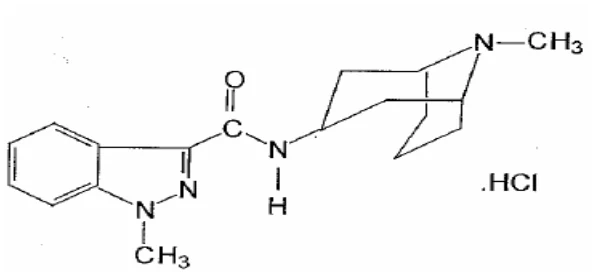
Chemical Name: 1-Methyl-N-[(1R,3r,5S)-9-methyl-9-azabicyclo[3.3.1]non-3-yl]-1H-indazole-3-carboxamide hydrochloride.
Molecular Formula: C18H25ClN4O
Molecular Mass: 348.88 g/mol
Structural Formula:
Physicochemical Properties: Granisetron hydrochloride is a white to off-white powder.
Solubility: Granisetron hydrochloride is freely soluble in water, sparingly soluble in methylene chloride, slightly soluble in methanol.
Melting Point Range: 290-292°C.
pH Value: the pH in 1% water solution is about 5.4.
CLINICAL TRIALS
Chemotherapy-Induced Nausea and Vomiting
Granisetron hydrochloride has been shown to prevent nausea and vomiting associated with single-day and repeat-cycle cancer chemotherapy.
Single-Day Chemotherapy
In a double-blind, placebo-controlled study in 28 cancer patients, granisetron hydrochloride administered as a single intravenous infusion of 40 mcg/kg, was significantly more effective than placebo in preventing nausea and vomiting induced by cisplatin chemotherapy (see Table 3).
Table 3. Prevention of Chemotherapy-Induced Nausea and Vomiting –
Single-Day Cisplatin Therapy1
| Granisetron hydrochloride | Placebo | P value | |
| Number of Patients | 14 | 14 | ---- |
| Response Over 24 Hours | |||
| Complete Response2 | 93% | 7% | <0.001 |
| No Vomiting | 93% | 14% | <0.001 |
| No More Than Mild Nausea | 93% | 7% | <0.001 |
1 Cisplatin administration began within 10 minutes of granisetron hydrochloride by infusion and continued for 1.5 to 3.0 hours. Mean cisplatin doses were 86 mg/m2 in the group of patients treated with granisetron hydrochloride by infusion and 80 mg/m2 in the placebo group.
2 No vomiting and no moderate or severe nausea.
Granisetron hydrochloride was evaluated in a double-blind, randomized dose response study of 353 patients stratified for high (>80 to 120 mg/m2) or low (50 to 79 mg/m2) cisplatin dose. Response rates of patients for both cisplatin strata are given in Table 4.
Table 4. Prevention of Chemotherapy-Induced Nausea and Vomiting –
Single-Day High-Dose and Low-Dose Cisplatin Therapy1
| Dose of granisetron hydrochloride (mcg/kg) | 5 | 10 | 20 | 40 |
| Number of Patients | 82 | 90 | 88 | 93 |
| Complete Response2 (%) | 23 | 48* | 48* | 44* |
| No Vomiting (%) | 32 | 54* | 53* | 48* |
| No Nausea (%) | 22 | 46* | 38* | 38* |
1 Cisplatin administration began within 10 minutes of granisetron hydrochloride by infusion and continued 2 hours (mean). Mean Cisplatin dose was 82 mg/m2.
2 No vomiting and no rescue medication.
* p<0.05 vs 5 mcg/kg.
The 10, 20 and 40 mcg/kg doses were more effective than the 5 mcg/kg dose in preventing nausea and vomiting within 24 hours of chemotherapy administration. The 10 mcg/kg dose was at least as effective as the higher doses.
Repeat-Cycle Chemotherapy
Two single-blind, active-controlled studies have been performed in which granisetron hydrochloride was administered to a total of 246 chemotherapy-naive patients with malignant disease receiving cytostatic therapy (≥15 mg/m2/day cisplatin, ≥1.2 g/m2/day ifosfamide, and ≥120 mg/m2/day etoposide) for 5 days. Granisetron hydrochloride was administered as a daily 40 mcg/kg IV dose 5 minutes before the infusion of the cytostatic with up to two additional 40 mcg/kg IV doses permitted over each 24-hour period. In both studies, response rates (percentage of patients with no vomiting and no more than mild nausea in the 24-hour period following administration of granisetron hydrochloride) were observed to decline with repeated treatment, decreasing from 87-90% at day 1 to 70-71% at day 3, and 67-73% at day 5.
Co-Administration with Dexamethasone
A randomized, double-blind, placebo-controlled trial compared the safety and efficacy of intravenous granisetron hydrochloride (3mg) plus 8 mg dexamethasone phosphate with that of IV granisetron hydrochloride alone (3mg) in the prevention of emesis induced by cytotoxic chemotherapy.
A total of 278 patients received one of the following agents as their main cytotoxic therapy, either as a single agent or in combination with other cytotoxic agents: carboplatin >300 mg/m2, cisplatin >20 mg/m2 to <50 mg/m2, dacarbazine >350 mg/m2 to <500 mg/m2, cyclophosphamide >500 mg/m2 in combination, doxorubicin >40 mg/m2 as single agent, doxorubicin >25 mg/m2 in combination, epirubicin >75 mg/m2 as a single agent, epirubicin >50 mg/m2 in combination.
Patients received chemotherapy on Day 0 and were followed up to a further 6 days.
For the efficacy parameter of total control, there was a significantly better response in the group of patients treated with granisetron hydrochloride/dexamethasone than in the group of patients treated with granisetron hydrochloride/placebo on Day 0 (p=0.020) [95% CI (2.2%, 24.2%)] (see Table 5).
Table 5. Summary of Total Control1 on Day 0 (Number (%) of Patients)
| Treatment Group | |||
Granisetron Hydrochloride/Dexamethasone (N=141) | Granisetron Hydrochloride/Placebo (N=137) | P-value | |
| Day 0 | 103 (73.0%) | 82 (59.9%) | 0.020 |
1Patients with no vomiting, no nausea, no rescue therapy and not withdrawn.
In addition, a statistically significant difference between the treatment groups was observed over the seven day period for the parameters of time to first rescue medication, time to first vomiting episode and time to first moderate/severe nausea.
DETAILED PHARMACOLOGY
Radioligand binding studies have been performed on rat and guinea pig brain membrane preparations. Granisetron appears to possess a high specificity for the 5-HT3 receptor, while exhibiting negligible affinity for other 5-HT receptor subtypes (5-HT1, 5-HT2, 5-HT1A, 5-HT1B/C, and 5-HT1C) or α1, α2, or β-adrenoreceptors; dopamine-D2, histamine-H1, benzodiazepine, picrotoxin, or opioid-binding sites.
The antagonistic effects of granisetron have been demonstrated in three models of 5-HT3 receptor dependent activities, as listed below:
- 1) transient bradycardia (the Von Bezold-Jarisch reflex) following the intravenous injection of 5-HT into anesthetized rats (IC50 = 0.7 mcg/kg).
- 2) 5-HT- induced contractions of the guinea pig isolated ileum (pA2 = 8.1).
- 3) tachycardia following 5-HT injection into the carotid arteries of the rabbit isolated heart (pA2 = 10.7).
Two metabolites of granisetron (7-hydroxy metabolite and desmethyl metabolite) antagonized the Von Bezold-Jarisch reflex in anesthetized rats with potencies similar to that for the parent compound. However, the low plasma concentrations of these metabolites relative to the parent compound suggest that they are not likely to play a significant role following administration of granisetron.
Granisetron has proved efficacious both for the prophylaxis and treatment of emesis induced in the ferret by cisplatin, doxorubicin + cyclophosphamide, or X-irradiation. Maximal antiemetic efficacy in ferrets appeared to be achieved at a dose of 0.5 mg/kg IV administered 15 minutes before chemotherapy or radiation therapy. Furthermore, when a 0.5 mg/kg IV dose of granisetron was administered during emetic episodes occurring 90 minutes after cisplatin treatment, cessation of emesis was observed within 5 to 30 sec. of injection.
Granisetron was however, ineffective as an antiemetic in a canine model of apomorphine-evoked emesis and a ferret model of morphine-induced emesis suggesting that dopamine D2 and opioid receptor antagonism are not components of its mechanism of action.
Other than for some inhibition of locomotor activity in mice at 10 mcg/kg SC and in rats at 1 to 5 mg/kg SC, granisetron did not exert central nervous system effects in the models studied.
At cumulative doses up to 4.3 mg/kg IV administered over 2 hrs, granisetron had no effect on basal blood pressure or heart rate in conscious male rats. In the anesthetized dog, however, granisetron was demonstrated to decrease arterial blood pressure, heart rate, and myocardial contractility in a dose-dependent manner over a 1 to 3 mg/kg dose range.
Gastrointestinal: Granisetron (0.1-1.0 mg/kg SC) was associated with reduced fecal pellet output in conscious mice, suggesting a constipating effect.
Reproductive: Granisetron inhibited 5-HT induced contractions of the non-pregnant rat uterus in vitro with an IC50 of 5.9 mcM.
Preclinical Pharmacokinetics
Pharmacokinetics and ADME of granisetron have been extensively studied in rat and dog, the main species used in the non-clinical toxicology studies. Information has also been obtained on the mouse (used for carcinogenicity assessment), rabbit (teratology assessment) and ferret (efficacy pharmacology).
In rat and dog after intravenous dosing, granisetron freely diffused between plasma and red cells. Plasma protein binding in rats and dogs was moderate, 57% and 45%, respectively. A volume of distribution equivalent to approximately 3 L/kg in both species reflected the extensive tissue uptake expected of a lipophilic amine. In the rat, low excretion of granisetron in urine (approximately 2% dose) and a total plasma clearance (3.7 L/h/kg) similar to hepatic blood flow classified granisetron as a highly extracted drug whose clearance was flow-rate limited. In the dog, the plasma clearance value (2.6 L/h/kg) and the low urinary excretion (2-4% dose) classified granisetron extraction as medium to high in this species. In both species, relatively short granisetron plasma half-lives were observed (approximately 0.7 hours) and linear kinetics were indicated by the proportionate increases of granisetron plasma AUC with dose. As expected, no accumulation was observed on repeated daily dosing.
Complete absorption of 14C-granisetron from the gastrointestinal tract in rats, dogs, mice and rabbits was observed. However, oral bioavailability was severely reduced by the large first-pass effect resulting from the high liver extraction. Thus in rats, granisetron bioavailability was estimated at 0.2% of the dose after an oral dose of 5 mg/kg, whilst in dogs oral bioavailability was higher (about 17% at 0.25 and 1.5 mg/kg PO) reflecting lower liver extraction. In both species, bioavailability increased at the high-dose levels used in the toxicology studies (rat: about 10% bioavailability at 100 mg/kg PO; dogs: about 80% at 10 mg/kg PO), as the increased drug input partially saturated the first-pass effect.
Granisetron-related material (radioactivity) was rapidly and widely distributed to tissues after intravenous or oral doses of 14C-granisetron to rats. Whole body autoradiography and direct measurement revealed relatively high concentrations in excretory organs, liver and kidney, and low concentrations in blood and brain tissue. The time-course of elimination from tissues was similar to that from blood. The radioactivity was readily eliminated, such that only 1% remained in the tissues at 24 hours, though trace amounts were eliminated more slowly. Like many amine drugs, small amounts were taken up by melanin-containing tissues in pigmented animals and slowly released. On daily repeated intravenous dosing, minimal accumulation of radioactivity was observed in blood and tissues.
Granisetron was extensively metabolized, resulting in low excretion of unchanged drug in urine and feces. Metabolites found in mice, rats, rabbits, dogs and ferrets revealed that similar metabolic processes (oxidation at the N-methyl groups, oxidation in the benzenoid ring followed by sulphate and glucuronide conjugation, and a combination of these) were used in all species. However, quantitative differences between species were observed. Notably, 5-hydroxylation was higher than 7-hydroxylation in rats, mice and rabbits, whilst the converse was true for dogs and ferrets. Excretion of granisetron itself was low (no more than 13%) in all species studied. Granisetron excretion in feces accounted for less than 3% of the dose. Granisetron metabolites were readily excreted in both urine and feces of mice, rats, rabbits, dogs and ferrets. On administering 14C-granisetron, urinary excretion of radioactivity in rats and dogs amounted to approximately 40% of the dose, irrespective of dose route, and the remainder was excreted in feces. In mice and rabbits, the urinary route accounted for about 60% dose, and in ferrets about 20% dose. The majority of urinary excretion occurred in the first 24 hours after dosing.
TOXICOLOGY
Acute Toxicity
The acute toxicity of granisetron is due primarily to CNS stimulation. LD50 values by the intravenous route are within the range of 14 to 25 mg/kg in rats and mice.
The intravenous LD50 for granisetron hydrochloride in mice is 17 mg/kg in males and 25 mg/kg in females. In rats it is 14 mg/kg in males and 16 mg/kg in females. The oral LD50 is 350 mg/kg in both male and female mice. It is 350 mg/kg in male rats and 1100 mg/kg in female rats.
Long-term Toxicity
Subacute Toxicity Studies:
The subacute toxicity of granisetron was studied in the rat and dog; both species are suitable for the safety evaluation of granisetron hydrochloride on pharmacokinetic and metabolic grounds. In intravenous studies of up to 3 months duration in the rat, signs of acute CNS stimulation were dose-limiting at 9 mg/kg/day. Histopathological examination revealed an increase in the fat content of the liver in the majority of females at 6 mg/kg/day after 13 weeks of treatment but not following a further 4 weeks off-dose. In the dog, intravenous studies of up to 3 months duration resulted in convulsions at near lethal doses (3 mg/kg/day). Increases in aspartate aminotransferase (AST) and alanine aminotransferase (ALT) were seen in some animals at 3 mg/kg/day but there were no histopathological findings to indicate target organ toxicity at this level. Following treatment for 3 months, the intravenous no-toxic-effect level in both species was 0.5 mg/kg/day, representing a factor of approximately 3 over the maximum anticipated daily clinical dose of granisetron hydrochloride.
Chronic Toxicity Studies
Granisetron was administered in oral repeat-dose studies of up to 12 months duration in the rat and dog.
In the 6 and 12 month rat studies, there were changes in plasma enzymes associated with liver function, however, none of these changes was evident in subgroups of high-dose animals maintained for an off-dose period after the treatment. Dose-related increases in liver weights were also seen in rats given granisetron for up to 52 weeks, in the diet; such increases occurred in males dosed at 25 mg/kg/day and above.
Morphometric analysis confirmed there were an increased number of hepatocytes per unit area at the high dose, indicating that the increased liver weights were associated with hepatocyte hyperplasia. There was no evidence of hyperplasia at a dose of 5 mg/kg/day. Although there were increased incidences of rats with foci or areas of acidophilic and/or basophilic hepatocyte alteration in the intermediate and high-dose groups, precise morphometric quantification of the amount of liver occupied by foci demonstrated that increases compared with the controls were confined to the high dose. These results clearly define 5 mg/kg/day to be a no-effect dose, at which the drug does not cause the production of liver foci or induce hyperplasia. The morphometric analysis also showed that, at the high dose, the amount of liver occupied by foci regressed after cessation of treatment.
In the 6-month dog study, there was a trend toward increased alanine aminotransferase (ALT) and lactate dehydrogenase (LDH) at the high dose of 10 mg/kg/day, although histopathological changes were not observed. Physical signs at the high dose during the initial stages of treatment consisted of prominence of the nictating membrane, black or dark discoloured feces and, in males, an increased incidence of loose feces. Emesis and isolated clonic convulsions were also noted. One high-dose male died on Day 181 having shown no previous signs of ill health; the cause of death could not be established. There were no toxic effects at the mid dose of 1.5 mg/kg/day.
In the 12-month dog study, the high dose (5 mg/kg/day) produced no CNS effects and there were no changes in plasma enzymes indicative of altered hepatic function or treatment related histopathological findings at this dose.
Carcinogenicity Studies
In a 24-month carcinogenicity study, mice were treated orally with granisetron 1, 5 or 50 mg/kg/day. There was a statistically significant increase in the incidence of hepatocellular carcinomas in males and hepatocellular adenomas in females dosed with 50 mg/kg/day (5000 times the recommended human dose given intravenously). No increase in liver tumours was observed in mice at a dose of 5 mg/kg/day (500 times the recommended human dose given intravenously).
In a 24-month carcinogenicity study, rats were treated orally with granisetron 1, 5 or 50 mg/kg/day. Owing to manifestations of toxicity, the 50 mg/kg dose was reduced to 25 mg/kg/day (2500 times the recommended human dose given intravenously) from week 59 of treatment onwards. There was a statistically significant increase in the incidence of hepatocellular carcinomas and adenomas in males dosed with 5 mg/kg/day (500 times the recommended human dose given intravenously) and above, and in females dosed with 50 mg/kg/day (5000 times the recommended human dose given intravenously). No increase in liver tumours was observed in rats at a dose of 1 mg/kg/day (100 times the recommended human dose, given intravenously) in males and 5 mg/kg/day (500 times the recommended human dose given intravenously) in females.
Experimental evidence in rats shows that granisetron exhibits the characteristics of a promoter of liver tumours with a clear no-effect dose of 1 mg/kg (100 times the recommended human dose given intravenously). The probable mechanism for this effect is sustained liver cell hyperplasia. In a study in which rats were treated for 12 months with 100 mg/kg/day (10,000 times the recommended human dose given intravenously), the observed promoting effects were reversible upon cessation of treatment. Additionally, there was no adverse effect on the liver of dogs treated for 12 months with granisetron, 5 mg/kg/day (500 times the recommended human dose given intravenously).
Mutagenicity Studies
The effects of granisetron were investigated in a battery of seven tests for mutagenicity, including an investigation of DNA damage in rat hepatocytes. Granisetron did not cause gene mutation in Ames bacterial assays in Salmonella and E. coli or in a mouse lymphoma cell assay. No evidence of chromosomal damage was observed in human lymphocytes in vitro or in a mouse micronucleus test at doses of up to 1800 times the recommended human dose given intravenously. However, granisetron was associated with a significant increase in the number of cells with polyploidy in an in vitro human lymphocyte chromosomal aberration test. There was no evidence of DNA damage and repair in assays of unscheduled DNA synthesis (UDS) in rat hepatocytes in vitro (or in vivo at doses of up to 35,000 times the recommended human dose given intravenously). There was an apparent increase in UDS in HeLa cells exposed to granisetron in vitro when DNA synthesis was measured by scintillation counting of incorporated radioactive thymidine. However, when this test was repeated using a more definitive autoradiographic methodology and microscopic examination of HeLa cells, the test was negative for UDS. It is likely that the apparent UDS in the initial study was, in fact, a reflection of DNA synthesis in cells undergoing normal division.
Reproduction
In a reproduction and fertility study in rats, granisetron at subcutaneous doses up to 6 mg/kg/day (600 times the recommended human dose given intravenously) had no effect on male or female fertility.
At dose levels which produced maternal toxicity, intravenous granisetron [up to 9 mg/kg/day (900 times the recommended human dose given intravenously) in rats, and up to 3 mg/kg/day (300 times the recommended human dose given intravenously) in rabbits] had no adverse effect on the course and outcome of pregnancy. A similar lack of effect was apparent in peri- and postnatal studies and general reproductive studies, in the rat.
REFERENCES
- 1. Andrews PLR, Rapeport WG, Sanger GJ. Neuropharmacology of emesis induced by anticancer chemotherapy. TiPS 1988;9:334-341.
- 2. Andrews PLR, Hawthorn JA. The neurophysiology of vomiting. Balliere's Clin Gastroenterol 1988;2(l): 141-168.
- 3. Bermudez J, Boyle EA, Miner WD, et al. The antiemetic potential of the 5-hydroxytryptamine receptor antagonist BRL 43694. Br J Cancer 1988;58:644-650.
- 4. Hawthorn J, Ostler KJ, et al. The role of the abdominal visceral innervation and 5-hydroxytryptamine M receptors in vomiting induced by the cytotoxic drugs cyclophosphamide and cisplatin in the ferret. Q J Exp Physiol 1988;73:7-21.
- 5. Goddard PM, Jones M, Pollard LA. The 5-HT3 antagonist, BRL 43694, does not compromise the efficacy of cisplatin in tumour-bearing mice. Cancer Chemother Pharmacol 1990;25(5):377-9.
- 6. Pratt GD, Bowery NG, Kilpatrick GT et al. Consensus meeting agrees distribution of 5-HT3 receptors in mammalian hindbrain. TiPS 1990;11:135-7.
- 7. Cupissol D. The efficacy of granisetron as a prophylactic antiemetic and intervention agent in high-dose cisplatin-induced emesis. Eur J Cancer 1990;26 (Suppl. l):S23-S27.
- 8. Granisetron study group. The antiemetic efficacy and safety of granisetron compared with metoclopramide plus dexamethasone in patients receiving fractionated chemotherapy over 5 days. J Cancer Res Clin Oncol 1993;119:555-9
- 9. Bremer K. A single-blind study of the efficacy and safety of intravenous granisetron compared with alizapride plus dexamethasone in the prophylaxis and control of emesis in patients receiving 5-day cytostatic therapy. Eur J Cancer l992;28A (Suppl. 6/7):1018-1022
- 10. Carmichael J et al. I.V. granisetron versus I.V.. granisetron plus I.V. dexamethasone in the prophylaxis of emesis induced by cytotoxic chemotherapy. Abstract presented at ECCO 7, Jerusalem 1993
- 11. Hacking A. Oral granisetron – simple and effective: A preliminary report. Eur J Cancer 1992;28A(l):S28-S32.
- 12. Bleiberg HH-1 et al. Antiemetic treatment with oral granisetron in patients receiving moderately emetogenic chemotherapy: A dose-ranging study. Clin Ther 1995;17(1):38-50.
- 13. Heron JF et al. Oral granisetron alone and in combination with dexamethasone: A double-blind randomized comparison against high-dose metoclopramide plus dexamethasone in prevention of cisplatin-induced emesis. Ann Oncol 1994;5(7):579-584
- 14. Gralla, RJ. et al. Single-dose oral granisetron has equivalent antiemetic efficacy intravenous ondansetron for highly emetogenic cisplatin-based chemotherapy. J Clin Oncol 1998;Vol 16(4): 1568-1573.
- 15. Perez, EA et al. Comparison of single-dose oral granisetron versus intravenous ondansetron in the prevention of nausea and vomiting induced by moderately emetogenic chemotherapy: A multicenter, double-blind, randomized parallel study. J Clin Oncol 1998;Vol.16(2):754-760.
- 16. Mayron, D et al. Stability and compatability of granisetron hydrochloride in IV solutions and oral liquids and during simulated Y-site injection with selected drugs. Am J Health-Syst Pharm 1996;Vol 53 :294-304.
- 17. Hoffmann-La Roche Limited, Mississauga, (ON), Canada, KYTRIL Product Monograph (Tablets and Injection), Control No.: 129213; Date of Revision: October 29, 2009.
- 18. Hoffmann-La Roche Limited, Mississauga, (ON), Canada, KYTRIL Product Monograph (Tablets), Control No.: 172914; Date of Revision: June 6, 2014.
- 19. Omega Laboratories Ltd, Montreal, (QC), Canada, Granisetron Hydrochloride Injection Product Monograph, Control No.: 163080; Date of revision: October 29, 2013.