


Product Monograph - Imaavy
Recent Major Label Changes
| None at the time of the most recent authorization. |
|---|
Table of Contents
Sections or subsections that are not applicable at the time of authorization are not listed.
Recent Major Label Changes ..................................................................................................... 2
Table of Contents ........................................................................................................................ 2
Part I: Health Professional Information .................................................................................... 4
1 Indications ....................................................................................................................... 4
1.1 Pediatrics ............................................................................................................... 4
1.2 Geriatrics ............................................................................................................... 4
2 Contraindications ............................................................................................................ 4
4 Dosage and Administration ........................................................................................... 4
4.1 Dosing Considerations .......................................................................................... 4
4.2 Recommended Dose and Dosage Adjustment ..................................................... 5
4.3 Reconstitution ........................................................................................................ 5
4.4 Administration ........................................................................................................ 6
4.5 Missed Dose .......................................................................................................... 6
5 Overdosage ..................................................................................................................... 7
6 Dosage Forms, Strengths, Composition and Packaging ............................................ 7
7 Warnings and Precautions ............................................................................................. 7
7.1 Special Populations ............................................................................................... 9
7.1.1 Pregnant Women ............................................................................................... 9
7.1.2 Breast-feeding ................................................................................................... 9
7.1.3 Pediatrics ........................................................................................................... 9
7.1.4 Geriatrics ......................................................................................................... 10
8 Adverse Reactions ........................................................................................................ 10
8.1 Adverse Reaction Overview ................................................................................ 10
8.2 Clinical Trial Adverse Reactions .......................................................................... 10
8.2.1 Clinical Trial Adverse Reactions – Pediatrics .................................................. 11
8.3 Less Common Clinical Trial Adverse Reactions .................................................. 11
8.4 Abnormal Laboratory Findings: Hematologic, Clinical Chemistry and Other Quantitative Data ............................................................................................................ 11
9 Drug Interactions .......................................................................................................... 11
9.4 Drug-Drug Interactions ........................................................................................ 12
9.5 Drug-Food Interactions ........................................................................................ 13
9.6 Drug-Herb Interactions ........................................................................................ 13
9.7 Drug-Laboratory Test Interactions ....................................................................... 13
10 Clinical Pharmacology .................................................................................................. 13
10.1 Mechanism of Action ........................................................................................... 13
10.2 Pharmacodynamics ............................................................................................. 13
10.3 Pharmacokinetics ................................................................................................ 13
10.4 Immunogenicity ................................................................................................... 14
11 Storage, Stability and Disposal ................................................................................... 15
12 Special Handling Instructions ...................................................................................... 15
Part II: Scientific Information ................................................................................................... 16
13 Pharmaceutical Information ......................................................................................... 16
14 Clinical Trials ................................................................................................................. 16
14.1 Clinical Trials by Indication .................................................................................. 16
15 Microbiology .................................................................................................................. 20
16 Non-clinical Toxicology ................................................................................................ 20
Patient Medication Information ............................................................................................... 22
Part I: Health Professional Information
1 Indications
IMAAVY® (nipocalimab) is indicated as an add-on to standard therapy for the treatment of generalized myasthenia gravis (gMG) in adult and adolescent patients aged 12 years and older who are anti-acetylcholine receptor (AChR) or anti-muscle-specific tyrosine kinase (MuSK) antibody positive.
1.1 Pediatrics
Adolescents (12 to < 18 years of age): Based on limited efficacy and safety data in pediatric patients aged 12 to <18 years submitted and reviewed by Health Canada, along with the extrapolation of evidence from adults, Health Canada has authorized an indication for pediatric use in this age group.
Pediatrics (< 12 years of age): No data are available to Health Canada; therefore, Health Canada has not authorized an indication in patients < 12 years of age.
1.2 Geriatrics
Geriatrics (≥ 65 years of age): Although no overall differences in safety and efficacy were observed between older and younger patients, clinical studies of IMAAVY did not include sufficient numbers of patients aged 65 years and over to determine whether they respond differently from younger adult patients.
2 Contraindications
IMAAVY is contraindicated in patients who are hypersensitive to this drug or to any ingredient in the formulation, including any non-medicinal ingredient, or component of the container. For a complete listing, see 6 Dosage Forms, Strengths, Composition and Packaging.
4 Dosage and Administration
4.1 Dosing Considerations
IMAAVY treatment should be administered by a healthcare professional.
For patients on treatment with immunoglobulins (IVIg), it is recommended to wait for 4 weeks after the last dose of such medicinal products before dosing with nipocalimab (see 9.4 Drug-Drug Interactions).
4.2 Recommended Dose and Dosage Adjustment
Dilute IMAAVY prior to administration. Administer via intravenous infusion only. See
4.3 Reconstitution.
For adults and adolescents 12 years and older with gMG, the recommended initial dose of
IMAAVY is 30 mg/kg administered once via intravenous infusion over approximately 30 minutes. Every 2 weeks thereafter, a maintenance dose of 15 mg/kg should be administered via intravenous infusion over approximately 15 minutes.
Pediatrics (< 12 years of age): The safety and efficacy of IMAAVY in these pediatric patients has not been established; therefore, Health Canada has not authorized an indication for pediatric use in patients <12 years of age.
Geriatrics (≥ 65 years of age): No dose adjustment is required (see 10.3 Pharmacokinetics).
Renal Impairment: No dose adjustment is required for patients with mild to moderate renal impairment (see 10.3 Pharmacokinetics). There is no data available from patients with severe renal impairment.
Hepatic Impairment: No dose adjustment is required for patients with mild to moderate hepatic (see 10.3 Pharmacokinetics). There is no data available from patients with severe hepatic impairment.
4.3 Reconstitution
Prior to administration, IMAAVY single-use vials require dilution in 0.9% Sodium Chloride Injection, USP, using the instructions below. For patients who weigh 40 kg or more, the total volume to be administered is 250 mL. For patients who are 12 years or older and weigh less than 40 kg, the total volume to be administered is 100 mL (see Preparation).
Preparation
Prepare the solution for infusion using aseptic technique as follows:
- Calculate the dosage (mg), total drug volume (mL) of IMAAVY solution required, and the number of IMAAVY vials needed based on the patient’s current weight. See 4.2 Recommended Dose and Dosage Adjustment. Each single-use vial of IMAAVY is at a concentration of 185 mg/mL.
- Check that the solution in each vial is colorless to slightly brownish and free of visible particles. Do not use if visible particles are present or if the solution is discolored (other than colorless to slightly brownish).
- Gently withdraw the calculated volume of IMAAVY from the vial(s). Discard any unused portion of the vials.
Dilute total volume withdrawn of IMAAVY by adding to the infusion container containing 0.9% Sodium Chloride Injection, USP to a final volume of
- 250 mL for patients who weigh 40 kg or more, or
- 100 mL for patients who weigh less than 40 kg.
- Only use infusion containers made of polyolefin, polypropylene, or polyvinylchloride.
- Gently invert the infusion container at least ten times to mix the solution. Do not shake.
- Verify that a uniform solution has been achieved by visual inspection. Do not use if particulate matter or discoloration are present.
Storage Conditions of the Diluted Solution
The prepared diluted solution should be administered immediately. If not used immediately, the diluted solution can be refrigerated for up to 24 hours at 2°C to 8°C (36°F to 46°F) with an additional 12 hours of storage at room temperature, including infusion time, at 15°C to 30°C (59°F to 86°F). Protect from light and do not freeze. See 11 Storage, Stability, and Disposal.
4.4 Administration
- If the diluted solution is refrigerated prior to administration, allow to warm to room temperature. Do not use external heat sources to warm IMAAVY.
- Administer the diluted solution by intravenous infusion using an infusion set with tubing made of polybutadiene, polyethylene, polyurethane, polypropylene, or polyvinylchloride. The administration must always be performed with a sterile, non-pyrogenic, low protein-binding filter made of polyethersulfone or polysulfone (pore size 0.2 micrometer or less).
- Do not infuse IMAAVY concomitantly in the same intravenous line with other agents.
- Administer IMAAVY infusion intravenously over approximately 30 minutes for the initial dose (30 mg/kg) and approximately 15 minutes for subsequent doses (15 mg/kg).
- If an adverse reaction occurs during administration of IMAAVY, the infusion may be slowed or stopped at the discretion of the healthcare professional.
- Monitor the patient for 30 minutes after each infusion for signs or symptoms of an infusion-related or hypersensitivity reaction.
4.5 Missed Dose
If a scheduled infusion appointment is missed, the maintenance dose of IMAAVY should be administered as soon as possible. Resume dosing every 2 weeks thereafter.
5 Overdose
Single doses up to 60 mg/kg have been administered intravenously in clinical studies without dose-limiting toxicity. There are no known specific signs and symptoms of overdose with nipocalimab.
In the event of an overdose, patients should be monitored for adverse reactions, and appropriate symptomatic and supportive treatment should be initiated immediately.
For the most recent information in the management of a suspected drug overdose, contact your regional poison control centre or Health Canada’s toll-free number, 1-844 POISON-X (1-844-764-7669).
6 Dosage Forms, Strengths, Composition and Packaging
Table 1 Dosage Forms, Strengths, Composition and Packaging
IMAAVY injection is a sterile, preservative free, colorless to slightly brownish, clear to slightly opalescent solution supplied in a single-use vial for infusion after dilution.
Each single-use vial contains either 300 mg of nipocalimab or 1200 mg of nipocalimab at a concentration of 185 mg/mL.
7 Warnings and Precautions
Immune
Infections
IMAAVY causes a reduction in IgG levels (see 10.1 Mechanism of action) and may increase the risk of infection including the activation of latent viral infections such as herpes zoster. See 8.2 Clinical Trial Adverse Reactions. Delay IMAAVY administration in patients with an active infection until the infection is resolved. During treatment with IMAAVY, monitor for clinical signs and symptoms of infection. If a serious infection occurs, administer appropriate treatment and consider withholding IMAAVY until the infection has been resolved.
In the VIVACITY trial, the overall rate of infections was the same between subjects in the IMAAVY group and subjects in the placebo group (42 (42.9%) in each group). Across the VIVACITY trial (double blind period) and its extension study (open label-period), out of 186 patients treated with IMAAVY, 132 (71%) patients reported 360 events of infection. Serious infections were observed in 7% of patients treated with IMAAVY. Most infections were mild to moderate in severity and did not lead to discontinuation of IMAAVY.
| Route of Administration | Dosage Form / Strength/Composition | Non-medicinal Ingredients |
Intravenous (IV) infusion | 300 mg/1.62 mL and 1200 mg/6.5 mL solution | L-arginine hydrochloride, L-histidine, L-histidine monohydrochloride monohydrate, L-methionine, polysorbate 80, sucrose, and water for injection |
Patients with serious infections, including opportunistic infections that required parenteral anti-infective therapy and/or hospitalization within the previous 8 weeks before starting therapy, with a chronic infection (e.g., bronchiectasis, chronic osteomyelitis, chronic pyelonephritis), or those who require ongoing anti-infective treatment, were not studied in the clinical trial program of IMAAVY.
Latent Viral Infections
Patients treated with IMAAVY may be at an increased risk of activation of latent viral infections, such as herpes zoster (see 8 Adverse Reactions). In the extension period of study VIVACITY, there were 2 patients with serious adverse reactions related to Epstein-Barr virus (EBV) infection, and 1 of these patients had fatal complications. Patients who screened positive for hepatitis were excluded from VIVACITY. Follow standard vaccination guidelines.
Immunization
Administer all live vaccines according to immunization guidelines at least 4 weeks before the initiation of treatment and at least 2 weeks after the last dose of IMAAVY. The safety of immunization with live vaccines and the immune response to vaccination during treatment are unknown. Because IMAAVY causes a reduction in IgG levels, vaccination with live vaccines is not recommended during treatment with IMAAVY.
Non-live vaccines may be administered as needed at any time during treatment.
Monitoring and Laboratory Tests
Increased plasma lipids
Increases in plasma lipid levels have been observed in adult patients treated with nipocalimab (see 8 Adverse Reactions, 8.4 Abnormal Laboratory Findings). Patients with abnormal lipid parameters should be monitored and managed according to the patient’s long-term cardiovascular risk and clinical practice guideline.
Reproductive Health: Female and Male Potential
Fertility
There are no data on the effect of IMAAVY on fertility in humans.
Sensitivity/Resistance
Hypersensitivity
Administration of IMAAVY may result in hypersensitivity reactions, including rash, urticaria, and eczema. Most hypersensitivity reactions were non-serious, mild or moderate and did not lead to treatment discontinuation. Across the clinical development program of IMAAVY which includes multiple disease areas, an isolated case of anaphylaxis has been reported. See 8.2 Clinical Trial Adverse Reactions.
Monitor the patient after each infusion. See 4.4 Administration. If a hypersensitivity reaction occurs during administration, discontinue IMAAVY infusion and institute appropriate supportive measures if needed. IMAAVY is contraindicated in patients with a history of serious hypersensitivity to nipocalimab or any of the excipients of IMAAVY. See 2 Contraindications.
Patients should be informed of the signs and symptoms of hypersensitivity reactions and advised to contact their healthcare provider should they occur.
Infusion-Related Reactions
Administration of IMAAVY may result in infusion-related reactions, including headache, rash, nausea, fatigue, dizziness, chills, and erythema. Most infusion-related reactions observed during the clinical development program were non-serious, mild to moderate and did not lead to treatment discontinuation. Interrupt IMAAVY infusion and institute appropriate supportive measures if signs of a serious infusion-related reaction occur.
7.1 Special Populations
7.1.1 Pregnancy
There are limited data on the use of IMAAVY in pregnant women to inform a drug-associated risk of major birth defects, miscarriage, or adverse maternal or fetal outcomes. There are no available data with IMAAVY used in pregnant individuals with gMG.
Based on animal data, IMAAVY may cause fetal harm. In the enhanced pre- and postnatal developmental study (ePPND), pregnant cynomolgus monkeys were administered nipocalimab from the second trimester until parturition. Some animals developed large, central placental infarctions that were associated with fetal death or stillbirth (see16 Non-Clinical Toxicology). No non-clinical studies have been conducted to assess the potential direct or indirect effects of nipocalimab on early development and organogenesis occurring during the first trimester of pregnancy. As a precautionary measure, avoid the use of IMAAVY in pregnant individuals with gMG.
As nipocalimab is expected to reduce maternal IgG antibody levels and is also expected to inhibit the transfer of maternal antibodies to the fetus, reduction in passive protection to the newborn is anticipated. Risks and benefits should be considered prior to administering live vaccines to infants from pregnant women exposed to IMAAVY.
7.1.2 Breast-feeding
There is limited information regarding the presence of nipocalimab in human milk, the effects on the breastfed infant, or the effects on milk production. Maternal IgGs are known to be excreted in human milk. Very limited data showed that nipocalimab is detectable in the colostrum or breastmilk of women exposed to nipocalimab during the third trimester of their pregnancy. A risk to the breastfed newborn/infant cannot be excluded.
The developmental and health benefits of breastfeeding should be considered along with the mother’s clinical need for IMAAVY and any potential adverse effects on the breastfed child from IMAAVY or from the underlying maternal condition.
7.1.3 Pediatrics
Adolescents (12 to < 18 years of age): Based on limited efficacy and safety data in pediatric patients aged 12 to <18 years submitted and reviewed by Health Canada, along with the extrapolation of evidence from adults, Health Canada has authorized an indication for pediatric use in this age group (see 1 Indication).
Pediatrics (< 12 years of age): The safety and efficacy of IMAAVY in these pediatric patients has not been established; therefore, Health Canada has not authorized an indication for pediatric use in patients < 12 years of age.
7.1.4 Geriatrics
Geriatrics (> 65 years of age): Although no overall differences in safety and efficacy were observed between older and younger patients, clinical studies of IMAAVY did not include sufficient numbers of patients aged 65 and over to determine whether they respond differently from younger adult patients.
8 Adverse Reactions
8.1 Adverse Reaction Overview
In the double-blind placebo-controlled Phase 3 study VIVACITY in adult patients with gMG, the most commonly reported adverse reactions (≥10%) were muscle spasms (12.2%) and oedema peripheral (12.2%). The proportion of patients treated with IMAAVY who discontinued treatment due to adverse reactions was 5.1% (5/98).
8.2 Clinical Trial Adverse Reactions
Clinical trials are conducted under very specific conditions. The adverse reaction rates observed in the clinical trials may not reflect the rates observed in practice and should not be compared to the rates in the clinical trials of another drug. Adverse reaction information from clinical trials is useful for identifying drug-related adverse events and for approximating rates.
In the Phase 3 VIVACITY study and its extension the safety of IMAAVY was evaluated in 186 adult patients with gMG who received at least one dose of IMAAVY. Of those patients, 168 patients were exposed to IMAAVY every 2 weeks for at least 6 months, and 140 patients were exposed for at least 12 months.
In the double-blind, placebo-controlled phase of VIVACITY, 98 patients received IMAAVY 15 mg/kg every 2 weeks (after a 30 mg/kg loading dose; see 14 Clinical Trials). Adverse reactions that occurred in VIVACITY in at least 5% of patients treated with IMAAVY and more frequently than placebo are summarized Table 2.
Table 2 Adverse Reactions (≥ 5%) of Patients Treated with IMAAVY and More Frequently than in Placebo in Study VIVACITY (Safety Population)
Adverse Reactions
IMAAVY (N=98) N (%) | Placebo (N=98) N (%) | ||||
| Blood and lymphatic system disorders | |||||
| Anemia | 6 (6.1) | 4 (4.1) | |||
| Gastrointestinal disorders | |||||
| Abdominal paina | 8 (8.2) | 3 (3.1) | |||
| Diarrhea | 7 (7.1) | 3 (3.1) | |||
| Nausea | 5 (5.1) | 2 (2.0) | |||
| General disorders and administration site conditions | |||||
| Peripheral edemab | 12 (12.2) | 2 (2.0) | |||
| Pyrexia | 7 (7.1) | 1 (1.0) | |||
| Immune system disorders | |||||
| Hypersensitivity reactionc | 8 (8.2) | 7 (7.1) | |||
| Infections and infestations | |||||
| Respiratory tract infectiond | 18 (18.4) | 13 (13.3) | |||
| Urinary tract infection | 6 (6.1) | 3 (3.1) | |||
| Oral infectione | 5 (5.1) | 3 (3.1) | |||
| Musculoskeletal and connective tissue disorders | |||||
| Muscle spasms | 12 (12.2) | 3 (3.1) | |||
| Back pain | 8 (8.2) | 5 (5.1) | |||
| Nervous system disorders | |||||
| Dizziness | 5 (5.1) | 1 (1.0) | |||
| Psychiatric disorders | |||||
| Insomnia | 5 (5.1) | 2 (2.0) | |||
| Vascular disorders | |||||
| Hypertension | 5 (5.1) | 2 (2.0) | |||
a Includes abdominal pain, abdominal discomfort, and abdominal pain upper. b Includes peripheral edema, edema, and peripheral swelling. c Includes angioedema, dermatitis atopic, eczema, gingival swelling, rash (and other related terms), urticaria. d Includes COVID-19 (and other related terms), pneumonia, bronchitis, pneumonia bacterial. e Includes glossitis, oral candidiasis, pericoronitis, pulpitis dental, tooth abscess, tooth infection. | |||||
8.2.1 Clinical Trial Adverse Reactions – Pediatrics
The safety of IMAAVY was assessed in an open-label study of adolescent patients (12 years and older, n=7) with gMG (VIBRANCE trial) for up to 24 weeks. The safety profile in pediatric patients was similar to the safety profile from studies in adults with gMG.
8.3 Less common clinical trial adverse reactions
Three cases (3.1%) of herpes zoster were reported in the nipocalimab group versus no case in the placebo group in the double-blind phase of the VIVACITY trial. The evaluation is based on completed Phase 2 and Phase 3 studies across the nipocalimab clinical development program.
8.4 Abnormal Laboratory Findings: Hematologic, Clinical Chemistry and Other Quantitative Data
Clinical Trial Findings
Lipid Increases
In patients who received nipocalimab in the VIVACITY study, increases in fasting total cholesterol, HDL, and LDL were observed. The mean changes from baseline peaked at Week 4 (double-blind phase), then decreased and plateaued by Week 24 (double-blind phase), to a mean percent change (SD) of 8% (17%), 7% (21%), and 8% (23%), respectively for patients who received nipocalimab, compared to -4.1% (12%), -1.6% (14%) and -3.0% (19%) respectively for patients who received placebo.
In VIVACITY (N=98), patients treated with IMAAVY had elevations from normal to high of fasting total cholesterol (≥240 mg/dL) and LDL cholesterol (≥160 mg/dL) (24% and 11% of patients, respectively).
In adults, significantly elevated fasting cholesterol levels (≥ 240 mg/dl) were observed in 29.9% of subjects treated with IMAAVY during the double-blind phase (placebo: 4.1%) and in 26.1% during the open-label phase.
9 Drug Interactions
9.4 Drug-Drug Interactions
Effect of Other Drugs on IMAAVY
In a clinical drug interaction study in healthy participants evaluating the effect of hydroxychloroquine (HCQ) on nipocalimab pharmacodynamics, the Emax in IgG reduction following nipocalimab administration was similar with and without coadministration of HCQ.
Treatment with IV or SC immunoglobulins, PLEX/plasmapheresis and immunoadsorption may reduce circulating levels of nipocalimab.
Nipocalimab is not metabolized by cytochrome P450 enzymes; therefore, interactions with concomitant medications that are substrates, inducers, or inhibitors of cytochrome P450 enzymes are unlikely.
Effect of IMAAVY on Other Drugs
Concomitant use of nipocalimab is expected to reduce systemic exposure of medications that bind to the human neonatal Fc Receptor (FcRn) (e.g., immunoglobulin G [IgG] products, IgG-based monoclonal antibodies, antibody derivates containing the human Fc domain of the IgG subclass, or Fc fusion proteins).
In clinical drug interaction studies in healthy participants, nipocalimab reduced the systemic exposures (Cmax and AUC) of fremanezumab and etanercept.
When coadministered with fremanezumab in healthy participants, nipocalimab reduced the systemic exposures (Cmax and AUClast) of fremanezumab by 42% and 65%, respectively. When nipocalimab was administered 14 days after fremanezumab dosing, Cmax of fremanezumab was similar while AUClast was reduced by 52%.
When nipocalimab was coadministered with etanercept in healthy participants, etanercept Cmax was similar while AUClast was reduced by 29%.
If patients on treatment with medicinal products that bind to the IgG binding site of the human FcRn receptor (e.g., IVIg) need treatment with nipocalimab, it is recommended to wait for 4 weeks after the last dose of such medicinal products before dosing with nipocalimab. If patients on nipocalimab need treatment with medicinal products that bind to the IgG binding site of the human neonatal Fc receptor (e.g., IVIg), it is recommended to start these medicinal products 2 weeks after the previous dose of nipocalimab if this is deemed medically acceptable by the treating healthcare professional.
When concomitant long-term use of such medications is essential for patient care, closely monitor for reduced effectiveness of such medications and consider discontinuing IMAAVY or using alternative therapies.
9.5 Drug-Food Interactions
Interactions with food have not been established.
9.6 Drug-Herb Interactions
Interactions with herbal products have not been established.
9.7 Drug-Laboratory Test Interactions
Interactions with laboratory tests have not been established.
10 Clinical Pharmacology
10.1 Mechanism of Action
Nipocalimab is a fully human IgG1 monoclonal antibody that binds to FcRn with high specificity and high affinity at both neutral (extracellular) and acidic (intracellular) pH thereby blocking the binding of IgG and thus increasing its degradation rate. This results in a decrease in circulating IgG antibody concentrations.
10.2 Pharmacodynamics
In the double-blind placebo-controlled Phase 3 study (VIVACITY), the pharmacological effect of nipocalimab was assessed by measuring the decrease in serum IgG levels and AChR and MuSK autoantibody levels. Reductions in IgG were observed starting in week 2 (the first sampling time point for IgG). Median observed total IgG reduction change from baseline measured at Week 2 was 75%. Through Week 24, nipocalimab showed a median pre-dose reduction of 69% in total IgG. Decreases in AChR antibody and MuSK antibody levels followed a similar pattern.
The pharmacodynamic effect lasts longer (~8 weeks) relative to the rapid elimination for a monoclonal antibody.
No nipocalimab-related changes were observed in total IgM, IgA, or IgE.
10.3 Pharmacokinetics
Nipocalimab exhibits non-linear, dose-dependent pharmacokinetics. Following a single intravenous infusion of nipocalimab at doses ranging from 0.3 to 60 mg/kg in healthy participants, Cmax increased in a dose-proportional manner while AUC increased in a greater than dose-proportional manner.
Distribution
Mean volume of distribution was 2.67 L.
Metabolism
Nipocalimab is expected to be degraded by proteolytic enzymes into small peptides and amino acids via catabolic pathways in the same manner as endogenous IgG.
Elimination
Following a single IV administration of 15mg/kg nipocalimab, the mean clearance is 0.0627 L/h and mean half-life is 29.3 hours.
Specific Populations
- Age, Gender, and Race: A population pharmacokinetics analysis assessing the effects of age (elderly vs. non-elderly), sex, and race did not suggest any clinically significant impact of these covariates on nipocalimab exposures.
- Pediatrics (<18 years of age): Following the recommended IV doses of IMAAVY in adolescent patients 12 to 17 years of age with gMG (N=5), the observed steady-state serum nipocalimab concentrations were within the range of those observed for adult patients with gMG.
- Renal Impairment: No dedicated pharmacokinetic study has been conducted in patients with renal impairment. Based on a population pharmacokinetic analysis, which included participants with mild (n = 89) to moderate (n = 12) renal impairment, renal function (estimated glomerular filtration rate [eGFR] 30-90mL/min/1.73 m2) had no clinically significant effect on nipocalimab clearance.
- Hepatic Impairment: No dedicated pharmacokinetic study has been performed in patients with hepatic impairment. Based on a population pharmacokinetic analysis, which included participants with mild (n = 12) to moderate (n = 2) hepatic impairment, there was no clinically significant effect on nipocalimab clearance.
10.4 Immunogenicity
All therapeutic proteins have the potential for immunogenicity. The detection of antibody formation is highly dependent on the sensitivity and specificity of the assay. Additionally, the observed incidence of antibody (including neutralizing antibody) positivity in an assay may be influenced by several factors including assay methodology, sample handling, timing of sample collection, concomitant medications, and underlying disease. For these reasons, comparison of incidence of antibodies in the studies described below with the incidences of antibodies in other studies or to other products may be misleading.
In adult and adolescent gMG patients, 49.5% (48/97) and 20% (1/5) of patients, respectively, treated with IMAAVY through Week 24 tested positive for treatment-emergent antibodies to nipocalimab. The overall incidence of neutralizing antibodies to nipocalimab in adult gMG patients was 17.5% (17/97) and 0% (0/5) in the adolescent gMG patients. There was no identified clinically relevant effect of antibodies to nipocalimab, including neutralizing antibodies, on the pharmacokinetics, pharmacodynamics, safety, or efficacy of IMAAVY.
11 Storage, Stability and Disposal
Store in a refrigerator at 2°C to 8°C in the original carton in to protect from light until time of use. Do not freeze. Do not shake. Do not use IMAAVY beyond the expiration date (EXP) on the carton. Keep out of the sight and reach of children.
12 Special Handling Instructions
Not applicable.
Part II: Scientific Information
13 Pharmaceutical Information
Drug Substance
Proper name:
nipocalimab
Chemical name:
nipocalimab
Molecular formula and molecular mass:
Nipocalimab is a fully human IgG1 monoclonal antibody that has a molecular weight of approximately 142 kilodaltons (kDa)
Structural formula:
Nipocalimab is comprised of 2 identical heavy chains (HCs) and 2 identical lambda light chains (LCs) connected by disulfide bonds in a homodimeric structure and lacks glycosylation on the Fc region.
Physicochemical properties:
Nipocalimab is a colorless to slightly brownish, clear to slightly opalescent solution.
14 CLINICAL TRIALS
14.1 Clinical Trials by Indication
Generalized Myasthenia Gravis (gMG)
Table 3 Summary of patient demographics for clinical trials in gMG
| Study # | Trial design | Dosage, route of administration and duration | Study subjects (n) | Mean age (Range) | Sex |
| VIVACITY | Phase 3, Multicenter, Randomized, Double-Blind, Placebo-Controlled Study | Double-blind Phase:
| Double-blind Phase: N=196;
| 52.5 years (20 – 81 years) | Female: 92 (60.1%) Male: 61 (39.9%) |
OLE phase:
| OLE Phase: N=195 | ||||
| VIBRANCE | Phase 2/3, Multicenter, uncontrolled Study Open-label | Nipocalimab: 30 mg/kg initial dose followed by 15 mg/kg q2w IV | Cohort 1: N=8 | 13.5 years (12 - 16 years) | Female: 7 (87.5%) Male: 1 (12.5%) |
IV = intravenous; OLE = Open Label Extension; PBO = placebo
Adults with gMG – VIVACITY
The efficacy of IMAAVY for the treatment of gMG in adults who are antibody (anti-AChR,or anti-MuSK) positive was established in a 24-week, multicenter, randomized, double-blind, placebo-controlled study (VIVACITY). The study enrolled patients who met the following criteria at screening:
- Myasthenia Gravis Foundation of America (MGFA) clinical classification class II to IV
- MG-Activities of Daily Living (MG-ADL) total score of ≥ 6
- On stable dose of standard of care (SOC) therapy prior to baseline, including acetylcholinesterase (AChE) inhibitors, steroids or non-steroidal immunosuppressive therapies (NSISTs), either in combination or alone
- Patients did not have a history of severe and/or uncontrolled medical disorders (e.g. cardiovascular disease)
A total of 196 patients were randomized and received either IMAAVY plus SOC (n=98) or placebo plus SOC (n=98). Patients were treated with IMAAVY at the recommended dosage regimen. See 4.2 Recommended Dose and Dosage Adjustment.
There were 153 antibody positive patients (N=77 for IMAAVY, N=76 for placebo). Of those, 88% were antibody positive for AChR and 10% were antibody positive for MuSK. Baseline characteristics were similar between treatment groups. Patients had a median age of 52 years at screening (range 20 to 81 years) and a median time since diagnosis of 6 years. 60.1% were female; and 62.7% White; 32.0% Asian; 1.3% Black or African American; 0.7% American Indian or Alaskan Native; and 3.3% Not Reported. Median MG-ADL total score was 9, and median Quantitative Myasthenia Gravis (QMG) total score was 15.
At baseline, over 97% in each treatment group were on stable background SOC therapy.
In the nipocalimab group, 83% were on AChE inhibitors, 61% were on steroids, and 53% were on non-steroidal immunosuppressive therapies (NSISTs) at stable doses. In the placebo group, 87% were on AChE inhibitors, 71% were on steroids, and 54% were on NSISTs at stable doses.
The efficacy of IMAAVY was measured using the MG-ADL scale, which assesses the impact of gMG on eight daily function items that are typically affected in gMG. Each item is assessed on a 4-point scale where a score of 0 represents normal function and a score of 3 represents loss of ability to perform that function. A total score ranges from 0 to 24, with the higher scores indicating more impairment.
The efficacy of IMAAVY was also measured using the QMG total score. The QMG is a 13-item standardized examination that assesses muscle weakness. Each item is assessed on a 4-point scale where a score of 0 represents no weakness and a score of 3 represents severe weakness. A total possible score ranges from 0 to 39, where higher scores indicate more severe impairment.
Study Results
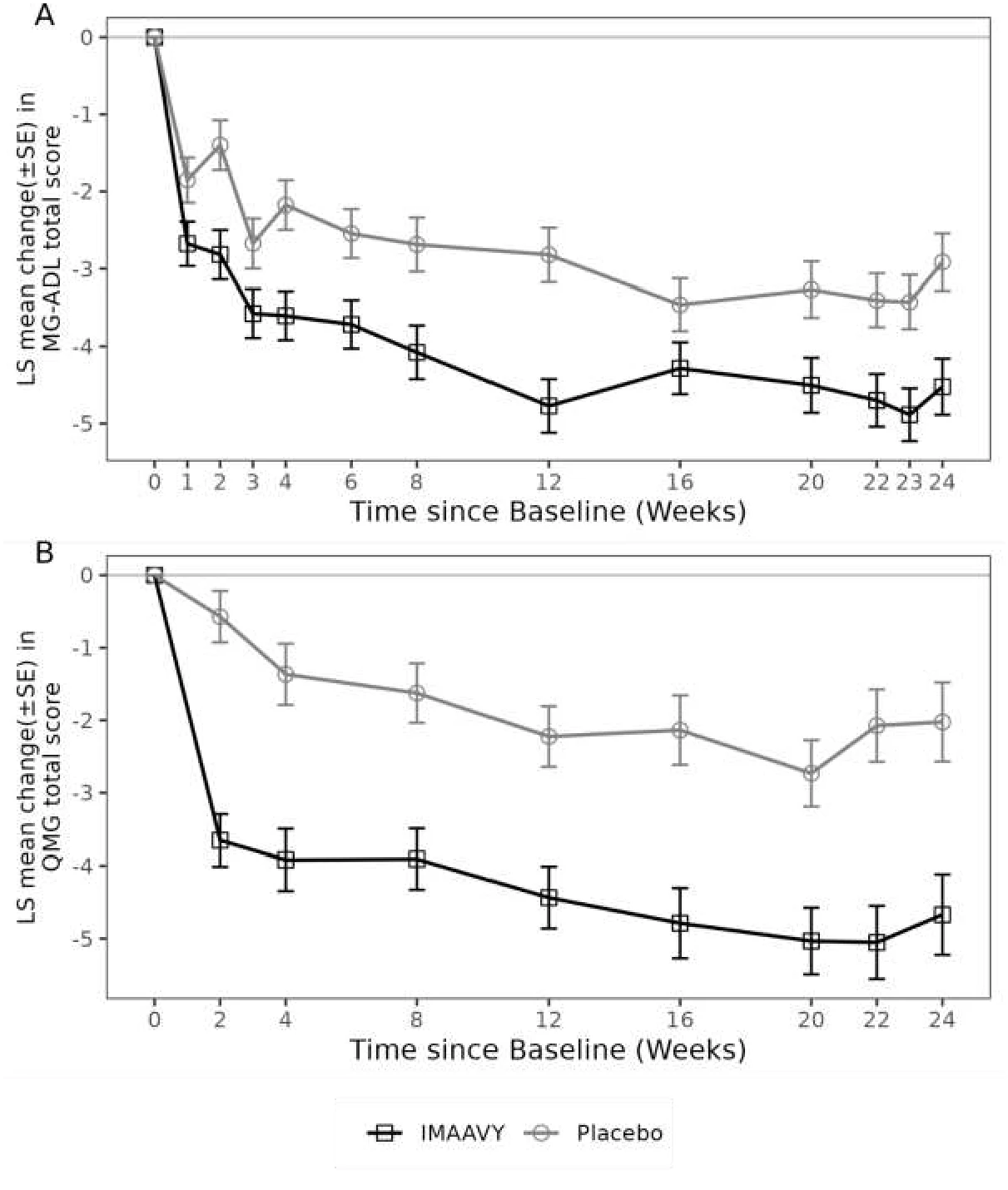
The primary efficacy endpoint was the mean change in MG-ADL total score from baseline over Weeks 22, 23 and 24 in antibody positive gMG patients. A statistically significant difference favoring IMAAVY was observed in MG-ADL change from baseline (see Table and Figure 1A).
A key secondary endpoint was the mean change in the QMG score from baseline over Weeks 22 and 24 in antibody positive gMG patients. A statistically significant difference favoring IMAAVY was observed in QMG change from baseline (see Table 4 and Figure 1B).
Table 4 Results of Primary and Key Secondary Efficacy Endpoints in Subjects with Generalized Myasthenia Gravis from Study VIVACITY over 24 weeks
| Efficacy Endpoints | IMAAVY (N = 77) LS mean (SE) | Placebo (N = 76) LS mean (SE) | Treatment difference (IMAAVY minus Placebo) (95% CI) | p-value |
|---|---|---|---|---|
| Primary endpoint | ||||
| MG-ADL1 | -4.70 (0.329) | -3.25 (0.335) | -1.45 (-2.38, -0.52)a | 0.002a |
| Secondary endpoint | ||||
| QMG2 | -4.86 (0.504) | -2.05 (0.499) | -2.81 (-4.22, -1.41)a | <0.001a |
Key: MG-ADL = Myasthenia Gravis – Activities of Daily Living; QMG = Quantitative Myasthenia Gravis; LS mean = Least squares mean; SE = standard error; CI = confidence interval 1 Mean change from baseline over weeks 22, 23, and 24 2 Mean change from baseline over weeks 22 and 24 a Least square mean difference, 95% CI, and p-value from a mixed effects model for repeated measures. | ||||
The proportion of MG-ADL clinical responders, defined as subjects with an improvement of at least 2 points from baseline averaged over Weeks 22, 23, and 24, was 68.8% in the IMAAVY group and 52.6% in the placebo group (p=0.021 for difference in proportions).
Figure 1 shows the mean change from baseline to Week 24 in MG-ADL total score (A) and the mean change from baseline to Week 24 in QMG total score (b) in study VIVACITY.
Figure 1: Least Squares Mean Change from Baseline in MG-ADL Total Score (A) and QMG Total Score (B) Over 24 Weeks in VIVACITY
Adolescents (12 to < 18 years of age) with gMG – VIBRANCE
The pharmacodynamics, pharmacokinetics, and efficacy of IMAAVY for the treatment of gMG in adolescents (12 to less than 18 years of age) were evaluated at 24 weeks in an open-label study (VIBRANCE).
The study enrolled patients who met the following criteria at screening:
- MGFA clinical classification class II to IV
- Positive for antibodies to AChR or MuSK
- On stable dose of SOC therapy prior to screening, including AChE inhibitors, steroids or NSISTs, either in combination or alone
Eight adolescent patients received IMAAVY at the recommended dosage regimen (see
4 Dosage and administration) over 24 weeks. Patients had a median age of onset of 10.5 years (range 0.5 to 13.4 years) and a median time since diagnosis of 3.6 years. Seven patients were females; 5 patients were Asian, 1 was Black, and 2 were of unknown ethnicity. At baseline, the MG-ADL mean (SD) total score was 4.4 (2.26), and QMG mean (SD) total score was 13.3 (4.13). All patients were AChR-antibody positive. At baseline, 4 patients were on AChE inhibitors, 6 were on steroids, and 7 were on NSISTs at stable doses.
The primary endpoint was the effect of IMAAVY on total serum IgG.
Study Results
At Week 24, the median pre-dose, percent reduction in total IgG from baseline (N = 7) was 73.3%, consistent with the IgG reduction seen in gMG VIVACITY study in adults
(see 10.2 Pharmacodynamics).
15 Microbiology
No microbiological information is required for this drug product.
16 Non-Clinical Toxicology
General Toxicology
26-week repeat-dose toxicity study with 8-week recovery
Cynomolgus monkeys were administered nipocalimab at doses of 20, 100, or 300 mg/kg by intravenous infusion once weekly, or 50 mg/kg twice weekly, for 26 weeks. The doses investigated in this study produced nipocalimab exposure equal to 0.4- to 44-times the human exposure at the recommended maintenance dose based on AUC. In line with the mechanism of action of nipocalimab, a sustained decrease in serum levels of IgG was observed throughout the dosing and recovery period. In a TDAR assay with KLH challenges during the dosing phase, the animals administered nipocalimab were able to generate anti-KLH-specific IgG responses, however, the mean peak responses were reduced by 51 to 93% relative to that of vehicle controls. Some animals administered nipocalimab developed skin lesions (tip of the tail) and/or other clinical signs including swelling (eyes, lips, and face), reddened skin, body tremors, emesis, and/or excess salivation during or shortly after dose administrations. The clinical signs developed without apparent dose-response. With the exception of the skin lesions, clinical signs resolved during continued dosing. One male was euthanized after 2 doses at 300 mg/kg (on Day 20) because of persistent clinical signs including swollen lymph nodes, reddened skin (abdomen and limbs) and reddened staining of the femoral areas, abdomen, and lower jaw. These clinical signs were attributed to worsening of an underlying pre-existing systemic infection that may have been exacerbated by nipocalimab-mediated suppression of total IgG.
Genotoxicity
Genotoxicity studies have not been conducted with nipocalimab.
Carcinogenicity
Carcinogenicity studies have not been conducted with nipocalimab.
Reproductive and Developmental Toxicology
No studies have been conducted to assess the potential direct or indirect effects of nipocalimab on implantation, early development, and organogenesis occurring during the first trimester of pregnancy.
In the ePPND study, pregnant cynomolgus monkeys were administered nipocalimab at doses of 100 or 300 mg/kg/week by IV bolus infusion from GD 40 (2nd trimester) until parturition (equal to 5- or 24-times the human exposure at the recommended maintenance dose based on AUC, respectively). Maternal animals developed clinical signs during or shortly after dosing, including emesis, shallow or laboured breathing, salivation, tremors, uncoordinated movement, swelling in one limb, and liquid feces. The clinical signs developed without apparent dose-response. In the pregnant monkeys administered nipocalimab, four of twenty-five placentas showed large, central placental infarctions. Of these four pregnancies, three were associated with fetal death or stillbirth. A NOAEL cannot be determined for maternal and developmental toxicity.
There were no effects of nipocalimab on male and female reproductive organs at doses up to 300 mg/kg/week based on the histological assessment in monkeys that became sexually mature during the 26-week intravenous study. The doses tested in monkeys achieved exposures that were up to 44-times the human exposure at the recommended maintenance dose based on AUC.
Juvenile Toxicity
Juvenile toxicity studies have not been conducted with nipocalimab.