


Product Monograph - Rystiggo
Recent Major Label Changes
| 4 Dosage and Administration | 2026-03 2026-10 |
|---|
Table of Contents
Certain sections or subsections that are not applicable at the time of the preparation of the most recent authorized product monograph are not listed.
Recent Major Label Changes ................................................................................................... 2
Table of Contents ................................................................................................................... 2
Part 1: Healthcare Professional Information ........................................................................... 4
- 1.
Indications ....................................................................................................................... 4
1.1. Pediatrics .................................................................................................................. 4
1.2. Geriatrics .................................................................................................................. 4
- 2. Contraindications ............................................................................................................ 4
- 4.
Dosage and Administration ............................................................................................. 4
4.1. Dosing Considerations .............................................................................................. 4
4.2. Recommended Dose and Dosage Adjustment ......................................................... 4
4.4. Administration .......................................................................................................... 5
4.5. Missed Dose ............................................................................................................. 7
- 5. Overdose ......................................................................................................................... 7
- 6. Dosage Forms, Strengths, Composition, and Packaging ................................................... 7
- 7.
Warnings and Precautions ............................................................................................... 8
General ................................................................................................................................. 8
Immune ................................................................................................................................ 8
Neurologic ............................................................................................................................ 9
Reproductive Health ............................................................................................................. 9
Sensitivity/Resistance ........................................................................................................... 9
7.1. Special Populations .................................................................................................. 9
7.1.1. Pregnancy ........................................................................................................ 9
7.1.2. Breastfeeding .................................................................................................. 9
7.1.3. Pediatrics ....................................................................................................... 10
7.1.4. Geriatrics ....................................................................................................... 10
- 8.
Adverse Reactions ......................................................................................................... 10
8.1. Adverse Reaction Overview .................................................................................... 10
8.2. Clinical Trial Adverse Reactions .............................................................................. 10
8.3. Less Common Clinical Trial Adverse Reactions ....................................................... 12
- 9.
Drug Interactions ........................................................................................................... 12
9.2. Drug Interactions Overview .................................................................................... 12
9.3. Drug-Behaviour Interactions .................................................................................. 12
9.4. Drug-Drug Interactions ........................................................................................... 12
9.5. Drug-Food Interactions........................................................................................... 12
9.6. Drug-Herb Interactions ........................................................................................... 13
9.7. Drug-Laboratory Test Interactions ......................................................................... 13
- 10.
Clinical Pharmacology ................................................................................................... 13
10.1. Mechanism of Action .............................................................................................. 13
10.2. Pharmacodynamics ................................................................................................ 13
10.3. Pharmacokinetics ................................................................................................... 13
10.4. Immunogenicity ...................................................................................................... 14
- 11. Storage, Stability, and Disposal ...................................................................................... 14
Part 2: Scientific Information ................................................................................................ 16
- 13. Pharmaceutical Information .......................................................................................... 16
- 14.
Clinical Trials .................................................................................................................. 17
14.1. Clinical Trials by Indication ..................................................................................... 17
Generalized Myasthenia Gravis (gMG) ............................................................................... 17
- 16. Non-Clinical Toxicology .................................................................................................. 20
Patient Medication Information ........................................................................................... 23
Part 1: Healthcare Professional Information
1. Indications
RYSTIGGO (rozanolixizumab injection) is indicated for the treatment of adult patients with generalized myasthenia gravis (gMG) who are anti-acetylcholine receptor (AChR) or anti-muscle-specific tyrosine kinase (MuSK) antibody positive.
1.1. Pediatrics
Pediatrics (<18 years of age): No data are available to Health Canada; therefore, Health Canada has not authorized an indication for pediatric use.
1.2. Geriatrics
Geriatrics (≥65 years of age): Limited safety and efficacy data are available in patients ≥65 years of age treated with RYSTIGGO at the recommended dose in the gMG placebo-controlled study (n=17). The number of patients aged 65 years or older is not sufficient to determine whether they respond differently from younger adult patients (see 14 Clinical Trials).
2. Contraindications
RYSTIGGO is contraindicated in patients who are hypersensitive to this drug or to any ingredient in the formulation, including any non-medicinal ingredient, or component of the container. For a complete listing, see 6 Dosage Forms, Strengths, Composition, and Packaging.
4. Dosage and Administration
4.1. Dosing Considerations
RYSTIGGO is intended for use under the guidance of a healthcare professional.
Subcutaneous administration of RYSTIGGO can be performed by:
- 1. a healthcare professional using an infusion pump (also known as syringe pump) or using a syringe manual push. OR
- 2. the patient (self-administration) or a caregiver using syringe manual push, after proper training by a healthcare professional on how to administer RYSTIGGO.
Monitor for clinical signs and symptoms of hypersensitivity reactions for at least 15 minutes after administration. If a hypersensitivity reaction occurs, the patient should seek medical attention and the healthcare professional should institute appropriate measures, if needed (see 7 Warnings and Precautions, Hypersensitivity and infusion related reactions).
4.2. Recommended Dose and Dosage Adjustment
The recommended dosage is administered as a subcutaneous infusion once weekly for 6 weeks (defined as one treatment cycle).
Table 1 indicates the recommended total weekly dose of RYSTIGGO according to the patient’s body weight. One mL of solution for injection contains 140 mg of rozanolixizumab. One or more vials might be needed to meet the appropriate volume to be administered, depending on vial size availability.
Table 1: Recommended Dose Based on Body Weight
| Body weight | ≥ 35 to <50 kg | ≥ 50 to < 70 kg | ≥ 70 to < 100 kg | ≥ 100 kg |
|---|---|---|---|---|
| Weekly dose (mg) | 280 mg | 420 mg | 560 mg | 840 mg |
| Weekly dose (mL) | 2 mL* | 3 mL* | 4 mL* | 6 mL* |
*Each vial contains excess volume for priming of the infusion line. For detailed preparation and administration instructions using an infusion pump, see Section 4.4 Administration below. For detailed preparation and administration instructions using a syringe manual push, see Instructions for Use – Self-administration via Syringe Manual Push.
Administer subsequent treatment cycles according to clinical evaluation. The frequency of treatment cycles may vary by patient. The safety of initiating subsequent cycles sooner than 4 weeks from the last infusion of the previous treatment cycle has not been established.
Pediatrics (<18 years of age): The safety and efficacy of RYSTIGGO in children and adolescents aged below the age of 18 years have not been established. RYSTIGGO is not indicated for use in pediatric patients.
Geriatrics (≥65 years of age): No dose adjustment is required (see 10 Clinical Pharmacology, Pharmacokinetics, Special Populations and Conditions, Geriatrics).
Renal Impairment: No dose adjustment is required. There is limited safety and efficacy data in patients with moderate renal impairment (eGFR 30-59mL/min/1.73 m2) and no safety and efficacy data in patients with severe renal impairment (eGFR <30 mL/min/1.73 m2) (see 10 Clinical Pharmacology, Pharmacokinetics, Special Populations and Conditions, Renal Insufficiency).
4.4. Administration
Infusion with an Infusion Pump (by a Healthcare Professional)
Infusion pumps, syringes and infusion sets appropriate for subcutaneous administration of medicinal products should be used. Refer to the infusion pump manufacturer's instructions for full preparation and administration information. It is recommended to use pumps where the administered volume can be pre-set as each vial contains excess volume for priming of the infusion line.
The following criteria are recommended for administration of RYSTIGGO using an infusion pump:
- Syringe pump occlusion alarm limits should be at the maximum setting.
- Administration tubing length should be 61 cm (24 in) or shorter.
- Infusion set with a needle of 26 gauge or with a larger diameter should be used.
Read the Instructions for Use (Infusion Pump) below before preparing and administering RYSTIGGO solution.
- Use aseptic technique when preparing and administering RYSTIGGO.
Prior to use, allow vials to reach room temperature. This will take between 30 minutes and 120 minutes. Do not use heating devices. Keep the vial in the original carton to protect from light until ready to use. Do not shake.
- Vials may be stored at room temperature up to 25°C (77°F) for a single period of up to 20 days in the original carton (see 11 Storage, Stability, and Disposal).
- Infuse RYSTIGGO within 4 hours of puncturing the vial. RYSTIGGO should be administered immediately after priming the infusion set.
- RYSTIGGO vials should be inspected visually for particulate matter and discolouration prior to administration. The solution should be colourless to pale brownish-yellow, clear to slightly opalescent. Do not use the vial if the liquid looks cloudy, contains foreign particles, or has changed colour.
- Use transfer needle to fill the syringe.
- Remove the needle from the syringe and attach the infusion set to the syringe.
- RYSTIGGO should not be mixed with other medications upon administration.
- Follow the device manufacturer's instructions to prepare the pump and prime the tubing.
- Each vial contains excess volume (to allow priming of the infusion line); therefore, pre-set the pump to deliver the prescribed volume. If not using a programmable pump, the volume in the syringe should be adjusted to the prescribed dose prior to administration.
- Choose an infusion site in the lower right or lower left part of the abdomen below the navel and clean with an alcohol wipe. Other infusion sites have not been studied in the clinical development program. Do not infuse where the skin is tender, bruised, red, or hard. Avoid infusing into tattoos, scars, or stretch marks. Rotate infusion sites for subsequent administrations.
- Insert the infusion set needle into the infusion site and secure the needle to the skin with sterile gauze and tape or a transparent dressing.
- Infuse RYSTIGGO at a constant flow rate up to 20 mL/hour.
- When the infusion is complete, do not flush the infusion line as the volume of infusion has been adjusted taking into account the losses in the line.
- Remove needle from the infusion site.
- Each RYSTIGGO vial is for one-time use only. RYSTIGGO does not contain preservatives. Discard any remaining solution (see 11 Storage, Stability, and Disposal).
Infusion by Syringe Manual Push (by Healthcare Professional or by Patient/Caregiver)
Syringes and infusion sets appropriate for subcutaneous administration of medicinal products should be used.
The following criteria are recommended for administration of RYSTIGGO using a syringe manual push:
- The volume in the syringe should be adjusted to the prescribed dose prior to administration.
- RYSTIGGO administration using a syringe should be performed at a flow rate that is comfortable for the patient. In clinical trials, infusion times by syringe manual push ranged from 1 to 30 minutes with a median infusion time of 5 minutes per patient. This range of infusion times may serve as a guide when training the patient or caregiver.
- Administration tubing length of 61cm or shorter is recommended
- An infusion set with a needle of 26 gauge or with a larger diameter should be used
Read the Instructions for Use – Self-administration via Syringe Manual Push included in the Patient Medication Information section of this Product Monograph before preparing and administering RYSTIGGO.
4.5. Missed Dose
If a scheduled infusion is missed, RYSTIGGO may be administered up to 4 days after the scheduled time point. Thereafter, resume the original dosing schedule until the treatment cycle is completed.
5. Overdose
There is no data on symptoms associated with an overdose.
Single subcutaneous dose of up to 20 mg/kg (2162 mg) and weekly subcutaneous doses of around 10 mg/kg (1120 mg) for up to 52 weeks have been administered per protocol in clinical studies without dose limiting toxicity.
In case of overdose, it is recommended that patients are monitored closely for any adverse effects, and appropriate supportive measures should be instituted immediately.
| For the most recent information in the management of a suspected drug overdose, contact your regional poison control centre or Health Canada’s toll-free number, 1-844 POISON-X (1-844-764-7669). |
|---|
- 6. Dosage Forms, Strengths, Composition, and Packaging
To help ensure the traceability of biologic products, healthcare professionals should record both the brand name and the non-proprietary (active ingredient) name as well as other product-specific identifiers such as the Drug Identification Number (DIN) and the batch/lot number of the product supplied.
Table 2: Dosage Forms, Strengths, and Composition
Description
RYSTIGGO is available in the following formats:
- Carton containing one 280 mg / 2 mL single-use glass vial.
- Carton containing one 420 mg / 3 mL single-use glass vial.
- Carton containing one 560 mg / 4 mL single-use glass vial.
- Carton containing one 840 mg / 6 mL single-use glass vial.
| Route of Administration | Dosage Form / Strength/Composition | Non-medicinal Ingredients |
| Subcutaneous use | Solution / 140 mg/mL / single-use vials (2 mL, 3 mL, 4 mL, 6 mL) | L-histidine, L-histidine hydrochloride monohydrate, L-proline, polysorbate 80, water for injection |
7. Warnings and Precautions
General
Clinical monitoring
A limited number of patients received RYSTIGGO repeated cyclic treatment at the recommended dose. RYSTIGGO is a symptom driven cyclic treatment. Considering individual variability in clinical response and expected fluctuations in disease manifestations, patients should be closely monitored. In the clinical development program, despite treatment with RYSTIGGO (i.e., ≈7mg/kg or ≈10mg/kg), 13.8% of patients reported worsening of symptoms up to myasthenia crisis (2.1%).
Body weight <50 kg
In the clinical study program, only a very limited number of patients with a body weight below 50 kg were examined. In addition, the efficacy of repeated cyclic treatment with RYSTIGGO was more variable in this population (see 14 Clinical Trials).
Excipients
This medicinal product contains 29 mg of proline in each mL.
The use in patients suffering from hyperprolinaemia should be restricted to cases where no alternative treatment is available.
Myasthenic crisis
Treatment with RYSTIGGO in patients with impending, or who manifest myasthenic crisis has not been studied. The sequence of therapy initiation between established therapies for MG crisis and RYSTIGGO, and their potential interactions, should be considered (see 9 Drug Interactions).
Immune
Infections
Based on its mechanism of action, rozanolixizumab may increase the risk of infection (see 8 Adverse Reactions).
Treatment with RYSTIGGO should not be initiated in patients with a clinically important active infection until the infection resolves or is adequately treated. During treatment with RYSTIGGO, monitor for clinical signs and symptoms of infections. If a clinically important active infection occurs, consider withholding RYSTIGGO until the infection has resolved.
Immunization
Immunization with vaccines during RYSTIGGO treatment has not been studied. The safety of immunization with live or live-attenuated vaccines and the response to immunization with any vaccine are unknown. Because RYSTIGGO causes a reduction in IgG levels, vaccination with live-attenuated or live vaccines is not recommended during treatment with RYSTIGGO. Evaluate the need to administer age-appropriate vaccines according to immunization guidelines and administer at least 4 weeks before initiation of treatment with RYSTIGGO. For all other vaccines, vaccination should take place at least 2 weeks after the last infusion of a treatment cycle and 4 weeks before initiating the next cycle with RYSTIGGO.
Neurologic
Aseptic Meningitis
Serious adverse reactions of drug induced aseptic meningitis have been reported following treatment with RYSTIGGO (see 8 Adverse Reactions). If symptoms consistent with aseptic meningitis develop, diagnostic workup and treatment should be initiated according to the standard of care.
Reproductive Health
Fertility
The effect of RYSTIGGO on human fertility is unknown.
Sensitivity/Resistance
Hypersensitivity and infusion related reactions
Hypersensitivity reactions, including angioedema and rash, were observed in patients treated with RYSTIGGO (see 8 Adverse Reactions). Patients should be monitored during treatment with RYSTIGGO and for 15 minutes after the administration is completed for clinical signs and symptoms of hypersensitivity reactions. If a hypersensitivity reaction occurs during administration, discontinue the infusion and institute appropriate supportive measures, if needed. Once resolved, and based on the severity of the reaction, administration may be cautiously resumed based on clinical evaluation.
Patients should be informed of the signs and symptoms of hypersensitivity reactions and advised to contact their healthcare provider should they occur.
7.1. Special Populations
7.1.1. Pregnancy
Limited data does not allow conclusions to be drawn on the use of RYSTIGGO in pregnant women. Based on animal data, RYSTIGGO may cause fetal harm. Administration of rozanolixizumab to pregnant cynomolgus monkeys resulted in an increase in early pregnancy losses. As expected by the pharmacological mode of action, pregnant animals had reduced levels of plasma total IgG concentrations. Neonatal offspring also had very low levels of IgG at birth, indicating inhibition of maternal IgG transfer across the placenta to the fetus. Low concentrations of rozanolixizumab were occasionally detected in neonatal plasma at birth, indicating possible drug transfer across the placental barrier (see 16 Non-Clinical Toxicology). As precautionary measure, avoid the use of RYSTIGGO during pregnancy.
As RYSTIGGO is expected to reduce maternal IgG antibody levels, and is also expected to inhibit the transfer of maternal antibodies to the fetus, reduction in passive protection to the newborn is anticipated. Risk and benefits should be considered prior to administering live or live-attenuated vaccines to infants from pregnant women treated with RYSTIGGO.
7.1.2. Breastfeeding
There is no information regarding the presence of RYSTIGGO in human milk, the effects on the breastfed infant, or the effects on milk production. Maternal IgG is known to be excreted in human milk. A risk to the breastfed newborn/infant cannot be excluded. The developmental and health benefits of breastfeeding should be considered along with the mother’s clinical need for RYSTIGGO and any potential adverse effects on the breastfed child from RYSTIGGO.
7.1.3. Pediatrics
No data are available to Health Canada; therefore, Health Canada has not authorized an indication for pediatric use.
7.1.4. Geriatrics
Geriatrics (≥65 years of age): Limited safety and efficacy data are available in patients ≥65 years of age treated with RYSTIGGO at the recommended dose in the gMG placebo-controlled study (n=17). The number of patients aged 65 years or older is not sufficient to determine whether they respond differently from younger adult patients (see 14 Clinical Trials).
8. Adverse Reactions
8.1. Adverse Reaction Overview
In the placebo-controlled study (Study 1) and an extension study in patients with gMG, (where the median time in study was 24.20 months and the median number of treatment cycles received was 6), out of 188 patients treated with RYSTIGGO, 29.3% serious adverse events, 33.0% severe adverse events and 17.6% adverse events leading to treatment discontinuation were reported. The most commonly reported adverse events (≥ 10%) in patients with Myasthenia Gravis were headache (50.0 %), diarrhea (33.5 %), COVID-19 (21.8%), pyrexia (20.7 %), nausea (17.6%), myasthenia gravis worsening (13.8%), arthralgia (12.2%), nasopharyngitis (12.2%), IgG decreased (11.2%), abdominal pain (10.1%), and upper respiratory tract infection (10.1%).
8.2. Clinical Trial Adverse Reactions
Clinical trials are conducted under very specific conditions. Therefore, the frequencies of adverse reactions observed in the clinical trials may not reflect frequencies observed in clinical practice and should not be compared to frequencies reported in clinical trials of another drug.
In a placebo-controlled study (Study 1) in patients with gMG, 133 patients received 1 treatment cycle of RYSTIGGO. One treatment cycle consisted of one weight-tiered dose of RYSTIGGO per week for a period of 6 weeks followed by an 8-week observation period. The weight-tiered doses of RYSTIGGO were equivalent to approximately (≈) 7 mg/kg (corresponding to the recommended dose, see 4 Dosage and Administration) or a higher dose.
In an extension study, the minimum time for initiating subsequent treatment cycles, specified by study protocol, was 4 weeks from the last infusion of the previous treatment cycle. The safety of initiating subsequent cycles sooner than 4 weeks from the last infusion of the previous treatment cycle has not been established.
Table 3 describes adverse reactions that occurred at a frequency of 5% or more and at greater frequency than placebo among adult patients with gMG treated with RYSTIGGO.
Table 3: Adverse Reactions Reported in ≥5% and at Greater Frequency than Placebo in RYSTIGGO (rozanolixizumab)-treated patients with gMG in Study 1
| Adverse reaction | rozanolixizumab N=133 n (%) | Placebo N=67 n (%) |
|---|---|---|
| Nervous system disorders | ||
| Headache1 | 58 (43.6) | 13 (19.4) |
| Gastrointestinal disorders | ||
| Diarrhea | 27 (20.3) | 9 (13.4) |
| Nausea | 13 (9.8) | 5 (7.5) |
| Abdominal pain2 | 10 (7.5) | 4 (6.0) |
| Infections and Infestations | ||
| Upper respiratory tract infections3 | 11 (8.3) | 4 (6.0) |
| Skin and subcutaneous tissue disorders | ||
| Rash4 | 9 (6.8) | 2 (3.0) |
| Musculoskeletal and connective tissue disorders | ||
| Arthralgia | 9 (6.8) | 2 (3.0) |
| General disorders and administration site conditions | ||
| Pyrexia | 22 (16.5) | 1 (1.5) |
| Injection site reactions5 | 7 (5.3) | 1 (1.5) |
1 Includes headache and migraine
2 Includes abdominal pain, abdominal pain upper and abdominal discomfort
3 Includes nasopharyngitis, upper respiratory tract infection, rhinitis and sinusitis
4 Includes rash, rash papular and rash erythematous
5 Includes injection site rash, injection site reaction, injection site erythema, injection site inflammation, injection site discomfort, infusion site erythema, infusion site pain, and injection site urticaria.
Infections
In Study 1 and an extension study, out of 188 patients treated with RYSTIGGO, 109 (58.0%) patients reported infections. Common infections (at least 5% frequency) were upper respiratory tract infections which includes nasopharyngitis, upper respiratory tract infection, rhinitis, and sinusitis (23.4%), COVID-19 (21.8%), urinary tract infection (6.9%), and herpes viral infections which includes herpes simplex, oral herpes and herpes zoster (8.5%). Serious infections were reported in 6.4% of patients treated with RYSTIGGO and 4.8% cases of infections led to discontinuation of RYSTIGGO. Three fatal cases of pneumonia identified were caused by COVID-19 infection in two patients and an unknown pathogen in one patient. See 7 Warnings and Precautions, Infections.
Headache
In Study 1, seven (5.3%) cases of severe headache were reported in patients treated with RYSTIGGO. None of the patients who received placebo reported severe headache. One patient was hospitalized due to severe headache and one patient discontinued treatment due to severe headache associated with fever, photophobia, phonophobia, nausea, and vertigo. Headache occurred most frequently after the first infusion of RYSTIGGO and within 1 to 4 days after infusion.
Aseptic Meningitis
In clinical trials, one patient with gMG and two patients with another neurological disease experienced a serious adverse reaction of drug-induced aseptic meningitis, which led to hospitalization for 2 participants and discontinuation for all with full recovery.
8.3. Less Common Clinical Trial Adverse Reactions
The following adverse reactions were reported in the double-blind placebo-controlled trial at an incidence of <5% in RYSTIGGO-treated patients, in more than one patient at a higher frequency (%) than placebo:
Gastrointestinal disorders: vomiting
Musculoskeletal and connective tissue disorders: myalgia
9. Drug Interactions
9.2. Drug Interactions Overview
Clinical drug interactions studies have not been performed with RYSTIGGO. Interactions with highly-protein bound medications or medications that are substrates, inducers or inhibitors of cytochrome P450 enzymes or transporters are unlikely. Rozanolixizumab interferes with the neonatal Fc receptor (FcRn) recycling mechanism of immunoglobulin G (IgG) (see 9.4 Drug-Drug Interactions).
9.3. Drug-Behaviour Interactions
The interaction of RYSTIGGO with individual behavioural risks (e.g. cigarette smoking, cannabis use, and/or alcohol consumption) has not been studied.
9.4. Drug-Drug Interactions
Rozanolixizumab is expected to decrease the serum concentration of IgG-based drugs (e.g. monoclonal antibodies and IVIg) and Fc–peptide fusion proteins if administered concomitantly or within 2 weeks after administration of rozanolixizumab. It is recommended to initiate these drugs 2 weeks after a rozanolixizumab infusion and closely monitor for attenuated effectiveness of these medications when administered concomitantly with rozanolixizumab.
Treatment with IV or SC immunoglobulins, PLEX/plasmapheresis and immunoadsorption may reduce circulating levels of rozanolixizumab.
9.5. Drug-Food Interactions
Interactions with food have not been studied.
9.6. Drug-Herb Interactions
Interactions with herbal products have not been studied.
9.7. Drug-Laboratory Test Interactions
Interactions with laboratory tests have not been studied.
10. Clinical Pharmacology
10.1. Mechanism of Action
Rozanolixizumab is a humanized immunoglobulin (Ig) G4 monoclonal antibody that binds to neonatal Fc receptor (FcRn), and decreases serum concentrations of IgG and pathogenic IgG autoantibodies by inhibiting the binding of IgG to FcRn, a receptor that normally protects IgG from intracellular degradation and recycles IgG back to the cell surface.
10.2. Pharmacodynamics
Weekly subcutaneous administration of rozanolixizumab at the recommended dose (see 4.2 Recommended Dose and Dosage Adjustment) resulted in a rapid and sustained reduction in total IgG serum concentrations, with lowering of IgG of 45% compared to baseline within 1 week, and a maximum decrease of 73% at about 3 weeks. After stopping administration, IgG concentrations recovered towards baseline levels within approximately 8 weeks.
10.3. Pharmacokinetics
Rozanolixizumab exhibited nonlinear pharmacokinetics. Rozanolixizumab exposure increased in a greater than dose-proportional manner over a dose range from 1 mg/kg to 20 mg/kg (over two times the maximum recommended dose of approximately 7 mg/kg) following subcutaneous administration.
Absorption
Following subcutaneous administration of rozanolixizumab, peak plasma levels are achieved after approximately 2 days in healthy subjects. The absolute bioavailability of rozanolixizumab after SC administration was about 70% as estimated by population pharmacokinetic analysis.
Distribution:
The apparent volume of distribution of rozanolixizumab is approximately 7 L estimated by population pharmacokinetic analysis.
Metabolism:
Rozanolixizumab is expected to be degraded into small peptides and amino acids via catabolic pathways in a manner similar to endogenous IgG.
Elimination:
The apparent linear clearance for the free drug is approximately 0.9 L/day. The half-life of rozanolixizumab is concentration-dependent and cannot be calculated. Rozanolixizumab plasma concentrations are undetectable within one week after dosing.
Special populations and conditions
- Pediatrics: Pharmacokinetics of rozanolixizumab have not been established in pediatric patients.
- Geriatrics: A population pharmacokinetic analysis did not reveal a clinically significant impact of age on the pharmacokinetics of rozanolixizumab.
- Sex: A population pharmacokinetic analysis did not reveal a clinically significant impact of sex on the pharmacokinetics of rozanolixizumab.
- Ethnic Origin: A population pharmacokinetic analysis did not reveal a clinically significant impact of race on the pharmacokinetics of rozanolixizumab.
- Hepatic Insufficiency: No dedicated studies have been conducted in patients with hepatic impairment. Based on a population pharmacokinetic analysis, hepatic biochemical and function test results (ALT, AST, alkaline phosphatase and bilirubin) had no clinically significant effect on rozanolixizumab apparent linear clearance. The pharmacokinetics of rozanolixizumab are unlikely to be affected by hepatic impairment.
- Renal Insufficiency: No dedicated studies have been conducted in patients with renal impairment. Based on a population pharmacokinetic analysis involving study participants with mild to moderate renal impairment, renal function (estimated glomerular filtration rate [eGFR] 38-161 ml/min/1.73m2) had no clinically significant effect on rozanolixizumab apparent linear clearance. The pharmacokinetics of rozanolixizumab are unlikely to be affected by renal impairment.
- Body Weight: Population PK modelling indicated that rozanolixizumab exposure decreased as body weight increased. Doses are adjusted based on body weight categories (see 4 Dosage and Administration).
10.4. Immunogenicity
As with all therapeutic proteins, there is a potential for immunogenicity. The detection of antibody formation is highly dependent on the sensitivity and specificity of the assay.
In the pooled cyclic treatment data from the phase 3 program, after one treatment cycle of 6 rozanolixizumab weekly doses, 26.9 % (42/156) of patients developed antidrug antibodies and 10.3 % (16/156) had antibodies that were classified as neutralising. Upon reinitiating therapy, the proportion of patients who developed antidrug antibodies and neutralising antibodies increased to 61.4 % (35/57) and 43.9 % (25/57) respectively, after 5 treatment cycles. Development of neutralising antibodies was associated with a 24% decrease in overall plasma exposure of rozanolixizumab. While the data were limited, there was no apparent impact of immunogenicity on efficacy. The rate for certain events (dyslipidemia, upper respiratory tract infections, and dyspnea) was at least two times higher in patients with anti-drug antibodies (ADAs) than in patients without ADAs.
- 11. Storage, Stability, and Disposal
Store in a refrigerator (2°C to 8°C or 36°F to 46°F).
Do not freeze. Do not shake.
Keep the vial in the outer carton to protect from light.
RYSTIGGO may be stored at room temperature (up to 25°C/77°F) for a single period of maximum 20 days with protection from light. Once removed from the refrigerator and stored under these conditions, discard after 20 days or by the expiry date, whichever occurs first.
RYSTIGGO vial is for single-use only. RYSTIGGO does not contain preservatives.
Any unused medicinal product remaining in the vial or waste material should not be used and should be disposed of in accordance with local requirements.
Part 2: Scientific Information
13. Pharmaceutical Information
Drug Substance
Non-proprietary name of the drug substance(s): rozanolixizumab
Chemical name: Immunoglobulin G4P, anti-FcRn
Molecular formula and molecular mass: C6462H9984N1704O2016S44
147846 Da
Structure:
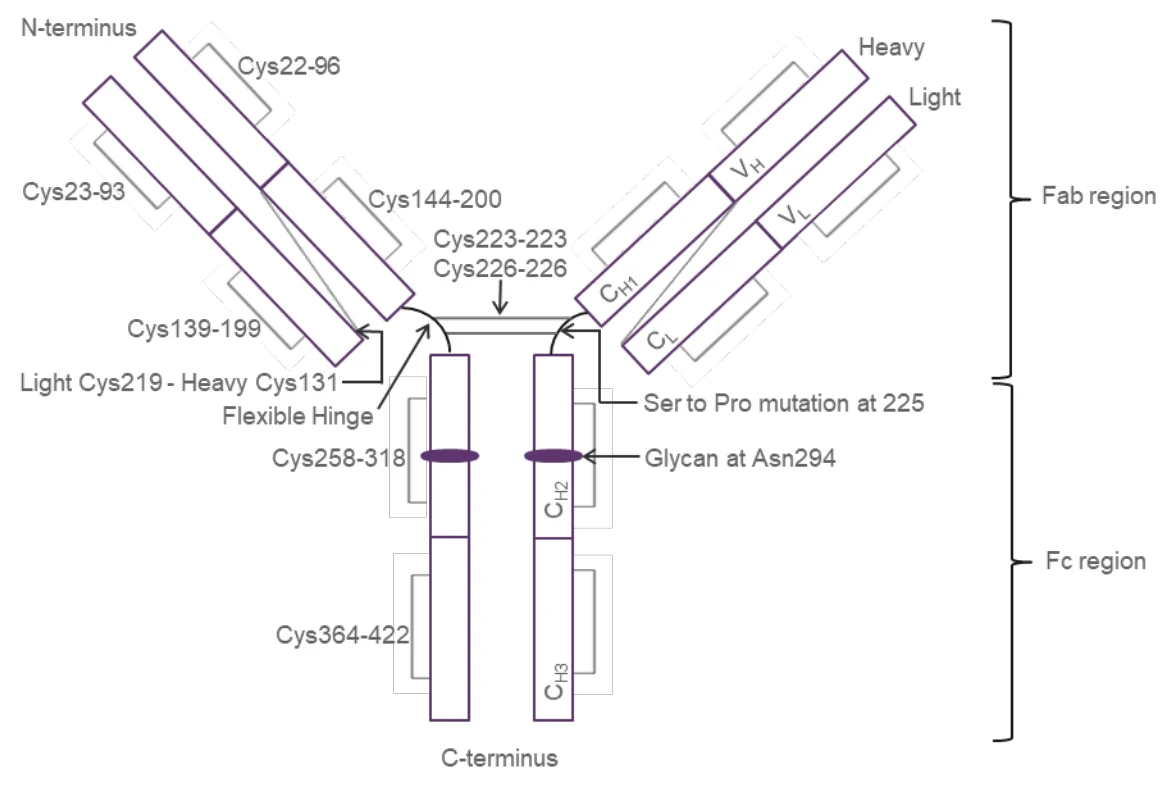
Physicochemical properties:
Product characteristics: Rozanolixizumab is a recombinant, humanized anti-neonatal Fc receptor (FcRn) IgG4P monoclonal antibody produced from a genetically engineered Chinese Hamster Ovary cell line. The light chain is composed of 219 amino acid residues and the heavy chain is composed of 444 amino acid residues.
14. Clinical Trials
14.1. Clinical Trials by Indication
Generalized Myasthenia Gravis (gMG)
The efficacy of RYSTIGGO (rozanolixizumab injection) for the treatment of generalized myasthenia gravis (gMG) in adults was established in a multicenter, randomized, double-blind, placebo-controlled study (Study 1).
Study 1 enrolled patients who met the following criteria:
- At least 18 years of age, had a body weight of at least 35 kg
- Presence of autoantibodies against AChR or MuSK
- Myasthenia Gravis Foundation of America (MGFA) Clinical Classification Class II to IVa
- Myasthenia Gravis-Activities of Daily Living (MG-ADL) total score of at least 3 (with at least 3 points from non-ocular symptoms)
- A Quantitative Myasthenia Gravis (QMG) score of at least 11
- On stable dose of MG therapy prior to screening that included acetylcholinesterase (AChE) inhibitors, steroids, or non-steroidal immunosuppressive therapies (NSISTs), either in combination or alone
- Considered for additional treatment such as intravenous immunoglobulin (IVIg) and/or plasma exchange (PLEX)
- Serum IgG levels of at least 5.5 g/L
Patients were excluded from the study if they had an absolute neutrophil count < 1 500 cells/mm3, clinically relevant active infection or serious infections, mycobacterial infections, hepatitis B, hepatitis C, HIV infections, or have been treated with PLEX, IVIg 1 month and monoclonal antibodies 3 to 6 months prior to starting treatment.
Table 4: Summary of trial design and study demographics for Study 1 in generalized Myasthenia Gravis
| Study # | Study design | Dosage, route of administration and duration | Study subjects (n) | Mean age (range) | Sex |
| Study 1 | Phase III, randomized, double-blind, placebo-controlled | RYSTIGGO ≈ 7 mg/kg, SC infusion, once per week for 6 weeks followed by an observation period of up to 8 weeks RYSTIGGO ≈ 10 mg/kg, SC infusion, once per week for 6 weeks followed by an observation period of up to 8 weeks PBO: SC infusion, once per week for 6 weeks followed by an observation period of up to 8 weeks | Adult patients with generalized myasthenia gravis TOTAL: 200 RYSTIGGO (≈ 7 mg/kg): 66 RYSTIGGO (≈ 10 mg/kg): 67 PBO: 67 | 51.8 (18-89) | Male: 39.5% Female: 60.5% |
PBO = Placebo; SC = subcutaneous;
In Study 1, a total of 200 patients were randomized 1:1:1 to receive weight-tiered doses of RYSTIGGO (n=133), equivalent to ≈ 7 mg/kg (n=66) or ≈ 10 mg/kg (n=67), or placebo (n=67). Treatment consisted of 1 dose per week for a period of 6 weeks (defined as one treatment cycle) followed by an 8-week observation period.
Baseline characteristics were similar between treatment groups, including median age at screening (52 years), and median duration of disease (6 years). Sixty-one percent of patients were female, 68% were White, 11% were Asian, 3% were Black or African American, 1% were American Indian or Alaska Native, and 7% were of Hispanic or Latino ethnicity. The study population was representative of a gMG patient population with moderate to severe disease at baseline. The majority of study participants were MGFA Disease Class ≥ III (39% were Class II, 57% were Class III, and 4% were Class IV).
Baseline median MG-ADL total score was 8, and the baseline median Quantitative Myasthenia Gravis (QMG) total score was 15. The majority of patients, 89.5% (n=179), were positive for AChR antibodies and 10.5% (n=21) were positive for MuSK antibodies.
At baseline in each group, over 83% of patients received AChE inhibitors, over 56% of patients received steroids, and approximately 50% received NSISTs, at stable doses.
Study Results
The primary efficacy endpoint was the change from baseline in MG-ADL total score at day 43 (one week after completing the initial treatment cycle with RYSTIGGO). MG-ADL scale assesses the impact of gMG on daily functions of 8 signs or symptoms that are typically affected in gMG. Each item is assessed on a 4-point scale where a score of 0 represents normal function and a score of 3 represents loss of ability to perform that function. A total score ranges from 0 to 24, with the higher scores indicating more impairment.
Secondary efficacy endpoints included change from Baseline to Day 43 in MGC score and QMG score. MGC total score measures symptoms and signs of gMG based on physician examination and patient history. The overall score ranges from 0 to 50, with a higher score indicating more severe disease. The QMG total score is a 13-item categorical grading system that assesses muscle weakness. Each item is assessed on a 4-point scale where a score of 0 represents no weakness and a score of 3 represents severe weakness. A total possible score ranges from 0 to 39, where higher scores indicate more severe impairment.
Results from Study 1 for the primary and secondary efficacy endpoints are provided in Table 5 below.
Table 5: Efficacy outcomes change from Baseline to Day 43
| Efficacy endpoints | Placebo (N=67) | RYSTIGGO ≈7 mg/kg (N=66) | |||||
|---|---|---|---|---|---|---|---|
| Efficacy endpoints | Placebo (N=67) | RYSTIGGO ≈7 mg/kg (N=66) | |||||
| Primary endpoint | |||||||
| MG-ADL | |||||||
| LS Mean (SE) | -0.784 (0.488) | -3.370 (0.486) | |||||
| Difference vs Placebo | NA | -2.586 | |||||
| 95% CI for difference | NA | -4.091, -1.249 | |||||
| P-value for difference | NA | <0.001 | |||||
| Key secondary endpoints | |||||||
| MGC | |||||||
| LS Mean (SE) | -2.029 (0.917) | -5.930 (0.916) | |||||
| Difference vs Placebo | NA | -3.901 | |||||
| 95% CI for difference | NA | -6.634, -1.245 | |||||
| P-value for difference | NA | <0.001 | |||||
| QMG | |||||||
| LS Mean (SE) | -1.915 (0.682) | -5.398 (0.679) | |||||
| Difference vs Placebo | NA | -3.483 | |||||
| 95% CI for difference | NA | -5.614, -1.584 | |||||
| P-value for difference | NA | <0.001 | |||||
≈=approximate dose; CI= confidence interval; N=total number of patients in treatment group; n=number of patients; LS=least square; SE=standard error.
The proportion of MG-ADL clinical responders with at least 2 point improvement from Baseline at Day 43 was 68.2% (n=45) in the RYSTIGGO group and 28.4% (n=19) in the placebo group.
Figure 1 shows the mean change from baseline in MG-ADL in Study 1.
Figure 1: Observed mean change from Baseline in MG-ADL score
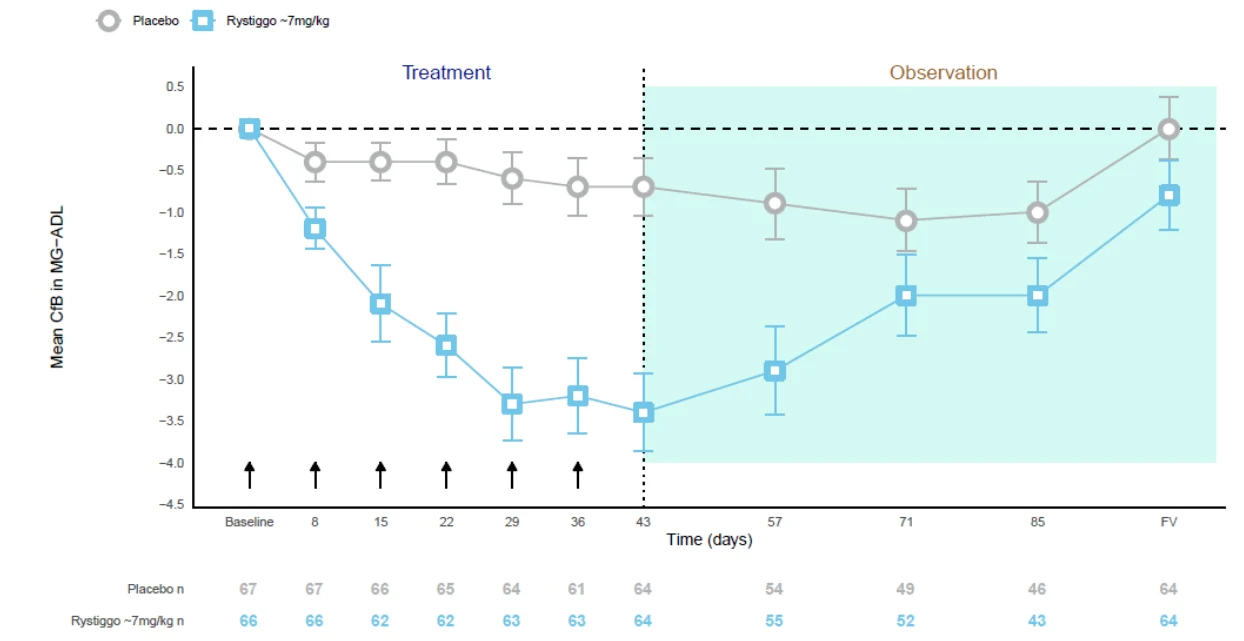
CfB=Change from Baseline; FV=Final Visit; MG−ADL=Myasthenia Gravis Activities of Daily Living
NOTE: Arrows indicate timepoints at which treatment was administered.
NOTE: Error bars represent +/− standard error
Long-term response – cyclic treatment
Patients who enrolled in the open label extension study were allowed to receive repeated cycles of RYSTIGGO treatment. Each treatment consisted of 6 weeks of treatment followed by an observation period. Initiation of additional treatment cycles was based on clinical evaluation of individual MG symptom worsening. MG symptom worsening was defined as, for example, an increase of 2.0 points on the MG-ADL scale or 3.0 points on the QMG scale. Twenty-six patients were exclusively treated with RYSTIGGO 7 mg/kg and received more than 3 treatment cycles. Based upon the first 3 treatment cycles, patients who originally responded to RYSTIGGO 7 mg/kg showed a consistent treatment response following administration of subsequent treatment cycles of RYSTIGGO. Patients treated with RYSTIGGO on average initiated 4 cycles in one year.
Body weight ≥ 35 to <50 kg
In the clinical study program only a limited number of patients with a body weight <50 kg were examined. In Study 1, lower efficacy was observed in study participants with body weight <50 kg (n=7). The number of study participants with a body weight <50kg who received repeated RYSTIGGO 7 mg/kg in the open label extension study was small (n=4). The efficacy of repeated cyclic treatment with RYSTIGGO was more variable in this population.
16. Non-Clinical Toxicology
General toxicology
13-week toxicity study with 8-week recovery
Rozanolixizumab was administered to cynomolgus monkeys every 3 days at 50 or 150 mg/kg subcutaneously or at 150 mg/kg intravenously for 13 weeks. Based on AUC, these doses resulted in margins of exposure of 7-, 64-, and 91-fold, respectively, at the maximum recommended human dose [MRHD] (840 mg subcutaneously once weekly in a 100 kg patient). Intermittent dosing was also evaluated in an additional group (2 consecutive subcutaneous doses of 150 mg/kg 3 days apart on Weeks 1, 6, and 10). No adverse effects attributable to rozanolixizumab were observed during the dosing phase or the recovery phase. In line with the mechanism of action, rozanolixizumab induced sustained reductions in plasma total IgG concentrations (typically 80% from the baseline) during the dosing phase (leading to decreases in total serum protein and serum globulin levels), with a return to baseline approximately 40 days after cessation of dosing. Upon intermittent dosing, a loss of pharmacodynamic response was observed in some animals, likely as a consequence of immunogenicity. Upon T cell-dependent antibody response (TDAR) assessment with keyhole limpet haemocyanin (KLH) challenge (immunotoxicity assessment), rozanolixizumab administration resulted in decreased anti-KLH IgG titers in all animals as a consequence of IgG accelerated degradation but did not impact anti-KLH IgM titers. The No Observed Adverse Effect Level (NOAEL) was the highest dose tested of 150 mg/kg every 3 days, by the subcutaneous or intravenous route of administration.
26-week toxicity study with 8-week recovery
Rozanolixizumab was administered to sexually mature cynomolgus monkeys every 3 days at 150 mg/kg subcutaneously for 26 weeks. Based on AUC, this dosing regimen resulted in a margin of exposure of 92-fold at the MRHD (840 mg subcutaneously once weekly in a 100 kg patient).
In line with the mechanism of action of rozanolixizumab, a sustained decrease in plasma levels of total IgG (up to 90% from baseline levels), proteins, and globulins was observed in most animals throughout the dosing period. These changes were reversed after cessation of dosing. A TDAR assay with KLH challenges during the dosing phase resulted in a marked reduction of anti-KLH-specific IgG response in all animals administered rozanolixizumab. A KLH challenge during the recovery period demonstrated an anti-KLH IgG response comparable to control animals.
No adverse effects were generally associated to rozanolixizumab administration, including effects on reproductive organs. Two treated females (out of 14 treated animals) showed evidence of immune complex disease at histopathological evaluation, in the absence of clinical signs. The first one was ADA-negative but was euthanized before scheduled termination due to the loss of pharmacodynamic effect. The second animal maintained the desired pharmacodynamic effect but developed high titers of ADA. The severity of some histopathological lesions in the first animal did not allow the setting of an overall NOAEL. Immune complex disease may occur in nonclinical species administered high doses of humanized therapeutic antibodies in case of emergent anti-drug antibodies and does not translate to humans.
Genotoxicity: Genotoxicity studies have not been conducted with rozanolixizumab.
Carcinogenicity: Carcinogenicity studies have not been conducted with rozanolixizumab.
Reproductive and developmental toxicology
In an enhanced pre/postnatal development (ePPND) study, pregnant cynomolgus monkeys were administered rozanolixizumab subcutaneously at doses of 50 or 150 mg/kg every 3 days from gestation day (GD)20 to parturition. Based on AUC, these doses resulted in margins of exposure of 4- and 54-fold, respectively, at the MRHD (840 mg subcutaneously once weekly in a 100 kg patient). A higher incidence of early pregnancy loss (between GD20 and GD50) was seen in in both rozanolixizumab groups, and therefore, an effect of rozanolixizumab administration on early pregnancy maintenance cannot be excluded. Infant mortality was higher in the control group compared to the rozanolixizumab groups, but the number of live infants on postnatal (PND) 8 and 180 were comparable across all groups (10 to 12 infants). Mean body weights in female infants were decreased in both dose groups compared to the control group due to excess perinatal mortality in the control group and overall less weight gain in some smaller infants at birth compared to the control group.
In line with the mechanism of action of rozanolixizumab, decreased circulating IgG concentrations were observed in maternal animals administered rozanolixizumab. Infants from rozanolixizumab-administered mothers also had very low circulating IgG concentrations at birth, especially in the high dose group, indicating inhibition of maternal IgG transfer across the placenta. IgG levels in infants subsequently increased during the post-natal period and no adverse effects on immune function were observed (TDAR assay with KLH challenges initiated at 4 months of age led to an IgM and IgG response within the variability of the control group). Rozanolixizumab was generally undetectable in infants at birth, except in some individuals from the high dose group. Exposure in these infants was limited, but indicated some drug transfer across the placental barrier. No exposure was seen in infants and most mothers past PND1.
Based on the increase in prenatal losses in both dose groups, a NOAEL for effects of rozanolixizumab on development cannot be established.
Fertility
In the 26-week repeat dose toxicology study of rozanolixizumab in monkeys, no rozanolixizumab -related changes were noted in the male and female reproductive organs of sexually mature animals. An assessment of menstrual cycling in females and male reproductive endpoints (ejaculate weight, sperm count, sperm motility, and morphology) demonstrated no rozanolixizumab-related changes.