


Product Monograph - Imcivree
Recent Major Label Changes
| 1 Indications | 2026-09 |
|---|---|
| 1.1 Pediatrics | 2026-09 |
| 4 Dosage and administration, 4.1 Dosing Considerations | 2026-09 |
| 4 Dosage and administration, 4.2 Recommended Dose and Dosage Adjustment | 2026-09 |
| 4 Dosage and administration, 4.4 Administration | 2026-09 |
| 7 Warnings and Precautions | 2026-09 |
| 7.1.3 Pediatrics | 2026-09 |
Table of Contents
Certain sections or subsections that are not applicable at the time of the preparation of the most recent authorized product monograph are not listed.
Recent Major Label Changes ................................................................................................ 2
Table of Contents ................................................................................................................ 2
Part 1: Healthcare Professional Information ........................................................................ 4
- 1.
Indications .................................................................................................................... 4
1.1. Pediatrics ............................................................................................................... 4
1.2. Geriatrics ............................................................................................................... 4
- 2. Contraindications ......................................................................................................... 4
- 4.
Dosage and Administration ........................................................................................... 5
4.1. Dosing Considerations ........................................................................................... 5
4.2. Recommended Dose and Dosage Adjustment ...................................................... 5
4.4. Administration ....................................................................................................... 8
4.5. Missed Dose .......................................................................................................... 9
- 5. Overdose ...................................................................................................................... 9
- 6. Dosage Forms, Strengths, Composition, and Packaging ................................................ 9
- 7.
Warnings and Precautions ............................................................................................ 9
7.1. Special Populations .............................................................................................. 11
7.1.1. Pregnancy ................................................................................................... 11
7.1.2. Breastfeeding ............................................................................................. 12
7.1.3. Pediatrics .................................................................................................... 12
7.1.4. Geriatrics .................................................................................................... 12
- 8.
Adverse Reactions ...................................................................................................... 13
8.1. Adverse Reaction Overview ................................................................................. 13
8.2. Clinical Trial Adverse Reactions ........................................................................... 13
8.2.1. Clinical Trial Adverse Reactions – Pediatrics ............................................... 17
8.3. Less Common Clinical Trial Adverse Reactions .................................................... 17
8.3.1. Less Common Clinical Trial Adverse Reactions – Pediatrics ........................ 19
8.4. Abnormal Laboratory Findings: Hematologic, Clinical Chemistry, and Other Quantitative Data ............................................................................................................ 19
8.5. Post-Market Adverse Reactions .......................................................................... 19
- 9.
Drug Interactions ........................................................................................................ 19
9.2. Drug Interactions Overview ................................................................................. 19
9.4. Drug-Drug Interactions ........................................................................................ 19
9.5. Drug-Food Interactions ........................................................................................ 19
9.6. Drug-Herb Interactions ........................................................................................ 20
9.7. Drug-Laboratory Test Interactions ....................................................................... 20
- 10.
Clinical Pharmacology ................................................................................................. 20
10.1. Mechanism of Action ........................................................................................... 20
10.2. Pharmacodynamics ............................................................................................. 20
10.3. Pharmacokinetics ................................................................................................ 20
10.4. Immunogenicity ................................................................................................... 22
- 11. Storage, Stability, and Disposal ................................................................................... 22
Part 2: Scientific Information ............................................................................................. 24
- 13. Pharmaceutical Information ....................................................................................... 24
- 14.
Clinical Trials ............................................................................................................... 25
14.1. Clinical Trials by Indication .................................................................................. 25
- 16. Non-Clinical Toxicology ............................................................................................... 32
Patient Medication Information ........................................................................................ 34
Part 1: Healthcare Professional Information
1. Indications
IMCIVREE (setmelanotide solution for subcutaneous injection) is indicated for:
- Weight management in adult and pediatric patients 4 years of age and older with acquired hypothalamic obesity (aHO)
Weight management in adult and pediatric patients 6 years of age and older with obesity due to:
- Bardet-Biedl syndrome (BBS)
- Genetically confirmed biallelic pro-opiomelanocortin (POMC), proprotein convertase subtilisin/kexin type 1 (PCSK1), or leptin receptor (LEPR) deficiency due to variants interpreted as pathogenic, likely pathogenic, or of uncertain significance
Limitations of Use:
Setmelanotide is not indicated for the treatment of patients with the following conditions as setmelanotide would not be expected to be effective:
- Other types of obesity not related to acquired HO
- Other types of obesity not related to POMC, PCSK1 or LEPR deficiency, or BBS including obesity associated with other genetic syndromes and general (polygenic) obesity
- Obesity due to suspected POMC, PCSK1, or LEPR deficiency with POMC, PCSK1, or LEPR variants classified as benign or likely benign
1.1. Pediatrics
Pediatrics (≥4 to <18 years of age): Based on the data submitted and reviewed by Health Canada, the safety and efficacy of IMCVIREE in pediatric patients with acquired HO ≥4 to <18 years of age has been established. Therefore, Health Canada has authorized this indication in pediatric patients ≥4 to <18 years of age (see 1 Indications).
Pediatrics (≥6 to <18 years of age): Based on data submitted and reviewed by Health Canada, the safety and efficacy of IMCIVREE in pediatric patients with POMC, PCSK1 or LEPR deficiency or BBS ≥6 to <18 years of age have been established. Therefore, Health Canada has authorized this indication in pediatric patients 6 to <18 years of age (see 1 Indications).
Pediatrics (< 4 years of age): No data are available to Health Canada; therefore, Health Canada has not authorized an indication for pediatric use in patients less than 4 years of age.
1.2. Geriatrics
Geriatrics (≥65 years of age): One patient aged 66 years was enrolled in the acquired HO study. It is not known whether geriatric patients would respond differently than younger adult patients.
2. Contraindications
IMCVIREE is contraindicated in patients who are hypersensitive to this drug or to any ingredient in the formulation, including any non-medicinal ingredient, or component of the container. For a complete listing, see 6 Dosage Forms, Strengths, Composition, and Packaging.
4. Dosage and Administration
4.1. Dosing Considerations
- In patients with acquired HO, IMCIVREE should be prescribed and supervised by a physician with expertise in endocrinology, or pediatric endocrinology, or expertise in obesity management, or expertise in metabolic disorders.
- In patients with POMC, PCSK1, or LEPR deficiency or in patients with BBS, IMCIVREE should be prescribed and supervised by a physician with expertise in obesity with underlying genetic aetiology.
- IMCIVREE should be administered once daily, at the beginning of the day, without regard to meals.
- In patients with acquired HO, evaluate weight loss after 16 weeks of treatment at the maximum tolerated therapeutic dose. If a patient has not lost at least 5% of baseline body weight or 5% of baseline BMI for patients with continued growth potential, discontinue IMCIVREE as it is unlikely that the patient will achieve and sustain clinically meaningful weight loss with continued treatment.
- In patients with BBS, evaluate weight loss after 22 weeks of treatment. If a patient has not lost at least 5% of baseline body weight or 5% of baseline BMI for patients with continued growth potential, discontinue IMCIVREE as it is unlikely that the patient will achieve and sustain clinically meaningful weight loss with continued treatment.
- In patients with POMC, PCSK1, or LEPR deficiency, evaluate weight loss after 12 to 16 weeks of treatment. If a patient has not lost at least 5% of baseline body weight or 5% of baseline BMI for patients with continued growth potential, discontinue IMCIVREE as it is unlikely that the patient will achieve and sustain clinically meaningful weight loss with continued treatment.
- In pediatric patients, evaluate the impact of weight loss on growth and maturation.
Renal Insufficiency:
- No dose adjustment is required in patients with mild renal impairment (see 4.2 Recommended Dose and Dosage Adjustment).
- In patients with moderate to severe renal impairment, dose adjustment varies by indication and age group (see 4.2 Recommended Dose and Dosage Adjustment).
Hepatic Impairment
- Data are not available in patients with any degree of hepatic impairment. IMCIVREE is not recommended in these patients.
4.2. Recommended Dose and Dosage Adjustment
Recommended Dose for Patients with Acquired Hypothalamic Obesity
- Dose escalation should be based on tolerability and insufficient clinical response, with an interval of 2 to 4 weeks between dose escalations.
- A sufficient clinical response is not expected before at least 4 weeks of therapy.
- Monitor patients for gastrointestinal adverse reactions and adjust the dosage based on tolerability.
- Following the starting dose, if a subsequent dose is not tolerated, reduce the dose to the previous dose level. If the reduced dose is tolerated, dose titration may be continued.
- If the starting dose is not tolerated, discontinue IMCIVREE.
Discontinue IMCIVREE if no clinical response is observed after 16 weeks of treatment at the maximum tolerated therapeutic dose.
Patients 4 to <6 years of age:
The dose-titration schedule in Table 1 should be followed according to patient weight.
Table 1: Dosing for patients 4 to <6 years of age
| Patient weight/treatment week | Daily dose | Volume to be injected |
|---|---|---|
| Less than 20 kg | ||
| Week 1 and onward | 0.5 mg once daily | 0.05 mL once daily |
| 20-<30 kg | ||
| Week 1 to weeks 2 - 4 | 0.5 mg once daily | 0.05 mL once daily |
| After 2 – 4 weeks at initial dose | 1 mg once daily | 0.1 mL once daily |
| ≥30 kg | ||
| Week 1 to weeks 2 - 4 | 0.5 mg once daily | 0.05 mL once daily |
| After 2 – 4 weeks at initial dose | 1 mg once daily | 0.1 mL once daily |
| After 2 – 4 weeks at previous dose | 1.5 mg once daily | 0.15 mL once daily |
Patients 6 to <18 years of age:
For patient weight ≤40 kg:
- Follow dose titration in Table 1 for patients aged 4 to <6 years old.
For patient weight >40 kg:
- The recommended starting dose of IMCIVREE is 0.5 mg (0.05 mL) injected subcutaneously once daily (QD) for 2 to 4 weeks.
- If the starting dose of 0.5 mg (0.05 mL) is tolerated, increase the dosage to 1 mg (0.1 mL) QD after 2 to 4 weeks.
- If clinical response is insufficient and the 1 mg (0.1 mL) QD dose is tolerated increase the dosage to 2 mg (0.2 mL) QD after 2 to 4 weeks.
Patients 18 years of age and older:
- The recommended starting dose of IMCIVREE is 0.5 mg (0.05 mL) injected subcutaneously QD for2 to 4 weeks.
- If the starting dose of 0.5 mg (0.05 mL) is tolerated, increase the dosage to 1 mg (0.1 mL) QD after 2 to 4 weeks
- If clinical response is insufficient and the 1 mg QD dose is tolerated increase the dosage by 1 mg increments after 2 to 4 weeks, to a maximum of 3 mg (0.3 mL) QD.
Dosage Adjustment
Moderate Renal Impairment
For patients with eGFRs of 30 to 59 mL/min/1.73 m2:
Patients 4 to <6 years of age:
- Use of IMCIVREE is not recommended.
Patients 6 Years of Age and Older
- The starting dose of IMCIVREE is 0.5 mg (0.05 mL) injected subcutaneously QD for 2-4 weeks.
- The dose may be increased by 0.5 mg QD every 2-4 weeks if tolerated to a maximum of 1.5 mg QD for patients 6 to less than 18 years of age and 2 mg QD for patients 18 years and older.
- If the starting dose is not tolerated, IMCIVREE should be discontinued.
Severe Renal Impairment
For patients with eGFRs of 15 to 29 mL/min/1.73 m 2:
Patients 4 to <6 years of age:
- Use of IMCIVREE is not recommended.
Patients 6 Years of Age and Older:
- The starting dose of IMCIVREE is 0.5 mg (0.05 mL) injected subcutaneously QD for 2-4 weeks.
- The dose may be increased by 0.5 mg QD every 2-4 weeks if tolerated to a maximum of 1 mg QD for patients 6 years of age to less than 18 years of age and 1.5 mg QD for patients 18 years and older.
- If the starting dose is not tolerated, IMCIVREE should be discontinued.
Hepatic Impairment
Data are not available in patients with any degree of hepatic impairment. IMCIVREE is not recommended in these patients.
Recommended Dose for Patients with POMC, PCSK1 or LEPR deficiency, or BBS
Patients 18 years of age and older
- The starting dose of IMCIVREE is 1 mg (0.1 mL) injected subcutaneously QD for 2 weeks.
- Monitor patients for gastrointestinal (GI) adverse reactions to adjust dosage.
- The dose may be increased by 0.5 mg QD every 2 weeks if tolerated to a maximum dose of 3.0 mg QD.
- If the starting dose is not tolerated, IMCIVREE should be discontinued.
Patients from 6 to <18 years of age
- The starting dose of IMCIVREE is 0.5 mg (0.05 mL) injected subcutaneously QD for 2 weeks.
- Monitor patients for gastrointestinal (GI) adverse reactions to adjust dosage.
- The dose may be increased by 0.5 mg QD every 2 weeks if tolerated to a maximum dose of 2.0 mg QD.
- If the starting dose is not tolerated, IMCIVREE should be discontinued.
Dosage Adjustment
Mild to Moderate Renal Impairment
No dose adjustments are needed for patients with mild (estimated glomerular filtration rate [eGFR] of 60-89 mL/min/1.73 m2) or moderate (eGFR of 30 to 59 mL/min/1.73 m2) renal impairment.
Severe Renal Impairment
Patients 12 Years of Age and Older
For patients with eGFR 15 to 29 mL/min/1.73 m2:
- The starting dose of IMCIVREE is 0.5 mg (0.05 mL) injected subcutaneously QD for 2 weeks.
- Monitor patients for GI adverse reactions.
- The dose may be increased by 0.5 mg QD every 2 weeks if tolerated to a maximum of 1.5 mg QD.
- If the starting dose is not tolerated, IMCIVREE should be discontinued.
The use of IMCIVREE in pediatric patients from 6 to <12 years of age with severe renal impairment is not recommended.
Hepatic impairment
Data are not available in patients with any degree of hepatic impairment. IMCIVREE is not recommended in these patients.
4.4. Administration
- Prior to initiation of IMCIVREE, train patients or their caregivers on proper injection technique. Instruct patients to use a 1-mL syringe with a 28- or 29-gauge needle appropriate for subcutaneous injection for doses 0.5 mg to 3 mg.
- Remove IMCIVREE from the refrigerator approximately 15 minutes prior to administration. Alternatively, warm IMCIVREE prior to administration by rolling the vial gently between the palms of the hands for 60 seconds.
- Inspect IMCIVREE visually before use. It should appear clear to slightly opalescent, colorless to slightly yellow. Do not use if particulate matter or discoloration is seen.
- Administer IMCIVREE once daily, at the beginning of the day, without regard to meals.
- For acquired HO, inject IMCIVREE subcutaneously in the abdomen, thigh or upper arm. Do not administer IMCIVREE intravenously or intramuscularly.
- For POMC, PCSK1 or LEPR deficiency or BBS, inject IMCIVREE subcutaneously in the abdomen each day. Do not administer IMCIVREE intravenously or intramuscularly.
- See detailed Instructions for Use at the end of the Patient Medication Information.
4.5. Missed Dose
If a dose is missed, resume the once daily regimen as prescribed with the next scheduled dose.
5. Overdose
In the event of overdose, appropriate supportive treatment (e.g., monitoring of heart rate and blood pressure) should be initiated according to the patient’s clinical signs and symptoms.
While data on overdosage is limited, it is expected that symptoms of setmelanotide overdose would be consistent with adverse events observed in patients in the clinical trials (see Adverse Reactions).
| For the most recent information in the management of a suspected drug overdose, contact your regional poison control centre or Health Canada’s toll-free number, 1-844 POISON-X (1-844-764-7669). |
|---|
- 6. Dosage Forms, Strengths, Composition, and Packaging
Table 2: Dosage Forms, Strengths, and Composition
7. Warnings and Precautions
General
IMCIVREE is not approved for use in neonates or infants. Serious and fatal adverse reactions including “gasping syndrome” can occur in neonates and low birth weight infants treated with benzyl alcohol-preserved drugs, including IMCIVREE. The “gasping syndrome” is characterized by central nervous system depression, metabolic acidosis, and gasping respirations. The minimum amount of benzyl alcohol at which serious adverse reactions may occur is not known (IMCIVREE contains 10 mg of benzyl alcohol per mL).
In patients receiving IMCIVREE, monitor concomitant medications that may be affected by changes in body weight, metabolic rate, cortisol levels, or nutritional status. Adjust the doses of such medications or the dose of IMCIVREE, as clinically indicated.
Endocrine and Metabolism
Sodium Imbalance
| Route of Administration | Dosage Form/ Strength/Composition | Non-Medicinal Ingredients |
| Subcutaneous | Solution, 10 mg/mL setmelanotide (as setmelanotide acetate) in a 1 mL multiple-dose vial | Benzyl alcohol (preservative), carboxymethylcellulose sodium, edetate disodium dihydrate (EDTA), mannitol, mPEG-2000-DSPE, nitrogen, phenol (preservative), water for injection. May contain hydrochloric acid and sodium hydroxide to adjust pH. |
Hyponatremia was reported in 6% of IMCIVREE-treated patients and 2% of placebo-treated patients. Hypernatremia was reported in 5% of IMCIVREE-treated patients and 2% of placebo-treated patients, including one treatment-related serious event in the pivotal trial in patients with aHO.
In patients with acquired HO and concomitant diabetes insipidus/arginine vasopressin (DI/AVP) disorders, closely monitor serum sodium levels, fluid balance, and hydration status, particularly with the changes in body weight, or food and fluid intake, which may occur with IMCIVREE therapy. Monitor more frequently during periods of decreased oral intake, intercurrent illness, or intensified caloric restriction. Adjust the doses of concomitant therapies for DI/AVP deficiency or the dose of IMCIVREE as clinically indicated.
Acute adrenal insufficiency
Serious cases of acute adrenal insufficiency were reported in >5% of IMCIVREE-treated patients and no placebo-treated patients with acquired hypothalamic obesity in the pivotal trial. Patients should be monitored for clinical signs of acute adrenal insufficiency.
Evaluate adrenal function prior to initiating IMCIVREE in patients with a history of hypothalamic or pituitary disease. Patients with known adrenal insufficiency should be adequately treated with glucocorticoid replacement therapy before starting IMCIVREE. Monitor for clinical signs of inadequate adrenal function, including fatigue, hypotension, hypoglycemia, nausea, and electrolyte disturbances.
Hepatic/Biliary/Pancreatic
Drug-induced liver injury was reported in a patient with aHO in a clinical trial.
After 1 month on IMCIVREE, aminotransferases were elevated, followed by 2 positive dechallenges and a positive rechallenge supporting IMCIVREE as the etiology of probable drug-induced liver injury. Consider periodic monitoring of liver enzymes before and during treatment.
Psychiatric
Depression and suicidal ideation
Depression and suicidal ideation occurred in adults and pediatric patients treated with IMCIVREE in clinical studies (see 8 Adverse Reactions). Some cases of depression and suicidal ideation or behaviour were serious. Patients with a history of depression or suicidal ideation may be at increased risk for recurrent episodes while taking IMCIVREE.
Monitor patients for new onset or worsening of depression, suicidal thoughts or behaviour, or any unusual changes in mood or behaviour. Consider discontinuing IMCIVREE if patients experience suicidal thoughts or behaviours or if clinically significant or persistent depression symptoms occur.
Renal
Patients with Acquired HO
The use of IMCIVREE in pediatric patients less than 6 years of age with moderate to severe renal impairment is not recommended. Dose adjustment is required for patients 6 years of age and older with moderate to severe renal impairment (see 4.2 Recommended Dose and Dosage Adjustment).
Patients with BBS or POMC, PCSK1, or LEPR deficiency
The use of IMCIVREE in pediatric patients from 6 to <12 years of age with severe renal impairment is not recommended. Dose adjustment is required for patients 12 years of age and older with severe renal impairment (see 4.2 Recommended Dose and Dosage Adjustment).
IMCIVREE is not recommended for use in patients with end stage renal disease (eGFR less than15 mL/min/1.73 m2).
Reproductive Health
Disturbance in sexual arousal
Sexual adverse reactions may occur in patients treated with IMCIVREE. Spontaneous penile erections and increased frequency of penile erections in males and sexual adverse reactions in females occurred in clinical studies with IMCIVREE (see 8 Adverse Reactions).
Inform patients that these events may occur and instruct patients who have an erection lasting longer than 4 hours to seek emergency medical attention.
Sensitivity
Serious hypersensitivity reactions, including anaphylaxis, have been reported with IMCIVREE. These reactions generally occurred within minutes to hours after injecting IMCIVREE. If hypersensitivity reactions occur, advise patients to promptly seek medical attention and discontinue use of IMCIVREE (see 2 Contraindications).
Skin
Skin pigmentation and darkening of nevi
Generalized increased skin pigmentation occurred in the majority of patients treated with IMCIVREE in clinical trials (see 8 Adverse Reactions). IMCIVREE may also cause darkening of pre-existing nevi due to its pharmacologic effect. Melanocytic nevi were observed in all pivotal studies (30% of patients in Study 1 and Study 2 combined and 14% of patients in Study 3). This effect is generally reversible upon discontinuation of the drug. Cases of melanoma were reported in IMCIVREE-treated patients in clinical trials and post-marketing.
Perform a full body skin examination prior to initiation and periodically during treatment with IMCIVREE to monitor pre-existing and new skin pigmentary lesions.
IMCIVREE should not be used in patients with a personal medical history or a family history of melanoma or pre-melanoma skin lesions.
7.1. Special Populations
7.1.1. Pregnancy
There are no available data with IMCIVREE in pregnant women.
It is not recommended to use IMCIVREE when pregnant or while trying to get pregnant, as it has not been studied in pregnant women.
Weight loss during pregnancy may harm the baby.
Patients who are pregnant should also be advised of the potential risk from the preservative benzyl alcohol.
Benzyl alcohol is rapidly metabolized by a pregnant woman, thus benzyl alcohol exposure in the fetus is unlikely. However, its metabolite benzoic acid might accumulate over time and cause metabolic acidosis. Adverse reactions have occurred in premature neonates and low birth weight infants who received intravenously administered benzyl alcohol-containing drugs (see 7 Warnings and Precautions).
In animal reproductive studies, administration of setmelanotide to pregnant rabbits resulted in decreased maternal food consumption leading to embryo-fetal effects. Setmelanotide was not teratogenic in two species (rats and rabbits) (see 16 Non-Clinical Toxicology).
7.1.2. Breastfeeding
Treatment with IMCIVREE is not recommended while breastfeeding.
IMCIVREE from multiple-dose vials contains the preservative benzyl alcohol. Because benzyl alcohol is rapidly metabolized by a lactating woman, benzyl alcohol exposure in the breastfed infant is unlikely. However, adverse reactions have occurred in premature neonates and low birth weight infants who received intravenously administered benzyl alcohol-containing drugs (see 7 Warnings and Precautions).
There is no information on the presence of setmelanotide or its metabolites in human milk, the effects on the breastfed infant, or the effects on milk production. However, setmelanotide was present in the milk of female rats (see 16 Non-Clinical Toxicology). It is therefore likely that the drug will be present in human milk.
7.1.3. Pediatrics
IMCIVREE has been approved for use in pediatric patients aged ≥4 to <18 years of age with acquired hypothalamic obesity (see 1.1 Pediatrics).
IMCIVREE has been approved for use in pediatric patients aged ≥6 to <18 years of age with POMC, PCSK1, or LEPR deficiency, or BBS (see 1.1 Pediatrics).
The safety and effectiveness of IMCIVREE have not been established in pediatric patients younger than 4 years old.
Serious adverse reactions including fatal reactions and the “gasping syndrome” occurred in premature neonates and low birth weight infants who received drugs containing benzyl alcohol as a preservative. In these cases, benzyl alcohol dosages of 99 to 234 mg/kg/day produced high levels of benzyl alcohol and its metabolites in the blood and urine (blood levels of benzyl alcohol were 0.61 to 1.378 mmol/L). Additional adverse reactions included gradual neurological deterioration, seizures, intracranial hemorrhage, hematologic abnormalities, skin breakdown, hepatic and renal failure, hypotension, bradycardia, and cardiovascular collapse. Preterm, low-birth weight infants may be more likely to develop these reactions because they may be less able to metabolize benzyl alcohol. The minimum amount of benzyl alcohol at which serious adverse reactions may occur is not known (IMCIVREE contains 10 mg of benzyl alcohol) (see 7 Warnings and Precautions).
7.1.4. Geriatrics
One patient aged 66 years was enrolled in the acquired HO study. It is not known whether geriatric patients would respond differently than younger adult patients.
8. Adverse Reactions
8.1. Adverse Reaction Overview
Acquired Hypothalamic Obesity
The most common adverse reactions (≥10% of IMCIVREE-treated patients) were skin hyperpigmentation (58%), nausea (54%), vomiting (38%), headache (36%), injection site reaction (84%), disturbances of sexual arousal (18%), melanocytic naevus (15 %), constipation (12 %), dizziness (12 %), and fatigue (11 %).
The most frequently reported serious adverse events (SAEs) were adrenal insufficiency (5%), and hypernatremia (2%); SAEs of vomiting, nausea, headache, hypertension, hyponatremia and drug-induced liver failure each occurred in ≤1% of patients.
Discontinuation of treatment due to adverse events was reported in 6% of IMCIVREE-treated patients. Adverse events leading to discontinuation included hyperpigmentation (2%), serious drug-induced liver injury, hypernatremia, adrenal insufficiency, and nausea (in 1 patient each).
POMC, PCSK1, LEPR deficiency, BBS:
The most common adverse reactions (≥ 10%) among IMCIVREE-treated patients were injection site reactions (90%), skin hyperpigmentation (57%), disturbance in sexual arousal (spontaneous and increased penile erections) (40%), nausea (53%), headache (50%), diarrhea (40%), abdominal pain (33%), vomiting (33%), melanocytic naevus (30%), back pain (30%), fatigue (27%), depression (23%), asthenia (23%), dizziness (17%), and dry mouth (13%).
The most common serious adverse reactions were depression and suicidal ideation.
Adverse events associated with treatment discontinuation included Grade 1 eosinophilia, skin hyperpigmentation, nausea, vomiting, hypoglycemia, headache, and auditory hallucination.
8.2. Clinical Trial Adverse Reactions
Clinical trials are conducted under very specific conditions. Therefore, the frequencies of adverse reactions observed in the clinical trials may not reflect frequencies observed in clinical practice and should not be compared to frequencies reported in clinical trials of another drug.
Acquired Hypothalamic Obesity
The safety of IMCIVREE was evaluated in a randomized, double-blind, placebo-controlled clinical study which included a dose titration period of 4 to 8 weeks and a 52-week treatment period, in a total of 142 global patients aged 4 years and older with acquired hypothalamic obesity (Study 1) (see 14 Clinical Trials).
Table 3: Adverse Reactions Occurring in ≥5% of IMCIVREE-Treated Patients with Acquired Hypothalamic Obesity (Study 1)1
System Organ Class Preferred Term | IMCIVREE N = 94 n (%) | Placebo N = 48 n (%) |
System Organ Class Preferred Term | IMCIVREE N = 94 n (%) | Placebo N = 48 n (%) |
System Organ Class Preferred Term | IMCIVREE N = 94 n (%) | Placebo N = 48 n (%) |
| Endocrine Disorders | ||
| Acute adrenal insufficiency | 5 (5%) | 0 (0) |
| Gastrointestinal disorders | ||
| Nausea | 51 (54) | 13 (27) |
| Vomiting | 36 (38) | 9 (19) |
| Constipation | 11 (12) | 3 (5) |
| General disorders and administrative site conditions | ||
| Injection site reaction2 | 79 (84) | 38 (79) |
| Fatigue | 10 (11) | 5 (10) |
| Infections and infestations | ||
| Gastroenteritis | 8 (9) | 1 (2) |
| Investigations | ||
| Alanine aminotransferase increased | 3 (3) | 0 (0) |
| Metabolism and nutrition disorders | ||
| Hyponatremia | 6 (6) | 1 (2) |
| Hypernatremia | 5 (5) | 1 (2) |
| Musculoskeletal and connective tissue disorders | ||
| Back pain | 7 (7) | 1 (2) |
| Arthralgia | 6 (6) | 2 (4) |
| Neoplasms benign, malignant and unspecified (incl cysts and polyps) | ||
| Melanocytic nevi | 14 (15) | 3 (6) |
| Nervous system disorders | ||
| Headache | 34 (36) | 15 (31) |
| Dizziness | 11 (12) | 2 (4) |
| Reproductive System | ||
| Erection increased, spontaneous erections | 7 (18) | 2 (12) |
| Respiratory, thoracic and mediastinal disorders | ||
| Oropharyngeal pain | 10 (11) | 2 (4) |
| Skin and subcutaneous tissue disorders | ||
| Skin hyperpigmentation | 55 (58) | 7 (15) |
1 Efficacy analyses are based on the primary analysis conducted on 26 March 2025 (120 patients) while safety analyses are based on all patients (142) as of 04 July 2025.
2 Includes injection site erythema, pruritus, pain, induration, edema, reaction
POMC, PCSK1, and LEPR Deficiency
The safety of IMCIVREE was evaluated in two 52-week, open-label clinical studies of 30 patients with obesity due to POMC, PCSK1, or LEPR deficiency (Study 2 and Study 3) (see 14 Clinical Trials).
Table 4: Adverse Reactions Occurring in ≥ 5% of IMCIVREE-Treated Patients with Obesity due to POMC, PCSK1, or LEPR Deficiency in Open-Label Clinical Studies of 52-Week Duration (Study 2 and Study 3)
System Organ Class Preferred Term | IMCIVREE N = 30 n (%) |
System Organ Class Preferred Term | IMCIVREE N = 30 n (%) |
| Ear and labyrinth disorders | |
| Vertigo | 4 (13) |
| Gastrointestinal disorders | |
| Nausea | 16 (53) |
| Abdominal pain1 | 10 (33) |
| Vomiting | 10 (33) |
| Diarrhea | 6 (40) |
| Dry mouth | 4 (13) |
| General disorders and administrative site conditions | |
| Injection site reaction2 | 27 (90) |
| Fatigue | 8 (27) |
| Asthenia | 7 (23) |
| Chills | 3 (10) |
| Musculoskeletal and connective tissue disorders | |
| Back pain | 9 (30) |
| Nervous system disorders | |
| Headache | 15 (50) |
| Dizziness | 5 (17) |
| Psychiatric disorders | |
| Depression3 | 7 (23) |
| Anxiety | 3 (10) |
| Reproductive system and breast disorders | |
| Spontaneous penile erection4 | 6 (40) |
| Skin and subcutaneous tissue disorders | |
| Skin hyperpigmentation5 | 17 (57) |
| Melanocytic nevus | 9 (30) |
| Alopecia | 3 (10) |
| Erythema | 2 (7) |
| Hyperhidrosis | 2 (7) |
| Rash popular | 2 (7) |
1 Includes abdominal pain and upper abdominal pain
2 Includes injection site erythema, pruritus, edema, pain, induration, bruising, hypersensitivity, hematoma, nodule, and discoloration
3 Includes depression and depressed mood
4 n = 15 male patients
5 Includes skin hyperpigmentation and pigmentation disorders
Bardet-Biedl Syndrome
The safety of IMCIVREE was evaluated in a clinical study, which included a 14-week, randomized, double-blind, placebo-controlled period followed by a 52-week open-label, treatment period, in 44 patients with obesity and a clinical diagnosis of BBS (Study 4) (see 14 Clinical Trials). The study duration was 66 weeks.
During the 14-week placebo-controlled period in Study 4, the most common reported adverse reactions in IMCIVREE-treated patients when compared to placebo-treated patients were hyperpigmentation disorders (67% vs 0%, respectively) and vomiting (11% vs 0%, respectively).
Adverse reactions were also evaluated during the 52-week active-treatment period, defined as the period from randomization to Week 52 in patients initially randomized to IMCIVREE, and from Week 14 to Week 66 in patients initially randomized to placebo. Table 5 summarizes the adverse reactions that occurred in 2 or more IMCIVREE-treated patients in Study 4 during the 52-week active treatment period.
Table 5: Adverse Reactions Occurring in ≥ 5% of IMCIVREE-Treated Patients with Obesity and a Clinical Diagnosis of BBS During the 52-week Active-Treatment Period from the Start of IMCIVREE Treatment (Study 4)
System Organ Class Preferred Term | IMCIVREE N = 431 n (%) |
| Gastrointestinal disorders | |
| Nausea | 11 (26) |
| Vomiting | 8 (19) |
| Diarrhea | 6 (14) |
| General disorders and administrative site conditions | |
| Injection Site Reactions2 | 22 (51) |
| Fatigue | 2 (5) |
| Nervous system disorders | |
| Headache | 3 (7) |
| Psychiatric disorders | |
| Aggression | 2 (5) |
| Reproductive system and breast disorders | |
| Spontaneous penile erection3 | 5 (25) |
| Skin and subcutaneous tissue disorders | |
| Hyperpigmentation Disorders4 | 27 (63) |
| Melanocytic nevus | 6 (14) |
| Skin striae | 3 (7) |
1 43 patients were treated with at least 1 dose of IMCIVREE; 1 patient initially randomized to placebo withdrew from the study prior to receiving IMCIVREE and is not included
2 Includes injection site erythema, pruritis, induration, pain, bruising, edema, reaction, hemorrhage, irritation, mass
3 n = 20 male patients
4 Includes skin hyperpigmentation, hair color changes, melanoderma
8.2.1. Clinical Trial Adverse Reactions – Pediatrics
The observed safety profile is consistent in children and adults.
8.3. Less Common Clinical Trial Adverse Reactions
Acquired Hypothalamic Obesity (occurring in <5% of Patients in Study 1)
Cardiac Disorders: sinus bradycardia
Ear and Labyrinth Disorders: vertigo
Eye Disorders: conjunctival pigmentation, scleral discoloration
Gastrointestinal Disorders: gastroesophageal reflux disease, dry mouth, eructation, flatulence, gastrointestinal pain, gingival disorders (gingival discoloration/gingival pain), retching
General Disorders and Administration Site Conditions: chills, asthenia, pain, peripheral swelling
Immune System Disorders: hypersensitivity
Infections and infestations: gastroenteritis viral, skin infection
Injury, Poisoning and Procedural Complications: contusion (including post-procedural contusion), skin abrasion
Investigations: alanine aminotransferase increased, aspartate aminotransferase increased, blood uric acid increased, weight decreased
Metabolism and Nutrition Disorders: hyponatremia, hypernatremia, food aversion, dehydration, hypercalcemia
Musculoskeletal and Connective Tissue Disorders: myalgia, arthralgia
Nervous System Disorders: dizziness/presyncope, dysgeusia
Psychiatric Disorders: sleep disorder, insomnia, restlessness
Renal and Urinary Disorders: ketonuria
Reproductive and Breast Disorders: genital pain, vulvovaginal discomfort, vulvovaginal dryness
Respiratory, Thoracic and Mediastinal Disorders: rhinorrhea
Skin and Subcutaneous Tissue Disorders: skin discolouration, dry skin, blister, ephelides, erythema, nail pigmentation, photosensitivity reaction, pruritic, rash, skin swelling, urticaria
POMC, PCSK1, and LEPR Deficiency (occurring in ˂5% of Patients in Study 2 and Study 3)
Blood and Lymphatic System Disorders: eosinophilia
Cardiac Disorders: cardiac flutter
Gastrointestinal Disorders: abdominal discomfort, gingival discoloration
General Disorders and Administration Site Conditions: malaise, edema temperature intolerance, xerosis
Hepatobiliary Disorders: cholelithiasis, cholestasis, hepatocellular injury
Injury, Poisoning and Procedural Complications: accidental overdose, ligament sprain
Investigations: blood bilirubin increased, blood luteinising hormone increased, blood uric acid increased, insulin tolerance test abnormal
Metabolism and Nutrition Disorders: decreased appetite, vitamin A deficiency, vitamin D deficiency
Musculoskeletal and Connective Tissue Disorders: muscle spasms, musculoskeletal chest pain, musculoskeletal pain, neck pain
Neoplasms Benign, Malignant and Unspecified (Including Cysts and Polyps): eye nevus
Nervous System Disorders: parosmia, sciatica, sleep paralysis, syncope
Psychiatric Disorders: affect lability, fear of injection, insomnia, restlessness, suicidal ideation
Renal and Urinary Disorders: hematuria, renal colic, renal failure
Reproductive System and Breast Disorders: dysmenorrhea, erection increased, metrorrhagia, vaginal hemorrhage
Skin and Subcutaneous Tissue Disorders: lentigo, lipodystrophy acquired, skin hypopigmentation, skin striae, urticaria
Vascular Disorders: flushing
Bardet-Biedl Syndrome (occurring in ˂5% of Patients in Study 4)
Cardiac Disorders: bradycardia
Endocrine Disorders: precocious puberty
Eye Disorders: Visual Impairment
Gastrointestinal Disorders: abdominal pain, gastroesophageal reflux disease
Investigations: blood creatine increased, eosinophil count increased
Metabolism and Nutrition Disorders: decreased appetite, hunger, increased appetite
Musculoskeletal and connective tissue disorders: muscle spasms, myalgia, pain in extremity
Neoplasms benign, malignant and unspecified (incl cysts and polyps): melanocytic nevus
Nervous System Disorders: disturbance in attention, dizziness, hyperesthesia, hypokinesia, tremor
Psychiatric Disorders: disturbance in sexual arousal, libido increased, sexually inappropriate behavior
Reproductive and Breast Disorders: Menorrhagia
Skin and Subcutaneous Tissue Disorders: dry skin, eczema, hair color changes, melanoderma, rash
Vascular Disorders: hot flush
8.3.1. Less Common Clinical Trial Adverse Reactions – Pediatrics
The observed safety profile is consistent in children and adults.
8.4. Abnormal Laboratory Findings: Hematologic, Clinical Chemistry, and Other Quantitative Data
Clinical Trial Findings
The most frequent laboratory-related TEAEs observed in patients with aHO included hyponatremia and hypernatremia. Other laboratory-related TEAEs included increased ALT, increased AST, decreased IGF-1, increased creatine phosphokinase, and anemia.
Post-Market Findings
No clinically relevant changes in laboratory findings were reported.
8.5. Post-Market Adverse Reactions
Melanoma
One post-marketing case of superficial spreading melanoma Stage I has been reported in a patient treated with IMCIVREE for Bardet-Biedl syndrome (BBS).
9. Drug Interactions
9.2. Drug Interactions Overview
No clinical studies evaluating the drug-drug interaction potential of setmelanotide have been conducted.
9.4. Drug-Drug Interactions
Setmelanotide has low potential for pharmacokinetic drug-drug interactions related to cytochrome P450 (CYP) and transporters. Interactions with other drugs have not been established.
9.5. Drug-Food Interactions
Interactions with food have not been established.
9.6. Drug-Herb Interactions
Interactions with herbal products have not been established.
9.7. Drug-Laboratory Test Interactions
Interactions with laboratory tests have not been established.
10. Clinical Pharmacology
10.1. Mechanism of Action
Setmelanotide is a melanocortin-4 receptor (MC4R) agonist. MC4Rs in the brain are involved in regulation of hunger, satiety, and energy expenditure. In MC4R pathway diseases such as acquired HO, POMC, PCSK1, LEPR deficiency, and BBS, which are associated with insufficient activation of the MC4 receptor setmelanotide is believed to re-establish MC4 receptor pathway activity to reduce hunger and promote weight loss through decreased caloric intake and increased energy expenditure.
10.2. Pharmacodynamics
QT/QTc
At a dose about 2.5 times the maximum recommended dose based on Cmax, IMCIVREE does not prolong the QT interval to any clinically relevant extent.
Skin Hyperpigmentation
Setmelanotide is a MC4 receptor agonist with off-target activity at the melanocortin 1 (MC1) and melanocortin 3 (MC3) receptors. The MC1 receptor is expressed on melanocytes, and activation of this receptor leads to accumulation of melanin and increased skin pigmentation independently of ultraviolet light. Setmelanotide activates the MC1 receptor and potentially causes skin hyperpigmentation.
10.3. Pharmacokinetics
The mean steady state setmelanotide Cmax,ss, AUCtau, and trough concentration for a 3-mg dose administered once daily by subcutaneous injection to otherwise healthy subject with obesity (N=6) was 37.9 ng/mL, 495 h*ng/mL, and 6.77 ng/mL, respectively. Steady-state plasma concentrations of setmelanotide were achieved within 2 days with daily dosing of 1-3 mg setmelanotide. The accumulation of setmelanotide in the systemic circulation during once-daily dosing over 12 weeks was approximately 30%. Setmelanotide AUC and Cmax increased dose-proportionally following multiple-dose subcutaneous administration in the proposed dose range (1-3 mg).
Table 6: Summary of Setmelanotide Pharmacokinetic Parameters in Otherwise Healthy Subjects with Obesity
| Dose | Cmax (ng/mL) | Tmax (h) | AUCtau (ng*h/mL) | t½ (h) | Ctrough (ng/mL) |
| 3.0 mg QD | 37.9 (14.0) | 8.00 (3.00-9.00) | 495 (16.8) | 7.11 (14.1) | 6.77 (38.0) |
Note: Values are presented as mean (CV%) except tmax, which is presented as median (min, max).
Absorption
After subcutaneous injection of IMCIVREE, steady-state plasma concentrations of setmelanotide increased slowly and reached maximum concentrations at a median tmax of 8 h after dosing. The absolute bioavailability following subcutaneous injection of setmelanotide has not been investigated in humans.
Distribution
The mean apparent volume of distribution of setmelanotide after subcutaneous injection of IMCIVREE 3 mg once daily was estimated from the population pharmacokinetics model to be 73.1 L. Protein binding of setmelanotide is 79%.
In vitro experiments indicate that setmelanotide is not a substrate of OATP1B1, OATP1B3, OAT1, OAT3, or OCT2. In vitro data indicate that setmelanotide is very unlikely a P-gp or BCRP substrate.
Metabolism
Setmelanotide did not appear to be metabolised by rat, monkey, or human hepatic microsomes or hepatocytes, or kidney microsomes. Setmelanotide is stable in human, rat, and monkey hepatocytes. Setmelanotide is expected to be metabolized into small peptides by catabolic pathways.
Elimination
The effective elimination half-life (t½) of setmelanotide was approximately 11 hours. The total apparent steady state clearance of setmelanotide following subcutaneous injection of IMCIVREE 3 mg once daily was estimated from the population PK model to be 7.19 L/h.
Excretion
Approximately 39% of the administered setmelanotide dose was excreted unchanged in urine during the 24-hour dosing interval following subcutaneous injection of 3 mg once daily in otherwise healthy obese subjects.
Special populations and conditions
No clinically significant differences in the pharmacokinetics of setmelanotide were observed based on sex or disease. The effect of age 65 years or older, pregnancy, or hepatic impairment on the pharmacokinetics of setmelanotide is unknown.
- Pediatrics
The pharmacokinetics of IMCIVREE in adult and pediatric patients were characterized using population pharmacokinetic modeling. The analysis included 199 pediatric patients ranging from 2 to less than 18 years of age (<4 years [5]; 4 to <6 years [8]; 6 to <12 years [64);12 to <18 years [122]) and weighing 17.8 to 208 kg. Total body weight was the primary structural covariate affecting apparent clearance, while ideal body weight was used to scale apparent volume of distribution. Renal function was also identified as an important covariate affecting apparent clearance. Population pharmacokinetic simulations were used to estimate steady-state exposures following administration of the recommended maximum dose for each pediatric body-weight group.
Relative to the predicted exposures in the corresponding adult populations with normal renal function receiving the reference dose of 3 mg once daily, the estimated pediatric exposures were as follows. The reported values represent the average of the indication-specific exposure comparisons for patients with acquired hypothalamic obesity and patients with rare genetic diseases of obesity:
- 40 to <60 kg, receiving a maximum dose of 2 mg once daily: AUCss was approximately 28% higher, and Cmax,ss was approximately 25% higher.
- 30 to <40 kg, receiving a maximum dose of 1.5 mg once daily: AUCss was approximately 25% higher, and Cmax,ss was approximately 22% higher.
- 20 to <30 kg, receiving a maximum dose of 1 mg once daily: AUCss was approximately 8% higher, and Cmax,ss was approximately 5% higher.
- 15 to <20 kg, receiving a maximum dose of 0.5 mg once daily: AUCss was approximately 30% lower, and Cmax,ss was approximately 30% lower.
- Renal Insufficiency
Exposure parameters, AUC0-t and AUC0-inf, were approximately 13%-15%, 34%-35%, and 86%-96% higher for patients with mild, moderate, and severe renal impairment, respectively, as compared to patients with normal renal function. Pharmacokinetic analysis showed a 12%, 26%, and 49% lower clearance (CL/F) of setmelanotide in patients with mild, moderate, and severe renal impairment, respectively, as compared to patients with normal renal function.
Renal impairment did not appear to affect plasma protein binding. The average fraction unbound (fu) was approximately 0.21 and was independent of renal function status.
10.4. Immunogenicity
The observed incidence of anti-drug antibodies (ADA) is highly dependent on the sensitivity and specificity of the assay. Differences in assay methods preclude meaningful comparisons of the incidence of ADA in the studies described below with the incidence of ADA in studies, of setmelanotide or different setmelanotide formulations.
Across 5 clinical trials with an exposure time of at least 52 weeks, 4 of 245 subjects (1.6%) were positive for antibodies against setmelanotide.
Anti-setmelanotide antibodies prevalence by indication: BBS 3/50 (6.0%), AS 1/8 (12.5%), POMC deficiency (0/16), PCSK1 deficiency (0/2), LEPR deficiency (0/21), and acquired HO (0/142). Reported titers among ADA‑positive subjects were generally low.
In 5 clinical trials with an exposure time of at least 52 weeks anti-α-MSH antibodies were measured in 17 of 245 subjects (6.9%).
Anti-α-MSH antibodies by genetic deficiency: BBS 5/50 (10.0%), POMC 1/16 (6.3%), LEPR 6/21 (28.6%), PCSK1 0/2 (0%), acquired HO 4/142 (2.8%). A low incidence of ADA to alpha-MSH has been detected in clinical studies to date with a low reported titer of ADA against α-MSH. These include pre-existing ADA to alpha-MSH as well as development of ADA to alpha-MSH while on treatment. In the samples of these studies, no ADA to setmelanotide were detected.
In patients with acquired HO, POMC, PCSK1, or LEPR deficiency or in patients with BBS, there is insufficient information to characterize the ADA response to setmelanotide or α-MSH and the effects of ADA on pharmacokinetics, pharmacodynamics, safety, or effectiveness of setmelanotide.
- 11. Storage, Stability, and Disposal
IMCIVREE injection is supplied as:
10 mg/mL, clear to slightly opalescent, colorless to slightly yellow solution in a 1-mL multiple-
- dose vial
- Package of 1 multiple-dose vial
Store unopened IMCIVREE vials in the refrigerator at 2°C to 8°C in the original carton. After removal from the refrigerator, vials may be kept at temperatures ranging from refrigerated to room temperature (2°C to 30°C) for up to 30 days. After the vial is punctured (opened), discard after 30 days. See Table 5 for a summary of storage conditions for IMCIVREE. Store vials in the original carton.
Table 7: Recommended Storage for IMCIVREE Vials
1 If necessary, IMCIVREE may be stored at room temperature (≤30°C) and then returned to refrigerated conditions
| Storage Condition | Unopened Vial | Opened Vial |
| 2°C to 8°C | Until the expiration date | Up to 30 days, OR Until the expiration date (whichever is earlier) |
| 2°C to 30°C1 | Up to 30 days, OR Until the expiration date (whichever is earlier) | Up to 30 days, OR Until the expiration date (whichever is earlier) |
| >30°C | Discard and do not use | Discard and do not use |
Part 2: Scientific Information
13. Pharmaceutical Information
Drug Substance
Non-proprietary name of the drug substance(s): Setmelanotide
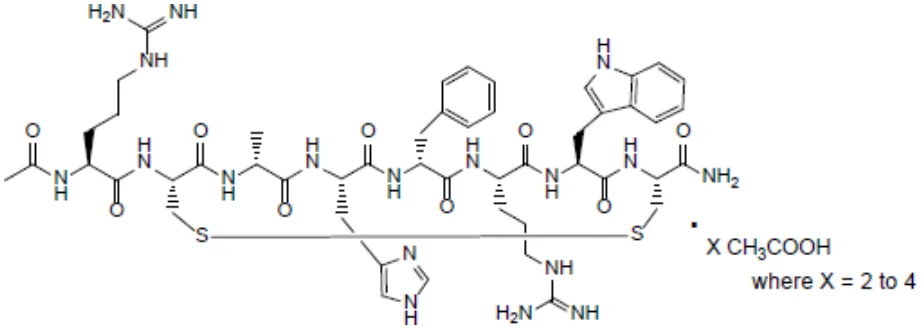
Chemical name: acetyl-L-arginyl-L-cysteinyl-D-alanyl-L- histidinyl-D-phenylalanyl-L-arginyl-L-tryptophanyl-L-cysteinamide cyclic (2→8)-disulfide acetate
Molecular formula and molecular mass: C49H68N18O9S2 (anhydrous, free-base), 1117.3 Daltons (anhydrous, free-base)
Structure (for biologics)/Structural formula:
Physicochemical properties:
Physical form and appearance: Amorphous white to off-white powder
Hygroscopicity: Hygroscopic when assessed using dynamic vapor sorption with evidence of deliquescent behavior at humidity >70%RH
UV Absorption: Maximum absorption at 220 nm with smaller absorption peak centred at 279 nm logD (octanol/PBS buffer pH 7.4): -0.8 ± 0.2 (temperature = 22°C)
Solubility: 19.6 mg/mL (WFI at 24 hours)
Stereochemistry:
The drug substance is chiral with the octapeptide consisting of the following L and D amino acids:
Ac-L Arg1-L Cys2-D Ala3-L His4-D Phe5-L Arg6-L Trp7-L Cys8-NH2
14. Clinical Trials
14.1. Clinical Trials by Indication
Acquired Hypothalamic Obesity
Table 8: Summary of patient demographics for clinical trials in acquired hypothalamic obesity (Study 1)
| Study # | Study design | Dosage, route of administration and duration | Study subjects (n) | Mean Age (Range) | Sex |
| Study 1 | Double-blinded, placebo-controlled 52-week (at therapeutic regimen) clinical study | Setmelanotide or placebo; 4-8-week dose titration period up to therapeutic dose (maximum of 3 mg in adult and pediatric patients depending on weight, tolerability and clinical response) followed by a 52-week treatment period and a safety follow-up visit approx. 2 weeks after the end of treatment; SC injection | 120 randomized patients (81 IMCIVREE and 39 placebo-treated patients) | 19.9 years (4 to 66 years) | 48 males; 72 females |
The safety and efficacy of IMCIVREE for weight reduction in adults and pediatric patients aged 4 to 66 years with acquired hypothalamic obesity were assessed in a randomized, double-blinded, placebo-controlled 52-week clinical study (Study 1). Adult patients had a BMI of ≥30 kg/m2 and pediatric patients had a BMI ≥95th percentile for age and sex.
In Study 1, 120 patients with acquired hypothalamic obesity were randomized to either setmelanotide or placebo and entered a 4- to 8-week dose titration period followed by a 52-week treatment period.
Efficacy analyses were conducted for the patients who completed the end of treatment visit after 52 weeks on a therapeutic dose or who discontinued the study early.
Of the patients included in the efficacy analyses and treated with IMCVREE, 33 (41%) were adults, 28 (35%) were aged 12 to <18 years, 18 (23%) were 6 to <12 years and 2 (3%) were 4 to <6 years; 40% were male; 83% were White, 5% were Black or African American, 3% were Asian, and 9% had an unknown or not reported race; 12% were Hispanic or Latino and less than 1% had an unknown or not reported ethnicity. The mean BMI was 36 kg/m2 (range: 21.3-70.0 kg/m2) and the mean BMI z-score for patients <18 years was 3.61 (range: 1.9-10.4) at baseline.
The primary measure of efficacy was the mean percent change in BMI assessed after 52 weeks at therapeutic dose.
IMCIVREE resulted in a statistically significant reduction in BMI compared with placebo (Table 9).
Table 9: BMI Mean Percent Change from Baseline After 52 Weeks on Therapeutic Regimen in Patients Aged ≥4 Years with Acquired Hypothalamic Obesity Study 1
POMC, PCSK1, and LEPR Deficiency
Table 10: Summary of patient demographics for clinical trials in POMC, PCSK1, and LEPR Deficiency
| Study # | Study design | Dosage, route of administration and duration | Study subjects (n) | Mean Age (range) | Sex |
| IMCIVREE (N=81) | Placebo (N=39) | ||
|---|---|---|---|
| Baseline BMI (kg/m2) | |||
| Mean (SD) | 35.73 (9.173) | 36.78 (9.332) | |
| Median | 33.27 | 37.35 | |
| Min, Max | 21.3, 69.2 | 21.3, 70.0 | |
| 95% CI | (33.70, 37.76) | (33.75, 39.80) | |
| BMI after 52 Weeks (kg/m2) | |||
| Mean (SD) | 29.58 (8.069) | 38.08 (9.996) | |
| Median | 29.14 | 38.82 | |
| Min, Max | 15.9, 59.4 | 18.9, 70.2 | |
| 95% CI | (27.82, 31.35) | (34.94, 41.22) | |
| Percent Change from Baseline to 52 Weeks (%)1 | |||
| Mean (SD) | -16.46 (14.028) | 3.29 (6.821) | |
| Median | -15.74 | 3.91 | |
| Min, Max | -40.1, 15.2 | -17.7, 17.9 | |
| 95% CI | (-19.56, -13.37) | (1.11, 5.47) | |
| ANCOVA LSM (SE) | -16.51 (1.401) | 3.32 (1.984) | |
| 95% CI for the LSM | (-19.26, -13.76) | (-0.57, 7.20) | |
| LSM Difference (SE) | -19.83 (2.411) | ||
| 95% CI of LSM Difference | -24.55, -15.10 | ||
| p-value | <0.0001 | ||
Abbreviations: BMI = body mass index; CI = confidence interval; LSM = least squared mean; MI = multiple imputation; MNAR = Missing not at random; N = number of patients in the treatment group; n = number of patients with non-missing values; QD = once daily; SD = Standard Deviation; SE = Standard error; ANCOVA = Analysis of covariance. Note: BMI is calculated as weight (kg) / height (m)^2. The model was adjusted with the stratification factors of age group (≥18 years, ≥12 and <18 years, and <12 years) and subpopulation (Japanese and non-Japanese). | |||
| Study 2 (POMC or PCSK1) | Open label with 8-week double blind placebo- controlled withdrawal period; Placebo | Setmelanotide; Up to 12-week dose titration to therapeutic dose level (maximum of 3.0 mg in adult patients and 2.5 mg in pediatric patients) followed by 10 weeks at therapeutic dose followed by 8-week double blind placebo withdrawal and 32 weeks continued treatment at therapeutic dose; SC injection | Total: 15 Pivotal: 10 Supplemental: 5 | 17.2 (7 to 30 years) | 9 males / 6 females |
| Study 3 (LEPR) | Open label with 8-week double blind placebo- controlled withdrawal period; Placebo | Setmelanotide; Up to 12-week dose titration to therapeutic dose level (maximum of 3.0 mg in adult patients and 2.5 mg in pediatric patients) followed by 10 weeks at therapeutic dose followed by 8-week double blind placebo withdrawal and 32 weeks continued treatment at therapeutic dose; SC injection | Total: 15 Pivotal: 11 Supplemental: 4 | 21.67 (8 to 37 years | 6 males / 9 females |
The safety and efficacy of IMCIVREE for chronic weight management in adult and pediatric patients 6 years of age and older with obesity due to POMC, PCSK1, or LEPR deficiency were assessed in 2 identically designed, 1-year, open-label studies, each with an 8-week, double-blind withdrawal period.
- Study 2 enrolled patients aged 6 years and above with obesity and genetically confirmed or suspected POMC or PCSK1 deficiency.
- Study 3 enrolled patients aged 6 years and above with obesity and genetically confirmed or suspected LEPR deficiency.
The studies enrolled patients with homozygous or presumed compound heterozygous pathogenic, likely pathogenic variants, or variants of unknown significance for either the POMC or PCSK1 genes (Study 2) or the LEPR gene (Study 3). In both studies, the local genetic testing results were centrally confirmed using Sanger sequencing. Patients with double heterozygous variants in 2 different genes were not eligible for treatment with IMCIVREE. In both studies, adult patients had a body mass index (BMI) of ≥30 kg/m2. Weight in pediatric patients was ≥95th percentile using growth chart assessments.
IMCIVREE dose titration occurred over a 2- to 12-week period, followed by a 10-week, open- label treatment period with IMCIVREE. Patients who achieved at least a 5-kilogram weight loss (or at least 5% weight loss if baseline body weight was <100 kg) at the end of the open-label treatment period continued into a double-blind withdrawal period lasting 8 weeks, including 4 weeks of IMCIVREE followed by 4 weeks of placebo (investigators and patients were blinded to this sequence). Following the withdrawal sequence, patients re-initiated treatment with IMCIVREE at their therapeutic dose for up to 32 weeks.
Use of IMCIVREE in children 6 to <18 years of age included 9 patients with POMC, PCSK1, or LEPR deficiency.
Primary efficacy analyses were conducted in pivotal patients only (10 in Study 2 and 11 in Study 3), with supportive data from supplemental patients.
Of the patients included in the efficacy analysis in Studies 2 and 3, 12 patients (57%) were adults, 7 patients (33%) were ≥12 to < 18 years of age, and 2 patients (10%) were from 7 to <12 years of age.
- In Study 2, 50.0% of pivotal patients were female, 70.0% were White, and the mean BMI was 40.41 kg/m2 (range: 26.6-53.3) at baseline.
- In Study 3, 72.7% of pivotal patients were female, 90.9% were White, and the mean BMI was 48.17 kg/m2 (range: 35.8-64.6) at baseline.
Table 11: Results of Study 2 in POMC and PCSK1 Deficiency
| Primary Endpoint | Statistics | Pivotal (N=10) | Supplemental (N=4) | Total (Pivotal + Supplemental) (N=14) |
| Patients Achieving at Least 10% Weight Loss from Baseline at Week 52 | n (%) | 8 (80.0) | 4 (100.0) | 12 (85.7) |
| 90 % CIa | (49.31, 96.32) | (47.29, 100.00) | (61.46, 97.40) | |
| p-value | <0.0001 | <0.0001 | <0.0001 |
a Two-sided confidence interval (CI) obtained using Clopper-Pearson method and one-sided p-value obtained from exact binomial test, testing that at least 5% of patients in the population of interest would achieve 10% weight loss.
Table 12: Results of Study 3 in LEPR Deficiency
| Primary Endpoint | Statistics | Pivotal (N=11) | Supplemental (N=4) | Total (Pivotal + Supplemental) (N=15) |
| Patients Achieving at Least 10% Weight Loss from Baseline at Week 52 | n (%) | 5 (45.5) | 3 (75.0) | 8 (53.3) |
| 90 % CIa | (19.96, 72.88) | (24.86, 98.73) | (30.00, 75.63) | |
| p-value | <0.0001 | <0.0001 | <0.0001 |
a Two-sided confidence interval (CI) obtained using Clopper-Pearson method and one-sided p-value obtained from exact binomial test, testing that at least 5% of patients in the population of interest would achieve 10% weight loss.
Bardet-Biedl Syndrome
Table 13: Summary of patient demographics for clinical trials in Bardet-Biedl Syndrome
| Study # | Study design | Dosage, route of administration and duration | Study subjects (n) | Mean age (Range) | Sex |
| Study 4 (BBS) | Randomized Double-blind, Placebo-controlled followed by an open-label treatment period. | Setmelanotide or placebo; QD via SC injection for the first 14 weeks. Starting dose 2 mg with increase to 3 mg for patients ≥16 years Starting dose 1 mg with increase to 2 mg for patients ≥ 6 to <16 years of age). After the 14-week double-blind treatment period, all patients received open label setmelanotide QD via SC injection for 38 weeks; SC injection | 44 (32 pivotal; 12 supplemental) | 20 (6 to 46 years) | 20 males / 24 females |
The safety and efficacy of IMCIVREE for chronic weight management in adult and pediatric patients aged 6 years and older with obesity and a clinical diagnosis of Bardet-Biedl syndrome (BBS) were assessed in a 66-week clinical study, which included a 14-week randomized, double- blind, placebo-controlled period and a 52-week open-label period (Study 4).
The study enrolled patients aged 6 years and above with obesity and a clinical diagnosis of BBS. Adult patients had a BMI of ≥30 kg/m2 and pediatric patients had weight ≥97th percentile using growth chart assessments.
In Study 4, eligible patients entered a 14-week, randomized, double-blind, placebo-controlled treatment period (Period 1) in which patients received IMCIVREE or placebo, followed by a 52-week open-label treatment period (Period 2) in which all patients received IMCIVREE. To maintain the blind during Period 1, dose titration to a fixed dose of 3 mg given subcutaneously once daily was performed during the first 2 weeks of both Period 1 and Period 2.
The primary efficacy analysis in Study 4 included 2 different populations of patients ≥ 12 years of age, of which 28 pivotal patients had BBS. Of these, 15 patients (54%) were adults and 13 patients (46%) were from ≥12 to <18 years of age. Overall, 14 (50%) of patients were female, 24 (86%) were white, and the mean BMI was 42.4 kg/m2 (range: 24.4-61.3 kg/m2) at baseline.
An ad-hoc analysis was conducted in the subgroup of patients with BBS.
In Study 4, 35.7% of patients with BBS aged ≥12 years met the primary endpoint of ≥10% weight loss after 1 year of treatment with setmelanotide (Table 14).
Table 14: Proportion of Patients Who Achieved ≥10% Reduction in Body Weight from Active Treatment Baseline After 52 Weeks of Active Treatment Among Patients ≥12 Years Old with BBS (Study 4)
| Primary Endpoint | Statistics | Patients ≥ 12 years |
| >10% Reduction in Body Weight from ATB After 52 Weeks of Active Treatment | N | 28 |
| Estimated % | 35.7 | |
| 95 % CIa | (18.6, 55.9) |
a Estimated % and 95% CI are based on Rubin’s Rule.
16. Non-Clinical Toxicology
General Toxicology
In repeat-dose studies, setmelanotide in mPEG-DSPE formulation was injected subcutaneously in rats (both sexes) for 26 weeks at daily doses of 3 mg/kg (up to 10-fold the MRHD of 3 mg based on AUC), and in monkeys (both sexes) for 39 weeks at doses of 3 or 1 mg/kg (up to 31-fold the MRHD based on AUC). In both species, decreased body weight correlated with decreased BW gain, which were considered related to the pharmacological activity of the drug. No notable changes in food intake were observed. Minimal vacuolation of choroid plexus epithelial cells and minimal aggregation of vacuolated macrophages were observed in the choroid plexus of rats and monkeys, respectively. These changes were considered nonadverse, adaptive responses to mPEG-DSPE. Inflammatory injection site reactions observed in both species were attributed primarily to mPEG-DSPE with possible involvement of setmelanotide at high doses. Hyperpigmentation was noted in all setmelanotide-treated groups with no microscopic changes indicative of melanocyte proliferation.
During a four-week recovery phase, in both species, rapid body weight gain was observed in the first week and was higher in setmelanotide-treated groups compared to control groups by the end of the recovery phase. The body weight gain possibly resulted from the removal of agonist activity at MC4 receptor. Vacuolation and aggregation of macrophages, mixed-cell infiltration and skin hyperpigmentation were partially resolved in the high dose groups of both species.
Genotoxicity
Setmelanotide was not genotoxic at maximum tested limits. Setmelanotide was not mutagenic in an in vitro bacterial reverse mutation assay in five bacteria strains. Setmelanotide was not clastogenic in an in vitro chromosomal aberration assay in cultured human peripheral blood lymphocytes, nor in an in vivo micronucleus assay in rat bone marrow after a continuous subcutaneous infusion at doses up to 200 mg/kg for 2 days.
Carcinogenicity
Setmelanotide in preserved mPEG-DSPE formulation was not carcinogenic in both sexes of Tg.rasH2 mice at daily doses of 10 mg/kg (up to 19-fold the MRHD of 3 mg based on AUC) when injected subcutaneously for 26 weeks. Due to lack of pro-carcinogenic concern based on non-clinical studies, a 2-year carcinogenicity study in rats was not performed.
Reproductive and Developmental Toxicology
Fertility
In a 26-week repeat-dose study, there were no effects on the fertility of male rats following administration of setmelanotide in mPEG-DSPE formulation injected subcutaneously at daily doses of 3.0 mg/kg (up to 10-fold the daily MRHD of 3 mg based on AUC).
In a fertility and embryo-fetal development study, no effects on the fertility of female rats were observed with subcutaneous administration at daily doses of 5 mg/kg/day (up to 13-fold the daily MRHD of 3 mg based on AUC).
Embryo-fetal Development
Embryo-fetal development was evaluated in female rats administered setmelanotide subcutaneously during mating to the end of major organogenesis (14 days prior to mating to gestation day 17) at daily doses of 0.5, 3, and 5 mg/kg (exposure up to 13-fold the daily MRHD of 3 mg based on AUC).
Dose-related decreases in maternal food intake and body weight gain were observed during the premating period and during gestation. No evidence of embryo-fetal toxicity was observed.
Embryo-fetal development was evaluated in pregnant rabbits administered setmelanotide subcutaneously during organogenesis (gestation days 7 to 19) at daily doses of 0.05, 0.1 and 0.2 mg/kg resulting in clinically relevant exposures at the daily MRHD of 3 mg doses based on AUC. Increases in embryo-fetal resorptions and post-implantation losses were observed at daily doses ≥0.1 mg/kg (exposure ~0.5 fold the daily MRHD of 3 mg based on AUC) in the presence of significant maternal toxicity, and fetal body weights were 7% lower than controls at daily doses of 0.2 mg/kg.
Pre- and Postnatal Development
Pre- and post-natal development was evaluated in rats administered setmelanotide subcutaneously during organogenesis and continuing to weaning (gestation day 6 to lactation day 21) at daily doses of 0.5, 3.0 and 5.0 mg/kg (exposures up to 7-fold the human exposures at the MRHD based on AUC). Pup body weights at birth were 9% lower than controls at daily doses of 3.0 and 5.0 mg/kg (exposure ≥4-fold the daily MRHD of 3 mg based on AUC). These findings were consistent with reduced maternal body weight gain and food consumption during gestation. No adverse setmelanotide-related effects on pup survival, growth, maturation, visual function, neurobehavioural performance, or reproductive performance were observed up to the highest dose.
Dose-related setmelanotide concentrations were observed in milk 2 hours after subcutaneous injection in the preweaning phase of a pre- and post-natal development study in rats. No quantifiable setmelanotide concentrations were detected in plasma from nursing pups on post- natal Day 11.
Juvenile Toxicity
In a juvenile rat toxicity study, setmelanotide was injected subcutaneously at daily doses of 0.5, 1.5 and 3 mg/kg in mPEG-DSPE and at a dose of 15 mg/kg in saline from 7 to 55 days of age. Reduced food consumption and decreased body weight gain were considered pharmacological effects of setmelanotide. Inflammatory injection site reactions were similar to those observed in adult rats. Injection site observations included hemorrhage, mixed inflammatory cell infiltrates and myofiber degeneration/regeneration and were partially reversible following a 4-week recovery period. No systemic toxicity was observed at any dose, including no effects on sexual maturation, growth parameters, behavioral performance, learning and memory, or reproductive performance, ophthalmology, or systemic organ histopathology at doses up to 7- and 33-fold the MRHD of 3 mg for setmelanotide in mPEG-DSPE and setmelanotide in saline, respectively, based on AUC. During the recovery period, all setmelanotide-treated groups had statistically significantly higher body weight gains than controls.
Special Toxicology
Interspecies discordance was observed for cardiovascular effects. Increases in heart rate and blood pressure were observed in rats and minipigs but not in primates.