


Patient Medication Information: uses, side effects, how to take - Increlex
What is Increlex used for?
It is used to treat children and adolescents from 2 to 18 years old who are very short for their age because their bodies do not make enough IGF-1. This condition is called primary IGF-1 deficiency.
- Increlex has not been studied in children younger than 2 years, and it is not known if Increlex is safe and effective in children younger than 2 years. Therefore Increlex should not be used in children below the age of 2.
How does Increlex work?
Increlex is a liquid that contains mecasermin which is a man-made insulin-like growth factor-1 (IGF-1), which is similar to the IGF-1 made by your body.
What are the ingredients in Increlex?
Medicinal ingredients: mecasermin
Non-medicinal ingredients: benzyl alcohol, sodium chloride, polysorbate 20, glacial acetic acid, sodium acetate, trihydrate, water for injection.
Increlex comes in the following dosage forms:
10 mg/mL (40 mg/4mL) solution for injection. Each multi-dose vial contains 40 mg of mecasermin.
Do not use Increlex:
- if you currently have any tumour or growth, either cancerous or non-cancerous
- if you have had cancer in the past
- if you have any conditions which may increase the risk of cancer
- if you are allergic to mecasermin or any of the other ingredients of this medicine (see What are the ingredients in Increlex?)
- in premature babies or neonates because it contains benzyl alcohol
- if you have finished growing (the bone growth plates are closed)
To help avoid side effects and ensure proper use, talk to your healthcare professional before you take Increlex. Talk about any health conditions or problems you may have, including if you:
- currently have any tumour or abnormal growth, have had cancer in the past or have any conditions which may increase the risk of cancer.
- have diabetes. Tell your doctor if you take insulin or other anti-diabetes medicines. A change in dose may be needed for these medicines.
- have a curved spine (scoliosis). You should be monitored for progression of scoliosis.
- develop a limp or hip or knee pain
- have enlarged tonsils (tonsillar hypertrophy). You should have examinations periodically.
- have symptoms of increased pressure in the brain (intracranial hypertension), such as visual changes, headache, nausea and/or vomiting, contact the doctor for advice.
- have a localised reaction at the injection site or generalised allergic reaction with Increlex.
- have finished growing (the bone growth plates are closed). In this case Increlex cannot help you grow and should not be used.
are pregnant or breast-feeding, or think you may be pregnant or are planning to have a baby.
- Increlex should be discontinued if pregnancy occurs.
- Increlex should not be taken if you are breast-feeding.
Other warnings you should know about:
Tumour growths
There is a higher risk of tumours (both cancerous and non-cancerous) in children and adolescents treated with Increlex. If any new tumour growth, skin lesion or any unexpected symptom occurs during treatment or after treatment, see your doctor immediately since Increlex may play a role in cancer development.
Low blood sugar (Hypoglycemia)
Increlex may lower blood sugar levels. Signs of low blood sugar include: dizziness, tiredness, restlessness, hunger, irritability, trouble concentrating, sweating, nausea, fast or irregular heartbeat. It is important to only give Increlex 20 minutes before or 20 minutes after a meal or snack to reduce the chances of low blood sugar. Do NOT give Increlex if you cannot eat.
If you take Increlex, you should avoid engaging in any high-risk activities (e.g., driving or using machines) within 2-3 hours after dosing, particularly at the start of Increlex treatment.
Before beginning treatment with Increlex your doctor or nurse will explain to you how to treat hypoglycemia. You should always have a source of sugar such as orange juice, glucose gel, candy, or milk available in case symptoms of hypoglycemia happen.
Injection site reactions
Increlex can cause injection site hypertrophy (tissue at injection site increases in size), pain, redness, or bruising. Injection site reactions can be avoided by changing (rotating) the injection site at each injection. Local allergic reactions at the injection site (itching, hives) have also been reported.
Worsened scoliosis (curved spine caused by rapid growth)
If you have scoliosis, you will need to be checked often for an increase in the curve of the spine.
Benzyl alcohol toxicity
Benzyl alcohol is a preservative in Increlex. Benzyl alcohol can cause serious side effects, including death in infants who have received medicines that contain the benzyl alcohol preservative (see Do not use Increlex).
The use of Increlex has not been studied in children under 2 years of age and is therefore not recommended.
Tell your healthcare professional about all the medicines you take, including any drugs, vitamins, minerals, natural supplements or alternative medicines.
The following may interact with Increlex:
- If you take insulin or other anti-diabetes medicines. A dose adjustment may be needed for these medicines.
How to take Increlex:
Always use this medicine exactly as your doctor has told you. Check with your doctor or pharmacist if you are not sure.
Inject Increlex just under your skin shortly before or after a meal or snack. Do not inject your dose of Increlex if you cannot eat for any reason.
Inject Increlex just below the skin in your upper arm, upper leg (thigh), stomach area (abdomen), or buttocks. Never inject it into a vein or muscle. Change the injection site for each injection.
Before using Increlex, check to make sure the Increlex solution is clear and colourless.
Usual dose:
The typical dose is 0.04 to 0.12 mg/kg of patient weight administered twice a day. Your doctor will tell you how much Increlex you should inject based on your weight.
Overdose:
If more Increlex than recommended was injected, contact your doctor immediately.
Acute overdose could lead to hypoglycemia (low blood sugar). Treatment of acute overdose should be directed at reversing hypoglycemia. Sugar-containing fluids or food should be consumed.
Long-term overdose may result in enlargement of certain body parts (e.g., hands, feet, parts of the face) or excessive growth of the whole body. If you suspect long-term overdose, contact your doctor immediately.
If you think you have taken too much Increlex, contact your healthcare professional, hospital emergency department or regional poison control centre immediately, even if there are no symptoms.
Missed Dose:
Do not make up the missed dose by giving two doses the next time. The next dose should be taken as usual, with a meal or snack.
What are possible side effects from using Increlex?
These are not all the possible side effects you may feel when taking Increlex. If you experience any side effects not listed here, contact your healthcare professional.
Very common side effects with Increlex are: low blood sugar (hypoglycemia), allergic reactions, injection site reactions, headache and snoring. Serious allergic reactions have also been reported with Increlex.
Serious side effects and what to do about them
| Symptom / effect | Talk to your healthcare professional | Stop taking drug and get immediate medical help | |
|---|---|---|---|
| Only if severe | In all cases | ||
VERY COMMON Severe hypoglycemia: signs of low blood sugar include dizziness, trouble concentrating, sweating, nausea, fast or irregular heartbeat. | X | X | |
| Increased pressure in the brain (intracranial hypertension): headache, nausea, vomiting. | X | X | |
Injection site reactions: tissue at injection site increases in size, pain, redness, or bruising. | X | ||
| Enlarged tonsils: snoring, difficulty breathing, sleep apnea (a condition where breathing stops briefly during sleep), or fluid in the middle-ear. | X | ||
| A bone problem: limp or has hip or knee pain | X | ||
UNKNOWN Tumour growths: appearance of any new lumps or tumour growths anywhere on your body. | X | X | |
| Allergic reaction: symptoms include trouble breathing, dizziness, pale, clammy skin or passing out, itching, hives. | X | X | |
If you have a troublesome symptom or side effect that is not listed here or becomes bad enough to interfere with your daily activities, talk to your healthcare professional.
Reporting Side Effects
You can report any suspected side effects associated with the use of health products to Health Canada by:
- Visiting the Web page on Adverse Reaction Reporting (http://www.hc-sc.gc.ca/dhp-mps/medeff/report-declaration/index-eng.php) for information on how to report online, by mail or by fax; or
- Calling toll-free at 1-866-234-2345.
NOTE: Contact your health professional if you need information about how to manage your side effects. The Canada Vigilance Program does not provide medical advice.
Storage:
Store in a refrigerator (2°C - 8°C). Do not freeze.
Keep the vial in the carton in order to protect from light.
After first use, the vial may be stored for up to 30 days at 2°C to 8ºC.
Keep out of reach and sight of children.
If you want more information about Increlex:
- Talk to your healthcare professional
- Find the full Product Monograph that is prepared for healthcare professionals and includes this Patient Medication Information by visiting the Health Canada website (http://hc-sc.gc.ca/index-eng.php); the manufacturer’s website www.esteve.com, or by calling 1-855-633-8645.
Last Revised: May 8, 2026
Instructions for Use
Important:
- Do not share your child’s needles and syringes with another person. Your child may give another person an infection or your child could get an infection from them.
- Inject Increlex exactly as your child’s doctor or nurse has shown you.
- Follow your doctor’s instructions for the type of syringe and needle to use to prepare and inject your child’s dose of Increlex.
- Always use a new, unopened needle and syringe for each injection.
- Throw away used needles and syringes in accordance with local regulations.
Preparing the Dose:
- 1. Wash your hands before getting Increlex ready for your child’s injection.
- 2. Check the liquid to make sure it is clear and colourless. Do not use if it is cloudy or if you see particles.
- 3.
Check the expiration date printed on the label of the vial. Do not use Increlex if the
- expiration date has passed.
- 4. If you are using a new vial, remove the protective cap. Do not remove the rubber top (see Figure 1).
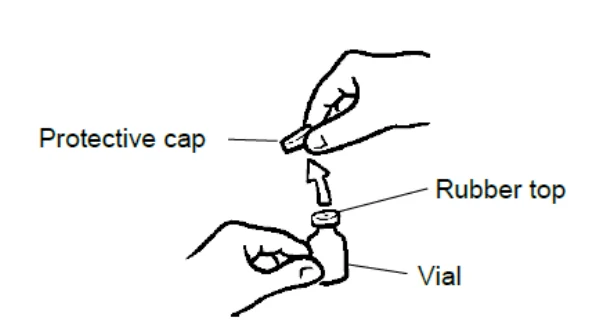
Figure 1: Remove the protective cap
- 5. Wipe the rubber top on the vial with an alcohol swab (see Figure 2).
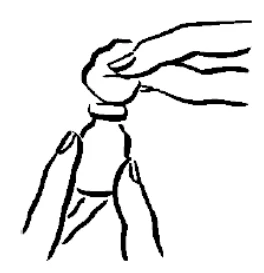
Figure 2: Wipe rubber top with alcohol swab
- 6. Before putting the needle into the vial, pull back on plunger to draw air into the syringe equal to the Increlex dose. Put the needle through the rubber top of the vial and push the plunger to inject air into the vial (see Figure 3).
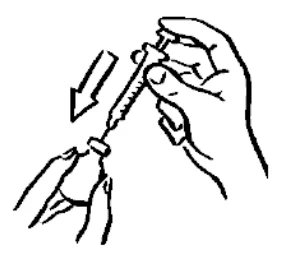
Figure 3: Inject air into vial
- 7. Leave the syringe in the vial and turn both upside down. Hold the syringe and vial firmly (see Figure 4).
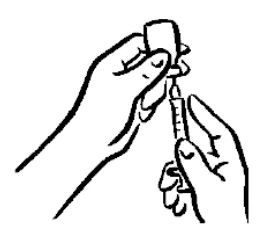
Figure 4: Prepare to withdraw liquid
- 8. Make sure the tip of the needle is in the liquid (see Figure 5). Pull the plunger to withdraw the correct dose into the syringe (see Figure 6).
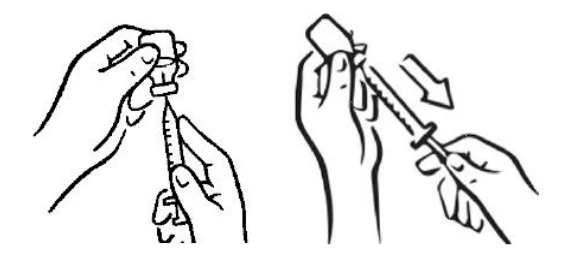
Figure 5: Tip in liquid Figure 6: Withdraw correct dose
- 9. Before you take the needle out of the vial, check the syringe for air bubbles. If bubbles are in the syringe, hold the vial and syringe with needle straight up and tap the side of the syringe until the bubbles float to the top. Push the bubbles out with the plunger and draw liquid back in until you have the correct dose (see Figure 7).
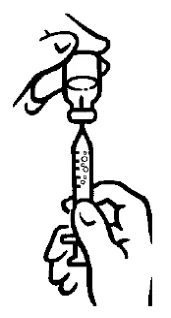
Figure 7: Remove air bubbles and refill syringe
- 10. Remove the needle from the vial. Do not let the needle touch anything. You are now ready to inject (see Figure 8).
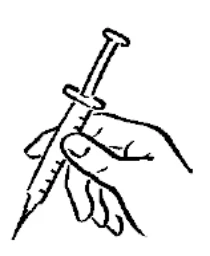
Figure 8: Ready to inject
Injecting the Dose:
Inject Increlex exactly as your child’s doctor or nurse has shown you.
Do not give the Increlex injection if your child is unable to eat within 20 minutes before or after the injection.
- 1. Choose an injection site – upper arm, upper leg (thigh), buttocks, or stomach area (abdomen) (see Figure 9). The injection site should be changed (rotated) for each injection.
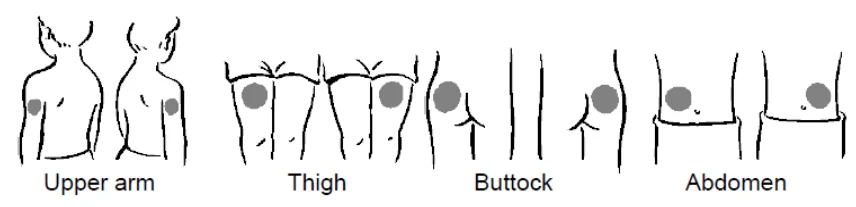
Figure 9: Injection site
- 2.
Use alcohol to clean the skin where you are going to inject your child. The injection site should be dry before you inject.
Do not fan or blow on the cleaned skin.
Do not touch the injection site again before giving the injection.
- 3. Lightly pinch the skin. Insert the needle into the pinched skin as instructed by your child’s doctor or nurse (see Figure 10). Release the pinched skin.
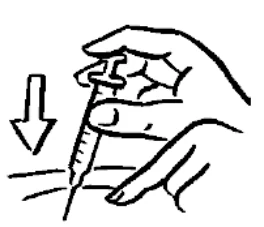
Figure 10: Lightly pinch the skin and inject as instructed
- 4. Slowly push the plunger of the syringe all the way in to make sure you have injected all of the liquid. Pull the needle straight out and gently press on the injection site with gauze or a cotton ball for a few seconds. Do not rub the injection site (see Figure 11).
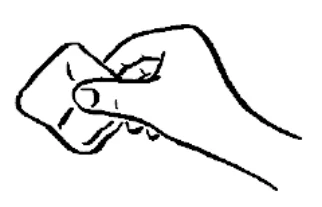
Figure11: Press (do not rub) with gauze or cotton ball