


Product Monograph - Increlex
RECENT MAJOR LABEL CHANGES
| 4 DOSAGE AND ADMINISTRATION, 4.4 Administration | 04/2021 |
|---|
TABLE OF CONTENTS
RECENT MAJOR LABEL CHANGES ......................................................................................... 2
TABLE OF CONTENTS ............................................................................................................... 2
PART I: HEALTH PROFESSIONAL INFORMATION .................................................................. 3
1 INDICATIONS ................................................................................................................... 3
1.1 Pediatrics ................................................................................................................. 3
2 CONTRAINDICATIONS ................................................................................................... 3
4 DOSAGE AND ADMINISTRATION .................................................................................. 4
4.1 Dosing Considerations ............................................................................................ 4
4.2 Recommended Dose and Dosage Adjustment ....................................................... 4
4.4 Administration .......................................................................................................... 4
4.5 Missed Dose ............................................................................................................ 4
5 OVERDOSAGE ................................................................................................................ 5
6 DOSAGE FORMS, STRENGTHS, COMPOSITION AND PACKAGING ......................... 5
7 WARNINGS AND PRECAUTIONS .................................................................................. 5
7.1 Special Populations ................................................................................................. 8
7.1.1 Pregnant Women ................................................................................................. 8
7.1.2 Breast-feeding ..................................................................................................... 8
7.1.3 Pediatrics ............................................................................................................. 8
7.1.4 Geriatrics ............................................................................................................. 8
8 ADVERSE REACTIONS ................................................................................................... 8
8.1 Adverse Reaction Overview .................................................................................... 8
8.2 Clinical Trial Adverse Reactions .............................................................................. 9
8.4 Abnormal Laboratory Findings: Hematologic, Clinical Chemistry and Other Quantitative Data ............................................................................................................ 12
8.5 Post-Market Adverse Reactions ............................................................................ 12
9 DRUG INTERACTIONS .................................................................................................. 12
9.2 Drug Interactions Overview ................................................................................... 12
9.4 Drug-Drug Interactions .......................................................................................... 13
9.5 Drug-Food Interactions .......................................................................................... 13
9.6 Drug-Herb Interactions .......................................................................................... 13
9.7 Drug-Laboratory Test Interactions ......................................................................... 13
10 CLINICAL PHARMACOLOGY ....................................................................................... 13
10.1 Mechanism of Action ......................................................................................... 13
10.2 Pharmacodynamics ........................................................................................... 13
10.3 Pharmacokinetics .............................................................................................. 13
11 STORAGE, STABILITY AND DISPOSAL ...................................................................... 15
PART II: SCIENTIFIC INFORMATION ....................................................................................... 16
13 PHARMACEUTICAL INFORMATION ............................................................................ 16
14 CLINICAL TRIALS ......................................................................................................... 17
14.1 Trial Design and Study Demographics .............................................................. 17
14.2 Study Results ..................................................................................................... 17
16 NON-CLINICAL TOXICOLOGY ..................................................................................... 18
PATIENT MEDICATION INFORMATION .................................................................................. 20
PART I: HEALTH PROFESSIONAL INFORMATION
1 INDICATIONS
Increlex® (mecasermin) is indicated for the treatment of growth failure in children and adolescents from 2 to 18 years with confirmed severe primary insulin-like growth factor-1 deficiency (SPIGFD). SPIGFD is defined by:
- height standard deviation score ≤ –3.0 and;
- basal IGF-1 levels below the 2.5th percentile for age and gender and;
- GH sufficiency.
- Exclusion of secondary forms of IGF-1 deficiency, such as malnutrition, hypopituitarism, hypothyroidism, or chronic treatment with pharmacologic doses of anti-inflammatory steroids.
SPIGFD can include patients with mutations in the GH receptor (GHR) gene/Laron’s syndrome, post-GHR signaling pathway, and IGF-1 gene defects; they are not GH deficient, and therefore, they cannot be expected to respond adequately to exogenous GH treatment.
1.1 Pediatrics
Pediatrics (2-18 years): Based on the data submitted and reviewed by Health Canada, the safety and efficacy of Increlex in pediatric patients has been established; therefore, Health Canada has authorized an indication for pediatric use. The safety and efficacy of Increlex in children below the age of 2 have not been established and therefore Increlex is not recommended in children below the age of 2 (See WARNINGS AND PRECAUTIONS, Benzyl alcohol toxicity).
2 CONTRAINDICATIONS
Increlex (mecasermin) is contraindicated in
- Patients who are hypersensitive to this drug or to any ingredient in the formulation, including any non-medicinal ingredient, or component of the container. For a complete listing, see DOSAGE FORMS, STRENGTHS, COMPOSITION AND PACKAGING.
- Children and adolescents with active or suspected neoplasia, or any condition or medical history which increases the risk of benign or malignant neoplasia.
- Increlex contains benzyl alcohol and must not be given to premature babies or neonates.
- Increlex should not be used for growth promotion in patients with closed epiphyses.
4 DOSAGE AND ADMINISTRATION
4.1 Dosing Considerations
- Treatment with Increlex (mecasermin) should be directed by physicians who are experienced in the diagnosis and management of patients with growth disorders.
- The dose should be tailored specifically for each patient and should be adjusted based on tolerability and weight. If a child’s weight changes, the dose should be adjusted to maintain a consistent mg/kg dosage.
- Preprandial glucose monitoring is recommended at treatment initiation and until a well-tolerated dose is established. If frequent symptoms of hypoglycemia and/or severe hypoglycemia occur, blood glucose monitoring should continue regardless of pre-prandial condition, and if possible, at the time of the event.
4.2 Recommended Dose and Dosage Adjustment
The recommended starting dose of Increlex is 0.04 to 0.08 mg/kg of body weight (40 to 80 mcg/kg) twice daily by subcutaneous injection. If Increlex is well-tolerated for at least one week, the dose may be increased by 0.04 mg/kg per dose to the maximum dose of 0.12 mg/kg given twice daily.
Doses greater than 0.12 mg/kg twice daily should not be exceeded as this may increase the risk of neoplasia and hypoglycemic effects (see WARNINGS AND PRECAUTIONS, Carcinogenesis and Mutagenesis).
If the recommended dose is not tolerated by the patient, treatment with a lower dose can be considered. Treatment success should be evaluated based on height velocities. The lowest dose that was associated with substantial growth increases on an individual basis was 0.04 mg/kg BID.
4.4 Administration
Increlex is administered by subcutaneous injection. Increlex should not be administered intravenously. Increlex injection sites should be rotated to a different site (upper arm, thigh, buttock or abdomen) with each injection to help prevent lipohypertrophy. Increlex should be administered using sterile disposable syringes and needles.
The syringes should be of small enough volume so that the prescribed dose can be withdrawn from the vial with accuracy. If using syringes that measure dose in units, doses in mg/kg must be converted to units using the following formula: Weight (kg) x Dose (mg/kg) x 1 mL/10 mg x 100 units/1 mL = units/injection.
Increlex should be administered by subcutaneous injection shortly before or after a meal or snack. If hypoglycemia occurs with recommended doses, despite adequate food intake, the dose should be reduced. If the patient is unable to eat, for any reason, this medicinal product should be withheld and re-introduced when the patient is able to eat normally.
4.5 Missed Dose
The dose of Increlex should never be increased to make up for one or more missed doses.
5 OVERDOSAGE
Acute overdose could lead to hypoglycemia. Treatment of acute overdose should be directed at reversing hypoglycemia. Oral glucose or food should be consumed. If the overdose results in loss of consciousness, intravenous (IV) glucose or parenteral glucagon may be required to reverse the hypoglycemic effects.
Long-term overdose may result in signs and symptoms of acromegaly or gigantism. Overdosing may lead to supraphysiological IGF-1 levels and may increase the risk of benign and malignant neoplasm.
In case of an acute or a chronic overdose, Increlex must be discontinued immediately. If Increlex is restarted, the dose should not exceed the recommended daily dosage (see Recommended Dose and Dosage Adjustment).
For management of a suspected drug overdose, contact your regional poison control centre.
6 DOSAGE FORMS, STRENGTHS, COMPOSITION AND PACKAGING
To help ensure the traceability of biologic products, health professionals should recognize the importance of recording both the brand name and the non-proprietary (active ingredient) name as well as other product-specific identifiers such as the Drug Identification Number (DIN) and the batch/lot number of the product supplied.
Table 1 – Dosage Forms, Strengths, Composition and Packaging
Increlex is supplied in a 5 ml multi-dose vial (type I glass) closed with a stopper (chloro-butyl/isoprene polymer) and a seal (coloured plastic). Each vial contains 4 ml of solution. Pack size of 1 vial.
7 WARNINGS AND PRECAUTIONS
General
Increlex is not a substitute for GH treatment.
Carcinogenesis and Mutagenesis
There is an increased risk of benign and malignant neoplasia in children and adolescents treated with Increlex, since IGF-1 plays a role in the initiation and progression of benign and malignant tumors (see CONTRAINDICATIONS).
There have been post-marketing reports of both benign and malignant neoplasms in children and adolescents who have received treatment with Increlex. These cases represented a variety of different malignancies and included rare malignancies usually not seen in children (see ADVERSE REACTIONS, Neoplasms and Post-Market Adverse Reactions). The increased risk
| Route of Administration | Dosage Form / Strength/Composition | Non-medicinal Ingredients |
| Subcutaneous Injection | Sterile solution 10 mg/mL (40 mg per vial) | Benzyl alcohol, sodium chloride, polysorbate 20, glacial acetic acid, sodium acetate trihydrate, water for injection. |
of neoplasia may be higher in patients who receive Increlex for unapproved uses, at higher than recommended doses or at doses that produced serum IGF-1 levels above the normal reference ranges for age and sex. Current knowledge of IGF-1 biology suggests that IGF-1 plays a role in malignancies in all organs and tissues. Physicians should therefore be vigilant of any symptoms of potential malignancy. Advise patients/caregivers to report development of new neoplasms. If benign or malignant neoplasia develops, Increlex treatment should be discontinued definitely and appropriate expert medical care sought.
Driving and Operating Machinery
Increlex may cause hypoglycemia (very common side effect), dizziness and convulsions (see ADVERSE REACTIONS, Hypoglycemia) that may impair your ability to drive and use machines.
You should avoid engaging in any high-risk activities (e.g., driving, using machines, etc.) within 2-3 hours after dosing, particularly during the initiation of Increlex treatment until tolerability and a stable dose have been established.
Ear/Nose/Throat
Lymphoid tissue (e.g., tonsillar) hypertrophy associated with complications, such as snoring, sleep apnea, and chronic middle-ear effusions have been reported with the use of Increlex. Patients should have examinations periodically and at the occurrence of clinical symptoms to rule out such potential complications or to initiate appropriate treatment (see ADVERSE REACTIONS, Tonsillar hypertrophy and snoring).
Endocrine and Metabolism
Hypoglycemia
Increlex should be administered shortly before or after a meal or snack, because it may have insulin-like hypoglycemic effects. Glucose monitoring and Increlex dose titration are recommended until a well-tolerated dose is established (see DOSAGE AND ADMINISTRATION). Increlex should not be administered when a meal or snack is omitted. The dose of Increlex should never be increased to make up for one or more omitted doses. Special attention should be paid to young children, children with a history of hypoglycemia and children with inconsistent food intake. Patients should avoid engaging in any high-risk activities within 2-3 hours after dosing, particularly at the initiation of Increlex treatment, until a well-tolerated dose of Increlex has been established.
If a person with severe hypoglycemia is unconscious or otherwise unable to ingest food normally, an injection of glucagon may be required. Persons with a history of severe hypoglycemia should have glucagon available. At the time of initial prescription, physicians should educate parents on the signs, symptoms and treatment of hypoglycemia, including injection of glucagon.
Doses of insulin and/or other hypoglycemic medicinal products may need to be reduced for diabetic subjects using this medicinal product.
Bone Metabolism
Slipped capital femoral epiphysis (with the potential to lead to avascular necrosis) and progression of scoliosis can occur in patients who experience rapid growth. These conditions and other symptoms and signs known to be associated with GH treatment in general should be monitored during Increlex treatment. Any patient with the onset of a limp or complaint of hip or knee pain should be evaluated. Patients with a history of scoliosis who are treated with Increlex should be monitored for progression of scoliosis.
Immune
Systemic/local hypersensitivity
Allergic reactions to Increlex have been reported in clinical trials and post-marketing experience. They range from localized (injection site) reactions (e.g., urticaria, pruritus, erythema) to systemic reactions, including anaphylaxis, generalized urticaria, angioedema and dyspnea. Some patients required hospitalization. Parents and patients should be informed that such reactions are possible and that if a systemic allergic reaction occurs, treatment should be interrupted and prompt medical attention should be sought (see CONTRAINDICATIONS, ADVERSE REACTIONS, Hypersensitivity and Post-Market Adverse Reactions, Systemic hypersensitivity).
Monitoring and Laboratory Tests
Echocardiogram is recommended before initiation of Increlex treatment in all patients and in patients who terminate treatment. Patients with abnormal echocardiogram findings or cardiovascular symptoms should be followed regularly with echocardiogram procedures (see ADVERSE REACTIONS, Organomegaly).
Neurologic
Intracranial hypertension
Intracranial hypertension (IH) with papilloedema, visual changes, headache, nausea and/or vomiting has been reported in patients treated with Increlex, as has been reported with therapeutic GH administration. IH-associated signs and symptoms resolved after interruption of dosing. Funduscopic examination is recommended at the initiation, periodically during the course of Increlex therapy and at the occurrence of clinical symptoms (see ADVERSE RECTIONS, Intracranial hypertension).
Others
Benzyl alcohol toxicity
Benzyl alcohol may cause toxic reactions and anaphylactoid reactions in infants and children. Serious and fatal adverse reactions including "gasping syndrome" can occur in premature/low-birth weight neonates, neonates and infants who received drugs containing benzyl alcohol in any amount as a preservative, including Increlex. The "gasping syndrome" is characterized by central nervous system depression, metabolic acidosis, and gasping respirations.
Additional adverse reactions included gradual neurological deterioration, seizures, intracranial hemorrhage, hematologic abnormalities, skin breakdown, hepatic and renal failure, hypotension, bradycardia, and cardiovascular collapse. Preterm, low-birth weight infants may be more likely to develop these reactions because they may be less able to metabolize benzyl alcohol.
Use of Increlex in premature infants, neonates and children below the age of 2 is not authorized (see INDICATIONS and CONTRAINDICATIONS).
Sensitivity/Resistance
Persons who have allergic reactions to injected IGF-1, who have unexpectedly high blood values of IGF-1 after injection, or who fail to show a growth response without any identified cause may be having an antibody response to injected IGF-1. This may be through the production of anti-IGF-1 IgEs, sustaining antibodies or neutralizing antibodies respectively. In such instances, instructions for antibody testing should be considered.
Reproductive Health: Female and Male Potential
Fertility
The effects of mecasermin on fertility in humans have not been studied.
7.1 Special Populations
7.1.1 Pregnant Women
A negative pregnancy test is recommended for females of child bearing potential prior to treatment with Increlex. It is also recommended that all women of childbearing potential use adequate contraception during treatment.
There are no data for the use of mecasermin in pregnant women. In an embryo-fetal development study conducted with pregnant rabbits, IV administration of mecasermin during organogenesis reduced fetal viability (see NON-CLINICAL TOXICOLOGY). The potential risk for humans is unknown. This medicinal product should not be used during pregnancy.
7.1.2 Breast-feeding
Breast-feeding while taking Increlex is not recommended, because there is insufficient information on the excretion of mecasermin in human milk.
7.1.3 Pediatrics
Based on the data submitted and reviewed by Health Canada, the safety and efficacy of Increlex in pediatric patients (2-18 years of age) has been established; therefore, Health Canada has authorized an indication for pediatric use. The safety and efficacy of Increlex in children below the age of 2 have not been established.
7.1.4 Geriatrics
The safety and effectiveness of Increlex in patients aged 65 and over has not been established.
8 ADVERSE REACTIONS
8.1 Adverse Reaction Overview
Data from 4 predecessor studies and the pivotal study 1419 were pooled for safety analyses and formed the integrated safety database, which included a total of 92 children with SPIGFD who received at least one dose of Increlex. The most common treatment emergent adverse events (TEAEs) were hypoglycemia (43 subjects (47%)), hypersensitivity (33 subjects (35%)), injection site hypertrophy (32 subjects (35%)), headache (25 subjects (27%)) and snoring (20 subjects (22%)). Seventy-six subjects (83%) had at least one reported TEAE during treatment. Eighteen subjects (20%) experienced at least one serious adverse event. The most common SAEs reported were tonsillar hypertrophy and adenoidal hypertrophy in 6 (6.5%) subjects. There were no deaths reported. No patient discontinued the treatment due to AEs. Hypoglycemia was the most frequently reported AE.
8.2 Clinical Trial Adverse Reactions
Because clinical trials are conducted under very specific conditions, the adverse reaction rates observed in the clinical trials may not reflect the rates observed in practice and should not be compared to the rates in the clinical trials of another drug. Adverse reaction information from clinical trials is useful for identifying drug-related adverse events and for approximating rates.
Table 2 summarises adverse reactions that occurred in ≥1% of patients in pivotal study 1419.
Table 2 – Adverse Reactions* Occurring in ≥ 1% of Increlex Treated Patients in Pivotal Study 1419
| Increlex n = 92 n (%) | |
|---|---|
| Increlex n = 92 n (%) | |
Blood and Lymphatic Disorders Thymus hypertrophy | 9 (10) |
Cardiac Disorders Cardiac murmur Tachycardia | 7 (8) 6 (7) |
Ear and Labyrinth Disorders Hypoacusisa Middle ear effusion Ear pain Ear discomfort | 19 (21) 10 (11) 6 (7) 5 (5) |
Eye Disorders Papilloedema | 5 (5) |
Gastrointestinal Disorders Vomiting Abdominal pain Upper abdominal pain | 16 (17) 8 (9) 5 (5) |
General Disorders and Administration Site Conditions Injection site hypertrophy Injection site reactionsb Hypertrophy | 32 (35) 18 (19) 8 (9) |
Immune system disorders Hypersensitivityc | 33 (35) |
Infection and Infestations Otitis media | 19 (21) |
Investigations Increased weight | 3 (3) |
Metabolism and Nutrition Disorders Hypoglycemiad Hypoglycemic seizure Hyperglycemia | 43 (47) 7 (7) 4 (4) |
Musculoskeletal and Connective Tissue Arthralgia Pain in extremity Myalgia Scoliosis | 8 (9) 8 (9) 2 (2) 1 (1) |
Neoplasms benign, malignant and unspecified (incl cysts and polyps) Melanocytic nevus Acrochordon Skin papilloma | 4 (4) 3 (3) 2 (2) |
Nervous System Disorders Headache Intracranial hypertensione Dizziness Convulsions Tremor | 25 (27) 6 (7) 6 (7) 4 (4) 1 (1) |
Respiratory, Thoracic, and Mediastinal Snoring Tonsillar hypertrophy Adenoidal hypertrophy Sleep apnea syndrome | 20 (22) 19 (21) 9 (10) 3 (3) |
Reproductive system and breast disorders Gynecomastia | 6 (7) |
Skin and Subcutaneous Tissue Disorders Skin hypertrophy Abnormal hair texture | 10 (11) 4 (4) |
*Derived from treatment-emergent adverse events
aincludes hypoacusis, conductive deafness and deafness.
bincludes injection site bruising, injection site pain, injection site reaction, injection site hematoma, injection site induration and injection site hemorrhage.
cincludes cough, rash, dyspnea, pruritic rash, drug hypersensitivity, hypersensitivity, pruritus, asthma, urticaria and injection site urticaria.
dformerly hypoglycemia NOS
eincludes papilloedema
Description of Selected Adverse Reactions
Neoplasms
In Study 1419, 7 subjects (8%) reported benign neoplasms.
Hypoglycemia
In Study 1419, 43 subjects (47%) experienced one or more episodes of hypoglycemia during treatment of Increlex. Seven (8%) subjects had severe hypoglycemia (requiring assistance and treatment) and 7 (7%) experienced hypoglycemic seizures/loss of consciousness on one or more occasions. The frequency of hypoglycemia was highest in the first month of treatment, and episodes were more frequent in younger children (see WARNINGS AND PRECAUTIONS, Hypoglycemia).
Hypersensitivity
In Study 1419, 33 subjects (35%) reported a local and/or systemic hypersensitivity reaction, including cough, rash, dyspnea, pruritic rash, drug hypersensitivity, hypersensitivity, pruritus, asthma, urticaria and injection site urticaria (see WARNINGS AND PRECAUTIONS, Systemic/local hypersensitivity and Post-Market Adverse Reactions, Systemic hypersensitivity).
Intracranial hypertension (IH)/increased intracranial pressure
In Study 1419, IH (i.e, papilloedema and benign IH) and headache occurred in 6 subjects (7%) and 25 subjects (27%), respectively. One subject had severe benign IH classed as a related SAE. In post-marketing experience, 2 intracranial hypertension events were life threatening and involved hospitalisation (see WARNINGS AND PRECAUTIONS, Intracranial hypertension).
Injection site hypertrophy
In Study 1419, injection site hypertrophy occurred in 32 (35%) subjects and was generally associated with lack of proper rotation of injections. When injections were properly dispersed, the condition resolved.
Tonsillar hypertrophy and snoring
In Study 1419, tonsillar hypertrophy was noted in 19 (21%) subjects, particularly in the first 1 to 2 years of therapy with lesser tonsillar growth in subsequent years. Snoring occurred generally in the first year of treatment and was reported in 20 subjects (22%).
Organomegaly
Echocardiographic evidence of cardiomegaly/valvulopathy was observed in a few individuals without associated clinical symptoms. The relation of these cardiac changes to drug treatment cannot be assessed due to underlying disease and the lack of a control group (See WARNINGS AND PRECAUTIONS, Monitoring and Laboratory Tests).
Thickening of the soft tissues of the face was observed in several patients and should be monitored during Increlex treatment.
Renal and splenic lengths (measured by ultrasound) increased rapidly on Increlex treatment during the first years of therapy. This lengthening slowed down subsequently; though in some patients, renal and/or splenic length reached or surpassed the 95th percentile.
Immunogenicity
The detection of antibody formation is highly dependent on the sensitivity and specificity of the assay. Additionally, the observed incidence of antibody (including neutralizing antibody) positivity in an assay may be influenced by several factors including assay methodology, sample handling, timing of sample collection, concomitant medications, and underlying disease. For these reasons, comparison of incidence of antibodies in the studies described below with the incidences of antibodies in other studies or to other products may be misleading.
Anti-IGF-1 antibodies were only analyzed in 23 out of 92 patients in the predecessor studies of the integrated Study 1419 during the first year of treatment. Of the 23 patients, 11 patients tested positive for anti-IGF-1 antibodies. Neutralizing antibodies were not analyzed in Study 1419. The impact of anti-IGF-1 antibodies on pharmacokinetics was not investigated. The mean (SD) height velocities were 7.9 ± 2.1 cm/year in patients with anti-IGF-1 antibodies (n=11), and 7.1 ± 3.0 cm/year in patients without anti-IGF-1 antibodies (n = 12).
8.4 Abnormal Laboratory Findings: Hematologic, Clinical Chemistry and Other Quantitative Data
Clinical Trial Findings
Mild elevations in the serum AST and LDH were found in a significant proportion of patients before and during treatment. Rise in levels of these serum enzymes did not lead to treatment discontinuation. ALT elevations were occasionally noted during treatment.
Elevations in cholesterol and triglycerides to above the upper limit of normal were observed before and during treatment.
8.5 Post-Market Adverse Reactions
The following adverse reactions have been identified during post approval use of Increlex.
As these reactions are reported voluntarily from a population of uncertain size, it is not possible to reliably estimate their frequency.
Cardiac Disorders: cardiomegaly
Systemic hypersensitivity: anaphylaxis, generalized urticaria, angioedema, dyspnea
In the post-marketing setting, the frequency of cases indicative of anaphylaxis was estimated to be 0.3%. Symptoms included hives, angioedema, and dyspnea, and some patients required hospitalization. Upon re-administration, symptoms did not re-occur in all patients.
Local allergic reactions at the injection site: pruritus, urticaria
Skin and Subcutaneous Tissue Disorders: alopecia, hair texture abnormal
General Disorders and Administrative Site Conditions: injection site reactions (e.g. erythema, pain, hematoma, hemorrhage, induration, rash, swelling)
Musculoskeletal and Connective Tissue Disorders: osteonecrosis/avascular necrosis
(occasionally associated with slipped capital femoral epiphysis)
Neoplasms Benign, Malignant and Unspecified (including cysts and polyps): benign and malignant neoplasms. See CONTRAINDICATIONS and WARNINGS AND PRECAUTIONS. In post-marketing experience, 42 cases of neoplasms benign, malignant and unspecified (including cysts and polyps) were reported, including 23 benign neoplasia and 19 malignant neoplasia cases.
9 DRUG INTERACTIONS
9.2 Drug Interactions Overview
No interaction studies have been performed.
Doses of insulin and/or other hypoglycemic medicinal products may need to be reduced (see WARNINGS AND PRECAUTIONS).
9.4 Drug-Drug Interactions
Interactions with other drugs have not been established.
9.5 Drug-Food Interactions
Interactions with food have not been established.
9.6 Drug-Herb Interactions
Interactions with herbal products have not been established.
9.7 Drug-Laboratory Test Interactions
Interactions with laboratory tests have not been established.
10 CLINICAL PHARMACOLOGY
10.1 Mechanism of Action
IGF-1 is a key hormonal mediator on statural growth. Under normal circumstances, growth hormone (GH) binds to its receptor in the liver, and other tissues, and stimulates the synthesis/secretion of IGF-1. In target tissues, the Type 1 IGF-1 receptor, which is homologous to the insulin receptor, is activated by IGF-1, leading to intracellular signaling which stimulates multiple processes resulting in statural growth. The metabolic actions of IGF-1 are in part directed at stimulating the uptake of glucose, fatty acids, and amino acids so that metabolism supports growing tissues.
10.2 Pharmacodynamics
The following actions have been demonstrated for endogenous human IGF-1:
Tissue Growth
Skeletal growth occurs at the cartilage growth plates of the epiphyses of bones where stem cells divide to produce new cartilage cells or chondrocytes. The growth of chondrocytes is under the control of IGF-1 and GH. The chondrocytes become calcified so that new bone is formed allowing the length of the bones to increase. This results in skeletal growth until the cartilage growth plates fuse at the end of puberty.
Cell growth: IGF-1 receptors are present on most types of cells and tissues. IGF-1 has mitogenic activities that lead to an increased number of cells in the body.
Organ growth: Treatment of IGF-1 deficient rats with rhIGF-1 results in whole body and organ growth.
Carbohydrate Metabolism
IGF-1 suppresses hepatic glucose production and stimulates peripheral glucose utilization and therefore has a hypoglycemic potential. IGF-1 has inhibitory effects on insulin secretion.
10.3 Pharmacokinetics
Mecasermin exhibited non-linear pharmacokinetics with exposure increased less than proportionally with doses over the range of 0.015 mg/kg – 0.12 mg/kg in subjects with primary IGFD.
Table 3 – Summary of Mecasermin Single Dose Pharmacokinetic Parameters in Subjects (age: 14-18 years) with Severe Primary IGFD (0.12 mg/kg, SC, n = 3)
| Cmax (ng/mL) | Tmax (hr) | t½ (h) | AUC0-∞ (hr*ng/mL) | CL/F (L/hr/kg) | Vd/F (L/kg) | |
| Single Dose Mean | 234 | 2 | 5.8 | 2932 | 0.053 | 0.31 |
| CV% | 23 | 0 | 64 | 50 | 69 | 27 |
CV% = coefficient of variation in %.
Pharmacokinetic parameters based on baseline adjusted plasma concentrations.
Absorption: The absolute bioavailability of mecasermin after subcutaneous administration in healthy subjects is estimated to be close to 100% based on cross-study comparison. However, the absolute bioavailability of mecasermin given subcutaneously to subjects with primary IGFD has not been determined. Following subcutaneous administration of 0.04, 0.08 or 0.12 mg/kg mecasermin twice daily in pediatric subjects, the steady state was achieved by approximately 4 days with accumulation ratio of approximately 1.1-1.5, based on population PK analysis.
Distribution: In blood, IGF-1 is bound to six IGF binding proteins, with > 80% bound as a complex with IGF binding protein-3 (IGFBP-3) and an acid-labile subunit. IGFBP-3 is greatly reduced in subjects with SPIGFD, resulting in increased clearance of IGF-1 in these subjects relative to healthy subjects. Based on population pharmacokinetic analysis, the total IGF-1 volume of distribution after subcutaneous administration in subjects with SPIGFD is estimated to increase as the dose of mecasermin increases.
Metabolism: IGF-1 is metabolized by both the liver and kidney.
Elimination: The mean terminal t1/2 after single subcutaneous administration of 0.12 mg/kg mecasermin in pediatric subjects with SPIGFD is estimated to be 5.8 (CV 64%) hours. Clearance of mecasermin is inversely proportional to IGFBP-3 levels, and CL/F is estimated to be 0.045 L/hr/kg at 0.5 mcg/mL of IGFBP-3 in subjects with SPIGFD, based on population pharmacokinetic analysis.
Special Populations and Conditions
Geriatrics: No formal clinical trials of mecasermin were conducted to include geriatric subjects (≥ 65 years).
Sex: In adolescents with primary IGFD there were no apparent differences between males and females in the pharmacokinetics of mecasermin.
Ethnic origin: The effect of race on pharmacokinetics of mecasermin has not been studied.
Hepatic Insufficiency: No specific studies were conducted to determine the effect of hepatic impairment on the pharmacokinetics of mecasermin.
Renal Insufficiency: No specific studies were conducted to determine the effect of renal impairment on the pharmacokinetics of mecasermin.
11 STORAGE, STABILITY AND DISPOSAL
Store in a refrigerator (2°C - 8°C). Do not freeze. The solution should be clear immediately after removal from the refrigerator. If the solution is cloudy, or contains particulate matter, it must not be injected.
Keep the vial in the outer carton in order to protect from light.
Chemical and physical in-use stability has been demonstrated for 30 days at 2°C to 8°C.
From a microbiological point of view, once opened, the medicinal product may be stored for a maximum of 30 days at 2°C to 8°C.
PART II: SCIENTIFIC INFORMATION
13 PHARMACEUTICAL INFORMATION
Drug Substance
Proper name: mecasermin
Chemical name: Recombinant human Insulin-like Growth Factor-1 (rhIGF-1)
Molecular formula and molecular mass: C331H512N94O101S7, 7649 Daltons
Increlex (mecasermin) injection contains human insulin-like growth factor-1 (rhIGF-1)
produced by recombinant DNA technology. IGF-1 consists of 70 amino acids in a single chain with three intramolecular disulfide bridges and a molecular weight of 7649 daltons. The amino acid sequence of the product is identical to that of endogenous human IGF-1. The rhIGF-1 protein is synthesized in bacteria (E. coli) that have been modified by the addition of the gene for human IGF-1.
Structural formula:
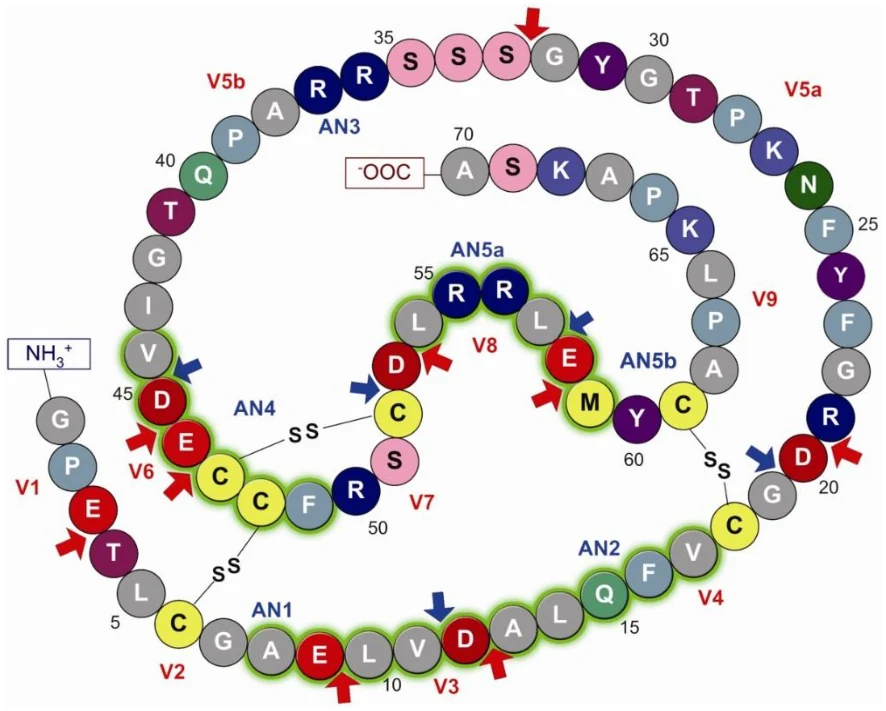
Physicochemical properties: rhIGF-1 is a single-chain, non-glycosylated basic polypeptide stabilized with 3 intra-chain disulfide bonds. It has a molar absorptivity of 0.645 (mL/mg)/cm at 276 nm and a pI of 8.65. It is readily soluble in water, and aqueous solutions of rhIGF-1 are clear, colorless and odorless.
14 CLINICAL TRIALS
14.1 Trial Design and Study Demographics
Table 4 – Summary of Study Design and Patient Demographics for the Pivotal Clinical Trial in SPIGFD
| Study # | Trial design | Dosage, route of administration and duration | Study subjects (n) | Mean age (Range) | Sex |
| 1419 | Pooled findings from five clinical studies (four open-label and one double-blind, placebo-controlled) | Subcutaneous BID injections 0.06 to 0.12 mg/kg | n=92 Subjects had growth failure with SPIGFD | Pre-treatment age (years) 1.7-15.2 | Male n=46 (57%) Female n=35 (43%) |
Study 1419 included 81 treatment-naïve patients with SPIGFD, who completed at least one year of Increlex treatment. Of these, 89% had Laron Syndrome (GHR mutation). At baseline, patients with SPIGFD were severely short with a mean estimated baseline height SD score of -6.9 (range: -12.1 to -2.8), low IGF-1 serum concentrations, and normal GH secretion. The mean pre-treatment height velocity was 2.6 cm per year. The majority were pre-pubertal (n=74), and of Caucasian background (81%), and had a mean chronological age of 6.8 years, whereas the mean bone age was 3.8 years. The safety analysis included 92 patients, who received at least one dose of Increlex.
14.2 Study Results
The results from five clinical studies were pooled for a global efficacy and safety analysis and are presented in table 5. Pre-treatment height velocity information was available from 75 patients. The primary efficacy endpoint was change in height velocity from pre-treatment during each year of treatment in subjects naïve to Increlex.
Table 5 – Annual Height Results by Number of Years Treated with Increlex from Study 1419
Pre-Tx = Pre-treatment; SD = Standard Deviation; SDS = Standard Deviation Score
16 NON-CLINICAL TOXICOLOGY
General Toxicology
To assess the repeat-dose toxicity of mecasermin, 6-month toxicity studies involving the SC daily administration of mecasermin were conducted in Sprague Dawley rats (0.25, 1 and 4 mg/kg/day) and Beagle dogs (0.15, 0.3 and 0.6 mg/kg/day). In treated rats, mecasermin was relatively well tolerated following 26 weeks of consecutive treatment at dose levels up to 1.0 mg/kg/day. Clinical pathology and organ weight changes identified primarily at a dose of 4.0 mg/kg/day were generally attributable to direct or indirect effects associated with the known pharmacological activity of mecasermin. At 4.0 mg/kg/day, a reversible change in thymic pathology was noted which corresponded to treatment-related changes in the weight of this organ. The No-Observed-Adverse-Effect-Level (NOAEL) for this study was determined to be 1.0 mg/kg/day (below the maximum recommended human dose [MRHD] based on body surface area). In treated dogs, mecasermin was well tolerated following 26 weeks of consecutive treatment at doses up to 0.15 mg/kg/day. At doses of 0.3 mg/kg/day, adrenal changes were noted (2 out of 6 dogs) and at a dose of 0.6 mg/kg/day, marked toxicity, including death was observed. In general, the effects noted in this study were consistent with the known pharmacological effects and expected glucose lowering activity of mecasermin. For this study, the NOAEL was determined to be 0.15 mg/kg/day (below the MRHD based on AUC or body surface area).
| Pre-Tx | Year 1 | Year 2 | Year 3 | Year 4 | Year 5 | Year 6 | Year 7 | Year 8 | |
|---|---|---|---|---|---|---|---|---|---|
| Height Velocity (cm/yr) | |||||||||
| N | 75 | 75 | 63 | 62 | 60 | 53 | 39 | 25 | 19 |
| Mean (SD) | 2.6 (1.7) | 8.0 (2.3) | 5.9 (1.7) | 5.5 (1.8) | 5.2 (1.5) | 4.9 (1.5) | 4.8 (1.4) | 4.3 (1.5) | 4.4 (1.5) |
| Mean (SD) for change from pre-Tx | +5.4 (2.6) | +3.2 (2.6) | +2.8 (2.4) | +2.5 (2.5) | +2.1 (2.1) | +1.9 (2.1) | +1.4 (2.2) | +1.3 (2.8) | |
| Height Velocity SDS | |||||||||
| N | 75 | 75 | 62 | 61 | 58 | 50 | 37 | 22 | 15 |
| Mean (SD) | -3.4 (1.6) | 1.7 (2.8) | -0.0 (1.7) | -0.1 (1.9) | -0.2 (1.9) | -0.3 (1.7) | -0.2 (1. 6) | -0.5 (1.7) | -0.2 (1.6) |
| Mean (SD) for change from pre-Tx | +5.2 (2.9) | +3.4 (2.4) | +3.3 (2.3) | +3.2 (2.1) | +3.2 (2.1) | +3.3 (2.0) | +3.0 (2.1) | +3.3 (2.7) | |
| Height SDS | |||||||||
| N | 81 | 81 | 67 | 66 | 64 | 57 | 41 | 26 | 19 |
| Mean (SD) | -6.9 (1.8) | -6.1 (1.8) | -5.6 (1.7) | -5.3 (1.7) | -5.1 (1.7) | -5.0 (1.7) | -4.9 (1.6) | -4.9 (1.7) | -5.1 (1.7) |
| Mean (SD) for change from pre-Tx | +0.8 (0.6) | +1.2 (0.9) | +1.4 (1.1) | +1.6 (1.2) | +1.7 (1.3) | +1.8 (1.1) | +1.7 (1.0) | +1.7 (1.0) |
Carcinogenicity
Mecasermin was administered subcutaneously to Sprague Dawley rats at doses of 0, 0.25, 1, 4, and 10 mg/kg/day for up to 2 years. An increased incidence of adrenal medullary hyperplasia and pheochromocytoma was observed in male rats at doses of 1 mg/kg/day and above (below the clinical exposure with the MRHD based on AUC) and female rats at all dose levels (below the clinical exposure with the MRHD based on AUC). An increased incidence of keratoacanthoma in the skin was observed in male rats at doses ≥ 4 mg/kg/day (1.3 times the exposure with the MRHD based on AUC). An increased incidence of mammary gland carcinoma in both male and female rats was observed in animals treated with 10 mg/kg/day (2.4 and 1.7 times for male and female rats, respectively, the exposure with the MRHD based on AUC). Excess mortality secondary to IGF-1 induced hypoglycemia was observed in the carcinogenicity study.
Genotoxicity
No evidence of genotoxicity was observed with mecasermin in a chromosomal aberration test conducted in Chinese hamster lung fibroblasts at concentrations of mecasermin of up to 487 μg/mL or in an in vivo mouse micronucleus test employing IV doses of mecasermin up to 97.4 mg/kg.
Reproductive and Developmental Toxicology
Embryo-fetal development studies were conducted with pregnant rats and rabbits in which mecasermin was administered intravenously during the period of organogenesis. No effects on rat fetuses were observed at doses up to 16 mg/kg/day (11-fold the MRHD based on body surface area). However, reduced fetal viability was reported in pregnant rabbits administered 2 mg/kg bw/day. The NOAEL was determined to be 0.5 mg/kg/day in rabbits (below the MRHD based on body surface area). Placental transfer of mecasermin was not studied.
In the fertility study, the male rats were administered using IV doses of 0.25, 1, and 4 mg/kg/day for 9 weeks and the females for 2 weeks prior to the 2-week cohabitation period. Daily dosing continued throughout the cohabitation period and until one week following copulation in males or until Day 7 of gestation for females. Mecasermin has no effects on fertility in rats using IV doses 0.25, 1, and 4 mg/kg/day (up to 3 times the clinical exposure with the MRHD based on AUC).
Due to the different route of application, and the use of a less bioavailable formulation of mecasermin as the test article in these studies, the relevance of these findings is unclear.
Juvenile Toxicity
Juvenile toxicity studies have not been conducted with mecasermin.