


Product Monograph - Saizen 10IU - Kit
SUMMARY PRODUCT INFORMATION
| Route of Administration | Dosage Form/Strength | Clinically Relevant Nonmedicinal Ingredients |
| Subcutaneous injection, Intramuscular injection | Lyophilized powder for reconstitution/ 3.33 mg/vial, 5 mg/vial | For a complete listing see DOSAGE FORMS, COMPOSITION and PACKAGING section. |
| Subcutaneous injection | Lyophilized powder for reconstitution/ 8.8 mg (5.83 mg/mL) click.easy Solution for Injection in a Cartridge/6 mg (5.83 mg/mL), 12 mg (8 mg/mL), 20 mg (8 mg/mL) |
DESCRIPTION
SAIZEN (somatropin for injection) is a recombinant human growth hormone, available in, 3.33 mg and 5 mg doses in vials.
SAIZEN 8.8 mg (5.83 mg/mL) click.easy (somatropin for injection) is a presentation of SAIZEN pre-assembled with a bacteriostatic solvent cartridge [(0.3% (w/v) metacresol in water for injection)] in a reconstitution device click.easy.
SAIZEN (somatropin, solution for injection in a cartridge) 6 mg (5.83 mg/mL), 12 mg (8 mg/mL) and 20 mg (8 mg/mL) are presentations of SAIZEN for use with the easypod® electromechanical auto-injector or the aluettaTM pen injector.
Somatropin is a polypeptide hormone consisting of 191 amino acid residues and its structure is identical to that of growth hormone extracted from human pituitary glands. A large loop is formed by a disulfide bond between Cys53 and Cys165. A second, smaller loop is formed by a disulfide bond near the carboxyl-terminal between Cys182 and Cys189. The solution is a slightly opalescent liquid. It is produced by recombinant (rDNA) technology in a mammalian cell expression system. SAIZEN is also therapeutically equivalent to human growth hormone of pituitary origin.
INDICATIONS AND CLINICAL USE
SAIZEN is indicated for:
Paediatric Indications
Growth Hormone Insufficiency or Deficiency:
SAIZEN is indicated for the long-term treatment of children with growth failure due to inadequate secretion of normal endogenous growth hormone. Other causes for growth failure should be ruled out.
Turner’s Syndrome:
SAIZEN is indicated for the treatment of short stature in girls with gonadal dysgenesis (Turner’s Syndrome) when epiphyses are not closed.
Chronic Renal Failure:
SAIZEN is indicated for the treatment of growth failure in children due to Chronic Renal Failure.
Small for Gestational Age (SGA):
SAIZEN is indicated for growth disturbance (current height Standard Deviation Score (SDS) < -2) in short children born small for gestational age (SGA) with a birth weight and/or length below -2 standard deviations (SD), who failed to show catch-up growth (Height Velocity SDS < 0 during the last year) by 2 years of age or later.
Adult Indication
Adult Growth Hormone Deficiency:
SAIZEN is indicated for the replacement therapy in adult patients with acquired or idiopathic growth hormone deficiency (GHD) as diagnosed by a single dynamic test for growth hormone deficiency (peak GH ≤ 5 µg/L). Patients with a growth hormone deficiency with onset in childhood should be retested before treatment starts.
CONTRAINDICATIONS
SAIZEN is contraindicated and should not be administered in the following cases:
- Acute critical illness with complications following cardiac surgery, abdominal surgery, multiple accidental trauma or acute respiratory failure. Clinical studies demonstrated that high doses of somatropin, were associated with a significantly increased morbidity and mortality in those patients (see WARNINGS AND PRECAUTIONS).
- In patients with closed epiphyses, SAIZEN has no effect on cartilaginous growth areas of the long bone. Treatment of pediatric growth disorders with SAIZEN should be discontinued when the patient has reached satisfactory adult height, or the epiphyses are fused.
- In the presence of progression of an underlying intracranial tumour. An intracranial tumour should be inactive, with evidence of remission prior to instituting therapy, and SAIZEN should be discontinued if there is evidence of recurrent activity. Patients should be examined frequently for progression or recurrence of the underlying disease process.
- Patients known to be hypersensitive to somatropin and to any of the excipients in the two formulations: lyophilized powder for reconstitution (and solvent) and solution for injection in a cartridge.
- Active neoplasia (either newly diagnosed or recurrent). Any pre-existing neoplasia should be inactive. Somatropin should be discontinued if there is evidence of recurrent tumor growth
- Proliferative or preproliferative diabetic retinopathy.
Somatropin is contraindicated in patients with Prader-Willi syndrome who are severely obese, have a history of upper airway obstruction or sleep apnea, or have severe respiratory impairment. There have been reports of sudden death when somatropin was used in such patients. Saizen is not indicated for the treatment of pediatric patients who have growth failure due to genetically confirmed Prader-Willi syndrome (see SERIOUS WARNINGS AND PRECAUTIONS).
SAIZEN treatment should be discontinued in critically ill patients.
SAIZEN is not recommended for use during pregnancy and lactation.
In children with chronic renal disease, treatment with somatropin must be discontinued at the time of renal transplantation.
SAIZEN reconstituted with bacteriostatic diluent should not be administered to patients sensitive to benzyl alcohol or the preservative, metacresol, found in the diluent.
*A newborn infant, or neonate, is a child under 28 days of age
WARNINGS AND PRECAUTIONS
General
Injection sites should be varied to prevent localized lipoatrophy, in particular in the case of long term subcutaneous administration of SAIZEN.
Fluid retention is expected during growth hormone replacement therapy in adults. Growth hormone increases sodium retention with expansion of the extracellular volume and this anti-natriuretic effect appears to be mediated through the rennin-angiotensin-aldosterone system. Adverse events such as peripheral edema, joint swelling, myalgia, arthralgia, paresthesia, carpal tunnel syndrome and benign intracranial hypertension may be clinical manifestation of fluid retention and appear to be more frequent in elderly patients with adult-onset disease (see ADVERSE REACTIONS section). However, these symptoms/signs are usually transient and dose dependent therefore reduce dose as necessary.
In clinical studies in a significant increase in morbidity and mortality has been reported among somatropin treated patients with acute critical illness in intensive care units due to complications following cardiac surgery, abdominal surgery, multiple accident trauma or acute respiratory failure (see CONTRAINDICATIONS). Mortality was higher in patients treated with 5.3 mg or 8 mg somatropin daily (41.9 %) compared to patients receiving placebo (19.3 %). Based on this information, these patients must not be treated with somatropin.
Serious Warnings and Precautions
- SAIZEN treatment should be carried out under regular guidance of a physician experienced in the diagnosis and management of growth disorders: Growth Hormone Insufficiency or Deficiency, Turner syndrome, Chronic Renal Failure, Small for Gestational Age or adult patients with either childhood-onset or adult-onset growth hormone deficiency
- SAIZEN shall only be used if, once reconstituted, the resulting solution is water-clear and devoid of particulate matter (See Part III CONSUMER INFORMATION / Proper Use of this Medication)
- Benzyl alcohol, used as a preservative in Bacteriostatic Water for Injection, USP has been associated with toxicity in newborns*. When administering SAIZEN to newborns, reconstitute with sterile water for injection, USP. Only use one reconstituted dose per growth hormone vial and discard the unused portion.
- There have been reports of fatalities associated with the use of growth hormone in pediatric patients with Prader-Willi syndrome who have one or more of the following risk factors: severe obesity, history of respiratory impairment or sleep apnea or unidentified [i.e. previously undiagnosed/mildly symptomatic] respiratory infections (see CONTRAINDICATIONS, WARNINGS AND PRECAUTIONS – Congenital Disorders).
Slipped capital femoral epiphysis is often associated with endocrine disorders such as GHD and hypothyroidism, and with growth spurts. In children treated with growth hormone, slipped capital femoral epiphysis may either be due to underlying endocrine disorders or to the increased growth velocity caused by treatment. Physicians and parents should be alert to the development of a limp or complaints of hip or knee pain in children treated with SAIZEN.
Concomitant glucocorticoid therapy may inhibit the response to SAIZEN and should not exceed 10-15 mg hydrocortisone equivalent/m2 body surface area during SAIZEN treatment. To avoid transmission of disease, cartridge and prefilled syringe shall not be used by more than one person. Instructions on appropriate use should be given, (see Part III: CONSUMER INFORMATION
SAIZEN has not been shown to increase the incidence of scoliosis. Progression of scoliosis can occur in pediatric patients who experience rapid growth. Because somatropin increases growth rate, patients with a history of scoliosis who are treated with growth hormone should be monitored for progression of scoliosis.
Carcinogenesis and Mutagenesis
Carcinogenicity studies have not been conducted. Mutagenicity studies showed no mutagenic activity with SAIZEN.
Leukemia has been reported in a small number of growth hormone deficient patients, treated with growth hormone. Based on the current evidence, experts cannot conclude that growth hormone therapy is responsible for these occurrences.
Treatment with growth hormone may have an increased risk of developing neoplasm.
Secondary Neoplasm in Survivors of Childhood Cancer:
In childhood cancer survivors, an increased risk of a second neoplasm (benign and malignant) has been reported in patients treated with growth hormones. Intracranial tumors, in particular meningiomas in patients treated with radiation to the head for their first neoplasm, were the most common of these second neoplasms.
Congenital Disorders
Prader-Willi Syndrome:
SAIZEN is not indicated for the long-term treatment of pediatric patients who have growth failure due to genetically confirmed Prader-Willy Syndrome, unless they also have a diagnosis of growth hormone deficiency. There have been reports of fatalities after initiating therapy with growth hormone in pediatric patients with Prader-Willi syndrome who had one or more of the following risk factors: severe obesity, history of upper airway obstruction or sleep apnea, or unidentified (i.e. previously undiagnosed/mildly symptomatic) respiratory infection. Male patients with one or more of these factors may be at greater risk than females. Patients with Prader Willi syndrome should be evaluated for signs of upper airway obstruction and sleep apnea before initiation of treatment with growth hormone. If during treatment with growth hormone, patients show signs of upper airway obstruction (including onset of or increased snoring) and/or new onset of sleep apnea, treatment should also be interrupted and the patients should be treated
as indicated. All patients with Prader-Willi syndrome treated growth hormone should also have effective weight control and be monitored for signs of respiratory infection, which should be diagnosed as early as possible and treated aggressively. Unless patients with Prader-Willi syndrome also have a diagnosis of growth hormone deficiency, SAIZEN is not indicated for the long-term treatment of pediatric patients who have growth failure due to genetically-confirmed Prader-Willi syndrome.
Turner Syndrome:
Patients with Turner syndrome may be at increased risk for development of intracranial hypertension therefore these patients should be evaluated for signs and symptoms of intracranial hypertension and treated aggressively before initiation of treatment with somatropin.
Patients with Turner syndrome should be evaluated carefully for otitis media and other ear disorders before and during treatment with growth hormones since these patients have an increased risk of ear or hearing disorders. In the presence of ear infection or hearing disorders, these patients should be treated as indicated.
Patients with Turner syndrome are at risk for cardiovascular disorders (e.g. stroke, aortic aneurysm, hypertension) and these conditions should be monitored closely before and during treatment with somatropin.
Patients with Turner syndrome have an inherently increased risk of developing autoimmune thyroid disease. Therefore, patients should have periodic thyroid function tests and be treated as indicated.
Skeletal abnormalities including scoliosis are commonly seen in untreated Turner syndrome patients.
Dependence/Tolerance
Inappropriate use of somatropin by individuals who do not have indications for which growth hormone is approved, may result in clinically significant negative health consequences.
Endocrine and Metabolism
Because human growth hormone may induce a state of insulin-resistance, SAIZEN patients should be monitored for evidence of glucose intolerance. SAIZEN should be used with caution in patients with diabetes mellitus (adjustment of their antidiabetic therapy may be required) or a family history of diabetes mellitus (see MONITORING AND LABORATORY TESTS). SGA patients are a subgroup of patients at higher risk of developing diabetes in whom fasting insulin and blood glucose should be closely monitored before initiating and during treatment with SAIZEN. SAIZEN administration is followed by a transient phase of hypoglycemia of approximately 2 hours, then from 2-4 hours onward by an increase in blood glucose levels despite high insulin concentrations. To detect insulin resistance, patients should be monitored for evidence of glucose intolerance.
In adults with risk factors for insulin resistance or glucose intolerance, such as obesity, a family history of diabetes mellitus and those on high dose corticosteroid therapy, growth hormone therapy may induce Type II Diabetes Mellitus if the insulin secretory capacity is impaired.
Growth hormone can affect the metabolism of thyroid hormones by increasing the extrathyroidal conversion of T4 to T3 and this lowering effect on T4 may unmask incipient central hypothyroidism in hypopituitary patients. Therefore, thyroid function should be evaluated before starting SAIZEN therapy and regularly assessed during treatment, not less frequently than annually. If hypothyroidism is diagnosed in the course of SAIZEN therapy, it should be corrected because untreated hypothyroidism will jeopardize the response to growth hormone.
In patients with hypopituitarism (multiple hormonal deficiencies) standard hormonal replacement therapy should be monitored closely when human growth hormone therapy is administered (see MONITORING and LABORATORY TESTS).
Immune
Local allergic reactions:
With growth hormone therapies patients may experience redness, swelling, pain, inflammation, or itching at the site of injection. (see ADVERSE REACTIONS). Most of these minor reactions usually resolve in a few days to a few weeks. They may occur if the injection is not properly made (irritants in the skin cleansing agent or poor injection technique), or if the patient is allergic to the growth hormone or any excipients. (see CONTRAINDICATIONS).
SC administration of SAIZEN can result in lipoatrophy (depression in the skin). Patients should be advised to consult their doctor if they notice any of these conditions.
Injection sites should be varied to prevent localized lipoatrophy, in particular in the case of long- term, subcutaneous administrations of SAIZEN. On rare occasion, injection site reactions may require discontinuation of SAIZEN therapy.
Systemic allergic reactions:
There is a potential risk with somatropin that severe cases of generalized allergy including anaphylactic reaction may be life threatening.
Antibody Production:
As with all protein pharmaceuticals, a small percentage of patients may develop antibodies during treatment with growth hormones. The clinical significance of these antibodies is unknown, though to date the antibodies have been of low binding capacity and have not been associated with growth deceleration except in patients with gene deletions. If growth deceleration is observed that is not attributable to another cause, testing for antibodies to somatropin should be considered for any patient who fails to respond to therapy.
Intracranial Hypertension (IH)
Intracranial hypertension with papilloedema, visual changes, headache, nausea and/or vomiting has been reported in a small number of patients treated with growth hormone products. Symptoms usually occurred within the first eight weeks of initiation of growth hormone therapy.
In all reported cases, IH-associated signs and symptoms resolved after discontinuation of therapy or a reduction of growth hormone dose. Physicians and parents should be attentive to relevant symptoms such as headache and visual problems in patients under SAIZEN therapy. Fundoscopic examination should be performed routinely before initiating treatment with SAIZEN to exclude pre-existent papilloedema and repeated if there is any clinical suspicion. If papilloedema is confirmed by fundoscopy, SAIZEN treatment should be stopped. It can be restarted at a lower dose after idiopathic-intracranial hypertension has resolved which occurs rapidly when treatment is withdrawn. If growth hormone treatment is restarted, careful monitoring for symptoms of intracranial hypertension is necessary, and treatment should be discontinued if intracranial hypertension reoccurs.
Musculoskeletal
Increased tissue turgor and musculoskeletal discomfort may occur during treatment with growth hormones (see ADVERSE REACTIONS). These symptoms may resolve spontaneously, with analgesic therapy, or after reducing the dosage.
Carpal tunnel syndrome may occur during treatment with growth hormone, SAIZEN (see ADVERSE REACTIONS). If the symptoms of carpal tunnel syndrome do not resolve by decreasing the dosage of growth hormone, it is recommended that treatment be discontinued.
Pancreatitis
Cases of pancreatitis have been reported rarely in children and adults receiving somatropin treatment. Children treated with growth hormone may have an increased risk of developing pancreatitis compared to adults. Published literature indicates that girls who have Turner syndrome may be at a greater risk than other somatropin-treated children. Pancreatitis should be considered in growth hormone-treated patients, especially children, who develop abdominal pain.
Renal / Hepatic / Biliary / Pancreatic Impairments
SAIZEN is indicated for the treatment of growth failure in children due to Chronic Renal Failure. The safety of SAIZEN has not been established in patients with hepatic, biliary or pancreatic impairments. Growth hormone requirements may need to be adjusted in patients with renal and/or hepatic and/or biliary and/or pancreatic impairments.
Reproduction studies
No adequate and well controlled studies in pregnant women have been performed. From the reproductive studies performed in animals with SAIZEN, there is no evidence of an increased risk of adverse reactions for the embryo or foetus (see TOXICOLOGY).
Hematologic
Serum levels of inorganic phosphorus, alkaline phosphatase, and IGF-1 may increase with SAIZEN therapy.
Sensitivity
Patients who are sensitive to the preservative metacresol, found in the diluent, should consider using SAIZEN supplied with bacteriostatic diluent containing benzyl alcohol as preservative.
Information for patients
Patients and/or their parents should be informed about potential advantages and disadvantages of growth hormone therapy including the possible side effects. If home use is determined to be desirable by the physician, patients should also be offered instruction for use of injection devices, storage, travelling and other pertinent information. (see PART III: CONSUMER INFORMATION).
Female patients should be advised to inform their doctor if they are pregnant or are contemplating pregnancy. Careful monitoring, as well as general health is essential in pregnant patients. (see SPECIAL POPULATIONS and PART III: CONSUMER INFORMATION).
Special Populations
Pregnant Women:
There are no adequate and well controlled studies in pregnant women. Therefore SAIZEN should be used during pregnancy only if it clearly indicated and under medical supervision. Animal studies do not indicate direct or indirect harmful effects with respect to pregnancy, embryo-fetal development, parturition or postnatal development (reproductive toxicology studies do not indicate any adverse effect on fertility and reproduction, despite administration of doses sufficiently high to produce some pharmacological effects on growth) (see TOXICOLOGY).
Patients shall inform their doctor if they are pregnant or are contemplating pregnancy. Caution should be exercised when prescribing to pregnant women.
Nursing Mothers:
It is not known whether this drug is excreted in human milk. Due to the large molecular weight, it is unlikely that it would be passed intact into the maternal milk and absorption of intact protein from the gastrointestinal tract of the infant is also unlikely. However, secretion of breakdown products of the drug in breast milk has not been studied. Because many drugs are excreted in human milk, caution should be exercised when somatropin is administered to a nursing mother.
Pediatrics:
SAIZEN is indicated for use in children (see INDICATIONS AND CLINICAL USE). Patients with endocrine disorders, including growth hormone deficiency, may develop slipped capital epiphyses more frequently. Any pediatric patient with onset of a limp during SAIZEN therapy should be evaluated.
Adult Patients:
Patients with ephiphyseal closure who were treated with growth hormone replacement therapy in childhood should be re-evaluated according to the criteria in INDICATIONS AND CLINICAL USE before continuation of SAIZEN at the reduced dose level required for growth hormone-deficient adults.
Experience with prolonged treatment in adults is limited.
Geriatrics (> 65 years of age):
Not indicated for treatment in the geriatric population.
Monitoring and Laboratory Tests
With SAIZEN the need for regular IGF-1 monitoring shall be considered to maintain IGF-1 within the normal range for age and sex. (see PART III: CONSUMER INFORMATION). Because human growth hormone may induce a state of insulin resistance, patients should be observed for evidence of glucose intolerance. Patients with diabetes or glucose intolerance should be monitored closely during therapy with human growth hormone. Patients with Turner syndrome should be evaluated carefully for otitis media and other ear disorders since these patients have an increased risk of ear or hearing disorders.
Patients with Turner syndrome are at risk for cardiovascular disorders (e.g. stroke, aortic aneurysm, and hypertension) and these conditions should be monitored closely.
Patients with Turner syndrome have an inherently increased risk of developing autoimmune thyroid disease. Therefore, patients should have periodic thyroid function tests and be treated as indicated (see ENDOCRINE AND METABOLISM).
In patients with hypopituitarism (multiple hormonal deficiencies) standard hormonal replacement therapy should be monitored closely when human growth hormone therapy is administered.
Hypothyroidism may develop during treatment with human growth hormone. Inadequate treatment of hypothyroidism may prevent optimal response to human growth hormone. Thyroid function should be evaluated before starting growth hormone therapy and regularly assessed during treatment and should be treated with thyroid hormone when indicated.
Serum levels of inorganic phosphorus, alkaline phosphatase, and parathyroid hormone (PTH) may increase with growth hormone therapy.
Patients on growth hormone therapy should be monitored for the emergence of any new malignancy and the treatment discontinued if a new tumor or signs of relapse are detected.
Patients with growth failure due to chronic renal failure should be regularly examined and monitored for progression of renal osteodystrophy. Slipped capital femoral epiphysis or avascular necrosis of the femoral head may occur in children with advanced renal osteodystrophy and it is uncertain whether these complications are affected by growth hormone therapy. In these patients, radiograms of the hips and laboratory exams (serum calcium, phosphorus, alkaline phosphatase and PTH) should be made prior to initiating growth hormone therapy and regularly followed subsequently. Physicians and parents should be alert to the development of a limp or complaints of hip or knee pain (as knee pain may be referred hip pain) in patients treated with growth hormone therapy.
Bone age should be monitored periodically during SAIZEN administration especially in patients who are pubertal and/or receiving concomitant thyroid replacement therapy. Under these circumstances, epiphyseal maturation may progress rapidly.
Patients with growth hormone deficiency secondary to an intracranial lesion should be examined frequently for progression or recurrence of the underlying disease process.
Patients with an intra or extracranial neoplasia in remission who are receiving treatment with growth hormone should be examined carefully and at regular intervals by the physician. Patients developing neoplasia should be reported to Health Canada by the treating physician.
In short children born SGA other medical reasons or treatments that could explain growth disturbance should be ruled out before starting treatment.
For SGA patients, it is recommended to measure IGF-I level before start of treatment and twice a year thereafter. If on repeated measurements IFG-I levels exceed +2 SD compared to references for age and pubertal status, the IGF-I/GFBP-3 ratio could be taken into account to consider dose adjustment.
Experience in initiating treatment in SGA patients near onset of puberty is limited. It is therefore not recommended to initiate treatment near onset of puberty. Experience with SGA patients with Silver-Russel syndrome is limited.
Some of the height gain obtained with treating short children born SGA with somatropin may be lost if treatment is stopped before final height is reached.
In case of persistent oedema or severe paraesthesia the dosage should be decreased in order to avoid the development of carpal tunnel syndrome. Growth hormone deficiency in the Adult is a lifelong condition and should be treated accordingly, however experience with patients over sixty years and experience with prolonged treatment is limited.
Growth hormone administration is followed by a transient phase of hypoglycemia of approximately 2 hours, then from 2-4 hours onward by an increase in blood glucose levels despite high insulin concentrations. To detect insulin resistance, patients should be monitored for evidence of glucose intolerance.
Occupational Hazards
SAIZEN does not interfere with the patient’s ability to drive or use machinery.
ADVERSE REACTIONS
Adverse Drug Reactions Overview
General Disorders and Administration Site Conditions
Common
Injection site reactions: Some patients may experience redness and itching at the site of injection, particularly when the subcutaneous route is used.
Localized lipoatrophy, which can be avoided by varying the site of injection
Common (in adults), Uncommon (in children)
Fluid retention: peripheral oedema, stiffness, arthralgia, myalgia, paresthesia
Immune System Disorders
Frequency not known
Localized and generalized hypersensitivity reactions
Nervous System Disorders
Common
Headache
Uncommon
Benign intracranial hypertension, which can be resolved after discontinuation of therapy or a reduction of growth hormone dose
Endocrine Disorders
Very Rare
Hypothyroidism
Gastrointestinal Disorders
Frequency not known
Pancreatitis
Musculo-skeletal disorders
Very Rare
Slipped capital femoral epiphysis (epiphysiolysis) at the site of the hip joint may occur. A child with an unexplained limp should be examined.
Metabolism disorders
Common
Hyperglycemia
Frequency not known
Hyperinsulinism, insulin resistance
Intermittent dosage has been associated with the appearance of hypoglycaemia.
Some cases of acute leukemia have been reported in growth hormone deficient children, untreated as well as treated with growth hormone, and might possibly represent a slightly increased incidence compared with non-growth hormone deficient children. A causal relationship to growth hormone therapy has not yet been established.
Toxicity in newborns has been associated with benzyl alcohol as a preservative (see WARNINGS and PRECAUTIONS).
Clinical Trial Adverse Drug Reactions
Because clinical trials are conducted under very specific conditions the adverse reaction rates observed in the clinical trials may not reflect the rates observed in practice and should not be compared to the rates in the clinical trials of another drug. Adverse drug reactions information from clinical trials is useful for identifying drug-related adverse events and for approximating rates.
Paediatric Indications
Growth Hormone Deficiency
Percentage of Patients with Adverse Events by System Organ Class, Preferred Term
(whether on or off treatment with SAIZEN)
| System Organ Class | Preferred Term | On treatment (N=224) | Off treatment (N=15) |
| Infections and infestations | Nasopharyngitis | 21.4% | |
| Upper respiratory tract infection | 17.9% | ||
| Influenza | 17.0% | ||
| Bronchitis | 12.5% | ||
| Otitis media | 9.4% | ||
| Ear infection | 8.9% | ||
| Varicella | 7.6% | 6.7% | |
| Pharyngitis streptococcal | 7.1% | ||
| Pharyngitis | 6.7% | ||
| Tonsillitis | 6.7% | ||
| Viral infection | 6.7% | ||
| Rhinitis | 6.3% | ||
| Sinusitis | 5.8% | 6.7% | |
| Gastroenteritis viral | 6.3% | ||
| Urinary tract infection | 5.4% | ||
| Gastroenteritis | 5.4% | ||
| Acute tonsillitis | 4.0% | 6.7% | |
| Scarlet fever | 4.5% | ||
| Pneumonia | 4.0% | ||
| Herpes simplex | 1.8% | ||
| Rubella | 1.8% | ||
| Mumps | 1.3% | ||
| Impetigo | 1.3% | ||
| Respiratory tract infection | 1.3% | ||
| Viral pharyngitis | 1.3% |
General disorders and administration site conditions
| Pyrexia | 38.4% | 6.7% |
| Injection site pain | 6.7% | |
| Fatigue | 6.3% | |
| Asthenia | 1.8% |
| Chest pain | 1.3% | ||
| Injection site bruising | 1.3% | ||
| Injection site reaction | 1.3% | ||
| Respiratory, thoracic and mediastinal disorders | Pharyngolaryngeal pain | 32.6% | |
| Cough | 30.4% | ||
| Nasal congestion | 7.6% | ||
| Epistaxis | 6.7% | ||
| Rhinorrhoea | 4.9% | ||
| Asthma | 3.1% | ||
| Rhinitis allergic | 3.1% | ||
| Paranasal sinus hypersecretion | 1.3% | ||
| Wheezing | 1.3% | ||
| Dysphonia | 1.3% | ||
| Sinus congestion | 1.3% | ||
| Nervous system disorders | Headache | 37.5% | |
| Convulsion | 3.6% | ||
| Dizziness | 2.7% | ||
| Epilepsy | 2.2% | ||
| Disturbance in attention | 1.8% | ||
| Lethargy | 1.3% | ||
| Gastrointestinal disorders | Vomiting | 17.4% | |
| Diarrhoea | 11.6% | ||
| Abdominal pain upper | 9.8% | ||
| Gastrointestinal disorder | 7.6% | ||
| Abdominal pain | 5.4% | ||
| Nausea | 4.5% | ||
| Stomach discomfort | 4.0% | ||
| Constipation | 2.7% | ||
| Toothache | 1.3% | ||
| Dental discomfort | 1.3% | ||
| Investigations | Thyroxine decreased | 19.2% | |
| Hormone level abnormal | 2.2% | ||
| Blood triglycerides increased | 1.8% | 6.7% | |
| Body temperature increased | 1.8% | ||
| Weight increased | 1.3% | ||
| Cardiac murmur | 1.3% | ||
| Drug specific antibody present | 1.3% | ||
| Surgical and medical procedures | Substitution therapy | 12.9% | |
| Tooth extraction | 2.7% | ||
| Appendicectomy | 1.8% | ||
| Myringotomy | 1.8% | ||
| Tonsillectomy | 1.3% | ||
| Musculoskeletal and connective tissue disorders | Arthralgia | 12.9% | |
| Pain in extremity | 9.4% | ||
| Muscle spasms | 2.7% | ||
| Back pain | 1.8% |
| Bone pain | 1.3% | ||
| Myalgia | 1.3% | ||
| Skin and subcutaneous tissue disorders | Rash | 7.1% | |
| Eczema | 2.7% | ||
| Pruritus | 2.7% | ||
| Psoriasis | 1.8% | 13.3% | |
| Erythema | 2.2% | ||
| Urticaria | 1.8% | ||
| Acne | 1.3% | ||
| Injury, poisoning and procedural complications | Treatment noncompliance | 3.6% | |
| Joint injury | 2.2% | ||
| Hand fracture | 2.2% | ||
| Road traffic accident | 1.8% | 6.7% | |
| Fall | 1.8% | ||
| Skin laceration | 1.8% | ||
| Arthropod bite | 1.3% | ||
| Joint sprain | 1.3% | ||
| Foot fracture | 1.3% | ||
| Endocrine disorders | Delayed puberty | 6.3% | |
| Hypothyroidism | 5.8% | 6.7% | |
| Hypogonadism | 2.2% | ||
| Hypopituitarism | 1.8% | ||
| Diabetes insipidus | 1.3% | ||
| Secondary hypogonadism | 1.3% | ||
| Ear and labyrinth disorders | Ear pain | 11.6% | |
| Hypoacusis | 1.3% | ||
| Middle ear effusion | 1.3% | ||
| Otorrhoea | 1.3% | ||
| Metabolism and nutrition disorders | Hypoglycaemia | 3.1% | |
| Iron deficiency | 2.2% | ||
| Obesity | 2.2% | ||
| Insulin resistance | 1.3% | ||
| Reproductive system and breast disorders | Varicocele | 2.2% | |
| Gynaecomastia | 1.8% | ||
| Immune system disorders | Hypersensitivity | 4.5% | |
| Seasonal allergy | 4.5% | ||
| Psychiatric disorders | Mental disorder | 1.8% | |
| Nervousness | 1.8% | ||
| Depression | 1.3% | ||
| Blood and lymphatic system disorders | Lymphadenopathy | 2.7% | |
| Anaemia | 2.2% | ||
| Renal and urinary disorders | Enuresis | 2.7% | |
| Eye disorders | Conjunctivitis | 2.2% | |
| Congenital, familial and genetic disorders | Cryptorchism | 2.7% | 13.3% |
| Neoplasms benign, malignant and unspecified (incl cysts and polyps) | Craniopharyngioma | 1.8% |
The most frequently reported AEs were those commonly reported in any paediatric patient population, with pharyngolaryngeal pain (32.6%), pyrexia (38.4%), cough (30.4%), headache (37.5%), nasopharyngititis (21.4%), upper respiratory tract infection (17.9%) and influenza (17.0%) being the most frequently reported. These events were well tolerated without the need for hospitalisation. In addition to the treatment related adverse events reported above, two patients developed anti-hGH antibodies. In both cases, the antibodies did not have any growth inhibiting effect. None of the patients developed antibodies to host cell protein. Three transfer patients who had anti-hGH antibodies prior to treatment became negative within 6 months of treatment with SAIZEN. Hypothyroidism (5.8%) and decreased thyroxine (19.2%) were seen in several patients. One patient died of recurrent craniopharyngioma and one patient experienced lipoatrophy.
Turner’s Syndrome
Percentage of Patients with Adverse Events by System Organ Class, Preferred Term
(whether on or off treatment with SAIZEN)
| System Organ Class | Preferred Term | On treatment (N=81) | Off treatment (N=0) |
| Respiratory, thoracic and mediastinal disorders | Cough | 51.9% | |
| Pharyngolaryngeal pain | 45.7% | ||
| Epistaxis | 14.8% | ||
| Dysphonia | 11.1% | ||
| Rhinorrhoea | 8.6% | ||
| Vocal cord thickening | 1.2% | ||
| General disorders and administration site conditions | Pyrexia | 46.9% | |
| Injection site reaction | 16.0% | ||
| Injection site pain | 12.3% | ||
| Oedema | 2.5% | ||
| Localised oedema | 1.2% | ||
| Infections and infestations | Rhinitis | 17.3% | |
| Influenza | 9.9% | ||
| Ear infection | 6.2% | ||
| Otitis media | 6.2% | ||
| Bronchitis | 4.9% | ||
| Sinusitis | 4.9% | ||
| Fungal infection | 3.7% | ||
| Nasopharyngitis | 3.7% | ||
| Urinary tract infection | 3.7% | ||
| Varicella | 3.7% | ||
| Fungal skin infection | 2.5% | ||
| Scarlet fever | 2.5% | ||
| Tonsillitis | 2.5% | ||
| Pneumonia | 1.2% | ||
| Candidiasis | 1.2% | ||
| Acute tonsillitis | 1.2% |
| Gastroenteritis | 1.2% | ||
| Helminthic infection | 1.2% | ||
| Herpes zoster | 1.2% | ||
| Measles | 1.2% | ||
| Meningitis viral | 1.2% | ||
| Mumps | 1.2% | ||
| Otitis media chronic | 1.2% | ||
| Paronychia | 1.2% | ||
| Pertussis | 1.2% | ||
| Pharyngitis | 1.2% | ||
| Respiratory tract infection | 1.2% | ||
| Viral infection | 1.2% | ||
| Vulvitis | 1.2% | ||
| Rhinitis | 17.3% | ||
| Influenza | 9.9% | ||
| Ear infection | 6.2% | ||
| Otitis media | 6.2% | ||
| Nervous system disorders | Headache | 44.4% | |
| Petit mal epilepsy | 1.2% | ||
| Convulsion | 1.2% | ||
| Dizziness | 1.2% | ||
| Epilepsy | 1.2% | ||
| Febrile convulsion | 1.2% | ||
| Hypertonia | 1.2% | ||
| Ear and labyrinth disorders | Ear pain | 28.4% | |
| Hearing impaired | 2.5% |
A clinical study was conducted in 91 girls with Turner’s syndrome to receive either SAIZEN alone or in conjunction with oxandrolone (see Dosage Regimen Table under CLINICAL TRIALS).
In girls treated with SAIZEN alone the percentage of patients who experienced specific adverse events were: skin reaction at injection site (13%), pain at injection site (7%), deepening/hoarseness of voice (7%), pain in limbs (7%), pigmented naevi (4%), clitorimegaly (3%), hypercholesterolaemia (3%), and 1% each for edema, hair loss, increased ephelides and seborrhea.
For the group treated with SAIZEN and oxandrolone the percentage of patients who experienced adverse events were: clitoromegaly (30%), pain in limbs (11%), deepening/hoarseness of voice (9%), pain at injection site (9%), skin reaction at injection site (8%), elevated creatinine kinase (4%), hypercholesterolaemia (4%), and 2% each for virilization, exanthem, hyperlipidemia, pigmented naevi, edema, lipodystrophy, haematoma, muscle cramps, increased freckles and hair loss. Thus, the addition of oxandrolone was associated with some virilizing effects, especially at doses of more than 0.05 mg/kg daily.
A total of 18 (20%) patients exhibited a treatment emergent abnormality in the response to glucose loading at some time during the study, of whom only 7 patients (7.7%) had detectable glucose intolerance on two or more occasions. Four patients discontinued treatment in association with these abnormalities. It should be noted that impaired glucose tolerance is commonly found in Turner’s syndrome patients.
Chronic Renal Failure
Percentage of Patients with Adverse Events by System Organ Class, Preferred Term
(whether on or off treatment with SAIZEN)
| System Organ Class | Preferred Term | On treatment (N=65) | Off treatment (N=11) |
| Infections and infestations | Upper respiratory tract infection | 26.2% | |
| Otitis media | 20.0% | ||
| Viral infection | 20.0% | ||
| Catheter related infection | 18.5% | 9.1% | |
| Rhinitis | 16.9% | ||
| Urinary tract infection | 13.8% | ||
| Influenza | 13.8% | ||
| Gastroenteritis | 10.8% | ||
| Nasopharyngitis | 9.2% | ||
| Herpes simplex | 7.7% | ||
| Bronchitis | 7.7% | ||
| Pharyngitis | 7.7% | ||
| Tonsillitis | 7.7% | ||
| Varicella | 7.7% | ||
| Staphylococcal infection | 6.2% | ||
| Pyelonephritis | 4.6% | ||
| Sinusitis | 4.6% | ||
| Tonsillitis streptococcal | 4.6% | ||
| Sepsis | 3.1% | ||
| Cytomegalovirus infection | 3.1% | ||
| Infection parasitic | 3.1% | ||
| Hepatitis C | 3.1% | ||
| Localised infection | 3.1% | ||
| Pharyngitis streptococcal | 3.1% | ||
| Respiratory tract infection viral | 3.1% | ||
| Streptococcal infection | 3.1% | ||
| Ear infection | 1.5% | ||
| Fungal infection | 1.5% | ||
| Abscess | 1.5% | ||
| Appendicitis | 1.5% | ||
| Cystitis | 1.5% | ||
| Dental caries | 1.5% | ||
| Endotoxic shock | 1.5% | ||
| Gastroenteritis viral | 1.5% | ||
| Hepatitis B | 1.5% | ||
| Herpes zoster | 1.5% |
| Infection | 1.5% | ||
| Injection site abscess | 1.5% | ||
| Laryngitis | 1.5% | ||
| Onychomycosis | 1.5% | ||
| Paronychia | 1.5% | ||
| Pseudomonas infection | 1.5% | ||
| Scarlet fever | 1.5% | ||
| Skin infection | 1.5% | ||
| Staphylococcal sepsis | 1.5% | ||
| Vaginal candidiasis | 1.5% | ||
| Vaginal infection | 1.5% | ||
| Viral rash | 1.5% | ||
| Gastrointestinal disorders | Peritonitis | 20.0% | |
| Vomiting | 20.0% | ||
| Diarrhoea | 15.4% | ||
| Abdominal pain | 7.7% | ||
| Inguinal hernia | 7.7% | ||
| Gingival hyperplasia | 7.7% | ||
| Constipation | 6.2% | ||
| Nausea | 6.2% | ||
| Abdominal pain upper | 4.6% | ||
| Tooth disorder | 3.1% | ||
| Dysphagia | 3.1% | ||
| Abdominal hernia | 1.5% | ||
| Breath odour | 1.5% | ||
| Colonic polyp | 1.5% | ||
| Dyspepsia | 1.5% | ||
| Enteritis | 1.5% | ||
| Faecal incontinence | 1.5% | ||
| Food poisoning | 1.5% | ||
| Frequent bowel movements | 1.5% | ||
| Gastritis | 1.5% | ||
| Gingival hypertrophy | 1.5% | ||
| Intestinal obstruction | 1.5% | ||
| Salivary gland enlargement | 1.5% | ||
| Stomach discomfort | 1.5% | ||
| Umbilical hernia | 1.5% | ||
| General disorders and administration site conditions | Pyrexia | 23.1% | 9.1% |
| Fatigue | 4.6% | ||
| Face oedema | 4.6% | ||
| Oedema peripheral | 3.1% | ||
| Chest pain | 3.1% | ||
| Gait disturbance | 3.1% | ||
| Injection site haemorrhage | 3.1% | ||
| Injection site pain | 3.1% | ||
| Local swelling | 1.5% | ||
| Asthenia | 1.5% | ||
| Catheter site inflammation | 1.5% | ||
| Chills | 1.5% | ||
| Difficulty in walking | 1.5% | ||
| Generalised oedema | 1.5% | ||
| Inflammation | 1.5% | ||
| Influenza like illness | 1.5% |
| Injection site reaction | 1.5% | ||
| Oedema | 1.5% | ||
| Nervous system disorders | Headache | 23.1% | |
| Dizziness | 4.6% | ||
| Convulsion | 3.1% | ||
| Psychomotor hyperactivity | 1.5% | ||
| Benign intracranial hypertension | 1.5% | ||
| Paraesthesia | 1.5% | ||
| Petit mal epilepsy | 1.5% | ||
| Balance disorder | 1.5% | ||
| Brain oedema | 1.5% | ||
| Cerebral infarction | 1.5% | ||
| Coordination abnormal | 1.5% | ||
| Hypertonia | 1.5% | ||
| Mental retardation severity unspecified | 1.5% | ||
| Nervous system disorder | 1.5% | ||
| Optic neuritis | 1.5% | ||
| Surgical and medical procedures | Renal transplant | 27.7% | 45.5% |
| Renal and urinary disorders | Renal failure | 12.3% | 9.1% |
| Dysuria | 4.6% | ||
| Renal impairment | 4.6% | ||
| Proteinuria | 3.1% | ||
| Enuresis | 3.1% | ||
| Hydronephrosis | 1.5% | ||
| Renal disorder | 1.5% | ||
| Bladder disorder | 1.5% | ||
| Haematuria | 1.5% | ||
| Micturition disorder | 1.5% | ||
| Neurogenic bladder | 1.5% | ||
| Pyuria | 1.5% | ||
| Urethral disorder | 1.5% | ||
| Urinary retention | 1.5% | ||
| Respiratory, thoracic and mediastinal disorders | Pharyngolaryngeal pain | 15.4% | |
| Cough | 13.8% | ||
| Rhinitis allergic | 6.2% | 9.1% | |
| Rhinorrhoea | 4.6% | ||
| Epistaxis | 3.1% | ||
| Adenoidal hypertrophy | 3.1% | ||
| Pulmonary oedema | 3.1% | ||
| Wheezing | 3.1% | ||
| Asthma | 1.5% | ||
| Pharyngeal erythema | 1.5% | ||
| Respiratory tract congestion | 1.5% | ||
| Atelectasis | 1.5% | ||
| Dyspnoea | 1.5% | ||
| Mediastinal disorder | 1.5% | ||
| Nasal congestion | 1.5% | ||
| Nasal discomfort | 1.5% | ||
| Rales | 1.5% | ||
| Sneezing | 1.5% | ||
| Throat irritation | 1.5% | ||
| Musculoskeletal and connective tissue disorders | Pain in extremity | 13.8% | |
| Arthralgia | 10.8% |
| Neck pain | 4.6% | ||
| Back pain | 4.6% | ||
| Renal osteodystrophy | 3.1% | ||
| Bone pain | 3.1% | ||
| Groin pain | 1.5% | ||
| Aseptic necrosis bone | 1.5% | ||
| Muscle spasms | 1.5% | ||
| Musculoskeletal discomfort | 1.5% | ||
| Osteochondrosis | 1.5% | ||
| Arthropathy | 1.5% | ||
| Epiphysiolysis | 1.5% | ||
| Knee deformity | 1.5% | ||
| Lower limb deformity | 1.5% | ||
| Myalgia | 1.5% | ||
| Rickets | 1.5% | ||
| Shoulder pain | 1.5% | ||
| Metabolism and nutrition disorders | Hypercalcaemia | 7.7% | |
| Hyperkalaemia | 6.2% | ||
| Glucose tolerance impaired | 3.1% | ||
| Fluid overload | 3.1% | ||
| Hyperphosphataemia | 3.1% | ||
| Decreased appetite | 3.1% | ||
| Hyperuricaemia | 1.5% | 9.1% | |
| Anorexia | 1.5% | ||
| Diabetes mellitus | 1.5% | ||
| Fluid retention | 1.5% | ||
| Hyperglycaemia | 1.5% | ||
| Hyperlipidaemia | 1.5% | ||
| Hypermagnesaemia | 1.5% | ||
| Hypervolaemia | 1.5% | ||
| Hypokalaemia | 1.5% | ||
| Malnutrition | 1.5% | ||
| Metabolic acidosis | 1.5% | ||
| Injury, poisoning and procedural complications | Injury | 13.8% | |
| Accidental overdose | 3.1% | ||
| Fall | 3.1% | ||
| Arthropod bite | 1.5% | ||
| Excoriation | 1.5% | ||
| Post procedural vomiting | 1.5% | ||
| Investigations | Blood creatinine increased | 7.7% | |
| Weight decreased | 3.1% | ||
| Aspartate aminotransferase increased | 1.5% | ||
| Blood parathyroid hormone increased | 1.5% | ||
| Blood pressure decreased | 1.5% | ||
| Blood urea increased | 1.5% | ||
| Blood urine present | 1.5% | ||
| Body temperature increased | 1.5% | ||
| Liver function test abnormal | 1.5% | ||
| Metabolic function test | 1.5% | ||
| Urine output decreased | 1.5% | ||
| Skin and subcutaneous tissue disorders | Acne | 4.6% | |
| Rash | 1.5% | ||
| Onychorrhexis | 1.5% |
| Rash pruritic | 1.5% | ||
| Skin depigmentation | 1.5% | ||
| Skin hypertrophy | 1.5% | ||
| Skin nodule | 1.5% | ||
| Urticaria | 1.5% | ||
| Alopecia | 1.5% | ||
| Angioneurotic oedema | 1.5% | ||
| Dermatitis contact | 1.5% | ||
| Ecchymosis | 1.5% | ||
| Eczema | 1.5% | ||
| Nail dystrophy | 1.5% | ||
| Psoriasis | 1.5% | ||
| Rash papular | 1.5% | ||
| Skin discolouration | 1.5% | ||
| Skin inflammation | 1.5% | ||
| Skin reaction | 1.5% | ||
| Immune system disorders | Transplant rejection | 6.2% | 9.1% |
| Hypersensitivity | 4.6% | ||
| Kidney transplant rejection | 4.6% | ||
| Drug hypersensitivity | 1.5% | ||
| Blood and lymphatic system disorders | Anaemia | 9.2% | |
| Lymphadenopathy | 7.7% | ||
| Nephrogenic anaemia | 4.6% | ||
| Neutropenia | 1.5% | ||
| Coagulopathy | 1.5% | ||
| Leukocytosis | 1.5% | ||
| Vascular disorders | Hypertension | 9.2% | |
| Hypotension | 6.2% | ||
| Haemorrhage | 3.1% | ||
| Hypertensive crisis | 1.5% | ||
| Haematoma | 1.5% | ||
| Hot flush | 1.5% | ||
| Peripheral coldness | 1.5% | ||
| Vasculitis | 1.5% | ||
| Vasospasm | 1.5% | ||
| Reproductive system and breast disorders | Gynaecomastia | 3.1% | |
| Testicular torsion | 3.1% | ||
| Balanitis | 1.5% | ||
| Breast disorder | 1.5% | ||
| Epididymitis | 1.5% | ||
| Testicular disorder | 1.5% | ||
| Eye disorders | Eyelid oedema | 3.1% | |
| Eye pain | 1.5% | ||
| Optic atrophy | 1.5% | ||
| Optic discs blurred | 1.5% | ||
| Papilloedema | 1.5% | ||
| Vision blurred | 1.5% | ||
| Ear and labyrinth disorders | Ear pain | 4.6% | |
| Ear disorder | 1.5% | ||
| Hypoacusis | 1.5% | ||
| Ear discomfort | 1.5% | ||
| Endocrine disorders | Hyperparathyroidism | 4.6% | |
| Hypoparathyroidism | 1.5% |
| Hypothyroidism | 1.5% | ||
| Cardiac disorders | Cyanosis | 1.5% | |
| Cardiac disorder | 1.5% | ||
| Cardiac failure | 1.5% | ||
| Pericarditis | 1.5% | ||
| Congenital, familial and genetic disorders | Hydrocele | 3.1% | |
| Congenital foot malformation | 1.5% | ||
| Neoplasms benign, malignant and unspecified (incl cysts and polyps) | Skin papilloma | 3.1% | |
| Parathyroid tumour benign | 1.5% | ||
| Psychiatric disorders | Attention deficit/hyperactivity disorder | 1.5% | |
| Insomnia | 1.5% |
In clinical studies with SAIZEN in Chronic Renal Failure, the following adverse events were considered possibly related to treatment by the investigator: pseudotumor cerebri, deterioration of renal function, hyperthyroidism, injection site infection, renal transplant rejection, papilloedema, hypothyroidism, impaired OGTT and abnormal SGOT.
Small for Gestational Age
Common and very common adverse reactions (frequency ≥ 1%) are tabulated below.
Percentage of Patients with Adverse Events by System Organ Class, Preferred Term
(whether on or off treatment with SAIZEN - pooling of GF 4001 and GF 6283)
| System Organ Class | Preferred Term | On treatment (N=100) | Off treatment (N=34) |
| Infections and infestations | Ear infection | 19.0% | 14.7% |
| Bronchitis | 19.0% | 8.8% | |
| Nasopharyngitis | 14.0% | 20.6% | |
| Gastroenteritis | 14.0% | 5.9% | |
| Varicella | 13.0% | 11.8% | |
| Otitis media | 7.0% | 11.8% | |
| Otitis media acute | 4.0% | 2.9% | |
| Tonsillitis | 4.0% | ||
| Laryngitis | 4.0% | ||
| Lung infection | 3.0% | 2.9% | |
| Pharyngitis | 2.0% | 5.9% | |
| Influenza | 2.0% | 2.9% | |
| Urinary tract infection | 2.0% | 2.9% | |
| Upper respiratory tract infection | 2.0% | ||
| Viral infection | 2.0% | ||
| Acute tonsillitis | 2.9% | ||
| Tooth abscess | 1.0% | 2.9% | |
| Cystitis | 1.0% | ||
| Furuncle | 1.0% | ||
| Helicobacter gastritis | 2.9% | ||
| Infectious mononucleosis | 1.0% | ||
| Paronychia | 1.0% | ||
| Pneumonia viral | 1.0% |
| Respiratory tract infection | 1.0% | ||
| Rubella | 1.0% | ||
| Sepsis | 1.0% | ||
| Sinusitis | 1.0% | ||
| Tracheobronchitis | 1.0% | ||
| Viral rash | 1.0% | ||
| Respiratory, thoracic and mediastinal disorders | Pharyngolaryngeal pain | 17.0% | 8.8% |
| Rhinitis | 5.0% | 5.9% | |
| Asthma | 5.0% | ||
| Maxillary sinusitis | 3.0% | ||
| Epistaxis | 2.0% | ||
| Lung disorder | 1.0% | ||
| Nasal congestion | 1.0% | ||
| Rales | 1.0% | ||
| Gastrointestinal disorders | Diarrhoea | 2.0% | 5.9% |
| Constipation | 2.0% | 2.9% | |
| Abdominal pain | 1.0% | 2.9% | |
| Vomiting | 1.0% | 2.9% | |
| Food poisoning | 1.0% | ||
| Gastrooesophageal reflux disease | 1.0% | ||
| Inguinal hernia | 1.0% | ||
| Irritable bowel syndrome | 1.0% | ||
| Peritonitis | 1.0% | ||
| Toothache | 2.9% | ||
| Injury, poisoning and procedural complications | Head injury | 2.0% | |
| Upper limb fracture | 1.0% | 2.9% | |
| Arthropod sting | 1.0% | ||
| Burns second degree | 2.9% | ||
| Cervical vertebral fracture | 1.0% | ||
| Contusion | 1.0% | ||
| Fall | 1.0% | ||
| Foreign body trauma | 1.0% | ||
| Joint sprain | 1.0% | ||
| Thermal burn | 1.0% | ||
| Traumatic haematoma | 1.0% | ||
| Wrist fracture | 1.0% | ||
| Surgical and medical procedures | Tonsillectomy | 4.0% | |
| Appendicectomy | 3.0% | ||
| Ear tube insertion | 3.0% | ||
| Myringoplasty | 1.0% | ||
| Gastric operation | 1.0% | ||
| Otorhinolaryngological surgery | 1.0% | ||
| Skin neoplasm excision | 1.0% | ||
| Nervous system disorders | Headache | 5.0% | 5.9% |
| Coma | 1.0% |
| Dizziness | 1.0% | ||
| Febrile convulsion | 1.0% | ||
| Tremor | 1.0% | ||
| Blood and lymphatic system disorders | Anaemia | 3.0% | |
| Hypochromic anaemia | 2.0% | 2.9% | |
| Eosinophilia | 2.0% | 2.9% | |
| Thrombocytopenia | 2.0% | 2.9% | |
| Pancytopenia | 1.0% | ||
| Granulocytopenia | 1.0% | ||
| Iron deficiency anaemia | 1.0% | ||
| Musculoskeletal and connective tissue disorders | Arthralgia | 3.0% | 2.9% |
| Muscle hypertrophy | 1.0% | ||
| Myalgia | 1.0% | ||
| Osteoarthritis | 1.0% | ||
| Osteochondrosis | 1.0% | ||
| General disorders and administration site conditions | Pyrexia | 4.0% | |
| Injection site inflammation | 1.0% | ||
| Difficulty in walking | 1.0% | ||
| Skin and subcutaneous tissue disorders | Urticaria | 1.0% | 2.9% |
| Acne | 1.0% | ||
| Henoch-Schonlein purpura | 1.0% | ||
| Pruritus generalised | 1.0% | ||
| Rash | 1.0% | ||
| Investigations | Aspartate aminotransferase increased | 1.0% | |
| Blood glucose increased | 1.0% | ||
| Body temperature increased | 1.0% | ||
| Glycosylated haemoglobin increased | 1.0% | ||
| Haemoglobin decreased | 1.0% | ||
| Renal and urinary disorders | Haematuria | 1.0% | |
| Polyuria | 2.9% | ||
| Renal insufficiency | 1.0% | ||
| Ureteric stenosis | 1.0% | ||
| Psychiatric disorders | Sleep disorder | 2.0% | |
| Aggression | 1.0% | ||
| Polydipsia psychogenic | 1.0% | ||
| Congenital, familial and genetic disorders | Cryptorchism | 2.9% | |
| Eyelid ptosis congenital | 1.0% | ||
| Pigmented naevus | 2.9% | ||
| Cardiac disorders | Cardiac disorder | 1.0% | |
| Cardiac failure | 1.0% | ||
| Endocrine disorders | Autoimmune thyroiditis | 1.0% | |
| Hypothyroidism | 2.9% | ||
| Immune system disorders | Allergy to animal | 1.0% | |
| Drug hypersensitivity | 1.0% | ||
| Eye disorders | Conjunctivitis | 2.9% |
| Metabolism and nutrition disorders | Glucose tolerance impaired | 1.0% | |
| Neoplasms benign, malignant and unspecified (incl cysts and polyps) | Cyst | 1.0% | |
| Reproductive system and breast disorders | Hypertrophy breast | 2.9% |
The most common (incidence > 5%) adverse events observed in clinical trials with SGA patients were mild to moderate in severity. The most frequently reported AEs were those commonly reported in any paediatric patient population, with ear infection, bronchitis, nasopharyngitits, gastroenteritis, varicella and pharyngolaryngeal pain being the most frequently reported. These events were well tolerated without the need for drug discontinuation. The number, type and severity of events did not differ between periods with r-hGH treatment and periods with observation without treatment, or between the first and second and third year of r-hGH treatment.
Oral glucose tolerance tests (OGTT) were used during the treatment and observation periods in studies GF 4001 and GF 6283. Increased insulin levels were observed after 18 months of r-hGH treatment in study GF 4001 and this increase was sustained during the 3-year treatment period but were normalised during the follow-up period. Similar results were observed for the children who received continuous treatment (Group TTOO), but were less apparent for children who received intermittent treatment (Group TOTO) in study GF 6283. Abnormal glucose levels during the OGTT indicative of impaired glucose tolerance were observed in a few patients in both studies, and more often during continuous treatment (study GF 4001 and Group TTOO in study GF 6283) than during intermittent treatment (Group TOTO in study GF 6283). There was no report on diabetes mellitus in any of the studies but in one child (patient no. 6283102003) in study GF 6283, who had received r-hGH treatment continuously for 2 years, a fasting glucose value of 11.2 mmol/L was observed after 2 years of observation without treatment. There was no withdrawal in any of the studies due to change in glucose tolerance. These results are similar to those reported in the literature.
Adult Indications
Adult Growth Hormone Deficiency
Percentage of Patients with Adverse Events by System Organ Class, Preferred Term (whether on or off treatment with SAIZEN) | |||
| System Organ Class | Preferred Term | On treatment (N=107) | Off treatment (N=44) |
| Musculoskeletal and connective tissue disorders | Arthralgia | 35.5% | 18.2% |
| Back pain | 13.1% | 6.8% | |
| Myalgia | 9.3% | 2.3% | |
| Pain in extremity | 9.3% | 2.3% | |
| Joint swelling | 6.5% | 6.8% | |
| Joint stiffness | 6.5% | ||
| Musculoskeletal stiffness | 4.7% | 2.3% | |
| Tendonitis | 4.7% | ||
| Groin pain | 1.9% | 4.5% | |
| Shoulder pain | 3.7% | ||
| Muscle spasms | 1.9% | 2.3% | |
| Pain in jaw | 1.9% | 2.3% | |
| Chest wall pain | 1.9% | ||
| Dupuytren's contracture | 1.9% | ||
| Musculoskeletal discomfort | 1.9% | ||
| Nervous system disorders | Headache | 20.6% | 18.2% |
| Paraesthesia | 9.3% | 2.3% | |
| Dizziness | 7.5% | 6.8% | |
| Carpal tunnel syndrome | 7.5% | 4.5% | |
| Hypoaesthesia | 6.5% | ||
| Sinus headache | 3.7% | 2.3% | |
| Sciatica | 1.9% | 4.5% | |
| Memory impairment | 2.8% | ||
| Loss of consciousness | 1.9% | ||
| Infections and infestations | Influenza | 17.8% | 4.5% |
| Nasopharyngitis | 14.0% | 2.3% | |
| Lower respiratory tract infection | 9.3% | 6.8% | |
| Urinary tract infection | 4.7% | 2.3% | |
| Bronchitis | 3.7% | 4.5% | |
| Upper respiratory tract infection | 4.7% | ||
| Tooth abscess | 4.7% | ||
| Ear infection | 1.9% | 2.3% | |
| Gastroenteritis | 2.8% | ||
| Otitis externa | 1.9% | ||
| Tonsillitis | 1.9% | ||
| General disorders and administration site conditions | Oedema peripheral | 16.8% | 9.1% |
| Fatigue | 10.3% | 4.5% | |
| Influenza like illness | 6.5% | 2.3% | |
| Injection site bruising | 1.9% | 6.8% | |
| Asthenia | 2.8% | 4.5% | |
| Chest pain | 2.8% | ||
| Oedema | 1.9% | 2.3% | |
| Pyrexia | 2.8% | ||
| Chills | 1.9% | ||
| Pain | 1.9% | ||
| Investigations | Free fatty acids increased | 10.3% | 4.5% |
| Insulin-like growth factor increased | 7.5% | ||
| Blood cholesterol increased | 2.8% | 2.3% | |
| Thyroxine free decreased | 3.7% | ||
| Alanine aminotransferase increased | 2.8% | ||
| Glycosylated haemoglobin increased | 2.8% | ||
| Weight decreased | 2.8% | ||
| Neutrophil count increased | 1.9% | ||
| White blood cell count increased | 1.9% | ||
| Blood urine present | 1.9% |
| Lymphocyte count decreased | 1.9% | ||
| Gastrointestinal disorders | Nausea | 6.5% | 6.8% |
| Diarrhoea | 7.5% | 2.3% | |
| Abdominal pain upper | 7.5% | ||
| Vomiting | 4.7% | ||
| Abdominal distension | 2.8% | ||
| Abdominal pain | 2.8% | ||
| Stomach discomfort | 2.8% | ||
| Abdominal discomfort | 1.9% | ||
| Frequent bowel movements | 1.9% | ||
| Gastrooesophageal reflux disease | 1.9% | ||
| Metabolism and nutrition disorders | Fluid retention | 8.4% | |
| Hyperglycaemia | 3.7% | 2.3% | |
| Dehydration | 2.8% | ||
| Dyslipidaemia | 2.8% | ||
| Skin and subcutaneous tissue disorders | Hyperhidrosis | 4.7% | |
| Rash | 2.8% | 2.3% | |
| Skin disorder | 2.8% | ||
| Pruritus | 1.9% | ||
| Nail pigmentation | 1.9% | ||
| Respiratory, thoracic and mediastinal disorders | Pharyngolaryngeal pain | 4.7% | 4.5% |
| Cough | 2.8% | 6.8% | |
| Dyspnoea | 1.9% | 4.5% | |
| Nasal congestion | 2.8% | 2.3% | |
| Psychiatric disorders | Insomnia | 7.5% | |
| Depression | 4.7% | ||
| Depressive delusion | 2.8% | ||
| Anxiety | 1.9% | ||
| Depressed mood | 1.9% | ||
| Eye disorders | Conjunctivitis | 2.8% | |
| Vision blurred | 2.8% | ||
| Eye pain | 1.9% | 2.3% | |
| Renal and urinary disorders | Haematuria | 8.4% | 4.5% |
| Nephrolithiasis | 1.9% | ||
| Injury, poisoning and procedural complications | Fall | 1.9% | |
| Joint dislocation | 1.9% | ||
| Joint sprain | 1.9% | ||
| Vascular disorders | Hypertension | 3.7% | 6.8% |
| Hypotension | 1.9% | ||
| Endocrine disorders | Hypothyroidism | 6.5% | |
| Hyperthyroidism | 1.9% | ||
| Reproductive system and breast disorders | Metrorrhagia | 2.8% | |
| Dysmenorrhoea | 1.9% | ||
| Blood and lymphatic system disorders | Anaemia | 1.9% | |
| Lymphadenopathy | 1.9% |
| Neoplasms benign, malignant and unspecified (incl cysts and polyps) | Pituitary tumour | 1.9% | |
| Ear and labyrinth disorders | Ear discomfort | 1.9% | 2.3% |
| Ear pain | 1.9% |
| SAIZEN Adult GHD | |||
| Number of patients still on treatment by visit since study start. | |||
| Month from start of study | Total # of patients | Patient still on treatment | |
| r-hGH | Placebo° | ||
| DBPC start | 115 | 60 (100%) | 55 (100%) |
| DBPC end | 115 | 53 ( 88%) | 51 ( 93%) |
| Month 12 | 115 | 49 ( 82%) | 48 ( 87%) |
| Month 18 | 115 | 34 ( 57%) | 34 ( 62%) |
| Month 24 * | 42 | 15 ( 68%) | 13 ( 65%) |
| Month 30 * | 42 | 11 ( 50%) | 11 ( 55%) |
| Month 36 * | 42 | 6 ( 27%) | 6 ( 30%) |
| * Only 2 of the 6 sites scheduled treatment beyond 18 months. | |||
| ° Treatment with SAIZEN started in month 6. | |||
| 2 patients had their last visit before one of the presented month and the last after that | |||
| month. | |||
Withdrawals for this study during both the double-blind, placebo controlled phase and the open-label phase were due to patient decision (7%), protocol violation (0.9%), adverse events (12.2%), lost to follow-up (0.9%) and other (2.6%).
Edema, muscle pain, joint pain, and joint disorders were reported to occur in up to 10% of adult patients receiving growth hormone replacement therapy. These side effects occurred primarily early in therapy and tended to be transient.
Adult patients with growth hormone deficiency, following diagnosis of growth hormone deficiency in childhood, reported side effects less frequently than those with adult onset growth hormone deficiency.
Less Common Clinical Trial Adverse Drug Reactions
Clinical trial adverse drug reactions with a frequency of less than 1% are presented in the following listing:
List of adverse events (preferred terms) with a frequency of less than 1% in clinical trials performed with SAIZEN in registered indications:
| Indication | System Organ Class | Preferred Terms | |
| Pediatric | Adult | ||
| GHD | Blood and lymphatic system disorders | Iron deficiency anaemia, Neutrophilia, Plasmacytosis | Microcytic anaemia, Neutropenia, Neutrophilia |
| Cardiac disorders | Angina pectoris, Aortic valve stenosis, Palpitations | Atrial fibrillation, Coronary artery disease, Left ventricular failure | |
| Congenital, familial and genetic disorders | Atrial septal defect, Epidermal naevus, Facial dysmorphism, Foetal alcohol syndrome, Lymphangioma, Pigmented naevus, Turner's syndrome | - | |
| Ear and labyrinth disorders | Deafness, Deafness bilateral, Ear congestion, Ear discomfort, Motion sickness, Tinnitus, Tympanic membrane hyperaemia, Tympanic membrane perforation | - | |
| Endocrine disorders | Adrenocortical insufficiency chronic, Empty sella syndrome, Hyperthyroidism | Adrenocortical insufficiency acute, Pituitary cyst, Toxic nodular goitre | |
| Eye disorders | Blepharitis, Blindness, Diplopia, Eye haemorrhage, Eye irritation, Eyelid oedema, Eyelid ptosis, Lacrimal cyst, Optic atrophy, Papilloedema, Vision blurred, Visual acuity reduced, Visual disturbance | Accommodation disorder, Asthenopia, Cataract, Conjunctivitis allergic, Dry eye, Eyelid cyst, Eyelid oedema, Optic discs blurred | |
| Gastrointestinal disorders | Abdominal pain lower, Aphthous stomatitis, Dyspepsia, Faeces hard, Flatulence, Gingival bleeding, Gingival hypertrophy, Irritable bowel syndrome, Mouth ulceration, Oral mucosal blistering, Pancreatitis, Salivary gland hypertrophy, Tooth disorder | Anal fissure, Colitis ulcerative, Constipation, Diverticulum, Dysphagia, Food poisoning, Gastritis, Gastrointestinal haemorrhage, Haemorrhoids, Intestinal polyp, Tooth disorder, Toothache | |
| Indication | System Organ Class | Preferred Terms | |
| Pediatric | Adult | ||
General disorders and administration site conditions | Adverse drug reaction, Adverse event, Application site pain, Chills, Cyst rupture, Feeling cold, Feeling hot, Hernia, Influenza like illness, Infusion site bruising, Injection site atrophy, Injection site haemorrhage, Injection site hypertrophy, Injection site induration, Injection site irritation, Injection site mass, Injection site rash, Injection site scar, Injection site swelling, Instillation site pruritus, Irritability, Local swelling, Malaise, Mucosal ulceration, No adverse effect, Oedema peripheral, Pain | Application site reaction, Chest discomfort, Discomfort, Facial pain, Injection site pain, Injection site reaction, Malaise | |
| Hepatobiliary disorders | Liver disorder | Cholelithiasis, Gallbladder polyp, Hepatic function abnormal | |
| Immune system disorders | Drug hypersensitivity, Multiple allergies, Selective IgG subclass deficiency | Hypersensitivity, Seasonal allergy | |
| Infections and infestations | Acarodermatitis, Appendicitis, Bacteriuria Body tinea, Conjunctivitis infective, Cystitis, Enterobiasis, Erythema infectiosum, Eye infection, Febrile infection, Fungal infection, Furuncle, Gastric infection, Genital infection, Hepatitis B, Herpes zoster, Herpetic stomatitis, Infectious mononucleosis, Injection site infection, Kidney infection, Lice infestation, Localised infection, Lower respiratory tract infection, Lymph gland infection, Measles, Meningitis viral, Molluscum contagiosum, Nail infection, Oral candidiasis, Orchitis, Otitis externa, Paronychia, Pertussis, Pharyngotonsillitis, Postoperative wound infection, Pyelonephritis, Skin infection, Staphylococcal infection, Streptococcal infection, Tinea capitis, Tinea infection, Tooth abscess, Tooth infection, Vaginal infection, Viraemia, Viral upper respiratory tract infection, Vulvitis, Vulvovaginal mycotic infection, Wound infection | Breast infection, Cystitis, Eye infection, Gastroenteritis viral, Gingival infection, Helicobacter infection, Herpes zoster oticus, Hordeolum, Infected sebaceous cyst, Labyrinthitis, Pharyngitis, Sinusitis, Viral infection, Vulvovaginal mycotic infection | |
| Indication | System Organ Class | Preferred Terms | |
| Pediatric | Adult | ||
| Injury, poisoning and procedural complications | Animal scratch, Arthropod sting, Concussion, Confusion postoperative, Contusion, Exposure to toxic agent, Fibula fracture, Head injury, Heat exhaustion, Humerus fracture, Joint ligament rupture, Limb injury, Lower limb fracture, Medical device discomfort, Mouth injury, Multiple fractures, Muscle strain, Soft tissue injury, Splinter, Sunburn, Superficial injury of eye, Thermal burn, Tibia fracture, Vaccination complication, Wound | Ankle fracture, Back injury, Contusion, Laceration, Muscle strain, Procedural pain, Wrist fracture | |
| Investigations | Blood corticotrophin decreased, Blood cortisol decreased, Blood gonadotrophin decreased, Blood iron decreased, Blood sodium decreased, Catheterisation cardiac, Diagnostic procedure, Glucose tolerance test abnormal, Glucose urine, Head circumference abnormal, Hepatic enzyme increased, Iodine uptake abnormal, Lipids increased, Platelet count decreased, Transaminases increased, Weight decreased, White blood cell count decreased, White blood cells urine positive | Blood calcium increased, Blood creatinine increased, Blood glucose decreased, Blood potassium decreased, Body temperature decreased, Gamma-glutamyltransferase increased, Haemoglobin increased, Heart rate increased, Hepatic enzyme increased, High density lipoprotein decreased, Liver function test abnormal, Low density lipoprotein increased, Lymph node palpable, Monocyte count decreased, Prostate examination abnormal, Semen volume decreased, Weight increased | |
| Metabolism and nutrition disorders | Anorexia, Decreased appetite Dehydration, Fluid overload Fluid retention, Glucose tolerance impaired, Hypercholesterolaemia, Hyperinsulinaemia, Hyponatraemia, Increased appetite, Polydipsia, Weight gain poor | Decreased appetite, Diabetes mellitus, Hypercholesterolaemia, Hyperkalaemia, Hypertriglyceridaemia, Hypoglycaemia, Increased appetite, Iron deficiency, Polydipsia | |
| Musculoskeletal and connective tissue disorders | Arthropathy, Chondropathy Flank pain, Groin pain, Growth retardation, Joint effusion, Joint range of motion decreased, Juvenile arthritis, Limb discomfort, Muscle contracture, Musculoskeletal pain, Myopathy, Neck pain, Osteochondrosis, Rickets, Scoliosis, Shoulder pain, Spinal disorder, Temporomandibular joint syndrome, Torticollis | Arthritis, Arthropathy, Axillary mass, Bone pain, Bursitis, Ganglion, Limb deformity, Muscle fatigue, Muscle tightness, Musculoskeletal chest pain, Musculoskeletal pain, Myopathy, Sacral pain, Synovitis, Tendon disorder | |
| Neoplasms benign, malignant and unspecified (incl. cysts and polyps) | Astrocytoma, Glioma, Metastases to spine, Neoplasm progression, Pinealoma, Pituitary tumour, Skin papilloma, Tumour flare | Acrochordon, Basal cell carcinoma, Glioma, Haemangioma, Uterine leiomyoma | |
| Indication | System Organ Class | Preferred Terms | |
| Pediatric | Adult | ||
| Nervous system disorders | Amnesia, Brain oedema, Carpal tunnel syndrome, Cerebral atrophy, Clonus, Coordination abnormal, Depressed level of consciousness, Encephalitis, Grand mal convulsion, Hemiparesis, Hyperreflexia, Hypoaesthesia, Hipotonía, Intracranial pressure increased, Memory impairment, Mental retardation severity unspecified, Migraine, Paraesthesia, Psychomotor hyperactivity, Reflexes abnormal, Somnolence, Status epilepticus, Syncope Tonic convulsion, Transient ischaemic attack, Tremor | Cerebellar infarction, Cerebrovascular accident, Disturbance in attention, Drooling, Hyperaesthesia, Lethargy, Syncope, Syncope vasovagal, Tremor, Trigeminal neuralgia, Visual field defect | |
| Psychiatric disorders | Abnormal behaviour, Aggression, Attention deficit/hyperactivity disorder, Crying, Emotional disorder, Personality change, Personality disorder, Restlessness, Stress, Tic | Aggression, Early morning awakening, Mood altered, Mood swings, Stress | |
| Renal and urinary disorders | Bladder spasm, Dysuria, Glycosuria, Haematuria, Leukocyturia, Nocturia, Polyuria, Proteinuria | Micturition urgency, Proteinuria, Renal colic, Urinary incontinence | |
| Reproductive system and breast disorders | Bilateral breast buds, Breast pain, Breast swelling, Dysmenorrhoea, Epididymal cyst, Female genital-digestive tract fistula, Menstruation irregular, Metrorrhagia, Priapism, Pruritus genital, Testicular retraction, Testicular swelling, Vaginal erythema, Vaginal haemorrhage, Vaginal ulceration | Breast pain, Breast tenderness, Gynaecomastia Menorrhagia, Menstruation irregular, Withdrawal bleed, Withdrawal bleeding irregular | |
| Respiratory, thoracic and mediastinal disorders | Dyspnoea, Dyspnoea exertional, Hyperventilation, Pharyngeal erythema, Pharyngeal ulceration, Rhinalgia, Tonsillar hypertrophy | Asthma, Nasal dryness, Rhinitis allergic, Sinus disorder, Sleep apnoea syndrome | |
| Skin and subcutaneous tissue disorders | Alopecia, Angioneurotic oedema, Dandruff, Dermatitis Dermatitis allergic, Dermatitis contact, Dry skin, Hair growth abnormal, Hyperhidrosis, Hyperkeratosis, Keloid scar, Lipoatrophy, Lipodystrophy acquired, Neurodermatitis, Periorbital oedema, Pigmentation disorder, Rash erythematous, Rash maculo-papular, Rash papular, Rash pruritic, Scar, Seborrhoea, Skin discolouration, Skin hyperpigmentation, Skin hypopigmentation, Skin lesion | Acne, Alopecia, Dermatitis, Dermatitis contact, Erythema, Hypertrichosis, Parapsoriasis, Petechiae, Photosensitivity reaction, Rash generalised, Rash pruritic, Scar, Seborrhoeic dermatitis, Skin inflammation, Skin nodule, Sweat gland disorder, Urticaria | |
| Social circumstances | Family stress | - | |
| Indication | System Organ Class | Preferred Terms | |
| Pediatric | Adult | ||
| Surgical and medical procedures | Abscess drainage, Adenoidectomy, Adenotonsillectomy, Adhesiolysis, Allergenic desensitisation procedure, Astrocytoma surgery, Brain tumour operation, Dental disorder prophylaxis, Dental treatment, Drug therapy, Ear operation, Ear tube insertion, Explorative laparotomy, Eye muscle tenotomy, Foot operation, Hernia repair, Hormone replacement therapy, Intra-aortic balloon placement, Medical device implantation, Mineral supplementation, Mole excision, Orchidopexy, Surgery, Testicular operation, Urethral operation, Urethral repair, Wart excision | - | |
| Vascular disorders | Flushing, Poor peripheral circulation | Hot flush, Lymphoedema, Orthostatic hypotension | |
| TS, CRF, SGA | No patients experienced AEs on treatment with a frequency of less than 1%.* | ||
| *CRF, TS, SGA: clinical trials included a subject number inferior or equal to 100 patients. | |||
DRUG INTERACTIONS
Thyroid hormones:
Growth hormone administration in healthy normal adult subjects acutely increases serum T3, leading to reciprocal decreases in Free Thyroxine (FT4) and Thyroid-Stimulating Hormone (TSH) with a consequent increase in the T3 to the T4 ratio. This GH effect may as such unmask incipient hypothyroidism.
Therefore, the importance of evaluating thyroid function in GHD children prior to commencing therapy is emphasized.
Growth hormone affecting the metabolism of glucocorticoids:
Several clinical studies report an impact of GH administration on glucorticoid secretion, even if its mode of action remains unclear. There is evidence to suggest that GH lowers the levels of cortisol binding globulin and increases the net conversion of cortisol to cortisone, thus reducing bioactivity of glucocorticoids during GH replacement.
Initiation of GH replacement may unmask secondary adrenal insufficiency in some patients by reducing the activity of 11β-hydroxysteroid dehydrogenase, type 1 (11β-HSD1), an enzyme converting inactive cortisone to cortisol. Initiation of somatropin in patients receiving glucocorticoid replacement therapy may lead to manifestation of cortisol deficiency. Adjustment of glucocorticoid dose may be required. In a patient with central adrenal failure, initiation of GH treatment may require an increase in hydrocortisone dose. Careful monitoring of patients’ symptoms such as weight, appetite, and mood are required to assess the need for glucocorticoid dose modification.
Glucocorticoid effects on growth hormone response:
Concomitant glucorticoid therapy may reduce the growth promoting effect of somatropin. If glucocorticoid replacement is required, the dose should be carefully adjusted to avoid either adrenal insufficiency or inhibition of growth promoting effects.
Antidiabetic:
It is well documented that GH in the basal state increases plasma free fatty acid levels, even in the presence of insulin stimulation, thus counteracting the antilipolytic action of insulin. Given the anti-insulin effects of GH, SAIZEN patients should be monitored for evidence of glucose intolerance in patients with diabetes mellitus or with a family history of diabetes mellitus. The care of diabetes in GH-replaced adults should follow standard guidelines, but intensified monitoring of metabolic control is advocated in the early phase of GH replacement of such patients. Patients with diabetes mellitus may require adjustment of their antidiabetic therapy.
Growth hormone as inducer of cytochrome P450 34A:
Published in vitro data indicate that growth hormone may be an inducer of CYP34A, a cytochrome P450 enzyme involved in glucocorticoid catabolism. Therefore, growth hormone therapy may both unmask unsuspected adrenocorticotropic hormone (ACTH) deficiencies and negate low replacement glucocorticoid doses used in secondary adrenal insufficiency (AI) by decreasing the availability of cortisol. Patients starting growth hormone therapy may require adjustments in their glucocorticoid replacement doses, and stress doses. Caution is recommended
when administering SAIZEN with compounds that are metabolized by the CP450 or CY3A4 liver enzymes (e.g., corticosteroids, sex steroids, anticonvulsants, cyclosporine and others). When SAIZEN is administered in combination with drugs known to be metabolized by CYP P450 or CYP3A4 hepatic enzymes, it is advisable to monitor clinical effectiveness of such drugs.
Oral Estrogen:
Because oral estrogens may reduce the serum IGF-1 response to somatropin treatment, girls and women receiving oral estrogen replacement may require greater somatropin dosages. However, the maximum recommended weekly dose should not be exceeded.
Interactions with food, herbal products or laboratory tests have not been established.
DOSAGE AND ADMINISTRATION
Dosing Consideration
Before initiating a patient on SAIZEN therapy, please review completely the CONTRAINDICATIONS and WARNINGS AND PRECAUTIONS sections.
SAIZEN dosage should be individualized for each patient according to body weight.
SAIZEN treatment should be carried out under regular guidance of a physician experienced in the diagnosis and management of growth disorders.
The patient’s medical history for hypersensitivity reactions should be carefully evaluated prior to performing the injection (see WARNINGS AND PRECAUTIONS – Allergic Reactions).
For SAIZEN 3.33 mg and 5 mg, once the appropriate dose for a patient has been determined, reconstitute each vial of SAIZEN with the diluent supplied. For use in patients sensitive to benzyl alcohol, see WARNINGS and PRECAUTIONS.
Recommended Dose and Dosage Adjustment
Growth failure due to inadequate endogenous growth hormone secretion: It is recommended that SAIZEN be administered subcutaneously at a dose of 0.2 mg/kg body weight per week. The dosage can be increased to 0.27 mg/kg per week if there is insufficient response to treatment.
Growth failure in girls due to gonadal dysgenesis (Turner’s Syndrome):
It is recommended that SAIZEN be administered subcutaneously at a dose of 0.375 mg/kg body weight per week (optimal dosing 0.32 – 0.375 mg/kg/week).
Concomitant therapy with non-androgenic anabolic steroids in patients with Turner’s syndrome can enhance the growth response.
Growth failure in children with Chronic Renal Failure:
It is recommended that SAIZEN be administered subcutaneously at a dose of 0.35 mg/kg body weight per week.
Growth disturbance in short children born small for gestational age (SGA): It is recommended that SAIZEN be administered subcutaneously at a dose of 0.47 mg/kg body weight/week.
Adult Growth Hormone Deficiency:
It is recommended that SAIZEN be administered subcutaneously at a dose of 0.005 mg/kg/day at the start of therapy. This dose may be increased after 4 weeks to 0.01 mg/kg/day if well tolerated. The minimum effective dose should be used and dose requirements may decline with age.
Missed Dose
For patients who miss a dose, it is not recommended to double the next dose. Administer the regular dose at the next scheduled dosage time.
Administration
SAIZEN 8.8 mg (5.83 mg/mL) click.easy:
SAIZEN, once reconstituted, should be administered using the one.click™ auto-injector or the easypod® electromechanical auto-injector. The route of injection, using either device, is subcutaneous.
The calculated dose should be set on the one.click™ device. Follow the instructions given in PART III: CONSUMER INFORMATION.
Although SAIZEN in the click.easy device is intended for the one.click™ auto-injector or the easypod® electromechanical auto-injector, SAIZEN, once reconstituted, can also be accessed with a conventional syringe for a subcutaneous injection.
SAIZEN 3.33 mg and 5 mg:
SAIZEN should be administered using sterile, disposable syringes and needles. The syringe used should be of appropriately small volume to ensure the accurate dose withdrawal. The calculated dose should be withdrawn for either subcutaneous or intramuscular injection.
SAIZEN 6 mg (5.83 mg/mL), 12 mg (8 mg/mL), 20 mg (8 mg/mL) Cartridges:
The cartridge containing the solution of SAIZEN is for use with the easypod® electromechanical auto-injector or the aluettaTM pen injector. The aluetta™ pen injectors and SAIZEN cartridges are available in several presentations. Each aluetta™ pen injector is colour coded and must only be used with the matching colour coded SAIZEN cartridge to give the correct dose: | |
| |
| |
The route of injection is subcutaneous. Paediatric Indications | |
Growth failure due to inadequate endogenous growth hormone secretion:
- a) Subcutaneous injection:
The weekly dose can be divided into 3 single doses (corresponding to 0.067 mg/kg per injection) or into 6 or 7 single daily doses (corresponding to 0.033 or 0.028 mg/kg per injection, respectively). The injection site should be altered to prevent lipoatrophy. For subcutaneous injections, the use of a needle which is 1.25 cm long is recommended.
- b) Intramuscular injection:
The weekly dose should be divided into 3 single injections (corresponding to 0.0067 mg/kg). For intramuscular injections, the use of a needle which is at least 2.5 cm long is recommended to ensure the injection reaches the intramuscular layer.
Growth failure in girls due to gonadal dysgenesis (Turner’s syndrome): The weekly dose can be divided into 3 single doses (corresponding to 0.137 - 0.161 mg/kg per injection) or into 7 single daily doses (corresponding to 0.045 - 0.054 mg/kg per injection).
Growth failure in children with Chronic Renal Failure:
The daily subcutaneous injection consists of a single injection of 0.05 mg/kg body weight. The injection site should be altered to prevent lipoatrophy. A needle 1.25 cm long should be used for subcutaneous injections.
Growth disturbance in short children born small for gestational age (SGA):
For SGA patients, SAIZEN should be administered as a daily subcutaneous injection consisting of a single injection of 0.067 mg/kg body weight. The injection site should be altered to prevent lipoatrophy. A needle 1.25 cm long should be used for subcutaneous injections.
Adult Indication
Adult Growth Hormone Deficiency
At the start of somatropin therapy, a low dose of 0.005 mg/kg/day is recommended, given as a daily subcutaneous injection. The dose should be adjusted stepwise, controlled by Insulin-like Growth Factor 1 (IGF-1) age-adjusted normal values, to 0.01 mg/kg/day if well tolerated. The recommended final GH dose seldom exceeds 1.0 mg/day. In general, the lowest efficacious dose should be administered. In older or overweight patients, lower doses may be necessary.
Reconstitution
See Part III CONSUMER INFORMATION/Proper use of this Medication for reconstitution instructions.
OVERDOSAGE
No cases of acute overdosage have been reported. However, exceeding the recommended doses can cause side effects. Overdosage can lead to hypoglycemia followed by hyperglycemia. Long- term overdosage could result in signs and symptoms of gigantism and/or acromegaly consistent with the known effects of excess human growth hormone. If any signs of overdosage occur, treatment should be discontinued. Moreover, somatropin overdose is likely to cause manifestations of fluid retention.
For management of a suspected drug overdose, contact your regional Poison Control Centre.
ACTIONS AND CLINICAL PHARMACOLOGY
General
Somatropin is a polypeptide hormone consisting of 191 amino acid residues and its structure is identical to that of growth hormone extracted from human pituitary glands. It is produced by recombinant (rDNA) technology in a mammalian cell expression system. Somatropin is also therapeutically equivalent to human growth hormone of pituitary origin.
SAIZEN provides an exogenous supply of human growth hormone for those patients lacking the ability to produce adequate endogenous supplies.
Pharmacology
Linear growth: Somatropin stimulates linear growth in patients with pituitary growth hormone deficiency, Turner’s syndrome and chronic renal failure. Treatment of these patients with SAIZEN results in increased growth rates and IGF-1 levels similar to those seen for children treated with growth hormone of pituitary origin.
Skeletal growth: The measurable increase in growth (body length) after somatropin treatment results from its effect on cartilaginous growth areas of the long bones. It is known that somatropin's effect is mediated by a sulfation factor, IGF-1, which permits the incorporation of sulfate into cartilage. IGF-1 is present in low concentration in the serum of growth hormone deficient patients and increases during somatropin therapy.
Cell growth: Somatropin brings about cellular growth as demonstrated by an increase in the muscular, visceral and red cell mass. In muscle tissue, the increase in mass is associated with a corresponding increase in both number and dimension of muscular fibre cells.
Carbohydrate metabolism: Somatropin has an effect on carbohydrate metabolism. The diabetogenic effect of somatropin is well-known in clinical medicine. Acromegalic patients often suffer from diabetes mellitus while hypopituitary children experience hypoglycemia. In healthy patients, very large doses of somatropin may interfere with glucose tolerance. A simultaneous increase in the plasma insulin level is observed upon somatropin administration.
The diabetogenic activity of somatropin is perhaps due to several concomitant factors:
- a) Reduced transport of glucose into peripheral tissues.
- b) Increased release of glucose from the liver.
- c) Reduced concentration of insulin at the muscular level.
- d) Reduced glycolysis from the block of the enzyme triose phosphate dehydrogenase, mediated by non-esterified fatty acids.
Protein metabolism: Somatropin has an effect on protein metabolism. Somatropin is an anabolic agent that stimulates intracellular transport of amino acids, net retention of nitrogen and protein synthesis which can be quantified by observing the decline in urinary nitrogen excretion and BUN.
Lipid metabolism: Lipid metabolism is also affected by somatropin. This occurs when intracellular lipolysis is stimulated, thus increasing the plasma concentration of free fatty acids and stimulating the oxidation of fatty acids. In the diabetic patient, somatropin has been shown to accentuate ketogenesis.
Connective tissue metabolism: Connective tissue metabolism is affected by somatropin's ability to stimulate the synthesis of chondroitin sulfate and collagen as well as the urinary excretion of hydroxyproline.
Mineral metabolism: Somatropin affects mineral metabolism by inducing the net retention of phosphorus and potassium and to a lesser degree sodium. Somatropin induces the increased intestinal absorption of calcium and the increased renal tubular reabsorption of phosphorus with increased serum and inorganic phosphate. Increased serum alkaline phosphatase may also be observed during somatropin therapy.
Pharmacokinetics
The pharmacokinetics of SAIZEN are linear at least up to doses of 8 IU (2.67 mg). At higher doses (60 IU/20 mg) some degree of non-linearity cannot be ruled out, however with no clinical relevance.
Following IV administration in healthy volunteers the volume of distribution at steady-state is around 7 L, total metabolic clearance is around 15 L/h while the renal clearance is negligible, and the drug exhibits an elimination half-life of 20 to 35 min.
Following single-dose SC and IM administration of SAIZEN, the apparent terminal half-life is much longer, around 1 to 6 hours (median 2.7 hours). This is due to a rate limiting absorption process.
Maximum serum growth hormone (GH) concentrations following injection are reached after approximately 4 hours (range 2 to 7 hours) and serum GH levels return to baseline within 24 hours, indicating that no accumulation of injected GH will occur during repeated administrations.
The absolute bioavailability of both routes is 70-90 %.
Summary of Somatropin’s Pharmaceutical Parameters
| Distribution Steady State | Metabolic Clearance | Terminal half- life (range) | Time to Cmax | Bioavailability | |
| Single dose | 7L | 15L/h | 4 hours (1 to 6 hours) | 4 hours | 70-90% |
Special Populations and Conditions
SAIZEN is indicated for children with growth failure due to chronic renal failure (see INDICATIONS AND CLINICAL USE). No other studies have been conducted with special populations and conditions.
STORAGE AND STABILITY
SAIZEN 3.33 mg/vial and 5 mg/vial:
3.33 mg Vials: Store SAIZEN lyophilized product under refrigeration at 2-8 °C. 5 mg Vials: Store SAIZEN lyophilized product at room temperature.
Do not use SAIZEN after the expiry date shown on label.
Reconstitution
The recommended diluents for reconstitution are:
Vial: Sodium Chloride Injection, USP
3.33 mg Vial: Sodium Chloride Injection, USP and Bacteriostatic Sodium Chloride
Injection, USP 5 mg Vials: Water for Injection, USP and Bacteriostatic Water for Injection, USP
Incompatibility: SAIZEN should not be mixed with other drugs.
Preparation of Solution
To prevent possible contamination of the vial, wipe the rubber stopper with an antiseptic solution before puncturing it with the needle.
After determining appropriate patient dose, reconstitute each 5 mg vial of SAIZEN with 1-3.5 mL of Bacteriostatic Water for Injection, USP (Benzyl Alcohol preserved), each 3.33 mg vial of SAIZEN with up to 5 mL of Bacteriostatic Sodium Chloride Injection, USP (Benzyl Alcohol preserved).
To reconstitute SAIZEN, inject the diluent into the vial of SAIZEN aiming the liquid against the glass vial wall. Swirl the vial with a GENTLE rotary motion until contents are dissolved completely. DO NOT SHAKE. If shaken, the solution will appear opalescent; however, this opalescence does not indicate any decrease in potency. Parenteral drug products should be inspected visually prior to administration. Do not inject if the reconstituted product contains
particulate matter or is discoloured. For use in patients sensitive to the diluent see "WARNINGS".
Stability of Solution and Storage
SAIZEN 3.33 mg/vial:
When reconstituted with Bacteriostatic Sodium Chloride Injection, USP, the reconstituted solution may be stored at 2-8 °C for up to 21 days.
When reconstituted with Sodium Chloride Injection, USP, the reconstituted solution should be administered immediately (within 3 hours). Any unused solution should be discarded.
SAIZEN 5 mg/vial:
When reconstituted with 1 mL to 3.5 mL Bacteriostatic Water for Injection, USP, the reconstitutedsolution may be stored at 2-8 °C for up to 14 days.
When reconstituted with Water for Injection, USP, the reconstituted solution should be administered immediately (within 3 hours). Any unused solution should be discarded.
SAIZEN 8.8 mg (5.83 mg/mL) click.easy:
Store at room temperature (25 °C or below) in original package. Do not freeze. Store reconstituted product at 2-8 °C in the cartridge for up to 28 days. Keep in a safe place out of the reach of children. Do not use after expiry date.
SAIZEN 6 mg (5.83 mg/mL), 12 mg (8 mg/mL), 20 mg (8 mg/mL) cartridges:
Store cartridges in a refrigerator (2-8oC) in the original package. When using the easypod® electromechanical auto-injector or the aluettaTM pen injector, the cartridge is kept in the device and the device must be stored in the refrigerator.
Do not freeze. After first injection, the cartridges must be stored at 2-8°C for a period of up to 28 days, of which no more than 7 days may be outside of the refrigerator at or below 25°C. Cartridges must be discarded after 28 days, or if the total period outside of the refrigerator exceeds 7 days.
Do not use SAIZEN after the expiry date, which is stated on the cartridge.
SPECIAL HANDLING INSTRUCTIONS
SAIZEN solution should not be administered if it contains particles or is not clear.
Any unused product or waste material should be disposed of in accordance with local requirements.
DOSAGE FORMS, COMPOSITION AND PACKAGING
Dosage Form and Composition
SAIZEN 3.33 mg/vial and 5 mg/vial:
SAIZEN is a sterile, non-pyrogenic, lyophilized powder.
3.33 mg Vial: Each vial contains 3.33 mg somatropin, 5 mg mannitol, 2.8-3.2 mg disodium phosphate dihydrate and 0.4-0.5 mg sodium dihydrogen phosphate monohydrate.
5 mg Vial: Each vial contains 5 mg somatropin, 1.2 mg phosphoric acid, 0.7 mg of sodium hydroxide and 34.2 mg sucrose.
SAIZEN 8.8 mg (5.83 mg/mL) click.easy:
SAIZEN is a sterile, non-pyrogenic, lyophilized powder in vials for reconstitution.
Each vial of SAIZEN 8.8 mg contains the following: 8.8 mg somatropin, 60.2 mg sucrose, 2.1 mg phosphoric acid, 1.2 mg sodium hydroxide.
SAIZEN 6 mg (5.83 mg/mL), 12 mg (8 mg/mL), 20 mg (8 mg/mL) cartridges:
6 mg (5.83 mg/mL) Cartridge: Each cartridge contains 6 mg of somatropin, 77.3 mg sucrose, 2.1 mg Poloxamer 188, 3.8 mg phenol and citric acid (pH 6.1 ± 0.1).
12 mg (8 mg/mL) Cartridge: Each cartridge contains 12 mg somatropin, 112.5 mg sucrose, 3.0 mg Poloxamer-188, 5.6 mg phenol and citric acid (pH 6.1 ± 0.1).
20 mg (8 mg/mL) Cartridge: Each cartridge contains 20 mg somatropin, 187.5 mg sucrose, 5.0 mg Poloxamer 188, 9.3 mg phenol and citric acid (pH 6.1 ± 0.1).
Packaging
SAIZEN 3.33 mg/vial and 5 mg/vial:
SAIZEN is available as a sterile, non-pyrogenic, lyophilized powder. The following vial sizes are available:
| SAIZEN 3.33 mg: Cartons containing 1 vial of 3.33 mg somatropin for Injection together with diluent (5 mL bacterostatic Sodium Chloride Injection, USP). | |
| Cartons containing 10 vials of 3.33 mg somatropin for Injection together with diluent (5 mL bacterostatic Sodium Chloride Injection, USP). | |
| SAIZEN 5 mg: Cartons containing 1 vial of 5 mg somatropin for injection together with 1 vial of diluent (3.5 mL or 10 mL bacteriostatic Water for Injection, USP). | |
| Cartons containing 2 vials of 5 mg somatropin for injection together with 2 vials of diluent (3.5 mL or 10 mL bacteriostatic Water for Injection, USP). | |
The recommended route of administration is subcutaneous or intramuscular.
SAIZEN 8.8 mg (5.83 mg/mL) click.easy:
The DIN 2R 3 mL vials of SAIZEN and the cartridges of the solvent are of neutral glass (Type I).
SAIZEN 8.8 mg (5.83 mg/mL) click.easy is available in the following pack sizes:
1 vial of SAIZEN product and 1 cartridge of pre-assembled in 1 reconstitution device (click.easy) comprising of the main body, the cap assembly and the sterile transfer cannula.
5 vials of SAIZEN product and 5 cartridges of bacteriostatic solvent pre-assembled in 5 reconstitution devices (click.easy) comprising each of the main body, the cap assembly and sterile transfer cannula.
There is no latex in the components of the vial, cartridge or reconstitution device.
The recommended route of administration is subcutaneous.
SAIZEN 6 mg (5.83 mg/mL), 12 mg (8 mg/mL) and 20 mg (8 mg/mL) Cartridges:
SAIZEN, solution for injection in a cartridge is supplied in a standard 3 mL nominal capacity glass cartridge (Type I).
They are available in pack sizes of 1 and 5 cartridges.
The SAIZEN cartridges are colour coded: SAIZEN 6 mg (5.83 mg/mL) in blue, 12 mg (8 mg/mL) in red, and 20 mg (8 mg/mL) in yellow.
The recommended route of administration is subcutaneous.
PART II: SCIENTIFIC INFORMATION
PHARMACEUTICAL INFORMATION
Drug Substance
Proper name: somatropin for injection
Chemical name: recombinant human Growth Hormone for Injection (r-hGH)
Molecular Formula: C990 H1528 N262 O300 S7
Structural Formula:
-PHE-PRO-THR-ILE-PRO-LEU-SER-ARG-LEU-PHE-ASP
-ASN-ALA-MET-LEU-ARG-ALA-HIS-ARG-LEU-HIS-GLN-LEU-ALA
-PHE-ASP-THR-TYR-GLN-GLU-PHE-GLU-GLU-ALA-TYR-ILE-PRO
-LYS-GLU-GLN-LYS-TYR-SER-PHE-LEU-GLN-ASN-PRO-GLN-THR
-SER-LEU-CYS-PHE-SER-GLU-SER-ILE-PRO-THR-PRO-SER-ASN
-ARG-GLU-GLU-THR-GLN-GLN-LYS-SER-ASN-LEU-GLU-LEU-LEU
-ARG-ILE-SER-LEU-LEU-LEU-ILE-GLN-SER-TRP-LEU-GLU-PRO
-VAL-GLN-PHE-LEU-ARG-SER-VAL-PHE-ALA-ASN-SER-LEU-VAL
-TYR-GLY-ALA-SER-ASP-SER-ASN-VAL-TYR-ASP-LEU-LEU-LYS
-ASP-LEU-GLU-GLU-GLY-ILE-GLN-THR-LEU-MET-GLY-ARG-LEU
-GLU-ASP-GLY-SER-PRO-ARG-THR-GLY-GLN-ILE-PHE-LYS-GLN
-THR-TYR-SER-LYS-PHE-ASP-THR-ASN-SER-HIS-ASN-ASP-ASP
-ALA-LEU-LEU-LYS-ASN-TYR-GLY-LEU-LEU-TYR-CYS-PHE-ARG
-LYS-ASP-MET-ASP-LYS-VAL-GLU-THR-PHE-LEU-ARG-ILE-VAL
-GLN-CYS-ARG-SER-VAL-GLU-GLY-SER-CYS-GLY-PHE
Molecular Weight: 22, 125 daltons
Description of Drug Substance: Somatropin is a polypeptide hormone consisting of
191 amino acid residues and its structure is identical to that of growth hormone extracted from human pituitary glands. A large loop is formed by a disulfide bond between Cys53 and Cys165. A
second, smaller loop is formed by a disulfide bond near the carboxyl-terminal between Cys182 and Cys189. The solution is a slightly opalescent liquid.
Biological Activity: The biological activity of growth hormone is approximately 3.0 international units/1mg
CLINICAL TRIALS
SAIZEN (somatropin for injection) is a polypeptide hormone of recombinant DNA origin which is composed of 191 amino acid residues in the identical sequence and configuration as human pituitary growth hormone. It is indicated as classical endocrine replacement therapy for the long-term treatment of patients with growth failure due to inadequate secretion of normal endogenous growth hormone. In vitro, preclinical and clinical studies have demonstrated that SAIZEN is therapeutically equivalent to human growth hormone (hGH) of pituitary origin.
Study demographics and trial design
Study demographics and design of clinical trials performed with SAIZEN in registered indications
| Clinical indication | Study Number | Trial design | Dosage, route of administration and duration | Study subjects number | Age range (years) | Gender (m,f) |
| Pediatric GHD |
| Each study: open-label, multicentre, Phase III | 0.20 mg/kg/week, 3-6 injections Subcutaneous administration, 2 years | 304 | 0.0-19.0 |
Transfert patients: 10*. |
| Turner syndrome | GF 3152 | Open-label phase III randomised | XO group: r-hGH 18 IU/m2/week, 1 year, then r-hGH 24 IU/m2/week, 1 year. XM group: r-hGH 18 IU/m2/week, 2 years and oxandrolone 0.100 mg/kg/day the 1st year, then oxandrolone 0.05 mg/kg/day the 2nd year. Subcutaneous administration. | 0/91 | 5.7-15.4 | 0, 91 |
GF 5413 (continuation of study GF 3152) | Open-label phase III randomised | r-hGH 24 IU/m2/week, with or without oxandrolone 0.05 mg/kg/day, up to a total of 6 years over studies GF 3152 & 5413. Subcutaneous administration | 0/91 | 5.7-15.4 | 0, 91 | |
| CRF | GF 4941 | Open-label, Phase III | 28 IU/m2, 3 years, then 36IU/m2 if unsatisfactory growth. Subcutaneous administration | 81 | 1.7, 16.4 | 58, 23 |
| SGA | GF 4001 | Open-label, randomised, multicentre, Phase III | r-hGH 0.067 mg/kg/day (0.2 IU/kg/day), 3 years. Subcutaneous administration | 101 | 1.9-8.1 | 51, 49 |
| GF 6283 | Open- labelled, randomised, multicentre, Phase III | r-hGH 0.067 mg/kg/day (0.2 IU/kg/day), 2 years. Subcutaneous administration | 58 | 2.0-5.0 | 28, 30 | |
| Adult GHD | GF 7364 | Double- blind, placebo- controlled, randomised, phase III | (1) 0.005 mg/kg/day, 4 weeks, then 0.010 mg/kg/day, 5 months or (2) placebo, 6 months. (1) and (2) followed by 12-30 months open-label: 0.005 mg/kg/day, 4 weeks, then 0.010 mg/kg/day. Subcutaneous administration. | 115 | 20.2-69.7 | 67, 48 |
*: information missing in the clinical study report.
Paediatric Indications
Inadequate endogenous growth hormone secretion
Efficacy and safety of SAIZEN has been studied in five pivotal studies using pretreatment growth measurements compared with treatment growth measured as a method of control. Of the total patients enrolled in these studies, 70.3% with at least 12 months treatment have been analyzed for efficacy. All patients were prepubertal or pubertal children with classic growth hormone deficiency with or without previous growth hormone treatment. The patients in the different studies treated with SAIZEN were assessed for the occurrence of adverse events and laboratory abnormalities and were tested regularly for the presence of antibodies against hGH and against proteins of the host cells (C-127 mouse cells).
Study Results
In addition to the treatment related adverse events reported above, two patients developed anti-hGH antibodies. In both cases, the antibodies did not have any growth inhibiting effect. None of the patients developed antibodies to host cell protein. Three transfer patients who had anti-hGH antibodies prior to treatment became negative within 6 months of treatment with SAIZEN. Hypothyroidism was seen in several patients. One patient died of recurrent craniopharyngioma and one patient experienced lipoatrophy.
The effectiveness of growth hormone treatment on growth was assessed primarily by changes in height velocity:
- a) Height velocity in cm/year, as a change from baseline.
- b) Height velocity as a change in standard deviation with reference to mean value for chronological age [Standard Deviation Score for Chronological Age (SDS CA)].
- c) Height velocity as a change in the standard deviation with reference to mean values for bone age [Standard Deviation Score for Bone Age (SDS BA)].
In contrast to the absolute data in cm/year, the calculation in SDS takes the different normal height velocities of different age groups into account.
In the above multicentre studies, 54.7% of the subjects were naive patients treated for 12 months. The efficacy results are summarized in the table below.
Height Velocities in Naive Patients Treated with SAIZEN for 12 Months in Comparison with 12 Month Literature Data for pit-hGH | ||||
| Growth velocity | SAIZEN | pit-hGH | ||
| Before | During 12 months | Before | During 12 months | |
| cm/year | ||||
| Germany | 3.60 ± 1.22 (n=27) | 9.54 ± 2.76 (n=27) | ||
| USA | 3.49 ± 1.10 (n=50) | 8.56 ± 1.65 (n=50) | ||
| Italy | 3.22 ± 1.39 (n=26) | 8.54 ± 2.45 (n=26) | 3.68 ± 1.07 (n=25) | 7.66 ± 2.37 (n=36) |
United Kingdom | 3.77 ± 1.75 (n=12) | 10.02 ± 2.08 (n=12) | ||
| France | 3.88 ± 1.07 (n=25) | 8.03 ± 1.59 (n=25) |
| SDS CA | ||||
| Germany | -2.69 ± 1.28 (n=26) | +3.44±2.81 (n=26) | -2.45 ± 0.84 (n=?) | +2.29 ± 2.49 (n=36) |
| USA | -2.82 ± 1.27 (n=50) | +3.26±2.38 (n=50) | ||
| SDS BA | ||||
| Germany | -2.92 ± 1.14 (n=25) | +2.19 ± 1.25 (n=25) | -3.0 ± 0.99 (n=22) | +0.71 ± 1.93 (n=35) |
| USA | -3.08 ± 1.09 (n=50) | +2.48 ± 2.41 (n=50) | ||
Turner’s Syndrome
Turner’s Syndrome is caused by the apparent complete or partial absence of one of the X chromosomes or by other chromosomal abnormalities involving the second X chromosome. It occurs with an incidence of about 1 in 1000 neonates. The majority of Turner’s syndrome patients experience poor growth and gonadal dysfunction.
Short stature is nearly a constant clinical feature of girls with Turner’s Syndrome. Although there is considerable variation in phenotypic expression, the observed height velocities and final height of girls with TS are usually significantly lower than the normal average. The effectiveness of any therapeutic agent in the treatment of short stature in girls with TS is judged by the change in height velocity and the effect on predicted and/or final height.
The study described here is a pivotal, Phase III trial in patients with Turner’s Syndrome. The purpose of this study was to assess the long term efficacy as well as the safety of SAIZEN alone and in combination with oxandrolone in the treatment of growth retarded girls with Turner’s Syndrome.
This was an open, comparative, randomised multicentre study where a total of 91 girls (aged 10.3 ± 2.3 years) with Turner’s Syndrome were randomly allocated to receive either SAIZEN alone (XO group) or SAIZEN in combination with oxandrolone (XM group). The study medication dosing regimen is presented below.
Dosage Regimen
| XO (initial n = 47) | XM (initial n = 44) | ||||
| 1st Year | SAIZEN | 18 IU/m2/week (~0.029mg/kg/day) | 18 IU/m2/week (~0.029 mg/kg/day) | ||
| Oxandrolone | - | 0.1 mg/kg/day | |||
| 2nd Year | SAIZEN | 24 IU/m2/week (~0.038 mg/kg/day) | 18 IU/m2/week (~0.029 mg/kg/day) | ||
| Oxandrolone | - | 0.05 mg/kg/day | |||
| XO (n=21) | XOM (n=26) | XM (n=33) | XMO (n=11) | ||
| 3rd Year and subsequent | SAIZEN | 24 IU/m2/week (~0.038mg/ kg/day) | 24 IU/m2/week (~0.038mg/kg/ day) | 24IU/m2/week (~0.038mg/kg/ day) | 24 IU/m2/week (~0.038 mg/ kg/day) |
| Oxandrolone | - | 0.05 mg/kg/day | 0.05 mg/kg/day | - | |
After the second year, oxandrolone 0.05 mg/kg/day was also recommended for the XO group if
HV was less than +2SD above the respective mean HV for age of girls with TS (group XOM). If subjects of the XM group had to stop oxandrolone, but continue SAIZEN, the dose of SAIZEN was increased to 24 IU/m2/week (group XMO).
Study Results
Changes in Height Velocity (cm/year)
The mean HV increased significantly over baseline in both groups (XO and XM) during the first 12 months of treatment. The difference between the mean gains in HV of the two groups, 2.4 ± 1.3 (XO) vs. 4.6 ± 1.8 (XM) cm/year, was statistically significant (P<0.0001). During the second year of treatment, the mean HV was maintained at a higher level compared with baseline in both groups. The TS girls in the XO group grew at a rate of 5.5 ± 1.1 cm/year (+1.5 ± 1.1 cm/year over baseline) significantly more than before treatment (P<0.0001). In the XM group, a mean HV of 6.5 ± 1.4 cm/year was achieved with a +2.4 ± 1.9 cm/year gain over baseline (P<0.0001). The difference in HV between the XO versus XM groups over the first two years of treatment was also statistically significant (P<0.05).
Height
Heights at the start of treatment showed a normal distribution around the 50th centile curve for a population of untreated girls with TS. After following 2 to 7.5 years of treatment, the majority of the TS patients were more than 1 SD above the mean for age, and had achieved a height greater than 150 cm. The best responses were achieved in the youngest patients.
Predicted Final Height
Changes in final height predictions (FHP) were analysed in the 35 TS girls who completed 6 years of treatment using the Bayley-Pinneau method based on bone age. The mean change in predicted adult height after 6 years ranged between 9 - 11 cm for the 4 groups. This suggests that final height will have improved by approximately 1.7 SD since the start of therapy.
Final Height
Twenty-six of the original 91 TS girls have reached final height defined as a height velocity = 0.5 cm/year over the last year of observation or treatment. For the group as a whole, the mean (±SD) final height was 150.6 ± 5.5 cm. The results are consistent with those reported in the literature for other TS girls treated with GH. When normalized for age, the improvement for the group of patients who reached final height as a whole was 1.1 SD. It should be noted that the age at attainment of final height was 18.2 years compared to 15.7 years for those who had not yet reached final height and on average were treated for a shorter period of time, 4.9 versus 5.3 years.
Factors influencing response to treatment
In order to assess the influence of certain factors on the response to SAIZEN therapy, we examined the effect of age at start of therapy and the duration of therapy on the change in height standard deviation score (HSDS). There was a highly significant inverse relationship between age at start and response to therapy (r=-0.49, p<0.0001), suggesting that the earlier the treatment is initiated, the better final height is likely to be. There was also a highly significant positive relationship between the duration of treatment and the improvement in HSDS (r=0.44,
p<0.0001), suggesting that the final height will indeed be influenced by the duration of treatment.
In order to separate the effects of age at start and duration of treatment on the response to therapy, the effect of age at start on HSDS was analyzed by holding the duration of treatment constant. Highly significant negative correlations were again evident: r=-0.54 (p<0.0001) for the 56 girls treated for 5 years, and r=-0.56 (p<0.0005) for the 35 girls treated for 6 years.
Chronic Renal Failure
A primary intent to treat analysis is not available for the published literature in this area. Growth failure is common and serious sequelae of chronic renal failure in childhood with profound consequences for a child’s psychological development and social integration. Even when managed optimally, patients with CRF continue to lose height over time, both relative to their normally growing peers and in terms of final height.
The study described here is a pivotal, multicenter study where a total of 81 children with chronic renal failure (17 post-transplant, 27 on dialysis and 37 compensated CRF) were evaluated to assess the safety and efficacy of SAIZEN in the treatment of growth failure in children with chronic renal failure (CRF).
SAIZEN was administered subcutaneously at a weekly dose of 0.35 mg/kg per week (28 IU/m2/ week) for the first 3 years of treatment.
Study Results
For the group as a whole, laboratory changes were similar to those reported in patients receiving GH for growth hormone deficiency. This suggests that the dose used in this study is, in effect, an appropriately physiological one for children with CRF.
Changes in Height Velocity (HV)
After 12 months: Of the 63 patients who were available for analysis, 59 (94%) experienced an increase over baseline in HV. Mean HV (SD) increased by 4.4 ± 4.0 cm/yr. (p <0.001). After 24 months: In the 44 children available for analysis, 39 (89%) experienced a sustained increase over baseline HV and the mean HV for this cohort was 7.5 ± 2.9 cm/yr., an increase of 3.0 ± 3.6 cm/yr. over baseline (p <0.001).
Changes in Height Standard Deviation Score (H SDS)
After 12 months: Of the 63 children available for analysis, 55 (87%) experienced an increase over baseline in H SDS. The percentage of children with a normal H SDS increased from 1% (1 of 81) to 17% (11 of 63). For the group as a whole, H SDS increased by +0.7 ± 0.7 (p<0.001). After 24 months: In the 44 children available for analysis, 38 (86%) experienced a sustained increase over baseline in H SDS. The percentage of children achieving a normal H SDS increased to 43% (19 of 44).
The mean HV SDS remained significantly higher than at baseline and was greater than zero, consistent with ongoing catch-up growth.
| Mean Height Velocity (cm/yr) and Mean Height SDS during the First Two Years of the Study | ||
| 12 Months (n=63) | 24 Months (n=44) | |
| HV | 9.0 ± 3.6 | 7.5 ± 2.9 |
| HV from Baseline | + 4.4 ± 4.0* | +3.0 ± 3.6* |
| H SDS | -3.0 ± 1.7 | -2.5 ± 1.5 |
| H SDS from Baseline | +0.7 ± 0.7* | + 1.2 ± 1.2* |
Final Height
The change in the HA/BA (Height Age/Bone Age) ratio was also quantified during the 2 years of the study. The change in linear growth relative to the change in skeletal maturation, a measure of the preservation or loss of potential final height, was examined by estimating the HA/ BA ratio. A ratio of 1.0 indicates proportional gains in height and skeletal maturation and preservation of potential final height: a value above 1.0 suggests potential improvement in final height while a value below 1.0 indicates a loss of final height.
At baseline, for the 80 patients in which they could both be obtained, the mean HA was 5.1 and the mean BA was 5.7. For the 56 children with data at one year, the HA/ BA was 1.6 ±2.2, significantly greater than unity (p=0.040) and suggestive of improvement in predicted final height. For the cohort of children treated for 2 years, HA/ BA remained ≥1.0 during the second year, consistent with ongoing preservation of final adult height.
Analysis of Efficacy Subgroups
A secondary analysis, stratifying the study participants according to whether they had entered the study with compensated CRF, end stage renal disease (on dialysis) or whether they had undergone transplantation, was also performed. HV and H SDS rose in all three groups at one year of treatment. In the second year HV remained elevated above baseline levels in both the compensated and transplant groups and H SDS improved in all three groups.
Small for Gestational Age
A child born SGA is defined as a neonate whose birth weight or birth crown-heel length is at least 2 standard deviations (SD) below the mean (≤ -2 SD is equivalent to the 2.3 percentile) for the infant’s gestational age, based on data derived from a reference population. Most children born SGA catch up in growth during their first years of life, but between 8% and 15% of all children born SGA do not.
Two randomized, controlled Phase III clinical studies GF 4001 (n=101) and GF 6283 (n=58) were designed to assess efficacy and safety of treatment with SAIZEN in children born SGA who did not catch up in growth during their first years of life. Their design and patient demographics are summarized in the following table:
Study Demographics and Trial Design
Study Number | Trial Design | Dosage (kg/day) | Route of Administration | Administration Scheme | Duration (years) | Study Subjects Number | Mean Age (range) (years) | Gender |
| GF 4001 | Open, Randomised (Saizen group + No treatment control group) | 0.067 mg (0.2 IU) | Subcutaneous injection | Continuous | Study: 4 Treatment: 3 | 101 | 4.5 (2-8) | M 51 F 49 |
| GF 6283 | Open, Randomised (Saizen group + No treatment control group) | 0.067 mg (0.2 IU) | Subcutaneous injection | Intermittent | Study: 4 Treatment: 2 | 58 | 3.3 (2-5) | M 28 F 30 |
Study GF 4001 was initiated in 1990 and a dose of 0.2 IU/kg/day (corresponding to 0.067 mg/kg/day) was selected for use based on the results from the EMD Serono study GF 2773 and on published information (Albertsson-Wikland et al., 1989). The aim of the treatment was to induce catch-up growth and, because failure to catch up is thought to be related to a relative resistance to GH, a dose higher than that used to treat children with GH deficiency was administered. The study included a group treated from study initiation (Group T), and a control group (Group C) that did not receive any treatment during the first year but did receive SAIZEN in subsequent years. During the course of the study all children received SAIZEN treatment for three years and were followed for five years after treatment.
Study GF 6283 was initiated in 1993 and examined the same SAIZEN dose as study GF 4001. The 4-year study used two different regimens, continuous treatment for two years with follow-up for two additional years (Treatment-Treatment-Observation-Observation, TTOO) or discontinuous treatment (treatment during the first and third study years and observation during the second and fourth study years, TOTO). The TOTO regimen was chosen to investigate whether discontinuous treatment would result in a better effect on catch-up growth than continuous treatment (TTOO) since it was well known that the effect of SAIZEN on height velocity is greater during the first year of treatment than during subsequent years.
The two pivotal studies used similar inclusion and exclusion criteria: birth weight less than the 10th percentile of the gestational age-related standards, height SD score (H-SDS) ≤ –3.0 for chronological age and sex, and height velocity (HV) less than +0.5 SD for chronological age and sex. At study entry, children were aged between 2 and 8 years in study GF 4001 and between 2 and 5 years in study GF 6283. An additional inclusion criterion in study GF 6283 was a parental height ≥ 1.48 m for women and ≥ 1.60 m for men.
Similar numbers of boys and girls were included in each of two treatment groups for Study GF 4001. In Study GF 6283 distribution of boys and girls in the two treatment groups were slightly skewed (the two treatment groups contained 28 and 30 patients with respectively 11 males/17 females in TTOO and 17 males/13 females in TOTO). Taken together, the children enrolled in the two studies were representative of short children born SGA. They had not demonstrated any
catch-up growth and no child had GH deficiency as determined by standard GH stimulation tests. Mean parental heights were somewhat below the French population average in both studies.
Study Results
The greatest effect on growth was observed during the first year of r-hGH treatment. However, during continued treatment, HV-SDS values demonstrated that growth rate remained consistently above the mean for age and sex and that catch-up growth was maintained (see table below). Mean HV values were 7.62 and 7.46 cm/year during the second year of SAIZEN therapy in the T and C groups, respectively, and 6.62 and 6.86 cm/year during the third year in study GF 4001 (compared with 5.83 and 6.16 cm/year at baseline in the two treatment groups, respectively). The corresponding mean HV-SDS values were 1.97 and 2.05 after 2 years of SAIZEN therapy and 1.07 and 1.33 after 3 years in study GF 4001.
Mean HV during the second year in the group that received continuous treatment in study GF 6283 was 7.85 cm/year (compared with 7.40 cm/year at baseline). This corresponded to HV-SDS of 1.55 after 2 years of continuous treatment in study GF 6283.
As a result of the accelerated growth, the children’s mean H-SDS CA improved to –1.67 and –1.73 after 2 years, and –1.43 and –1.41 after 3 years in study GF 4001, and to –1.55 after 2 years of continuous treatment in study GF 6283. Thus, 2 years of treatment with SAIZEN yielded a net height increase of 1.5, 1.7 and 2.0 SD (studies GF 4001 and GF 6283) and 3 years of continuous treatment yielded an increase in height of 1.9 SD (study GF 4001).
SAIZEN® Product Monograph Page 60 of
| Growth Results in Patients Treated with SAIZEN from Studies GF4001 and GF6283 Values presented as group means (SD) | |||||||||||||||||
| Study | Treatment Arm | Number Enrolled/ Completed | Height velocity SDS (based on chronological age) | Height SDS (based on chronological age) | Height SDS (based on bone age) | ||||||||||||
| GF 4001 | Group T, 0.067 mg/kg/day Group C, 0.067 mg/kg/day | 50/44 50/39 | -1.42 (1.23) -0.40 (1.11) | 4.00 (1.68) 4.01 (2.11) | 1.97 (1.56) 2.05 (1.68) | 1.07 (1.59) 1.33 (1.12) | -3.34 (0.64) -3.24 (0.85) | -2.21 (0.81) -2.22 (0.89) | -1.67 (0.91) -1.73 (1.03) | -1.43 (0.93) -1.41 (1.11) | -1.04 (2.02) -1.37 (1.40) | -0.54 (1.73) -0.89 (1.47) | -0.43 (1.56) -1.01 (1.52) | -0.50 (1.56) -1.02 (1.37) | |||
| GF 6283 | Group TTOO, 0.067 mg/kg/day Group TOTO, 0.067 mg/kg/day | 28/25 30/28 | -0.97 (1.01) -1.31 (1.44) | 3.76 (1.31) 3.15 (1.50) | 1.55 (1.82) -1.78 (1.06)* | -2.28 (1.67)* 2.56 (1.69) | -1.82 (1.25)* -2.41 (1.19)* | -3.55 (0.60) -3.43 (0.74) | -2.18 (0.62) -2.16 (0.88) | -1.55 (0.82) -2.35 (0.90)* | -1.80 (0.78)* -1.68 (1.05) | -1.99 (0.81)* -2.00 (1.01)* | -0.66 (2.35) -1.04 (2.79) | -0.78 (1.28) -0.93 (1.93) | -0.61 (1.24) -1.51 (1.63)* | -0.88 (1.35)* -1.22 (1.73) | -1.21 (1.28)* -1.68 (1.61)* |
* Denotes values obtained during observation;
Growth and bone maturation
Bone maturation was followed during the pivotal studies with SAIZEN by assessing the ratio of bone age to chronological age (BA/CA), the ratio of the rate of change in bone age to the rate of change in chronological age (ΔBA/ΔCA), and H-SDS based on bone age. BA/CA ratios increased during r-hGH treatment but remained below unity at all times. The increase of the BA/CA ratio is consistent with the increased height velocity during treatment and suggests that adequate catch-up growth is achieved during treatment with SAIZEN.
Effects of discontinuation of treatment
Study GF 6283 provide follow-up information for 2 years after treatment and study GF 4001 provides such information for 5 years after treatment cessation.
In study GF 4001, mean H-SDS CA values of the combined treatment groups were –1.38 at the end of treatment, and –1.70, –1.83, –1.96, –2.16 and –2.23 after 1, 2, 3, 4 and 5 years of follow-up, respectively (pre-treatment values were –3.34 and –3.24 for the two groups, respectively). This means that over 5 years patients may have lost an average improvement in height of 0.85 SDS. Thus, the net effect of treatment for 3 years over a total of 8 years was a gain in height of approximately 1 SDS. These data indicate clearly that a substantial part of the effect on growth was lost following discontinuation of treatment.
Similarly, after 2 years of follow-up in study GF 6283, mean H-SDS CA was –1.99 (compared to a pre-treatment value of –3.55) and in study GF 6018 it was –1.4 (pre-treatment value of –2.6). Thus, the net effect of treatment for 2 years during a total of 4 years was a gain in height of approximately 1.2 to 1.5 SD.
Hence, discontinuation of treatment is accompanied by a substantial loss of the benefit on growth. The data support the notion that treatment should be given continuously until final height.
The impact of ethnic factors has not been evaluated in SGA clinical trials.
Adult Indications
Adult Growth Hormone Deficiency
The pathogenesis and disease history leading to adult GHD differs depending on whether the deficiency has existed since childhood or has been acquired during adult life.
Hypopituitarism acquired in adult life is often caused by pituitary or peripituitary tumours and/or their associated therapy. It is estimated that acquired hypopituitarism with GHD annually affects 10 people per million. The evolution of GHD after radiation therapy of a pituitary adenoma or craniopharyngioma has been investigated during ten years following radiotherapy. The time taken for pronounced GHD to develop was between one and four years and was dependent upon the GH status before radiotherapy.
The safety and efficacy of SAIZEN replacement therapy in adults was evaluated in a pivotal study. This was a randomized, double-blind, placebo-controlled (DBPC) study involving 115 patients. Sixty patients received 0.005 mg/kg/day for one month and then 0.01 mg/kg/day for
five months, and 55 patients received corresponding placebo, administered by daily subcutaneous injection. This was followed by 12 to 30 months open-label treatment for all patients.
Study Results
Lean body mass (DEXA):
There was a statistically significant increase (p<0.0001) after 6 months of r-hGH treatment compared to placebo (r-hGH: baseline 49.1 ± 11.7 kg, N = 59, 6 months 49.6 ± 12.0 kg, N = 52); (placebo: baseline 53.7 ± 12.2 kg, N = 54, 6 months 53.9 ± 11.9 kg, N = 52). After adjusting for centre and baseline lean body mass, the estimated overall treatment difference was an increase of 2.21 kg (95% CI 1.27–3.15) compared to placebo. This increase was sustained throughout the 30 months of follow-up treatment. A subsidiary, subgroup analysis by gender shows a treatment difference of 2.91 ± 0.47 kg compared to placebo, in males, while the difference is 0.80 ± 0.70 kg in females.
Treadmill exercise test (Weber protocol):
There was a slightly greater increase in VO2max in the r-hGH group compared to placebo, but the difference was not statistically significant (r-hGH: baseline 21.21 ± 7.71 mL/kg/min N = 36, 6-months 25.50 ± 7.78 mL/kg/min, N = 26; placebo: baseline 23.36 ± 6.98 mL/kg/min, N = 35, 6 months 26.47 ± 8.58 mL/kg/min, N = 31). No statistically significant differences were noted for anaerobic threshold (r-hGH: baseline 13.13 ± 3.80, N = 35, 6-months 16.29 ± 4.41 mL/kg/min, N = 26; placebo: baseline 14.69 ± 4.29, N = 34; 6 months 16.38 ± 6.00 mL/kg/min, N = 31). The changes observed during the follow-up phase VO2max and anaerobic threshold paralleled study duration and were thus related to the time on study rather than to time on r-hGH treatment.
Other body composition results:
DEXA assessments demonstrated a statistically significant reduction of total fat mass (p<0.0001) in the r-hGH group compared to placebo (r-hGH: baseline 27.73 ± 10.72 kg, N = 59, 6 months 23.82 ± 9.65 kg, N = 52; placebo: baseline 28.90 ± 14.83 kg, N= 54, 6 months 29.12 ± 15.33 kg, N = 52). The fat mass remained relatively stable throughout 30 months of follow-up treatment. The changes in total bone mineral content or density were not statistically different between the treatment groups or during the follow-up.
Of the BIA assessments, only the change in total body water was subject to statistical analysis, and no significant difference was found between treatment groups. Anthropometry demonstrated no statistically significant between-group differences for skinfolds, waist/hip ratio or body weight and was maintained throughout the 30 month follow-up. The sum of circumferences decreased significantly in the r-hGH group relative to placebo (p<0.017). Body weight and BMI were stable throughout r-hGH treatment.
Bone turnover markers:
Intact parathyroid hormone decreased significantly in the r-hGH treated group (p=0.0071), whereas bone specific alkaline phosphatase, C-terminal propeptide, osteocalcin levels (p<0.0001 for each parameter) and urinary excretion of deoxyproline (p<0.001) rose significantly during r-hGH treatment compared to placebo. The changes were noted during the first 6 months of treatment and were followed by relatively little further change.
Perceived well-being:
The results from the Nottingham Health Profile (NHP) questionnaire demonstrated a statistically significant difference between the treatment groups during the DBPC phase for the domain Emotional Reactions (p<0.017). The domains for Social Isolation, Energy and Sleep were also found to be statistically significant for the first 6 months of treatment for the follow-up phase of the study and were maintained or further improved during this phase. No other significant differences were found in NHP or the General Well-Being Index.
Handgrip strength:
No statistically significant differences were found in the assessments of dominant or non-dominant hand-grip strength.
Mid-thigh cross-sectional MRI:
There were no statistically significant differences in the assessments of percentages of fat, muscle or bone (carried out in only 1 centre); however the decrease in fat, increase in muscle and stability of bone content echo the trends in body composition.
Cardiac function:
Two-dimensional echocardiography showed statistically significant differences between the treatment groups for ejection fraction percentage (increase in the r-hGH group, p<0.048; r-hGH: baseline 54.90 ± 11.21 %, N = 52, 6 months 60.89 ± 9.47 %, N = 48; placebo: baseline 54.41 ± 12.91 %, N = 50, 6 months 57.30 ± 8.61 %, N = 49) and remained significantly higher than baseline throughout 30 months. Left ventricular posterior wall thickness also increased significantly during the first 6 months of treatment and remained stable and greater than baseline values although significantly only after 12 months.
Comparative Bioavailability Studies
Somatropin reconstituted with Bacteriostatic Water for Injection, 0.3% w/v metacresol has been determined to be bioequivalent to Somatropin reconstituted with Bacteriostatic Water for Injection, 0.9% Benzyl Alcohol based on the statistical evaluation for Cmax, AUClast and AUC(0-∞). Summaries of the pharmacokinetic parameters are presented below.
Summary of the pharmacokinetic parameters of Somatropin in healthy volunteers
| PK metrics | Cmax (mcg/L) | AUClast (hr*mcg/L) | AUC(infin) (hr*mcg/L) | AUC(infin)-%extrapol. | tmax (h) Median values | t1/2 (h) Mean values | |
Somatropin 8.8 mg Benzyl alcohol | Mean (Min-Max) | 39.0 (20.8-61.5) | 280 (140-411) | 291 (145-418) | 4.11 (1.25-10.5) | 4.5 (3-7) | 2.6 (1.6-4.1) |
| Somatropin 8.8 mg metacresol | Mean (Min-Max) | 45.1 (21.5-69.2) | 306 (191-458) | 320 (205-495) | 4.23 (1.84-13.5) | 4.0 (2-7) | 2.7 (1.2-5.8) |
Summary of average bioequivalence without correction for potency
| Bioequivalence of Somatropin Diluents Meta-cresol (T) vs. Benzyl alcohol (R) | |||||
| Parameter | Estimated Ratio (T/R) of Relative Means | Estimated Intra-subject CV(%) | 90% C.I. (%) | Standards | Decision |
| Cmax | 115.6% | 19.8 | 105.2 – 127.0 | Mean Ratio within 80% – 125% | BE |
| AUCT | 110.3% | 10.8 | 104.8 – 116.0 | 90% C.I. within 80% – 125% | BE |
T = Test, R = Reference, BE = Bioequivalent
Median hGH Serum Concentration versus Time Profiles after Subcutaneous Administration of 4 mg r-hGH as Somatropin benzyl alcohol (Reference) or Somatropin meta-cresol (Test)
0
20
40
60
80
100
120
0 4 8 12 16 20 24
Time (h)
Saizen 8.8 mg benzyl alcohol
Saizen 8.8 mg meta-cresol
DETAILED PHARMACOLOGY
Animal Pharmacology
Two pharmacokinetic studies in primates (Cynomolgus monkeys) were conducted with SAIZEN, consisting of one single dose study using two routes of administration, subcutaneous and intravenous, and one repeat dose study by subcutaneous administration.
In the single dose study, the animals were dosed with 0.16 mg (in 0.5 mL)/kg SAIZEN (r-hGH) and 0.5 IU (in 0.5 mL)/kg Asellacrin [natural hGH or pituitary extraction] for comparison, and
the pharmacokinetic profiles were compared. Eight monkeys were treated in a cross-over design with all four treatments with at least 1 week between subsequent treatments. Blood samples were drawn from a forelimb vein of the fasted animals immediately before and up to 48 hours after administration.
For both SAIZEN and Asellacrin, the half-life was significantly longer after subcutaneous administration than after intravenous administration. The relative bioavailability of SAIZEN was not significantly different from that for Asellacrin.
Mean Half-Life (T1/2 Values)
| Subcutaneous vs Intravenous | |
Subcutaneous T1/2 (hours) r-hGH 5.1 n-hGH 4.7 | Intravenous T1/2 (hours) r-hGH 3.2 n-hGH 2.4 |
In the repeat dose study, the pharmacokinetic profiles of SAIZEN and Asellacrin were compared by subcutaneous administration alone. Animals were treated at 24 hour intervals for 8 consecutive days, with either 0.16 mg/kg of SAIZEN or 0.5 IU/kg of Asellacrin, after being fasted for 16 hours. Blood samples were taken from a forelimb vein of each animal immediately prior to and 1 hour after each administration (meantime for highest serum concentration after administration as shown in the single dose pharmacokinetic study), on study days 1-7, and prior to and up to 48 hours after treatment on day 8.
Neither increasing nor decreasing trends could be detected in the serum concentration values obtained prior to or one hour after each daily administration. No accumulation nor induction phenomena occurred in this study. No significant difference for the elimination half life was detected for Asellacrin when compared with the single dose study. However, a significant difference (near to the 5% significance level) was seen for SAIZEN. It was concluded that the serum kinetic profile of hGH is not significantly altered by repeated administration. No significant difference was seen between the values of the main pharmacokinetic parameters calculated after the last administration in monkeys.
Human Pharmacology
Human growth hormone is physiologically released in response to pulses of the hypothalamic growth hormone releasing factor (GRF) at night during sleep. Endogenously liberated hGH has a short half-life. At least part of the actual growth-promoting effect takes place through stimulation of the production of insulin-like growth factors or somatomedins, a group of peptide hormones with a long half-life which, via a negative feedback mechanism, influence the synthesis and release of hGH.
A single-blind, randomized, placebo-controlled study in 16 normal-weight, healthy male volunteers was conducted to evaluate the pharmacology of SAIZEN. SAIZEN 0.067 mg/kg or placebo was administered over a period of 14 days. There was no difference between the treatment groups regarding blood pressure, headache, queasiness, and itching and local side effects (redness, swelling, soreness, and sensitivity to touch which occurred in both groups) which was caused by the high osmolarity of the administered solution.
A single-blind, placebo-controlled, partly randomized cross-over phase I study was performed in six healthy male volunteers, under standard diet. Single doses of r-hGH were administered: 5 mg as a 6-hour iv infusion, 6 mg and 20 mg by sc route.
During the iv infusion, GH concentrations rapidly reached a plateau followed by a a rapid decay, while the GH concentration curve rose and decreased smoothly after the sc injection, the absorption representing the rate limiting step. A moderate degree of non-linearity was observed between the 6 and 20 mg sc doses, the latter displaying a greater bioavailability and a prolonged mean absorption time. The 3 doses of r-hGH elicited similar side effects, though in varying magnitudes (transient weight gain, a rise in IGF-1, IGFBP-3, non-esterified fatty acids and glycerol, and a decrease in blood urea, urinary nitrogen, sodium and potassium excretions). These effects were more striking after the 6 mg sc dose than after the 5 mg iv infusion, although both doses produced similar AUCs of GH. The biological changes induced by the 20 mg dose were not much higher than after the 6 mg dose, suggesting a relative saturation of the effects of r-hGH at high doses. This was not the case for the glycemia and the C-peptide urinary excretion, which were significantly elevated only after the 20 mg dose.
| Variable | Treatment vs time interaction | Effect of 5mg iv vs placebo | Effect of 6mg sc vs placebo | Effect of 20 mg sc vs placebo | Effect of 6mg sc vs 20 mg sc |
| Weight gain | 0.08 | 24h-72 h | 24h-96h | 24h-72h | 72h-96h |
| IGF-1 | <0.0001 | 8h-48h | 8h-72h | 8h-96h | 16h-48h |
| IGFBP-3 | 0.014 | 12h-48h | 16h-48h | 16h-72h | 72h-96h |
| NEFA | 0.0002 | 4h-12h | 4h-12h | 4h-24h | -- |
| Glycerol | 0.01 | -- | 24h | 8h, 24h, 48h | 8h |
| Blood urea | <0.0001 | 8h-24h | 8h-36h | 12h-48h | 48h |
| Urinary nitrogen | 0.05 | 8h-24h | 4h-24h | 12h-24h | 4h-8h |
| Urinary sodium | 0.006 | 4h-24h | 4h-24h | 0h-96h | 4h-12h |
| Urinary potassium | <0.0001 | 4h-24h | 4h-24h | 0h-96h | 4h-12h |
The above table list the time periods (hours) over which the variable differs significantly (p<0.5) from the placebo (or 6 mg sc). The values are calculated from a 3 way analysis of variance for repeated measures and randomized block design.
Apart from its growth-promoting effect, growth hormone influences the carbohydrate, the lipid, and the protein metabolism.
Insulin-like Growth Factor-I (IGF-1):
Reduced IGF-1 serum concentrations are often found in children with hypothalamic-hypophyseal hGH deficiency. Recent investigations show that plasma IGF-1 levels do not (although they generally increase on hGH treatment) directly correlate with the therapeutic success of hGH, because other factors (nutrition, binding protein concentration) modulate the plasma concentrations, and because IGF-1 formation in the tissues is not directly reflected in the plasma levels. In addition, some animal experiments show that not all growth-promoting effects are necessarily mediated through IGF-1.
SAIZEN (1.33 mg Somatropin/m2) administration to 12 healthy adults (6 males and 6 females), showed increased mean serum concentrations of IGF-1 within 24 hours. SAIZEN (0.067 mg/kg)
administration to 8 healthy male volunteers every 48 hours over a period of 14 days, resulted in an increased mean serum concentration.
Contrary to earlier reports, other authors have found no correlation between the growth velocity and short-term or long-term changes in the IGF-1 serum levels. In the U.S. multicentre study for SAIZEN, the mean IGF-1 serum level (n = 50) rose from a pre-treatment level of 8.12 ± 6.36 nmol/L to 16.95 ± 9.82 nmol/L within 12 months of treatment, whereas the other SAIZEN multicentre studies confirmed that IGF-1 cannot be used as a parameter for evaluating the efficacy of growth hormone. The reason for this might be that IGF-1 is produced by different tissues and that the effect on the target cells is carried out in a paracrine or autocrine manner. Furthermore, IGF-1 (as determined by RIA), is only one of the growth factors responsible for the stimulation of growth.
Carbohydrate Metabolism:
By inhibiting glucose uptake in the tissue, hGH has an anti-insulinogenic effect. At the same time, hGH increases the release of pancreatic insulin. SAIZEN (0.067 mg/kg) administration to 8 male volunteers every 48 hours over a period of 14 days resulted in a greater increase in glucose and a higher insulin secretion during the OGTT than before treatment whereas a single intramuscular or subcutaneous injection (1.33 mg SOMATROPIN/m2) had no significant effect on the blood sugar and C-peptide levels within the first 4 hours. The mean basal insulin level was increased after 4 hours (p=0.0738). Results of these two studies are summarized:
Glucose and Insulin levels in male patients receiving SC injections of r-hGH every 48hr for 14 days
[mean (se)]
| GLUCOSE mg/dL | |||
INSULIN IU/mL
| Occasion | HGH-rDNA | Placebo | HGH-rDNA | Placebo | ||
| 0 min | premedication | 80.19 (1.70) | 80.86 (3.92) | 6.35 (1.27) | 9.28 (2.26) | |
| stage II Day 7 | 92.58 (3.23) | 84.02 (1.67) | 17.28 (2.96) | 9.26 (1.52) | ||
| stage II Day 15 | 89.87 (2.98) | 80.86 (2.00) | 16.03 (1.54) | 10.26 (1.48) | ||
| 30 min | premedication | 126.82 (6.08) | 130.64 (9.74) | 83.16 (15.82) | 91.14 (23.64) | |
| stage II Day 7 | 168.49(12.50) | 151.59 (8.38) | 100.64 (28.45) | 97.7 (21.96) | ||
| stage II Day 15 | 168.71(12.00) | 144.61 (8.69) | 124.46 (20.15) | 102.87 (26.19) | ||
| 60 min | premedication | 88.3 (6.67) | 98.66 (11.38) | 47.78 (11.7) | 49.81 (8.36) | |
| stage II Day 7 | 196.64 (11.75) | 145.74 (14.08) | 176 (33.26) | 123.14 (36.59) | ||
| stage II Day 15 | 173.67 (18.31) | 133.8 (12.39) | 169.99 (23.78) | 114.45 (17.08) | ||
| 90 min | premedication | 73.21 (3.94) | 89.2 (10.30) | 22.45 (5.31) | 42.42 (9.99) | |
| stage II Day 7 | 187.86 (15.30) | 113.3 (8.15) | 216.91 (26.80) | 94.61 (26.57) | ||
| stage II Day 15 | 152.94 (15.30) | 110.37 (8.41) | 154.5 (30.96) | 101.38 (17.60) | ||
| 120 min | premedication | 65.10 (4.18) | 77.94 (10.44) | 11.71 (2.23) | 32.81 (10.58) | |
| stage II Day 7 | 149.12 (12.99) | 105.19 (7.62) | 177.94 (33.99)) | 81.62 (24.20) | ||
| stage II Day 15 | 118.03 (10.97) | 88.75 (8.37) | 138.92 (24.24) | 53.41 (6.57) | ||
| 150 min | premedication | 67.12 (6.26) | 68.25 (6.74) | 6.4 (1.95) | 13 (4.91) | |
| stage II Day 7 | 116.9 (13.81) | 88.97 (7.10) | 95.51 (21.69) | 38.17 (8.49) | ||
| stage II Day 15 | 86.5 (10.22) | 69.6 (8.77) | 76.45 (21.10) | 34.06 (8.93) | ||
| 180 min | premedication | 70.5 (5.18) | 72.53 (6.65) | 4.86 (0.91) | 9.19 (2.25) | |
| stage II Day 7 | 98.43 (11.26) | 76.36 (4.50) | 59.04 (17.99) | 22.89 (5.08) | ||
| stage II Day 15 | 70.05 (5.62) | 77.04 (2.90) | 29.45 (7.50) | 15.5 (2.01) | ||
Glucose, C-peptide and Insulin levels in patients receiving a single SC or IM injection of r-hGH [mean (sd)] | ||||
male after IM injection | female after IM injection | male after SC injection | female after SC injection | |
| time (h) | ||||
| GLUCOSE (m/dL) | ||||
| 0 | 85.33 (5.57) | 84.67 (4.80) | 84.20 (4.82) | 82.33 (4.80) |
| 1 | 83.17 (5.12) | 82.17 (8.66) | 84.80 (5.54) | 80.67 (4.84) |
| 2 | 83.00 (8.53) | 82.33 (7.92) | 81.80 (6.42) | 81.50 (5.32) |
| 3 | 87.50 (7.37) | 86.83 (5.19) | 86.00 (6.28) | 79.33 (7.42) |
| 4 | 91.40 (6.02) | 84.67 (7.37) | 83.40 (4.28) | 81.67 (8.52) |
| C-PEPTIDE (IU/mL) | ||||
| 0 | 83.17 (26.55) | 66.83 (6.37) | 65.40 (18.31) | 68.17 (13.75) |
| 1 | 62.83 (16.83) | 61.83 (8.47) | 61.20 (15.27) | 65.83 (17.75) |
| 2 | 61.50 (20.50) | 63.17 (5.98) | 70.50 (18.31) | 65.83 (11.13) |
| 3 | 60.83 (22.05) | 64.50 (13.38) | 68.60 (15.27) | 61.00 (13.36) |
| 4 | 71.00 (20.25) | 68.00 (10.24) | 68.80 (17.48) | 65.00 (14.21) |
| INSULIN (IU/mL) | ||||
| 0 | 12.23 (2.77) | 12.62 (2.12) | 11.00 (2.61) | 12.44 (2.20) |
| 1 | 10.33 (2.95) | 11.08 (1.86) | 11.56 (3.34) | 11.32 (1.39) |
| 2 | 10.25 (4.09) | 11.80 (1.67) | 9.78 (2.40) | 11.22(3.37) |
| 3 | 10.92 (2.41) | 12.32(3.95) | 11.20 (2.61) | 9.66 (2.34) |
| 4 | 12.94 (5.97) | 13.36 (1.86) | 14.74 (6.50) | 11.30 (2.03) |
Lipid Metabolism:
Due to an activation of hormone-sensitive lipases in the fatty tissue, the parenteral application of hGH leads to an increase in FFA in the serum with a maximum between 3 - 6 hours, which lasts for several hours. Following subcutaneous and intramuscular injections of SAIZEN (1.33 mg Somatropin/m2), a significant increase in the mean FFA levels could be demonstrated after 4 hours. A drop of serum cholesterol after administration of high doses of SAIZEN was also found in 8 male volunteers.
Protein Metabolism:
In hGH deficient children, the administration of hGH produces a marked retention of nitrogen. This was the reason for Prader et. al. to develop the nitrogen retention test for the differential diagnosis of short stature. Such metabolic tests have subsequently been simplified and refined using the stable isotope 15N. Recently, GH-deficient patients have been shown to respond to a recombinant hGH preparation in the same way as to pit-hGH. The effect on protein metabolism is closely connected with the growth-promoting effect. The growing organism requires more protein, and this requirement is then met by stimulation of protein synthesis. SAIZEN administered subcutaneously to 8 male volunteers every 48 hours over a period of 14 days (0.2 IU/kg [approximately 0.067 mg/kg]) resulted in a statistically significant drop of the mean urea blood level from 34.4 ± 2.5 mg/dL to 24.8 ± 1.5 mg/dL.
Pharmacokinetics
An open, non-comparative study was conducted in 12 healthy adults (6 males and 6 females). SAIZEN (1.33 mg Somatropin/m2) was injected intramuscularly and subcutaneously in equal doses, with at least one week between each injection. To determine the Cmax and Tmax, blood samples were taken at 1, 2, 3, 4, 6, 9, 12, 15 (3 mg only) and 24 hours; hGH was determined by 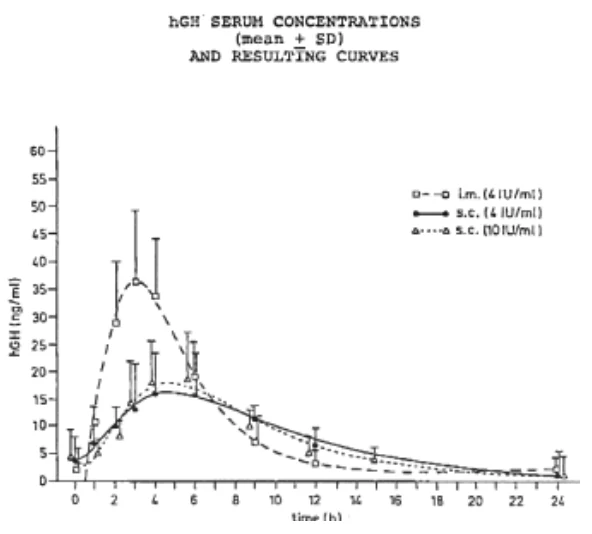
specific radioimmunoassay. While the mean peak serum concentration of circulating hGH (36.9 ng/mL) occurred 3 hours after intramuscular injection, subcutaneous injections resulted in a more sustained elevation at lower levels, reaching a mean peak serum concentration between 4 hours (mean 16.4 ng/mL) and 6 hours (mean 16.3 ng/mL). The areas under the curves (AUCs) were very similar after subcutaneous and intramuscular injections. Comparable results were obtained after subcutaneous administration of the same amount of SAIZEN in a higher concentrated solution (3.33 mg/mL instead of 1.33 mg/mL). The Tmax values reported for intramuscular injection of pit-hGH in the literature are between 2 and 4 hours which correlates well with the values found for SAIZEN.
TOXICOLOGY
A series of toxicology studies including acute, subacute, subchronic and long-term studies were conducted with SAIZEN. The animal species used for these studies included mice, rats and monkeys.
Single Dose Studies
Six acute toxicity studies were conducted in rats, mice, rats and monkeys.
| Species | Route of Administration | Dose |
| Rats and mice | Subcutaneous | 13.3mg/kg |
| Rats and mice | Intravenous | 13.3mg/kg |
| Rats | Subcutaneous Oral | 83.33mg/kg |
| Rats | Oral | 1.67, 3.33, 6.67, 13.3 mg/kg |
| Monkeys | Subcutaneous | 1.67, 3.33, 6.67 mg/kg |
| Mice | Oral | 1.67, 3.33, 6.67, 13.3 mg/kg |
No effects were observed except for minor histological changes (vacuole in hepatocytes and a hyaline droplet in renal epithelium) in one female monkey of the 6.67 mg/kg dose group.
Repeated Dose Studies
Six studies were conducted: 2 four-week subacute studies (one in rats and the other in monkeys), two thirteen-week studies (one in rats and one in monkeys) and 2 fifty-two-week studies (rats and monkeys) by subcutaneous route.
Four-Week Studies
| RATS (4 week study) | MONKEYS (4 week study) | |
| # Animals | 15 animals/sex/group | 28/sex |
| Dosage | Daily injections of 0, 0.067, 0.33, 1.6 and 3.33 mg/kg in 0.9% NaCl | Daily injections of 0, 0.067, 0.33 and 1.6 mg/kg of Somatropin or 0.2 or 0.5 IU/kg Asellacrin in 0.9% NaCl |
| Observations | Clinical signs, mortality, ophtalmoscopic examinations, body weight, laboratory analyses and post-mortem examination (autopsy, organ weight, histology) | |
| Results | The drug was well tolerated up to 3.33 mg/kg. Small number of slight hematological, biochemical and morphological changes, most notably in 1.6 and 3.33 mg/kg groups. These were for the most part reversible, and none appeared detrimental to the health of the animals. Local tolerability was satisfactory. | The drug was well tolerated up to 1.6 mg/kg. None of the observations appeared to be treatment-related and no clearly identifiable antibodies were observed. |
Thirteen-week Studies
| RATS (13 week study) | MONKEYS (13 week study) | |
| # Animals | 15/sex/group | 12/sex/group |
| Dosage | Daily injections of 0, 0.067, 0.33 and 3.33 mg/kg Somatropin, or 0.2 and 10 IU/kg Asellacrin in 0.9% NaCl | Daily injections of 0.067, 0.33 and 1.67 mg/kg/day SAIZEN |
| Observations | Clinical signs, mortality, body weight, ophtalmoscopic examinations, laboratory analyses and post-mortem examination (autopsy, organ weight, histology) | |
| Results | No overt signs of toxicity, number of slight changes were observed due mainly to the biological activity of a heterologous hormone administered for a prolonged period of time. | Higher values of GOT, GPT, -GTP and LAP found in males of the 1.67 mg group were the only drug-related changes. |
Fifty-two-week Studies
| RATS (52 week study) | MONKEYS (52 week study) | |
| # Animals | 100 males and 100 females | 16 males and 16 females |
| Dose | 0, 0.067, 0.2 and 0.6 mg/kg | 0, 0.067, 0.2 and 0.6 mg/kg |
| Observations | Clinical signs, mortality, body weight, ophtalmoscopic examinations, laboratory analyses and post-mortem examination (autopsy, organ weight, histology) | |
| Results | No treatment-related deaths. Ten rats died from incidental causes or spontaneous incidental pathology. No treatment-related clinical signs. No clinical changes at the injection site. Body weight and food consumption unaffected. No treatment-related eye abnormalities were seen. None of the hematology, blood chemistry or urinalysis value modifications were related to the dose levels. All rats developed high levels of antibodies by week 12, still present 8 weeks after end of study. Slight tendency towards increase of adrenal gland and spleen mean absolute weights without dose-correlation possible partial correlation with the slight increase in body weight. No drug-related modifications in gross pathology and histology. | No treatment-related deaths. One male (0.2 mg/kg) died on day 245 (accidental trauma). No clinical or laboratory modifications attributable to the drug. No gross alternations at injection sites. No anti-hGH detected. Post-mortem examination showed no changes attributable to the drug. |
Other Studies
Two local tolerance studies were conducted in rats and rabbits to compare the drug reconstituted in bacteriostatic saline, in metacresol, bacteriostatic saline alone and metacresol alone. In rats, which were treated with either the drug reconstituted in bacteriostatic saline, or bacteriostatic saline alone, the slight changes observed were considered mainly due to the needle trauma and potentiated by the vasodilator activity of benzyl alcohol 0.9%. Both intramuscular and subcutaneous injections were well-tolerated. The changes observed were related to the mild activity of low concentration benzyl alcohol. In rabbits which were injected with the drug reconstituted with 0.3% metacresol at the concentrations of 5 and 10 mg/mL, the 5 mg/mL concentration caused minimal changes that were similar in type and degree to the negative control (physiological saline). The 10 mg/mL solution was slightly more irritant.
The potential of somatropin, bacteriostatic saline and metacresol for sensitization were assessed in the guinea pig maximization test. None of the animals showed a positive reaction when challenged with an occlusive skin patch. In the group treated with drug reconstituted in bacteriostatic saline, 40% and 50% of the animals showed positive at the first and second intradermal challenges respectively. When reconstituted in metacresol, the drug caused severe anaphylaxis after intradermal challenge, due to the high dose used in the study. In the study using bacteriostatic saline as the diluent, lower doses were injected and only a moderate skin reaction due to sensitization was observed in guinea pigs. The drug appears to be a moderate sensitizer in guinea pigs, which is understandable since the human protein present in the drug is heterologous to this species. One study investigating the ocular and dermal irritation potentials of the drug in rabbits showed no abnormalities.
Mutagenicity
A series of mutagenicity studies, consisting of Ames Test, Gene Conversion Test in S. cerevisiae, Unscheduled DNA Synthesis in Cultured HeLa Cells, Chromosome Aberration in Human Lymphocytes Cultured In Vitro, Micronucleus Test, were conducted.
No mutagenic activity was observed with the drug for any of the mutagenicity tests listed above.
Reproductive Toxicology
In three independent pre-clinical reproductive toxicology (fertility, teratology, and pre- and post-natal) studies involving rats, SAIZEN was administered by SC route at the dosages of 0, 0.033, 0.33 and 3.33 mg/kg/day. SAIZEN was administered SC to males during pre-mating and mating, and females during pre-mating, mating, gestation and lactation periods. In these studies, no compound related embryotoxic or teratogenic effects were observed in any experimental group. In addition, no interference with the F0 and F1 reproductive performance was found. SAIZEN administration did have the effect of increasing body weight and food and water intakes at the dosage of 3.33 mg/kg/day and to a lesser extent at the dosage of 0.33 mg/kg/day. Since the increase in body weight noted in parents, offspring and fetuses is related to the pharmacological activity of SAIZEN (r-hGH), the non-toxic effect dose is considered to be 3.33 mg/kg/day for both parents and their progeny.
In a reproductive (teratology) study in female rabbits, SAIZEN was administered by SC route at the dosages of 0, 0.033, 0.33 and 3.33 mg/kg/day for 13 days during the organogenesis period. Administration of SAIZEN during pregnancy did not induce embryotoxic or teratogenic effects, and the autopsy of females at the scheduled killing did not reveal any pathological changes. The no-effect level is considered to be 3.33 mg/kg/day for does and fetuses.
REFERENCES
- 1. Behrman. Nelson Textbook of Pediatrics, 16th ed. 2000 W.B. Saunders Company.
- 2. Blethen SL, Rundle AC. Slipped capital femoral epiphysis in children treated with growth hormone. A summary of the National Cooperative Growth Study experience. Horm Res 1996; 46:113-6.
- 3.
Charles Sklar. Editorial: Paying the price for Cure-Treating Cancer Survivors with
Growth hormone. The journal of Clinical Endocrinology & Metabolism 2000. Vol. 85, No. 12, 4441-3.
- 4. Clayton P, Cowell C. Saftey issues in children and adolescents during growth hormone therapy. Growth Hormone & IGF Research 2000; 10: 306-17.
- 5. Conceicao FL, Bojensen A, Jorgensen JO, Christiansen JS. Growth hormone therapy in adults. Front Neuroendocrinol. 2001 Jul; 22(3):213-46.
- 6. Consensus guidelines for the diagnosis and treatment of adults with growth hormone deficiency: Summary treatment of the Growth hormone Hormone Research Society workshop on adult growth hormone deficiency. J Clin Endocrinol Metab 1998; 83(2): 379-81.
- 7.
CONSENSUS Critical Evaluation of the Safety of Recombinant Human Growth
Hormone Administration: Statement from the Growth Hormone Research Society. J Clin Endocrinol Metab 2001; 86(5): 1868-70.
- 8.
Cowell CT, Dietsch S. Adverse events during growth hormone therapy. J Pediatr
Endocrinol Metab 1995; 8:243-52.
- 9. Facklam T, Maillard F, Nguyen D. Characterization of human growth hormone produced by genetically engineered mammalian cells. In: Biosynthetic GH and GHRH: Basic and Clinical Aspects. Eds: Chiumello G, di Natale B. 1988;Serono Symposium Review No 18:5-20.
- 10. Frasier SD. Human pituitary growth hormone (hGH) therapy in growth hormone deficiency. Endocrine Reviews 1983; 4(2):155-70.
- 11.
Frasier SD, Rudlin CR, Zeisel HJ, Liu HH, Long PC, Boris Sr, Finegold DN, Bercu BB,
Marks JF, Redmond GP. The effect of recombinant-DNA-derived human growth hormone of mammalian cell origin in prepubertal children with growth hormone deficiency. Am J Dis Child (USA) 1992; 146(5):582-7.
| |
| Consensus guidelines for the diagnosis and treatment of adults with GH deficiency II: a | |
| statement of the GH research society in association with the European Society for | |
| Pediatrics endocrinology, Lawson Wilkins Society, European Society of Endocrinology, | |
| japan Endocrine Society and Endocrine Society of Australia. Eur. J. Endocrinol. | |
| 2007;157:695-700. | |
| |
| human growth hormone (HGH). J Clin Endocrinol 1970; 31:679-88. | |
| |
| Growth Hormone & IGF Research 2001; 11(2): 59-71. | |
| |
| recombinant-DNA-derived methionyl human growth hormone in growth hormone | |
| deficient children. Lancet 1986:697-700. | |
| |
| transfer to daily sc administration from three weekly im injections of hGH in growth | |
| hormone deficient children. Acta Endocrinol 1983; 104:148-52. | |
- 17.
Kuret JA, Murad F. Adenohypophyseal hormones and related substances. In: Gilman
AG, Rall TW, Nies AS, Taylor P, editors. Pharmacological Basis of Therapeutics. New York: Pergamon Press, 1990: 1334-1360.
- 18. Liddle C. Et al. Separate and interactive regulation of Cyt P4503A4 by triiodothyronine, dexamethasone, and GH in cultured hepatcoytes. J Clin Endocrinol Metabol 1998, Vol 83(7):2411-6.
- 19. Malozowski S. Drug-related hyperglycemia. [Letter] JAMA. 287(6): 714-5, 2002
- 20.
Milner RDG. Clinical experience of Somatrem: UK preliminary report. Acta Paediatr
Scand 1986; 325(Suppl):25-8.
- 21. Orme SM, McNally RJ, Cartwright RA, Belchetz PE. Mortality and cancer incidence in acromegaly: a retrospective chort study. United Kingdom Acromegaly Study Group. J Clin Endocrinol Metab 1998; 83:2730-4.
- 22. Pinchas Cohen, David R. Clemmons and Ron G. Rosenfield. Does the GH-IGF axis play a role in cancer pathogenesis? Growth Hormone & IGF Research 2000; 10:297-305.
- 23. Prader A, Zachmann M, Poley JR, Illig R, Széky J. Long-term treatment with human growth hormone (Raben) in small doses. Evaluation of 18 hypopituitary patients. Helv paediat Acta 1967; 22(5):423-40.
- 24. Ranke M, Weber J, Bierich JB. Long-term response to human growth hormone in 36 children with idiopathic growth hormone deficiency. Eur J Pediatr 1979; 132:221-238.
- 25. Russo L, Moore, WV. A comparison of subcutaneous and intramuscular administration of human growth hormone in the therapy of growth hormone deficiency. J Clin Endocrinol Metab 1982; 55(5):1003-6.
- 26.
Maggese G, Ranke MB, Saenger P, Rosenfield RG, Tanaka T, Chaussain JL, Savane
MO. Diagnosis and Treatment of Growth Hormone Defieciency in Children and Adolescents: Towards a Consensus. Horm Res 1998; 50:320-40.
- 27.
Stahnke N, Stubbe P, Frisch H. Results of a European multicenter trial. In: Biosynthetic
GH and GHRH: Basic and Clinical Aspects. Eds: Chiumello G, di Natale B. 1988; Serono Symposium Review No 18:25-9.
- 28. Stubbe P, Stahnke N and study group. Treatment of growth hormone (GH)-deficient children with recombinant human growth hormone (r-HGH) of mammalian cell origin. Acta Endocrinol 1988; 117 (Abstract 87).
- 29. Swerdlow AJ, Reddingius RE, Higgins CD, et al. 2000 Growth hormone treatment of children with brain tumors and risk of tumor recurrence. J Clin Endocrinol Metab. 85:4444-9.
- 30. Wilson DM, Baker B, Hintz RL, Rosenfeld RG. Subcutaneous versus intramuscular growth hormone therapy: Growth and acute Somatomedin response. Pediatrics 1985; 76(3):361-4.
- 31.
Wilton P. Adverse events during GH treatment: 10 years’ experience in KIGS, a
Pharmacoepidemiological Survey. In: Ranke MB, Wilton P, (eds). Progress in Growth Hormone Therapy-10 years of KIGS. Ja Barh Verlag 1999; 349-64.
- 32.
Wilton P. Safety in growth hormone replacement therapy: a matter of responsiveness?
Horm Res. 2001; 55 Suppl. 2:61-4.
- 33. Yu H, Rohan T. 2000 Role of the insulin-like growth factor family in cancer development and pregression. J Natl Canacer Inst. 92: 1472-89.
- 34. Zachmann M, Kempken B, Frisch H, Fiser I. Effect of a recombinant human growth hormone preparation on the urinary 15N-nitrogen balance in growth hormone deficient children. Hormone Research, 1988; 29:140-2.
- 35.
Zeisel HJ, Frisch H, Petersen. The immune response to different human growth hormone
(hGH)-preparations in growth hormone deficient children. 8th International Congress of Endocrinology, Tokyo, Japan. July 17-23, 1988.
- 36. Hibi et al, Clinical study of Saizen7 in patients with Turner’s Syndrome, data on file.
- 37.
Stahnke et al, A randomized multicentre study (Phase III) to assess the efficacy and safety of recombinant human growth hormone (r-hGH) Saizen7 and of the combination
with oxodrolone in the treatment of growth retarded girls with Turner’s Syndrome, data on file.
- 38. Bayley,N. and Pinneau, S. Tables for prediction adult height from sketal age: revised for use with the Greulich-Pyle hand standards.J Pediatr 1952; 40:423-41.
- 39.
Fine.R. Growth post renal-transplantion in children: Lessons from the North American
Pediatic Renal Transplant Cooperative Study (NAPRTCS). Pediatr. Transplant. 1997 Aug; 1(1): 85-9.
- 40. Janssen et al. Impact of growth hormone treatment on a Belgian population of short children with renal allografts. Pediatr Transplant 1997 Nov; 1(2):190-6.
- 41. Maxwell, H. and Rees, L. Randomised controlled trial of recombinant human growth hormone in prepubertal and pubertal renal transplant recipients. Arch of Disease in Childhood 1998; 79(6):481-7.
- 42. Maxwell, H. et al Growth hormone and markers of immune function in children with renal transplant. Pediatr Nephrol 2000; 14:473-5.
- 43. Fine, R. et al. The impact of recombinant human growth hormone treatment on final adult height. Pediatr Nephrol 2000; 14:679-81.
- 44.
Guest, G. et al. Effects of growth hormone in short children after renal transplantation.
Pediatr Nephrol 1998; 12(6):437-46.
- 45. Rodriguez-Soriano et al. Predictors of final height after renal transplantation during childhood: A single-center study. Nephron 2000; 83(3):266-73.
- 46.
Growth Hormone Research Society Workshop on Adult Growth Hormone Deficiency.
Consensus guidelines for the diagnosis and treatment of adults with growth hormone deficiency: summary statement of the Growth Hormone Research Society Workshop on Adult Growth Hormone Deficiency. J Clin Endocrinol Metab. 1998; 83:379-81.
- 47.
Takala, J. et al. Increased Mortality Associated with Growth Hormone Treatment in
Critically Ill Adults. New England Journcal of Medicine 1999; 341(11):785-92.
- 48.
Albertsson-Wikland et al., 1989 Albertsson-Wikland K. Growth Hormone Secretion and
Growth Hormone Treatment in Children with Intrauterine Growth Retardation. Acta Paediatr. 1989; 349:35-41.
- 49. Study GF 6283. A collaborative study to evaluate the effects of using “Saizen”, a recombinant human growth hormone, to treat growth delay in children between 2 and 5 years, born with intrauterine growth retardation. Final Report July 11, 2003.