


Product Monograph - Sogroya
Recent Major Label Changes
| 4 Dosage and administration, 4.2 Recommended Dose and Dosage Adjustment | 2026-MM |
|---|---|
| 7 Warnings and Precautions, Musculoskeletal | 2026-MM |
Table of Contents
Sections or subsections that are not applicable at the time of authorization are not listed.
Recent Major Label Changes ................................................................................................... 2
Table of Contents ................................................................................................................... 2
1 Indications .................................................................................................................. 5
Pediatrics ................................................................................................................. 5
Geriatrics ................................................................................................................. 5
2 Contraindications ........................................................................................................ 5
4 Dosage and Administration ......................................................................................... 6
Dosing Considerations ............................................................................................. 6
Recommended Dose and Dosage Adjustment ........................................................ 6
Administration ........................................................................................................ 9
Missed Dose ............................................................................................................ 9
5 Overdose..................................................................................................................... 9
6 Dosage Forms, Strengths, Composition and Packaging ................................................ 9
7 Warnings and Precautions ......................................................................................... 10
General ........................................................................................................................... 10
Carcinogenesis and Mutagenesis ................................................................................... 11
Cardiovascular ................................................................................................................ 11
Endocrine and Metabolism ............................................................................................ 11
Gastrointestinal .............................................................................................................. 12
Immune .......................................................................................................................... 12
Musculoskeletal ............................................................................................................. 12
Neurologic ...................................................................................................................... 13
Reproductive Health ...................................................................................................... 13
Special Populations ............................................................................................... 13
7.1.1 Pregnancy ............................................................................................... 13
7.1.2 Breastfeeding .......................................................................................... 14
7.1.3 Pediatrics ................................................................................................ 14
7.1.4 Geriatrics ................................................................................................. 14
8 Adverse Reactions ..................................................................................................... 14
Adverse Reaction Overview .................................................................................. 14
Clinical Trial Adverse Reactions - Pediatrics .......................................................... 14
8.2.1 Clinical Trial Adverse Reactions – Adults ................................................. 15
Less Common Clinical Trial Adverse Reactions - Pediatrics ................................... 16
8.3.1 Less Common Clinical Trial Adverse Reactions – Adults .......................... 17
9 Drug Interactions ...................................................................................................... 18
Drug Interactions Overview .................................................................................. 18
Drug-Drug Interactions .......................................................................................... 19
Drug-Food Interactions ......................................................................................... 19
Drug-Herb Interactions ......................................................................................... 19
Drug-Laboratory Test Interactions ........................................................................ 19
10 Clinical Pharmacology ............................................................................................... 20
 Mechanism of Action .......................................................................................... 20
 Pharmacodynamics ............................................................................................ 20
 Pharmacokinetics ............................................................................................... 20
 Immunogenicity ................................................................................................. 20
11 Storage, Stability and Disposal .................................................................................. 22
12 Special Handling Instructions .................................................................................... 23
Part 2: Scientific Information ................................................................................................ 24
13 Pharmaceutical Information ...................................................................................... 24
14 Clinical Trials ............................................................................................................. 25
 Clinical Trials by Indication ................................................................................. 25
Pediatric Growth Hormone Deficiency (GHD) ..................................................... 25
Adult Growth Hormone Deficiency (AGHD) ........................................................ 27
15 Microbiology ............................................................................................................. 28
16 Non-Clinical Toxicology ............................................................................................. 28
Patient Medication Information .......................................................................................... 32
Part 1: Healthcare Professional Information
1 Indications
SOGROYA® (somapacitan injection) is indicated for:
- the long-term treatment of pediatric patients who have growth failure due to an inadequate secretion of endogenous growth hormone (Growth Hormone Deficiency (GHD)).
- the replacement of endogenous growth hormone (GH) in adults with growth hormone deficiency (AGHD).
Pediatrics
Pediatrics (2.5 years old to epiphyseal fusion): The efficacy and safety of SOGROYA® in pediatric patients aged 2.5 years to 11 years with growth failure due to growth hormone deficiency have been established in clinical trials. The efficacy and safety of SOGROYA® have not been established in patients under 2.5 years of age. Data on the efficacy and safety of SOGROYA® in patients 12 to under 18 years of age are limited. Pediatric patients with a history or presence of malignancy, including intracranial tumours, were not studied in clinical trials [see 14 Clinical Trials].
Geriatrics
Elderly patients may be more sensitive to the action of somapacitan, and therefore may be at increased risk for adverse reactions. Initiate SOGROYA® with a dose of 1 mg once weekly and use smaller increments when increasing the dose [see 4.2 Recommended dose and Dosage Adjustment].
2 Contraindications
- Somapacitan must not be used when there is any evidence of neoplastic activity. Intracranial tumours must be inactive and anti-tumour therapy must be completed prior to starting somapacitan therapy. Treatment should be discontinued if there is evidence of tumour growth.
- Somapacitan should not be used for longitudinal growth promotion in children with closed epiphyses.
- Somapacitan is contraindicated in adult patients with acute critical illness suffering from complications following open heart surgery, abdominal surgery, multiple accidental trauma, acute respiratory failure or similar conditions, see 7 Warnings and Precautions.
- Somapacitan is contraindicated in patients who are hypersensitive to this drug or to any ingredient in the formulation, including any non-medicinal ingredient, or component of the container. For a complete listing, see 6 Dosage Forms, Strengths, Composition and Packaging.
- Somapacitan is contraindicated in pediatric patients with Prader-Willi syndrome who are severely obese or have severe respiratory impairment due to risk of sudden death, see 7 Warnings and Precautions.
4 Dosage and Administration
Dosing Considerations
- SOGROYA® treatment should be initiated and monitored by physicians who are qualified and experienced in the diagnosis and management of patients with the condition for which SOGROYA® is indicated.
- SOGROYA® dosage should be individualized based on the response of each patient (see 4.2 Recommended Dose and Dosage Adjustment).
Switching from other growth hormone products
Switching a patient from another type or brand of growth hormone should be done by a physician who has experience in diagnosis and management in growth hormone deficiency.
Patients switching from daily human growth hormone to once-weekly SOGROYA® should choose the preferred day for the weekly dose and inject the final dose of daily treatment the day before (or at least 8 hours before) injecting the first dose of once-weekly SOGROYA®. Patients switching from a weekly human growth hormone to once weekly SOGROYA® should continue administration at their once weekly dosing day. Patients should follow the instructions for the dose presented in section 4.2 Recommended Dose and Dosage Adjustment.
Recommended Dose and Dosage Adjustment
Table 1 - Recommended Doses
| Patient population | Recommended dose |
|---|---|
| Pediatric GHD – treatment-naïve or switching from other GH therapy | 0.16 mg/kg/week |
| Adult GHD | Recommended starting dose |
| Aged 18 to <60 years, treatment-naïve or switching from other GH therapy | 1.5 mg/week |
| Aged 60 years or older | 1.0 mg/week |
| Women taking oral estrogens | 2.0 mg/week |
Pediatric Growth Hormone Deficiency (GHD):
- Initiate SOGROYA® with a dosage of 0.16 mg/kg body weight once weekly for treatment-naïve patients and patients switching from daily growth hormone (somatropin), under the supervision of an experienced Healthcare provider.
- Monitor growth rate closely during the first year of SOGROYA® treatment. If a patient’s growth rate fails to increase in the first year, assess for treatment adherence and other causes of growth failure (e.g. hypothyroidism, undernutrition, advanced bone age).
- Patients who were treated with SOGROYA® for GHD in childhood and whose epiphyses are closed should be re-evaluated before continuing SOGROYA® according to the Adult posology below.
Treatment evaluation for Pediatric GHD patients
- The dosage of SOGROYA® may be decreased from the recommended dose of 0.16 mg/kg/week based on serum IGF-I Standard Deviation Scores (IGF-I SDS) in case of repeated elevations above +2.
- Blood samples for IGF-I SDS sampling may be taken on any day of the week following injections of somapacitan. Sampling 2 days after the injection closely approximates the expected maximum IGF-I value, whereas the average IGF-I concentration over the weekly dosing interval is most closely approximated with a sample taken 4 days after injection (See Table 2 below).
Based on clinical trial data in pediatric GHD patients, a guidance for calculating average IGF-I SDS and IGF-I concentration (ng/mL) valuesbased on blood sampling after injection of somapacitan is provided in Table 2.
Table 2 - Calculation table for prediction of IGF-I avg SDS and IGF-I avg concentration (ng/mL) values by time after dose
| Calculating IGF-I avg SDS | Calculating IGF-I avg concentration (ng/mL) | ||||
|---|---|---|---|---|---|
Interval Days (hours) after dose | Adjustment to measured IGF-I SDS to approximate IGF-Iavg SDSa | 90% prediction interval of IGF-I SDS adjustment value | Adjustment to measured IGF-I (ng/mL) to approximate IGF-Iavg (ng/mL)b | Coefficient of variation (%) of IGF-I (ng/mL) adjustment value | |
1 day after dose (25-48 hours) | IGF-I SDS – 0.8 | ± 0.5 | IGF-I (ng/mL) x 0.8 | 9.0 | |
2 days after dose (49-72 hours) | IGF-I SDS – 1.0 | ± 0.6 | IGF-I (ng/mL) x 0.7 | 8.3 | |
3 days after dose (73-96 hours) | IGF-I SDS – 0.5 | ± 0.4 | IGF-I (ng/mL) x 0.9 | 7.4 | |
4 days after dose (97-120 hours) | No adjustmentc | N/A | No adjustmentc | N/A | |
5 days after dose (121-144 hours) | IGF-I SDS + 0.7 | ± 0.4 | IGF-I (ng/mL) x 1.3 | 10 | |
6 days after dose (145-168 hours) | IGF-I SDS + 1.1 | ± 0.6 | IGF-I (ng/mL) x 1.6 | 15 | |
Abbreviations: avg, average; CV, coefficient of variation; GHD, growth hormone deficiency; hrs, hours after dose; IGF-I, insulin-like growth factor I; PI, prediction interval; SDS, standard deviation score
a Adjustment of IGF-I SDS values should be performed by either adding or subtracting the value provided in the table according to the time point when the sample was obtained.
b Adjustment of IGF-I (ng/mL) concentration values should be performed through multiplying by the factor provided in the table according to the time point when the sample was obtained.
c Adjustment for values obtained 97-120 hours after dose is considered not to be required as the predicted adjustments of IGF-I SDS +0.1 (PI 90% +/0.3 SDS) and IGF-I (ng/mL) × 1.1 (6.9 CV%) are not clinically relevant
Adult Growth Hormone Deficiency (AGHD):
- Initiate SOGROYA® with a dosage of 1.0 to 2.0 mg/week according to Table 1.
The SOGROYA® dose must be individually adjusted for each patient. It is recommended to increase the dose gradually in intervals of 2-4 weeks in steps of 0.5 mg to 1.5 mg based on the patients’ clinical response and experience of adverse reactions up to a maximum dose of 8 mg SOGROYA®
- per week.
- The maintenance dose of SOGROYA® varies from person to person and between male and female patients. The average SOGROYA® maintenance dose in the phase 3 clinical trial was 2.4 mg/week (see 14 Clinical Trials).
Treatment evaluation for Adult GHD patients
- Serum IGF-I levels (drawn 3-4 days after dosing) can be used as guidance for the dose titration. Dose titration should be individualized, with the aim of reaching IGF-I SDS within the age-adjusted upper reference range (IGF-I SDS upper reference range: 0 and +2) within 12 months of titration.
- If this target range cannot be achieved within this period, or the patient does not obtain the desired clinical response, other treatment options should be considered.
- It is recommended that the SOGROYA® dose be reduced in patients with repeated IGF-I standard deviation score (SDS) above +2.
- During SOGROYA® maintenance treatment, evaluation of efficacy and safety should be considered at approximately 6- to 12-month intervals and may be assessed by evaluating biochemistry (IGF-I-, glucose-, and lipid levels), body composition, and body mass index.
AGHD Patients Aged 60 Years and Older:
Initiate SOGROYA® with a dosage of 1 mg once weekly and use smaller dose increments when titrating the dosage. See above for monitoring recommendations and the maximum recommended dosage of SOGROYA®.
Patients with Hepatic Impairment
- SOGROYA® has not been studied in pediatric patients with hepatic impairment.
- No adjustment of the starting dose is required for adult patients with hepatic impairment. Since the dose of SOGROYA® is individually adjusted according to the need of each patient, no additional dose adjustments are required. No information regarding the use of SOGROYA®in patients with severe hepatic impairment is available. SOGROYA® is not recommended in patients with severe hepatic impairment.
Patients with Renal Impairment
- SOGROYA® has not been studied in pediatric patients with renal impairment.
- No adjustment of the starting dose is required for adult patients with renal impairment. Since the dose of SOGROYA® is individually adjusted according to the need of each patient, no additional dose adjustments are required.
Gender
Women may require higher doses of SOGROYA® than men. This means that there is a risk that women, especially those on oral estrogen (hormone therapy or contraception) , could be under-dosed. In females using oral estrogen, a change in the route of estrogen administration (e.g. transdermal, vaginal) should be considered. For women on oral estrogen therapy (irrespective of age), initiate SOGROYA® with a dosage of 2 mg once weekly.
Race and Ethnicity
Based on population pharmacokinetic/pharmacodynamic analyses, no dose adjustment is required based on race. In the clinical trials for AGHD, ethnicity was not investigated due to small sample size in the development program (15 [4.5%] Hispanic or Latino subjects received somapacitan).
Administration
SOGROYA® is to be administered once weekly at any time of the day.
Patients may self-inject SOGROYA® after reading the instructions for use in the Patient Medication Information.
Pediatric GHD patients or their caregivers can inject SOGROYA® subcutaneously in the abdomen, thighs, buttocks or upper arms. The injection site should be rotated every week.
Adult GHD patients can inject SOGROYA® subcutaneously in the abdomen, thighs or buttocks. The injection site should be rotated every week.
Do not inject into areas where the skin is tender, bruised, erythematous, or indurated.
Flexibility in dosing time:
The day of weekly injection can be changed as long as the time between two doses is at least 4 days (96 hours). After selecting a new dosing day, the once-weekly dosing should be continued.
On occasions when injection at the scheduled dosing day is not possible, once-weekly SOGROYA® can be administered up to 2 days before or 3 days after the scheduled weekly dosing day as long as the time between two doses is at least 4 days (96 hours). Regular dosing should be resumed on the scheduled weekly dosing day.
Missed Dose
Patients who miss a dose are advised to inject SOGROYA® upon discovery as soon as possible within 3 days after the missed dose, and then resume their usual once-weekly dosing schedule. If more than 3 days have passed, the dose should be skipped, and the next dose should be administered on the regularly scheduled day. If two or more doses have been missed, the dose should be resumed on the regularly scheduled day.
5 Overdose
SOGROYA® doses higher than 0.16 mg/kg/week in pediatric patients and 8 mg/week in adult patients have not been studied. Based on experience with daily growth hormone products, short-term overdosage could lead initially to hypoglycemia and subsequently to hyperglycemia. Long-term overdosage could result in signs and symptoms of gigantism and/or acromegaly consistent with the effects of growth hormone excess.
| For management of a suspected drug overdose, contact your regional poison control centre. |
|---|
6 Dosage Forms, Strengths, Composition and Packaging
To help ensure the traceability of biologic products, healthcare professionals should record both the brand name and the non-proprietary (active ingredient) name as well as other product-specific identifiers such as the Drug Identification Number (DIN) and the batch/lot number of the product supplied.
Table 3 – Dosage Forms, Strengths, Composition and Packaging
The primary packaging for SOGROYA® is a 1.5 ml glass cartridge (Type I colourless glass) with a plunger made of chlorobutyl rubber and a stopper made of bromobutyl/isoprene rubber sealed with an aluminium cap.
The cartridge is contained in a multidose disposable colour–coded pen made of polypropylene, polyacetal, polycarbonate and acrylonitrile butadiene styrene and in addition two metal springs. The cartidge is permanently sealed in a pen-injector.
The SOGROYA® 5 mg/1.5 mL (3.3 mg/mL) pen delivers doses from 0.025 mg to 2 mg in increments of 0.025 mg (0.0075 mL).
The SOGROYA® 10 mg/1.5 mL (6.67 mg/ml) pen delivers doses from 0.05 mg to 4 mg in increments of 0.05 mg (0.0075 mL).
The SOGROYA® 15 mg/1.5 mL (10 mg/ml) pen delivers doses from 0.10 mg to 8 mg in increments of 0.1 mg (0.01 mL).
The dose button and cap on the pen-injector is colour–coded according to strength:
- 5 mg/1.5 ml is coloured teal
- 10 mg/1.5 ml is coloured yellow
- 15 mg/1.5 ml is coloured rubine red
Pack size of SOGROYA® (5 mg/1.5 ml, 10 mg/1.5 ml and ® 15 mg/1.5 ml) solution for injection in pre-filled pen: a carton containing 1 pen.
7 Warnings and Precautions
General
Acute critical illness
Treatment with growth hormone products has been associated with increased mortality in patients with acute critical illness due to complications following open heart surgery, abdominal surgery, or multiple accidental trauma, or those with acute respiratory failure. If patients who are receiving
| Route of Administration | Dosage Form / Strength/Composition | Non-medicinal Ingredients |
| Subcutaneous | Solution for injection in a pre-filled pen: 5 mg/1.5 mL 10 mg/1.5 mL 15 mg/1.5 mL | Histidine, Hydrochloric acid (for pH adjustment), Mannitol, Phenol, Poloxamer 188, Sodium hydroxide (for pH adjustment) and Water for Injection |
somapacitan become acutely critically ill, discontinue somapacitan (see 2 Contraindications).
Prader-Willi syndrome
SOGROYA® has not been studied in patients with Prader-Willi syndrome. There have been reports of fatalities after initiating therapy with somatropin in pediatric patients with Prader-Willi syndrome who had one or more of the following risk factors: severe obesity, history of upper airway obstruction or sleep apnea, or unidentified respiratory infection.
Carcinogenesis and Mutagenesis
Active malignancy
There is an increased risk of malignancy progression with growth hormone treatment in patients with active malignancy (see 2 Contraindications). Any pre-existing malignancy should be inactive, and its treatment complete prior to initiating treatment with somapacitan. Discontinue treatment if there is evidence of active malignancy.
Risk of second neoplasm
Based on experience with growth hormone products, there is an increased risk of a second neoplasm (benign and malignant) in childhood cancer survivors. Intracranial tumours, in particular meningiomas in patients treated with radiation to the head for their first neoplasm, were the most common of the second neoplasms. Patients who have achieved complete remission of malignant disease should be followed closely for relapse after commencement of somapacitan treatment.
Risk of malignancy during treatment
There is a risk of malignant changes of pre-existing nevi with growth hormone treatment. Monitor patients on somapacitan therapy carefully for increased growth or potential malignant changes of pre-existing nevi. Advise patients/caregivers to report marked changes in behaviour, onset of headaches, vision disturbances and/or changes in skin pigmentation or changes in the appearance of pre-existing nevi.
Cardiovascular
Edema
Fluid retention during growth hormone replacement may occur. Clinical manifestations of fluid retention (e.g. edema and nerve compression syndromes, including carpal tunnel syndrome) are usually transient and dose dependent.
Endocrine and Metabolism
Adrenocortical insufficiency
Patients receiving growth hormone therapy who have or are at risk for corticotropin deficiency may experience reduced serum cortisol levels and/or unmasking of central (secondary) hypoadrenalism. In addition, patients treated with glucocorticoid replacement for previously diagnosed hypoadrenalism may require an increase in their maintenance or stress doses following initiation of growth hormone treatment. Monitor patients for reduced serum cortisol levels and/or need for glucocorticoid dose increases in those with known hypoadrenalism.
Glucose intolerance and diabetes mellitus
Treatment with growth hormone may decrease insulin sensitivity, particularly at higher doses. As a result, hyperglycemia and new onset type 2 diabetes mellitus have been reported in patients taking growth hormone. Glucose levels should be monitored periodically in all patients treated with growth hormone, especially in those with risk factors for diabetes mellitus. Patients with pre-existing type 1 or type 2 diabetes mellitus or impaired glucose tolerance should be monitored closely during growth hormone therapy (see 9.4 Drug-Drug Interactions). The doses of antidiabetic agents may require adjustment when growth hormone therapy is initiated in these patients.
Thyroid function
Growth hormone increases the extrathyroidal conversion of T4 to T3 and may as such unmask incipient hypothyroidism. As hypothyroidism interferes with the response to growth hormone therapy, patients should have their thyroid function tested regularly, and should receive replacement therapy with thyroid hormone when indicated.
Gastrointestinal
Pancreatitis
Cases of pancreatitis have been reported in patients receiving growth hormone treatment. The risk may be greater in pediatric patients compared with adults. Consider pancreatitis in patients who develop persistent severe abdominal pain.
Immune
Lipohypertrophy/lipoatrophy
When SOGROYA® is administered at the same site over a long period of time, lipohypertrophy or lipoatrophy may occur. The injection site should be rotated to reduce the risk.
Hypersensitivity
Serious systemic hypersensitivity reactions (e.g. anaphylaxis, angioedema) have been reported with growth hormone products. If a serious hypersensitivity reaction occurs, immediately discontinue use of somapacitan and treat promptly per standard of care and monitor until signs and symptoms resolve. Do not use in patients with previous hypersensitivity to somapacitan (see 2 Contraindications).
Musculoskeletal
Epiphyseal disorders
Epiphyseal disorders, including slipped capital femoral epiphysis, may occur more frequently in patients undergoing rapid growth. Any pediatric patient with the onset of a limp or complaints of hip or knee pain during treatment should be carefully evaluated.
Scoliosis
Growth hormone treatment increases growth rate, and progression of preexisting scoliosis can occur in patients who experience rapid growth. Growth hormone treatment has not been shown to increase the occurrence of scoliosis. Monitor patients with a history of scoliosis for disease progression.
Slipped capital femoral epiphysis
In fast growing children and patients with endocrine disorders, including GHD, slipped capital femoral epiphysis may occur more frequently than in the general population. Children with persistent hip/knee pain and/or limping during treatment with somapacitan should be examined clinically.
Osteonecrosis of femoral head
Osteonecrosis of femoral head has been reported in patients receiving other growth hormone products.
Neurologic
Benign intracranial hypertension
In the event of severe or recurrent headache, visual symptoms, nausea, and/or vomiting, a fundoscopy for papilledema is recommended. If papilledema is confirmed, a diagnosis of benign intracranial hypertension should be considered and growth hormone treatment should be stopped. Once signs and symptoms have resolved, if growth hormone treatment is restarted, consider restarting at a lower dose. Careful monitoring for symptoms of intracranial hypertension is necessary.
Reproductive Health
Fertility
There is no clinical experience with SOGROYA® use and its potential effect on fertility.
Animal Data
In an animal fertility study, somapacitan induced irregular estrus cycles and longer estrus cycles in female rats; however, no adverse effects on fertility were observed (see 16 Non-Clinical Toxicology).
Special Populations
7.1.1 Pregnancy
There are no available data on SOGROYA® use in pregnant women.
Animal Data (see 16 Non-Clinical Toxicology)
In an embryo-fetal development study in rats, somapacitan administration to pregnant rats during the period of organogenesis resulted in fetal skeletal malformations consisting of short/bent/thickened long bones at a dose of 18 mg/kg body weight/day (305 times the clinical exposure at the maximum recommended human dose [MRHD] of 8 mg/week), which were not observed at lower doses of 2 and 6 mg/kg body weight/day (5 and 24 times the clinical exposure at the MRHD of 8 mg/week).
In an embryo-fetal development study in rabbits, somapacitan administration to pregnant rabbits during the period of organogenesis resulted in reduced fetal growth at doses ≥1 mg/kg body weight every two days (≥ 17 times the clinical exposure at the MRHD of 8 mg/week).
In a pre-and post-natal development study in rats, somapacitan administration to pregnant rats resulted in an increased incidence of renal pelvic dilatation in F1 offspring on post-natal day 21 at doses ≥4mg/kg body weight twice weekly (29 times clinical exposure at the MRHD of 8 mg/week), but which was not observed in the adult F1 generation. Acyclic estrus cycles were also observed in F1 female offspring following maternal dosing at 18 mg/kg body weight twice weekly (787 times the clinical exposure at the MRHD of 8 mg/week). In addition, somapacitan was detected in F1 offspring plasma following maternal exposure at a dose of 18 mg/kg body weight twice weekly.
Somapacitan and/or its metabolites have been detected in rat fetal tissues (highest concentration in fetal kidneys) following administration to pregnant rats, indicating transfer across the placental barrier.
7.1.2 Breastfeeding
There is no information on the presence of SOGROYA® in human milk, the effects on the breastfed infant, or the effects on milk production. Somapacitan-related material has been observed to be secreted into milk of lactating rats. When a substance is present in animal milk, it is likely that the substance will be present in human milk. A risk to the breastfed newborns/infants cannot be excluded. A decision must be made whether to discontinue breast-feeding or to discontinue/abstain from SOGROYA® therapy taking into account the benefit of breast-feeding for the child and the benefit of therapy for the woman.
7.1.3 Pediatrics
The efficacy and safety of SOGROYA® have been evaluated in pediatric patients with growth failure due to growth hormone deficiency (see 1 Indications).
7.1.4 Geriatrics
In clinical studies a total of 80 (24%) of the 333 SOGROYA® treated patients were 60 years or older and 3 (0.9%) were 75 years or older [see 14 Clinical Trials]. Subjects older than 60 years appeared to have higher exposure than younger subjects at the same dose level. Elderly patients may be more sensitive to the action of somapacitan, and therefore may be at increased risk for adverse reactions. Therefore, lower doses of SOGROYA® may be necessary in older patients. For further information, see 4.2 Recommended Dose and Dosage Adjustment.
8 Adverse Reactions
Adverse Reaction Overview
In pediatric patients, the most common adverse reactions (ADRs) are (from pivotal trial 4263 (REAL 4)) headache (12%), hypothyroidism (5%), injection site reactions* (5%), peripheral edema (3%), arthralgia (2%), hyperglycemia (2%), fatigue (2%), and adrenocortical insufficiency (1.5%).
In adults, the most common adverse drug reactions (ADRs) are (from pivotal trial 4054 (REAL 1)) headache (12%), arthralgia (7%), fatigue (6%) peripheral oedema (4%), adrenocortical insufficiency (3%), asthenia (3%), paresthesia (2%), hypothyroidism (1.8%), injection site reaction (1%), hyperglycemia (1%), carpal tunnel syndrome (0.9%) and lipohypertrophy (0.4%).
* The injection site reactions were injection site bruising (1.5%), injection site pain (1.5%), injection site hematoma (1.5%) and injection site swelling (0.8%)
Clinical Trial Adverse Reactions - Pediatrics
Clinical trials are conducted under very specific conditions. The adverse reaction rates observed in the clinical trials; therefore, may not reflect the rates observed in practice and should not be compared to the rates in the clinical trials of another drug. Adverse reaction information from clinical trials may be useful in identifying and approximating rates of adverse drug reactions in real-world use.
SOGROYA® was studied in a 52-week randomized, multi-national, open label, active-controlled, parallel-group clinical study in 200 treatment naïve, prepuberal pediatric patients with growth hormone deficiency [see 14 Clinical Trials]. Table 4 shows common adverse events that occurred in >2% of patients treated in this trial.
Table 4 - Adverse Events occurring >2% in SOGROYA®-Treated Pediatric Patients and More Frequently than in Daily Somatropin-Treated Pediatric Patients (52 Weeks of Treatment)
Somatropin (n = 68) % | SOGROYA® (n = 132) % | ||||
| Endocrine Disorders | |||||
| Hypothyroidism | 1.5 | 3.0 | |||
| Gastrointestinal | |||||
| Constipation | 1.5 | 3.0 | |||
| General disorders and administration site conditions | |||||
| Swelling face | 0 | 2.3 | |||
| Musculo-skeletal and connective tissue | |||||
| Pain in extremity | 2.9 | 9.1 | |||
| Nervous system disorders | |||||
| Headache | 8.8 | 12.1 | |||
| RESPIRATORY, THORACIC AND MEDIASTINAL DISORDERS | |||||
| Cough | 2.9 | 4.5 | |||
| Infections and infestations | |||||
| Nasopharyngitis | 10.3 | 11.4 | |||
| Respiratory tract infection | 2.9 | 3.0 | |||
| Upper respiratory tract infection | 1.5 | 2.3 | |||
Headache was very commonly observed (12%). Almost all cases were of mild severity, and the majority of cases recovered.
8.2.1 Clinical Trial Adverse Reactions – Adults
SOGROYA® was studied in adult patients with GHD in a 35-week, placebo-controlled, double-blind trial with an active-control arm [see 14 Clinical Trials]. Adverse events occurring >2% with SOGROYA® are presented in Table 5.
Table 5 - Adverse Events occurring >2% in Adults with GHD Treated with SOGROYA® and More Frequently# than in Placebo-Treated Patients for 34 Weeks
SOGROYA® (n = 120) % | Placebo (n = 61) % | |
| Blood and lymphatic system disorders | ||
| Anemia | 2.5 | 0 |
| Gastrointestinal | ||
| Dyspepsia | 5 | 3.3 |
| Vomiting | 3.3 | 1.6 |
| General disorders and administration site conditions | ||
| Peripheral edema | 3.3 | 1.6 |
| Metabolism and nutrition disorders | ||
SOGROYA® (n = 120) % | Placebo (n = 61) % | |
| Adrenal insufficiency | 3.3 | 1.6 |
| Musculo-skeletal and connective tissue | ||
| Back Pain | 10 | 3.3 |
| Arthralgia | 6.7 | 1.6 |
| Nervous system disorders | ||
| Dizziness | 4.2 | 1.6 |
| Psychiatric disorders | ||
| Sleep disorder | 4.2 | 1.6 |
| Infections and infestations | ||
| Tonsillitis | 3.3 | 1.6 |
| Investigations | ||
| Blood creatine phosphokinase increase | 3.3 | 0 |
| Weight increased | 3.3 | 0 |
| Vascular disorders | ||
| Hypertension | 3.3 | 1.6 |
# Included adverse reactions reported with at least 1% greater incidence in SOGROYA® group compared to the placebo group
More SOGROYA® treated patients shifted from normal baseline levels to elevated phosphate and creatine phosphokinase levels at the end of the trial compared to the placebo group (17.5% vs 4.9% and 9.2% vs. 6.6%, respectively); these laboratory changes occurred intermittently, and were non-progressive.
Less Common Clinical Trial Adverse Reactions - Pediatrics
Clinical trial adverse events with a frequency of less than 2%, and more frequently than somatropin, in patients treated with somapacitan in the pivotal study 4263 (see 14 Clinical Trials) are presented in the following listing:
Blood and lymphatic system disorders - Lymphadenopathy, Anemia
Congenital, familial and genetic disorders – Cryptorchism
Ear and labyrinth disorders - Cerumen impaction, Tinnitus
Endocrine disorders - Secondary hypothyroidism, Adrenocorticotrophic hormone deficiency, Secondary adrenocortical insufficency
Eye disorders - Eye irritation, Eye pruritus, Eyelid cyst, Hypermetropia, Periorbital edema
Gastrointestinal disorders - Abdominal pain, Gastrooesophageal reflux disease, Toothache, Umbilical hernia
General disorders and administration site conditions - Fatigue, Injection site hematoma, Chest discomfort, Face edema, Hyperthermia, Injection site swelling, Local reaction, Peripheral swelling, Swelling
Immune system disorders - Food allergy
Infections and infestations - Gastroenteritis viral, Hand-foot-and-mouth disease, Otitis media acute, Acute sinusitis, Fungal infection, Gastrointestinal viral infection, Herpangina, Impetigo, Infection, Infection parasitic, Latent tuberculosis, Pharyngitis, Pneumonia, Respiratory tract infection viral, Sinusitis, Streptococcal infection, Tonsillitis streptococcal, Tracheitis, Urinary tract infection, Viral upper respiratory tract infection
Injury, poisoning and procedural complications - Hand fracture, Head injury, Accidental underdose, Concussion, Eye contusion, Fall, Foot fracture, Joint dislocation, Nasal injury, Procedural pain, Skin abrasion, Skin laceration, Venomous sting
Investigations - Low density lipoprotein increased, Blood cholesterol abnormal, Blood creatine phosphokinase increased, Blood glucose increased, Blood thyroid stimulating hormone increased, Cortisol decreased, SARS-CoV-2 test positive
Neoplasms benign, malignant and unspecified (incl cysts and polyps) - Lymphangioma
Nervous system disorders - Cognitive disorder, presyncope, somnolence
Metabolism and nutrition disorders - Dehydration, Dyslipidaemia, Impaired fasting glucose, Iodine deficiency
Musculoskeletal and connective tissue disorders - Myalgia, Arthritis reactive, Growing pains
Psychiatric disorders - Anxiety, Enuresis, Nightmare, Sleep disorder
Reproductive system and breast disorders - Balanoposthitis
Respiratory, thoracic and mediastinal disorders - Upper respiratory tract inflammation, Rhinitis allergic, Adenoidal hypertrophy, Nasal congestion, Rhinorrhoea
Skin and subcutaneous tissue disorders - Dermatitis atopic, Erythema, Pruritus, Alopecia, Dry skin, Henoch-Schonlein purpura, Keratosis pilaris, Lipodystrophy acquired, Miliaria, Poikiloderma, Psoriasis, Skin fissures
8.3.1 Less Common Clinical Trial Adverse Reactions – Adults
Clinical trial adverse events with a frequency of less than 2%, and more frequently than somatropin and placebo, in patients treated with somapacitan in the pivotal study 4054 (see 14 CLINICAL TRIALS) are presented in the following listing:
Blood and lymphatic system disorders - Lymphadenopathy, Iron deficiency anaemia, Thrombocytopenia
Cardiac disorders - Cardiovascular disorder, Cardiac discomfort, Mitral valve incompetence, Aortic valve incompetence, Left ventricular dysfunction
Congenital, familial and genetic disorders - Myotonia congenita
Endocrine disorders - Adrenocortical insufficiency acute, Thyroid mass
Eye disorders - Conjunctival haemorrhage, Eye pruritus, Dry eye
Gastrointestinal disorders - Epigastric discomfort, Dry mouth, Abdominal distension, Inguinal hernia, Large intestine polyp
General disorders and administration site conditions - Non-cardiac chest pain, Nodule
Immune system disorder - Seasonal allergy
Infections and infestations - Herpes zoster, Ear infection, Lower respiratory tract infection, Cystitis, Oral herpes, Pharyngitis streptococcal, Herpes simplex, Otitis media, Vaginal infection, Pilonidal cyst, Tooth abscess, Upper respiratory tract infection bacterial, Laryngitis, Hordeolum, Viral infection, Sepsis
Injury, poisoning and procedural complications - Arthropod sting, Limb injury, Wrist fracture
Investigations - Blood creatinine increased, Blood alkaline phosphatase increased, Blood bilirubin increased, Blood potassium decreased, Thyroxine decreased, Lymph node palpable, Creatinine renal clearance increased, Gamma-glutamyltransferase increased, Electrocardiogram abnormal, Thyroid hormones decreased
Metabolism and nutrition disorders - Gout, Fluid retention, Hypertriglyceridaemia, Hypoglycaemia, Vitamin D deficiency
Musculoskeletal and connective tissue disorders - Muscular weakness, Intervertebral disc degeneration, Costochondritis, Exostosis, Joint effusion, Limb deformity, Intervertebral disc protrusion, Muscle twitching, Myositis, Osteoarthitis, Plantar fasciitis
Nervous system disorders - Hypersomnia, Sciatica
Psychiatric disorders - Emotional disorder, Depression
Renal and urinary disorders - Bladder pain, Polyuria, Urinary incontinence
Reproductive system and breast disorders - Nipple pain
Respiratory, thoracic and mediastinal disorders - Paranasal sinus hypersecretion, Dyspnoea paroxysmal nocturnal, Pharyngeal erythema, sinus congestion, nasal congestion
Skin and subcutaneous tissue disorders - Lipohypertrophy, Lipodystrophy acquired, Onychoclasis, Papule, Acne, Alopecia, Dermatitis allergic, Skin mass, Rash erythematous, Rash papular, hyperkeratosis, rash generalised, pustular psoriasis
9 Drug Interactions
Drug Interactions Overview
No formal drug interaction studies have been performed with somapacitan.
Drug-Drug Interactions
The drugs listed in this table are based on either drug interaction case reports or studies, or potential interactions due to the expected magnitude and seriousness of the interaction (i.e., those identified as contraindicated).
Table 6 - Clinically important Drug Interactions with SOGROYA®
| [Proper/Common name] | Source of Evidence | Effect | Clinical Comment |
|---|---|---|---|
| Microsomal enzyme 11β-hydroxysteroid | T | Microsomal enzyme 11β-hydroxysteroid dehydrogenase type 1 (11βHSD-1) is required for conversion of cortisone to its active metabolite, cortisol, in hepatic and adipose tissue. GH inhibits 11βHSD-1. Consequently, individuals with untreated GH deficiency have relative increases in 11βHSD-1 and serum cortisol. Initiation of SOGROYA® may result in inhibition of 11βHSD-1 and reduced serum cortisol concentrations. | Patients treated with glucocorticoid replacement for hypoadrenalism may require an increase in their maintenance or stress doses following initiation of SOGROYA (see 7 Warnings and Precaution). |
| Cytochrome P450-Metabolized Drugs | T | Limited published data indicate that GH treatment increases cytochrome P450 (CP450)-mediated antipyrine clearance. SOGROYA® may alter the clearance of compounds known to be metabolized by CP450 liver enzymes. | Careful monitoring is advisable when SOGROYA® is administered in combination with drugs metabolized by CP450 liver enzymes. |
| Oral Estrogen | T | Oral estrogens may reduce the serum IGF-I response to SOGROYA®. | Patients receiving oral estrogen therapy may require higher SOGROYA® dosages (see 4 Dosage and Administration). |
| Insulin and/or Other Hypoglycemic Agents | T | Treatment with SOGROYA® may decrease insulin sensitivity, particularly at higher doses. | Patients with diabetes mellitus may require adjustment of their doses of insulin and/or other hypoglycemic agents (see 7 Warnings and Precautions). |
Legend: C = Case Study; CT = Clinical Trial; T = Theoretical
Drug-Food Interactions
Interactions with food have not been established.
Drug-Herb Interactions
Interactions with herbal products have not been established.
Drug-Laboratory Test Interactions
Interactions with laboratory tests have not been established.
10 Clinical Pharmacology
 Mechanism of Action
Somapacitan (as well as endogenous GH) binds to a dimeric GH receptor in the cell membrane of target cells resulting in intracellular signal transduction and a host of pharmacodynamic effects. Some of these pharmacodynamic effects are primarily mediated by IGF-I produced in the liver and also locally (e.g., skeletal growth, protein synthesis), while others are primarily a consequence of the direct effects of somapacitan (e.g., lipolysis).
 Pharmacodynamics
A dose-dependent IGF-I response that is less than dose-proportional is induced following somapacitan administration in AGHD patients (n = 26). Steady state IGF-I was reached after 1-2 weekly doses with limited cumulative IGF-I concentrations. The IGF-I response is maximal within 2 to 4 days after dosing.
In pediatric GHD patients somapacitan produces a dose linear IGF-I response, with a change of 0.02 mg/kg on average resulting in a change in IGF-I standard deviation score (SDS) of 0.32.
Cardiac electrophysiology (QTc)
The potential effect of somapacitan in adult GHD patients on cardiac repolarisation was assessed based on ECGs collected at around the time of Cmax for somapacitan at therapeutic doses in the pivotal phase 3 trial REAL 1. There was no correlation/association between the change from baseline in QTcF and the somapacitan concentration. The results of the overall interpretation of ECGs and the evaluation of adverse events related to cardiac safety did not indicate any safety signals.
 Pharmacokinetics
The pharmacokinetics (PK) of somapacitan following subcutaneous administration have been investigated at dose levels from 0.02 to 0.16 mg/kg/week in pediatric GHD patients, at dose levels from 0.02 to 0.12 mg/kg in adult GHD patients, and at dose levels from 0.01 to 0.32 mg/kg in healthy adults.
Overall, somapacitan displays non-linear pharmacokinetics. However, in the clinically relevant dose range of somapacitan in adults with GHD, somapacitan pharmacokinetics are approximately linear.
 Immunogenicity
The observed incidence of anti-drug antibodies is highly dependent on the sensitivity and specificity of the assay. Differences in assay methods preclude meaningful comparisons of the incidence of anti-drug antibodies in the studies described below with the incidence of anti-drug antibodies in other studies, include those of somapacitan or other growth hormone analogs.
No anti-somapacitan antibodies were detected in the clinical trials in adult patients with GHD.
Anti-somapacitan binding antibodies were evaluated in samples collected at baseline, week 13, and week 52 of treatment in the 52-week main period of the phase 3 trial in pediatric patients with GHD receiving somapacitan. Of the 132 pediatric patients exposed to somapacitan, 16 (12.1%) showed detectable binding antibodies to somapacitan at any time during the main period of the trial following exposure to somapacitan. 14 out of 16 patients showed detectable binding antibodies to somapacitan only at one timepoint. There was no identified clinically significant effect of anti-drug antibodies on somapacitan pharmacokinetics, pharmacodynamics, safety, or efficacy over the treatment duration.
No neutralizing antibodies to somapacitan were detected in pediatric or adult patients with GHD.
Table 7 - Summary of somapacitan pharmacokinetic parameters in pediatric and adult patients during steady-state dosing
| Dose | AUC0-tau (ng*h/mL) | Cavg (ng/mL) | Cmax (ng/mL) | tmax (h) | t1/2 (h) | Racc | |
|---|---|---|---|---|---|---|---|
| GHD | 0.16 mg/Kg/week | 13500 | 80.2 | 299 | 21.1 | 33.6 | 1.06 |
| AGHD | 2.4 mg/week | 448 | 2.67 | 7.42 | 5.81 | 69.2 | 1.23 |
Abbreviations: AUCo-tau: Average steady-state area under the curve over a dosing interval, Cavg: Average steady-state concentration in a dosing interval, Cmax: Maximum concentration, t1/2: terminal half-life, tmax: time of maximum somapacitan concentration, Racc: accumulation ratio at steady state compared to single dose.
Absorption:
In adult and pediatric patients with GHD median tmax ranged from 4 to 25.5 hours at doses from 0.02 mg/kg/week to 0.16 mg/kg/week.
In adult and pediatric patients with GHD, steady state exposure was achieved following 1-2 weekly doses, with little to no accumulation present (mean accumulation ratio < 1.5). The absolute bioavailability of somapacitan in humans has not been investigated.
Distribution:
Somapacitan is extensively bound (>99%) to plasma proteins and is expected to be distributed like albumin.
Based on population PK analyses, the estimated volume of distribution (V/F) was 1.7 L in pediatric GHD patients and 14.6 L in adult GHD patients.
Metabolism:
Somapacitan is extensively metabolised by proteolytic degradation, and cleavage of the linker sequence between the peptide and albumin binder.
In adult GHD patients, somapacitan was extensively metabolised before excretion, and no intact somapacitan was found neither in urine, which was the main excretion route (81%), nor in feces where 13% of somapacitan related material was found, indicating full biotransformation before excretion.
Elimination:
Based on population-PK analysis, the terminal half-life was 34 hours in pediatric GHD patients and 69 h in adult GHD patients.
Special Populations and Conditions
It is recommended that the dose is adjusted based on the clinical response and the patient’s experience of adverse events. No additional dosing considerations of somapacitan is needed based on race , body weight, renal or hepatic impairment. For starting dose and dose adjustment information, refer to Section 4.2 Recommended Dose and Dosage Adjustment.
- Pediatrics: Based on population pharmacokinetic analysis gender, race and body weight do not have a clinically meaningful effect on the pharmacokinetics following weight-based dosing.
- Geriatrics: Adult patients greater than 60 years of age and geriatric patients have a higher exposure than younger subjects at the same somapacitan dose [see 4.2 Recommended Dose and Dosage Adjustment].
- Sex: Female patients and in particular female patients on oral estrogen, have lower exposure (53% for females on oral estrogen and 30% for females not on oral estrogen ) than male subjects at the same somapacitan dose. A higher starting dose for females on oral estrogen is recommended in Section 4.2 Recommended Dose and Dosage Adjustment.
Hepatic Insufficiency: A somapacitan dose of 0.08 mg/kg at steady state resulted in higher exposure in subjects with moderate hepatic impairment with ratios to normal hepatic function of 4.69 for AUC0-168h and 3.52 for Cmax.
Lower somapacitan stimulated IGF-I levels were observed in subjects with mild and moderate hepatic impairment compared to subjects with normal hepatic function (ratio to normal was 0.85 for mild and 0.75 for moderate).
Renal Insufficiency: A somapacitan dose of 0.08 mg/kg at steady state resulted in higher exposures in subjects with renal impairment, most pronounced in subjects with severe renal impairment and in subjects requiring hemodialysis, where AUC0-168h ratios to normal renal function were 1.75 and 1.63, respectively. In general, somapacitan exposure tended to increase with decreasing GFR.
Higher IGF-IAUC0-168h levels were observed in subjects with moderate and severe renal impairment and subjects requiring hemodialysis, with ratios to normal renal function of 1.35, 1.40 and 1.24 respectively.
- Body weight: Despite a higher exposure in adult GHD patients with low body weight as compared to subjects with high body weight at the same somapacitan dose, subjects needed similar doses to reach similar IGF-I levels across the body weight range 35 kg to 150 kg. No dose adjustment is required.
11 Storage, Stability and Disposal
Before and during use: Store in a refrigerator at 2°C to 8°C with the cap on and in the original carton to protect from light. Do not freeze or store directly adjacent to the refrigerator cooling element. Do not use SOGROYA® if it has been frozen. Discard pre-filled pen if kept above 30°C. Avoid direct or excessive heat. Avoid sunlight.
Write the date of first use in the space provided on the carton.
Always remove and safely discard the needle after each injection and store the SOGROYA® pre-filled pen without an injection needle attached. Always use a new needle for each injection to prevent contamination.
Table 8 - Storage Options for SOGROYA®
| SOGROYA® | Before first use (unopened) | After first use (opened) | |||||||
|---|---|---|---|---|---|---|---|---|---|
| Refrigerated 2°C to 8°C | Room Temperature up to 30°C | Refrigerated 2°C to 8°C | Room Temperature up to 30° | ||||||
| 5 mg/1.5 mL | Until expiry date | Maximum 72 hours (3 | Up to 6 weeks | Maximum 72 hours (3 | |||||
| days)* | days)* | 10 mg/1.5 mL |
|---|---|---|
| 15 mg/1.5 mL | ||
*To allow for portability, the total time allowed at room temperature (up to 30°C) is 72 hours (3 days) regardless of whether the product is in-use (opened) or before first use (unopened). Must be discarded if kept above 30°C.
Needles and other waste material should be disposed of in accordance with local requirements.
12 Special Handling Instructions
The pen is for use by one person only.
SOGROYA® should not be used if the solution does not appear clear to slightly opalescent, colourless or slightly yellow and free from visible particles.
The cartridge must not be taken out of the pre-filled pen and refilled.
SOGROYA® can be administered with a needle up to a length of 8 mm. The pen is designed to be used with NovoFine® disposable needles. The needles are not included in the carton.
Patients are advised to read these instructions very carefully before using SOGROYA®.
Part 2: Scientific Information
13 Pharmaceutical Information
Drug Substance
Proper name: somapacitan
Chemical name: Alkylated human growth hormone L101C
Molecular formula and molecular mass: C1038H1609N273O319S9; 23,290.56 Da
Structural formula:
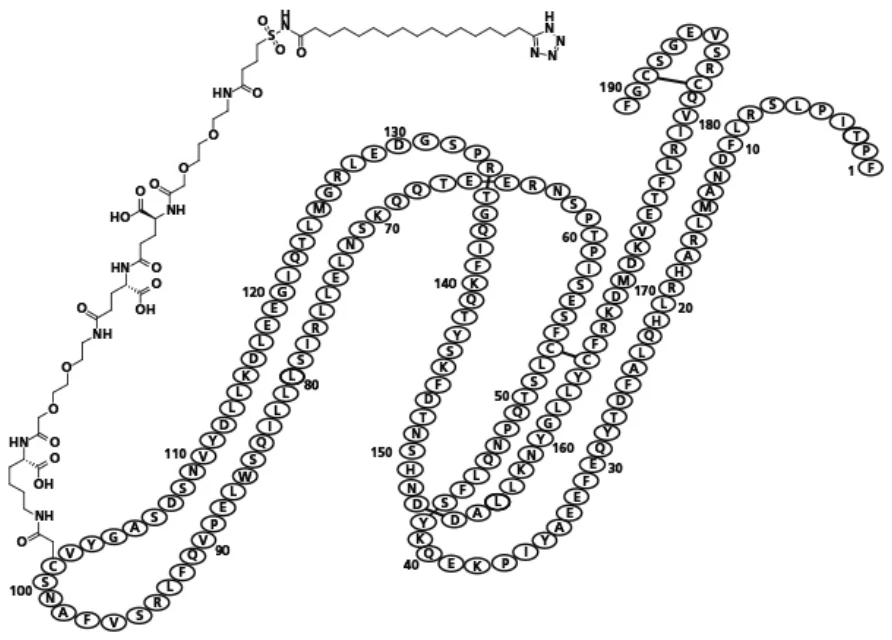
Physicochemical properties: SOGROYA® injection is supplied as a sterile, clear to slightly opalescent and colorless to slightly yellow solution.
Product Characteristics:
Somapacitan is a long-acting recombinant human growth hormone derivative produced by recombinant DNA technology in Escherichia coli followed by attachment of an albumin binding moiety. It consists of 191 amino acids similar to endogenous human growth hormone, with a single substitution in the amino acid backbone (L101C) to which the albumin binding moiety has been attached. The albumin binding moiety (side chain) consists of a fatty acid moiety and a hydrophilic spacer attached to position 101 of the protein.
14 Clinical Trials
 Clinical Trials by Indication
Pediatric Growth Hormone Deficiency (GHD)
Trial Design and Study Demographics (GHD)
Table 9 - Summary of patient demographics for clinical trials in Pediatric Growth Hormone Deficiency (GHD)
| Study # | Study design | Dosage, route of administration and duration | Study subjects (n) | Mean age (Range) | Sex |
| REAL 4 (4263) | Phase 3, Randomized, multi-center, open-label, active-controlled, parallel-group trial | Somapacitan s.c. once-weekly 0.16 mg/kg/week somatropin s.c. daily 0.034 mg/kg/day 52 weeks; + 156 weeks safety extension | 200 | 6.4 years (2.5 - 11) | M: 149 F: 51 |
REAL 3 (4172) | Phase 2, Randomized, multi-center, open-label, active-controlled, parallel-group trial | Somapacitan s.c. once-weekly 0.04 mg/kg/week, 0.08 mg/kg/week and 0.16 mg/kg/week somatropin s.c. daily 0.034 mg/kg/day 26 weeks; + 26 weeks extension + 104 weeks safety extension + 208 weeks long-term safety extension | 57 | 5.94 years (2.8 - 9.8) | M: 34 F: 23 |
Study Results (GHD)
The efficacy and safety of once weekly SOGROYA® (5 mg/1.5 mL, 10 mg/1.5 mL and 15 mg/1.5 mL) was evaluated in a 52 weeks randomized, multi-center, open-label, active-controlled, parallel-group phase 3 trial (REAL 4) in 200 treatment-naïve, pre-pubertal pediatric patients with GHD. Patients were randomised to 0.16 mg/kg/week once weekly SOGROYA® (N=132) or 0.034 mg/kg/day daily somatropin (N=68).
At baseline, the 200 patients had a mean age of 6.4 years (range: 2.5 to 11 years). 25.5% patients were female and 74.5% were male. 37% of patients were Asian, 0.5% were Black or African American, 57% were Caucasian, and 5.5% were categorised as ‘other’ or not reported. Growth hormone deficiency was idiopathic in 88% of cases and organic in 12% of cases. At baseline, patients were a mean weight of 16.5 kg, a mean height of 101.6 cm, with a baseline mean height velocity of 4.2 cm/year, mean height standard deviation score (SDS) of -3.15 and a mean IGF-I SDS of -2.13. All patients were pre-pubertal (Tanner stage I).
The primary efficacy endpoint was the Annualized Height Velocity at 52 weeks of treatment. Results are summarized in Table 10.
Table 10 – Growth results at Week 52 in pediatric patients with GHD
| Treatment Parameter | Treatment Group | Difference in Treatment | |
|---|---|---|---|
| Once weekly SOGROYA® (N=132) | Daily somatropin (N=68) | SOGROYA® - somatropin | |
| ANCOVA | LSM Estimate | LSM Estimate | LSM Difference (95% CI) |
| Primary endpoint | |||
| Annualized Height Velocity (cm/year) | 11.2 | 11.7 | -0.5 [-1.1; 0.2]* |
Abbreviations: CI=confidence interval; GHD=growth hormone deficiency; LSM=least square mean; N=number of patients randomized and treated.
*The 95% CIs were obtained from the analysis of covariance (ANCOVA) model with treatment, gender, age group, region, GH peak group and gender by age group by region interaction term as factors, and baseline height as covariate. Non-inferiority will be concluded if the lower bound of the two-sided 95% CI is ≥ - 1.8
The mean Height SDS, change from baseline at 52 weeks was estimated to be 1.25 and 1.30 for SOGROYA® and somatropin treatment groups, respectively.
The mean IGF-I SDS level change from baseline at 52 weeks was estimated to be 2.36 and 2.33 for SOGROYA® and somatropin treatment groups, respectively.
At Week 52, there were 50.8% of SOGROYA®-treated patients with an observed IGF-I SDS level between 0 and +2 and 87.1% with an observed IGF-I SDS level between -2 and +2.
There were 59 GH treatment-naïve GH-deficient pediatric patients that entered a 4-arm parallel group dose-finding trial (REAL 3) with once weekly SOGROYA at dose levels of 0.04, 0.08 and 0.16 mg/kg/week or with somatropin 0.034 mg/kg/day. Of the 38 patients with 208 weeks of continuous SOGROYA® treatment (with dosing at 0.16 mg/kg/week from Weeks 52 onward); the observed mean height SDS at Week 208 was -1.06 (change from baseline +2.85). Height outcome obtained at week 208 in patients switching from 0.034 mg/kg/day daily somatropin to 0.16 mg/kg/week once weekly SOGROYA® at week 156 suggested that treatment effects with daily GH treatment are maintained after switching to once weekly SOGROYA®.
Mean IGF-I SDS remained within the normal range for all groups.
Adult Growth Hormone Deficiency (AGHD)
Trial Design and Study Demographics (AGHD)
Table 11 – Summary of patient demographics for clinical trials in adult patients with growth hormone deficiency (AGHD)
| Study # | Study design | Dosage, route of administration and duration | Study subjects (n) | Mean age (Range) | Sex |
| REAL 1 (4054) | Phase 3, Randomised, parallel-group, placebo-(double-blinded) and active-controlled (open; Norditropin®) trial | Somapacitan s.c. once-weekly Norditropin® FlexPro® s.c. daily 35 weeks, followed by a 53-week open-label safety extension period. | 300 | 45.1 (23−77) | M: 145 F: 155 |
Study Results (AGHD)
In a 35-week, double-blinded, placebo-controlled study, treatment naïve adult patients with GHD were randomised (2:1:2) and exposed to once-weekly SOGROYA® 10 mg/1.5ml (N=120) or to placebo (N=61) or to daily somatropin (n=119) for a 34-week treatment period (main phase of the trial). The study was designed to assess the efficacy of SOGROYA® compared to placebo.
The SOGROYA® and placebo arms received weekly injections and were double-blind, while patients randomized to somatropin received open label daily injections. Patients randomized to SOGROYA® or placebo received starting doses of 1.0-2.0 mg/week (according to patient characteristics; see Table 1 in 4.2 Recommended Dose and Dosage Adjustment) and those randomized to somatropin received starting doses of 0.1-0.3 mg/day. Patients underwent an 8-week titration period during which their dose was adjusted according to IGF-I levels up to 4 times. Patients remained on the dose they reached by the end of the titration period for an additional 26 weeks during the main phase of the study.
Eligible patients were aged 23-79 years with a diagnosis of GHD at least 6 months prior. Patients were required to be GH treatment-naïve or have no exposure to GH or GH secretagogues for at least 6 months prior to randomization, with a IGF-I SDS < -0.5.
Patients had a mean age of 45.1 years with the majority of patients in the age group from 23 to 64 years, 51.7% were females, and 69.7% had adult onset GHD. The mean baseline BMI was 27.4 kg/m2. There were 66.7% White, 28.7% Asian and 2.3% Black or African American patients.
The primary endpoint was change from baseline to Week 34 in truncal fat percentage; results are shown in Table 12 below.
Table 12 - Results at 34 weeks in study 4054 (REAL 1)
| Treatment Parametera | Treatment Group | Difference in Treatment |
|---|---|---|
SOGROYA® (N=120) | Somatropin (N=119) | |
Placebo (N=61) | ||
| SOGROYA® - placebo | ||
| Change from baseline to week 34 | ||
| LSM Estimate | LSM Estimate | |
| LSM Estimate | ||
LSM Difference (95% CI) p-value | ||
| Primary endpoint | ||
| Truncal fat % | ||
| -1.06 | -2.23 | |
| 0.47 | -1.53 [-2.68; -0.38] 0.0090b | |
Abbreviations: N = Number of subjects in FAS, CI = Confidence interval, DM Diabetes Mellitus.
a Body composition parameters based on dual-energy X-ray absorptiometry (DXA) scanning
b The primary analysis was a comparison of changes from baseline for somapacitan and placebo in truncal fat %. Changes in truncal fat % from baseline to the 34 week’s measurements was analysed using an analysis of covariance model with treatment, GHD onset type, sex, region, DM and sex by region by DM interaction as factors and baseline as a covariate incorporating a multiple imputation technique where missing week 34 values were imputed based on data from the placebo group.
The mean change from baseline to week 34 in visceral adipose tissue was estimated to be a reduction of 10 cm2 and 9 cm2 for SOGROYA® and somatropin respectively, versus an increase of 3 cm2 for placebo.
IGF-I SDS
After 34 weeks SOGROYA® increased the mean IGF-I SDS from a baseline value below -2 to a value within the reference range (-2 to +2) in treatment-naïve AGHD patients. The estimated mean IGF-I SDS level change from baseline to week 34 was 2.40, 2.37 and -0.01 for SOGROYA®, somatropin and placebo arm, respectively and were similar between SOGROYA® and daily somatropin.
15 Microbiology
No microbiological information is required for this drug product.
16 Non-Clinical Toxicology
General Toxicology:
In a 13-week toxicity study in rats, the animals were administered somapacitan by subcutaneous injection at doses of 0.4, 2, and 9 mg/kg body weight/day. Corresponding exposures on an AUC basis were 28-, 25-, and >1000-fold the expected maximum clinical exposure at a dose of 8 mg/week in adult patients with AGHD, and 5-, 10-, and 258-fold the expected maximum exposure at a dose of 0.16 mg/kg body weight/week in pediatric patients with GHD. The study findings were attributed to the pharmacological action of somapacitan and most findings have been reported in previous studies with human GH or other human GH products. Somapacitan administration was well tolerated until Weeks 9-10 when some males dosed with 9 mg/kg body weight/day (high-dose) showed signs of diabetes (excessive water intake and urine production, body weight loss, and increased urinary and blood plasma glucose levels). The development of diabetes symptoms led to a moribund condition that necessitated premature termination of two high dose male rats. The diabetic state also resulted in cataract formation. In surviving animals, there was an increased body weight gain, body weight, and food consumption in animals dosed at 2 and 9 mg/kg body weight/day, demonstrating a sustained pharmacological effect of somapacitan. Associated increases in organ weights were observed for many organs and, for some organs, correlated with organ enlargement. Thickened tissues were also a common macroscopic finding. A number of histopathological changes were observed in a wide range of tissues. Adverse findings of chronic progressive nephropathy (CPN) and cortical tubular casts were observed in the kidneys at 2 and 9 mg/kg body weight/day. Other histopathological findings included, but were not limited to, hypertrophy, hyperplasia, and increased collagen content in many tissues at all doses, bilateral lenticular degeneration in the eyes at the high-dose (correlating with cataract formation), dilated brain ventricles and islet cell atrophy/degeneration in the pancreas at the high-dose, reduced cellularity of the pars distalis and myocardial degeneration at 2 and 9 mg/kg body weight/day, effects on bone at 2 and/or 9 mg/kg body weight/day (increased trabecular bone, chondroid hyperplasia of growth plates, increased height of articular cartilage), feminization of male mammary tissue at all doses, increased secretory activity in male and female mammary tissue at all doses, and effects in the gonads of both sexes (e.g., reduction in the number of spermatozoa, degenerate spermatogenic cells in ducts, bilateral seminiferous tubular atrophy in males correlating with small epididymides and testes at 2 and 9 mg/kg body weight/day; increase in size of corpora lutea in females at 2 and 9 mg/kg body weight/day correlating with enlarged ovaries at all doses). While findings were generally consistent with the pharmacological effects of somapacitan, the findings were considered adverse at all dose levels. A NOAEL could not be determined due to the presence of adverse effects at all dose levels.
In a 26-week study in rats, the dose levels were 1, 2, and 4 mg/kg body weight, and the dosing regimen was changed to twice weekly dosing to investigate whether a reduced frequency of dosing ameliorated the pro-diabetic effects. Corresponding exposures on an AUC basis were 4-, 10-, and 36-fold the expected maximum clinical exposure at a dose of 8 mg/week in adult patients, and 0.7-, 2-, and 6-fold the expected maximum exposure at a dose of 0.16 mg/kg body weight/week in pediatric patients. Somapacitan-related findings were observed at all doses and were similar to those observed in the 13-week study. However, diabetes and CPN were not observed and the extent of the adverse effects, including the range of tissues affected, was reduced in severity owing to the lower doses tested and the less frequent dosing regimen. However, a NOAEL could not be determined due to the presence of adverse effects at all dose levels.
In a 26-week study in cynomolgus monkeys, animals were administered somapacitan by subcutaneous injection at doses of 0.2, 2, and 9 mg/kg body weight twice weekly. Corresponding exposures on an AUC basis were 207-, >1000-, and >5000-fold the expected maximum clinical exposure at a dose of 8 mg/week in adult patients, and 33-, 269-, and >1000-fold the expected maximum exposure at a dose of 0.16 mg/kg body weight/week in pediatric patients. Somapacitan administration resulted in increased body weight gain and body weight at all doses in males only. Somapacitan administration also resulted in mammary gland findings; mammary gland swelling and lactation was observed in both females and males at all doses and correlated macroscopically with mammary gland thickening and cysts in females at all doses, as well as with histopathological findings of acinar and ductular dilation and papillary hyperplasia of the acinar epithelium in females at all doses and ductular dilation in males at all doses. No other notable effects were observed, including no adverse effects on cardiovascular function. The mammary gland findings were considered adverse at all doses, and therefore, a NOAEL could not be determined.
Carcinogenicity: No carcinogenicity studies have been performed with somapacitan.
Genotoxicity: No genotoxic potential was identified in the in vitro or in vivo studies conducted with somapacitan. Somapacitan was non-mutagenic in the bacterial reverse mutation test and non-genotoxic in the in vitro chromosomal aberration test conducted in primary human peripheral blood lymphocytes and the in vivo erythrocyte micronucleus test conducted in rats.
Reproductive and Developmental Toxicology: Reproductive and developmental toxicity studies were conducted in rats and rabbits using the subcutaneous route of administration. In all studies, somapacitan induced increases in body weights, weight gain, and/or food consumption in paternal and maternal animals. However, no overt maternal toxicity was observed in any study.
Effects of somapacitan on male fertility and on female fertility/early embryonic development were assessed in rats in separate studies. In each study, male or female rats were administered somapacitan at doses of 0 (vehicle control), 1, 2, or 4 mg/kg body weight twice weekly from prior to mating, during, mating, and post-mating (males) or during gestation until gestation day (GD) 7 (females). Corresponding exposures on an AUC basis were for males 4-, 10-, and 32-fold and for females 4-, 17-, and 39-fold the expected maximum clinical exposure at a dose of 8 mg/week in adults, respectively. No adverse effects were observed on male and female fertility or on early embryonic development in rats. The NOAEL for effects on fertility and early embryonic development in rats was therefore 4 mg/kg body weight twice weekly (the highest dose tested). However, somapacitan induced irregular estrus cycles and longer estrus cycles in females at all doses.
Effects of somapacitan on embryo-fetal development were assessed in rats and rabbits following maternal exposure during the period of organogenesis. In rats, females were administered somapacitan at doses of 0 (vehicle control), 2, 6, or 18 mg/kg body weight/day using a divided dosing regimen where animals were dosed from GD 6 to 9, GD 10 to 13, or GD 14 to 17. Corresponding exposures on an AUC basis were 5-, 24-, and 305-fold the expected maximum clinical exposure at a dose of 8 mg/week in adults, respectively. Fetal weights were increased slightly at all doses. At the high-dose of 18 mg/kg body weight/day, fetal skeletal malformations consisting of short/bent/thickened long bones were observed. Similar findings were not observed at the lower doses. The NOAEL for embryo-fetal developmental toxicity in rats was therefore 6 mg/kg body weight/day based on the fetal skeletal malformations observed at the high-dose.
In the embryo-fetal development study conducted in rabbits, females were administered somapacitan at doses of 0 (vehicle control), 1, 3, or 9 mg/kg body weight every two days from GD 6 to 18. Corresponding exposures on a C12hour basis were 17-, 73, and 1132-fold the expected maximum clinical exposure at a dose of 8 mg/week in adults. No test article-related fetal malformations were observed. However, a dose-dependent and adverse reduction in fetal weights was observed at all doses. A NOAEL for embryo-fetal developmental toxicity in rabbits was therefore not determined.
Effects of somapacitan on pre- and post-natal development were assessed in rats. Female rats were administered somapacitan at doses of 0 (vehicle control), 4, 9, or 18 mg/kg body weight twice weekly from GD 6 to post-natal day (PND) 18. Corresponding exposures on an AUC basis were 57-, 342-, and 787-fold the expected maximum clinical exposure at a dose of 8 mg/week in adults. F1 offspring were not administered somapacitan directly. No adverse effects on post-natal development were observed in offspring, including no effects on neurobehavioural endpoints, sexual maturation, and reproduction. Increased body weights were observed in F1 offspring during the pre-weaning period at all maternal dose levels but resolved post-weaning. An increased incidence of renal pelvic dilatation was also observed in F1 offspring at the time of weaning on PND 21 at all doses, but evidence of recovery was observed as a similar finding was not observed in F1 adult animals. The NOAEL for effects on pre- and post-natal development in rats was therefore 18 mg/kg body weight twice weekly (the highest dose tested). However, maternal administration of somapacitan resulted in acyclic estrus cycles in F1 female offspring at the high-dose of 18 mg/kg body weight. In addition, somapacitan was observed in F1 plasma on PND 4 following maternal exposure at the high-dose but not thereafter.
Somapacitan and/or its metabolites have been detected in rat fetal tissues (highest concentration in fetal kidneys) following administration to pregnant rats, indicating transfer across the placental barrier.
Somapacitan and/or its metabolites have also been detected in rat milk following administration to rats during lactation, indicating excretion in milk.
Juvenile Toxicity: No juvenile toxicity studies have been performed with somapacitan.