


Product Monograph - Ngenla
Recent Major Label Changes
| 4 Dosage and Administration | 2026-MM |
|---|---|
| 4 Dosage and Administration, 4.4 Administration | 2026-MM |
| 7 Warnings and Precautions, Immune | 2026-MM |
| 7 Warnings and Precautions, Musculoskeletal | 2026-MM |
Table of Contents
Certain sections (as indicated in section 2.1. of the PM Guidance) or subsections that are not applicable at the time of the preparation of the most recent authorized product monograph are not listed.
Recent Major Label Changes .................................................................................................... 2
Table of Contents .................................................................................................................... 2
Part 1: Healthcare Professional Information ............................................................................ 5
1 Indications ................................................................................................................... 5
1.1 Pediatrics ............................................................................................................... 5
1.2 Geriatrics ............................................................................................................... 5
2 Contraindications ......................................................................................................... 5
4 Dosage and Administration .......................................................................................... 6
4.1 Dosing Considerations ........................................................................................... 6
4.2 Recommended Dose and Dosage Adjustment ...................................................... 6
4.4 Administration ....................................................................................................... 7
4.5 Missed Dose .......................................................................................................... 7
5 Overdose...................................................................................................................... 7
6 Dosage Forms, Strengths, Composition, and Packaging ................................................ 8
7 Warnings and Precautions ............................................................................................ 9
General .............................................................................................................................. 9
Carcinogenesis and Mutagenesis ...................................................................................... 9
Cardiovascular ................................................................................................................. 10
Endocrine and Metabolism ............................................................................................. 10
Immune ........................................................................................................................... 11
Monitoring and Laboratory Tests .................................................................................... 11
Musculoskeletal .............................................................................................................. 11
Reproductive Health ....................................................................................................... 12
7.1 Special Populations .............................................................................................. 12
7.1.1 Pregnancy ........................................................................................................ 12
7.1.2 Breastfeeding .................................................................................................. 13
7.1.3 Pediatrics ......................................................................................................... 13
7.1.4 Geriatrics ......................................................................................................... 13
8 Adverse Reactions ...................................................................................................... 13
8.1 Adverse Reaction Overview ................................................................................. 13
8.2 Clinical Trial Adverse Reactions ........................................................................... 13
8.2.1 Clinical Trial Adverse Reactions – Pediatrics .................................................... 13
8.3 Less Common Clinical Trial Adverse Reactions .................................................... 15
8.3.1 Less Common Clinical Trial Adverse Reactions – Pediatrics ............................. 15
8.5 Post-Market Adverse Reactions .......................................................................... 16
9 Drug Interactions ....................................................................................................... 16
9.4 Drug-Drug Interactions ........................................................................................ 16
9.5 Drug-Food Interactions ........................................................................................ 17
9.6 Drug-Herb Interactions ........................................................................................ 17
9.7 Drug-Laboratory Test Interactions ....................................................................... 17
10 Clinical Pharmacology ................................................................................................ 18
10.1 Mechanism of Action ........................................................................................... 18
10.2 Pharmacodynamics ............................................................................................. 18
10.3 Pharmacokinetics ................................................................................................ 19
10.4 Immunogenicity ................................................................................................... 20
11 Storage, Stability, and Disposal .................................................................................. 21
12 Special Handling Instructions ..................................................................................... 21
Part 2: Scientific Information ................................................................................................. 22
13 Pharmaceutical Information ....................................................................................... 22
14 Clinical Trials .............................................................................................................. 23
14.1 Trial Design and Study Demographics ................................................................. 23
14.2 Study Results ....................................................................................................... 23
15 Microbiology .............................................................................................................. 25
16 Non-Clinical Toxicology .............................................................................................. 25
Patient Medication Information ............................................................................................ 27
INSTRUCTIONS FOR USE (IFU) ................................................................................................ 33
INSTRUCTIONS FOR USE (IFU) ................................................................................................ 47
Part 1: Healthcare Professional Information
1 Indications
NGENLA (somatrogon) is indicated for:
- the long-term treatment of pediatric patients who have growth failure due to an inadequate secretion of endogenous growth hormone (growth hormone deficiency).
1.1 Pediatrics
Pediatrics (3 years old to epiphyseal fusion): The efficacy and safety of NGENLA in pediatric patients 3 to 11 years of age with growth failure due to growth hormone deficiency have been established in clinical trials. The efficacy and safety of NGENLA have not been established in patients under 3 years of age. Data on the efficacy and safety of NGENLA in patients 12 to under 18 years of age are limited. Pediatric patients with growth failure due to acquired growth hormone deficiency caused by a malignancy were not studied in clinical trials (see 14 Clinical Trials ).
1.2 Geriatrics
Geriatrics: NGENLA is not indicated for use in adults. No data are available to Health Canada; therefore, Health Canada has not authorized an indication for geriatric use.
2 Contraindications
- NGENLA is contraindicated in patients with closed/fused epiphyses.
- NGENLA is contraindicated in patients with active tumours and/or malignancy (see 7 Warnings and Precautions ).
- NGENLA is contraindicated in patients with acute critical illness due to complications following open heart or abdominal surgery, multiple accidental trauma, or acute respiratory failure (see 7 Warnings and Precautions ).
- NGENLA is contraindicated in patients who are hypersensitive to this drug or to any ingredient in the formulation, including any non-medicinal ingredient, or component of the container. For a complete listing, see 6 Dosage Forms, Strengths, Composition, and Packaging .
4 Dosage and Administration
4.1 Dosing Considerations
- NGENLA treatment should be initiated and supervised by a physician who is experienced in the diagnosis and management of pediatric patients with growth failure due to growth hormone deficiency.
- Because oral estrogens may reduce the serum IGF-I response to NGENLA treatment, female patients receiving oral estrogen replacement may require higher NGENLA dosages. However, the maximum recommended weekly dose should not be exceeded (see 9.4 Drug-Drug Interactions).
- NGENLA has not been studied in patients with renal impairment.
- NGENLA has not been studied in patients with hepatic impairment.
- Do not shake; shaking can damage the medicine.
4.2 Recommended Dose and Dosage Adjustment
The recommended dose is 0.66 mg/kg body weight administered once weekly by subcutaneous (SC) injection. For patients switching from daily growth hormone products, weekly therapy with NGENLA may be initiated at a dose of 0.66 mg/kg/week on the day following their last daily injection. Regular monitoring of Insulin-like Growth Factor-1 (IGF-1) concentrations is recommended during treatment with NGENLA.
NGENLA dosage may be adjusted as necessary based on growth velocity, body weight, and serum insulin-like growth factor 1 (IGF-1) concentrations.
Dose titration
When monitoring for IGF-1, samples should always be drawn 4 days after the prior dose. The target IGF-1 standard deviation score (SDS) should be the upper normal range not exceeding 2 SDS (see 7 Warnings and Precautions ).
In patients whose blood IGF-1 concentrations exceed the mean reference value for their age and sex by more than 2 SDS, the dose of NGENLA should be reduced by 15%. More than one dose reduction may be required in some patients.
Monitor growth rate closely during the first year of NGENLA treatment. If a patient’s growth rate fails to increase in the first year, assess for treatment adherence and other causes of growth failure (e.g. hypothyroidism, undernutrition, advanced bone age) and consider discontinuation of NGENLA treatment.
Treatment should be discontinued when there is evidence of closure of the epiphyseal growth plates.
4.4 Administration
NGENLA can be given in the abdomen, thighs, buttocks, or upper arms. Use a different site of injection each week to help prevent lipoatrophy or lipohypertrophy (see 7 Warnings and Precautions, Immune and 8.5 Post-Market Adverse Reactions).
If more than one injection is required to deliver a complete dose, administer each injection at a different injection site.
Administer NGENLA once weekly, on the same day each week, at any time of the day.
The designated injection site should be prepared as instructed in the instructions for use. Always use a new sterile needle for each injection.
The pre-filled pen may be used straight from the refrigerator. For a more comfortable injection, allow up to 30 minutes for the pre-filled pen to reach room temperature (20° to 25°C).
The day of weekly administration can be changed if necessary as long as the time between 2 doses is at least 3 days (>72 hours). After selecting a new dosing day, the once weekly dosing should be continued.
If deemed appropriate, caregivers/parents can administer NGENLA to a person in their care/their child, or patients can self-inject (with caregiver/parental supervision), once they have been adequately trained by a healthcare professional on the use of proper subcutaneous injection technique and on the determination of the correct dose.
4.5 Missed Dose
If a dose is missed, administer NGENLA as soon as possible within 3 days after the missed dose. If more than 3 days have passed, skip the missed dose and administer the next dose on the regularly scheduled day. In each case, patients can then resume their regular once weekly dosing schedule.
5 Overdose
Doses of NGENLA higher than 0.66 mg/kg body weight/week have not been studied.
Based on experience with daily growth hormone products, short-term overdosage could lead initially to hypoglycemia and subsequently to hyperglycemia. Long-term overdosage could result in signs and symptoms of gigantism and/or acromegaly consistent with the effects of growth hormone excess.
Treatment of overdose with NGENLA should consist of general supportive measures.
| For the most recent information in the management of a suspected drug overdose, contact your regional poison control centre or Health Canada’s toll-free number, 1-844 POISON-X (1-844-764-7669). |
|---|
6 Dosage Forms, Strengths, Composition, and Packaging
To help ensure the traceability of biologic products, healthcare professionals should record both the brand name and the non-proprietary (active ingredient) name as well as other product-specific identifiers such as the Drug Identification Number (DIN) and the batch/lot number of the product supplied.
Table 1 – Dosage Forms, Strengths, and Composition
NGENLA pre-filled pen is available in the following packages:
| 24 mg Pre-filled Pen | 60 mg Pre-filled Pen | |
|---|---|---|
| Somatrogon solution concentration | 20 mg/mL | 50 mg/mL |
| Volume | 1.2 mL | 1.2 mL |
| Lilac pen cap, injection button, and label | Blue pen cap, injection button, and label | |
| Dose increments | 0.2 mg/0.01 mL | 0.5 mg/0.01 mL |
| Maximum single-dose | 12 mg (0.6 mL) | 30 mg (0.6 mL) |
Somatrogon solution is a clear and colorless to slightly light yellow solution for injection with a pH of 6.6.
Each carton contains one single-patient-use, disposable pre-filled pen containing a preserved solution of somatrogon. Each pre-filled pen is capable of setting and delivering a variable dose that is determined based on patient body weight.
The medicinal product, the primary container (cartridge, bilayer disc seal, plunger stopper) and the pre-filled pen are not made with natural rubber latex.
| Route of Administration | Dosage Form / Strength/Composition | Non-medicinal Ingredients |
| Subcutaneous injection | Sterile solution in pre-filled pen: 24 mg somatrogon in 1.2 mL (20 mg/mL) or 60 mg somatrogon in 1.2 mL (50 mg/mL) | Citric acid monohydrate, L-Histidine, m-Cresol, Poloxamer 188, Sodium chloride, Trisodium citrate dihydrate, Water for injection |
Sterile needles are required for administration but not included. Consult the Instructions for Use document for a list of needles that can be used.
7 Warnings and Precautions
General
Acute critical illness
There is no clinical experience with NGENLA in patients with acute critical illness.
Treatment with daily growth hormone products has been associated with increased mortality in patients with acute critical illness due to complications following open heart surgery, abdominal surgery or multiple accidental trauma, or those with acute respiratory failure.
Based on experience with daily growth hormone products, if patients who are receiving NGENLA therapy become acutely critically ill, discontinuation of NGENLA should be considered (see 2 Contraindications ).
Myositis
Myositis is a very rare adverse event that may be related to the preservative metacresol. In the case of myalgia or disproportionate pain at injection site, myositis should be considered and if confirmed, other growth hormone products without metacresol should be used.
Carcinogenesis and Mutagenesis
Based on experience with daily growth hormone products, there is an increased risk of a second neoplasm (benign and malignant) in childhood cancer survivors. Intracranial tumours, in particular meningiomas in patients treated with radiation to the head for their first neoplasm, were the most common of the second neoplasms. However, in childhood cancer survivors, no increased risk of primary cancer recurrence has been reported in patients treated with daily growth hormone products. Patients who have achieved complete remission of malignant disease should be followed closely for relapse after commencement of NGENLA treatment. NGENLA treatment should be interrupted in case of any development or recurrence of malignant disease.
Monitor patients receiving NGENLA carefully for increased growth, or potential malignant changes, of pre-existing nevi. Advise patients/caregivers to report marked changes in behaviour, onset of headaches, vision disturbances and/or changes in skin pigmentation or changes in the appearance of pre-existing nevi.
Animal carcinogenicity studies have not been conducted for NGENLA.
Cardiovascular
Edema
Based on experience with daily growth hormone products, fluid retention (edema, arthralgia, carpal tunnel syndrome) may occur. Clinical manifestations of fluid retention are usually transient and dose-dependent.
Benign intracranial hypertension
No evidence of benign intracranial hypertension was reported in clinical trials with NGENLA.
Intracranial hypertension (IH) with papilledema, visual changes, headache, nausea, and/or vomiting has been reported in a small number of patients treated with daily growth hormone products. Symptoms usually occurred within the first 8 weeks after the initiation of daily growth hormone therapy. In all reported cases, IH-associated signs and symptoms rapidly resolved after cessation of therapy or a reduction of the daily growth hormone dose. NGENLA should be temporarily discontinued in patients with clinical or fundoscopic evidence of IH. If treatment with NGENLA is restarted, monitoring for signs and symptoms of IH is recommended.
Endocrine and Metabolism
Hypoadrenalism
Based on published data, patients receiving daily growth hormone therapy who have or are at risk for pituitary hormone deficiency(s) may be at risk for reduced serum cortisol levels and/or unmasking of central (secondary) hypoadrenalism. In addition, patients treated with glucocorticoid replacement for previously diagnosed hypoadrenalism may require an increase in their maintenance or stress doses following initiation of NGENLA treatment. Monitor patients for reduced serum cortisol levels and/or need for glucocorticoid dose increases in those with known hypoadrenalism (see 9 Drug Interactions ).
Glucose metabolism impairment
No clinically meaningful changes in glucose metabolism, including insulin sensitivity, were observed in clinical trials with NGENLA.
Based on experience with daily growth hormone products, treatment with NGENLA may induce a state of insulin resistance and hyperglycemia. Additional monitoring should be considered in patients treated with NGENLA who have glucose intolerance, or additional risk factors for diabetes. In patients treated with NGENLA who have diabetes mellitus, anti-diabetic therapy may require adjustment (see 9 Drug Interactions ).
Thyroid function impairment
Based on experience with daily growth hormone products, undiagnosed/untreated hypothyroidism may prevent an optimal response to NGENLA therapy. During NGENLA therapy, thyroid function should be monitored as indicated based on clinical evaluation.
Prader-Willi syndrome
NGENLA has not been studied in patients with Prader-Willi syndrome. There have been reports of sudden death after initiating therapy with growth hormone in pediatric patients with Prader-Willi syndrome who had one or more of the following risk factors: severe obesity, history of upper airway obstruction or sleep apnea, or unidentified respiratory infection.
Immune
Injection site reactions
Patients may experience redness, swelling, pain, inflammation, or itching at the site of NGENLA injection (see 8 Adverse Reactions ). Continuous rotation of the injection site may help reduce or prevent these reactions. On rare occasions, injection site reactions may require discontinuation of therapy.
Lipoatrophy/Lipohypertrophy
When NGENLA is administered at the same site over a long period of time, lipoatrophy may occur. Rarely, subcutaneous injection of human growth hormone products can also result in lipohypertrophy. The injection site should be rotated to reduce these risks.
Hypersensitivity
Serious systemic hypersensitivity reactions (e.g., anaphylaxis, angioedema) have been reported with daily growth hormone products. If a serious hypersensitivity reaction occurs, immediately discontinue use of NGENLA and treat promptly per standard of care and monitor until signs and symptoms resolve. Do not use in patients with previous hypersensitivity to NGENLA (see 2 Contraindications ).
Monitoring and Laboratory Tests
NGENLA dosage may be adjusted as necessary, based on growth velocity, body weight, and serum insulin-like growth factor 1 (IGF-1) concentrations. When monitoring for IGF-1, samples should always be drawn 4 days after the prior dose. The IGF-1 SDS target should be the upper normal range not exceeding 2 SDS (see 4.2 Recommended Dose and Dosage Adjustment).
Somatrogon is unlikely to interfere with blood or urine pregnancy tests (see 9.7 Drug-Laboratory Test Interactions).
Musculoskeletal
Epiphyseal disorders
No epiphyseal disorders were reported with the administration of NGENLA in clinical trials. Post-marketing cases of slipped capital femoral epiphysis associated with NGENLA use have been reported (see 8.5 Post-Market Adverse Reactions). Based on the experience with daily growth hormone products, epiphyseal disorders, including slipped capital femoral epiphysis and osteonecrosis of femoral head (including Legg-Calvé-Perthes disease), may occur more frequently in patients with endocrine disorders or in patients undergoing rapid growth. Any pediatric patient with the onset of a limp or complaints of hip or knee pain during treatment should be carefully evaluated.
Scoliosis
Progression of scoliosis can occur in pediatric patients who experience rapid growth. Because somatrogon increases growth rate, signs of development or progression of scoliosis should be monitored during treatment with NGENLA.
Reproductive Health
Fertility
The risk of infertility in males and females of reproductive potential has not been studied in humans.
Animal data from a fertility and early embryonic development study conducted in rats demonstrated that somatrogon administration resulted in an increase in estrous cycle length coupled with a decrease in the number of estrous cycles and an increase in the copulatory interval. A superovulatory effect (i.e., an increase in the number of corpora lutea) and increases in the number of implantations and the percentage of pre-implantation loss were also observed. The effects were observed at doses of 3, 10, and/or 30 mg/kg body weight administered by SC injection once every two days. However, there were no effects on mating, fertility, and pregnancy indices or on early embryonic development in rats (see 16 Non-Clinical Toxicology ).
7.1 Special Populations
7.1.1 Pregnancy
There are no studies of NGENLA use by pregnant women. Animal data from a pre- and post-natal development study conducted in rats demonstrated an increase in post-natal body weight in offspring of maternal animals administered somatrogon at doses of 10 and 30 mg/kg body weight once every two days. Reproductive assessment in the offspring also demonstrated an increase in time to mating at a maternal dose of 30 mg/kg body weight once every two days. The effects were related to maternal somatrogon administration but were considered non-adverse (see 16 Non-Clinical Toxicology ). Animal reproduction studies are not always predictive of human response; therefore, it is unknown whether NGENLA can cause fetal harm when administered to a pregnant woman. NGENLA should be used during pregnancy only if clearly needed.
Somatrogon is unlikely to interfere with blood or urine pregnancy tests (see 9.7 Drug-Laboratory Test Interactions).
7.1.2 Breastfeeding
It is unknown if somatrogon is excreted in human milk. Precaution should be exercised because many drugs can be excreted in human milk.
7.1.3 Pediatrics
The efficacy and safety of NGENLA have been evaluated in pediatric patients aged 3 to 11 years with growth failure due to growth hormone deficiency (see 1 Indications).
7.1.4 Geriatrics
NGENLA is not indicated for use in adults. The efficacy and safety of NGENLA in geriatric patients aged 65 years of age and older have not been established (see 1 Indications).
8 Adverse Reactions
8.1 Adverse Reaction Overview
The description of adverse reactions in this section is based on clinical experience with somatrogon in a Phase 3 study (CP-4-006) in pediatric patients with GHD.
In study CP-4-006, the most common adverse reactions in pediatric patients with GHD treated with NGENLA were injection site reactions (43.1%), headache (16.5%), and pyrexia (16.5%) compared to pediatric patients with GHD receiving somatropin (25.2%, 21.7% and 13.9%, respectively) (see 7 Warnings and Precautions ).
Most events of injection site pain were mild or moderate in severity for both treatment groups. Eight patients reported severe injection site pain (somatrogon: 5 patients [4.6%]; somatropin: 3 patients [2.6%]). The anatomical injection site that was most frequently associated with injection site pain for both treatment groups was the arm (left and right), and this was the site most frequently associated with severe pain events.
8.2 Clinical Trial Adverse Reactions
Clinical trials are conducted under very specific conditions. The adverse reaction rates observed in the clinical trials; therefore, may not reflect the rates observed in practice and should not be compared to the rates in the clinical trials of another drug. Adverse reaction information from clinical trials may be useful in identifying and approximating rates of adverse drug reactions in real-world use.
8.2.1 Clinical Trial Adverse Reactions – Pediatrics
The main safety data are derived from a Phase 3 safety and efficacy study (CP-4-006) in pediatric patients with growth failure due to GHD (see 14 Clinical Trials ). The data reflect exposure of 109 patients to NGENLA administered once weekly (0.66 mg somatrogon/kg body weight/week) and 115 patients to somatropin administered once daily (0.034 mg/kg body weight/day) for 12 months.
The mean age across the treatment groups was 7.7 years (min 3.0, max 12.0); 40.2% of patients were > 3 years to ≤ 7 years, 59.8% were > 7 years, 71.9% of patients were male, and 28.1% were female. In this study, 74.6% of patients were White, 20.1% were Asian, 0.9% were Black or African American, and 10.7% patients identified as Hispanic or Latino. Baseline disease characteristics were balanced across both treatment groups.
A Phase 2 study (CP-4-004) was also conducted in pediatric patients with growth failure due to GHD (see 14 Clinical Trials ). The safety profile for NGENLA observed in CP-4-004 was not clinically meaningfully different from that observed in the Phase 3 study (CP-4-006).
Table 2 shows the adverse reactions that occurred in ≥ 2% of patients treated with NGENLA. Reporting of injection site reactions was solicited through the use of a patient diary after each weekly injection for patients administered NGENLA and once weekly for patients administered daily injections of somatropin.
Table 2 - Adverse Reactions Reported in ≥ 2% of Pediatric Patients in the Somatrogon Group for All Causality (Baseline To Month 12)
| MedDRA System Organ Class and Preferred Term | Somatrogon (0.66 mg/kg body weight/week) (N=109) n (%) | Somatropin (0.034 mg/kg body weight/day) (N=115) n (%) | ||
|---|---|---|---|---|
| BLOOD AND LYMPHATIC SYSTEM DISORDERS | ||||
| Anaemia | 7 (6.4) | 7 (6.1) | ||
| Iron deficiency anaemia | 3 (2.8) | 2 (1.7) | ||
| ENDOCRINE DISORDERS | ||||
| Hypothyroidism | 7 (6.4) | 3 (2.6) | ||
| EYE DISORDERS | ||||
| Conjunctivitis allergic | 3 (2.8) | 0 | ||
| GASTROINTESTINAL DISORDERS | ||||
| Vomiting | 8 (7.3) | 9 (7.8) | ||
| Abdominal pain | 4 (3.7) | 2 (1.7) | ||
| Diarrhea | 3 (2.8) | 4 (3.5) | ||
| Nausea | 3 (2.8) | 1 (0.9) | ||
| GENERAL DISORDERS AND ADMINISTRATION SITE CONDITIONS | ||||
| Injection site pain | 43 (39.4) | 29 (25.2) | ||
| Pyrexia | 18 (16.5) | 16 (13.9) | ||
| Injection site erythema | 9 (8.3) | 0 | ||
| Injection site pruritus | 6 (5.5) | 0 | ||
| Injection site swelling | 5 (4.6) | 0 | ||
| Injection site induration | 4 (3.7) | 1 (0.9) | ||
| INFECTIONS AND INFESTATIONS | ||||
| Nasopharyngitis | 25 (22.9) | 29 (25.2) | ||
| Pharyngitis | 7 (6.4) | 5 (4.3) | ||
| Rhinitis | 6 (5.5) | 1 (0.9) | ||
| Influenza | 5 (4.6) | 3 (2.6) | ||
| Tonsillitis | 5 (4.6) | 6 (5.2) | ||
| Enterobiasis | 4 (3.7) | 2 (1.7) | ||
| Gastroenteritis | 4 (3.7) | 3 (2.6) | ||
| Otitis extema | 4 (3.7) | 4 (3.5) | ||
| Otitis media | 4 (3.7) | 7 (6.1) | ||
| Bronchitis | 3 (2.8) | 9 (7.8) | ||
| Conjunctivitis | 3 (2.8) | 3 (2.6) | ||
| Molluscum contagiosum | 3 (2.8) | 0 | ||
| INJURY, POISONING AND PROCEDURAL COMPLICATIONS | ||||
| Arthropod bite | 6 (5.5) | 1 (0.9) | ||
| INVESTIGATIONS | ||||
| Free fatty acids increased | 5 (4.6) | 1 (0.9) | ||
| METABOLISM AND NUTRITION DISORDERS | ||||
| Hypoinsulinaemia | 4 (3.7) | 3 (2.6) | ||
| Hypertriglyceridaemia | 3 (2.8) | 0 | ||
| MUSCULOSKELETAL AND CONNECTIVE TISSUE DISORDERS | ||||
| Arthralgia | 5 (4.6) | 8 (7.0) | ||
| Pain in extremity | 5 (4.6) | 5 (4.3) | ||
| NERVOUS SYSTEM DISORDERS | ||||
| Headache | 18 (16.5) | 25 (21.7) | ||
| RESPIRATORY, THORACIC AND MEDIASTINAL DISORDERS | ||||
| Cough | 9 (8.3) | 9 (7.8) | ||
| Oropharyngeal pain | 6 (5.5) | 4 (3.5) | ||
| Rhinitis allergic | 3 (2.8) | 1 (0.9) | ||
| Rhinorrhoea | 3 (2.8) | 4 (3.5) | ||
| SKIN AND SUBCUTANEOUS TISSUE DISORDERS | ||||
| Rash generalised | 3 (2.8) | 2 (1.7) | ||
8.3 Less Common Clinical Trial Adverse Reactions
8.3.1 Less Common Clinical Trial Adverse Reactions – Pediatrics
Clinical trial adverse drug reactions (Baseline to Month 12) with a frequency of less than 2% are presented in the following listing (All Causality):
Blood and Lymphatic System Disorders: Eosinophilia
Ear and Labyrinth Disorders: Ear pain
Gastrointestinal Disorders: Abdominal pain upper, Aphthous ulcer, Constipation, Dental caries, Enteritis
General Disorders and Administration Site Conditions: Fatigue, Injection site bruising, Injection site haemorrhage, Injection site warmth, Pain
Infections and Infestations: Hordeolum, Pharyngitis streptococcal, Sinusitis, Viral pharyngitis, Viral upper respiratory tract infection, Otitis media acute
Injury, Poisoning and Procedural Complications: Fall, Traumatic fracture
Investigations: Blood creatine phosphokinase increased, Thyroxine free decreased
Metabolism and Nutrition Disorders: Increased appetite, Iron deficiency
Musculoskeletal and Connective Tissue Disorders: Muscle spasms
Neoplasms Benign, Malignant and Unspecified (Incl Cysts and Polyps): Skin papilloma
Nervous System Disorders: Hypoaesthesia
Psychiatric Disorders: Attention deficit/hyperactivity disorder
Respiratory, Thoracic and Mediastinal Disorders: Nasal congestion
Skin and Subcutaneous Tissue Disorders: Erythema, Rash, Urticaria
8.5 Post-Market Adverse Reactions
Skin and subcutaneous tissue disorders: Lipoatrophy
Musculoskeletal and connective tissue disorders: Epiphysiolysis (including slipped capital femoral epiphysis)
9 Drug Interactions
9.4 Drug-Drug Interactions
Glucocorticoids
In patients receiving concomitant NGENLA and glucocorticoid treatments, glucocorticoid dosing should be carefully monitored to avoid both hypoadrenalism and an inhibitory effect on growth.
The microsomal enzyme 11β-hydroxysteroid dehydrogenase type 1 (11βHSD-1) is required for conversion of cortisone to its active metabolite, cortisol, in hepatic and adipose tissue.
Treatment with daily growth hormone products inhibits 11βHSD-1, reducing serum cortisol concentrations, which may unmask previously undiagnosed central (secondary) hypoadrenalism or render low glucocorticoid replacement doses ineffective (see 7 Warnings and Precautions ).
Patients treated with cortisone acetate and prednisone may be affected more than others because conversion of these drugs to their biologically active metabolites is dependent on the activity of 11βHSD-1.
Insulin and/or oral/injectable hypoglycemic agents
In patients with diabetes mellitus requiring drug therapy, the dose of insulin and/or oral/injectable agent may require adjustment when NGENLA therapy is initiated (see 7 Warnings and Precautions ).
Limited published data indicate that growth hormone treatment, increases cytochrome P450 (CP450) mediated antipyrine clearance in human. Somatrogon may also increase CYP3A4. These data suggest that growth hormone administration may alter the clearance of compounds known to be metabolized by CP450 liver enzymes (e.g., corticosteroids, sex steroids, anticonvulsants, cyclosporine). Careful monitoring is advisable when somatrogon is administered in combination with other drugs known to be metabolized by CP450 liver enzymes.
Oral estrogen
Oral estrogen may reduce the serum IGF-1 response to somatrogon. Female patients receiving oral estrogen-containing therapy may require higher somatrogon dosage. If a female patient taking somatrogon begins or discontinues oral estrogen-containing therapy, IGF-1 value should be monitored to determine if the dose of growth hormone should be adjusted to maintain the serum IGF-1 levels within the normal range (See 4.1 Dosing Considerations).
9.5 Drug-Food Interactions
Interactions with food have not been established.
9.6 Drug-Herb Interactions
Interactions with herbal products have not been established.
9.7 Drug-Laboratory Test Interactions
Interactions with laboratory tests have not been established. Somatrogon contains a CTP domain derived from human chorionic gonadotropin (hCG). In in vitro testing, urine and blood samples spiked with somatrogon did not interfere with commercial pregnancy test kits. However, serum somatrogon levels in pediatric patients treated with 0.66 mg/kg somatrogon reach higher levels than those tested in the study. While it is unlikely that somatrogon would interfere with pregnancy tests, the potential for interference cannot be ruled out. If pregnancy is suspected, it is recommended that testing be conducted prior to somatrogon dosing to reduce the risk of interference of high serum somatrogon.
10 Clinical Pharmacology
10.1 Mechanism of Action
Somatrogon binds to the growth hormone (GH) receptor and initiates a signal transduction cascade culminating in changes in growth and metabolism. Consistent with GH signaling, somatrogon binding leads to activation of the STAT5b signaling pathway and induces cell proliferation in vitro. Somatrogon has also been shown to increase the serum concentration of insulin-like growth factor (IGF-1).
10.2 Pharmacodynamics
Somatrogon increases IGF-1. Pharmacodynamic evaluations were performed approximately 96 hours after dose administration in order to assess the mean IGF-1 SDS over the weekly dosing interval (see Figure 1).
Figure 1. Observed IGF-1 SDS profiles in pediatric patients with GHD during 12 months of treatment with somatrogon
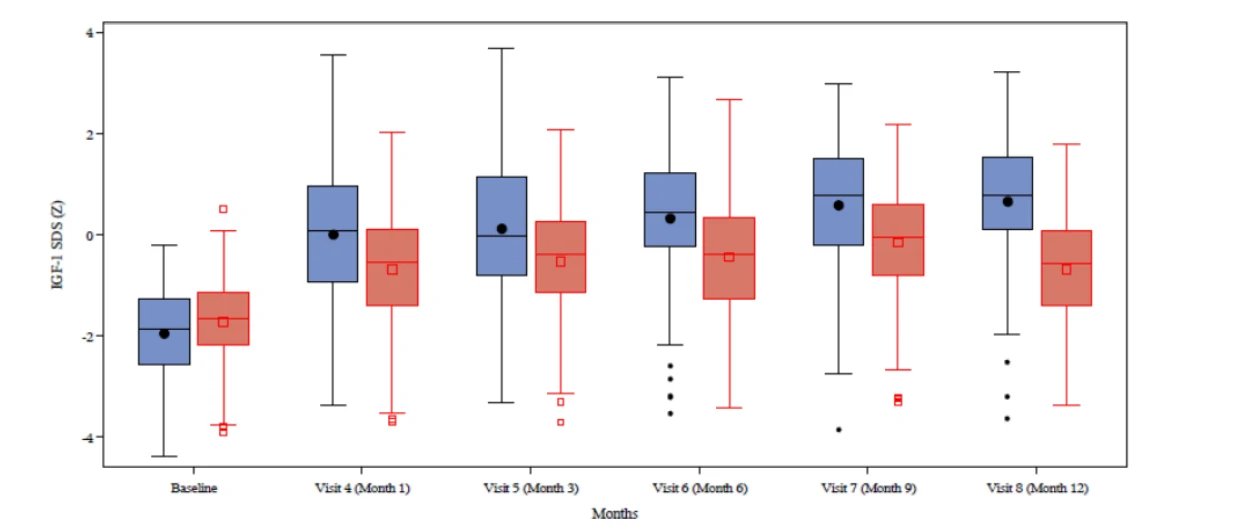
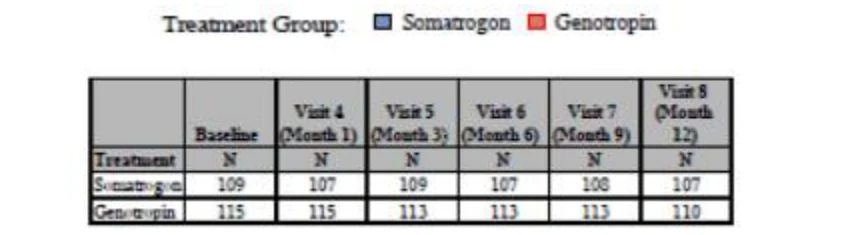
Observed data are from study CP-4-006 in pediatric GHD patients aged 3-12 years (see 14 Clinical Trials ). SDS values were calculated using age- and sex-adjusted reference values.
10.3 Pharmacokinetics
Table 3 - Summary of Simulated Steady State Somatrogon PK in Pediatric Patients Receiving 0.66 mg/kg/week Somatrogon
Cmax (ng/mL) | Tmax (h) | T1/2 (h) | AUC (ng.h/mL) | CL (L/h/kg) | Vd (L/kg) |
|---|---|---|---|---|---|
| 690 | 8 | 28.3 | 21800 | 0.0336 | 0.812 (central volume) 0.169 (peripheral volume) |
Somatrogon pharmacokinetics (PK) were assessed using a population PK approach for NGENLA in 42 pediatric patients with growth hormone deficiency.
Absorption
Following SC injection, serum concentrations increased slowly, peaking 6 to 18 hours after dosing.
In pediatric patients with GHD, somatrogon exposure increases in a dose-proportional manner for doses of 0.25 mg/kg/week, 0.48 mg/kg/week and 0.66 mg/kg/week. There is no accumulation of somatrogon after once weekly administration. In pediatric patients with GHD, the mean population PK estimated steady-state peak concentrations following 0.66 mg/kg/week was 690 ng/mL.
Distribution
In pediatric patients with GHD, the mean population PK estimated apparent central volume of distribution was 0.812 L/kg and apparent peripheral volume of distribution was 0.169 L/kg.
Metabolism
The metabolic fate of somatrogon is believed to be classical protein catabolism, with subsequent reclamation of the amino acids and return to the systemic circulation.
Elimination
In pediatric patients with GHD, the mean population PK estimated apparent clearance was 0.0336 L/h/kg. With a mean population PK estimated effective half-life of 28.3 hours, somatrogon will be present in the circulation for about 6 days after the last dose.
Special Populations and Conditions
Based on population PK analyses, age (≤6 years or 6-<12 years) and sex do not have a clinically meaningful effect on the pharmacokinetics of somatrogon in pediatric patients with GHD. The exposure of somatrogon decreases with an increase in body weight. The somatrogon dosing regimen of 0.66 mg/kg/week provided adequate systemic exposure over the body weight range of 10 to 54 kg evaluated in the clinical studies.
- Hepatic Insufficiency: NGENLA has not been studied in patients with hepatic impairment.
- Renal Insufficiency: NGENLA has not been studied in patients with renal impairment.
10.4 Immunogenicity
Consistent with the potentially immunogenic properties of protein and peptide pharmaceuticals, patients treated with NGENLA may develop antibodies to somatrogon.
The detection of antibody formation is highly dependent on the sensitivity and specificity of the assay. Additionally, the observed incidence of antibody (including neutralizing antibody) positivity in an assay may be influenced by several factors including assay methodology, sample handling, timing of sample collection, concomitant medications, and underlying disease. For these reasons, comparison of the incidence of antibodies to somatrogon in the studies described below with the incidence of antibodies in other studies or to other products may be misleading.
In the Phase 2 study CP-4-004, anti-drug antibodies (ADAs) were reported in 24% (N=10/42) of NGENLA-treated subjects during the first 12 months of treatment. No neutralizing antibodies were reported in these subjects.
In study CP-4-006, ADAs were reported in 77% (N=84/109) of NGENLA-treated subjects during the first 12 months of treatment. Of these, 2/84 (2.4%) tested positive for neutralizing antibodies.
11 Storage, Stability, and Disposal
Store NGENLA pre-filled pen in a refrigerator (2°C to 8°C). DO NOT FREEZE. Do not use beyond the expiration date stamped on the carton. Before first use keep the pre-filled pen in its outer carton in order to protect from light.
A single pre-filled pen stored at 2°C to 8°C may be used for a single period of up to 28 days from the date of first use when stored at 2°C to 8°C in between each use. For a more comfortable injection, the pre-filled pen may be exposed to room temperature (no more than 32°C) for a maximum of 2 hours prior to injection. Store away from direct sunlight. The same pre-filled pen can be used for a maximum of 5 times during the in-use period of 28 days.
Always remove and safely discard the needle after each injection and store the NGENLA pre-filled pen without an injection needle attached. Always use a new needle for each injection. Replace the cap on your pre-filled pen when it is not in use. Store the pre-filled pen at 2°C to 8°C in between each use.
Any unused product or waste material should be disposed of in accordance with local requirements. If your pre-filled pen is empty, has been left out of the refrigerator (up to 32°C) for more than 2 hours with each use, has been exposed to temperatures above 32°C, has been used 5 times, or it has been more than 28 days after first use, throw it away even if it contains unused medicine.
12 Special Handling Instructions
Each NGENLA pre-filled pen is for use by a single patient. An NGENLA pre-filled pen must never be shared between patients, even if the needle is changed.
Do not inject the medicine if it is cloudy or dark yellow. Do not shake; shaking can damage the medicine.
Part 2: Scientific Information
13 Pharmaceutical Information
Drug Substance
Proper name: Somatrogon
Chemical name:
| Molecule Type | O-Glycosylated Fusion Protein (CTP-hGH-CTP-CTP) |
| Cell Line | Chinese Hamster Ovary (CHO) |
| CTP = C-terminal peptide; hGH = human growth hormone | |
Molecular formula and molecular mass:
| O-Linked Glycoform | Theoretical Mass (Da) | Molecular Formula |
| Aglycosylated | 30465.1 | C1359H2125N361O420S7 |
| 15 O-glycans, core-1 monosialylated (GalNAc-Gal-NeuAc) | 40313.9 | C1734H2725N391O690S7 |
| 16 O-glycans, core-1 monosialylated (GalNAc-Gal-NeuAc) | 40970.5 | C1759H2765N393O708S7 |
Structural formula:
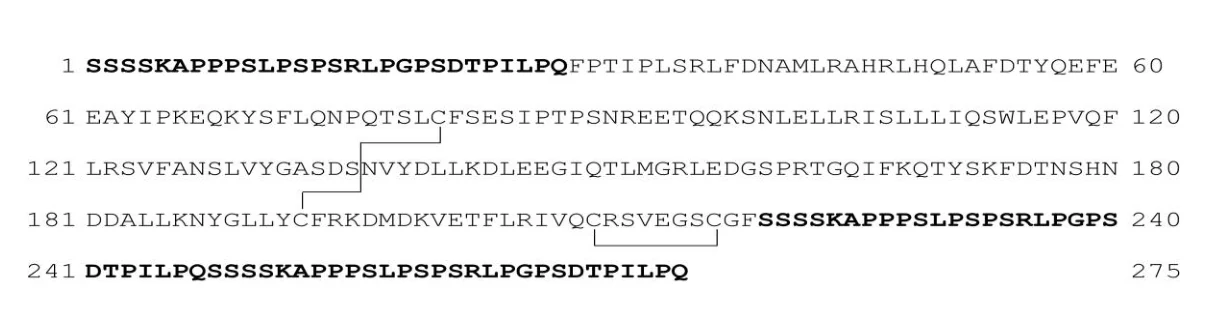
Somatrogon amino acid sequence; residues are numbered sequentially starting with the N terminus. The confirmed disulfide bonds are illustrated with connecting lines. The functional, intact molecule is composed of recombinant hGH and one copy of CTP from the beta chain of hCG at the N-terminus (bold amino acids [1-28]) and two copies of CTP (in tandem) at the C-terminus (bold amino acids [220-247], and [248-275]).
Physicochemical properties: Somatrogon has a pH of approximately 6.6 and is a clear and colorless to slightly light yellow solution.
Product Characteristics:
Somatrogon is a glycoprotein produced in Chinese Hamster Ovary (CHO) cells by recombinant DNA technology. It is comprised of the amino acid sequence of human growth hormone (hGH) with one copy of the C-terminal peptide (CTP) from the beta chain of human chorionic gonadotropin (hCG) at the N-terminus and two copies of CTP (in tandem) at the C-terminus. The glycosylation and CTP domains account for the half-life of somatrogon, which allows for weekly dosing.
14 Clinical Trials
14.1 Trial Design and Study Demographics
Table 4 - Summary of patient demographics for clinical trial in pediatric growth hormone deficiency
| Study # | Trial design | Dosage, route of administration and duration | Study patients (n) | Mean age (Range) | Sex |
| CP-4-004 | Phase 2, Open-label Randomized Active-controlled Multicenter Parallel-group | Somatrogon 0.25 mg/kg body weight weekly, Somatrogon 0.48 mg/kg body weight weekly, Somatrogon 0.66 mg/kg body weight weekly, Somatropin 0.034 mg/kg body weight daily 12 months (main study) 5 years (OLE) | n = 53 (main study) n = 48 (entered OLE) | 6.4 years (3.0, 11.2). | Female and Male |
| CP-4-006 | Open-label Randomized Active-controlled Multicenter Parallel-group | Somatrogon 0.66 mg/kg body weight weekly, somatropin 0.034 mg/kg body weight daily Subcutaneous Injections 12 months | n = 224 somatrogon (n=109) somatropin (n=115) | 7.7 years (3.0, 12.0) | Female and Male |
14.2 Study Results
The efficacy and safety of NGENLA for the treatment of pediatric patients with GHD were evaluated in two multi-center randomized, open-label controlled clinical studies, CP-4-004 and CP-4-006.
CP-4-004 was an open-label, randomized, safety and dose-finding study that enrolled 53 pre-pubertal pediatric patients aged 3-11 years with growth failure due to GHD and who were naïve to growth hormone therapy. Patients were randomized to be treated with one of 3 doses of once weekly subcutaneous NGENLA (0.25 mg/kg body weight/week [N=13], 0.48 mg/kg body weight/week [N=15], 0.66 mg/kg body weight/week [N=14]) or subcutaneous somatropin administered once daily (0.034 mg/kg body weight/day [N=11]). Overall, 60% of patients were male, 96% were white, 0% were Asian, 2% were Black or African American, and 2% were ‘Other’. At baseline, mean (min, max) age was 6.4 (3.0, 11.2) years; 64.2% of patients were aged 3-6 and 35.8 % were 7 years and older. Mean (min, max) height was 101.5 (81.5, 127.5) cm and mean height standard deviation score (SDS; min, max) was -4.0 (-7.5, -2.3). After 12 months, annualized height velocity was 11.4 cm/year in patients treated with 0.66 mg/kg body weight/week of NGENLA and was 12.5 cm/year in patients treated with somatropin. In the open-label extension of CP-4-004, continued increases in height were observed in 35 of the 53 patients who had completed the main study and were treated with 0.66 mg/kg body weight/week NGENLA for at least five years.
CP-4-006 was an open-label, randomized, multicenter safety and efficacy study that enrolled in 224 pre-pubertal pediatric patients aged 3-11 years with growth failure due to GHD who were naïve to growth hormone therapy. The objective of the study was to determine whether treatment with NGENLA was non-inferior to treatment with somatropin for the primary efficacy endpoint of height velocity (cm/year) at 12 months. Patients were randomized and treated for one year with once weekly subcutaneous NGENLA (N=109) at a dose of 0.66 mg/kg body weight/week or once daily subcutaneous somatropin (N=115) at a dose of 0.034 mg/kg body weight/day. Overall, 72% of patients were male, 75% were white, 20% were Asian, 1% were Black or African American, and 11% were Hispanic or Latino. At baseline, mean (min, max) age was 7.72 (3.01, 11.96) years; 40% of patients were aged 3-6 and 60% were 7 years and older. Mean (min, max) height was 110 (75, 144) cm and mean height standard deviation score (SDS; min, max) was -2.86 (-9.96, -0.47).
After 12 months, treatment with NGENLA once weekly resulted in a mean increase in height velocity that met the pre-specified non-inferiority margin of -1.8 cm/year. See Table 5 for the main efficacy findings.
Table 5 - Efficacy of NGENLA compared to somatropin in pediatric patients with growth failure due to GHD at Month 12
| Treatment Parameter | Treatment Group | Difference in Treatment | |
|---|---|---|---|
| NGENLA (N=109) | Somatropin (N=115) | NGENLA - Somatropin | |
| ANCOVA | LSM Estimate | LSM Estimate | LSM Difference (95% CI) |
| Primary endpoint | |||
| Height Velocity (cm/year) at 12 months | 10.10 | 9.78 | 0.33 (-0.24, 0.89)* |
| Secondary endpoints | |||
| Height Standard Deviation Score at 12 months | -1.94 | -1.99 | 0.05 (-0.06, 0.16) |
| Change in Height Standard Deviation Score from baseline at 12 months | 0.92 | 0.87 | 0.05 (-0.06, 0.16) |
Abbreviations: CI=confidence interval; GHD=growth hormone deficiency; LSM=least square mean; N=number of patients randomized and treated
*The 95% CIs were obtained from the analysis of covariance (ANCOVA) model with treatment as the main effect, age group, gender and peak GH levels as the covariates. Non-inferiority will be concluded if the lower bound of the two-sided 95% CI is ≥ -1.8.
15 Microbiology
No microbiological information is required for this drug product.
16 Non-Clinical Toxicology
General Toxicology: Somatrogon has been evaluated in repeat-dose toxicity studies in rats and rhesus monkeys, using the subcutaneous route of administration.
A 4-week study in adult rats was conducted at doses of 3.6, 36, and 180 mg/kg administered twice weekly (exposures of 4.1, 69, and 301 times [based on AUC] the human exposure at the maximum recommended dose of 0.66 mg/kg once weekly, respectively). Anticipated increases in body weight, body weight gain, and food consumption were observed, which were attributed to the pharmacodynamic growth hormone effect of somatrogon. Other findings related to the pharmacological activity of somatrogon, either directly or indirectly, occurred in mammary glands, liver, kidney, and spleen in rats. These findings included mammary gland feminization in males (all doses), mammary gland lobular hyperplasia in females (≥ 36 mg/kg), periportal vacuolation in the liver (all doses), increased incidence of renal tubular mineralization in females (180 mg/kg), increased extramedullary haematopoiesis in the spleen in males (180 mg/kg), and slight anaemia (≥ 36 mg/kg).
Studies in rhesus monkeys consisted of a 4-week study conducted at doses of 1.8, 18, and 90 mg/kg administered once every 6 days (exposures of 4.3, 40, and 219 times [based on AUC] the human exposure, respectively) and a 26-week study in mainly juvenile animals conducted at doses of 1.5, 15, and 30 mg/kg administered once every 5 days (exposures of 9, 81, and 193 times [based on AUC] the human exposure, respectively). In both studies, an increase in serum IGF-1 levels was observed at all doses, which was attributed to secondary effects of somatrogon. No adverse effects were observed, including on cardiovascular function. Based on the results of the 26-week study, the no-observed-adverse-effect level (NOAEL) for the general toxicity of somatrogon in rhesus monkeys was 30 mg/kg administered subcutaneously once every 5 days (the highest dose tested).
Carcinogenicity: Carcinogenicity studies have not been performed with somatrogon.
Genotoxicity: Genotoxicity studies have not been performed with somatrogon.
Reproductive and developmental toxicology:
The potential for somatrogon to have effects on fertility and early embryonic development was evaluated in male and female rats following administration via SC injection at doses of 3, 10, and 30 mg/kg. Females were dosed starting from 2 weeks prior to cohabitation until gestation day (GD) 7 and males were dosed starting from 4 weeks prior to cohabitation to GD 13 in females. Somatrogon elicited an increase in estrous cycle length (≥ 10 mg/kg) coupled with a decrease in the number of estrous cycles (all doses) and an increase in the copulatory interval (≥ 10 mg/kg). Somatrogon administration also resulted in increases in the number of corpora lutea, number of implantations, and in the percentage of pre-implantation loss at 10 mg/kg and/or 30 mg/kg, but there was no impact on mating, fertility, and pregnancy indices or on the number of viable embryos per dam and early embryonic development. The NOAEL for the effects of somatrogon on fertility and early embryonic development in rats was therefore 30 mg/kg administered subcutaneously once every two days (the highest dose tested).
An embryo-fetal development study was also conducted in rats administered somatrogon via SC injection at doses of 3, 10, or 30 mg/kg every two days from GD 6 to 18 exposures of 4, 12, and 51 times [based on AUC; GD 6] the human exposure at the maximum recommended human dose, respectively). Somatrogon elicited pharmacologically-mediated, non-adverse, increases in maternal body weights and body weight gain at all doses and in food consumption at doses ≥10 mg/kg. However, there were no adverse maternal or embryo-fetal effects. Thus, the NOAEL for the maternal and developmental toxicity of somatrogon in pregnant rats in this study was 30 mg/kg body weight administered subcutaneously once every two days (the highest dose tested).
The potential for effects of somatrogon on development was also evaluated in a pre- and postnatal development study in rats in which somatrogon was administered via SC injection to pregnant rats every 2 days from GD 6 to Lactation Day 20 at doses of 3, 10, and 30 mg/kg. There was no evidence of maternal toxicity and no adverse developmental effects on the first generation (F1) offspring. Somatrogon elicited an increase in F1 mean body weights (both sexes), as well as an increase in the mean copulatory interval in F1 females at the highest dose (30 mg/kg), following cohabitation with F1 males; however, there were no associated effects on mating, fertility, or pregnancy indices. Thus, the NOAEL for the maternal and developmental toxicity of somatrogon in pregnant rats in this study was 30 mg/kg body weight administered subcutaneously once every two days (the highest dose tested).