


Product Monograph - Infanrix-Ipv
SUMMARY PRODUCT INFORMATION
| Route of Administration | Dosage Form / Strength | Clinically Relevant Nonmedicinal Ingredients |
| Intramuscular injection | Sterile suspension for injection/ not less than 25 limit of flocculation (Lf) [30 International Units (IU)] of diphtheria toxoid; 10 Lf (40 IU) of adsorbed tetanus toxoid; 25 µg of pertussis toxoid; 25 µg of filamentous haemagglutinin; 8 µg of pertactin adsorbed onto aluminum hydroxide (0.5 mg Al3+); 40 D-antigen units (DU) type 1 poliovirus; 8 DU type 2 poliovirus; and 32 DU type 3 poliovirus per 0.5 mL dose. | Sodium chloride, aluminum salts, Medium 199 (as stabilizer including amino acids, mineral salts and vitamins), water for injections and trace amounts of neomycin and polymixin. |
DESCRIPTION
INFANRIX®-IPV (combined diphtheria, tetanus, acellular pertussis and inactivated poliomyelitis vaccine) contains diphtheria toxoid, tetanus toxoid, three purified pertussis antigens [pertussis toxoid (PT), filamentous haemagglutinin (FHA) and pertactin (69 kiloDalton (kDa) outer membrane protein)] adsorbed onto aluminium salts and purified inactivated poliovirus types 1, 2 and 3.
INFANRIX®-IPV meets the World Health Organization requirements for manufacture of biological substances.
INDICATIONS AND CLINICAL USE
INFANRIX®-IPV (diphtheria, tetanus, acellular pertussis and inactivated poliomyelitis vaccine) is indicated:
- as a booster dose in children up to and including 6 years of age, who have previously been immunized with three or four doses of either diphtheria, tetanus
- and acellular pertussis (DTaP) vaccine or diphtheria, tetanus and whole-cell pertussis (DTPw) vaccine.
CONTRAINDICATIONS
INFANRIX®-IPV (diphtheria, tetanus, acellular pertussis and inactivated poliomyelitis vaccine) should not be administered:
- to subjects with known hypersensitivity to any component of the vaccine (see DOSAGE FORMS, COMPOSITION AND PACKAGING).
- to subjects having shown signs of hypersensitivity after previous administration of diphtheria, tetanus, pertussis or poliomyelitis vaccines. Because of the uncertainty as to which component of the vaccine might be responsible, no further vaccination with any of these components should be given. Alternatively, because of the importance of tetanus vaccination, such individuals may be referred to an allergist for evaluation.
- if the child has experienced an encephalopathy of unknown etiology, occurring within 7 days following previous vaccination with a pertussis containing vaccine. In these circumstances, pertussis vaccination should be discontinued and the vaccination should be continued with diphtheria-tetanus and polio vaccines.
The following do not constitute contraindications:
- a history of febrile convulsions.
- a family history of convulsive disorders.
- a family history of SIDS.
- a family history of an adverse event following INFANRIX®-IPV injection.
- Human Immunodeficiency Virus (HIV) infection.
Elective immunization of individuals over 6 months should be deferred during an outbreak of poliomyelitis.
WARNINGS AND PRECAUTIONS
General
INFANRIX®- IPV (diphtheria, tetanus, acellular pertussis and inactivated poliomyelitis vaccine) should under no circumstances be administered intravenously.
As for all diphtheria, tetanus and pertussis vaccines, each injection should be given deep intramuscularly and each injection of the immunization series should be made into a different site.
Diphtheria toxoid may cause severe but transient local and febrile reactions in children and adults, the frequency increasing with age, the doses of toxoid and the number of doses given.
As with other injectable vaccines, appropriate medication (eg. epinephrine 1:1000) should be readily available for immediate use in case of anaphylaxis or anaphylactoid reactions following administration of the vaccine. For this reason, the vaccinee should remain under medical supervision for 30 minutes after immunization.
As with other vaccines, the administration of INFANRIX®- IPV should be postponed in subjects suffering from moderate or severe illness with or without fever. The presence of minor illnesses with or without a low-grade fever are not a contraindication.
It is good clinical practice that immunization should be preceded by a review of the medical history (especially with regard to previous immunization and possible occurrence of undesirable events) and a clinical examination.
As with any other vaccine, INFANRIX®-IPV may not protect 100% of individuals receiving the vaccine.
If any of the following events occur in temporal relation to receipt of DTaP or DTPw vaccine, the decision to give subsequent doses of vaccine containing the pertussis component should be carefully considered. There may be circumstances, such as a high incidence of pertussis, when the potential benefits outweigh possible risks, particularly since these events are not associated with permanent sequelae.
The following events were previously considered contraindications for DTPw and can now be considered general precautions:
- Temperature of ≥ 40.0°C (rectal) within 48 hours of vaccination, not due to another identifiable cause.
- Collapse or shock-like state (hypotonic-hyporesponsive episode) within 48 hours of vaccination.
- Persistent, inconsolable crying lasting ≥ 3 hours, occurring within 48 hours of vaccination.
- Convulsions with or without fever, occurring within 3 days of vaccination.
In children with progressive neurological disorders, including infantile spasms, uncontrolled epilepsy or progressive encephalopathy, it is better to defer pertussis (Pa or Pw) immunization until the condition is corrected or stable. However, the decision to give pertussis vaccine must be made on an individual basis after careful consideration of the risks and benefits.
Syncope (fainting) can occur following, or even before, any vaccination as a psychogenic response to the needle injection. It is important that procedures are in place to avoid injury from faints.
Hematologic
INFANRIX®-IPV should be administered with caution to subjects with thrombocytopenia or a bleeding disorder since bleeding may occur following an intramuscular administration to these subjects.
Immune
In patients receiving immunosuppressive therapy or patients with immunodeficiency an adequate immunologic response may not be achieved.
Sensitivity
INFANRIX®-IPV contains traces of neomycin and polymixin. The vaccine should be used with caution in patients with known hypersensitivity to one of these antibiotics.
Special Populations
Pregnant Women: Infanrix®-IPV is indicated for vaccination in children up to 6 years of age. Adequate human data on use during pregnancy and adequate animal reproduction studies are not available.
Nursing Women: Infanrix®-IPV is indicated for vaccination in children up to 6 years of age. Adequate human data on use during lactation and adequate animal reproduction studies are not available.
Pediatrics: DTaP vaccine should not be administered to persons 7 years of age or older because of the dangers of reactions to the diphtheria toxoid and pertussis antigens.
The potential risk of apnea and the need for respiratory monitoring for 48-72h should be considered when administering the primary immunization series to very premature infants (born ≤ 28 weeks of gestation) and particularly for those with a previous history of respiratory immaturity. As the benefit of vaccination is high in this group of infants, vaccination should not be withheld or delayed.
ADVERSE REACTIONS
Clinical Trial Adverse Drug Reactions
Because clinical trials are conducted under very specific conditions the adverse reaction rates observed in the clinical trials may not reflect the rates observed in practice and should not be compared to the rates in the clinical trials of another drug. Adverse drug reaction information from clinical trials is useful for identifying drug-related adverse events and for approximating rates.
In a controlled clinical trial in children between 15 and 20 months of age given a booster injection of INFANRIX®-IPV (diphtheria, tetanus, acellular pertussis and inactivated poliomyelitis vaccine) given separately or mixed with Hib conjugate vaccine or of DTPw-IPV + Hib containing the traditional pertussis component, the incidence of local or systemic side effects reported within 48 hours considered to be vaccine-related is outlined in Table 1.
Table 1 Incidence of Local or Systemic Side Effects Reported within 48 hours considered to be Vaccine Related
| Symptoms | INFANRIX®-IPV-Hib (both vaccines mixed) | INFANRIX®-IPV+ Hib (two vaccines injected separately) | DTPw- IPV + Hib |
| Local reactions: | % | % | % |
| pain (severe) | 3.3 | 2.7 | 10.6 |
| redness (>20mm) | 16.4 | 18.9 | 31.9 |
| swelling (>20mm) | 4.9 | 5.4 | 19.1 |
| Systemic reactions: | % | % | % |
| fever ≥ 38°C | 18.0 | 8.1 | 44.7 |
| unusual crying | 6.6 | 0 | 19.1 |
| loss of appetite | 3.3 | 0 | 12.8 |
| agitation | 6.6 | 2.7 | 14.9 |
The safety profile presented below is based on data from more than 2200 subjects.
Very common: 10%
Appetite lost, restlessness, crying abnormal, irritability, headache1, somnolence, injection site reactions such as pain, redness, local swelling at the injection site (≤50 mm), fever 38.0°C
Common: 1% and < 10%
Nausea1, vomiting, diarrhea, local swelling at the injection site (>50 mm)4, asthenia, malaise1, injection site reactions including induration
Uncommon: 0.1% and < 1%
Dermatitis allergic, diffuse swelling of the injected limb, sometimes involving the adjacent joint4, fever5 (>39.5°C)
Rare: 0.01% and < 0.1%
Lymphadenopathy1, bronchitis2, cough2, urticaria, rash2,3
Post-Market Adverse Drug Reactions
Blood and lymphatic system disorders
Thrombocytopenia6
Immune system disorders
Allergic reactions, including anaphylactic2 and anaphylactoid reactions
Nervous system disorders
Collapse or shock-like state (hypotonic-hyporesponsiveness episode), convulsions (with or without fever) within 2 to 3 days of vaccination
Respiratory thoracic and mediastinal disorders
Apnea2 [see section “Warnings and Precautions” for apnea in very premature infants ( 28 weeks of gestation)]
Skin and subcutaneous tissue disorders
Pruritus, angioneurotic oedema2
General disorders and administration site conditions
Swelling of the entire injected limb4, injection site vesicles
1Reported only with booster vaccination
2Reported with GSK’s DTaP containing vaccines
3Uncommonly reported with booster vaccination
4Children primed with acellular pertussis vaccines are more likely to experience swelling reactions after booster administration in comparison with children primed with whole cell vaccines. Local swelling at the injection site (> 50 mm) and diffuse swelling may be more frequent (very common and common, respectively) when the booster dose is administered between 4 and 6 years. These reactions resolve over an average of 4 days.
5Commonly reported with booster vaccination
6Reported with D and T vaccines
DRUG INTERACTIONS
Drug-Drug Interactions
INFANRIX®-IPV (diphtheria, tetanus, acellular pertussis and inactivated poliomyelitis vaccine) can be administered simultaneously with other pediatric vaccines provided that a different syringe and needle are used at separate sites.
Drug-Food Interactions
Interactions with food have not been established.
Drug-Herb Interactions
Interactions with herbal products have not been established.
Drug-Laboratory Interactions
Interactions with laboratory tests have not been established.
DOSAGE AND ADMINISTRATION
Recommended Dose
The Canadian Immunization Guide recommends a booster dose of diphtheria, tetanus, pertussis, poliomyelitis at 15 to 18 months of age, and a second booster dose of diphtheria, tetanus, pertussis and poliomyelitis at 4 to 6 years of age.
INFANRIX®-IPV (diphtheria, tetanus, pertussis and inactivated poliomyelitis vaccine) can be used alone for the first booster dose at 15 to 18 months of age and may also be mixed in the same syringe with HIBERIX® (Haemophilus influenzae type b) or other monovalent Haemophilus influenzae type b vaccines (conjugated to a tetanus protein carrier) for the second booster dose at 4 to 6 years of age. If for any reason primary immunization is delayed, the same booster interval may be used up to the seventh birthday.
Administration
Do not remove the white back-stop from the syringe. Prior to administration, ensure that the plunger rod is firmly attached to the rubber stopper by turning the plunger clockwise until slight resistance is felt. Do not over tighten. Remove syringe LUER Tip-cap and needle cap. Attach needle by pressing and twisting in a clockwise rotation until secured to the syringe.
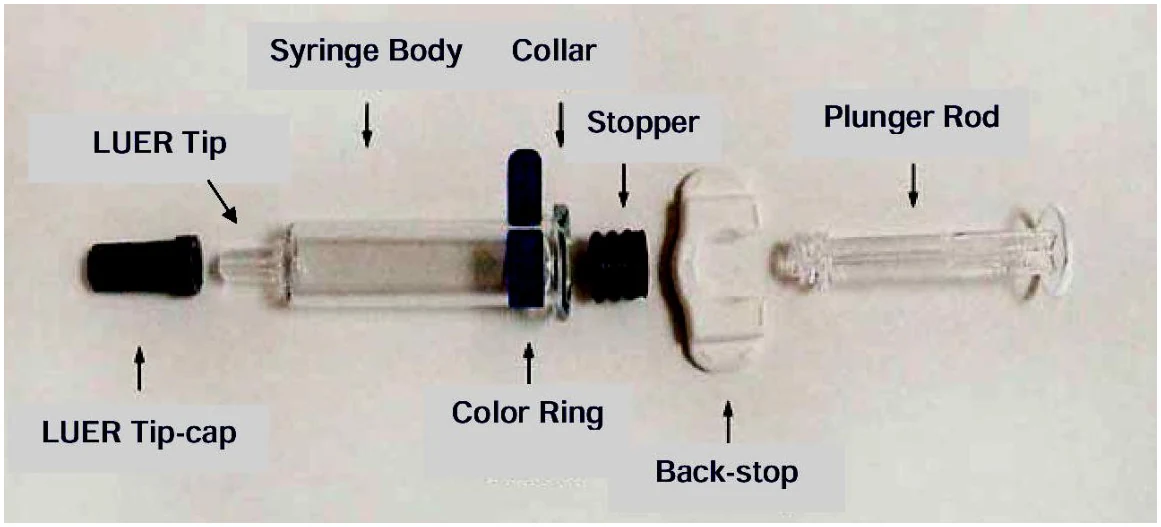
INFANRIX®-IPV should be inspected visually for any foreign particulate matter and/or variation of physical aspect prior to administration. In the event of either being observed, discard the vaccines.
INFANRIX®-IPV can be mixed in the same syringe with monovalent Haemophilus influenzae type b vaccine conjugated to a tetanus protein carrier initially used in primary immunization. INFANRIX®-IPV should not be mixed with any other vaccines in the same syringe, unless specified by the manufacturer.
The reconstituted vaccine is for deep intramuscular injection. Each injection of the primary immunization series should be made into a different site.
The vastus lateralis (mid-thigh laterally) is the preferred site of injection in infants. The deltoid muscle should be used as the injection site in children when the muscle has developed sufficiently to accommodate the vaccine. The site of injection should be prepared with a suitable antiseptic. Never inject intravenously.
OVERDOSAGE
For management of a suspected drug overdose, contact your regional Poison Control Centre.
Cases of overdose have been reported during post-marketing surveillance. Adverse events, when reported, are not specific but similar to adverse events reported with normal vaccine administration.
ACTION AND CLINICAL PHARMACOLOGY
INFANRIX®-IPV (diphtheria, tetanus, acellular pertussis and inactivated poliomyelitis vaccine) contains pertussis toxoid (PT), filamentous haemagglutinin (FHA) and pertactin, antigens which are considered to play an important role in protection against pertussis disease.
Immune Response to DTaP-IPV Administered as a Booster Dose
Pertussis Antigens (PT - FHA - 69 kDa):
Before booster vaccination of children 15 to 24 months of age, the percentage of PT seronegative subjects ranged from 75 to 87% for three groups of vaccinees and between 17 and 33% for the FHA and 69 kDa fractions (group 1: DTaP-IPV+Hib as a single injection; group 2: DTaP-IPV+Hib separate injections; and group 3: DTPw-IPV+Hib single injection). After booster dose injection, the percentage of responsive subjects in the 3 groups for FHA and 69 kDa ranged from 92.9 to 100%. For the PT antigenic component, the percentage was slightly lower among DTPw-IPV vaccinees (87%) compared with 97 to 98% for recipients of DTaP-IPV. In subjects initially seronegative, the seroconversion rate (titre ≥ 5 EL.U/mL) was 100% for FHA and 69 kDa in groups 1 and 2 (DTaP-IPV) and group 3 (DTPw-IPV), compared with 97.9%, 100% and 85% for PT in groups 1, 2 and 3 respectively.
Diphtheria and Tetanus Toxoid Antigens:
Prior to booster injection of the vaccine, over 50% of subjects did not have diphtheria antibody titres ≥ 0.1 IU/mL; 3.5 to 6.5% did not have antibodies against tetanus. After the booster dose, all subjects had protective antibody levels of ≥ 0.1 IU/mL.
Polioviruses 1, 2 and 3:
Prior to booster injection of the vaccine, 6 to 12% of subjects were seronegative for all 3 types of polioviruses. After the booster dose, protection ranged from 90.6% to 96.4% in group 1, from 93.9% to 100% in group 2 and from 88.4% to 92.7% in group 3.
STORAGE AND STABILITY
INFANRIX®-IPV (diphtheria, tetanus, acellular pertussis and inactivated poliomyelitis vaccine) vaccine must be stored at +2 to +8°C. Do not use beyond the expiry date printed on the label.
Do not freeze; discard if vaccine has been frozen.
DOSAGE FORMS, COMPOSITION AND PACKAGING
Dosage Forms
INFANRIX®-IPV (diphtheria, tetanus, acellular pertussis and inactivated poliomyelitis vaccine) is available as a white opalescent suspension. During storage white sediment with a clear supernatant may be observed.
Composition
Each 0.5 mL dose of the vaccine contains: not less than 25 limit of flocculation (Lf) [30 International Units (IU)] of diphtheria toxoid; 10 Lf (40 IU) of adsorbed tetanus toxoid; 25 μg PT, 25 μg FHA; 8 μg pertactin adsorbed onto aluminum hydroxide (0.5 mg Al3+); inactivated poliovirus: type 1 [40 D-antigen units (DU)], type 2 (8 DU) and type 3 (32 DU). May contain trace amounts of neomycin and polymixin.
INFANRIX®-IPV meets the World Health Organization requirements for manufacture of biological substances.
Packaging
INFANRIX®-IPV is available as single prefilled syringes (in packages of 10) which are made of neutral glass type I, which conforms to European Pharmacopoeia Requirements.
PART II: SCIENTIFIC INFORMATION
PHARMACEUTICAL INFORMATION
Drug Substance
Proper name: diphtheria, tetanus, acellular pertussis and inactivated poliomyelitis vaccine
Product Characteristics
INFANRIX®-IPV (diphtheria, tetanus, acellular pertussis and inactivated poliomyelitis vaccine) contains diphtheria toxoid, tetanus toxoid, three purified pertussis antigens [pertussis toxoid (PT), filamentous haemagglutinin (FHA) and pertactin (69 kiloDalton outer membrane protein)] adsorbed onto aluminum salts and purified inactivated poliovirus types 1, 2 and 3.
CLINICAL TRIALS
Refer to PART I: ACTION AND CLINICAL PHARMACOLOGY.
DETAILED PHARMACOLOGY
Not applicable.
MICROBIOLOGY
Not applicable.
TOXICOLOGY
Not applicable.
REFERENCES
- 1. Anonymous. Update: vaccine side effects, adverse reactions, contraindications, and precautions. Recommendations of the Immunization Practices Advisory Committee (ACIP) Morb. Mortal. Wkly. Rep. 1996; 45 (RR-124):p1-35 (published erratum appears in MMWR Morb Mortal Wkly Rep1997 Mar 14;46(10):227)
- 2. Expanded programme on Immunization. Poliomyelitis eradication: the WHO Global Laboratory Network. Wkly Epidem. Rec. 1997; 72:245-9
- 3. Anonymous. Pertussis vaccination: Use of acellular pertussis vaccines among infants and young children. Recommendations of the Immunization Practices Advisory Committee (ACIP) Morb. Mortal. Wkly. Rep. 1997; 46(RR-7): 1-25
- 4. Anonymous. Recommendations for use of Haemophilus b conjugate vaccines and a combined diphtheria, tetanus, pertussis and Haemophilus b vaccine. Recommendations of the Immunization Practices Advisory Committee (ACIP) Morb. Mortal. Wkly. Rep. 1993; 42(RR13): 1-15
- 5. King G., Hadler S. Simultaneous administration of childhood vaccines: an important public health policy that is safe and efficacious. Pediatr. Infect. Dis. J. 1994; 13(5): 394-407
- 6. Anonymous. Recommended childhood immunizatioin schedule. (ACIP) Mortal. Wkly. Rep. 1999; 48(1) p12-16.
- 7. WHO. Requirements for Diphtheria, Tetanus, Pertussis and combined vaccines. WHO. Tech. Rep. Ser. 1990; 800: 86-178
- 8. WHO. Good Manufacturing practices for biological products. Who. Tech. Rep. Ser. 1992; 822:20-33.
- 9. Health Canada. Recommended Immunization Schedules for Infants and Children. Canadian Immunization Guide, Sixth Edition, 2002:55-57.
- 10. Begue P, Stagnara J, Vie-Le-Sage F, Bernard JC, Xerri B, Abitbol V. Immunogenicity and reactogenicity of a booster dose of diphtheria, tetanus, acellular pertussis and inactivated poliomyelitis vaccines given currently with Haemophilus type b conjugate vaccine or as a pentavalent vaccine. Pediatr Infect Dis J; 1997; 16(8): 787-794